
Articles | Volume 22, issue 22
https://doi.org/10.5194/bg-22-6913-2025
© Author(s) 2025. This work is distributed under
the Creative Commons Attribution 4.0 License.
the Creative Commons Attribution 4.0 License.
https://doi.org/10.5194/bg-22-6913-2025
© Author(s) 2025. This work is distributed under
the Creative Commons Attribution 4.0 License.
the Creative Commons Attribution 4.0 License.
Research article
| 
19 Nov 2025
Research article |
| 19 Nov 2025
| 19 Nov 2025
Forest favours conditions for convective precipitation in the Mediterranean Basin
Jolanda J. E. Theeuwen
CORRESPONDING AUTHOR

Copernicus Institute of Sustainable Development, Utrecht University, Utrecht, 3584CB, the Netherlands
Wetsus, European Centre of Excellence for Sustainable Water Technology, Leeuwarden, 8911MA, the Netherlands
Sarah N. Warnau
Wetsus, European Centre of Excellence for Sustainable Water Technology, Leeuwarden, 8911MA, the Netherlands
Meteorology and Air Quality Group, Wageningen University & Research, Wageningen, 6708PB, the Netherlands
Imme B. Benedict
Meteorology and Air Quality Group, Wageningen University & Research, Wageningen, 6708PB, the Netherlands
Stefan C. Dekker
Copernicus Institute of Sustainable Development, Utrecht University, Utrecht, 3584CB, the Netherlands
NIOO-KNAW, the Netherlands Institute of Ecology, Wageningen, 6708PB, the Netherlands
Hubertus V. M. Hamelers
Wetsus, European Centre of Excellence for Sustainable Water Technology, Leeuwarden, 8911MA, the Netherlands
Environmental Technology Group, Wageningen University & Research, Wageningen, 6708PB, the Netherlands
Chiel C. van Heerwaarden
Meteorology and Air Quality Group, Wageningen University & Research, Wageningen, 6708PB, the Netherlands
Copernicus Institute of Sustainable Development, Utrecht University, Utrecht, 3584CB, the Netherlands
Related authors

Jolanda J. E. Theeuwen, Arie Staal, Obbe A. Tuinenburg, Bert V. M. Hamelers, and Stefan C. Dekker
Hydrol. Earth Syst. Sci., 27, 1457–1476, https://doi.org/10.5194/hess-27-1457-2023, https://doi.org/10.5194/hess-27-1457-2023, 2023
Short summary
Short summary
Evaporation changes over land affect rainfall over land via moisture recycling. We calculated the local moisture recycling ratio globally, which describes the fraction of evaporated moisture that rains out within approx. 50 km of its source location. This recycling peaks in summer as well as over wet and elevated regions. Local moisture recycling provides insight into the local impacts of evaporation changes and can be used to study the influence of regreening on local rainfall.
Frank J. G. van Broekhoven, Stefan C. Dekker, Jasper Griffioen, Anjali Bhagwat, and Paul P. Schot
Hydrol. Earth Syst. Sci., 30, 6315–6337, https://doi.org/10.5194/hess-30-6315-2026, https://doi.org/10.5194/hess-30-6315-2026, 2026
Short summary
Short summary
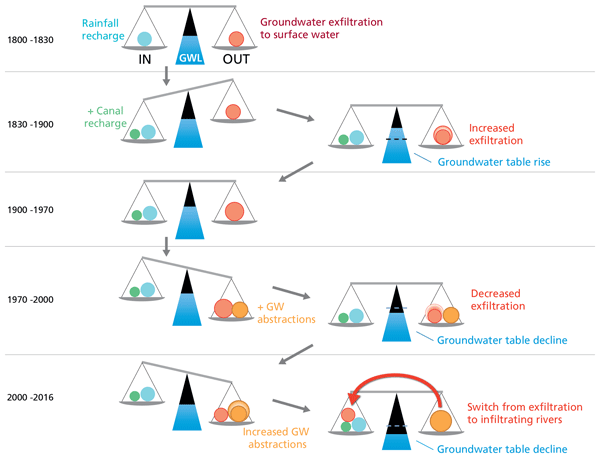
Model simulations show how North India’s water system changed over the past two centuries. From 1830, irrigation canals increased recharge while groundwater flows to rivers and streams. After 1970, groundwater pumping surged, lowering groundwater tables and reducing flows to surface waters. Since 2000, some local rivers have likely switched to lose water to the groundwater. This may have implications for river ecosystems and groundwater quality, especially where rivers are polluted.
Tristan Roelofs, Marc Castellnou, Jordi Vilà-Guerau de Arellano, Martin Janssens, and Chiel van Heerwaarden
Atmos. Chem. Phys., 26, 13531–13555, https://doi.org/10.5194/acp-26-13531-2026, https://doi.org/10.5194/acp-26-13531-2026, 2026
Short summary
Short summary
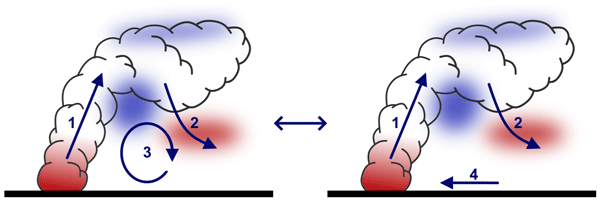
With simulations, we studied the impact of fire-induced circulations on the atmosphere and the factors governing these circulations. The results showed that two parts of the circulations, the up- and downdrafts, altered the vertical structure of the atmosphere ahead of the fire. Furthermore, we found that the wind speed in the direction of the circulation determines whether a circulation can develop. Further research is needed to study how fire-induced circulations affect the fire behaviour.
Job I. Wiltink, Victor J. H. Trees, Chiel C. van Heerwaarden, and Jan Fokke Meirink
Atmos. Chem. Phys., 26, 7207–7233, https://doi.org/10.5194/acp-26-7207-2026, https://doi.org/10.5194/acp-26-7207-2026, 2026
Short summary
Short summary
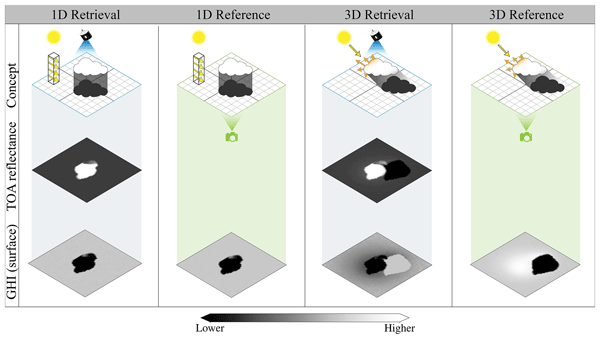
Retrievals of surface solar radiation from passive satellite instruments normally neglect the three-dimensional (3D) interaction between clouds and radiation. This study identifies error sources arising from this neglect and demonstrates their influence on retrieval accuracy across a range of spatial resolutions. At the resolution of current geostationary satellites, 3D interactions can already introduce considerable errors, underscoring the need to develop corrections that account for them.
Marc Castellnou Ribau, Mercedes Bachfischer, Pau Guarque, Laia Estivill, Marta Miralles Bover, Borja Ruiz, Jordi Pagès, Brian Verhoeven, Zisoula Ntasiou, Ove Stokkeland, Chiel van Heerwaarden, Tristan Roelofs, Martin Janssens, Cathelijne R. Stoof, and Jordi Vilà-Guerau de Arellano
Atmos. Meas. Tech., 18, 7805–7831, https://doi.org/10.5194/amt-18-7805-2025, https://doi.org/10.5194/amt-18-7805-2025, 2025
Short summary
Short summary
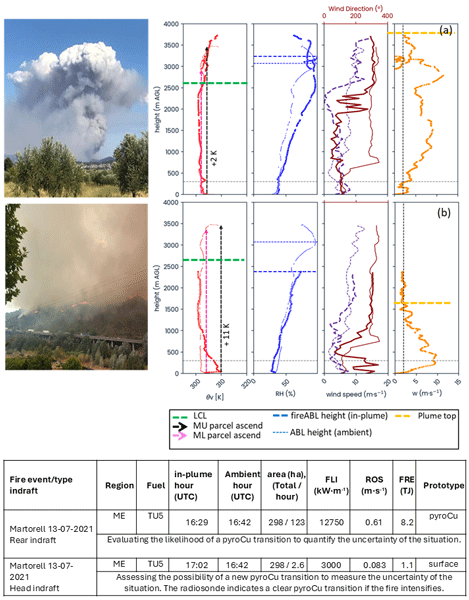
Firefighter entrapments can occur when wildfires escalate suddenly due to fire-atmosphere interactions. This study presents a method to analyze this in real-time using two weather balloon measurements: ambient and in-plume conditions. Researchers launched 156 balloons during wildfire seasons in Spain, Chile, Greece, and the Netherlands. This methodology detects sudden changes in fire behavior by comparing ambient and in-plume data, ultimately enhancing research on fire-atmosphere interactions.
Rikke Stoffels, Imme Benedict, Lukas Papritz, Frank Selten, and Chris Weijenborg
Weather Clim. Dynam., 6, 1743–1768, https://doi.org/10.5194/wcd-6-1743-2025, https://doi.org/10.5194/wcd-6-1743-2025, 2025
Short summary
Short summary
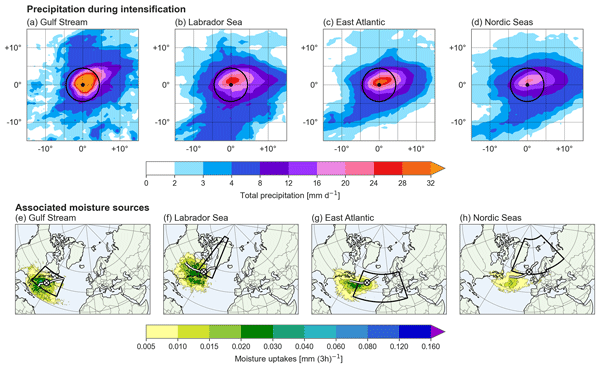
Summertime North Atlantic storms bring heavy rainfall, especially near their centers and along their fronts. By tracking precipitating air parcels back in time we find that the moisture comes from areas of strong ocean evaporation, with hotspots in the Gulf Stream region. We also find that sometimes evaporation in a previous storm can contribute to rainfall in the next. Unlike in winter, summer storms also draw moisture from land, and their properties are partly shaped by former tropical storms.
Hans Segura, Xabier Pedruzo-Bagazgoitia, Philipp Weiss, Sebastian K. Müller, Thomas Rackow, Junhong Lee, Edgar Dolores-Tesillos, Imme Benedict, Matthias Aengenheyster, Razvan Aguridan, Gabriele Arduini, Alexander J. Baker, Jiawei Bao, Swantje Bastin, Eulàlia Baulenas, Tobias Becker, Sebastian Beyer, Hendryk Bockelmann, Nils Brüggemann, Lukas Brunner, Suvarchal K. Cheedela, Sushant Das, Jasper Denissen, Ian Dragaud, Piotr Dziekan, Madeleine Ekblom, Jan Frederik Engels, Monika Esch, Richard Forbes, Claudia Frauen, Lilli Freischem, Diego García-Maroto, Philipp Geier, Paul Gierz, Álvaro González-Cervera, Katherine Grayson, Matthew Griffith, Oliver Gutjahr, Helmuth Haak, Ioan Hadade, Kerstin Haslehner, Shabeh ul Hasson, Jan Hegewald, Lukas Kluft, Aleksei Koldunov, Nikolay Koldunov, Tobias Kölling, Shunya Koseki, Sergey Kosukhin, Josh Kousal, Peter Kuma, Arjun U. Kumar, Rumeng Li, Nicolas Maury, Maximilian Meindl, Sebastian Milinski, Kristian Mogensen, Bimochan Niraula, Jakub Nowak, Divya Sri Praturi, Ulrike Proske, Dian Putrasahan, René Redler, David Santuy, Domokos Sármány, Reiner Schnur, Patrick Scholz, Dmitry Sidorenko, Dorian Spät, Birgit Sützl, Daisuke Takasuka, Adrian Tompkins, Alejandro Uribe, Mirco Valentini, Menno Veerman, Aiko Voigt, Sarah Warnau, Fabian Wachsmann, Marta Wacławczyk, Nils Wedi, Karl-Hermann Wieners, Jonathan Wille, Marius Winkler, Yuting Wu, Florian Ziemen, Janos Zimmermann, Frida A.-M. Bender, Dragana Bojovic, Sandrine Bony, Simona Bordoni, Patrice Brehmer, Marcus Dengler, Emanuel Dutra, Saliou Faye, Erich Fischer, Chiel van Heerwaarden, Cathy Hohenegger, Heikki Järvinen, Markus Jochum, Thomas Jung, Johann H. Jungclaus, Noel S. Keenlyside, Daniel Klocke, Heike Konow, Martina Klose, Szymon Malinowski, Olivia Martius, Thorsten Mauritsen, Juan Pedro Mellado, Theresa Mieslinger, Elsa Mohino, Hanna Pawłowska, Karsten Peters-von Gehlen, Abdoulaye Sarré, Pajam Sobhani, Philip Stier, Lauri Tuppi, Pier Luigi Vidale, Irina Sandu, and Bjorn Stevens
Geosci. Model Dev., 18, 7735–7761, https://doi.org/10.5194/gmd-18-7735-2025, https://doi.org/10.5194/gmd-18-7735-2025, 2025
Short summary
Short summary
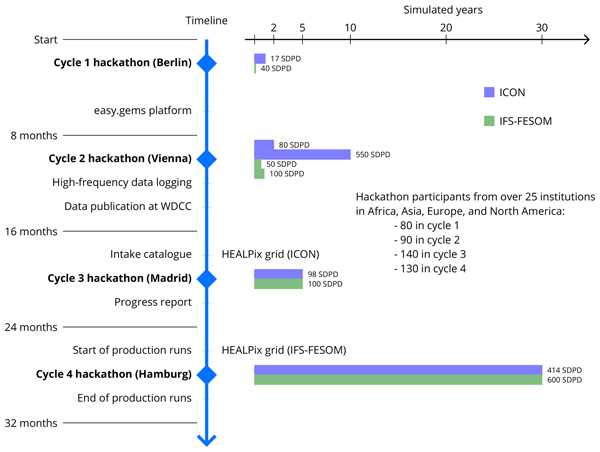
The Next Generation of Earth Modeling Systems project (nextGEMS) developed two Earth system models that use horizontal grid spacing of 10 km and finer, giving more fidelity to the representation of local phenomena, globally. In its fourth cycle, nextGEMS simulated the Earth System climate over the 2020–2049 period under the SSP3-7.0 scenario. Here, we provide an overview of nextGEMS, insights into the model development, and the realism of multi-decadal, kilometer-scale simulations.
Job I. Wiltink, Hartwig Deneke, Chiel C. van Heerwaarden, and Jan Fokke Meirink
Atmos. Meas. Tech., 18, 3917–3936, https://doi.org/10.5194/amt-18-3917-2025, https://doi.org/10.5194/amt-18-3917-2025, 2025
Short summary
Short summary
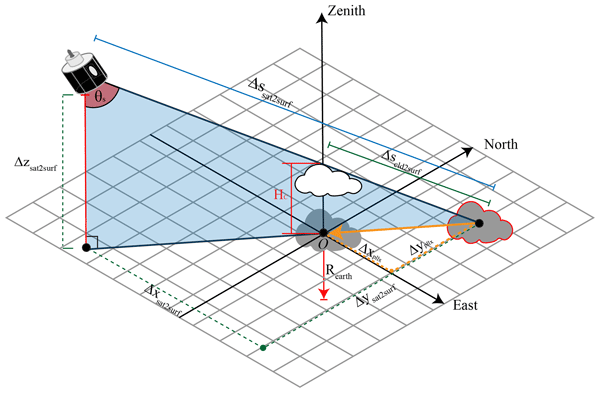
Global horizontal irradiance retrievals from satellite observations are affected by spatial displacements due to parallax and cloud shadows. We assess different approaches to correct for these displacements and quantify their added value by comparison with a network of ground-based pyranometer observations. The corrections are found to become increasingly important at higher spatial resolutions and are most relevant for variable cloud types.
Peter Kalverla, Imme Benedict, Chris Weijenborg, and Ruud J. van der Ent
Geosci. Model Dev., 18, 4335–4352, https://doi.org/10.5194/gmd-18-4335-2025, https://doi.org/10.5194/gmd-18-4335-2025, 2025
Short summary
Short summary
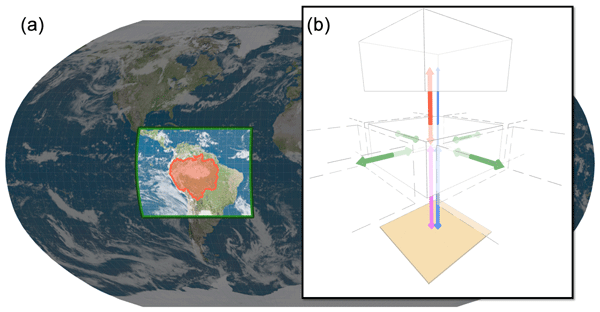
We introduce a new version of WAM2layers (Water Accounting Model – 2 layers), a computer program that tracks how the weather brings water from one place to another. It uses data from weather and climate models, whose resolution is steadily increasing. Processing the latest data had become a challenge, and the updates presented here ensure that WAM2layers runs smoothly again. We also made it easier to use the program and to understand its source code. This makes it more transparent, reliable, and easier to maintain.
Wouter Mol and Chiel van Heerwaarden
Atmos. Chem. Phys., 25, 4419–4441, https://doi.org/10.5194/acp-25-4419-2025, https://doi.org/10.5194/acp-25-4419-2025, 2025
Short summary
Short summary
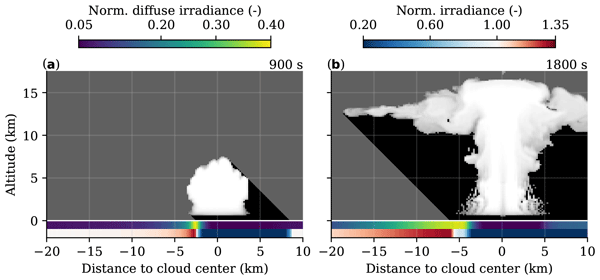
Sunlight varies often and quickly under broken cloud cover, and every cloud field creates a unique pattern of sunlight on the surface below. These variations affect many processes in the Earth system, from photosynthesis and chemistry to cloud formation itself. The exact way in which cloud particles interact with sunlight is complex and expensive to calculate. We demonstrate a simplified framework which explains how sunlight changes for potentially any cloud field.
Freek Engel, Anne J. Hoek van Dijke, Caspar T. J. Roebroek, and Imme Benedict
Hydrol. Earth Syst. Sci., 29, 1895–1918, https://doi.org/10.5194/hess-29-1895-2025, https://doi.org/10.5194/hess-29-1895-2025, 2025
Short summary
Short summary
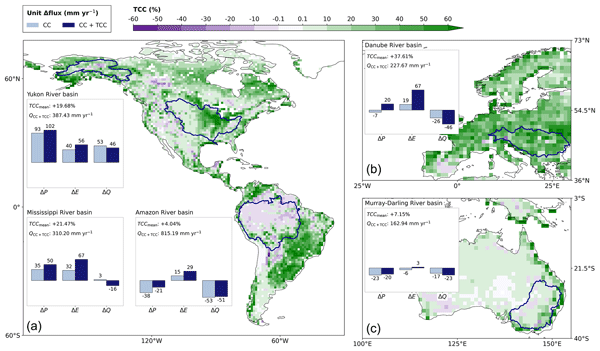
A warming climate alters the freshwater availability over land, and, due to related tree cover change and potential forestation, this availability can be further enhanced or negated. We find that large-scale change in tree cover may counteract climate-driven changes on a global scale, whereas, regionally, the climate and tree cover impacts can differ extensively. Current ecosystem restoration projects should account for the effects of (re-)forestation on (non-)local water availability.
Arie Staal, Pim Meijer, Maganizo Kruger Nyasulu, Obbe A. Tuinenburg, and Stefan C. Dekker
Earth Syst. Dynam., 16, 215–238, https://doi.org/10.5194/esd-16-215-2025, https://doi.org/10.5194/esd-16-215-2025, 2025
Short summary
Short summary
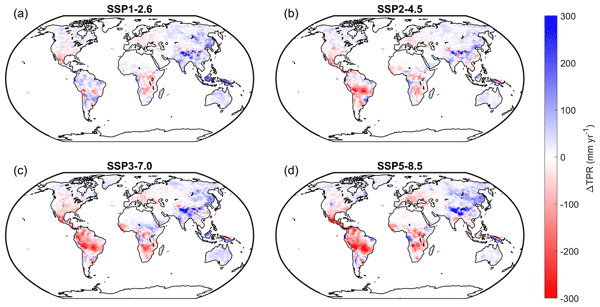
Many areas across the globe rely on upwind land areas for their precipitation supply through terrestrial precipitation recycling. Here we simulate global precipitation recycling in four climate and land-use scenarios until 2100. We find that global terrestrial moisture recycling decreases by 1.5 % with every degree of global warming but with strong regional differences.
Job I. Wiltink, Hartwig Deneke, Yves-Marie Saint-Drenan, Chiel C. van Heerwaarden, and Jan Fokke Meirink
Atmos. Meas. Tech., 17, 6003–6024, https://doi.org/10.5194/amt-17-6003-2024, https://doi.org/10.5194/amt-17-6003-2024, 2024
Short summary
Short summary
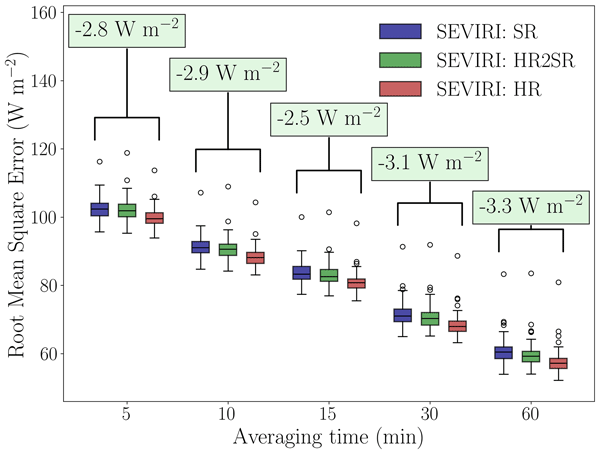
Meteosat Spinning Enhanced Visible and Infrared Imager (SEVIRI) global horizontal irradiance (GHI) retrievals are validated at standard and increased spatial resolution against a network of 99 pyranometers. GHI accuracy is strongly dependent on the cloud regime. Days with variable cloud conditions show significant accuracy improvements when retrieved at higher resolution. We highlight the benefits of dense network observations and a cloud-regime-resolved approach in validating GHI retrievals.
Mirjam Tijhuis, Bart J. H. van Stratum, and Chiel C. van Heerwaarden
Atmos. Chem. Phys., 24, 10567–10582, https://doi.org/10.5194/acp-24-10567-2024, https://doi.org/10.5194/acp-24-10567-2024, 2024
Short summary
Short summary
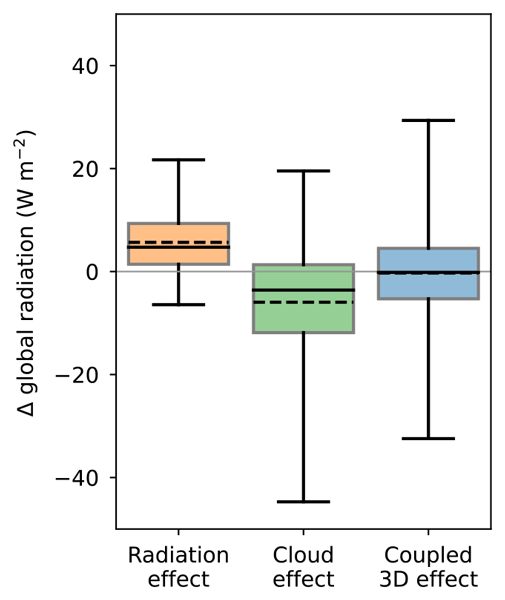
Radiative transfer in the atmosphere is a 3D processes, which is often modelled in 1D for computational efficiency. We studied the differences between using 1D and 3D radiative transfer. With 3D radiation, larger clouds that contain more liquid water develop. However, they cover roughly the same part of the sky, and the average total radiation at the surface is nearly unchanged. The increase in cloud size might be important for weather models, as it can impact the formation of rain, for example.
Freek Engel, Anne J. Hoek van Dijke, Caspar T. J. Roebroek, and Imme Benedict
EGUsphere, https://doi.org/10.5194/egusphere-2024-313, https://doi.org/10.5194/egusphere-2024-313, 2024
Preprint archived
Short summary
Short summary
A warming climate alters the freshwater availability over land, and due to related tree cover change and potential forestation this availability can be further enhanced or negated. We find that large-scale change in tree cover counteracts climate-driven changes on a global scale, whereas regionally the climate and tree cover impacts can differ extensively. Current ecosystem restoration projects should account for the effects of (re)forestation on (non-)local water availability.
Mohsen Soltani, Bert Hamelers, Abbas Mofidi, Christopher G. Fletcher, Arie Staal, Stefan C. Dekker, Patrick Laux, Joel Arnault, Harald Kunstmann, Ties van der Hoeven, and Maarten Lanters
Earth Syst. Dynam., 14, 931–953, https://doi.org/10.5194/esd-14-931-2023, https://doi.org/10.5194/esd-14-931-2023, 2023
Short summary
Short summary
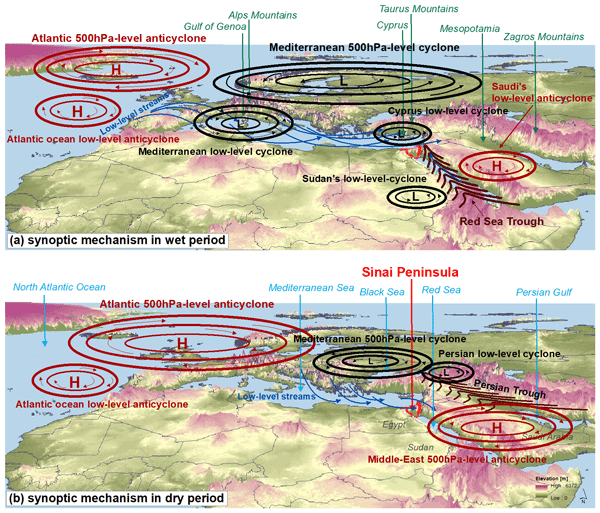
The temporal changes and spatial patterns in precipitation events do not show a homogeneous tendency across the Sinai Peninsula. Mediterranean cyclones accompanied by the Red Sea and Persian troughs are responsible for the majority of Sinai's extreme rainfall events. Cyclone tracking captures 156 cyclones (rainfall ≥10 mm d-1) either formed within or transferred to the Mediterranean basin precipitating over Sinai.
Bert G. Heusinkveld, Wouter B. Mol, and Chiel C. van Heerwaarden
Atmos. Meas. Tech., 16, 3767–3785, https://doi.org/10.5194/amt-16-3767-2023, https://doi.org/10.5194/amt-16-3767-2023, 2023
Short summary
Short summary
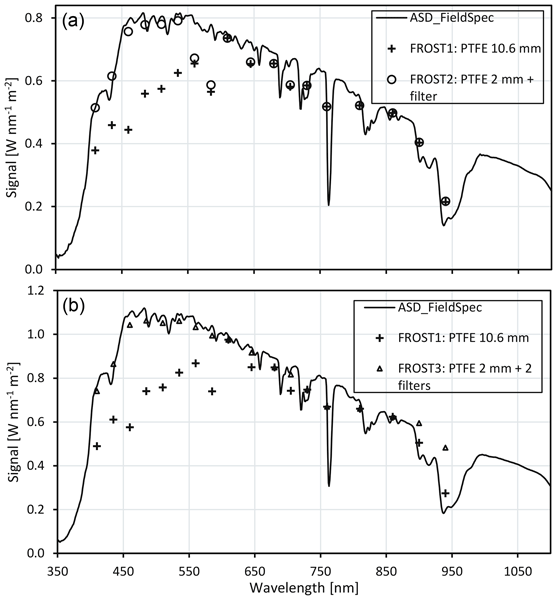
This paper presents a new instrument for fast measurements of solar irradiance in 18 wavebands (400–950 nm): GPS perfectly synchronizes 10 Hz measurement speed to universal time, low-cost (< EUR 200) complete standalone solution for realizing dense measurement grids to study cloud-shading dynamics, 940 nm waveband reveals atmospheric moisture column information, 11 wavebands to study photosynthetic active radiation and light interaction with vegetation, and good reflection spectra performance.

Wouter B. Mol, Wouter H. Knap, and Chiel C. van Heerwaarden
Earth Syst. Sci. Data, 15, 2139–2151, https://doi.org/10.5194/essd-15-2139-2023, https://doi.org/10.5194/essd-15-2139-2023, 2023
Short summary
Short summary
We describe a dataset of detailed measurements of sunlight reaching the surface, recorded at a rate of one measurement per second for 10 years. The dataset includes detailed information on direct and scattered sunlight; classifications and statistics of variability; and observations of clouds, atmospheric composition, and wind. The dataset can be used to study how the atmosphere influences sunlight variability and to validate models that aim to predict this variability with greater accuracy.
Jolanda J. E. Theeuwen, Arie Staal, Obbe A. Tuinenburg, Bert V. M. Hamelers, and Stefan C. Dekker
Hydrol. Earth Syst. Sci., 27, 1457–1476, https://doi.org/10.5194/hess-27-1457-2023, https://doi.org/10.5194/hess-27-1457-2023, 2023
Short summary
Short summary
Evaporation changes over land affect rainfall over land via moisture recycling. We calculated the local moisture recycling ratio globally, which describes the fraction of evaporated moisture that rains out within approx. 50 km of its source location. This recycling peaks in summer as well as over wet and elevated regions. Local moisture recycling provides insight into the local impacts of evaporation changes and can be used to study the influence of regreening on local rainfall.
Luuk D. van der Valk, Adriaan J. Teuling, Luc Girod, Norbert Pirk, Robin Stoffer, and Chiel C. van Heerwaarden
The Cryosphere, 16, 4319–4341, https://doi.org/10.5194/tc-16-4319-2022, https://doi.org/10.5194/tc-16-4319-2022, 2022
Short summary
Short summary
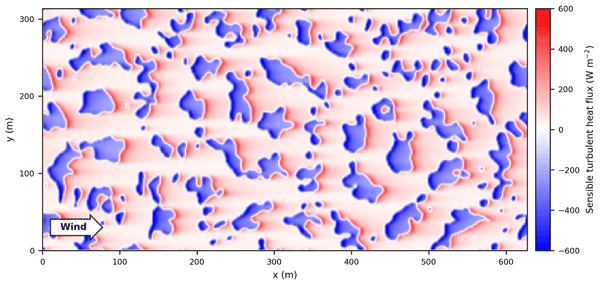
Most large-scale hydrological and climate models struggle to capture the spatially highly variable wind-driven melt of patchy snow cover. In the field, we find that 60 %–80 % of the total melt is wind driven at the upwind edge of a snow patch, while it does not contribute at the downwind edge. Our idealized simulations show that the variation is due to a patch-size-independent air-temperature reduction over snow patches and also allow us to study the role of wind-driven snowmelt on larger scales.
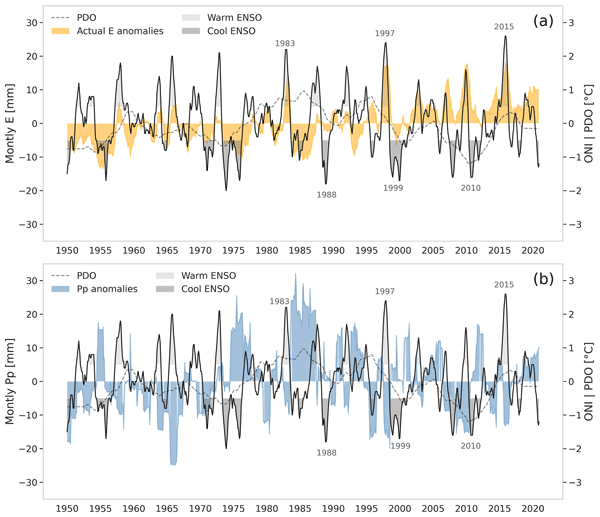
Felipe Lobos-Roco, Oscar Hartogensis, Francisco Suárez, Ariadna Huerta-Viso, Imme Benedict, Alberto de la Fuente, and Jordi Vilà-Guerau de Arellano
Hydrol. Earth Syst. Sci., 26, 3709–3729, https://doi.org/10.5194/hess-26-3709-2022, https://doi.org/10.5194/hess-26-3709-2022, 2022
Short summary
Short summary
This research brings a multi-scale temporal analysis of evaporation in a saline lake of the Atacama Desert. Our findings reveal that evaporation is controlled differently depending on the timescale. Evaporation is controlled sub-diurnally by wind speed, regulated seasonally by radiation and modulated interannually by ENSO. Our research extends our understanding of evaporation, contributing to improving the climate change assessment and efficiency of water management in arid regions.
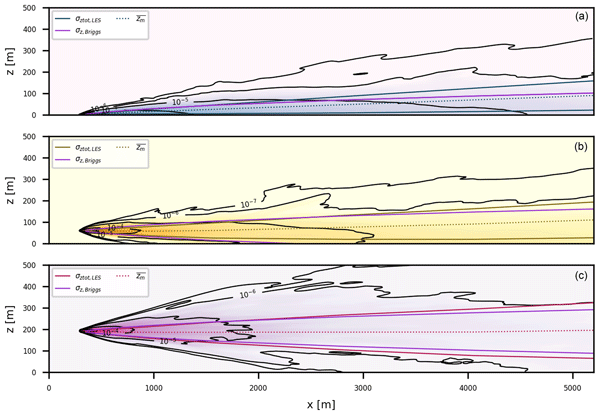
Anja Ražnjević, Chiel van Heerwaarden, and Maarten Krol
Atmos. Meas. Tech., 15, 3611–3628, https://doi.org/10.5194/amt-15-3611-2022, https://doi.org/10.5194/amt-15-3611-2022, 2022
Short summary
Short summary
We evaluate two widely used observational techniques (Other Test Method (OTM) 33A and car drive-bys) that estimate point source gas emissions. We performed our analysis on high-resolution plume dispersion simulation. For car drive-bys we found that at least 15 repeated measurements were needed to get within 40 % of the true emissions. OTM 33A produced large errors in estimation (50 %–200 %) due to its sensitivity to dispersion coefficients and underlying simplifying assumptions.
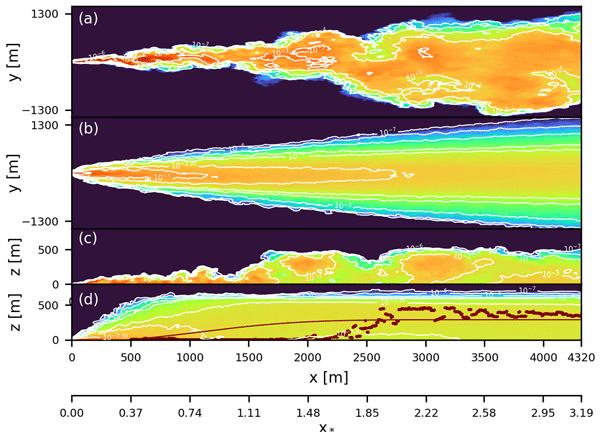
Anja Ražnjević, Chiel van Heerwaarden, Bart van Stratum, Arjan Hensen, Ilona Velzeboer, Pim van den Bulk, and Maarten Krol
Atmos. Chem. Phys., 22, 6489–6505, https://doi.org/10.5194/acp-22-6489-2022, https://doi.org/10.5194/acp-22-6489-2022, 2022
Short summary
Short summary
Mobile measurement techniques (e.g., instruments placed in cars) are often employed to identify and quantify individual sources of greenhouse gases. Due to road restrictions, those observations are often sparse (temporally and spatially). We performed high-resolution simulations of plume dispersion, with realistic weather conditions encountered in the field, to reproduce the measurement process of a methane plume emitted from an oil well and provide additional information about the plume.
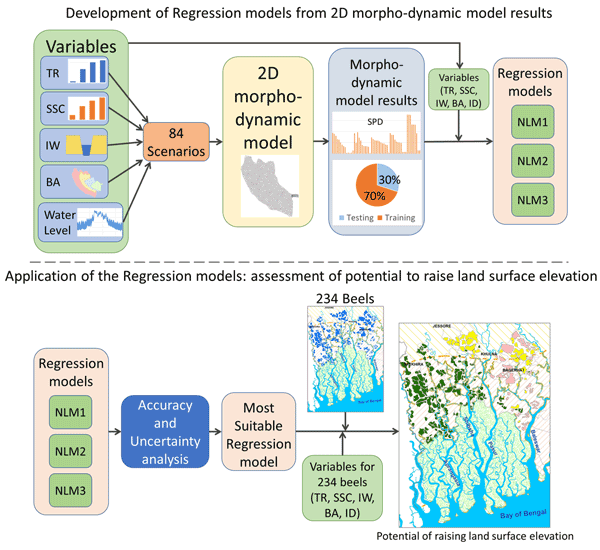
Md Feroz Islam, Paul P. Schot, Stefan C. Dekker, Jasper Griffioen, and Hans Middelkoop
Hydrol. Earth Syst. Sci., 26, 903–921, https://doi.org/10.5194/hess-26-903-2022, https://doi.org/10.5194/hess-26-903-2022, 2022
Short summary
Short summary
The potential of sedimentation in the lowest parts of polders (beels) through controlled flooding with dike breach (tidal river management – TRM) to counterbalance relative sea level rise (RSLR) in 234 beels of SW Bangladesh is determined in this study, using 2D models and multiple regression. Lower beels located closer to the sea have the highest potential. Operating TRM only during the monsoon season is sufficient to raise the land surface of most beels by more than 3 times the yearly RSLR.
Cited articles
Ali, E., Cramer, W., Carnicer, J., Georgopoulou, E., Hilmi, N. J. M., Le Cozannet, G., and Lionello, P.: Cross-Chapter Paper 4: Mediterranean Region, Climate Change 2022: Impacts, Adaptation and Vulnerability. Contribution of Working Group II to the Sixth Assessment Report of the Intergovernmental Panel on Climate Change, Cambridge University Press, 2233–2272, https://doi.org/10.1017/9781009325844.021, 2022.
Allam, A., Moussa, R., Najem, W., and Bocquillon, C.: Hydrological cycle, Mediterranean basins hydrology, in: Water Resources in the Mediterranean Region, Elsevier, 1–21, https://doi.org/10.1016/B978-0-12-818086-0.00001-7, 2020.
Ardilouze, C., Materia, S., Batté, L., Benassi, M., and Prodhomme, C.: Precipitation response to extreme soil moisture conditions over the Mediterranean, Clim. Dynam., 58, 1927–1942, https://doi.org/10.1007/s00382-020-05519-5, 2022.
Bestelmeyer, B. T., Okin, G. S., Duniway, M. C., Archer, S. R., Sayre, N. F., Williamson, J. C., and Herrick, J. E.: Desertification, land use, and the transformation of global drylands, Front. Ecol. Environ., 13, 28–36, https://doi.org/10.1890/140162, 2015.
Bonan, G. B.: Forests and climate change: Forcings, feedbacks, and the climate benefits of forests, Science, 320, 1444–1449, https://doi.org/10.1126/science.1155121, 2008.
Brunner, I., Herzog, C., Dawes, M. A., Arend, M., and Sperisen, C.: How tree roots respond to drought, Front. Plant. Sci., 6, https://doi.org/10.3389/fpls.2015.00547, 2015.
Cerasoli, S., Yin, J., and Porporato, A.: Cloud cooling effects of afforestation and reforestation at midlatitudes, P. Natl. Acad. Sci. USA, 118, e2026241118, https://doi.org/10.1073/pnas.2026241118, 2021.
Cui, J., Lian, X., Huntingford, C., Gimeno, L., Wang, T., Ding, J., He, M., Xu, H., Chen, A., Gentine, P., and Piao, S.: Global water availability boosted by vegetation-driven changes in atmospheric moisture transport, Nat. Geosci., 15, 982–988, https://doi.org/10.1038/s41561-022-01061-7, 2022.
De Hertog, S. J., Lopez-Fabara, C. E., van der Ent, R., Keune, J., Miralles, D. G., Portmann, R., Schemm, S., Havermann, F., Guo, S., Luo, F., Manola, I., Lejeune, Q., Pongratz, J., Schleussner, C.-F., Seneviratne, S. I., and Thiery, W.: Effects of idealized land cover and land management changes on the atmospheric water cycle, Earth Syst. Dynam., 15, 265–291, https://doi.org/10.5194/esd-15-265-2024, 2024.
Diffenbaugh, N. S., Giorgi, F., and Pal, J. S.: Climate change hotspots in the United States, Geophys. Res. Lett., 35, https://doi.org/10.1029/2008GL035075, 2008.
Döll, P.: Vulnerability to the impact of climate change on renewable groundwater resources: A global-scale assessment, Environ. Res. Lett., 4, 035006, https://doi.org/10.1088/1748-9326/4/3/035006, 2009.
ECMWF: IFS Documentation CY36R1 – Part IV: Physical Processes, ECMWF, https://doi.org/10.21957/2loi3bxcz, 2010.
Emanuel, K.: On the physics of high CAPE, J. Atmos. Sci., 80, 2669–2683, https://doi.org/10.1175/JAS-D-23-0060.1, 2023.
Esler, K. J., Jacobsen, A. L., and Pratt, R. B.: The biology of Mediterranean-type ecosystems, 1st Edn., Oxford University Press, https://doi.org/10.1093/oso/9780198739135.001.0001, 2018.
Findell, K. L. and Eltahir, E. A. B.: Atmospheric Controls on Soil Moisture-Boundary Layer Interactions. Part I: Framework Development, J. Hydrometeorol., 4, 552–569, https://doi.org/10.1175/1525-7541(2003)004<0552:ACOSML>2.0.CO;2, 2003a.
Findell, K. L. and Eltahir, E. A. B.: Atmospheric controls on soil moisture-boundary layer interactions: Three-dimensional wind effects, J. Geophys. Res. Atmos., 108, https://doi.org/10.1029/2001JD001515, 2003b.
Forzieri, G., Alkama, R., Miralles, D. G., and Cescatti, A.: Satellites reveal contrasting responses of regional climate to the widespread greening of Earth, Science, 356, 1180–1184, https://doi.org/10.1126/science.aal1727, 2017.
Fraedrich, K. and Kleidon, A.: A green planet versus a desert world: Estimating the effect of vegetation extremes on the atmosphere, J. Climate, 12, 3156–3163, https://doi.org/10.1175/1520-0442(1999)012%3C3156:AGPVAD%3E2.0.CO;2, 1999.
Fraser, E. D. G., Simelton, E., Termansen, M., Gosling, S. N., and South, A.: “ Vulnerability hotspots”: Integrating socio-economic and hydrological models to identify where cereal production may decline in the future due to climate change induced drought, Agr. Forest Meteorol., 170, 195–205, https://doi.org/10.1016/j.agrformet.2012.04.008, 2013.
Galleguillos, M., Gimeno, F., Puelma, C., Zambrano-Bigiarini, M., Lara, A., and Rojas, M.: Disentangling the effect of future land use strategies and climate change on streamflow in a Mediterranean catchment dominated by tree plantations, J. Hydrol., 595, 126047, https://doi.org/10.1016/j.jhydrol.2021.126047, 2021.
Gibbard, S., Caldeira, K., Bala, G., Phillips, T. J., and Wickett, M.: Climate effects of global land cover change, Geophys. Res. Lett., 32, 1–4, https://doi.org/10.1029/2005GL024550, 2005.
Hersbach, H., Bell, B., Berrisford, P., Hirahara, S., Horányi, A., Muñoz-Sabater, J., Nicolas, J., Peubey, C., Radu, R., Schepers, D., Simmons, A., Soci, C., Abdalla, S., Abellan, X., Balsamo, G., Bechtold, P., Biavati, G., Bidlot, J., Bonavita, M., De Chiara, G., Dahlgren, P., Dee, D., Diamantakis, M., Dragani, R., Flemming, J., Forbes, R., Fuentes, M., Geer, A., Haimberger, L., Healy, S., Hogan, R. J., Hólm, E., Janisková, M., Keeley, S., Laloyaux, P., Lopez, P., Lupu, C., Radnoti, G., de Rosnay, P., Rozum, I., Vamborg, F., Villaume, S., and Thépaut, J. N.: The ERA5 global reanalysis, Q. J. Roy. Meteorol. Soc., 146, 1999–2049, https://doi.org/10.1002/qj.3803, 2020.
Hersbach, H., Bell, B., Berrisford, P., Biavati, G., Horányi, A., Muñoz Sabater, J., Nicolas, J., Peubey, C., Radu, R., Rozum, I., Schepers, D., Simmons, A., Soci, C., Dee, D., and Thépaut, J.-N.: ERA5 monthly averaged data on single levels from 1940 to present, Copernicus Climate Data Store [data set], https://doi.org/10.24381/cds.f17050d7, 2023.
Hoek van Dijke, A. J., Herold, M., Mallick, K., Benedict, I., Machwitz, M., Schlerf, M., Pranindita, A., Theeuwen, J. J. E., Bastin, J.-F., and Teuling, A. J.: Shifts in regional water availability due to global tree restoration, Nat. Geosci., 15, 363–368, https://doi.org/10.1038/s41561-022-00935-0, 2022.
Intergovernmental Panel on Climate Change (IPCC): Water Cycle Changes, in: Climate Change 2021 – The Physical Science Basis, Cambridge University Press, 1055–1210, https://doi.org/10.1017/9781009157896.010, 2023.
Jarvis, P. G.: The interpretation of the variations in leaf water potential and stomatal conductance found in canopies in the field, Philos. Trans. R. Soc. Lond., 273, 593–610, https://doi.org/10.1098/rstb.1976.0035, 1976.
Juang, J. Y., Porporato, A., Stoy, P. C., Siqueira, M. S., Oishi, A. C., Detto, M., Kim, H. S., and Katul, G. G.: Hydrologic and atmospheric controls on initiation of convective precipitation events, Water Resour. Res., 43, https://doi.org/10.1029/2006WR004954, 2007.
King, J. A., Weber, J., Lawrence, P., Roe, S., Swann, A. L. S., and Val Martin, M.: Global and regional hydrological impacts of global forest expansion, Biogeosciences, 21, 3883–3902, https://doi.org/10.5194/bg-21-3883-2024, 2024.
Konings, A. G., Katul, G. G., and Porporato, A.: The rainfall-no rainfall transition in a coupled land-convective atmosphere system, Geophys. Res. Lett., 37, https://doi.org/10.1029/2010GL043967, 2010.
Konings, A. G., Dekker, S. C., Rietkerk, M., and Katul, G. G.: Drought sensitivity of patterned vegetation determined by rainfall-land surface feedbacks, J. Geophys. Res.-Biogeo., 116, 1–15, https://doi.org/10.1029/2011JG001748, 2011.
Leutwyler, D., Imamovic, A., and Schär, C.: The continental-scale soil moisture-precipitation feedback in Europe with parameterized and explicit convection, J. Clim., 34, 5303–5320, https://doi.org/10.1175/JCLI-D-20, 2021.
Lian, X., Jeong, S., Park, C. E., Xu, H., Li, L. Z. X., Wang, T., Gentine, P., Peñuelas, J., and Piao, S.: Biophysical impacts of northern vegetation changes on seasonal warming patterns, Nat. Commun., 13, 3925, https://doi.org/10.1038/s41467-022-31671-z, 2022.
Liu, W., Zhang, Q., Li, C., Xu, L., and Xiao, W.: The influence of soil moisture on convective activity: a review, Theor. Appl. Climatol., 149, 221–232, https://doi.org/10.1007/s00704-022-04046-z, 2022.
Lombardo, K. and Bitting, M.: A Climatology of Convective Precipitation over Europe, Mon. Weather Rev., 152, 1555–1585, https://doi.org/10.1175/MWR-D-23, 2024.
Luo, X., Ge, J., Guo, W., Fan, L., Chen, C., Liu, Y. U., and Yang, L.: The biophysical impacts of deforestation on precipitation: results from the CMIP6 model intercomparison, J. Clim., 35, 3293–3311, https://doi.org/10.1175/JCLI-D-21-0689.1, 2022.
Materia, S., Ardilouze, C., Prodhomme, C., Donat, M. G., Benassi, M., Doblas-Reyes, F. J., Peano, D., Caron, L. P., Ruggieri, P., and Gualdi, S.: Summer temperature response to extreme soil water conditions in the Mediterranean transitional climate regime, Clim. Dynam., 58, 1943–1963, https://doi.org/10.1007/s00382-021-05815-8, 2022.
May, R. M., Goebbert, K. H., Thielen, J. E., Leeman, J. R., Camron, M. D., Bruick, Z., Bruning, E. C., Manser, R. P., Arms, S. C., and Marsh, P. T.: MetPy: A Meteorological Python Library for Data Analysis and Visualization, B. Am. Meteorol. Soc., 103, E2273–E2284, https://doi.org/10.1175/BAMS-D-21-0125.1, 2022.
Meier, R., Schwaab, J., Seneviratne, S. I., Sprenger, M., Lewis, E., and Davin, E. L.: Empirical estimate of forestation-induced precipitation changes in Europe, Nat. Geosci., 14, 473–478, https://doi.org/10.1038/s41561-021-00773-6, 2021.
Miralles, D. G., Teuling, A. J., Van Heerwaarden, C. C., and De Arellano, J. V. G.: Mega-heatwave temperatures due to combined soil desiccation and atmospheric heat accumulation, Nat. Geosci., 7, 345–349, https://doi.org/10.1038/ngeo2141, 2014.
Monin, A. S. and Obukhov, A. M.: Basic laws of turbulent mixing in the surface layer of the atmosphere, Tr. Akad. Nauk SSSR Geophiz. Inst, 24, 163–187, 1954.
Monteith, J. L.: Evaporation and environment, in: Symposia of the society for experimental biology, 19, 205–234, https://repository.rothamsted.ac.uk/item/8v5v7/evaporation-and-environment (last access: 14 November 2025), 1965.
Noce, S., Collalti, A., and Santini, M.: Likelihood of changes in forest species suitability, distribution, and diversity under future climate: The case of Southern Europe, Ecol. Evol., 7, 9358–9375, https://doi.org/10.1002/ece3.3427, 2017.
Noilhan, J. and Mahfouf, J.-F.: The ISBA land surface parameterisation scheme, Glob. Planet Change, 13, 145–159, https://doi.org/10.1016/0921-8181(95)00043-7, 1996.
O'Connor, J. C., Dekker, S. C., Staal, A., Tuinenburg, O. A., Rebel, K. T., and Santos, M. J.: Forests buffer against variations in precipitation, Glob. Change Biol., 27, 4686–4696, https://doi.org/10.1111/gcb.15763, 2021.
Pielke, S.: Influence of the spatial distribution of vegetation and soils on the prediction of cumulus convective rainfall, Rev. Geophys., 39, 151–177, https://doi.org/10.1029/1999RG000072, 2001.
Pokhrel, Y., Felfelani, F., Satoh, Y., Boulange, J., Burek, P., Gädeke, A., Gerten, D., Gosling, S. N., Grillakis, M., Gudmundsson, L., Hanasaki, N., Kim, H., Koutroulis, A., Liu, J., Papadimitriou, L., Schewe, J., Müller Schmied, H., Stacke, T., Telteu, C. E., Thiery, W., Veldkamp, T., Zhao, F., and Wada, Y.: Global terrestrial water storage and drought severity under climate change, Nat. Clim. Change, 11, 226–233, https://doi.org/10.1038/s41558-020-00972-w, 2021.
Portmann, R., Beyerle, U., Davin, E., Fischer, E. M., De Hertog, S., and Schemm, S.: Global forestation and deforestation affect remote climate via adjusted atmosphere and ocean circulation, Nat. Commun., 13, 5569, https://doi.org/10.1038/s41467-022-33279-9, 2022.
Roberts, N., Moreno, A., Valero-Garcés, B. L., Corella, J. P., Jones, M., Allcock, S., Woodbridge, J., Morellón, M., Luterbacher, J., Xoplaki, E., and Türkeş, M.: Palaeolimnological evidence for an east-west climate see-saw in the Mediterranean since AD 900, Glob. Planet. Change, 84–85, 23–34, https://doi.org/10.1016/j.gloplacha.2011.11.002, 2012.
Ruijsch, J., Teuling, A. J., Duveiller, G., and Hutjes, R. W. A.: The local cooling potential of land restoration in Africa, Commun. Earth Environ., 5, 495, https://doi.org/10.1038/s43247-024-01650-x, 2024.
Ruiz-Peinado, R., Bravo-Oviedo, A., López-Senespleda, E., Bravo, F., and del Río, M.: Forest management and carbon sequestration in the Mediterranean region: A review, For. Syst., 26, https://doi.org/10.5424/fs/2017262-11205, 2017.
Seeley, J. T. and Romps, D. M.: Why does tropical convective available potential energy (CAPE) increase with warming?, Geophys. Res. Lett., 42, 10429–10437, https://doi.org/10.1002/2015GL066199, 2015.
Seneviratne, S. I., Corti, T., Davin, E. L., Hirschi, M., Jaeger, E. B., Lehner, I., Orlowsky, B., and Teuling, A. J.: Investigating soil moisture-climate interactions in a changing climate: A review, Earth Sci. Rev., 99, 125–161, https://doi.org/10.1016/j.earscirev.2010.02.004, 2010.
Staal, A., Theeuwen, J. J. E., Wang-Erlandsson, L., Wunderling, N., and Dekker, S. C.: Targeted rainfall enhancement as an objective of forestation, Glob. Change Biol., 30, e17096, https://doi.org/10.1111/gcb.17096, 2024.
Staal, A., Meijer, P., Nyasulu, M. K., Tuinenburg, O. A., and Dekker, S. C.: Global terrestrial moisture recycling in Shared Socioeconomic Pathways, Earth Syst. Dynam., 16, 215–238, https://doi.org/10.5194/esd-16-215-2025, 2025.
Stull, R. B.: An introduction to boundary layer meteorology, 1st Edn., Kluwer Academic Publishers, ISBN 978-90-277-2768-8, 1988.
Tennekes, H.: A model for the dynamics of the inversion above a convective boundary layer, J. Atmos. Sci., 30, 558–567, https://doi.org/10.1175/1520-0469(1973)030%3C0558:AMFTDO%3E2.0.CO;2, 1973.
Tennekes, H. and Driedonks, A. G. M.: Basic entrainment equations for the atmospheric boundarly layer, Boundary Layer Meteorol., 20, 515–531, https://doi.org/10.1007/BF00122299, 1981.
Theeuwen, J. J. E., Staal, A., Tuinenburg, O. A., Hamelers, B. V. M., and Dekker, S. C.: Local moisture recycling across the globe, Hydrol. Earth Syst. Sci., 27, 1457–1476, https://doi.org/10.5194/hess-27-1457-2023, 2023.
Theeuwen, J. J. E., Dekker, S. C., Hamelers, B. V. M., and Staal, A.: Ecohydrological variables underlie local moisture recycling in Mediterranean-type climates, J. Geophys. Res.-Biogeo., 129, e2024JG008286, https://doi.org/10.1029/2024JG008286, 2024.
Theeuwen, J., Warnau, S., Benedict, I., Dekker, S., Hamelers, H., van Heerwaarden, C., and Staal, A.: Atmospheric boundary layer development over bare soil and forest in the Mediterranean Basin, Zenodo [data set], https://doi.org/10.5281/zenodo.14716230, 2025.
Tóth, G., Montanarella, L., Stolbovoy, V., Máté, F., Bódis, K., Jones, A., Panagos, P., and Van Liedekerke, M.: Soils of the European Union, EUR 23439 EN, Luxembourg (Luxembourg), OPOCE, https://doi.org/10.2788/87029, 2008.
Treppiedi, D., Cipolla, G., and Noto, L. V.: Convective precipitation over a Mediterranean area: From identification to trend analysis starting from high-resolution rain gauges data, Int. J. Climatol., 43, 293–313, https://doi.org/10.1002/joc.7758, 2023.
Tuinenburg, O. A., Bosmans, J. H. C., and Staal, A.: The global potential of forest restoration for drought mitigation, Environ. Res. Lett., 17, 034045, https://doi.org/10.1088/1748-9326/ac55b8, 2022.
United Nations Environment Programme: Ecosystem restoration for people, nature and climate: becoming #generationrestoration, United Nations Environment Programme, 51 pp., ISBN 978-92-807-3864-3, 2021.
van der Ent, R. J., Wang-Erlandsson, L., Keys, P. W., and Savenije, H. H. G.: Contrasting roles of interception and transpiration in the hydrological cycle – Part 2: Moisture recycling, Earth Syst. Dynam., 5, 471–489, https://doi.org/10.5194/esd-5-471-2014, 2014.
van Heerwaarden, C. C. and Teuling, A. J.: Disentangling the response of forest and grassland energy exchange to heatwaves under idealized land–atmosphere coupling, Biogeosciences, 11, 6159–6171, https://doi.org/10.5194/bg-11-6159-2014, 2014.
van Heerwaarden, C. C., Vilà-Guerau de Arellano, J., Gounou, A., Guichard, F., and Couvreux, F.: Understanding the daily cycle of evapotranspiration: A method to quantify the influence of forcings and feedbacks, J. Hydrometeorol., 11, 1405–1422, https://doi.org/10.1175/2010JHM1272.1, 2010.
Vilà-Guerau de Arellano, J., Gioli, B., Miglietta, F., Jonker, H. J. J., Baltink, H. K., Hutjes, R. W. A., and Holtslag, A. A. M.: Entrainment process of carbon dioxide in the atmospheric boundary layer, J. Geophys. Res. Atmos., 109, https://doi.org/10.1029/2004JD004725, 2004.
Vilà-Guerau de Arellano, J., van Heerwaarden, C. C., van Stratum, B. J. H., and van den Dries, K.: Atmospheric boundary layer: Integrating air chemistry and land interactions [software], Cambridge University Press, https://doi.org/10.1017/CBO9781316117422, 2015.
Wallace, J. M. and Hobbs, P. V.: Atmospheric science: an introductory survey, 2nd Edn., Elsevier, ISBN 978-01-273-2951-2, 2006.
Winckler, J., Reick, C. H., and Pongratz, J.: Robust identification of local biogeophysical effects of land-cover change in a global climate model, J. Climate, 30, 1159–1176, https://doi.org/10.1175/JCLI-D-16-0067.1, 2017.
Wouters, H., Petrova, I. Y., van Heerwaarden, C. C., Vilà-Guerau de Arellano, J., Teuling, A. J., Meulenberg, V., Santanello, J. A., and Miralles, D. G.: Atmospheric boundary layer dynamics from balloon soundings worldwide: CLASS4GL v1.0, Geosci. Model Dev., 12, 2139–2153, https://doi.org/10.5194/gmd-12-2139-2019, 2019.
Yin, J., Albertson, J. D., Rigby, J. R., and Porporato, A.: Land and atmospheric controls on initiation and intensity of moist convection: CAPE dynamics and LCL crossings, Water Resour. Res., 51, 8476–8493, https://doi.org/10.1002/2015WR017286, 2015.
Short summary
The Mediterranean Basin is prone to drying. This study uses a simple model to explore how forests affect the potential for rainfall by analyzing the lowest part of the atmosphere. Results show that forest contributes to rainfall potential in wet regions, where it also promotes cooling, and may reduce local precipitation in dry regions. These findings suggest that the impact of forestation varies with soil moisture, and may possibly mitigate or intensify future drying.
The Mediterranean Basin is prone to drying. This study uses a simple model to explore how...


Altmetrics
Final-revised paper
Preprint