
Articles | Volume 22, issue 23
https://doi.org/10.5194/bg-22-7647-2025
© Author(s) 2025. This work is distributed under
the Creative Commons Attribution 4.0 License.
the Creative Commons Attribution 4.0 License.
https://doi.org/10.5194/bg-22-7647-2025
© Author(s) 2025. This work is distributed under
the Creative Commons Attribution 4.0 License.
the Creative Commons Attribution 4.0 License.
Research article
| 
05 Dec 2025
Research article |
| 05 Dec 2025
| 05 Dec 2025
Investigating relationships between nitrogen inputs and in-stream nitrogen concentrations and exports across catchments in Victoria, Australia
Olaleye Babatunde
CORRESPONDING AUTHOR

Department of Infrastructure Engineering, The University of Melbourne, Parkville, VIC, Australia
Meenakshi Arora
Department of Infrastructure Engineering, The University of Melbourne, Parkville, VIC, Australia
Siva Naga Venkat Nara
Department of Infrastructure Engineering, The University of Melbourne, Parkville, VIC, Australia
Danlu Guo
School of Engineering, College of Systems & Society, The Australian National University, Canberra, ACT, Australia
Ian Cartwright
School of Earth, Atmosphere and Environment, Monash University, Clayton, Vic, Australia
Andrew W. Western
Department of Infrastructure Engineering, The University of Melbourne, Parkville, VIC, Australia
Related authors
No articles found.
Mohammad Masoud Mohammadpour Khoie, Danlu Guo, and Conrad Wasko
Hydrol. Earth Syst. Sci., 30, 5947–5970, https://doi.org/10.5194/hess-30-5947-2026, https://doi.org/10.5194/hess-30-5947-2026, 2026
Short summary
Short summary
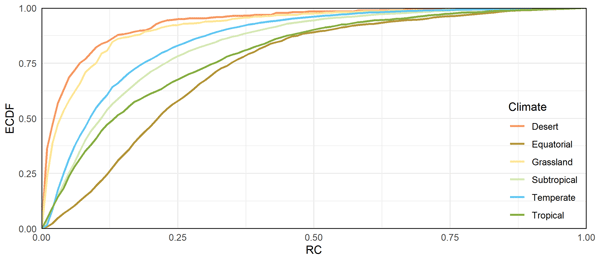
Rainfall-runoff event identification can be highly affected by parameter-driven uncertainty and event definitions that do not always reflect hydrological processes. We introduce RVEIM, a parsimonious method for event identification that improves both robustness and physical plausibility. Applied across 467 Australian catchments, RVEIM reveals systematic shifts in event runoff coefficient distribution, demonstrating how event-scale rainfall-runoff relationships vary with climate regime.
Danlu Guo, Qian Wang, and Peter Hairsine
EGUsphere, https://doi.org/10.5194/egusphere-2025-6244, https://doi.org/10.5194/egusphere-2025-6244, 2026
Short summary
Short summary
Wildfires can substantially alter sediment sources and transport in forested catchments, affecting downstream water quality. Using high-frequency data from 14 eastern Australian catchments after the 2019–2020 Black Summer fires, this event-scale study shows that severe burning often increases sediment mobilization during storms, with effects stronger than short-term hydrologic conditions. Fire impacts varied with the location of extreme burning and forest type.
Tobias F. Selkirk, Andrew W. Western, and J. Angus Webb
Hydrol. Earth Syst. Sci., 29, 5737–5754, https://doi.org/10.5194/hess-29-5737-2025, https://doi.org/10.5194/hess-29-5737-2025, 2025
Short summary
Short summary
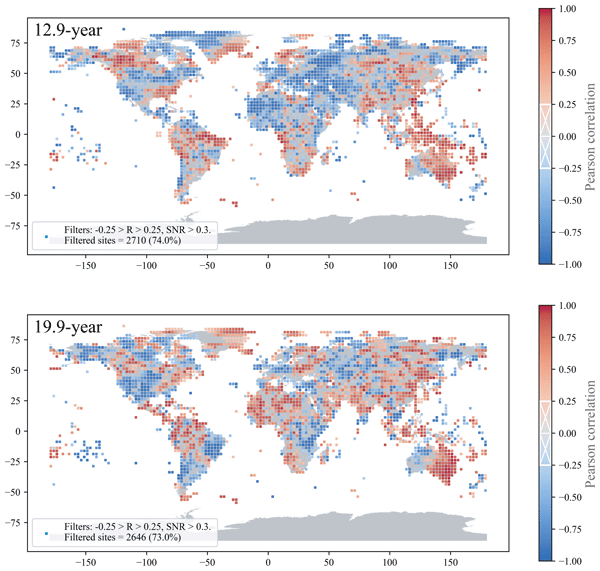
This study finds three cycles in yearly rainfall worldwide of approximately 13, 20 and 28 years. The cycles rise and fall together across continents and also appear in the El Niño–Southern Oscillation (ENSO), a major climate driver of rain. However the signal in ENSO is too small to explain the strong local influence, the results point to another, still-unknown force that may shape both the climate modes and global rainfall.
Tobias F. Selkirk, Andrew W. Western, and J. Angus Webb
Hydrol. Earth Syst. Sci., 29, 2167–2184, https://doi.org/10.5194/hess-29-2167-2025, https://doi.org/10.5194/hess-29-2167-2025, 2025
Short summary
Short summary
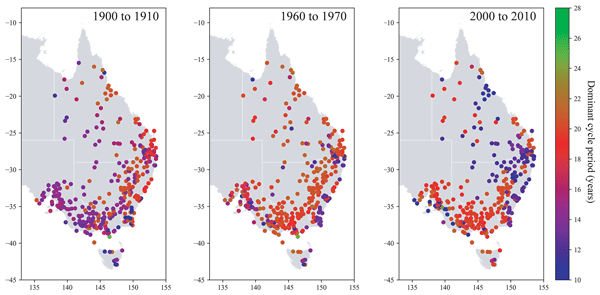
This study investigated rainfall in eastern Australia to search for patterns that may aid in predicting flood and drought. The current popular consensus is that such cycles do not exist. We analysed 130 years of rainfall using a very modern technique for identifying cycles in complex signals. The results showed strong evidence of three clear cycles of 12.9, 20.4 and 29.1 years with a confidence of 99.99 %. When combined, they showed an 80 % alignment with years of extremely high and low rainfall.
Stephen Lee, Dylan J. Irvine, Clément Duvert, Gabriel C. Rau, and Ian Cartwright
Hydrol. Earth Syst. Sci., 28, 1771–1790, https://doi.org/10.5194/hess-28-1771-2024, https://doi.org/10.5194/hess-28-1771-2024, 2024
Short summary
Short summary
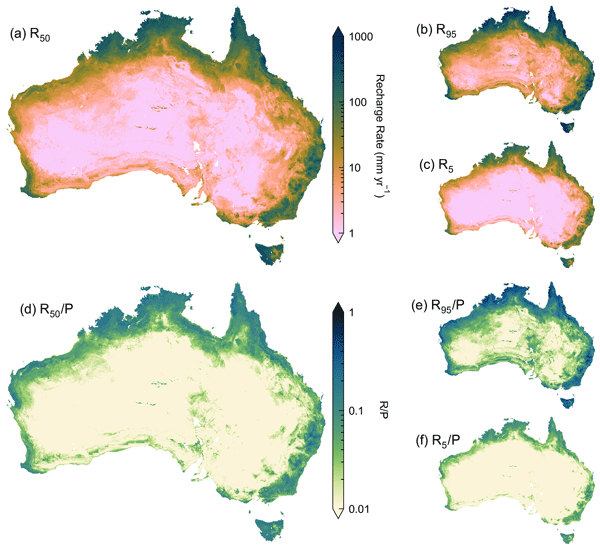
Global groundwater recharge studies collate recharge values estimated using different methods that apply to different timescales. We develop a recharge prediction model, based solely on chloride, to produce a recharge map for Australia. We reveal that climate and vegetation have the most significant influence on recharge variability in Australia. Our recharge rates were lower than other models due to the long timescale of chloride in groundwater. Our method can similarly be applied globally.
Theresa Boas, Heye Reemt Bogena, Dongryeol Ryu, Harry Vereecken, Andrew Western, and Harrie-Jan Hendricks Franssen
Hydrol. Earth Syst. Sci., 27, 3143–3167, https://doi.org/10.5194/hess-27-3143-2023, https://doi.org/10.5194/hess-27-3143-2023, 2023
Short summary
Short summary
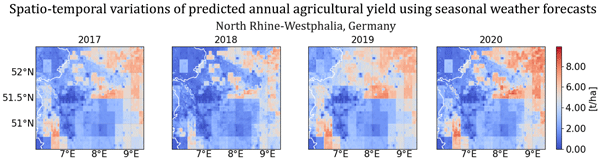
In our study, we tested the utility and skill of a state-of-the-art forecasting product for the prediction of regional crop productivity using a land surface model. Our results illustrate the potential value and skill of combining seasonal forecasts with modelling applications to generate variables of interest for stakeholders, such as annual crop yield for specific cash crops and regions. In addition, this study provides useful insights for future technical model evaluations and improvements.
Keirnan Fowler, Murray Peel, Margarita Saft, Tim J. Peterson, Andrew Western, Lawrence Band, Cuan Petheram, Sandra Dharmadi, Kim Seong Tan, Lu Zhang, Patrick Lane, Anthony Kiem, Lucy Marshall, Anne Griebel, Belinda E. Medlyn, Dongryeol Ryu, Giancarlo Bonotto, Conrad Wasko, Anna Ukkola, Clare Stephens, Andrew Frost, Hansini Gardiya Weligamage, Patricia Saco, Hongxing Zheng, Francis Chiew, Edoardo Daly, Glen Walker, R. Willem Vervoort, Justin Hughes, Luca Trotter, Brad Neal, Ian Cartwright, and Rory Nathan
Hydrol. Earth Syst. Sci., 26, 6073–6120, https://doi.org/10.5194/hess-26-6073-2022, https://doi.org/10.5194/hess-26-6073-2022, 2022
Short summary
Short summary
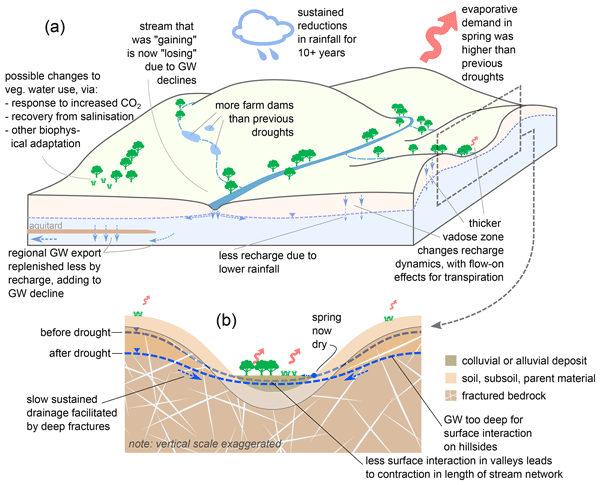
Recently, we have seen multi-year droughts tending to cause shifts in the relationship between rainfall and streamflow. In shifted catchments that have not recovered, an average rainfall year produces less streamflow today than it did pre-drought. We take a multi-disciplinary approach to understand why these shifts occur, focusing on Australia's over-10-year Millennium Drought. We evaluate multiple hypotheses against evidence, with particular focus on the key role of groundwater processes.
Zibo Zhou, Ian Cartwright, and Uwe Morgenstern
Hydrol. Earth Syst. Sci., 26, 4497–4513, https://doi.org/10.5194/hess-26-4497-2022, https://doi.org/10.5194/hess-26-4497-2022, 2022
Short summary
Short summary
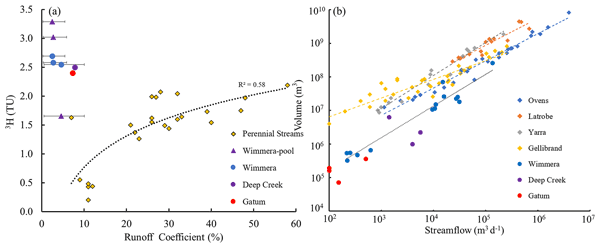
Streams may receive water from different sources in their catchment. There is limited understanding of which water stores intermittent streams are connected to. Using geochemistry we show that the intermittent streams in southeast Australia are connected to younger smaller near-river water stores rather than regional groundwater. This makes these streams more vulnerable to the impacts of climate change and requires management of the riparian zone for their protection.
Qichun Yang, Quan J. Wang, Andrew W. Western, Wenyan Wu, Yawen Shao, and Kirsti Hakala
Hydrol. Earth Syst. Sci., 26, 941–954, https://doi.org/10.5194/hess-26-941-2022, https://doi.org/10.5194/hess-26-941-2022, 2022
Short summary
Short summary
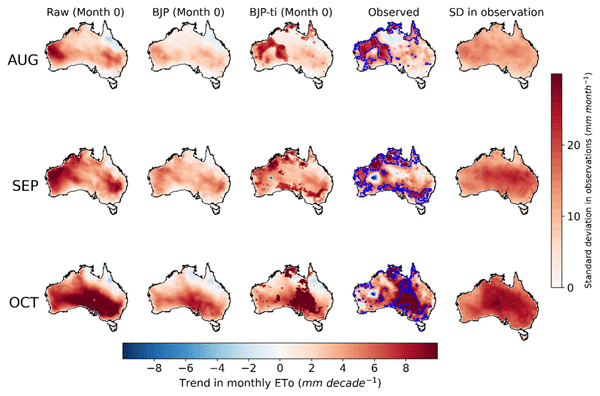
Forecasts of evaporative water loss in the future are highly valuable for water resource management. These forecasts are often produced using the outputs of climate models. We developed an innovative method to correct errors in these forecasts, particularly the errors caused by deficiencies of climate models in modeling the changing climate. We apply this method to seasonal forecasts of evaporative water loss across Australia and achieve significant improvements in the forecast quality.
Ian Cartwright
Hydrol. Earth Syst. Sci., 26, 183–195, https://doi.org/10.5194/hess-26-183-2022, https://doi.org/10.5194/hess-26-183-2022, 2022
Short summary
Short summary
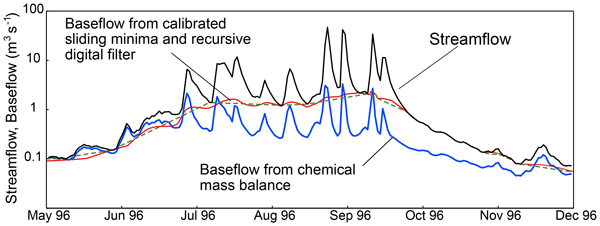
Using specific conductivity (SC) to estimate groundwater inflow to rivers is complicated by bank return waters, interflow, and flows off floodplains contributing to baseflow in all but the driest years. Using the maximum SC of the river in dry years to estimate the SC of groundwater produces the best baseflow vs. streamflow trends. The variable composition of baseflow hinders calibration of hydrograph-based techniques to estimate groundwater inflows.
Danlu Guo, Camille Minaudo, Anna Lintern, Ulrike Bende-Michl, Shuci Liu, Kefeng Zhang, and Clément Duvert
Hydrol. Earth Syst. Sci., 26, 1–16, https://doi.org/10.5194/hess-26-1-2022, https://doi.org/10.5194/hess-26-1-2022, 2022
Short summary
Short summary
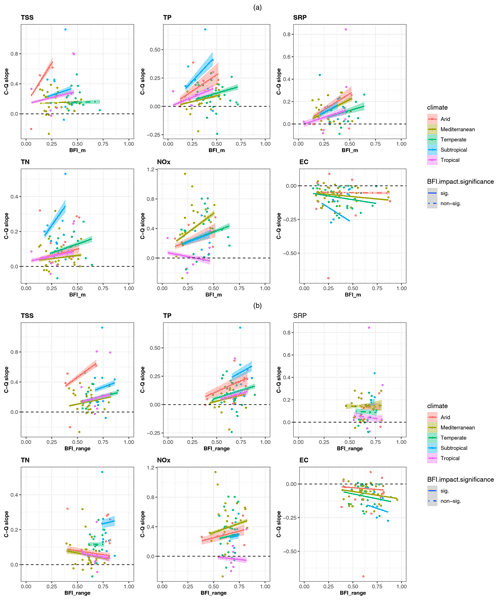
We investigate the impact of baseflow contribution on concentration–flow (C–Q) relationships across the Australian continent. We developed a novel Bayesian hierarchical model for six water quality variables across 157 catchments that span five climate zones. For sediments and nutrients, the C–Q slope is generally steeper for catchments with a higher median and a greater variability of baseflow contribution, highlighting the key role of variable flow pathways in particulate and solute export.
Michael Kilgour Stewart, Uwe Morgenstern, and Ian Cartwright
Hydrol. Earth Syst. Sci., 25, 6333–6338, https://doi.org/10.5194/hess-25-6333-2021, https://doi.org/10.5194/hess-25-6333-2021, 2021
Short summary
Short summary
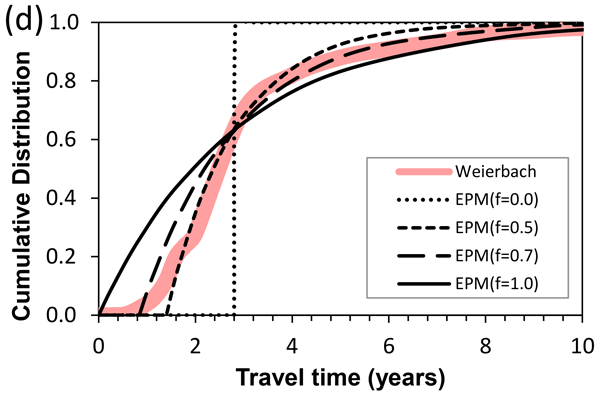
The combined use of deuterium and tritium to determine travel time distributions in streams is an important development in catchment hydrology (Rodriguez et al., 2021). This comment, however, argues that their results do not generally invalidate the truncation hypothesis of Stewart et al. (2010) (i.e. that stable isotopes underestimate travel times through catchments), as they imply, but asserts instead that the hypothesis still applies to many other catchments.
Dylan J. Irvine, Cameron Wood, Ian Cartwright, and Tanya Oliver
Hydrol. Earth Syst. Sci., 25, 5415–5424, https://doi.org/10.5194/hess-25-5415-2021, https://doi.org/10.5194/hess-25-5415-2021, 2021
Short summary
Short summary
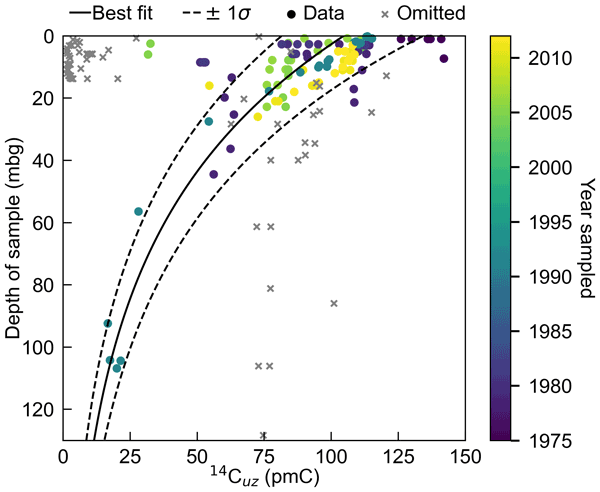
It is widely assumed that 14C is in contact with the atmosphere until recharging water reaches the water table. Unsaturated zone (UZ) studies have shown that 14C decreases with depth below the land surface. We produce a relationship between UZ 14C and depth to the water table to estimate input 14C activities for groundwater age estimation. Application of the new relationship shows that it is important for UZ processes to be considered in groundwater mean residence time estimation.
Cited articles
Abascal, E., Gómez-Coma, L., Ortiz, I., and Ortiz, A.: Global diagnosis of nitrate pollution in groundwater and review of removal technologies, Sci. Total Environ., 810, 152233. https://doi.org/10.1016/j.scitotenv.2021.152233, 2022.
Adalibieke, W., Cui, X., Cai, H., You, L., and Zhou, F.: Global crop-specific nitrogen fertilization dataset in 1961–2020, Sci. Data, 10, 617, https://doi.org/10.1038/s41597-023-02526-z, 2023.
Adame, M. F., Vilas, M. P., Franklin, H., Garzon-Garcia, A., Hamilton, D., Ronan, M., and Griffiths, M.: A conceptual model of nitrogen dynamics for the Great Barrier Reef catchments, Mar. Pollut. Bull., 173, 112909, https://doi.org/10.1016/j.marpolbul.2021.112909, 2021.
Adams, R., Arafat, Y., Eate, V., Grace, M. R., Saffarpour, Sh., Weatherley, A. J., and Western, A. W.: A catchment study of sources and sinks of nutrients and sediments in south-east Australia, J. Hydrol., 515, 166–179, https://doi.org/10.1016/j.jhydrol.2014.04.034, 2014.
Adelana, S. M., Heaven, M. W., Dresel, P. E., Giri, K., Holmberg, M., Croatto, G., and Webb, J.: Controls on species distribution and biogeochemical cycling in nitrate-contaminated groundwater and surface water, southeastern Australia, Sci. Total Environ., 726, 138426, https://doi.org/10.1016/j.scitotenv.2020.138426, 2020.
Agriculture Victoria: Livestock Farm Monitor Project Annual Report 2019–2020, Victorian Department of Energy, Environment and Climate Action (DEECA), Victoria, https://agriculture.vic.gov.au/about/agriculture-in-victoria/livestock-farm-monitor-project#h2-3 (last access: 10 June 2024), 2021.
Agriculture Victoria: Livestock Farm Monitor Project Annual Report 2020–2021, Victorian Department of Energy, Environment and Climate Action (DEECA), Victoria, https://agriculture.vic.gov.au/about/agriculture-in-victoria/livestock-farm-monitor-project#h2-3 (last access: 10 June 2024), 2022.
Agriculture Victoria: Livestock Farm Monitor Project Annual Report 2021–2022, Victorian Department of Energy, Environment and Climate Action (DEECA), Victoria, https://agriculture.vic.gov.au/about/agriculture-in-victoria/livestock-farm-monitor-project#h2-3 (last access: 10 June 2024), 2023.
Agriculture Victoria: Nitrogen fertilisers – improving efficiency and saving money, Victoria State Government, Melbourne, https://agriculture.vic.gov.au/climate-and-weather/understanding-carbon-and-emissions/nitrogen-fertilisers-improving-efficiency-and-saving-money (last access: 28 September 2024), 2024a.
Agriculture Victoria: Livestock Farm Monitor Project Annual Report 2022–2023, Victorian Department of Energy, Environment and Climate Action (DEECA), Victoria, https://agriculture.vic.gov.au/about/agriculture-in-victoria/livestock-farm-monitor-project#h2-3 (last access: 10 June 2024), 2024b.
Angus, J. F.: Nitrogen supply and demand in Australian agriculture, Aust. J. Exp. Agric., 41, 277, https://doi.org/10.1071/EA00141, 2001.
Angus, J. F. and Grace, P. R.: Nitrogen balance in Australia and nitrogen use efficiency on Australian farms, Soil Res., 55, 435, https://doi.org/10.1071/SR16325, 2017.
Arnold, J. G., Srinivasan, R., Muttiah, R. S., and Williams, J. R.: Large area hydrologic modeling and assessment Part I: Model development, J. Am. Water Resour. Assoc., 34, 73–89, https://doi.org/10.1111/j.1752-1688.1998.tb05961.x, 1998.
Australian Bureau of Agricultural and Resource Economics and Sciences (ABARES): Catchment Scale Land Use of Australia – Update September 2016, Australian Government Department of Agriculture and Water Resources, https://www.agriculture.gov.au/abares/aclump/land-use/alum-classification/alum-classes (last access: 20 June 2024), 2016.
Australian Bureau of Statistics (ABS): Land Management and Farming in Australia, 2015–16, ABS, Canberra, https://www.abs.gov.au/statistics/industry/agriculture/land-management-and-farming-australia/latest-release#data-downloads (last access: 21 June 2024), 2018a.
Australian Bureau of Statistics (ABS): Water Use on Australian Farms, 2016–17, ABS, Canberra, https://www.abs.gov.au/statistics/industry/agriculture/water-use-australian-farms (last access: 21 September 2023), 2018b.
Australian Bureau of Statistics (ABS): Water Use on Australian Farms, 2018–19, ABS, Canberra, https://www.abs.gov.au/statistics/industry/agriculture/water-use-australian-farms (last access: 21 September 2023), 2020a.
Australian Bureau of Statistics (ABS): Land Management and Farming in Australia, 2018–19, ABS, Canberra, https://www.abs.gov.au/statistics/industry/agriculture/agricultural-commodities-australia/2018-19/71210do002_201819.xls (last access: 11 July 2024), 2020b.
Australian Bureau of Statistics (ABS): Australian Agriculture – Broadacre Crops, latest release, ABS, Canberra, https://www.abs.gov.au/statistics/industry/agriculture/australian-agriculture-broadacre-crops/latest-release (last access: 21 March 2025), 2025a.
Australian Bureau of Statistics (ABS): Food and nutrients, 2023, released 5 September 2025, reference period 2023, ABS, Canberra, https://www.abs.gov.au/statistics/health/food-and-nutrition/food-and-nutrients/latest-release (last access: 10 October 2025), 2025b.
Bellmore, R. A., Compton, J. E., Brooks, J. R., Fox, E. W., Hill, R. A., Sobota, D. J., Thornbrugh, D. J., and Weber, M. H.: Nitrogen inputs drive nitrogen concentrations in U. S. streams and rivers during summer low flow conditions, Sci. Total Environ., 639, 1349–1359, https://doi.org/10.1016/j.scitotenv.2018.05.008, 2018.
Billen, G., Silvestre, M., Grizzetti, B., Leip, A., Garnier, J., Voss, M., Howarth, R., Bouraoui, F., Lepistö, A., Kortelainen, P., Johnes, P., Curtis, C., Humborg, C., Smedberg, E., Kaste, Ø., Ganeshram, R., Beusen, A., and Lancelot, C.: Nitrogen flows from European regional watersheds to coastal marine waters, in: The European Nitrogen Assessment, edited by: Sutton, M. A., Howard, C. M., Erisman, J. W., Billen, G., Bleeker, A., Grennfelt, P., Van Grinsven, H., and Grizzetti, B., Cambridge University Press, https://doi.org/10.1017/CBO9780511976988.016, 271–297, 2011.
Boyer, E. W., Goodale, C. L., Jaworski, N. A., and Howarth, R. W.: Anthropogenic nitrogen sources and relationships to riverine nitrogen export in the northeastern U. S. A., in: The Nitrogen Cycle at Regional to Global Scales, edited by: Boyer, E. W. and Howarth, R. W., Springer Netherlands, Dordrecht, https://doi.org/10.1007/978-94-017-3405-9_4, 137–169, 2002.
Bureau of Meteorology: Geofabric V2, Bureau of Meteorology, Australian Government, ftp://ftp.bom.gov.au/anon/home/geofabric/ (last access: 21 September 2016), 2012.
Bureau of Meteorology: Climate Maps – Average Annual Rainfall (Victoria), Bureau of Meteorology, Australian Government, http://www.bom.gov.au/climate/maps/averages/rainfall/?period=an®ion=vc (last access: 21 April 2024), 2020.
Cartwright, I., Morgenstern, U., Howcroft, W., Hofmann, H., Armit, R., Stewart, M., Burton, C., and Irvine, D.: The variation and controls of mean transit times in Australian headwater catchments, Hydrol. Process., 34, 4034–4048, https://doi.org/10.1002/hyp.13862, 2020.
Cellier, P., Durand, P., Hutchings, N., Dragosits, U., Theobald, M., Drouet, J.-L., Oenema, O., Bleeker, A., Breuer, L., Dalgaard, T., Duretz, S., Kros, J., Loubet, B., Olesen, J. E., Mérot, P., Viaud, V., De Vries, W., and Sutton, M. A.: Nitrogen flows and fate in rural landscapes, in: The European Nitrogen Assessment, edited by: Sutton, M. A., Howard, C. M., Erisman, J. W., Billen, G., Bleeker, A., Grennfelt, P., Van Grinsven, H., and Grizzetti, B., Cambridge University Press, https://doi.org/10.1017/CBO9780511976988.014, 229–248, 2011.
Chen, F., Hou, L., Liu, M., Zheng, Y., Yin, G., Lin, X., Li, X., Zong, H., Deng, F., Gao, J., and Jiang, X.: Net anthropogenic nitrogen inputs (NANI) into the Yangtze River basin and the relationship with riverine nitrogen export, J. Geophys. Res.-Biogeosciences, 121, 451–465, https://doi.org/10.1002/2015JG003186, 2016.
Dairy Australia: Dairy Farm Monitor Project – Victoria Annual Report 2016–17, Dairy Australia, Melbourne, https://www.dairyaustralia.com.au/industry-reports/dairy-farm-monitor-project/dairy-farm-monitor-project---vic (last access: 10 May 2024), 2017.
Dairy Australia: Dairy Farm Monitor Project – Victoria Annual Report 2018–19, Dairy Australia, Melbourne, https://www.dairyaustralia.com.au/industry-reports/dairy-farm-monitor-project/dairy-farm-monitor-project---vic (last access: 10 May 2024), 2019.
Dairy Australia: Dairy Farm Monitor Project – Victoria Annual Report 2020–21, Dairy Australia, Melbourne, https://www.dairyaustralia.com.au/industry-reports/dairy-farm-monitor-project/dairy-farm-monitor-project---vic (last access: 21 October 2024), 2021.
Department of Environment Land Water and Planning Victoria: Victorian water measurement information system, Department of Environment, Land, Water and Planning, Victoria State Government, Melbourne, http://data.water.vic.gov.au/ (last access: 3 October 2024), 2024.
Deelstra, J., Iital, A., Povilaitis, A., Kyllmar, K., Greipsland, I., Blicher-Mathiesen, G., Jansons, V., Koskiaho, J., and Lagzdins, A.: Hydrological pathways and nitrogen runoff in agricultural dominated catchments in Nordic and Baltic countries, Agric. Ecosyst. Environ., 195, 211–219, https://doi.org/10.1016/j.agee.2014.06.007, 2014.
Djodjic, F., Bieroza, M., and Bergström, L.: Land use, geology and soil properties control nutrient concentrations in headwater streams, Sci. Total Environ., 772, 145108, https://doi.org/10.1016/j.scitotenv.2021.145108, 2021.
Domagalski, J. L., Morway, E., Alvarez, N. L., Hutchins, J., Rosen, M. R., and Coats, R.: Trends in nitrogen, phosphorus, and sediment concentrations and loads in streams draining to Lake Tahoe, California, Nevada, USA, Sci. Total Environ., 752, 141815, https://doi.org/10.1016/j.scitotenv.2020.141815, 2021.
Drewry, J. J., Newham, L. T. H., Greene, R. S. B., Jakeman, A. J., and Croke, B. F. W.: A review of nitrogen and phosphorus export to waterways: context for catchment modelling, Mar. Freshw. Res., 57, 757, https://doi.org/10.1071/MF05166, 2006.
Durand, P., Breuer, L., Johnes, P. J., Billen, G., Butturini, A., Pinay, G., Van Grinsven, H., Garnier, J., Rivett, M., Reay, D. S., Curtis, C., Siemens, J., Maberly, S., Kaste, Ø., Humborg, C., Loeb, R., De Klein, J., Hejzlar, J., Skoulikidis, N., Kortelainen, P., Lepistö, A., and Wright, R.: Nitrogen processes in aquatic ecosystems, in: The European Nitrogen Assessment, edited by: Sutton, M. A., Howard, C. M., Erisman, J. W., Billen, G., Bleeker, A., Grennfelt, P., Van Grinsven, H., and Grizzetti, B., Cambridge University Press, https://doi.org/10.1017/CBO9780511976988.010, 126–146, 2011.
Eckard, R. J., Chapman, D. F., and White, R. E.: Nitrogen balances in temperate perennial grass and clover dairy pastures in south-eastern Australia, Aust. J. Agric. Res., 58, 1167, https://doi.org/10.1071/AR07022, 2007.
European Food Safety Authority (EFSA): Outcome of a public consultation on the Draft Scientific Opinion of the EFSA Panel on Dietetic Products, Nutrition and Allergies (NDA) on Dietary Reference Values for protein, EFSA Supporting Publications, 2012: EN-225, 26 pp., European Food Safety Authority (EFSA), Parma, Italy, https://doi.org/10.2903/sp.efsa.2012.EN-225, 2012.
Falcone, J. A.: Estimates of county-level nitrogen and phosphorus from fertiliser and manure from 1950 through 2017 in the conterminous United States, US Geol. Surv. Open-File Rep., 2020–1153, 20 pp., U.S. Geological Survey, https://doi.org/10.3133/ofr20201153, 2021.
Fowler, D., Coyle, M., Skiba, U., Sutton, M. A., Cape, J. N., Reis, S., Sheppard, L. J., Jenkins, A., Grizzetti, B., Galloway, J. N., Vitousek, P., Leach, A., Bouwman, A. F., Butterbach-Bahl, K., Dentener, F., Stevenson, D., Amann, M., and Voss, M.: The global nitrogen cycle in the twenty-first century, Philos. Trans. R. Soc. B Biol. Sci., 368, 20130164, https://doi.org/10.1098/rstb.2013.0164, 2013.
Galloway, J. N., Dentener, F. J., Capone, D. G., Boyer, E. W., Howarth, R. W., Seitzinger, S. P., Asner, G. P., Cleveland, C. C., Green, P. A., Holland, E. A., Karl, D. M., Michaels, A. F., Porter, J. H., Townsend, A. R., and Vösmarty, C. J.: Nitrogen Cycles: Past, Present, and Future, Biogeochemistry, 70, 153–226, https://doi.org/10.1007/s10533-004-0370-0, 2004.
Gao, L. and Li, D.: A review of hydrological/water-quality models, Front. Agric. Sci. Eng., 1, 267, https://doi.org/10.15302/J-FASE-2014041, 2014.
Gourley, C. J. P., Powell, J. M., Dougherty, W. J., and Weaver, D. M.: Nutrient budgeting as an approach to improving nutrient management on Australian dairy farms, Aust. J. Exp. Agric., 47, 1064, https://doi.org/10.1071/EA07017, 2007.
Gourley, C. J. P., Dougherty, W. J., Weaver, D. M., Aarons, S. R., Awty, I. M., Gibson, D. M., Hannah, M. C., Smith, A. P., and Peverill, K. I.: Farm-scale nitrogen, phosphorus, potassium and sulfur balances and use efficiencies on Australian dairy farms, Anim. Prod. Sci., 52, 929, https://doi.org/10.1071/AN11337, 2012.
Goyette, J., Bennett, E. M., Howarth, R. W., and Maranger, R.: Changes in anthropogenic nitrogen and phosphorus inputs to the St. Lawrence sub-basin over 110 years and impacts on riverine export, Glob. Biogeochem. Cycles, 30, 1000–1014, https://doi.org/10.1002/2016GB005384, 2016.
Guo, D., Lintern, A., Webb, J. A., Ryu, D., Liu, S., Bende-Michl, U., Leahy, P., Wilson, P., and Western, A. W.: Key Factors Affecting Temporal Variability in Stream Water Quality, Water Resour. Res., 55, 112–129, https://doi.org/10.1029/2018WR023370, 2019.
Helton, A. M., Poole, G. C., Meyer, J. L., Wollheim, W. M., Peterson, B. J., Mulholland, P. J., Bernhardt, E. S., Stanford, J. A., Arango, C., Ashkenas, L. R., Cooper, L. W., Dodds, W. K., Gregory, S. V., Hall, R. O., Hamilton, S. K., Johnson, S. L., McDowell, W. H., Potter, J. D., Tank, J. L., Thomas, S. M., Valett, H. M., Webster, J. R., and Zeglin, L.: Thinking outside the channel: modeling nitrogen cycling in networked river ecosystems, Front. Ecol. Environ., 9, 229–238, https://doi.org/10.1890/080211, 2011.
Hensley, R. T. and Cohen, M. J.: Nitrate depletion dynamics and primary production in riverine benthic chambers, Freshw. Sci., 39, 169–182, https://doi.org/10.1086/707650, 2020.
Herridge, D. F., Peoples, M. B., and Boddey, R. M.: Global inputs of biological nitrogen fixation in agricultural systems, Plant Soil, 311, 1–18, https://doi.org/10.1007/s11104-008-9668-3, 2008.
Hirsch, R., DeCicco, L., and Murphy, J.: Exploration and Graphics for RivEr Trends (EGRET), US Geological Survey [code], https://pubs.usgs.gov/tm/04/a10/ (last access: 28 November 2024), 2024.
Hirsch, R. M. and De Cicco, L. A.: User guide to Exploration and Graphics for RivEr Trends (EGRET) and dataRetrieval—R packages for hydrologic data (version 2.0, February 2015), US Geol. Surv. Tech. Methods, Book 4, Chap. A10, 93 pp., U.S. Geological Survey, Reston, Virginia, USA, https://doi.org/10.3133/tm4A10, 2015.
Hirsch, R. M., Moyer, D. L., and Archfield, S. A.: Weighted Regressions on Time, Discharge, and Season (WRTDS), with an Application to Chesapeake Bay River Inputs, JAWRA J. Am. Water Resour. Assoc., 46, 857–880, https://doi.org/10.1111/j.1752-1688.2010.00482.x, 2010.
Hong, B., Swaney, D. P., and Howarth, R. W.: A toolbox for calculating net anthropogenic nitrogen inputs (NANI), Environ. Model. Softw., 26, 623–633, https://doi.org/10.1016/j.envsoft.2010.11.012, 2011.
Howarth, R., Swaney, D., Billen, G., Garnier, J., Hong, B., Humborg, C., Johnes, P., Mörth, C.-M., and Marino, R.: Nitrogen fluxes from the landscape are controlled by net anthropogenic nitrogen inputs and by climate, Front. Ecol. Environ., 10, 37–43, https://doi.org/10.1890/100178, 2012.
Howarth, R. W., Billen, G., Swaney, D., Townsend, A., Jaworski, N., Lajtha, K., Downing, J. A., Elmgren, R., Caraco, N., Jordan, T., Berendse, E., Freney, J., Kudeyarov, V., Murdoch, P., and Zhao-Liang, Z.: Regional nitrogen budgets and stream N & P fluxes for the drainages to the North Atlantic Ocean: Natural and human influences, Biogeochemistry, 35, 75–139, https://doi.org/10.1007/BF02179825, 1996.
Howarth, R. W., Swaney, D. P., Boyer, E. W., Marino, R., Jaworski, N., and Goodale, C.: The influence of climate on average nitrogen export from large watersheds in the Northeastern United States, Biogeochemistry, 79, 163–186, https://doi.org/10.1007/s10533-006-9010-1, 2006.
Jiajia Lin, Compton, J. E., Hill, R. A., Herlihy, A. T., Sabo, R. D., Brooks, J. R., Weber, M., Pickard, B., Paulsen, S. G., and Stoddard, J. L.: Context is Everything: Interacting Inputs and Landscape Characteristics Control Stream Nitrogen, Environ. Sci. Technol., 55, 7890–7899, https://doi.org/10.1021/acs.est.0c07102, 2021.
Ledgard, S. F., Penno, J. W., and Sprosen, M. S.: Nitrogen inputs and losses from clover/grass pastures grazed by dairy cows, as affected by nitrogen fertilizer application, J. Agric. Sci., 132, 215–225, https://doi.org/10.1017/S002185969800625X, 1999.
Lewis, S. E., Bartley, R., Wilkinson, S. N., Bainbridge, Z. T., Henderson, A. E., James, C. S., Irvine, S. A., and Brodie, J. E.: Land use change in the river basins of the Great Barrier Reef, 1860 to 2019: A foundation for understanding environmental history across the catchment to reef continuum, Mar. Pollut. Bull., 166, 112193, https://doi.org/10.1016/j.marpolbul.2021.112193, 2021.
Lintern, A., Webb, J. A., Ryu, D., Liu, S., Bende-Michl, U., Waters, D., Leahy, P., Wilson, P., and Western, A. W.: Key factors influencing differences in stream water quality across space, WIREs Water, 5, e1260, https://doi.org/10.1002/wat2.1260, 2018a.
Lintern, A., Webb, J. A., Ryu, D., Liu, S., Waters, D., Leahy, P., Bende-Michl, U., and Western, A. W.: What Are the Key Catchment Characteristics Affecting Spatial Differences in stream Water Quality?, Water Resour. Res., 54, 7252–7272, https://doi.org/10.1029/2017WR022172, 2018b.
Liu, S., Ryu, D., Webb, J. A., Lintern, A., Guo, D., Waters, D., and Western, A. W.: A multi-model approach to assessing the impacts of catchment characteristics on spatial water quality in the Great Barrier Reef catchments, Environ. Pollut., 288, 117337, https://doi.org/10.1016/j.envpol.2021.117337, 2021.
Liu, S., Dupas, R., Guo, D., Lintern, A., Minaudo, C., Bende-Michl, U., Zhang, K., and Duvert, C.: Controls on Spatial Variability in Mean Concentrations and Export Patterns of River Chemistry Across the Australian Continent, Water Resour. Res., 58, e2022WR032365, https://doi.org/10.1029/2022WR032365, 2022.
Lu, C. and Tian, H.: Global nitrogen and phosphorus fertilizer use for agriculture production in the past half century: shifted hot spots and nutrient imbalance, Earth Syst. Sci. Data, 9, 181–192, https://doi.org/10.5194/essd-9-181-2017, 2017.
Ludemann, C., Gruere, A., Heffer, P., and Dobermann, A.: Global data on fertilizer use by crop and by country, Scientific Data, 9, 501, https://doi.org/10.1038/s41597-022-01592-z, 2022.
Mallee Catchment Management Authority (MCMA): Victorian Mallee Irrigation Region Land and Water Management Plan 2020–29, Mallee CMA, Victoria, ISBN 978-1-920777-32-6, https://www.malleecma.com.au/resources/publications/ (last access: 28 October 2024), 2020.
McKee, L. J. and Eyre, B. D.: Nitrogen and phosphorus budgets for the sub-tropical Richmond River catchment, Australia, Biogeochemistry, 50, 207–239, https://doi.org/10.1023/A:1006391927371, 2000.
Mitchell, A., Reghenzani, J., Faithful, J., Furnas, M., and Brodie, J.: Relationships between land use and nutrient concentrations in streams draining a “wet-tropics” catchment in northern Australia, Mar. Freshw. Res., 60, 1097, https://doi.org/10.1071/MF08330, 2009.
Oenema, O., Witzke, H. P., Klimont, Z., Lesschen, J. P., and Velthof, G. L.: Integrated assessment of promising measures to decrease nitrogen losses from agriculture in EU-27, Agric. Ecosyst. Environ., 133, 280–288, https://doi.org/10.1016/j.agee.2009.04.025, 2009.
OVERSEER Limited: OVERSEER® Nutrient Budgets Technical Manual: Animal Metabolisable Energy Requirements (Version 6.3, June 2018), Prepared by Wheeler, D. M., AgResearch Ltd, Hamilton, New Zealand, https://www.overseer.org.nz/ (last access: 16 October 2025), 2018.
Parfitt, R., Stevenson, B., Dymond, J., Schipper, L., Baisden, W., and Ballantine, D.: Nitrogen inputs and outputs for New Zealand from 1990 to 2010 at national and regional scales, N. Z. J. Agric. Res., 55, 241–262, https://doi.org/10.1080/00288233.2012.676991, 2012.
Peel, M. C., Finlayson, B. L., and McMahon, T. A.: Updated world map of the Köppen-Geiger climate classification, Hydrol. Earth Syst. Sci., 11, 1633–1644, https://doi.org/10.5194/hess-11-1633-2007, 2007.
QGIS Development Team: QGIS Geographic Information System, Version 3.34 (Prizren), Open-Source Geospatial Foundation Project, https://www.qgis.org (last access 19 September 2025), 2025.
Rawnsley, R. P., Smith, A. P., Christie, K. M., Harrison, M. T., and Eckard, R. J.: Current and future direction of nitrogen fertiliser use in Australian grazing systems, Crop Pasture Sci., 70, 1034, https://doi.org/10.1071/CP18566, 2019.
Rugoho, I., Lewis, H., Islam, M., McAllister, A., Heemskerk, G., Gourley, A., and Gourley, C.: Quantifying dairy farm nutrient fluxes and balances for improved assessment of environmental performance, Anim. Prod. Sci., 58, 1656, https://doi.org/10.1071/AN16440, 2018.
Sabo, R. D., Clark, C. M., Bash, J., Sobota, D., Cooter, E., Dobrowolski, J. P., Houlton, B. Z., Rea, A., Schwede, D., Morford, S. L., and Compton, J. E.: Decadal Shift in Nitrogen Inputs and Fluxes Across the Contiguous United States: 2002–2012, J. Geophys. Res.-Biogeosciences, 124, 3104–3124, https://doi.org/10.1029/2019JG005110, 2019.
Sargent, R., Wong, W. W., Western, A. W., Cook, P., and Lintern, A.: Surplus nutrient exports differ between irrigated and high-rainfall agricultural catchments: a tale of two catchments in South East Australia, J. Hydrol., 662, 133959, https://doi.org/10.1016/j.jhydrol.2025.133959, 2025.
Schaefer, S. C. and Alber, M.: Temperature controls a latitudinal gradient in the proportion of watershed nitrogen exported to coastal ecosystems, Biogeochemistry, 85, 333–346, https://doi.org/10.1007/s10533-007-9144-9, 2007.
Schaefer, S. C., Hollibaugh, J. T., and Alber, M.: Watershed nitrogen input and riverine export on the west coast of the US, Biogeochemistry, 93, 219–233, https://doi.org/10.1007/s10533-009-9299-7, 2009.
Seitzinger, S., Harrison, J. A., Böhlke, J. K., Bouwman, A. F., Lowrance, R., Peterson, B., Tobias, C., and Van Drecht, G.: Denitrification across Landscapes and Waterscapes: A Synthesis, Ecol. Appl., 16, 2064–2090, 2006.
Singh, R. and Horne, D. J.: Water-quality issues facing dairy farming: potential natural and built attenuation of nitrate losses in sensitive agricultural catchments, Anim. Prod. Sci., 60, 67, https://doi.org/10.1071/AN19142, 2020.
Smith, A. P., Western, A. W., and Hannah, M. C.: Linking water quality trends with land use intensification in dairy farming catchments, J. Hydrol., 476, 1–12, https://doi.org/10.1016/j.jhydrol.2012.08.057, 2013.
Sobota, D. J., Harrison, J. A., and Dahlgren, R. A.: Influences of climate, hydrology, and land use on input and export of nitrogen in California watersheds, Biogeochemistry, 94, 43–62, https://doi.org/10.1007/s10533-009-9307-y, 2009.
Sobota, D. J., Harrison, J. A., and Dahlgren, R. A.: Reactive nitrogen inputs to US lands and waterways: how certain are we about sources and fluxes?, Front. Ecol. Environ., 11, 82–90, https://doi.org/10.1890/110216, 2013.
Steffen, W., Vertessy, R., Dean, A., Hughes, L., Bambrick, H., Gergis, J., and Rice, M.: Deluge and Drought: Australia's Water Security in a Changing Climate, Climate Council of Australia Ltd, https://www.climatecouncil.org.au/resources/water-security-report/ (last access: 28 March 2025), 2018.
Stewart, J. S., Schwarz, G. E., Brakebill, J. W., and Preston, S. D.: Catchment-level estimates of nitrogen and phosphorus agricultural use from commercial fertilizer sales for the conterminous United States, 2012, US Geol. Surv. Sci. Investig. Rep., 2018–5145, 52 pp., U.S. Geological Survey, Reston, Virginia, USA, https://doi.org/10.3133/sir20185145, 2019.
Stott, K. J. and Gourley, C. J. P.: Intensification, nitrogen use and recovery in grazing-based dairy systems, Agric. Syst., 144, 101–112, https://doi.org/10.1016/j.agsy.2016.01.003, 2016.
Swaney, D. P., Hong, B., Ti, C., Howarth, R. W., and Humborg, C.: Net anthropogenic nitrogen inputs to watersheds and riverine N export to coastal waters: a brief overview, Curr. Opin. Environ. Sustain., 4, 203–211, https://doi.org/10.1016/j.cosust.2012.03.004, 2012.
Van Meter, K. J. and Basu, N. B.: Catchment Legacies and Time Lags: A Parsimonious Watershed Model to Predict the Effects of Legacy Storage on Nitrogen Export, PLOS ONE, 10, e0125971, https://doi.org/10.1371/journal.pone.0125971, 2015.
Victorian Land Use Information System (VLUIS): Department of Economic Development, Jobs, Transport, and Resources, Victoria, Australia, Victoria State Government, Melbourne, https://discover.data.vic.gov.au/dataset/victorian-land-use-information-system-2016-2017 (last access: 18 August 2024), 2017.
Victorian Water Quality Analysis: Victorian Water Quality Analysis 2022 – Summary Report, Department of Energy, Environment and Climate Action (DEECA), East Melbourne, Victoria, Australia, 42 pp., https://www.water.vic.gov.au/__data/assets/pdf_file/0036/685890/Victorian-water-quality-analysis-2022-summary-report.pdf (last access: 28 April 2024), 2022.
Vitousek, P. M., Aber, J. D., Howarth, R. W., Likens, G. E., Matson, P. A., Schindler, D. W., Schlesinger, W. H., and Tilman, D. G.: Technical Report: Human Alteration of the Global Nitrogen Cycle: Sources and Consequences, Ecol. Appl., 7, 737, https://doi.org/10.2307/2269431, 1997.
Wellen, C., Kamran-Disfani, A.-R., and Arhonditsis, G. B.: Evaluation of the Current State of Distributed Watershed Nutrient Water Quality Modeling, Environ. Sci. Technol., 49, 3278–3290, https://doi.org/10.1021/es5049557, 2015.
WorldPop: WorldPop Population Density for Australia (1 km resolution, 2020), WorldPop, University of Southampton, https://data.humdata.org/dataset/worldpop-population-density-for-australia (last accessed: 14 October 2025), 2020.
Zhang, Q.: Synthesis of nutrient and sediment export patterns in the Chesapeake Bay watershed: Complex and non-stationary concentration-discharge relationships, Sci. Total Environ., 618, 1268–1283, https://doi.org/10.1016/j.scitotenv.2017.09.221, 2018.
Zhang, W. S., Swaney, D. P., Li, X. Y., Hong, B., Howarth, R. W., and Ding, S. H.: Anthropogenic point-source and non-point-source nitrogen inputs into Huai River basin and their impacts on riverine ammonia–nitrogen flux, Biogeosciences, 12, 4275–4289, https://doi.org/10.5194/bg-12-4275-2015, 2015.
Zhou, M., Brandt, P., Pelster, D., Rufino, M. C., Robinson, T., and Butterbach-Bahl, K.: Regional nitrogen budget of the Lake Victoria Basin, East Africa: syntheses, uncertainties and perspectives, Environ. Res. Lett., 9, 105009, https://doi.org/10.1088/1748-9326/9/10/105009, 2014.
Short summary
Excess nitrogen from agriculture can pollute streams and degrade water quality. We estimated fertiliser-nitrogen inputs across land uses, incorporated contributions from other sources, and compared these with long-term stream measurements. Only a small share of inputs left via rivers. Land use, rainfall, and flow regimes strongly influenced nitrogen dynamics and export. These findings support strategies to reduce stream pollution and protect water quality in agricultural areas.
Excess nitrogen from agriculture can pollute streams and degrade water quality. We estimated...


Altmetrics
Final-revised paper
Preprint