
Articles | Volume 22, issue 23
https://doi.org/10.5194/bg-22-7669-2025
© Author(s) 2025. This work is distributed under
the Creative Commons Attribution 4.0 License.
the Creative Commons Attribution 4.0 License.
https://doi.org/10.5194/bg-22-7669-2025
© Author(s) 2025. This work is distributed under
the Creative Commons Attribution 4.0 License.
the Creative Commons Attribution 4.0 License.
Research article
| Highlight paper
| 
05 Dec 2025
Research article | Highlight paper |
| 05 Dec 2025
| 05 Dec 2025
The influence of irradiance and interspecific differences on δ11B, δ13C and elemental ratios in four coralline algae complexes from Aotearoa, New Zealand
Maxence Guillermic
CORRESPONDING AUTHOR

Department of Atmospheric and Oceanic Sciences, Institute of the Environment and Sustainability, Center for Diverse Leadership in Science, University of California, Los Angeles, CA 90095, USA
Erik C. Krieger
School of Biological Sciences, Victoria University of Wellington, Wellington, New Zealand
Red Sea Research Center, King Abdullah University of Science and Technology, Thuwal, Saudi Arabia
Joyce Goh
Department of Atmospheric and Oceanic Sciences, Institute of the Environment and Sustainability, Center for Diverse Leadership in Science, University of California, Los Angeles, CA 90095, USA
Christopher E. Cornwall
School of Biological Sciences, Victoria University of Wellington, Wellington, New Zealand
Department of Atmospheric and Oceanic Sciences, Institute of the Environment and Sustainability, Center for Diverse Leadership in Science, University of California, Los Angeles, CA 90095, USA
Related authors
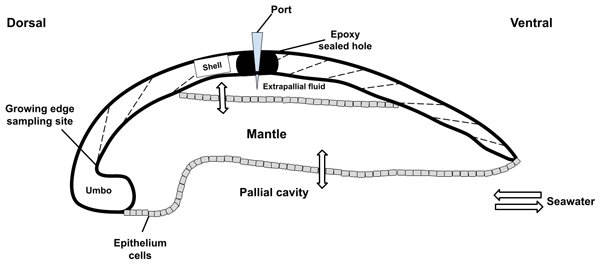
Blanca Alvarez Caraveo, Maxence Guillermic, Alan Downey-Wall, Louise P. Cameron, Jill N. Sutton, John A. Higgins, Justin B. Ries, Katie Lotterhos, and Robert A. Eagle
Biogeosciences, 22, 2831–2851, https://doi.org/10.5194/bg-22-2831-2025, https://doi.org/10.5194/bg-22-2831-2025, 2025
Short summary
Short summary
We studied the geochemistry of two bivalves: Crassostrea virginica and Arctica islandica. We examined the effects of three ocean acidification conditions (ambient, moderate, and high) on the geochemistry of C. virginica. We show that bivalves have high physiological control over the internal calcifying fluid, presenting a challenge in using elemental proxies for reconstructing seawater parameters.
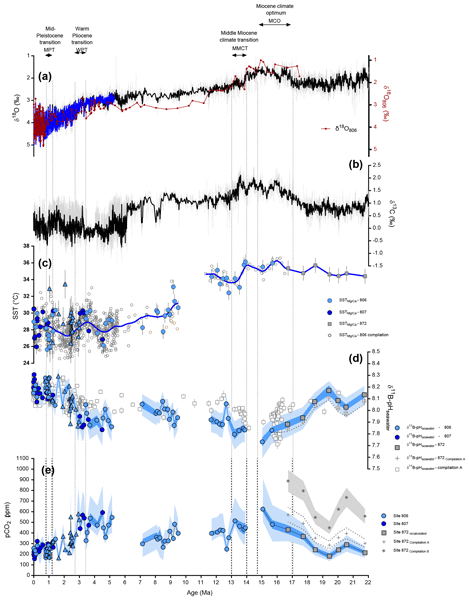
Maxence Guillermic, Sambuddha Misra, Robert Eagle, and Aradhna Tripati
Clim. Past, 18, 183–207, https://doi.org/10.5194/cp-18-183-2022, https://doi.org/10.5194/cp-18-183-2022, 2022
Short summary
Short summary
Here we reconstruct atmospheric CO2 values across major climate transitions over the past 16 million years (Myr) from two sites in the West Pacific Warm Pool using a pH proxy on surface-dwelling foraminifera. We are able to reproduce pCO2 data from ice cores; therefore we apply the same framework to older samples to create a long-term pH and pCO2 reconstruction. We give quantitative constraints on pH and pCO2 changes over the main climate transitions of the last 16 Myr.
Hayley Lauren Bricker, Yurena Yanes, Alexa Terrazas, Alexandrea Jay Arnold, Jesse Bloom Bateman, Paul Valdes, Alexander Farnsworth, Robert Eagle, and Aradhna K. Tripati
EGUsphere, https://doi.org/10.5194/egusphere-2025-6270, https://doi.org/10.5194/egusphere-2025-6270, 2026
Short summary
Short summary
At the Last Glacial Maximum (LGM) ~21,000 years ago, global temperatures were 3–6 °C cooler than today. In Northwest Africa, a region influenced by complex seasonal oceanic and atmospheric processes, the nearby Canary Islands offer valuable insight. We analyzed modern and LGM land snails using carbonate clumped isotope thermometry and δ18O isotope analysis to assess temperature and precipitation. We find ~8 degrees of cooling during the LGM and no major changes in water source since then.
Blanca Alvarez Caraveo, Maxence Guillermic, Alan Downey-Wall, Louise P. Cameron, Jill N. Sutton, John A. Higgins, Justin B. Ries, Katie Lotterhos, and Robert A. Eagle
Biogeosciences, 22, 2831–2851, https://doi.org/10.5194/bg-22-2831-2025, https://doi.org/10.5194/bg-22-2831-2025, 2025
Short summary
Short summary
We studied the geochemistry of two bivalves: Crassostrea virginica and Arctica islandica. We examined the effects of three ocean acidification conditions (ambient, moderate, and high) on the geochemistry of C. virginica. We show that bivalves have high physiological control over the internal calcifying fluid, presenting a challenge in using elemental proxies for reconstructing seawater parameters.
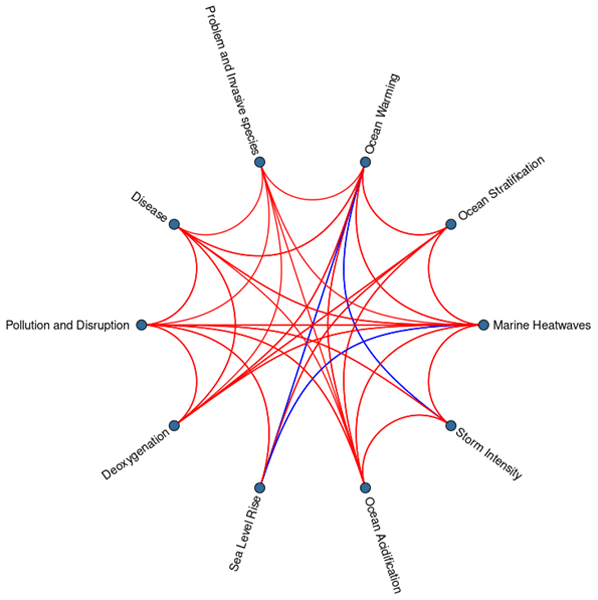
Paul Pearce-Kelly, Andrew H. Altieri, John F. Bruno, Christopher E. Cornwall, Melanie McField, Aarón Israel Muñiz-Castillo, Juan Rocha, Renee O. Setter, Charles Sheppard, Rosa Maria Roman-Cuesta, and Chris Yesson
Earth Syst. Dynam., 16, 275–292, https://doi.org/10.5194/esd-16-275-2025, https://doi.org/10.5194/esd-16-275-2025, 2025
Short summary
Short summary
Coral reefs face unprecedented threats from multiple stressors, many of which are linked to human activities. Some stressors have tipping points that, if exceeded, could cause coral collapse. These include temperatures rising 1.2 °C above pre-industrial levels and atmospheric CO2 above 350 parts per million. Uncertainty remains for these thresholds; many stressors interact in ways we do not understand. It is important to study these and employ a precautionary principle when planning our actions.
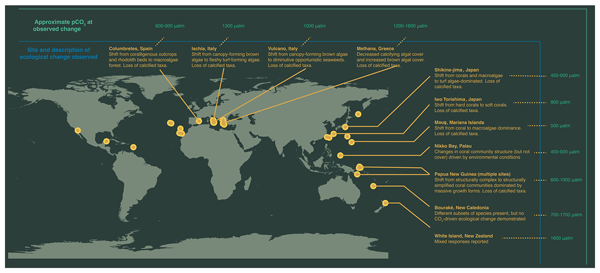
Christopher E. Cornwall, Steeve Comeau, and Ben P. Harvey
Earth Syst. Dynam., 15, 671–687, https://doi.org/10.5194/esd-15-671-2024, https://doi.org/10.5194/esd-15-671-2024, 2024
Short summary
Short summary
Ocean acidification will cause profound shifts in many marine ecosystems by impairing the ability of calcareous taxa to grow and by influencing the photophysiology of many others. Physiological tipping points will likely be reached in the next 20 years. Small changes in organism physiology result in larger ecological tipping points being crossed. Ecosystems will shift from having higher abundances of calcifying taxa and towards increased abundances of non-calcareous species under elevated CO2.
Maxence Guillermic, Sambuddha Misra, Robert Eagle, and Aradhna Tripati
Clim. Past, 18, 183–207, https://doi.org/10.5194/cp-18-183-2022, https://doi.org/10.5194/cp-18-183-2022, 2022
Short summary
Short summary
Here we reconstruct atmospheric CO2 values across major climate transitions over the past 16 million years (Myr) from two sites in the West Pacific Warm Pool using a pH proxy on surface-dwelling foraminifera. We are able to reproduce pCO2 data from ice cores; therefore we apply the same framework to older samples to create a long-term pH and pCO2 reconstruction. We give quantitative constraints on pH and pCO2 changes over the main climate transitions of the last 16 Myr.
Cited articles
Adey, H. W., Halfar, J., and Williams, B.: The Coralline Genus Clathromorphum Foslie emend. Adey, Biological, Physiological, and Ecological Factors Controlling Carbonate Production in an Arctic-Subarctic Climate Archive, Smithsonian Institution Scholarly Press, 2019.
Al-Horani, F. A., Al-Moghrabi, S. M., and De Beer, D.: The mechanism of calcification and its relation to photosynthesis and respiration in the scleractinian coral Galaxea fascicularis, Mar. Biol., 142, 419–426, https://doi.org/10.1007/s00227-002-0981-8, 2003.
Anagnostou, E., Williams, B., Westfield, I., Foster, G. L., and Ries, J. B.: Calibration of the pH-δ11B and temperature-Mg/Li proxies in the long-lived high-latitude crustose coralline red alga Clathromorphum compactum via controlled laboratory experiments, Geochim. Cosmochim. Acta, 254, 142–155, https://doi.org/10.1016/j.gca.2019.03.015, 2019.
Anthony, K. R., Kline, D. I., Diaz-Pulido, G., Dove, S., and Hoegh-Guldberg, O.: Ocean acidification causes bleaching and productivity loss in coral reef builders, Proceedings of the National Academy of Sciences, 105, 17442–17446, https://doi.org/10.1073/pnas.0804478105, 2008.
Bergstrom, E., Ordoñez, A., Ho, M., Hurd, C., Fry, B., and Diaz-Pulido, G.: Inorganic carbon uptake strategies in coralline algae: Plasticity across evolutionary lineages under ocean acidification and warming, Mar. Environ. Res., 161, https://doi.org/10.1016/j.marenvres.2020.105107, 2020.
Borowitzka, M. A. and Larkum, A. W. D.: Calcification in algae: Mechanisms and the role of metabolism, Critical Reviews in Plant Sciences, 6, 1–45, https://doi.org/10.1080/07352688709382246, 1987.
Borowitzka, M. A.: Photosynthesis and calcification in the articulated coralline red algae Amphiroa anceps and A. foliacea, Mar. Biol., 62, 17–23, https://doi.org/10.1007/BF00396947, 1981.
Branson, O., Kaczmarek, K., Redfern, S. A. T., Misra, S., Langer, G., Tyliszczak, T., Bijma, J., and Elderfield, H.: The coordination and distribution of B in foraminiferal calcite, Earth and Planetary Science Letters, 416, 67–72, https://doi.org/10.1016/j.epsl.2015.02.006, 2015.
Cameron, L. P., Reymond, C. E., Bijma, J., Büscher, J. V., De Beer, D., Guillermic, M., Eagle, R. A., Gunnell, J., Müller-Lundin, F., Schmidt-Grieb, G. M., Westfield, I., Westphal, H., and Ries, J. B.: Impacts of Warming and Acidification on Coral Calcification Linked to Photosymbiont Loss and Deregulation of Calcifying Fluid pH, J. Mar. Sci. Eng., 10, https://doi.org/10.3390/jmse10081106, 2022.
Comeau, S., Carpenter, R. C., and Edmunds, P. J.: Effects of irradiance on the response of the coral Acropora pulchra and the calcifying alga Hydrolithon reinboldii to temperature elevation and ocean acidification, J. Exp. Mar. Biol. Ecol., 453, 28–35, https://doi.org/10.1016/j.jembe.2013.12.013, 2014.
Comeau, S., Cornwall, C. E., Pupier, C. A., DeCarlo, T. M., Alessi, C., Trehern, R., and McCulloch, M. T.: Flow-driven micro-scale pH variability affects the physiology of corals and coralline algae under ocean acidification, Sci. Rep., 9, https://doi.org/10.1038/s41598-019-49044-w, 2019.
Connell, S. D.: The monopolization of understorey habitat by subtidal encrusting coralline algae: A test of the combined effects of canopy-mediated light and sedimentation, Mar. Biol., 142, 1065–1071, https://doi.org/10.1007/s00227-003-1021-z, 2003.
Cornwall, C. E., Hepburn, C. D., Pilditch, C. A., and Hurd, C. L.: Concentration boundary layers around complex assemblages of macroalgae: Implications for the effects of ocean acidification on understory coralline algae, Limnol. Oceanogr., 58, 121–130, https://doi.org/10.4319/lo.2013.58.1.0121, 2013.
Cornwall, C. E., Boyd, P. W., McGraw, C. M., Hepburn, C. D., Pilditch, C. A., Morris, J. N., Smith, A. M., and Hurd, C. L.: Diffusion boundary layers ameliorate the negative effects of ocean acidification on the temperate coralline macroalga Arthrocardia corymbosa, PLoS One, 9, https://doi.org/10.1371/journal.pone.0097235, 2014.
Cornwall, C. E., Comeau, S., and McCulloch, M. T.: Coralline algae elevate pH at the site of calcification under ocean acidification, Glob. Chang. Biol., 23, 4245–4256, https://doi.org/10.1111/gcb.13673, 2017.
Cornwall, C. E., Comeau, S., DeCarlo, T. M., Moore, B., D'Alexis, Q., and McCulloch, M. T.: Resistance of corals and coralline algae to ocean acidification: Physiological control of calcification under natural pH variability, Proceedings of the Royal Society B, 285, https://doi.org/10.1098/rspb.2018.1168, 2018.
Cornwall, C. E., Diaz-Pulido, G., and Comeau, S.: Impacts of ocean warming on coralline algal calcification: Meta-analysis, knowledge gaps, and key recommendations for future research, Front. Mar. Sci., 6, https://doi.org/10.3389/fmars.2019.00186, 2019.
Cornwall, C. E., Comeau, S., DeCarlo, T. M., Larcombe, E., Moore, B., Giltrow, K., Puerzer, F., D’Alexis, Q., and McCulloch, M. T.: A coralline alga gains tolerance to ocean acidification over multiple generations of exposure. In Nature Climate Change, Nature Research, 10, 143–146, https://doi.org/10.1038/s41558-019-0681-8, 2020.
Cornwall, C. E., Carlot, J., Branson, O., Courtney, T. A., Harvey, B. P., Perry, C. T., Andersson, A. J., Diaz-Pulido, G., Johnson, M. D., Kennedy, E., Krieger, E. C., Mallela, J., McCoy, S. J., Nugues, M. M., Quinter, E., Ross, C. L., Ryan, E., Saderne, V., and Comeau, S.: Crustose coralline algae can contribute more than corals to coral reef carbonate production, Commun. Earth Environ., 4, https://doi.org/10.1038/s43247-023-00766-w, 2023.
Cusack, M., Kamenos, N. A., Rollion-Bard, C., and Tricot, G.: Red coralline algae assessed as marine pH proxies using 11B MAS NMR, Scientific Reports, 5, https://doi.org/10.1038/srep08175, 2015.
DeCarlo, T. M., Gaetani, G. A., Holcomb, M., and Cohen, A. L.: Experimental determination of factors controlling U/Ca of aragonite precipitated from seawater: Implications for interpreting coral skeleton, Geochimica et Cosmochimica Acta, 162, 151–165, https://doi.org/10.1016/j.gca.2015.04.016, 2015.
DeCarlo, T. M., D’Olivo, J. P., Foster, T., Holcomb, M., Becker, T., and McCulloch, M. T.: Coral calcifying fluid aragonite saturation states derived from Raman spectroscopy, Biogeosciences, 14, 5253–5269, https://doi.org/10.5194/bg-14-5253-2017, 2017.
DeCarlo, T. M., Holcomb, M., and McCulloch, M. T.: Reviews and syntheses: Revisiting the boron systematics of aragonite and their application to coral calcification, Biogeosciences, 15, 2819–2834, https://doi.org/10.5194/bg-15-2819-2018, 2018.
de Beer, D., and Larkum, A. W. D.: Photosynthesis and calcification in the calcifying algae Halimeda discoidea studied with microsensors. Plant, Cell and Environment, 24, 1209–1217, https://doi.org/10.1046/j.1365-3040.2001.00772.x, 2001.
Dissard, D., Douville, E., Reynaud, S., Juillet-Leclerc, A., Montagna, P., Louvat, P., and McCulloch, M.: Light and temperature effects on δ11B and B / Ca ratios of the zooxanthellate coral Acropora sp.: results from culturing experiments, Biogeosciences, 9, 4589–4605, https://doi.org/10.5194/bg-9-4589-2012, 2012
D'Olivo, J. P. and McCulloch, M. T.: Response of coral calcification and calcifying fluid composition to thermally induced bleaching stress, Sci. Rep., 7, https://doi.org/10.1038/s41598-017-02306-x, 2017.
Donald, H. K., Ries, J. B., Stewart, J. A., Fowell, S. E., and Foster, G. L.: Boron isotope sensitivity to seawater pH change in a species of Neogoniolithon coralline red alga, Geochim. Cosmochim. Acta, 217, 240–253, https://doi.org/10.1016/j.gca.2017.08.021, 2017.
Eagle, R. A., Guillermic, M., De Corte, I., Alvarez Caraveo, B., Bove, C. B., Misra, S., Cameron, L. P., Castillo, K. D., and Ries, J. B.: Physicochemical Control of Caribbean Coral Calcification Linked to Host and Symbiont Responses to Varying pCO2 and Temperature, J. Mar. Sci. Eng., 10, https://doi.org/10.3390/jmse10081075, 2022.
Edwards, M. S. and Connell, S. D.: Competition, a Major Factor Structuring Seaweed Communities, in: Seaweed Biology. Ecological Studies, vol. 219, edited by: Wiencke, C. and Bischof, K., Springer, Berlin, Heidelberg, https://doi.org/10.1007/978-3-642-28451-9_7, 2012.
Egilsdottir, H., Olafsson, J., and Martin, S.: Photosynthesis and calcification in the articulated coralline alga Ellisolandia elongata (Corallinales, Rhodophyta) from intertidal rock pools, Eur. J. Phycol., 51, 59–70, https://doi.org/10.1080/09670262.2015.1101165, 2016.
Foster, G. L., Pogge Von Strandmann, P. A. E., and Rae, J. W. B.: Boron and magnesium isotopic composition of seawater. Geochemistry, Geophysics, Geosystems, 11, https://doi.org/10.1029/2010GC0032010, 2010.
Gabitov, R. I., Sadekov, A., and Leinweber, A.: Crystal growth rate effect on
Gaillardet, J., Lemarchand, D., Göpel, C., and Manhès, G.: Evaporation and Sublimation of Boric Acid: Application for Boron Purification from Organic Rich Solutions, The Journal of Geostandards and Geoanalysis, https://doi.org/10.1111/j.1751-908X.2001.tb00788.x, 2001.
Goreau, T. F.: Calcium carbonate deposition by coralline algae and corals in relation to their roles as reef-builders, Annals New York Academy of Sciences, 109, 127–167, 1963.
Gould, J., Halfar, J., Adey, W., and Ries, J. B.: Growth as a function of sea ice cover, light and temperature in the arctic/subarctic coralline C. compactum: A year-long in situ experiment in the high arctic, Frontiers in Marine Science, 9, https://doi.org/10.3389/fmars.2022.900033, 2022.
GraphPad Prism: GraphPad Prism version 10.2.3 for Windows, GraphPad Software, Boston, Massachusetts USA, https://www.graphpad.com (last access: October 2025), 2024.
Guillermic, M., Misra, S., Eagle, R., Villa, A., Chang, F., and Tripati, A.: Seawater pH reconstruction using boron isotopes in multiple planktonic foraminifera species with different depth habitats and their potential to constrain pH and pCO2 gradients, Biogeosciences, 17, 3487–3510, https://doi.org/10.5194/bg-17-3487-2020, 2020.
Guillermic, M., Cameron, L. P., De Corte, I., Misra, S., Bijma, J., De Beer, D., Reymond, C. E., Westphal, H., Ries, J. B., and Eagle, R. A.: Thermal stress reduces pocilloporid coral resilience to ocean acidification by impairing control over calcifying fluid chemistry, Sci. Adv., https://doi.org/10.1126/sciadv.aba995, 2021.
Guillermic, M., Misra, S., Eagle, R., and Tripati, A.: Atmospheric CO2 estimates for the Miocene to Pleistocene based on foraminiferal δ11B at Ocean Drilling Program Sites 806 and 807 in the Western Equatorial Pacific, Clim. Past, 18, 183–207, https://doi.org/10.5194/cp-18-183-2022, 2022.
Gutjahr, M., Bordier, L., Douville, E., Farmer, J., Foster, G. L., Hathorne, E. C., Hönisch, B., Lemarchand, D., Louvat, P., McCulloch, M., Noireaux, J., Pallavicini, N., Rae, J. W. B., Rodushkin, I., Roux, P., Stewart, J. A., Thil, F., and You, C. F.: Sub-Permil Interlaboratory Consistency for Solution-Based Boron Isotope Analyses on Marine Carbonates, Geostand. Geoanal. Res., 45, 59–75, https://doi.org/10.1111/ggr.12364, 2021.
Halfar, J., Zack, T., Kronz, A., and Zachos, J. C.: Growth and high-resolution paleoenvironmental signals of rhodoliths (coralline red algae): A new biogenic archive, J. Geophys. Res.-Oceans, 105, 22107–22116, https://doi.org/10.1029/1999jc000128, 2000.
Hemming, N. G. and Hanson, G. N.: Boron isotopic composition and concentration in modern marine carbonates, Geochimica et Cosmochimica Acta, 537–543, https://doi.org/10.1016/0016-7037(92)90151-8, 1992.
Hofmann, L. C., Koch, M., and De Beer, D.: Biotic control of surface pH and evidence of light-induced H+ pumping and Ca2+-H+ exchange in a tropical crustose coralline alga, PLoS One, 11, https://doi.org/10.1371/journal.pone.0159057, 2016.
Hofmann, L. C., Schoenrock, K., and de Beer, D.: Arctic coralline algae elevate surface pH and carbonate in the dark, Front. Plant Sci., 9, https://doi.org/10.3389/fpls.2018.01416, 2018.
Irving, A. D., Connell, S. D., and Elsdon, T. S.: Effects of kelp canopies on bleaching and photosynthetic activity of encrusting coralline algae, J. Exp. Mar. Biol. Ecol., 310, 1–12, https://doi.org/10.1016/j.jembe.2004.03.020, 2004.
Juillet-Leclerc, A., Reynaud, S., Dissard, D., Tisserand, G., and Ferrier-Pagès, C.: Light is an active contributor to the vital effects of coral skeleton proxies, Geochim. Cosmochim. Acta, 140, 671–690, https://doi.org/10.1016/j.gca.2014.05.042, 2014.
Kain, J. M.: Seasonal growth and photoinhibition in Plocamium cartilagineum (Rhodophyta) off the Isle of Man, Phycologia, 26, 88–99, https://doi.org/10.2216/i0031-8884-26-1-88.1, 1987.
Kamenos, N. A., Cusack, M., and Moore, P. G.: Coralline algae are global palaeothermometers with bi-weekly resolution, Geochim. Cosmochim. Acta, 72, 771–779, https://doi.org/10.1016/j.gca.2007.11.019, 2008.
Klochko, K., Cody, G. D., Tossell, J. A., Dera, P., and Kaufman, A. J.: Re-evaluating boron speciation in biogenic calcite and aragonite using 11B MAS NMR, Geochim. Cosmochim. Acta, 73, 1890–1900, https://doi.org/10.1016/j.gca.2009.01.002, 2009.
Klochko, K., Kaufman, A. J., Yao, W., Byrne, R. H., and Tossell, J. A.: Experimental measurement of boron isotope fractionation in seawater, Earth Planet. Sci. Lett., 248, 261–270, https://doi.org/10.1016/j.epsl.2006.05.034, 2006.
Korbee, N., Navarro, N. P., García-Sánchez, M., Celis-Plá, P. S., Quintano, E., Copertino, M. S., Pedersen, A., Mariath, R., Mangaiyarkarasi, N., Pérez-Ruzafa, Figueroa, F. L., and Martínez, B.: A novel in situ system to evaluate the effect of high CO2 on photosynthesis and biochemistry of seaweeds, Aquat. Biol., 22, 245–259, https://doi.org/10.3354/ab00594, 2014.
Krieger, E. C., Nelson, W. A., Grand, J., Le Ru, E. C., Bury, S. J., Cossais, A., Davy, S. K., and Cornwall, C. E.: The role of irradiance in controlling coralline algal calcification, Limnol. Oceanogr., 68, 1269–1284, https://doi.org/10.1002/lno.12345, 2023.
Kühl, M., Glud, R. N., Borum, J., Roberts, R., and Rysgaard, S.: Photosynthetic performance of surface-associated algae below sea ice as measured with a pulse amplitude-modulated (PAM) fluorometer and O2 microsensors, Marine ecology progress series, 223, 1–14, https://doi.org/10.3354/meps223001, 2001.
Liu, Y.-W., Sutton, J. N., Ries, J. B., and Eagle, R. A.: Regulation of calcification site pH is a polyphyletic but not always governing response to ocean acidification, Sci. Adv., 6, https://doi.org/10.1126/sciadv.aax1314, 2020.
MacDonald, E., Foster, G. L., Standish, C. D., Trend, J., Page, T. M., and Kamenos, N. A.: Historic ocean acidification of Loch Sween revealed by correlative geochemical imaging and high-resolution boron isotope analysis of Boreolithothamniom cf. soriferum, Earth Planet. Sc. Lett., 646, https://doi.org/10.1016/j.epsl.2024.118976, 2024.
Mao, J., Burdett, H. L., and Kamenos, N. A.: Efficient carbon recycling between calcification and photosynthesis in red coralline algae, Biol. Lett., 20, https://doi.org/10.1098/rsbl.2023.0598, 2024.
Martin, S., Charnoz, A., and Gattuso, J. P.: Photosynthesis, respiration and calcification in the Mediterranean crustose coralline alga Lithophyllum cabiochae (Corallinales, Rhodophyta), Eur. J. Phycol., 48, 163–172, https://doi.org/10.1080/09670262.2013.786790, 2013a.
Martin, S., Cohu, S., Vignot, C., Zimmerman, G., and Gattuso, J. P.: One-year experiment on the physiological response of the Mediterranean crustose coralline alga, Lithophyllum cabiochae, to elevated pCO2 and temperature, Ecol. Evol., 3, 676–693, https://doi.org/10.1002/ece3.475, 2013b.
McConnaughey, T. A., Burdett, J., Whelan, J. F., and Paull, C. K.: Carbon isotopes in biological carbonates: Respiration and photosynthesis, Geochimica et Cosmochimica Acta, https://doi.org/10.1016/S0016-7037(96)00361-4, 1997.
McCoy, S. J. and Kamenos, N. A.: Coralline algae (Rhodophyta) in a changing world: Integrating ecological, physiological, and geochemical responses to global change, Journal of Phycology, 51, 6–24, https://doi.org/10.1111/jpy.12262, 2015.
McCoy, S. J., Pueschel, C. M., Cornwall, C. E., Comeau, S., Kranz, S. A., Spindel, N. B., and Borowitzka, M. A.: Calcification in the coralline red algae: a synthesis, Phycologia, 62, 648–666, https://doi.org/10.1080/00318884.2023.2285673, 2023.
McCulloch, M. T., D'Olivo, J. P., Falter, J., Holcomb, M., and Trotter, J. A.: Coral calcification in a changing World and the interactive dynamics of pH and DIC upregulation, Nat. Commun., 8, https://doi.org/10.1038/ncomms15686, 2017.
Nguyen, H. T. T., Pritchard, D. W., Desmond, M. J., and Hepburn, C. D.: Coralline photosynthetic physiology across a steep light gradient, Photosynth. Res., 153, 43–57, https://doi.org/10.1007/s11120-022-00899-7, 2022.
Noisette, F., Egilsdottir, H., Davoult, D., and Martin, S.: Physiological responses of three temperate coralline algae from contrasting habitats to near-future ocean acidification, Journal of Experimental Marine Biology and Ecology, 448, 179–187, https://doi.org/10.1016/j.jembe.2013.07.006, 2013.
Pentecost, A.: Calcification and photosynthesis in corallina officinalis l. Using the 14CO2 method, British Phycological Journal, 13, 383–390, https://doi.org/10.1080/00071617800650431, 1978.
R Core Team: R: A language and environment for statistical computing, R Foundation for Statistical Computing, Vienna, Austria, https://www.R-project.org/ (last access: June 2025), 2021.
Roberts, R. D., Kühl, M., Glud, R. N., and Rysgaard, S.: Primary production of crustose coralline red algae in a high arctic Fjord, Journal of Phycology, 38, 273–283, https://doi.org/10.1046/j.1529-8817.2002.01104.x, 2002.
Sagert, S., Forster, R. M., Feuerpfeil, P., and Schubert, H.: Daily course of photosynthesis and photoinhibition in chondrus crispus (rhodophyta) from different shore levels, Eur. J. Phycol., 32, 363–371, https://doi.org/10.1080/09670269710001737299, 1997.
Steneck, R. S.: The Ecology of Coralline Algal Crusts: Convergent Patterns and Adaptative Strategies, Annual Review of Ecology and Systematics, 17, 273–303, 1986.
Stewart, J. A., Christopher, S. J., Kucklick, J. R., Bordier, L., Chalk, T. B., Dapoigny, A., Douville, E., Foster, G. L., Gray, W. R., Greenop, R., Gutjahr, M., Hemsing, F., Henehan, M. J., Holdship, P., Hsieh, Y.-T., Kolevica, A., Lin, Y. P., Mawbey, E. M., Rae, J. W. B., Robinson, L. F., Shuttleworth, R., You, C. F., Zhang, S., and Day, R. D.: NIST RM 8301 Boron Isotopes in Marine Carbonate (Simulated Coral and Foraminifera Solutions): Inter-laboratory δ11B and Trace Element Ratio Value Assignment, Geostand. Geoanal. Res., 45, 77–96, https://doi.org/10.1111/ggr.12363, 2020.
Sutton, J. N., Liu, Y.-W., Ries, J. B., Guillermic, M., Ponzevera, E., and Eagle, R. A.: δ11B as monitor of calcification site pH in divergent marine calcifying organisms, Biogeosciences, 15, 1447–1467, https://doi.org/10.5194/bg-15-1447-2018, 2018.
Wang, G., Cao, W., Yang, D., and Xu, D.: Variation in downwelling diffuse attenuation coefficient in the northern South China Sea, Chinese Journal of Oceanology and Limnology, 26, 323–333, https://doi.org/10.1007/s00343-008-0323-x, 2008.
Williams, B., Halfar, J., DeLong, K. L., Hetzinger, S., Steneck, R. S., and Jacob, D. E.: Multi-specimen and multi-site calibration of Aleutian coralline algal
Williams, S., Halfar, J., Zack, T., Hetzinger, S., Blicher, M., and Juul-Pedersen, T.: Comparison of climate signals obtained from encrusting and free-living rhodolith coralline algae, Chemical Geology, 476, 418–428, https://doi.org/10.1016/j.chemgeo.2017.11.038, 2018.
Zeebe, R. E. and Wolf-Gladrow, D.: CO2 in Seawater: Equilibrium, Kinetics, Isotopes Elsevier Oceanography Series, No. 65, Gulf Profe., 2001.
Editorial statement
The authors present very clear results from a well-designed experiment to show the impact of light on the isotopic composition of coralline algae, an important paleo-archive for high-latitude climate reconstructions. The results have implications for pH and temperature reconstructions and also shed light on biomineralization. The experimental set-up used is applicable on various other photosynthetic or photosymbiotic biocalcifiers and is therefore of wider interest to the biogeosciences audience.
The authors present very clear results from a well-designed experiment to show the impact of...
Short summary
We address the impact of light on four complexes of coralline red algae using boron and carbon isotopic signatures. We show that the four complexes up-regulated their δ11B derived pHCF relative to seawater by 0.6 to 0.8 pH unit but pHCF was not directly impacted by light at the complex level. The differences in calcification between encrusting and branching complexes result from different photosynthetic regimes and carbon concentrating mechanisms, which would be inherent to morphologies.
We address the impact of light on four complexes of coralline red algae using boron and carbon...


Altmetrics
Final-revised paper
Preprint