Articles | Volume 23, issue 2
https://doi.org/10.5194/bg-23-665-2026
© Author(s) 2026. This work is distributed under
the Creative Commons Attribution 4.0 License.

https://doi.org/10.5194/bg-23-665-2026
© Author(s) 2026. This work is distributed under
the Creative Commons Attribution 4.0 License.
Drivers of phytoplankton bloom interannual variability in the Amundsen and Pine Island Polynyas

Institute for Marine and Antarctic Studies, University of Tasmania, Hobart, Australia
Monterey Bay Aquarium Research Institute, Moss Landing, CA, USA
Delphine Lannuzel
Institute for Marine and Antarctic Studies, University of Tasmania, Hobart, Australia
Australian Centre for Excellence in Antarctic Science, University of Tasmania, Hobart, Australia
Australian Antarctic Program Partnership, University of Tasmania, Hobart, Australia
Sébastien Moreau
Norwegian Polar Institute, Tromsø, Norway
Michael S. Dinniman
Center for Coastal Physical Oceanography, Old Dominion University, Norfolk, VA, USA
Peter G. Strutton
Institute for Marine and Antarctic Studies, University of Tasmania, Hobart, Australia
Australian Centre for Excellence in Antarctic Science, University of Tasmania, Hobart, Australia
Related authors
No articles found.
Giulia Castellani, Karley Campbell, Sebastien Moreau, and Pedro Duarte
EGUsphere, https://doi.org/10.5194/egusphere-2025-5384, https://doi.org/10.5194/egusphere-2025-5384, 2026
This preprint is open for discussion and under review for Geoscientific Model Development (GMD).
Short summary
Short summary
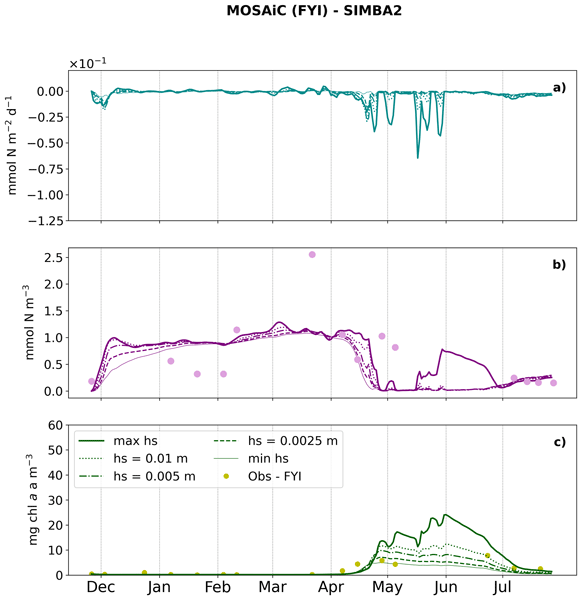
Nutrients exchange at the ocean-ice interface is a key process to supply nutrients and support sea-ice algal growth in polar regions. Such fluxes depend on the characteristics of the flow. We develop a parameterization that accounts for shifts between smooth and turbulent flow and we implement it in two sea-ice biogeochemical models. The parameterization leads to larger fluxes of nutrients that support higher production, resulting in more than double biomass accumulation.
Benjamin K. Galton-Fenzi, Richard Porter-Smith, Sue Cook, Eva Cougnon, David E. Gwyther, Wilma G. C. Huneke, Madelaine G. Rosevear, Xylar Asay-Davis, Fabio Boeira Dias, Michael S. Dinniman, David Holland, Kazuya Kusahara, Kaitlin A. Naughten, Keith W. Nicholls, Charles Pelletier, Ole Richter, Hélène Seroussi, and Ralph Timmermann
The Cryosphere, 19, 6507–6525, https://doi.org/10.5194/tc-19-6507-2025, https://doi.org/10.5194/tc-19-6507-2025, 2025
Short summary
Short summary
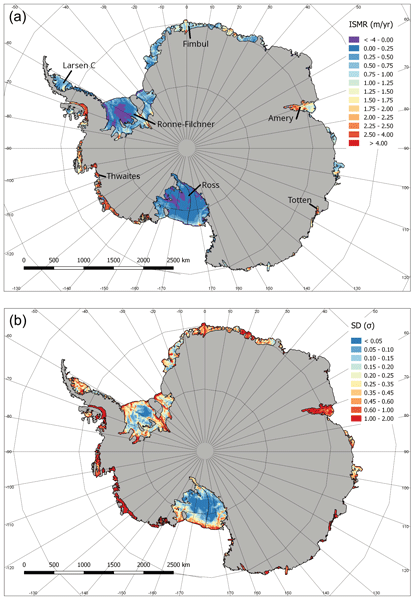
Quantifying melt and freeze beneath Antarctica’s floating ice shelves is vital to understanding present-day ice-sheet behavior and its potential to contribute to future sea-level rise. We compare 10 ice-shelf/ocean computer simulations with satellite data, providing the first multi-model estimate of melting and refreezing driven by the ocean. This new estimate offers a valuable tool for assessing ice-shelf roles in current and future ice-sheet changes, informing coastal adaptation strategies.
Robert Massom, Phillip Reid, Stephen Warren, Bonnie Light, Donald Perovich, Luke Bennetts, Petteri Uotila, Siobhan O'Farrell, Michael Meylan, Klaus Meiners, Pat Wongpan, Alexander Fraser, Alessandro Toffoli, Giulio Passerotti, Peter Strutton, Sean Chua, and Melissa Fedrigo
EGUsphere, https://doi.org/10.5194/egusphere-2025-3166, https://doi.org/10.5194/egusphere-2025-3166, 2025
Short summary
Short summary
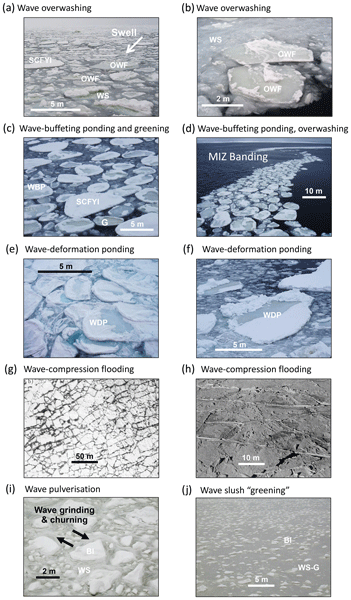
Ocean waves play a previously-neglected role in the rapid annual melting of Antarctic sea ice by flooding and pulverising floes, removing the snow cover and reducing the albedo by an estimated 0.38–0.54 – to increase solar absorption and enhance the vertical melt rate by up to 5.2 cm/day. Ice algae further decrease the albedo, to increase the melt-rate enhancement to up to 6.1 cm/day. Melting is accelerated by four previously-unconsidered wave-driven positive feedbacks.
Claire K. Yung, Xylar S. Asay-Davis, Alistair Adcroft, Christopher Y. S. Bull, Jan De Rydt, Michael S. Dinniman, Benjamin K. Galton-Fenzi, Daniel Goldberg, David E. Gwyther, Robert Hallberg, Matthew Harrison, Tore Hattermann, David M. Holland, Denise Holland, Paul R. Holland, James R. Jordan, Nicolas C. Jourdain, Kazuya Kusahara, Gustavo Marques, Pierre Mathiot, Dimitris Menemenlis, Adele K. Morrison, Yoshihiro Nakayama, Olga Sergienko, Robin S. Smith, Alon Stern, Ralph Timmermann, and Qin Zhou
EGUsphere, https://doi.org/10.5194/egusphere-2025-1942, https://doi.org/10.5194/egusphere-2025-1942, 2025
Short summary
Short summary
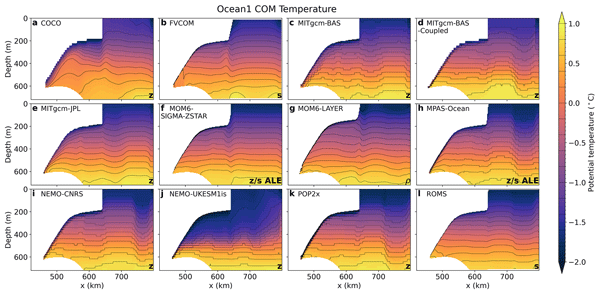
ISOMIP+ compares 12 ocean models that simulate ice-ocean interactions in a common, idealised, static ice shelf cavity setup, aiming to assess and understand inter-model variability. Models simulate similar basal melt rate patterns, ocean profiles and circulation but differ in ice-ocean boundary layer properties and spatial distributions of melting. Ice-ocean boundary layer representation is a key area for future work, as are realistic-domain ice sheet-ocean model intercomparisons.
Letizia Tedesco, Giulia Castellani, Pedro Duarte, Meibing Jin, Sebastien Moreau, Eric Mortenson, Benjamin Tobey Saenz, Nadja Steiner, and Martin Vancoppenolle
EGUsphere, https://doi.org/10.5194/egusphere-2025-1107, https://doi.org/10.5194/egusphere-2025-1107, 2025
Short summary
Short summary
Sea ice is home to tiny algae that support polar marine life, but understanding how they grow and interact with their environment remains challenging. We compared six computer models that simulate these algae and nutrients in sea ice, testing them against real-world data from Arctic sea ice. Our results show that while models can capture algal growth, they struggle to represent nutrient changes. Improving these models will help in understanding how climate change affects polar marine ecosystems.
Asmita Singh, Susanne Fietz, Sandy J. Thomalla, Nicolas Sanchez, Murat V. Ardelan, Sébastien Moreau, Hanna M. Kauko, Agneta Fransson, Melissa Chierici, Saumik Samanta, Thato N. Mtshali, Alakendra N. Roychoudhury, and Thomas J. Ryan-Keogh
Biogeosciences, 20, 3073–3091, https://doi.org/10.5194/bg-20-3073-2023, https://doi.org/10.5194/bg-20-3073-2023, 2023
Short summary
Short summary
Despite the scarcity of iron in the Southern Ocean, seasonal blooms occur due to changes in nutrient and light availability. Surprisingly, during an autumn bloom in the Antarctic sea-ice zone, the results from incubation experiments showed no significant photophysiological response of phytoplankton to iron addition. This suggests that ambient iron concentrations were sufficient, challenging the notion of iron deficiency in the Southern Ocean through extended iron-replete post-bloom conditions.
Xiaoqiao Wang, Zhaoru Zhang, Michael S. Dinniman, Petteri Uotila, Xichen Li, and Meng Zhou
The Cryosphere, 17, 1107–1126, https://doi.org/10.5194/tc-17-1107-2023, https://doi.org/10.5194/tc-17-1107-2023, 2023
Short summary
Short summary
The bottom water of the global ocean originates from high-salinity water formed in polynyas in the Southern Ocean where sea ice coverage is low. This study reveals the impacts of cyclones on sea ice and water mass formation in the Ross Ice Shelf Polynya using numerical simulations. Sea ice production is rapidly increased caused by enhancement in offshore wind, promoting high-salinity water formation in the polynya. Cyclones also modulate the transport of this water mass by wind-driven currents.
Hanna M. Kauko, Philipp Assmy, Ilka Peeken, Magdalena Różańska-Pluta, Józef M. Wiktor, Gunnar Bratbak, Asmita Singh, Thomas J. Ryan-Keogh, and Sebastien Moreau
Biogeosciences, 19, 5449–5482, https://doi.org/10.5194/bg-19-5449-2022, https://doi.org/10.5194/bg-19-5449-2022, 2022
Short summary
Short summary
This article studies phytoplankton (microscopic
plantsin the ocean capable of photosynthesis) in Kong Håkon VII Hav in the Southern Ocean. Different species play different roles in the ecosystem, and it is therefore important to assess the species composition. We observed that phytoplankton blooms in this area are formed by large diatoms with strong silica armors, which can lead to high silica (and sometimes carbon) export to depth and be important prey for krill.
Julian Gutt, Stefanie Arndt, David Keith Alan Barnes, Horst Bornemann, Thomas Brey, Olaf Eisen, Hauke Flores, Huw Griffiths, Christian Haas, Stefan Hain, Tore Hattermann, Christoph Held, Mario Hoppema, Enrique Isla, Markus Janout, Céline Le Bohec, Heike Link, Felix Christopher Mark, Sebastien Moreau, Scarlett Trimborn, Ilse van Opzeeland, Hans-Otto Pörtner, Fokje Schaafsma, Katharina Teschke, Sandra Tippenhauer, Anton Van de Putte, Mia Wege, Daniel Zitterbart, and Dieter Piepenburg
Biogeosciences, 19, 5313–5342, https://doi.org/10.5194/bg-19-5313-2022, https://doi.org/10.5194/bg-19-5313-2022, 2022
Short summary
Short summary
Long-term ecological observations are key to assess, understand and predict impacts of environmental change on biotas. We present a multidisciplinary framework for such largely lacking investigations in the East Antarctic Southern Ocean, combined with case studies, experimental and modelling work. As climate change is still minor here but is projected to start soon, the timely implementation of this framework provides the unique opportunity to document its ecological impacts from the very onset.
Hakase Hayashida, Meibing Jin, Nadja S. Steiner, Neil C. Swart, Eiji Watanabe, Russell Fiedler, Andrew McC. Hogg, Andrew E. Kiss, Richard J. Matear, and Peter G. Strutton
Geosci. Model Dev., 14, 6847–6861, https://doi.org/10.5194/gmd-14-6847-2021, https://doi.org/10.5194/gmd-14-6847-2021, 2021
Short summary
Short summary
Ice algae are tiny plants like phytoplankton but they grow within sea ice. In polar regions, both phytoplankton and ice algae are the foundation of marine ecosystems and play an important role in taking up carbon dioxide in the atmosphere. However, state-of-the-art climate models typically do not include ice algae, and therefore their role in the climate system remains unclear. This project aims to address this knowledge gap by coordinating a set of experiments using sea-ice–ocean models.
Cited articles
Adusumilli, S., Fricker, H. A., Medley, B., Padman, L., and Siegfried, M. R.: Interannual variations in meltwater input to the Southern Ocean from Antarctic ice shelves, Nat. Geosci., 13, 616–620, https://doi.org/10.1038/s41561-020-0616-z, 2020.
Alderkamp, A.-C., Mills, M. M., van Dijken, G. L., Lann, P., Thuróczy, C.-E.,Gerringa, L. J. A., de Barr, H. J. W., Payne, C. D., Visser, R. J. W., Buma, A. G. J., and Arrigo, K. R.: Iron from glaciers fuels phytoplankton blooms in the Amundsen Sea (Southern Ocean): Phytoplankton characteristics and productivity, Deep-Sea Res. II., 71–76, 32–48, https://doi.org/10.1016/j.dsr2.2012.03.005, 2012.
Amante, C. and Eakins, B. W.: ETOPO1 1 Arc-Minute Global Relief Model: Procedures, Data Sources and Analysis, NOAA Tehnical Memorandum NESDIS NGDC-24, NOAA National Geophysical Data Center [data set], https://doi.org/10.7289/V5C8276M, 2009.
Anugerahanti, P. and Tagliabue, A.: Response of Southern Ocean Resource Stress in a Changing Climate, Geophys. Res. Lett., 51, e2023GL107870, https://doi.org/10.1029/2023GL107870, 2024.
Ardyna, M., Claustre, H., Sallée, J-B., D'Ovidio, F., Gentili, B., van Dijken, G. L., D'Ortenzio, F., and Arrigo, K. R.: Delineating environmental control of phytoplankton biomass and phenology in the Southern Ocean, Geophys. Res. Lett., 44, 5016–5024, https://doi.org/10.1002/2016GL072428, 2017.
Ardyna, M., Mundy, C. J., Mayot, N., Matthes, L. C., Oziel, L., Horvat, C., Leu, E., Assmy, P., Hill, V., Matrai, P. A., Gale, M., Melnikov, I. A., and Arrigo, K. R.: Under-Ice Phytoplankton Blooms: Shedding Light on the “Invisible” Part of Arctic Primary Production, Front. Mar. Sci., 7, https://doi.org/10.3389/fmars.2020.608032, 2020.
Arnscheidt, C. W., Marshall, J., Dutrieux, P., Rye, C. D., and Ramadhan, A.: On the Settling Depth of Meltwater Escaping from beneath Antarctic Ice Shelves, JPO, 51, 2257–2270, https://doi.org/10.1175/JPO-D-20-0286.1, 2021.
Arrigo, K. R., Lowry, K. E., and van Dijken, G. L.: Annual changes in sea ice and phytoplankton in polynyas of the Amundsen Sea, Antarctica, Deep-Sea Res. II., 71–76, 5–15, https://doi.org/10.1016/j.dsr2.2012.03.006, 2012.
Arrigo, K. R., Robinson, D. H., Worthen, D. L., Dunbar, R. B., DiTullio, G. R., VanWoert, M., and Lizotte, M. P.: Phytoplankton community structure and the drawdown of nutrients and CO2 in the Southern Ocean, Science, 283, 5400, 365–367, https://doi.org/10.1126/science.283.5400.365, 1999.
Arrigo, K. R. and van Dijken, G. L.: Phytoplankton dynamics within 37 Antarctic coastal polynya systems, J. Geophys. Res. Ocean., 108, https://doi.org/10.1029/2002JC001739, 2003.
Arrigo, K. R., van Dijken, G. L., and Strong, A. L.: Environmental controls of marine productivity hot spots around Antarctica, J. Geophys. Res. Ocean., 120, 5545–5565, https://doi.org/10.1002/2015JC010888, 2015.
Arrigo, K. R., Worthen, D., Schnell, A., and Lizotte, M. P.: Primary production in Southern Ocean waters, J. Geophys. Res. Ocean., 103, 15587–15600, https://doi.org/10.1029/98JC00930, 1998.
Assmann, K. M., Jenkins, A., Shoosmith, D. R., Walker, D., Jacobs, S., and and Nicholls, K.: Variability of circumpolar deep water transport onto the Amundsen Sea continental shelf through a shelf break trough, J. Geophys. Res. Oceans, 118, 6603–6620, https://doi.org/10.1002/2013JC008871, 2013.
Behrenfeld, M. J. and Falkowski, P. G.: Photosynthetic rates derived from satellite-based chlorophyll concentration, Limnol. Oceanogr., 42, 1–20, https://doi.org/10.4319/lo.1997.42.1.0001, 1997.
Bett, D. T., Holland, P. R., Naveira Garabato, A. C., Jenkins, A., Dutrieux, P., Kimura, S., and Fleming, A.: The Impact of the Amundsen Sea Freshwater Balance on Ocean Melting of the West Antarctic Ice Sheet, J. Geophys. Res. Oceans., 125, https://doi.org/10.1029/2020JC016305, 2020.
Bhatia, M. P., Kujawinski, E. B., Das, S. B., Breier, C. F., Henderson, P. B., and Charette, M. A.: Greenland meltwater as a significant and potentially bioavailable source of iron to the ocean, Nat. Geosci., 6, 274–278, https://doi.org/10.1038/ngeo1746, 2013.
Biddle, L. C., Heywood, K. J., Kaiser, J., and Jenkins, A.: Glacial Meltwater Identification in the Amundsen Sea, JPO, 47, 933–954, https://doi.org/10.1175/JPO-D-16-0221.1, 2017.
Boles, E., Provost, C., Garçon, V., Bertosio, C., Athanase, M., Koenig, Z., and Sennéchael, N.: Under-Ice Phytoplankton Blooms in the Central Arctic Ocean: Insights From the First Biogeochemical IAOOS Platform Drift in 2017, J. Geophys. Res. Ocean., 125, e2019JC015608, https://doi.org/10.1029/2019JC015608, 2020.
Boyd, P. W., Jickells, T., Law, C. S., Blain, S., Boyle, E. A., Buesseler, K. O., Coale, K. H., Cullen, J. J., Baar, H. J. W. de, Follows, M., Harvey, M., Lancelot, C., Levasseur, M., Owens, N. P. J., Pollard, R., Rivkin, R. B., Sarmiento, J., Schoemann, V., Smetacek, V., Takeda, S., Tsuda, A., Turner, S., and Watson, A. J.: Mesoscale Iron Enrichment Experiments 1993-2005: Synthesis and Future Directions, Science, 315, 612–617, https://doi.org/10.1126/science.1131669, 2007.
Cape, M. R., Vernet, M., Pettit, E. C., Wellner, J., Truffer, M., Akie, G., Domack, E., Leventer, A., Smith, C. R., and Huber, B. A.: Circumpolar Deep Water Impacts Glacial Meltwater Export and Coastal Biogeochemical Cycling Along the West Antarctic Peninsula, Front. Mar. Sci., 6, https://doi.org/10.3389/fmars.2019.00144, 2019.
Cavalieri, D. J., Parkinson, C. L., Gloersen, P., and Zwally, H. J.: Sea Ice Concentrations from Nimbus-7 SMMR and DMSP SSM/I-SSMIS Passive Microwave Data. (NSIDC-0051, Version 1), Boulder, Colorado USA, NASA National Snow and Ice Data Center Distributed Active Archive Center [data set], https://doi.org/10.5067/8GQ8LZQVL0VL, 1996.
Death, R., Wadham, J. L., Monteiro, F., Le Brocq, A. M., Tranter, M., Ridgwell, A., Dutkiewicz, S., and Raiswell, R.: Antarctic ice sheet fertilises the Southern Ocean, Biogeosciences, 11, 2635–2643, https://doi.org/10.5194/bg-11-2635-2014, 2014.
Dinniman, M. S., St-Laurent, P., Arrigo, K. R., Hofmann, E. E., and van Dijken, G. L.: Analysis of Iron Sources in Antarctic Continental Shelf Waters, J. Geophys. Res. Oceans., 125, https://doi.org/10.1029/2019JC015736, 2020.
Dinniman, M. S., St-Laurent, P., Arrigo, K. R., Hofmann, E. E., and van Dijken, G. L.: Sensitivity of the Relationship Between Antarctic Ice Shelves and Iron Supply to Projected Changes in the Atmospheric Forcing, J. Geophys. Res. Ocean., 128, e2022JC019210, https://doi.org/10.1029/2022JC019210, 2023.
Dotto, T. S., Naveira Garabato, A. C., Bacon, S., Holland, P. R., Kimura, S., Firing, Y. L., Tsamados, M., Wåhlin, A. K., and Jenkins, A.: Wind-Driven Processes Controlling Oceanic Heat Delivery to the Amundsen Sea, Antarctica, JPO, 49, 2829–2849, https://doi.org/10.1175/JPO-D-19-0064.1, 2019.
Douglas, C. C., Briggs, N., Brown, P., MacGilchrist, G., and Naveira Garabato, A.: Exploring the relationship between sea ice and phytoplankton growth in the Weddell Gyre using satellite and Argo float data, Ocean Sci., 20, 475–497, https://doi.org/10.5194/os-20-475-2024, 2024.
Dutrieux, P., De Rydt, J., Jenkins, A., Holland, P. R., Ha, H., K., Lee, S. H., Steig, E. J., Ding, Q., Abrahamsen, E. P., and Schröder, M.: Strong sensitivity of Pine Island ice-shelf melting to climate variability, Science, 343, 174–178, https://doi.org/10.1126/science.1244341, 2014.
ECCO Consortium, Fukumori, I., Wang, O., Fenty, I., Forget, G., Heimbach, P., and Ponte, R. M: ECCO Ocean Mixed Layer Depth – Monthly Mean 0.5 Degree (Version 4 Release 4), ver V4r4. PO.DACC, CA, USA [data set], https://doi.org/10.5067/ECG5M-OML44, 2021.
Forsch, K. O., Hahn-Woernle, L., Sherrell, R. M., Roccanova, V. J., Bu, K., Burdige, D., Vernet, M., and Barbeau, K. A.: Seasonal dispersal of fjord meltwaters as an important source of iron and manganese to coastal Antarctic phytoplankton, Biogeosciences, 18, 6349–6375, https://doi.org/10.5194/bg-18-6349-2021, 2021.
Golder, M. R. and Antoine, D.: Physical drivers of long-term chlorophyll-a variability in the Southern Ocean, Elem. Sci. Anth., 13, https://doi.org/10.1525/elementa.2024.00077, 2025.
Garabato, A. C. N., Forryan, A., Dutrieux, P., Brannigan, L., Biddle, L. C., Heywood, K. J., Jenkins, A., Firing, Y. L., and Kimura, S.: Vigorous lateral export of the meltwater outflow from beneath an Antarctic ice shelf, Nature, 542, 219–222, https://doi.org/10.1038/nature20825, 2017.
Gerringa, L. J. A., Alderkamp, A.-C., Laan, P., Thuróczy, C.-E., De Baar, H. J. W., Mills, M. M., van Dijken, G. L., Haren, H. van, and Arrigo, K. R.: Iron from melting glaciers fuels the phytoplankton blooms in Amundsen Sea (Southern Ocean): Iron biogeochemistry, Deep-Sea Res. II., 71–76, 16–31, https://doi.org/10.1016/j.dsr2.2012.03.007, 2012.
Gerringa, L. J. A., Alderkamp, A.-C., Laan, P., Thuróczy, C.-E., de Baar, H. J. W., Mills, M. M., van Dijken, G. L., van Haren, H., and Arrigo, K. R.: Corrigendum to “Iron from melting glaciers fuels the phytoplankton blooms in Amundsen Sea (Southern Ocean): iron biogeochemistry” (Gerringa et al., 2012), Deep-Sea Res. II., 177, 104843, https://doi.org/10.1016/j.dsr2.2020.104843, 2020.
Gledhill, M. and Buck, K.: The Organic Complexation of Iron in the Marine Environment: A Review, Front. Microbiol., 3, https://doi.org/10.3389/fmicb.2012.00069, 2012.
Goldberg, D. N., Twelves, A. G., Holland, P. R., and Wearing, K. G.: The non-local impact of Antarctic subglacial runoff, J. Geophys. Res. Ocean, 128, e2023JC019823, https://doi.org/10.1029/2023JC019823, 2023.
Ha, H. K., Wåhlin, A. K., Kim, T.W., Lee, S. H., Lee, J. H., Lee, H. J., Hong, C. S., Arneborg, L., Björk, G., and Kalén, O.: Circulation and modification of warm deep water on the central Amundsen shelf, JPO, 44, 1493–1501, https://doi.org/10.1175/JPO-D-13-0240.1, 2014.
Hassler, C., Cabanes, D., Blanco-Ameijeiras, S., Sander, S. G., Benner, R., Hassler, C., Cabanes, D., Blanco-Ameijeiras, S., Sander, S. G., and Benner, R.: Importance of refractory ligands and their photodegradation for iron oceanic inventories and cycling, Mar. Fresh. Res., 71, 311–320, https://doi.org/10.1071/MF19213, 2019.
Hawkings, J. R., Wadham, J. L., Tranter, M., Raiswell, R., Benning, L. G., Statham, P. J., Tedstone, A., Nienow, P., Lee, K., and Telling, J.: Ice sheets as a significant source of highly reactive nanoparticulate iron to the oceans, Nat. Commun., 5, 3929, https://doi.org/10.1038/ncomms4929, 2014.
Hayward, A., Wright, S.W., Carroll, D. Law, C. S., Wongpan, P., Gutiérrez-Rodriguez, A., and Pinkerton, M. H.: Antarctic phytoplankton communities restructure under shifting sea-ice regimes. Nat. Clim. Chang. 15, 889–896, https://doi.org/10.1038/s41558-025-02379-x, 2025.
Herraiz-Borreguero, L., Lannuzel, D., van der Merwe, P., Treverrow, A., and Pedro, J. B.: Large flux of iron from the Amery Ice Shelf marine ice to Prydz Bay, East Antarctica, J. Geophys. Res. Ocean., 121, 6009–6020, https://doi.org/10.1002/2016JC011687, 2016.
Hersbach, H., Bell, B., Berrisford, P., Hirahara, S., Horányi, A., Muñoz-Sabater, J., Nicolas, J., Peubey, C., Radu, R., Schepers, D., Simmons, A., Soci, C., Abdalla, S., Abellan, X., Balsamo, G., Bechtold, P., Biavati, G., Bidlot, J., Bonavita, M., De Chiara, G., Dahlgren, P., Dee, D., Diamantakis, M., Dragani, R., Flemming, J., Forbes, R., Fuentes, M., Geer, A., Haimberger, L., Healy, S., Hogan, R. J., Hólm, E., Janisková, M., Keeley, S., Laloyaux, P., Lopez, P., Lupu, C., Radnoti, G., de Rosnay, P., Rozum, I., Vamborg, F., Villaume, S., and Thépaut, J.-N.: The ERA5 global reanalysis, Q. J. R. Meteorol. Soc., 146, 1999–2049, https://doi.org/10.1002/qj.3803, 2020.
Hosking, J. S., Orr, A., Marshall, G. J., Turner, J., and Phillips, T.: The Influence of the Amundsen–Bellingshausen Seas Low on the Climate of West Antarctica and Its Representation in Coupled Climate Model Simulations, J. Clim., 26, 6633–6648, https://doi.org/10.1175/JCLI-D-12-00813.1, 2013.
Hosking, J. S., Orr, A., Bracegirdle, T. J., and Turner, J.: Future circulation changes off West Antarctica: Sensitivity of the Amundsen Sea Low to projected anthropogenic forcing, Geophys. Res. Lett., 43, 367–376, https://doi.org/10.1002/2015GL067143, 2016.
Huang, B., Liu, C., Banzon, V., Freeman, E., Graham, G., Hankins, B., Smith, T., and Zhang, H.-M.: Improvements of the Daily Optimum Interpolation Sea Surface Temperature (DOISST) Version 2.1, Journal of Climate, 34, 2923–2939, https://doi.org/10.1175/JCLI-D-20-0166.1, 2021.
Jacobs, S. S., Jenkins, A., Giulivi, C. F., and Dutrieux, P.: Stronger ocean circulation and increased melting under Pine Island Glacier ice shelf, Nat. Geo., 4, 519–523, https://doi.org/10.1038/ngeo1188, 2011.
Jena, B. and Pillai, A. N.: Satellite observations of unprecedented phytoplankton blooms in the Maud Rise polynya, Southern Ocean, The Cryosphere, 14, 1385–1398, https://doi.org/10.5194/tc-14-1385-2020, 2020.
Jenkins, A., Dutrieux, P., Jacobs, S. S., McPhail, S. D., Perrett, J. R., Webb, A. T., and White, D.: Observations beneath Pine Island glacier in West Antarctica and implications for its retreat, Nat. Geo., 3, 468–472, https://doi.org/10.1038/NGEO890, 2010.
Jourdain, N. C., Mathiot, P., Merino, N., Durand, G., Le Sommer, J., Spence, P., Dutrieux, P., and Madec, G.: Ocean circulation and sea-ice thinning induced by melting ice shelves in the Amundsen Sea, J. Geophys. Res. Ocean., 122, 2550–2573, https://doi.org/10.1002/2016JC012509, 2017.
Kauko, H. M., Hattermann, T., Ryan-Keogh, T., Singh, A., de Steur, L., Fransson, A., Chierici, M., Falkenhaug, T., Hallfredsson, E. H., Bratbak, G., Tsagaraki, T., Berge, T., Zhou, Q., and Moreau, S.: Phenology and Environmental Control of Phytoplankton Blooms in the Kong Håkon VII Hav in the Southern Ocean, Front. Mar. Sci., 8, https://doi.org/10.3389/fmars.2021.623856, 2021.
Lannuzel, D., Fourquez, M., de Jong, J., Tison, J.-L., Delille, B., and Schoemann, V.: First report on biological iron uptake in the Antarctic sea-ice environment, Polar Biol., 46, 339–355, https://doi.org/10.1007/s00300-023-03127-7, 2023.
Lee, S. H., Kim, B. K., Lim, Y. J., Joo, H., Kang, J. J., Lee, D., Park, J., Ha, S.-Y., and Lee, S. H.: Small phytoplankton contribution to the standing stocks and the total primary production in the Amundsen Sea, Biogeosciences, 14, 3705–3713, https://doi.org/10.5194/bg-14-3705-2017, 2017.
Lee, Y., Park, J., Jung, J., and Kim, T. W.: Unpredecedented differences in phytoplnakton community structures in the Amundsen Sea polynyas, West Antarctica, Envrion. Res. Lett. 17, 114022, https://doi.org/10.1088/1748-9326/ac9a5f, 2022.
Liniger, G., Strutton, P. G., Lannuzel, D., and Moreau, S.: Calving event led to changes in phytoplankton bloom phenology in the Mertz polynya, Antarctica, J. Geophys. Res. Oceans., 125, e2020JC016387, https://doi.org/10.1029/2020JC016387, 2020.
Liu, Y., Moore, J. C., Cheng, X., Gladstone, R. M., Bassis, J. N., Liu, H., Wen, J., and Hui, F.: Ocean-driven thinning enhances iceberg calving and retreat of Antarctic ice shelves, Proc. Nat. Acad. Sci., 112, 3263–3268, https://doi.org/10.1073/pnas.1415137112, 2015.
Marchese, C., Albouy, C., Tremblay, J.-É., Dumont, D., D'Ortenzio, F., Vissault, S., and Bélanger, S.: Changes in phytoplankton bloom phenology over the North Water (NOW) polynya: a response to changing environmental conditions, Polar Biol., 40, 1721–1737, https://doi.org/10.1007/s00300-017-2095-2, 2017.
Maritorena, S. and Siegel, D. A.: Consistent merging of satellite ocean color data sets using a bio-optical model, Rem. Sens. Eviron., 94, 429-440, https://doi.org/10.1016/j.rse.2004.08.014, 2005.
McClish, S. and Bushinsky, S. M.: Majority of Southern Ocean seasonal ice zone bloom net community production precedes total ice retreat, Geophys. Res. Lett., 50, e2023GL103459, https://doi.org/10.1029/2023GL103459, 2023.
Meredith, M., Sommerkorn, M., Cassotta, S., Derksen, C., Ekaykin, A., Hollowed, A., Kofinas, G., Mackintosh, A., Melbourne-Thomas, J., Muelbert, M. M. C., Ottersen, G., Pritchard, H., and Schurr, E. A. G.: Polar Regions, in: IPCC Special Report on the Ocean and Cryosphere in a Changing Climate, edited by: Pörtner, H.-O., Roberts, D. C., Masson-Delmotte, V., Zhai, P., Tignor, M., Poloczanska, E., Mintenbeck, K., Alegriìa, A., Nicolai, M., Okem, A., Petzold, J., Rama, B., and Weyer, N. M., Cambridge University Press, Cambridge, UK and New York, NY, USA, 203–320, https://doi.org/10.1017/9781009157964.005, 2019.
Mills, M. M., Lindsey, R. K., van Dijken, G. L., Alderkamp, C.-A., Berg, G. M., Robinson, D. H., Welschmeyer, N. A., and Arrigo, K. R.: Photophysiology in two Southern Ocean phytoplankton taxa: photosynthesis of phaeocystis antarctica (prymnesiophyceae) and fragiloriapsis cyclindrus (bacillariophyceae) under simulated mixed-layer irradiance, J. Phycol., 46, 1114–1127, https://doi.org/10.1111/j.1529-8817.2010.00923.x, 2010.
Mills, M. M., Alderkamp, C-A., Thuróczy, C.-E., van Dijken, G. L., Laan, P., de Barr, H. J. W. and Arrigo, K. R.: Phytoplankton biomass and pigment responses to Fe amendments on the Pine Island and Amundsen polynyas, Deep-Sea Res. II., 71–76, 61–76, https://doi.org/10.1016/j.dsr2.2012.03.008, 2012.
Morales Maqueda, M. A.: Polynya Dynamics: a Review of Observations and Modeling, Rev. Geophys., 42, RG1004, https://doi.org/10.1029/2002RG000116, 2004.
Moreau, S., Mostajir, B., Bélanger, S., Schloss, I. R., Vancoppenolle, M., Demers, S., and Ferreyra, G. A.: Climate change enhances primary production in the western Antarctic Peninsula, Glob. Chang. Biol., 21, 2191–2205, https://doi.org/10.1111/gcb.12878, 2015.
Naughten, K. A., Meissner, K. J., Galton-Fenzi, B. K., England, M. H., Timmermann, R., and Hellmer, H. H.: Future Projections of Antarctic Ice Shelf Melting Based on CMIP5 Scenarios, J. Clim., 31, 5243–5261, https://doi.org/10.1175/JCLI-D-17-0854.1, 2018.
Naughten, K. A., Holland, P. R., and De Rydt, J.: Unavoidable future increase in West Antarctic ice-shlef melting over the twenty-fist century, Nat. Clim. Change., 13, 1222–1228, https://doi.org/10.1038/s41558-023-01818-x, 2023.
Oh, J.-H., Noh, K. M., Lim, H.-G., Jin, E. K., Jun, S.-Y., and Kug, J.-S.: Antarctic meltwater-induced dynamical changes in phytoplankton in the Southern Ocean, Environ. Res. Lett., 17, 024022, https://doi.org/10.1088/1748-9326/ac444e, 2022.
Oliver, H., St-Laurent, P., Sherrell, R. M., and Yager, P. L.: Modeling Iron and Light Controls on the Summer Phaeocystis antarctica Bloom in the Amundsen Sea Polynya, Global Biogeochem. Cycles, 2018GB006168, https://doi.org/10.1029/2018GB006168, 2019.
Pan, J. B., Gierach, M. M., Stammerjohn, S., Schofiled, O., Meredith, M. P., Reynolds, R. A., vernet, M., Haumann, F. A., Orona, A. J., and Miller, C. E.: Impact of glacial meltwater on phytoplankton biomass along the Western Antarctic Peninsula. Comm. Earth. Environ., 6, 456, https://doi.org/10.1038/s43247-025-02435-6, 2025.
Paolo, F. S., Fricker, H. A., and Padman, L.: Volume loss from Antarctic ice shelves is accelerating, Science, 348, 327–331, https://doi.org/10.1126/science.aaa0940, 2015.
Paolo, F. S., Fricker, H. A., and Padman, L.: Constructing improved decadal records of Antarctic ice shelf height change from multiple satellite radar altimeters, Remote Sens. Environ. 177, 192–205, https://doi.org/10.1016/j.rse.2016.01.026, 2016.
Paolo, F. S., Gardner, A. S., Greene, C. A., Nilsson, J., Schodlok, M. P., Schlegel, N.-J., and Fricker, H. A.: Widespread slowdown in thinning rates of West Antarctic ice shelves, The Cryosphere, 17, 3409–3433, https://doi.org/10.5194/tc-17-3409-2023, 2023.
Park, J., Kuzminov, F. I., Bailleul, B., Yang, E. J., Lee, S., Falkowski, P. G., and Gorbunov, M. Y.: Light availability rather than Fe controls the magnitude of massive phytoplankton bloom in the Amundsen Sea polynyas, Antarctica: Light availability rather than Fe controls phytoplankton bloom, Limnol. Oceanogr., 62, 2260–2276, https://doi.org/10.1002/lno.10565, 2017.
Park, J., Kim, J.-H., Kim, H., Hwang, J., Jo, Y.-H., and Lee, S. H.: Environmental Forcings on the Remotely Sensed Phytoplankton Bloom Phenology in the Central Ross Sea Polynya, J. Geophys. Res. Ocean., 124, 5400–5417, https://doi.org/10.1029/2019JC015222, 2019.
Person, R., Aumont, O., Madec, G., Vancoppenolle, M., Bopp, L., and Merino, N.: Sensitivity of ocean biogeochemistry to the iron supply from the Antarctic Ice Sheet explored with a biogeochemical model, Biogeosciences, 16, 3583–3603, https://doi.org/10.5194/bg-16-3583-2019, 2019.
Pritchard, H. D., Ligtenberg, S. R. M., Fricker, H. A., Vaughan, D. G., van den Broeke, M. R., and Padman, L.: Antarctic ice-sheet loss driven by basal melting of ice shelves, Nature, 484, 502–505, https://doi.org/10.1038/nature10968, 2012.
Racault, M.-F., Le Quéré, C., Buitenhuis, E., Sathyendranath, S., and Platt, T.: Phytoplankton phenology in the global ocean, Ecol. Indic., 14, 152–163, https://doi.org/10.1016/j.ecolind.2011.07.010, 2012.
Randall-Goodwin, E., Meredith, M. P., Jenkins, A., Yager, P. L., Sherrell, R. M., Abrahamsen, E. P., Guerrero, R., Yuan, X., Mortlock, R. A., Gavahan, K., Alderkamp, A.-C., Ducklow, H., Robertson, R., and Stammerjohn, S. E.: Freshwater distributions and water mass structure in the Amundsen Sea Polynya region, Antarctica, Elem. Sci. Anth., 3, 000065, https://doi.org/10.12952/journal.elementa.000065, 2015.
Rignot, E., Jacobs, S., Mouginot, J., and Scheuchl, B.: Ice-Shelf Melting Around Antarctica, Science, 341, 266–270, https://doi.org/10.1126/science.1235798, 2013.
Rignot, E., Mouginot, J., Scheuchl, B., van den Broeke, M., van Wessem, M. J., and Morlighem, M.: Four decades of Antarctic Ice Sheet mass balance from 1979–2017, Proc. Nat. Acad. Sci., 116, 4, 1095–1103, https://doi.org/10.1073/pnas.1812883116, 2019.
Ryan-Keogh, T. J., Thomalla, S. J., Chang, N., and Moalusi, T.: A new global oceanic multi-model net primary productivity data product, Earth Syst. Sci. Data, 15, 4829–4848, https://doi.org/10.5194/essd-15-4829-2023, 2023.
Sari El Dine, Z., Guinet, C., Picard, B., Thyssen, M., Duforêt-gaurier, L., and El Hourany, R.:Influence of the phytoplankton community structure on the southern elephant seals' foraging activity within the Southern Ocean, Commun. Biol., 8, 620, https://doi.org/10.1038/s42003-025-08049-0, 2025.
Scambos, T., Bell, R. E., Alley, R. B., Anandakrishnan, S., Bromwich, D. H., Brunt, K., Christianson, K., Creyts, T., Das, S. B., DeConto, R., Dutrieux, P., Fricker, H. A., Holland, D., MacGregor, J., Medley, B., Nicolas, J. P., Pollard, D., Siegfried, M. R., Smith, A. M., Steig, E. J., Trusel, L. D., Vaughan, D. G., and Yager, P. L.: How much, how fast?: A science review and outlook for research on the instability of Antarctica's Thwaites Glacier in the 21st century, Glob. Planet. Change ,153, 16–34, https://doi.org/10.1016/j.gloplacha.2017.04.008, 2017.
Silsbe, G. M., Behrenfeld, M. J., Halsey, K. H., Milligan, A. J., and Westberry, T. K.: The CAFE model: A net production model for global ocean phytoplankton, Global Biogeochem. Cycles, 30, 1756–1777, https://doi.org/10.1002/2016GB005521, 2016.
Shepherd, A., Ivins, E., Rignot, E., Smith, B., van den Broeke, M., Velicogna, I., Whitehouse, P., Briggs, K., Joughin, I., Krinner, G., Nowicki, S., Payne, T., Scambos, T., Schlegel, N., A, G., Agosta, C., Ahlstrøm, A., Babonis, G., Barletta, V., Blazquez, A., Bonin, J., Csatho, B., Cullather, R., Felikson, D., Fettweis, X., Forsberg, R., Gallee, H., Gardner, A., Gilbert, L., Groh, A., Gunter, B., Hanna, E., Harig, C., Helm, V., Horvath, A., Horwath, M., Khan, S., Kjeldsen, K. K., Konrad, H., Langen, P., Lecavalier, B., Loomis, B., Luthcke, S., McMillan, M., Melini, D., Mernild, S., Mohajerani, Y., Moore, P., Mouginot, J., Moyano, G., Muir, A., Nagler, T., Nield, G., Nilsson, J., Noel, B., Otosaka, I., Pattle, M. E., Peltier, W. R., Pie, N., Rietbroek, R., Rott, H., Sandberg-Sørensen, L., Sasgen, I., Save, H., Scheuchl, B., Schrama, E., Schröder, L., Seo, K.-W., Simonsen, S., Slater, T., Spada, G., Sutterley, T., Talpe, M., Tarasov, L., van de Berg, W. J., van der Wal, W., van Wessem, M., Vishwakarma, B. D., Wiese, D., Wouters, B., and The IMBIE team: Mass balance of the Antarctic Ice Sheet from 1992 to 2017, Nature, 558, 219–222, https://doi.org/10.1038/s41586-018-0179-y, 2018.
Sherrell, R. M., Lagerström, M. E., Forsch, K. O., Stammerjohn, S. E., and Yager, P. L.: Dynamics of dissolved iron and other bioactive trace metals (Mn, Ni, Cu, Zn) in the Amundsen Sea Polynya, Antarctica, Elem. Sci. Anth., 3, 000071, https://doi.org/10.12952/journal.elementa.000071, 2015.
Siegel, D. A., Doney, S. C., and Yoder, J. A.: The North Atlantic Spring Phytoplankton Bloom and Sverdrup's Critical Depth Hypothesis, Science, 296, 730–733, https://doi.org/10.1126/science.1069174, 2002.
Smith, A. J. R., Nelson, T., Ratnarajah, L., Genovese, C., Westwood, K., Holmes, T. M., Corkill, M., Townsend, A. T., Bell, E., Wuttig, K., and Lannuzel, D.: Identifying potential sources of iron-binding ligands in coastal Antarctic environments and the wider Southern Ocean, Front. Mar. Sci., 9, https://doi.org/10.3389/fmars.2022.948772, 2022.
Soppa, M. A., Völker, C., and Bracher, A.: Diatom Phenology in the Southern Ocean: Mean Patterns, Trends and the Role of Climate Oscillations, Remote Sens., 8, 420, https://doi.org/10.3390/rs8050420, 2016.
Stammerjohn, S. E., Martinson, D. G., Smith, R. C., and Iannuzzi, R. A.: Sea ice in the western Antarctic Peninsula region: Spatio-temporal variability from ecological and climate change perspectives, Deep-Sea Res. II., 55, 2041–2058, https://doi.org/10.1016/j.dsr2.2008.04.026, 2008.
Stoer, A. C. and Fennel, K.: Carbon-centric dynamics of Earth's marine phytoplankton, Proc. Nat. Acad. Sci., 121, 45, e2405354121, https://doi.org/10.1073/pnas.2405354121, 2024.
St-Laurent, P., Yager, P. L., Sherrell, R. M., Stammerjohn, S. E., and Dinniman, M. S.: Pathways and supply of dissolved iron in the Amundsen Sea (Antarctica), J. Geophys. Res. Oceans., 122, 7135–7162, https://doi.org/10.1002/2017JC013162, 2017.
St-Laurent, P., Yager, P. L., Sherrell, R. M., Oliver, H., Dinniman, M. S., and Stammerjohn, S. E.: Modeling the Seasonal Cycle of Iron and Carbon Fluxes in the Amundsen Sea Polynya, Antarctica, J. Geophys. Res. Oceans, 124, 1544–1565, https://doi.org/10.1029/2018JC014773, 2019.
Tagliabue, A., Bowie, A. R., DeVries, T., Ellwood, M. J., Landing, W. M., Milne, A., Ohnemus, D. C., Twining, B. S., and Boyd, P. W.: The interplay between regeneration and scavenging fluxes drives ocean iron cycling, Nat. Commun., 10, 4960, https://doi.org/10.1038/s41467-019-12775-5, 2019.
Tamsitt, V., England, M. H., Rintoul, S. R., and Morrison, A. K.: Residence Time and Transformation of Warm Circumpolar Deep Water on the Antarctic Continental Shelf, Geophys. Res. Lett., 48, e2021GL096092, https://doi.org/10.1029/2021GL096092, 2021.
Tamura, T. P., Nomura, D., Hirano, D., Tamura, T., Kiuchi, M., Hashida, G., Makabe, R., Ono, K., Ushio, S., Yamazaki, K., Nakayama, Y., Takahashi, K. D., Sasaki, H., Murase, H., and Aoki, S.: Impacts of basal melting of the Totten Ice Shelf and biological productivity on marine biogeochemical components in Sabrina Coast, East Antarctica, Global Biogeochem. Cycles, 37, e2022GB007510, https://doi.org/10.1029/2022GB007510, 2023.
Thomalla, S. J., Nicholson, S. A., Ryan-Keogh, T. J., and Smith, M. E.: Widespread changes in Southern Ocean phytoplankton blooms linked to climate drivers, Nat. Clim. Chang., 13, 975–984, https://doi.org/10.1038/s41558-023-01768-4, 2023.
Thuróczy, C.-E., Alderkamp, A.-C., Laan, P., Gerringa, L. J. A., Mills, M. M., van Dijken, G. L., De Baar, H. J. W., and Arrigo, K. R.: Key role of organic complexation of iron in sustaining phytoplankton blooms in the Pine Island and Amundsen Polynyas (Southern Ocean), Deep-Sea Res. II, 71–76, 49–60, https://doi.org/10.1016/j.dsr2.2012.03.009, 2012.
Turner, J., Hosking, J. S., Marshall, G. J., Phillips, T., and Bracegirdle, T. J.: Antarctic sea ice increase consistent with intrinsic variability of the Amundsen Sea Low, Clim. Dyn., 46, 2391–2402, https://doi.org/10.1007/s00382-015-2708-9, 2016.
Twelves, A. G., Goldberg, D. N., Henley, S. F., Mazloff, M. R. and Jones, D. C.: Self-shading and meltwater spreading control the transition from light to iron limitation in an Antarctic coastal polynya, J. Geophys. Res. Oceans, 126, e2020JC016636, https://doi.org/10.1029/2020JC016636, 2021.
Vaillancourt, R. D., Sambrotto, R. N., Green, S., and Matsuda, A.: Phytoplankton biomass and photosynthetic competency in the summertime Mertz Glacier Region of East Antarctica, Deep-Sea Res. II., 50, 1415–1440, https://doi.org/10.1016/S0967-0645(03)00077-8, 2003.
van Leeuwe, M. A., Webb, A. L., Venables, H. J., Visser, R. J. W., Meredith, M., P., Elzenga J. T. M., and Stefels, J.: Annual patterns in phytoplnakton phenology in Antarctic coastal waters explained by environmental drivers, Limnol. Oceanogr., 65, 1651–1668, https://doi.org/10.1002/lno.11477, 2020.
van Manen, M., Aoki, S., Brussaard, C. P. D., Conway, T. M., Eich, C., Gerringa, L., Jung, J., Kim, T.-W., Lee, S. H., Lee, Y., Reichart, G.-J., Tian, H., Wille, F., and Middag, R.: The role of the Dotson Ice Shelf and circumpolar deep water as driver and source of dissolved and particulate iron and manganese in the Amundsen Sea polynya, Southern Ocean, Mar. Chem., 104161, https://doi.org/10.1016/j.marchem.2022.104161, 2022.
Westberry, T., Behrenfeld, M. J., Siegel, D. A., and Boss, E.: Carbon-based primary productivity modeling with vertically resolved photoacclimation, Global Biogeoch. Cycle, 22, GB2024, https://doi.org/10.1029/2007GB003078, 2008.
Yager, P. L., Sherrell, R. M, Stammerjohn, S., Alderkamp, A.-C., Schofield, O., Abrahamsen, P., Arrigo, K., Bertilsson, S., Garay, L., Guerrero, R., Lowry, K., Moksnes, P.-O., Ndungo, K., Post, A., Randall-Goodwin, E., Riemann, L., Severmann, S., Thatje, S., van Dijken, G., and Wilson, S.: ASPIRE: The Amundsen Sea Polynya International Research Expedition, Oceanog., 25, 40–53, https://doi.org/10.5670/oceanog.2012.73, 2012.
Yager P. L., Sherrell, R. M., Stammerjohn, S. E., Ducklow, H. W., Schofiled, O., Ingall, E. D., Wilson, S. E., Lowry, K. E., Willismd, C. M., Riemman, L., Bertilsson, S., Alderkamp, A-C., Dinasquet, J., Logares, R., Richert, I., Sipler, R. E., Melara, A. J., Mu, L., Newstead, R. G., Post, A. F., Swalethorp, R., and van Dijken, G. L.: A carbon budget for the Amundsen Sea Polynya, Antarctica: Estimating net community production and export in a highly productive polar ecosystem, Elem. Sci. Anth., 4, 000140, https://doi.org/10.12952/journal.elementa.000140, 2016.
Yu, L.-S., He, H., Leng, H., Liu, H., and Lin, P.: Interannual variation of summer sea surface temperature in the Amundsen Sea, Antarctica, Front. Mar. Sci., 10, https://doi.org/10.3389/fmars.2023.1050955, 2023.
Zheng, Y., Heywood, K. J., Webber, B. G. M., Stevens, D. P., Biddle, L. C., Boehme, L., and Loose, B.: Winter seal-based observations reveal glacial meltwater surfacing in the southeastern Amundsen Sea, Commun. Earth. Environ., 2, 1–9, https://doi.org/10.1038/s43247-021-00111-z, 2021.
Short summary
We investigate the phytoplankton bloom variability and its drivers in the Amundsen polynyas (areas of open water within sea ice). Between 1998 and 2017, we find that changes in melting ice shelves may have different impacts on biological productivity between the Amundsen Sea (ASP) and Pine Island (PIP) polynyas. While ice shelves melting seems to play an important role for phytoplankton growth variability in the ASP, light and warmer waters appear to be more important in the PIP.
We investigate the phytoplankton bloom variability and its drivers in the Amundsen polynyas...
Altmetrics
Final-revised paper
Preprint