
Articles | Volume 22, issue 10
https://doi.org/10.5194/bg-22-2383-2025
© Author(s) 2025. This work is distributed under
the Creative Commons Attribution 4.0 License.
the Creative Commons Attribution 4.0 License.
https://doi.org/10.5194/bg-22-2383-2025
© Author(s) 2025. This work is distributed under
the Creative Commons Attribution 4.0 License.
the Creative Commons Attribution 4.0 License.
Research article
| 
21 May 2025
Research article |
| 21 May 2025
| 21 May 2025
Effects of submarine groundwater on nutrient concentration and primary production in a deep bay of the Japan Sea
Menghong Dong
State Key Laboratory of Satellite Ocean Environment Dynamics, Second Institute of Oceanography, Ministry of Natural Resources, Hangzhou, China

Center for Marine Environmental Studies, Ehime University, Matsuyama, Japan
Takuya Matsuura
Graduate Faculty of Interdisciplinary Research Faculty of Engineering, Civil Engineering and Environmental Engineering, Yamanashi University, Kofu, Japan
Taichi Tebakari
Civil, Human and Environmental Science and Engineering Course, Graduate School of Science and Engineering, Chuo University, Tokyo, Japan
Jing Zhang
Faculty of Science, Academic Assembly, University of Toyama, Toyama, Japan
Related authors
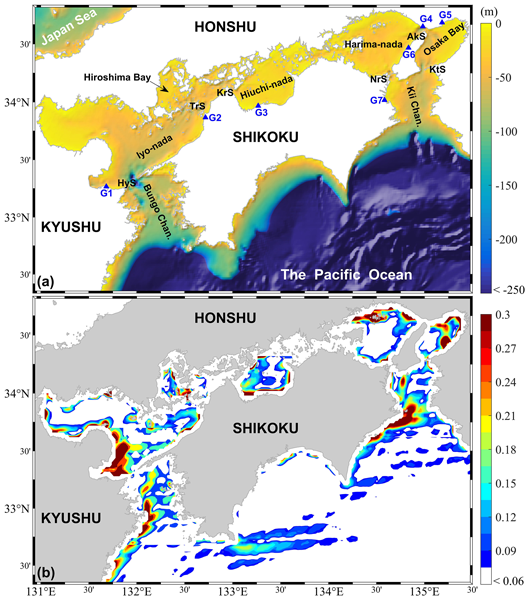
Menghong Dong and Xinyu Guo
Ocean Sci., 20, 1527–1546, https://doi.org/10.5194/os-20-1527-2024, https://doi.org/10.5194/os-20-1527-2024, 2024
Short summary
Short summary
We employed a gradient-based algorithm to identify the position and intensity of the fronts in a coastal sea using sea surface temperature data, thereby quantifying their variations. Our study provides a comprehensive analysis of these fronts, elucidating their seasonal variability, intra-tidal dynamics, and the influence of winds on the fronts. By capturing the temporal and spatial dynamics of these fronts, our understanding of the complex oceanographic processes within this region is enhanced.
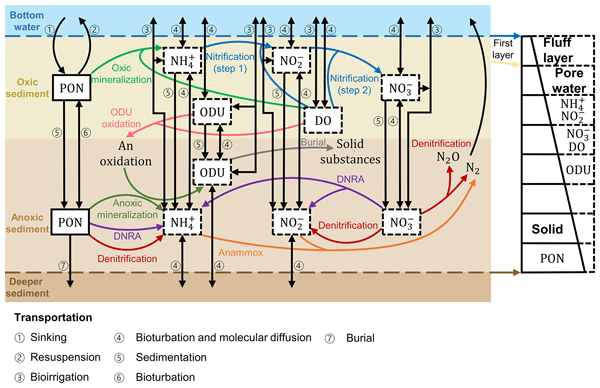
Zhaosen Wu, Xinyu Guo, Jie Shi, Xiaokun Ding, Masatoshi Nakakuni, and Kuninao Tada
Biogeosciences, 23, 6053–6072, https://doi.org/10.5194/bg-23-6053-2026, https://doi.org/10.5194/bg-23-6053-2026, 2026
Short summary
Short summary
Using observations and a numerical model from a semi-enclosed coastal sea in Japan, we found that seasonal nitrogen release from sediments cannot be explained by organic matter input alone. Instead, nitrogen cycling is regulated by the interaction of organic matter supply, oxygen conditions, and nutrient concentrations in the overlying water. This framework helps explain differences among coastal seas and may improve predictions of environmental change.
Menghong Dong and Xinyu Guo
Ocean Sci., 20, 1527–1546, https://doi.org/10.5194/os-20-1527-2024, https://doi.org/10.5194/os-20-1527-2024, 2024
Short summary
Short summary
We employed a gradient-based algorithm to identify the position and intensity of the fronts in a coastal sea using sea surface temperature data, thereby quantifying their variations. Our study provides a comprehensive analysis of these fronts, elucidating their seasonal variability, intra-tidal dynamics, and the influence of winds on the fronts. By capturing the temporal and spatial dynamics of these fronts, our understanding of the complex oceanographic processes within this region is enhanced.
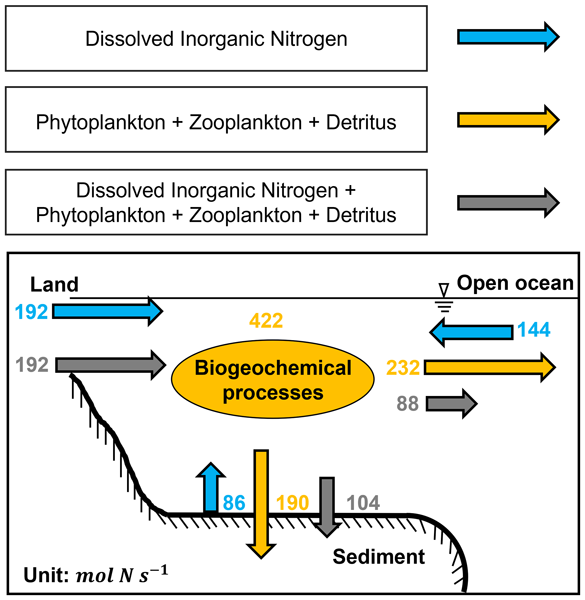
Qian Leng, Xinyu Guo, Junying Zhu, and Akihiko Morimoto
Biogeosciences, 20, 4323–4338, https://doi.org/10.5194/bg-20-4323-2023, https://doi.org/10.5194/bg-20-4323-2023, 2023
Short summary
Short summary
Using a numerical model, we revealed that a large proportion of nutrients in a semi-enclosed sea (Seto Inland Sea, Japan) comes from the Pacific Ocean and supports about half of the phytoplankton growth in the sea. Such results imply that the human-made management of nutrient load from land needs to consider the presence of oceanic nutrients, which act as a background concentration and are not controlled by human activities.
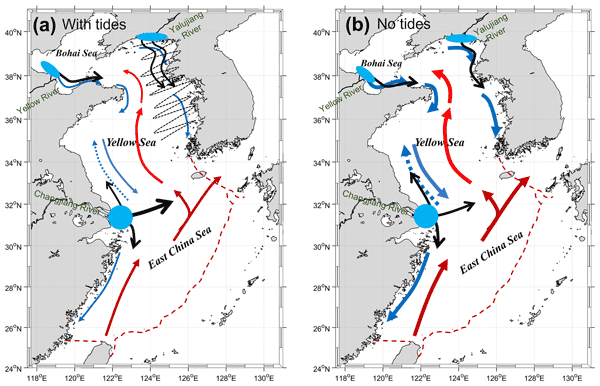
Lei Lin, Hao Liu, Xiaomeng Huang, Qingjun Fu, and Xinyu Guo
Hydrol. Earth Syst. Sci., 26, 5207–5225, https://doi.org/10.5194/hess-26-5207-2022, https://doi.org/10.5194/hess-26-5207-2022, 2022
Short summary
Short summary
Earth system (climate) model is an important instrument for projecting the global water cycle and climate change, in which tides are commonly excluded due to the much small timescales compared to the climate. However, we found that tides significantly impact the river water transport pathways, transport timescales, and concentrations in shelf seas. Thus, the tidal effect should be carefully considered in earth system models to accurately project the global water and biogeochemical cycle.

Junying Zhu, Jie Shi, and Xinyu Guo
Ocean Sci., 18, 659–673, https://doi.org/10.5194/os-18-659-2022, https://doi.org/10.5194/os-18-659-2022, 2022
Short summary
Short summary
A bottom cold water mass (BCWM) is a widespread physical oceanographic phenomenon among coastal seas. Observations reveal a prominent interannual variation in a BCWM in the Seto Inland Sea during 1994–2015. We found that air–sea heat flux change during the warming season plays an important role in its interannual variation. Comparison with other BCWMs indicates that the size is a key factor for their difference. The findings help understand the response of BCWMs to sea surface forcing change.
Cited articles
Aoki, T.: Analysis of Regional Populations: A Case Study of Five Areas of the Toyama Prefecture, J. Kanazawa Seiryo Univ., 55, 1–8, 2021.
Bratton, J. F.: The three scales of submarine groundwater flow and discharge across passive continental margins, J. Geol., 118, 565–575, https://doi.org/10.1086/655114, 2010.
Burnett, W. C., Taniguchi, M., and Oberdorfer, J.: Measurement and significance of the direct discharge of groundwater into the coastal zone, J. Sea Res., 46, 109–116, https://doi.org/10.1016/S1385-1101(01)00075-2, 2001.
Burnett, W. C., Bokuniewicz, H., Moore, W. S., and Taniguchi, M.: Groundwater and pore water inputs to the coastal zone, Biogeochemistry, 66, 3–33, 2003.
Cho, H. M., Kim, G., Kwon, E. Y., Moosdorf, N., Garcia-Orellana, J., and Santos, I. R.: Radium tracing nutrient inputs through submarine groundwater discharge in the global ocean, Sci. Rep., 8, 1–7, https://doi.org/10.1038/s41598-018-20806-2, 2018.
Church, T. M.: An Underground Route for the Water Cycle, Nature, 380, 579–580, 1996.
Cloern, J. E., Foster, S. Q., and Kleckner, A. E.: Phytoplankton primary production in the world's estuarine-coastal ecosystems, Biogeosciences, 11, 2477–2501, https://doi.org/10.5194/bg-11-2477-2014, 2014.
Dong, M., Guo, X., Matsuura, T., Tebakari, T., and Zhang, J.: Dataset of article: Evaluation of the Effects of Submarine Groundwater on Nutrient Concentration and Primary Production in a Deep Bay of the Japan Sea, Zenodo [data set], https://doi.org/10.5281/zenodo.11075610, 2024.
Fasham, M. J. R., Ducklow, H. W., and McKelvie, S. M.: A nitrogen-based model of plankton dynamics in the oceanic mixed layer, J. Mar. Res., 48, 591–639, 1990.
Grid Point Value of Meso-Scale Model: http://database.rish.kyoto-u.ac.jp/arch/jmadata/data/gpv/netcdf/MSM-S/, last access: 10 August 2024.
Guo, X. and Yanagi, T.: The Role of the Taiwan Strait in an Ecological Model in the East China Sea, Acta Oceanogr. Taiwanica, 37, 139–164, 1998.
Hatta, M. and Zhang, J.: Temporal changes and impacts of submarine fresh groundwater discharge to the coastal environment: A decadal case study in Toyama Bay, Japan, J. Geophys. Res.-Ocean., 118, 2610–2622, https://doi.org/10.1002/jgrc.20184, 2013.
Hatta, M., Zhang, J., Satake, H., Ishizaka, J., and Nakauchi, Y.: Water mass structure and fresh water fluxes (riverine and SGD's) into Toyama Bay, Chikyukagaku (Geochemistry), 39, 157–164, https://doi.org/10.14934/chikyukagaku.39.157, 2005.
Hwang, D.-W., Lee, Y.-W., and Kim, G.: Large submarine groundwater discharge and benthic eutrophication in Bangdu Bay on volcanic Jeju Island, Korea, Limnol. Oceanogr., 50, 1393–1403, https://doi.org/10.4319/lo.2005.50.5.1393, 2005.
Igeta, Y., Yankovsky, A., Fukudome, K. I., Ikeda, S., Okei, N., Ayukawa, K., Kaneda, A., and Watanabe, T.: Transition of the Tsushima Warm Current path observed over Toyama Trough, Japan, J. Phys. Oceanogr., 47, 2721–2739, https://doi.org/10.1175/JPO-D-17-0027.1, 2017.
Igeta, Y., Kuga, M., Yankovsky, A., Wagawa, T., Fukudome, K. ichi, Kaneda, A., Ikeda, S., Tsuji, T., and Hirose, N.: Effect of a current trapped by a continental slope on the pathway of a coastal current crossing Toyama Trough, Japan, J. Oceanogr., 77, 685–701, https://doi.org/10.1007/s10872-021-00601-w, 2021.
Iguchi, N.: Spring diel migration of a euphausiid Euphausia pacifica in Toyama Bay, southern Japan Sea, Bull. Japan Sea Natl. Fish. Res. Inst., 45, 59–68, 1995.
Ishizu, M., Miyazawa, Y., Tsunoda, T., and Guo, X.: Development of a biogeochemical and carbon model related to ocean acidification indices with an operational ocean model product in the North Western Pacific, Sustainability, 11, 2677, https://doi.org/10.3390/su11092677, 2019.
Itahashi, S., Hayashi, K., Takeda, S., Umezawa, Y., Matsuda, K., Sakurai, T., and Uno, I.: Nitrogen burden from atmospheric deposition in East Asian oceans in 2010 based on high-resolution regional numerical modeling, Environ. Pollut., 286, 117309, https://doi.org/10.1016/j.envpol.2021.117309, 2021.
Japan Meteorological Agency: Climate Change Monitoring Report 2023, Japan Meteorological Agency, Japan Meteorological Agency, https://www.jma.go.jp/jma/en/NMHS/ccmr/ccmr2023.pdf (last access: 23 February 2025), 2024.
Jiao, J. and Post, V.: Submarine Groundwater Discharge, in: Coastal Hydrogeology, Cambridge University Press, 187–214, https://doi.org/10.1017/9781139344142, 2019.
Kantún-Manzano, C. A., Herrera-Silveira, J. A., and Arcega-Cabrera, F.: Influence of Coastal Submarine Groundwater Discharges on Seagrass Communities in a Subtropical Karstic Environment, Bull. Environ. Contam. Toxicol., 100, 176–183, https://doi.org/10.1007/s00128-017-2259-3, 2018.
Katazakai, S. and Zhang, J.: A quarter-century of nutrient load reduction leads to halving river nutrient fluxes and increasing nutrient limitation in coastal waters of central Japan, Environ. Monit. Assess., 193, 573, https://doi.org/10.1007/s10661-021-09279-5, 2021a.
Katazakai, S. and Zhang, J.: A Shift from Snow to Rain in Midlatitude Japan Increases Fresh Submarine Groundwater Discharge and Doubled Inorganic Carbon Flux over 20 Years, Environ. Sci. Technol., 55, 14667–14675, https://doi.org/10.1021/acs.est.1c05108, 2021b.
Kawamiya, M.: Mechanism of offshore nutrient supply in the western Arabian Sea, J. Mar. Res., 59, 675–696, 2001.
Kondo, J.: Air-sea bulk transfer coefficients in diabatic conditions, Bound.-Lay. Meteorol., 9, 91–112, 1975.
Koyama, Y., Zhang, J., Hagiwara, T., Satake, H., and Asai, K.: Flow measurement of submarine groundwater discharge at wide area in the Eastern Toyama Bay, Chikyukagaku (Geochemistry), 39, 149–155, 2005.
Kreuzburg, M., Scholten, J., Hsu, F.-H., Liebetrau, V., SultenfuB, J., Rapaglia, J., and Schluter, M.: Submarine Groundwater Discharge-Derived Nutrient Fluxes in Eckernförde Bay (Western Baltic Sea), Estuar. Coasts, 46, 1190–1207, 2023.
Lapointe, B. E., O'Connell, J. D., and Garrett, G. S.: Nutrient couplings between on-site sewage disposal systems, groundwaters, and nearshore surface waters of the Florida Keys, Biogeochemistry, 10, 289–307, 1990.
Lecher, A. L. and Mackey, K. R. M.: Synthesizing the effects of submarine groundwater discharge on Marine Biota, Hydrology, 5, 1–21, https://doi.org/10.3390/hydrology5040060, 2018.
Leng, Q., Guo, X., Zhu, J., and Morimoto, A.: Contribution of the open ocean to the nutrient and phytoplankton inventory in a semi-enclosed coastal sea, Biogeosciences, 20, 4323–4338, https://doi.org/10.5194/bg-20-4323-2023, 2023.
Lenhart, H.-J. and Große, F.: Assessing the effects of WFD nutrient reductions within an OSPAR frame using trans-boundary nutrient modeling, Front. Mar. Sci., 5, 1–19, https://doi.org/10.3389/fmars.2018.00447, 2018.
Lenhart, H., Desmit, X., Große, F., Mills, D., Lacroix, G., Los, H., Ménesguen, A., Pätsch, J., Troost, T., Van der Molen, J., Van Leeuwen, S., and Wakelin, S.: “Distance to target” modelling assessment, OSPAR commission, 1–80 pp., 2013.
Luijendijk, E., Gleeson, T., and Moosdorf, N.: Fresh groundwater discharge insignificant for the world's oceans but important for coastal ecosystems, Nat. Commun., 11, 1–12, https://doi.org/10.1038/s41467-020-15064-8, 2020.
Luo, M., Zhang, Y., Xiao, K., Wang, X., Zhang, X., Li, G., and Li, H.: Effect of submarine groundwater discharge on nutrient distribution and eutrophication in Liaodong Bay, China, Water Res., 247, 120732, https://doi.org/10.1016/J.WATRES.2023.120732, 2023.
Luoma, S., Majaniemi, J., Pullinen, A., Mursu, J., and Virtasalo, J. J.: Geological and groundwater flow model of a submarine groundwater discharge site at Hanko (Finland), northern Baltic Sea, Hydrogeol. J., 29, 1279–1297, https://doi.org/10.1007/s10040-021-02313-3, 2021.
Matsuura, T. and Tebakari, T.: Impact of precipitation changes due to climate change on NO3-N in the Kurobe River, Japanese Assoc. Groundw. Hydrol. 2022 Fall Lect., 192–196, 2022.
Matsuura, T., Harada, K., and Tebakari, T.: Impact of the diffusion of public sewage systems in Toyama Prefecture on nitrogen loading in Toyama Bay, Japanese Assoc. Groundw. Hydrol. 2023 Fall Lect., 24–27, 2023.
Mellor, G. and Blumberg, A.: Wave breaking and ocean surface layer thermal response, J. Phys. Oceanogr., 34, 693–698, https://doi.org/10.1175/2517.1, 2004.
Mellor, G. L., Ezer, T., and Oey, L.-Y.: The Pressure Gradient Conundrum of Sigma Coordinate Ocean Models, J. Atmos. Ocean. Technol., 11, 1126–1134, 1994.
Ménesguen, A., Cugier, P., and Leblond, I.: A new numerical technique for tracking chemical species in a multisource, coastal ecosystem applied to nitrogen causing Ulva blooms in the Bay of Brest (France), Limnol. Oceanogr., 51, 591–601, https://doi.org/10.4319/lo.2006.51.1_part_2.0591, 2006.
Ministry of the Environment: The 7th National Survey on the Natural Environment: Report on Shallow Marine Ecosystems Survey (Seaweed Bed Survey), https://www.biodic.go.jp/reports2/6th/6_moba19/6_moba19.pdf (last access: 23 February 2025), 2008.
MIRC: MIRC Ocean Dataset 2005 Documentation, Marine Information Research Center, Marine Information Research Center, http://www.mirc.jha.or.jp/products/MODS2005/MODS2005.pdf (last access: 23 February 2025), 2005.
Miyazawa, Y., Zhang, R., Guo, X., Tamura, H., Ambe, D., Lee, J. S., Okuno, A., Yoshinari, H., Setou, T., and Komatsu, K.: Water mass variability in the western North Pacific detected in a 15-year eddy resolving ocean reanalysis, J. Oceanogr., 65, 737–756, https://doi.org/10.1007/s10872-009-0063-3, 2009.
Moore, W. S.: Large groundwater inputs to coastal waters revealed by 226Ra enrichments, Nature, 380, 612–614, 1996.
Moore, W. S.: The effect of submarine groundwater discharge on the ocean, Ann. Rev. Mar. Sci., 2, 59–88, https://doi.org/10.1146/annurev-marine-120308-081019, 2010.
Müller, T., Gros, J., Leibold, P., Al-Balushi, H., Petermann, E., Schmidt, M., Brückmann, W., Al Kindi, M., and Al-Abri, O. S.: Autonomous Large-Scale Radon Mapping and Buoyant Plume Modeling Quantify Deep Submarine Groundwater Discharge: A Novel Approach Based on a Self-Sufficient Open Ocean Vehicle, Environ. Sci. Technol., 57, 6540–6549, https://doi.org/10.1021/acs.est.3c00786, 2023.
Nakada, S., Isoda, Y., and Uchiyama, I.: Seasonal variations of water properties and the baroclinic flow pattern in Toyama Bay under the influence of the Tsushima Warm Current, J. Oceanogr., 61, 943–952, https://doi.org/10.1007/s10872-006-0011-4, 2005.
Nakaguchi, Y., Yamaguchi, Y., Yamada, H., Zhang, J., Suzuki, M., Koyama, Y., and Hayashi, K.: Characterization and origin of chemical components in the submarine groundwater discharge in Toyama Bay, Chikyukagaku (Geochemistry), 39, 119–130, 2005.
Neumann, T.: The fate of river-borne nitrogen in the Baltic Sea–an example for the River Oder., Estuar. Coast. Shelf Sci., 73, 1–7, 2007.
Northwest Pacific Region Environmental Cooperation Center: Toyama Bay Pilot Study Report, Northwest Pacific Region Environmental Cooperation Center, https://www.npec.or.jp/publicity/pdf/2010/pilotstudy.pdf (last access: 23 February 2025), 2010.
Onitsuka, G. and Yanagi, T.: Differences in ecosystem dynamics between the Northern and Southern parts of the Japan Sea: Analyses with two ecosystem models, J. Oceanogr., 61, 415–433, https://doi.org/10.1007/s10872-005-0051-1, 2005.
Onitsuka, G., Yanagi, T., and Yoon, J. H.: A numerical study on nutrient sources in the surface layer of the Japan Sea using a coupled physical-ecosystem model, J. Geophys. Res.-Ocean., 112, 1–17, https://doi.org/10.1029/2006JC003981, 2007.
Oya, F., Tsuji, T., and Fujiwara, S.: Relative Growth and Feeding Habits of Halfbeak, Hyporhamphus sajori, Larvae and Juveniles in Toyama Bay of the Japan Sea, Aquac., 50, 47–54, 2002.
Painting, S. J., Van der Molen, J., Parker, E. R., Coughlan, C., Birchenough, S., Bolam, S., Aldridge, J. N., Forster, R. M., and Greenwood, N.: Development of indicators of ecosystem functioning in a temperate shelf sea: a combined fieldwork and modelling approach, Biogeochemistry, 113, 237–257, https://doi.org/10.1007/s10533-012-9774-4, 2013.
Paulson, C. A. and Simpson, J. J.: Irradiance Measurements in the Upper Ocean, J. Phys. Oceanogr., 7, 952–956, 1977.
Redfield, A. C., Ketchum, B. H., and Richards, F. A.: The influence of organisms on the composition of seawater, in: The Sea, edited by: Hill, M. N., Interscience Publishers, New York, 26–77, https://doi.org/10.1002/iroh.19630480414, 1963.
Rodellas, V., Garcia-Orellana, J., Masqué, P., Feldman, M., Weinstein, Y., and Boyle, E. A.: Submarine groundwater discharge as a major source of nutrients to the Mediterranean Sea, P. Natl. Acad. Sci. USA, 112, 3926–3930, https://doi.org/10.1073/pnas.1419049112, 2015.
Rosati, A. and Miyakoda, K.: A General Circulation Model for Upper Ocean Simulation, J. Phys. Oceanogr., 18, 1601–1626, 1988.
Santos, I. R., Burnett, W. C., Chanton, J., Dimova, N., and Peterson, R. N.: Land or ocean?: Assessing the driving forces of submarine groundwater discharge at a coastal site in the gulf of mexico, J. Geophys. Res.-Ocean., 114, 1–11, https://doi.org/10.1029/2008JC005038, 2009.
Santos, I. R., Chen, X., Lecher, A. L., Sawyer, A. H., Moosdorf, N., Rodellas, V., Tamborski, J., Cho, H. M., Dimova, N., Sugimoto, R., Bonaglia, S., Li, H., Hajati, M. C., and Li, L.: Submarine groundwater discharge impacts on coastal nutrient biogeochemistry, Nat. Rev. Earth Environ., 2, 307–323, https://doi.org/10.1038/s43017-021-00152-0, 2021.
Silverman, J., Strauch-Gozali, S., and Asfur, M.: The Influence of Fresh Submarine Groundwater Discharge on Seawater Acidification Along the Northern Mediterranean Coast of Israel, J. Geophys. Res.-Ocean., 129, 1–21, https://doi.org/10.1029/2024JC021010, 2024.
Skogen, M. D., Ji, R., Akimova, A., Daewel, U., Hansen, C., Hjøllo, S. S., Van Leeuwen, S. M., Maar, M., Macias, D., Mousing, E. A., Almroth-Rosell, E., Sailley, S. F., Spence, M. A., Troost, T. A., and Van de Wolfshaar, K.: Disclosing the truth: Are models better than observations?, Mar. Ecol. Prog. Ser., 680, 7–13, https://doi.org/10.3354/meps13574, 2021.
Sugimoto, R., Kitagawa, K., Nishi, S., Honda, H., Yamada, M., Kobayashi, S., Shoji, J., Ohsawa, S., Taniguchi, M., and Tominaga, O.: Phytoplankton primary productivity around submarine groundwater discharge in nearshore coasts, Mar. Ecol. Prog. Ser., 563, 25–33, https://doi.org/10.3354/meps11980, 2017.
Taniguchi, M., Burnett, W. C., Cable, J. E., and Turner, J. V.: Investigation of submarine groundwater discharge, Hydrol. Process., 16, 2115–2129, https://doi.org/10.1002/hyp.1145, 2002.
Taylor, G. T., Gobler, C. J., and Sañudo-Wilhelmy, S. A.: Speciation and concentrations of dissolved nitrogen as determinants of brown tide Aureococcus anophagefferens bloom initiation, Mar. Ecol. Prog. Ser., 312, 67–83, https://doi.org/10.3354/meps312067, 2006.
Tsujimoto, R.: Seasonal Changes in the Nutrient and Phytoplankton Biomass in the Surface Water of the Innermost Area of Toyama Bay, Bull. Coast. Oceanogr., 49, 127–137, https://doi.org/10.1177/000276426300601008, 2012.
Varlamov, S., Miyazawa, Y., and Guo, X.: Regional nested tide-resolving real-time JCOPET modeling system for coastal waters of southern Japan, in: 2nd International Workshop on Modeling the Ocean (IWMO), 24–26 May 2010, Old Dominion University in Norfolk, VA, USA, http://www.ccpo.odu.edu/~tezer/IWMO_2010/PRESENTATIONS/WEDNESDAY_pdf/Varlamov_NestedSys_Japan.pdf (last access: 23 February 2025), 2010.
Wang, S.-L., Chen, C.-T. A., Huang, T.-H., Tseng, H.-C., Lui, H.-K., Peng, T.-R., Kandasamy, S., Zhang, J., Yang, L., Gao, X., Lou, J.-Y., Kuo, F.-W., Chen, X.-G., Ye, Y., and Lin, Y.-J.: Submarine Groundwater Discharge helps making nearshore waters heterotrophic, Sci. Rep., 8, 1–10, https://doi.org/10.1038/s41598-018-30056-x, 2018.
Wang, X., Du, J., Ji, T., Wen, T., Liu, S., and Zhang, J.: An estimation of nutrient fluxes via submarine groundwater discharge into the Sanggou Bay—A typical multi-species culture ecosystem in China, Mar. Chem., 167, 113–122, https://doi.org/10.1016/j.marchem.2014.07.002, 2014.
Watanabe, Y., Matsuura, T., and Chiba, H.: Variability of summer water-mass structure in Toyama bay coastal-zone, Oceanogr. Japan, 22, 97–117, https://doi.org/10.5928/kaiyou.22.4_97, 2013.
Wilson, S. J., Moody, A., McKenzie, T., Cardenas, M. B., Luijendijk, E., Sawyer, A. H., Wilson, A., Michael, H. A., Xu, B., Knee, K. L., Cho, H. M., Weinstein, Y., Paytan, A., Moosdorf, N., Chen, C. T. A., Beck, M., Lopez, C., Murgulet, D., Kim, G., Charette, M. A., Waska, H., Ibánhez, J. S. P., Chaillou, G., Oehler, T., Onodera, S. ichi, Saito, M., Rodellas, V., Dimova, N., Montiel, D., Dulai, H., Richardson, C., Du, J., Petermann, E., Chen, X., Davis, K. L., Lamontagne, S., Sugimoto, R., Wang, G., Li, H., Torres, A. I., Demir, C., Bristol, E., Connolly, C. T., McClelland, J. W., Silva, B. J., Tait, D., Kumar, B. S. K., Viswanadham, R., Sarma, V. V. S. S., Silva-Filho, E., Shiller, A., Lecher, A., Tamborski, J., Bokuniewicz, H., Rocha, C., Reckhardt, A., Böttcher, M. E., Jiang, S., Stieglitz, T., Gbewezoun, H. G. V., Charbonnier, C., Anschutz, P., Hernández-Terrones, L. M., Babu, S., Szymczycha, B., Sadat-Noori, M., Niencheski, F., Null, K., Tobias, C., Song, B., Anderson, I. C., and Santos, I. R.: Global subterranean estuaries modify groundwater nutrient loading to the ocean, Limnol. Oceanogr. Lett., 9, 411–422, https://doi.org/10.1002/lol2.10390, 2024.
Xu, C., Wang, X., Zhang, F., Lao, Y., Liu, J., and Du, J.: Potential Linkages Between Submarine Groundwater (Fresh and Saline) Nutrient Inputs and Eutrophication in a Coastal Aquaculture Bay, J. Geophys. Res.-Ocean., 129, e2024JC021501, https://doi.org/10.1029/2024JC021501, 2024a.
Xu, H., Xu, B., Yu, H., Zhao, S., Burnett, W. C., Yao, Q., Dimova, N. T., Song, S., Guo, X., Chen, X., Zhang, H., and Yu, Z.: Deciphering Multi-Scale Submarine Groundwater Discharge in a Typical Eutrophic Bay, J. Geophys. Res.-Ocean., 129, 1–15, https://doi.org/10.1029/2024JC021042, 2024b.
Zektser, I. S.: Groundwater and the environment: applications for the global community, edited by: Everett, L. G., Lewis Publishers, 175 pp., http://archive.org/details/groundwaterenvir0000zekt (last access: 23 February 2025), 2000.
Zhang, J. and Satake, H.: The chemical characteristics of submarine groundwater seepage in Toyama Bay, Central Japan, edited by: Taniguchi, M., Wang, K., and Gamo, T., Elsevier B.V., 45–60 pp., https://doi.org/10.1016/B978-044451479-0/50016-9, 2003.
Zhang, J., Hagiwara, T., Koyama, Y., Satake, H., Nakamura, T., and Asai, K.: A new flow rate measuring method - SGD (submarine groundwater discharge) flux chamber and its approach off Katakai Alluvial Fan, Toyama Bay, Central Japan, Chikyukagaku (Geochemistry), 39, 141–148, 2005.
Zhang, J., Guo, X., and Zhao, L.: Tracing external sources of nutrients in the East China Sea and evaluating their contributions to primary production, Prog. Oceanogr., 176, 102122, https://doi.org/10.1016/j.pocean.2019.102122, 2019.
Zhang, Y., Santos, I. R., Li, H., Wang, Q., Xiao, K., Guo, H., and Wang, X.: Submarine groundwater discharge drives coastal water quality and nutrient budgets at small and large scales, Geochim. Cosmochim. Ac., 290, 201–215, https://doi.org/10.1016/j.gca.2020.08.026, 2020.
Short summary
Submarine groundwater discharge (SGD), a common coastal hydrological process that involves submarine inflow of groundwater into the sea, is associated with a large nutrient load. To clarify the distribution of SGD-derived nutrients after release at the bottom of the sea and their contribution to phytoplankton growth in the marine ecosystem, we modeled the SGD process in Toyama Bay using a specialized computer code that can distinguish SGD-derived nutrients from nutrients from other sources.
Submarine groundwater discharge (SGD), a common coastal hydrological process that involves...


Altmetrics
Final-revised paper
Preprint