
Articles | Volume 22, issue 3
https://doi.org/10.5194/bg-22-625-2025
© Author(s) 2025. This work is distributed under
the Creative Commons Attribution 4.0 License.
the Creative Commons Attribution 4.0 License.
https://doi.org/10.5194/bg-22-625-2025
© Author(s) 2025. This work is distributed under
the Creative Commons Attribution 4.0 License.
the Creative Commons Attribution 4.0 License.
Research article
| 
04 Feb 2025
Research article |
| 04 Feb 2025
| 04 Feb 2025
Grazing mortality as a controlling factor in the uncultured non-cyanobacterial diazotroph (Gamma A) around the Kuroshio region
Graduate School of Agricultural and Life Sciences, The University of Tokyo, Tokyo, 113-8657, Japan
present address: Institute for Chemical Research, Kyoto University, Kyoto, 611-0011, Japan
Tamaha Yamaguchi
Fisheries Resources Institute, Japan Fisheries Research and Education Agency, Kanagawa, 236-8648, Japan
Kiyotaka Hidaka
Fisheries Resources Institute, Japan Fisheries Research and Education Agency, Kanagawa, 236-8648, Japan
Sayaka Sogawa
Fisheries Resources Institute, Japan Fisheries Research and Education Agency, Kanagawa, 236-8648, Japan
Takashi Setou
Fisheries Resources Institute, Japan Fisheries Research and Education Agency, Kanagawa, 236-8648, Japan
Taketoshi Kodama
Fisheries Resources Institute, Japan Fisheries Research and Education Agency, Kanagawa, 236-8648, Japan
present address: Graduate School of Agricultural and Life Sciences, The University of Tokyo, Tokyo, 113-8657, Japan
Takuhei Shiozaki
Atmosphere and Ocean Research Institute, The University of Tokyo, Chiba, 277-8564, Japan
Kazutaka Takahashi
Graduate School of Agricultural and Life Sciences, The University of Tokyo, Tokyo, 113-8657, Japan
Related authors
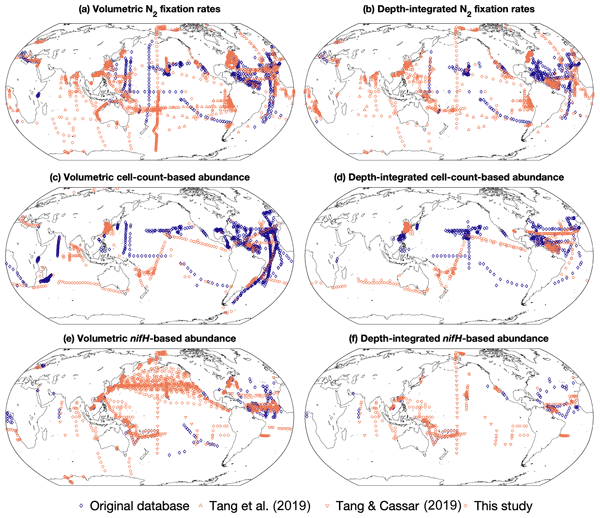
Zhibo Shao, Yangchun Xu, Hua Wang, Weicheng Luo, Lice Wang, Yuhong Huang, Nona Sheila R. Agawin, Ayaz Ahmed, Mar Benavides, Mikkel Bentzon-Tilia, Ilana Berman-Frank, Hugo Berthelot, Isabelle C. Biegala, Mariana B. Bif, Antonio Bode, Sophie Bonnet, Deborah A. Bronk, Mark V. Brown, Lisa Campbell, Douglas G. Capone, Edward J. Carpenter, Nicolas Cassar, Bonnie X. Chang, Dreux Chappell, Yuh-ling Lee Chen, Matthew J. Church, Francisco M. Cornejo-Castillo, Amália Maria Sacilotto Detoni, Scott C. Doney, Cecile Dupouy, Marta Estrada, Camila Fernandez, Bieito Fernández-Castro, Debany Fonseca-Batista, Rachel A. Foster, Ken Furuya, Nicole Garcia, Kanji Goto, Jesús Gago, Mary R. Gradoville, M. Robert Hamersley, Britt A. Henke, Cora Hörstmann, Amal Jayakumar, Zhibing Jiang, Shuh-Ji Kao, David M. Karl, Leila R. Kittu, Angela N. Knapp, Sanjeev Kumar, Julie LaRoche, Hongbin Liu, Jiaxing Liu, Caroline Lory, Carolin R. Löscher, Emilio Marañón, Lauren F. Messer, Matthew M. Mills, Wiebke Mohr, Pia H. Moisander, Claire Mahaffey, Robert Moore, Beatriz Mouriño-Carballido, Margaret R. Mulholland, Shin-ichiro Nakaoka, Joseph A. Needoba, Eric J. Raes, Eyal Rahav, Teodoro Ramírez-Cárdenas, Christian Furbo Reeder, Lasse Riemann, Virginie Riou, Julie C. Robidart, Vedula V. S. S. Sarma, Takuya Sato, Himanshu Saxena, Corday Selden, Justin R. Seymour, Dalin Shi, Takuhei Shiozaki, Arvind Singh, Rachel E. Sipler, Jun Sun, Koji Suzuki, Kazutaka Takahashi, Yehui Tan, Weiyi Tang, Jean-Éric Tremblay, Kendra Turk-Kubo, Zuozhu Wen, Angelicque E. White, Samuel T. Wilson, Takashi Yoshida, Jonathan P. Zehr, Run Zhang, Yao Zhang, and Ya-Wei Luo
Earth Syst. Sci. Data, 15, 3673–3709, https://doi.org/10.5194/essd-15-3673-2023, https://doi.org/10.5194/essd-15-3673-2023, 2023
Short summary
Short summary
N2 fixation by marine diazotrophs is an important bioavailable N source to the global ocean. This updated global oceanic diazotroph database increases the number of in situ measurements of N2 fixation rates, diazotrophic cell abundances, and nifH gene copy abundances by 184 %, 86 %, and 809 %, respectively. Using the updated database, the global marine N2 fixation rate is estimated at 223 ± 30 Tg N yr−1, which triplicates that using the original database.
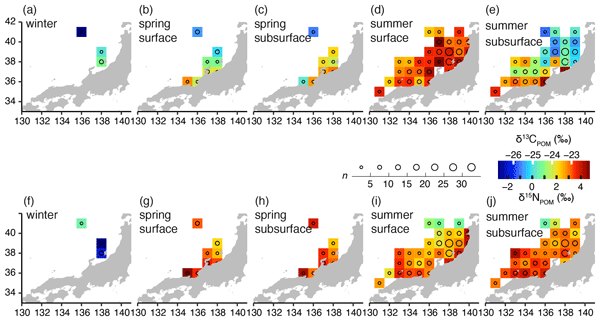
Taketoshi Kodama, Atsushi Nishimoto, Ken-ichi Nakamura, Misato Nakae, Naoki Iguchi, Yosuke Igeta, and Yoichi Kogure
Biogeosciences, 20, 3667–3682, https://doi.org/10.5194/bg-20-3667-2023, https://doi.org/10.5194/bg-20-3667-2023, 2023
Short summary
Short summary
Carbon and nitrogen are essential elements for organisms; their stable isotope ratios (13C : 12C, 15N : 14N) are useful tools for understanding turnover and movement in the ocean. In the Sea of Japan, the environment is rapidly being altered by human activities. The 13C : 12C of small organic particles is increased by active carbon fixation, and phytoplankton growth increases the values. The 15N : 14N variations suggest that nitrates from many sources contribute to organic production.
Zhibo Shao, Yangchun Xu, Hua Wang, Weicheng Luo, Lice Wang, Yuhong Huang, Nona Sheila R. Agawin, Ayaz Ahmed, Mar Benavides, Mikkel Bentzon-Tilia, Ilana Berman-Frank, Hugo Berthelot, Isabelle C. Biegala, Mariana B. Bif, Antonio Bode, Sophie Bonnet, Deborah A. Bronk, Mark V. Brown, Lisa Campbell, Douglas G. Capone, Edward J. Carpenter, Nicolas Cassar, Bonnie X. Chang, Dreux Chappell, Yuh-ling Lee Chen, Matthew J. Church, Francisco M. Cornejo-Castillo, Amália Maria Sacilotto Detoni, Scott C. Doney, Cecile Dupouy, Marta Estrada, Camila Fernandez, Bieito Fernández-Castro, Debany Fonseca-Batista, Rachel A. Foster, Ken Furuya, Nicole Garcia, Kanji Goto, Jesús Gago, Mary R. Gradoville, M. Robert Hamersley, Britt A. Henke, Cora Hörstmann, Amal Jayakumar, Zhibing Jiang, Shuh-Ji Kao, David M. Karl, Leila R. Kittu, Angela N. Knapp, Sanjeev Kumar, Julie LaRoche, Hongbin Liu, Jiaxing Liu, Caroline Lory, Carolin R. Löscher, Emilio Marañón, Lauren F. Messer, Matthew M. Mills, Wiebke Mohr, Pia H. Moisander, Claire Mahaffey, Robert Moore, Beatriz Mouriño-Carballido, Margaret R. Mulholland, Shin-ichiro Nakaoka, Joseph A. Needoba, Eric J. Raes, Eyal Rahav, Teodoro Ramírez-Cárdenas, Christian Furbo Reeder, Lasse Riemann, Virginie Riou, Julie C. Robidart, Vedula V. S. S. Sarma, Takuya Sato, Himanshu Saxena, Corday Selden, Justin R. Seymour, Dalin Shi, Takuhei Shiozaki, Arvind Singh, Rachel E. Sipler, Jun Sun, Koji Suzuki, Kazutaka Takahashi, Yehui Tan, Weiyi Tang, Jean-Éric Tremblay, Kendra Turk-Kubo, Zuozhu Wen, Angelicque E. White, Samuel T. Wilson, Takashi Yoshida, Jonathan P. Zehr, Run Zhang, Yao Zhang, and Ya-Wei Luo
Earth Syst. Sci. Data, 15, 3673–3709, https://doi.org/10.5194/essd-15-3673-2023, https://doi.org/10.5194/essd-15-3673-2023, 2023
Short summary
Short summary
N2 fixation by marine diazotrophs is an important bioavailable N source to the global ocean. This updated global oceanic diazotroph database increases the number of in situ measurements of N2 fixation rates, diazotrophic cell abundances, and nifH gene copy abundances by 184 %, 86 %, and 809 %, respectively. Using the updated database, the global marine N2 fixation rate is estimated at 223 ± 30 Tg N yr−1, which triplicates that using the original database.
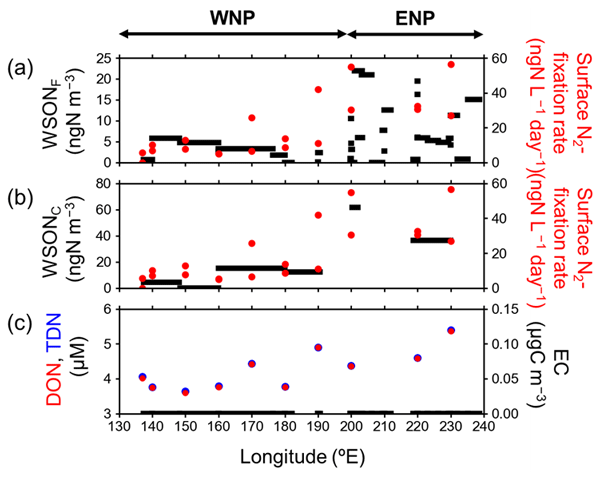
Tsukasa Dobashi, Yuzo Miyazaki, Eri Tachibana, Kazutaka Takahashi, Sachiko Horii, Fuminori Hashihama, Saori Yasui-Tamura, Yoko Iwamoto, Shu-Kuan Wong, and Koji Hamasaki
Biogeosciences, 20, 439–449, https://doi.org/10.5194/bg-20-439-2023, https://doi.org/10.5194/bg-20-439-2023, 2023
Short summary
Short summary
Water-soluble organic nitrogen (WSON) in marine aerosols is important for biogeochemical cycling of bioelements. Our shipboard measurements suggested that reactive nitrogen produced and exuded by nitrogen-fixing microorganisms in surface seawater likely contributed to the formation of WSON aerosols in the subtropical North Pacific. This study provides new implications for the role of marine microbial activity in the formation of WSON aerosols in the ocean surface.
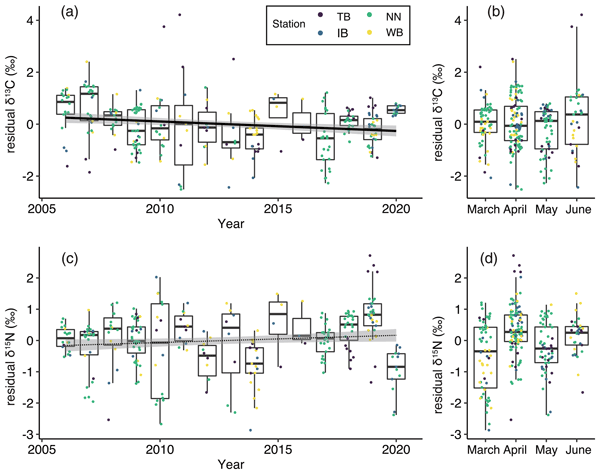
Ken-ichi Nakamura, Atsushi Nishimoto, Saori Yasui-Tamura, Yoichi Kogure, Misato Nakae, Naoki Iguchi, Haruyuki Morimoto, and Taketoshi Kodama
Ocean Sci., 18, 295–305, https://doi.org/10.5194/os-18-295-2022, https://doi.org/10.5194/os-18-295-2022, 2022
Short summary
Short summary
The Sea of Japan, surrounding Russia, the Korean Peninsula, and the Japanese Archipelago, is one of the most rapidly changing seas in the world. We measured carbon and nitrogen isotope ratios of zooplankton. We determined that the carbon stable isotope ratio has been decreasing over 15 years, and this trend was comparable to or slightly more rapid than the Suess effect, which is a signal of anthropogenic disturbance. Therefore, carbon dynamics are changing in the shallow coastal waters.
Cited articles
Amir, A., McDonald, D., Navas-Molina, J. A., Kopylova, E., Morton, J. T., Zech Xu, Z., Kightley, E. P., Thompson, L. R., Hyde, E. R., Gonzalez, A., and Knight, R.: Deblur rapidly resolves single-nucleotide community sequence patterns, mSystems, 2, e00191, https://doi.org/10.1128/mSystems.00191-16, 2017.
Bates, D., Mächler, M., Bolker, B., and Walker, S.: Fitting Linear Mixed-Effects Models Using lme4, J. Stat. Softw., 67, 1–48, https://doi.org/10.18637/jss.v067.i01, 2015.
Benavides, M., Moisander, P. H., Daley, M. C., Bode, A., and Arístegui, J.: Longitudinal variability of diazotroph abundances in the subtropical North Atlantic Ocean, J. Plankton Res., 38, 662–672, 2016.
Bird, C., Martinez, J. M., O'Donnell, A. G., and Wyman, M.: Spatial distribution and transcriptional activity of an uncultured clade of planktonic diazotrophic γ-proteobacteria in the Arabian Sea, Appl. Environ. Microbiol., 71, 2079–2085, https://doi.org/10.1128/AEM.71.4.2079-2085.2005, 2005.
Blais, M., Tremblay, J. É., Jungblut, A. D., Gagnon, J., Martin, J., Thaler, M., and Lovejoy, C.: Nitrogen fixation and identification of potential diazotrophs in the Canadian Arctic, Global Biogeochem. Cy., 26, GB3022, https://doi.org/10.1029/2011GB004096, 2012.
Bombar, D., Paerl, R. W., and Riemann, L.: Marine non-cyanobacterial diazotrophs: moving beyond molecular detection, Trend. Microbiol., 24, 916–927, https://doi.org/10.1016/j.tim.2016.07.002, 2016.
Chang, J., Chiang, K.-P., and Gong, G.-C.: Seasonal variation and cross-shelf distribution of the nitrogen-fixing cyanobacterium, Trichodesmium, in southern East China Sea, Cont. Shelf Res., 20, 479–492, https://doi.org/10.1016/s0278-4343(99)00082-5, 2000.
Chen, M., Lu, Y., Jiao, N., Tian, J., Kao, S. J., and Yao, Z.: Biogeographic drivers of diazotrophs in the western Pacific Ocean, Limnol. Oceanogr., 64, 1403–1421, https://doi.org/10.1002/lno.11123, 2019.
Chen, Y. L. L., Chen, H. Y., Tuo, S. H., and Ohki, K.: Seasonal dynamics of new production from Trichodesmium N2 fixation and nitrate uptake in the upstream Kuroshio and South China Sea basin, Limnol. Oceanogr., 53, 1705–1721, https://doi.org/10.4319/LO.2008.53.5.1705, 2009.
Cheung, S., Suzuki, K., Xia, X., and Liu, H.: Transportation of diazotroph community from the upstream to downstream of the Kuroshio, J. Geophys. Res.-Biogeo., 124, 2680–2693, https://doi.org/10.1029/2018jg004960, 2019.
Cheung, S., Nitanai, R., Tsurumoto, C., Endo, H., Nakaoka, S., Cheah, W., Lorda, J. F., Xia, X. M., Liu, H. B., and Suzuki, K.: Physical forcing controls the basin-scale occurrence of nitrogen-fixing organisms in the North Pacific Ocean, Global Biogeochem. Cy., 34, e2019GB006452, https://doi.org/10.1029/2019GB006452, 2020.
Cheung, S., Liu, K., Turk-Kubo, K. A., Nishioka, J., Suzuki, K., Landry, M. R., Zehr, J. P., Leung, S., Deng, L., and Liu, H.: High biomass turnover rates of endosymbiotic nitrogen-fixing cyanobacteria in the western Bering Sea, Limnol. Oceanogr. Lett., 7, 501–509, https://doi.org/10.1002/lol2.10267, 2022.
Cornejo-Castillo, F. M. and Zehr, J. P.: Intriguing size distribution of the uncultured and globally widespread marine non-cyanobacterial diazotroph Gamma-A, ISME J., 15, 124–128, https://doi.org/10.1038/s41396-020-00765-1, 2021.
Delmont, T. O., Quince, C., Shaiber, A., Esen, O. C., Lee, S. T. M., Rappe, M. S., MacLellan, S. L., Lucker, S., and Eren, A. M.: Nitrogen-fixing populations of Planctomycetes and Proteobacteria are abundant in surface ocean metagenomes, Nat. Microbiol., 3, 804–813, https://doi.org/10.1038/s41564-018-0176-9, 2018.
Delmont, T. O., Pierella Karlusich, J. J., Veseli, I., Fuessel, J., Murat, E. A., Foster, R. A., Bowler, C., Wincker, P., and Pelletier, E.: Heterotrophic bacterial diazotrophs are more abundant than their cyanobacterial counterparts in metagenomes covering most of the sunlit ocean, ISME J., 16, 927–936, https://doi.org/10.1038/s41396-021-01135-1, 2022.
Deng, L., Cheung, S., and Liu, H.: Protistal grazers increase grazing on unicellular cyanobacteria diazotroph at night, Front. Mar. Sci., 7, 135, https://doi.org/10.3389/fmars.2020.00135, 2020.
Deng, L., Cheung, S., Xu, Z., Liu, K., and Liu, H.: Microzooplankton grazing exerts a strong top-down control on unicellular cyanobacterial diazotrophs, J. Geophys. Res.-Biogeo., 128, e2023JG007824, https://doi.org/10.1029/2023jg007824, 2023.
Ding, C., Wu, C., Li, L., Pujari, L., Zhang, G., and Sun, J.: Comparison of diazotrophic composition and distribution in the South China Sea and the Western Pacific Ocean, Biology, 10, 555, https://doi.org/10.3390/biology10060555, 2021.
Dutkiewicz, S., Follows, M. J., and Bragg, J. G.: Modeling the coupling of ocean ecology and biogeochemistry, Global Biogeochem. Cy., 23, GB4017, https://doi.org/10.1029/2008GB003405, 2009.
Edler, L.: Recommendation on methods of marine biological studies in the Baltic Sea: Phytoplankton and chlorophyll, Bal. Mar. Biolog. Publ., 5, 1–38, 1979.
Farnelid, H., Andersson, A. F., Bertilsson, S., Abu Al-Soud, W., Hansen, L. H., Sorensen, S., Steward, G. F., Hagstrom, A., and Riemann, L.: Nitrogenase gene amplicons from global marine surface waters are dominated by genes of non-cyanobacteria, PLoS ONE, 6, e19223, https://doi.org/10.1371/journal.pone.0019223, 2011.
Gradoville, M. R., Farnelid, H., White, A. E., Turk-Kubo, K. A., Stewart, B., Ribalet, F., Ferrón, S., Pinedo-Gonzalez, P., Armbrust, E. V., Karl, D. M., John, S., and Zehr, J. P.: Latitudinal constraints on the abundance and activity of the cyanobacterium UCYN-A and other marine diazotrophs in the North Pacific, Limnol. Oceanogr., 65, 1858–1875, https://doi.org/10.1002/lno.11423, 2020.
Gruber, N. and Galloway, J. N.: An Earth-system perspective of the global nitrogen cycle, Nature, 451, 293–296, https://doi.org/10.1038/nature06592, 2008.
Halm, H., Lam, P., Ferdelman, T. G., Lavik, G., Dittmar, T., LaRoche, J., D'Hondt, S., and Kuypers, M. M. M.: Heterotrophic organisms dominate nitrogen fixation in the South Pacific Gyre, ISME J., 6, 1238–1249, https://doi.org/10.1038/ismej.2011.182, 2012.
Hansen, B., Bjornsen, P. K., and Hansen, P. J.: The size ratio between planktonic predators and their prey, Limnol. Oceanogr., 39, 395–403, https://doi.org/10.4319/lo.1994.39.2.0395, 1994.
Harding, K. J.: Insights into marine unicellular cyanobacterial and noncyanobacterial diazotrophs through single-cell analyses, Ph.D. thesis, University of California Santa Cruz, ark:/13030/m522946f, https://escholarship.org/uc/item/9886g5gm (last access: 31 January 2025), 2021.
Hasegawa, D.: Island Mass Effect, in: Kuroshio Current, Physical, Biogeochemical and Ecosystem Dynamics, edited by: Nagai, T., Saito, H., Suzuki, K., and Takahashi, M., Geophysical Monograph 243, John Wiley & Sons, Hoboken, 163–174, https://doi.org/10.1002/9781119428428.ch10, 2019.
Itoh, S., Kaneko, H., Kouketsu, S., Okunishi, T., Tsutsumi, E., Ogawa, H., and Yasuda, I.: Vertical eddy diffusivity in the subsurface pycnocline across the Pacific, J. Oceanogr., 77, 185–197, https://doi.org/10.1007/s10872-020-00589-9, 2021.
Jiang, Z., Li, H., Zhai, H., Zhou, F., Chen, Q., Chen, J., Zhang, D., and Yan, X.: Seasonal and spatial changes in Trichodesmium associated with physicochemical properties in East China Sea and southern Yellow Sea, J. Geophys. Res.-Biogeo., 123, 509–530, https://doi.org/10.1002/2017jg004275, 2018.
Jiang, Z., Zhu, Y., Sun, Z., Zhai, H., Zhou, F., Yan, X., Zeng, J., Chen, J., and Chen, Q.: Enhancement of summer nitrogen fixation by the Kuroshio intrusion in the East China Sea and southern Yellow Sea, J. Geophys. Res.-Biogeosci., 128, e2022JG007287, https://doi.org/10.1029/2022jg007287, 2023.
John, E. H. and Davidson, K.: Prey selectivity and the influence of prey carbon: Nitrogen ratio on microflagellate grazing, J. Exp. Mar. Biol. Ecol., 260, 93–111, https://doi.org/10.1016/S0022-0981(01)00244-1, 2001.
Kanayama, T., Kobari, T., Suzuki, K., Yoshie, N., Honma, T., Karu, F., and Kume, G.: Impact of microzooplankton grazing on the phytoplankton community in the Kuroshio of the East China sea: A major trophic pathway of the Kuroshio ecosystem, Deep-Sea Res. Pt. I, 163, 103337, https://doi.org/10.1016/j.dsr.2020.103337, 2020.
Kaneko, H., Yasuda, I., Komatsu, K., and Itoh, S.: Observations of vertical turbulent nitrate flux across the Kuroshio, Geophys. Res. Lett., 40, 3123–3127, https://doi.org/10.1002/grl.50613, 2013.
Kaneko, H., Yasuda, I., Itoh, S., and Ito, S.-I.: Vertical turbulent nitrate flux from direct measurements in the western subarctic and subtropical gyres of the North Pacific, J. Oceanogr., 77, 29–44, https://doi.org/10.1007/s10872-020-00576-0, 2021.
Karl, D., Letelier, R., Tupas, L., Dore, J., Christian, J., and Hebel, D.: The role of nitrogen fixation in biogeochemical cycling in the subtropical North Pacific Ocean, Nature, 388, 533–538, https://doi.org/10.1038/41474, 1997.
Kobari, T., Honma, T., Hasegawa, D., Yoshie, N., Tsutsumi, E., Matsuno, T., Nagai, T., Kanayama, T., Karu, F., Suzuki, K., Tanaka, T., Guo, X., Kume, G., Nishina, A., and Nakamura, H.: Phytoplankton growth and consumption by microzooplankton stimulated by turbulent nitrate flux suggest rapid trophic transfer in the oligotrophic Kuroshio, Biogeosciences, 17, 2441–2452, https://doi.org/10.5194/bg-17-2441-2020, 2020.
Kodama, T., Shimizu, Y., Ichikawa, T., Hiroe, Y., Kusaka, A., Morita, H., Shimizu, M., and Hidaka, K.: Seasonal and spatial contrast in the surface layer nutrient content around the Kuroshio along 138° E, observed between 2002 and 2013, J. Oceanogr., 70, 489–503, https://doi.org/10.1007/s10872-014-0245-5, 2014.
Kodama, T., Nishimoto, A., Horii, S., Ito, D., Yamaguchi, T., Hidaka, K., Setou, T., and Ono, T.: Spatial and seasonal variations of stable isotope ratios of particulate organic carbon and nitrogen in the surface water of the Kuroshio, J. Geophys. Res.-Ocean., 126, e2021JC017175, https://doi.org/10.1029/2021jc017175, 2021.
Landry, M. R. and Hassett, R. P.: Estimating the grazing impact of marine microzooplankton, Mar. Biol., 67, 283–288, https://doi.org/10.1007/BF00397668, 1982.
Landry, M. R., Brown, S. L., Campbell, L., Constantinou, J., and Liu, H.: Spatial patterns in phytoplankton growth and microzooplankton grazing in the Arabian Sea during monsoon forcing, Deep-Sea Res. Pt. II, 45, 2353–2368, https://doi.org/10.1016/s0967-0645(98)00074-5, 1998.
Landry, M. R., Brown, S. L., Neveux, J., Dupouy, C., Blanchot, J., Christensen, S., and Bidigare, R. R.: Phytoplankton growth and microzooplankton grazing in high nutrient, low-chlorophyll waters of the equatorial Pacific: community and taxonspecific rate assessments from pigment and flow cytometric analyses, J. Geophys. Res.-Ocean., 108, 8142, https://doi.org/10.1029/2000jc000744, 2003.
Langlois, R., Mills, M., Ridame, C., Croot, P., and LaRoche, J.: Diazotrophic bacteria respond to Saharan dust additions, Mar. Ecol. Prog. Ser., 470, 1–14, https://doi.org/10.3354/meps10109, 2012.
Langlois, R., Großkopf, T., Mills, M., Takeda, S., and LaRoche, J.: Widespread distribution and expression of Gamma A (UMB), an uncultured, diazotrophic, γ-proteobacterial nifH phylotype, PLoS One, 10, e0128912, https://doi.org/10.1371/journal.pone.0128912, 2015.
Luo, Y. W., Doney, S. C., Anderson, L. A., Benavides, M., Berman-Frank, I., Bode, A., Bonnet, S., Boström, K. H., Böttjer, D., Capone, D. G. C., E. J., Chen, Y. L., Church, M. J., Dore, J. E., Falcón, L. I., Fernández, A., Foster, R. A., Furuya, K., Gómez, F., Gundersen, K., Hynes, A. M., Karl, D. M., Kitajima, S., Langlois, R. J., LaRoche, J., Letelier, R. M., Marañón, E., McGillicuddy Jr., D. J. M., P. H., Moore, C. M., Mouriño-Carballido, B. M., M. R. Needoba, J. A., Orcutt, K. M., Poulton, A. J., Rahav, E., Raimbault, P., Rees, A. P., Riemann, L., Shiozaki, T., Subramaniam, A., Tyrrell, T., Turk-Kubo, K. A., Varela, M., Villareal, T. A., Webb, E. A., White, A. E., Wu, J., and Zehr, J. P.: Database of diazotrophs in global ocean: Abundance, biomass and nitrogen fixation rates, Earth Syst. Sci. Data, 4, 47–73, https://doi.org/10.5194/essd-4-47-2012, 2012.
Marumo, R. and Nagasawa, S.: Seasonal variation of the standing crop of a pelagic blue green alga, Trichodesmium in the Kuroshio water, Bull. Plank. Soc. Jpn., 23, 1925, https://doi.org/10.1016/0304-3770(83)90088-8, 1976.
Moisander, P. H., Beinart, R. A., Voss, M., and Zehr, J. P.: Diversity and abundance of diazotrophic microorganisms in the South China Sea during intermonsoon, ISME J., 2, 954–967, https://doi.org/10.1038/ismej.2008.51, 2008.
Moisander, P. H., Zhang, R., Boyle, E. A., Hewson, I., Montoya, J. P., and Zehr, J. P.: Analogous nutrient limitations in unicellular diazotrophs and Prochlorococcus in the South Pacific Ocean, ISME J., 6, 733–744, https://doi.org/10.1038/ismej.2011.152, 2012.
Moisander, P. H., Serros, T., Paerl, R. W., Beinart, R. A., and Zehr, J. P.: Gammaproteobacterial diazotrophs and nifH gene expression in surface waters of the South Pacific Ocean, ISME J., 8, 1962–1973, https://doi.org/10.1038/ismej.2014.49, 2014.
Mullin, M. M.: Production of zooplankton in the ocean: the present status and problems, Oceanogr. Mar. Biol. Annu. Rev., 7, 293–310, 1969.
Nagai, T., Clayton, S., and Uchiyama, Y.: Multiscale routes to supply nutrients through the Kuroshio nutrient stream,in: Kuroshio Current, Physical, Biogeochemical and Ecosystem Dynamics, edited by: Nagai, T., Saito, H., Suzuki, K., and Takahashi, M., Geophysical Monograph 243, John Wiley & Sons, Hoboken, 105–125, https://doi.org/10.1002/9781119428428.ch6, 2019a.
Nagai, T., Durán, G. S., Otero, D. A., Mori, Y., Yoshie, N., Ohgi, K., Hasegawa, D., Nishina, A., and Kobari, T.: How the Kuroshio Current delivers nutrients to sunlit layers on the continental shelves with aid of near-inertial waves and turbulence, Geophys. Res. Lett., 46, 6726–6735, https://doi.org/10.1029/2019gl082680, 2019b.
Putt, M. and Stoecker, D. K.: An experimentally determined carbon: volume ratio for marine “oligotrichous” ciliates from estuarine and coastal waters, Limnol. Oceanogr., 34, 1097–1103, https://doi.org/10.4319/lo.1989.34.6.1097, 1989.
R Core Team: R: A language and environment for statistical computing, R Foundation for Statistical Computing, Vienna, Austria, https://www.R-project.org/ (last access: 27 January 2025), 2024.
Salazar, G., Paoli, L., Alberti, A., Huerta-Cepas, J., Ruscheweyh, H.-J., Cuenca, M., Field, C. M., Coelho, L. P., Cruaud, C., Engelen, S., Gregory, A. C., Labadie, K., Marec, C., Pelletier, E., Royo-Llonch, M., Roux, S., Sánchez, P., Uehara, H., Zayed, A. A., Zeller, G., Carmichael, M., Dimier, C., Ferland, J., Kandels, S., Picheral, M., Pisarev, S., Poulain, J., Acinas, S. G., Babin, M., Bork, P., Bowler, C., De Vargas, C., Guidi, L., Hingamp, P., Iudicone, D., Karp-Boss, L., Karsenti, E., Ogata, H., Pesant, S., Speich, S., Sullivan, M. B., Wincker, P., Sunagawa, S., Acinas, S. G., Babin, M., Bork, P., Boss, E., Bowler, C., Cochrane, G., De Vargas, C., Follows, M., Gorsky, G., Grimsley, N., Guidi, L., Hingamp, P., Iudicone, D., Jaillon, O., Kandels-Lewis, S., Karp-Boss, L., Karsenti, E., Not, F., Ogata, H., Pesant, S., Poulton, N., Raes, J., Sardet, C., Speich, S., Stemmann, L., Sullivan, M. B., Sunagawa, S., and Wincker, P.: Gene expression changes and community turnover differentially shape the global ocean metatranscriptome, Cell, 179, 1068, https://doi.org/10.1016/j.cell.2019.10.014, 2019.
T. Sato.: Grazing mortality as a controlling factor on the non-cyanobacterial diazotroph (Gamma A) around the Kuroshio region, the UTokyo Repository [data set], https://doi.org/10.15083/0002009919, 2024.
Sato, T., Shiozaki, T., Taniuchi, Y., Kasai, H., and Takahashi, K.: Nitrogen fixation and diazotroph community in the subarctic Sea of Japan and Sea of Okhotsk, J. Geophys. Res.-Ocean., 126, e2020JC017071, https://doi.org/10.1029/2020JC017071, 2021.
Sato, T., Shiozaki, T., Hashihama, F., Sato, M., Murara, A., Sasaoka, K., Umeda, S.-I., and Takahashi, K.: Low nitrogen fixation related to shallow nitracline across the eastern Indian Ocean, J. Geophys. Res.-Biogeo., 127, e2022JG007104, https://doi.org/10.1029/2022JG007104, 2022.
Scavotto, R. E., Dziallas, C., Bentzon-Tilia, M., Riemann, L., and Moisander, P. H.: Nitrogen-fixing bacteria associated with copepods in coastal waters of the North Atlantic Ocean, Environ. Microbiol., 17, 3754–3765, https://doi.org/10.1111/1462-2920.12777, 2015.
Shao, Z. and Luo, Y.-W.: Controlling factors on the global distribution of a representative marine non-cyanobacterial diazotroph phylotype (Gamma A), Biogeosciences, 19, 2939–2952, https://doi.org/10.5194/bg-19-2939-2022, 2022.
Shao, Z., Xu, Y., Wang, H., Luo, W., Wang, L., Huang, Y., Agawin, N. S. R., Ahmed, A., Benavides, M., Bentzon-Tilia, M., Berman-Frank, I., Berthelot, H., Biegala, I. C., Bif, M. B., Bode, A., Bonnet, S., Bronk, D. A., Brown, M. V., Campbell, L., Capone, D. G., Carpenter, E. J., Cassar, N., Chang, B. X., Chappell, D., Chen, Y.-l. L., Church, M. J., Cornejo-Castillo, F. M., Detoni, A. M. S., Doney, S. C., Dupouy, C., Estrada, M., Fernandez, C., Fernández-Castro, B., Fonseca-Batista, D., Foster, R. A., Furuya, K., Garcia, N., Goto, K., Gago, J., Gradoville, M. R., Hamersley, M. R., Henke, B. A., Hörstmann, C., Jayakumar, A., Jiang, Z., Kao, S.-J., Karl, D. M., Kittu, L. R., Knapp, A. N., Kumar, S., LaRoche, J., Liu, H., Liu, J., Lory, C., Löscher, C. R., Marañón, E., Messer, L. F., Mills, M. M., Mohr, W., Moisander, P. H., Mahaffey, C., Moore, R., Mouriño-Carballido, B., Mulholland, M. R., Nakaoka, S.-I., Needoba, J. A., Raes, E. J., Rahav, E., Ramírez-Cárdenas, T., Reeder, C. F., Riemann, L., Riou, V., Robidart, J. C., Sarma, V. V. S. S., Sato, T., Saxena, H., Selden, C., Seymour, J. R., Shi, D., Shiozaki, T., Singh, A., Sipler, R. E., Sun, J., Suzuki, K., Takahashi, K., Tan, Y., Tang, W., Tremblay, J.-É., Turk-Kubo, K., Wen, Z., White, A. E., Wilson, S. T., Yoshida, T., Zehr, J. P., Zhang, R., Zhang, Y., and Luo, Y.-W.: Global oceanic diazotroph database version 2 and elevated estimate of global oceanic N2 fixation, Earth Syst. Sci. Data, 15, 3673–3709, https://doi.org/10.5194/essd-15-3673-2023, 2023.
Shiozaki, T., Ijichi, M., Kodama, T., Takeda, S., and Furuya, K.: Heterotrophic bacteria as major nitrogen fixers in the euphotic zone of the Indian Ocean, Global Biogeochem. Cy., 28, 1096–1110, https://doi.org/10.1002/2014GB004886, 2014a.
Shiozaki, T., Chen, Y. L. L., Lin, Y. H., Taniuchi, Y., Sheu, D. S., Furuya, K., and Chen, H. Y.: Seasonal variations of unicellular diazotroph groups A and B, and Trichodesmium in the northern South China Sea and neighboring upstream Kuroshio Current, Cont. Shelf Res., 80, 20–31, https://doi.org/10.1016/j.csr.2014.02.015, 2014b.
Shiozaki, T., Nagata, T., Ijichi, M., and Furuya, K.: Nitrogen fixation and the diazotroph community in the temperate coastal region of the northwestern North Pacific, Biogeosciences, 12, 4751–4764, https://doi.org/10.5194/bg-12-4751-2015, 2015a.
Shiozaki, T., Takeda, S., Itoh, S., Kodama, T., Liu, X., Hashihama, F., and Furuya, K.: Why is Trichodesmium abundant in the Kuroshio?, Biogeosciences, 12, 6931–6943, https://doi.org/10.5194/bg-12-6931-2015, 2015b.
Shiozaki, T., Bombar, D., Riemann, L., Hashihama, F., Takeda, S., Yamaguchi, T., Ehama, M., Hamasaki, K., and Furuya, K.: Basin scale variability of active diazotrophs and nitrogen fixation in the North Pacific, from the tropics to the subarctic Bering Sea, Global Biogeochem. Cy., 31, 996–1009, https://doi.org/10.1002/2017gb005681, 2017.
Shiozaki, T., Kondo, Y., Yuasa, D., and Takeda, S.: Distribution of major diazotrophs in the surface water of the Kuroshio from northeastern Taiwan to south of mainland Japan, J. Plankton Res., 40, 407–419, https://doi.org/10.1093/plankt/fby027, 2018a.
Shiozaki, T., Fujiwara, A., Ijichi, M., Harada, N., Nishino, S., Nishi, S., Nagata, T., and Hamasaki, K.: Diazotroph community structure and the role of nitrogen fixation in the nitrogen cycle in the Chukchi Sea (western Arctic Ocean), Limnol. Oceanogr., 63, 2191–2205, https://doi.org/10.1002/lno.10933, 2018b.
Shiozaki, T., Nishimura, Y., Yoshizawa, S., Takami, H., Hamasaki, K., Fujiwara, A., Nishino, S., and Harada, N.: Distribution and survival strategies of endemic and cosmopolitan diazotrophs in the Arctic Ocean, ISME J., 17, 1340–1350, https://doi.org/10.1038/s41396-023-01424-x, 2023.
Staniewski, M. A. and Short, S. M.: Methodological review and meta-analysis of dilution assays for estimates of virus- and grazer-mediated phytoplankton mortality, Limnol. Oceanogr. Method., 16, 649–668, https://doi.org/10.1002/lom3.10273, 2018.
Tschitschko, B., Esti, M., Philippi, M., Kidane, A. T., Littmann, S., Kitzinger, K., Speth, D. R., Li, S., Kraberg, A., Tienken, D., Marchant, H. K., Kartal, B., Milucka, J., Mohr, W., and Kuypers, M. M. M.: Rhizobia–diatom symbiosis fixes missing nitrogen in the ocean, Nature, 630, 899–904, https://doi.org/10.1038/s41586-024-07495-w, 2024.
Tsutsumi, E., Matsuno, T., Lien, R. C., Nakamura, H., Senjyu, T., and Guo, X.: Turbulent mixing within the Kuroshio in the Tokara Strait, J. Geophys. Res.-Ocean., 122, 7082–7094, https://doi.org/10.1002/2017jc013049, 2017.
Turk-Kubo, K. A., Connell, P., Caron, D., Hogan, M. E., Farnelid, H. M., and Zehr, J. P.: In situ diazotroph population dynamics under different resource ratios in the North Pacific subtropical gyre, Front. Microbiol., 9, 1616, https://doi.org/10.3389/fmicb.2018.01616, 2018.
Turk-Kubo, K. A., Frank, I. E., Hogan, M. E., Desnues, A., Bonnet, S., and Zehr, J. P.: Diazotroph community succession during the VAHINE mesocosm experiment (New Caledonia lagoon), Biogeosciences, 12, 7435–7452, https://doi.org/10.5194/bg-12-7435-2015, 2015.
Turk-Kubo, K. A., Gradoville, M. R., Cheung, S., Cornejo-Castillo, F. M., Harding, K. J., Morando, M., Mills, M., and Zehr, J. P.: Non-cyanobacterial diazotrophs: global diversity, distribution, ecophysiology, and activity in marine waters, FEMS Microbiol. Rev., 47, fuac046, https://doi.org/10.1093/femsre/fuac046, 2023.
Verity, P. G. and Lagdon, C.: Relationships between lorica volume, carbon, nitrogen, and ATP content of tintinnids In Narragansett Bay, J. Plankton Res., 6, 859–868, https://doi.org/10.1093/plankt/6.5.859, 1984.
Wang, H. and Luo, Y.-W.: Top-down control on major groups of global marine diazotrophs, Acta Oceanol. Sin., 41, 111–119, https://doi.org/10.1007/s13131-021-1956-2, 2022.
Wang, W. L., Moore, J. K., Martiny, A. C., and Primeau, F. W.: Convergent estimates of marine nitrogen fixation, Nature, 566, 205–211, https://doi.org/10.1038/s41586-019-0911-2, 2019.
Ward, B. A., Dutkiewicz, S., Moore, C. M., and Follows, M. J.: Iron, phosphorus, and nitrogen supply ratios define the biogeography of nitrogen fixation, Limnol. Oceanogr., 58, 2059–2075, https://doi.org/10.4319/lo.2013.58.6.2059, 2013.
Wen, Z., Browning, T. J., Dai, R., Wu, W., Li, W., Hu, X., Lin, W., Wang, L., Liu, X., Cao, Z., Hong, H., and Shi, D.: The response of diazotrophs to nutrient amendment in the South China Sea and western North Pacific, Biogeosciences, 19, 5237–5250, https://doi.org/10.5194/bg-19-5237-2022, 2022a.
Wen, Z., Browning, T. J., Cai, Y., Dai, R., Zhang, R., Du, C., Jiang, R., Lin, W., Liu, X., Cao, Z., Hong, H., Dai, M., and Shi, D.: Nutrient regulation of biological nitrogen fixation across the tropical western North Pacific, Sci. Adv., 8, 7564, https://doi.org/10.1126/SCIADV.ABL7564, 2022b.
Wilson, S. T., Aylward, F. O., Ribalet, F., Barone, B., Casey, J. R., Ferrón, S., Connell, P., Eppley, J. M., Fitzsimmons, J. M., Hayes, C. T., Romano, A. E., Turk-Kubo, K., Vislova, A., Armbrust, E. V., Caron, D. A., Church, M. J., Zehr, J. P., Karl, D. M., and Delong, E. F.: Coordinated regulation of growth, activity and transcription in natural populations of the unicellular nitrogen-fixing cyanobacterium Crocosphaera, Nat. Microbiol., 2, 17118, https://doi.org/10.1038/nmicrobiol.2017.118, 2017.
Zehr, J. P.: Nitrogen fixation by marine cyanobacteria, Trends Microbiol., 19, 162–173, https://doi.org/10.1016/j.tim.2010.12.004, 2011.
Zehr, J. P. and Capone, D. G.: Marine nitrogen fixation, Springer Nature, https://doi.org/10.1007/978-3-030-67746-6, 2021.
Zehr, J. P. and Turner, P. J.: Nitrogen fixation: Nitrogenase genes and gene expression, Methods Microbiol., 30, 271–286, https://doi.org/10.1016/S0580-9517(01)30049-1, 2001.
Zehr, J. P., Mellon, M. T., and Zani, S.: New nitrogen-fixing microorganisms detected in oligotrophic oceans by amplification of nitrogenase (nifH) genes, Appl. Environ. Microbiol., 64, 3444–3450, https://doi.org/10.1128/AEM.64.9.3444-3450.1998, 1998.
Zehr, J. P., Jenkins, B. D., Short, S. M., and Steward, G. F.: Nitrogenase gene diversity and microbial community structure: a cross-system comparison, Environ. Microbiol., 5, 539–554, https://doi.org/10.1046/j.1462-2920.2003.00451.x, 2003.
Short summary
Gamma A is a widespread non-cyanobacterial diazotroph that plays a crucial role in marine ecosystems, but its controlling factors are still largely unknown. This study, for the first time, quantified microzooplankton grazing on Gamma A and revealed the significance of grazing pressure on Gamma A distribution around the Kuroshio region. It highlights the importance of top-down controls on Gamma A abundance and the associated nitrogen cycle.
Gamma A is a widespread non-cyanobacterial diazotroph that plays a crucial role in marine...


Altmetrics
Final-revised paper
Preprint