Articles | Volume 22, issue 22
https://doi.org/10.5194/bg-22-7403-2025
© Author(s) 2025. This work is distributed under
the Creative Commons Attribution 4.0 License.
https://doi.org/10.5194/bg-22-7403-2025
© Author(s) 2025. This work is distributed under
the Creative Commons Attribution 4.0 License.
Transformation processes in the Oder Lagoon as seen from a model perspective

Thomas Neumann
CORRESPONDING AUTHOR
Leibniz Institute for Baltic Sea Research Warnemünde, 18119 Warnemünde, Germany
Gerald Schernewski
Leibniz Institute for Baltic Sea Research Warnemünde, 18119 Warnemünde, Germany
René Friedland
Leibniz Institute for Baltic Sea Research Warnemünde, 18119 Warnemünde, Germany
Related authors
Anju Mallissery, Hagen Radtke, Thomas Neumann, and H.E. Markus Meier
EGUsphere, https://doi.org/10.5194/egusphere-2025-4568, https://doi.org/10.5194/egusphere-2025-4568, 2025
This preprint is open for discussion and under review for Biogeosciences (BG).
Short summary
Short summary
We used a computer model to study how warming affects biological and chemical processes in the Baltic Sea and controls nutrient cycling in its deep basins. We tested changes across the sea and only along the coast. In oxygen-poor waters, a small increase in the processes caused ammonium buildup and enhanced nitrogen removal. In the Bothnian Sea, the coastal zone had an outsized role, sometimes 2 to 4 times greater than basin-wide changes, altering nitrate, phosphate, and productivity.
Florian Börgel, Itzel Ruvalcaba Baroni, Leonie Barghorn, Leonard Borchert, Bronwyn Cahill, Cyril Dutheil, Leonie Esters, Malgorzata Falarz, Helena L. Filipsson, Matthias Gröger, Jari Hänninen, Magnus Hieronymus, Erko Jakobsen, Mehdi Pasha Karami, Karol Kulinski, Taavi Liblik, H. E. Markus Meier, Gabriele Messori, Lev Naumov, Thomas Neumann, Piia Post, Gregor Rehder, Anna Rutgersson, and Georg Sebastian Voelker
EGUsphere, https://doi.org/10.5194/egusphere-2025-5496, https://doi.org/10.5194/egusphere-2025-5496, 2025
This preprint is open for discussion and under review for Earth System Dynamics (ESD).
Short summary
Short summary
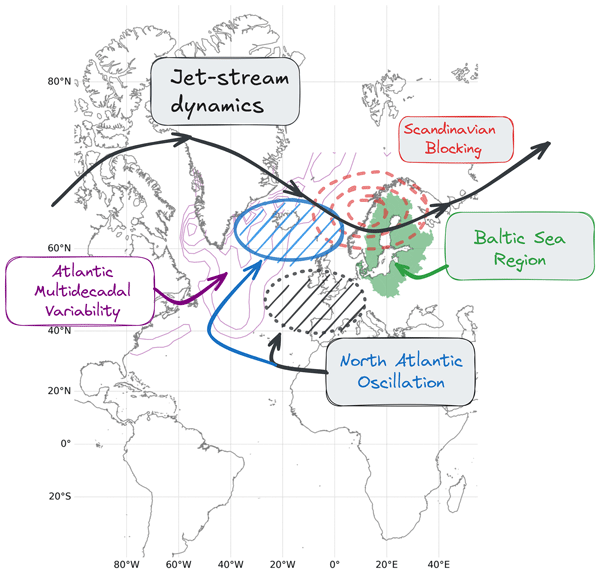
This review explains how weather patterns, guided by the polar jet stream, influence the Baltic Sea’s climate and ecosystem. It covers the NAO, blocking events and other processes and discusses how they affect temperature, rainfall, and storms from days to decades. These shifts then impact oxygen levels, productivity, and acidification in the Baltic Sea. Physical links are fairly well known, but biogeochemical pathways remain uncertain.
Sven Karsten, Hagen Radtke, Matthias Gröger, Ha T. M. Ho-Hagemann, Hossein Mashayekh, Thomas Neumann, and H. E. Markus Meier
Geosci. Model Dev., 17, 1689–1708, https://doi.org/10.5194/gmd-17-1689-2024, https://doi.org/10.5194/gmd-17-1689-2024, 2024
Short summary
Short summary
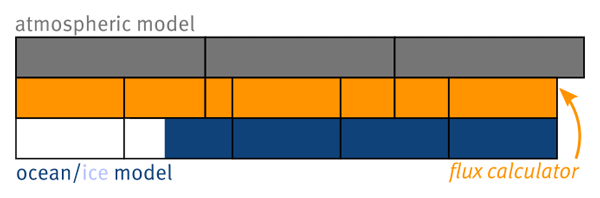
This paper describes the development of a regional Earth System Model for the Baltic Sea region. In contrast to conventional coupling approaches, the presented model includes a flux calculator operating on a common exchange grid. This approach automatically ensures a locally consistent treatment of fluxes and simplifies the exchange of model components. The presented model can be used for various scientific questions, such as studies of natural variability and ocean–atmosphere interactions.
Henry C. Bittig, Erik Jacobs, Thomas Neumann, and Gregor Rehder
Earth Syst. Sci. Data, 16, 753–773, https://doi.org/10.5194/essd-16-753-2024, https://doi.org/10.5194/essd-16-753-2024, 2024
Short summary
Short summary
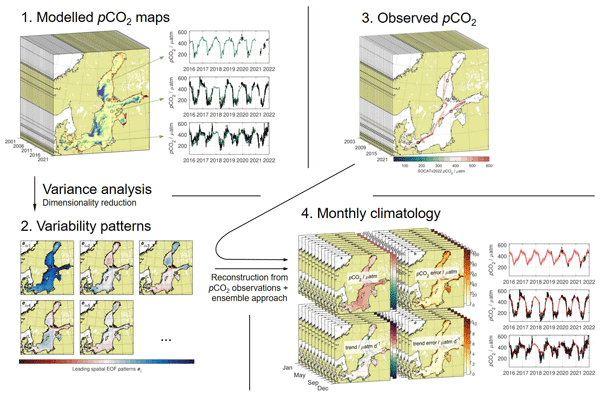
We present a pCO2 climatology of the Baltic Sea using a new approach to extrapolate from individual observations to the entire Baltic Sea. The extrapolation approach uses (a) a model to inform on how data at one location are connected to data at other locations, together with (b) very accurate pCO2 observations from 2003 to 2021 as the base data. The climatology can be used e.g. to assess uptake and release of CO2 or to identify extreme events.
Sarah Piehl, René Friedland, Thomas Neumann, and Gerald Schernewski
Biogeosciences Discuss., https://doi.org/10.5194/bg-2023-152, https://doi.org/10.5194/bg-2023-152, 2023
Revised manuscript not accepted
Short summary
Short summary
We integrated observations essential for policy decisions with high-resolution 3D model results to improve the reliability of oxygen assessments. Based on our findings, we suggest merging only high temporal and/or vertical resolution station data with model data to increase confidence in oxygen assessments. While showing the strengths and limitations of our approach we show that model simulations are an useful tool for policy-relevant oxygen assessments.
Matthias Gröger, Manja Placke, H. E. Markus Meier, Florian Börgel, Sandra-Esther Brunnabend, Cyril Dutheil, Ulf Gräwe, Magnus Hieronymus, Thomas Neumann, Hagen Radtke, Semjon Schimanke, Jian Su, and Germo Väli
Geosci. Model Dev., 15, 8613–8638, https://doi.org/10.5194/gmd-15-8613-2022, https://doi.org/10.5194/gmd-15-8613-2022, 2022
Short summary
Short summary
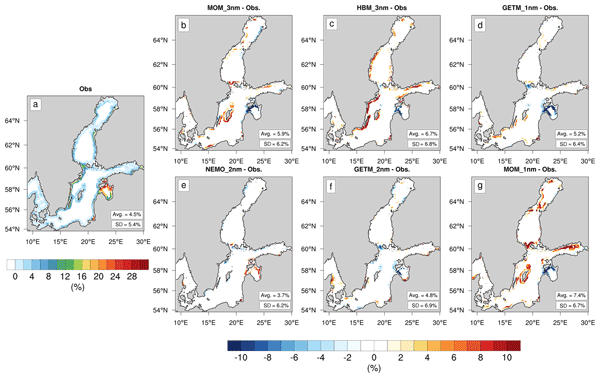
Comparisons of oceanographic climate data from different models often suffer from different model setups, forcing fields, and output of variables. This paper provides a protocol to harmonize these elements to set up multidecadal simulations for the Baltic Sea, a marginal sea in Europe. First results are shown from six different model simulations from four different model platforms. Topical studies for upwelling, marine heat waves, and stratification are also assessed.
Thomas Neumann, Hagen Radtke, Bronwyn Cahill, Martin Schmidt, and Gregor Rehder
Geosci. Model Dev., 15, 8473–8540, https://doi.org/10.5194/gmd-15-8473-2022, https://doi.org/10.5194/gmd-15-8473-2022, 2022
Short summary
Short summary
Marine ecosystem models are usually constrained by the elements nitrogen and phosphorus and consider carbon in organic matter in a fixed ratio. Recent observations show a substantial deviation from the simulated carbon cycle variables. In this study, we present a marine ecosystem model for the Baltic Sea which allows for a flexible uptake ratio for carbon, nitrogen, and phosphorus. With this extension, the model reflects much more reasonable variables of the marine carbon cycle.
Thomas Neumann, Sampsa Koponen, Jenni Attila, Carsten Brockmann, Kari Kallio, Mikko Kervinen, Constant Mazeran, Dagmar Müller, Petra Philipson, Susanne Thulin, Sakari Väkevä, and Pasi Ylöstalo
Geosci. Model Dev., 14, 5049–5062, https://doi.org/10.5194/gmd-14-5049-2021, https://doi.org/10.5194/gmd-14-5049-2021, 2021
Short summary
Short summary
The Baltic Sea is heavily impacted by surrounding land. Therefore, the concentration of colored dissolved organic matter (CDOM) of terrestrial origin is relatively high and impacts the light penetration depth. Estimating a correct light climate is essential for ecosystem models. In this study, a method is developed to derive riverine CDOM from Earth observation methods. The data are used as boundary conditions for an ecosystem model, and the advantage over former approaches is shown.
Anju Mallissery, Hagen Radtke, Thomas Neumann, and H.E. Markus Meier
EGUsphere, https://doi.org/10.5194/egusphere-2025-4568, https://doi.org/10.5194/egusphere-2025-4568, 2025
This preprint is open for discussion and under review for Biogeosciences (BG).
Short summary
Short summary
We used a computer model to study how warming affects biological and chemical processes in the Baltic Sea and controls nutrient cycling in its deep basins. We tested changes across the sea and only along the coast. In oxygen-poor waters, a small increase in the processes caused ammonium buildup and enhanced nitrogen removal. In the Bothnian Sea, the coastal zone had an outsized role, sometimes 2 to 4 times greater than basin-wide changes, altering nitrate, phosphate, and productivity.
Florian Börgel, Itzel Ruvalcaba Baroni, Leonie Barghorn, Leonard Borchert, Bronwyn Cahill, Cyril Dutheil, Leonie Esters, Malgorzata Falarz, Helena L. Filipsson, Matthias Gröger, Jari Hänninen, Magnus Hieronymus, Erko Jakobsen, Mehdi Pasha Karami, Karol Kulinski, Taavi Liblik, H. E. Markus Meier, Gabriele Messori, Lev Naumov, Thomas Neumann, Piia Post, Gregor Rehder, Anna Rutgersson, and Georg Sebastian Voelker
EGUsphere, https://doi.org/10.5194/egusphere-2025-5496, https://doi.org/10.5194/egusphere-2025-5496, 2025
This preprint is open for discussion and under review for Earth System Dynamics (ESD).
Short summary
Short summary
This review explains how weather patterns, guided by the polar jet stream, influence the Baltic Sea’s climate and ecosystem. It covers the NAO, blocking events and other processes and discusses how they affect temperature, rainfall, and storms from days to decades. These shifts then impact oxygen levels, productivity, and acidification in the Baltic Sea. Physical links are fairly well known, but biogeochemical pathways remain uncertain.
Sven Karsten, Hagen Radtke, Matthias Gröger, Ha T. M. Ho-Hagemann, Hossein Mashayekh, Thomas Neumann, and H. E. Markus Meier
Geosci. Model Dev., 17, 1689–1708, https://doi.org/10.5194/gmd-17-1689-2024, https://doi.org/10.5194/gmd-17-1689-2024, 2024
Short summary
Short summary
This paper describes the development of a regional Earth System Model for the Baltic Sea region. In contrast to conventional coupling approaches, the presented model includes a flux calculator operating on a common exchange grid. This approach automatically ensures a locally consistent treatment of fluxes and simplifies the exchange of model components. The presented model can be used for various scientific questions, such as studies of natural variability and ocean–atmosphere interactions.
Henry C. Bittig, Erik Jacobs, Thomas Neumann, and Gregor Rehder
Earth Syst. Sci. Data, 16, 753–773, https://doi.org/10.5194/essd-16-753-2024, https://doi.org/10.5194/essd-16-753-2024, 2024
Short summary
Short summary
We present a pCO2 climatology of the Baltic Sea using a new approach to extrapolate from individual observations to the entire Baltic Sea. The extrapolation approach uses (a) a model to inform on how data at one location are connected to data at other locations, together with (b) very accurate pCO2 observations from 2003 to 2021 as the base data. The climatology can be used e.g. to assess uptake and release of CO2 or to identify extreme events.
Sarah Piehl, René Friedland, Thomas Neumann, and Gerald Schernewski
Biogeosciences Discuss., https://doi.org/10.5194/bg-2023-152, https://doi.org/10.5194/bg-2023-152, 2023
Revised manuscript not accepted
Short summary
Short summary
We integrated observations essential for policy decisions with high-resolution 3D model results to improve the reliability of oxygen assessments. Based on our findings, we suggest merging only high temporal and/or vertical resolution station data with model data to increase confidence in oxygen assessments. While showing the strengths and limitations of our approach we show that model simulations are an useful tool for policy-relevant oxygen assessments.
Matthias Gröger, Manja Placke, H. E. Markus Meier, Florian Börgel, Sandra-Esther Brunnabend, Cyril Dutheil, Ulf Gräwe, Magnus Hieronymus, Thomas Neumann, Hagen Radtke, Semjon Schimanke, Jian Su, and Germo Väli
Geosci. Model Dev., 15, 8613–8638, https://doi.org/10.5194/gmd-15-8613-2022, https://doi.org/10.5194/gmd-15-8613-2022, 2022
Short summary
Short summary
Comparisons of oceanographic climate data from different models often suffer from different model setups, forcing fields, and output of variables. This paper provides a protocol to harmonize these elements to set up multidecadal simulations for the Baltic Sea, a marginal sea in Europe. First results are shown from six different model simulations from four different model platforms. Topical studies for upwelling, marine heat waves, and stratification are also assessed.
Thomas Neumann, Hagen Radtke, Bronwyn Cahill, Martin Schmidt, and Gregor Rehder
Geosci. Model Dev., 15, 8473–8540, https://doi.org/10.5194/gmd-15-8473-2022, https://doi.org/10.5194/gmd-15-8473-2022, 2022
Short summary
Short summary
Marine ecosystem models are usually constrained by the elements nitrogen and phosphorus and consider carbon in organic matter in a fixed ratio. Recent observations show a substantial deviation from the simulated carbon cycle variables. In this study, we present a marine ecosystem model for the Baltic Sea which allows for a flexible uptake ratio for carbon, nitrogen, and phosphorus. With this extension, the model reflects much more reasonable variables of the marine carbon cycle.
Thomas Neumann, Sampsa Koponen, Jenni Attila, Carsten Brockmann, Kari Kallio, Mikko Kervinen, Constant Mazeran, Dagmar Müller, Petra Philipson, Susanne Thulin, Sakari Väkevä, and Pasi Ylöstalo
Geosci. Model Dev., 14, 5049–5062, https://doi.org/10.5194/gmd-14-5049-2021, https://doi.org/10.5194/gmd-14-5049-2021, 2021
Short summary
Short summary
The Baltic Sea is heavily impacted by surrounding land. Therefore, the concentration of colored dissolved organic matter (CDOM) of terrestrial origin is relatively high and impacts the light penetration depth. Estimating a correct light climate is essential for ecosystem models. In this study, a method is developed to derive riverine CDOM from Earth observation methods. The data are used as boundary conditions for an ecosystem model, and the advantage over former approaches is shown.
Cited articles
Almroth-Rosell, E., Edman, M., Eilola, K., Meier, H. E. M., and Sahlberg, J.: Modelling nutrient retention in the coastal zone of an eutrophic sea, Biogeosciences, 13, 5753–5769, https://doi.org/10.5194/bg-13-5753-2016, 2016. a
BMU: Zustand der deutschen Ostseegewässer 2024, Bundesministerium für Umwelt, Naturschutz, nukleare Sicherheit und Verbraucherschutz (BMUV), https://mitglieder.meeresschutz.info/de/berichte/zustandsbewertungen-art8-10.html?file=files/meeresschutz/berichte/art8910/zyklus2024/Zustandsbericht_Ostsee_2024.pdf, (last access: 20 November 2024), 2024. a
Börgel, F., Neumann, T., Rooze, J., Radtke, H., Barghorn, L., and Meier, H. E. M.: Deoxygenation of the Baltic Sea during the last millennium, Frontiers in Marine Science, 10, https://doi.org/10.3389/fmars.2023.1174039, 2023. a
Carstensen, J., Andersen, J. H., Gustafsson, B. G., and Conley, D. J.: Deoxygenation of the Baltic Sea during the last century, Proceedings of the National Academy of Sciences, 111, 5628–5633, https://doi.org/10.1073/pnas.1323156111, 2014. a
Conley, D. J., Carstensen, J., Aigars, J., Axe, P., Bonsdorff, E., Eremina, T., Haahti, B.-M., Humborg, C., Jonsson, P., Kotta, J., Lännegren, C., Larsson, U., Maximov, A., Medina, M. R., Lysiak-Pastuszak, E., Remeikaitė-Nikienė, N., Walve, J., Wilhelms, S., and Zillén, L.: Hypoxia Is Increasing in the Coastal Zone of the Baltic Sea, Environ. Sci. Technol., 45, 6777–6783, https://doi.org/10.1021/es201212r, 2011. a
Diaz, R. J. and Rosenberg, R.: Spreading Dead Zones and Consequences for Marine Ecosystems, Science, 321, 926–929, https://doi.org/10.1126/science.1156401, 2008. a
Edman, M., Eilola, K., Almroth-Rosell, E., Meier, H. E. M., Wahlström, I., and Arneborg, L.: Nutrient Retention in the Swedish Coastal Zone, Frontiers in Marine Science, 5, https://doi.org/10.3389/fmars.2018.00415, 2018. a, b
Eilola, K., Gustafson, B. G., Kuznetsov, I., Meier, H. E. M., Neumann, T., and Savchuk, O. P.: Comparison of observed and simulated dynamics of biogeochemical cycles in the Baltic Sea during 1970–2005 using three state-of-the-art numerical models, Journal of Marine Systems, 88, 267–284, https://doi.org/10.1016/j.jmarsys.2011.05.004, 2011. a
Fennel, K. and Testa, J. M.: Biogeochemical Controls on Coastal Hypoxia, Annual Review of Marine Science, 11, 105–130, https://doi.org/10.1146/annurev-marine-010318-095138, 2019. a
Fredriksson, J. P., Attard, K., Stranne, C., Koszalka, I. M., Glud, R. N., Andersen, T. J., Humborg, C., and Brüchert, V.: Hidden seafloor hypoxia in coastal waters, Limnology and Oceanography, 69, 2489–2502, https://doi.org/10.1002/lno.12607, 2024. a
Friedland, R., Schernewski, G., Gräwe, U., Greipsland, I., Palazzo, D., and Pastuszak, M.: Managing Eutrophication in the Szczecin (Oder) Lagoon-Development, Present State and Future Perspectives, Frontiers in Marine Science, 5, https://doi.org/10.3389/fmars.2018.00521, 2019. a, b
Geyer, B. and Rockel, B.: coastDat-2 COSMO-CLM Atmospheric Reconstruction, WDC Climate [data set], https://doi.org/10.1594/WDCC/coastDat-2_COSMO-CLM, 2013. a, b
Grelowski, A., Pastuszak, M., Sitek, S., and Witek, Z.: Budget calculations of nitrogen, phosphorus and BOD5 passing through the Oder estuary, Journal of Marine Systems, 25, 221–237, https://doi.org/10.1016/S0924-7963(00)00017-8, 2000. a
Griffies, S. M.: Fundamentals of Ocean Climate Models, Princeton University Press, Princeton, NJ, ISBN 9780691118925, 2004. a
HELCOM: Sources and pathways of nutrients to the Baltic Sea, https://helcom.fi/wp-content/uploads/2019/08/BSEP153.pdf (last access: 9 October 2025), 2018. a
HELCOM: HELCOM Baltic Sea Action Plan – 2021 update, https://helcom.fi/wp-content/uploads/2021/10/Baltic-Sea-Action-Plan-2021-update.pdf (last access: 9 October 2025), 2021a. a
HELCOM: Eutrophication – Thematic assessment 2016–2021, Baltic Sea Environment Proceedings 192, https://helcom.fi/wp-content/uploads/2023/06/HELCOM-Thematic-assessment-of-eutrophication-2016-2021.pdf (last access: 9 October 2025), 2021b. a
Jakobsen, H. H. and Markager, S.: Carbon-to-chlorophyll ratio for phytoplankton in temperate coastal waters: Seasonal patterns and relationship to nutrients, Limnology and Oceanography, 61, 1853–1868, https://doi.org/10.1002/lno.10338, 2016. a, b
Kabel, K., Moros, M., Porsche, C., Neumann, T., Adolphi, F., Andersen, T. J., Siegel, H., Gerth, M., Leipe, T., Jansen, E., and Sinninghe Damsté, J. S.: Impact of climate change on the Baltic Sea ecosystem over the past 1,000 years, Nature Climate Change, 2, 871–?874, https://doi.org/10.1038/nclimate1595, 2012. a
Kärnä, T., Ljungemyr, P., Falahat, S., Ringgaard, I., Axell, L., Korabel, V., Murawski, J., Maljutenko, I., Lindenthal, A., Jandt-Scheelke, S., Verjovkina, S., Lorkowski, I., Lagemaa, P., She, J., Tuomi, L., Nord, A., and Huess, V.: Nemo-Nordic 2.0: operational marine forecast model for the Baltic Sea, Geosci. Model Dev., 14, 5731–5749, https://doi.org/10.5194/gmd-14-5731-2021, 2021. a, b
Kuliński, K., Rehder, G., Asmala, E., Bartosova, A., Carstensen, J., Gustafsson, B., Hall, P. O. J., Humborg, C., Jilbert, T., Jürgens, K., Meier, H. E. M., Müller-Karulis, B., Naumann, M., Olesen, J. E., Savchuk, O., Schramm, A., Slomp, C. P., Sofiev, M., Sobek, A., Szymczycha, B., and Undeman, E.: Biogeochemical functioning of the Baltic Sea, Earth Syst. Dynam., 13, 633–685, https://doi.org/10.5194/esd-13-633-2022, 2022. a
Lampe, R.: The Odra Estuary as a Filter and Transformation Area, Acta hydrochimica et hydrobiologica, 27, 292–297, https://doi.org/10.1002/(SICI)1521-401X(199911)27:5<292::AID-AHEH292>3.0.CO;2-Z, 1999. a
Leibniz Institute for Baltic Sea Research: ERGOM: Ecological ReGional Ocean Model, https://ergom.net/ (last access: 10 March 2022), 2015. a
Mohrholz, V. and Lass, H. U.: Transports between Oderhaff and Pomeranian bight – a simple barotropic box model, Deutsche Hydrografische Zeitschrift, 50, 371–383, https://doi.org/10.1007/BF02764231, 1999. a, b
Monsen, N. E., Cloern, J. E., Lucas, L. V., and Monismith, S. G.: A comment on the use of flushing time, residence time, and age as transport time scales, Limnology and Oceanography, 47, 1545–1553, https://doi.org/10.4319/lo.2002.47.5.1545, 2002. a
Müller-Karulis, B. and Aigars, J.: Modeling the long-term dynamics of nutrients and phytoplankton in the Gulf of Riga, Journal of Marine Systems, 87, 161–176, https://doi.org/10.1016/j.jmarsys.2011.03.006, 2011. a
Neumann, T. and Schernewski, G.: Eutrophication in the Baltic Sea and shifts in nitrogen fixation analyzed with a 3D ecosystem model, Journal of Marine Systems, 74, 592–602, https://doi.org/10.1016/j.jmarsys.2008.05.003, 2008. a
Neumann, T., Siegel, H., and Gerth, M.: A new radiation model for Baltic Sea ecosystem modelling, Journal of Marine Systems, 152, 83–91, https://doi.org/10.1016/j.jmarsys.2015.08.001, 2015. a, b
Neumann, T., Koponen, S., Attila, J., Brockmann, C., Kallio, K., Kervinen, M., Mazeran, C., Müller, D., Philipson, P., Thulin, S., Väkevä, S., and Ylöstalo, P.: Optical model for the Baltic Sea with an explicit CDOM state variable: a case study with Model ERGOM (version 1.2), Geosci. Model Dev., 14, 5049–5062, https://doi.org/10.5194/gmd-14-5049-2021, 2021. a, b
Neumann, T., Radtke, H., Cahill, B., Schmidt, M., and Rehder, G.: Non-Redfieldian carbon model for the Baltic Sea (ERGOM version 1.2) – implementation and budget estimates, Geosci. Model Dev., 15, 8473–8540, https://doi.org/10.5194/gmd-15-8473-2022, 2022. a, b
Neumann, T., Schernewski, G., and Friedland, R.: Model code and output for “Transformation Processes in the Oder Lagoon as seen from a Model Perspective”, Zenodo [code], https://doi.org/10.5281/zenodo.14236528, 2024. a
Pastuszak, M., Witek, Z., Nagel, K., Wielgat, M., and Grelowski, A.: Role of the Oder estuary (southern Baltic) in transformation of the riverine nutrient loads, Journal of Marine Systems, 57, 30–54, https://doi.org/10.1016/j.jmarsys.2005.04.005, 2005. a
Piehl, S., Friedland, R., Heyden, B., Leujak, W., Neumann, T., and Schernewski, G.: Modeling of Water Quality Indicators in the Western Baltic Sea: Seasonal Oxygen Deficiency, Environmental Modeling & Assessment, 28, 429–446, https://doi.org/10.1007/s10666-022-09866-x, 2023. a, b, c
Radtke, H., Lipka, M., Bunke, D., Morys, C., Woelfel, J., Cahill, B., Böttcher, M. E., Forster, S., Leipe, T., Rehder, G., and Neumann, T.: Ecological ReGional Ocean Model with vertically resolved sediments (ERGOM SED 1.0): coupling benthic and pelagic biogeochemistry of the south-western Baltic Sea, Geosci. Model Dev., 12, 275–320, https://doi.org/10.5194/gmd-12-275-2019, 2019. a
Rutgersson, A., Kjellström, E., Haapala, J., Stendel, M., Danilovich, I., Drews, M., Jylhä, K., Kujala, P., Larsén, X. G., Halsnæs, K., Lehtonen, I., Luomaranta, A., Nilsson, E., Olsson, T., Särkkä, J., Tuomi, L., and Wasmund, N.: Natural hazards and extreme events in the Baltic Sea region, Earth Syst. Dynam., 13, 251–301, https://doi.org/10.5194/esd-13-251-2022, 2022. a
Ruvalcaba Baroni, I., Almroth-Rosell, E., Axell, L., Fredriksson, S. T., Hieronymus, J., Hieronymus, M., Brunnabend, S.-E., Gröger, M., Kuznetsov, I., Fransner, F., Hordoir, R., Falahat, S., and Arneborg, L.: Validation of the coupled physical–biogeochemical ocean model NEMO–SCOBI for the North Sea–Baltic Sea system, Biogeosciences, 21, 2087–2132, https://doi.org/10.5194/bg-21-2087-2024, 2024. a
Schernewski, G., Friedland, R., Carstens, M., Hirt, U., Leujak, W., Nausch, G., Neumann, T., Petenati, T., Sagert, S., Wasmund, N., and von Weber, M.: Implementation of European marine policy: New water quality targets for German Baltic waters, Marine Policy, 51, 305–321, https://doi.org/10.1016/j.marpol.2014.09.002, 2015. a, b
Schernewski, G., Jekat, M., Kösters, F., Neumann, T., Steffen, S., and von Thenen, M.: Ecosystem Services Supporting Environmental Impact Assessments (EIAs): Assessments of Navigation Waterways Deepening Based on Data, Experts, and a 3D Ecosystem Model, Land, 13, https://doi.org/10.3390/land13101653, 2024. a
Schernewski, G., Neumann, T., Piehl, S., and Swer, N. M.: Ecosystem-Model-Based Valuation of Ecosystem Services in a Baltic Lagoon: Long-Term Human Technical Interventions and Short-Term Variability, Environments, 12, https://doi.org/10.3390/environments12020035, 2025a. a, b
Schernewski, G., Neumann, T., Piehl, S., and von Weber, M.: New approaches to unveil the unknown: oxygen depletion and internal eutrophication in a Baltic lagoon over decades, Frontiers in Environmental Science, 13, https://doi.org/10.3389/fenvs.2025.1620191, 2025b. a
Vahtera, E., Conley, D. J., Gustafsson, B. G., Kuosa, H., Pitkänen, H., Savchuk, O. P., Tamminen, T., Viitasalo, M., Voss, M., Wasmund, N., and Wulff, F.: Internal ecosystem feedbacks enhance nitrogen-fixing cyanobacteria blooms and complicate management in the Baltic Sea, Ambio, 36, 186–194, 2007. a
Vollenweider, R. A.: Advances in defining critical loading levels for phosphorus in lake eutrophication, https://api.semanticscholar.org/CorpusID:131391058 (last access: 9 October 2025), 1976. a
Vybernaite-Lubiene, I., Zilius, M., Bartoli, M., Petkuviene, J., Zemlys, P., Magri, M., and Giordani, G.: Biogeochemical Budgets of Nutrients and Metabolism in the Curonian Lagoon (South East Baltic Sea): Spatial and Temporal Variations, Water, 14, https://doi.org/10.3390/w14020164, 2022. a
Winton, M.: A Reformulated Three-Layer Sea Ice Model, Journal of Atmospheric and Oceanic Technology, 17, 525–531, https://doi.org/10.1175/1520-0426(2000)017<0525:ARTLSI>2.0.CO;2, 2000. a
Short summary
We applied a 3D ecosystem model to the Oder Lagoon in the Baltic Sea and found that 40% of nitrogen and 12% of phosphorus are retained in the lagoon before entering the Baltic Sea. This is important for coarse-grained models that do not resolve such coastal structures. Moreover, the coastal filter supports the mitigation of eutrophication in the Baltic Sea.
We applied a 3D ecosystem model to the Oder Lagoon in the Baltic Sea and found that 40% of...
Altmetrics
Final-revised paper
Preprint