
Articles | Volume 22, issue 23
https://doi.org/10.5194/bg-22-7769-2025
© Author(s) 2025. This work is distributed under
the Creative Commons Attribution 4.0 License.
the Creative Commons Attribution 4.0 License.
https://doi.org/10.5194/bg-22-7769-2025
© Author(s) 2025. This work is distributed under
the Creative Commons Attribution 4.0 License.
the Creative Commons Attribution 4.0 License.
Research article
| 
08 Dec 2025
Research article |
| 08 Dec 2025
| 08 Dec 2025
Benthic macrofaunal carbon fluxes and environmental drivers of spatial variability in a large coastal-plain estuary
The Pennsylvania State University, University Park, PA, USA
Raymond Najjar
The Pennsylvania State University, University Park, PA, USA
Emily Rivest
Virginia Institute of Marine Science, William & Mary, Gloucester Point, VA, USA
Ryan Woodland
University of Maryland Center for Environmental Sciences, Cambridge, MD, USA
Marjorie A. M. Friedrichs
Virginia Institute of Marine Science, William & Mary, Gloucester Point, VA, USA
Pierre St-Laurent
Virginia Institute of Marine Science, William & Mary, Gloucester Point, VA, USA
Spencer Davis
The Pennsylvania State University, University Park, PA, USA
Related authors
No articles found.
Catherine R. Czajka, Marjorie A. M. Friedrichs, Emily B. Rivest, Pierre St-Laurent, Mark J. Brush, and Fei Da
Biogeosciences, 22, 3181–3206, https://doi.org/10.5194/bg-22-3181-2025, https://doi.org/10.5194/bg-22-3181-2025, 2025
Short summary
Short summary
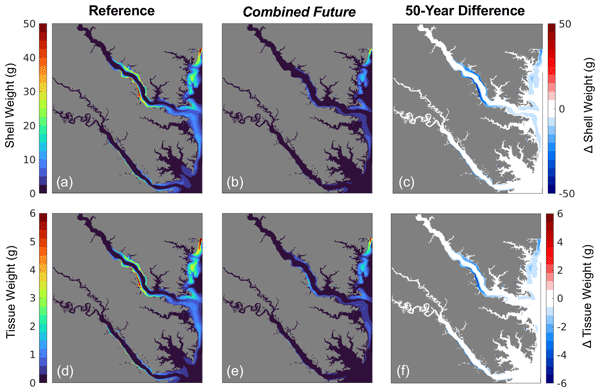
Under future acidification, warming, and nutrient management, substantial reductions in shell and tissue weights of Eastern oysters are projected for the Chesapeake Bay. Lower oyster growth rates will be largely driven by reduced calcium carbonate saturation states and reduced food availability. Oyster aquaculture practices in the region will likely be affected, with site selection becoming increasingly important as impacts will be highly spatially variable.
Kyle E. Hinson, Marjorie A. M. Friedrichs, Raymond G. Najjar, Maria Herrmann, Zihao Bian, Gopal Bhatt, Pierre St-Laurent, Hanqin Tian, and Gary Shenk
Biogeosciences, 20, 1937–1961, https://doi.org/10.5194/bg-20-1937-2023, https://doi.org/10.5194/bg-20-1937-2023, 2023
Short summary
Short summary
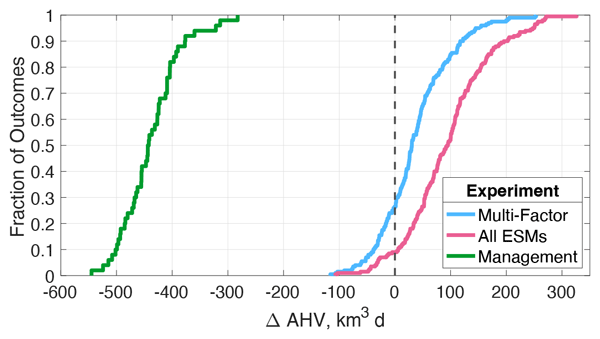
Climate impacts are essential for environmental managers to consider when implementing nutrient reduction plans designed to reduce hypoxia. This work highlights relative sources of uncertainty in modeling regional climate impacts on the Chesapeake Bay watershed and consequent declines in bay oxygen levels. The results demonstrate that planned water quality improvement goals are capable of reducing hypoxia levels by half, offsetting climate-driven impacts on terrestrial runoff.
Melissa Ward, Tye L. Kindinger, Heidi K. Hirsh, Tessa M. Hill, Brittany M. Jellison, Sarah Lummis, Emily B. Rivest, George G. Waldbusser, Brian Gaylord, and Kristy J. Kroeker
Biogeosciences, 19, 689–699, https://doi.org/10.5194/bg-19-689-2022, https://doi.org/10.5194/bg-19-689-2022, 2022
Short summary
Short summary
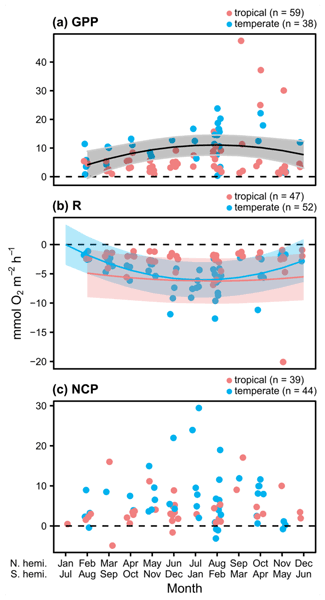
Here, we synthesize the results from 62 studies reporting in situ rates of seagrass metabolism to highlight spatial and temporal variability in oxygen fluxes and inform efforts to use seagrass to mitigate ocean acidification. Our analyses suggest seagrass meadows are generally autotrophic and variable in space and time, and the effects on seawater oxygen are relatively small in magnitude.
Cited articles
Akoglu, H.: User's guide to correlation coefficients, Turk. J. Emerg. Med., 18, 91–93, https://doi.org/10.1016/j.tjem.2018.08.001, 2018.
Anon: Chesapeake Bay Program analytical segmentation scheme: Revisions, decisions and rationales, 1983–2003, https://d38c6ppuviqmfp.cloudfront.net/content/publications/cbp_13272.pdf (last access: 3 December 2025), 2004.
Beckwith, S. T., Byrne, R. H., and Hallock, P.: Riverine calcium end-members improve coastal saturation state calculations and reveal regionally variable calcification potential, Front. Mar. Sci., 6, https://doi.org/10.3389/fmars.2019.00169, 2019.
Birchenough, S. N. R., Reiss, H., Degraer, S., Mieszkowska, N., Borja, Á., Buhl-Mortensen, L., Braeckman, U., Craeymeersch, J., De Mesel, I., Kerckhof, F., Kröncke, I., Parra, S., Rabaut, M., Schröder, A., Van Colen, C., Van Hoey, G., Vincx, M., and Wätjen, K.: Climate change and marine benthos: A review of existing research and future directions in the North Atlantic, Wiley Interdiscip. Rev. Clim. Change, 6, 203–223, https://doi.org/10.1002/wcc.330, 2015.
Borja, A., Dauer, D. M., Díaz, R., Llansó, R. J., Muxika, I., Rodríguez, J. G., and Schaffner, L.: Assessing estuarine benthic quality conditions in Chesapeake Bay: A comparison of three indices, Ecol. Indic., 8, 395–403, https://doi.org/10.1016/j.ecolind.2007.05.003, 2008.
Brey, T.: Confidence limits for secondary production estimates: Application of the bootstrap to the increment summation method, Mar. Biol., 106, 503–508, 1990.
Brush, M. J., Mozetič, P., Francé, J., Aubry, F. B., Djakovac, T., Faganeli, J., Harris, L. A., and Niesen, M.: Phytoplankton dynamics in a changing environment, in: Coastal Ecosystems in Transition: A Comparative Analysis of the Northern Adriatic and Chesapeake Bay, edited by: Malone, T. C., Malej, A., and Faganeli, J., Wiley, 49–74, https://doi.org/10.1002/9781119543626.ch4, 2020.
Cain, T. D.: Reproduction and recruitment of the brackish water clam, Rangia cuneata in the James River, Virginia, Fishery Bulletin, 73, 412, https://scholarworks.wm.edu/handle/internal/18119 (last access: 3 December 2025), 1975.
Canuel, E. A. and Hardison, A. K.: Sources, ages, and alteration of organic matter in estuaries, Ann. Rev. Mar. Sci., 8, 409–434, https://doi.org/10.1146/annurev-marine-122414-034058, 2016.
Cerco, C. F. and Noel, M. R.: Monitoring, modeling, and management impacts of bivalve filter feeders in the oligohaline and tidal fresh regions of the Chesapeake Bay system, Ecol. Modell., 221, 1054–1064, https://doi.org/10.1016/j.ecolmodel.2009.07.024, 2010.
Chauvaud, L., Thompson, J. K., Cloern, J. E., and Thouzeau, G.: Clams as CO2 generators: The Potamocorbula amurensis example in San Francisco Bay, Limnol. Oceanogr., 48, 2086–2092, https://doi.org/10.4319/lo.2003.48.6.2086, 2003.
Chen, C.-T. A., Huang, T.-H., Chen, Y.-C., Bai, Y., He, X., and Kang, Y.: Air–sea exchanges of CO2 in the world's coastal seas, Biogeosciences, 10, 6509–6544, https://doi.org/10.5194/bg-10-6509-2013, 2013.
Chesapeake Bay Program: CBP Water Quality Database (1984–present), https://www.chesapeakebay.net/what/downloads/cbp-water-quality-database-1984-present (last access: 3 December 2025), 2004.
Dauer, D. M.: Biological criteria, environmental health and estuarine macrobenthic community structure, Mar. Pollut. Bull., 26, 249–257, https://doi.org/10.1016/0025-326X(93)90063-P, 1993.
Dauer, D. M. and Alden III, R. W.: Long-term trends in the macrobenthos and water quality of the lower Chesapeake Bay (1985–1991), Mar. Pollut. Bull., 30, 840–850, 1995.
Dauer, D. M. and Lane, M. F.: Quality Assurance/Quality Control Plan: Benthic Biological Monitoring Program of the Lower Chesapeake Bay (July 1, 2010 to June 30, 2011), Norfolk, VA, https://d38c6ppuviqmfp.cloudfront.net/documents/tempCF_1305810880/vabenthicqapp.pdf (last access: 3 December 2025), 2010.
Dauer, D. M., Ranasinghe, J. A., and Weisberg, S. B.: Relationships between benthic community condition, water quality, sediment quality, nutrient loads, and land use patterns in Chesapeake Bay, Estuaries, 23, 80–96, 2000.
Diaz, R. and Rosenberg, R.: Marine benthic hypoxia: A review of its ecological effects and the behavioural responses of benthic macrofauna, Oceanography and marine biology. An annual review, 33, 245–303, 1995.
Diaz, R. J. and Rosenberg, R.: Spreading dead zones and consequences for marine ecosystems, Science, 321, 926–929, 2008.
Diaz, R. J. and Schaffner, L. C.: The functional role of estuarine benthos, in: Perspectives on the Chesapeake Bay, edited by: Haire, M. and Krome, E. C., Chesapeake Research Consortium, Gloucester Point, Virginia, 25–56, https://www.chesapeakebay.net/files/documents/Perspectives_on_the_Chesapeake_Bay_Part_I_1990.pdf (last access: 3 December 2025), 1990.
Dolbeth, M., Cusson, M., Sousa, R., and Pardal, M. A.: Secondary production as a tool for better understanding of aquatic ecosystems, Canadian Journal of Fisheries and Aquatic Sciences, 69, 1230–1253, https://doi.org/10.1139/F2012-050, 2012.
Dormann, C. F., Elith, J., Bacher, S., Buchmann, C., Carl, G., Carré, G., García Marquéz, J. R., Gruber, B., Lafourcade, B., Leitão, P. J., Münkemüller, T., McClean, C., Osborne, P. E., Reineking, B., Schröder, B., Skidmore, A. K., Zurell, D., and Lautenbach, S.: Collinearity: A review of methods to deal with it and a simulation study evaluating their performance, Ecography, 36, 27–46, 2013.
Drexler, M. and Ainsworth, C. H.: Generalized additive models used to predict species abundance in the Gulf of Mexico: An ecosystem modeling tool, PLoS One, 8, https://doi.org/10.1371/journal.pone.0064458, 2013.
Edgar, G. J.: The use of the size structure of benthic macrofaunal communities to estimate faunal biomass and secondary production, J. Exp. Mar. Biol. Ecol., 137, 195–214, 1990.
Egleston, E. S., Sabine, C. L., and Morel, F. M. M.: Revelle revisited: Buffer factors that quantify the response of ocean chemistry to changes in DIC and alkalinity, Global Biogeochem Cycles, 24, https://doi.org/10.1029/2008GB003407, 2010.
Ehrnsten, E., Norkko, A., Timmermann, K., and Gustafsson, B. G.: Benthic-pelagic coupling in coastal seas – Modelling macrofaunal biomass and carbon processing in response to organic matter supply, Journal of Marine Systems, 196, 36–47, https://doi.org/10.1016/j.jmarsys.2019.04.003, 2019.
Eleftheriou, A. and Moore, D. C.: Macofauna techniques, in: Methods for the Study of Marine Benthos, edited by: Eleftheriou, A., John Wiley & Sons, Ltd., 4, 175–251, https://doi.org/10.1002/9781118542392, 2013.
Frankel, L. T., Friedrichs, M. A. M., St-Laurent, P., Bever, A. J., Lipcius, R. N., Bhatt, G., and Shenk, G. W.: Nitrogen reductions have decreased hypoxia in the Chesapeake Bay: Evidence from empirical and numerical modeling, Science of the Total Environment, 814, https://doi.org/10.1016/j.scitotenv.2021.152722, 2022.
Frankignoulle, M., Abril, G., Borges, A., Bourge, I., Canon, C., Delille, B., Libert, E., and Théate, J.-M.: Carbon dioxide emission from European estuaries, Science, 282, 434–436, 1998.
Fulford, R. S., Breitburg, D. L., Newell, R. I. E., Kemp, W. M., and Luckenbach, M.: Effects of oyster population restoration strategies on phytoplankton biomass in Chesapeake Bay: a flexible modeling approach, Mar. Ecol. Prog. Ser., 336, 43–61, 2007.
Galimany, E., Lunt, J., Freeman, C. J., Houk, J., Sauvage, T., Santos, L., Lunt, J., Kolmakova, M., Mossop, M., Domingos, A., Phlips, E. J., and Paul, V. J.: Bivalve feeding responses to microalgal bloom species in the Indian River Lagoon: the potential for top-down control, Estuaries and Coasts, 43, 1519–1532, https://doi.org/10.1007/s12237-020-00746-9, 2020.
Garcia, H. E. and Gordon, L. I.: Oxygen solubility in seawater: Better fitting equations, Limnol. Oceanogr., 37, 1307–1312, https://doi.org/10.4319/lo.1992.37.6.1307, 1992.
Glud, R. N.: Oxygen dynamics of marine sediments, Marine Biology Research, 4, 243–289, https://doi.org/10.1080/17451000801888726, 2008.
Grant, J. and Thorpe, B.: Effects of suspended sediment on growth, respiration, and excretion of the soft-shell clam (Mya arenaria), Canadian Journal of Fisheries and Aquatic Sciences, 48, https://doi.org/10.1139/f91-154, 1991.
Grebmeier, J. M., Bluhm, B. A., Cooper, L. W., Denisenko, S. G., Iken, K., Kędra, M., and Serratos, C.: Time-series benthic community composition and biomass and associated environmental characteristics in the Chukchi Sea during the RUSALCA 2004–2012 Program, Oceanography, 28, 116–133, http://www.jstor.org/stable/24861905 (last access: 3 December 2025), 2015.
Green, M. A., Waldbusser, G. G., Reilly, S. L., Emerson, K., and O'Donnell, S.: Death by dissolution: Sediment saturation state as a mortality factor for juvenile bivalves, Limnol. Oceanogr., 54, 1037–1047, https://doi.org/10.4319/lo.2009.54.4.1037, 2009.
Grüss, A., Drexler, M., and Ainsworth, C. H.: Using delta generalized additive models to produce distribution maps for spatially explicit ecosystem models, Fish Res, 159, 11–24, https://doi.org/10.1016/j.fishres.2014.05.005, 2014.
Guisan, A., Edwards, T. C., and Hastie, T.: Generalized linear and generalized additive models in studies of species distributions: setting the scene, Ecol. Modell., 157, 89, https://doi.org/10.1016/S0304-3800(02)00204-1, 2002.
Hagy, J. D.: Eutrophication, hypoxia and trophic transfer efficiency in Chesapeake Bay, Doctoral dissertation, University of Maryland, College Park, https://www.proquest.com/docview/252115577?fromopenview=true&pq-origsite=gscholar&sourcetype=Dissertations & Theses (last access: 3 December 2025), 2002.
Harding, L. W., Mallonee, M. E., and Perry, E. S.: Toward a predictive understanding of primary productivity in a temperate, partially stratified estuary, Estuar. Coast Shelf Sci., 55, 437–463, https://doi.org/10.1006/ecss.2001.0917, 2002.
Hartwell, S. I., Wright, D. A., Takacs, R., and Hocutt, C. H.: Relative respiration and feeding rates of oyster and brackish water clam in variously contaminated waters, Mar. Pollut. Bull., 22, 191–197, 1991.
Hastie, T. and Tibshirani, R.: Generalized additive models: Some applications, J. Am. Stat. Assoc., 82, https://doi.org/10.2307/2289439, 1987.
Hauke, J. and Kossowski, T.: Comparison of values of Pearson's and Spearman's correlation coefficients on the same sets of data, Quaestiones Geographicae, 30, 87–93, https://doi.org/10.2478/v10117-011-0021-1, 2011.
Herrmann, M., Najjar, R. G., Kemp, W. M., Alexander, R. B., Boyer, E. W., Cai, W. J., Griffith, P. C., Kroeger, K. D., McCallister, S. L., and Smith, R. A.: Net ecosystem production and organic carbon balance of U.S. East Coast estuaries: A synthesis approach, Global Biogeochem Cycles, 29, 96–111, https://doi.org/10.1002/2013GB004736, 2015.
Herrmann, M., Najjar, R. G., Da, F., Friedman, J. R., Friedrichs, M. A. M., Goldberger, S., Menendez, A., Shadwick, E. H., Stets, E. G., and St-Laurent, P.: Challenges in quantifying air-water carbon dioxide flux using estuarine water quality data: Case study for Chesapeake Bay, J. Geophys. Res. Oceans, 125, https://doi.org/10.1029/2019JC015610, 2020.
Hinson, K. E., Friedrichs, M. A. M., St-Laurent, P., Da, F., and Najjar, R. G.: Extent and causes of Chesapeake Bay warming, J. Am. Water Resour. Assoc., 58, 805–825, https://doi.org/10.1111/1752-1688.12916, 2022.
Hirsch, R. M., Moyer, D. L., and Archfield, S. A.: Weighted regressions on time, discharge, and season (WRTDS), with an application to Chesapeake Bay river inputs, J. Am. Water Resour. Assoc., 46, 857–880, https://doi.org/10.1111/j.1752-1688.2010.00482.x, 2010.
Holland, A. F., Shaughnessy, A. T., and Hiegel, M. H.: Long-term variation in mesohaline Chesapeake Bay macrobenthos: Spatial and temporal patterns, Estuaries, 10, 227–245, 1987.
Hopkins, S. H., Anderson, J. W., and Horvath, K.: The brackish water clam Rangia cuneata as an indicator of ecological effects of salinity changes in coastal waters, Vicksburg, Mississippi, https://www.semanticscholar.org/paper/The-brackish-water-clam-Rangia-cuneata-as-indicator-Hopkins-Anderson/6fd8c306aaae9cd4ee1ce08486aa13a7f69c0a78 (last access: 3 December 2025), 1973.
Hopkinson, C. S. and Smith, E. M.: Estuarine respiration: An overview of benthic, pelagic, and whole system respiration, in: Respiration in Aquatic Ecoystems, edited by: del Giorgio, P., and Williams, P., Oxford University Press, 1, 122–146, https://doi.org/10.1093/acprof:oso/9780198527084.001.0001, 2004.
Humphreys, M. P., Lewis, E. R., Sharp, J. D., and Pierrot, D.: PyCO2SYS v1.8: marine carbonate system calculations in Python, Geosci. Model Dev., 15, 15–43, https://doi.org/10.5194/gmd-15-15-2022, 2022.
Irby, I. D., Friedrichs, M. A. M., Da, F., and Hinson, K. E.: The competing impacts of climate change and nutrient reductions on dissolved oxygen in Chesapeake Bay, Biogeosciences, 15, 2649–2668, https://doi.org/10.5194/bg-15-2649-2018, 2018.
Jakubowska, M. and Normant-Saremba, M.: The effect of CO2-induced seawater acidification on the behaviour and metabolic rate of the Baltic clam Macoma balthica, Ann. Zool. Fennici, 52, 353–367, https://doi.org/10.5735/086.052.0509, 2015.
Jansson, A., Norkko, J., and Norkko, A.: Effects of reduced pH on Macoma balthica larvae from a system with naturally fluctuating pH-dynamics, PLoS One, 8, https://doi.org/10.1371/journal.pone.0068198, 2013.
Jansson, A., Norkko, J., Dupont, S., and Norkko, A.: Growth and survival in a changing environment: Combined effects of moderate hypoxia and low pH on juvenile bivalve Macoma balthica, J. Sea Res., 102, 41–47, https://doi.org/10.1016/j.seares.2015.04.006, 2015.
Kemp, W. M., Smith, E. M., Marvin-DiPasquale, M., and Boynton, W. R.: Organic carbon balance and net ecosystem metabolism in Chesapeake Bay, Mar. Ecol. Prog. Ser., 150, 229–248, 1997.
Kemp, W. M., Boynton, W. R., Adolf, J. E., Boesch, D. F., Boicourt, W. C., Brush, G., Cornwell, J. C., Fisher, T. R., Glibert, P. M., Hagy, J. D., Harding, L. W., Houde, E. D., Kimmel, D. G., Miller, W. D., Newell, R. I. E., Roman, M. R., Smith, E. M., and Stevenson, J. C.: Eutrophication of Chesapeake Bay: Historical trends and ecological interactions, Mar. Ecol. Prog. Ser., 303, 1–29, 2005.
Kroeker, K. J., Kordas, R. L., Crim, R., Hendriks, I. E., Ramajo, L., Singh, G. S., Duarte, C. M., and Gattuso, J. P.: Impacts of ocean acidification on marine organisms: quantifying sensitivities and interaction with warming, Glob. Chang. Biol., 19, 1884–1896, https://doi.org/10.1111/gcb.12179, 2013.
Levin, L. A., Ekau, W., Gooday, A. J., Jorissen, F., Middelburg, J. J., Naqvi, S. W. A., Neira, C., Rabalais, N. N., and Zhang, J.: Effects of natural and human-induced hypoxia on coastal benthos, Biogeosciences, 6, 2063–2098, https://doi.org/10.5194/bg-6-2063-2009, 2009.
Little, S., Wood, P. J., and Elliott, M.: Quantifying salinity-induced changes on estuarine benthic fauna: The potential implications of climate change, Estuar. Coast Shelf Sci., 198, 610–625, https://doi.org/10.1016/j.ecss.2016.07.020, 2017.
Llansó, R. J.: Methods for calculating the Chesapeake Bay benthic index of biotic integrity, Versar, Inc., 24 pp., https://www.baybenthos.versar.com/Docs/ChesBayBIBI.pdf (last access: 3 December 2025), 2002.
Llansó, R. J. and Scott, L.: Chesapeake Bay water quality monitoring program: Long-term benthic monitoring and assessment component, quality assurance project plan, Versar, Inc., 9200 Rumsey Road, Columbia, Maryland 21045, 2011–2012, https://www.chesapeakebay.net/files/documents/md-benthic_qapp2011-2012.pdf (last access: 3 December 2025), 2011.
Llansó, R. J. and Zaveta, D.: Chesapeake Bay water quality monitoring program: Long-term benthic monitoring and assessment component level 1 comprehensive report, July 1984–December 2016 (Volume 1), Columbia, MD, https://eyesonthebay.dnr.maryland.gov/eyesonthebay/documents/benthic/LTB2017Level_I_ReportVolume1.pdf (last access: 3 December 2025), 2017.
Marsh, A. G. and Tenore, K. R.: The role of nutrition in regulating the population dynamics of opportunistic, surface deposit feeders in a mesohaline community, Limnol. Oceanogr., 35, 710–724, https://doi.org/10.4319/lo.1990.35.3.0710, 1990.
Middelburg, J. J., Soetaert, K., and Hagens, M.: Ocean alkalinity, buffering and biogeochemical processes, Reviews of Geophysics, 58, https://doi.org/10.1029/2019RG000681, 2020.
Mo, C. and Neilson, B.: Standardization of oyster soft tissue dry weight measurements, Water Res., 28, 243–246, 1994.
Murphy, R. R., Kemp, W. M., and Ball, W. P.: Long-term trends in Chesapeake Bay seasonal hypoxia, stratification, and nutrient loading, Estuaries and Coasts, 34, 1293–1309, https://doi.org/10.1007/s12237-011-9413-7, 2011.
Murphy, R. R., Perlman, E., Ball, W. P., and Curriero, F. C.: Water-distance-based kriging in Chesapeake Bay, J. Hydrol. Eng., 20, https://doi.org/10.1061/(asce)he.1943-5584.0001135, 2015.
Najjar, R. G., Herrmann, M., Alexander, R., Boyer, E. W., Burdige, D. J., Butman, D., Cai, W. J., Canuel, E. A., Chen, R. F., Friedrichs, M. A. M., Feagin, R. A., Griffith, P. C., Hinson, A. L., Holmquist, J. R., Hu, X., Kemp, W. M., Kroeger, K. D., Mannino, A., McCallister, S. L., McGillis, W. R., Mulholland, M. R., Pilskaln, C. H., Salisbury, J., Signorini, S. R., St-Laurent, P., Tian, H., Tzortziou, M., Vlahos, P., Wang, Z. A., and Zimmerman, R. C.: Carbon budget of tidal wetlands, estuaries, and shelf waters of Eastern North America, Global Biogeochem. Cycles, 32, 389–416, https://doi.org/10.1002/2017GB005790, 2018.
Najjar, R. G., Herrmann, M., Cintrón Del Valle, S. M., Friedman, J. R., Friedrichs, M. A. M., Harris, L. A., Shadwick, E. H., Stets, E. G., and Woodland, R. J.: Alkalinity in tidal tributaries of the Chesapeake Bay, J. Geophys. Res. Oceans, 125, https://doi.org/10.1029/2019JC015597, 2020.
Nakamura, Y. and Kerciku, F.: Effects of filter-feeding bivalves on the distribution of water quality and nutrient cycling in a eutrophic coastal lagoon, Journal of Marine Systems, 26, 209–221, 2000.
Newell, R. I. E.: Ecological changes in Chesapeake Bay: are they the result of overharvesting the American oyster, Crassostrea virginica, Understanding the estuary: advances in Chesapeake Bay reserach, 129, 536–46, 1988.
Newell, R. I. E. and Ott, J. A.: Macrobenthic communities and eutrophication, Ecosystems at the Land-Sea Margin: Drainage Basin to Coastal Sea, edited by: Malone, T. C., Malej, A., Harding Jr., L. W., Smodlaka, N., and Turner, R. E., vol. 55, 265–293, https://doi.org/10.1029/CE055p0265, 2011.
Ni, W., Li, M., Ross, A. C., and Najjar, R. G.: Large projected decline in dissolved oxygen in a eutrophic estuary due to climate change, J. Geophys. Res. Oceans, 124, 8271–8289, https://doi.org/10.1029/2019JC015274, 2019.
Olson, M.: Guide to using Chesapeake Bay Program water quality monitoring data, https://www.chesapeakebay.net/files/documents/wq_data_userguide_10feb12_mod.pdf (last access: 3 December 2025), 2012.
Pearson, T. H. and Rosenberg, R.: Macrobenthic succession in relation to organic enrichment and pollution of the marine environment, Oceanography and Marine Biology: An Annual Review, 16, 229–311, 1978.
Phelps, H. L.: The Asiatic clam (Corbicula fluminea) invasion and system-level ecological change in the Potomac River estuary near Washington, DC, Estuaries, 17, 614–621, 1994.
Redfield, A. C.: The influence of organisms on the composition of seawater, The Sea, 2, 26–77, 1963.
Rodil, I. F., Lohrer, A. M., Attard, K. M., Thrush, S. F., and Norkko, A.: Positive contribution of macrofaunal biodiversity to secondary production and seagrass carbon metabolism, Ecology, 103, https://doi.org/10.1002/ecy.3648, 2022.
Rousi, H., Korpinen, S., and Bonsdorff, E.: Brackish-water benthic fauna under fluctuating environmental conditions: the role of eutrophication, hypoxia, and global change, Front. Mar. Sci., 6, 464, https://doi.org/10.3389/fmars.2019.00464, 2019.
Schratzberger, M. and Ingels, J.: Meiofauna matters: the roles of meiofauna in benthic ecosystems, J. Exp. Mar. Biol. Ecol, 502, 12–25, https://doi.org/10.1016/j.jembe.2017.01.007, 2018.
Schwinghamer, P., Hargrave, B., Peer, D., and Hawkins, C. M.: Partitioning of production and respiration among size groups of organisms in an intertidal benthic community, Mar. Ecol. Prog. Ser., 31, 131–142, 1986.
Seitz, R., Lipcius, R. N., Olmstead, N. H., Seebo, M. S., and Lambert, D. M.: Influence of shallow-water habitats and shoreline development on abundance, biomass, and diversity of benthic prey and predators in Chesapeake Bay, Mar. Ecol. Prog. Ser., 326, 11–27, 2006.
Seitz, R. D., Dauer, D. M., Llansó, R. J., and Long, W. C.: Broad-scale effects of hypoxia on benthic community structure in Chesapeake Bay, USA, J. Exp. Mar. Biol. Ecol, 381, https://doi.org/10.1016/j.jembe.2009.07.004, 2009.
Shchepetkin, A. F. and McWilliams, J. C.: The regional oceanic modeling system (ROMS): A split-explicit, free-surface, topography-following-coordinate oceanic model, Ocean Model (Oxf), 9, 347–404, https://doi.org/10.1016/j.ocemod.2004.08.002, 2005.
Smith, M., Paperno, R., Flaherty-Walia, K., and Markwith, S.: Species Distributions in a Changing Estuary: Predictions Under Future Climate Change, Sea-Level Rise, and Watershed Restoration, Estuaries and Coasts, 46, https://doi.org/10.1007/s12237-023-01219-5, 2023.
Snelgrove, P. V. R.: The importance of marine sediment biodiversity in ecosystem processes, Ambio, 26, 578–583, https://www.jstor.org/stable/4314672 (last access: 3 December 2025), 1997.
Snelgrove, P. V. R.: Getting to the bottom of marine biodiversity: sedimentary habitats: ocean bottoms are the most widespread habitat on earth and support high biodiversity and key ecosystem services, Bioscience, 42, 129–138, https://doi.org/10.2307/1313538, 1999.
Snelgrove, P. V. R., Soetaert, K., Solan, M., Thrush, S., Wei, C. L., Danovaro, R., Fulweiler, R. W., Kitazato, H., Ingole, B., Norkko, A., Parkes, R. J., and Volkenborn, N.: Global carbon cycling on a heterogeneous seafloor, Trends Ecol. Evol., 33, 96–105, https://doi.org/10.1016/j.tree.2017.11.004, 2018.
Sousa, R., Antunes, C., and Guilhermino, L.: Ecology of the invasive Asian clam Corbicula fluminea (Müller, 1774) in aquatic ecosystems: An overview, Ann. Limnol. – Int. J. Lim., 44, https://doi.org/10.1051/limn:2008017, 2008.
St-Laurent, P. and Friedrichs, M. A. M.: An atlas for physical and biogeochemical conditions in the Chesapeake Bay, SEANOE [data set], https://doi.org/10.17882/99441, 2024a.
St-Laurent, P. and Friedrichs, M. A. M.: On the sensitivity of coastal hypoxia to its external physical forcings, J. Adv. Model. Earth Syst., 16, https://doi.org/10.1029/2023MS003845, 2024b.
Sturdivant, S. K., Seitz, R. D., and Diaz, R. J.: Effects of seasonal hypoxia on macrobenthic production and function in the Rappahannock River, Virginia, USA, Mar. Ecol. Prog. Ser., 490, 53–68, https://doi.org/10.3354/meps10470, 2013.
Symonds, M. R. E. and Moussalli, A.: A brief guide to model selection, multimodel inference and model averaging in behavioural ecology using Akaike's information criterion, Behav. Ecol. Sociobiol., 65, 13–21, https://doi.org/10.1007/s00265-010-1037-6, 2011.
Taylor, J. R.: An introduction to error analysis: the study of uncertainties in physical measurements, 3rd edn., University Science Books, MIT Press, ISBN 1940380081, ISBN 978-1940380087, 2022.
Testa, J. M., Faganeli, J., Giani, M., Brush, M. J., De Vittor, C., Boynton, W. R., Covelli, S., Woodland, R. J., Kovač, N., and Michael Kemp, W.: Advances in our understanding of pelagic-benthic coupling, in: Coastal Ecosystems in Transition: A Comparative Analysis of the Northern Adriatic and Chesapeake Bay, edited by: Malone, T. C., Malej, A., and Faganeli, J., Wiley, 147–175, https://doi.org/10.1002/9781119543626.ch8, 2020.
Thomsen, J., Haynert, K., Wegner, K. M., and Melzner, F.: Impact of seawater carbonate chemistry on the calcification of marine bivalves, Biogeosciences, 12, 4209–4220, https://doi.org/10.5194/bg-12-4209-2015, 2015.
Tumbiolo, M. L. and Downing, J. A.: An empirical model for the prediction of secondary production in marine benthic invertebrate populations, Mar. Ecol. Prog. Ser., 114, 165–174, 1994.
Tuszer-Kunc, J., Normant-Saremba, M., and Rychter, A.: The combination of low salinity and low temperature can limit the colonisation success of the non-native bivalve Rangia cuneata in brackish Baltic waters, J. Exp. Mar. Biol. Ecol., 524, https://doi.org/10.1016/j.jembe.2019.151228, 2020.
Vaquer-Sunyer, R. and Duarte, C. M.: Thresholds of hypoxia for marine biodiversity, Proceedings of the National Academy of Sciences, 105, 15452–15457, 2008.
Waldbusser, G. G., Powell, E. N., and Mann, R.: Ecosystem effects of shell aggregations and cycling in coastal waters: an example of Chesapeake Bay oyster reefs, Ecology, 94, 895–903, https://doi.org/10.1890/12-1179.1, 2013.
Waldbusser, G. G., Hales, B., Langdon, C. J., Haley, B. A., Schrader, P., Brunner, E. L., Gray, M. W., Miller, C. A., and Gimenez, I.: Saturation-state sensitivity of marine bivalve larvae to ocean acidification, Nat. Clim. Chang., 5, 273–280, https://doi.org/10.1038/nclimate2479, 2015.
Ware, J. R., Smith, S. V, and Reaka-Kudla, M. L.: Coral reefs: Sources or sinks of atmospheric CO2?, Coral reefs, 11, 127–130, 1992.
Wilson, J. G. and Fleeger, J. W.: Estuarine benthos, in: Estuarine Ecology, edited by: Crump, B. C., Testa, J. M., and Dunton, K. H., Wiley, 253–273, ISBN 978-1119534655, 2023.
Wolf-Gladrow, D. A., Zeebe, R. E., Klaas, C., Körtzinger, A., and Dickson, A. G.: Total alkalinity: The explicit conservative expression and its application to biogeochemical processes, Mar. Chem., 106, 287–300, https://doi.org/10.1016/j.marchem.2007.01.006, 2007.
Wood, S. N.: Fast stable restricted maximum likelihood and marginal likelihood estimation of semiparametric generalized linear models, Journal of the Royal Statistical Society Series B: Statistical Methodlogy, 73, 3–36, 2011.
Wood, S. N.: Generalized Additive Models, 2nd edn., CRC Press, ISBN 9781315370279, 2017.
Woodland, R. J. and Testa, J. M.: Response of benthic biodiversity to climate-sensitive regional and local conditions in a complex estuarine system, in: Evaluating Climate Change Impacts, vol. 1, edited by: Lyubchich, V., Gel, Y. R., Kilbourne, K. H., Miller, T. J., Newlands, N. K., and Smith, A. B., CRC Press, 87–22, ISBN 9781351190824, 2020.
Woodland, R. J., Buchheister, A., Latour, R. J., Lozano, C., Houde, E., Sweetman, C. J., Fabrizio, M. C., and Tuckey, T. D.: Environmental drivers of forage fishes and benthic invertebrates at multiple spatial scales in a large temperate estuary, Estuaries and Coasts, 44, 921–938, https://doi.org/10.1007/s12237-020-00835-9, 2021.
Zhang, Q. and Blomquist, J. D.: Watershed export of fine sediment, organic carbon, and chlorophyll-a to Chesapeake Bay: Spatial and temporal patterns in 1984–2016, Science of the Total Environment, 619–620, 1066–1078, https://doi.org/10.1016/j.scitotenv.2017.10.279, 2018.
Zhang, Q., Fisher, T. R., Trentacoste, E. M., Buchanan, C., Gustafson, A. B., Karrh, R., Murphy, R. R., Keisman, J., Wu, C., Tian, R., Testa, J. M., and Tango, P. J.: Nutrient limitation of phytoplankton in Chesapeake Bay: Development of an empirical approach for water-quality management, Water Res., 188, https://doi.org/10.1016/j.watres.2020.116407, 2021.
Zheng, G. and DiGiacomo, P. M.: Linkages between phytoplankton and bottom oxygen in the Chesapeake Bay, J. Geophys. Res. Oceans, 125, https://doi.org/10.1029/2019JC015650, 2020.
Short summary
Even though bottom-dwelling animals in coastal waters are well studied, their impact on carbon cycling is unclear. We analyzed thousands of bivalves in Chesapeake Bay to understand what shapes their distribution and role in carbon movement. Bivalves were most abundant in shallow, low-salinity waters with moderate oxygen and high nitrate. They use 18–45 % of available carbon in the Upper Bay, and their carbon dioxide output exceeds what escapes into the air, highlighting their ecosystem impact.
Even though bottom-dwelling animals in coastal waters are well studied, their impact on carbon...


Altmetrics
Final-revised paper
Preprint