
Articles | Volume 23, issue 1
https://doi.org/10.5194/bg-23-115-2026
© Author(s) 2026. This work is distributed under
the Creative Commons Attribution 4.0 License.
the Creative Commons Attribution 4.0 License.
https://doi.org/10.5194/bg-23-115-2026
© Author(s) 2026. This work is distributed under
the Creative Commons Attribution 4.0 License.
the Creative Commons Attribution 4.0 License.
Research article
| 
07 Jan 2026
Research article |
| 07 Jan 2026
| 07 Jan 2026
A high-resolution nested model to study the effects of alkalinity additions in Halifax Harbour, a mid-latitude coastal fjord

Department of Oceanography, Dalhousie University, Halifax, Nova Scotia, Canada
Department of Oceanography, Dalhousie University, Halifax, Nova Scotia, Canada
Dariia Atamanchuk
Department of Oceanography, Dalhousie University, Halifax, Nova Scotia, Canada
Subhadeep Rakshit
Department of Oceanography, Dalhousie University, Halifax, Nova Scotia, Canada
present address: Program in Atmospheric and Oceanic Sciences, Princeton University, Princeton, NJ, USA
Kumiko Azetsu-Scott
Bedford Institute of Oceanography, Dartmouth, Nova Scotia, Canada
Chris Algar
Department of Oceanography, Dalhousie University, Halifax, Nova Scotia, Canada
Katja Fennel
Department of Oceanography, Dalhousie University, Halifax, Nova Scotia, Canada
Related authors
Kyoko Ohashi, Arnaud Laurent, Christoph Renkl, Jinyu Sheng, Katja Fennel, and Eric Oliver
Geosci. Model Dev., 17, 8697–8733, https://doi.org/10.5194/gmd-17-8697-2024, https://doi.org/10.5194/gmd-17-8697-2024, 2024
Short summary
Short summary
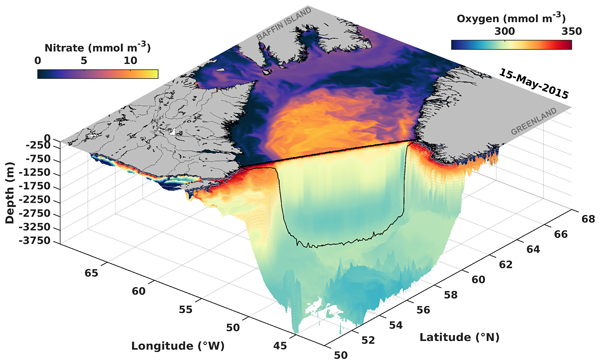
We developed a modelling system of the northwest Atlantic Ocean that simulates the currents, temperature, salinity, and parts of the biochemical cycle of the ocean, as well as sea ice. The system combines advanced, open-source models and can be used to study, for example, the ocean capture of atmospheric carbon dioxide, which is a key process in the global climate. The system produces realistic results, and we use it to investigate the roles of tides and sea ice in the northwest Atlantic Ocean.
Katja Fennel, Matthew C. Long, Christopher Algar, Brendan Carter, David Keller, Arnaud Laurent, Jann Paul Mattern, Ruth Musgrave, Andreas Oschlies, Josiane Ostiguy, Jaime B. Palter, and Daniel B. Whitt
State Planet, 2-oae2023, 9, https://doi.org/10.5194/sp-2-oae2023-9-2023, https://doi.org/10.5194/sp-2-oae2023-9-2023, 2023
Short summary
Short summary
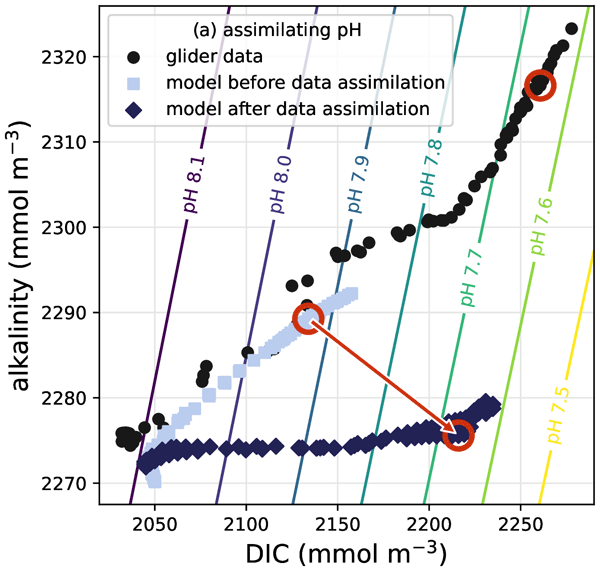
This paper describes biogeochemical models and modelling techniques for applications related to ocean alkalinity enhancement (OAE) research. Many of the most pressing OAE-related research questions cannot be addressed by observation alone but will require a combination of skilful models and observations. We present illustrative examples with references to further information; describe limitations, caveats, and future research needs; and provide practical recommendations.
Arnaud Laurent, Haiyan Zhang, and Katja Fennel
Biogeosciences, 19, 5893–5910, https://doi.org/10.5194/bg-19-5893-2022, https://doi.org/10.5194/bg-19-5893-2022, 2022
Short summary
Short summary
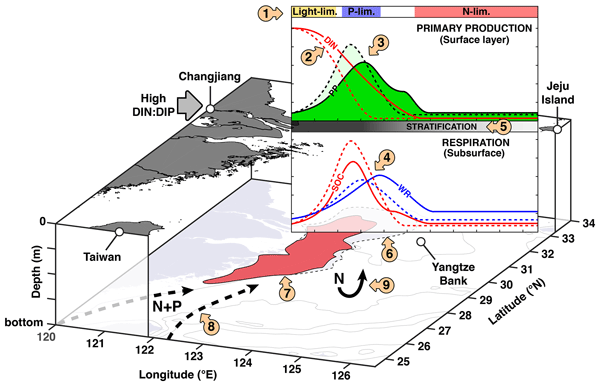
The Changjiang is the main terrestrial source of nutrients to the East China Sea (ECS). Nutrient delivery to the ECS has been increasing since the 1960s, resulting in low oxygen (hypoxia) during phytoplankton decomposition in summer. River phosphorus (P) has increased less than nitrogen, and therefore, despite the large nutrient delivery, phytoplankton growth can be limited by the lack of P. Here, we investigate this link between P limitation, phytoplankton production/decomposition, and hypoxia.
Haley D. Geizer, Francesco Bisiach, Alexandre Normandeau, Maria Armstrong, Stephan Hamisch, Silas W. Jones, Casey R. J. Hubert, Kumiko Azetsu-Scott, Paul V. R. Snelgrove, Christopher W. Hunt, Michelle Saunders, Rodd Laing, and Christopher K. Algar
EGUsphere, https://doi.org/10.5194/egusphere-2026-5292, https://doi.org/10.5194/egusphere-2026-5292, 2026
This preprint is open for discussion and under review for Biogeosciences (BG).
Short summary
Short summary
This study pairs direct measurements, a reactive transport model and 16S rRNA sequencing to assess benthic metabolisms in sediment from two subarctic fjords. Model results and predicted microbial communities aligned and indicate denitrification may be a significant process for cold and well-ventilated fjords. Organic carbon burial rates for fjords in the region were estimated and suggest they are important sites of carbon sequestration for at least a 200-year timescale.
Nico Lange, Siv K. Lauvset, Brendan R. Carter, Matthew P. Humphreys, Ryan J. Woosley, Are Olsen, Henry C. Bittig, Alex Kozyr, Marta Álvarez, Kumiko Azetsu-Scott, Susan Becker, Peter J. Brown, Leticia Cotrim da Cunha, Larissa Dias, Mario Hoppema, Masao Ishii, Emil Jeansson, Akihiko Murata, Jens Daniel Müller, Fiz F. Pérez, Carsten Schirnick, Reiner Steinfeldt, Adam Ulfsbo, Anton Velo, and Toste Tanhua
Earth Syst. Sci. Data Discuss., https://doi.org/10.5194/essd-2026-496, https://doi.org/10.5194/essd-2026-496, 2026
Revised manuscript under review for ESSD
Short summary
Short summary
GLODAP is a data product for ocean inorganic carbon and related biogeochemical variables measured by the chemical analysis of water bottle samples from scientific cruises. GLODAPv3 is the third version release of GLODAP. The data that are included have been subjected to extensive quality control, including systematic evaluation of systematic cruise differences. This version contains data from 1181 hydrographic cruises covering the world's oceans from 1972 to 2023.
Hyelim Yoo, Li-Qing Jiang, Chris Langdon, Alex Kozyr, Simone R. Alin, Jose Martin Hernandez Ayon, Kumiko Azetsu-Scott, Leticia Barbero, Nicole Besemer, Albert Boyd, Jean R. Brodeur, Wei-Jun Cai, Brendan R. Carter, Cecilia Chapa, Eugene Colbourne, Jessica N. Cross, Ian Enochs, Leticia Espinosa-Carreon, Richard A. Feely, Karina E. Giesbrecht, Helen Gurney-Smith, Burke Hales, Naomi Harada, James Hooper, Christopher W. Hunt, Debby Ianson, Mike Jankulak, Terrence M. Joyce, Esther G. Kennedy, Brian A. King, Arne Körtzinger, Matthias Lankhorst, Gary Maillet, Derek Manzello, Anna K. McLaskey, Viviane V. Menezes, Nicolas Metzl, Christine Michel, Natalie M. Monacci, Julio M. Morell, Akihiko Murata, Jan Newton, Emily O'Grady, Ana M. Palacio-Castro, Denis Pierrot, Marc Ringuette, Christopher Sabine, Joseph E. Salisbury, Akash R. Sastri, Ute Schuster, Uwe Send, Ryan Smith, Michel Starr, James H. Swift, Lynne D. Talley, Helmuth Thomas, Douglas W. R. Wallace, Zhaohui Aleck Wang, Rik Wanninkhof, Chi S. Wong, Patricia L. Yager, and Igor Yashayaev
Earth Syst. Sci. Data Discuss., https://doi.org/10.5194/essd-2026-516, https://doi.org/10.5194/essd-2026-516, 2026
Preprint under review for ESSD
Short summary
Short summary
The coastal Ocean Data Analysis Product in North America (CODAP-NA, Version 2026) substantially increased both the spatial and temporal coverage of coastal biogeochemical measurements across North American continental shelves. This version comprises 446 cruises, 31,864 hydrographic profiles, and 195,489 discrete data records covering continental shelf environments from Alaska to Mexico in the west and from Canada to the Caribbean in the east from 1981 to 2024.
Lisa G. T. Leist, Maxi Castrillejo, Kumiko Azetsu-Scott, Craig Lee, Jed Lenetsky, Marc Ringuette, Christof Vockenhuber, Habacuc Pérez-Tribouillier, Catherine Jeandel, Jean-Éric Tremblay, and Núria Casacuberta
Ocean Sci., 22, 1835–1860, https://doi.org/10.5194/os-22-1835-2026, https://doi.org/10.5194/os-22-1835-2026, 2026
Short summary
Short summary
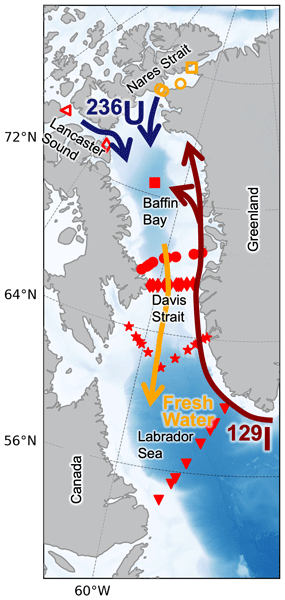
The Arctic and Atlantic Oceans are connected by narrow passages, and the exchange of waters affect global climate. Using artificial radionuclides from nuclear reprocessing discharges, we traced the origin of water masses from the Arctic to the Labrador Sea. Results show that waters from Canadian Arctic origin entering via Lancaster Sound are a key freshwater source to the Labrador Sea. These flows strongly influence the formation of deep waters in the Atlantic, vital for the global circulation.
Matthew P. Humphreys, Siv K. Lauvset, Nico Lange, Henry C. Bittig, Brendan R. Carter, Mario Hoppema, Akihiko Murata, Are Olsen, Toste Tanhua, Adam Ulfsbo, Antón Velo, Ryan J. Woosley, Kumiko Azetsu-Scott, Jens D. Müller, and Fiz F. Pérez
EGUsphere, https://doi.org/10.5194/egusphere-2026-3063, https://doi.org/10.5194/egusphere-2026-3063, 2026
Short summary
Short summary
The Global Ocean Data Analysis Project (GLODAP) collects oceanographic datasets from research cruises that are needed to study the marine carbon cycle. The datasets are quality controlled and adjusted where necessary to ensure consistency between cruises, and published as a global data product. Here, we present a new method for calculating the consistency adjustments called ‘furthest-first inversion’ which has been developed for the newest version of the data product.
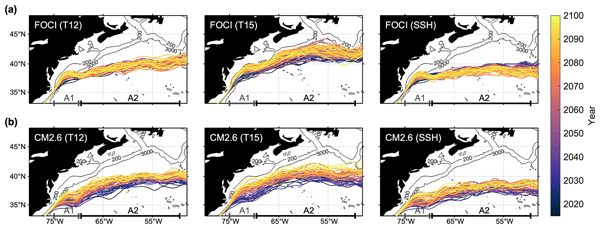
Lina Garcia-Suarez, Katja Fennel, Neha Mehendale, Tronje Kemena, and David P. Keller
Ocean Sci., 22, 1183–1193, https://doi.org/10.5194/os-22-1183-2026, https://doi.org/10.5194/os-22-1183-2026, 2026
Short summary
Short summary
This study shows that regional ocean warming can make the Gulf Stream appear to shift north more rapidly than it actually does. Temperature-based proxies, like the Gulf Stream North Wall, overestimate changes in its position. Methods based on sea surface height provide a more accurate view. These results help improve how we track changes in ocean currents and avoid misinterpreting signs of climate-related shifts.
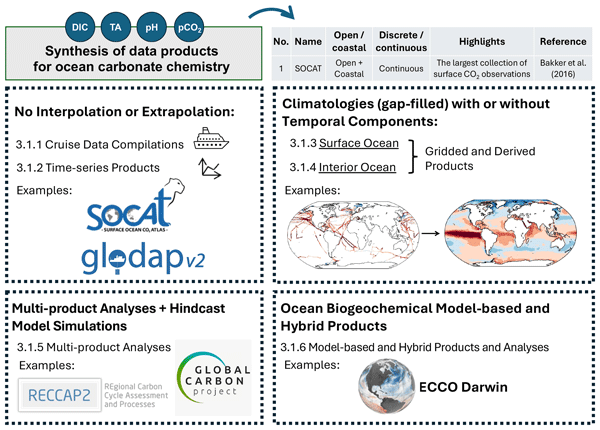
Li-Qing Jiang, Amanda Fay, Jens Daniel Müller, Luke Gregor, Alizée Roobaert, Lydia Keppler, Dustin Carroll, Siv K. Lauvset, Tim DeVries, Judith Hauck, Christian Rödenbeck, Nicolas Metzl, Andrea J. Fassbender, Jean-Pierre Gattuso, Peter Landschützer, Rik Wanninkhof, Christopher Sabine, Simone R. Alin, Mario Hoppema, Are Olsen, Matthew P. Humphreys, Kunal Chakraborty, Ana C. Franco, Kumiko Azetsu-Scott, Dorothee C. E. Bakker, Leticia Barbero, Nicholas R. Bates, Nicole Besemer, Henry C. Bittig, Albert E. Boyd, Daniel Broullón, Wei-Jun Cai, Brendan R. Carter, Thi-Tuyet-Trang Chau, Chen-Tung Arthur Chen, Frédéric Cyr, John E. Dore, Ian Enochs, Richard A. Feely, Hernan E. Garcia, Marion Gehlen, Prasanna Kanti Ghoshal, Lucas Gloege, Melchor González-Dávila, Nicolas Gruber, Debby Ianson, Yosuke Iida, Masao Ishii, Apurva Padamnabh Joshi, Esther Kennedy, Alex Kozyr, Nico Lange, Claire Lo Monaco, Derek P. Manzello, Galen A. McKinley, Natalie M. Monacci, Xose A. Padin, Ana M. Palacio-Castro, Fiz F. Pérez, J. Magdalena Santana-Casiano, Jonathan Sharp, Adrienne Sutton, Jim Swift, Toste Tanhua, Maciej Telszewski, Jens Terhaar, Ruben van Hooidonk, Anton Velo, Andrew J. Watson, Angelicque E. White, Zelun Wu, Liang Xue, Hyelim Yoo, Jiye Zeng, and Guorong Zhong
Earth Syst. Sci. Data, 18, 1405–1462, https://doi.org/10.5194/essd-18-1405-2026, https://doi.org/10.5194/essd-18-1405-2026, 2026
Short summary
Short summary
This review article provides an overview of 68 existing ocean carbonate chemistry data products and data product sets, encompassing a broad range of types, including compilations of cruise datasets, gap-filled observational products, model simulations, and more. It is designed to help researchers identify and access the data products that best support their scientific objectives, thereby facilitating progress in understanding the ocean's changing carbonate chemistry.
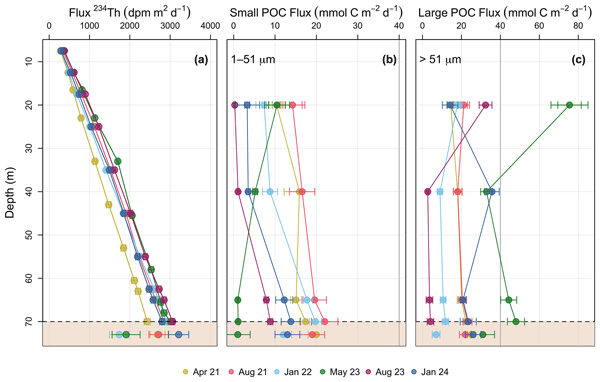
Madeline G. Healey, Erin E. Black, Christopher K. Algar, Maria Armstrong, and Stephanie S. Kienast
Biogeosciences, 22, 6895–6912, https://doi.org/10.5194/bg-22-6895-2025, https://doi.org/10.5194/bg-22-6895-2025, 2025
Short summary
Short summary
This study presents new data from 2021–2024 aimed at improving our understanding of coastal carbon export and storage in a temperate fjord in the Northwest Atlantic. By applying natural tracers in seawater and sediment, we assess short-term carbon dynamics and provide quasi-seasonal observations. The results refine carbon flux estimates in a well-studied site that is emerging as a key location for coastal ocean research.
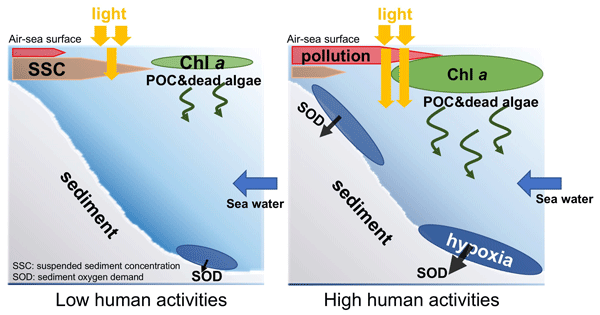
Yue Nan, Zheng Chen, Bin Wang, Bo Liang, and Jiatang Hu
Biogeosciences, 22, 5573–5589, https://doi.org/10.5194/bg-22-5573-2025, https://doi.org/10.5194/bg-22-5573-2025, 2025
Short summary
Short summary
Human activities are changing the coastal water environment, but the role of suspended sediments in oxygen loss is not well understood. We used a model to compare dissolved oxygen levels and related factors in the 1990s and 2010s in the Pearl River estuary. Reduced suspended sediments and increased pollution have expanded low-oxygen areas by 1.5 times. This highlights the fact that declining suspended sediments increase hypoxia in estuaries, especially with rising nutrients, which needs urgent attention.

Gianpiero Cossarini, Andrew Moore, Stefano Ciavatta, and Katja Fennel
State Planet, 5-opsr, 12, https://doi.org/10.5194/sp-5-opsr-12-2025, https://doi.org/10.5194/sp-5-opsr-12-2025, 2025
Short summary
Short summary
Marine biogeochemistry refers to the cycling of chemical elements resulting from physical transport, chemical reaction, uptake, and processing by living organisms. Biogeochemical models can have a wide range of complexity, from a single nutrient to fully explicit representations of multiple nutrients, trophic levels, and functional groups. Uncertainty sources are the lack of knowledge about the parameterizations, the initial and boundary conditions, and the lack of observations.
Kyoko Ohashi, Arnaud Laurent, Christoph Renkl, Jinyu Sheng, Katja Fennel, and Eric Oliver
Geosci. Model Dev., 17, 8697–8733, https://doi.org/10.5194/gmd-17-8697-2024, https://doi.org/10.5194/gmd-17-8697-2024, 2024
Short summary
Short summary
We developed a modelling system of the northwest Atlantic Ocean that simulates the currents, temperature, salinity, and parts of the biochemical cycle of the ocean, as well as sea ice. The system combines advanced, open-source models and can be used to study, for example, the ocean capture of atmospheric carbon dioxide, which is a key process in the global climate. The system produces realistic results, and we use it to investigate the roles of tides and sea ice in the northwest Atlantic Ocean.
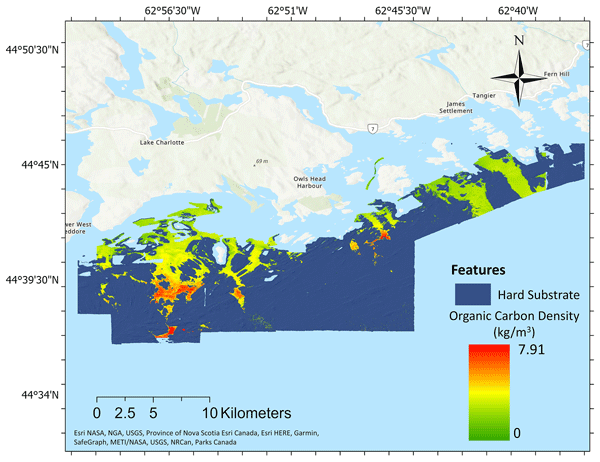
Catherine Brenan, Markus Kienast, Vittorio Maselli, Christopher K. Algar, Benjamin Misiuk, and Craig J. Brown
Biogeosciences, 21, 4569–4586, https://doi.org/10.5194/bg-21-4569-2024, https://doi.org/10.5194/bg-21-4569-2024, 2024
Short summary
Short summary
Quantifying how much organic carbon is stored in seafloor sediments is key to assessing how human activities can accelerate the process of carbon storage at the seabed, an important consideration for climate change. This study uses seafloor sediment maps to model organic carbon content. Carbon estimates were 12 times higher when assuming the absence of detailed sediment maps, demonstrating that high-resolution seafloor mapping is critically important for improved estimates of organic carbon.

Siv K. Lauvset, Nico Lange, Toste Tanhua, Henry C. Bittig, Are Olsen, Alex Kozyr, Marta Álvarez, Kumiko Azetsu-Scott, Peter J. Brown, Brendan R. Carter, Leticia Cotrim da Cunha, Mario Hoppema, Matthew P. Humphreys, Masao Ishii, Emil Jeansson, Akihiko Murata, Jens Daniel Müller, Fiz F. Pérez, Carsten Schirnick, Reiner Steinfeldt, Toru Suzuki, Adam Ulfsbo, Anton Velo, Ryan J. Woosley, and Robert M. Key
Earth Syst. Sci. Data, 16, 2047–2072, https://doi.org/10.5194/essd-16-2047-2024, https://doi.org/10.5194/essd-16-2047-2024, 2024
Short summary
Short summary
GLODAP is a data product for ocean inorganic carbon and related biogeochemical variables measured by the chemical analysis of water bottle samples from scientific cruises. GLODAPv2.2023 is the fifth update of GLODAPv2 from 2016. The data that are included have been subjected to extensive quality controlling, including systematic evaluation of measurement biases. This version contains data from 1108 hydrographic cruises covering the world's oceans from 1972 to 2021.
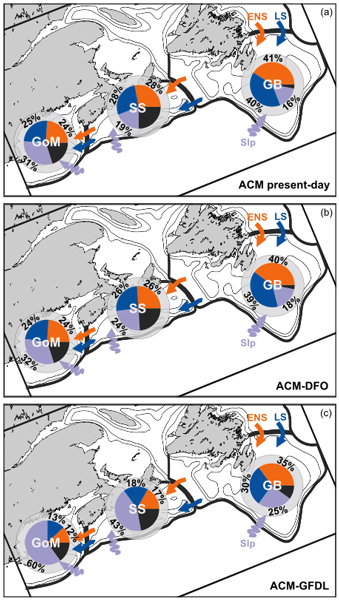
Krysten Rutherford, Katja Fennel, Lina Garcia Suarez, and Jasmin G. John
Biogeosciences, 21, 301–314, https://doi.org/10.5194/bg-21-301-2024, https://doi.org/10.5194/bg-21-301-2024, 2024
Short summary
Short summary
We downscaled two mid-century (~2075) ocean model projections to a high-resolution regional ocean model of the northwest North Atlantic (NA) shelf. In one projection, the NA shelf break current practically disappears; in the other it remains almost unchanged. This leads to a wide range of possible future shelf properties. More accurate projections of coastal circulation features would narrow the range of possible outcomes of biogeochemical projections for shelf regions.
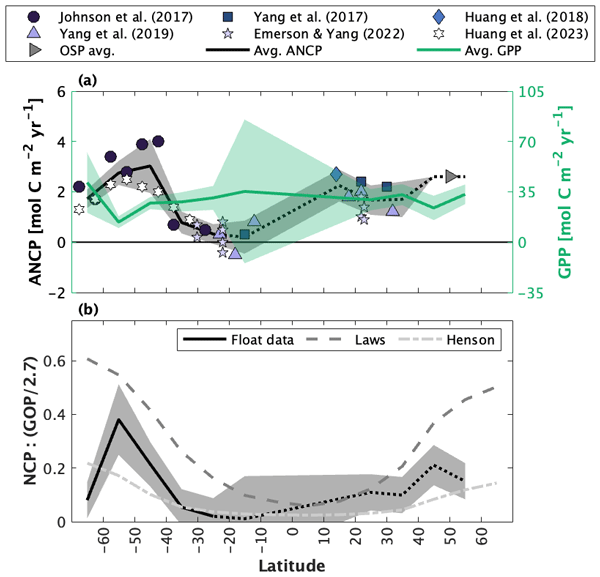
Robert W. Izett, Katja Fennel, Adam C. Stoer, and David P. Nicholson
Biogeosciences, 21, 13–47, https://doi.org/10.5194/bg-21-13-2024, https://doi.org/10.5194/bg-21-13-2024, 2024
Short summary
Short summary
This paper provides an overview of the capacity to expand the global coverage of marine primary production estimates using autonomous ocean-going instruments, called Biogeochemical-Argo floats. We review existing approaches to quantifying primary production using floats, provide examples of the current implementation of the methods, and offer insights into how they can be better exploited. This paper is timely, given the ongoing expansion of the Biogeochemical-Argo array.
Katja Fennel, Matthew C. Long, Christopher Algar, Brendan Carter, David Keller, Arnaud Laurent, Jann Paul Mattern, Ruth Musgrave, Andreas Oschlies, Josiane Ostiguy, Jaime B. Palter, and Daniel B. Whitt
State Planet, 2-oae2023, 9, https://doi.org/10.5194/sp-2-oae2023-9-2023, https://doi.org/10.5194/sp-2-oae2023-9-2023, 2023
Short summary
Short summary
This paper describes biogeochemical models and modelling techniques for applications related to ocean alkalinity enhancement (OAE) research. Many of the most pressing OAE-related research questions cannot be addressed by observation alone but will require a combination of skilful models and observations. We present illustrative examples with references to further information; describe limitations, caveats, and future research needs; and provide practical recommendations.
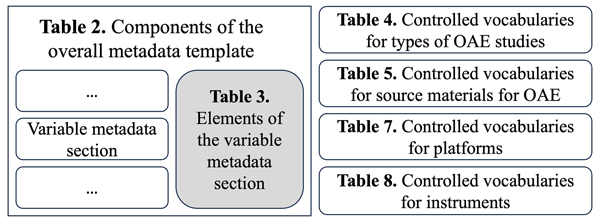
Li-Qing Jiang, Adam V. Subhas, Daniela Basso, Katja Fennel, and Jean-Pierre Gattuso
State Planet, 2-oae2023, 13, https://doi.org/10.5194/sp-2-oae2023-13-2023, https://doi.org/10.5194/sp-2-oae2023-13-2023, 2023
Short summary
Short summary
This paper provides comprehensive guidelines for ocean alkalinity enhancement (OAE) researchers on archiving their metadata and data. It includes data standards for various OAE studies and a universal metadata template. Controlled vocabularies for terms like alkalinization methods are included. These guidelines also apply to ocean acidification data.
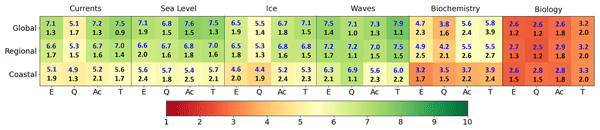
Stefania A. Ciliberti, Enrique Alvarez Fanjul, Jay Pearlman, Kirsten Wilmer-Becker, Pierre Bahurel, Fabrice Ardhuin, Alain Arnaud, Mike Bell, Segolene Berthou, Laurent Bertino, Arthur Capet, Eric Chassignet, Stefano Ciavatta, Mauro Cirano, Emanuela Clementi, Gianpiero Cossarini, Gianpaolo Coro, Stuart Corney, Fraser Davidson, Marie Drevillon, Yann Drillet, Renaud Dussurget, Ghada El Serafy, Katja Fennel, Marcos Garcia Sotillo, Patrick Heimbach, Fabrice Hernandez, Patrick Hogan, Ibrahim Hoteit, Sudheer Joseph, Simon Josey, Pierre-Yves Le Traon, Simone Libralato, Marco Mancini, Pascal Matte, Angelique Melet, Yasumasa Miyazawa, Andrew M. Moore, Antonio Novellino, Andrew Porter, Heather Regan, Laia Romero, Andreas Schiller, John Siddorn, Joanna Staneva, Cecile Thomas-Courcoux, Marina Tonani, Jose Maria Garcia-Valdecasas, Jennifer Veitch, Karina von Schuckmann, Liying Wan, John Wilkin, and Romane Zufic
State Planet, 1-osr7, 2, https://doi.org/10.5194/sp-1-osr7-2-2023, https://doi.org/10.5194/sp-1-osr7-2-2023, 2023
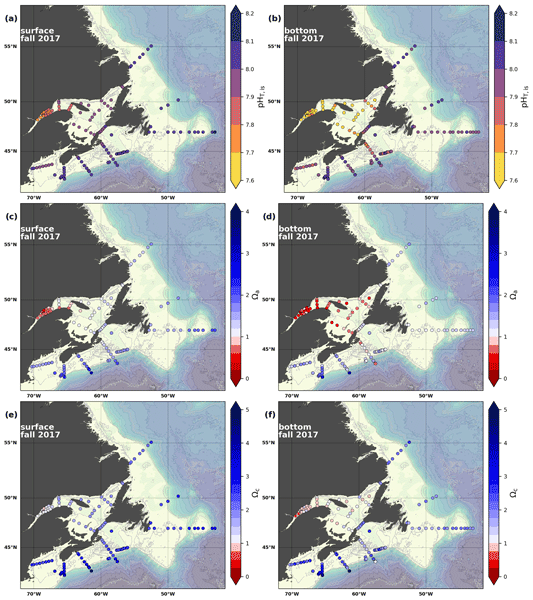
Olivia Gibb, Frédéric Cyr, Kumiko Azetsu-Scott, Joël Chassé, Darlene Childs, Carrie-Ellen Gabriel, Peter S. Galbraith, Gary Maillet, Pierre Pepin, Stephen Punshon, and Michel Starr
Earth Syst. Sci. Data, 15, 4127–4162, https://doi.org/10.5194/essd-15-4127-2023, https://doi.org/10.5194/essd-15-4127-2023, 2023
Short summary
Short summary
The ocean absorbs large quantities of carbon dioxide (CO2) released into the atmosphere as a result of the burning of fossil fuels. This, in turn, causes ocean acidification, which poses a major threat to global ocean ecosystems. In this study, we compiled 9 years (2014–2022) of ocean carbonate data (i.e., ocean acidification parameters) collected in Atlantic Canada as part of the Atlantic Zone Monitoring Program.
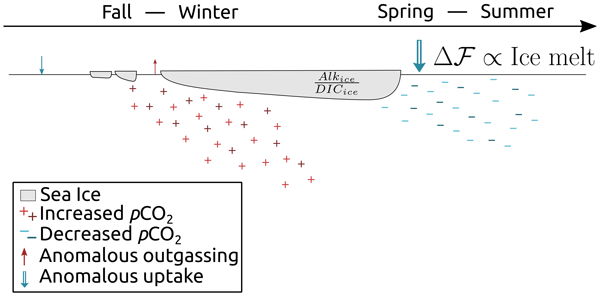
Benjamin Richaud, Katja Fennel, Eric C. J. Oliver, Michael D. DeGrandpre, Timothée Bourgeois, Xianmin Hu, and Youyu Lu
The Cryosphere, 17, 2665–2680, https://doi.org/10.5194/tc-17-2665-2023, https://doi.org/10.5194/tc-17-2665-2023, 2023
Short summary
Short summary
Sea ice is a dynamic carbon reservoir. Its seasonal growth and melt modify the carbonate chemistry in the upper ocean, with consequences for the Arctic Ocean carbon sink. Yet, the importance of this process is poorly quantified. Using two independent approaches, this study provides new methods to evaluate the error in air–sea carbon flux estimates due to the lack of biogeochemistry in ice in earth system models. Those errors range from 5 % to 30 %, depending on the model and climate projection.
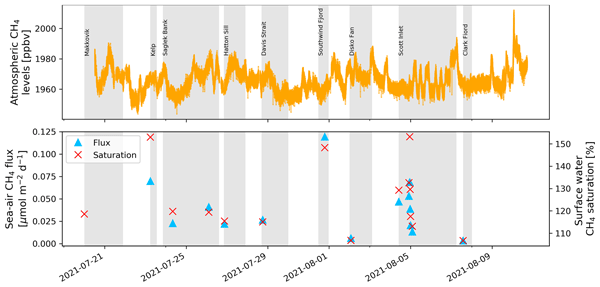
Judith Vogt, David Risk, Evelise Bourlon, Kumiko Azetsu-Scott, Evan N. Edinger, and Owen A. Sherwood
Biogeosciences, 20, 1773–1787, https://doi.org/10.5194/bg-20-1773-2023, https://doi.org/10.5194/bg-20-1773-2023, 2023
Short summary
Short summary
The release of the greenhouse gas methane from Arctic submarine sources could exacerbate climate change in a positive feedback. Continuous monitoring of atmospheric methane levels over a 5100 km voyage in the western margin of the Labrador Sea and Baffin Bay revealed above-global averages likely affected by both onshore and offshore methane sources. Instantaneous sea–air methane fluxes were near zero at all measured stations, including a persistent cold-seep location.
Arnaud Laurent, Haiyan Zhang, and Katja Fennel
Biogeosciences, 19, 5893–5910, https://doi.org/10.5194/bg-19-5893-2022, https://doi.org/10.5194/bg-19-5893-2022, 2022
Short summary
Short summary
The Changjiang is the main terrestrial source of nutrients to the East China Sea (ECS). Nutrient delivery to the ECS has been increasing since the 1960s, resulting in low oxygen (hypoxia) during phytoplankton decomposition in summer. River phosphorus (P) has increased less than nitrogen, and therefore, despite the large nutrient delivery, phytoplankton growth can be limited by the lack of P. Here, we investigate this link between P limitation, phytoplankton production/decomposition, and hypoxia.
Siv K. Lauvset, Nico Lange, Toste Tanhua, Henry C. Bittig, Are Olsen, Alex Kozyr, Simone Alin, Marta Álvarez, Kumiko Azetsu-Scott, Leticia Barbero, Susan Becker, Peter J. Brown, Brendan R. Carter, Leticia Cotrim da Cunha, Richard A. Feely, Mario Hoppema, Matthew P. Humphreys, Masao Ishii, Emil Jeansson, Li-Qing Jiang, Steve D. Jones, Claire Lo Monaco, Akihiko Murata, Jens Daniel Müller, Fiz F. Pérez, Benjamin Pfeil, Carsten Schirnick, Reiner Steinfeldt, Toru Suzuki, Bronte Tilbrook, Adam Ulfsbo, Anton Velo, Ryan J. Woosley, and Robert M. Key
Earth Syst. Sci. Data, 14, 5543–5572, https://doi.org/10.5194/essd-14-5543-2022, https://doi.org/10.5194/essd-14-5543-2022, 2022
Short summary
Short summary
GLODAP is a data product for ocean inorganic carbon and related biogeochemical variables measured by the chemical analysis of water bottle samples from scientific cruises. GLODAPv2.2022 is the fourth update of GLODAPv2 from 2016. The data that are included have been subjected to extensive quality controlling, including systematic evaluation of measurement biases. This version contains data from 1085 hydrographic cruises covering the world's oceans from 1972 to 2021.
Zheng Chen, Bin Wang, Chuang Xu, Zhongren Zhang, Shiyu Li, and Jiatang Hu
Biogeosciences, 19, 3469–3490, https://doi.org/10.5194/bg-19-3469-2022, https://doi.org/10.5194/bg-19-3469-2022, 2022
Short summary
Short summary
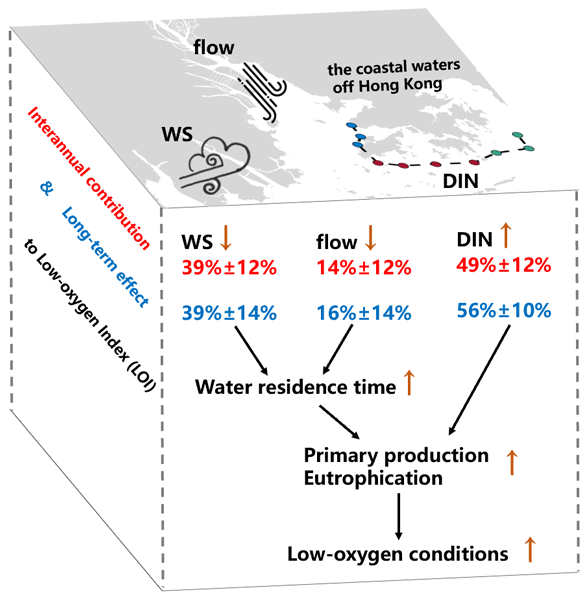
Deterioration of low-oxygen conditions in the coastal waters off Hong Kong was revealed by monitoring data over two decades. The declining wind forcing and the increasing nutrient input contributed significantly to the areal expansion and intense deterioration of low-oxygen conditions. Also, the exacerbated eutrophication drove a shift in the dominant source of organic matter from terrestrial inputs to in situ primary production, which has probably led to an earlier onset of hypoxia in summer.
Jannes Koelling, Dariia Atamanchuk, Johannes Karstensen, Patricia Handmann, and Douglas W. R. Wallace
Biogeosciences, 19, 437–454, https://doi.org/10.5194/bg-19-437-2022, https://doi.org/10.5194/bg-19-437-2022, 2022
Short summary
Short summary
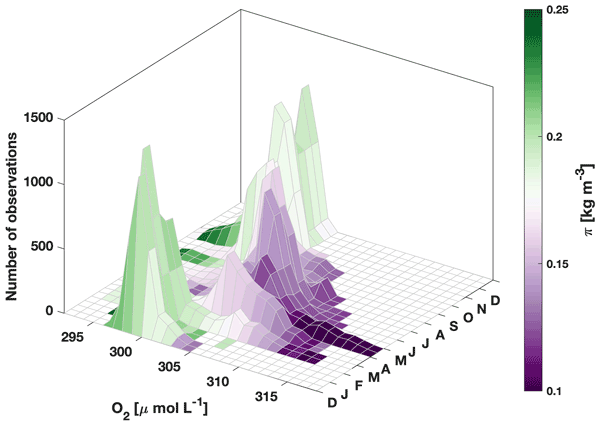
In this study, we investigate oxygen variability in the deep western boundary current in the Labrador Sea from multiyear moored records. We estimate that about half of the oxygen taken up in the interior Labrador Sea by air–sea gas exchange during deep water formation is exported southward the same year. Our results underline the complexity of the oxygen uptake and export in the Labrador Sea and highlight the important role this region plays in supplying oxygen to the deep ocean.
Krysten Rutherford, Katja Fennel, Dariia Atamanchuk, Douglas Wallace, and Helmuth Thomas
Biogeosciences, 18, 6271–6286, https://doi.org/10.5194/bg-18-6271-2021, https://doi.org/10.5194/bg-18-6271-2021, 2021
Short summary
Short summary
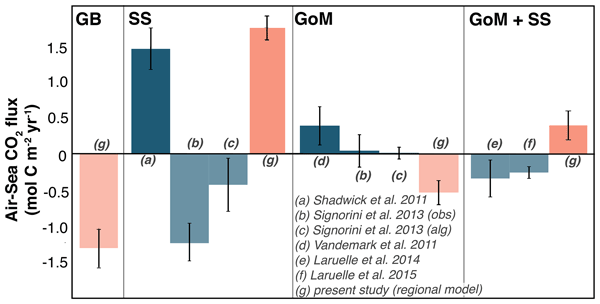
Using a regional model of the northwestern North Atlantic shelves in combination with a surface water time series and repeat transect observations, we investigate surface CO2 variability on the Scotian Shelf. The study highlights a strong seasonal cycle in shelf-wide pCO2 and spatial variability throughout the summer months driven by physical events. The simulated net flux of CO2 on the Scotian Shelf is out of the ocean, deviating from the global air–sea CO2 flux trend in continental shelves.
Cited articles
Atamanchuk, D., Normandeau, C., Oberlander, J., Rondón, A. N., Wallace, D. W., and Fradette, C.: Carbonate system parameters (pHtot, Total Alkalinity, Dissolved Inorganic Carbon), salinity, nutrients, in situ sensor-based measurements of temperature and depth collected from Bedford Basin/Halifax Harbour for the period of January to August 2023, PANGAEA [data set], https://doi.org/10.1594/PANGAEA.973118, 2024.
Bach, L., Tyka, M., Wang, B., and Fennel, K.: Lethal by design? Guiding environmental assessments of ocean alkalinity enhancement toward realistic contextualization of the alkalinity perturbation, Preprint – CDRXIV, https://doi.org/10.70212/cdrxiv.2025457.v1, 2025.
Bach, L. T.: The additionality problem of ocean alkalinity enhancement, Biogeosciences, 21, 261–277, https://doi.org/10.5194/bg-21-261-2024, 2024.
Bach, L. T., Ho, D. T., Boyd, P. W., and Tyka, M. D.: Toward a consensus framework to evaluate air–sea CO2 equilibration for marine CO2 removal, Limnol. Oceanogr. Lett., 8, 685–691, https://doi.org/10.1002/lol2.10330, 2023.
Buckley, D. E. and Winters, G. V.: Geochemical characteristics of contaminated surficial sediments in Halifax Harbour: impact of waste discharge, Can. J. Earth Sci., 29, 2617–2639, https://doi.org/10.1139/e92-208, 1992.
Burt, D. J., Fröb, F., and Ilyina, T.: The sensitivity of the marine carbonate system to regional ocean alkalinity enhancement, Frontiers in Climate, 3, https://doi.org/10.3389/fclim.2021.624075, 2021.
Burt, W. J., Thomas, H., Fennel, K., and Horne, E.: Sediment-water column fluxes of carbon, oxygen and nutrients in Bedford Basin, Nova Scotia, inferred from 224Ra measurements, Biogeosciences, 10, 53–66, https://doi.org/10.5194/bg-10-53-2013, 2013.
Cai, W.-J. and Jiao, N.: Wastewater alkalinity addition as a novel approach for ocean negative carbon emissions, The Innovation, 3, 100272, https://doi.org/10.1016/j.xinn.2022.100272, 2022.
Carter, B. R., Williams, N. L., Evans, W., Fassbender, A. J., Barbero, L., Hauri, C., Feely, R. A., and Sutton, A. J.: Time of Detection as a Metric for Prioritizing Between Climate Observation Quality, Frequency, and Duration, Geophys. Res. Lett., 46, 3853–3861, https://doi.org/10.1029/2018GL080773, 2019.
Caserini, S., Storni, N., and Grosso, M.: The Availability of Limestone and Other Raw Materials for Ocean Alkalinity Enhancement, Global Biogeochem. Cy., 36, https://doi.org/10.1029/2021GB007246, 2022.
Chin, T. M., Vazquez-Cuervo, J., and Armstrong, E. M.: A multi-scale high-resolution analysis of global sea surface temperature, Remote Sens. Environ., 200, 154–169, https://doi.org/10.1016/j.rse.2017.07.029, 2017.
Cornwall, W.: An alkaline solution, Science, 382, 988–992, https://doi.org/10.1126/science.adn1880, 2023.
Craig, S. E., Jones, C. T., Li, W. K. W., Lazin, G., Horne, E., Caverhill, C., and Cullen, J. J.: Deriving optical metrics of coastal phytoplankton biomass from ocean colour, Remote Sens. Environ., 119, 72–83, https://doi.org/10.1016/j.rse.2011.12.007, 2012.
Cullen, J. J. and Boyd, P. W.: Predicting and verifying the intended and unintended consequences of large-scale ocean iron fertilization, Mar. Ecol. Prog. Ser., 364, 295–301, https://doi.org/10.3354/meps07551, 2008.
Cyr, F., Gibb, O., Azetsu-Scott, K., Chassé, J., Galbraith, P., Maillet, G., Pepin, P., Punshon, S., and Starr, M.: Ocean carbonate parameters on the Canadian Atlantic Continental Shelf, Federated Research Data Repository [data set], https://doi.org/10.20383/102.0673, 2022.
Delacroix, S., Nystuen, T. J., Tobiesen, A. E. D., King, A. L., and Höglund, E.: Ocean alkalinity enhancement impacts: regrowth of marine microalgae in alkaline mineral concentrations simulating the initial concentrations after ship-based dispersions, Biogeosciences, 21, 3677–3690, https://doi.org/10.5194/bg-21-3677-2024, 2024.
Dickson, A. G.: Standard potential of the reaction: AgCl(s) + 0.5 H2(g) = Ag(s) + HCl(aq), and the standard acidity constant of the ion HSO
Dickson, A. G. and Millero, F. J.: A comparison of the equilibrium constants for the dissociation of carbonic acid in seawater media, Deep-Sea Res. Pt. A, 34, 1733–1743, https://doi.org/10.1016/0198-0149(87)90021-5, 1987.
Durski, S. M., Glenn, S. M., and Haidvogel, D. B.: Vertical mixing schemes in the coastal ocean: Comparison of the level 2.5 Mellor-Yamada scheme with an enhanced version of the K profile parameterization, J. Geophys. Res.-Ocean., 109, https://doi.org/10.1029/2002JC001702, 2004.
Eisaman, M. D., Geilert, S., Renforth, P., Bastianini, L., Campbell, J., Dale, A. W., Foteinis, S., Grasse, P., Hawrot, O., Löscher, C. R., Rau, G. H., and Rønning, J.: Assessing the technical aspects of ocean-alkalinity-enhancement approaches, in: Guide to Best Practices in Ocean Alkalinity Enhancement Research, edited by: Oschlies, A., Stevenson, A., Bach, L. T., Fennel, K., Rickaby, R. E. M., Satterfield, T., Webb, R., and Gattuso, J.-P., Copernicus Publications, State Planet, 2-oae2023, 3, https://doi.org/10.5194/sp-2-oae2023-3-2023, 2023.
Fakhraee, M., Li, Z., Planavsky, N. J., and Reinhard, C. T.: A biogeochemical model of mineral-based ocean alkalinity enhancement: impacts on the biological pump and ocean carbon uptake, Environmental Research Letters, 18, 044047, https://doi.org/10.1088/1748-9326/acc9d4, 2023.
Feng, E. Y., Koeve, W., Keller, D. P., and Oschlies, A.: Model-based assessment of the CO2 sequestration potential of coastal ocean alkalinization, Earths Future, 5, 1252–1266, https://doi.org/10.1002/2017EF000659, 2017.
Fennel, K.: Widespread implementation of controlled upwelling in the North Pacific Subtropical Gyre would counteract diazotrophic N2 fixation, Mar. Ecol. Prog. Ser., 371, 301–303, https://doi.org/10.3354/meps07772, 2008.
Fennel, K.: The role of continental shelves in nitrogen and carbon cycling: Northwestern North Atlantic case study, Ocean Sci., 6, 539–548, https://doi.org/10.5194/os-6-539-2010, 2010.
Fennel, K.: The Verification Challenge of Marine Carbon Dioxide Removal, Ann. Rev. Mar. Sci., 18, 6.1-24, https://doi.org/10.1146/annurev-marine-032123-025717, 2026.
Fennel, K., Wilkin, J., Levin, J., Moisan, J., O'Reilly, J., and Haidvogel, D.: Nitrogen cycling in the Middle Atlantic Bight: Results from a three-dimensional model and implications for the North Atlantic nitrogen budget, Global Biogeochem. Cy., 20, GB3007, https://doi.org/10.1029/2005GB002456, 2006.
Fennel, K., Hu, J., Laurent, A., Marta-Almeida, M., and Hetland, R.: Sensitivity of hypoxia predictions for the northern Gulf of Mexico to sediment oxygen consumption and model nesting, J. Geophys. Res.-Ocean., 118, 990–1002, https://doi.org/10.1002/jgrc.20077, 2013.
Fennel, K., Long, M. C., Algar, C., Carter, B., Keller, D., Laurent, A., Mattern, J. P., Musgrave, R., Oschlies, A., Ostiguy, J., Palter, J. B., and Whitt, D. B.: Modelling considerations for research on ocean alkalinity enhancement (OAE), in: Guide to Best Practices in Ocean Alkalinity Enhancement Research, edited by: Oschlies, A., Stevenson, A., Bach, L. T., Fennel, K., Rickaby, R. E. M., Satterfield, T., Webb, R., and Gattuso, J.-P., Copernicus Publications, State Planet, 2-oae2023, 9, https://doi.org/10.5194/sp-2-oae2023-9-2023, 2023.
Ferderer, A., Schulz, K. G., Riebesell, U., Baker, K. G., Chase, Z., and Bach, L. T.: Investigating the effect of silicate- and calcium-based ocean alkalinity enhancement on diatom silicification, Biogeosciences, 21, 2777–2794, https://doi.org/10.5194/bg-21-2777-2024, 2024.
Fisheries and Oceans Canada: Bedford Basin Monitoring Program, https://www.bio.gc.ca/science/monitoring-monitorage/bbmp-pobb/bbmp-pobb-en.php (last access: 7 January 2025), 2025.
Fuhrman, J., McJeon, H., Patel, P., Doney, S. C., Shobe, W. M., and Clarens, A. F.: Food–energy–water implications of negative emissions technologies in a +1.5 °C future, Nat. Clim. Change, 10, 920–927, https://doi.org/10.1038/s41558-020-0876-z, 2020.
Garcia Larez, E.: Using observations and model simulations to characterize the effects of lateral intrusion events in Bedford Basin, MS thesis, Dalhousie University, Halifax, http://hdl.handle.net/10222/83180 (last access: 13 January 2025), 2023.
Gattuso, J.-P., Williamson, P., Duarte, C. M., and Magnan, A. K.: The Potential for Ocean-Based Climate Action: Negative Emissions Technologies and Beyond, Frontiers in Climate, 2, https://doi.org/10.3389/fclim.2020.575716, 2021.
Guo, J. A., Strzepek, R. F., Swadling, K. M., Townsend, A. T., and Bach, L. T.: Influence of ocean alkalinity enhancement with olivine or steel slag on a coastal plankton community in Tasmania, Biogeosciences, 21, 2335–2354, https://doi.org/10.5194/bg-21-2335-2024, 2024.
Haas, S., Robicheau, B. M., Rakshit, S., Tolman, J., Algar, C. K., LaRoche, J., and Wallace, D. W. R.: Physical mixing in coastal waters controls and decouples nitrification via biomass dilution, Proceedings of the National Academy of Sciences, 118, https://doi.org/10.1073/pnas.2004877118, 2021.
Haidvogel, D. B., Arango, H., Budgell, W. P., Cornuelle, B. D., Curchitser, E., Lorenzo, E. Di, Fennel, K., Geyer, W. R., Hermann, A. J., Lanerolle, L., Levin, J., McWilliams, J. C., Miller, A. J., Moore, A. M., Powell, T. M., Shchepetkin, A. F., Sherwood, C. R., Signell, R. P., Warner, J. C., and Wilkin, J.: Ocean forecasting in terrain-following coordinates: Formulation and skill assessment of the Regional Ocean Modeling System, J. Comput. Phys., 227, 3595–3624, https://doi.org/10.1016/j.jcp.2007.06.016, 2008.
He, J. and Tyka, M. D.: Limits and CO2 equilibration of near-coast alkalinity enhancement, Biogeosciences, 20, 27–43, https://doi.org/10.5194/bg-20-27-2023, 2023.
Hersbach, H., Bell, B., Berrisford, P., Biavati, G., Horányi, A., Muñoz Sabater, J., Nicolas, J., Peubey, C., Radu, R., Rozum, I., Schepers, D., Simmons, A., Soci, C., Dee, D., and Thépaut, J.-N.: ERA5 hourly data on single levels from 1940 to present, Climate Data Store, https://doi.org/10.24381/cds.adbb2d47, 2023.
Ho, D. T., Bopp, L., Palter, J. B., Long, M. C., Boyd, P. W., Neukermans, G., and Bach, L. T.: Monitoring, reporting, and verification for ocean alkalinity enhancement, in: Guide to Best Practices in Ocean Alkalinity Enhancement Research, edited by: Oschlies, A., Stevenson, A., Bach, L. T., Fennel, K., Rickaby, R. E. M., Satterfield, T., Webb, R., and Gattuso, J.-P., Copernicus Publications, State Planet, 2-oae2023, 12, https://doi.org/10.5194/sp-2-oae2023-12-2023, 2023.
Humphreys, M. P., Lewis, E. R., Sharp, J. D., and Pierrot, D.: PyCO2SYS v1.8: marine carbonate system calculations in Python, Geosci. Model Dev., 15, 15–43, https://doi.org/10.5194/gmd-15-15-2022, 2022.
IPCC: Climate Change 2023: Synthesis Report. Contribution of Working Groups I, II and III to the Sixth Assessment Report of the Intergovernmental Panel on Climate Change, edited by: Core Writing Team, Lee, H., and Romero, J., IPCC, Geneva, Switzerland, 35–115, https://doi.org/10.59327/IPCC/AR6-9789291691647, 2023.
Ilyina, T., Wolf-Gladrow, D., Munhoven, G., and Heinze, C.: Assessing the potential of calcium-based artificial ocean alkalinization to mitigate rising atmospheric CO2 and ocean acidification, Geophys. Res. Lett., 40, 5909–5914, https://doi.org/10.1002/2013GL057981, 2013.
Jones, D. C., Ito, T., Takano, Y., and Hsu, W.: Spatial and seasonal variability of the air-sea equilibration timescale of carbon dioxide, Global Biogeochem. Cy., 28, 1163–1178, https://doi.org/10.1002/2014GB004813, 2014.
Khangaonkar, T., Carter, B. R., Premathilake, L., Yun, S. K., Ni, W., Stoll, M. M., Ward, N. D., Hemery, L. G., Torres Sanchez, C., Subban, C. V, Ringham, M. C., Eisaman, M. D., Pelman, T., Tallam, K., and Feely, R. A.: Mixing and dilution controls on marine CO2 removal using alkalinity enhancement, Environmental Research Letters, 19, 104039, https://doi.org/10.1088/1748-9326/ad7521, 2024.
Köhler, P., Abrams, J. F., Völker, C., Hauck, J., and Wolf-Gladrow, D. A.: Geoengineering impact of open ocean dissolution of olivine on atmospheric CO2, surface ocean pH and marine biology, Environmental Research Letters, 8, 014009, https://doi.org/10.1088/1748-9326/8/1/014009, 2013.
Kwiatkowski, L., Berger, M., Bopp, L., Doléac, S., and Ho, D. T.: Contrasting carbon dioxide removal potential and nutrient feedbacks of simulated ocean alkalinity enhancement and macroalgae afforestation, Environmental Research Letters, 18, 124036, https://doi.org/10.1088/1748-9326/ad08f9, 2023.
Large, W. G. and Gent, P. R.: Validation of Vertical Mixing in an Equatorial Ocean Model Using Large Eddy Simulations and Observations, J Phys Oceanogr, 29, 449–464, https://doi.org/10.1175/1520-0485(1999)029<0449:VOVMIA>2.0.CO;2, 1999.
Laurent, A., Fennel, K., Hu, J., and Hetland, R.: Simulating the effects of phosphorus limitation in the Mississippi and Atchafalaya River plumes, Biogeosciences, 9, 4707–4723, https://doi.org/10.5194/bg-9-4707-2012, 2012.
Laurent, A., Fennel, K., Cai, W.-J., Huang, W.-J., Barbero, L., and Wanninkhof, R.: Eutrophication-induced acidification of coastal waters in the northern Gulf of Mexico: insights into origin and processes from a coupled physical-biogeochemical model, Geophys. Res. Lett., 44, 946–956, https://doi.org/10.1002/2016GL071881, 2017.
Laurent, A., Fennel, K., and Kuhn, A.: An observation-based evaluation and ranking of historical Earth system model simulations in the northwest North Atlantic Ocean, Biogeosciences, 18, 1803–1822, https://doi.org/10.5194/bg-18-1803-2021, 2021.
Laurent, A., Wang, B., and Fennel, K.: Hindcast of the alkalinity addition field trial in Halifax Harbour, Canada (Fall 2023), Federated Research Data Repository [data set], https://doi.org/10.20383/103.0987, 2024a.
Laurent, A., Wang, B., and Fennel, K.: Hindcast of the alkalinity addition field trial in Halifax Harbour, Canada (Fall 2023) – Sensitivity tests: Air-sea flux, Federated Research Data Repository [data set], https://doi.org/10.20383/103.0992, 2024b.
Laurent, A., Wang, B., and Fennel, K.: Hindcast of the alkalinity addition field trial in Halifax Harbour, Canada (Fall 2023) – Sensitivity tests: Seabed loss, Federated Research Data Repository [data set], https://doi.org/10.20383/103.0991, 2024c.
Laurent, A., Wang, B., and Fennel, K.: alaurent101/ROMS_OAE: ROMS biogeochemical model with alkalinity addition (multiple feedstocks) (v2.1.0), Zenodo [code], https://doi.org/10.5281/zenodo.17871564, 2025a.
Laurent, A., Wang, B., and Fennel, K.: A high-resolution nested model to study the effects of alkalinity additions in Halifax Harbour: dataset of simulations, Federated Research Data Repository [data set], https://doi.org/10.20383/103.01525, 2025b.
Lellouche, J.-M., Greiner, E., Bourdallé-Badie, R., Garric, G., Melet, A., Drévillon, M., Bricaud, C., Hamon, M., Le Galloudec, O., Regnier, C., Candela, T., Testut, C.-E., Gasparin, F., Ruggiero, G., Benkiran, M., Drillet, Y., and Le Traon, P.-Y.: The Copernicus Global
Lenton, A., Matear, R. J., Keller, D. P., Scott, V., and Vaughan, N. E.: Assessing carbon dioxide removal through global and regional ocean alkalinization under high and low emission pathways, Earth System Dynamics, 9, 339–357, https://doi.org/10.5194/esd-9-339-2018, 2018.
Levin, L. A., Alfaro-Lucas, J. M., Colaço, A., Cordes, E. E., Craik, N., Danovaro, R., Hoving, H.-J., Ingels, J., Mestre, N. C., Seabrook, S., Thurber, A. R., Vivian, C., and Yasuhara, M.: Deep-sea impacts of climate interventions, Science, 379, 978–981, https://doi.org/10.1126/science.ade7521, 2023.
Li, M., Chen, Y., Doyle, R., Testa, J. M., Gagnon, A., Bott, C., and Cai, W.-J.: Wastewater alkalinity enhancement for carbon emission reduction and marine CO 2 removal, Environmental Research Letters, 20, 044041, https://doi.org/10.1088/1748-9326/adc1e3, 2025.
McGinn, P. J., Dickinson, K. E., Park, K. C., Whitney, C. G., MacQuarrie, S. P., Black, F. J., Frigon, J.-C., Guiot, S. R., and O'Leary, S. J. B.: Assessment of the bioenergy and bioremediation potentials of the microalga Scenedesmus sp. AMDD cultivated in municipal wastewater effluent in batch and continuous mode, Algal. Res., 1, 155–165, https://doi.org/10.1016/j.algal.2012.05.001, 2012.
MEDS: Maritimes Region Atlantic Zone Monitoring Program (AZMP) CTD Profiles [Data set], https://catalogue.cioosatlantic.ca/dataset/ca-cioos_9a4bd73f-12a2-40ff-a7c7-b961a1d11311 (last access: 20 August 2024), 2024.
Mehrbach, C., Culberson, C. H., Hawley, J. E., and Pytkowicx, R. M.: Measurement of the apparent dissociation constants of carbonic acid in seawater at atmospheric pressure, Limnol. Oceanogr., 18, 897–907, https://doi.org/10.4319/lo.1973.18.6.0897, 1973.
Mukai, A. Y., Westerink, J. J., Luettich, R. A., and Mark, D. J.: Eastcoast 2001, A Tidal Constituent Database for Western North Atlantic, Gulf of Mexico, and Caribbean Sea, Technical report ERDC/CHL TR-02-24, U.S. Army Corps of Engineers, https://coast.nd.edu/reports_papers/2001-Mukai-TR-02-24.pdf (last access: 27 May 2024), 2002.
Nabuurs, G.-J., Mrabet, R., Abu Hatab, A., Bustamante, M., Clark, H., Havlík, P., House, J., Mbow, C., Ninan, K. N., Popp, A., Roe, S., Sohngen, B., and Towprayoon, S.: Agriculture, Forestry and Other Land Uses (AFOLU), in: IPCC, 2022: Climate Change 2022 – Mitigation of Climate Change. Contribution of Working Group III to the Sixth Assessment Report of the Intergovernmental Panel on Climate Change, edited by: Shukla, P. R., Skea, J., Slade, R., Al Khourdajie, A., van Diemen, R., McCollum, D., Pathak, M., Some, S., Vyas, P., Fradera, R., Belkacemi, M., Hasija, A., Lisboa, G., Luz, S., and Malley, J., Cambridge University Press, 747–860, https://doi.org/10.1017/9781009157926.009, 2023.
Nagwekar, T., Nissen, C., and Hauck, J.: Ocean Alkalinity Enhancement in Deep Water Formation Regions Under Low and High Emission Pathways, Earths Future, 12, https://doi.org/10.1029/2023EF004213, 2024.
NASEM: Negative Emissions Technologies and Reliable Sequestration: A Research Agenda, National Academies Press, Washington, DC, https://doi.org/10.17226/25259, 2019.
NASEM: A Research Strategy for Ocean-based Carbon Dioxide Removal and Sequestration, National Academies Press, Washington, DC, https://doi.org/10.17226/26278, 2022.
Ohashi, K., Laurent, A., Renkl, C., Sheng, J., Fennel, K., and Oliver, E.: DalROMS-NWA12 v1.0, a coupled circulation–ice–biogeochemistry modelling system for the northwest Atlantic Ocean: development and validation, Geosci. Model Dev., 17, 8697–8733, https://doi.org/10.5194/gmd-17-8697-2024, 2024.
Oschlies, A., Pahlow, M., Yool, A., and Matear, R. J.: Climate engineering by artificial ocean upwelling: Channelling the sorcerer's apprentice, Geophys. Res. Lett., 37, https://doi.org/10.1029/2009GL041961, 2010.
Oschlies, A., Bach, L. T., Fennel, K., Gattuso, J.-P., and Mengis, N.: Perspectives and challenges of marine carbon dioxide removal, Frontiers in Climate, 6, https://doi.org/10.3389/fclim.2024.1506181, 2025.
Palmiéri, J. and Yool, A.: Global-scale evaluation of coastal ocean alkalinity enhancement in a fully coupled earth system model, Earths Future, 12, https://doi.org/10.1029/2023EF004018, 2024.
Rakshit, S., Dale, A. W., Wallace, D. W., and Algar, C. K.: Sources and sinks of bottom water oxygen in a seasonally hypoxic fjord, Front. Mar. Sci., 10, https://doi.org/10.3389/fmars.2023.1148091, 2023.
Rakshit, S., Glock, N., Dale, A. W., Armstrong, M. M. L., Scholz, F., Mutzberg, A., and Algar, C. K.: Foraminiferal denitrification and deep bioirrigation influence benthic biogeochemical cycling in a seasonally hypoxic fjord, Geochim. Cosmochim. Acta, 388, 268–282, https://doi.org/10.1016/j.gca.2024.10.010, 2025.
Renforth, P.: The negative emission potential of alkaline materials, Nat. Commun., 10, 1401, https://doi.org/10.1038/s41467-019-09475-5, 2019.
Renforth, P. and Henderson, G.: Assessing ocean alkalinity for carbon sequestration, Reviews of Geophysics, 55, 636–674, https://doi.org/10.1002/2016RG000533, 2017.
Riahi, K., Schaeffer, R., Arango, J., Calvin, K., Guivarch, C., Hasegawa, T., Jiang, K., Kriegler, E., Matthews, R., Peters, G. P., Rao, A., Robertson, S., Sebbit, A. M., Steinberger, J., Tavoni, M., and van Vuu, D. P.: Mitigation Pathways Compatible with Long-term Goals, in: IPCC, 2022: Climate Change 2022 - Mitigation of Climate Change. Contribution of Working Group III to the Sixth Assessment Report of the Intergovernmental Panel on Climate Change, edited by: Shukla, P. R., Skea, J., Slade, R., al Khourdajie, A., van Diemen, R., McCollum, D., Pathak, M., Some, S., Vyas, P., Fradera, R., Belkacemi, M., Hasija, A., Lisboa, G., Luz, S., and Malley, J., Cambridge University Press, 295–408, https://doi.org/10.1017/9781009157926.005, 2023.
Rutherford, K. and Fennel, K.: Diagnosing transit times on the northwestern North Atlantic continental shelf, Ocean Sci., 14, 1207–1221, https://doi.org/10.5194/os-14-1207-2018, 2018.
Rutherford, K., Fennel, K., Atamanchuk, D., Wallace, D., and Thomas, H.: A modelling study of temporal and spatial CO2 variability on the biologically active and temperature-dominated Scotian Shelf, Biogeosciences, 18, 6271–6286, https://doi.org/10.5194/bg-18-6271-2021, 2021.
Schuldt, K. N., Mund, J., Aalto, T., Abshire, J. B., Aikin, K., Allen, G., Arlyn, A., Apadula, F., Arnold, S., Baier, B., Bakwin, P., Bäni, L., Bartyzel, J., Bentz, G., Bergamaschi, P., Beyersdorf, A., Biermann, T., Biraud, S. C., and Blanc, P.-E.: Multi-laboratory compilation of atmospheric carbon dioxide data for the period 1957–2022, obspack_co2_1_GLOBALVIEWplus_v9.1_2023-12-08, Global Monitoring Laboratory [Data set], https://doi.org/10.25925/20231201, 2023.
Schulz, K. G., Bach, L. T., and Dickson, A. G.: Seawater carbonate chemistry considerations for ocean alkalinity enhancement research: theory, measurements, and calculations, in: Guide to Best Practices in Ocean Alkalinity Enhancement Research, edited by: Oschlies, A., Stevenson, A., Bach, L. T., Fennel, K., Rickaby, R. E. M., Satterfield, T., Webb, R., and Gattuso, J.-P., Copernicus Publications, State Planet, 2-oae2023, 2, https://doi.org/10.5194/sp-2-oae2023-2-2023, 2023.
Scully, M. E.: Physical controls on hypoxia in Chesapeake Bay: A numerical modeling study, J. Geophys. Res.-Ocean., 118, 1–18, https://doi.org/10.1002/jgrc.20138, 2013.
Shan, S.: Numerical Study of Three-dimensional Circulation and Hydrography in Halifax Harbour Using a Nested-grid Ocean Circulation Model, PhD thesis, Dalhousie University, Halifax, http://hdl.handle.net/10222/13173 (23 September 2024), 2010
Shan, S. and Sheng, J.: Examination of circulation, flushing time and dispersion in Halifax Harbour of Nova Scotia, Water Quality Research Journal, 47, 353–374, https://doi.org/10.2166/wqrjc.2012.041, 2012.
Shan, S., Sheng, J., Thompson, K. R., and Greenberg, D. A.: Simulating the three-dimensional circulation and hydrography of Halifax Harbour using a multi-nested coastal ocean circulation model, Ocean. Dyn., 61, 951–976, https://doi.org/10.1007/s10236-011-0398-3, 2011.
Sui, Y., Sheng, J., Lu, Y., and Chen, S.: Intense lateral intrusion of offshore sub-surface waters in Halifax Harbour, Cont. Shelf Res., 277, 105245, https://doi.org/10.1016/j.csr.2024.105245, 2024.
Tyka, M. D.: Efficiency metrics for ocean alkalinity enhancements under responsive and prescribed atmospheric CO2 conditions, Biogeosciences, 22, 341–353, https://doi.org/10.5194/bg-22-341-2025, 2025.
UNEP: Emissions Gap Report 2023: Broken Record – Temperatures hit new highs, yet world fails to cut emissions (again), United Nations Environment Programme, Nairobi, https://doi.org/10.59117/20.500.11822/43922, 2023.
Wang, B., Laurent, A., Pei, Q., Sheng, J., Atamanchuk, D., and Fennel, K.: Maximizing the Detectability of Ocean Alkalinity Enhancement (OAE) While Minimizing Its Exposure Risks: Insights From a Numerical Study, Earths Future, 13, https://doi.org/10.1029/2024EF005463, 2025.
Wang, H., Pilcher, D. J., Kearney, K. A., Cross, J. N., Shugart, O. M., Eisaman, M. D., and Carter, B. R.: Simulated Impact of Ocean Alkalinity Enhancement on Atmospheric CO2 Removal in the Bering Sea, Earths Future, 11, https://doi.org/10.1029/2022EF002816, 2023.
Wanninkhof, R.: Relationship between wind speed and gas exchange over the ocean revisited, Limnol. Oceanogr. Methods, 12, 351–362, https://doi.org/10.4319/lom.2014.12.351, 2014.
WMO: State of the Global Climate 2023, WMO-No. 1347, WMO, ISBN 978-92-63-11347-4, https://library.wmo.int/idurl/4/68835 (last access: 28 October 2024), 2024a.
WMO: WMO Global Annual to Decadal Climate Update 2024–2028, WMO, https://library.wmo.int/idurl/4/68910 (last access: 28 October 2024), 2024b
Wu, H. and Zhu, J.: Advection scheme with 3rd high-order spatial interpolation at the middle temporal level and its application to saltwater intrusion in the Changjiang Estuary, Ocean Modelling, 33, 33–51, https://doi.org/10.1016/j.ocemod.2009.12.001, 2010.
Wu, J., Keller, D. P., and Oschlies, A.: Carbon dioxide removal via macroalgae open-ocean mariculture and sinking: an Earth system modeling study, Earth Syst. Dynam., 14, 185–221, https://doi.org/10.5194/esd-14-185-2023, 2023.
Yu, L., Fennel, K., and Laurent, A.: A modeling study of physical controls on hypoxia generation in the northern Gulf of Mexico, J. Geophys. Res. Pt. C, 120, 5019–5039, https://doi.org/10.1002/2014JC010634, 2015.
Zhou, M., Tyka, M. D., Ho, D. T., Yankovsky, E., Bachman, S., Nicholas, T., Karspeck, A. R., and Long, M. C.: Mapping the global variation in the efficiency of ocean alkalinity enhancement for carbon dioxide removal, Nat. Clim. Change, 15, 59–65, https://doi.org/10.1038/s41558-024-02179-9, 2025.
Short summary
Surface ocean alkalinity enhancement, through the release of alkaline materials, is a technology that could increase the storage of anthropogenic carbon in the ocean. Halifax Harbour (Canada) is a current test site for operational alkalinity addition. Here, we present a model of Halifax Harbour that simulates alkalinity addition at various locations of the harbour and quantifies the resulting net CO2 uptake. The model can be relocated to study alkalinity addition in other coastal systems.
Surface ocean alkalinity enhancement, through the release of alkaline materials, is a technology...


Altmetrics
Final-revised paper
Preprint