
Articles | Volume 23, issue 4
https://doi.org/10.5194/bg-23-1383-2026
© Author(s) 2026. This work is distributed under
the Creative Commons Attribution 4.0 License.
the Creative Commons Attribution 4.0 License.
https://doi.org/10.5194/bg-23-1383-2026
© Author(s) 2026. This work is distributed under
the Creative Commons Attribution 4.0 License.
the Creative Commons Attribution 4.0 License.
Research article
| 
23 Feb 2026
Research article |
| 23 Feb 2026
| 23 Feb 2026
Imprint of minute hydrocarbon seepage on solid phase and pore water geochemistry in organic-poor subseafloor sediment
Ellen Schnabel
CORRESPONDING AUTHOR

GFZ Helmholtz Centre for Geosciences, Section Geomicrobiology, Telegrafenberg, 14473 Potsdam, Germany
Jessica A. Stammeier
GFZ Helmholtz Centre for Geosciences, Section Inorganic and Isotope Geochemistry, Telegrafenberg, 14473 Potsdam, Germany
Stefanie Poetz
GFZ Helmholtz Centre for Geosciences, Section Organic Geochemistry, Telegrafenberg, 14473 Potsdam, Germany
Kai Mangelsdorf
GFZ Helmholtz Centre for Geosciences, Section Organic Geochemistry, Telegrafenberg, 14473 Potsdam, Germany
Aurèle Vuillemin
GFZ Helmholtz Centre for Geosciences, Section Geomicrobiology, Telegrafenberg, 14473 Potsdam, Germany
Rolando di Primio
AkerBP, 1366 Lysaker, Norway
Jens Kallmeyer
GFZ Helmholtz Centre for Geosciences, Section Geomicrobiology, Telegrafenberg, 14473 Potsdam, Germany
A full list of authors appears at the end of the paper.
Related authors
No articles found.
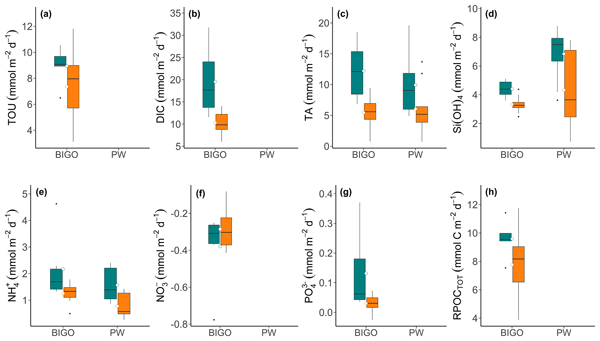
Pankan Linsy, Stefan Sommer, Jens Kallmeyer, Simone Bernsee, Florian Scholz, Habeeb Thanveer Kalapurakkal, and Andrew W. Dale
Biogeosciences, 22, 6727–6748, https://doi.org/10.5194/bg-22-6727-2025, https://doi.org/10.5194/bg-22-6727-2025, 2025
Short summary
Short summary
Bottom trawling is a fishing method that disturbs the seafloor and affects marine ecosystems. This study conducted experimental trawling and monitored biogeochemical changes over three weeks. Results showed reduced nutrient and alkalinity fluxes, decreased benthic carbon respiration, and disrupted biogeochemical processes. While the decline in alkalinity had only a minor effect on atmospheric CO2, the study highlights the lasting ecological impacts of bottom trawling.
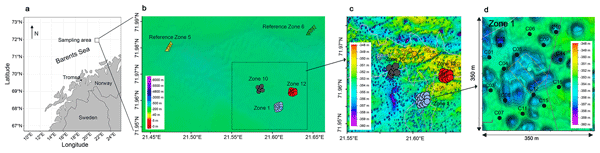
Ellen Schnabel, Aurèle Vuillemin, Cédric C. Laczny, Benoit J. Kunath, André R. Soares, Alexander J. Probst, Rolando Di Primio, Jens Kallmeyer, and the PROSPECTOMICS Consortium
Biogeosciences, 22, 767–784, https://doi.org/10.5194/bg-22-767-2025, https://doi.org/10.5194/bg-22-767-2025, 2025
Short summary
Short summary
This study analysed marine sediment samples from areas with and without minimal hydrocarbon seepage from reservoirs underneath. Depth profiles of dissolved chemical components in the pore water and molecular biological data revealed differences in microbial community composition and activity. These results indicate that even minor hydrocarbon seepage affects sedimentary biogeochemical cycling in marine sediments, potentially providing a new tool for the detection of hydrocarbon reservoirs.
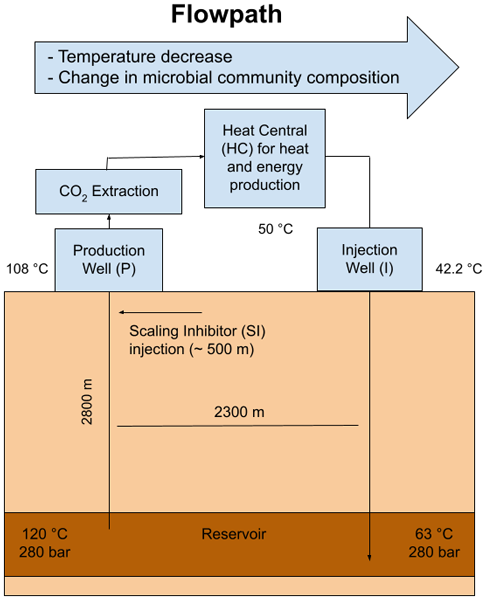
Alessio Leins, Danaé Bregnard, Andrea Vieth-Hillebrand, Stefanie Poetz, Florian Eichinger, Guillaume Cailleau, Pilar Junier, and Simona Regenspurg
Biogeosciences, 21, 5457–5479, https://doi.org/10.5194/bg-21-5457-2024, https://doi.org/10.5194/bg-21-5457-2024, 2024
Short summary
Short summary
Organic matter and microbial fluid analysis are rarely considered in the geothermal industry and research. However, they can have a significant impact on the efficiency of geothermal energy production. We found a high diversity of organic compound compositions in our samples and were able to differentiate them with respect to different sources (e.g. artificial and biogenic). Furthermore, the microbial diversity undergoes significant changes within the flow path of a geothermal power plant.
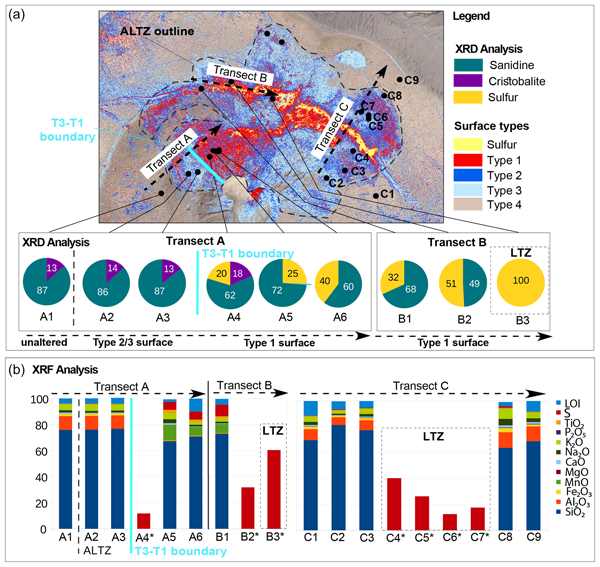
Daniel Müller, Thomas R. Walter, Valentin R. Troll, Jessica Stammeier, Andreas Karlsson, Erica de Paolo, Antonino Fabio Pisciotta, Martin Zimmer, and Benjamin De Jarnatt
Solid Earth, 15, 1155–1184, https://doi.org/10.5194/se-15-1155-2024, https://doi.org/10.5194/se-15-1155-2024, 2024
Short summary
Short summary
We use uncrewed-aerial-system-derived optical and infrared data, mineralogical and geochemical analyses of rock samples, and surface degassing measurements to analyze degassing and hydrothermal alteration at the fumaroles of the La Fossa cone, Vulcano island, Italy. We give a detailed view of associated structures and dynamics, such as local alteration gradients, diffuse active units that significantly contribute to the total activity, or effects of permeability reduction and surface sealing.
Gabrielle Rodrigues de Faria, David Lazarus, Johan Renaudie, Jessica Stammeier, Volkan Özen, and Ulrich Struck
Clim. Past, 20, 1327–1348, https://doi.org/10.5194/cp-20-1327-2024, https://doi.org/10.5194/cp-20-1327-2024, 2024
Short summary
Short summary
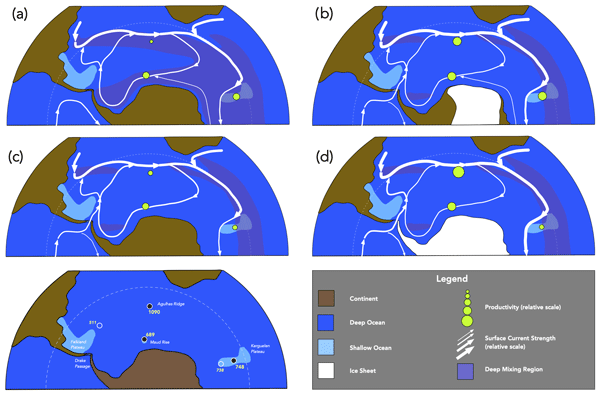
Export productivity is part of the global carbon cycle, influencing the climate system via biological pump. About 34 million years ago, the Earth's climate experienced a climate transition from a greenhouse state to an icehouse state with the onset of ice sheets in Antarctica. Our study shows important productivity events in the Southern Ocean preceding this climatic shift. Our findings strongly indicate that the biological pump potentially played an important role in that past climate change.
George Westmeijer, Cristina Escudero, Claudia Bergin, Stephanie Turner, Magnus Ståhle, Maliheh Mehrshad, Prune Leroy, Moritz Buck, Pilar López-Hernández, Jens Kallmeyer, Ricardo Amils, Stefan Bertilsson, and Mark Dopson
Biogeosciences, 21, 591–604, https://doi.org/10.5194/bg-21-591-2024, https://doi.org/10.5194/bg-21-591-2024, 2024
Short summary
Short summary
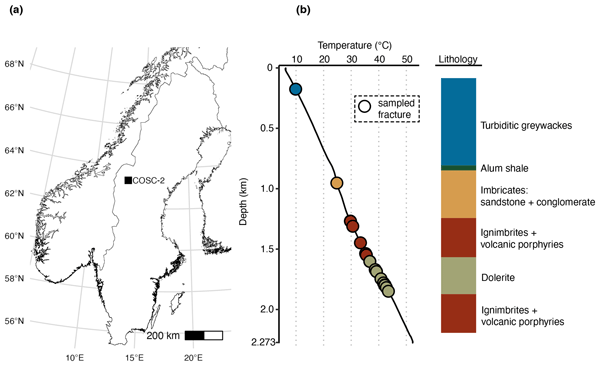
Rock cores down to 2250 m depth, groundwater-bearing fractures, and drilling fluid were sampled for DNA to characterize the subsurface microbial community. In general, microbial biomass was extremely low despite the employment of detection methods widespread in low-biomass environments. The described contamination control measures could support future sampling efforts, and our findings emphasize the use of sequencing extraction controls.
Steffen Kutterolf, Mark Brenner, Robert A. Dull, Armin Freundt, Jens Kallmeyer, Sebastian Krastel, Sergei Katsev, Elodie Lebas, Axel Meyer, Liseth Pérez, Juanita Rausch, Armando Saballos, Antje Schwalb, and Wilfried Strauch
Sci. Dril., 32, 73–84, https://doi.org/10.5194/sd-32-73-2023, https://doi.org/10.5194/sd-32-73-2023, 2023
Short summary
Short summary
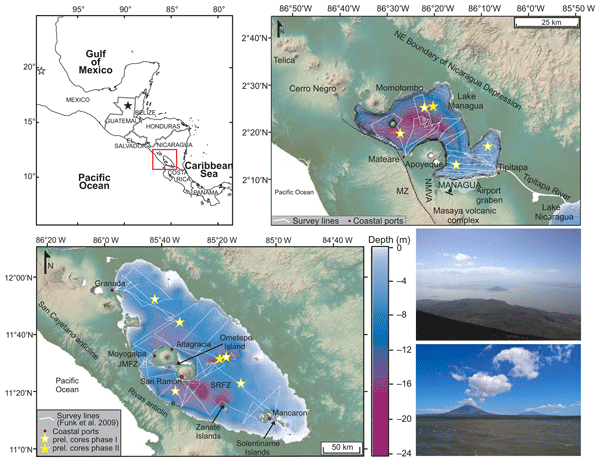
The NICA-BRIDGE workshop proposes a milestone-driven three-phase project to ICDP and later ICDP/IODP involving short- and long-core drilling in the Nicaraguan lakes and in the Pacific Sandino Basin to (1) reconstruct tropical climate and environmental changes and their external controlling mechanisms over several million years, (2) assess magnitudes and recurrence times of multiple natural hazards, and (3) provide
baselineenvironmental data for monitoring lake conditions.

Tomáš Fischer, Pavla Hrubcová, Torsten Dahm, Heiko Woith, Tomáš Vylita, Matthias Ohrnberger, Josef Vlček, Josef Horálek, Petr Dědeček, Martin Zimmer, Martin P. Lipus, Simona Pierdominici, Jens Kallmeyer, Frank Krüger, Katrin Hannemann, Michael Korn, Horst Kämpf, Thomas Reinsch, Jakub Klicpera, Daniel Vollmer, and Kyriaki Daskalopoulou
Sci. Dril., 31, 31–49, https://doi.org/10.5194/sd-31-31-2022, https://doi.org/10.5194/sd-31-31-2022, 2022
Short summary
Short summary
The newly established geodynamic laboratory aims to develop modern, comprehensive, multiparameter observations at depth for studying earthquake swarms, crustal fluid flow, mantle-derived fluid degassing and processes of the deep biosphere. It is located in the West Bohemia–Vogtland (western Eger Rift) geodynamic region and comprises a set of five shallow boreholes with high-frequency 3-D seismic arrays as well as continuous real-time fluid monitoring at depth and the study of the deep biosphere.

Henning Lorenz, Jan-Erik Rosberg, Christopher Juhlin, Iwona Klonowska, Rodolphe Lescoutre, George Westmeijer, Bjarne S. G. Almqvist, Mark Anderson, Stefan Bertilsson, Mark Dopson, Jens Kallmeyer, Jochem Kück, Oliver Lehnert, Luca Menegon, Christophe Pascal, Simon Rejkjær, and Nick N. W. Roberts
Sci. Dril., 30, 43–57, https://doi.org/10.5194/sd-30-43-2022, https://doi.org/10.5194/sd-30-43-2022, 2022
Short summary
Short summary
The Collisional Orogeny in the Scandinavian Caledonides project provides insights into the deep structure and bedrock of a ca. 400 Ma old major orogen to study deformation processes that are hidden at depth from direct access in modern mountain belts. This paper describes the successful operations at the second site. It provides an overview of the retrieved geological section that differs from the expected and summarises the scientific potential of the accomplished data sets and drill core.
Cited articles
Abrams, M. A.: Significance of hydrocarbon seepage relative to petroleum generation and entrapment, Marine and Petroleum Geology, 22, 457–477, https://doi.org/10.1016/j.marpetgeo.2004.08.003, 2005.
Abrams, M. A.: Marine seepage variability and its impact on evaluating the surface migrated hydrocarbon seep signal, Marine and Petroleum Geology, 121, 13, https://doi.org/10.1016/j.marpetgeo.2020.104600, 2020.
Alkhatib, M., Qutob, M., Alkhatib, S., and Eisenhauer, A.: Influence of precipitation rate and temperature on the partitioning of magnesium and strontium in calcite overgrowths, Chemical Geology, 599, https://doi.org/10.1016/j.chemgeo.2022.120841, 2022.
Andreassen, K., Laberg, J. S., and Vorren, T. O.: Seafloor geomorphology of the SW Barents Sea and its glaci-dynamic implications, Geomorphology, 97, 157–177, https://doi.org/10.1016/j.geomorph.2007.02.050, 2008.
Argentino, C., Waghorn, K. A., Vadakkepuliyambatta, S., Polteau, S., Bunz, S., and Panieri, G.: Dynamic and history of methane seepage in the SW Barents Sea: new insights from Leirdjupet Fault Complex, Sci. Rep., 11, 4373, https://doi.org/10.1038/s41598-021-83542-0, 2021.
Bach, L. T.: The additionality problem of ocean alkalinity enhancement, Biogeosciences, 21, 261–277, https://doi.org/10.5194/bg-21-261-2024, 2024.
Berner, R. A.: A new geochemical classification of sedimentary environments, Journal of Sedimentary Research, 51, 359–365, https://doi.org/10.1306/212f7c7f-2b24-11d7-8648000102c1865d, 1981.
Bowles, M. W., Mogollon, J. M., Kasten, S., Zabel, M., and Hinrichs, K. U.: Global rates of marine sulfate reduction and implications for sub-sea-floor metabolic activities, Science, 344, 889–891, https://doi.org/10.1126/science.1249213, 2014.
Bradley, J. A., Arndt, S., Amend, J. P., Burwicz, E., Dale, A. W., Egger, M., and LaRowe, D. E.: Widespread energy limitation to life in global subseafloor sediments, Sci. Adv., 6, eaba0697, https://doi.org/10.1126/sciadv.aba0697, 2020.
Brown, M. B. and Forsythe, A. B.: Robust Tests for the Equality of Variances, Journal of the American Statistical Association, 69, 364–367, https://doi.org/10.1080/01621459.1974.10482955, 1974.
Carter, S. C., Paytan, A., and Griffith, E. M.: Toward an Improved Understanding of the Marine Barium Cycle and the Application of Marine Barite as a Paleoproductivity Proxy, Minerals, 10, https://doi.org/10.3390/min10050421, 2020.
Chavez, F. P., Messié, M., and Pennington, J. T.: Marine primary production in relation to climate variability and change, Annual Review of Marine Science, 3, 227–260, https://doi.org/10.1146/annurev.marine.010908.163917, 2011.
Ciotoli, G., Procesi, M., Etiope, G., Fracassi, U., and Ventura, G.: Influence of tectonics on global scale distribution of geological methane emissions, Nat. Commun., 11, 2305, https://doi.org/10.1038/s41467-020-16229-1, 2020.
Cline, J. D.: Spectrophotometric Determination of Hydrogen Sulfide in Natural Waters1, Limnol. Oceanogr., 14, 454–458, https://doi.org/10.4319/lo.1969.14.3.0454, 1969.
Dale, A. W., Aguilera, D. R., Regnier, P., Fossing, H., Knab, N. J., and Jorgensen, B. B.: Seasonal dynamics of the depth and rate of anaerobic oxidation of methane in Aarhus Bay (Denmark) sediments, Journal of Marine Research, 66, 127–155, https://elischolar.library.yale.edu/journal_of_marine_research/190/ (last access: 19 February 2026), 2008.
de Groot, T. R., Kalenitchenko, D., Moser, M., Argentino, C., Panieri, G., Lindgren, M., Dølven, K. O., Ferré, B., Svenning, M. M., and Niemann, H.: Methanotroph activity and connectivity between two seep systems north off Svalbard, Frontiers in Earth Science, 12, https://doi.org/10.3389/feart.2024.1287226, 2024.
Dong, H., Jaisi, D. P., Kim, J., and Zhang, G.: Microbe-clay mineral interactions, American Mineralogist, 94, 1505–1519, https://doi.org/10.2138/am.2009.3246, 2009.
Doré, A. G.: Barents Sea Geology, Petroleum Resources and Commercial Potencial, ARCTIC, 48, 207–221, 1995.
Edenborn, H. M., Paquin, Y., and Chateauneuf, G.: Bacterial contribution to manganese oxidation in a deep coastal sediment, Estuarine, Coastal and Shelf Science, 21, 801–815, https://doi.org/10.1016/0272-7714(85)90074-5, 1985.
Eichhubl, P., Davatzes, N. C., and Becker, S. P.: Structural and diagenetic control of fluid migration and cementation along the Moab fault, Utah, Aapg Bulletin, 93, 653–681, https://doi.org/10.1306/02180908080, 2009.
Elverhøi, A. and Solheim, A.: The Barents Sea ice sheet – a sedimentological discussion, Polar Research, 1, 23–42, https://doi.org/10.3402/polar.v1i1.6968, 1983.
Elverhøi, A., Fjeldskaar, W., Solheim, A., Nyland-Berg, M., and Russwurm, L.: The Barents Sea Ice Sheet – a model of its growth and decay during the last ice maximum, Quaternary Science Reviews, 12, 11, https://doi.org/10.1016/0277-3791(93)90025-H, 1993.
Etiope, G.: Natural Gas Seepage – The Earth's Hydrocarbon Degassing, Springer, ISBN 978-3-319-14601-0, 2015.
Faleide, J. I., Gudlaugsson, S. T., and Jacquart, G.: Evolution of the western Barents Sea, Marine and Petroleum Geology, 1, 123–150, https://doi.org/10.1016/0264-8172(84)90082-5, 1984.
Fischer, D., Sahling, H., Nöthen, K., Bohrmann, G., Zabel, M., and Kasten, S.: Interaction between hydrocarbon seepage, chemosynthetic communities, and bottom water redox at cold seeps of the Makran accretionary prism: insights from habitat-specific pore water sampling and modeling, Biogeosciences, 9, 2013–2031, https://doi.org/10.5194/bg-9-2013-2012, 2012.
Foster, K. L., Stern, G. A., Carrie, J., Bailey, J. N., Outridge, P. M., Sanei, H., and Macdonald, R. W.: Spatial, temporal, and source variations of hydrocarbons in marine sediments from Baffin Bay, Eastern Canadian Arctic, Sci. Total Environ., 506/507, 430–443, https://doi.org/10.1016/j.scitotenv.2014.11.002, 2015.
Froelich, P. N., Klinkhammer, G. P., Bender, M. L., Luedtke, N. A., Heath, G. R., Cullen, D., Dauphin, P., Hammond, D., Hartman, B., and Maynard, V.: Early oxidation of organic matter in pelagic sediments of the eastern equatorial Atlantic: suboxic diagenesis, Geochemica et Cosmochimica Acta, 43, 1975–1090, https://doi.org/10.1016/0016-7037(79)90095-4, 1979.
Gabrielsen, R. H., Faerseth, R. B., Jensen, L. N., Kalheim, J. E., and Riis, F.: Structual elements of the Norwegian continental shelf, Part 1: The Barents Sea Region, NPD Bulletin, 6, 1–33, 1990.
Heggland, R.: Gas seepage as an indicator of deeper prospective reservoirs. A study based on exploration 3D seismic data, Marine and Petroleum Geology, 15, 1–9, https://doi.org/10.1016/S0264-8172(97)00060-3, 1998.
Hinrichs, K. U., Hayes, J. M., Sylva, S. P., Brewer, P. G., and DeLong, E. F.: Methane-consuming archaebacteria in marine sediments, Nature, 398, 802–805, https://doi.org/10.1038/19751, 1999.
Hoareau, G., Monnin, C., and Odonne, F.: A study of celestine equilibrium in marine sediments using the entire ODP/IODP porewater data base, Geochimica et Cosmochimica Acta, 74, 3925–3937, https://doi.org/10.1016/j.gca.2010.03.033, 2010.
Hu, L., Yvon-Lewis, S. A., Kessler, J. D., and MacDonald, I. R.: Methane fluxes to the atmosphere from deepwater hydrocarbon seeps in the northern Gulf of Mexico, Journal of Geophysical Research: Oceans, 117, https://doi.org/10.1029/2011jc007208, 2012.
Hu, T., Luo, M., Qi, Y., He, D., Chen, L., Xu, Y., and Chen, D.: Molecular evidence for the production of labile, sulfur-bearing dissolved organic matter in the seep sediments of the South China Sea, Water Res., 233, 119732, https://doi.org/10.1016/j.watres.2023.119732, 2023.
Huerta-Diaz, M. A. and Morse, J. W.: Pyritization of trace metals in anoxic marine sediments, Geochimica et Cosmochimica Acta, 56, 2681–2702, https://doi.org/10.1016/0016-7037(92)90353-k, 1992.
Hunt, J. M.: Petroleum Geochemistry and Geology, W.H. Freeman & Co Ltd, New York, ISBN 9780716724414, 1995.
Hvoslef, S., Christie, O. H. J., Sassen, R., Kennicutt, M. C., Requejo, A. G., and Brooks, J. M.: Test of a new surface geochemistry tool for resource prediction in frontier areas, Marine and Petroleum Geology, 13, 107–124, https://doi.org/10.1016/0264-8172(95)00032-1, 1996.
Iversen, N. and Jørgensen, B. B.: Diffusion coefficents of sulfate and methane in marine sediments: Influence of porosity, Geochemica et Cosmochemica Acta, 57, 571–778, https://doi.org/10.1016/0016-7037(93)90368-7, 1993.
Johansen, S. E., Ostisty, B. K., Birkeland, ø., Fedorovsky, Y. F., Martirosjan, V. N., Bruun Christensen, O., Cheredeev, S. I., Ignatenko, E. A., and Margulis, L. S.: Hydrocarbon potential in the Barents Sea region: play distribution and potential, Norwegian Petroleum Society Special Publications, 2, 273–320, https://doi.org/10.1016/B978-0-444-88943-0.50024-1, 1993.
Jørgensen, B. B.: Mineralization of organic matter in the sea bed – the role of sulphate reduction, Nature, 296, 643–645, https://doi.org/10.1038/296643a0, 1982.
Jørgensen, B. B. and Kasten, S.: Sulfur Cycling and Methane Oxidation, in: Marine Geochemistry, 271–309, https://doi.org/10.1007/3-540-32144-6_8, 2006.
Jørgensen, B. B., Findlay, A. J., and Pellerin, A.: The Biogeochemical Sulfur Cycle of Marine Sediments, Front Microbiol., 10, 849, https://doi.org/10.3389/fmicb.2019.00849, 2019.
Joye, S. B.: The Geology and Biogeochemistry of Hydrocarbon Seeps, Annual Review of Earth and Planetary Sciences, 48, 205–231, https://doi.org/10.1146/annurev-earth-063016-020052, 2020.
Joye, S. B., Boetius, A., Orcutt, B. N., Montoya, J. P., Schulz, H. N., Erickson, M. J., and Lugo, S. K.: The anaerobic oxidation of methane and sulfate reduction in sediments from Gulf of Mexico cold seeps, Chemical Geology, 205, 219–238, https://doi.org/10.1016/j.chemgeo.2003.12.019, 2004.
Joye, S. B., Bowles, M. W., and Ziervogel, K.: Marine Biogeochemical Cycles, in: The Marine Microbiome, Springer, Cham, 623–671, https://doi.org/10.1007/978-3-030-90383-1_15, 2022.
Judd, A. and Hovland, M.: Seabed fluid flow – The impact on geology, biology and the marine environment, Cambridge University Press, https://doi.org/10.1017/cbo9780511535918, 2009.
Kallmeyer, J., Smith, D. C., Spivack, A. J., and D'Hondt, S.: New cell extraction procedure applied to deep subsurface sediments, Limnology and Oceanography: Methods, 6, 236–245, https://doi.org/10.4319/lom.2008.6.236, 2008.
Karaca, D., Hensen, C., and Wallmann, K.: Controls on authigenic carbonate precipitation at cold seeps along the convergent margin off Costa Rica, Geochemistry, Geophysics, Geosystems, 11, https://doi.org/10.1029/2010gc003062, 2010.
Kars, M. A. C., Pastor, L., Burin, C., and Koornneef, L. M. T.: Data report: characterization of iron oxides and iron sulfides in sediments from IODP Expedition 385 Sites U1549 and U1552 using rock magnetism and geochemistry, in: Proceedings of the International Ocean Discovery Program, edited by: Teske, A., Lizarralde, D., Höfig, T. W., and the Expedition 385 Scientists, Volume 385, 19 pp., International Ocean Discovery Program, https://doi.org/10.14379/iodp.proc.385.207.2025, 2025.
Kasten, S. and Jørgensen, B. B.: Sulfate Reduction in Marine Sediments, in: Marine Geochemistry, Springer, Heidelberg, 263–281, https://doi.org/10.1007/978-3-662-04242-7_8, 2000.
Kim, J., Dong, H. L., Seabaugh, J., Newell, S. W., and Eberl, D. D.: Role of microbes in the smectite-to-illite reaction, Science, 303, 830–832, https://doi.org/10.1126/science.1093245, 2004.
Knies, J. and Martinez, P.: Organic matter sedimentation in the western Barents Sea region: Terrestrial and marine contribution based on isotopic composition and organic nitrogen content, Norwegian Journal of Geology, 89, 79–89, 2009.
Knight, A. W., Harvey, J. A., Shohel, M., Lu, P., Cummings, D., and Ilgen, A. G.: The combined effects of Mg2+ and Sr2+ incorporation during CaCO3 precipitation and crystal growth, Geochimica et Cosmochimica Acta, 345, 16–33, https://doi.org/10.1016/j.gca.2023.01.021, 2023.
Langrock, U., Stein, R., Lipinski, M., and Brumsack, H.-J.: Paleoenvironment and sea-level change in the early Cretaceous Barents Sea – implications from near-shore marine sapropels, Geo-Marine Letters, 23, 34–42, https://doi.org/10.1007/s00367-003-0122-5, 2003.
Larssen, G. B., Elvebakk, G., Henriksen, L. B., Kristensen, S.-E., Nilsson, I., Samuelsberg, T. J., Svana, T. A., Stemmerik, L., and Worsley, D.: Upper Palaeozoic lithostratigraphy of the Southern Norwegian Barents Sea, Norsk Geologisk Undersøkelser, Bull., 444, 43, https://www.researchgate.net/publication/312656540_Upper_Palaeozoic_lithostratigraphy_of_the_southern_part_of_the_Norwegian_Barents_Sea (last access: 9 February 2026), 2002.
Leifer, I., Boles, J. R., Luyendyk, B. P., and Clark, J. F.: Transient discharges from marine hydrocarbon seeps: spatial and temporal variability, Environmental Geology, 46, 1038–1052, https://doi.org/10.1007/s00254-004-1091-3, 2004.
Lin, Z., Sun, X., Peckmann, J., Lu, Y., Xu, L., Strauss, H., Zhou, H., Gong, J., Lu, H., and Teichert, B. M. A.: How sulfate-driven anaerobic oxidation of methane affects the sulfur isotopic composition of pyrite: A SIMS study from the South China Sea, Chemical Geology, 440, 26–41, https://doi.org/10.1016/j.chemgeo.2016.07.007, 2016.
Mann, H. B. and Whitney, D. R.: On a Test of Whether one of Two Random Variables is Stochastically Larger than the Other, The Annals of Mathematical Statistics, 18, 50–60, https://doi.org/10.1214/aoms/1177730491, 1947.
Marín, D., Helleren, S., Escalona, A., Olaussen, S., Cedeño, A., Nøhr-Hansen, H., and Ohm, S.: The Middle Jurassic to lowermost Cretaceous in the SW Barents Sea: Interplay between tectonics, coarse-grained sediment supply and organic matter preservation, Basin Research, 33, 1033–1055, https://doi.org/10.1111/bre.12504, 2020.
Marshall, A. G. and Rodgers, R. P.: Petroleomics: the next grand challenge for chemical analysis, Acc. Chem. Res., 37, 53–59, https://doi.org/10.1021/ar020177t, 2004.
Matheron, G.: Principles of geostatistics, Economic Geology, 58, 1246–1266, https://doi.org/10.2113/gsecongeo.58.8.1246, 1963.
Miao, X., Feng, X., Li, J., Liu, X., Liang, J., Feng, J., Xiao, Q., Dan, X., and Wei, J.: Enrichment mechanism of trace elements in pyrite under methane seepage, Geochemical Perspectives Letters, 21, 18–22, https://doi.org/10.7185/geochemlet.2211, 2022.
Middelburg, J. J.: Reviews and syntheses: to the bottom of carbon processing at the seafloor, Biogeosciences, 15, 413–427, https://doi.org/10.5194/bg-15-413-2018, 2018.
Nickel, J. C., di Primio, R., Mangelsdorf, K., Stoddart, D., and Kallmeyer, J.: Characterization of microbial activity in pockmark fields of the SW-Barents Sea, Marine Geology, 332–334, 152–162, https://doi.org/10.1016/j.margeo.2012.02.002, 2012.
Nickel, J. C., di Primio, R., Kallmeyer, J., Hammer, Ø., Horsfield, B., Stoddart, D., Brunstad, H., and Mangelsdorf, K.: Tracing the origin of thermogenic hydrocarbon signals in pockmarks from the southwestern Barents Sea, Organic Geochemistry, 63, 73–84, https://doi.org/10.1016/j.orggeochem.2013.08.008, 2013.
Orphan, V. J., Hinrichs, K. U., Ussler III, W., Paull, C. K., Taylor, L. T., Sylva, S. P., Hayes, J. M., and Delong, E. F.: Comparative analysis of methane-oxidizing archaea and sulfate-reducing bacteria in anoxic marine sediments, Appl. Environ. Microbiol., 67, 1922–1934, https://doi.org/10.1128/AEM.67.4.1922-1934.2001, 2001.
Padilla, A. M., Loranger, S., Kinnaman, F. S., Valentine, D. L., and Weber, T. C.: Modern Assessment of Natural Hydrocarbon Gas Flux at the Coal Oil Point Seep Field, Santa Barbara, California, Journal of Geophysical Research: Oceans, 124, 2472–2484, https://doi.org/10.1029/2018jc014573, 2019.
Pearson, K.: Note on regression and inheritance in the case of two parents, Proceedings of the Royal Society of London, 58, 240–242, https://doi.org/10.1098/rspl.1895.0041, 1895.
Pebesma, E. J.: Multivariable geostatistics in S: the gstat package, Computers & Geosciences, 30, 683–691, https://doi.org/10.1016/j.cageo.2004.03.012, 2004.
Peckmann, J., Reimer, A., Luth, U., Luth, C., Hansen, B. T., Heinicke, C., Hoefs, J., and Reitner, J.: Methane-derived carbonates and authigenic pyrite from the northwestern Black Sea, Marine Geology, 177, 129–150, https://doi.org/10.1016/S0025-3227(01)00128-1, 2001.
Poetz, S., Horsfield, B., and Wilkes, H.: Maturity-Driven Generation and Transformation of Acidic Compounds in the Organic-Rich Posidonia Shale as Revealed by Electrospray Ionization Fourier Transform Ion Cyclotron Resonance Mass Spectrometry, Energy & Fuels, 28, 4877–4888, https://doi.org/10.1021/ef500688s, 2014.
Pop Ristova, P., Wenzhofer, F., Ramette, A., Felden, J., and Boetius, A.: Spatial scales of bacterial community diversity at cold seeps (Eastern Mediterranean Sea), ISME J., 9, 1306–1318, https://doi.org/10.1038/ismej.2014.217, 2015.
Radovic, J. R. and Silva, R. C.: Ultrahigh-Resolution Mass Spectrometry Advances for Biogeochemical Analysis: From Seafloor Sediments to Petroleum and Marine Oil Spills, J. Am. Soc. Mass. Spectrom., 36, 7–33, https://doi.org/10.1021/jasms.4c00266, 2025.
Rasheed, M. A., Lakshmi, M., Rao, P. L. S., Kalpana, M. S., Dayal, A. M., and Patil, D. J.: Geochemical evidences of trace metal anomalies for finding hydrocarbon microseepage in the petroliferous regions of the Tatipaka and Pasarlapudi areas of Krishna Godavari Basin, India, Petroleum Science, 10, 19–29, https://doi.org/10.1007/s12182-013-0245-x, 2013.
R Core Team: The R Project for Statistical Computing, https://www.R-project.org/ (last access: 12 June 2023), 2022.
Rovere, M., Mercorella, A., Frapiccini, E., Funari, V., Spagnoli, F., Pellegrini, C., Bonetti, A. S., Veneruso, T., Tassetti, A. N., Dell'Orso, M., Mastroianni, M., Giuliani, G., De Marco, R., Fabi, G., Ciccone, F., and Antoncecchi, I.: Geochemical and Geophysical Monitoring of Hydrocarbon Seepage in the Adriatic Sea, Sensors (Basel), 20, https://doi.org/10.3390/s20051504, 2020.
Røy, H., Kallmeyer, J., Adhikari, R. R., Pockalny, R., Jørgensen, B. B., and D'Hondt, S.: Aerobic microbial respiration in 86-million-year-old deep-sea red clay, Science, 336, 922–925, https://doi.org/10.1126/science.1219424, 2012.
Sættem, J., Rise, L., and Westgaard, D. A.: Composition and properties of glacigenic sediments in the southwestern Barents Sea, Marine Geotechnology, 10, 229–255, https://doi.org/10.1080/10641199109379893, 1991.
Schippers, A. and Jørgensen, B. B.: Oxidation of pyrite and iron sulfide by manganese dioxide in marine sediments, Geochimica et Cosmochimica Acta, 65, 915–922, https://doi.org/10.1016/s0016-7037(00)00589-5, 2001.
Schnabel, E., Vuillemin, A., Laczny, C. C., Kunath, B. J., Soares, A. R., Probst, A. J., Di Primio, R., Kallmeyer, J., and the PROSPECTOMICS Consortium: Influence of minor hydrocarbon seepage on sulfur cycling in marine subsurface sediments, Biogeosciences, 22, 767–784, https://doi.org/10.5194/bg-22-767-2025, 2025a.
Schnabel, E., Vuillemin, A., Laczny, C. C., Kunath, B. J., Soares, A. R., Di Primo, R., Kallmeyer, J., and PROSPECTOMICS, Consortium: Pore water solutes, total cell counts, dissolved gases and sulfate reduction rates of the 50 gravity cores of the PROSPECTOMICS project, PANGAEA [data set], https://doi.org/10.1594/PANGAEA.974341, 2025b.
Schnabel, E., Vuillemin, A., Laczny, C. C., Kunath, B. J., Soares, A. R., Di Primo, R., Kallmeyer, J., and PROSPECTOMICS, Consortium: XRF measurements of major oxides and trace elements on bulk sediment of the 50 gravity cores of the PROSPECTOMICS project, PANGAEA [data set], https://doi.org/10.1594/PANGAEA.974346, 2025c.
Schneider, R. R., Schulz, H. D., and Hensen, C.: Marine Carbonates: Their Formation and Destruction, in: Marine Geochemistry, edited by: Schulz, H. D. and Zabel, M., Springer, Berlin, Heidelberg, 311–337, https://doi.org/10.1007/3-540-32144-6_9, 2006.
Schulz, H. D.: Quantification of Early Diagenesis: Dissolved Constituents in Pore Water and Signals in the Solid Phase, in: Marine Geochemistry, 73–124, https://doi.org/10.1007/3-540-32144-6_3, 2006.
Sedgwick, P.: Pearson's correlation coefficient, BMJ, 345, e4483–e4483, https://doi.org/10.1136/bmj.e4483, 2012.
Seeberg-Elverfeldt, J., Schluter, M., Feseker, T., and Kolling, M.: Rhizon sampling of porewaters near the sediment-water interface of aquatic systems, Limnol. Oceanogr.-Meth., 3, 361–371, https://doi.org/10.4319/lom.2005.3.361, 2005.
Sert, M. F., D'Andrilli, J., Gründger, F., Niemann, H., Granskog, M. A., Pavlov, A. K., Ferré, B., and Silyakova, A.: Compositional Differences in Dissolved Organic Matter Between Arctic Cold Seeps Versus Non-Seep Sites at the Svalbard Continental Margin and the Barents Sea, Frontiers in Earth Science, 8, https://doi.org/10.3389/feart.2020.552731, 2020.
Siegert, M. J., Dowdeswell, J. A., Hald, M., and Svendsen, J. I.: Modelling the Eurasian Ice Sheet through a full (Weichselian) glacial cycle, Global and Planetary Change, 31, 367–385, https://doi.org/10.1016/S0921-8181(01)00130-8, 2001.
Smrzka, D., Zwicker, J., Bach, W., Feng, D., Himmler, T., Chen, D., and Peckmann, J.: The behavior of trace elements in seawater, sedimentary pore water, and their incorporation into carbonate minerals: a review, Facies, 65, 47, https://doi.org/10.1007/s10347-019-0581-4, 2019.
Smrzka, D., Feng, D., Himmler, T., Zwicker, J., Hu, Y., Monien, P., Tribovillard, N., Chen, D., and Peckmann, J.: Trace elements in methane-seep carbonates: Potentials, limitations, and perspectives, Earth-Science Reviews, 208, https://doi.org/10.1016/j.earscirev.2020.103263, 2020.
Smrzka, D., Lin, Z., Monien, P., Chen, T., Bach, W., Peckmann, J., and Bohrmann, G.: Pyrite-based trace element fingerprints for methane and oil seepage, Geochemical Perspectives Letters, 29, 33–37, https://doi.org/10.7185/geochemlet.2409, 2024.
Tribovillard, N., du Châtelet, E. A., Gay, A., Barbecot, F., Sansjofre, P., and Potdevin, J.-L.: Geochemistry of cold seepage-impacted sediments: Per-ascensum or per-descensum trace metal enrichment?, Chemical Geology, 340, 1–12, https://doi.org/10.1016/j.chemgeo.2012.12.012, 2013.
Viollier, E., Inglett, P. W., Hunter, K., Roychoudhury, A. N., and Van Cappellen, P.: The ferrozine method revisited: Fe(II)/Fe(III) determination in natural waters, Applied Geochemistry, 15, 785–790, https://doi.org/10.1016/s0883-2927(99)00097-9, 2000.
von Breymann, M. T., Brumsack, H., and Emeis, K. C.: Depositional and Diagenetic Behavior of Barium in the Japan Sea, in: Proceedings of the Ocean Drilling Program, 127/128 Part 1, Scientific Results, https://doi.org/10.2973/odp.proc.sr.127128-1.168.1992, 1992.
Vuillemin, A., Vargas, S., Coskun, O. K., Pockalny, R., Murray, R. W., Smith, D. C., D'Hondt, S., and Orsi, W. D.: Atribacteria Reproducing over Millions of Years in the Atlantic Abyssal Subseafloor, mBio, 11, https://doi.org/10.1128/mBio.01937-20, 2020.
Vuillemin, A., Morlock, M., Paskin, A., Benning, L. G., Henny, C., Kallmeyer, J., Russell, J. M., and Vogel, H.: Authigenic minerals reflect microbial control on pore waters in a ferruginous analogue, Geochemical Perspectives Letters, 28, 20–26, https://doi.org/10.7185/geochemlet.2339, 2023a.
Vuillemin, A., Mayr, C., Schuessler, J. A., Friese, A., Bauer, K. W., Lücke, A., Heuer, V. B., Glombitza, C., Henny, C., von Blanckenburg, F., Russell, J. M., Bijaksana, S., Vogel, H., Crowe, S. A., and Kallmeyer, J.: A one-million-year isotope record from siderites formed in modern ferruginous sediments, GSA Bulletin, 135, 504–522, https://doi.org/10.1130/b36211.1, 2023b.
Wickham, H.: ggplot2, Springer-Verlag, New York, 260 pp., https://doi.org/10.1007/978-3-319-24277-4, 2016.
Widdel, F., Knittel, K., and Galushko, A.: Anaerobic Hydrocarbon-Degrading Microorganisms: An Overview, in: Handbook of Hydrocarbon and Lipid Microbiology, Springer, Berlin, Heidelberg, 1997–2021, https://doi.org/10.1007/978-3-540-77587-4, 2010.
Yergin, D.: The Prize: The Epic Quest for Oil, Money & Power, Free Press, ISBN 9781847376466, 2009.
Zhang, X., Wu, K., Han, Z., Chen, Z., Liu, Z., Sun, Z., Shao, L., Zhao, Z., and Zhou, L.: Microbial diversity and biogeochemical cycling potential in deep-sea sediments associated with seamount, trench, and cold seep ecosystems, Front. Microbiol., 13, 1029564, https://doi.org/10.3389/fmicb.2022.1029564, 2022.
Zhao, R. X., Xue, H. T., Lu, S. F., Greenwell, and Erastova, V.: Revealing crucial effects of reservoir environment and hydrocarbon fractions on fluid behavior in kaolinite pores, Chem. Eng. J., 489, https://doi.org/10.1016/j.cej.2024.151362, 2024.
Short summary
Even minor hydrocarbon seepage from reservoirs into overlying seafloor can affect marine sediment biogeochemistry. Our analysis of 50 sediment cores from the Barents Sea revealed that subtle seepage alters chemical balances and stimulates carbonate and sulfide mineral formation. The cores also showed strong local and spatial variation, highlighting patchy migration pathways. Minerals and pore water chemistry together provide clues to identify both past and ongoing seepage activity.
Even minor hydrocarbon seepage from reservoirs into overlying seafloor can affect marine...


Altmetrics
Final-revised paper
Preprint