
Articles | Volume 23, issue 4
https://doi.org/10.5194/bg-23-1459-2026
© Author(s) 2026. This work is distributed under
the Creative Commons Attribution 4.0 License.
the Creative Commons Attribution 4.0 License.
https://doi.org/10.5194/bg-23-1459-2026
© Author(s) 2026. This work is distributed under
the Creative Commons Attribution 4.0 License.
the Creative Commons Attribution 4.0 License.
Research article
| 
24 Feb 2026
Research article |
| 24 Feb 2026
| 24 Feb 2026
Enhanced methane cycling across the Laptev Sea signaled by time-integrated biomarkers of aerobic methane oxidation

Department of Environmental Science (ACES), Stockholm University, Stockholm, Sweden
Bolin Centre for Climate Research, Stockholm, Sweden
Birgit Wild
Department of Environmental Science (ACES), Stockholm University, Stockholm, Sweden
Bolin Centre for Climate Research, Stockholm, Sweden
Wei-Li Hong
Bolin Centre for Climate Research, Stockholm, Sweden
Department of Geological Sciences (IGV), Stockholm University, Stockholm, Sweden
Baltic Sea Centre, Stockholm University, Stockholm, Sweden
Henry Holmstrand
Department of Environmental Science (ACES), Stockholm University, Stockholm, Sweden
Francisco J. A. Nascimento
Baltic Sea Centre, Stockholm University, Stockholm, Sweden
Department of Ecology, Environment and Plant Sciences, Stockholm University, Stockholm, Sweden
Stefano Bonaglia
Department of Marine Sciences, University of Gothenburg, Gothenburg, Sweden
Denis Kosmach
Laboratory for Arctic Research, V.I. Ilichov Pacific Oceanological Institute (POI), Far Eastern Branch of the Russian Academy of Sciences, Vladivostok, Russia
Igor Semiletov
Laboratory for Arctic Research, V.I. Ilichov Pacific Oceanological Institute (POI), Far Eastern Branch of the Russian Academy of Sciences, Vladivostok, Russia
Laboratory for Integrated Research of the Arctic System “land-shelf”, National Tomsk State Research University (TSU), Tomsk, Russia
Laboratory of Chemical and Biological Research, Sakhalin State University (SakhSU), Yuzhno-Sakhalinsk, Russia
Natalia Shakhova
Laboratory for Integrated Research of the Arctic System “land-shelf”, National Tomsk State Research University (TSU), Tomsk, Russia
Sadovsky Institute of Geosphere Dynamics (IGD) of the Russian Academy of Sciences, Moscow, Russia
Örjan Gustafsson
CORRESPONDING AUTHOR
Department of Environmental Science (ACES), Stockholm University, Stockholm, Sweden
Bolin Centre for Climate Research, Stockholm, Sweden
Related authors
Albin Eriksson, Junjie Wu, Matt O'Regan, and Örjan Gustafsson
EGUsphere, https://doi.org/10.5194/egusphere-2026-2414, https://doi.org/10.5194/egusphere-2026-2414, 2026
Short summary
Short summary
Sea ice is an important regulator of the Arctic climate systems. Records of sea ice past instrumental records are necessary to understand how sea ice is altered during past periods of abrupt climate change, and what consequences such changes have on the polar climates. Here, we reconstructed the sea ice cover of the East Siberian Arctic and found that the sea ice extent likely was linked to protecting/eroding permafrost coastlines during the last deglaciation.
Hermann Bange, Carolin Löscher, Damian Arévalo-Martínez, Stefano Bonaglia, Hanna Farnelid, Bo Gustafsson, Dana Hellemann, Jenny Hieronymus, Peeter Laas, Christian Lønborg, Natalie Loick-Wilde, Volker Matthias, Joseph Montoya, Sofia Saraiva, Vibe Schourup-Kristensen, Beata Szymczycha, Germo Väli, Maren Voss, Mindaugas Zilius, and Malin Olofsson
EGUsphere, https://doi.org/10.5194/egusphere-2026-5940, https://doi.org/10.5194/egusphere-2026-5940, 2026
This preprint is open for discussion and under review for Biogeosciences (BG).
Short summary
Short summary
The nitrogen cycle of the Baltic Sea has received considerable attention over the past five decades mainly due to the ongoing expansion of oxygen-free zones. Here we present a summary of the present state of the nitrogen cycle in the Baltic Sea, identify open research questions and suggest a way forward to address the open questions with the aim to reduce uncertainties in projections of the future nitrogen cycle which, in turn, can advance and help management measures for ecosystem restoration.
Nils Ekeroth, Mikhail Kononets, Stefano Bonaglia, Volker Brüchert, Elizabeth K. Robertson, Anders Tengberg, and Per O. J. Hall
Biogeosciences, 23, 7203–7221, https://doi.org/10.5194/bg-23-7203-2026, https://doi.org/10.5194/bg-23-7203-2026, 2026
Short summary
Short summary
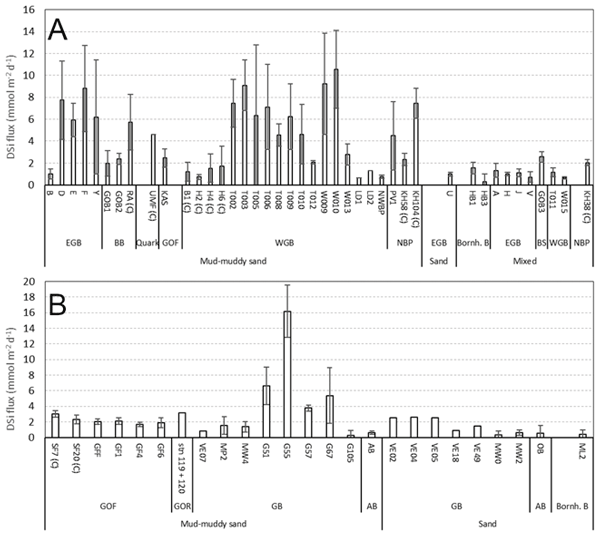
We measured 305 benthic fluxes of silicate (dSi) on the major sediment types across the Baltic Sea. Upscaling these data together with literature values suggested an integrated annual benthic release of dSi for the Baltic Sea being about three times larger than the diatom export production. This may explain the trend of increasing Baltic water column dSi standing stock. Reactive Si of terrestrial origin should have a much more profound influence on the Baltic Si cycle than previously known.
Yuri Ya. Kolesnichenko, Sergey N. Vorobyev, Viktor A. Nikitkin, Oleg V. Dudarev, Denis V. Chernykh, Eduard A. Spivak, Arkadiy V. Kurilenko, Vladimir A. Kholodov, Igor P. Semiletov, and Oleg S. Pokrovsky
Biogeosciences, 23, 6613–6637, https://doi.org/10.5194/bg-23-6613-2026, https://doi.org/10.5194/bg-23-6613-2026, 2026
Short summary
Short summary
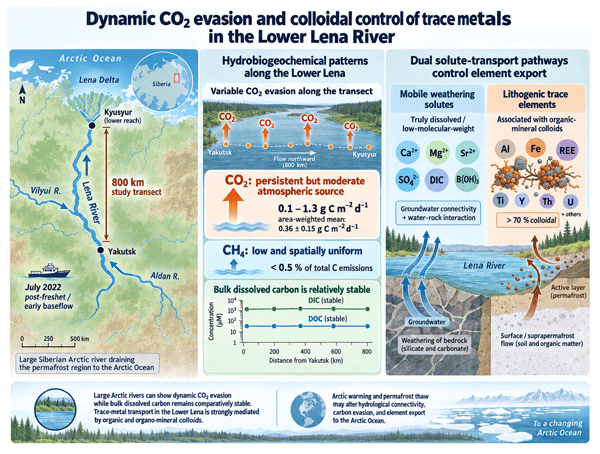
We studied 800 kilometers of the lower Lena River in Siberia to understand how this large Arctic river releases climate-warming gases and carries natural elements from frozen landscapes to the ocean. Using boat-based measurements and water samples, we found that CO2 release changes strongly over short distances, while CH4 variations are very small. Most dissolved carbon stayed stable, and many metals were carried by tiny natural particles. Warming and thawing ground may shift these balances.
Piotr Markuszewski, Mikołaj Mazurkiewicz, Kinga Stawiarz, Małgorzata Śmiszek, Patrycja Jutrzenka-Trzebiatowska, Luca Ferrero, Krishnakant Budhavant, Mateusz Zawadzki, Anna Waleczek, Przemysław Makuch, Douglas Nilsson, Örjan Gustafsson, and Sophie L. Haslett
EGUsphere, https://doi.org/10.5194/egusphere-2026-4321, https://doi.org/10.5194/egusphere-2026-4321, 2026
Short summary
Short summary
We investigated the occurrence and transport of microplastics in air and coastal waters around the Maldives using air and seawater sampling and particle identification. Microplastics occurred in both environments, but their size distributions and composition differed markedly. Airborne concentrations were more closely associated with polluted air transported from South Asia than with local ocean emissions, indicating that regional atmospheric transport delivers microplastics to remote islands.
Krishnakant Babanrao Budhavant, Ahmed Muslim, Joakim Romson, Sreedharan Krishnakumari Satheesh, and Örjan Gustafsson
EGUsphere, https://doi.org/10.5194/egusphere-2026-4276, https://doi.org/10.5194/egusphere-2026-4276, 2026
Short summary
Short summary
Seasonal monsoon winds transport aerosol particles across the equatorial Indian Ocean. Measurements in the Maldives show that the northeast monsoon carries polluted air from South and Southeast Asia, whereas the southwest monsoon brings cleaner marine air from the southern Indian Ocean. These observations improve our understanding of long-range pollution transport and help improve climate and air-quality models.
Peng Yao, Katja Belec, Henry Holmstrand, Josh Balacky, Abdus Salam, Krishnakant Budhavant, Mohanan Remani Manoj, Khaled Shaifullah Joy, Md. Alamin Hossain, Atinderpal Singh, Anil Patel, Neeraj Rastogi, Chinmay Mallik, Kirpa Ram, Gyanesh Kumar Singh, and Örjan Gustafsson
Atmos. Chem. Phys., 26, 7765–7787, https://doi.org/10.5194/acp-26-7765-2026, https://doi.org/10.5194/acp-26-7765-2026, 2026
Short summary
Short summary
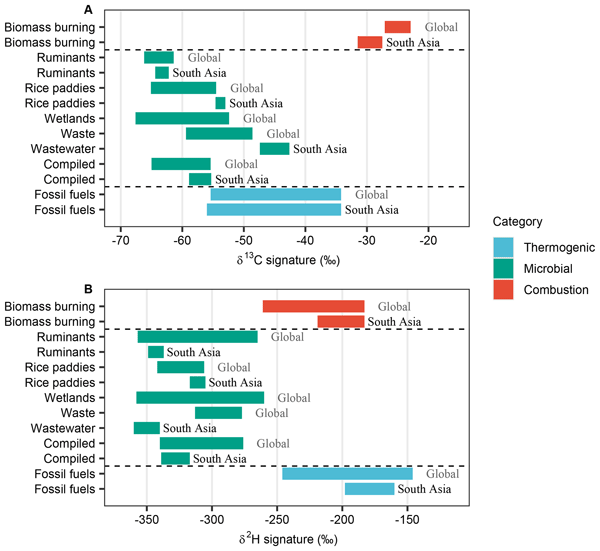
Methane is a powerful greenhouse gas, but its sources remain uncertain in many regions. The isotope fingerprints of methane are diagnostic of its sources, yet their source end-members are poorly constrained for South Asia. Here we determined the methane isotope signal for major sources in South Asia and found these to differ from global averages. Improved regional-specific isotope source fingerprints will help to improve top-down assessments of methane budgets and climate mitigation strategies.
Albin Eriksson, Junjie Wu, Matt O'Regan, and Örjan Gustafsson
EGUsphere, https://doi.org/10.5194/egusphere-2026-2414, https://doi.org/10.5194/egusphere-2026-2414, 2026
Short summary
Short summary
Sea ice is an important regulator of the Arctic climate systems. Records of sea ice past instrumental records are necessary to understand how sea ice is altered during past periods of abrupt climate change, and what consequences such changes have on the polar climates. Here, we reconstructed the sea ice cover of the East Siberian Arctic and found that the sea ice extent likely was linked to protecting/eroding permafrost coastlines during the last deglaciation.
Sean Clarke, Henry Holmstrand, Krishnakant Budhavant, Manoj Remani, Sophie Haslett, Katerina Rodiouchkina, Ellen Kooijman, and Örjan Gustafsson
Atmos. Chem. Phys., 26, 5333–5343, https://doi.org/10.5194/acp-26-5333-2026, https://doi.org/10.5194/acp-26-5333-2026, 2026
Short summary
Short summary
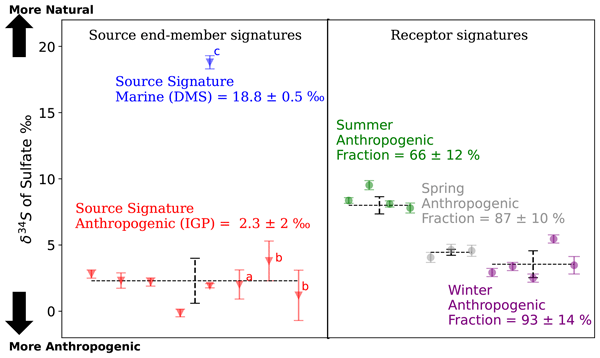
South Asia has the world's highest loadings of sulfate, scattering sunlight, altering clouds and masking greenhouse warming, yet there are large uncertainties regarding the relative contributions of natural and anthropogenic sources to the receptor atmosphere. Here we use δ34S isotopes to distinguish natural versus anthropogenic sulfate sources, revealing strong seasonal contrasts and quantifying the dominance of anthropogenic contributions.
Krishnakant Budhavant, Mohanan Remani Manoj, Hari Ram Chandrika Rajendran Nair, Samuel Mwaniki Gaita, Henry Holmstrand, Abdus Salam, Ahmed Muslim, Sreedharan Krishnakumari Satheesh, and Örjan Gustafsson
Atmos. Chem. Phys., 24, 11911–11925, https://doi.org/10.5194/acp-24-11911-2024, https://doi.org/10.5194/acp-24-11911-2024, 2024
Short summary
Short summary
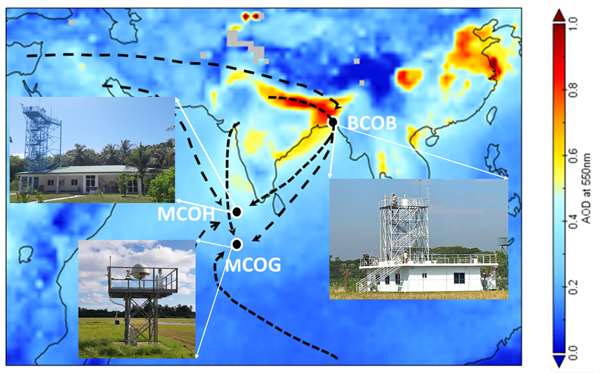
The South Asian Pollution Experiment 2018 used access to three strategically located receptor observatories. Observational constraints revealed opposing trends in the mass absorption cross sections of black carbon (BC MAC) and brown carbon (BrC MAC) during long-range transport. Models estimating the climate effects of BC aerosols may have underestimated the ambient BC MAC over distant receptor areas, leading to discrepancies in aerosol absorption predicted by observation-constrained models.
Seyed Reza Saghravani, Michael Ernst Böttcher, Wei-Li Hong, Karol Kuliński, Aivo Lepland, Arunima Sen, and Beata Szymczycha
Earth Syst. Sci. Data, 16, 3419–3431, https://doi.org/10.5194/essd-16-3419-2024, https://doi.org/10.5194/essd-16-3419-2024, 2024
Short summary
Short summary
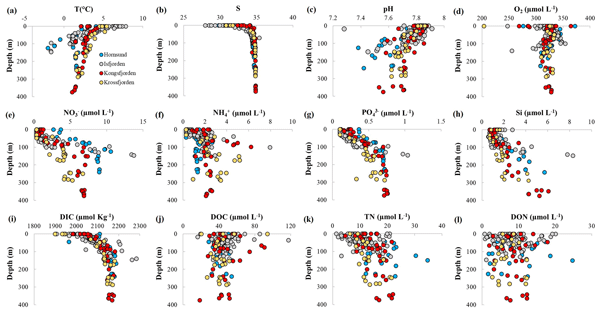
A comprehensive study conducted in 2021 examined the distributions of dissolved nutrients and carbon in the western Spitsbergen fjords during the high-melting season. Significant spatial variability was observed in the water column and pore water concentrations of constituents, highlighting the unique biogeochemical characteristics of each fjord and their potential impact on ecosystem functioning and oceanographic processes.
Mindaugas Žilius, Rūta Barisevičiūtė, Stefano Bonaglia, Isabell Klawonn, Elise Lorre, Tobia Politi, Irma Vybernaite-Lubiene, Maren Voss, and Paul Bukaveckas
EGUsphere, https://doi.org/10.5194/egusphere-2023-3054, https://doi.org/10.5194/egusphere-2023-3054, 2024
Preprint archived
Short summary
Short summary
This study analyzes the mechanisms driving nitrate retention and elimination within a large estuarine system. Simultaneous measurements of pelagic and benthic processes provide insight into how nitrates are transformed. Finally, our findings are consistent with the paradigm that eutrophication favors a shift from benthic to pelagic-dominated processes.
Leonard Kirago, Örjan Gustafsson, Samuel Mwaniki Gaita, Sophie L. Haslett, Michael J. Gatari, Maria Elena Popa, Thomas Röckmann, Christoph Zellweger, Martin Steinbacher, Jörg Klausen, Christian Félix, David Njiru, and August Andersson
Atmos. Chem. Phys., 23, 14349–14357, https://doi.org/10.5194/acp-23-14349-2023, https://doi.org/10.5194/acp-23-14349-2023, 2023
Short summary
Short summary
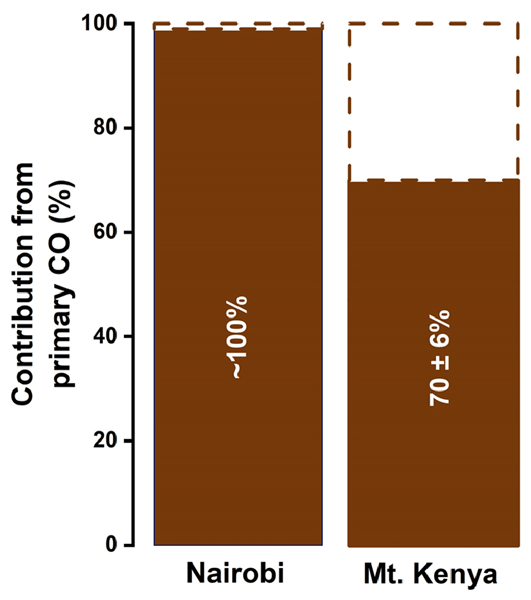
This study provides ground-observational evidence that supports earlier suggestions that savanna fires are the main emitters and modulators of carbon monoxide gas in Africa. Using isotope-based techniques, the study has shown that about two-thirds of this gas is emitted from savanna fires, while for urban areas, in this case Nairobi, primary sources approach 100 %. The latter has implications for air quality policy, suggesting primary emissions such as traffic should be targeted.
Christoph Heinze, Thorsten Blenckner, Peter Brown, Friederike Fröb, Anne Morée, Adrian L. New, Cara Nissen, Stefanie Rynders, Isabel Seguro, Yevgeny Aksenov, Yuri Artioli, Timothée Bourgeois, Friedrich Burger, Jonathan Buzan, B. B. Cael, Veli Çağlar Yumruktepe, Melissa Chierici, Christopher Danek, Ulf Dieckmann, Agneta Fransson, Thomas Frölicher, Giovanni Galli, Marion Gehlen, Aridane G. González, Melchor Gonzalez-Davila, Nicolas Gruber, Örjan Gustafsson, Judith Hauck, Mikko Heino, Stephanie Henson, Jenny Hieronymus, I. Emma Huertas, Fatma Jebri, Aurich Jeltsch-Thömmes, Fortunat Joos, Jaideep Joshi, Stephen Kelly, Nandini Menon, Precious Mongwe, Laurent Oziel, Sólveig Ólafsdottir, Julien Palmieri, Fiz F. Pérez, Rajamohanan Pillai Ranith, Juliano Ramanantsoa, Tilla Roy, Dagmara Rusiecka, J. Magdalena Santana Casiano, Yeray Santana-Falcón, Jörg Schwinger, Roland Séférian, Miriam Seifert, Anna Shchiptsova, Bablu Sinha, Christopher Somes, Reiner Steinfeldt, Dandan Tao, Jerry Tjiputra, Adam Ulfsbo, Christoph Völker, Tsuyoshi Wakamatsu, and Ying Ye
Biogeosciences Discuss., https://doi.org/10.5194/bg-2023-182, https://doi.org/10.5194/bg-2023-182, 2023
Revised manuscript not accepted
Short summary
Short summary
For assessing the consequences of human-induced climate change for the marine realm, it is necessary to not only look at gradual changes but also at abrupt changes of environmental conditions. We summarise abrupt changes in ocean warming, acidification, and oxygen concentration as the key environmental factors for ecosystems. Taking these abrupt changes into account requires greenhouse gas emissions to be reduced to a larger extent than previously thought to limit respective damage.
Cited articles
Apprill, A., Mcnally, S., Parsons, R., and Weber, L.: Minor revision to V4 region SSU rRNA 806R gene primer greatly increases detection of SAR11 bacterioplankton, Aquatic Microbial Ecology, 75, 129–137, https://doi.org/10.3354/ame01753, 2015.
Baranov, B., Galkin, S., Vedenin, A., Dozorova, K., Gebruk, A., and Flint, M.: Methane seeps on the outer shelf of the Laptev Sea: characteristic features, structural control, and benthic fauna, Geo-Mar Lett, https://doi.org/10.1007/s00367-020-00655-7, 2020.
Belin, B. J., Busset, N., Giraud, E., Molinaro, A., Silipo, A., and Newman, Di. K.: Hopanoid lipids: From membranes to plant-bacteria interactions, Nature Reviews Microbiology, https://doi.org/10.1038/nrmicro.2017.173, 2018.
Birgel, D. and Peckmann, J.: Aerobic methanotrophy at ancient marine methane seeps: A synthesis, Org. Geochem., 39, 1659–1667, https://doi.org/10.1016/j.orggeochem.2008.01.023, 2008.
Bischoff, J., Sparkes, R. B., Doğrul Selver, A., Spencer, R. G. M., Gustafsson, Ö., Semiletov, I. P., Dudarev, O. V., Wagner, D., Rivkina, E., van Dongen, B. E., and Talbot, H. M.: Source, transport and fate of soil organic matter inferred from microbial biomarker lipids on the East Siberian Arctic Shelf, Biogeosciences, 13, 4899–4914, https://doi.org/10.5194/bg-13-4899-2016, 2016.
Blumenberg, M., Naafs, B. D. A., Lückge, A., Lauretano, V., Schefuß, E., Galloway, J. M., Scheeder, G., and Reinhardt, L.: Biomarker Reconstruction of a High-Latitude Late Paleocene to Early Eocene Coal Swamp Environment Across the PETM and ETM-2 (Ellesmere Island, Arctic Canada), Paleoceanogr. Paleoclimatol., 39, https://doi.org/10.1029/2023PA004712, 2024.
Brussee, M., Holmstrand, H., Wild, B., Kosmach, D., Chernykh, D., Shakhova, N., Kurilenko, A., Semiletov, I., and Gustafsson, Ö.: Triple-isotopic analyses pinpoint microbial methane release from subsea permafrost in the inner Laptev Sea, Commun. Earth Environ., https://doi.org/10.1038/s43247-026-03222-7, 2026.
Bukhanov, B., Chuvilin, E., Zhmaev, M., Shakhova, N., Spivak, E., Dudarev, O., Osadchiev, A., Spasennykh, M., and Semiletov, I.: In situ bottom sediment temperatures in the Siberian arctic seas: Current state of subsea permafrost in the kara sea vs laptev and east Siberian seas, Mar. Pet. Geol., 157, https://doi.org/10.1016/j.marpetgeo.2023.106467, 2023.
Bussmann, I., Hackbusch, S., Schaal, P., and Wichels, A.: Methane distribution and oxidation around the Lena Delta in summer 2013, Biogeosciences, 14, 4985–5002, https://doi.org/10.5194/bg-14-4985-2017, 2017.
Bussmann, I., Fedorova, I., Juhls, B., Overduin, P. P., and Winkel, M.: Methane dynamics in three different Siberian water bodies under winter and summer conditions, Biogeosciences, 18, 2047–2061, https://doi.org/10.5194/bg-18-2047-2021, 2021.
Bröder, L., Tesi, T., Andersson, A., Semiletov, I., and Gustafsson, Ö.: Bounding cross-shelf transport time and degradation in Siberian-Arctic land-ocean carbon transfer, Nat. Commun., 9, https://doi.org/10.1038/s41467-018-03192-1, 2018.
Brüchert, V., Bröder, L., Sawicka, J. E., Tesi, T., Joye, S. P., Sun, X., Semiletov, I. P., and Samarkin, V. A.: Carbon mineralization in Laptev and East Siberian sea shelf and slope sediment, Biogeosciences, 15, 471–490, https://doi.org/10.5194/bg-15-471-2018, 2018.
Callahan, B. J., McMurdie, P. J., Rosen, M. J., Han, A. W., Johnson, A. J. A., and Holmes, S. P.: DADA2: High-resolution sample inference from Illumina amplicon data, Nat. Methods, 13, 581–583, https://doi.org/10.1038/nmeth.3869, 2016.
Chernykh, D., Shakhova, N., Yusupov, V., Gershelis, E., Morgunov, B., and Semiletov, I.: First Calibrated Methane Bubble Wintertime Observations in the Siberian Arctic Seas: Selected Results from the Fast Ice, Geosciences (Switzerland), 13, https://doi.org/10.3390/geosciences13080228, 2023.
Chuvilin, E., Bukhanov, B., Yurchenko, A., Davletshina, D., Shakhova, N., Spivak, E., Rusakov, V., Dudarev, O., Khaustova, N., Tikhonova, A., Gustafsson, O., Tesi, T., Martens, J., Jakobsson, M., Spasennykh, M., and Semiletov, I.: In-situ temperatures and thermal properties of the East Siberian Arctic shelf sediments: Key input for understanding the dynamics of subsea permafrost, Mar. Pet. Geol., 138, https://doi.org/10.1016/j.marpetgeo.2022.105550, 2022.
Damsté, J. S. S., Rijpstra, W. I. C., Dedysh, S. N., Foesel, B. U., and Villanueva, L.: Pheno- and genotyping of hopanoid production in Acidobacteria, Front. Microbiol., 8, https://doi.org/10.3389/fmicb.2017.00968, 2017.
Davies, K. L., Pancost, R. D., Edwards, M. E., Walter Anthony, K. M., Langdon, P. G., and Chaves Torres, L.: Diploptene δ13C values from contemporary thermokarst lake sediments show complex spatial variation, Biogeosciences, 13, 2611–2621, https://doi.org/10.5194/bg-13-2611-2016, 2016.
De Jonge, C., Talbot, H. M., Bischoff, J., Stadnitskaia, A., Cherkashov, G., and Sinninghe Damsté, J. S.: Bacteriohopanepolyol distribution in Yenisei River and Kara Sea suspended particulate matter and sediments traces terrigenous organic matter input, Geochim. Cosmochim. Acta, 174, 85–101, https://doi.org/10.1016/j.gca.2015.11.008, 2016.
Elvert, M. and Niemann, H.: Occurrence of unusual steroids and hopanoids derived from aerobic methanotrophs at an active marine mud volcano, Org. Geochem., 39, 167–177, https://doi.org/10.1016/j.orggeochem.2007.11.006, 2008.
Eriksson, A., Wild, B., Hong, W.-L., Holmstrand, H., Nascimento, F. J. A., Bonaglia, S., Kosmach, D., Semiletov, I., Shakhova, N., and Gustafsson, Ö.: Biomarker concentrations, compound-specific isotope data, and microbial information from Laptev Sea surface sediments, Bolin Centre Database. [data set], https://doi.org/10.17043/eriksson-2026-biomarker-1, 2026.
Fischer, W. W., Summons, R. E., and Pearson, A.: Targeted genomic detection of biosynthetic pathways: anaerobic production of hopanoid biomarkers by a common sedimentary microbe, Geobiology, 3, 33–40, https://doi.org/10.1111/j.1472-4669.2005.00041.x, 2005.
Freeman, K. H., Wakeham, S. G., and Hayes, J. M.: Predictive isotopic biogeochemistry: hydrocarbons from anoxic marine basins, Org. Geochem., 21, 629–644, https://doi.org/10.1016/0146-6380(94)90009-4, 1994.
Grinko, A. A., Goncharov, I. V., Shakhova, N. E., Gustafsson, Ö., Oblasov, N. V., Romankevich, E. A., Zarubin, A. G., Kashapov, R. S., Chernykh, D. V., Gershelis, E. V., Dudarev, O. V., Mazurov, A. K., and Semiletov, I. P.: Sediment organic matter in areas of intense methane release in the Laptev Sea: characteristics of molecular composition, Russ. Geol. Geophys., 61, 456–477, 2020.
Grinko, A. A., Gershelis, E. V., Cherykh, D. V., Kurilenko, A. V., Dudarev, O., Kosmach, D. A., and Semiletov, I. P.: Characterization of Organic Matter in Areas of Methane Emission in the Laptev Sea (Expedition 2016), Geochem. Int. 63, 496–509, https://doi.org/10.1134/S0016702924601451, 2025.
Hanson, R. S. and Hanson, T. E.: Methanotrophic Bacteria, Microbiological Reviews, 60, 439–471, 1996.
Hinrichs, K.: A molecular recorder of methane hydrate destabilization, Geochemistry, Geophysics, Geosystems, 2, https://doi.org/10.1029/2000gc000118, 2001.
Hinrichs, K., Hmel, L.R., and Sylva, S.P.: Molecular Fossil Record of Elevated Methane Levels in Late Pleistocene Coastal Waters, Science, 299, 1214–1217, https://doi.org/10.1126/science.1079601, 2003.
Holmes, R. M., McClelland, J. W., Peterson, B. J., Tank, S. E., Bulygina, E., Eglinton, T. I., Gordeev, V. V., Gurtovaya, T. Y., Raymond, P. A., Repeta, D. J., Staples, R., Striegl, R. G., Zhulidov, A. V., and Zimov, S. A.: Seasonal and Annual Fluxes of Nutrients and Organic Matter from Large Rivers to the Arctic Ocean and Surrounding Seas, Estuaries and Coasts, 35, 369–382, https://doi.org/10.1007/s12237-011-9386-6, 2012.
Hugelius, G., Ramage, J., Burke, E., Chatterjee, A., Smallman, T. L., Aalto, T., Bastos, A., Biasi, C., Canadell, J. G., Chandra, N., Chevallier, F., Ciais, P., Chang, J., Feng, L., Jones, M. W., Kleinen, T., Kuhn, M., Lauerwald, R., Liu, J., López-Blanco, E., Luijkx, I. T., Marushchak, M. E., Natali, S. M., Niwa, Y., Olefeldt, D., Palmer, P. I., Patra, P. K., Peters, W., Potter, S., Poulter, B., Rogers, B. M., Riley, W. J., Saunois, M., Schuur, E. A. G., Thompson, R. L., Treat, C., Tsuruta, A., Turetsky, M. R., Virkkala, A. M., Voigt, C., Watts, J., Zhu, Q., and Zheng, B.: Permafrost Region Greenhouse Gas Budgets Suggest a Weak CO2 Sink and CH4 and N2O Sources, But Magnitudes Differ Between Top-Down and Bottom-Up Methods, Global Biogeochem Cycles, 38, https://doi.org/10.1029/2023GB007969, 2024.
Inglis, G. N., Naafs, B. D. A., Zheng, Y., Schellekens, J., and Pancost, R. D.: δ13C values of bacterial hopanoids and leaf waxes as tracers for methanotrophy in peatlands, Geochim. Cosmochim. Acta, 260, 244–256, https://doi.org/10.1016/j.gca.2019.06.030, 2019.
Jahnke, L. L., Summons, R. E., Hope, J. M., and Des Marais, D. J.: Carbon isotopic fractionation in lipids from methanotrophic bacteria II: the effects of physiology and environmental parameters on the biosynthesis and isotopic signatures of biomarkers, Geochim. Coscmochim. Acta, 63, 79–93, https://doi.org/10.1016/S0016-7037(98)00270-1, 1999.
Jakobsson, M., Mohammad, R., Karlsson, M., Salas-Romero, S., Vacek, F., Heinze, F., Bringensparr, C., Castro, C. F., Johnson, P., Kinney, J., Cardigos, S., Bogonko, M., Accettella, D., Amblas, D., An, L., Bohan, A., Brandt, A., Bünz, S., Canals, M., Casamor, J. L., Coakley, B., Cornish, N., Danielson, S., Demarte, M., Di Franco, D., Dickson, M. L., Dorschel, B., Dowdeswell, J. A., Dreutter, S., Fremand, A. C., Hall, J. K., Hally, B., Holland, D., Hong, J. K., Ivaldi, R., Knutz, P. C., Krawczyk, D. W., Kristofferson, Y., Lastras, G., Leck, C., Lucchi, R. G., Masetti, G., Morlighem, M., Muchowski, J., Nielsen, T., Noormets, R., Plaza-Faverola, A., Prescott, M. M., Purser, A., Rasmussen, T. L., Rebesco, M., Rignot, E., Rysgaard, S., Silyakova, A., Snoeijs-Leijonmalm, P., Sørensen, A., Straneo, F., Sutherland, D. A., Tate, A. J., Travaglini, P., Trenholm, N., van Wijk, E., Wallace, L., Willis, J. K., Wood, M., Zimmermann, M., Zinglersen, K. B., and Mayer, L.: The International Bathymetric Chart of the Arctic Ocean Version 5.0, Scientific Data, 11, https://doi.org/10.1038/s41597-024-04278-w, 2024.
Kannenberg, E. L., Perzl, M., and Härtner, T.: The occurrence of hopanoid lipids in Bradyrhizobium bacteria, FEMS Microbiol. Lett., 127, 255–262, https://doi.org/10.1111/j.1574-6968.1995.tb07482.x, 1995.
Lindgren, A., Hugelius, G., and Kuhry, P.: Extensive loss of past permafrost carbon but a net accumulation into present-day soils, Nature, 560, 219–222, https://doi.org/10.1038/s41586-018-0371-0, 2018.
Maciute, A., Broman, E., Nascimento, F. J. A., Tesi, T., Yakushev, E., Wild, B., Kirillova, E., Semiletov, I., Gustafsson, Ö., and Bonaglia, S.: Environmental Gradients, Not Geographic Boundaries, Structure Meiofaunal Communities in Siberian Seas, Environmental DNA, 7, https://doi.org/10.1002/edn3.70124, 2025.
Mackenzie, A. S., Lewis, C. A., and Maxwell, J. R.: Molecular parameters of maturation in the Toarcian shales, Paris Basin, France-IV. Laboratory thermal alteration studies, Geochim. Cosmochim. Acta, 45, 2369–2376, https://doi.org/10.1016/0016-7037(81)90090-9, 1981.
Mao, S. H., Zhang, H. H., Zhuang, G. C., Li, X. J., Liu, Q., Zhou, Z., Wang, W. L., Li, C. Y., Lu, K. Y., Liu, X. T., Montgomery, A., Joye, S. B., Zhang, Y. Z., and Yang, G. P.: Aerobic oxidation of methane significantly reduces global diffusive methane emissions from shallow marine waters, Nat. Commun., 13, https://doi.org/10.1038/s41467-022-35082-y, 2022.
Martens, J., Wild, B., Muschitiello, F., O'regan, M., Jakobsson, M., Semiletov, I., Dudarev, O. V., and Gustafsson, Ö.: Remobilization of dormant carbon from Siberian-Arctic permafrost during three past warming events, Sci. Adv., 6, eabb6546, https://doi.org/10.1126/sciadv.abb6546, 2020.
Martens, J., Wild, B., Semiletov, I., Dudarev, O. V., and Gustafsson, Ö.: Circum-Arctic release of terrestrial carbon varies between regions and sources, Nat. Commun., 13, https://doi.org/10.1038/s41467-022-33541-0, 2022.
McClelland, J. W., Holmes, R. M., Peterson, B. J., Raymond, P. A., Striegl, R. G., Zhulidov, A. V., Zimov, S. A., Zimov, N., Tank, S. E., Spencer, R. G. M., Staples, R., Gurtovaya, T. Y., and Griffin, C. G.: Particulate organic carbon and nitrogen export from major Arctic rivers, Global Biogeochem. Cycles, 30, 629–643, https://doi.org/10.1002/2015GB005351, 2016.
Milkov, A. V. and Etiope, G.: Revised genetic diagrams for natural gases based on a global dataset of > 20,000 samples, Org. Geochem, 125, 109–120, https://doi.org/10.1016/j.orggeochem.2018.09.002, 2018.
Nicolsky, D. and Shakhova, N.: Modeling sub-sea permafrost in the East Siberian Arctic Shelf: The dmitry laptev strait, Environmental Research Letters, 5, https://doi.org/10.1088/1748-9326/5/1/015006, 2010.
Obu, J., Westermann, S., Bartsch, A., Berdnikov, N., Christiansen, H. H., Dashtseren, A., Delaloye, R., Elberling, B., Etzelmüller, B., Kholodov, A., Khomutov, A., Kääb, A., Leibman, M. O., Lewkowicz, A. G., Panda, S. K., Romanovsky, V., Way, R. G., Westergaard-Nielsen, A., Wu, T., Yamkhin, J., and Zou, D.: Northern Hemisphere permafrost map based on TTOP modelling for 2000–2016 at 1 km2 scale, Earth-Science Reviews, https://doi.org/10.1016/j.earscirev.2019.04.023, 1 June 2019.
Overduin, P. P., Schneider von Deimling, T., Miesner, F., Grigoriev, M. N., Ruppel, C., Vasiliev, A., Lantuit, H., Juhls, B., and Westermann, S.: Submarine Permafrost Map in the Arctic Modeled Using 1-D Transient Heat Flux (SuPerMAP), J. Geophys. Res. Oceans, 124, 3490–3507, https://doi.org/10.1029/2018JC014675, 2019.
Ourisson, G., Albrecht, P., and Rohmer, M.: The hopanoids: palaeochemistry and biochemistry of a group of natural products, Pure Appl. Chem., 51, 709–729, https://doi.org/10.1351/pac197951040709, 1979.
Pancost, R. D., Coleman, J. M., Love, G. D., Chatzi, A., Bouloubassi, I., and Snape, C. E.: Kerogen-bound glycerol dialkyl tetraether lipids released by hydropyrolysis of marine sediments: A bias against incorporation of sedimentary organisms?, Org. Geochem., 39, 1359–1371, https://doi.org/10.1016/j.orggeochem.2008.05.002, 2008.
Parada, A. E., Needham, D. M., and Fuhrman, J. A.: Every base matters: Assessing small subunit rRNA primers for marine microbiomes with mock communities, time series and global field samples, Environ. Microbiol., 18, 1403–1414, https://doi.org/10.1111/1462-2920.13023, 2016.
Parnell, A. C., Phillips, D. L., Bearhop, S., Semmens, B. X., Ward, E. J., Moore, J. W., Jackson, A. L., Grey, J., Kelly, D. J., and Inger, R.: Bayesian stable isotope mixing models, Environmetrics, 24, 387–399, https://doi.org/10.1002/env.2221, 2013.
Quast, C., Pruesse, E., Yilmaz, P., Gerken, J., Schweer, T., Yarza, P., Peplies, J., and Glöckner, F. O.: The SILVA ribosomal RNA gene database project: Improved data processing and web-based tools, Nucleic Acids Res., 41, https://doi.org/10.1093/nar/gks1219, 2013.
Racolta, S., Juhl, P. B., Sirim, D., and Pleiss, J.: The triterpene cyclase protein family: a systematic analysis, Proteins, 80, 2009–2019, https://doi.org/10.1002/prot.24089, 2012.
Ramage, J., Kuhn, M., Virkkala, A. M., Voigt, C., Marushchak, M. E., Bastos, A., Biasi, C., Canadell, J. G., Ciais, P., López-Blanco, E., Natali, S. M., Olefeldt, D., Potter, S., Poulter, B., Rogers, B. M., Schuur, E. A. G., Treat, C., Turetsky, M. R., Watts, J., and Hugelius, G.: The Net GHG Balance and Budget of the Permafrost Region (2000–2020) From Ecosystem Flux Upscaling, Global Biogeochem. Cycles, 38, https://doi.org/10.1029/2023GB007953, 2024.
Romanovskii, N. N. and Hubberten, H. W.: Results of permafrost modelling of the lowlands and shelf of the Laptev Sea Region, Russia, Permafr. Periglac. Process., 12, 191–202, https://doi.org/10.1002/ppp.387, 2001.
Romanovskii, N. N., Hubberten, H. W., Gavrilov, A. V., Eliseeva, A. A., and Tipenko, G. S.: Offshore permafrost and gas hydrate stability zone on the shelf of East Siberian Seas, Geo-Marine Letters, 25, 167–182, https://doi.org/10.1007/s00367-004-0198-6, 2005.
Rutz, A., Sorokina, M., Galgonek, J., Mietchen, D., Willighagen, E., Gaudry, A., Graham, J. G., Stephan, R., Page, R., Vondrášek, J., Steinbeck, C., Pauli, G. F., Wolfender, J. L., Bisson, J., and Allard, P. M.: The LOTUS initiative for open knowledge management in natural products research, Elife, 11, https://doi.org/10.7554/eLife.70780, 2022.
Salvadó, J. A., Tesi, T., Sundbom, M., Karlsson, E., Kruså, M., Semiletov, I. P., Panova, E., and Gustafsson, Ö.: Contrasting composition of terrigenous organic matter in the dissolved, particulate and sedimentary organic carbon pools on the outer East Siberian Arctic Shelf, Biogeosciences, 13, 6121–6138, https://doi.org/10.5194/bg-13-6121-2016, 2016.
Samylina, O. S., Rusanov, I. I., Tarnovetskii, I. Y., Yakushev, E. V., Grinko, A. A., Zakharova, E. E., Merkel, A. Y., Kanapatskiy, T. A., Semiletov, I. P., and Pimenov, N. V.: On the Possibility of Aerobic Methane Production by Pelagic Microbial Communities of the Laptev Sea, Microbiology (Russian Federation), 90, 145–157, https://doi.org/10.1134/S0026261721020119, 2021.
Sapart, C. J., Shakhova, N., Semiletov, I., Jansen, J., Szidat, S., Kosmach, D., Dudarev, O., van der Veen, C., Egger, M., Sergienko, V., Salyuk, A., Tumskoy, V., Tison, J.-L., and Röckmann, T.: The origin of methane in the East Siberian Arctic Shelf unraveled with triple isotope analysis, Biogeosciences, 14, 2283–2292, https://doi.org/10.5194/bg-14-2283-2017, 2017.
Saunois, M., Martinez, A., Poulter, B., Zhang, Z., Raymond, P. A., Regnier, P., Canadell, J. G., Jackson, R. B., Patra, P. K., Bousquet, P., Ciais, P., Dlugokencky, E. J., Lan, X., Allen, G. H., Bastviken, D., Beerling, D. J., Belikov, D. A., Blake, D. R., Castaldi, S., Crippa, M., Deemer, B. R., Dennison, F., Etiope, G., Gedney, N., Höglund-Isaksson, L., Holgerson, M. A., Hopcroft, P. O., Hugelius, G., Ito, A., Jain, A. K., Janardanan, R., Johnson, M. S., Kleinen, T., Krummel, P. B., Lauerwald, R., Li, T., Liu, X., McDonald, K. C., Melton, J. R., Mühle, J., Müller, J., Murguia-Flores, F., Niwa, Y., Noce, S., Pan, S., Parker, R. J., Peng, C., Ramonet, M., Riley, W. J., Rocher-Ros, G., Rosentreter, J. A., Sasakawa, M., Segers, A., Smith, S. J., Stanley, E. H., Thanwerdas, J., Tian, H., Tsuruta, A., Tubiello, F. N., Weber, T. S., van der Werf, G. R., Worthy, D. E. J., Xi, Y., Yoshida, Y., Zhang, W., Zheng, B., Zhu, Q., Zhu, Q., and Zhuang, Q.: Global Methane Budget 2000–2020, Earth Syst. Sci. Data, 17, 1873–1958, https://doi.org/10.5194/essd-17-1873-2025, 2025.
Savvichev, A. S., Rusanov, I. I., Kadnikov, V. V., Beletsky, A. V., Zakcharova, E. E., Samylina, O. S., Sigalevich, P. A., Semiletov, I. P., Ravin, N. V., and Pimenov, N. V.: Biogeochemical Activity of Methane-Related Microbial Communities in Bottom Sediments of Cold Seeps of the Laptev Sea, Microorganisms, 11, https://doi.org/10.3390/microorganisms11020250, 2023.
Schwartz-Narbonne, R., Schaeffer, P., Lengger, S. K., Blewett, J., Martin Jones, D., Motsch, E., Crombie, A., Jetten, M. S. M., Mikkelsen, D., Normand, P., Nuijten, G. H. L., Pancost, R. D., and Rush, D.: Bacterial physiology highlighted by the δ13C fractionation of bacteriohopanetetrol isomers, Org Geochem, 181, https://doi.org/10.1016/j.orggeochem.2023.104617, 2023.
Semiletov, I. P.: Aquatic Sources and Sinks of CO2 and CH4 in the Polar Regions, Journal of the Atmospheric Sciences 56, 286–306, https://doi.org/10.1175/1520-0469(1999)056<0286:ASASOC>2.0.CO;2, 1999.
Sessions, A. L., Zhang, L., Welander, P. V, Doughty, D., Summons, R. E., and Newman, D. K.: Identification and quantification of polyfunctionalized hopanoids by high temperature gas chromatography-mass spectrometry, Organic Geochemistry, 56, 120–130, https://doi.org/10.1016/j.orggeochem.2012.12.009, 2013.
Shakhova, N., Semiletov, I., Salyuk, A., Yusupov, V., Kosmach, D., and Gustafsson, Ö.: Extensive Methane Venting to the Atmosphere from Sediments of the East Siberian Arctic Shelf, Science, 327, 1246–1250, https://doi.org/10.1126/science.1182221, 2010.
Shakhova, N. and Semiletov, I.: Methane release and coastal environment in the East Siberian Arctic shelf, Journal of Marine Systems, 66, 227–243, https://doi.org/10.1016/j.jmarsys.2006.06.006, 2007.
Shakhova, N., Semiletov, I., Leifer, I., Sergienko, V., Salyuk, A., Kosmach, D., Chernykh, D., Stubbs, C., Nicolsky, D., Tumskoy, V., and Gustafsson, Ö.: Ebullition and storm-induced methane release from the East Siberian Arctic Shelf, Nat. Geosci., 7, 64–70, https://doi.org/10.1038/ngeo2007, 2014.
Shakhova, N., Semiletov, I., Sergienko, V., Lobkovsky, L., Yusupov, V., Salyuk, A., Salomatin, A., Chernykh, D., Kosmach, D., Panteleev, G., Nicolsky, D., Samarkin, V., Joye, S., Charkin, A., Dudarev, O., Meluzov, A., and Gustafsson, Ö.: The East Siberian Arctic Shelf: towards further assessment of permafrost-related methane fluxes and role of sea ice, Philos. Trans. R. Soc. A, 373, 20140451, https://doi.org/10.1098/rsta.2014.0451, 2015.
Shakhova, N., Semiletov, I., Gustafsson, O., Sergienko, V., Lobkovsky, L., Dudarev, O., Tumskoy, V., Grigoriev, M., Mazurov, A. K., Salyuk, A., Ananiev, R., Koshurnikov, A., Kosmach, D., Charkin, A., Dmitrevsky, N., Karnaukh, V., Gunar, A., Meluzov, A., and Chernykh, D.: Current rates and mechanisms of subsea permafrost degradation in the East Siberian Arctic Shelf, Nat. Commun., 8, https://doi.org/10.1038/ncomms15872, 2017.
Shakhova, N., Semiletov, I., and Chuvilin, E.: Understanding the Permafrost–Hydrate System and Associated Methane Releases in the East Siberian Arctic Shelf, Geosciences, 9, 251, https://doi.org/10.3390/geosciences9060251, 2019.
Sinninghe Damsté, J. S., Rijpstra, W. I. C., Schouten, S., Fuerst, J. A., Jetten, M. S. M., and Strous, M.: The occurrence of hopanoids in planctomycetes: Implications for the sedimentary biomarker record, Org. Geochem., 35, 561–566, https://doi.org/10.1016/j.orggeochem.2004.01.013, 2004.
Sinninghe Damsté, J. S., Schouten, S., and Volkman, J. K.: C27-C30 neohop-13(18)-enes and their saturated and aromatic derivatives in sediments: Indicators for diagenesis and water column stratification, Geochim. Cosmochim. Acta, 133, 402–421, https://doi.org/10.1016/j.gca.2014.03.008, 2014.
Sinninghe Damsté, J. S., Rijpstra, W. I. C., Dedysh, S. N., Foesel, B. U., and Villanueva, L.: Pheno- and genotyping of hopanoid production in Acidobacteria, Frontiers in Microbiology, 8, 968, https://doi.org/10.3389/fmicb.2017.00968, 2017.
Sohlenkamp, C. and Geiger, O.: Bacterial membrane lipids: Diversity in structures and pathways, FEMS Microbiology Reviews, 40 133–159, https://doi.org/10.1093/femsre/fuv008, 2016.
Soloviev, V. A., Ginzburg, G. D., Telepnev, E. V., and Mikhaluk, Y. N.: Cryothermia and Gas Hydrates in the Arctic Ocean, 150 pp., Sevmorgelogia, Leningrad, Russia, 1987.
Steinbach, J., Holmstrand, H., Shcherbakova, K., Kosmach, D., Brüchert, V., Shakhova, N., Salyuk, A., Sapart, C. J., Chernykh, D., Noormets, R., Semiletov, I., and Gustafsson, Ö.: Source apportionment of methane escaping the subsea permafrost system in the outer Eurasian Arctic Shelf, PNAS, https://doi.org/10.1073/pnas.2019672118, 2021.
Stepanova, S. V., Polukhin, A. A., and Kostyleva, A. V.: Hydrochemical structure of the waters in the eastern part of the Laptev Sea in autumn 2015, Oceanology, 57, 58–64, https://doi.org/10.1134/S0001437017010180, 2017.
Summons, R. E., Jahnke, L. L., and Roksandic, Z.: Carbon isotopic fractionation in lipids from methanotrophic bacteria: Relevance for interpretation of the geochemical record of biomarkers, Geochim. Cosmochim. Acta, 2853–2863, https://doi.org/10.1016/0016-7037(94)90119-8, 1994.
Summons, R. E., Jahnke, L. L., Hope, J. M., and Logan, G. A.: 2-Methylhopanoids as biomarkers for cyanobacterial oxygenic photosynthesis, Nature, 400, 554–557, https://doi.org/10.1038/23005, 1999.
Sun, F., Hu, W., Cao, J., Wang, X., Zhang, Z., Ramezani, J., and Shen, S.: Sustained and intensified lacustrine methane cycling during Early Permian climate warming, Nat. Commun., 13, https://doi.org/10.1038/s41467-022-32438-2, 2022.
Takeuchi, M., Katayama, T., Yamagishi, T., Hanada, S., Tamaki, H., Kamagata, Y., Oshima, K., Hattori, M., Marumo, K., Nedachi, M., Maeda, H., Suwa, Y., and Sakata, S.: Methyloceanibacter caenitepidi gen. nov., sp. nov., a facultatively methylotrophic bacterium isolated from marine sediments near a hydrothermal vent, Int. J. Syst. Evol. Microbiol., 64, 462–468, https://doi.org/10.1099/ijs.0.053397-0, 2014.
Takeuchi, M., Ozaki, H., Hiraoka, S., Kamagata, Y., Sakata, S., Yoshioka, H., and Iwasaki, W.: Possible cross-feeding pathway of facultative methylotroph Methyloceanibacter caenitepidi Gela4 on methanotroph Methylocaldum marinum S8, PloS One, 14, https://doi.org/10.1371/journal.pone.0213535, 2019.
Thornton, B., Geibel, M. C., Crill, P. M., Humborg, C., and Mörth, C. M: Methane fluxes from the sea to the atmosphere across the Siberian shelf seas, Geophys. Res. Lett., 43, 5869–5877, https://doi.org/10.1002/2016GL068977, 2016.
Thornton, B., Prytherch, J., Anderson, K., Brooks, I. M., Salisbury, D., Tjernström, M., and Crill, P. M.: Shipborne eddy covariance observations of methane fluxes constrain Arctic sea emissions, Sci. Adv., 6, eaay7934, https://doi.org/10.1126/sciadv.aay7934, 2020.
Tikhonova, E. N., Kadnikov, V. V., Rusanov, I. I., Beletsky, A. V., Zakharova, E. E., Samylina, O. S., Ravin, N. V., and Pimenov, N. V.: Methane-Oxidizing Activity and Phylogenetic Diversity of Aerobic Methanotrophs in the Laptev Sea Upper Sediment Horizons, Microbiology (Russian Federation), 90, 314–323, https://doi.org/10.1134/S0026261721030127, 2021.
van Dongen, B. E., Semiletov, I., Weijers, J. W. H., and Gustafsson, Ö.: Contrasting lipid biomarker composition of terrestial organic matter exported from across the Eurasian Arctic by the five great Russian Arctic rivers, Global Biogeochem. Cycles, 22, https://doi.org/10.1029/2007GB002974, 2008.
van Winden, J. F., Talbot, H. M., Reichart, G. J., McNamara, N. P., Benthien, A., and Sinninghe Damsté, J. S.: Influence of temperature on the δ13C values and distribution of methanotroph-related hopanoids in Sphagnum-dominated peat bogs, Geobiology, 18, 497–507, https://doi.org/10.1111/gbi.12389, 2020.
Vekeman, B., Kerckhof, F.-M., Cremers, G., De Vos, P., Vandamme, P., Boon, N., Op Den Camp, H. J. M., and Heylen, K.: New Methyloceanibacter diversity from North Sea sediments includes methanotroph containing solely the soluble methane monooxygenase, Environ. Microbiol., 18, 4523–4536, 2016.
Vonk, J. E., Sanchez-Garca, L., Van Dongen, B. E., Alling, V., Kosmach, D., Charkin, A., Semiletov, I. P., Dudarev, O. V., Shakhova, N., Roos, P., Eglinton, T. I., Andersson, A., and Gustafsson, A.: Activation of old carbon by erosion of coastal and subsea permafrost in Arctic Siberia, Nature, 489, 137–140, https://doi.org/10.1038/nature11392, 2012.
Wild, B., Shakhova, N., Dudarev, O., Ruban, A., Kosmach, D., Tumskoy, V., Tesi, T., Grimm, H., Nybom, I., Matsubara, F., Alexanderson, H., Jakobsson, M., Mazurov, A., Semiletov, I., and Gustafsson, Ö.: Organic matter composition and greenhouse gas production of thawing subsea permafrost in the Laptev Sea, Nat. Commun., 13, https://doi.org/10.1038/s41467-022-32696-0, 2022.
Wittig, S., Berchet, A., Pison, I., Saunois, M., and Paris, J.-D.: Surface networks in the Arctic may miss a future methane bomb, Atmos. Chem. Phys., 24, 6359–6373, https://doi.org/10.5194/acp-24-6359-2024, 2024.
Xie, L., Yakushev, E., Semiletov, I., Grinko, A., Gangnus, I., Berezina, A., Osadchiev, A., Zhdanov, I., Polukhin, A., Moiseeva, J., Purgina, D., Pipko, I., Pugach, S., Dudarev, O., and Ge, Z.: Biogeochemical structure of the Laptev Sea in 2015-2020 associated with the River Lena plume, Front. Mar. Sci. 10, 1180054, https://doi.org/10.3389/fmars.2023.1180054, 2023.
Yan, X., Liu, J., Kang, W., Huang, X., Zhou, A., Chen, L., Zhang, J., Dong, H., Chen, Z., Wu, J., Holmstrand, H., Rühland, K. M., Smol, J. P., Chen, F., and Gustafsson, Ö.: Pronounced methane cycling in northern lakes coincided with a rapid rise in atmospheric CH4 during the last deglacial warming, Sci. Adv., 11, eadt2561, https://doi.org/10.1126/sciadv.adt2561, 2025.
Short summary
Thawing subsea permafrost in the East Siberian Arctic Seas releases methane, a potent greenhouse gas. Using molecular fossils in sediments, we traced aerobic methane oxidation as a proxy of enhanced methane cycling across the Laptev Sea, including in regions once thought low in emissions. This approach captures long-term patterns of methane cycling over years-decades , overcoming limits of short-term seawater measurements and highlights the importance of the Laptev Sea in Arctic methane cycling.
Thawing subsea permafrost in the East Siberian Arctic Seas releases methane, a potent greenhouse...


Altmetrics
Final-revised paper
Preprint