
Articles | Volume 23, issue 5
https://doi.org/10.5194/bg-23-1809-2026
© Author(s) 2026. This work is distributed under
the Creative Commons Attribution 4.0 License.
the Creative Commons Attribution 4.0 License.
https://doi.org/10.5194/bg-23-1809-2026
© Author(s) 2026. This work is distributed under
the Creative Commons Attribution 4.0 License.
the Creative Commons Attribution 4.0 License.
Research article
| 
10 Mar 2026
Research article |
| 10 Mar 2026
| 10 Mar 2026
Evaluating glycerol dialkyl glycerol tetraether (GDGT)-based reconstructions from varved lake sediments during the Holocene

School of Geography and Environmental Science, University of Southampton, Southampton, UK
School of Ocean and Earth Science, University of Southampton, Southampton, UK
Gordon N. Inglis
School of Ocean and Earth Science, University of Southampton, Southampton, UK
Peter G. Langdon
School of Geography and Environmental Science, University of Southampton, Southampton, UK
McKenzie R. Bentley
School of Ocean and Earth Science, University of Southampton, Southampton, UK
Achim Brauer
GFZ Helmholz Centre for Geosciences, Potsdam, Germany
Ian Bull
School of Chemistry, University of Bristol, Bristol, UK
Daisy Fallows
School of Geography and Environmental Science, University of Southampton, Southampton, UK
School of Ocean and Earth Science, University of Southampton, Southampton, UK
Paul Lincoln
Department of Geography, Kings College London, London, UK
Antti E. K. Ojala
Department of Geography and Geology, University of Turku, Turku, Finland
Geological Survey of Finland, Espoo, Finland
Helen L. Whelton
School of Chemistry, University of Bristol, Bristol, UK
Celia Martin-Puertas
Department of Geography, Royal Holloway University of London, Egham, UK
Department of Stratigraphy and Palaeontology, University of Granada, Granada, Spain
Related authors
No articles found.
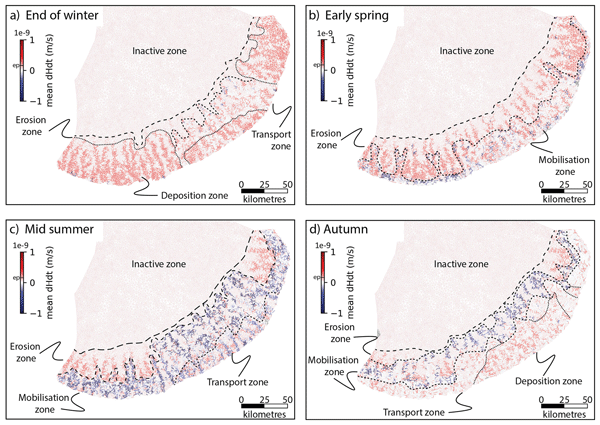
Alan R. A. Aitken, Adam J. Hepburn, and Antti E. K. Ojala
The Cryosphere, 20, 4491–4513, https://doi.org/10.5194/tc-20-4491-2026, https://doi.org/10.5194/tc-20-4491-2026, 2026
Short summary
Short summary
Understanding past ice sheet behaviours is key to predicting future ice sheets in a warming climate, but meshing geological observations with ice sheet models is challenging. This manuscript models the sedimentary system of the Finnish Lake District Ice Lobe during its retreat about 12 000 years ago, when extensive water flow developed under the ice, and connects models with observations. The approach opens a path to improve knowledge of previously glaciated regions and systems under ice today.
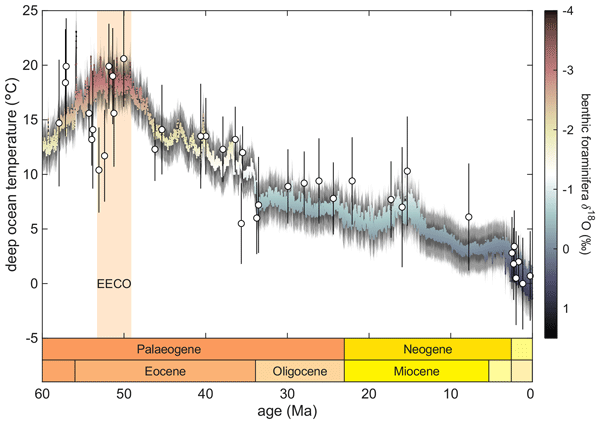
Daniel J. Lunt, Nicky M. Wright, Bram Vaes, Ulrich Salzmann, James W. B. Rae, Thomas Hickler, David K. Hutchinson, Julia Brugger, Jiang Zhu, Sebastian Steinig, A. Nele Meckler, Gordon N. Inglis, David Evans, Agatha M. de Boer, Bette L. Otto-Bliesner, Natalie Burls, Yurui Zhang, Appy Sluijs, Tammo Reichgelt, Igor Niezgodzki, Katrin Meissner, Jean-Baptiste Ladant, Fanni D. Kelemen, Matthew Huber, David R. Greenwood, Mattias Green, Flavia Boscolo-Galazzo, Manuel Tobias Blau, and Michiel Baatsen
Geosci. Model Dev., 19, 6143–6166, https://doi.org/10.5194/gmd-19-6143-2026, https://doi.org/10.5194/gmd-19-6143-2026, 2026
Short summary
Short summary
The early Eocene, about 50 million years ago, was a super-warm period of Earth's history, with high concentrations of carbon dioxide in the atmosphere. Here, we provide a framework and experimental design for climate modellers to carry out a coordinated project, simulating this period. This is the second phase of this project, and here we provide updated maps of the Earth's mountains and ocean floor, and vegetation, to enable more accurate modelling.
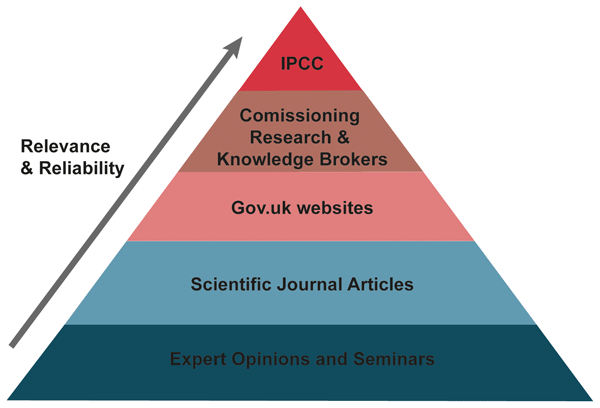
Laura Boyall, Alice Mary Milner, Klaus Dodds, and Celia Martin-Puertas
Geosci. Commun., 9, 275–289, https://doi.org/10.5194/gc-9-275-2026, https://doi.org/10.5194/gc-9-275-2026, 2026
Short summary
Short summary
Climate decisions are often based on recent measurements, but records of past climates can show how the climate system act over longer periods. This study explored how information about past climates is currently used in UK policy decisions and its limitations in policy. Interviews with policy advisors and climate scientists showed strong interest in using past climate evidence, but poor communication was a limitation. Improving how evidence is shared will help strengthen climate decisions
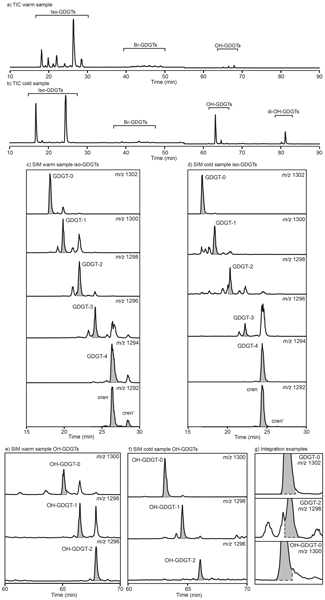
Peter K. Bijl, Kasia K. Śliwińska, Bella Duncan, Arnaud Huguet, Sebastian Naeher, Ronnakrit Rattanasriampaipong, Claudia Sosa-Montes de Oca, Alexandra Auderset, Melissa A. Berke, Bum Soo Kim, Nina Davtian, Tom Dunkley Jones, Desmond D. Eefting, Felix J. Elling, Pierrick Fenies, Gordon N. Inglis, Lauren O'Connor, Richard D. Pancost, Francien Peterse, Addison Rice, Appy Sluijs, Devika Varma, Wenjie Xiao, and Yi Ge Zhang
Biogeosciences, 22, 6465–6508, https://doi.org/10.5194/bg-22-6465-2025, https://doi.org/10.5194/bg-22-6465-2025, 2025
Short summary
Short summary
Many academic laboratories worldwide process environmental samples for analysis of membrane lipid molecules of archaea, for the reconstruction of past environmental conditions. However, the sample workup scheme involves many steps, each of which has a risk of contamination or bias, affecting the results. This paper reviews steps involved in sampling, extraction and analysis of lipids, interpretation and archiving of the data. This ensures reproducible, reusable, comparable and consistent data.
Laura Boyall, Andrew C. Parnell, Paul Lincoln, Antti Ojala, Armand Hernández, and Celia Martin-Puertas
Clim. Past, 21, 1465–1480, https://doi.org/10.5194/cp-21-1465-2025, https://doi.org/10.5194/cp-21-1465-2025, 2025
Short summary
Short summary
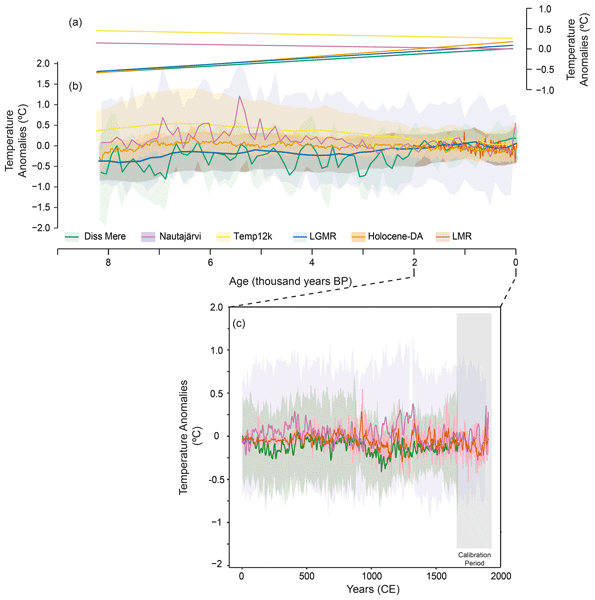
We present a new approach to reconstructing annual mean temperature using geochemical data from lake sediments. This paper uses Bayesian inference, a type of statistical approach, and creates a model called Simulating Climate Using Bayesian Inference with proxy Data Observations (SCUBIDO), which takes the high-resolution geochemical data and transforms them into quantitative climate information at an annual resolution. We show the results from two lakes in England and Finland to produce temperature reconstructions for the past 8000 years with data every year.
Adam J. Hepburn, Christine F. Dow, Antti Ojala, Joni Mäkinen, Elina Ahokangas, Jussi Hovikoski, Jukka-Pekka Palmu, and Kari Kajuutti
The Cryosphere, 18, 4873–4916, https://doi.org/10.5194/tc-18-4873-2024, https://doi.org/10.5194/tc-18-4873-2024, 2024
Short summary
Short summary
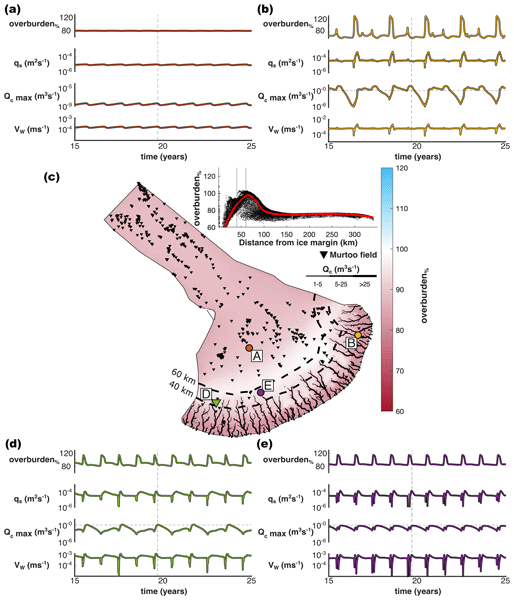
Terrain formerly occupied by ice sheets in the last ice age allows us to parameterize models of basal water flow using terrain and data unavailable beneath current ice sheets. Using GlaDS, a 2D basal hydrology model, we explore the origin of murtoos, a specific landform found throughout Finland that is thought to mark the upper limit of channels beneath the ice. Our results validate many of the predictions of murtoo origins and demonstrate that such models can be used to explore past ice sheets.
Anna Beckett, Cecile Blanchet, Alexander Brauser, Rebecca Kearney, Celia Martin-Puertas, Ian Matthews, Konstantin Mittelbach, Adrian Palmer, Arne Ramisch, and Achim Brauer
Earth Syst. Sci. Data, 16, 595–604, https://doi.org/10.5194/essd-16-595-2024, https://doi.org/10.5194/essd-16-595-2024, 2024
Short summary
Short summary
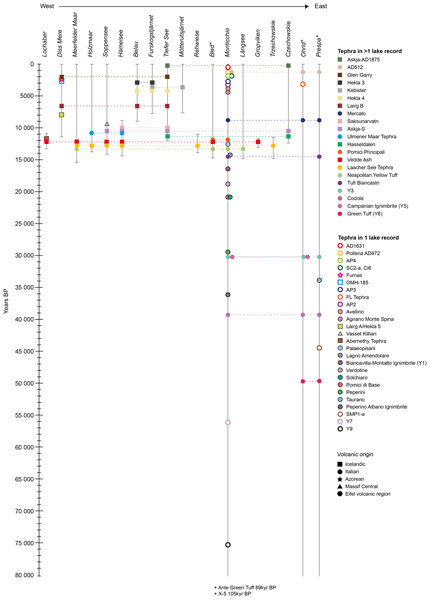
This paper focuses on volcanic ash (tephra) in European annually laminated (varve) lake records from the period 25 to 8 ka. Tephra enables the synchronisation of these lake records and their proxy reconstructions to absolute timescales. The data incorporate geochemical data from tephra layers across 19 varve lake records. We highlight the potential for synchronising multiple records using tephra layers across continental scales whilst supporting reproducibility through accessible data.
Helen Mackay, Gill Plunkett, Britta J. L. Jensen, Thomas J. Aubry, Christophe Corona, Woon Mi Kim, Matthew Toohey, Michael Sigl, Markus Stoffel, Kevin J. Anchukaitis, Christoph Raible, Matthew S. M. Bolton, Joseph G. Manning, Timothy P. Newfield, Nicola Di Cosmo, Francis Ludlow, Conor Kostick, Zhen Yang, Lisa Coyle McClung, Matthew Amesbury, Alistair Monteath, Paul D. M. Hughes, Pete G. Langdon, Dan Charman, Robert Booth, Kimberley L. Davies, Antony Blundell, and Graeme T. Swindles
Clim. Past, 18, 1475–1508, https://doi.org/10.5194/cp-18-1475-2022, https://doi.org/10.5194/cp-18-1475-2022, 2022
Short summary
Short summary
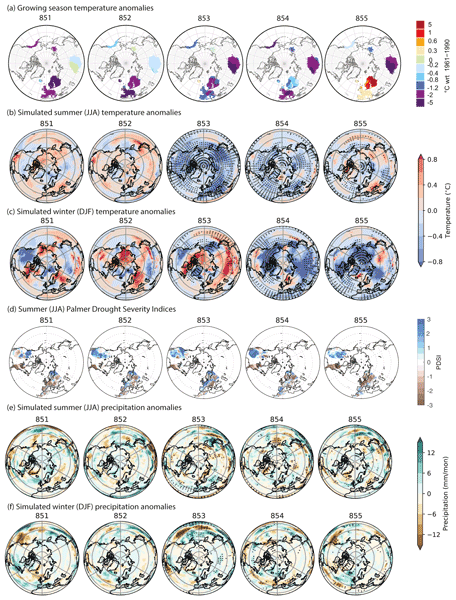
We assess the climatic and societal impact of the 852/3 CE Alaska Mount Churchill eruption using environmental reconstructions, historical records and climate simulations. The eruption is associated with significant Northern Hemisphere summer cooling, despite having only a moderate sulfate-based climate forcing potential; however, evidence of a widespread societal response is lacking. We discuss the difficulties of confirming volcanic impacts of a single eruption even when it is precisely dated.
Sandy P. Harrison, Roberto Villegas-Diaz, Esmeralda Cruz-Silva, Daniel Gallagher, David Kesner, Paul Lincoln, Yicheng Shen, Luke Sweeney, Daniele Colombaroli, Adam Ali, Chéïma Barhoumi, Yves Bergeron, Tatiana Blyakharchuk, Přemysl Bobek, Richard Bradshaw, Jennifer L. Clear, Sambor Czerwiński, Anne-Laure Daniau, John Dodson, Kevin J. Edwards, Mary E. Edwards, Angelica Feurdean, David Foster, Konrad Gajewski, Mariusz Gałka, Michelle Garneau, Thomas Giesecke, Graciela Gil Romera, Martin P. Girardin, Dana Hoefer, Kangyou Huang, Jun Inoue, Eva Jamrichová, Nauris Jasiunas, Wenying Jiang, Gonzalo Jiménez-Moreno, Monika Karpińska-Kołaczek, Piotr Kołaczek, Niina Kuosmanen, Mariusz Lamentowicz, Martin Lavoie, Fang Li, Jianyong Li, Olga Lisitsyna, José Antonio López-Sáez, Reyes Luelmo-Lautenschlaeger, Gabriel Magnan, Eniko Katalin Magyari, Alekss Maksims, Katarzyna Marcisz, Elena Marinova, Jenn Marlon, Scott Mensing, Joanna Miroslaw-Grabowska, Wyatt Oswald, Sebastián Pérez-Díaz, Ramón Pérez-Obiol, Sanna Piilo, Anneli Poska, Xiaoguang Qin, Cécile C. Remy, Pierre J. H. Richard, Sakari Salonen, Naoko Sasaki, Hieke Schneider, William Shotyk, Migle Stancikaite, Dace Šteinberga, Normunds Stivrins, Hikaru Takahara, Zhihai Tan, Liva Trasune, Charles E. Umbanhowar, Minna Väliranta, Jüri Vassiljev, Xiayun Xiao, Qinghai Xu, Xin Xu, Edyta Zawisza, Yan Zhao, Zheng Zhou, and Jordan Paillard
Earth Syst. Sci. Data, 14, 1109–1124, https://doi.org/10.5194/essd-14-1109-2022, https://doi.org/10.5194/essd-14-1109-2022, 2022
Short summary
Short summary
We provide a new global data set of charcoal preserved in sediments that can be used to examine how fire regimes have changed during past millennia and to investigate what caused these changes. The individual records have been standardised, and new age models have been constructed to allow better comparison across sites. The data set contains 1681 records from 1477 sites worldwide.
Cited articles
Abrook, A.: Primary GDGT data associated with Abrook et al. Evaluating glycerol dialkyl glycerol tetraether (GDGT)-based reconstructions from varved lake sediments during the Holocene, Zenodo [data set], https://doi.org/10.5281/zenodo.18712532, 2026.
Abrook, A. M., Langdon, P. G., Inglis, G. N., Brauer, A., Lincoln, P., Mayfield, R., Ojala, A. E. K., and Martin-Puertas, C.: The role of summer temperature on aquatic insect diversity at multi-decadal scales within the Holocene, Glob. Change Biol., 31, e70366, https://doi.org/10.1111/gcb.70366, 2025.
Andersson, C., Pausata, F. S. R., Jansen, E., Risebrobakken, B., and Telford, R. J.: Holocene trends in the foraminifer record from the Norwegian Sea and the North Atlantic Ocean, Clim. Past, 6, 179–193, https://doi.org/10.5194/cp-6-179-2010, 2010.
Bailey, I.: A high-resolution record of mid-Holocene climate change from Diss Mere, UK, Ph.D. thesis, University College London, 2005.
Bauersachs, T., Schubert, C. J., Mayr, C., Gilli, A., and Schwark, L.: Branched GDGT-based temperature calibrations from Central European lakes, Sci. Total Environ., 906, 167724, https://doi.org/10.1016/j.scitotenv.2023.167724, 2024.
Baxter, A. J., van Bree, L. G. J., Peterse, F., Hopmans, E. C., Villanueva, L., Verschuren, D., and Sinninghe Damsté, J. S.: Seasonal and multi-annual variation in the abundance of isoprenoid GDGT membrane lipids and their producers in the water column of a meromictic equatorial crater lake (Lake Chala, East Africa), Quat. Sci. Rev., 273, 107263, https://doi.org/10.1016/j.quascirev.2021.107263, 2021.
Baxter, A. J., Peterse, F., Verschuren, D., Maitituerdi, A., Waldmann, N., and Sinninghe Damsté, J. S.: Disentangling influences of climate variability and lake-system evolution on climate proxies derived from isoprenoid and branched glycerol dialkyl glycerol tetraethers (GDGTs): the 250 kyr Lake Chala record, Biogeosciences, 21, 2877–2908, https://doi.org/10.5194/bg-21-2877-2024, 2024.
Berner, K. S., Koç, N., Godtliebsen, F., and Divine, D.: Holocene climate variability of the Norwegian Atlantic Current during high and low solar insolation forcing, Paleoceanogr. Paleoclimatol., 26, PA2220, https://doi.org/10.1029/2010PA002002, 2011.
Blaga, C. I., Reichart, G. J., Heiri, O., and Sinninghe Damsté, J. S.: Tetraether membrane lipid distributions in water-column particulate matter and sediments: a study of 47 European lakes along a north–south transect, J. Paleolimnol., 41, 523–540, https://doi.org/10.1007/s10933-008-9242-2, 2009.
Boyall, L., Valcárcel, J. I., Harding, P., Hernández, A., and Martin-Puertas, C.: Disentangling the environmental signals recorded in Holocene calcite varves based on modern lake observations and annual sedimentary processes in Diss Mere, England, J. Paleolimnol., 70, 39–56, https://doi.org/10.1007/s10933-023-00282-z, 2023.
Boyall, L., Martin-Puertas, C., Tjallingii, R., Milner, A. M., and Blockley, S. P.: Holocene climate evolution and human activity as recorded by the sediment record of Lake Diss Mere, England, J. Quat. Sci., 39, 972–986, https://doi.org/10.1002/jqs.3646, 2024.
Brauer, A., Endres, C., Zolitschka, B., and Negendank, J. F.: AMS radiocarbon and varve chronology from the annually laminated sediment record of Lake Meerfelder Maar, Germany, Radiocarbon, 42, 355–368, https://doi.org/10.1017/S0033822200030307, 2000.
Briffa, K. R., Osborn, T. J., and Schweingruber, F. H.: Large-scale temperature inferences from tree rings: a review, Glob. Planet. Change, 40, 11–26, https://doi.org/10.1016/S0921-8181(03)00095-X, 2004.
Buckles, L. K., Weijers, J. W., Verschuren, D., and Sinninghe Damsté, J. S.: Sources of core and intact branched tetraether membrane lipids in the lacustrine environment: Anatomy of Lake Challa and its catchment, equatorial East Africa, Geochim. Cosmochim. Ac., 140, 106–126, https://doi.org/10.1016/j.gca.2014.04.042, 2014.
Candy, I., Boyall, L., Lincoln, P., Martin-Puertas, C., Matthews, I., Holt-Wilson, T., and Valcarcel, J.: A cold but stable 4.2 ka event in Britain and the northeastern Atlantic region, Quat. Sci. Rev., 349, 109093, https://doi.org/10.1016/j.quascirev.2024.109093, 2025.
Cartapanis, O., Jonkers, L., Moffa-Sanchez, P., Jaccard, S. L., and de Vernal, A.: Complex spatio-temporal structure of the Holocene Thermal Maximum, Nat. Commun., 13, 5662, https://doi.org/10.1038/s41467-022-33362-1, 2022.
Collins, E. R., Ferland, T. M., Castañeda, I. S., Owen, R. B., Lowenstein, T. K., Cohen, A. S., Renaut, R. W., O'Beirne, M. D., and Werne, J. P.: Hot-spring inputs and climate drive dynamic shifts in archaeal communities in Lake Magadi, Kenya Rift Valley, Biogeosciences, 22, 3931–3948, https://doi.org/10.5194/bg-22-3931-2025, 2025.
Crampton-Flood, E. D., Tierney, J. E., Peterse, F., Kirkels, F. M., and Sinninghe Damsté, J. S.: BayMBT: A Bayesian calibration model for branched glycerol dialkyl glycerol tetraethers in soils and peats, Geochim. Cosmochim. Ac., 268, 142–159, https://doi.org/10.1016/j.gca.2019.09.043, 2020.
Dang, X., Ding, W., Yang, H., Pancost, R. D., Naafs, B. D. A., Xue, J., Lin, X., Lu, J., and Xie, S.: Different temperature dependence of the bacterial brGDGT isomers in 35 Chinese lake sediments compared to that in soils, Org. Geochem., 119, 72–79, https://doi.org/10.1016/j.orggeochem.2018.02.008, 2018.
Davison, W.: Iron and manganese in lakes, Earth-Sci. Rev., 34, 119–163, https://doi.org/10.1016/0012-8252(93)90029-7, 1993.
De Jonge, C., Hopmans, E. C., Zell, C. I., Kim, J.-H., Schouten, S., and Sinninghe Damsté, J. S.: Occurrence and abundance of 6-methyl branched glycerol dialkyl glycerol tetraethers in soils: Implications for palaeoclimate reconstruction, Geochim. Cosmochim. Ac., 141, 97–112, https://doi.org/10.1016/j.gca.2014.06.013, 2014.
De Jonge, C., Stadnitskaia, A., Hopmans, E. C., Cherkashov, G., Fedotov, A., Streletskaya, I. D., Vasiliev, A. A., and Sinninghe Damsté, J. S.: Drastic changes in the distribution of branched tetraether lipids in suspended matter and sediments from the Yenisei River and Kara Sea (Siberia): Implications for the use of brGDGT-based proxies in coastal marine sediments, Geochim. Cosmochim. Ac., 165, 200–225, https://doi.org/10.1016/j.gca.2015.05.044, 2015.
De Jonge, C., Fiskal, A., Han, X., and Lever, M.: Biomarker (brGDGT) degradation and production in lacustrine surface sediments: Implications for paleoclimate reconstructions, EGU General Assembly 2020, Online, 4–8 May 2020, EGU2020-12592, https://doi.org/10.5194/egusphere-egu2020-12592, 2020.
d'Oliveira, L., Dugerdil, L., Ménot, G., Evin, A., Muller, S. D., Ansanay-Alex, S., Azuara, J., Bonnet, C., Bremond, L., Shah, M., and Peyron, O.: Reconstructing 15 000 years of southern France temperatures from coupled pollen and molecular (branched glycerol dialkyl glycerol tetraether) markers (Canroute, Massif Central), Clim. Past, 19, 2127–2156, https://doi.org/10.5194/cp-19-2127-2023, 2023.
Hällberg, P. L., Schenk, F., Jarne-Bueno, G., Schankat, Y., Zhang, Q., Rifai, H., Phua, M., and Smittenberg, R.H.: Branched GDGT source shift identification allows improved reconstruction of an 8,000-year warming trend on Sumatra, Org. Geochem, 186, 104702, https://doi.org/10.1016/j.orggeochem.2023.104702, 2023.
Hamilton, N. E. and Ferry, M.: ggtern: Ternary diagrams using ggplot2, J. Stat. Softw., 87, 1–17, https://doi.org/10.18637/jss.v087.c03, 2018.
Hernández, A., Martin-Puertas, C., Moffa-Sánchez, P., Moreno-Chamarro, E., Ortega, P., Blockley, S., Cobb, K. M., Comas-Bru, L., Giralt, S., Goosse, H., Luterbacher, J., Martrat, B., Muscheler, R., Parnell, A., Pla-Rabes, S., Sjolte, J., Scaife, A., Swingedouw, D., Wise, E., and Xu, G.: Modes of climate variability: synthesis and review of proxy-based reconstructions through the Holocene, Earth-Sci. Rev., 209, 103286, https://doi.org/10.1016/j.earscirev.2020.103286, 2020.
Hollis, D., McCarthy, M., Kendon, M., Legg, T., and Simpson, I.: HadUK-Grid – A new UK dataset of gridded climate observations, Geosci. Data J., 6, 151–159, https://doi.org/10.1002/gdj3.78, 2019.
Hopmans, E. C., Weijers, J. W., Schefuß, E., Herfort, L., Sinninghe Damsté, J. S., and Schouten, S.: A novel proxy for terrestrial organic matter in sediments based on branched and isoprenoid tetraether lipids, EPSL, 224, 107–116, https://doi.org/10.1016/j.epsl.2004.05.012, 2004.
Hopmans, E. C., Schouten, S., and Sinninghe Damsté, J. S.: The effect of improved chromatography on GDGT-based palaeoproxies, Org. Geochem., 93, 1–6, https://doi.org/10.1016/j.orggeochem.2015.12.006, 2016.
Inglis, G. N., Farnsworth, A., Lunt, D., Foster, G. L., Hollis, C. J., Pagani, M., Jardine, P. E., Pearson, P. N., Markwick, P., Galsworthy, A. M., Raynham, L., Taylor, K. W. R., and Pancost, R. D.: Descent toward the Icehouse: Eocene sea surface cooling inferred from GDGT distributions, Paleoceanography, 30, 1000–1020, https://doi.org/10.1002/2014PA002723, 2015.
Kassambara, A. and Mundt, F.: factoextra: Extract and visualize the results of multivariate data analyses, R package version 1.0.7, https://CRAN.R-project.org/package=factoextra (last access: November 2025), 2020.
Kaufman, D., McKay, N., Routson, C., Erb, M., Dätwyler, C., Sommer, P. S., Heiri, O., and Davis, B.: Holocene global mean surface temperature: a multi-method reconstruction approach, Sci. Data, 7, 201, https://doi.org/10.1038/s41597-020-0530-7, 2020.
Kim, B. and Zhang, Y. G.: Methane Index: towards a quantitative archaeal lipid biomarker proxy for reconstructing marine sedimentary methane fluxes, Geochim. Cosmochim. Acta, 354, 74–87, https://doi.org/10.1016/j.gca.2023.06.008, 2023.
Korkonen, S. T., Ojala, A. E. K., Kosonen, E., and Weckström, J.: Seasonality of chrysophyte cyst and diatom assemblages in varved Lake Nautajärvi – implications for palaeolimnological studies, J. Limnol., 76, 366–379, https://doi.org/10.4081/jlimnol.2017.1473, 2017.
Kril, M., Bonk, A., Żarczyński, M., Zolitschka, B., and Tylmann, W.: Varved sediments of Lake Gorzyńskie, western Poland: a new archive of climatic and environmental changes during the Late Glacial and the Holocene in central Europe, JOPL, 73, 329–346, https://doi.org/10.1007/s10933-025-00362-2, 2025.
Lane, C. S., Brauer, A., Blockley, S. P. E., and Dulski, P.: Volcanic ash reveals time-transgressive abrupt climate change during the Younger Dryas, Geology, 41, 1251–1254, https://doi.org/10.1130/G34867.1, 2013.
Larocque-Tobler, I., Filipiak, J., Tylmann, W., Bonk, A., and Grosjean, M.: Comparison between chironomid-inferred mean-August temperature from varved Lake Żabińskie (Poland) and instrumental data since 1896 AD, Quat. Sci. Rev., 111, 35–50, https://doi.org/10.1016/j.quascirev.2015.01.001, 2015.
Lincoln, P., Tjallingii, R., Kosonen, E., Ojala, A. E. K., Abrook, A. M., and Martin-Puertas, C.: Disruption of boreal lake circulation in response to mid-Holocene warmth: evidence from the varved sediments of Lake Nautajärvi, southern Finland, Sci. Total Environ., 964, 178519, https://doi.org/10.1016/j.scitotenv.2025.178519, 2025.
Liu, Z., Zhu, J., Rosenthal, Y., Zhang, X., Otto-Bliesner, B. L., Timmermann, A., Smith, R. S., Lohmann, G., Zheng, W., and Elison Timm, O.: The Holocene temperature conundrum, P. Natl. Acad. Sci. USA, 111, E3501–E3505, https://doi.org/10.1073/pnas.1407229111, 2014.
Liu, Z., Cheng, J., Zheng, Y., Zhang, W., Liu, H., Wu, H., Zhu, J., and Xie, S.: The seasonal temperature conundrum for the Holocene, Sci. Adv., 11, e8950, https://doi.org/10.1126/sciadv.adt8950, 2025.
Loomis, S. E., Russell, J. M., and Sinninghe Damsté, J. S.: Distributions of branched GDGTs in soils and lake sediments from western Uganda: implications for a lacustrine paleothermometer, Org. Geochem., 42, 739–751, https://doi.org/10.1016/j.orggeochem.2011.06.004, 2011.
Loutre, M. F., Paillard, D., Vimeux, F., and Cortijo, E.: Does mean annual insolation have the potential to change the climate?, Earth Planet. Sci. Lett., 221, 1–14, https://doi.org/10.1016/S0012-821X(04)00108-6, 2004.
Luo, Y.: Geochemical cycle and environmental effects of sulfur in lakes, IOP Conf. Ser. Mater. Sci. Eng., 394, 052039, https://doi.org/10.1088/1757-899X/394/5/052039, 2018.
Luoto, T. P. and Ojala, A. E. K.: Controls of climate, catchment erosion and biological production on long-term community and functional changes of chironomids in High Arctic lakes (Antczak-Orlewska Bard), Palaeogeogr. Palaeoclimatol. Palaeoecol., 505, 63–72, https://doi.org/10.1016/j.palaeo.2018.05.026, 2018.
Marshall, M., Schlolaut, G., Nakagawa, T., Lamb, H., Brauer, A., Staff, R., Ramsey, C. B., Tarasov, P., Gotanda, K., Haraguchi, T., Yokoyama, Y., Yonenobu, H., Tada, R., and Suigetsu 2006 Project Members: A novel approach to varve counting using μXRF and X-radiography in combination with thin-section microscopy, applied to the Late Glacial chronology from Lake Suigetsu, Japan, Quat. Geochronol., 13, 70–80, https://doi.org/10.1016/j.quageo.2012.06.002, 2012.
Martin, C., Ménot, G., Thouveny, N., Davtian, N., Andrieu-Ponel, V., Reille, M., and Bard, E.: Impact of human activities and vegetation changes on the tetraether sources in Lake St Front (Massif Central, France), Org. Geochem., 135, 38–52, https://doi.org/10.1016/j.orggeochem.2019.06.005 , 2019.
Martin, C., Ménot, G., Thouveny, N., Peyron, O., Andrieu-Ponel, V., Montade, V., Davtian, N., Reille, M., and Bard, E.: Early Holocene thermal maximum recorded by branched tetraethers and pollen in Western Europe (Massif Central, France), Quat. Sci. Rev., 228, 106109, https://doi.org/10.1016/j.quascirev.2019.106109, 2020.
Martínez-Sosa, P., Tierney, J. E., and Meredith, L. K.: Controlled lacustrine microcosms show a brGDGT response to environmental perturbations, Org. Geochem., 145, 104041, https://doi.org/10.1016/j.orggeochem.2020.104041, 2020.
Martínez-Sosa, P., Tierney, J. E., Stefanescu, I. C., Crampton-Flood, E. D., Shuman, B. N., and Routson, C.: A global Bayesian temperature calibration for lacustrine brGDGTs, Geochim. Cosmochim. Ac., 305, 87–105, https://doi.org/10.1016/j.gca.2021.04.038, 2021.
Martínez-Sosa, P., Tierney, J. E., Pérez-Angel, L. C., Stefanescu, I. C., Guo, J., Kirkels, F., Sepúlveda, J., Peterse, F., Shuman, B. N., and Reyes, A. V.: Development and application of the branched and isoprenoid GDGT machine learning classification algorithm (BIGMaC) for paleoenvironmental reconstruction, Paleoceanogr. Paleoclimatol., 38, e2023PA004611, https://doi.org/10.1029/2023PA004611, 2023.
Martin-Puertas, C., Brauer, A., Dulski, P., and Brademann, B.: Testing climate–proxy stationarity throughout the Holocene: an example from the varved sediments of Lake Meerfelder Maar (Germany), Quat. Sci. Rev., 58, 56–65, https://doi.org/10.1016/j.quascirev.2012.10.023, 2012.
Martin-Puertas, C., Tjallingii, R., Bloemsma, M., and Brauer, A.: Varved sediment responses to early Holocene climate and environmental changes in Lake Meerfelder Maar (Germany) obtained from multivariate analyses of micro X-ray fluorescence core scanning data, J. Quat. Sci., 32, 427–436, https://doi.org/10.1002/jqs.2935, 2017.
Martin-Puertas, C., Walsh, A. A., Blockley, S. P., Harding, P., Biddulph, G. E., Palmer, A., Ramisch, A., and Brauer, A.: The first Holocene varve chronology for the UK: based on the integration of varve counting, radiocarbon dating and tephrostratigraphy from Diss Mere (UK), Quat. Geochronol., 61, 101134, https://doi.org/10.1016/j.quageo.2020.101134, 2021.
McKay, N. P., Kaufman, D. S., Routson, C. C., Erb, M. P., and Zander, P. D.: The onset and rate of Holocene Neoglacial cooling in the Arctic, Geophys. Res. Lett., 45, 12487–12496, https://doi.org/10.1029/2018GL079773, 2018.
Miller, D. R., Habicht, M. H., Keisling, B. A., Castañeda, I. S., and Bradley, R. S.: A 900-year New England temperature reconstruction from in situ seasonally produced branched glycerol dialkyl glycerol tetraethers (brGDGTs), Clim. Past, 14, 1653–1667, https://doi.org/10.5194/cp-14-1653-2018, 2018.
Naafs, B. D. A., Gallego-Sala, A. V., Inglis, G. N., and Pancost, R. D.: Refining the global branched glycerol dialkyl glycerol tetraether (brGDGT) soil temperature calibration, Org. Geochem., 106, 48–56, https://doi.org/10.1016/j.orggeochem.2017.01.009, 2017.
Naeher, S., Peterse, F., Smittenberg, R. H., Niemann, H., Zigah, P. K., and Schubert, C. J.: Sources of glycerol dialkyl glycerol tetraethers (GDGTs) in catchment soils, water column and sediments of Lake Rotsee (Switzerland) – Implications for the application of GDGT-based proxies for lakes, Org. Geochem., 66, 164–173, https://doi.org/10.1016/j.orggeochem.2013.10.017, 2014.
Novak, J. B., Russell, J. M., Lindemuth, E. R., Prokopenko, A. A., Pérez-Angel, L., Zhao, B., Swann, G. E., and Polissar, P. J.: The branched GDGT isomer ratio refines lacustrine paleotemperature estimates, Geochem. Geophys. Geosyst., 26, e2024GC012069, https://doi.org/10.1029/2024GC012069, 2025.
Nürnberg, G. K.: Lake responses to long-term hypolimnetic withdrawal treatments, Lake Reserv. Manag., 23, 388–409, https://doi.org/10.1080/07438140709354026, 2007.
O'Beirne, M. D., Scott, W. P., Contreras, S., Araneda, A., Tejos, E., Moscoso, J., and Werne, J. P.: Distribution of branched glycerol dialkyl glycerol tetraether (brGDGT) lipids from soils and sediments from the same watershed are distinct regionally (central Chile) but not globally, Front. Earth Sci., 12, 1383146, https://doi.org/10.3389/feart.2024.1383146, 2024.
Ojala, A. E. K. and Alenius, T.: 10 000 years of interannual sedimentation recorded in the Lake Nautajärvi (Finland) clastic–organic varves, Palaeogeogr. Palaeoclimatol. Palaeoecol., 219, 285–302, https://doi.org/10.1016/j.palaeo.2005.01.002, 2005.
Ojala, A. E. K. and Saarinen, T.: Palaeosecular variation of the Earth's magnetic field during the last 10 000 years based on the annually laminated sediment of Lake Nautajärvi, central Finland, Holocene, 12, 391–400, https://doi.org/10.1191/0959683602hl551rp, 2002.
Ojala, A. E. K., Heinsalu, A., Saarnisto, M., and Tiljander, M.: Annually laminated sediments date the drainage of the Ancylus Lake and early Holocene shoreline displacement in central Finland, Quat. Int., 130, 63–73, https://doi.org/10.1016/j.quaint.2004.04.032, 2005.
Ojala, A. E., Alenius, T., Seppä, H., and Giesecke, T.: Integrated varve and pollen-based temperature reconstruction from Finland: evidence for Holocene seasonal temperature patterns at high latitudes, Holocene, 18, 529–538, https://doi.org/10.1177/0959683608089207, 2008.
Ojala, A. E. K., Kosonen, E., Weckström, J., Korkonen, S., and Korhola, A.: Seasonal formation of clastic–biogenic varves: the potential for palaeoenvironmental interpretations, GFF, 135, 237–247, https://doi.org/10.1080/11035897.2013.801925, 2013.
Oksanen, J., Simpson, G., Blanchet, F., Kindt, R., Legendre, P., Minchin, P., O'Hara, R., Solymos, P., Stevens, M., Szoecs, E., Wagner, H., Barbour, M., Bedward, M., Bolker, B., Borcard, D., Carvalho, G., Chirico, M., De Caceres, M., Durand, S., Evangelista, H., FitzJohn, R., Friendly, M., Furneaux, B., Hannigan, G., Hill, M., Lahti, L., McGlinn, D., Ouellette, M., Ribeiro Cunha, E., Smith, T., Stier, A., ter Braak, C., and Weedon, J.: Vegan: community ecology package, R package version 2.6–6.1, https://CRAN.R-project.org/package=vegan (last access: November 2025), 2024.
Orme, L. C., Miettinen, A., Divine, D., Husum, K., Pearce, C., Van Nieuwenhove, N., Born, A., Mohan, R., and Seidenkrantz, M. S.: Subpolar North Atlantic sea surface temperature since 6 ka BP: Indications of anomalous ocean–atmosphere interactions at 4–2 ka BP, Quat. Sci. Rev., 194, 128–142, https://doi.org/10.1016/j.quascirev.2018.07.007, 2018.
Osman, M. B., Tierney, J. E., Zhu, J., Tardif, R., Hakim, G. J., King, J., and Poulsen, C. J.: Globally resolved surface temperatures since the Last Glacial Maximum, Nature, 599, 239–244, https://doi.org/10.1038/s41586-021-03984-4, 2021.
Otiniano, G. A., Porter, T. J., Phillips, M. A., Juutinen, S., Weckström, J. B., and Heikkilä, M. P.: Reconstructing warm-season temperatures using brGDGTs and assessing biases in Holocene temperature records in northern Fennoscandia, Quat. Sci. Rev., 329, 108555, https://doi.org/10.1016/j.quascirev.2024.108555, 2024.
Parker, S. E. and Harrison, S. P.: The timing, duration and magnitude of the 8.2 ka event in global speleothem records, Sci. Rep., 12, 10542, https://doi.org/10.1038/s41598-022-14684-y, 2022.
Patton, H., Hubbard, A., Andreassen, K., Auriac, A., Whitehouse, P. L., Stroeven, A. P., Shackleton, C., Winsborrow, M., Heyman, J., and Hall, A. M.: Deglaciation of the Eurasian ice sheet complex, Quat. Sci. Rev., 169, 148–172, https://doi.org/10.1016/j.quascirev.2017.05.019, 2017.
Peaple, M. D., Bhattacharya, T., Lowenstein, T. K., McGee, D., Olson, K. J., Stroup, J. S., Tierney, J. E., and Feakins, S. J.: Biomarker and pollen evidence for late Pleistocene pluvials in the Mojave Desert, Paleoceanogr. Paleoclimatol., 37, e2022PA004471, https://doi.org/10.1029/2022PA004471, 2022.
Pearson, E. J., Juggins, S., Talbot, H. M., Weckström, J., Rosén, P., Ryves, D. B., Roberts, S. J., and Schmidt, R.: A lacustrine GDGT–temperature calibration from the Scandinavian Arctic to Antarctic: Renewed potential for the application of GDGT–paleothermometry in lakes, Geochim. Cosmochim. Ac., 75, 6225–6238, https://doi.org/10.1016/j.gca.2011.07.042, 2011.
Pearson, E. J., Juggins, S., Allbrook, H., Foster, L. C., Hodgson, D. A., Naafs, D. A., Phillips, T., and Roberts, S. J.: Development of new global lake brGDGT-temperature calibrations: advances, applications, challenges, and recommendations, Quat. Sci. Rev., 369, 109615, https://doi.org/10.1016/j.quascirev.2025.109615, 2025.
Peterse, F., Vonk, J. E., Holmes, R. M., Giosan, L., Zimov, N., and Eglinton, T. I.: Branched glycerol dialkyl glycerol tetraethers in Arctic lake sediments: Sources and implications for paleothermometry at high latitudes, J. Geophys. Res.-Biogeo., 119, 1738–1754, https://doi.org/10.1002/2014JG002639, 2014.
Powers, L., Werne, J. P., Vanderwoude, A. J., Sinninghe Damsté, J. S., Hopmans, E. C., and Schouten, S.: Applicability and calibration of the TEX86? paleothermometer in lakes, Org. Geochem., 41, 404–413, https://doi.org/10.1016/j.orggeochem.2009.11.009, 2010.
Raberg, J. H., Flores, E., Crump, S. E., de Wet, G., Dildar, N., Miller, G. H., Geirsdóttir, Á., and Sepúlveda, J.: Intact polar brGDGTs in Arctic lake catchments: Implications for lipid sources and paleoclimate applications, J. Geophys. Res.-Biogeo., 127, e2022JG006969, https://doi.org/10.1029/2022JG006969, 2022.
Raberg, J. H., de Wet, G. A., Geirsdóttir, Á., Sepúlveda, J., and Miller, G. H.: Oxygen depletion in lake waters may skew brGDGT-inferred temperatures by more than 10 °C, Geophys. Res. Lett., 52, e2024GL113562, https://doi.org/10.1029/2024GL113562, 2025.
Raberg, J. H., Harning, D. J., Crump, S. E., de Wet, G., Blumm, A., Kopf, S., Geirsdóttir, Á., Miller, G. H., and Sepúlveda, J.: Revised fractional abundances and warm-season temperatures substantially improve brGDGT calibrations in lake sediments, Biogeosciences, 18, 3579–3603, https://doi.org/10.5194/bg-18-3579-2021, 2021.
Rach, O., Brauer, A., Wilkes, H., and Sachse, D.: Delayed hydrological response to Greenland cooling at the onset of the Younger Dryas in western Europe, Nat. Geosci., 7, 109–112, https://doi.org/10.1038/ngeo2053, 2014.
Ramos-Román, M. J., De Jonge, C., Magyari, E., Veres, D., Ilvonen, L., Develle, A. L., and Seppä, H.: Lipid biomarker (brGDGT)- and pollen-based reconstruction of temperature change during the Middle to Late Holocene transition in the Carpathians, Glob. Planet. Change, 215, 103859, https://doi.org/10.1016/j.gloplacha.2022.103859, 2022.
Rasmussen, S. O., Bigler, M., Blockley, S. P., Blunier, T., Buchardt, S. L., Clausen, H. B., Cvijanovic, I., Dahl-Jensen, D., Johnsen, S. J., Fischer, H., Gkinis, V., Guillevic, M., Hoek, W. Z., Lowe, J. J., Pedro, J. B., Popp, T., Seierstad, I. K., Steffensen, J. P., Svensson, A. M., Vallelonga, P., Vinther, B. M., Walker, M. J. C., Wheatley, J. J., and Winstrup, M.: A stratigraphic framework for abrupt climatic changes during the Last Glacial period based on three synchronized Greenland ice-core records: refining and extending the INTIMATE event stratigraphy, Quat. Sci. Rev., 106, 14–28, https://doi.org/10.1016/j.quascirev.2014.09.007, 2014.
Robles, M., Peyron, O., Ménot, G., Brugiapaglia, E., Wulf, S., Appelt, O., Blache, M., Vannière, B., Dugerdil, L., Paura, B., Ansanay-Alex, S., Cromartie, A., Charlet, L., Guédron, S., de Beaulieu, J.-L., and Joannin, S.: Climate changes during the Late Glacial in southern Europe: new insights based on pollen and brGDGTs of Lake Matese in Italy, Clim. Past, 19, 493–515, https://doi.org/10.5194/cp-19-493-2023, 2023.
Roland, T. P., Daley, T. J., Caseldine, C. J., Charman, D. J., Turney, C. S. M., Amesbury, M. J., Thompson, G. J., and Woodley, E. J.: The 5.2 ka climate event: Evidence from stable isotope and multi-proxy palaeoecological peatland records in Ireland, Quat. Sci. Rev., 124, 209–223, https://doi.org/10.1016/j.quascirev.2015.07.026, 2015.
Rosén, P. and Hammarlund, D.: Effects of climate, fire and vegetation development on Holocene changes in total organic carbon concentration in three boreal forest lakes in northern Sweden, Biogeosciences, 4, 975–984, https://doi.org/10.5194/bg-4-975-2007, 2007.
Russell, J. M., Hopmans, E. C., Loomis, S. E., Liang, J., and Sinninghe Damsté, J. S.: Distributions of 5- and 6-methyl branched glycerol dialkyl glycerol tetraethers (brGDGTs) in East African lake sediment: Effects of temperature, pH, and new lacustrine paleotemperature calibrations, Org. Geochem., 117, 56–69, https://doi.org/10.1016/j.orggeochem.2017.12.003, 2018.
Salonen, J. S., Kuosmanen, N., Alsos, I. G., Heintzman, P. D., Rijal, D. P., Schenk, F., Bogren, F., Luoto, M., Philip, A., Piilo, S., Trasune, L., Väliranta, M., and Helmens, K. F.: Uncovering Holocene climate fluctuations and ancient conifer populations: insights from a high-resolution multi-proxy record from northern Finland, Glob. Planet. Change, 237, 104462, https://doi.org/10.1016/j.gloplacha.2024.104462, 2024.
Schouten, S., Wakeham, S. G., and Sinninghe Damsté, J. S.: Evidence for anaerobic methane oxidation by archaea in euxinic waters of the Black Sea, Org. Geochem., 32, 1277–1281, https://doi.org/10.1016/S0146-6380(01)00110-3, 2001.
Schouten, S., Hopmans, E. C., Schefuß, E., and Sinninghe Damsté, J. S.: Distributional variations in marine crenarchaeotal membrane lipids: a new tool for reconstructing ancient seawater temperatures?, Earth Planet. Sc. Lett., 204, 265–274, https://doi.org/10.1016/S0012-821X(02)00979-2, 2002.
Schouten, S., Hopmans, E. C., and Sinninghe Damsté, J. S.: The organic geochemistry of glycerol dialkyl glycerol tetraether lipids: A review, Org. Geochem., 54, 19–61, https://doi.org/10.1016/j.orggeochem.2012.09.006, 2013.
Segarra, K. E. A., Schubotz, F., Samarkin, V., Yoshinaga, M. Y., Hinrichs, K.-U., and Joye, S. B.: High rates of anaerobic methane oxidation in freshwater wetlands reduce potential atmospheric methane emissions, Nat. Commun., 6, 7477, https://doi.org/10.1038/ncomms8477 , 2015.
Sejrup, H. P., Seppä, H., McKay, N. P., Kaufman, D. S., Geirsdóttir, Á., de Vernal, A., Renssen, H., Husum, K., Jennings, A., and Andrews, J. T.: North Atlantic–Fennoscandian Holocene climate trends and mechanisms, Quat. Sci. Rev., 147, 365–378, https://doi.org/10.1016/j.quascirev.2016.06.005 , 2016.
Seppä, H., Bjune, A. E., Telford, R. J., Birks, H. J. B., and Veski, S.: Last nine-thousand years of temperature variability in Northern Europe, Clim. Past, 5, 523–535, https://doi.org/10.5194/cp-5-523-2009, 2009.
Shala, S., Helmens, K. F., Luoto, T. P., Salonen, J. S., Väliranta, M., and Weckström, J.: Comparison of quantitative Holocene temperature reconstructions using multiple proxies from a northern boreal lake, The Holocene, 27, 1745–1755, https://doi.org/10.1177/0959683617708442, 2017.
Sinninghe Damsté, J. S., Hopmans, E. C., Pancost, R. D., Schouten, S., and Geenevasen, J. A.: Newly discovered non-isoprenoid glycerol dialkyl glycerol tetraether lipids in sediments, Chem. Commun., 17, 1683–1684, https://doi.org/10.1039/B004517I, 2000.
Sinninghe Damsté, J. S., Ossebaar, J., Abbas, B., Schouten, S., and Verschuren, D.: Fluxes and distribution of tetraether lipids in an equatorial African lake: constraints on the application of the TEX86 palaeothermometer and BIT index in lacustrine settings, Geochim. Cosmochim. Ac., 73, 4232–4249, https://doi.org/10.1016/j.gca.2009.04.022, 2009.
Sinninghe Damsté, J. S., Ossebaar, J., Schouten, S., and Verschuren, D.: Distribution of tetraether lipids in the 25-ka sedimentary record of Lake Challa: extracting reliable TEX86 and MBT/CBT palaeotemperatures from an equatorial African lake, Quat. Sci. Rev., 50, 43–54, https://doi.org/10.1016/j.quascirev.2012.07.001, 2012.
Sinninghe Damsté, J. S. S., Weber, Y., Zopfi, J., Lehmann, M. F., and Niemann, H.: Distributions and sources of isoprenoidal GDGTs in Lake Lugano and other central European (peri-)alpine lakes: Lessons for their use as paleotemperature proxies, Quat. Sci. Rev., 277, 107352, https://doi.org/10.1016/j.quascirev.2021.107352, 2022.
Tierney, J. E. and Russell, J. M.: Distributions of branched GDGTs in a tropical lake system: implications for lacustrine application of the MBT/CBT paleoproxy, Org. Geochem., 40, 1032–1036, https://doi.org/10.1016/j.orggeochem.2009.04.014, 2009.
Tierney, J. E., Russell, J. M., Eggermont, H., Hopmans, E. C., Verschuren, D., and Sinninghe Damsté, J. S.: Environmental controls on branched tetraether lipid distributions in tropical East African lake sediments, Geochim. Cosmochim. Ac., 74, 4902–4918, https://doi.org/10.1016/j.gca.2010.06.002, 2010.
van Bree, L. G. J., Peterse, F., Baxter, A. J., De Crop, W., van Grinsven, S., Villanueva, L., Verschuren, D., and Sinninghe Damsté, J. S.: Seasonal variability and sources of in situ brGDGT production in a permanently stratified African crater lake, Biogeosciences, 17, 5443–5463, https://doi.org/10.5194/bg-17-5443-2020, 2020.
Van den Bos, V., Engels, S., Bohncke, S. J. P., Cerli, C., Jansen, B., Kalbitz, K., Peterse, F., Renssen, H., and Sachse, D.: Late Holocene changes in vegetation and atmospheric circulation at Lake Uddelermeer (The Netherlands) reconstructed using lipid biomarkers and compound-specific δD analysis, J. Quat. Sci., 33, 100–111, https://doi.org/10.1002/jqs.3006, 2018.
Van Wirdum, F., Andrén, E., Wienholz, D., Kotthoff, U., Moros, M., Fanget, A. S., Seidenkrantz, M. S., and Andrén, T.: Middle to Late Holocene variations in salinity and primary productivity in the central Baltic Sea: a multiproxy study from the Landsort Deep, Front. Mar. Sci., 6, 51, https://doi.org/10.3389/fmars.2019.00051, 2019.
Wang, Y., Cheng, H., Edwards, R. L., He, Y., Kong, X., An, Z., Wu, J., Kelly, M. J., Dykoski, C. A., and Li, X.: The Holocene Asian monsoon: links to solar changes and North Atlantic climate, Science, 308, 854–857, https://doi.org/10.1126/science.1106296, 2005.
Weber, Y., Sinninghe Damsté, J. S., Zopfi, J., De Jonge, C., Gilli, A., Schubert, C. J., Lepori, F., Lehmann, M. F., and Niemann, H.: Redox-dependent niche differentiation provides evidence for multiple bacterial sources of glycerol tetraether lipids in lakes, P. Natl. Acad. Sci. USA, 115, 10926–10931, https://doi.org/10.1073/pnas.1805186115, 2018.
Weijers, J. W., Schouten, S., Spaargaren, O. C., and Sinninghe Damsté, J. S.: Occurrence and distribution of tetraether membrane lipids in soils: Implications for the use of the TEX86 proxy and the BIT index, Org. Geochem., 37, 1680–1693, https://doi.org/10.1016/j.orggeochem.2006.07.018, 2006.
Weijers, J. W. H., Schouten, S., van den Donker, J. C., Hopmans, E. C., and Sinninghe Damsté, J. S.: Environmental controls on bacterial tetraether membrane lipid distribution in soils, Geochim. Cosmochim. Ac., 71, 703–713, https://doi.org/10.1016/j.gca.2006.10.003, 2007.
Weijers, J. W., Lim, K. L., Aquilina, A., Sinninghe Damsté, J. S., and Pancost, R. D.: Biogeochemical controls on glycerol dialkyl glycerol tetraether lipid distributions in sediments characterized by diffusive methane flux, Geochem. Geophys. Geosyst., 12, Q10010, https://doi.org/10.1029/2011GC003724, 2011.
Woltering, M., Atahan, P., Grice, K., Heijnis, H., Taffs, K., and Dodson, J.: Glacial and Holocene terrestrial temperature variability in subtropical east Australia as inferred from branched GDGT distributions in a sediment core from Lake McKenzie, Quat. Res., 82, 132–145, https://doi.org/10.1016/j.yqres.2014.02.005, 2014.
Woltering, M., Werne, J. P., Kish, J. L., Hicks, R., Sinninghe Damsté, J. S., and Schouten, S.: Vertical and temporal variability in concentration and distribution of thaumarchaeotal tetraether lipids in Lake Superior and the implications for the application of the TEX86 temperature proxy, Geochim. Cosmochim. Ac., 87, 136–153, https://doi.org/10.1016/j.gca.2012.03.024, 2012.
Wulf, S., Dräger, N., Ott, F., Serb, J., Appelt, O., Guðmundsdóttir, E., van den Bogaard, C., Słowiński, M., Błaszkiewicz, M., and Brauer, A.: Holocene tephrostratigraphy of varved sediment records from Lakes Tiefer See (NE Germany) and Czechowskie (N Poland), Quat. Sci. Rev., 132, 1–14, https://doi.org/10.1016/j.quascirev.2015.11.007, 2016.
Xiao, W., Wang, Y., Zhou, S., Hu, L., Yang, H., and Xu, Y.: Ubiquitous production of branched glycerol dialkyl glycerol tetraethers (brGDGTs) in global marine environments: a new source indicator for brGDGTs, Biogeosciences, 13, 5883–5894, https://doi.org/10.5194/bg-13-5883-2016, 2016.
Yao, Y., Zhao, J., Vachula, R. S., Werne, J. P., Wu, J., Song, X., and Huang, Y.: Correlation between the ratio of 5-methyl hexamethylated to pentamethylated branched GDGTs (HP5) and water depth reflects redox variations in stratified lakes, Org. Geochem., 147, 104076, https://doi.org/10.1016/j.orggeochem.2020.104076, 2020.
Zander, P. D., Böhl, D., Sirocko, F., Auderset, A., Haug, G. H., and Martínez-García, A.: Reconstruction of warm-season temperatures in central Europe during the past 60 000 years from lacustrine branched glycerol dialkyl glycerol tetraethers (brGDGTs), Clim. Past, 20, 841–864, https://doi.org/10.5194/cp-20-841-2024, 2024.
Zhang, Y.-G., Zhang, C. L., Liu, X.-L., Li, L., Hinrichs, K.-U., and Noakes, J. E.: Methane Index: A tetraether archaeal lipid biomarker indicator for detecting the instability of marine gas hydrates, Earth Planet. Sc. Lett., 307, 525–534, https://doi.org/10.1016/j.epsl.2011.05.031, 2011.
Zhang, Z., Smittenberg, R. H., and Bradley, R. S.: GDGT distribution in a stratified lake and implications for the application of TEX86 in paleoenvironmental reconstructions, Sci. Rep., 6, 34465, https://doi.org/10.1038/srep34465, 2016.
Zhao, B., Castañeda, I. S., Bradley, R. S., Salacup, J. M., de Wet, G. A., Daniels, W. C., and Schneider, T.: Development of an in situ branched GDGT calibration in Lake 578, southern Greenland, Org. Geochem., 152, 104168, https://doi.org/10.1016/j.orggeochem.2020.104168, 2021.
Zhao, Y., Liu, Y., Cao, S., Hao, Q., Liu, C., and Li, Y.: Anaerobic oxidation of methane driven by different electron acceptors: A review, Sci. Total Environ., 946, 174287, https://doi.org/10.1016/j.scitotenv.2024.174287, 2024.
Zolitschka, B., Francus, P., Ojala, A. E., and Schimmelmann, A.: Varves in lake sediments – a review, Quat. Sci. Rev., 117, 1–41, https://doi.org/10.1016/j.quascirev.2015.03.019, 2015.
Short summary
We present lipid-based environmental and temperature reconstructions spanning the Holocene from three European varved lakes. At each site archaea are impacted by methane which influence lake water temperature reconstructions, and bacteria appear to respond to oxygen conditions and specific lake and environmental processes. Nonetheless, bacterial temperature reconstructions are comparable to regional climate data, showing the potential of varve archives for high resolution reconstructions.
We present lipid-based environmental and temperature reconstructions spanning the Holocene from...


Altmetrics
Final-revised paper
Preprint