
Articles | Volume 23, issue 7
https://doi.org/10.5194/bg-23-2545-2026
© Author(s) 2026. This work is distributed under
the Creative Commons Attribution 4.0 License.
the Creative Commons Attribution 4.0 License.
https://doi.org/10.5194/bg-23-2545-2026
© Author(s) 2026. This work is distributed under
the Creative Commons Attribution 4.0 License.
the Creative Commons Attribution 4.0 License.
Research article
| 
15 Apr 2026
Research article |
| 15 Apr 2026
| 15 Apr 2026
Higher tree diversity reduces the likelihood of Amazon tipping points
Johanna Van Passel
CORRESPONDING AUTHOR

Division Forest, Nature and Landscape, KU Leuven, Leuven, 3001, Belgium
Q-ForestLab, Department of Environment, Ghent University, Ghent, 9000, Belgium
Koenraad Van Meerbeek
Division Forest, Nature and Landscape, KU Leuven, Leuven, 3001, Belgium
KU Leuven Plant Institute, KU Leuven, Leuven, 3001, Belgium
Paulo Negri Bernardino
Division Forest, Nature and Landscape, KU Leuven, Leuven, 3001, Belgium
Department of Plant Biology, University of Campinas, Campinas-SP, 13083-970, Brazil
Wanda De Keersmaecker
Flemish Institute for Technological Research (VITO), Mol, 2400, Belgium
Stef Lhermitte
Division Forest, Nature and Landscape, KU Leuven, Leuven, 3001, Belgium
Department Geoscience & Remote Sensing, Delft University of Technology, Delft, 2600, the Netherlands
Bianca Fazio Rius
Earth System Science Laboratory, Center for Meteorological and Climatic Research Applied to Agriculture, University of Campinas, Campinas-SP, 13083-970, Brazil
Interdisciplinary Environmental Studies Laboratory, Department of Physics, Federal University of Santa Catarina, Florianópolis, SC, 88040-900, Brazil
Ben Somers
Division Forest, Nature and Landscape, KU Leuven, Leuven, 3001, Belgium
KU Leuven Plant Institute, KU Leuven, Leuven, 3001, Belgium
Related authors
No articles found.
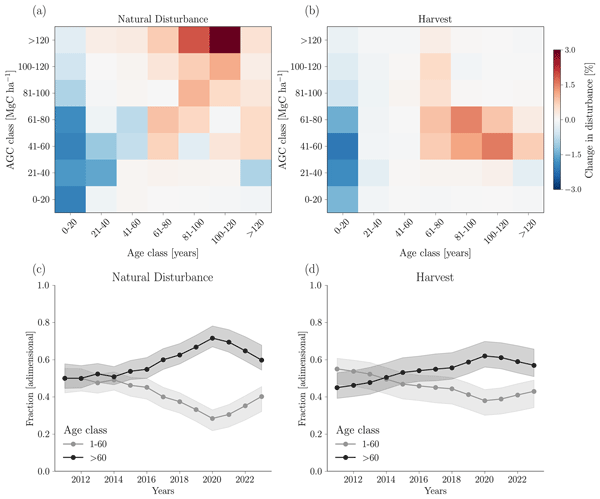
Simon Besnard, Alba Viana-Soto, Henrik Hartmann, Marco Patacca, Viola H. A. Heinrich, Katja Kowalski, Maurizio Santoro, Wanda De Keersmaecker, Ruben Van De Kerchove, Martin Herold, and Cornelius Senf
Biogeosciences, 23, 5983–6002, https://doi.org/10.5194/bg-23-5983-2026, https://doi.org/10.5194/bg-23-5983-2026, 2026
Short summary
Short summary
Europe’s forests store vast amounts of carbon, but climate-driven disturbances are becoming more frequent. By combining satellite records with information on forest age and structure, we show that recent disturbances increasingly affect the oldest and most carbon-rich forests, particularly spruce forests in Central Europe. This emerging pattern puts long-accumulated carbon at risk and may reduce the long-term climate benefits provided by Europe’s forests.
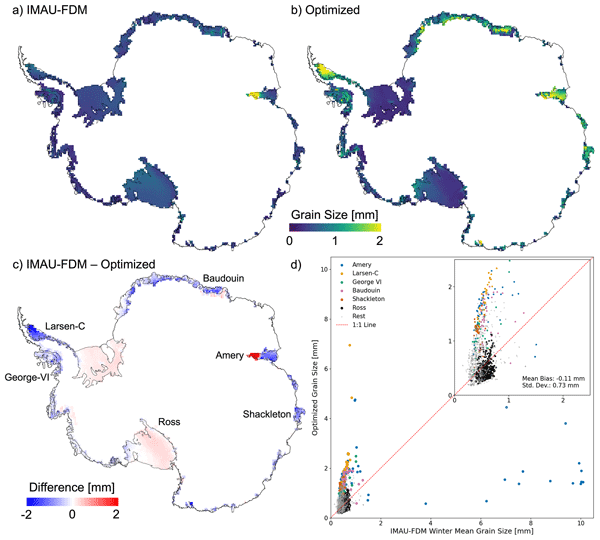
Shashwat Shukla, Bert Wouters, Sanne Veldhuijsen, Sophie de Roda Husman, Weiran Li, and Stef Lhermitte
Earth Obs., 1, 15–41, https://doi.org/10.5194/eo-1-15-2026, https://doi.org/10.5194/eo-1-15-2026, 2026
Short summary
Short summary
Antarctic ice shelves help slow ice flow into the ocean, but their stability depends partly on the upper firn layer. Air in firn affects how much meltwater can be stored, while grain size helps describe firn structure. We combined fifteen years of satellite radar data with physical models to estimate these properties across Antarctic ice shelves. Our results provide a new way to monitor conditions linked to meltwater build-up and possible instability.
Wanda De Keersmaecker, Astrid Verhegghen, Luc Bertels, Cornelius Senf, Alba Viana-Soto, Pieter Johannes Verkerk, Daniele Zanaga, and Ruben Van De Kerchove
Earth Syst. Sci. Data Discuss., https://doi.org/10.5194/essd-2026-329, https://doi.org/10.5194/essd-2026-329, 2026
Preprint under review for ESSD
Short summary
Short summary
In this study, we model the canopy height of woody vegetation across Europe at a spatial resolution of 10 m for the year 2020, using Copernicus Sentinel-1 and Sentinel-2 data. In addition, an independent validation dataset based on airborne LiDAR data — comprising about 3,700 patches of 640 × 640 m distributed across Europe — has been prepared. Comparisons with existing publicly available canopy height products indicate that our estimates are competitive with other canopy height datasets.
Celia A. Baumhoer, Jonas Koehler, Bert Wouters, Stef Lhermitte, Andreas J. Dietz, and Claudia Kuenzer
Earth Syst. Sci. Data Discuss., https://doi.org/10.5194/essd-2025-569, https://doi.org/10.5194/essd-2025-569, 2026
Preprint under review for ESSD
Short summary
Short summary
PolarLakes is a new open dataset tracking meltwater lakes on Antarctic ice shelves every two weeks from 2015–2024. Using AI and satellite data from different sensors the monitoring of lakes is improved even during cloudy conditions. The record shows significant variations in ponding and lake formation, with a continent-wide peak occurring in 2020 within the observed period. To end, the PolarLakes dataset helps us to better understand the dynamics of surface hydrology in Antarctica.
Charlotte Braat, Stef Lhermitte, Marie Claire ten Veldhuis, Rolf Hut, and Ruud van der Ent
EGUsphere, https://doi.org/10.5194/egusphere-2026-1439, https://doi.org/10.5194/egusphere-2026-1439, 2026
Short summary
Short summary
Deforestation influences the regional and global water cycle. In this paper, deforestation data is combined with data that links rainfall to where this water evaporated. We estimate to what extent rainfall in the region is potentially impacted by deforestation elsewhere. We find that most regions are mostly impacted by deforestation outside of the region. We could not yet confirm a generic link with actual rainfall due to limitations, complex system interactions and region specific dynamics.

Thore Kausch, Stef Lhermitte, Marie G. P. Cavitte, Eric Keenan, and Shashwat Shukla
The Cryosphere, 20, 511–526, https://doi.org/10.5194/tc-20-511-2026, https://doi.org/10.5194/tc-20-511-2026, 2026
Short summary
Short summary
Determining the net balance of snow accumulation on the surface of Antarctica is challenging. Sentinel-1 satellite sensors, which can see through snow, offer a promising method. However, linking their signals to snow amounts is complex due to snow's internal structure and limited on-the-ground data. This study found a connection between satellite signals and snow levels at three locations in Dronning Maud Land. Using models and field data, the method shows potential for wider use in Antarctica.
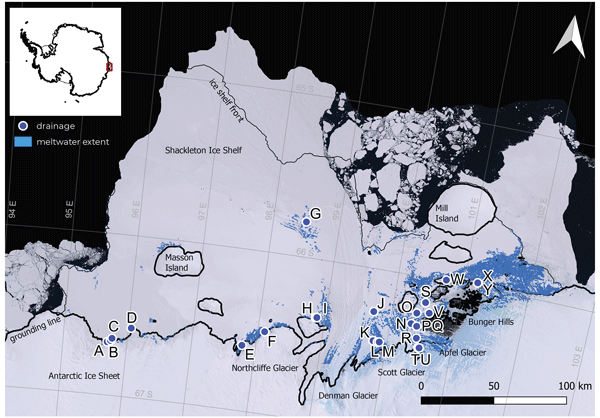
Julius Sommer, Maaike Izeboud, Sophie de Roda Husman, Bert Wouters, and Stef Lhermitte
The Cryosphere, 19, 5903–5912, https://doi.org/10.5194/tc-19-5903-2025, https://doi.org/10.5194/tc-19-5903-2025, 2025
Short summary
Short summary
Ice shelves, the floating extensions of Antarctica’s ice sheet, play a crucial role in preventing mass ice loss, and understanding their stability is crucial. If surface meltwater lakes drain rapidly through fractures, the ice shelf can destabilize. We analyzed satellite images of four years from the Shackleton Ice Shelf and found that lake drainages occurred in areas where damage is present and developing, and coincided with rising tides, offering insights into the drivers of this process.
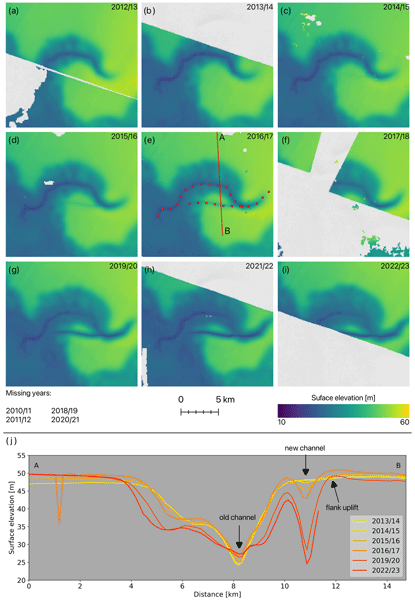
Ann-Sofie P. Zinck, Bert Wouters, Franka Jesse, and Stef Lhermitte
The Cryosphere, 19, 5509–5529, https://doi.org/10.5194/tc-19-5509-2025, https://doi.org/10.5194/tc-19-5509-2025, 2025
Short summary
Short summary
Ocean-driven basal melting of ice shelves can carve channels into the ice shelf base. These channels represent potential weak areas of the ice shelf. On George VI Ice shelf we discover a new channel which onset coincides with the 2015 El-Nino Southern Oscillation event. Since the channel has developed rapidly and is located within a highly channelized area close to the ice shelf front it poses a potential thread of ice shelf retreat.
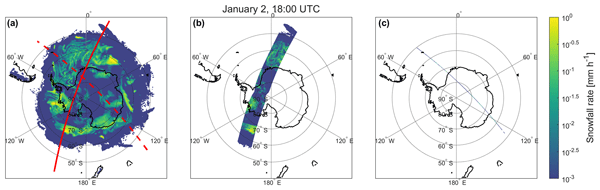
Filippo Emilio Scarsi, Alessandro Battaglia, Maximilian Maahn, and Stef Lhermitte
The Cryosphere, 19, 4875–4892, https://doi.org/10.5194/tc-19-4875-2025, https://doi.org/10.5194/tc-19-4875-2025, 2025
Short summary
Short summary
Snowfall measurements at high latitudes are crucial for estimating ice sheet mass balance. Spaceborne radar and radiometer missions help estimate snowfall but face uncertainties. This work evaluates uncertainties in snowfall estimates from a fixed near-nadir radar (CloudSat-like) and a conically scanning radar (WIVERN-like), showing that a WIVERN-like radar will provide better estimates than a CloudSat-like radar at smaller spatial and temporal scales.
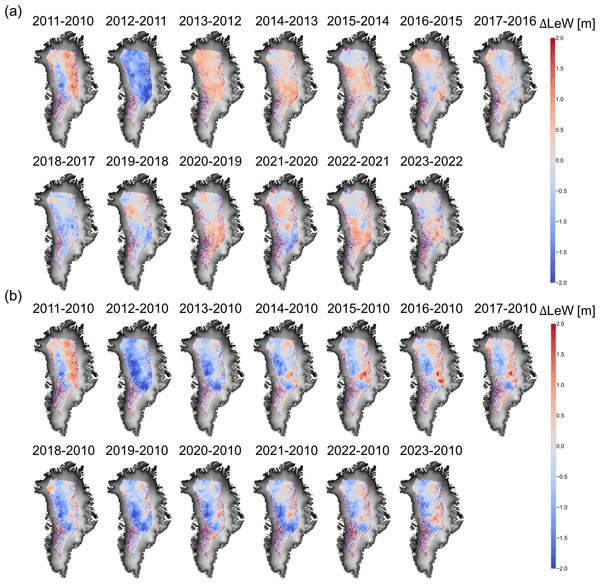
Weiran Li, Stef Lhermitte, Bert Wouters, Cornelis Slobbe, Max Brils, and Xavier Fettweis
The Cryosphere, 19, 3419–3442, https://doi.org/10.5194/tc-19-3419-2025, https://doi.org/10.5194/tc-19-3419-2025, 2025
Short summary
Short summary
Due to recurrent melt and refreezing events in recent decades, the snow conditions over Greenland have changed. To observe this, we use a parameter (leading edge width; LeW) derived from satellite altimetry and analyse its spatial and temporal variations. By comparing the LeW variations with modelled firn parameters, we concluded that the 2012 melt event and the recent and increasingly frequent melt events have a long-lasting impact on the volume scattering of Greenland firn.
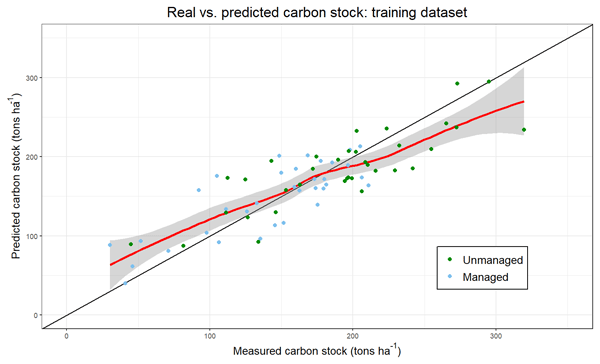
Sofie Van Winckel, Jonas Simons, Stef Lhermitte, and Bart Muys
Biogeosciences, 22, 4291–4307, https://doi.org/10.5194/bg-22-4291-2025, https://doi.org/10.5194/bg-22-4291-2025, 2025
Short summary
Short summary
Insights on management's impact on forest carbon stocks are crucial for sustainable forest management practices. However, accurately monitoring carbon stocks remains a technological challenge. This study estimates above-ground carbon stock in managed and unmanaged forests using passive optical, synthetic aperture radar (SAR), and light detection and ranging (lidar) remote sensing data. Results show promising potential in using multiple remote sensing predictors and publicly available high-resolution data for mapping forest carbon stocks.
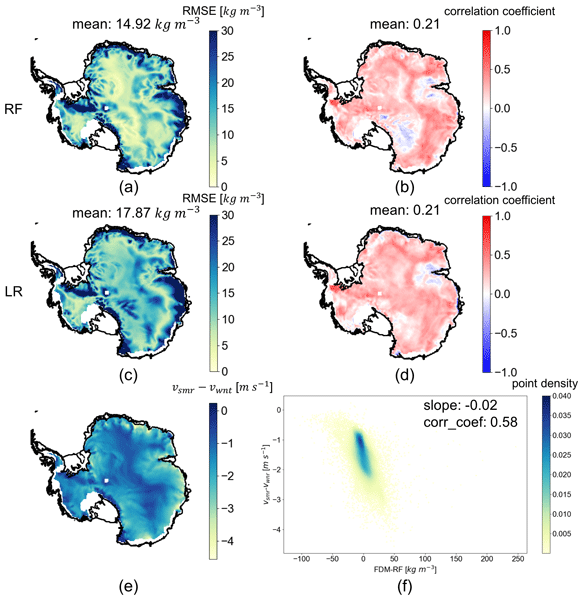
Weiran Li, Sanne B. M. Veldhuijsen, and Stef Lhermitte
The Cryosphere, 19, 37–61, https://doi.org/10.5194/tc-19-37-2025, https://doi.org/10.5194/tc-19-37-2025, 2025
Short summary
Short summary
This study used a machine learning approach to estimate the densities over the Antarctic Ice Sheet, particularly in the areas where the snow is usually dry. The motivation is to establish a link between satellite parameters to snow densities, as measurements are difficult for people to take on site. It provides valuable insights into the complexities of the relationship between satellite parameters and firn density and provides potential for further studies.
Lena G. Buth, Valeria Di Biase, Peter Kuipers Munneke, Stef Lhermitte, Sanne B. M. Veldhuijsen, Sophie de Roda Husman, Michiel R. van den Broeke, and Bert Wouters
EGUsphere, https://doi.org/10.5194/egusphere-2023-2000, https://doi.org/10.5194/egusphere-2023-2000, 2023
Preprint archived
Short summary
Short summary
Liquid meltwater which is stored in air bubbles in the compacted snow near the surface of Antarctica can affect ice shelf stability. In order to detect the presence of such firn aquifers over large scales, satellite remote sensing is needed. In this paper, we present our new detection method using radar satellite data as well as the results for the whole Antarctic Peninsula. Firn aquifers are found in the north and northwest of the peninsula, in agreement with locations predicted by models.
Ann-Sofie Priergaard Zinck, Bert Wouters, Erwin Lambert, and Stef Lhermitte
The Cryosphere, 17, 3785–3801, https://doi.org/10.5194/tc-17-3785-2023, https://doi.org/10.5194/tc-17-3785-2023, 2023
Short summary
Short summary
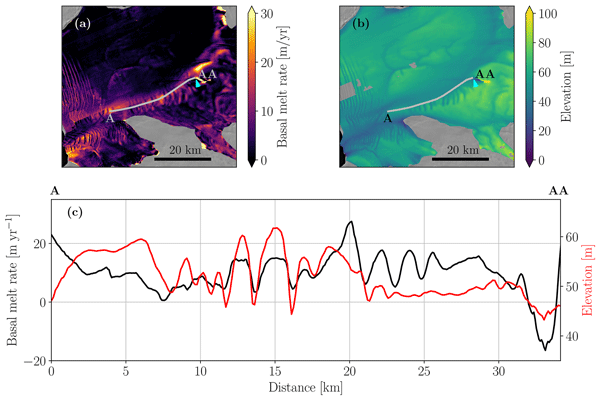
The ice shelves in Antarctica are melting from below, which puts their stability at risk. Therefore, it is important to observe how much and where they are melting. In this study we use high-resolution satellite imagery to derive 50 m resolution basal melt rates of the Dotson Ice Shelf. With the high resolution of our product we are able to uncover small-scale features which may in the future help us to understand the state and fate of the Antarctic ice shelves and their (in)stability.
Diana Francis, Ricardo Fonseca, Kyle S. Mattingly, Stef Lhermitte, and Catherine Walker
The Cryosphere, 17, 3041–3062, https://doi.org/10.5194/tc-17-3041-2023, https://doi.org/10.5194/tc-17-3041-2023, 2023
Short summary
Short summary
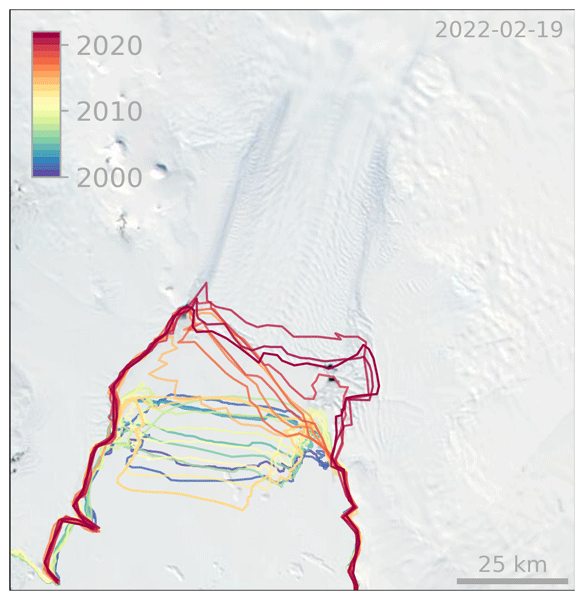
Role of Foehn Winds in ice and snow conditions at the Pine Island Glacier, West Antarctica.
Eva Beele, Maarten Reyniers, Raf Aerts, and Ben Somers
Earth Syst. Sci. Data, 14, 4681–4717, https://doi.org/10.5194/essd-14-4681-2022, https://doi.org/10.5194/essd-14-4681-2022, 2022
Short summary
Short summary
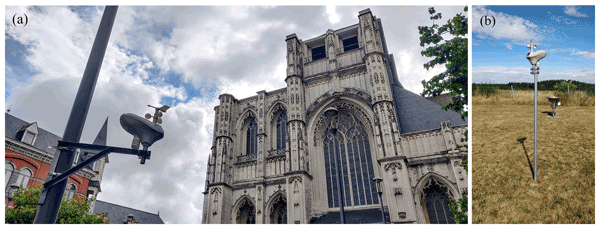
This paper presents crowdsourced data from the Leuven.cool network, a citizen science network of around 100 low-cost weather stations distributed across Leuven, Belgium. The temperature data have undergone a quality control (QC) and correction procedure. The procedure consists of three levels that remove implausible measurements while also correcting for between-station and station-specific temperature biases.
Lena G. Buth, Bert Wouters, Sanne B. M. Veldhuijsen, Stef Lhermitte, Peter Kuipers Munneke, and Michiel R. van den Broeke
The Cryosphere Discuss., https://doi.org/10.5194/tc-2022-127, https://doi.org/10.5194/tc-2022-127, 2022
Manuscript not accepted for further review
Short summary
Short summary
Liquid meltwater which is stored in air bubbles in the compacted snow near the surface of Antarctica can affect ice shelf stability. In order to detect the presence of such firn aquifers over large scales, satellite remote sensing is needed. In this paper, we present our new detection method using radar satellite data as well as the results for the whole Antarctic Peninsula. Firn aquifers are found in the north and northwest of the peninsula, in agreement with locations predicted by models.

Weiran Li, Cornelis Slobbe, and Stef Lhermitte
The Cryosphere, 16, 2225–2243, https://doi.org/10.5194/tc-16-2225-2022, https://doi.org/10.5194/tc-16-2225-2022, 2022
Short summary
Short summary
This study proposes a new method for correcting the slope-induced errors in satellite radar altimetry. The slope-induced errors can significantly affect the height estimations of ice sheets if left uncorrected. This study applies the method to radar altimetry data (CryoSat-2) and compares the performance with two existing methods. The performance is assessed by comparison with independent height measurements from ICESat-2. The assessment shows that the method performs promisingly.
Zhongyang Hu, Peter Kuipers Munneke, Stef Lhermitte, Maaike Izeboud, and Michiel van den Broeke
The Cryosphere, 15, 5639–5658, https://doi.org/10.5194/tc-15-5639-2021, https://doi.org/10.5194/tc-15-5639-2021, 2021
Short summary
Short summary
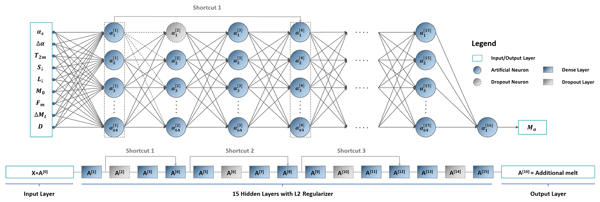
Antarctica is shrinking, and part of the mass loss is caused by higher temperatures leading to more snowmelt. We use computer models to estimate the amount of melt, but this can be inaccurate – specifically in the areas with the most melt. This is because the model cannot account for small, darker areas like rocks or darker ice. Thus, we trained a computer using artificial intelligence and satellite images that showed these darker areas. The model computed an improved estimate of melt.
Weiran Li, Stef Lhermitte, and Paco López-Dekker
The Cryosphere, 15, 5309–5322, https://doi.org/10.5194/tc-15-5309-2021, https://doi.org/10.5194/tc-15-5309-2021, 2021
Short summary
Short summary
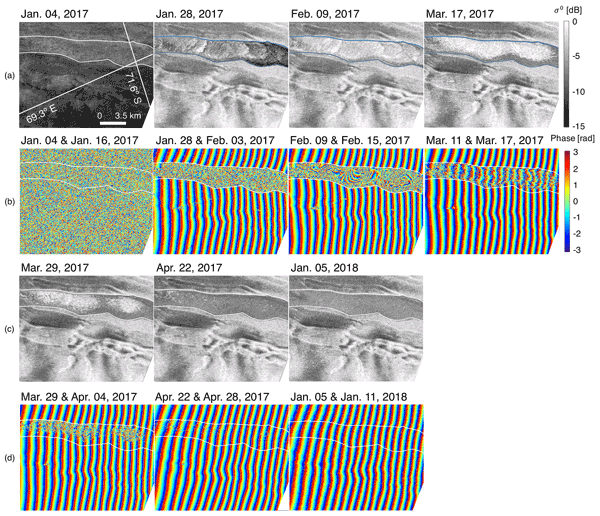
Surface meltwater lakes have been observed on several Antarctic ice shelves in field studies and optical images. Meltwater lakes can drain and refreeze, increasing the fragility of the ice shelves. The combination of synthetic aperture radar (SAR) backscatter and interferometric information (InSAR) can provide the cryosphere community with the possibility to continuously assess the dynamics of the meltwater lakes, potentially helping to facilitate the study of ice shelves in a changing climate.
Annelies Voordendag, Marion Réveillet, Shelley MacDonell, and Stef Lhermitte
The Cryosphere, 15, 4241–4259, https://doi.org/10.5194/tc-15-4241-2021, https://doi.org/10.5194/tc-15-4241-2021, 2021
Short summary
Short summary
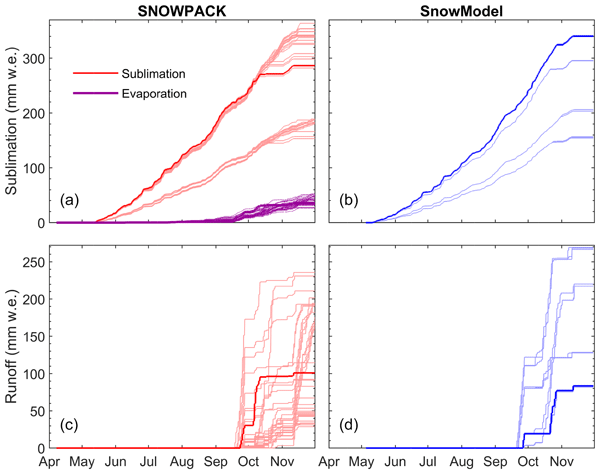
The sensitivity of two snow models (SNOWPACK and SnowModel) to various parameterizations and atmospheric forcing biases is assessed in the semi-arid Andes of Chile in winter 2017. Models show that sublimation is a main driver of ablation and that its relative contribution to total ablation is highly sensitive to the selected albedo parameterization and snow roughness length. The forcing and parameterizations are more important than the model choice, despite differences in physical complexity.
Cited articles
Abatzoglou, J. T., Dobrowski, S. Z., Parks, S. A., and Hegewisch, K. C.: TerraClimate, a high-resolution global dataset of monthly climate and climatic water balance from 1958–2015, Scientific Data, 5, 1–12, https://doi.org/10.1038/sdata.2017.191, 2018.
Anderegg, W. R. L., Anderegg, L. D. L., and Huang, C.: Testing early warning metrics for drought-induced tree physiological stress and mortality, Global Change Biol., 25, 2459–2469, https://doi.org/10.1111/gcb.14655, 2019.
Aragão, L. E. O. C., Malhi, Y., Roman-Cuesta, R. M., Saatchi, S., Anderson, L. O., and Shimabukuro, Y. E.: Spatial patterns and fire response of recent Amazonian droughts, Geophys. Res. Lett., 34, 1–5, https://doi.org/10.1029/2006GL028946, 2007.
Araujo, R., Assunção, J., Hirota, M., and Scheinkman, J. A.: Estimating the spatial amplification of damage caused by degradation in the Amazon, P. Natl. Acad. Sci. USA, 120, e2312451120, https://doi.org/10.1073/pnas.2312451120, 2023.
Artaxo, P.: Amazon deforestation implications in local/regional climate change, P. Natl. Acad. Sci. USA, 120, e2317456120, https://doi.org/10.1073/pnas.2317456120, 2023.
Barros, F. de V., Bittencourt, P. R. L., Brum, M., Restrepo-Coupe, N., Pereira, L., Teodoro, G. S., Saleska, S. R., Borma, L. S., Christoffersen, B. O., Penha, D., Alves, L. F., Lima, A. J. N., Carneiro, V. M. C., Gentine, P., Lee, J., Aragão, L. E. O. C., Ivanov, V., Leal, L. S. M., Araujo, A. C., and Oliveira, R. S.: Hydraulic traits explain differential responses of Amazonian forests to the 2015 El Niño-induced drought, New Phytol., 223, 1253–1266, https://doi.org/10.1111/nph.15909, 2019.
Boulton, C. A., Lenton, T. M., and Boers, N.: Pronounced loss of Amazon rainforest resilience since the early 2000s, Nat. Clim. Change, 12, 271–278, https://doi.org/10.1038/s41558-022-01287-8, 2022.
Buckley, L. B. and Jetz, W.: Linking global turnover of species and environments, P. Natl. Acad. Sci. USA, 105, 17836–17841, https://doi.org/10.1073/pnas.0803524105, 2008.
Butt, E. W., Baker, J. C. A., Bezerra, F. G. S., Von Randow, C., Aguiar, A. P. D., and Spracklen, D. V.: Amazon deforestation causes strong regional warming, P. Natl. Acad. Sci. USA, 120, e2309123120, https://doi.org/10.1073/pnas.2309123120, 2023.
Cleveland, R. B., Cleveland, W. S., McRae, J. E., and Terpenning, I.: STL: A Seasonal-Trend Decomposition Procedure Based on Loess, J. Off. Stat., 6, 3–73, 1990.
Costa, F. R. C., Schietti, J., Stark, S. C., and Smith, M. N.: The other side of tropical forest drought: do shallow water table regions of Amazonia act as large-scale hydrological refugia from drought?, New Phytol., 237, 714–733, https://doi.org/10.1111/nph.17914, 2023.
Dakos, V. and Kéfi, S.: Ecological resilience: what to measure and how, Environ. Res. Lett., 17, 043003, https://doi.org/10.1088/1748-9326/ac5767, 2022.
Dakos, V., Carpenter, S. R., Brock, W. A., Ellison, A. M., Guttal, V., Ives, A. R., Kéfi, S., Livina, V., Seekell, D. A., van Nes, E. H., and Scheffer, M.: Methods for detecting early warnings of critical transitions in time series illustrated using simulated ecological data, PLoS ONE, 7, https://doi.org/10.1371/journal.pone.0041010, 2012.
DiMiceli, C., Carroll, M., Sohlberg, R., Kim, D., Kelly, M., and Townshend, J.: MOD44B MODIS/Terra Vegetation Continuous Fields Yearly L3 Global 250 m SIN Grid V006 [data set], https://doi.org/10.5067/MODIS/MOD44B.006, 2015.
Ditlevsen, P. D. and Johnsen, S. J.: Tipping points: Early warning and wishful thinking, Geophys. Res. Lett., 37, https://doi.org/10.1029/2010GL044486, 2010.
Flores, B. M., Montoya, E., Sakschewski, B., Nascimento, N., Staal, A., Betts, R. A., Levis, C., Lapola, D. M., Esquível-Muelbert, A., Jakovac, C., Nobre, C. A., Oliveira, R. S., Borma, L. S., Nian, D., Boers, N., Hecht, S. B., Ter Steege, H., Arieira, J., Lucas, I. L., Berenguer, E., Marengo, J. A., Gatti, L. V., Mattos, C. R. C., and Hirota, M.: Critical transitions in the Amazon forest system, Nature, 626, 555–564, https://doi.org/10.1038/s41586-023-06970-0, 2024.
Forzieri, G., Dakos, V., McDowell, N. G., Ramdane, A., and Cescatti, A.: Emerging signals of declining forest resilience under climate change, Nature, 608, 534–539, https://doi.org/10.1038/s41586-022-04959-9, 2022.
Franco, M. A., Rizzo, L. V., Teixeira, M. J., Artaxo, P., Azevedo, T., Lelieveld, J., Nobre, C. A., Pöhlker, C., Pöschl, U., Shimbo, J., Xu, X., and Machado, L. A. T.: How climate change and deforestation interact in the transformation of the Amazon rainforest, Nat. Commun., 16, 7944, https://doi.org/10.1038/s41467-025-63156-0, 2025.
Giglio, L., Justice, C., Boschetti, L., and Roy, D.: MCD64A1 MODIS/Terra+Aqua Burned Area Monthly L3 Global 500 m SIN Grid V006 [data set], https://doi.org/10.5067/MODIS/MCD64A1.006, 2015.
Gomes, V. H. F., Vieira, I. C. G., Salomão, R. P., and Ter Steege, H.: Amazonian tree species threatened by deforestation and climate change, Nat. Clim. Change, 9, 547–553, https://doi.org/10.1038/s41558-019-0500-2, 2019.
Gonzalez, A., Germain, R. M., Srivastava, D. S., Filotas, E., Dee, L. E., Gravel, D., Thompson, P. L., Isbell, F., Wang, S., Kéfi, S., Montoya, J., Zelnik, Y. R., and Loreau, M.: Scaling-up biodiversity-ecosystem functioning research, Ecol. Lett., 23, 757–776, https://doi.org/10.1111/ele.13456, 2020.
Grossiord, C., Granier, A., Ratcliffe, S., Bouriaud, O., Bruelheide, H., Chećko, E., Forrester, D. I., Dawud, S. M., Finér, L., Pollastrini, M., Scherer-Lorenzen, M., Valladares, F., Bonal, D., and Gessler, A.: Tree diversity does not always improve resistance of forest ecosystems to drought, P. Natl. Acad. Sci. USA, 111, 14812–14815, https://doi.org/10.1073/pnas.1411970111, 2014.
Hautier, Y., Zhang, P., Loreau, M., Wilcox, K. R., Seabloom, E. W., Borer, E. T., Byrnes, J. E. K., Koerner, S. E., Komatsu, K. J., Lefcheck, J. S., Hector, A., Adler, P. B., Alberti, J., Arnillas, C. A., Bakker, J. D., Brudvig, L. A., Bugalho, M. N., Cadotte, M., Caldeira, M. C., Carroll, O., Crawley, M., Collins, S. L., Daleo, P., Dee, L. E., Eisenhauer, N., Eskelinen, A., Fay, P. A., Gilbert, B., Hansar, A., Isbell, F., Knops, J. M. H., MacDougall, A. S., McCulley, R. L., Moore, J. L., Morgan, J. W., Mori, A. S., Peri, P. L., Pos, E. T., Power, S. A., Price, J. N., Reich, P. B., Risch, A. C., Roscher, C., Sankaran, M., Schütz, M., Smith, M., Stevens, C., Tognetti, P. M., Virtanen, R., Wardle, G. M., Wilfahrt, P. A., and Wang, S.: General destabilizing effects of eutrophication on grassland productivity at multiple spatial scales, Nat. Commun., 11, 5375, https://doi.org/10.1038/s41467-020-19252-4, 2020.
Hofhansl, F., Kobler, J., Ofner, J., Drage, S., Pölz, E., and Wanek, W.: Sensitivity of tropical forest aboveground productivity to climate anomalies in SW Costa Rica, Global Biogeochem. Cy., 28, 1437–1454, https://doi.org/10.1002/2014GB004934, 2014.
Hoorn, C., Wesselingh, F. P., Ter Steege, H., Bermudez, M. A., Mora, A., Sevink, J., Sanmartín, I., Sanchez-Meseguer, A., Anderson, C. L., Figueiredo, J. P., Jaramillo, C., Riff, D., Negri, F. R., Hooghiemstra, H., Lundberg, J., Stadler, T., Särkinen, T., and Antonelli, A.: Amazonia Through Time: Andean Uplift, Climate Change, Landscape Evolution, and Biodiversity, Science, 330, 927–931, https://doi.org/10.1126/science.1194585, 2010.
Hutchison, C., Gravel, D., Guichard, F., and Potvin, C.: Effect of diversity on growth, mortality, and loss of resilience to extreme climate events in a tropical planted forest experiment, Sci. Rep.-UK, 8, 15443, https://doi.org/10.1038/s41598-018-33670-x, 2018.
IPCC: Summary for Policymakers, in: Climate Change 2021: The Physical Science Basis. Contribution of Working Group I to the Sixth Assessment Report of the Intergovernmental Panel on Climate Change, edited by: Masson-Delmotte, V., Zhai, P., Pirani, A., Connors, S. L., Péan, C., Berger, S., Caud, N., Chen, Y., Goldfarb, L., Gomis, M. I., Huang, M., Leitzell, K., Lonnoy, E., Matthews, J. B. R., Maycock, T. K., Waterfield, T., Yelekçi, O., Yu, R., and Zhou, B., Cambridge University Press, 42, in press, https://doi.org/10.1017/9781009157896.001, 2021.
Isbell, F., Craven, D., Connolly, J., Loreau, M., Schmid, B., Beierkuhnlein, C., Bezemer, T. M., Bonin, C., Bruelheide, H., de Luca, E., Ebeling, A., Griffin, J. N., Guo, Q., Hautier, Y., Hector, A., Jentsch, A., Kreyling, J., Lanta, V., Manning, P., Meyer, S. T., Mori, A. S., Naeem, S., Niklaus, P. A., Polley, H. W., Reich, P. B., Roscher, C., Seabloom, E. W., Smith, M. D., Thakur, M. P., Tilman, D., Tracy, B. F., van der Putten, W. H., van Ruijven, J., Weigelt, A., Weisser, W. W., Wilsey, B., and Eisenhauer, N.: Biodiversity increases the resistance of ecosystem productivity to climate extremes, Nature, 526, 574–577, https://doi.org/10.1038/nature15374, 2015.
Ismaeel, A., Tai, A. P. K., Santos, E. G., Maraia, H., Aalto, I., Altman, J., Doležal, J., Lembrechts, J. J., Camargo, J. L., Aalto, J., Sam, K., Avelino Do Nascimento, L. C., Kopecký, M., Svátek, M., Nunes, M. H., Matula, R., Plichta, R., Abera, T., and Maeda, E. E.: Patterns of tropical forest understory temperatures, Nat. Commun., 15, 549, https://doi.org/10.1038/s41467-024-44734-0, 2024.
Janssen, T., Fleischer, K., Luyssaert, S., Naudts, K., and Dolman, H.: Drought resistance increases from the individual to the ecosystem level in highly diverse Neotropical rainforest: a meta-analysis of leaf, tree and ecosystem responses to drought, Biogeosciences, 17, 2621–2645, https://doi.org/10.5194/bg-17-2621-2020, 2020.
Janssen, T., van der Velde, Y., Hofhansl, F., Luyssaert, S., Naudts, K., Driessen, B., Fleischer, K., and Dolman, H.: Drought effects on leaf fall, leaf flushing and stem growth in the Amazon forest: reconciling remote sensing data and field observations, Biogeosciences, 18, 4445–4472, https://doi.org/10.5194/bg-18-4445-2021, 2021.
Keil, P. and Chase, J. M.: Global patterns and drivers of tree diversity integrated across a continuum of spatial grains, Nat. Ecol. Evol., 3, 390–399, https://doi.org/10.1038/s41559-019-0799-0, 2019.
Laurance, W. F., Fearnside, P. M., Laurance, S. G., Delamonica, P., Lovejoy, T. E., Rankin-de Merona, J. M., Chambers, J. Q., and Gascon, C.: Relationship between soils and Amazon forest biomass: a landscape-scale study, Forest Ecol. Manag., 118, 127–138, https://doi.org/10.1016/S0378-1127(98)00494-0, 1999.
Lefcheck, J. S.: piecewiseSEM: Piecewise structural equation modelling in r for ecology, evolution, and systematics, Methods Ecol. Evol., 7, 573–579, https://doi.org/10.1111/2041-210X.12512, 2016.
Lenton, T. M., Buxton, J. E., Armstrong McKay, D. I., Abrams, J. F., Boulton, C. A., Lees, K., Powell, T. W. R., Boers, N., Cunliffe, A. M., and Dakos, V.: A resilience sensing system for the biosphere, Philos. T. Roy. Soc. B, 377, 20210383, https://doi.org/10.1098/rstb.2021.0383, 2022.
Liang, M., Baiser, B., Hallett, L. M., Hautier, Y., Jiang, L., Loreau, M., Record, S., Sokol, E. R., Zarnetske, P. L., and Wang, S.: Consistent stabilizing effects of plant diversity across spatial scales and climatic gradients, Nat. Ecol. Evol., 6, 1669–1675, https://doi.org/10.1038/s41559-022-01868-y, 2022b.
Liu, D., Wang, T., Peñuelas, J., and Piao, S.: Drought resistance enhanced by tree species diversity in global forests, Nat. Geosci., 15, 800–804, https://doi.org/10.1038/s41561-022-01026-w, 2022.
Mattos, C. R. C., Mazzochini, G. G., Rius, B. F., Penha, D., Giacomin, L. L., Flores, B. M., Silva, M. C., Xavier, R. O., Nehemy, M. F., Petroni, A. R., Silva, J. S. G. M., Schlickmann, M. B., Rocha, M., Rodrigues, G., Costa, S. S., Barros, F. V., Tavares, J. V., Furtado, M. N., Verona, L. S., Oliveira-Alves, M. J., Oliveira, R. S., Fan, Y., and Hirota, M.: Rainfall and topographic position determine tree embolism resistance in Amazônia and Cerrado sites, Environ. Res. Lett., 18, 114009, https://doi.org/10.1088/1748-9326/ad0064, 2023.
Mazzochini, G. G., Rowland, L., Lira-Martins, D., Barros, F. D. V., Flores, B. M., Hirota, M., Pennington, R. T., and Oliveira, R. S.: Spectral asynchrony as a measure of ecosystem response diversity, Global Change Biol., 30, e17174, https://doi.org/10.1111/gcb.17174, 2024.
Mori, A. S., Isbell, F., and Seidl, R.: β-Diversity, Community Assembly, and Ecosystem Functioning, Trends Ecol. Evol., 33, 549–564, https://doi.org/10.1016/j.tree.2018.04.012, 2018.
NASA JPL: NASA Shuttle Radar Topography Mission Global 3 arc second [data set], https://doi.org/10.5067/MEaSUREs/SRTM/SRTMGL3.003, 2013.
Oliveira, R. S., Eller, C. B., Barros, F. de V., Hirota, M., Brum, M., and Bittencourt, P.: Linking plant hydraulics and the fast–slow continuum to understand resilience to drought in tropical ecosystems, 904–923, https://doi.org/10.1111/nph.17266, 2021.
Olson, D. M., Dinerstein, E., Wikramanayake, E. D., Burgess, N. D., Powell, G. V. N., Underwood, E. C., and Kassem, K. R.: Terrestrial Ecoregions of the World: A New Map of Life on Earth, Bioscience, 51, 933–938, https://doi.org/10.1641/0006-3568(2001)051[0933:TEOTWA]2.0.CO;2, 2001.
Ouyang, S., Xiang, W., Gou, M., Chen, L., Lei, P., Xiao, W., Deng, X., Zeng, L., Li, J., Zhang, T., Peng, C., and Forrester, D. I.: Stability in subtropical forests: The role of tree species diversity, stand structure, environmental and socio-economic conditions, Global Ecol. Biogeogr., 30, 500–513, https://doi.org/10.1111/geb.13235, 2021.
Papastefanou, P., Zang, C. S., Angelov, Z., de Castro, A. A., Jimenez, J. C., De Rezende, L. F. C., Ruscica, R. C., Sakschewski, B., Sörensson, A. A., Thonicke, K., Vera, C., Viovy, N., Von Randow, C., and Rammig, A.: Recent extreme drought events in the Amazon rainforest: assessment of different precipitation and evapotranspiration datasets and drought indicators, Biogeosciences, 19, 3843–3861, https://doi.org/10.5194/bg-19-3843-2022, 2022.
Pinheiro, J., Bates, D., DebRoy, S., Sarkar, D., and R Core Team: nlme: Linear and Nonlinear Mixed Effects Models, https://doi.org/10.32614/CRAN.package.nlme, 2021.
Poggio, L., de Sousa, L. M., Batjes, N. H., Heuvelink, G. B. M., Kempen, B., Ribeiro, E., and Rossiter, D.: SoilGrids 2.0: producing soil information for the globe with quantified spatial uncertainty, SOIL, 7, 217–240, https://doi.org/10.5194/soil-7-217-2021, 2021.
Poorter, L., van der Sande, M. T., Thompson, J., Arets, E. J. M. M., Alarcón, A., Álvarez-Sánchez, J., Ascarrunz, N., Balvanera, P., Barajas-Guzmán, G., Boit, A., Bongers, F., Carvalho, F. A., Casanoves, F., Cornejo-Tenorio, G., Costa, F. R. C., de Castilho, C. V., Duivenvoorden, J. F., Dutrieux, L. P., Enquist, B. J., Fernández-Méndez, F., Finegan, B., Gormley, L. H. L., Healey, J. R., Hoosbeek, M. R., Ibarra-Manríquez, G., Junqueira, A. B., Levis, C., Licona, J. C., Lisboa, L. S., Magnusson, W. E., Martínez-Ramos, M., Martínez-Yrizar, A., Martorano, L. G., Maskell, L. C., Mazzei, L., Meave, J. A., Mora, F., Muñoz, R., Nytch, C., Pansonato, M. P., Parr, T. W., Paz, H., Pérez-García, E. A., Rentería, L. Y., Rodríguez-Velazquez, J., Rozendaal, D. M. A., Ruschel, A. R., Sakschewski, B., Salgado-Negret, B., Schietti, J., Simões, M., Sinclair, F. L., Souza, P. F., Souza, F. C., Stropp, J., ter Steege, H., Swenson, N. G., Thonicke, K., Toledo, M., Uriarte, M., van der Hout, P., Walker, P., Zamora, N., and Peña-Claros, M.: Diversity enhances carbon storage in tropical forests, Global Ecol. Biogeogr., 24, 1314–1328, https://doi.org/10.1111/geb.12364, 2015.
Potapov, P., Yaroshenko, A., Turubanova, S., Dubinin, M., Laestadius, L., Thies, C., Aksenov, D., Egorov, A., Yesipova, Y., Glushkov, I., Karpachevskiy, M., Kostikova, A., Manisha, A., Tsybikova, E., and Zhuravleva, I.: Mapping the World's Intact Forest Landscapes by Remote Sensing, Ecol. Soc., 13, https://doi.org/10.5751/ES-02670-130251, 2008.
Qiao, X., Geng, Y., Zhang, C., Han, Z., Zhang, Z., Zhao, X., von Gadow, K., and Simova, I.: Spatial asynchrony matters more than alpha stability in stabilizing ecosystem productivity in a large temperate forest region, Global Ecol. Biogeogr., 31, 1133–1146, https://doi.org/10.1111/geb.13488, 2022.
Qiao, X., Hautier, Y., Geng, Y., Wang, S., Wang, J., Zhang, N., Zhang, Z., Zhang, C., Zhao, X., and von Gadow, K.: Biodiversity contributes to stabilizing ecosystem productivity across spatial scales as much as environmental heterogeneity in a large temperate forest region, Forest Ecol. Manag., 529, 120695, https://doi.org/10.1016/j.foreco.2022.120695, 2023.
R Core Team: R: A language and environment for statistical computing, https://www.R-project.org/ (last access: 10 April 2026), 2024.
Rammig, A., Jupp, T., Thonicke, K., Tietjen, B., Heinke, J., Ostberg, S., Lucht, W., Cramer, W., and Cox, P.: Estimating the risk of Amazonian forest dieback, New Phytol., 187, 694–706, https://doi.org/10.1111/j.1469-8137.2010.03318.x, 2010.
Rius, B. F., Filho, J. P. D., Fleischer, K., Hofhansl, F., Blanco, C. C., Rammig, A., Domingues, T. F., and Lapola, D. M.: Higher functional diversity improves modeling of Amazon forest carbon storage, Ecol. Model., 481, 110323, https://doi.org/10.1016/j.ecolmodel.2023.110323, 2023.
Runge, K., Tucker, M., Crowther, T. W., Fournier De Laurière, C., Guirado, E., Bialic-Murphy, L., and Berdugo, M.: Monitoring Terrestrial Ecosystem Resilience Using Earth Observation Data: Identifying Consensus and Limitations Across Metrics, Global Change Biol., 31, e70115, https://doi.org/10.1111/gcb.70115, 2025.
Schaaf, C. and Wang, Z.: MCD43C4 MODIS/Terra+Aqua BRDF/Albedo Nadir BRDF-Adjusted Ref Daily L3 Global 0.05Deg CMG V006 [data set], https://doi.org/10.5067/MODIS/MCD43C4.006, 2015.
Scheffer, M., Bascompte, J., Brock, W. A., Brovkin, V., Carpenter, S. R., Dakos, V., Held, H., Van Nes, E. H., Rietkerk, M., and Sugihara, G.: Early-warning signals for critical transitions, Nature, 461, 53–59, https://doi.org/10.1038/nature08227, 2009.
Sebald, J., Thrippleton, T., Rammer, W., Bugmann, H., and Seidl, R.: Mixing tree species at different spatial scales: The effect of alpha, beta and gamma diversity on disturbance impacts under climate change, J. Appl. Ecol., 58, 1749–1763, https://doi.org/10.1111/1365-2664.13912, 2021.
ter Steege, H., Pitman, N. C. A., Phillips, O. L., Chave, J., Sabatier, D., Duque, A., Molino, J.-F., Prévost, M.-F., Spichiger, R., Castellanos, H., Von Hildebrand, P., and Vásquez, R.: Continental-scale patterns of canopy tree composition and function across Amazonia, Nature, 443, 444–447, https://doi.org/10.1038/nature05134, 2006.
Tuomisto, H., Van Doninck, J., Ruokolainen, K., Moulatlet, G. M., Figueiredo, F. O. G., Sirén, A., Cárdenas, G., Lehtonen, S., and Zuquim, G.: Discovering floristic and geoecological gradients across Amazonia, J. Biogeogr., 46, 1734–1748, https://doi.org/10.1111/jbi.13627, 2019.
Van Der Plas, F., Manning, P., Soliveres, S., Allan, E., Scherer-Lorenzen, M., Verheyen, K., Wirth, C., Zavala, M. A., Ampoorter, E., Baeten, L., Barbaro, L., Bauhus, J., Benavides, R., Benneter, A., Bonal, D., Bouriaud, O., Bruelheide, H., Bussotti, F., Carnol, M., Castagneyrol, B., Charbonnier, Y., Coomes, D. A., Coppi, A., Bestias, C. C., Dawud, S. M., De Wandeler, H., Domisch, T., Finér, L., Gessler, A., Granier, A., Grossiord, C., Guyot, V., Hättenschwiler, S., Jactel, H., Jaroszewicz, B., Joly, F. X., Jucker, T., Koricheva, J., Milligan, H., Mueller, S., Muys, B., Nguyen, D., Pollastrini, M., Ratcliffe, S., Raulund-Rasmussen, K., Selvi, F., Stenlid, J., Valladares, F., Vesterdal, L., Zielínski, D., Fischer, M., and Schlesinger, W. H.: Biotic homogenization can decrease landscape-scale forest multifunctionality, P. Natl. Acad. Sci. USA, 113, 3557–3562, https://doi.org/10.1073/pnas.1517903113, 2016.
Van Der Plas, F., Hennecke, J., Chase, J. M., Van Ruijven, J., and Barry, K. E.: Universal beta-diversity–functioning relationships are neither observed nor expected, Trends Ecol. Evol., 38, 532–544, https://doi.org/10.1016/j.tree.2023.01.008, 2023.
Van Meerbeek, K., Jucker, T., and Svenning, J. C.: Unifying the concepts of stability and resilience in ecology, J. Ecol., 1–19, https://doi.org/10.1111/1365-2745.13651, 2021.
Van Passel, J.: R scripts for 'Higher tree diversity reduces the likelihood of Amazon tipping points', figshare [Software], https://doi.org/10.6084/m9.figshare.27323250.v1, 2026.
Van Passel, J., De Keersmaecker, W., Bernardino, P. N., Jing, X., Umlauf, N., Van Meerbeek, K., and Somers, B.: Climatic legacy effects on the drought response of the Amazon rainforest, Global Change Biol., 28, 5808–5819, https://doi.org/10.1111/gcb.16336, 2022.
Van Passel, J., Bernardino, P. N., Lhermitte, S., Rius, B. F., Hirota, M., Conradi, T., De Keersmaecker, W., Van Meerbeek, K., and Somers, B.: Critical slowing down of the Amazon forest after increased drought occurrence, P. Natl. Acad. Sci. USA, 121, e2316924121, https://doi.org/10.1073/pnas.2316924121, 2024a.
Van Passel, J., Bernardino, P. N., Lhermitte, S., Rius, B., Hirota, M., Conradi, T., De Keersmaecker, W., Van Meerbeek, K., and Somers, B.: Critical slowing down of the Amazon forest after increased drought occurrence, Figshare [data set], https://doi.org/10.6084/M9.FIGSHARE.24220537.V2, 2024b.
Venables, W. N. and Ripley, B. D.: Modern Applied Statistics with S, 4th edn., Springer, New York, https://doi.org/10.1007/978-0-387-21706-2, 2002.
Walsh, P. D. and Lawler, D. M.: Rainfall seasonality: description, spatial patterns and change through time, Weather, 36, 201–208, 1981.
Wang, S. and Loreau, M.: Biodiversity and ecosystem stability across scales in metacommunities, Ecol. Lett., 19, 510–518, https://doi.org/10.1111/ele.12582, 2016.
Wu, D., Vargas G., G., Powers, J. S., McDowell, N. G., Becknell, J. M., Pérez-Aviles, D., Medvigy, D., Liu, Y., Katul, G. G., Calvo-Alvarado, J. C., Calvo-Obando, A., Sanchez-Azofeifa, A., and Xu, X.: Reduced ecosystem resilience quantifies fine-scale heterogeneity in tropical forest mortality responses to drought, Global Change Biol., 28, 2081–2094, https://doi.org/10.1111/gcb.16046, 2022.
Wu, J., Kobayashi, H., Stark, S. C., Meng, R., Guan, K., Tran, N. N., Gao, S., Yang, W., Restrepo-Coupe, N., Miura, T., Oliviera, R. C., Rogers, A., Dye, D. G., Nelson, B. W., Serbin, S. P., Huete, A. R., and Saleska, S. R.: Biological processes dominate seasonality of remotely sensed canopy greenness in an Amazon evergreen forest, New Phytol., 217, 1507–1520, https://doi.org/10.1111/nph.14939, 2018.
Yachi, S. and Loreau, M.: Biodiversity and ecosystem productivity in a fluctuating environment: The insurance hypothesis, P. Natl. Acad. Sci. USA, 96, 1463–1468, https://doi.org/10.1073/pnas.96.4.1463, 1999.
Zemp, D. C., Schleussner, C. F., Barbosa, H. M. J., Hirota, M., Montade, V., Sampaio, G., Staal, A., Wang-Erlandsson, L., and Rammig, A.: Self-amplified Amazon forest loss due to vegetation-atmosphere feedbacks, Nat. Commun., 8, 10, https://doi.org/10.1038/ncomms14681, 2017.
Zuquim, G., Van Doninck, J., Chaves, P. P., Quesada, C. A., Ruokolainen, K., and Tuomisto, H.: Introducing a map of soil base cation concentration, an ecologically relevant GIS-layer for Amazonian forests, Geoderma Regional, 33, e00645, https://doi.org/10.1016/j.geodrs.2023.e00645, 2023.
Short summary
The Amazon forest is important for carbon storage, but climate change might push parts of it towards a tipping point into a degraded state. By studying satellite trends and tree diversity across different spatial scales, we found a larger tipping risk at smaller spatial scales than for the whole region. We also found that higher tree diversity makes the forest more stable and thus less likely to tip, although the effect is relatively weak, highlighting the importance of protecting biodiversity.
The Amazon forest is important for carbon storage, but climate change might push parts of it...


Altmetrics
Final-revised paper
Preprint