
Articles | Volume 23, issue 8
https://doi.org/10.5194/bg-23-2661-2026
© Author(s) 2026. This work is distributed under
the Creative Commons Attribution 4.0 License.
the Creative Commons Attribution 4.0 License.
https://doi.org/10.5194/bg-23-2661-2026
© Author(s) 2026. This work is distributed under
the Creative Commons Attribution 4.0 License.
the Creative Commons Attribution 4.0 License.
Research article
| 
20 Apr 2026
Research article |
| 20 Apr 2026
| 20 Apr 2026
A machine learning approach to driver attribution of dissolved organic matter dynamics in two contrasting freshwater systems
Daniel Mercado-Bettín
CORRESPONDING AUTHOR

Centre for Advanced Studies of Blanes, Spanish National Research Council, Carrer Accés Cala Sant Francesc, 14, 17300, Blanes, Spain
Ricardo Paíz
School of History and Geography, Dublin City University, D09 YT18, Dublin 9, Ireland
Centre for Freshwater and Environmental Studies, Dundalk Institute of Technology, A91 K584 Dundalk, Co. Louth, Ireland
Valerie McCarthy
School of History and Geography, Dublin City University, D09 YT18, Dublin 9, Ireland
Eleanor Jennings
Centre for Freshwater and Environmental Studies, Dundalk Institute of Technology, A91 K584 Dundalk, Co. Louth, Ireland
Elvira de Eyto
Fisheries & Ecosystem Advisory Services, Marine Institute, F28 PF65 Newport, Co. Mayo, Ireland
Angeles M. Gallegos
Ens d’Abastament d’Aigua Ter-Llobregat, Ctra. Aigües, 6, 08440, Cardedeu, Spain
Mary Dillane
Fisheries & Ecosystem Advisory Services, Marine Institute, F28 PF65 Newport, Co. Mayo, Ireland
Juan C. Garcia
Ens d’Abastament d’Aigua Ter-Llobregat, Ctra. Aigües, 6, 08440, Cardedeu, Spain
José J. Rodríguez
Ens d’Abastament d’Aigua Ter-Llobregat, Ctra. Aigües, 6, 08440, Cardedeu, Spain
Rafael Marcé
Centre for Advanced Studies of Blanes, Spanish National Research Council, Carrer Accés Cala Sant Francesc, 14, 17300, Blanes, Spain
Related authors
Katja Frieler, Stefan Lange, Jacob Schewe, Matthias Mengel, Simon Treu, Christian Otto, Jan Volkholz, Christopher P. O. Reyer, Stefanie Heinicke, Colin Jones, Julia L. Blanchard, Cheryl S. Harrison, Colleen M. Petrik, Tyler D. Eddy, Kelly Ortega-Cisneros, Camilla Novaglio, Ryan Heneghan, Derek P. Tittensor, Olivier Maury, Matthias Büchner, Thomas Vogt, Dánnell Quesada-Chacón, Kerry Emanuel, Chia-Ying Lee, Suzana J. Camargo, Linn Hamester, Jonas Jägermeyr, Sam Rabin, Jochen Klar, Iliusi D. Vega del Valle, Lisa Novak, Inga J. Sauer, Gitta Lasslop, Sarah Chadburn, Eleanor Burke, Angela Gallego-Sala, Noah Smith, Jinfeng Chang, Stijn Hantson, Chantelle Burton, Anne Gädeke, Fang Li, Simon N. Gosling, Hannes Müller Schmied, Fred Hattermann, Thomas Hickler, Rafael Marcé, Don Pierson, Wim Thiery, Daniel Mercado-Bettín, Robert Ladwig, Ana Isabel Ayala, Matthew Forrest, Michel Bechtold, Robert Reinecke, Inge de Graaf, Jed O. Kaplan, Alexander Koch, Matthieu Lengaigne, Rohini Kumar, and Maryna Strokal
Geosci. Model Dev., 19, 4095–4135, https://doi.org/10.5194/gmd-19-4095-2026, https://doi.org/10.5194/gmd-19-4095-2026, 2026
Short summary
Short summary
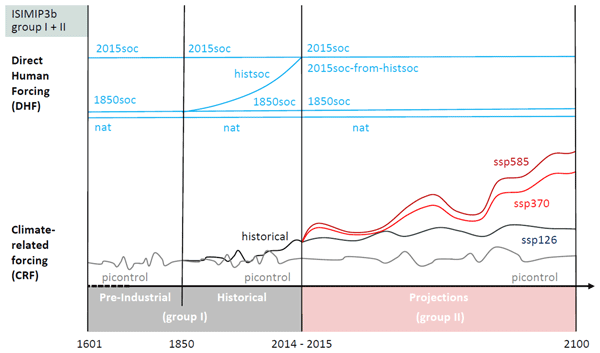
This paper describes the experiments and data sets necessary to run historic and future impact projections, and the underlying assumptions of future climate change as defined by the 3rd round of the ISIMIP Project (Inter-sectoral Impactmodel Intercomparison Project, isimip.org). ISIMIP provides a framework for cross-sectorally consistent climate impact simulations to contribute to a comprehensive and consistent picture of the world under different climate-change scenarios.
Ana I. Ayala, José L. Hinostroza, Daniel Mercado-Bettín, Rafael Marcé, Simon N. Gosling, Donald C. Pierson, and Sebastian Sobek
Geosci. Model Dev., 19, 41–56, https://doi.org/10.5194/gmd-19-41-2026, https://doi.org/10.5194/gmd-19-41-2026, 2026
Short summary
Short summary
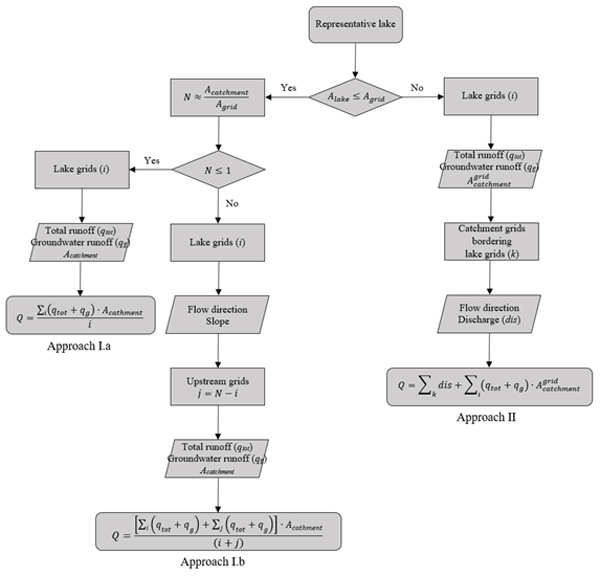
Climate change affect lakes by including not just the lakes themselves but also the land areas that drain into them. These surrounding areas influence how much water and nutrients flow into lakes which in turn impact water quality. Here, water fluxes from land, derived from a global hydrological model where water fluxes are modelled at the grid scale, were used to estimate streamflow inputs to lakes from their catchments. Using data from 70 Swedish lakes, we showed that our method works well.
Katja Frieler, Jan Volkholz, Stefan Lange, Jacob Schewe, Matthias Mengel, María del Rocío Rivas López, Christian Otto, Christopher P. O. Reyer, Dirk Nikolaus Karger, Johanna T. Malle, Simon Treu, Christoph Menz, Julia L. Blanchard, Cheryl S. Harrison, Colleen M. Petrik, Tyler D. Eddy, Kelly Ortega-Cisneros, Camilla Novaglio, Yannick Rousseau, Reg A. Watson, Charles Stock, Xiao Liu, Ryan Heneghan, Derek Tittensor, Olivier Maury, Matthias Büchner, Thomas Vogt, Tingting Wang, Fubao Sun, Inga J. Sauer, Johannes Koch, Inne Vanderkelen, Jonas Jägermeyr, Christoph Müller, Sam Rabin, Jochen Klar, Iliusi D. Vega del Valle, Gitta Lasslop, Sarah Chadburn, Eleanor Burke, Angela Gallego-Sala, Noah Smith, Jinfeng Chang, Stijn Hantson, Chantelle Burton, Anne Gädeke, Fang Li, Simon N. Gosling, Hannes Müller Schmied, Fred Hattermann, Jida Wang, Fangfang Yao, Thomas Hickler, Rafael Marcé, Don Pierson, Wim Thiery, Daniel Mercado-Bettín, Robert Ladwig, Ana Isabel Ayala-Zamora, Matthew Forrest, and Michel Bechtold
Geosci. Model Dev., 17, 1–51, https://doi.org/10.5194/gmd-17-1-2024, https://doi.org/10.5194/gmd-17-1-2024, 2024
Short summary
Short summary
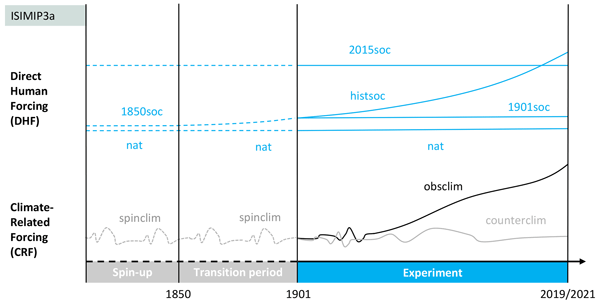
Our paper provides an overview of all observational climate-related and socioeconomic forcing data used as input for the impact model evaluation and impact attribution experiments within the third round of the Inter-Sectoral Impact Model Intercomparison Project. The experiments are designed to test our understanding of observed changes in natural and human systems and to quantify to what degree these changes have already been induced by climate change.
François Clayer, Leah Jackson-Blake, Daniel Mercado-Bettín, Muhammed Shikhani, Andrew French, Tadhg Moore, James Sample, Magnus Norling, Maria-Dolores Frias, Sixto Herrera, Elvira de Eyto, Eleanor Jennings, Karsten Rinke, Leon van der Linden, and Rafael Marcé
Hydrol. Earth Syst. Sci., 27, 1361–1381, https://doi.org/10.5194/hess-27-1361-2023, https://doi.org/10.5194/hess-27-1361-2023, 2023
Short summary
Short summary
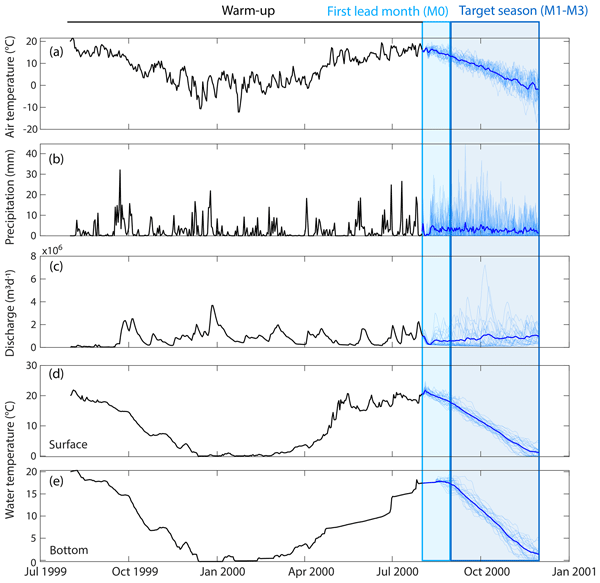
We assessed the predictive skill of forecasting tools over the next season for water discharge and lake temperature. Tools were forced with seasonal weather predictions; however, most of the prediction skill originates from legacy effects and not from seasonal weather predictions. Yet, when skills from seasonal weather predictions are present, additional skill comes from interaction effects. Skilful lake seasonal predictions require better weather predictions and realistic antecedent conditions.
Malgorzata Golub, Wim Thiery, Rafael Marcé, Don Pierson, Inne Vanderkelen, Daniel Mercado-Bettin, R. Iestyn Woolway, Luke Grant, Eleanor Jennings, Benjamin M. Kraemer, Jacob Schewe, Fang Zhao, Katja Frieler, Matthias Mengel, Vasiliy Y. Bogomolov, Damien Bouffard, Marianne Côté, Raoul-Marie Couture, Andrey V. Debolskiy, Bram Droppers, Gideon Gal, Mingyang Guo, Annette B. G. Janssen, Georgiy Kirillin, Robert Ladwig, Madeline Magee, Tadhg Moore, Marjorie Perroud, Sebastiano Piccolroaz, Love Raaman Vinnaa, Martin Schmid, Tom Shatwell, Victor M. Stepanenko, Zeli Tan, Bronwyn Woodward, Huaxia Yao, Rita Adrian, Mathew Allan, Orlane Anneville, Lauri Arvola, Karen Atkins, Leon Boegman, Cayelan Carey, Kyle Christianson, Elvira de Eyto, Curtis DeGasperi, Maria Grechushnikova, Josef Hejzlar, Klaus Joehnk, Ian D. Jones, Alo Laas, Eleanor B. Mackay, Ivan Mammarella, Hampus Markensten, Chris McBride, Deniz Özkundakci, Miguel Potes, Karsten Rinke, Dale Robertson, James A. Rusak, Rui Salgado, Leon van der Linden, Piet Verburg, Danielle Wain, Nicole K. Ward, Sabine Wollrab, and Galina Zdorovennova
Geosci. Model Dev., 15, 4597–4623, https://doi.org/10.5194/gmd-15-4597-2022, https://doi.org/10.5194/gmd-15-4597-2022, 2022
Short summary
Short summary
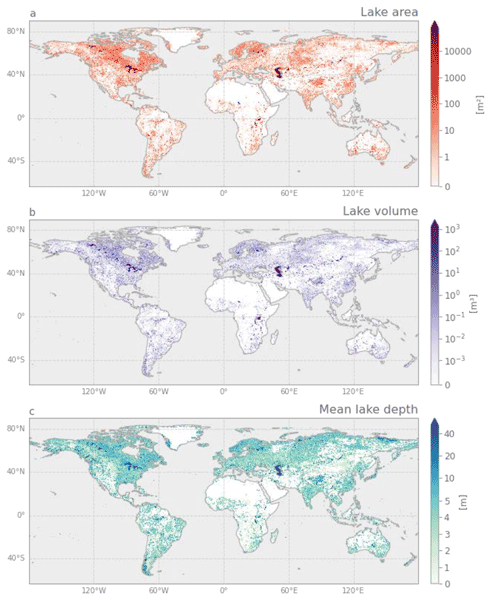
Lakes and reservoirs are warming across the globe. To better understand how lakes are changing and to project their future behavior amidst various sources of uncertainty, simulations with a range of lake models are required. This in turn requires international coordination across different lake modelling teams worldwide. Here we present a protocol for and results from coordinated simulations of climate change impacts on lakes worldwide.
Leah A. Jackson-Blake, François Clayer, Elvira de Eyto, Andrew S. French, María Dolores Frías, Daniel Mercado-Bettín, Tadhg Moore, Laura Puértolas, Russell Poole, Karsten Rinke, Muhammed Shikhani, Leon van der Linden, and Rafael Marcé
Hydrol. Earth Syst. Sci., 26, 1389–1406, https://doi.org/10.5194/hess-26-1389-2022, https://doi.org/10.5194/hess-26-1389-2022, 2022
Short summary
Short summary
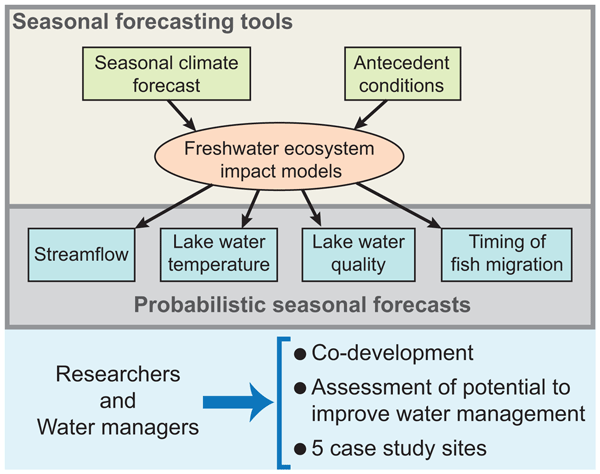
We explore, together with stakeholders, whether seasonal forecasting of water quantity, quality, and ecology can help support water management at five case study sites, primarily in Europe. Reliable forecasting, a season in advance, has huge potential to improve decision-making. However, managers were reluctant to use the forecasts operationally. Key barriers were uncertainty and often poor historic performance. The importance of practical hands-on experience was also highlighted.
Pelin Erturk Ari, Rafael Marcé, Oriol Sacristán-Soriano, Duygu Tolunay, Carles M. Borrego, Sílvia Poblador, Biel Obrador, Enrique Moreno-Ostos, Jorge J. Montes-Pérez, Teresa Conejo-Orosa, Matthias Koschorreck, Josep Peñuelas, and Núria Catalán
EGUsphere, https://doi.org/10.5194/egusphere-2026-5010, https://doi.org/10.5194/egusphere-2026-5010, 2026
This preprint is open for discussion and under review for Biogeosciences (BG).
Short summary
Short summary
Rewetting dry sediments of Lake Gallocanta had little effect on carbon dioxide (CO₂) fluxes, which showed strong daily cycles of emission and uptake. Despite changes in microbial community composition, biological carbon fixation did not explain CO₂ uptake. Modeling of CO₂ flux and isotope data showed that abiotic processes, likely weathering, dominated CO₂ uptake, while respiration drove emissions. These results highlight the importance of abiotic controls on CO₂ dynamics in dry sediments.
Katja Frieler, Stefan Lange, Jacob Schewe, Matthias Mengel, Simon Treu, Christian Otto, Jan Volkholz, Christopher P. O. Reyer, Stefanie Heinicke, Colin Jones, Julia L. Blanchard, Cheryl S. Harrison, Colleen M. Petrik, Tyler D. Eddy, Kelly Ortega-Cisneros, Camilla Novaglio, Ryan Heneghan, Derek P. Tittensor, Olivier Maury, Matthias Büchner, Thomas Vogt, Dánnell Quesada-Chacón, Kerry Emanuel, Chia-Ying Lee, Suzana J. Camargo, Linn Hamester, Jonas Jägermeyr, Sam Rabin, Jochen Klar, Iliusi D. Vega del Valle, Lisa Novak, Inga J. Sauer, Gitta Lasslop, Sarah Chadburn, Eleanor Burke, Angela Gallego-Sala, Noah Smith, Jinfeng Chang, Stijn Hantson, Chantelle Burton, Anne Gädeke, Fang Li, Simon N. Gosling, Hannes Müller Schmied, Fred Hattermann, Thomas Hickler, Rafael Marcé, Don Pierson, Wim Thiery, Daniel Mercado-Bettín, Robert Ladwig, Ana Isabel Ayala, Matthew Forrest, Michel Bechtold, Robert Reinecke, Inge de Graaf, Jed O. Kaplan, Alexander Koch, Matthieu Lengaigne, Rohini Kumar, and Maryna Strokal
Geosci. Model Dev., 19, 4095–4135, https://doi.org/10.5194/gmd-19-4095-2026, https://doi.org/10.5194/gmd-19-4095-2026, 2026
Short summary
Short summary
This paper describes the experiments and data sets necessary to run historic and future impact projections, and the underlying assumptions of future climate change as defined by the 3rd round of the ISIMIP Project (Inter-sectoral Impactmodel Intercomparison Project, isimip.org). ISIMIP provides a framework for cross-sectorally consistent climate impact simulations to contribute to a comprehensive and consistent picture of the world under different climate-change scenarios.
Daniela Henry-Pinilla, Núria Catalán, Biel Obrador, and Rafael Marcé
EGUsphere, https://doi.org/10.5194/egusphere-2025-5359, https://doi.org/10.5194/egusphere-2025-5359, 2026
Short summary
Short summary
We developed the first global model that tracks how carbon moves and is buried across rivers, lakes, floodplains, and coastal areas. This new tool links these ecosystems within a single framework, helping scientists better understand how water systems store carbon and influence the planet’s carbon balance and climate.
Victoria Frutos-Aragón, Sandra Brucet, Rafael Marcé, Tuba Bucak, Thomas A. Davidson, Louisa-Marie von Plüskow, Pieter Lemmens, and Carolina Trochine
Biogeosciences, 23, 181–204, https://doi.org/10.5194/bg-23-181-2026, https://doi.org/10.5194/bg-23-181-2026, 2026
Short summary
Short summary
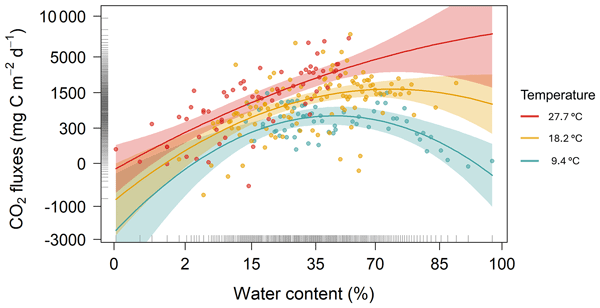
Pond sediments emit substantial CO2 during dry phases, often overlooked despite climate change increasing dry periods. We measured CO2 fluxes in 30 ponds across Mediterranean and Temperate regions, finding higher emissions in summer and in ponds with longer hydroperiods, especially in Mediterranean climates. Emissions peaked at moderate sediment water content and warm temperatures, highlighting the need to include dry-phase emissions in carbon flux assessments.
Ana I. Ayala, José L. Hinostroza, Daniel Mercado-Bettín, Rafael Marcé, Simon N. Gosling, Donald C. Pierson, and Sebastian Sobek
Geosci. Model Dev., 19, 41–56, https://doi.org/10.5194/gmd-19-41-2026, https://doi.org/10.5194/gmd-19-41-2026, 2026
Short summary
Short summary
Climate change affect lakes by including not just the lakes themselves but also the land areas that drain into them. These surrounding areas influence how much water and nutrients flow into lakes which in turn impact water quality. Here, water fluxes from land, derived from a global hydrological model where water fluxes are modelled at the grid scale, were used to estimate streamflow inputs to lakes from their catchments. Using data from 70 Swedish lakes, we showed that our method works well.
Laia Estrada, Xavier Garcia, Joan Saló-Grau, Rafael Marcé, Antoni Munné, and Vicenç Acuña
Hydrol. Earth Syst. Sci., 28, 5353–5373, https://doi.org/10.5194/hess-28-5353-2024, https://doi.org/10.5194/hess-28-5353-2024, 2024
Short summary
Short summary
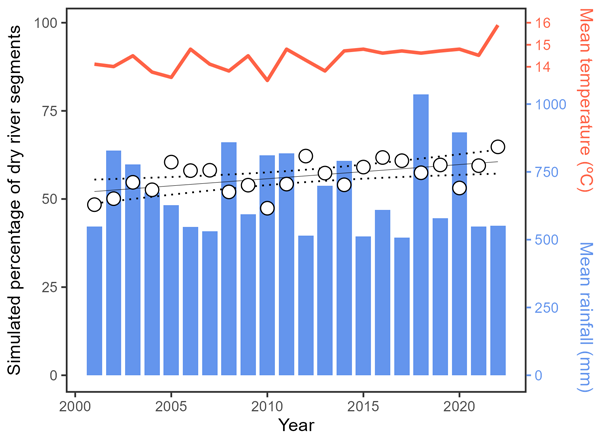
Hydrological modelling is a powerful tool to support decision-making. We assessed spatio-temporal patterns and trends of streamflow for 2001–2022 with a hydrological model, integrating stakeholder expert knowledge on management operations. The results provide insight into how climate change and anthropogenic pressures affect water resources availability in regions vulnerable to water scarcity, thus raising the need for sustainable management practices and integrated hydrological modelling.
Katja Frieler, Jan Volkholz, Stefan Lange, Jacob Schewe, Matthias Mengel, María del Rocío Rivas López, Christian Otto, Christopher P. O. Reyer, Dirk Nikolaus Karger, Johanna T. Malle, Simon Treu, Christoph Menz, Julia L. Blanchard, Cheryl S. Harrison, Colleen M. Petrik, Tyler D. Eddy, Kelly Ortega-Cisneros, Camilla Novaglio, Yannick Rousseau, Reg A. Watson, Charles Stock, Xiao Liu, Ryan Heneghan, Derek Tittensor, Olivier Maury, Matthias Büchner, Thomas Vogt, Tingting Wang, Fubao Sun, Inga J. Sauer, Johannes Koch, Inne Vanderkelen, Jonas Jägermeyr, Christoph Müller, Sam Rabin, Jochen Klar, Iliusi D. Vega del Valle, Gitta Lasslop, Sarah Chadburn, Eleanor Burke, Angela Gallego-Sala, Noah Smith, Jinfeng Chang, Stijn Hantson, Chantelle Burton, Anne Gädeke, Fang Li, Simon N. Gosling, Hannes Müller Schmied, Fred Hattermann, Jida Wang, Fangfang Yao, Thomas Hickler, Rafael Marcé, Don Pierson, Wim Thiery, Daniel Mercado-Bettín, Robert Ladwig, Ana Isabel Ayala-Zamora, Matthew Forrest, and Michel Bechtold
Geosci. Model Dev., 17, 1–51, https://doi.org/10.5194/gmd-17-1-2024, https://doi.org/10.5194/gmd-17-1-2024, 2024
Short summary
Short summary
Our paper provides an overview of all observational climate-related and socioeconomic forcing data used as input for the impact model evaluation and impact attribution experiments within the third round of the Inter-Sectoral Impact Model Intercomparison Project. The experiments are designed to test our understanding of observed changes in natural and human systems and to quantify to what degree these changes have already been induced by climate change.
François Clayer, Leah Jackson-Blake, Daniel Mercado-Bettín, Muhammed Shikhani, Andrew French, Tadhg Moore, James Sample, Magnus Norling, Maria-Dolores Frias, Sixto Herrera, Elvira de Eyto, Eleanor Jennings, Karsten Rinke, Leon van der Linden, and Rafael Marcé
Hydrol. Earth Syst. Sci., 27, 1361–1381, https://doi.org/10.5194/hess-27-1361-2023, https://doi.org/10.5194/hess-27-1361-2023, 2023
Short summary
Short summary
We assessed the predictive skill of forecasting tools over the next season for water discharge and lake temperature. Tools were forced with seasonal weather predictions; however, most of the prediction skill originates from legacy effects and not from seasonal weather predictions. Yet, when skills from seasonal weather predictions are present, additional skill comes from interaction effects. Skilful lake seasonal predictions require better weather predictions and realistic antecedent conditions.
Malgorzata Golub, Wim Thiery, Rafael Marcé, Don Pierson, Inne Vanderkelen, Daniel Mercado-Bettin, R. Iestyn Woolway, Luke Grant, Eleanor Jennings, Benjamin M. Kraemer, Jacob Schewe, Fang Zhao, Katja Frieler, Matthias Mengel, Vasiliy Y. Bogomolov, Damien Bouffard, Marianne Côté, Raoul-Marie Couture, Andrey V. Debolskiy, Bram Droppers, Gideon Gal, Mingyang Guo, Annette B. G. Janssen, Georgiy Kirillin, Robert Ladwig, Madeline Magee, Tadhg Moore, Marjorie Perroud, Sebastiano Piccolroaz, Love Raaman Vinnaa, Martin Schmid, Tom Shatwell, Victor M. Stepanenko, Zeli Tan, Bronwyn Woodward, Huaxia Yao, Rita Adrian, Mathew Allan, Orlane Anneville, Lauri Arvola, Karen Atkins, Leon Boegman, Cayelan Carey, Kyle Christianson, Elvira de Eyto, Curtis DeGasperi, Maria Grechushnikova, Josef Hejzlar, Klaus Joehnk, Ian D. Jones, Alo Laas, Eleanor B. Mackay, Ivan Mammarella, Hampus Markensten, Chris McBride, Deniz Özkundakci, Miguel Potes, Karsten Rinke, Dale Robertson, James A. Rusak, Rui Salgado, Leon van der Linden, Piet Verburg, Danielle Wain, Nicole K. Ward, Sabine Wollrab, and Galina Zdorovennova
Geosci. Model Dev., 15, 4597–4623, https://doi.org/10.5194/gmd-15-4597-2022, https://doi.org/10.5194/gmd-15-4597-2022, 2022
Short summary
Short summary
Lakes and reservoirs are warming across the globe. To better understand how lakes are changing and to project their future behavior amidst various sources of uncertainty, simulations with a range of lake models are required. This in turn requires international coordination across different lake modelling teams worldwide. Here we present a protocol for and results from coordinated simulations of climate change impacts on lakes worldwide.
Leah A. Jackson-Blake, François Clayer, Elvira de Eyto, Andrew S. French, María Dolores Frías, Daniel Mercado-Bettín, Tadhg Moore, Laura Puértolas, Russell Poole, Karsten Rinke, Muhammed Shikhani, Leon van der Linden, and Rafael Marcé
Hydrol. Earth Syst. Sci., 26, 1389–1406, https://doi.org/10.5194/hess-26-1389-2022, https://doi.org/10.5194/hess-26-1389-2022, 2022
Short summary
Short summary
We explore, together with stakeholders, whether seasonal forecasting of water quantity, quality, and ecology can help support water management at five case study sites, primarily in Europe. Reliable forecasting, a season in advance, has huge potential to improve decision-making. However, managers were reluctant to use the forecasts operationally. Key barriers were uncertainty and often poor historic performance. The importance of practical hands-on experience was also highlighted.
Cited articles
Asadollah, S. B. H. S., Safaeinia, A., Jarahizadeh, S., Alcalá, F. J., Sharafati, A., and Jodar-Abellan, A.: Dissolved organic carbon estimation in lakes: Improving machine learning with data augmentation on fusion of multi-sensor remote sensing observations, Water Research, 277, 123350, https://doi.org/10.1016/j.watres.2025.123350, 2025. a
Bhateria, R. and Jain, D.: Water quality assessment of lake water: A review, Sustainable Water Resources Management, 2, 161–173, https://doi.org/10.1007/s40899-015-0014-7, 2016. a
Biau, G. and Scornet, E.: A random forest guided tour, Test, 25, 197–227, 2016. a
Breiman, L.: Random Forests, Mach. Learn., 45, 5–32, https://doi.org/10.1023/A:1010933404324, 2001. a
Chen, C., Chen, Q., Yao, S., He, M., Zhang, J., Li, G., and Lin, Y.: Combining physical-based model and machine learning to forecast chlorophyll-a concentration in freshwater lakes, Sci. Total Environ., 907, 168097, https://doi.org/10.1016/j.scitotenv.2023.168097, 2024. a
Chen, T. and Guestrin, C.: XGBoost: A Scalable Tree Boosting System, in: Proceedings of the 22nd ACM SIGKDD International Conference on Knowledge Discovery and Data Mining, 785–794, https://doi.org/10.1145/2939672.2939785, 2016. a
Cortes, C. and Vapnik, V.: Support-vector networks, Mach. Learn., 20, 273–297, https://doi.org/10.1007/BF00994018, 1995. a
Creed, I. F., Bergström, A.-K., Trick, C. G., Grimm, N. B., Hessen, D. O., Karlsson, J., Kidd, K. A., Kritzberg, E., McKnight, D. M., Freeman, E. C., Senar, O. E., Andersson, A., Ask, J., Berggren, M., Cherif, M., Giesler, R., Hotchkiss, E. R., Kortelainen, P., Palta, M. M., and Weyhenmeyer, G. A.: Global change-driven effects on dissolved organic matter composition: Implications for food webs of northern lakes, Glob. Change Biol., 24, 3692–3714, https://doi.org/10.1111/gcb.14129, 2018. a
Downing, B. D., Pellerin, B. A., Bergamaschi, B. A., Saraceno, J. F., and Kraus, T. E. C.: Seeing the light: The effects of particles, dissolved materials, and temperature on in situ measurements of DOM fluorescence in rivers and streams, Limnol. Oceanogr.-Meth., 10, 767–775, https://doi.org/10.4319/lom.2012.10.767, 2012. a
Doyle, B. C., de Eyto, E., Dillane, M., Poole, R., McCarthy, V., Ryder, E., and Jennings, E.: Synchrony in catchment stream colour levels is driven by both local and regional climate, Biogeosciences, 16, 1053–1071, https://doi.org/10.5194/bg-16-1053-2019, 2019. a, b
Duan, H., Cao, Z., Luo, J., and Shen, M.: AI-driven opportunities and challenges in lake remote sensing, Information Geography, 100014, https://doi.org/10.1016/j.infgeo.2025.100014, 2025. a
Dubeux, J. C. B., Lira Junior, M. D. A., Simili, F. F., Bretas, I. L., Trumpp, K. R., Bizzuti, B. E., Garcia, L., Oduor, K. T., Queiroz, L. M. D., Acuña, J. P., and Mendes, C. T. E.: Deep soil organic carbon: A review, CABI Reviews, 19, https://doi.org/10.1079/cabireviews.2024.0024, 2024. a
European Environment Agency (EEA): CORINE Land Cover 2018 (vector/raster 100 m), Europe, 6-yearly – version 2020_20u1, European Environment Agency (EEA), https://doi.org/10.2909/71c95a07-e296-44fc-b22b-415f42acfdf0, 2020. a
Fix, E.: Discriminatory Analysis: Nonparametric Discrimination, Consistency Properties, Tech. rep., USAF School of Aviation Medicine, https://doi.org/10.1037/e471672008-001, 1985. a
Gobler, C. J.: Climate Change and Harmful Algal Blooms: Insights and perspective, Harmful Algae, 91, 101731, https://doi.org/10.1016/j.hal.2019.101731, 2020. a
Hanson, P. C., Stillman, A. B., Jia, X., Karpatne, A., Dugan, H. A., Carey, C. C., Stachelek, J., Ward, N. K., Zhang, Y., Read, J. S., and Kumar, V.: Predicting lake surface water phosphorus dynamics using process-guided machine learning, Ecol. Model., 430, 109136, https://doi.org/10.1016/j.ecolmodel.2020.109136, 2020. a, b
Harkort, L. and Duan, Z.: Estimation of dissolved organic carbon from inland waters at a large scale using satellite data and machine learning methods, Water Res., 229, 119478, https://doi.org/10.1016/j.watres.2022.119478, 2023. a
Hersbach, H., Bell, B., Berrisford, P., Biavati, G., Horányi, A., Muñoz Sabater, J., Nicolas, J., Peubey, C., Radu, R., Rozum, I., Schepers, D., Simmons, A., Soci, C., Dee, D., and Thépaut, J.-N.: ERA5 hourly data on single levels from 1940 to present, Copernicus Climate Change Service (C3S) Climate Data Store (CDS) [data set], https://doi.org/10.24381/cds.adbb2d47, 2025. a
Herzsprung, P., Wentzky, V., Kamjunke, N., von Tümpling, W., Wilske, C., Friese, K., Boehrer, B., Reemtsma, T., Rinke, K., and Lechtenfeld, O. J.: Improved Understanding of Dissolved Organic Matter Processing in Freshwater Using Complementary Experimental and Machine Learning Approaches, Environ. Sci. Technol., 54, 13556–13565, https://doi.org/10.1021/acs.est.0c02383, 2020. a
Hipsey, M. R., Bruce, L. C., Boon, C., Busch, B., Carey, C. C., Hamilton, D. P., Hanson, P. C., Read, J. S., de Sousa, E., Weber, M., and Winslow, L. A.: A General Lake Model (GLM 3.0) for linking with high-frequency sensor data from the Global Lake Ecological Observatory Network (GLEON), Geosci. Model Dev., 12, 473–523, https://doi.org/10.5194/gmd-12-473-2019, 2019. a, b
Hollister, J. W., Milstead, W. B., and Kreakie, B. J.: Modeling lake trophic state: A random forest approach, Ecosphere, 7, e01321, https://doi.org/10.1002/ecs2.1321, 2016. a
Jennings, E., de Eyto, E., Moore, T., Dillane, M., Ryder, E., Allott, N., Nic Aonghusa, C., Rouen, M., Poole, R., and Pierson, D. C.: From Highs to Lows: Changes in Dissolved Organic Carbon in a Peatland Catchment and Lake Following Extreme Flow Events, Water, 12, 2843, https://doi.org/10.3390/w12102843, 2020. a
Kalbitz, K., Solinger, S., Park, J.-H., Michalzik, B., and Matzner, E.: Controls on the dynamics of dissolved organic matter in soils: A review, Soil Sci., 165, 277–300, 2000. a
Ke, G., Meng, Q., Finley, T., Wang, T., Chen, W., Ma, W., Ye, Q., and Liu, T.-Y.: LightGBM: A highly efficient gradient boosting decision tree, in: Proceedings of the 31st International Conference on Neural Information Processing Systems, 3149–3157, https://papers.nips.cc/paper/6907-lightgbm-a-highly-efficient-gradient-boosting-decision-tree (last access: April 2026), 2017. a
Lake, P. S., Palmer, M. A., Biro, P., Cole, J., Covich, A. P., Dahm, C., Gibert, J., Goedkoop, W., Martens, K., and Verhoeven, J.: Global Change and the Biodiversity of Freshwater Ecosystems: Impacts on Linkages between Above-Sediment and Sediment Biota, BioScience, 50, 1099–1107, https://doi.org/10.1641/0006-3568(2000)050[1099:GCATBO]2.0.CO;2, 2000. a
Li, A., Zhao, X., Mao, R., Liu, H., and Qu, J.: Characterization of dissolved organic matter from surface waters with low to high dissolved organic carbon and the related disinfection byproduct formation potential, J. Hazard. Mater., 271, 228–235, https://doi.org/10.1016/j.jhazmat.2014.02.009, 2014. a
Li, B., Yang, G., Wan, R., Dai, X., and Zhang, Y.: Comparison of random forests and other statistical methods for the prediction of lake water level: A case study of the Poyang Lake in China, Hydrol. Res., 47, 69–83, https://doi.org/10.2166/nh.2016.264, 2016. a
Li, M., del Giorgio, P. A., Parkes, A. H., and Prairie, Y. T.: The relative influence of topography and land cover on inorganic and organic carbon exports from catchments in southern Quebec, Canada, J. Geophys. Res.-Biogeo., 120, 2562–2578, https://doi.org/10.1002/2015JG003073, 2015. a
Liu, D., Yu, S., Xiao, Q., Qi, T., and Duan, H.: Satellite estimation of dissolved organic carbon in eutrophic Lake Taihu, China, Remote Sens. Environ., 264, 112572, https://doi.org/10.1016/j.rse.2021.112572, 2021. a
Marcé, R., Verdura, L., and Leung, N.: Dissolved organic matter spectroscopy reveals a hot spot of organic matter changes at the river–reservoir boundary, Aquat. Sci., 83, 67, https://doi.org/10.1007/s00027-021-00823-6, 2021. a, b
McCullough, I. M., Dugan, H. A., Farrell, K. J., Morales-Williams, A. M., Ouyang, Z., Roberts, D., Scordo, F., Bartlett, S. L., Burke, S. M., Doubek, J. P., Krivak-Tetley, F. E., Skaff, N. K., Summers, J. C., Weathers, K. C., and Hanson, P. C.: Dynamic modeling of organic carbon fates in lake ecosystems, Ecol. Model., 386, 71–82, 2018. a
Mercado-Bettín, D.: Repository: A machine learning approach to driver attribution of dissolved organic matter dynamics in two contrasting freshwater systems (v1.0.0), Zenodo [data set] and [code], https://doi.org/10.5281/zenodo.19354955, 2026. a, b, c
Mercado-Bettín, D., Clayer, F., Shikhani, M., Moore, T. N., Frías, M. D., Jackson-Blake, L., Sample, J., Iturbide, M., Herrera, S., French, A. S., Norling, M. D., Rinke, K., and Marcé, R.: Forecasting water temperature in lakes and reservoirs using seasonal climate prediction, Water Res., 201, 117286, https://doi.org/10.1016/j.watres.2021.117286, 2021. a, b
Mi, C., Tilahun, A. B., Flörke, M., Dürr, H. H., and Rinke, K.: Climate warming effects in stratified reservoirs: Thorough assessment for opportunities and limits of machine learning techniques versus process-based models in thermal structure projections, J. Clean. Prod., 454, 142347, https://doi.org/10.1016/j.jclepro.2024.142347, 2024. a
Molnar, C.: Interpretable Machine Learning: A Guide for Making Black Box Models Explainable, Lulu.com, ISBN 978-0-244-76852-2, 2020. a
Müller, M., D'Andrilli, J., Silverman, V., Bier, R. L., Barnard, M. A., Lee, M. C. M., Richard, F., Tanentzap, A. J., Wang, J., de Melo, M., and Lu, Y.: Machine-learning based approach to examine ecological processes influencing the diversity of riverine dissolved organic matter composition, Frontiers in Water, 6, https://doi.org/10.3389/frwa.2024.1379284, 2024. a
Nearing, G. S., Kratzert, F., Sampson, A. K., Pelissier, C. S., Klotz, D., Frame, J. M., Prieto, C., and Gupta, H. V.: What Role Does Hydrological Science Play in the Age of Machine Learning?, Water Resour. Res., 57, e2020WR028091, https://doi.org/10.1029/2020WR028091, 2021. a
Paíz, R., Pierson, D. C., Lindqvist, K., Naden, P. S., de Eyto, E., Dillane, M., McCarthy, V., Linnane, S., and Jennings, E.: Accounting for model parameter uncertainty provides more robust projections of dissolved organic carbon dynamics to aid drinking water management, Water Res., 276, 123238, https://doi.org/10.1016/j.watres.2025.123238, 2025a. a, b
Paíz, R., Thomas, R. Q., Carey, C. C., de Eyto, E., Jones, I. D., Delany, A. D., Poole, R., Nixon, P., Dillane, M., McCarthy, V., Linnane, S., and Jennings, E.: Near-term lake water temperature forecasts can be used to anticipate the ecological dynamics of freshwater species, Ecosphere, 16, e70335, https://doi.org/10.1002/ecs2.70335, 2025b. a, b
Prokhorenkova, L., Gusev, G., Vorobev, A., Dorogush, A. V., and Gulin, A.: CatBoost: Unbiased boosting with categorical features, arXiv [preprint], https://doi.org/10.48550/arXiv.1706.09516, 2019. a
Qi, Y.: Random Forest for Bioinformatics, Springer, 307–323, https://doi.org/10.1007/978-1-4419-9326-7_11, 2012. a
Regier, P., Duggan, M., Myers-Pigg, A., and Ward, N.: Effects of random forest modeling decisions on biogeochemical time series predictions, Limnol. Oceanogr.-Meth., 21, 40–52, https://doi.org/10.1002/lom3.10523, 2023. a
Rodriguez-Galiano, V., Sanchez-Castillo, M., Chica-Olmo, M., and Chica-Rivas, M.: Machine learning predictive models for mineral prospectivity: An evaluation of neural networks, random forest, regression trees and support vector machines, Ore Geol. Rev., 71, 804–818, https://doi.org/10.1016/j.oregeorev.2015.01.001, 2015. a
Rumpel, C. and Kögel-Knabner, I.: Deep soil organic matter – A key but poorly understood component of terrestrial C cycle, Plant Soil, 338, 143–158, https://doi.org/10.1007/s11104-010-0391-5, 2011. a
Ryder, E., Jennings, E., de Eyto, E., Dillane, M., NicAonghusa, C., Pierson, D. C., Moore, K., Rouen, M., and Poole, R.: Temperature quenching of CDOM fluorescence sensors: Temporal and spatial variability in the temperature response and a recommended temperature correction equation, Limnol. Oceanogr.-Meth., 10, 1004–1010, https://doi.org/10.4319/lom.2012.10.1004, 2012. a, b, c
Ryder, E., de Eyto, E., Dillane, M., Poole, R., and Jennings, E.: Identifying the role of environmental drivers in organic carbon export from a forested peat catchment, Sci. Total Environ., 490, 28–36, https://doi.org/10.1016/j.scitotenv.2014.04.091, 2014. a, b, c
Solomon, C. T., Jones, S. E., Weidel, B., Buffam, I., Fork, M. L., Karlsson, J., Larsen, S., Lennon, J. T., Read, J. S., Sadro, S., and Saros, J. E.: Ecosystem consequences of changing inputs of terrestrial dissolved organic matter to lakes: Current knowledge and future challenges, Ecosystems, 18, 376–389, https://doi.org/10.1007/s10021-015-9848-y, 2015. a
Sullivan, E.: Understanding from Machine Learning Models, Brit. J. Philos. Sci., 73, 109–133, https://doi.org/10.1093/bjps/axz035, 2022. a
Toming, K., Kotta, J., Uuemaa, E., Sobek, S., Kutser, T., and Tranvik, L. J.: Predicting lake dissolved organic carbon at a global scale, Sci. Rep., 10, 8471, https://doi.org/10.1038/s41598-020-65010-3, 2020. a
Šimek, K., Comerma, M., García, J.-C., Nedoma, J., Marcé, R., and Armengol, J.: The Effect of River Water Circulation on the Distribution and Functioning of Reservoir Microbial Communities as Determined by a Relative Distance Approach, Ecosystems, 14, 1–14, https://doi.org/10.1007/s10021-010-9388-4, 2011. a
Watras, C., Hanson, P., Stacy, T., Morrison, K., Mather, J., Hu, Y.-H., and Milewski, P.: A temperature compensation method for CDOM fluorescence sensors in freshwater, Limnol. Oceanogr.-Meth., 9, 296–301, 2011. a
Weyhenmeyer, G. A. and Karlsson, J.: Nonlinear response of dissolved organic carbon concentrations in boreal lakes to increasing temperatures, Limnol. Oceanogr., 54, 2513–2519, https://doi.org/10.4319/lo.2009.54.6_part_2.2513, 2009. a
Xenopoulos, M. A., Barnes, R. T., Boodoo, K. S., Butman, D., Catalán, N., D'Amario, S. C., Fasching, C., Kothawala, D. N., Pisani, O., Solomon, C. T., Spencer, R. G. M., Williams, C. J., and Wilson, H. F.: How humans alter dissolved organic matter composition in freshwater: Relevance for the Earth's biogeochemistry, Biogeochemistry, 154, 323–348, https://doi.org/10.1007/s10533-021-00753-3, 2021. a
Zhang, D., Shi, K., Wang, W., Wang, X., Zhang, Y., Qin, B., Zhu, M., Dong, B., and Zhang, Y.: An optical mechanism-based deep learning approach for deriving water trophic state of China's lakes from Landsat images, Water Res., 252, 121181, https://doi.org/10.1016/j.watres.2024.121181, 2024. a
Zhang, Y., Yao, X., Wu, Q., Huang, Y., Zhou, Z., Yang, J., and Liu, X.: Turbidity prediction of lake-type raw water using random forest model based on meteorological data: A case study of Tai lake, China, J. Environ. Manage., 290, 112657, https://doi.org/10.1016/j.jenvman.2021.112657, 2021. a, b
Short summary
Understanding what shapes lake water quality is vital in a changing world. We studied dissolved organic matter, a key part of water quality in lakes and the carbon cycle, to analyse its environmental drivers and make predictions, by using machine learning. Tested in lakes in Ireland and Spain, it showed good predictions, even when relying only on climate-soil data, and Julian day. This helps explain how land and climate conditions influence freshwater resources. It can be reproduced worldwide.
Understanding what shapes lake water quality is vital in a changing world. We studied dissolved...


Altmetrics
Final-revised paper
Preprint