
Articles | Volume 23, issue 11
https://doi.org/10.5194/bg-23-3793-2026
© Author(s) 2026. This work is distributed under
the Creative Commons Attribution 4.0 License.
the Creative Commons Attribution 4.0 License.
https://doi.org/10.5194/bg-23-3793-2026
© Author(s) 2026. This work is distributed under
the Creative Commons Attribution 4.0 License.
the Creative Commons Attribution 4.0 License.
Research article
| 
10 Jun 2026
Research article |
| 10 Jun 2026
| 10 Jun 2026
Snowmelt timing constrains green-up but not peak productivity in alpine grasslands of the western Pyrenees
Pablo Domínguez-Aguilar
CORRESPONDING AUTHOR

Pyrenean Institute of Ecology, CSIC, Zaragoza, 50059, Spain
Jesús Revuelto
Pyrenean Institute of Ecology, CSIC, Zaragoza, 50059, Spain
Simon Gascoin
CESBIO, CNRS/CNES/IRD/INRAE, Université de Toulouse, Toulouse, France
Juan I. López-Moreno
Pyrenean Institute of Ecology, CSIC, Zaragoza, 50059, Spain
Related authors
Javier Bandrés, Jorge Pey, Esteban Alonso-González, Pablo Domínguez-Aguilar, Jesús Revuelto, Eñaut Izagirre, Francisco Rojas-Heredia, Eric Allan Sproles, and Juan Ignacio López-Moreno
EGUsphere, https://doi.org/10.5194/egusphere-2026-4306, https://doi.org/10.5194/egusphere-2026-4306, 2026
This preprint is open for discussion and under review for The Cryosphere (TC).
Short summary
Short summary
Snow in the Pyrenees is increasingly affected by African dust and black carbon, which darken the snow surface and accelerate melting. We developed a simple field experiment to measure how realistic amounts of these particles change snow properties and melt. Mineral dust consistently produced stronger effects than black carbon, showing that even common dust events can substantially shorten snow cover and improve estimates of snowmelt in mountain regions.
Helen Flynn, J. Julio Camarero, Alba Sanmiguel-Vallelado, Francisco Rojas Heredia, Pablo Domínguez Aguilar, Jesús Revuelto, and Juan Ignacio López-Moreno
Biogeosciences, 22, 1135–1147, https://doi.org/10.5194/bg-22-1135-2025, https://doi.org/10.5194/bg-22-1135-2025, 2025
Short summary
Short summary
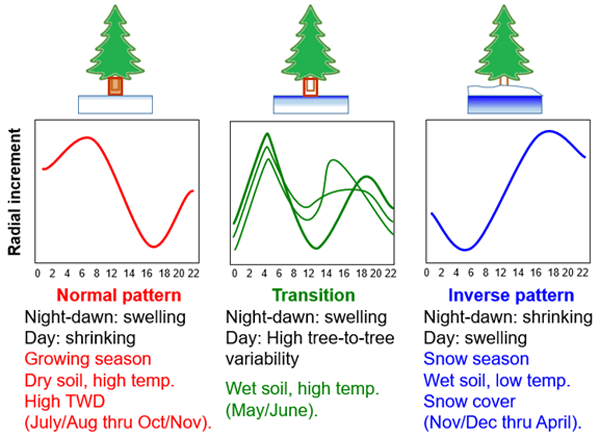
In the Spanish Pyrenees, changing snow seasons and warmer growing seasons could impact tree growth in the montane evergreen forests. We used automatic sensors that measure tree growth to monitor and analyze the interactions between the climate, snow, and tree growth at the study site. We found a transition in the daily growth cycle that is triggered by the presence of snow. Additionally, warmer February and May temperatures enhanced tree growth.
Javier Bandrés, Jorge Pey, Esteban Alonso-González, Pablo Domínguez-Aguilar, Jesús Revuelto, Eñaut Izagirre, Francisco Rojas-Heredia, Eric Allan Sproles, and Juan Ignacio López-Moreno
EGUsphere, https://doi.org/10.5194/egusphere-2026-4306, https://doi.org/10.5194/egusphere-2026-4306, 2026
This preprint is open for discussion and under review for The Cryosphere (TC).
Short summary
Short summary
Snow in the Pyrenees is increasingly affected by African dust and black carbon, which darken the snow surface and accelerate melting. We developed a simple field experiment to measure how realistic amounts of these particles change snow properties and melt. Mineral dust consistently produced stronger effects than black carbon, showing that even common dust events can substantially shorten snow cover and improve estimates of snowmelt in mountain regions.
Philippe Gamet, Bimal K. Bhattacharya, Jean-Louis Roujean, Gilles Boulet, Corinne Salcedo, Albert Olioso, Kanishka Mallick, Marie Weiss, Emmanuelle Sarrazin, Emmanuelle Autret, Laure Roupioz, José Antonio Sobrino, Olivier Merlin, Ghislain Picard, Thomas H. G. Vidal, Mark Irvine, Rahul Nigam, Mehul Pandya, Simon Gascoin, Sébastien Marcq, Manoj K. Mishra, Emilie Delogu, Vincent Rivalland, Jordi Etchanchu, Jean-Louis Raynaud, Meenakshi Sarkar, Rishi K. Gangwar, Sushil K. Singh, Renaud Binet, Sara Arioli, Hervé Yésou, Isabelle Dadou, Alexei Kouraev, Julien Michel, Benoit Coudert, Samuel Mwangi, Nesrine Farhani, Ayan Das, Stéphane Saux-Picart, Thierry Tormos, Jean-François Piollé, Charles Verpoorter, Auline Rodler, Jonathan Leon Tavares, Jennifer Adams, Anand S. Sahadevan, Besavaraju Santhi Sree, Manikumar Vedantam, Dheeraj Adlakha, Laurence Buffet, Kathrin Naegeli, Itziar Barat, Jerome Demarty, Olivier Hagolle, and Philippe Maisongrande
EGUsphere, https://doi.org/10.5194/egusphere-2026-4492, https://doi.org/10.5194/egusphere-2026-4492, 2026
Short summary
Short summary
This paper highlights how the upcoming TRISHNA satellite mission (launching 2027) will transform Earth observation by providing high-resolution (60 m) thermal infrared imagery with sub-weekly revisits. It details the mission's design and its synergies with other future missions to significantly improve the monitoring of global surface temperature and its dynamics, water stress, and ecosystem energy processes.
Nicola Imperatore, Simon Gascoin, Matthieu Lafaysse, Marie Dumont, Adrien Mauss, Stéphane Guével, and Jean-Baptiste Hernandez
EGUsphere, https://doi.org/10.5194/egusphere-2026-1122, https://doi.org/10.5194/egusphere-2026-1122, 2026
Short summary
Short summary
Daily satellite snow cover observations are beneficial for water management in mountain regions, but it's crucial to understand their uncertainties. We evaluate the next-generation NASA constellation in mountainous terrain using higher-resolution satellite imagery as reference. We find an overall consistent performance across the platforms and combine their data to reduce cloud cover. These results support a confident transition and open new opportunities in snowpack modeling.
Simon Filhol, Clément Misset, Noélie Bontemps, Diego Cusicanqui, Emmanuel Paquet, Marie Dumont, Olivier Gagliardini, Pascal Lacroix, Simon Gascoin, Guillaume Thirel, Julien Brondex, Pascal Hagenmuller, Eric Larose, Philipp Schoeneich, Denis Roy, Emmanuel Thibert, Nicolas Eckert, Félix de Montety, Robin Mainieri, Alexandre Hauet, Frédéric Gottardi, Johan Berthet, Alexandre Baratier, Frédéric Liébault, Małgorzata Chmiel, Guillaume Piton, Guillaume Chambon, Guillaume James, Philippe Frey, Philip Deline, Laurent Astrade, Christian Vincent, Dominique Laigle, Alain Recking, Fatima Karbou, Adrien Mauss, Mylène Bonnefoy-Demongeot, Firmin Fontaine, Mickael Langlais, Etienne Berthier, and Antoine Blanc
EGUsphere, https://doi.org/10.5194/egusphere-2026-971, https://doi.org/10.5194/egusphere-2026-971, 2026
Short summary
Short summary
On June 21 2024, the village of La Bérarde, in the French Alps, was devastated by a flood destroying centuries old buildings. This study is an interdisciplinary work to decipher the causes and chronology of the event. The flood started with decadal rain falling on a thick snowpack. A lake observed on top of a glacier few days prior, had drained post event. With climate change, should we expect more similar compound events for alpine communities?
Ixeia Vidaller, Toshiyuki Fujioka, Juan Ignacio López-Moreno, Ana Moreno, and the ASTER Team
Clim. Past, 22, 405–425, https://doi.org/10.5194/cp-22-405-2026, https://doi.org/10.5194/cp-22-405-2026, 2026
Short summary
Short summary
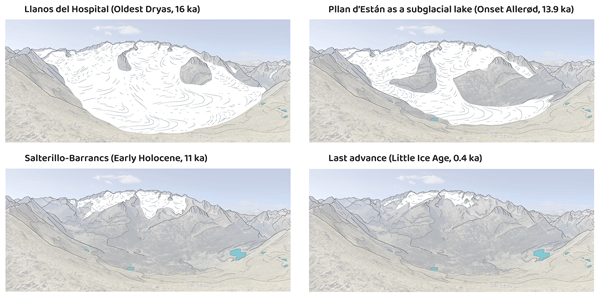
Since the Pyrenean Last Glacial Maximum (75 ka), the deglaciation of the Ésera glacier (central Pyrenees) was characterized by complex dynamics, with advances and rapid retreats. Cosmogenic dates of moraines along the headwaters of the valley and lacustrine sediments analyses allowed to reconstruct evolutionary history of the Ésera glacier and the associated environmental implications during the last deglaciation and calculate the Equilibrium Line Altitude to determine changes in temperature.
César Deschamps-Berger, Nahia Carretero Roque, Jesús Revuelto, Francisco Rojas-Heredia, Ixeia Vidaller, Aina Alvarez, Alba López-Varela, Olatz Fernández, Sara Palacio, Juan Ignacio Lopez-Moreno, and Pablo Tejero Ibarra
EGUsphere, https://doi.org/10.5194/egusphere-2026-527, https://doi.org/10.5194/egusphere-2026-527, 2026
Short summary
Short summary
The shrinking of glacier frees large areas worldwide in alpine environment which are progressively colonized by the vegetation. Monitoring this process often relies on in situ botanical observations which are challenging to obtain. Here, we quantify accurately the uncertainty of the vegetation cover measured by optical images from Unmanned Aerial Vehicles. We find that, despite biases, this increasingly used technology extend and complete the data collected during such field campaign.
Esteban Alonso-González, Adrian Harpold, Jessica D. Lundquist, Cara Piske, Laura Sourp, Kristoffer Aalstad, and Simon Gascoin
The Cryosphere, 20, 209–225, https://doi.org/10.5194/tc-20-209-2026, https://doi.org/10.5194/tc-20-209-2026, 2026
Short summary
Short summary
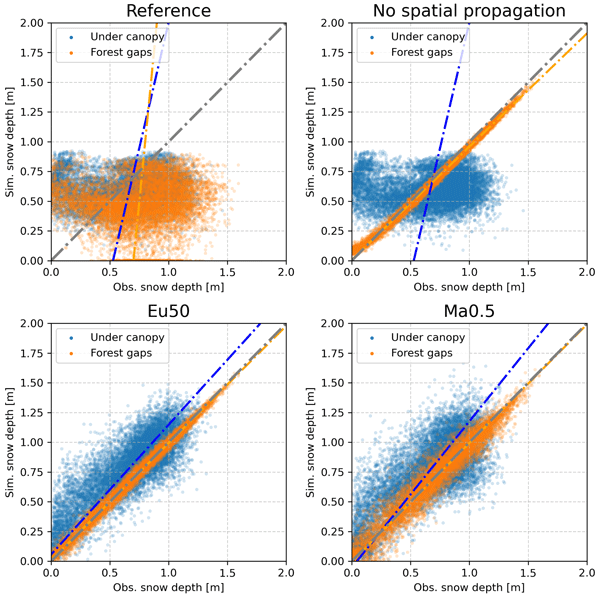
Simulating the snowpack is challenging, as there are several sources of uncertainty due to e.g. the meteorological forcing. Using data assimilation techniques, it is possible to improve the simulations by fusing models and snow observations. However in forests, observations are difficult to obtain, because they cannot be retrieved through the canopy. Here, we explore the possibility of propagating the information obtained in forest clearings to areas covered by the canopy.
Carlos Sancho, Ánchel Belmonte, Maria Leunda, Marc Luetscher, Christoph Spötl, Juan Ignacio López-Moreno, Belén Oliva-Urcia, Jerónimo López-Martínez, Ana Moreno, and Miguel Bartolomé
The Cryosphere, 19, 6283–6300, https://doi.org/10.5194/tc-19-6283-2025, https://doi.org/10.5194/tc-19-6283-2025, 2025
Short summary
Short summary
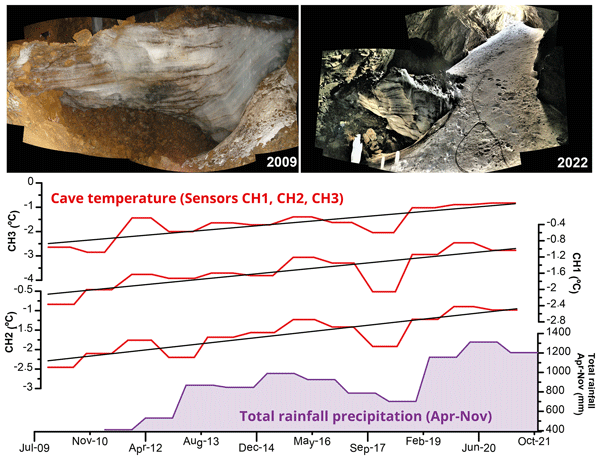
Ice caves, vital for paleoclimate studies, face rapid ice loss due to global warming. A294 cave, home to the oldest firn deposit (6100 years BP), shows rising air temperatures (1.07–1.56 °C in 12 years), fewer freezing days, and melting rates (15–192 cm/year). Key factors include warmer winters, increased rainfall, and reduced snowfall. This study highlights the urgency of recovering data from these unique ice archives before they vanish forever.
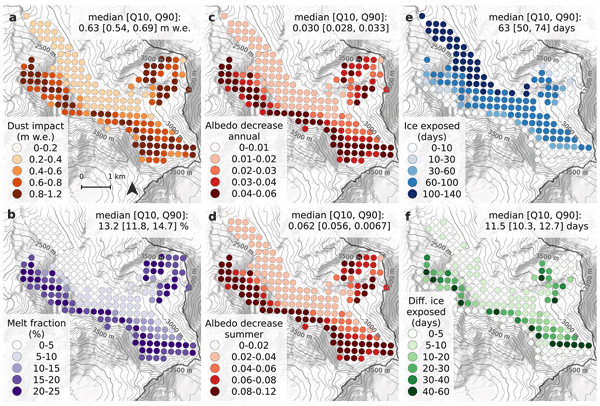
Léon Roussel, Marie Dumont, Marion Réveillet, Delphine Six, Marin Kneib, Pierre Nabat, Kévin Fourteau, Diego Monteiro, Simon Gascoin, Emmanuel Thibert, Antoine Rabatel, Jean-Emmanuel Sicart, Mylène Bonnefoy, Luc Piard, Olivier Laarman, Bruno Jourdain, Mathieu Fructus, Matthieu Vernay, and Matthieu Lafaysse
The Cryosphere, 19, 5201–5230, https://doi.org/10.5194/tc-19-5201-2025, https://doi.org/10.5194/tc-19-5201-2025, 2025
Short summary
Short summary
Saharan dust deposits frequently turn alpine glaciers orange. Mineral dust reduces snow albedo and increases snow and glaciers melt rate. Using physical modeling, we quantified the impact of dust on the Argentière Glacier over the period 2019–2022. We found that the contribution of mineral dust to the melt represents between 8 % and 16 % of Argentière Glacier summer melt. At specific locations, the impact of dust over one year can rise to an equivalent of 1.2 m of melted ice.
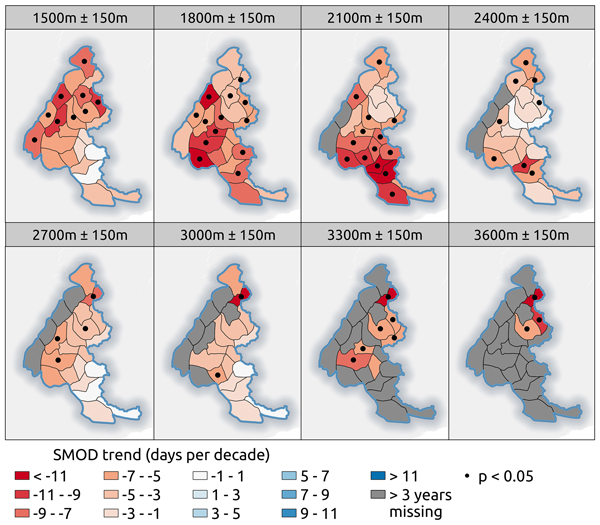
Zacharie Barrou Dumont, Simon Gascoin, Jordi Inglada, Andreas Dietz, Jonas Köhler, Matthieu Lafaysse, Diego Monteiro, Carlo Carmagnola, Arthur Bayle, Jean-Pierre Dedieu, Olivier Hagolle, and Philippe Choler
The Cryosphere, 19, 2407–2429, https://doi.org/10.5194/tc-19-2407-2025, https://doi.org/10.5194/tc-19-2407-2025, 2025
Short summary
Short summary
We generated annual maps of snow melt-out days at 20 m resolution over a period of 38 years from 10 different satellites. This study fills a knowledge gap regarding the evolution of mountain snow in Europe by covering a much longer period and characterizing trends at much higher resolutions than previous studies. We found a trend for earlier melt-out with average reductions of 5.51 d per decade over the French Alps and 4.04 d per decade over the Pyrenees for the period 1986–2023.
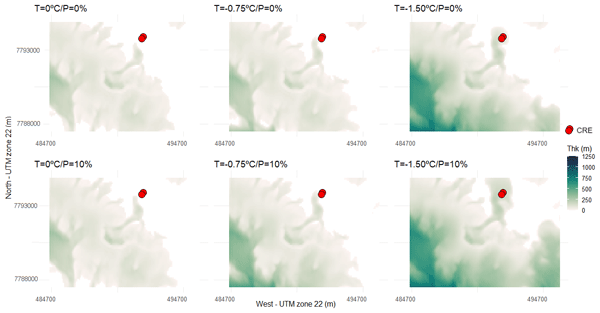
Josep Bonsoms, Marc Oliva, Juan Ignacio López-Moreno, and Guillaume Jouvet
The Cryosphere, 19, 1973–1993, https://doi.org/10.5194/tc-19-1973-2025, https://doi.org/10.5194/tc-19-1973-2025, 2025
Short summary
Short summary
The extent to which Greenland's peripheral glaciers and ice caps current and future ice loss rates are unprecedented within the Holocene is poorly understood. This study connects the maximum ice extent of the Late Holocene with present and future glacier evolution in the Nuussuaq Peninsula (central western Greenland). By > 2050 glacier mass loss may have doubled in rate compared to the Late Holocene to the present, highlighting significant impacts of anthropogenic climate change.
Helen Flynn, J. Julio Camarero, Alba Sanmiguel-Vallelado, Francisco Rojas Heredia, Pablo Domínguez Aguilar, Jesús Revuelto, and Juan Ignacio López-Moreno
Biogeosciences, 22, 1135–1147, https://doi.org/10.5194/bg-22-1135-2025, https://doi.org/10.5194/bg-22-1135-2025, 2025
Short summary
Short summary
In the Spanish Pyrenees, changing snow seasons and warmer growing seasons could impact tree growth in the montane evergreen forests. We used automatic sensors that measure tree growth to monitor and analyze the interactions between the climate, snow, and tree growth at the study site. We found a transition in the daily growth cycle that is triggered by the presence of snow. Additionally, warmer February and May temperatures enhanced tree growth.
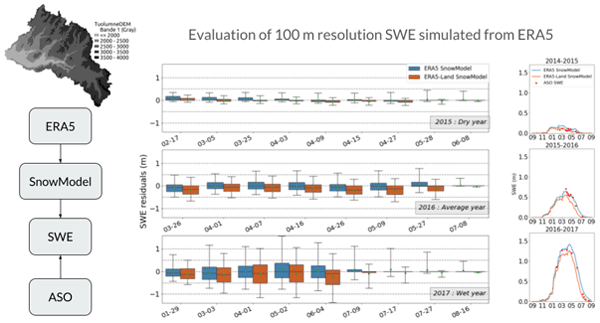
Laura Sourp, Simon Gascoin, Lionel Jarlan, Vanessa Pedinotti, Kat J. Bormann, and Mohamed Wassim Baba
Hydrol. Earth Syst. Sci., 29, 597–611, https://doi.org/10.5194/hess-29-597-2025, https://doi.org/10.5194/hess-29-597-2025, 2025
Short summary
Short summary
Accurate knowledge of the spatial distribution of snow masses across landscapes is important for water management in mountain catchments. We present a new tool for estimating snow water resources without ground measurements. We evaluate the output of this tool using accurate airborne measurements in the Sierra Nevada and find that it provides realistic estimates of snow mass and snow depth at the catchment scale.
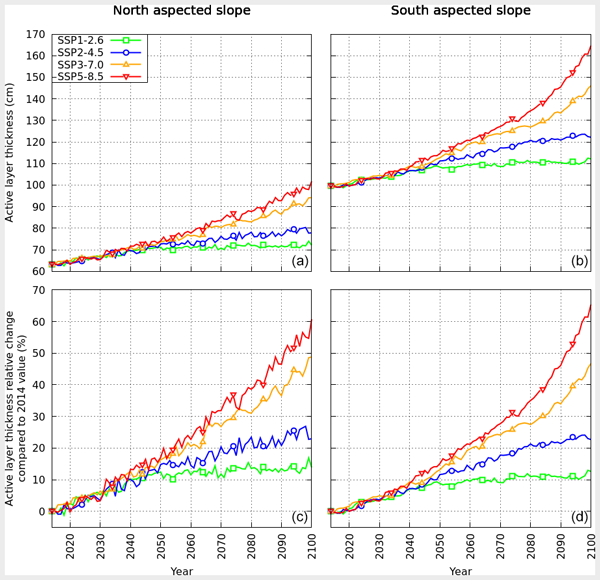
Thibault Xavier, Laurent Orgogozo, Anatoly S. Prokushkin, Esteban Alonso-González, Simon Gascoin, and Oleg S. Pokrovsky
The Cryosphere, 18, 5865–5885, https://doi.org/10.5194/tc-18-5865-2024, https://doi.org/10.5194/tc-18-5865-2024, 2024
Short summary
Short summary
Permafrost (permanently frozen soil at depth) is thawing as a result of climate change. However, estimating its future degradation is particularly challenging due to the complex multi-physical processes involved. In this work, we designed and ran numerical simulations for months on a supercomputer to quantify the impact of climate change in a forested valley of central Siberia. There, climate change could increase the thickness of the seasonally thawed soil layer in summer by up to 65 % by 2100.
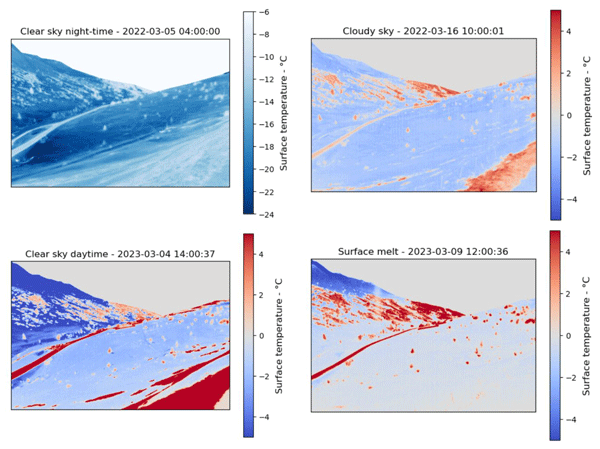
Sara Arioli, Ghislain Picard, Laurent Arnaud, Simon Gascoin, Esteban Alonso-González, Marine Poizat, and Mark Irvine
Earth Syst. Sci. Data, 16, 3913–3934, https://doi.org/10.5194/essd-16-3913-2024, https://doi.org/10.5194/essd-16-3913-2024, 2024
Short summary
Short summary
High-accuracy precision maps of the surface temperature of snow were acquired with an uncooled thermal-infrared camera during winter 2021–2022 and spring 2023. The accuracy – i.e., mean absolute error – improved from 1.28 K to 0.67 K between the seasons thanks to an improved camera setup and temperature stabilization. The dataset represents a major advance in the validation of satellite measurements and physical snow models over a complex topography.
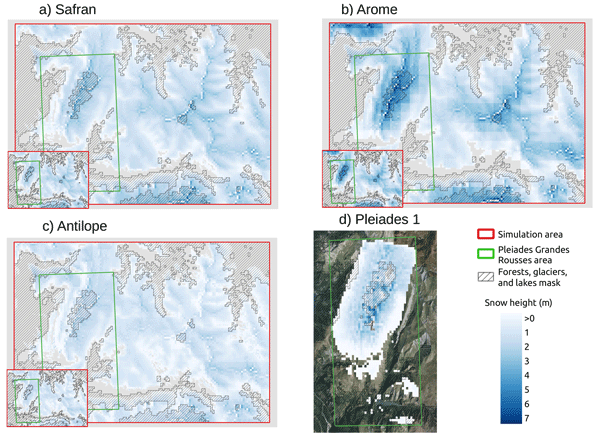
Ange Haddjeri, Matthieu Baron, Matthieu Lafaysse, Louis Le Toumelin, César Deschamps-Berger, Vincent Vionnet, Simon Gascoin, Matthieu Vernay, and Marie Dumont
The Cryosphere, 18, 3081–3116, https://doi.org/10.5194/tc-18-3081-2024, https://doi.org/10.5194/tc-18-3081-2024, 2024
Short summary
Short summary
Our study addresses the complex challenge of evaluating distributed alpine snow simulations with snow transport against snow depths from Pléiades stereo imagery and snow melt-out dates from Sentinel-2 and Landsat-8 satellites. Additionally, we disentangle error contributions between blowing snow, precipitation heterogeneity, and unresolved subgrid variability. Snow transport enhances the snow simulations at high elevations, while precipitation biases are the main error source in other areas.
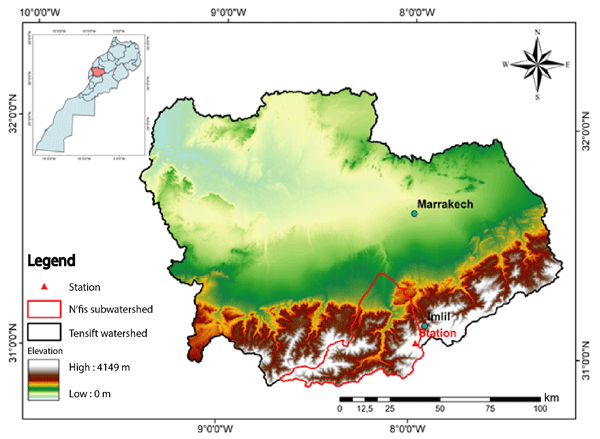
Lahoucine Hanich, Ouiaam Lahnik, Simon Gascoin, Adnane Chakir, and Vincent Simonneaux
Proc. IAHS, 385, 387–391, https://doi.org/10.5194/piahs-385-387-2024, https://doi.org/10.5194/piahs-385-387-2024, 2024
Short summary
Short summary
Using a dataset measured with the eddy covariance system (EC) for a period from September 2020 to January 2021 at the Tazaghart plateau, located in the High Atlas of Marrakech, the sublimation was estimated. The average daily sublimation rate measured was 0.41 mm per day. Measured sublimation accounted for 42 % and 40 % of snow ablation, based on the energy and water balances, respectively.
Josep Bonsoms, Juan I. López-Moreno, Esteban Alonso-González, César Deschamps-Berger, and Marc Oliva
Nat. Hazards Earth Syst. Sci., 24, 245–264, https://doi.org/10.5194/nhess-24-245-2024, https://doi.org/10.5194/nhess-24-245-2024, 2024
Short summary
Short summary
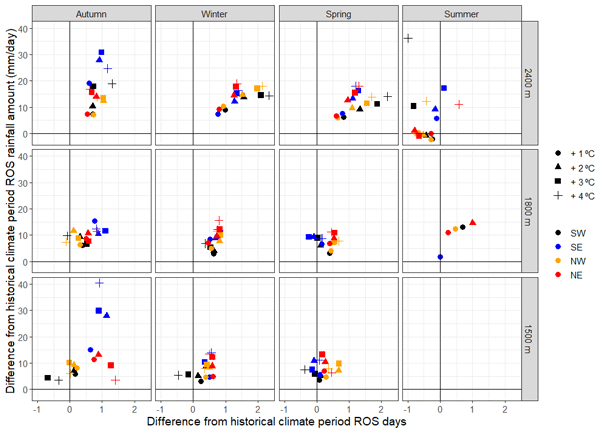
Climate warming is changing mountain snowpack patterns, leading in some cases to rain-on-snow (ROS) events. Here we analyzed near-present ROS and its sensitivity to climate warming across the Pyrenees. ROS increases during the coldest months of the year but decreases in the warmest months and areas under severe warming due to snow cover depletion. Faster snow ablation is anticipated in the coldest and northern slopes of the range. Relevant implications in mountain ecosystem are anticipated.
Esteban Alonso-González, Kristoffer Aalstad, Norbert Pirk, Marco Mazzolini, Désirée Treichler, Paul Leclercq, Sebastian Westermann, Juan Ignacio López-Moreno, and Simon Gascoin
Hydrol. Earth Syst. Sci., 27, 4637–4659, https://doi.org/10.5194/hess-27-4637-2023, https://doi.org/10.5194/hess-27-4637-2023, 2023
Short summary
Short summary
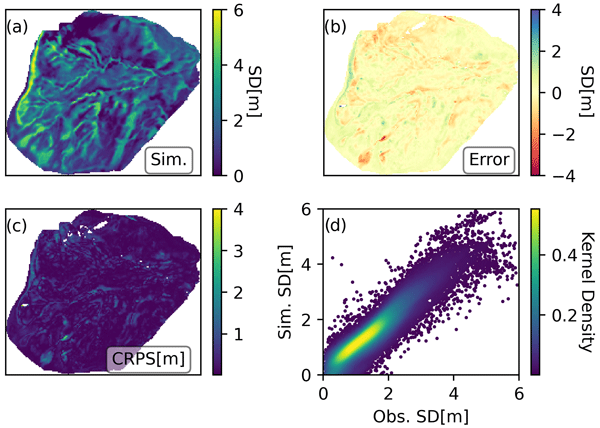
Here we explore how to improve hyper-resolution (5 m) distributed snowpack simulations using sparse observations, which do not provide information from all the areas of the simulation domain. We propose a new way of propagating information throughout the simulations adapted to the hyper-resolution, which could also be used to improve simulations of other nature. The method has been implemented in an open-source data assimilation tool that is readily accessible to everyone.
Esteban Alonso-González, Simon Gascoin, Sara Arioli, and Ghislain Picard
The Cryosphere, 17, 3329–3342, https://doi.org/10.5194/tc-17-3329-2023, https://doi.org/10.5194/tc-17-3329-2023, 2023
Short summary
Short summary
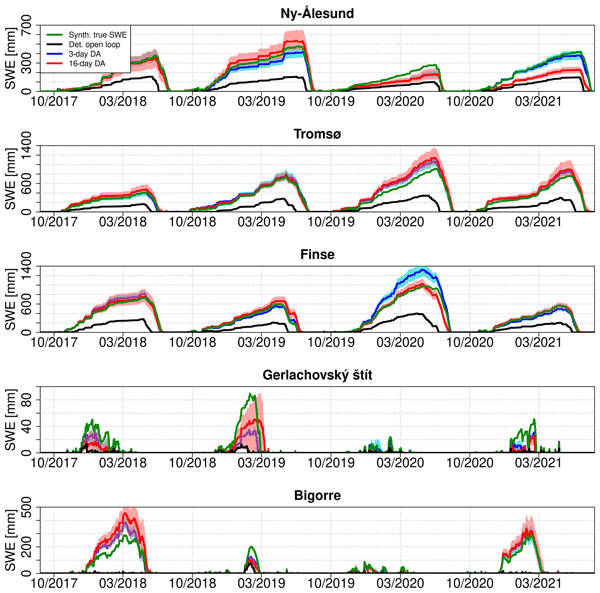
Data assimilation techniques are a promising approach to improve snowpack simulations in remote areas that are difficult to monitor. This paper studies the ability of satellite-observed land surface temperature to improve snowpack simulations through data assimilation. We show that it is possible to improve snowpack simulations, but the temporal resolution of the observations and the algorithm used are critical to obtain satisfactory results.
Ixeia Vidaller, Eñaut Izagirre, Luis Mariano del Rio, Esteban Alonso-González, Francisco Rojas-Heredia, Enrique Serrano, Ana Moreno, Juan Ignacio López-Moreno, and Jesús Revuelto
The Cryosphere, 17, 3177–3192, https://doi.org/10.5194/tc-17-3177-2023, https://doi.org/10.5194/tc-17-3177-2023, 2023
Short summary
Short summary
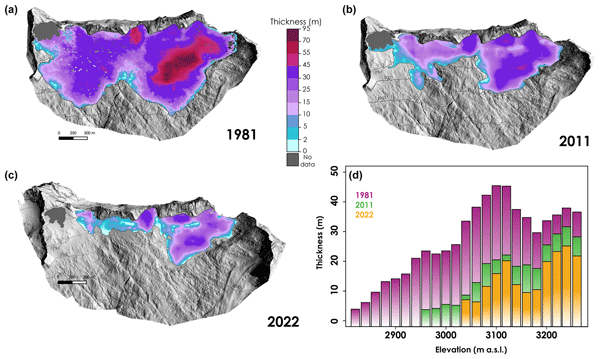
The Aneto glacier, the largest glacier in the Pyrenees, has shown continuous surface and ice thickness losses in the last decades. In this study, we examine changes in its surface and ice thickness for 1981–2022 and the remaining ice thickness in 2020. During these 41 years, the glacier has shrunk by 64.7 %, and the ice thickness has decreased by 30.5 m on average. The mean ice thickness in 2022 was 11.9 m, compared to 32.9 m in 1981. The results highlight the critical situation of the glacier.
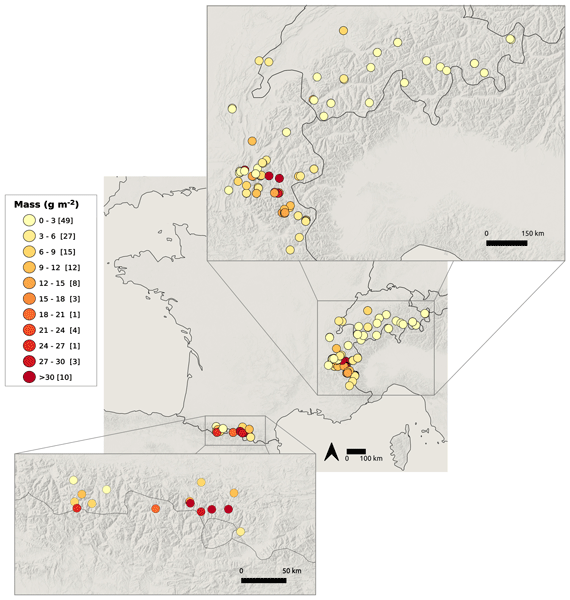
Marie Dumont, Simon Gascoin, Marion Réveillet, Didier Voisin, François Tuzet, Laurent Arnaud, Mylène Bonnefoy, Montse Bacardit Peñarroya, Carlo Carmagnola, Alexandre Deguine, Aurélie Diacre, Lukas Dürr, Olivier Evrard, Firmin Fontaine, Amaury Frankl, Mathieu Fructus, Laure Gandois, Isabelle Gouttevin, Abdelfateh Gherab, Pascal Hagenmuller, Sophia Hansson, Hervé Herbin, Béatrice Josse, Bruno Jourdain, Irene Lefevre, Gaël Le Roux, Quentin Libois, Lucie Liger, Samuel Morin, Denis Petitprez, Alvaro Robledano, Martin Schneebeli, Pascal Salze, Delphine Six, Emmanuel Thibert, Jürg Trachsel, Matthieu Vernay, Léo Viallon-Galinier, and Céline Voiron
Earth Syst. Sci. Data, 15, 3075–3094, https://doi.org/10.5194/essd-15-3075-2023, https://doi.org/10.5194/essd-15-3075-2023, 2023
Short summary
Short summary
Saharan dust outbreaks have profound effects on ecosystems, climate, health, and the cryosphere, but the spatial deposition pattern of Saharan dust is poorly known. Following the extreme dust deposition event of February 2021 across Europe, a citizen science campaign was launched to sample dust on snow over the Pyrenees and the European Alps. This campaign triggered wide interest and over 100 samples. The samples revealed the high variability of the dust properties within a single event.
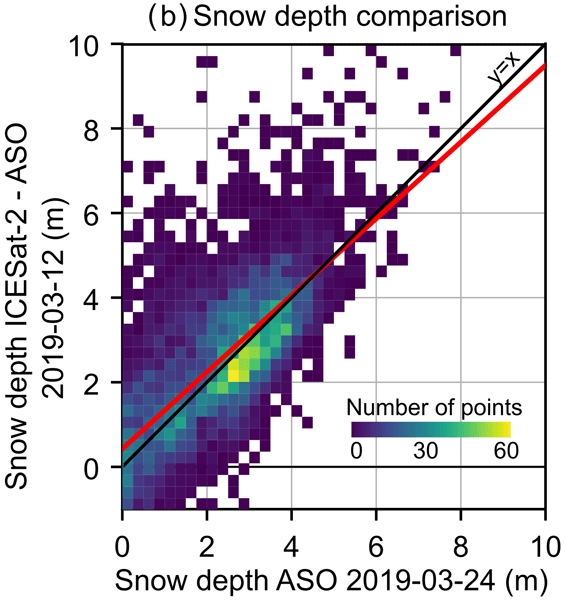
César Deschamps-Berger, Simon Gascoin, David Shean, Hannah Besso, Ambroise Guiot, and Juan Ignacio López-Moreno
The Cryosphere, 17, 2779–2792, https://doi.org/10.5194/tc-17-2779-2023, https://doi.org/10.5194/tc-17-2779-2023, 2023
Short summary
Short summary
The estimation of the snow depth in mountains is hard, despite the importance of the snowpack for human societies and ecosystems. We measured the snow depth in mountains by comparing the elevation of points measured with snow from the high-precision altimetric satellite ICESat-2 to the elevation without snow from various sources. Snow depths derived only from ICESat-2 were too sparse, but using external airborne/satellite products results in spatially richer and sufficiently precise snow depths.
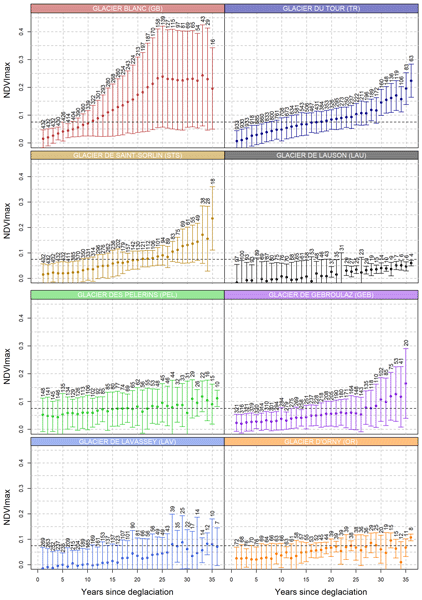
Arthur Bayle, Bradley Z. Carlson, Anaïs Zimmer, Sophie Vallée, Antoine Rabatel, Edoardo Cremonese, Gianluca Filippa, Cédric Dentant, Christophe Randin, Andrea Mainetti, Erwan Roussel, Simon Gascoin, Dov Corenblit, and Philippe Choler
Biogeosciences, 20, 1649–1669, https://doi.org/10.5194/bg-20-1649-2023, https://doi.org/10.5194/bg-20-1649-2023, 2023
Short summary
Short summary
Glacier forefields have long provided ecologists with a model to study patterns of plant succession following glacier retreat. We used remote sensing approaches to study early succession dynamics as it allows to analyze the deglaciation, colonization, and vegetation growth within a single framework. We found that the heterogeneity of early succession dynamics is deterministic and can be explained well by local environmental context. This work has been done by an international consortium.

Josep Bonsoms, Juan Ignacio López-Moreno, and Esteban Alonso-González
The Cryosphere, 17, 1307–1326, https://doi.org/10.5194/tc-17-1307-2023, https://doi.org/10.5194/tc-17-1307-2023, 2023
Short summary
Short summary
This work analyzes the snow response to temperature and precipitation in the Pyrenees. During warm and wet seasons, seasonal snow depth is expected to be reduced by −37 %, −34 %, and −27 % per degree Celsius at low-, mid-, and high-elevation areas, respectively. The largest snow reductions are anticipated at low elevations of the eastern Pyrenees. Results anticipate important impacts on the nearby ecological and socioeconomic systems.
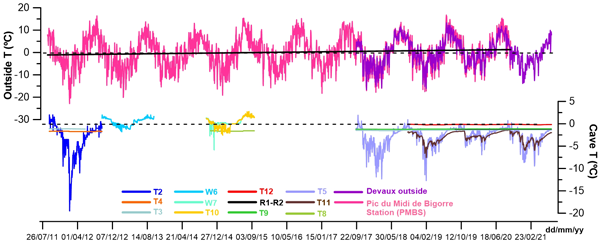
Miguel Bartolomé, Gérard Cazenave, Marc Luetscher, Christoph Spötl, Fernando Gázquez, Ánchel Belmonte, Alexandra V. Turchyn, Juan Ignacio López-Moreno, and Ana Moreno
The Cryosphere, 17, 477–497, https://doi.org/10.5194/tc-17-477-2023, https://doi.org/10.5194/tc-17-477-2023, 2023
Short summary
Short summary
In this work we study the microclimate and the geomorphological features of Devaux ice cave in the Central Pyrenees. The research is based on cave monitoring, geomorphology, and geochemical analyses. We infer two different thermal regimes. The cave is impacted by flooding in late winter/early spring when the main outlets freeze, damming the water inside. Rock temperatures below 0°C and the absence of drip water indicate frozen rock, while relict ice formations record past damming events.
Esteban Alonso-González, Kristoffer Aalstad, Mohamed Wassim Baba, Jesús Revuelto, Juan Ignacio López-Moreno, Joel Fiddes, Richard Essery, and Simon Gascoin
Geosci. Model Dev., 15, 9127–9155, https://doi.org/10.5194/gmd-15-9127-2022, https://doi.org/10.5194/gmd-15-9127-2022, 2022
Short summary
Short summary
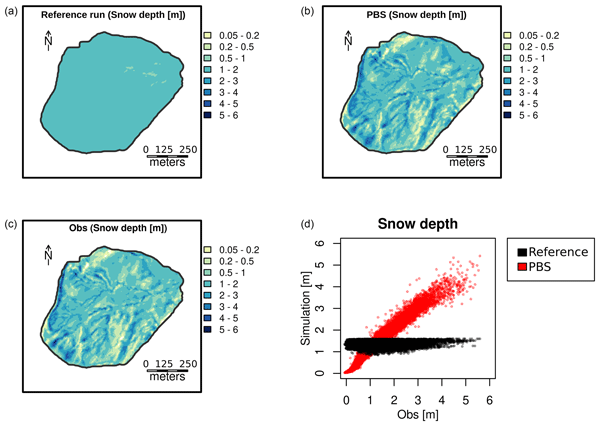
Snow cover plays an important role in many processes, but its monitoring is a challenging task. The alternative is usually to simulate the snowpack, and to improve these simulations one of the most promising options is to fuse simulations with available observations (data assimilation). In this paper we present MuSA, a data assimilation tool which facilitates the implementation of snow monitoring initiatives, allowing the assimilation of a wide variety of remotely sensed snow cover information.
Maximillian Van Wyk de Vries, Shashank Bhushan, Mylène Jacquemart, César Deschamps-Berger, Etienne Berthier, Simon Gascoin, David E. Shean, Dan H. Shugar, and Andreas Kääb
Nat. Hazards Earth Syst. Sci., 22, 3309–3327, https://doi.org/10.5194/nhess-22-3309-2022, https://doi.org/10.5194/nhess-22-3309-2022, 2022
Short summary
Short summary
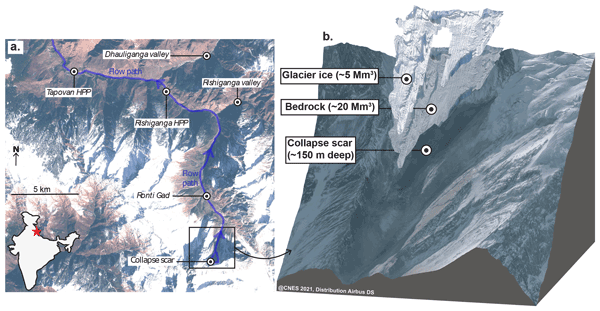
On 7 February 2021, a large rock–ice avalanche occurred in Chamoli, Indian Himalaya. The resulting debris flow swept down the nearby valley, leaving over 200 people dead or missing. We use a range of satellite datasets to investigate how the collapse area changed prior to collapse. We show that signs of instability were visible as early 5 years prior to collapse. However, it would likely not have been possible to predict the timing of the event from current satellite datasets.
Zacharie Barrou Dumont, Simon Gascoin, Olivier Hagolle, Michaël Ablain, Rémi Jugier, Germain Salgues, Florence Marti, Aurore Dupuis, Marie Dumont, and Samuel Morin
The Cryosphere, 15, 4975–4980, https://doi.org/10.5194/tc-15-4975-2021, https://doi.org/10.5194/tc-15-4975-2021, 2021
Short summary
Short summary
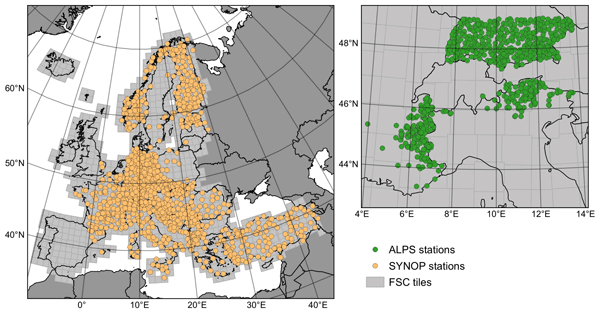
Since 2020, the Copernicus High Resolution Snow & Ice Monitoring Service has distributed snow cover maps at 20 m resolution over Europe in near-real time. These products are derived from the Sentinel-2 Earth observation mission, with a revisit time of 5 d or less (cloud-permitting). Here we show the good accuracy of the snow detection over a wide range of regions in Europe, except in dense forest regions where the snow cover is hidden by the trees.
Cited articles
Alonso-González, E., López-Moreno, J. I., Navarro-Serrano, F., Sanmiguel-Vallelado, A., Revuelto, J., Domínguez-Castro, F., and Ceballos, A.: Snow climatology for the mountains in the Iberian Peninsula using satellite imagery and simulations with dynamically downscaled reanalysis data, Int. J. Climatol., 40, 477–491, https://doi.org/10.1002/joc.6223, 2020.
Alonso-González, E., Ilzarbe-Senosiain, I., Lopez-Moreno, J. I., Lucas-Borja, M. E., Vicente-Serrano, S. M., Beguería, S., and Gascoin, S.: The snow cover is more important than other climatic variables on the prediction of vegetation dynamics in the Pyrenees (1981–2014), Environ. Res. Lett., 19, 064058, https://doi.org/10.1088/1748-9326/ad4e4c, 2024.
Asam, S., Callegari, M., Matiu, M., Fiore, G., De Gregorio, L., Jacob, A., Menzel, A., Zebisch, M., and Notarnicola, C.: Relationship between Spatiotemporal Variations of Climate, Snow Cover and Plant Phenology over the Alps – An Earth Observation-Based Analysis, Remote Sens.-Basel, 10, 1757, https://doi.org/10.3390/rs10111757, 2018.
Assmann, J. J., Myers-Smith, I. H., Kerby, J. T., Cunliffe, A. M., and Daskalova, G. N.: Drone data reveal heterogeneity in tundra greenness and phenology not captured by satellites, Environ. Res. Lett., 15, 125002, https://doi.org/10.1088/1748-9326/abbf7d, 2020.
Baptist, F., Flahaut, C., Streb, P., and Choler, P.: No increase in alpine snowbed productivity in response to experimental lengthening of the growing season, Plant Biol., 12, 755–764, https://doi.org/10.1111/j.1438-8677.2009.00286.x, 2010.
Barrou Dumont, Z., Gascoin, S., Inglada, J., Dietz, A., Köhler, J., Lafaysse, M., Monteiro, D., Carmagnola, C., Bayle, A., Dedieu, J.-P., Hagolle, O., and Choler, P.: Trends in the annual snow melt-out day over the French Alps and Pyrenees from 38 years of high-resolution satellite data (1986–2023), The Cryosphere, 19, 2407–2429, https://doi.org/10.5194/tc-19-2407-2025, 2025.
Bayle, A., Gascoin, S., Corona, C., Stoffel, M., and Choler, P.: Snow melt-out date (SMOD) change spanning four decades in European temperate mountains at 30 m from Landsat time series, Sci. Data, 12, 706, https://doi.org/10.1038/s41597-025-05044-2, 2025.
Beniston, M., Farinotti, D., Stoffel, M., Andreassen, L. M., Coppola, E., Eckert, N., Fantini, A., Giacona, F., Hauck, C., Huss, M., Huwald, H., Lehning, M., López-Moreno, J.-I., Magnusson, J., Marty, C., Morán-Tejéda, E., Morin, S., Naaim, M., Provenzale, A., Rabatel, A., Six, D., Stötter, J., Strasser, U., Terzago, S., and Vincent, C.: The European mountain cryosphere: a review of its current state, trends, and future challenges, The Cryosphere, 12, 759–794, https://doi.org/10.5194/tc-12-759-2018, 2018.
Chen, R., Yin, G., Liu, G., Li, J., and Verger, A.: Evaluation and Normalization of Topographic Effects on Vegetation Indices, Remote Sens.-Basel, 12, 2290, https://doi.org/10.3390/rs12142290, 2020.
Choler, P.: Growth response of temperate mountain grasslands to inter-annual variations in snow cover duration, Biogeosciences, 12, 3885–3897, https://doi.org/10.5194/bg-12-3885-2015, 2015.
Choler, P., Bayle, A., Fort, N., and Gascoin, S.: Waning snowfields have transformed into hotspots of greening within the alpine zone, Nat. Clim. Change, 1–6, https://doi.org/10.1038/s41558-024-02177-x, 2024.
Choler, P., Bonfanti, N., Reverdy, A., Bayle, A., Nicoud, B., Liger, L., Clément, J.-C., Cohard, J.-M., Corona, C., Gascoin, S., Voisin, D., and Poulenard, J.: Legacy of snow cover on alpine landscapes, Commun. Earth Environ., 6, 758, https://doi.org/10.1038/s43247-025-02702-6, 2025.
Copernicus Climate Change Service (C3S): European State of the Climate 2023, Copernicus, https://doi.org/10.24381/BS9V-8C66, 2024.
Dedieu, J.-P., Carlson, B. Z., Bigot, S., Sirguey, P., Vionnet, V., and Choler, P.: On the Importance of High-Resolution Time Series of Optical Imagery for Quantifying the Effects of Snow Cover Duration on Alpine Plant Habitat, Remote Sens.-Basel, 8, 481, https://doi.org/10.3390/rs8060481, 2016.
Domínguez-Aguilar, P.: Dataset of “Snowmelt timing constrains green-up but not peak productivity in alpine grasslands of the western Pyrenees”, Zenodo [data set], https://doi.org/10.5281/zenodo.17859742, 2026.
Dong, D., Wang, C., Yan, J., He, Q., Zeng, J., and Wei, Z.: Combing Sentinel-1 and Sentinel-2 image time series for invasive Spartina alterniflora mapping on Google Earth Engine: a case study in Zhangjiang Estuary, J. Appl. Remote Sens., 14, 044504, https://doi.org/10.1117/1.JRS.14.044504, 2020.
Du, Y., Zhang, Y., Ling, F., Wang, Q., Li, W., and Li, X.: Water Bodies' Mapping from Sentinel-2 Imagery with Modified Normalized Difference Water Index at 10 m Spatial Resolution Produced by Sharpening the SWIR Band, Remote Sens.-Basel, 8, 354, https://doi.org/10.3390/rs8040354, 2016.
Dumont, M., Monteiro, D., Filhol, S., Gascoin, S., Marty, C., Hagenmuller, P., Morin, S., Choler, P., and Thuiller, W.: The European Alps in a changing climate: physical trends and impacts, C. R. Geosci., 357, 25–42, https://doi.org/10.5802/crgeos.288, 2025.
Fontana, F., Rixen, C., Jonas, T., Aberegg, G., and Wunderle, S.: Alpine Grassland Phenology as Seen in AVHRR, VEGETATION, and MODIS NDVI Time Series – a Comparison with In Situ Measurements, Sensors-Basel, 8, 2833–2853, https://doi.org/10.3390/s8042833, 2008.
Gao, X., Chi, H., Huang, J., Han, Y., Li, Y., and Ling, F.: Comparison of Cloud-Mask Algorithms and Machine-Learning Methods Using Sentinel-2 Imagery for Mapping Paddy Rice in Jianghan Plain, Remote Sens.-Basel, 16, 1305, https://doi.org/10.3390/rs16071305, 2024.
Gascoin, S., Grizonnet, M., Bouchet, M., Salgues, G., and Hagolle, O.: Theia Snow collection: high-resolution operational snow cover maps from Sentinel-2 and Landsat-8 data, Earth Syst. Sci. Data, 11, 493–514, https://doi.org/10.5194/essd-11-493-2019, 2019.
Hall, D. K., Riggs, G. A., and Salomonson, V. V.: Development of methods for mapping global snow cover using moderate resolution imaging spectroradiometer data, Remote Sens. Environ., 54, 127–140, https://doi.org/10.1016/0034-4257(95)00137-P, 1995.
Heim, B., Lisovski, S., Wieczorek, M., Morgenstern, A., Juhls, B., Shevtsova, I., Kruse, S., Boike, J., Fedorova, I., and Herzschuh, U.: Spring snow cover duration and tundra greenness in the Lena Delta, Siberia: two decades of MODIS satellite time series (2001–2021), Environ. Res. Lett., 17, 085005, https://doi.org/10.1088/1748-9326/ac8066, 2022.
Henn, J. J., Anderson, K. E., Brigham, L. M., Bueno de Mesquita, C. P., Collins, C. G., Elmendorf, S. C., Green, M. D., Huxley, J. D., Rafferty, N. E., Rose-Person, A., and Spasojevic, M. J.: Long-Term Alpine Plant Responses to Global Change Drivers Depend on Functional Traits, Ecol. Lett., 27, e14518, https://doi.org/10.1111/ele.14518, 2024.
Jonas, T., Rixen, C., Sturm, M., and Stoeckli, V.: How alpine plant growth is linked to snow cover and climate variability, J. Geophys. Res.-Biogeo., 113, https://doi.org/10.1029/2007JG000680, 2008.
Körner, C.: Alpine Plant Life: Functional Plant Ecology of High Mountain Ecosystems, Springer International Publishing, Cham, https://doi.org/10.1007/978-3-030-59538-8, 2021.
Kotlarski, S., Gobiet, A., Morin, S., Olefs, M., Rajczak, J., and Samacoïts, R.: 21st Century alpine climate change, Clim. Dynam., 60, 65–86, https://doi.org/10.1007/s00382-022-06303-3, 2023.
Liu, Y., Li, Z., and Chen, Y.: Continuous warming shift greening towards browning in the Southeast and Northwest High Mountain Asia, Sci. Rep.-UK, 11, 17920, https://doi.org/10.1038/s41598-021-97240-4, 2021.
López-Moreno, J. I., Gascoin, S., Herrero, J., Sproles, E. A., Pons, M., Alonso-González, E., Hanich, L., Boudhar, A., Musselman, K. N., Molotch, N. P., Sickman, J., and Pomeroy, J.: Different sensitivities of snowpacks to warming in Mediterranean climate mountain areas, Environ. Res. Lett., 12, 074006, https://doi.org/10.1088/1748-9326/aa70cb, 2017.
López-Moreno, J. I., Soubeyroux, J. M., Gascoin, S., Alonso-Gonzalez, E., Durán-Gómez, N., Lafaysse, M., Vernay, M., Carmagnola, C., and Morin, S.: Long-term trends (1958–2017) in snow cover duration and depth in the Pyrenees, Int. J. Climatol., 40, 6122–6136, https://doi.org/10.1002/joc.6571, 2020.
Marin, C., Bertoldi, G., Premier, V., Callegari, M., Brida, C., Hürkamp, K., Tschiersch, J., Zebisch, M., and Notarnicola, C.: Use of Sentinel-1 radar observations to evaluate snowmelt dynamics in alpine regions, The Cryosphere, 14, 935–956, https://doi.org/10.5194/tc-14-935-2020, 2020.
Mascetti, G., Gentili, R., Ferré, C., Fuccella, R., Agaba, S., Pricca, N., Cabassi, G., Povolo, M., and Comolli, R.: Sustainable management, critical issues and environmental services of a pastoral system in the Central Alps, Biodiversity, 24, 79–84, https://doi.org/10.1080/14888386.2023.2192687, 2023.
Möhl, P., von Büren, R. S., and Hiltbrunner, E.: Growth of alpine grassland will start and stop earlier under climate warming, Nat. Commun., 13, 7398, https://doi.org/10.1038/s41467-022-35194-5, 2022.
Möhl, P., Vorkauf, M., Kahmen, A., and Hiltbrunner, E.: Recurrent summer drought affects biomass production and community composition independently of snowmelt manipulation in alpine grassland, J. Ecol., 111, 2357–2375, https://doi.org/10.1111/1365-2745.14180, 2023.
Mullerova, D. and Williams, M.: Satellite Monitoring of Thermal Performance in Smart Urban Designs, Remote Sens.-Basel, 11, 2244, https://doi.org/10.3390/rs11192244, 2019.
Myers-Smith, I. H., Kerby, J. T., Phoenix, G. K., Bjerke, J. W., Epstein, H. E., Assmann, J. J., John, C., Andreu-Hayles, L., Angers-Blondin, S., Beck, P. S. A., Berner, L. T., Bhatt, U. S., Bjorkman, A. D., Blok, D., Bryn, A., Christiansen, C. T., Cornelissen, J. H. C., Cunliffe, A. M., Elmendorf, S. C., Forbes, B. C., Goetz, S. J., Hollister, R. D., de Jong, R., Loranty, M. M., Macias-Fauria, M., Maseyk, K., Normand, S., Olofsson, J., Parker, T. C., Parmentier, F.-J. W., Post, E., Schaepman-Strub, G., Stordal, F., Sullivan, P. F., Thomas, H. J. D., Tømmervik, H., Treharne, R., Tweedie, C. E., Walker, D. A., Wilmking, M., and Wipf, S.: Complexity revealed in the greening of the Arctic, Nat. Clim. Change, 10, 106–117, https://doi.org/10.1038/s41558-019-0688-1, 2020.
Mzid, N., Pignatti, S., Huang, W., and Casa, R.: An Analysis of Bare Soil Occurrence in Arable Croplands for Remote Sensing Topsoil Applications, Remote Sens.-Basel, 13, 474, https://doi.org/10.3390/rs13030474, 2021.
Pattison, R. R., Jorgenson, J. C., Raynolds, M. K., and Welker, J. M.: Trends in NDVI and Tundra Community Composition in the Arctic of NE Alaska Between 1984 and 2009, Ecosystems, 18, 707–719, https://doi.org/10.1007/s10021-015-9858-9, 2015.
Pérez-García, N., Font, X., Ferré, A., and Carreras, J.: Drastic reduction in the potential habitats for alpine and subalpine vegetation in the Pyrenees due to twenty-first-century climate change, Reg. Environ. Change, 13, 1157–1169, https://doi.org/10.1007/s10113-013-0427-5, 2013.
Piedallu, C., Chéret, V., Denux, J. P., Perez, V., Azcona, J. S., Seynave, I., and Gégout, J. C.: Soil and climate differently impact NDVI patterns according to the season and the stand type, Sci. Total Environ., 651, 2874–2885, https://doi.org/10.1016/j.scitotenv.2018.10.052, 2019.
Pirk, N., Aalstad, K., Yilmaz, Y. A., Vatne, A., Popp, A. L., Horvath, P., Bryn, A., Vollsnes, A. V., Westermann, S., Berntsen, T. K., Stordal, F., and Tallaksen, L. M.: Snow–vegetation–atmosphere interactions in alpine tundra, Biogeosciences, 20, 2031–2047, https://doi.org/10.5194/bg-20-2031-2023, 2023.
Qian, D., Fan, B., Lan, Y., Si, M., Li, Q., and Guo, X.: Ecosystem Service Relationships, Drivers, and Regulation Strategies in a Degraded Alpine Shrub Meadow on the Northeastern Qinghai-Tibetan Plateau, Diversity, 15, 596, https://doi.org/10.3390/d15050596, 2023.
Rammig, A., Jonas, T., Zimmermann, N. E., and Rixen, C.: Changes in alpine plant growth under future climate conditions, Biogeosciences, 7, 2013–2024, https://doi.org/10.5194/bg-7-2013-2010, 2010.
Revuelto, J., Jonas, T., and López-Moreno, J.-I.: Backward snow depth reconstruction at high spatial resolution based on time-lapse photography, Hydrol. Process., 30, 2976–2990, https://doi.org/10.1002/hyp.10823, 2016.
Revuelto, J., Azorin-Molina, C., Alonso-González, E., Sanmiguel-Vallelado, A., Navarro-Serrano, F., Rico, I., and López-Moreno, J. I.: Meteorological and snow distribution data in the Izas Experimental Catchment (Spanish Pyrenees) from 2011 to 2017, Earth Syst. Sci. Data, 9, 993–1005, https://doi.org/10.5194/essd-9-993-2017, 2017.
Revuelto, J., Alonso-González, E., and López-Moreno, J. I.: Generation of daily high-spatial resolution snow depth maps from in-situ measurement and time-lapse photographs, Cuadernos de Investigación Geográfica, 46, 59–79, https://doi.org/10.18172/cig.3801, 2020.
Revuelto, J., Gómez, D., Alonso-González, E., Vidaller, I., Rojas-Heredia, F., Deschamps-Berger, C., García-Jiménez, J., Rodríguez-López, G., Sobrino, J., Montorio, R., Perez-Cabello, F., and López-Moreno, J. I.: Intermediate snowpack melt-out dates guarantee the highest seasonal grasslands greening in the Pyrenees, Sci. Rep.-UK, 12, 18328, https://doi.org/10.1038/s41598-022-22391-x, 2022.
Rogora, M., Frate, L., Carranza, M. L., Freppaz, M., Stanisci, A., Bertani, I., Bottarin, R., Brambilla, A., Canullo, R., Carbognani, M., Cerrato, C., Chelli, S., Cremonese, E., Cutini, M., Musciano, M. D., Erschbamer, B., Godone, D., Iocchi, M., Isabellon, M., Magnani, A., Mazzola, L., di Cella, U. M., Pauli, H., Petey, M., Petriccione, B., Porro, F., Psenner, R., Rossetti, G., Scotti, A., Sommaruga, R., Tappeiner, U., Theurillat, J.-P., Tomaselli, M., Viglietti, D., Viterbi, R., Vittoz, P., Winkler, M., and Matteucci, G.: Assessment of climate change effects on mountain ecosystems through a cross-site analysis in the Alps and Apennines, Sci. Total Environ., 624, 1429–1442, https://doi.org/10.1016/j.scitotenv.2017.12.155, 2018.
Skakun, S., Wevers, J., Brockmann, C., Doxani, G., Aleksandrov, M., Batič, M., Frantz, D., Gascon, F., Gómez-Chova, L., Hagolle, O., López-Puigdollers, D., Louis, J., Lubej, M., Mateo-García, G., Osman, J., Peressutti, D., Pflug, B., Puc, J., Richter, R., Roger, J.-C., Scaramuzza, P., Vermote, E., Vesel, N., Zupanc, A., and Žust, L.: Cloud Mask Intercomparison eXercise (CMIX): An evaluation of cloud masking algorithms for Landsat 8 and Sentinel-2, Remote Sens. Environ., 274, 112990, https://doi.org/10.1016/j.rse.2022.112990, 2022.
Slatyer, R. A., Umbers, K. D. L., and Arnold, P. A.: Ecological responses to variation in seasonal snow cover, Conserv. Biol., 36, e13727, https://doi.org/10.1111/cobi.13727, 2022.
Spasojevic, M. J., Bowman, W. D., Humphries, H. C., Seastedt, T. R., and Suding, K. N.: Changes in alpine vegetation over 21 years: Are patterns across a heterogeneous landscape consistent with predictions?, Ecosphere, 4, 117, https://doi.org/10.1890/ES13-00133.1, 2013.
Sturm, M. and Wagner, A. M.: Using repeated patterns in snow distribution modeling: An Arctic example, Water Resour. Res., 46, https://doi.org/10.1029/2010WR009434, 2010.
Tomaszewska, M. A., Nguyen, L. H., and Henebry, G. M.: Land surface phenology in the highland pastures of montane Central Asia: Interactions with snow cover seasonality and terrain characteristics, Remote Sens. Environ., 240, 111675, https://doi.org/10.1016/j.rse.2020.111675, 2020.
Vitasse, Y., Rebetez, M., Filippa, G., Cremonese, E., Klein, G., and Rixen, C.: “Hearing” alpine plants growing after snowmelt: ultrasonic snow sensors provide long-term series of alpine plant phenology, Int. J. Biometeorol., 61, 349–361, https://doi.org/10.1007/s00484-016-1216-x, 2017.
Vorkauf, M., Kahmen, A., Körner, C., and Hiltbrunner, E.: Flowering phenology in alpine grassland strongly responds to shifts in snowmelt but weakly to summer drought, Alpine Bot., 131, 73–88, https://doi.org/10.1007/s00035-021-00252-z, 2021a.
Vorkauf, M., Marty, C., Kahmen, A., and Hiltbrunner, E.: Past and future snowmelt trends in the Swiss Alps: the role of temperature and snowpack, Climatic Change, 165, 44, https://doi.org/10.1007/s10584-021-03027-x, 2021b.
Winkler, D. E., Butz, R. J., Germino, M. J., Reinhardt, K., and Kueppers, L. M.: Snowmelt Timing Regulates Community Composition, Phenology, and Physiological Performance of Alpine Plants, Front. Plant Sci., 9, https://doi.org/10.3389/fpls.2018.01140, 2018.
Wright, N., Duncan, J. M. A., Callow, J. N., Thompson, S. E., and George, R. J.: Training sensor-agnostic deep learning models for remote sensing: Achieving state-of-the-art cloud and cloud shadow identification with OmniCloudMask, Remote Sens. Environ., 322, 114694, https://doi.org/10.1016/j.rse.2025.114694, 2025.
Wu, M., Liu, Z., Chen, L., Pang, D., Xu, X., Zhang, Y., Ni, X., Hu, Y., and Li, X.: Elevation gradient shapes microbial carbon and phosphorous limitations in the Helan Mountains, Northwest China, Front. Environ. Sci., 10, https://doi.org/10.3389/fenvs.2022.1041964, 2022.
Xie, J., Jonas, T., Rixen, C., de Jong, R., Garonna, I., Notarnicola, C., Asam, S., Schaepman, M. E., and Kneubühler, M.: Land surface phenology and greenness in Alpine grasslands driven by seasonal snow and meteorological factors, Sci. Total Environ., 725, 138380, https://doi.org/10.1016/j.scitotenv.2020.138380, 2020.
Zupanc, A.: Improving Cloud Detection with Machine Learning, https://medium.com/sentinel-hub/improving-cloud-detection-with-machine-learning-c09dc5d7cf13 (last access: 13 June 2025), 2017.
Short summary
We studied how the timing of snowmelt shapes the growth of mountain grasslands in the western Spanish Pyrenees. Using satellite images and weather data, we found that grasslands start growing as soon as the snow disappears. However their maximum growth, occurring during summer, depends more on temperature and rainfall than on snowmelt timing. Stable patterns of productive areas suggest a strong influence of local soil and microclimate in shaping the distribution of vegetation and its growth.
We studied how the timing of snowmelt shapes the growth of mountain grasslands in the western...


Altmetrics
Final-revised paper
Preprint