
Articles | Volume 23, issue 13
https://doi.org/10.5194/bg-23-4485-2026
© Author(s) 2026. This work is distributed under
the Creative Commons Attribution 4.0 License.
the Creative Commons Attribution 4.0 License.
https://doi.org/10.5194/bg-23-4485-2026
© Author(s) 2026. This work is distributed under
the Creative Commons Attribution 4.0 License.
the Creative Commons Attribution 4.0 License.
Research article
| 
06 Jul 2026
Research article |
| 06 Jul 2026
| 06 Jul 2026
Archaeal community composition in Holocene methane pockmarks of the Gdańsk Basin (Baltic Sea, Poland): insights from tetraether lipids and 16S rRNA analysis
Izabela De Mey-Śnieżyńska
CORRESPONDING AUTHOR

University of Warsaw, Faculty of Geology, 02-089 Warsaw, Poland
Mirosław Słowakiewicz
University of Warsaw, Faculty of Geology, 02-089 Warsaw, Poland
Francien Peterse
Utrecht University, Department of Earth Sciences, 3584 CS Utrecht, The Netherlands
Aleksandra Brodecka-Goluch
University of Gdańsk, Faculty of Oceanography and Geography, 81-379 Gdynia, Poland
Andrzej Borkowski
AGH University of Krakow, Faculty of Geology, Geophysics and Environmental Protection, 30-059 Kraków, Poland
Katarzyna Łukawska-Matuszewska
University of Gdańsk, Faculty of Oceanography and Geography, 81-379 Gdynia, Poland
Related authors
No articles found.
Katarzyna Łukawska-Matuszewska, Grzegorz Rzepa, Aleksandra Brodecka-Goluch, Andrzej Borkowski, Beata Gebus-Czupyt, Artur Błachowski, Maciej Manecki, Jarosław Kania, Maciej Dwornik, and Magdalena Radzikowska
Biogeosciences, 23, 5255–5279, https://doi.org/10.5194/bg-23-5255-2026, https://doi.org/10.5194/bg-23-5255-2026, 2026
Short summary
Short summary
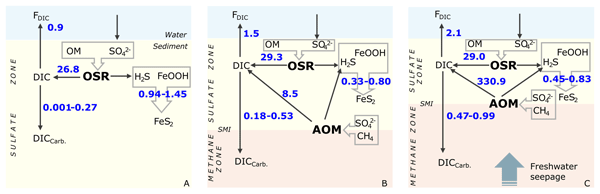
Sedimentary processes play a crucial role in regulating the marine carbon cycle. This includes the critical roles of methanogenesis and anaerobic methane oxidation, especially when combined with freshening of pore water, which enhances the generation of dissolved inorganic carbon and promotes carbonate precipitation in sediments; additionally, methane-bearing sediments are a more significant source of dissolved inorganic carbon to overlying water than those lacking significant methanogenesis.

Laura Kellner, Karen Dybkjær, Stefan Piasecki, Julie Fredborg, Francien Peterse, Erik S. Rasmussen, Manuel Vieira, Lígia Castro, and Kasia K. Śliwińska
J. Micropalaeontol., 44, 509–539, https://doi.org/10.5194/jm-44-509-2025, https://doi.org/10.5194/jm-44-509-2025, 2025
Short summary
Short summary
We analysed Miocene dinocyst taxa and organic particle assemblages along a distal–proximal transect in the North Sea Basin. Based on distal and shallow marine successions, we reconstruct depositional changes across the Miocene Climatic Optimum (MCO; ~16.9–14.7 Ma) and use dinocysts as palaeoclimate proxies. Additionally, we provide five GDGT-derived sea surface temperature data points that support our dinocyst-based climate interpretation.
Peter K. Bijl, Kasia K. Śliwińska, Bella Duncan, Arnaud Huguet, Sebastian Naeher, Ronnakrit Rattanasriampaipong, Claudia Sosa-Montes de Oca, Alexandra Auderset, Melissa A. Berke, Bum Soo Kim, Nina Davtian, Tom Dunkley Jones, Desmond D. Eefting, Felix J. Elling, Pierrick Fenies, Gordon N. Inglis, Lauren O'Connor, Richard D. Pancost, Francien Peterse, Addison Rice, Appy Sluijs, Devika Varma, Wenjie Xiao, and Yi Ge Zhang
Biogeosciences, 22, 6465–6508, https://doi.org/10.5194/bg-22-6465-2025, https://doi.org/10.5194/bg-22-6465-2025, 2025
Short summary
Short summary
Many academic laboratories worldwide process environmental samples for analysis of membrane lipid molecules of archaea, for the reconstruction of past environmental conditions. However, the sample workup scheme involves many steps, each of which has a risk of contamination or bias, affecting the results. This paper reviews steps involved in sampling, extraction and analysis of lipids, interpretation and archiving of the data. This ensures reproducible, reusable, comparable and consistent data.
Jingjing Guo, Martin Ziegler, Louise Fuchs, Youbin Sun, and Francien Peterse
Clim. Past, 21, 343–355, https://doi.org/10.5194/cp-21-343-2025, https://doi.org/10.5194/cp-21-343-2025, 2025
Short summary
Short summary
In this study, we use the distribution of soil bacterial membrane lipids stored on the Chinese Loess Plateau (CLP) to quantitatively reconstruct variations in precipitation amount over the past 130 kyr. The precipitation record shows orbital- and millennial-scale variations and varies at precession and obliquity scale. The application of this precipitation proxy across the CLP indicates a more pronounced spatial gradient during glacials, when the western CLP experiences more arid conditions.
Allix J. Baxter, Francien Peterse, Dirk Verschuren, Aihemaiti Maitituerdi, Nicolas Waldmann, and Jaap S. Sinninghe Damsté
Biogeosciences, 21, 2877–2908, https://doi.org/10.5194/bg-21-2877-2024, https://doi.org/10.5194/bg-21-2877-2024, 2024
Short summary
Short summary
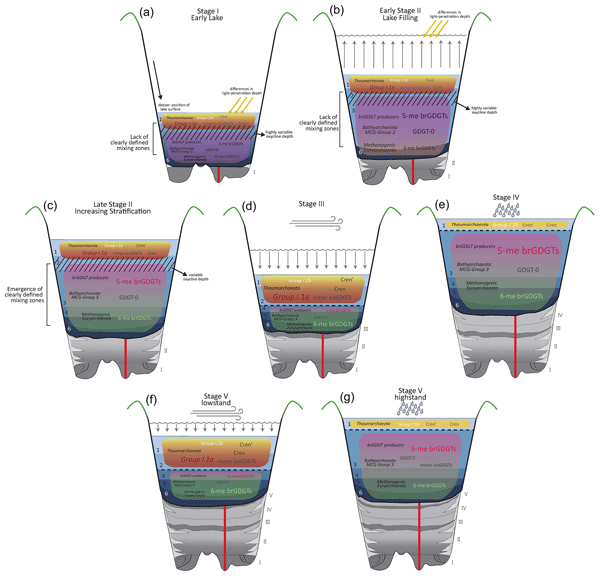
This study investigates the impact of long-term lake-system evolution on the climate signal recorded by glycerol dialkyl glycerol tetraethers (GDGTs), a popular biomarker in paleoclimate research. It compares downcore changes in GDGTs in the 250 000 year sediment sequence of Lake Chala (Kenya/Tanzania) to independent data for lake mixing and water-column chemistry. These factors influence the GDGT proxies in the earliest depositional phases (before ~180 ka), confounding the climate signal.
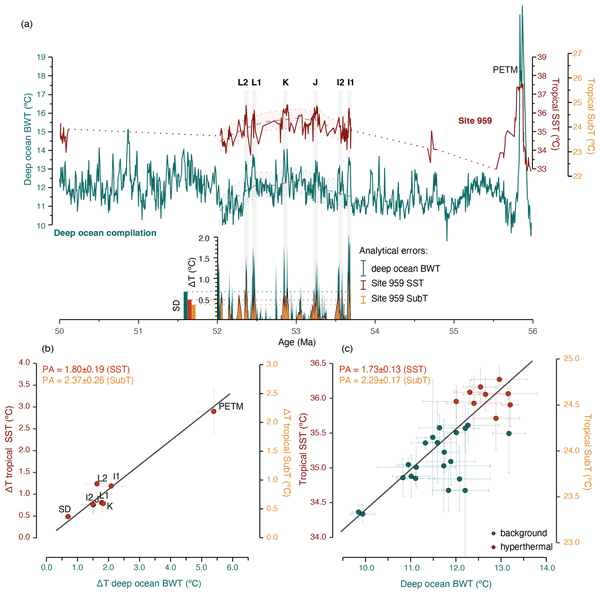
Chris D. Fokkema, Tobias Agterhuis, Danielle Gerritsma, Myrthe de Goeij, Xiaoqing Liu, Pauline de Regt, Addison Rice, Laurens Vennema, Claudia Agnini, Peter K. Bijl, Joost Frieling, Matthew Huber, Francien Peterse, and Appy Sluijs
Clim. Past, 20, 1303–1325, https://doi.org/10.5194/cp-20-1303-2024, https://doi.org/10.5194/cp-20-1303-2024, 2024
Short summary
Short summary
Polar amplification (PA) is a key uncertainty in climate projections. The factors that dominantly control PA are difficult to separate. Here we provide an estimate for the non-ice-related PA by reconstructing tropical ocean temperature variability from the ice-free early Eocene, which we compare to deep-ocean-derived high-latitude temperature variability across short-lived warming periods. We find a PA factor of 1.7–2.3 on 20 kyr timescales, which is somewhat larger than model estimates.
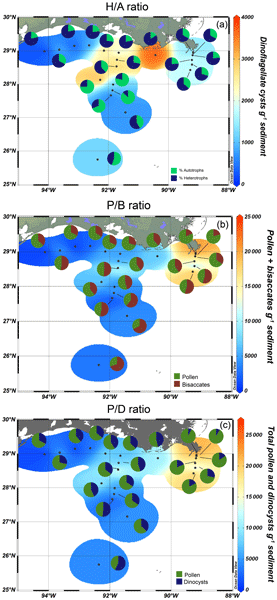
Yord W. Yedema, Timme Donders, Francien Peterse, and Francesca Sangiorgi
J. Micropalaeontol., 42, 257–276, https://doi.org/10.5194/jm-42-257-2023, https://doi.org/10.5194/jm-42-257-2023, 2023
Short summary
Short summary
The pollen and dinoflagellate cyst content of 21 surface sediments from the northern Gulf of Mexico is used to test the applicability of three palynological ratios (heterotroph/autotroph, pollen/dinocyst, and pollen/bisaccate ratio) as proxies for marine productivity and distance to the coast/river. Redundancy analysis confirms the suitability of these three ratios, where the H/A ratio can be used as an indicator of primary production, and the P/B ratio best tracks the distance to the coast.
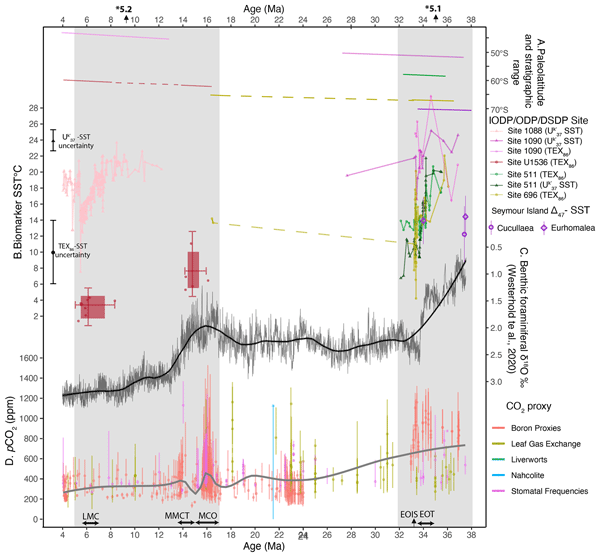
Frida S. Hoem, Adrián López-Quirós, Suzanna van de Lagemaat, Johan Etourneau, Marie-Alexandrine Sicre, Carlota Escutia, Henk Brinkhuis, Francien Peterse, Francesca Sangiorgi, and Peter K. Bijl
Clim. Past, 19, 1931–1949, https://doi.org/10.5194/cp-19-1931-2023, https://doi.org/10.5194/cp-19-1931-2023, 2023
Short summary
Short summary
We present two new sea surface temperature (SST) records in comparison with available SST records to reconstruct South Atlantic paleoceanographic evolution. Our results show a low SST gradient in the Eocene–early Oligocene due to the persistent gyral circulation. A higher SST gradient in the Middle–Late Miocene infers a stronger circumpolar current. The southern South Atlantic was the coldest region in the Southern Ocean and likely the main deep-water formation location in the Middle Miocene.
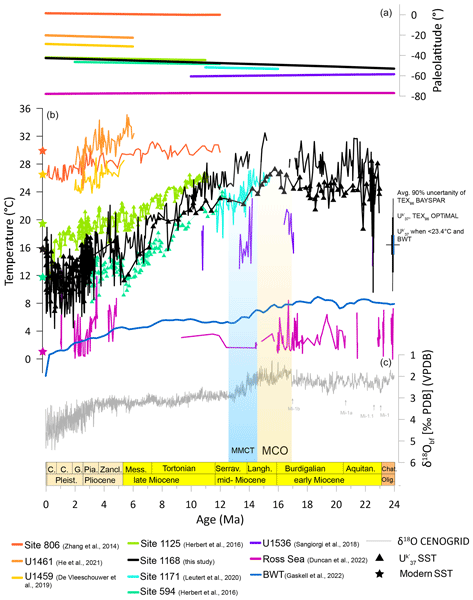
Suning Hou, Foteini Lamprou, Frida S. Hoem, Mohammad Rizky Nanda Hadju, Francesca Sangiorgi, Francien Peterse, and Peter K. Bijl
Clim. Past, 19, 787–802, https://doi.org/10.5194/cp-19-787-2023, https://doi.org/10.5194/cp-19-787-2023, 2023
Short summary
Short summary
Neogene climate cooling is thought to be accompanied by increased Equator-to-pole temperature gradients, but mid-latitudes are poorly represented. We use biomarkers to reconstruct a 23 Myr continuous sea surface temperature record of the mid-latitude Southern Ocean. We note a profound mid-latitude cooling which narrowed the latitudinal temperature gradient with the northward expansion of subpolar conditions. We surmise that this reflects the strengthening of the ACC and the expansion of sea ice.
Yord W. Yedema, Francesca Sangiorgi, Appy Sluijs, Jaap S. Sinninghe Damsté, and Francien Peterse
Biogeosciences, 20, 663–686, https://doi.org/10.5194/bg-20-663-2023, https://doi.org/10.5194/bg-20-663-2023, 2023
Short summary
Short summary
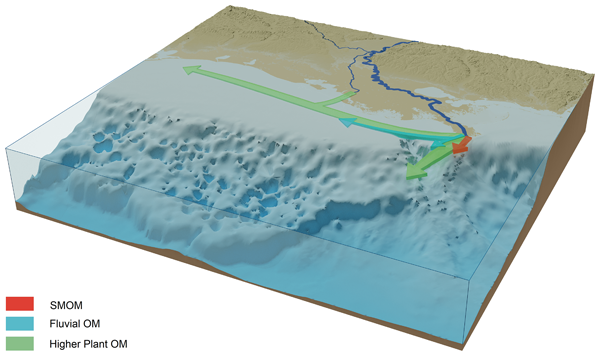
Terrestrial organic matter (TerrOM) is transported to the ocean by rivers, where its burial can potentially form a long-term carbon sink. This burial is dependent on the type and characteristics of the TerrOM. We used bulk sediment properties, biomarkers, and palynology to identify the dispersal patterns of plant-derived, soil–microbial, and marine OM in the northern Gulf of Mexico and show that plant-derived OM is transported further into the coastal zone than soil and marine-produced TerrOM.
Paweł Działak, Marcin D. Syczewski, Kamil Kornaus, Mirosław Słowakiewicz, Łukasz Zych, and Andrzej Borkowski
Biogeosciences, 19, 4533–4550, https://doi.org/10.5194/bg-19-4533-2022, https://doi.org/10.5194/bg-19-4533-2022, 2022
Short summary
Short summary
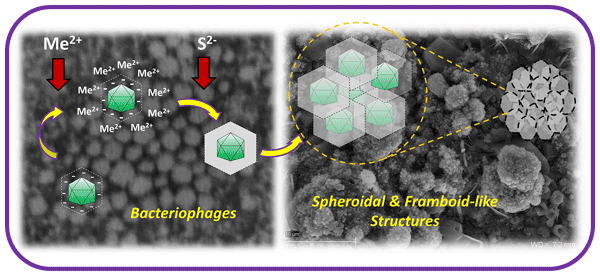
Bacteriophages comprise one of the factors that may influence mineralization processes. The number of bacteriophages in the environment usually exceeds the number of bacteria by an order of magnitude. One of the more interesting processes is the formation of framboidal pyrite, and it is not entirely clear what processes determine its formation. Our studies indicate that some bacterial viruses may influence the formation of framboid-like or spherical structures.
Frédérique M. S. A. Kirkels, Hugo J. de Boer, Paulina Concha Hernández, Chris R. T. Martes, Marcel T. J. van der Meer, Sayak Basu, Muhammed O. Usman, and Francien Peterse
Biogeosciences, 19, 4107–4127, https://doi.org/10.5194/bg-19-4107-2022, https://doi.org/10.5194/bg-19-4107-2022, 2022
Short summary
Short summary
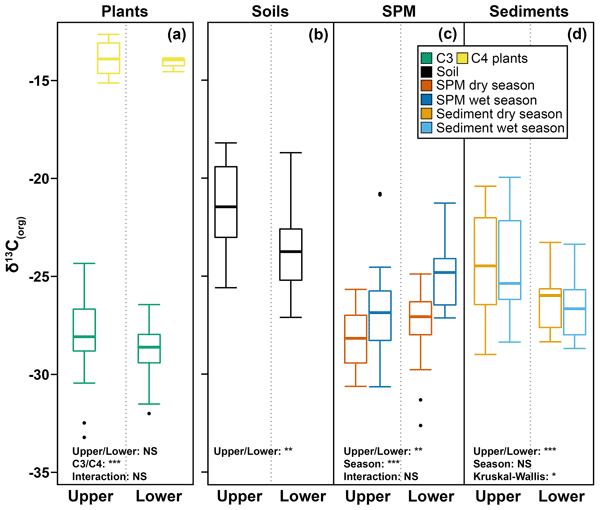
The distinct carbon isotopic values of C3 and C4 plants are widely used to reconstruct past hydroclimate, where more C3 plants reflect wetter and C4 plants drier conditions. Here we examine the impact of regional hydroclimatic conditions on plant isotopic values in the Godavari River basin, India. We find that it is crucial to identify regional plant isotopic values and consider drought stress, which introduces a bias in C3 / C4 plant estimates and associated hydroclimate reconstructions.
Frédérique M. S. A. Kirkels, Huub M. Zwart, Muhammed O. Usman, Suning Hou, Camilo Ponton, Liviu Giosan, Timothy I. Eglinton, and Francien Peterse
Biogeosciences, 19, 3979–4010, https://doi.org/10.5194/bg-19-3979-2022, https://doi.org/10.5194/bg-19-3979-2022, 2022
Short summary
Short summary
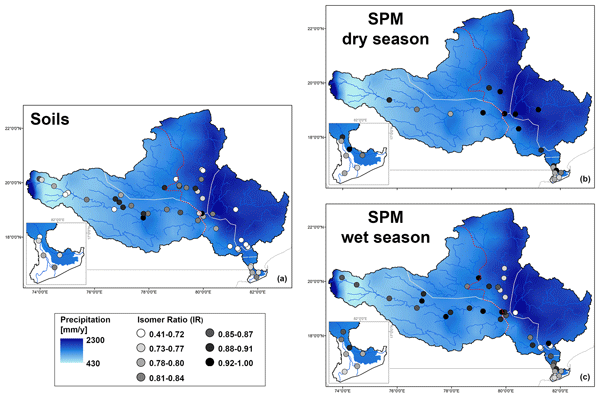
Soil organic carbon (SOC) that is transferred to the ocean by rivers forms a long-term sink of atmospheric CO2 upon burial on the ocean floor. We here test if certain bacterial membrane lipids can be used to trace SOC through the monsoon-fed Godavari River basin in India. We find that these lipids trace the mobilisation and transport of SOC in the wet season but that these lipids are not transferred far into the sea. This suggests that the burial of SOC on the sea floor is limited here.
Carolien M. H. van der Weijst, Koen J. van der Laan, Francien Peterse, Gert-Jan Reichart, Francesca Sangiorgi, Stefan Schouten, Tjerk J. T. Veenstra, and Appy Sluijs
Clim. Past, 18, 1947–1962, https://doi.org/10.5194/cp-18-1947-2022, https://doi.org/10.5194/cp-18-1947-2022, 2022
Short summary
Short summary
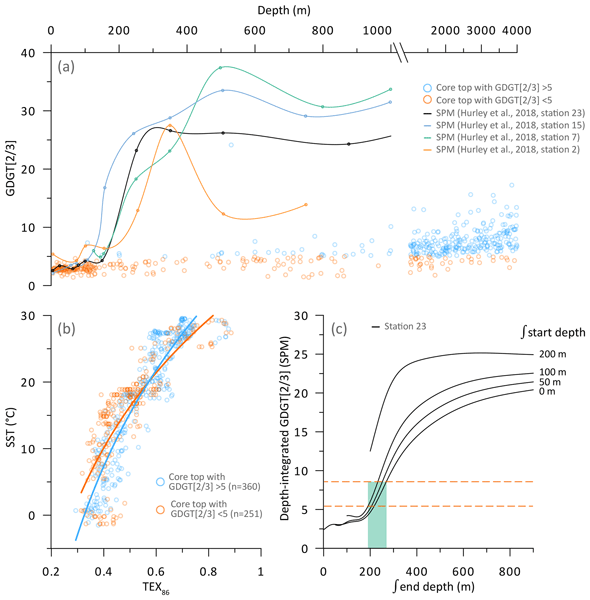
The TEX86 proxy is often used by paleoceanographers to reconstruct past sea-surface temperatures. However, the origin of the TEX86 signal in marine sediments has been debated since the proxy was first proposed. In our paper, we show that TEX86 carries a mixed sea-surface and subsurface temperature signal and should be calibrated accordingly. Using our 15-million-year record, we subsequently show how a TEX86 subsurface temperature record can be used to inform us on past sea-surface temperatures.
Peter K. Bijl, Joost Frieling, Marlow Julius Cramwinckel, Christine Boschman, Appy Sluijs, and Francien Peterse
Clim. Past, 17, 2393–2425, https://doi.org/10.5194/cp-17-2393-2021, https://doi.org/10.5194/cp-17-2393-2021, 2021
Short summary
Short summary
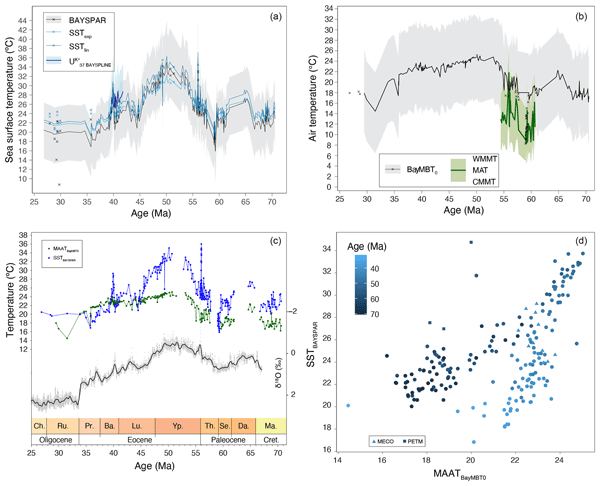
Here, we use the latest insights for GDGT and dinocyst-based paleotemperature and paleoenvironmental reconstructions in late Cretaceous–early Oligocene sediments from ODP Site 1172 (East Tasman Plateau, Australia). We reconstruct strong river runoff during the Paleocene–early Eocene, a progressive decline thereafter with increased wet/dry seasonality in the northward-drifting hinterland. Our critical review leaves the anomalous warmth of the Eocene SW Pacific Ocean unexplained.
Cited articles
Adam-Beyer, N., Deusner, C., Schmidt, M., and Perner, M.: Microbial hydrogen oxidation potential in seasonally hypoxic Baltic Sea sediments, Front. Microbiol., 16, https://doi.org/10.3389/fmicb.2025.1565157, 2025.
Aitchison, J.: The statistical analysis of compositional data, J. R. Stat. Soc. Ser. B Methodol., 44, 139–160, https://doi.org/10.1111/j.2517-6161.1982.tb01195.x, 1982.
Bale, N. J., Palatinszky, M., Rijpstra, W. I. C., Herbold, C. W., Wagner, M., and Sinninghe Damsté, J. S.: Membrane lipid composition of the moderately thermophilic ammonia-oxidizing archaeon “Candidatus Nitrosotenuis uzonensis” at different growth temperatures, Appl. Environ. Microbiol., 85, e01332-19, https://doi.org/10.1128/AEM.01332-19, 2019.
Bauersachs, T., Weidenbach, K., Schmitz, R. A., and Schwark, L.: Distribution of glycerol ether lipids in halophilic, methanogenic and hyperthermophilic archaea, Org. Geochem., 83–84, 101–108, https://doi.org/10.1016/j.orggeochem.2015.03.009, 2015.
Baxter, A. J., van Bree, L. G. J., Peterse, F., Hopmans, E. C., Villanueva, L., Verschuren, D., and Sinninghe Damsté, J. S.: Seasonal and multi-annual variation in the abundance of isoprenoid GDGT membrane lipids and their producers in the water column of a meromictic equatorial crater lake (Lake Chala, East Africa), Quat. Sci. Rev., 273, 107263, https://doi.org/10.1016/j.quascirev.2021.107263, 2021.
Baxter, B. K. and Zalar, P.: The extremophiles of Great Salt Lake: Complex microbiology in a dynamic hypersaline ecosystem, in: Model Ecosystems in Extreme Environments, edited by: Seckbach, J. and Rampelotto, P., Academic Press, 57–99, https://doi.org/10.1016/B978-0-12-812742-1.00004-0, 2019.
Berg, C., Listmann, L., Vandieken, V., Vogts, A., and Jürgens, K.: Chemoautotrophic growth of ammonia-oxidizing Thaumarchaeota enriched from a pelagic redox gradient in the Baltic Sea, Front. Microbiol., 5, https://doi.org/10.3389/fmicb.2014.00786, 2015a.
Berg, C., Vandieken, V., Thamdrup, B., and Jürgens, K.: Significance of archaeal nitrification in hypoxic waters of the Baltic Sea, ISME J., 9, 1319–1332, https://doi.org/10.1038/ismej.2014.218, 2015b.
Besseling, M. A., Hopmans, E. C., Boschman, R. C., Sinninghe Damsté, J. S., and Villanueva, L.: Benthic archaea as potential sources of tetraether membrane lipids in sediments across an oxygen minimum zone, Biogeosciences, 15, 4047–4064, https://doi.org/10.5194/bg-15-4047-2018, 2018.
Besseling, M. A., Hopmans, E. C., Bale, N. J., Schouten, S., Damsté, J. S. S., and Villanueva, L.: The absence of intact polar lipid-derived GDGTs in marine waters dominated by Marine Group II: Implications for lipid biosynthesis in Archaea, Sci. Rep., 10, 294, https://doi.org/10.1038/s41598-019-57035-0, 2020.
Bijl, P. K., Śliwińska, K. K., Duncan, B., Huguet, A., Naeher, S., Rattanasriampaipong, R., Sosa-Montes de Oca, C., Auderset, A., Berke, M. A., Kim, B. S., Davtian, N., Dunkley Jones, T., Eefting, D. D., Elling, F. J., Fenies, P., Inglis, G. N., O'Connor, L., Pancost, R. D., Peterse, F., Rice, A., Sluijs, A., Varma, D., Xiao, W., and Zhang, Y. G.: Reviews and syntheses: Best practices for the application of marine GDGTs as proxy for paleotemperatures: sampling, processing, analyses, interpretation, and archiving protocols, Biogeosciences, 22, 6465–6508, https://doi.org/10.5194/bg-22-6465-2025, 2025.
Blaga, C. I., Reichart, G.-J., Heiri, O., and Sinninghe Damsté, J. S.: Tetraether membrane lipid distributions in water-column particulate matter and sediments: a study of 47 European lakes along a north–south transect, J. Paleolimnol., 41, 523–540, https://doi.org/10.1007/s10933-008-9242-2, 2009.
Blainey, P. C., Mosier, A. C., Potanina, A., Francis, C. A., and Quake, S. R.: Genome of a low-salinity ammonia-oxidizing archaeon determined by single-cell and metagenomic analysis, PLoS One, 6, e16626, https://doi.org/10.1371/journal.pone.0016626, 2011.
Blewett, J., Elling, F. J., Naafs, B. D. A., Kattein, L., Evans, T. W., Lauretano, V., Gallego-Sala, A. V., Pancost, R. D., and Pearson, A.: Metabolic and ecological controls on the stable carbon isotopic composition of archaeal (isoGDGT and BDGT) and bacterial (brGDGT) lipids in wetlands and lignites, Geochim. Cosmochim. Acta, 320, 1–25, https://doi.org/10.1016/j.gca.2021.12.023, 2022.
Blondel, V. D., Guillaume, J.-L., Lambiotte, R., and Lefebvre, E.: Fast unfolding of communities in large networks, J. Stat. Mech.: Theory Exp., 2008, P10008, https://doi.org/10.1088/1742-5468/2008/10/P10008, 2008.
Boetius, A., Ravenschlag, K., Schubert, C. J., Rickert, D., Widdel, F., Gieseke, A., Amann, R., Jørgensen, B. B., Witte, U., and Pfannkuche, O.: A marine microbial consortium apparently mediating anaerobic oxidation of methane, Nature, 407, 623–626, https://doi.org/10.1038/35036572, 2000.
Brick, S., Niggemann, J., Reckhardt, A., Könneke, M., and Engelen, B.: Interstitial microbial communities of coastal sediments are dominated by Nanoarchaeota, Front. Microbiol., 16, 1532193, https://doi.org/10.3389/fmicb.2025.1532193, 2025.
Brocławik, O., Łukawska-Matuszewska, K., Brodecka-Goluch, A., and Bolałek, J.: Impact of methane occurrence on iron speciation in the sediments of the Gdansk Basin (Southern Baltic Sea), Sci. Tot. Environ., 721, 137718, https://doi.org/10.1016/j.scitotenv.2020.137718, 2020.
Brodecka, A., Majewski, P., Bolałek, J., and Klusek, Z.: Geochemical and acoustic evidence for the occurrence of methane in sediments of the Polish sector of the southern Baltic Sea∗, Oceanologia, 55, 951–978, https://doi.org/10.5697/oc.55-4.951, 2013.
Brodecka-Goluch, A., Idczak, J., Gorska, N., and Bolałek, J.: Geophysical and geochemical characteristics of four different pockmark sites located in the Gdańsk Basin, in: 3rd Baltic Earth Conference “Earth system changes and Baltic Sea coasts”, 1–5 June 2020, Jastarnia, pp. 89–90, 2020.
Brodecka-Goluch, A., Łukawska-Matuszewska, K., Kotarba, M. J., Borkowski, A., Idczak, J., and Bolałek, J.: Biogeochemistry of three different shallow gas systems in continental shelf sediments of the South-Eastern Baltic Sea (Gulf of Gdańsk): Carbon cycling, origin of methane and microbial community composition, Chem. Geol., 597, 120799, https://doi.org/10.1016/j.chemgeo.2022.120799, 2022.
Burnett, W. C., Bokuniewicz, H., Huettel, M., Moore, W. S., and Taniguchi, M.: Groundwater and pore water inputs to the coastal zone, Biogeochemistry, 66, 3–33, https://doi.org/10.1023/B:BIOG.0000006066.21240.53, 2003.
Burnett, W. C., Aggarwal, P. K., Aureli, A., Bokuniewicz, H., Cable, J. E., Charette, M. A., Kontar, E., Krupa, S., Kulkarni, K. M., Loveless, A., Moore, W. S., Oberdorfer, J. A., Oliveira, J., Ozyurt, N., Povinec, P., Privitera, A. M. G., Rajar, R., Ramessur, R. T., Scholten, J., Stieglitz, T., Taniguchi, M., and Turner, J. V.: Quantifying submarine groundwater discharge in the coastal zone via multiple methods, Sci. Tot. Environ., 367, 498–543, https://doi.org/10.1016/j.scitotenv.2006.05.009, 2006.
Bussmann, I. and Suess, E.: Groundwater seepage in Eckernförde Bay (Western Baltic Sea): Effect on methane and salinity distribution of the water column, Cont. Shelf Res., 18, 1795–1806, https://doi.org/10.1016/S0278-4343(98)00058-2, 1998.
Callow, B., Bull, J. M., Provenzano, G., Böttner, C., Birinci, H., Robinson, A. H., Henstock, T. J., Minshull, T. A., Bayrakci, G., Lichtschlag, A., Roche, B., Yilo, N., Gehrmann, R., Karstens, J., Falcon-Suarez, I. H., and Berndt, C.: Seismic chimney characterisation in the North Sea – Implications for pockmark formation and shallow gas migration, Mar. Pet. Geol., 133, 105301, https://doi.org/10.1016/j.marpetgeo.2021.105301, 2021.
Carman, R. and Jonsson, P.: Distribution patterns of different forms of phosphorus in some surficial sediments of the Baltic Sea, Chem. Geol., 90, 91–106, https://doi.org/10.1016/0009-2541(91)90036-Q, 1991.
Carstensen, J., Conley, D. J., Bonsdorff, E., Gustafsson, B. G., Hietanen, S., Janas, U., Jilbert, T., Maximov, A., Norkko, A., Norkko, J., Reed, D. C., Slomp, C. P., Timmermann, K., and Voss, M.: Hypoxia in the Baltic Sea: biogeochemical cycles, benthic fauna, and management, AMBIO, 43, 26–36, https://doi.org/10.1007/s13280-013-0474-7, 2014.
Castelle, C. J., Wrighton, K. C., Thomas, B. C., Hug, L. A., Brown, C. T., Wilkins, M. J., Frischkorn, K. R., Tringe, S. G., Singh, A., Markillie, L. M., Taylor, R. C., Williams, K. H., and Banfield, J. F.: Genomic expansion of domain Archaea highlights roles for organisms from new phyla in anaerobic carbon cycling, Curr. Biol., 25, 690–701, https://doi.org/10.1016/j.cub.2015.01.014, 2015.
Chen, S., Zhou, Y., Chen, Y., and Gu, J.: fastp: an ultra-fast all-in-one FASTQ preprocessor, Bioinformatics, 34, i884–i890, https://doi.org/10.1093/bioinformatics/bty560, 2018.
Conklin, A., Stensel, H. D., and Ferguson, J.: Growth kinetics and competition between Methanosarcina and Methanosaeta in mesophilic anaerobic digestion, Water Environ. Res., 78, 486–496, https://doi.org/10.2175/106143006X95393, 2006.
De Mey-Śnieżyńska, I: Gdansk Basin iGDGT OH-GDGT Holocene marine sediment cores, Zenodo [data set], https://doi.org/10.5281/zenodo.18414700, 2026.
De Rosa, M., De Rosa, S., Gambacorta, A., Minale, L., and Bu'lock, J. D.: Chemical structure of the ether lipids of thermophilic acidophilic bacteria of the Caldariella group, Phytochemistry, 16, 1961–1965, https://doi.org/10.1016/0031-9422(77)80105-2, 1977.
De Vrieze, J.: Methanosaeta vs. Methanosarcina in anaerobic digestion: the quest for enhanced biogas production, PhD dissertation, Ghent University, https://biblio.ugent.be/publication/5704591 (last access: 1 July 2026), 2014.
Dearing Crampton-Flood, E., Peterse, F., and Sinninghe Damsté, J. S.: Production of branched tetraethers in the marine realm: Svalbard fjord sediments revisited, Org. Geochem., 138, 103907, https://doi.org/10.1016/j.orggeochem.2019.103907, 2019.
Díaz-Mendoza, G. A., Krämer, K., von Rönn, G. A., Schwarzer, K., Heinrich, C., Reimers, H.-C., and Winter, C.: Circular structures on the seabed: differentiating between natural and anthropogenic origins – Examples from the Southwestern Baltic Sea, Front. Earth Sci., 11, 1170787, https://doi.org/10.3389/feart.2023.1170787, 2023.
Ding, S., Kohlhepp, B., Trumbore, S., Küsel, K., Totsche, K.-U., Pohnert, G., Gleixner, G., and Schwab, V. F.: In situ production of core and intact bacterial and archaeal tetraether lipids in groundwater, Org. Geochem., 126, 1–12, https://doi.org/10.1016/j.orggeochem.2018.10.005, 2018.
Egger, M., Hagens, M., Sapart, C. J., Dijkstra, N., van Helmond, N. A. G. M., Mogollón, J. M., Risgaard-Petersen, N., van der Veen, C., Kasten, S., Riedinger, N., Böttcher, M. E., Röckmann, T., Jørgensen, B. B., and Slomp, C. P.: Iron oxide reduction in methane-rich deep Baltic Sea sediments, Geochim. Cosmochim. Acta, 207, 256–276, https://doi.org/10.1016/j.gca.2017.03.019, 2017.
Ehlert von Ahn, C. M., Dellwig, O., Szymczycha, B., Kotwicki, L., Rooze, J., Endler, R., Escher, P., Schmiedinger, I., Sültenfuß, J., Diak, M., Gehre, M., Struck, U., Vogler, S., and Böttcher, M. E.: Submarine groundwater discharge into a semi-enclosed coastal bay of the southern Baltic Sea: A multi-method approach, Oceanologia, 66, 111–138, https://doi.org/10.1016/j.oceano.2024.01.001, 2024.
Elling, F. J., Könneke, M., Nicol, G. W., Stieglmeier, M., Bayer, B., Spieck, E., de la Torre, J. R., Becker, K. W., Thomm, M., Prosser, J. I., Herndl, G. J., Schleper, C., and Hinrichs, K.-U.: Chemotaxonomic characterisation of the thaumarchaeal lipidome, Environ. Microbiol., 19, 2681–2700, https://doi.org/10.1111/1462-2920.13759, 2017.
Engvall, A.-G.: The fate of nitrogen in early diagenesis of Baltic sediments: a study of the sediment-water interface, PhD thesis, University of Stokholm, Stockholm, 16 pp., https://search.ub.uu.se/discovery/fulldisplay?vid=46LIBRIS_UUB:UUB&docid=alma991000068279707596&lang=en&context=L (last access: 1 July 2026), 1978.
Ettwig, K. F., Zhu, B., Speth, D., Keltjens, J. T., Jetten, M. S. M., and Kartal, B.: Archaea catalyze iron-dependent anaerobic oxidation of methane, Proc. Natl. Acad. Sci. USA, 113, 12792–12796, https://doi.org/10.1073/pnas.1609534113, 2016.
Fenies, P., Ho, S. L., Hefter, J., and Lee, P.-T.: Impact of anaerobic methanotrophic archaeal input on hydroxylated isoprenoid GDGT-derived temperatures, Org. Geochem., 218, 105213, https://doi.org/10.1016/j.orggeochem.2026.105213, 2026.
Galagan, J. E., Nusbaum, C., Roy, A., Endrizzi, M. G., Macdonald, P., FitzHugh, W., Calvo, S., Engels, R., Smirnov, S., Atnoor, D., Brown, A., Allen, N., Naylor, J., Stange-Thomann, N., DeArellano, K., Johnson, R., Linton, L., McEwan, P., McKernan, K., Talamas, J., Tirrell, A., Ye, W., Zimmer, A., Barber, R. D., Cann, I., Graham, D. E., Grahame, D. A., Guss, A. M., Hedderich, R., Ingram-Smith, C., Kuettner, H. C., Krzycki, J. A., Leigh, J. A., Li, W., Liu, J., Mukhopadhyay, B., Reeve, J. N., Smith, K., Springer, T. A., Umayam, L. A., White, O., White, R. H., Conway de Macario, E., Ferry, J. G., Jarrell, K. F., Jing, H., Macario, A. J. L., Paulsen, I., Pritchett, M., Sowers, K. R., Swanson, R. V., Zinder, S. H., Lander, E., Metcalf, W. W., and Birren, B.: The genome of M. acetivorans reveals extensive metabolic and physiological diversity, Genome Res., 12, 532–542, https://doi.org/10.1101/gr.223902, 2002.
Gloor, G. B., Macklaim, J. M., Pawlowsky-Glahn, V., and Egozcue, J. J.: Microbiome datasets are compositional: and this is not optional, Front. Microbiol., 8, 2224, https://doi.org/10.3389/fmicb.2017.02224, 2017.
González-Toril, E., Gómez, F., Malki, M., and Amils, R.: The isolation and study of Acidophilic microorganisms, in: Methods in Microbiology, vol. 35, Academic Press, 471–510, https://doi.org/10.1016/S0580-9517(08)70023-0, 2006.
Guan, H., Liu, L., Birgel, D., Peckmann, J., Feng, D., and Li, S.: Hydroxylated GDGTs-0 in marine methane seep environments: A putative indicator for archaeal methanogenesis, Org. Geochem., 198, 104862, https://doi.org/10.1016/j.orggeochem.2024.104862, 2024.
Harning D. J. and Sepúlveda J.: Impact of non-thermal variables on hydroxylated GDGT distributions around Iceland, Front. Earth Sci., 12, 1430441, https://doi.org/10.3389/feart.2024.143044, 2024
Haroon, M. F., Hu, S., Shi, Y., Imelfort, M., Keller, J., Hugenholtz, P., Yuan, Z., and Tyson, G. W.: Anaerobic oxidation of methane coupled to nitrate reduction in a novel archaeal lineage, Nature, 500, 567–570, https://doi.org/10.1038/nature12375, 2013.
Hedges, J. I. and Stern, J. H.: Carbon and nitrogen determinations of carbonate-containing solids1, Limnol. Oceanogr., 29, 657–663, https://doi.org/10.4319/lo.1984.29.3.0657, 1984.
Hoffmann, J. J. L., Schneider von Deimling, J., Schröder, J. F., Schmidt, M., Held, P., Crutchley, G. J., Scholten, J., and Gorman, A. R.: Complex eyed pockmarks and submarine groundwater discharge revealed by acoustic data and sediment cores in Eckernförde Bay, SW Baltic Sea, Geochem. Geophys. Geosyst., 21, e2019GC008825, https://doi.org/10.1029/2019GC008825, 2020.
Hopmans, E. C., Weijers, J. W. H., Schefuß, E., Herfort, L., Sinninghe Damsté, J. S., and Schouten, S.: A novel proxy for terrestrial organic matter in sediments based on branched and isoprenoid tetraether lipids, Earth Planet. Sc. Lett., 224, 107–116, https://doi.org/10.1016/j.epsl.2004.05.012, 2004.
Hopmans, E. C., Schouten, S., and Sinninghe Damsté, J. S.: The effect of improved chromatography on GDGT-based palaeoproxies, Org. Geochem., 93, 1–6, https://doi.org/10.1016/j.orggeochem.2015.12.006, 2016.
Hovland, M. and Judd, A. G.: Seabed Pockmarks and Seepages. Impact on Geology, Biology and the Marine Environment, Graham & Trotman (Kluwer), London, Dordrecht, Boston, 293 pp., ISBN 9780860109488, 1988.
Hovland, M., Gardner, J. V., and Judd, A. G.: The significance of pockmarks to understanding fluid flow processes and geohazards, Geofluids, 2, 127–136, 2002.
Huguet, A., Fosse, C., Laggoun-Défarge, F., Toussaint, M.-L., and Derenne, S.: Occurrence and distribution of glycerol dialkyl glycerol tetraethers in a French peat bog, Org. Geochem., 41, 559–572, https://doi.org/10.1016/j.orggeochem.2010.02.015, 2010.
Huguet, C., Hopmans, E. C., Febo-Ayala, W., Thompson, D. H., Sinninghe Damsté, J. S., and Schouten, S.: An improved method to determine the absolute abundance of glycerol dibiphytanyl glycerol tetraether lipids, Org. Geochem., 37, 1036–1041, https://doi.org/10.1016/j.orggeochem.2006.05.008, 2006.
Huguet, C., Fietz, S., and Rosell-Melé, A.: Global distribution patterns of hydroxy glycerol dialkyl glycerol tetraethers, Org. Geochem., 57, 107–118, https://doi.org/10.1016/j.orggeochem.2013.01.010, 2013.
Idczak, J., Brodecka-Goluch, A., Łukawska-Matuszewska, K., Graca, B., Gorska, N., Klusek, Z., Pezacki, P. D., and Bolałek, J.: A geophysical, geochemical and microbiological study of a newly discovered pockmark with active gas seepage and submarine groundwater discharge (MET1-BH, central Gulf of Gdańsk, southern Baltic Sea), Sci. Tot. Environ., 742, 140306, https://doi.org/10.1016/j.scitotenv.2020.140306, 2020.
Inglis, G. N., Farnsworth, A., Lunt, D., Foster, G. L., Hollis, C. J., Pagani, M., Jardine, P. E., Pearson, P. N., Markwick, P., Galsworthy, A. M. J., Raynham, L., Taylor, Kyle. W. R., and Pancost, R. D.: Descent toward the Icehouse: Eocene sea surface cooling inferred from GDGT distributions, Paleoceanography, 30, 1000–1020, https://doi.org/10.1002/2014PA002723, 2015.
Ininbergs, K., Bergman, B., Larsson, J., and Ekman, M.: Microbial metagenomics in the Baltic Sea: Recent advancements and prospects for environmental monitoring, AMBIO, 44, 439–450, https://doi.org/10.1007/s13280-015-0663-7, 2015.
Jakobs, G., Labrenz, M., Rehder, G., Hietanen, S., Kießlich, K., Vogts, A., Blumenberg, M., and Schmale, O.: A boreactor approach to investigate the linkage between methane oxidation and nitrate/nitrite reduction in the pelagic oxic-anoxic transition zone of the Central Baltic Sea, Front. Mar. Sci., 3, https://doi.org/10.3389/fmars.2016.00145, 2016.
Jakobsson, M., O'Regan, M., Mörth, C.-M., Stranne, C., Weidner, E., Hansson, J., Gyllencreutz, R., Humborg, C., Elfwing, T., Norkko, A., Norkko, J., Nilsson, B., and Sjöström, A.: Potential links between Baltic Sea submarine terraces and groundwater seeping, Earth Surf. Dyn., 8, 1–15, https://doi.org/10.5194/esurf-8-1-2020, 2020.
Jäntti, H., Ward, B. B., Dippner, J. W., and Hietanen, S.: Nitrification and the ammonia-oxidizing communities in the central Baltic Sea water column, Estuar. Coast. Shelf Sci., 202, 280–289, https://doi.org/10.1016/j.ecss.2018.01.019, 2018.
Jaśniewicz, D., Klusek, Z., Brodecka-Goluch, A., and Bolałek, J.: Acoustic investigations of shallow gas in the southern Baltic Sea (Polish Exclusive Economic Zone): a review, Geo-Mar. Lett., 39, 1–17, https://doi.org/10.1007/s00367-018-0555-5, 2019.
Jaworowski, K., Wagner, R., Modliski, Z., Pokorski, J., Sokołowski, J., and Sokołowski, A.: Marine ecogeology in semi-closed basin: case study on a threat of geogenic pollution of the southern Baltic Sea (Polish Exclusive Economic Zone), Geol. Q., 54, 267–288, 2010.
Jensen, J. B., Kuijpers, A., Bennike, O., Laier, T., and Werner, F.: New geological aspects for freshwater seepage and formation in Eckernförde Bay, western Baltic, Cont. Shelf Res., 22, 2159–2173, https://doi.org/10.1016/S0278-4343(02)00076-6, 2002.
Jørgensen, B. B.: Sulfur biogeochemical cycle of marine sediments, Geochem. Perspect., 10, 145–146, 2021.
Jørgensen, B. B., Weber, A., and Zopfi, J.: Sulfate reduction and anaerobic methane oxidation in Black Sea sediments, Deep-Sea Res. Part I Oceanogr. Res. Pap., 48, 2097–2120, https://doi.org/10.1016/S0967-0637(01)00007-3, 2001.
Justice, N. B., Sczesnak, A., Hazen, T. C., and Arkin, A. P.: Environmental selection, dispersal, and organism interactions shape community assembly in high-throughput enrichment culturing, Appl. Environ. Microbiol., 83, e01253-17, https://doi.org/10.1128/AEM.01253-17, 2017.
Kaiser, J. and Arz, H. W.: Sources of sedimentary biomarkers and proxies with potential paleoenvironmental significance for the Baltic Sea, Cont. Shelf Res., 122, 102–119, https://doi.org/10.1016/j.csr.2016.03.020, 2016.
Kapustina, M., Bubnova, E., and Dudkov, I.: Deep water of the Gdansk Deep (Baltic Sea): variability of hydrology and dissolved oxygen over recent decades, Reg. Stud. Mar. Sci., 93, 104727, https://doi.org/10.1016/j.rsma.2025.104727, 2026.
Kim, B. and Zhang, Y. G.: Methane Index: Towards a quantitative archaeal lipid biomarker proxy for reconstructing marine sedimentary methane fluxes, Geochim. Cosmochim. Acta, 354, 74–87, https://doi.org/10.1016/j.gca.2023.06.008, 2023.
King, L. H. and MacLean, B.: Pockmarks on the Scotian Shelf, GSA Bulletin, 81, 3141–3148, 1970.
Knittel, K. and Boetius, A.: Anaerobic oxidation of methane: progress with an unknown process, Annu. Rev. Microbiol., 63, 311–334, https://doi.org/10.1146/annurev.micro.61.080706.093130, 2009.
Koga, Y., Nishihara, M., Morii, H., and Akagawa-Matsushita, M.: Ether polar lipids of methanogenic bacteria: structures, comparative aspects, and biosyntheses, Microbiol. Rev., 57, 164–182, https://doi.org/10.1128/mr.57.1.164-182.1993, 1993.
Kotarba, M. J.: Origin of hydrocarbon gases accumulated in the Middle Cambrian reservoirs of the Polish part of the Baltic region, Geol. Q., 54, 197–204, 2010.
Kotarba, M. J. and Lewan, M. D.: Sources of natural gases in Middle Cambrian reservoirs in Polish and Lithuanian Baltic Basin as determined by stable isotopes and hydrous pyrolysis of Lower Palaeozoic source rocks, Chem. Geol., 345, 62–76, https://doi.org/10.1016/j.chemgeo.2013.02.023, 2013.
Kotarba, M. J. and Nagao, K.: Molecular and isotopic compositions and origin of natural gases from Cambrian and Carboniferous-Lower Permian reservoirs of the onshore Polish Baltic region, Int. J. Earth Sci., 104, 241–261, https://doi.org/10.1007/s00531-014-1063-0, 2015.
Kreuzburg, M., Scholten, J., Hsu, F.-H., Liebetrau, V., Sültenfuß, J., Rapaglia, J., and Schlüter, M.: Submarine groundwater discharge-derived nutrient fluxes in Eckernförde Bay (Western Baltic Sea), Estuaries Coasts, 46, 1190–1207, https://doi.org/10.1007/s12237-023-01202-0, 2023.
Kuliński, K., Rehder, G., Asmala, E., Bartosova, A., Carstensen, J., Gustafsson, B., Hall, P. O. J., Humborg, C., Jilbert, T., Jürgens, K., Meier, H. E. M., Müller-Karulis, B., Naumann, M., Olesen, J. E., Savchuk, O., Schramm, A., Slomp, C. P., Sofiev, M., Sobek, A., Szymczycha, B., and Undeman, E.: Biogeochemical functioning of the Baltic Sea, Earth Syst. Dyn., 13, 633–685, https://doi.org/10.5194/esd-13-633-2022, 2022.
Kurowski, S., Łukawska-Matuszewska, K., Čović, A., Jozić, D., and Brodecka-Goluch, A.: Effects of pockmark activity on iron cycling and mineral composition in continental shelf sediments (southern Baltic Sea), Biogeochemistry, 167, 135–154, https://doi.org/10.1007/s10533-024-01127-1, 2024.
Labrenz, M., Sintes, E., Toetzke, F., Zumsteg, A., Herndl, G. J., Seidler, M., and Jürgens, K.: Relevance of a crenarchaeotal subcluster related to Candidatus Nitrosopumilus maritimus to ammonia oxidation in the suboxic zone of the central Baltic Sea, ISME J., 4, 1496–1508, https://doi.org/10.1038/ismej.2010.78, 2010.
Lapham, L. L., Lloyd, K. G., Fossing, H., Flury, S., Jensen, J. B., Alperin, M. J., Rehder, G., Holzhueter, W., Ferdelman, T., and Jørgensen, B. B.: Methane leakage through the sulfate–methane transition zone of the Baltic seabed, Nat. Geosci., 17, 1277–1283, https://doi.org/10.1038/s41561-024-01594-z, 2024.
Lawal, M. A., Cook, A. E., Portnov, A., and Kumar, A.: Pockmarks, mud volcanoes and hydrocarbon seeps in the Northern Gulf of Mexico: trends and controls on widespread fluid and gas venting, Basin Res., 38, e70095, https://doi.org/10.1111/bre.70095, 2026.
Lee, D.-H., Kim, J.-H., Lee, Y. M., Stadnitskaia, A., Jin, Y. K., Niemann, H., Kim, Y.-G., and Shin, K.-H.: Biogeochemical evidence of anaerobic methane oxidation on active submarine mud volcanoes on the continental slope of the Canadian Beaufort Sea, Biogeosciences, 15, 7419–7433, https://doi.org/10.5194/bg-15-7419-2018, 2018.
Lengger, S. K., Kraaij, M., Tjallingii, R., Baas, M., Stuut, J.-B., Hopmans, E. C., Sinninghe Damsté, J. S., and Schouten, S.: Differential degradation of intact polar and core glycerol dialkyl glycerol tetraether lipids upon post-depositional oxidation, Org. Geochem., 65, 83–93, https://doi.org/10.1016/j.orggeochem.2013.10.004, 2013.
Leu, A. O., Cai, C., McIlroy, S. J., Southam, G., Orphan, V. J., Yuan, Z., Hu, S., and Tyson, G. W.: Anaerobic methane oxidation coupled to manganese reduction by members of the Methanoperedenaceae, ISME J., 14, 1030–1041, https://doi.org/10.1038/s41396-020-0590-x, 2020.
Li, X., Li, Y., Gao, D., Liu, M., and Hou, L.: Methane production linked to organic matter molecule and methanogenic community in estuarine benthic sediments, J. Geophys. Res. Biogeosci., 127, e2022JG007236, https://doi.org/10.1029/2022JG007236, 2022.
Liu, Q., Charette, M. A., Breier, C. F., Henderson, P. B., McCorkle, D. C., Martin, W., and Dai, M.: Carbonate system biogeochemistry in a subterranean estuary – Waquoit Bay, USA, Geochim. Cosmochim. Acta, 203, 422–439, https://doi.org/10.1016/j.gca.2017.01.041, 2017.
Liu, X.-L., Summons, R. E., and Hinrichs, K.-U.: Extending the known range of glycerol ether lipids in the environment: structural assignments based on tandem mass spectral fragmentation patterns, Rapid Commun. Mass Spectrom., 26, 2295–2302, https://doi.org/10.1002/rcm.6355, 2012.
Lu, J., Breitwieser, F. P., Thielen, P., and Salzberg, S. L.: Bracken: estimating species abundance in metagenomics data, PeerJ Computer Sci., 3, e104, https://doi.org/10.7717/peerj-cs.104, 2017.
Lu, J., Rincon, N., Wood, D. E., Breitwieser, F. P., Pockrandt, C., Langmead, B., Salzberg, S. L., and Steinegger, M.: Metagenome analysis using the Kraken software suite, Nat. Protoc., 17, 2815–2839, https://doi.org/10.1038/s41596-022-00738-y, 2022.
Lü, X., Liu, X.-L., Elling, F. J., Yang, H., Xie, S., Song, J., Li, X., Yuan, H., Li, N., and Hinrichs, K.-U.: Hydroxylated isoprenoid GDGTs in Chinese coastal seas and their potential as a paleotemperature proxy for mid-to-low latitude marginal seas, Org. Geochem., 89–90, 31–43, https://doi.org/10.1016/j.orggeochem.2015.10.004, 2015.
Łukawska-Matuszewska, K.: Contribution of non-carbonate inorganic and organic alkalinity to total measured alkalinity in pore waters in marine sediments (Gulf of Gdansk, S-E Baltic Sea), Mar. Chem., 186, 211–220, https://doi.org/10.1016/j.marchem.2016.10.002, 2016.
Łukawska-Matuszewska, K. and Dwornik, M.: Early diagenesis in anoxic sediments of the Gulf of Gdańsk (southern Baltic Sea): Implications for porewater chemistry and benthic flux of carbonate alkalinity, Front. Earth Sci., 13, https://doi.org/10.3389/feart.2025.1593031, 2025.
Łukawska-Matuszewska, K., Kiełczewska, J., and Bolałek, J.: Factors controlling spatial distributions and relationships of carbon, nitrogen, phosphorus and sulphur in sediments of the stratified and eutrophic Gulf of Gdansk, Cont. Shelf Res., 85, 168–180, https://doi.org/10.1016/j.csr.2014.06.010, 2014.
Łukawska-Matuszewska, K., Brocławik, O., Brodecka-Goluch, A., Rzepa, G., Manecki, M., and Bolałek, J.: Biogeochemical and mineralogical effects of Fe-P-S dynamics in sediments of continental shelf sea: Impact of salinity, oxygen conditions, and catchment area characteristics, Sci. Tot. Environ., 807, 151035, https://doi.org/10.1016/j.scitotenv.2021.151035, 2022.
Łukawska-Matuszewska, K., Brodecka-Goluch, A., Czachor, A., and Rios-Quintero, R.: Gas bubble release areas as new potential hot spots for water column enrichment with nutrients in eutrophicated sea, Mar. Environ. Res., 205, 106981, https://doi.org/10.1016/j.marenvres.2025.106981, 2025.
Lundsten, E., Paull, C. K., Gwiazda, R., Dobbs, S., Caress, D. W., Kuhnz, L. A., Walton, M., Nieminski, N., McGann, M., Lorenson, T., Cochrane, G., and Addison, J.: Pockmarks offshore Big Sur, California provide evidence for recurrent, regional, and unconfined sediment gravity flows, J. Geophys. Res. Earth Surf., 129, e2023JF007374, https://doi.org/10.1029/2023JF007374, 2024.
Lynes, M. M., Jay, Z. J., Kohtz, A. J., and Hatzenpichler, R.: Methylotrophic methanogenesis in the Archaeoglobi revealed by cultivation of Ca. Methanoglobus hypatiae from a Yellowstone hot spring, ISME J., 18, wrae026, https://doi.org/10.1093/ismejo/wrae026, 2024.
Maeder, D. L., Anderson, I., Brettin, T. S., Bruce, D. C., Gilna, P., Han, C. S., Lapidus, A., Metcalf, W. W., Saunders, E., Tapia, R., and Sowers, K. R.: The Methanosarcina barkeri genome: comparative analysis with Methanosarcina acetivorans and Methanosarcina mazei reveals extensive rearrangement within methanosarcinal genomes, J. Bacteriol., 188, 7922–7931, https://doi.org/10.1128/JB.00810-06, 2006.
Majewski, P. and Klusek, Z.: Expressions of shallow gas in the Gdansk Basin, Sci. J. Polish Nav. Acad., 52, 61–71, 2011.
Martens-Habbena, W. and Qin, W.: Archaeal nitrification without oxygen, Science, 375, 27–28, https://doi.org/10.1126/science.abn0373, 2022.
Moore, W. S.: The subterranean estuary: a reaction zone of ground water and sea water, Mar. Chem., 65, 111–125, https://doi.org/10.1016/S0304-4203(99)00014-6, 1999.
Moore, W. S.: The effect of submarine groundwater discharge on the ocean, Annu. Rev. Mar. Sci., 2, 59–88, https://doi.org/10.1146/annurev-marine-120308-081019, 2010.
Niemann, H. and Elvert, M.: Diagnostic lipid biomarker and stable carbon isotope signatures of microbial communities mediating the anaerobic oxidation of methane with sulphate, Org. Geochem., 39, 1668–1677, https://doi.org/10.1016/j.orggeochem.2007.11.003, 2008.
O'Reilly, S. S., Jordan, S. F., Monteys, X., Simpson, A. J., Allen, C. C. R., Szpak, M. T., Murphy, B. T., McCarron, S. G., Soong, R., Wu, B., Jenne, A., Grey, A., and Kelleher, B. P.: Production of methane and gaseous compounds by surface microbial activity in a small pockmark field, Dunmanus Bay, Ireland, Estuar. Coast. Shelf Sci., 255, 107340, https://doi.org/10.1016/j.ecss.2021.107340, 2021.
Palarea-Albaladejo, J. and Martín-Fernández, J. A.: zCompositions – R package for multivariate imputation of left-censored data under a compositional approach, Chemometr. Intell. Lab., 143, 85–96, https://doi.org/10.1016/j.chemolab.2015.02.019, 2015.
Pancost, R. D., Hopmans, E. C., and Sinninghe Damsté, J. S.: Archaeal lipids in Mediterranean cold seeps: molecular proxies for anaerobic methane oxidation, Geochim. Cosmochim. Acta, 65, 1611–1627, https://doi.org/10.1016/S0016-7037(00)00562-7, 2001.
Parsons, T. R., Maita, Y., and Lalli, C. M.: A Manual of Chemical & Biological Methods for Seawater Analysis, Pergamon Press, 188 pp., ISBN 0-08-030288-2, 1984.
Peterse, F., Kim, J.-H., Schouten, S., Kristensen, D. K., Koç, N., and Sinninghe Damsté, J. S.: Constraints on the application of the MBT/CBT palaeothermometer at high latitude environments (Svalbard, Norway), Org. Geochem., 40, 692–699, https://doi.org/10.1016/j.orggeochem.2009.03.004, 2009.
Petrick, B., Reuning, L., and Martínez-García, A.: Distribution of glycerol dialkyl glycerol tetraethers (GDGTs) in microbial mats from Holocene and Miocene sabkha sediments, Front. Earth Sci., 7, https://doi.org/10.3389/feart.2019.00310, 2019.
Piekarek-Jankowska, H.: Hydrochemical effects of submarine groundwater discharge to the Puck Bay [Southern Baltic Sea, Poland], Geogr. Pol., 67, 103–119, 1996.
Pimenov, N. V., Ulyanova, M. O., Kanapatsky, T. A., Veslopolova, E. F., Sigalevich, P. A., and Sivkov, V. V.: Microbially mediated methane and sulfur cycling in pockmark sediments of the Gdansk Basin, Baltic Sea, Geo-Mar. Lett., 30, 439–448, https://doi.org/10.1007/s00367-010-0200-4, 2010.
Pokorski, J.: Geological section through the lower Paleozoic strata of the Polish part of the Baltic region, Geol. Q., 54, 123–130, 2010.
Purkamo, L., von Ahn, C. M. E., Jilbert, T., Muniruzzaman, M., Bange, H. W., Jenner, A.-K., Böttcher, M. E., and Virtasalo, J. J.: Impact of submarine groundwater discharge on biogeochemistry and microbial communities in pockmarks, Geochim. Cosmochim. Acta, 334, 14–44, https://doi.org/10.1016/j.gca.2022.06.040, 2022.
Quast, C., Pruesse, E., Yilmaz, P., Gerken, J., Schweer, T., Yarza, P., Peplies, J., and Glöckner, F. O.: The SILVA ribosomal RNA gene database project: improved data processing and web-based tools, Nucleic Acids Res., 41, D590–D596, https://doi.org/10.1093/nar/gks1219, 2013.
Quinn, T. P., Erb, I., Gloor, G., Notredame, C., Richardson, M. F., and Crowley, T. M.: A field guide for the compositional analysis of any-omics data, GigaScience, 8, giz107, https://doi.org/10.1093/gigascience/giz107, 2019.
R Core Team: R: A Language and Environment for Statistical Computing. R Foundation for Statistical Computing, Vienna, https://www.R-project.org (last access: 1 July 2026), 2022.
Reeburgh, W. S.: Oceanic methane biogeochemistry, Chem. Rev., 107, 486–513, https://doi.org/10.1021/cr050362v, 2007.
Rinke, C., Chuvochina, M., Mussig, A. J., Chaumeil, P.-A., Davín, A. A., Waite, D. W., Whitman, W. B., Parks, D. H., and Hugenholtz, P.: A standardized archaeal taxonomy for the Genome Taxonomy Database, Nat. Microbiol., 6, 946–959, https://doi.org/10.1038/s41564-021-00918-8, 2021.
Roberts, H. H. and Aharon, P.: Hydrocarbon-derived carbonate buildups of the northern Gulf of Mexico continental slope: A review of submersible investigations, Geo-Mar. Lett., 14, 135–148, https://doi.org/10.1007/BF01203725, 1994.
Rogers, D. R. and Casciotti, K. L.: Abundance and diversity of archaeal ammonia oxidizers in a coastal groundwater system, Applied and Environ. Microbiol., 76, 7938–7948, https://doi.org/10.1128/AEM.02056-09, 2010.
Rossel, P. E., Lipp, J. S., Fredricks, H. F., Arnds, J., Boetius, A., Elvert, M., and Hinrichs, K.-U.: Intact polar lipids of anaerobic methanotrophic archaea and associated bacteria, Org. Geochem., 39, 992–999, https://doi.org/10.1016/j.orggeochem.2008.02.021, 2008.
Ruiz-González, C., Rodellas, V., and Garcia-Orellana, J.: The microbial dimension of submarine groundwater discharge: current challenges and future directions, FEMS Microbiol. Rev., 45, fuab010, https://doi.org/10.1093/femsre/fuab010, 2021.
Rzepa, G., Borkowski, A., Manecki, M., Brodecka-Goluch, A., Łukawska-Matuszewska, K., Kania, J., Błachowski, A., and De Mey-Śnieżyńska, I.: The effect of freshwater discharge on the microbialinduced precipitation of minerals in a Baltic Sea bottom pockmark, Oceanologia, https://doi.org/10.5697/NDCH3019, 2026.
Santoro, A. E., Francis, C. A., De Sieyes, N. R., and Boehm, A. B.: Shifts in the relative abundance of ammonia-oxidizing bacteria and archaea across physicochemical gradients in a subterranean estuary, Environ. Microbiol., 10, 1068–1079, https://doi.org/10.1111/j.1462-2920.2007.01547.x, 2008.
Schlüter, M., Sauter, E. J., Andersen, C. E., Dahlgaard, H., and Dando, P. R.: Spatial distribution and budget for submarine groundwater discharge in Eckernförde Bay (Western Baltic Sea), Limnol. Oceanogr., 49, 157–167, https://doi.org/10.4319/lo.2004.49.1.0157, 2004.
Schmale, O., Schneider von Deimling, J., Gülzow, W., Nausch, G., Waniek, J. J., and Rehder, G.: Distribution of methane in the water column of the Baltic Sea, Geophys. Res. Lett., 37, https://doi.org/10.1029/2010GL043115, 2010.
Schmuck, E. A. and Paull, C. K.: Evidence for gas accumulation associated with diapirism and gas hydrates at the head of the Cape Fear Slide, Geo-Mar. Lett., 13, 145–152, https://doi.org/10.1007/BF01593187, 1993.
Schouten, S., Hopmans, E. C., Schefuß, E., and Sinninghe Damsté, J. S.: Distributional variations in marine crenarchaeotal membrane lipids: a new tool for reconstructing ancient sea water temperatures?, Earth Planet. Sc. Lett., 204, 265–274, https://doi.org/10.1016/S0012-821X(02)00979-2, 2002.
Schouten, S., Hopmans, E. C., and Sinninghe Damsté, J. S.: The organic geochemistry of glycerol dialkyl glycerol tetraether lipids: A review, Org. Geochem., 54, 19–61, https://doi.org/10.1016/j.orggeochem.2012.09.006, 2013.
Shaw, J., Courtney, R. C., and Currie, J. R.: Marine geology of St. George's Bay, Newfoundland, as interpreted from multibeam bathymetry and back-scatter data, Geo-Mar. Lett., 17, 188–194, https://doi.org/10.1007/s003670050025, 1997.
Sinninghe Damsté, J. S., Schouten, S., Hopmans, E. C., Duin, A. C. T. van, and Geenevasen, J. A. J.: Crenarchaeol, J. Lipid Res., 43, 1641–1651, https://doi.org/10.1194/jlr.M200148-JLR200, 2002.
Sinninghe Damsté, J. S., Warden, L. A., Berg, C., Jürgens, K., and Moros, M.: Evaluation of the distributions of hydroxylated glycerol dibiphytanyl glycerol tetraethers (GDGTs) in Holocene Baltic Sea sediments for reconstruction of sea surface temperature: the effect of changing salinity, Clim. Past, 18, 2271–2288, https://doi.org/10.5194/cp-18-2271-2022, 2022.
Słowakiewicz, M., Whitaker, F., Thomas, L., Tucker, M. E., Zheng, Y., Gedl, P., and Pancost, R. D.: Biogeochemistry of intertidal microbial mats from Qatar: New insights from organic matter characterisation, Org. Geochem., 102, 14–29, https://doi.org/10.1016/j.orggeochem.2016.09.006, 2016.
Sowers, K. R., Boone, J. E., and Gunsalus, R. P.: Disaggregation of Methanosarcina spp. and growth as single cells at elevated osmolarity, Applied and Environ. Microbiol., 59, 3832–3839, https://doi.org/10.1128/aem.59.11.3832-3839.1993, 1993.
Stadnitskaia, A., Muyzer, G., Abbas, B., Coolen, M. J. L., Hopmans, E. C., Baas, M., van Weering, T. C. E., Ivanov, M. K., Poludetkina, E., and Sinninghe Damsté, J. S.: Biomarker and 16S rDNA evidence for anaerobic oxidation of methane and related carbonate precipitation in deep-sea mud volcanoes of the Sorokin Trough, Black Sea, Mar. Geol., 217, 67–96, https://doi.org/10.1016/j.margeo.2005.02.023, 2005.
Szczepańska, T. and Uścinowicz, S.: Atlas geochemiczny południowego Bałtyku, Państwowy Instytut Geologiczny, Warszawa, 1–55, 1994.
Szymczak-Żyła, M. and Lubecki, L.: Biogenic and anthropogenic sources of sedimentary organic matter in marine coastal areas: A multi-proxy approach based on bulk and molecular markers, Mar. Chem., 239, 104069, https://doi.org/10.1016/j.marchem.2021.104069, 2022.
Szymczycha, B., Kroeger, K. D., and Pempkowiak, J.: Significance of groundwater discharge along the coast of Poland as a source of dissolved metals to the southern Baltic Sea, Mar. Pollut. Bull., 109, 151–162, https://doi.org/10.1016/j.marpolbul.2016.06.008, 2016.
Szymczycha, B., Kłostowska, Ż., Kuliński, K., Winogradow, A., Jakacki, J., Klusek, Z., Grabowski, M., Brodecka-Goluch, A., Graca, B., Stokowski, M., Koziorowska, K., and Rak, D.: Deep submarine groundwater discharge indicated by pore water chloride anomalies in the Gulf of Gdańsk, southern Baltic Sea, E3S Web of Conferences, 54, 00035, https://doi.org/10.1051/e3sconf/20185400035, 2018.
Taniguchi, M., Dulai, H., Burnett, K. M., Santos, I. R., Sugimoto, R., Stieglitz, T., Kim, G., Moosdorf, N., and Burnett, W. C.: Submarine groundwater discharge: updates on its measurement techniques, geophysical drivers, magnitudes, and effects, Front. Environ. Sci., 7, https://doi.org/10.3389/fenvs.2019.00141, 2019.
Taylor, M. H., Dillon, W. P., and Pecher, I. A.: Trapping and migration of methane associated with the gas hydrate stability zone at the Blake Ridge Diapir: new insights from seismic data, Mar. Geol., 164, 79–89, https://doi.org/10.1016/S0025-3227(99)00128-0, 2000.
Treude, T., Niggemann, J., Kallmeyer, J., Wintersteller, P., Schubert, C. J., Boetius, A., and Jørgensen, B. B.: Anaerobic oxidation of methane and sulfate reduction along the Chilean continental margin, Geochim. Cosmochim. Acta, 69, 2767–2779, https://doi.org/10.1016/j.gca.2005.01.002, 2005.
Uścinowicz, S. (Ed.): Geochemistry of Baltic Sea surface sediments, Polish Geological Institute – National Research Institute, Warsaw, 356 pp., ISBN 978-83-7538-814-5, 2011.
Vaksmaa, A., Guerrero-Cruz, S., van Alen, T. A., Cremers, G., Ettwig, K. F., Lüke, C., and Jetten, M. S. M.: Enrichment of anaerobic nitrate-dependent methanotrophic `Candidatus Methanoperedens nitroreducens' archaea from an Italian paddy field soil, Appl. Microbiol. Biotechnol., 101, 7075–7084, https://doi.org/10.1007/s00253-017-8416-0, 2017.
van den Boogaart, K. G., Tolosana-Delgado, R., and Bren, M.: Package “compositions”: Compositional Data Analysis, https://doi.org/10.32614/CRAN.package.compositions, 2024.
Varma, D., Hopmans, E. C., van Kemenade, Z. R., Kusch, S., Berg, S., Bale, N. J., Sangiorgi, F., Reichart, G.-J., Sinninghe Damsté, J. S., and Schouten, S.: Evaluating isoprenoidal hydroxylated GDGT-based temperature proxies in surface sediments from the global ocean, Geochim. Cosmochim. Acta, 370, 113–127, https://doi.org/10.1016/j.gca.2023.12.019, 2024.
Virtasalo, J. J., Schröder, J. F., Luoma, S., Majaniemi, J., Mursu, J., and Scholten, J.: Submarine groundwater discharge site in the First Salpausselkä ice-marginal formation, south Finland, Solid Earth, 10, 405–423, https://doi.org/10.5194/se-10-405-2019, 2019.
Wakeham, S. G., Lewis, C. M., Hopmans, E. C., Schouten, S., and Sinninghe Damsté, J. S.: Archaea mediate anaerobic oxidation of methane in deep euxinic waters of the Black Sea, Geochim. Cosmochim. Acta, 67, 1359–1374, https://doi.org/10.1016/S0016-7037(02)01220-6, 2003.
Waters, E., Hohn, M. J., Ahel, I., Graham, D. E., Adams, M. D., Barnstead, M., Beeson, K. Y., Bibbs, L., Bolanos, R., Keller, M., Kretz, K., Lin, X., Mathur, E., Ni, J., Podar, M., Richardson, T., Sutton, G. G., Simon, M., Söll, D., Stetter, K. O., Short, J. M., and Noordewier, M.: The genome of Nanoarchaeum equitans: Insights into early archaeal evolution and derived parasitism, Proc. Natl. Acad. Sci. USA, 100, 12984–12988, https://doi.org/10.1073/pnas.1735403100, 2003.
Weijers, J. W. H., Schouten, S., Hopmans, E. C., Geenevasen, J. A. J., David, O. R. P., Coleman, J. M., Pancost, R. D., and Sinninghe Damsté, J. S.: Membrane lipids of mesophilic anaerobic bacteria thriving in peats have typical archaeal traits, Environ. Microbiol., 8, 648–657, https://doi.org/10.1111/j.1462-2920.2005.00941.x, 2006.
Weijers, J. W. H., Lim, K. L. H., Aquilina, A., Sinninghe Damsté, J. S., and Pancost, R. D.: Biogeochemical controls on glycerol dialkyl glycerol tetraether lipid distributions in sediments characterized by diffusive methane flux, Geochem. Geophys. Geosyst., 12, 1–15, https://doi.org/10.1029/2011GC003724, 2011.
Welte, C., Kröninger, L., and Deppenmeier, U.: Experimental evidence of an acetate transporter protein and characterization of acetate activation in aceticlastic methanogenesis of Methanosarcina mazei, FEMS Microbiol. Lett., 359, 147–153, https://doi.org/10.1111/1574-6968.12550, 2014.
Werner, F.: Depressions in mud sediments (Eckernfoerde Bay, Baltic Sea), related to sub-bottom and currents, Meyniana, 30, 99–104, 1978.
Wever, Th. F., Abegg, F., Fiedler, H. M., Fechner, G., and Stender, I. H.: Shallow gas in the muddy sediments of Eckernförde Bay, Germany, Cont. Shelf Res., 18, 1715–1739, https://doi.org/10.1016/S0278-4343(98)00055-7, 1998.
Whiticar, M. J.: Diagenetic relationships of methanogenesis, nutrients, acoustic turbidity, pockmarks and freshwater seepages in Eckernförde Bay, Mar. Geol., 182, 29–53, https://doi.org/10.1016/S0025-3227(01)00227-4, 2002.
Whiticar, M. J. and Werner, F.: Pockmarks: Submarine vents of natural gas or freshwater seeps?, Geo-Mar. Lett., 1, 193–199, https://doi.org/10.1007/BF02462433, 1981.
Wickham, H.: ggplot2: Elegant Graphics for Data Analysis, Springer International Publishing, 260, https://doi.org/10.1007/978-3-319-24277-4_9, 2016.
Wilson, S. J., Song, B., Anderson, I. C., and Tobias, C. R.: Nitrification in a subterranean estuary: An ex situ and in situ method comparison determines nitrate is available for discharge, J. Geophys. Res. Biogeosci., 129, e2023JG007876, https://doi.org/10.1029/2023JG007876, 2024.
Wittenborn, A. K., Bauersachs, T., Hassenrück, C., Käding, K., Wäge-Recchioni, J., Jürgens, K., Arz, H. W., and Kaiser, J.: Nitrosopumilus as main source of isoprenoid glycerol dialkyl glycerol tetraether lipids in the central Baltic Sea, Front. Microbiol., 14, https://doi.org/10.3389/fmicb.2023.1216130, 2023.
Wood, D. E., Lu, J., and Langmead, B.: Improved metagenomic analysis with Kraken 2, Genome Biol., 20, 257, https://doi.org/10.1186/s13059-019-1891-0, 2019.
Yi, X., Brandt, K. K., Xue, S., Peng, J., Wang, Y., Li, M., Deng, Y., and Duan, G.: Niche differentiation and biogeography of Bathyarchaeia in paddy soil ecosystems: a case study in eastern China, Environ. Microbiome, 19, 13, https://doi.org/10.1186/s40793-024-00555-8, 2024.
Yu, T., Fu, L., Wang, Y., Dong, Y., Chen, Y., Wegener, G., Cheng, L., and Wang, F.: Thermophilic Hadarchaeota grow on long-chain alkanes in syntrophy with methanogens, Nat. Commun., 15, 6560, https://doi.org/10.1038/s41467-024-50883-z, 2024.
Zehnder, A. J. B. and Brock, T. D.: Anaerobic methane oxidation: occurrence and ecology, Appl. Environ. Microbiol., 39, 194–204, https://doi.org/10.1128/aem.39.1.194-204.1980, 1980.
Zell, C., Kim, J.-H., Hollander, D., Lorenzoni, L., Baker, P., Silva, C. G., Nittrouer, C., and Sinninghe Damsté, J. S.: Sources and distributions of branched and isoprenoid tetraether lipids on the Amazon shelf and fan: Implications for the use of GDGT-based proxies in marine sediments, Geochim. Cosmochim. Acta, 139, 293–312, https://doi.org/10.1016/j.gca.2014.04.038, 2014.
Zeng, Z., Chen, H., Yang, H., Chen, Y., Yang, W., Feng, X., Pei, H., and Welander, P. V.: Identification of a protein responsible for the synthesis of archaeal membrane-spanning GDGT lipids, Nat. Commun., 13, 1545, https://doi.org/10.1038/s41467-022-29264-x, 2022.
Zhang, Y. G., Zhang, C. L., Liu, X.-L., Li, L., Hinrichs, K.-U., and Noakes, J. E.: Methane Index: A tetraether archaeal lipid biomarker indicator for detecting the instability of marine gas hydrates, Earth Planet. Sci. Lett., 307, 525–534, https://doi.org/10.1016/j.epsl.2011.05.031, 2011.
Zhang, Z., Shan, H., Feng, X., Jia, Z., Jiang, L., Wang, S., and Zhu, C.: Review of research progress on the impact of submarine groundwater discharge on pockmark formation and evolution, J. Mar. Sci. Eng., 13, 1070, https://doi.org/10.3390/jmse13061070, 2025.
Zhou, Z., Pan, J., Wang, F., Gu, J.-D., and Li, M.: Bathyarchaeota: globally distributed metabolic generalists in anoxic environments, FEMS Microbiol. Rev., 42, 639–655, https://doi.org/10.1093/femsre/fuy023, 2018.
Zinke, L. A., Glombitza, C., Bird, J. T., Røy, H., Jørgensen, B. B., Lloyd, K. G., Amend, J. P., and Reese, B. K.: Microbial organic matter degradation potential in Baltic Sea sediments is influenced by depositional conditions and in situ geochemistry, Appl. Environ. Microbiol., 85, e02164-18, https://doi.org/10.1128/AEM.02164-18, 2019.
Short summary
This study examined seafloor gas- and/or water-venting craters (pockmarks) to understand the drivers of the microorganisms inhabiting these environments. By combining lipid biomarkers extracted from seabed sediments with genetic analyses, the study found that the microbial community is shaped mainly by nitrogen availability, methane seepage, and porewater freshening. Pockmarks may therefore modulate coastal nutrient cycling and greenhouse gas dynamics, a finding relevant to ecosystem monitoring.
This study examined seafloor gas- and/or water-venting craters (pockmarks) to understand the...


Altmetrics
Final-revised paper
Preprint