Articles | Volume 23, issue 13
https://doi.org/10.5194/bg-23-4779-2026
Research article
 | 
09 Jul 2026
Research article |  | 09 Jul 2026

Carbon accumulation in Mediterranean rhodolith beds during the Holocene

Silvia de Juan, Ryan Smazal, Claudio Lo Iacono, Maria del Mar Gil, Andrea Cabrito, Andres Ospina-Alvarez, Jorge Guillén, Grace M. Cott, Laia Illa-López, Hilmar Hinz, and Francesc Maynou

Related authors

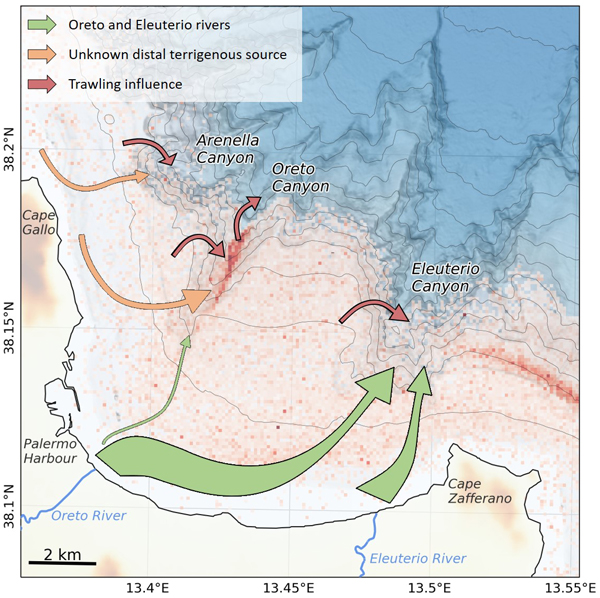
Distribution and sources of organic matter in submarine canyons incising the Gulf of Palermo, Sicily: A multi-parameter investigation
Sarah Paradis, Hannah Gies, Davide Moccia, Julie Lattaud, Lisa Bröder, Negar Haghipour, Antonio Pusceddu, Albert Palanques, Pere Puig, Claudio Lo Iacono, and Timothy I. Eglinton
Biogeosciences, 22, 5921–5941, https://doi.org/10.5194/bg-22-5921-2025,https://doi.org/10.5194/bg-22-5921-2025, 2025
Short summary
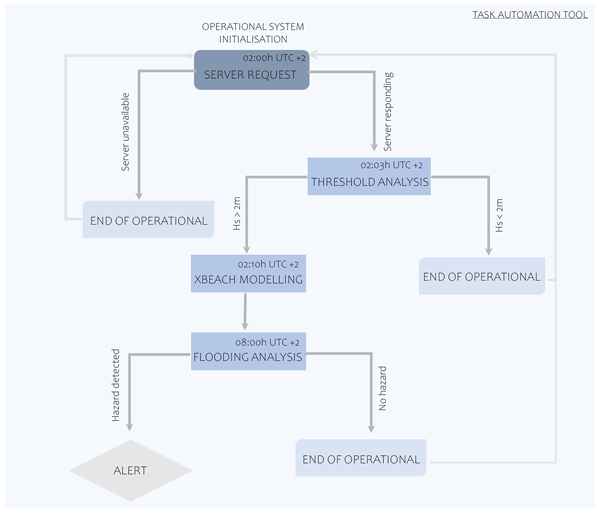
Operational hydrodynamic service as a tool for coastal flood assessment
Xavier Sánchez-Artús, Vicente Gracia, Manuel Espino, Manel Grifoll, Gonzalo Simarro, Jorge Guillén, Marta González, and Agustín Sanchez-Arcilla
Ocean Sci., 21, 749–766, https://doi.org/10.5194/os-21-749-2025,https://doi.org/10.5194/os-21-749-2025, 2025
Short summary
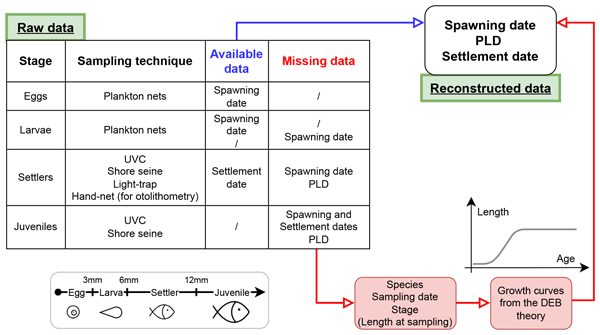
Early-life dispersal traits of coastal fishes: an extensive database combining observations and growth models
Marine Di Stefano, David Nerini, Itziar Alvarez, Giandomenico Ardizzone, Patrick Astruch, Gotzon Basterretxea, Aurélie Blanfuné, Denis Bonhomme, Antonio Calò, Ignacio Catalan, Carlo Cattano, Adrien Cheminée, Romain Crec'hriou, Amalia Cuadros, Antonio Di Franco, Carlos Diaz-Gil, Tristan Estaque, Robin Faillettaz, Fabiana C. Félix-Hackradt, José Antonio Garcia-Charton, Paolo Guidetti, Loïc Guilloux, Jean-Georges Harmelin, Mireille Harmelin-Vivien, Manuel Hidalgo, Hilmar Hinz, Jean-Olivier Irisson, Gabriele La Mesa, Laurence Le Diréach, Philippe Lenfant, Enrique Macpherson, Sanja Matić-Skoko, Manon Mercader, Marco Milazzo, Tiffany Monfort, Joan Moranta, Manuel Muntoni, Matteo Murenu, Lucie Nunez, M. Pilar Olivar, Jérémy Pastor, Ángel Pérez-Ruzafa, Serge Planes, Nuria Raventos, Justine Richaume, Elodie Rouanet, Erwan Roussel, Sandrine Ruitton, Ana Sabatés, Thierry Thibaut, Daniele Ventura, Laurent Vigliola, Dario Vrdoljak, and Vincent Rossi
Earth Syst. Sci. Data, 16, 3851–3871, https://doi.org/10.5194/essd-16-3851-2024,https://doi.org/10.5194/essd-16-3851-2024, 2024
Short summary
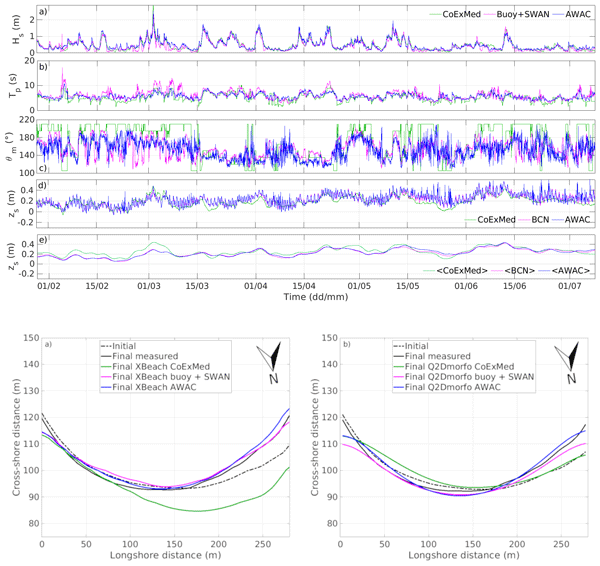
Role of the forcing sources in morphodynamic modelling of an embayed beach
Nil Carrion-Bertran, Albert Falqués, Francesca Ribas, Daniel Calvete, Rinse de Swart, Ruth Durán, Candela Marco-Peretó, Marta Marcos, Angel Amores, Tim Toomey, Àngels Fernández-Mora, and Jorge Guillén
Earth Surf. Dynam., 12, 819–839, https://doi.org/10.5194/esurf-12-819-2024,https://doi.org/10.5194/esurf-12-819-2024, 2024
Short summary

Cited articles

Aguirre, J., Riding, R., and Braga, J. C.: Diversity of coralline red algae: origination and extinction patterns from the Early Cretaceous to the Pleistocene, Paleobiology, 26, 651–667, https://doi.org/10.1666/0094-8373(2000)026<0651:DOCRAO>2.0.CO;2, 2000. 
Aguirre, J., Braga, J. C., MArtín, J. M., and Betzler, C.: Palaeoenvironmental and stratigraphic significance of Pliocene rhodolith beds and coralline algal bioconstructions from the Carboneras Basin (SE Spain), Geodiversitas, 34, 115–136, https://doi.org/10.5252/g2012n1a7, 2012. 
Aguirre, J., Braga, J. C., and Bassi, D.: Rhodoliths and rhodolith beds in the rock record, in: Rhodolith/maërl beds: A global perspective, Springer, 105–138, https://doi.org/10.1007/978-3-319-29315-8_5, 2017. 
Alonso, B., Guillén, J., Canals, M., Serra, J., Acosta, J., Herranz, P., Sanz, J. L., Calafat, A., and CATAFAU, A.: Los sedimentos de la plataforma continental balear, Acta Geológica Hispánica, 185–196, 1988. 
Download
Short summary
Rhodolith beds are seabed habitats formed by free-living coralline algae, but their role in storing carbon is poorly known. We studied a sediment deposit beneath a rhodolith bed in the Menorca Channel using seabed mapping, sediment cores, and radiocarbon dating. We found that the deposit has been accumulating since the early Holocene, and stores organic carbon in its sediments at least since 6,000 years ago.
Share
Altmetrics
Final-revised paper
Preprint