
Articles | Volume 23, issue 13
https://doi.org/10.5194/bg-23-4873-2026
© Author(s) 2026. This work is distributed under
the Creative Commons Attribution 4.0 License.
the Creative Commons Attribution 4.0 License.
https://doi.org/10.5194/bg-23-4873-2026
© Author(s) 2026. This work is distributed under
the Creative Commons Attribution 4.0 License.
the Creative Commons Attribution 4.0 License.
Research article
| Highlight paper
| 
15 Jul 2026
Research article | Highlight paper |
| 15 Jul 2026
| 15 Jul 2026
Heterogeneity of tropical diversity and ecosystems: reefal meiofaunas in equatorial western and eastern African islands
Bonn Institute for Organismic Biologie, Paläontologie, Universität Bonn, Bonn, Germany
Martin Langer
Bonn Institute for Organismic Biologie, Paläontologie, Universität Bonn, Bonn, Germany
Chih-Lin Wei
Institute of Oceanography, National Taiwan University, Taipei 106, Taiwan
Moriaki Yasuhara
School of Energy and Environment and State Key Laboratory of Marine Pollution, City University of Hong Kong, Yeung Kin Man Academic Building, Tat Chee Avenue, Kowloon, Hong Kong SAR, China
School of Biological Sciences and Swire Institute of Marine Science, The University of Hong Kong, Kadoorie Biological Sciences Building, Pokfulam Road, Pokfulam, Hong Kong SAR, China
Related authors
Skye Yunshu Tian, Martin Langer, Moriaki Yasuhara, and Chih-Lin Wei
Biogeosciences, 21, 3523–3536, https://doi.org/10.5194/bg-21-3523-2024, https://doi.org/10.5194/bg-21-3523-2024, 2024
Short summary
Short summary
Through the first large-scale study of meiobenthic ostracods from the diverse and productive reef ecosystem in the Zanzibar Archipelago, Tanzania, we found that the diversity and composition of ostracod assemblages as controlled by benthic habitats and human impacts were indicative of overall reef health, and we highlighted the usefulness of ostracods as a model proxy to monitor and understand the degradation of reef ecosystems from the coral-dominated phase to the algae-dominated phase.
Jialu Huang, Moriaki Yasuhara, He Wang, Pedro Julião Jimenez, Jiying Li, and Minhan Dai
Biogeosciences, 22, 4763–4777, https://doi.org/10.5194/bg-22-4763-2025, https://doi.org/10.5194/bg-22-4763-2025, 2025
Short summary
Short summary
We investigated the abundance, diversity, composition, and distribution of ostracods (a meiobenthic group) and their interactions with eutrophication and pollution through high-resolution sampling of surface sediment in Deep Bay, a small semi-enclosed riverine bay adjacent to two of the world’s most populated cities: Hong Kong and Shenzhen. The results support the idea that ostracods are a useful bioindicator of coastal benthic ecosystems shaped by distinct environmental problems.
Moriaki Yasuhara and Yuanyuan Hong
J. Micropalaeontol., 43, 519–527, https://doi.org/10.5194/jm-43-519-2024, https://doi.org/10.5194/jm-43-519-2024, 2024
Short summary
Short summary
We revisited a 19th-century taxonomic study on Hong Kong marine ostracods (the first study on Chinese marine ostracods) to compare it with a 21st-century survey. We found substantial differences in species, likely related to differences in pollution and climate between the 19th and 21st centuries. This discovery highlights the importance of historical ecology. Early natural historians documented "natural baseline" ecosystems before the substantial human presence with industrialization.
Michael R. Roman, Andrew H. Altieri, Denise Breitburg, Erica M. Ferrer, Natalya D. Gallo, Shin-ichi Ito, Karin Limburg, Kenneth Rose, Moriaki Yasuhara, and Lisa A. Levin
Biogeosciences, 21, 4975–5004, https://doi.org/10.5194/bg-21-4975-2024, https://doi.org/10.5194/bg-21-4975-2024, 2024
Short summary
Short summary
Oxygen-depleted ocean waters have increased worldwide. In order to improve our understanding of the impacts of this oxygen loss on marine life it is essential that we develop reliable indicators that track the negative impacts of low oxygen. We review various indicators of low-oxygen stress for marine animals including their use, research needs, and application to confront the challenges of ocean oxygen loss.
Skye Yunshu Tian, Martin Langer, Moriaki Yasuhara, and Chih-Lin Wei
Biogeosciences, 21, 3523–3536, https://doi.org/10.5194/bg-21-3523-2024, https://doi.org/10.5194/bg-21-3523-2024, 2024
Short summary
Short summary
Through the first large-scale study of meiobenthic ostracods from the diverse and productive reef ecosystem in the Zanzibar Archipelago, Tanzania, we found that the diversity and composition of ostracod assemblages as controlled by benthic habitats and human impacts were indicative of overall reef health, and we highlighted the usefulness of ostracods as a model proxy to monitor and understand the degradation of reef ecosystems from the coral-dominated phase to the algae-dominated phase.
Anna E. Weinmann, Olga Koukousioura, Maria V. Triantaphyllou, and Martin R. Langer
Web Ecol., 23, 71–86, https://doi.org/10.5194/we-23-71-2023, https://doi.org/10.5194/we-23-71-2023, 2023
Short summary
Short summary
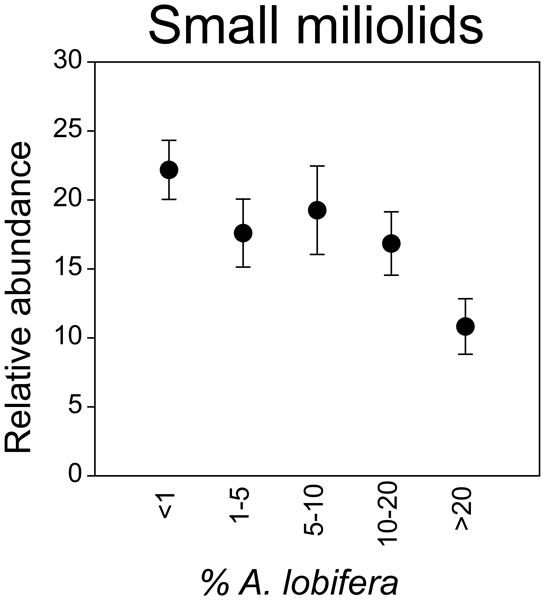
This study analyzes the diversity of benthic foraminifera at the range expansion front of the invasive species Amphistegina lobifera in Corfu (central Mediterranean). The species has been suggested to impact local diversity and community structures, and our results confirm these effects as soon as A. lobifera exceeds a specific abundance threshold (> 20 %). Nevertheless, we found that the study area reveals an overall high biodiversity that can be attributed to its unique location.
Mohamed Kamoun, Martin R. Langer, Chahira Zaibi, and Mohamed Ben Youssef
J. Micropalaeontol., 41, 129–147, https://doi.org/10.5194/jm-41-129-2022, https://doi.org/10.5194/jm-41-129-2022, 2022
Short summary
Short summary
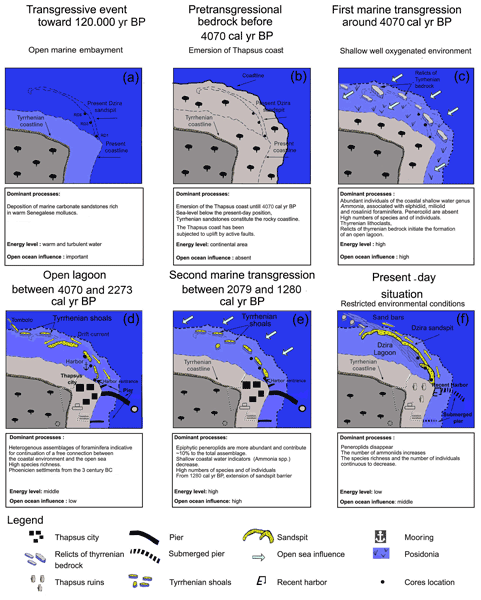
Sedimentology and micropaleontology analyses provide the dynamic processes that shaped the environmental evolution of the Thapsus coastline (Tunisia) including its lagoon and Roman harbor. The highlights are paleoenvironmental change records from the coast of Thapsus for the last 4000 years, benthic foraminiferal biota recording the dynamic coastal processes, two transgressive events being recognized, and a presented model for the paleoenvironmental evolution.
Cited articles
Anderson, D. R., Burnham, K. P., and Thompson, W. L.: Null hypothesis testing: problems, prevalence, and an alternative, J. Wildlife Manage., 912–923, https://doi.org/10.2307/3803199, 2000.
Baldrighi, E. and Manini, E.: Deep-sea meiofauna and macrofauna diversity and functional diversity: are they related?, Mar. Biodivers., 45, 469–488, https://doi.org/10.1007/s12526-015-0333-9, 2015.
Bellwood, D. R., Renema, W., and Rosen, B. R.: Biodiversity hotspots, evolution and coral reef biogeography, in: Biotic Evolution and Environmental Change in Southeast Asia, Cambridge University Press, Cambridge, 216–245, https://doi.org/10.1017/CBO9780511735882.011, 2012.
Boomer, I., Horne, D. J., and Slipper, I. J.: The use of ostracods in palaeoenvironmental studies, or what can you do with an ostracod shell?, The Paleontological Society Papers, 9, 153–180, https://doi.org/10.1017/S1089332600002199, 2003.
Bravo, H., Cannicci, S., Huyghe, F., Leermakers, M., Sheikh, M. A., and Kochzius, M.: Ecological health of coral reefs in Zanzibar, Reg. Stud. Mar. Sci., 48, 102014, https://doi.org/10.1016/j.rsma.2021.102014, 2021.
Cáceres, M. D. and Legendre, P.: Associations between species and groups of sites: indices and statistical inference, Ecology, 90, 3566–3574, https://doi.org/10.1890/08-1823.1, 2009.
Canterle, A. M., Nunes, L. T., Fontoura, L., Maia, H. A., and Floeter, S. R.: Reef microhabitats mediate fish feeding intensity and agonistic interactions at Príncipe Island Biosphere Reserve, Tropical Eastern Atlantic, Mar. Ecol., 41, https://doi.org/10.1111/maec.12609, 2020.
Carvalho, I., Pereira, A., Martinho, F., Vieira, N., Brito, C., Guedes, M., and Loloum, B.: Cetaceans of São Tomé and Príncipe, in: Biodiversity of the Gulf of Guinea Oceanic Islands, edited by: Ceríaco, L. M. P., de Lima, R. F., Melo, M., and Bell, R. C., Springer, 621–641, https://doi.org/10.1007/978-3-031-06153-0_23, 2022.
Chao, A. and Ricotta, C.: Quantifying evenness and linking it to diversity, beta diversity, and similarity, Ecology, 100, https://doi.org/10.1002/ecy.2852, 2019.
Chao, A., Chiu, C.-H., and Jost, L.: Unifying species diversity, phylogenetic diversity, functional diversity, and related similarity and differentiation measures through Hill numbers, Annu. Rev. Ecol. Evol. Syst., 45, 297–324, https://doi.org/10.1146/annurev-ecolsys-120213-091540, 2014a.
Chao, A., Gotelli, N. J., Hsieh, T., Sander, E. L., Ma, K., Colwell, R. K., and Ellison, A. M.: Rarefaction and extrapolation with Hill numbers: a framework for sampling and estimation in species diversity studies, Ecol. Monogr., 84, 45–67, https://doi.org/10.1890/13-0133.1, 2014b.
Chao, A., Thorn, S., Chiu, C. H., Moyes, F., Hu, K. H., Chazdon, R. L., Wu, J., Magnago, L. F. S., Dornelas, M., and Zelený, D.: Rarefaction and extrapolation with beta diversity under a framework of H ill numbers: The iNEXT. beta3D standardization, Ecol. Monogr., 93, https://doi.org/10.1002/ecm.1588, 2023.
Coimbra, J. C., Pinto, I. D., Wurdig, N. L., and do Carmo, D. A.: Zoogeography of Holocene Podocopina (Ostracoda) from the Brazilian equatorial shelf, Mar. Micropaleontol., 37, 365–379, https://doi.org/10.1016/S0377-8398(99)00025-0, 1999.
Coimbra, J. C., Ramos, M. I. F., Whatley, R. C., and Bergue, C. T.: The taxonomy and zoogeography of the family Trachyleberididae (Crustacea: Ostracoda) from the Equatorial Continental Shelf of Brazil, J. Micropalaeontol., 23, 107–118, https://doi.org/10.1144/jm.23.2.107, 2004.
Cowie, R. H. and Holland, B. S.: Dispersal is fundamental to biogeography and the evolution of biodiversity on oceanic islands, J. Biogeogr., 33, 193–198, https://doi.org/10.1111/j.1365-2699.2005.01383.x, 2006.
Cowman, P. F., Parravicini, V., Kulbicki, M., and Floeter, S. R.: The biogeography of tropical reef fishes: endemism and provinciality through time, Biol. Rev., 92, 2112–2130, https://doi.org/10.1111/brv.12323, 2017.
Cronin, T. M.: Paleoclimatic implications of Late Pleistocene marine ostracodes from the St. Lawrence Lowlands, Micropaleontology, 27, 384–418, https://doi.org/10.2307/1485193, 1981.
da Costa, L. M., Maia, H. A., and Almeida, A. J.: The fishes of the Gulf of Guinea oceanic islands, in: Biodiversity of the Gulf of Guinea Oceanic Islands: Science and Conservation, edited by: Ceríaco, L. M. P., de Lima, R. F., Melo, M., and Bell, R. C., Springer, Cham., 431–478, https://doi.org/10.1007/978-3-031-06153-0_17, 2022.
Danielopol, D., Marmonier, P., Boulton, A., and Bonaduce, G.: World subterranean ostracod biogeography: dispersal or vicariance, Hydrobiologia, 287, 119–129, https://doi.org/10.1007/BF00006901, 1994.
DeVantier, L., Turak, E., and Szava-Kovats, R.: Species richness and abundance of reef-building corals in the Indo-West Pacific: The local–regional relation revisited, Front. Mar. Sci., 7, 487, https://doi.org/10.3389/fmars.2020.00487, 2020.
Dufrêne, M. and Legendre, P.: Species assemblages and indicator species: the need for a flexible asymmetrical approach, Ecol. Monogr., 67, 345–366, https://doi.org/10.1890/0012-9615(1997)067[0345:SAAIST]2.0.CO;2, 1997.
Fajemila, O. T. and Langer, M. R.: Spatial distribution and biogeographic significance of foraminiferal assemblages from Sao Tomé and Príncipe, Gulf of Guinea, West Africa, Neues Jahrb. Geol. P.-A., 285, 337–360, https://doi.org/10.1127/njgpa/2017/0686, 2017.
Ferreira-Airaud, B., Schmitt, V., Vieira, S., Rio, M. J. d. C. d., Neto, E., and Pereira, J.: The sea turtles of São Tomé and Príncipe: diversity, distribution, and conservation status, in: Biodiversity of the Gulf of Guinea Oceanic Islands: Science and conservation, edited by: Ceríaco, L. M. P., de Lima, R. F., Melo, M., and Bell, R. C., Springer, 535–553, https://doi.org/10.1007/978-3-031-06153-0_20, 2022.
Floeter, S. R., Rocha, L. A., Robertson, D. R., Joyeux, J., Smith-Vaniz, W. F., Wirtz, P., Edwards, A. J., Barreiros, J. P., Ferreira, C. E., and Gasparini, J. L.: Atlantic reef fish biogeography and evolution, J. Biogeogr., 35, 22–47, https://doi.org/10.1111/j.1365-2699.2007.01790.x, 2008.
Friedlander, A. M., Ballesteros, E., Fay, M., and Sala, E.: Marine communities on oil platforms in Gabon, West Africa: high biodiversity oases in a low biodiversity environment, PLoS One, 9, https://doi.org/10.1371/journal.pone.0103709, 2014.
Gordon, A. L.: The brawniest retroflection, Nature, 421, 904–905, https://doi.org/10.1038/421904a, 2003.
Grimsditch, G. D., Tamelander, J., Mwaura, J., Zavagli, M., Takata, Y., and Gomez, T.: Coral reef resilience assessment of the Pemba channel conservation area, Tanzania, ISBN 978-2-8317-1181-2, IUCN2009.
Hong, Y., Yasuhara, M., Iwatani, H., Harnik, P. G., Chao, A., Cybulski, J. D., Liu, Y., Ruan, Y., Li, X., and Wei, C.-L.: Benthic ostracod diversity and biogeography in an urbanized seascape, Mar. Micropaleontol., 174, 102067, https://doi.org/10.1016/j.marmicro.2021.102067, 2022.
Jellinek, T.: Zur Ökologie und Systematik rezenter Ostracoden aus dem Bereich des kenianischen Barriere-riffs, Senckenb. Lethaea, 73, 83–335, 1993.
Kamiya, T.: Morphological and ethological adaptations of Ostracoda to microhabitats in Zostera beds, Dev. Palaeontol. Stratigr., 11, 303–318, https://doi.org/10.1016/S0920-5446(08)70191-2, 1988.
Keyser, D.: Ecology and zoogeography of recent brackish-water ostracoda (Crustacea) from south-west Florida, in: Aspects of ecology and zoogeography of recent and fossil Ostracoda, 207–222, Springer Science & Business Media, ISBN 9061935814, 1977.
Keyser, D. and Mohammed, M.: Taxonomy of recent shallow marine Ostracods from Al-Hudeida City-Yemen, Mar. Micropaleontol., 164, 101974, https://doi.org/10.1016/j.marmicro.2021.101974, 2021.
Larsen, J., Maar, M., Rasmussen, M. L., Hansen, L. B., Hamad, I. Y., and Stæhr, P. A. U.: High-resolution hydrodynamics of coral reefs and tracing of pollutants from hotel areas along the west coast of Unguja Island, Zanzibar, Mar. Pollut. Bull., 191, 114968, https://doi.org/10.1016/j.marpolbul.2023.114968, 2023.
Le Lœuff, P. and von Cosel, R.: Biodiversity patterns of the marine benthic fauna on the Atlantic coast of tropical Africa in relation to hydroclimatic conditions and paleogeographic events, Acta Oecol., 19, 309–321, https://doi.org/10.1016/S1146-609X(98)80035-0, 1998.
Leray, M. and Knowlton, N.: DNA barcoding and metabarcoding of standardized samples reveal patterns of marine benthic diversity, Proc. Natl. Acad. Sci. USA, 112, 2076–2081, https://doi.org/10.1073/pnas.1424997112, 2015.
Losos, J. B. and Schluter, D.: Analysis of an evolutionary species–area relationship, Nature, 408, 847–850, https://doi.org/10.1038/35048558, 2000.
Mahongo, S. B. and Shaghude, Y. W.: Modelling the dynamics of the Tanzanian coastal waters, J. Oceanogr. Mar. Sci., 5, 1–7, https://doi.org/10.5897/JOMS2013.0100, 2014.
Maia, H. A., Morais, R. A., Quimbayo, J. P., Dias, M. S., Sampaio, C. L., Horta, P. A., Ferreira, C. E. L., and Floeter, S. R.: Spatial patterns and drivers of fish and benthic reef communities at São Tomé Island, Tropical Eastern Atlantic, Mar. Ecol., 39, https://doi.org/10.1111/maec.12520, 2018.
Mamo, B. L., Cybulski, J. D., Hong, Y., Harnik, P. G., Chao, A., Tsujimoto, A., Wei, C.-L., Baker, D. M., and Yasuhara, M.: Modern biogeography of benthic foraminifera in an urbanized tropical marine ecosystem, Geological Society, London, Special Publications, 529, https://doi.org/10.1144/SP529-2022-175, 2023.
Obura, D.: The diversity and biogeography of Western Indian Ocean reef-building corals, PLOS ONE, https://doi.org/10.1371/journal.pone.0045013, 2012.
Omatsola, M. E.: Recent and subrecent Trachyleberididae and Hemicytheridae (Ostr., Crust) from the Western Niger Delta, Nigeria, Bull. Geol. lnstn. Univ. Upsala, 3, 37–120, 1972.
Otero-Ferrer, F., Tuya, F., Bosch Guerra, N. E., Herrero-Barrencua, A., Abreu, A., and Haroun, R.: Composition, structure and diversity of fish assemblages across seascape types at Príncipe, an understudied tropical island in the Gulf of Guinea (eastern Atlantic Ocean), Afr. J. Mar. Sci., 42, 381–391, https://doi.org/10.2989/1814232X.2020.1826358, 2020.
Painter, S. C.: The biogeochemistry and oceanography of the East African Coastal Current, Prog. Oceanogr., 186, 102374, https://doi.org/10.1016/j.pocean.2020.102374, 2020.
Polidoro, B. A., Ralph, G. M., Strongin, K., Harvey, M., Carpenter, K. E., Arnold, R., Buchanan, J. R., Camara, K. M. A., Collette, B. B., and Comeros-Raynal, M. T.: The status of marine biodiversity in the Eastern Central Atlantic (West and Central Africa), Aquat. Conserv.: Mar. Freshwat. Ecosyst., 27, 1021–1034, https://doi.org/10.1002/aqc.2744, 2017.
Porriños, G., Metcalfe, K., Nuno, A., da Graça, M., Walker, K., Dixon, A., Guedes, M., Nazaré, L., Dos Santos, A., and Colman, L. P.: Fish community composition in the tropical archipelago of São Tomé and Príncipe, PloS one, 19, https://doi.org/10.1371/journal.pone.0312849, 2024.
Prazeres, M. and Renema, W.: Evolutionary significance of the microbial assemblages of large benthic Foraminifera, Biol. Rev., 94, 828–848, https://doi.org/10.1111/brv.12482, 2019.
Purper, I. and de Orenellas, L. P.: The genus Paracytheridea (Ostracoda) in the northern/northwestern Brazilian continental shelf, Pesquisas em Geociências, 20, 103–124, https://doi.org/10.22456/1807-9806.21675, 1987.
Reagan, J. R., Seidov, D., Wang, Z., Dukhovskoy, D., Boyer, T. P., Locarnini, R. A., Baranova, O. K., Mishonov, A. V., Garcia, H. E., and Bouchard, C.: World ocean atlas 2023, NOAA National Centers for Environmental Information [data set], https://www.ncei.noaa.gov/access/world-ocean-atlas-2023/ (last access: 1 October 2025), 2024.
Posit team: RStudio: Integrated Development Environment for R, version 2025.5.1.513, Posit [code], http://www.posit.co/ (last access: 1 May 2025), 2025.
Sridhar, S., Hussain, S., Periakali, P., and Kumar, V.: Ostracod Kotoracythere inconspicua (Brady) from the Palk Bay, off Rameswaram, Southeast Coast of India: Its Zoogeography and Ecology, Jour. Geol. Soc. India, 70, 981–986, https://doi.org/10.17491/jgsi/2007/700610, 2007.
Thissen, J. and Langer, M.: Spatial Patterns and Structural Composition of Foraminiferal Assemblages from the Zanzibar Archipelago (Tanzania), Palaeontogr. Abt. A, 308, 1–67, https://doi.org/10.1127/pala/308/2017/1, 2017.
Tian, S. Y., Langer, M., Yasuhara, M., and Wei, C.-L.: Reefal ostracod assemblages from the Zanzibar Archipelago (Tanzania), Biogeosciences, 21, 3523–3536, https://doi.org/10.5194/bg-21-3523-2024, 2024a.
Tian, S. Y., Yasuhara, M., Condamine, F. L., Huang, H.-H. M., Fernando, A. G. S., Aguilar, Y. M., Pandita, H., Irizuki, T., Iwatani, H., Shin, C. P., Renema, W., and Kase, T.: Cenozoic history of the tropical marine biodiversity hotspot, Nature, 632, 343–349, https://doi.org/10.1038/s41586-024-07617-4, 2024b.
Tittensor, D. P., Mora, C., Jetz, W., Lotze, H. K., Ricard, D., Berghe, E. V., and Worm, B.: Global patterns and predictors of marine biodiversity across taxa, Nature, 466, 1098, https://doi.org/10.1038/nature09329, 2010.
Titterton, R. and Whatley, R.: Recent Bairdiinae (Crustacea, Ostracoda) from the Solomon Islands, J. Micropalaeontol., 7, 111–142, https://doi.org/10.1144/jm.7.2.111, 1988.
Townsend, C. R., Scarsbrook, M. R., and Dolédec, S.: The intermediate disturbance hypothesis, refugia, and biodiversity in streams, Limnol. Oceanogr., 42, 938–949, https://doi.org/10.4319/lo.1997.42.5.0938, 1997.
Tuya, F., Herrero-Barrencua, A., Bosch, N., Abreu, A., and Haroun, R.: Reef fish at a remote tropical island (Principe Island, Gulf of Guinea): disentangling taxonomic, functional and phylogenetic diversity patterns with depth, Mar. Freshwater Res., 69, 395–402, https://doi.org/10.1071/MF17233, 2017.
Viljur, M. L., Abella, S. R., Adámek, M., Alencar, J. B. R., Barber, N. A., Beudert, B., Burkle, L. A., Cagnolo, L., Campos, B. R., and Chao, A.: The effect of natural disturbances on forest biodiversity: an ecological synthesis, Biol. Rev., 97, 1930–1947, https://doi.org/10.1111/brv.12876, 2022.
Whatley, R. C. and Watson, K.: A preliminary account of the distribution of Ostracoda in recent reef and reef associated environments in the Pulau Seribu or Thousand Island Group, Java Sea, Dev. Palaeontol. Stratigr., 11, 399–411, https://doi.org/10.1016/S0920-5446(08)70197-3, 1988.
Witman, J. D., Etter, R. J., and Smith, F.: The relationship between regional and local species diversity in marine benthic communities: a global perspective, Proc. Natl. Acad. Sci. USA, 101, 15664–15669, https://doi.org/10.1073/pnas.0404300101, 2004.
Witte, L.: Taxonomy and biogeography of West African beach ostracods, Verhandelingen der Koninklijke Nederlandse Akademie van Wetenschappen, 39, ISBN 0444857648, 1993.
Wood, S. N.: Generalized additive models, Annu. Rev. Stat. Appl., 12, 497–526, https://doi.org/10.1146/annurev-statistics-112723-034249, 2024.
Wouters, K.: On the modern distribution of the euryhaline species Cyprideis torosa (Jones, 1850) (Crustacea, Ostracoda), J. Micropalaeontol., 36, 21–30, https://doi.org/10.6084/m9.figshare.c.3149791.v1, 2017.
Yasuhara, M., Tittensor, D. P., Hillebrand, H., and Worm, B.: Combining marine macroecology and palaeoecology in understanding biodiversity: microfossils as a model, Biol. Rev., 92, 199–215, https://doi.org/10.1111/brv.12223, 2017.
Editorial statement
This study uses advanced statistical modeling to identify regional isolation and the Mid-Atlantic Barrier as dominant drivers over local environmental selection in reefal meiofauna. The high endemism of the eastern Atlantic fauna provides an important missing piece for understanding tropical marine community assembly and dispersal filters across oceanic basins.
This study uses advanced statistical modeling to identify regional isolation and the...
Short summary
Oceanic islands hold great ecological value as they support endemic biodiversity and act as steppingstones of dispersal. We investigated benthic meiofaunas from two exotic tropical archipelagoes (São Tomé-Príncipe in western Africa and Zanzibar in eastern Africa) and revealed marked heterogeneity in their diversity and biogeographic patterns. High endemicity of the São Tomé-Príncipe fauna underlines the effectiveness of dispersal barriers and urges conservation of those vulnerable ecosystems.
Oceanic islands hold great ecological value as they support endemic biodiversity and act as...


Altmetrics
Final-revised paper
Preprint