
the Creative Commons Attribution 4.0 License.
the Creative Commons Attribution 4.0 License.
 | 07 Aug 2026
The effect of beaver dams on the physico-chemical properties of stream water in the Carpathians (Poland and Slovakia)
Joanna P. Siwek
Małgorzata Kijowska-Strugała
Elżbieta Gorczyca
In recent decades, the population of the Eurasian beaver (Castor fiber) has undergone a rapid recovery from near extinction to abundance across large areas of Europe. The ability of this species to build dams of varying durability and extent has a significant impact on ecological processes, making beaver reintroduction an important environmental factor in recolonised areas. Although the effects of beaver dams on stream water chemistry have been studied extensively, general conclusions are often limited by site-specific conditions. Therefore, the aim of this study was to assess the impact of the flooding extent and age of beaver pond sequences on the physico-chemical properties of the water in and below beaver ponds compared to upstream channel sections across the seasons.
The study was conducted on nine beaver-inhabited streams distributed across the Western Carpathians (Poland and Slovakia). The beaver ponds were divided into two types based on flooding extent: overflowing the river banks, or confined to the river channel (in-channel). Ponds were classified into three age categories: young (≤3 years old), moderate (4–9), and old (≥10). Water samples were collected above, within, and below the beaver pond sequences under baseflow conditions during four seasons in 2022–2023.
The results showed that beaver dams have a strong impact on some physico-chemical stream water parameters during warm periods, when high temperatures accelerate biogeochemical processes. In particular, beaver ponds were associated with an increase in water temperature and decreases in dissolved oxygen, pH, and concentrations. The age of the beaver ponds had a more pronounced effect on water chemistry than the pond type. There was a greater decrease in dissolved oxygen and pH (throughout the study period) and concentrations (in spring and summer) in older ponds compared to younger ones. These changes might be regulated by the decomposition and aerobic/anaerobic oxidation of organic matter, which is more abundant in older ponds. Overall, the results suggest that seasonal conditions and pond age are important factors influencing the biogeochemical effects of beaver dams in mountain streams. However, most of the effects observed within the ponds were, to some extent, attenuated in downstream river sections.
- Article
(4686 KB) - Full-text XML
- BibTeX
- EndNote


Beavers, the two semi-aquatic species of the genus Castor, significantly alter riverine ecosystems through their foraging activity and construction of dams, canals, burrows and lodges (Rosell et al., 2005; Brazier et al., 2021). Their influence on hydrological, geomorphological and ecological processes makes them perfect examples of environmental engineers and a keystone species (Jones et al., 1994; Holtmeier, 2015). Their ability to build dams is particularly important because of the strong impact their structures have on the hydrogeomorphological system (Gurnell, 1998). The physical features of the ponds they create and their influence on biogeochemical cycles affect habitat availability for other organisms and lead to increased biodiversity (Wright et al., 2002; Larsen et al., 2021). In addition, beavers are recognised as providers of important ecosystem services, for example, in the way their activities support water retention and purification (Puttock et al., 2017; Thompson et al., 2021).
The Eurasian beaver (Castor fiber) was once widespread across Europe and Asia, until excessive hunting resulted in the disappearance of the species from most of its former range. By the beginning of the 20th century, only eight remnant populations were left (Nolet and Rosell, 1998). Subsequent reintroductions, hunting restrictions and natural dispersal led to a substantial population increase on both continents and the near re-establishment of the species distribution in some countries, e.g. in Poland (Halley et al., 2020). A few centuries before the species disappeared from the lowest parts of the Polish Carpathians in the 19th century, it was extirpated from more elevated catchments (Żurowski, 1986). Beaver releases in Poland, conducted since the 1940s, have mainly focused on the lowlands (Dzięciołowski and Gozdziewski, 1999). The first reintroduction programme aimed at re-establishing Carpathian populations was successfully carried out between 1980 and 1985 (Żurowski and Kasperczyk, 1990). The beavers now present in the northern part of Slovakia originated solely from the Polish reintroduction (Pachinger and Hulik, 1999), and were first documented along the Ondava river in 1981 (Valachovič, 2012). Since then, both countries have observed substantial increases in the range and abundance of their recovering beaver populations (Čanády et al., 2016; Wróbel and Krzysztofiak-Kaniewska, 2020).
In recent decades, there has been a growing interest in studying the impact of beavers on river water chemistry. Understanding the implications of beaver activity for water resource management and nature conservation (Bason et al., 2017; Čiuldienė et al., 2020; Stevenson et al., 2022; Bylak et al., 2024) is particularly important in the face of contemporary environmental crises. Most beaver-related studies have focused on the areas inhabited by the Canadian beaver (Castor canadensis) (Halley et al., 2020; Larsen et al., 2021). It is commonly assumed that both species exert a similar influence on the environment, even though the Eurasian beaver expresses less advanced building activity in terms of the number and size of the structures it creates (Gurnell, 1998; Rosell et al., 2005), and inhabits different ecosystems. Thus the impacts of the Eurasian beaver are still relatively understudied, even as its significance for shaping fluvial processes is growing due to the increasing population. Moreover, to our knowledge, most of the studies on the impact of the Eurasian beaver on water properties have focused on lowland areas (Puttock et al., 2018; Čiuldienė et al., 2020; Kalvīte et al., 2021; Bylak et al., 2024) despite the high activity rates of the species and its influence on hydrogeomorphological processes in mountain regions (Giriat et al., 2016; Gorczyca et al., 2018). The species has recently become a prominent environmental factor across the Carpathian Mountains after centuries of absence, making an understanding of its impact in this area particularly important.
Beaver dams reduce water flow velocity, thereby promoting the sedimentation of suspended solids and increased nutrient retention (Maret et al., 1987; Puttock et al., 2018). Consequently, beaver ponds may act as substantial catchment-scale sinks for nitrogen (Lazar et al., 2015). The accumulation of organic carbon and phosphorus is also commonly observed (Lizarralde et al., 1996; Wohl et al., 2012; Čiuldienė et al., 2020). Moreover, the filtering effect of beaver dams results in the attenuation of heavy metal concentrations downstream of beaver ponds compared to upstream river sections (Čiuldienė et al., 2020; Murray et al., 2021). The influence of beavers on river water quality is often recognised as positive because they enhance self-purification processes. Consequently, they have the potential to be considered as a restoration tool for degraded streams (Bason et al., 2017; Puttock et al., 2017; Bylak et al., 2024). The beaver ponds may also act as hotspots for greenhouse gas emissions, such as CO2, CH4, and N2O (Smufer et al., 2023; Fairfax and Westbrook, 2024). The biogeochemical role of ponds may shift seasonally, with ponds functioning as sources or sinks of nutrients and products of their transformations, depending on flow rates and ecosystem productivity (Maret et al., 1987; Wegener et al., 2017; Murray et al., 2021; Hallberg et al., 2026).
The impact of a particular beaver dam on the physico-chemical stream water parameters may not reflect generally recognised trends, due to the influence of local site-specific characteristics (Kalvīte et al., 2021). Brazier et al. (2021) also pointed out the potential differences in the impact of a single pond compared to a pond sequence. Such issues may get in the way of deriving general conclusions about the impact of beaver-mediated modifications to river channels, especially when contradictory patterns are observed (Ecke et al., 2017). For instance, both an increase and decrease in phosphate concentrations were recorded downstream to beaver dams (Klotz, 1998; Larsen et al., 2021). The identification of factors that reflect the diversity of beaver ponds and their impact on water chemistry would improve our understanding of the effects of beaver presence in river systems. The age of beaver ponds has often been proposed as such a feature in previous studies on the upstream-downstream gradients of physico-chemical parameters in beaver-occupied streams. For example, Bason et al. (2017) found a greater reduction of suspended solids in older dam sequences compared to younger ones. Metal sequestration rates and sediment organic matter content inside beaver ponds also rise with pond age, according to the study by Murray et al. (2021). Hydrological and thermal differences have been observed between various geomorphic units within beaver ponds, for example, the main channel, its margins and backwater areas (Majerova et al., 2020). The effect of these different units in relation to floodplain inundation may explain some differences between study sites (Murray et al., 2021). Spatially expansive beaver ponds are expected to facilitate a higher proportion of low-velocity areas and increases in water residence time, the extent of the hyporheic zone, overbank sedimentation, and the growth of aquatic vegetation, compared to ponds confined to the river channel. Both the age of a beaver pond and its flooding extent may correspond with prolonged sediment-water interactions, resulting in enhanced biogeochemical processes.
The objective of this study was to determine the effects of beaver dams on physico-chemical water properties in mountain streams of the Western Carpathians (Poland and Slovakia), taking into account seasonality and pond characteristics. The paper focuses on answering the following three questions:
-
How do physico-chemical water parameters change between river sections located upstream of, within, and downstream of beaver ponds, and what biogeochemical processes might be responsible for these differences?
-
How do these differences vary seasonally?
-
How are these differences affected by the flooding extent and age of beaver ponds?
2.1 Study area
The study was conducted on nine beaver-inhabited gravel-bed streams in the Outer Western Carpathians (Fig. 1). This region consists mainly of alternating layers of sandstones, conglomerates, mudstones and shales, which make up the sedimentary deposits of the Carpathian flysch (Ślączka et al., 2006; Łajczak et al., 2014). The relief morphology of the study area corresponds to the general underlying geological units. The lower-lying foothills in the north are composed largely of the shale-rich thin-bedded flysch of the Silesian Nappe, while the mountains in the south are composed of the Magura Nappe, dominated by thick-bedded sandstones (Rączkowska et al., 2012; Golonka et al., 2019; Święchowicz et al., 2021). In just over half of the studied catchments (sites 1, 2, 4–6), easily weathered, soluble shales comprise a large portion of the geological structure (Burtan et al., 1994; Jankowski, 1997; Kopciowski et al., 1997). In the southern part of the study area (sites 7–9), less weathered sandstones predominate (Kopciowski, 2000; Kováčik et al., 2011). The stream at site 3, despite its location in the northern foothills of the mountains, drains one of the highest foothill ranges, the Brzanka Range, which is largely composed of sandstone (Marciniec and Zimnal, 2009). Streams that drain areas underlain by shales and mudstones are typically characterised by higher concentrations of bicarbonate, calcium and magnesium ions due to increased weathering of carbonates and clay minerals, while streams in areas composed mainly of sandstone are usually more diluted and characterised by a lower level of total dissolved solids (e.g. Siwek, 2021; Solár and Tomaškovič, 2023).
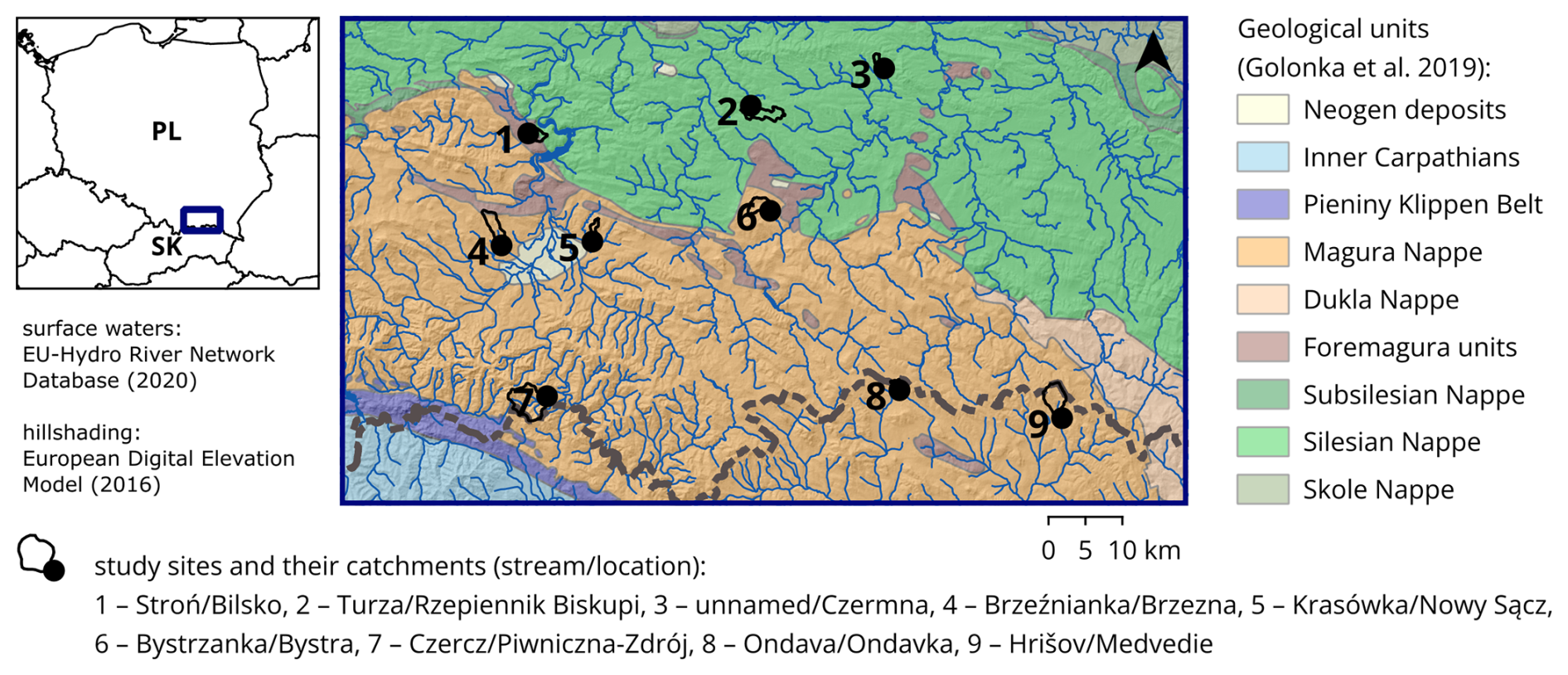
Figure 1Study area.
The geomorphologically diverse terrain in the study area ranges from foothills to medium mountains (Gilewska et al., 1982; Borzuchowski and Olędzki, 2011). The highest parts of the Outer Western Carpathians are classified as medium mountains. These areas are characterised by steep slopes (with a gradient that often exceeds 30 %) and significant relative relief (ranging from 400–800 m). Low mountains can be found at the margins of these ranges and in isolated ridges. These feature steep slopes and smaller relative relief (ranging from 200–400 m). The foothill zone is primarily located in the northern part of the study area. It reaches elevations of approximately 500 m above sea level. This zone is mainly characterised by wide, gently sloping ridges that rise from 40–300 m above the flat valley floors (Starkel, 1990). The mean annual temperature in all the selected catchments ranges from 5.1–9.1 °C, and the average precipitation range from 770 to 1140 mm (based on the 2000–2010 period; CARPATCLIM, 2013; Szalai et al., 2013). Rivers in this area are mainly characterised by a nival–pluvial hydrological regime (Wrzesiński, 2017).
All of the catchments consisted of a mixture of forest and agricultural areas (i.e. arable lands and meadows). Despite the widespread abandonment of agricultural land and the generally low-to-moderate intensity of agricultural practices in the mountainous catchments (Pazúr et al., 2014; Kolecka et al., 2017), the impact of these activities may be locally significant, as evidenced by the increase in nitrate concentrations observed in the Ondava catchment due to the use of fertilisers (Pekárová et al., 2006; Balejčíková et al., 2020). Overall, agricultural practices in the Polish and Slovakian Carpathians are widespread, but characterised by low–input management and mowing and grazing on a small-scale (Pazúr et al., 2014; Kolecka et al., 2017; Affek et al., 2023). According to the national agricultural statistics (Central Statistical Office of Poland, 2025), the average consumption of mineral fertilisers (NPK) in the Małopolskie and Podkarpackie Voivodeships remains one of the lowest in the country (80–95 compared to the national average of ) and has shown little change over the last two decades. A similar situation is observed in the northern part of Slovakia, where the average use of industrial fertilisers is less than 60 (Siman and Velísková, 2018). Consequently, the direct inflow of nutrients from fertilisers into streams is minimal, although local enrichment may occur near farms or areas of intensive grazing. In contrast, domestic wastewater has been identified as the main source of stream water pollution in the rural areas of the Polish Carpathians (Siwek, 2021). The intensity of housing development across the study area ranged from negligible levels to artificial surfaces covering up to 4 % of the area and containing a few hundred buildings.
The Slovak part of the Carpathians is characterised by large plots of agricultural land and small, dispersed settlements that are mainly concentrated in the valleys. This pattern is due to the impact of the post-1990 land reforms on land use and farm structure, both of which are characterised by large corporate farms and agricultural cooperatives (Lazikova et al., 2017). Despite the privatisation of land in Slovakia, land continues to be managed by large holdings and production companies (Bański, 2017), and the average size of an arable land parcel is 21.0 ha (Lieskovský et al., 2015). In the Polish Western Carpathians, settlements are more dispersed throughout the slopes, and land reform has led to a progressive fragmentation of agricultural land (arable land and grassland) due to the constant division of land between successive owners (Kroczak et al., 2018). In the Polish Carpathians, the average agricultural parcel size is 0.5 ha (Kolecka and Kozak, 2019).
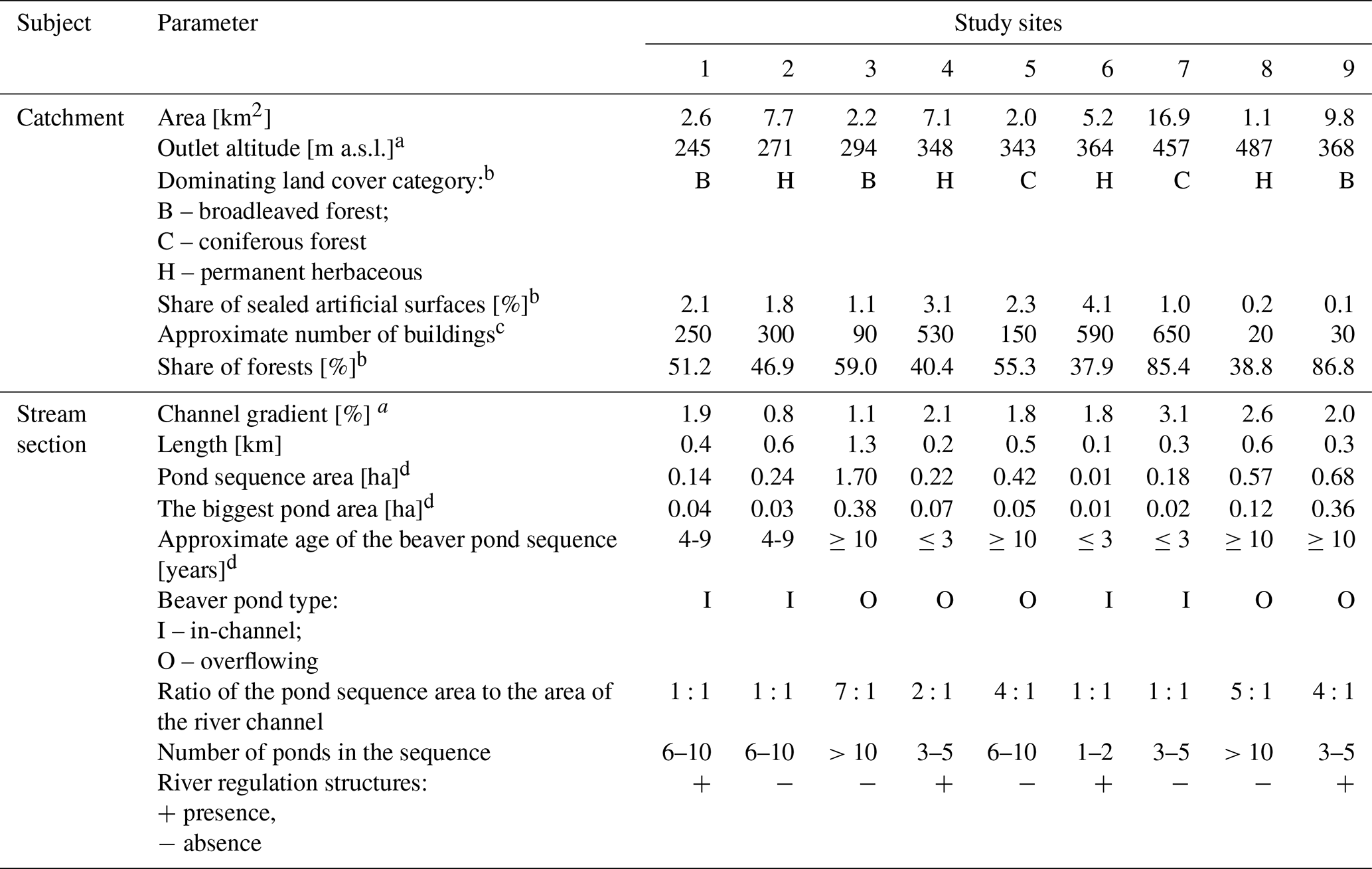
The primary criterion for the selection of streams for the study was the presence of beaver dams that spanned the entire riverbed. The study sites were distributed randomly across the North–South transect of the Outer Western Carpathians in Poland and Slovakia. In addition to their varying topography, the sites differed in terms of human activity, such as catchment land use and the presence of river control structures (Table 1). The height of the beaver dams studied did not exceed 1.5 m. In most dam sequences, the ponds were directly connected. The only exception was site 7, where short sections of free-flowing reaches were observed between the ponds. For further analysis, the study sites were classified based on the beaver pond characteristics. Two types were distinguished, based on the pond flooding extent: in-channel (dams within river banks) and overflowing (dams that extended beyond the river bank, with flooding that affected adjacent parts of the river valley). The area covered by the overflowing ponds was two to seven times larger than their respective river channels, which indicates a substantial proportion of flooded riparian areas. The age of the beaver ponds was assessed based on archived orthophotos, and they were classified as: young (≤3 years old), moderate (4–9 years old), or old (≥10 years old) (Table 1).
Table 1Characteristics of the study sites.
The closure points for all characterised catchments were located at the sampling sites downstream of the beaver ponds.
Data sources:
a Digital elevation models (1 m×1 m) obtained from Polish Office of Geodesy and Cartography, and Geodesy Cartography and Cadastre Authority of the Slovak Republic.
b Dataset CLCplus Backbone 2018 (10 m×10 m) obtained from Copernicus Land Monitoring Service.
c Dataset based on Open Street Map obtained through QuickOSM plugin (QGIS).
d Orthophotos obtained from Polish Office of Geodesy and Cartography (PZGiK) and available in Google Earth Pro.
2.2 Water sampling and chemical analysis
The research followed a three-dimensional sampling scheme: seasonal sampling, longitudinal sampling, and vertical profile sampling (Fig. 2). The following water parameters were measured: temperature (T), dissolved oxygen (DO), specific conductivity (SEC), pH (H+) and the ionic composition (Ca2+, Mg2+, Na+, K+, , , , , Cl−).
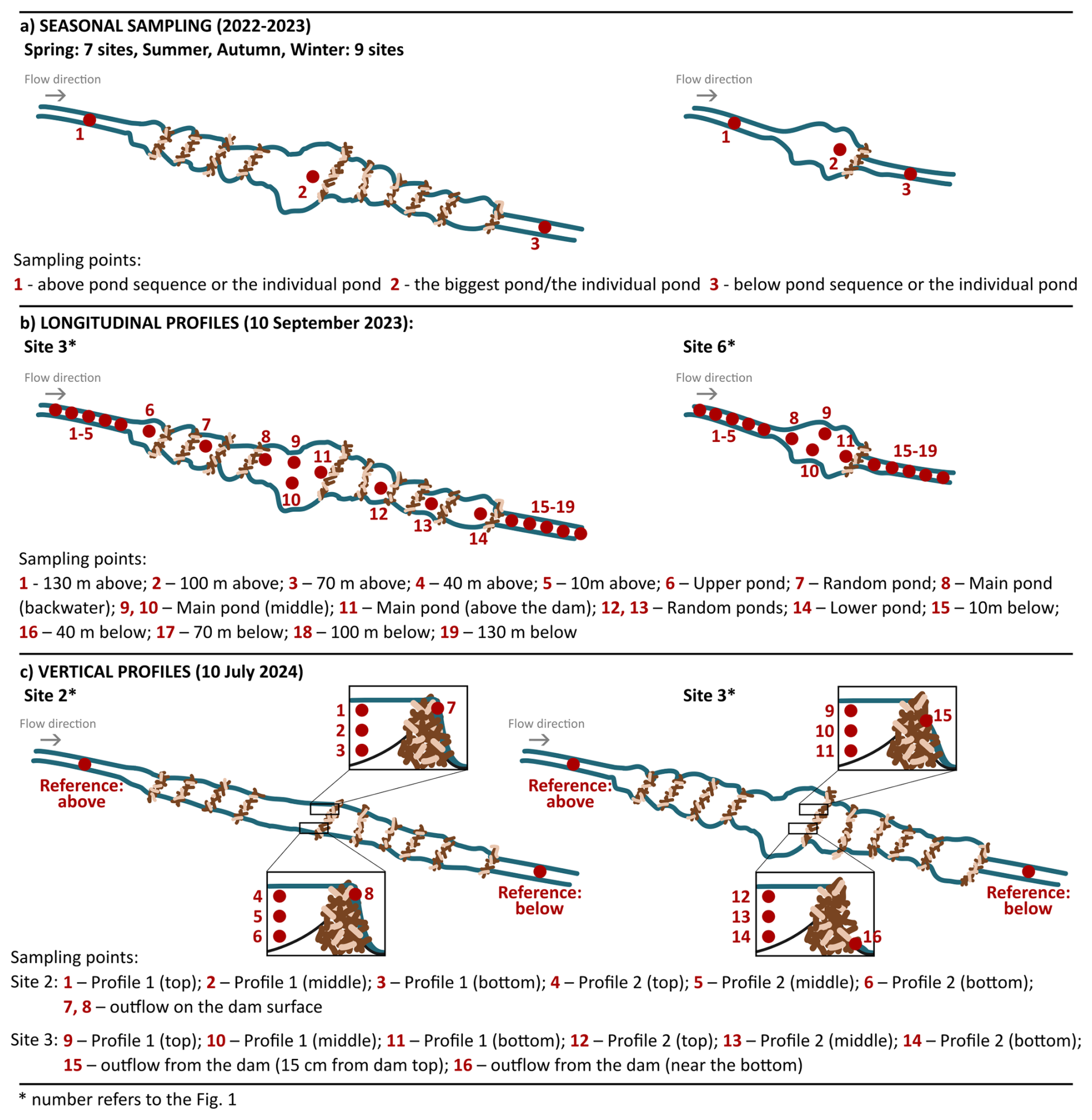
Although both geological variability and human pressure affect the chemical composition of stream water, a sampling design based on comparisons along the longitudinal gradients helped to minimise the impact of differences between the catchments. Three samples were collected at each site in late spring (June), summer (July–September), autumn (October–November) and winter (February), during baseflow conditions (i.e. excluding periods of rainfall events or snowmelts) in 2022–2023 (Fig. 2a). The section “above” the beaver pond or pond sequence that reflected baseline conditions was defined as 50–100 m upstream from a backwater, and the section “below” was 50–100 m downstream from the last dam. The “pond” sample was taken from the main channel section of the pond (i.e. excluding channel margins and backwaters). It was collected approximately 1 m above the dam, from the middle of the water column. For pond sequences, the representative “pond” sample was collected from the biggest reservoir in the system. Samples were collected between late morning and afternoon, with the sampling at each site being completed within about an hour. A total of 102 samples were collected from nine sites during the seasonal sampling.
Two sites were selected for additional measurements to create the longitudinal stream profiles (Fig. 2b). This sampling was conducted on 10 September 2023 at site 3 (an overflowing over ten years old beaver pond sequence) and at site 6 (a single in-channel young beaver pond). Measurements and water samples in the “above” and “below” sections were taken every 30 m, starting at a distance of 130 m from the ponds. Moreover, 4 locations within the “ponds” were sampled, to represent the front, middle and periphery of the water body.
To analyse the variation of physico-chemical characteristics in a pond's vertical profile, water samples were collected on 10 July 2024 at two beaver pond sequences, sites 2 and 3, which represented the two different pond types (Fig. 2c). Only in-channel ponds were observed at site 2. By contrast, overflowing stream banks were common at site 3. Measurements and water samples were taken from near the bottom of the water column, from its surface, and from dam outlets. Additionally, on-site measurements alone were taken from the middle of the water column. At site 2, outlet samples were taken from water overflowing the dam, while at site 3 they were taken from leaks in the upper part of the dam and near its bottom. In addition to the previously mentioned parameters, this scheme also involved determining the total organic carbon (TOC) concentration (mg L−1).
Sampling and in situ measurements were conducted without disturbing turbidity. The basic physico-chemical parameters – T (°C), DO (mg L−1), SEC (µS cm−1) and pH – were determined on-site using an ELMETRON CX-401 multifunction meter with the GXZ-3tk multiparameter immersion head. All pH, SEC and DO probes were calibrated before each field study at the laboratory of the Institute of Geography and Spatial Organization Polish Academy of Sciences. Calibration was performed according to the manufacturer's guidelines using certified analytical standards: pH probe: three-point calibration (pH 4.0, 7.0, and 9.0 buffers); SEC probe: calibration with a 1.41 mS cm−1 standard solution, selected according to anticipated conductivity of the sampled waters; DO probe: air-saturation calibration (100 %) followed by zero-oxygen verification using Na2SO3. In addition, 250 mL water samples were collected at each site for laboratory analysis.
The concentration (mg L−1) was determined by titrating the water with a standard solution of hydrochloric acid. The ionic composition (mg L−1) was analysed in a Dionex ICS-3000 ion chromatograph with the analytical columns IonPac CS16 3 mm×250 mm and IonPac AS18 2 mm×250 mm. Each sample was first filtered through a Whatman GF/D glass microfiber filter. The calibration curve was based on the Dionex certified reference materials (CRM) Combined Six Cation Standard II and Seven Anion Standard II. The detection limits were 0.4 mg L−1 for Ca2+ and 0.1 mg L−1 for the other ions. To ensure the accuracy of the analytical procedure, a certified reference material (CRM: KEIJM-02, GAW/WMO) was analysed. The percent relative error was less than 5.0 % for all parameters, except for K+ (5.8 %) and (7.0 %). For any ion concentrations below the detection limit, the values were replaced with 75 % of the detection limit, which is a common procedure in chemistry (Palarea-Albaladejo and Martín-Fernández, 2013). Concentrations below the detection limit were found only for the and ions. Across all the analysed water samples (n=102), the and concentrations were below the detection limit in 17 and 20 samples, respectively. According to Hites (2019), the inclusion of values below the detection limit in analyses is justified if they do not exceed 20 %. This applies in the case of both these ions. In addition, the Vario TOC Cube Analyzer (Elementar) was used to determine the total organic carbon (TOC) concentration (mg L−1) of the unfiltered water samples.
2.3 Statistical analysis
To compare the study sites, they were first classified according to the age and type of each beaver pond sequence (Table 1). It should be noted that there was some overlap between the two categorisations, as most of the youngest study sites were characterised by in-channel pond type and all the oldest ponds were overflowing. To assess the influence of beaver dams on physico-chemical water properties, Linear Mixed Model (LMM) was applied to individual parameters. Two separate approaches were employed: one based on raw data, and the other based on differences between the upstream and the pond or downstream sections, expressed in the original measurement units. In the models, “sampling location” (3 categories for raw data: upstream, pond, downstream, and 2 categories for the difference-based analysis: pond and downstream), “season” (4 categories: spring, summer, autumn, winter), “pond type” (2 categories: overflowing, in-channel), and “dam age” (3 categories: young (≤3 years), moderate (4–9 years), old (≥10 years)) were treated as fixed effects. Both “pond type” and “dam age” were tested in interaction with “location”, to account for potential differences in their effects among sampling sections. Stream identity was included as a random effect to account for repeated measurements collected from the same streams in successive seasons. Effects were considered significant at p<0.05. For factors showing a significant overall effect, least-squares means (LS means) were examined, and pairwise comparisons were performed to identify differences between factor levels.
The LMM was complemented by a supplementary analysis based on percentage change (Dc) in the values of the individual physico-chemical parameters of the water in ponds and streams below the beaver dams relative to their values above the ponds. The Dc was calculated using the following formula:
where Bx is the value of the physico-chemical parameter x in the pond or stream below the dam during a particular sampling session, and Ax is the value of the physico-chemical parameter x in the stream above the dam during the same session.
This additional analysis was introduced to help reveal direction and magnitude of variation in analysed parameters and to identify consistent patterns that may have remained undetected in the LMM framework because of the limited sample size. For the purpose of calculating the percentage change, temperature values were converted from °C to K, to account for potential disruptive impacts of values close to 0 °C on the percentage change in winter. Seasonal and site-to-site variations in Dc were assessed for T and other physico-chemical water parameters if their mean absolute difference (for all sampling sites combined) exceeded 15 % (DO, H+, K+, , Cl−, , and ; Table A1). The calculation of used the following formula (where N is the total number of sampling sessions):
This procedure was used to account for the impact of percent relative errors of the measurements on the Dc calculations. Thus, only the chemical parameters for which this impact was generally smaller than the measured changes were considered for further analysis. For each sample, the lowest (Dcmin) and highest (Dcmax) possible Dc values of a given physico-chemical parameter were calculated, with maximum percent relative errors assumed for each measurement (Fig. A1a). For most of the selected chemical parameters, such as DO, Cl−, K+, , and , the majority of the maximum possible differences in Dc (Dcmax−Dcmin) were less than 10 %–15 % (Fig. A1b). These differences were higher for H+ and , though still many times smaller than the mean absolute difference values (Fig. A1b and Table A1). This allowed for their inclusion in the subsequent analysis.
In addition, correlations between the upstream values of the physico-chemical parameters, catchment area, land cover, channel slope and channel width were analysed to identify potential causes of the initial differences between study sites. Moreover, the correlations between the upstream values and Dc were analysed, as this could indicate potential unreliability of the obtained percentage changes. Results characterised by (and p<0.05) were considered as demonstrating a strong correlation. All analyses were performed using STATISTICA 12.0.
3.1 Physico-chemical background of the studied streams
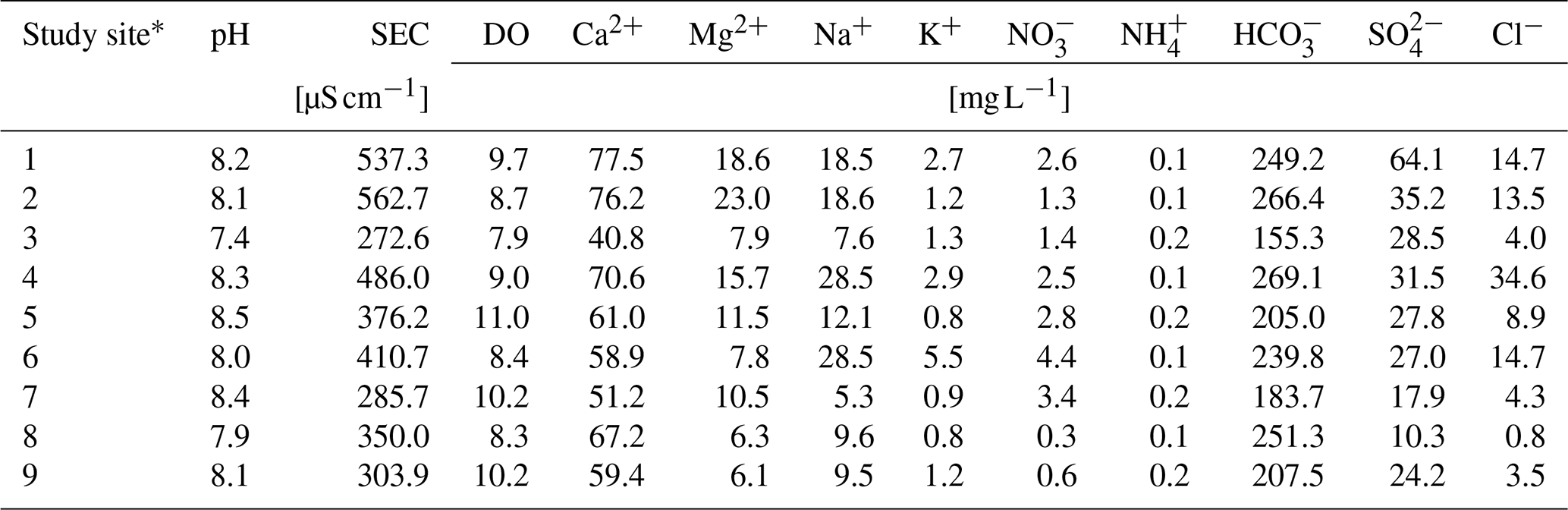
The physico-chemical properties of the water upstream of beaver ponds varied between the studied catchments (Table 2). Higher SEC and major ion concentrations were recorded in streams draining catchments underlain by shale-rich bedrock (sites 1, 2, 4, and 6), whereas lower values occurred in streams draining catchments dominated by sandstones (sites 3 and 7–9). Concentrations of Cl−, Na+ and K+ showed strong correlations with the proportion of artificial surfaces in the studied catchments (r=0.85, 0.78 and 0.61, respectively). Additionally, concentration of Cl− was correlated with the number of buildings in the catchments (r=0.61). No strong correlations were found between the parameters of the stream water above the beaver ponds and their percentage changes (Dc) in the ponds and the streams below them (Table A2). This allows for the further comparative analyses of the effect of beaver dams on the physico-chemical parameters of stream water despite their initial variation across the study sites.
Table 2Input physico-chemical water parameters, measured above beaver ponds (median values).
* Number refers to the Fig. 1.
3.2 The effect of seasonal and site-specific variability of beaver dams on physico-chemical water parameters
The large differences in the physico-chemical water parameters () between the beaver-influenced river sections (pond and downstream) compared to upstream values allowed for the consideration of potential impact of beaver dams on H+ (pH), , , DO, K+ and (Table A1). Overall, greater differences in the physico-chemical water parameters were observed in the ponds than in the streams below the ponds. However, the directions of the observed changes were not strongly consistent across seasons or study sites (Figs. 3 and A2).
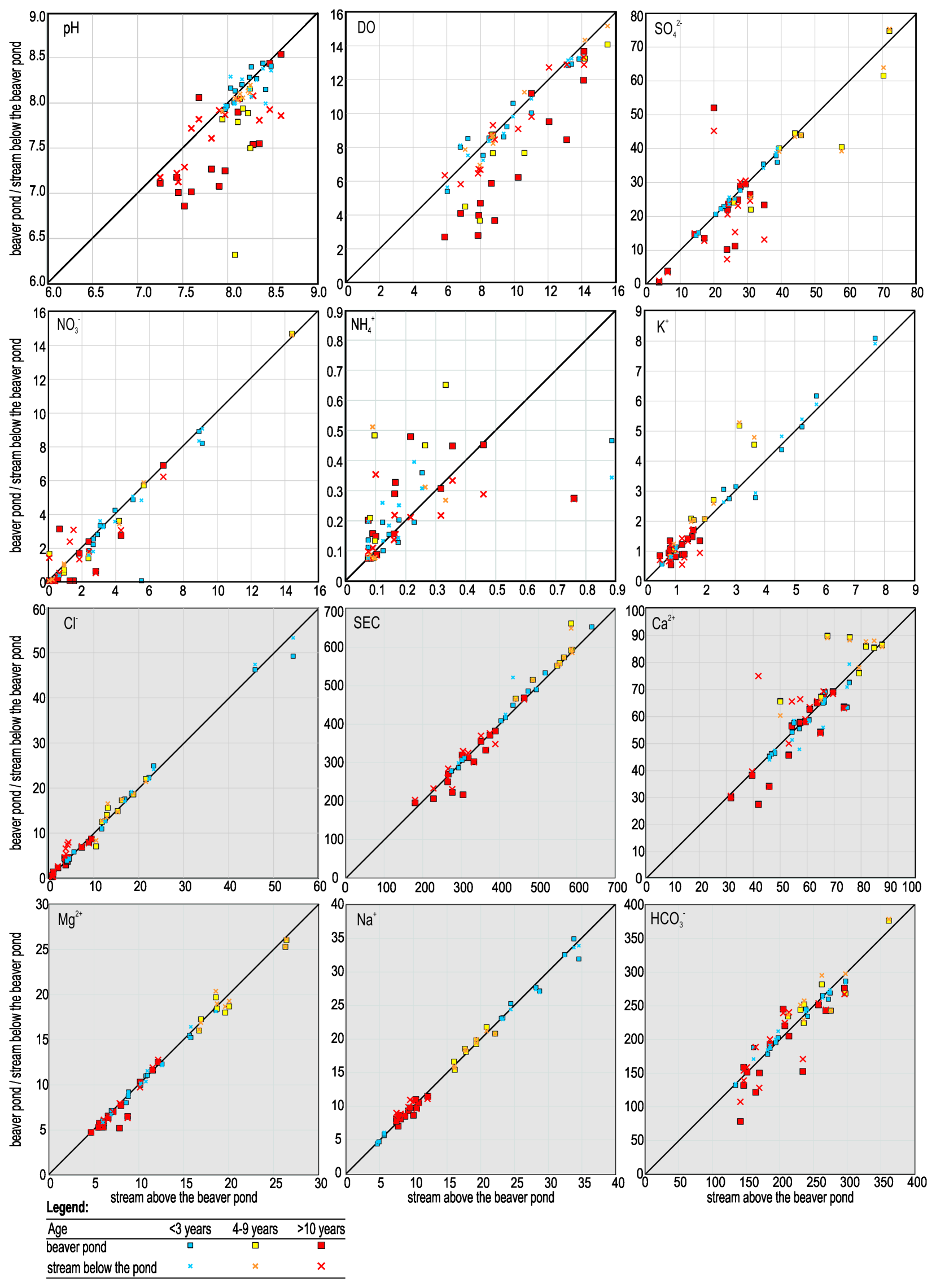
Figure 3The physico-chemical water parameters, such as pH, SEC [µS cm−1], major ions, , , and DO [mg L−1], within and below beaver ponds of different ages compared to the upstream values. The graphs with a white background indicate parameters where the between the beaver pond and the stream below the ponds and the stream above the beaver ponds were higher than 15 %, while the graphs with a grey background highlight parameters where the .
The LMM analysis revealed relationships between certain physico-chemical parameters and seasonality, the age of ponds and sampling locations (Tables 3 and 4). According to the analysis based on the raw values, season significantly affected all the parameters except pH, Ca2+ and , whereas sampling location (i.e. upstream, within the pond, downstream) significantly influenced DO, pH and T. In general, DO and pH values were lower in the ponds than in the streams above and below them, while T was higher in the ponds than in the streams above them. Beaver dam age significantly affected DO and the pH, with generally higher values in young ponds (≤3 years) than in ponds of moderate age (4–9 years). Pond type did not significantly affect any parameter in either the raw data or difference-based analyses.
Season significantly affected the differences between upstream values of T, Mg2+, K+ and , and their respective values in the ponds or downstream of the ponds. For example, there was an increase in T and a decrease in in the beaver-influenced stream sections (pond and downstream) compared to upstream values in the warmer part of the year (spring and summer). In contrast, the values for both parameters remained relatively unchanged in autumn and winter. Moreover, a greater increase in K+ was observed in summer than in spring and winter. The differences in DO within the ponds were affected by dam age, with the highest decreases observed in the old ponds (≥10 years). The decreases in DO and pH were greater in the ponds than in the downstream sections. Although the LMM also identified the seasonal effect on Mg2+, this ion was excluded from further discussion because its value was low (less than 15 %) and did not exceed the potential relative measurement error.
Table 3Results of the LMM analysis. Parameters for which only seasonal effects were detected in the raw data (SEC, Na+, , , Cl−), as well as parameters for which no significant effects were found (Ca2+, ) are not presented. Statistically significant p-values (p<0.05) are shown in bold.
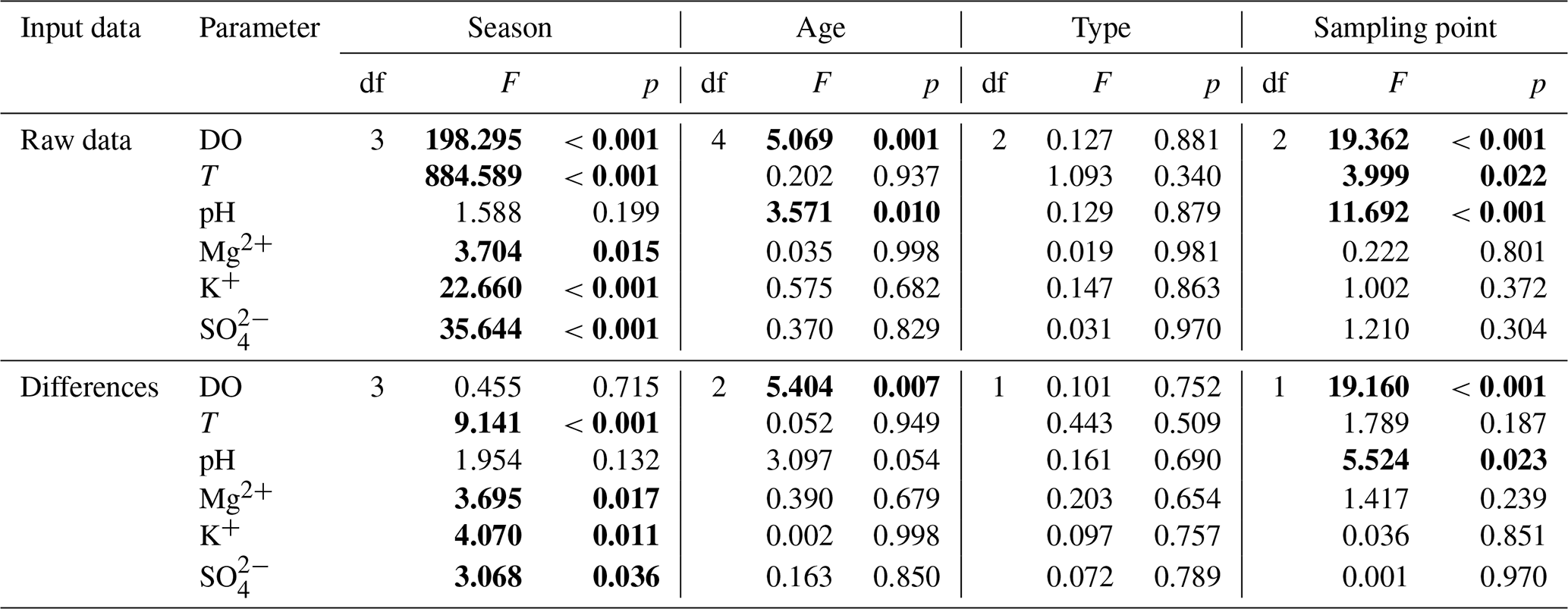
df – degrees of freedom, F – F-statistic; p – p-value.
Table 4Statistically significant patterns identified by the LMM for raw data and difference-based data, using least-squares means (LS means) and pairwise comparisons among factor levels (p<0.05). Parameters for which only seasonal effects were detected in the raw data (SEC, Na+, , , Cl−), as well as parameters for which no significant effect was found (Ca2+, ) are not presented.
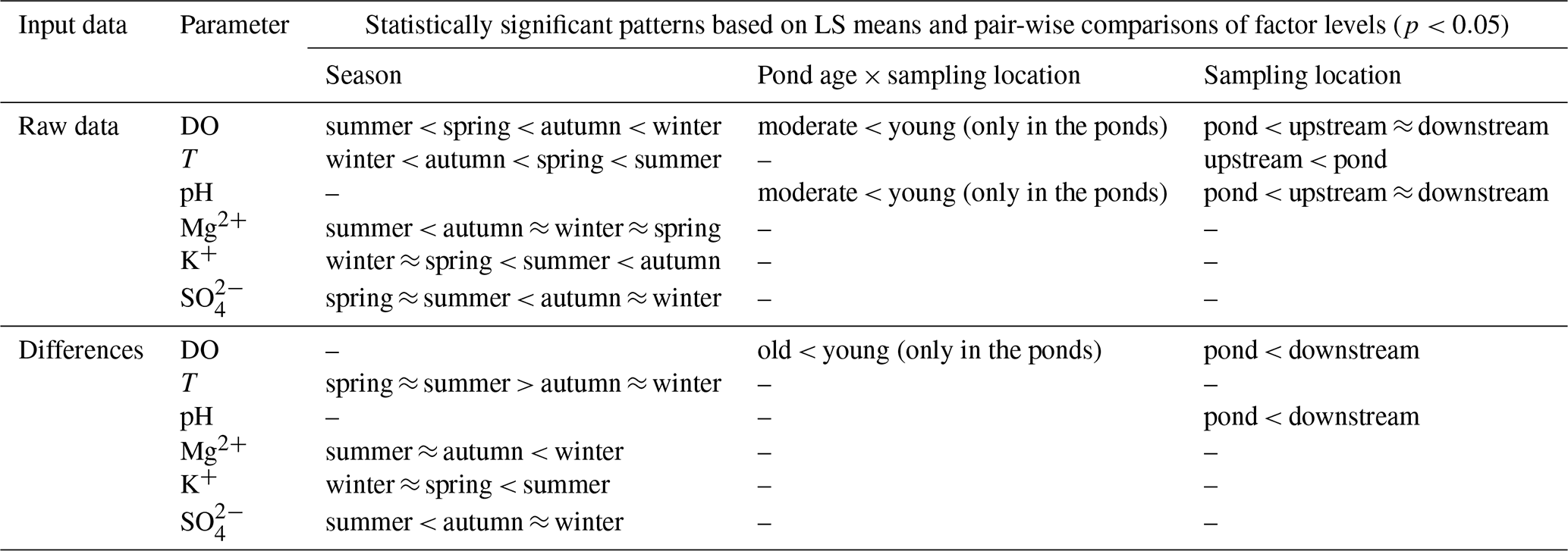
“–” lack of statistical significance (p>0.05).
The limited number of study sites (n=9) may have prevented the detection of weaker patterns. Analysing the positional measures of percentage changes (Dc) in physico-chemical water parameters in ponds and the streams below them, grouped by the factors indicated by LMM: season (spring/summer versus autumn/winter), pond age and sampling location, reveals additional effects that may occur during particular part of the year. For example, the greatest differences in were found in the old ponds, followed by the moderate ones and then the young ones during spring and summer (Figs. 4 and A2). Given the generally low upstream concentrations, the scale of decrease was constrained; nevertheless, the consistent decreases were observed within the ponds in most cases. There were greater differences in the old ponds than in the young ponds in spring and summer. The extremely high outlier value for Dc of disrupts this pattern for moderate ponds (Figs. 4 and A2). The concentration of increased in most studied ponds compared to the streams above them during spring and summer.
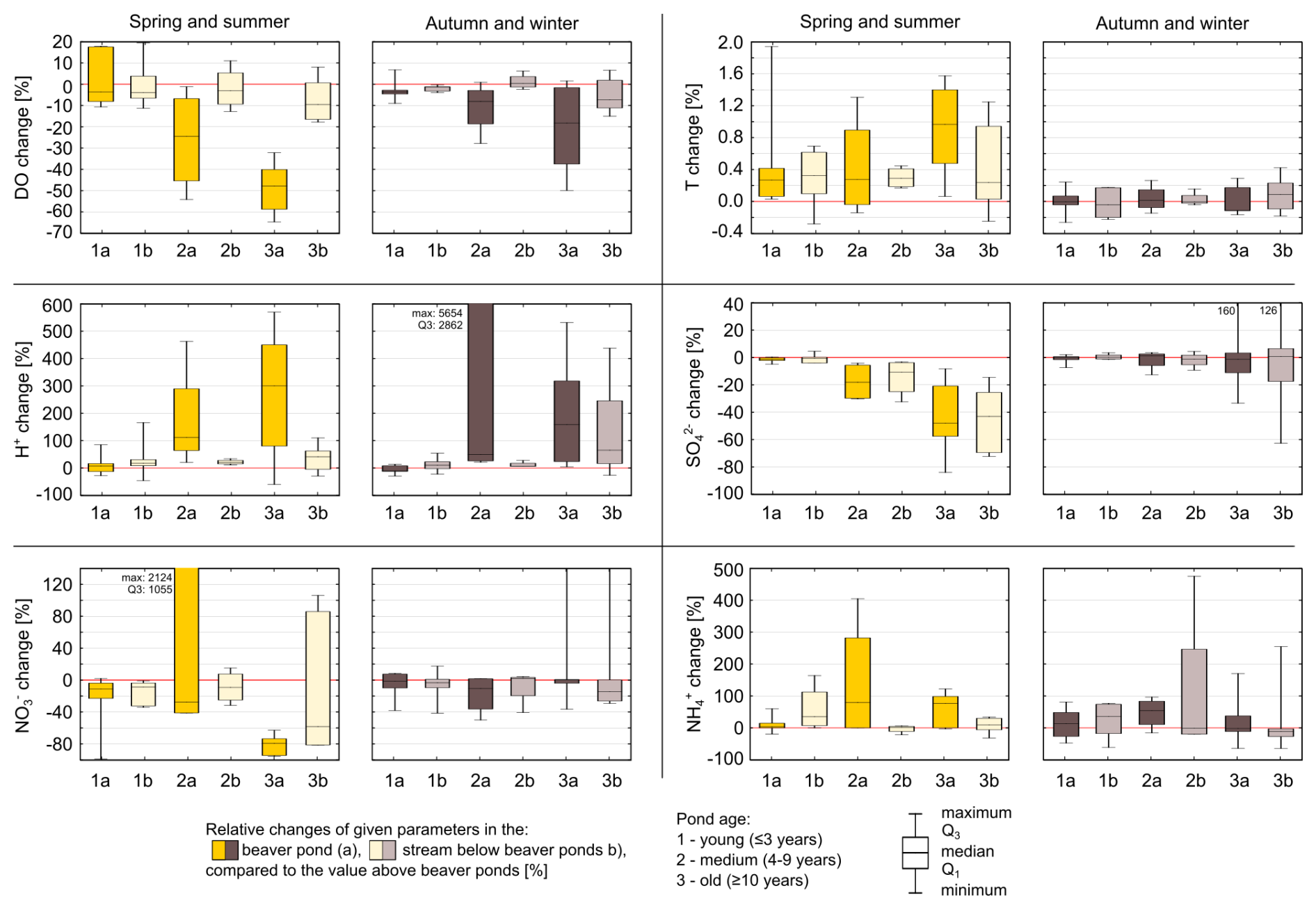
Figure 4Percentage change (Dc) in the selected physico-chemical water parameters within and below beaver ponds in relation to stream water above beaver ponds.
3.3 Variation of physico-chemical parameters in the longitudinal and vertical stream profiles
As demonstrated by the longitudinal profiles (Figs. 5 and B1), the older overflowing beaver pond sequence (site 3) had a greater influence on the physico-chemical parameters of water than the young in-channel single pond (site 6). The greatest differences in the physico-chemical parameters at site 3 were seen between the free-flowing upper sections and the inside of the ponds; these changes tended to be partially neutralised in the stream below the beaver dam. The largest differences observed at site 3 were a decrease in within the ponds (−95.4 %) and a decrease in both within (−64.5 %) and downstream (−71.5 %) of the ponds.
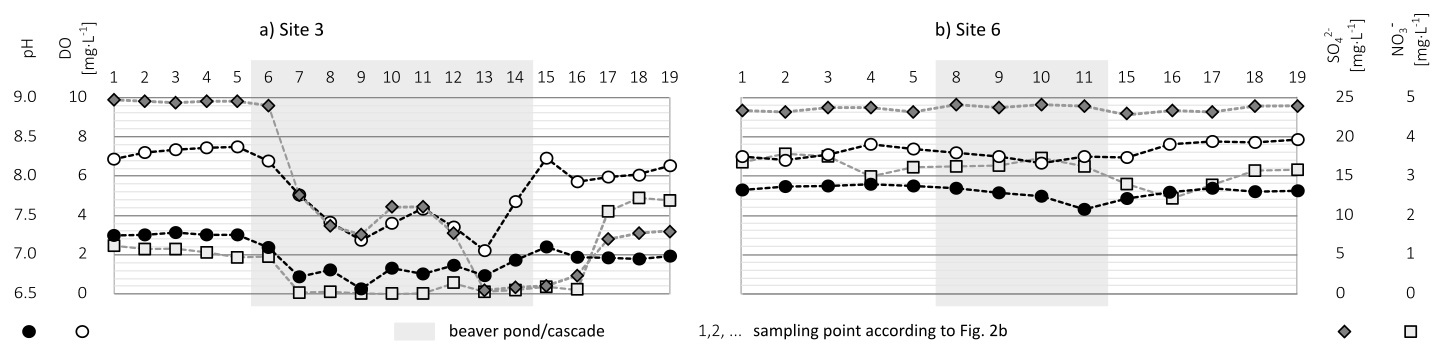
Figure 5A longitudinal profile of the selected physico-chemical parameters at an overflowing and old site (Site 3 – a), and an in-channel and young site (Site 6 – b) on 10 September 2023.
There were greater vertical variations in physico-chemical parameters in the old overflowing beaver pond (site 3) than in the younger in-channel beaver pond (site 2). DO, pH and T were found to decrease with pond depth in both types of beaver pond; however, the range of variation was greater at site 3 than at site 2 (Figs. 6 and B2). The pH value and DO concentrations were lower and the TOC concentrations were higher at the overflowing, old pond (site 3) than at the in-channel, younger pond (site 6). The pH value and the concentrations of DO and TOC of the outflow measured near the base of the dam were notably lower than those measured at the top of the dam at site 3. The TOC concentration in the beaver pond at site 3 was found to be more than 13 mg L−1, which was almost three times higher than in the stream flowing into the pond.

Figure 6Average values of the selected physico-chemical parameters in the vertical profiles of study sites 2 (in-channel, moderately old) and 3 (overflowing, old) on 10 July 2024.
4.1 Biogeochemical processes controlling physico-chemical water parameters that are triggered by the presence of beaver dams
Beaver dams form pond environments that alter biogeochemical processes and thus the chemical composition of stream water (Larsen et al., 2021). Our study shows a significant decrease in DO concentrations within the beaver ponds compared to the upstream conditions. This suggests that DO is consumed during the oxidation of organic matter in the ponds. A beaver-driven decrease in stream DO concentrations was also found by Błędzki et al. (2011) and Stevenson et al. (2022). High TOC concentrations in beaver ponds we studied, compared to the stream water above the ponds, indicate an enrichment of organic matter in the pond water. This matter may be produced locally due to vegetation growth in the beaver ponds. According to Pollock et al. (2003) and Green and Westbrook (2009), the reduced stream flow velocity associated with beaver ponds promotes the deposition of particulate organic matter. Briggs et al. (2012, 2013) found that the accumulation of organic matter in beaver ponds generates specific streambed morphologies, which enhance the exchange of stream water and groundwater within the hyporheic zone behind the beaver dams. Furthermore, the high water pressure at the bottom of the ponds results in the downward movement of pond water, which promotes the transport of organic carbon and DO from the water column to the hyporheic zone, fuelling biogeochemical processes.
The oxidation of organic matter in ponds may also have caused the decrease in concentrations at most of the study sites during warm seasons (spring-summer). Under the anoxic conditions that prevail at the bottom of ponds (as measured at site 3 in July 2024; see Fig. 6), as well as in the hyporheic zone, ions are likely to be reduced to H2S. These reactions are carried out by microorganisms through the microbial sulphate reduction, where acts as an electron acceptor in the anaerobic oxidation of organic matter under low redox potential (Sutton-Grier et al., 2011). The decrease in concentrations in streams with beaver dams has been previously identified, and attributed to the expansion of anoxic conditions (Larsen et al., 2021). According to Naiman et al. (1986; 1994), large accumulations of detritus, in combination with decomposition in expanded wetted areas, result in the development of anaerobic biogeochemical processes.
The decomposition and mineralisation of organic matter in the process of ammonification, under both aerobic and anaerobic conditions, leads to the production of ions in water (Stefanakis et al., 2014). In our study, the ammonification was indicated by the increase in concentrations in most of the beaver ponds studied in spring and summer. The increase in concentrations in ponds may also be partly explained by the production of this ion through the process of dissimilatory nitrate reduction to ammonium (DNRA), as indicated by a decrease in concentrations in the studied ponds. Numerous pathways exist for converting to under anaerobic conditions within DNRA processes, but all of these lead to the production of within the system (Wang et al., 2024). Denitrification, alongside DNRA, could also explain the decrease in concentrations in beaver ponds. Denitrification reduces to gaseous N2O and N2 under anoxic conditions in water (Drever, 1997). Decreased DO concentrations in the studied ponds could positively influence the denitrification processes in beaver impoundments, as suggested in previous studies by Lazar et al. (2015), Wegener et al. (2017) and Dewey et al. (2022). According to Lazar et al. (2015), denitrification in beaver ponds can remove 5 %–45 % of loading at the catchment scale.
The decomposition of organic matter results in the formation of organic acids, and this may have contributed to the significant decrease in water pH in the studied beaver ponds. According to David and Vance (1991), organic acids constitute most of the dissolved organic carbon in streams and lakes. Organic acids with high dissociation capacities significantly reduce water pH (Driscoll et al., 1989). A decrease in stream pH due to the presence of beaver dams is rarely reported in the literature. In fact, beaver dams most often cause its increase. For example, in the Appalachian Mountains, USA (Smith et al., 1991; Cirmo and Driscoll, 1993; Cirmo and Driscoll, 1996; Margolis et al., 2001) and the lowlands of Devon, England (Puttock et al., 2017), the pH of the stream water below beaver dams increased due to reduced concentrations of acidic ions such as and . In the streams we studied, pH decreased despite the decrease in acid ion concentrations (i.e. and ). Furthermore, the streams and beaver ponds studied in the USA and England (Smith et al., 1991; Cirmo and Driscoll, 1993; Cirmo and Driscoll, 1996; Margolis et al., 2001; Puttock et al., 2017) had similar organic carbon concentrations to the streams and ponds in our study. However, the streams that fed the beaver ponds in the USA and England had lower pH (<7) than the streams we studied (>7). The difference in baseline water pH is likely a key factor in explaining the difference in results, because the intensity of organic matter decomposition increases with increasing pH, and the latter is also associated with better conditions for the growth of the bacteria involved in decomposition (Walse et al., 1998). Higher pH values in the streams that feed the studied beaver ponds likely facilitated the greater decomposition of organic matter, which would be in line with the increased production of organic acids in the ponds. Another process that can decrease the pH of pond water is the production of CO2 during the aerobic and anaerobic mineralisation of organic matter (Drever, 1997).
The water that flows out of the ponds takes on the physico-chemical properties of the pond water. This is evidenced by the similar directions of changes in physico-chemical parameters within and below the beaver ponds compared to the streams above the ponds. However, our studies show that the downstream effect of beaver impoundment depends on the dam structure and, thus, the type of outflow. Due to the vertical physico-chemical stratification of water within the ponds, water flowing out over the top of the dam may have different physico-chemical properties from water flowing out through the lower parts of the dam. For instance, the DO concentrations in the water flowing out from the bottom of the dam were lower than in the water flowing out through the top. Decreasing DO with beaver pond depth is consistent with the results reported by Stevenson et al. (2022). Nevertheless, the changes in the physico-chemical parameters in the water below the ponds, regardless of the type of outflows, are smaller than the changes in the ponds compared to the upstream sections. This likely reflects processes typical of flowing water, which tend to shift water properties back towards upstream conditions. For example, the deoxygenated water flowing out of the ponds is reoxygenated, aided by the turbulent water flow in the mountainous stream channels. Similar decreases in DO within beaver ponds and the subsequent reoxygenation of downstream waters have been observed in previous studies (Smith et al., 1991; Harthun, 2000; Błędzki et al., 2011; Ecke et al., 2017). The increased DO concentrations in the streams below ponds favour the aerobic oxidation of organic matter, including the oxidation of organic acids. This increases the pH of downstream water compared to pond water. The increase in pH may also be partly due to the release of CO2 from the water, facilitated by the turbulent flow of streams below the beaver dams (Horgby et al., 2019). The reoxygenation of the water in the streams below the beaver ponds involves a series of biogeochemical processes, such as the aerobic oxidation of organic matter and nitrification, which counterbalance the effects of the ponds. Our longitudinal study showed that the changes in the physico-chemical properties of the water were partially neutralised within a relatively short downstream distance from the ponds (<100 m).
4.2 Role of seasonality in the beaver dams' impact on the physico-chemical water parameters
The greatest changes in most of the physico-chemical parameters within and below the beaver ponds compared to the streams above the ponds were observed during the warm season (spring and summer). This result can be explained by the greater intensity of the biogeochemical processes that modify the chemical composition of water at higher temperatures. In the winter, the water temperature in the streams and at the surface of the studied ponds was low, and did not exceed 1.5 °C. In the summer, water temperatures in the studied streams and the near-surface layer of the ponds generally exceeded 15 °C and sometimes rose above 20 °C. Biogeochemical processes in beaver pond water and the sediments in the hyporheic zone, such as organic matter decomposition, denitrification, DNRA, and microbial sulphate reduction, are very slow at low temperatures, compared with warm conditions (Qu et al., 2022). As a result, there are intensive physico-chemical transformations in the stream water flowing into the ponds in the warm season. The increase in concentrations and the decrease in concentrations in the studied beaver ponds were particularly prominent in summer due to intensive ammonification ( production), denitrification and DNRA ( depletion). This is consistent with the findings of Margolis et al. (2001) and Law et al. (2016): the greatest decrease downstream of beaver ponds occurs in the summer. The ion is the most effective electron acceptor (oxidant) in the anaerobic oxidation of organic matter; therefore, is the preferred oxidising agent for anaerobic microbes. The reduction under the anaerobic oxidation of organic matter occurs at a relatively high redox potential level (Anderson and Fidel, 2025). However, the decrease in concentrations in the beaver ponds in the summer may also be caused by uptake by aquatic vegetation and microorganisms (Naiman and Melillo, 1984; Maret et al., 1987; Songster-Alpin and Klotz, 1995). Furthermore, the decrease in concentrations in the studied ponds and downstream of the beaver dams was mainly observed during the warm period. This is also likely due to the high rate of anaerobic oxidation of organic matter during that time. According to Smith et al. (1991), Cirmo and Driscoll (1993), and Margolis et al. (2001), anaerobic oxidation of organic matter is facilitated by the low redox potential characteristic of summer low-flow conditions. During this period anaerobic microbes would have used even relatively inefficient oxidants, such as , in the anaerobic oxidation of organic matter, due to the low concentration of (a more effective oxidant) in the studied waters. The average concentration of in ponds and streams below them was very low during the summer, the average was 1.5 mg L−1.
4.3 The effects of beaver dam age on the physico-chemical water parameters
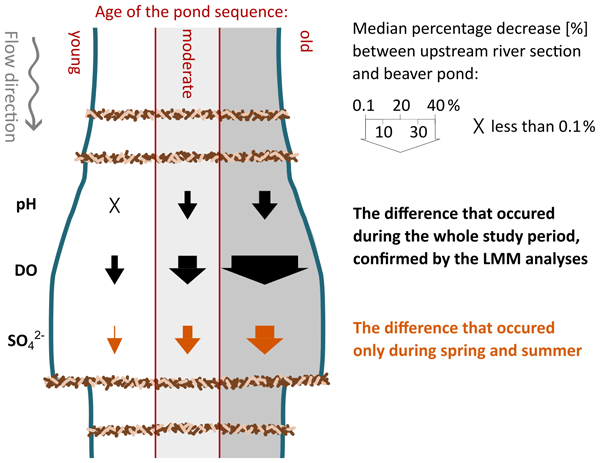
Our research suggests that the age of beaver dams plays an important role in altering the chemical composition of stream water (Fig. 7). Previously, the impact of beaver dams on various physico-chemical water parameters has typically been found to be inconsistent across different study sites. For example, different directions of change in pH were documented by Lizarralde et al. (1996), Harthun (2000) and Čiuldienė et al. (2020). The beaver pond characteristic proposed in our study may partly explain those site-to-site differences. For instance, the magnitudes of the decrease in pH and DO (based on LMM and the positional measures of the Dc) and (based on the positional measures of the Dc) in the studied beaver ponds were found to be positively related to the age of the beaver pond sequences. These water parameters are influenced mainly by the decomposition and aerobic/anaerobic oxidation of organic matter. According to Gurnell (1998), Meentemeyer and Butler (1999), Bason et al. (2017) and Puttock et al. (2018), older ponds have greater pools of organic matter deposited on their bottoms. Although the pond age does not cause the difference directly, it can be used as a proxy for the accumulation of organic-rich sediments over time and the enhancement of respective biogeochemical processes.
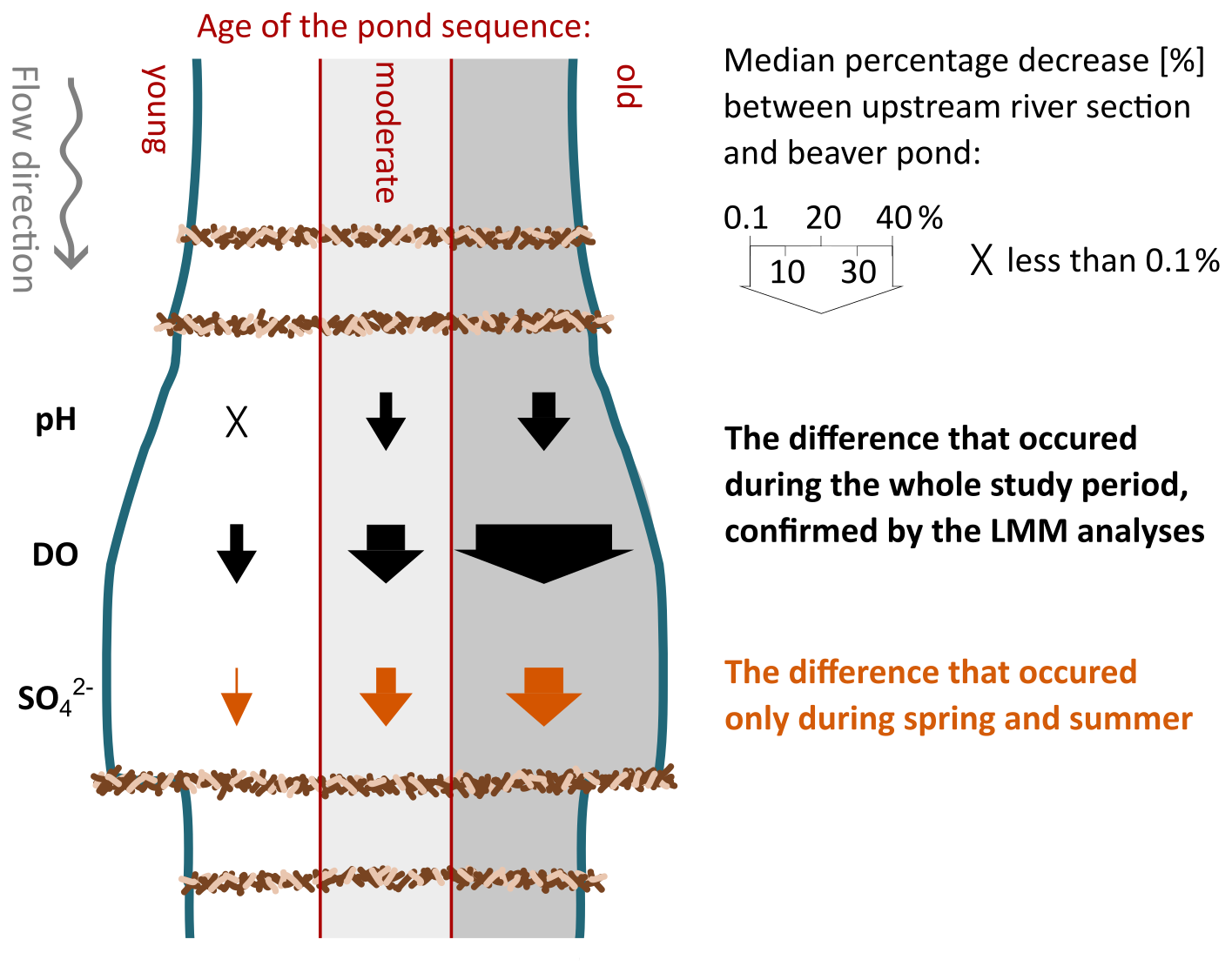
Figure 7The scheme of the role of the age of a beaver pond sequence in changes to physico-chemical water properties within the ponds.
4.4 Study limitations
The wide spatial scope of the study and the high diversity of beaver-influenced streams introduced certain limitations. The spread of the study sites across a vast area restricted the number of samples collected to one sample per site each season, due to time and cost constraints. In addition, dam failures resulting from floods and their targeted elimination during the research period decreased the planned sample size by half. The remaining study sites may have been affected by continuous dam maintenance by beavers. In the most extreme cases, temporal breaches of the dam may have been overlooked after its reconstruction. The small number of study sites (nine) may have limited the identification of the existing patterns in the effect of beaver dams on the physico-chemical properties of stream water. Therefore, we used the additional analysis of the positional measures, which is suitable even for small statistical samples. Moreover, since the study focused on the baseflow conditions, early spring high flows have been omitted. This probably explains the similarities between the results from the late spring and the summer.
Although a Before-After-Control-Impact (BACI) model would be the most appropriate approach for studying the impact of beavers on the chemical composition of water, it was not possible to use this method in the area concerned, due to the lack of investigations prior to dam construction. Instead, this study employed a Control-Impact (CI) design based on spatial contrasts. In this framework, upstream sections served as control sites, representing the reference conditions, while sections within and below the pond sequences represented the impacted areas. This comparative “upstream-downstream” approach is a standard field method for assessing hydrochemical gradients generated by beaver dams when “before” data are unavailable (Green and Westbrook, 2009; Klotz, 2010; Fuller and Peckarsky, 2011; Puttock et al., 2017; Stevenson et al., 2022). It allows for the isolation of local effects caused by damming while minimizing the confounding influence of catchment heterogeneity. Although this approach lacks independent control sections, as in a full BACI model, it provides robust comparative evidence for evaluating the magnitude and spatial extent of changes induced by beaver activity under natural field conditions. Future research should be more detailed and extensive to enable the application of the BACI model.
As there was no identified relationship between the initial values and the percentage change (Dc) in the physico-chemical parameters, it was assumed that the observed changes would not differ significantly based on upstream conditions. This allowed various catchments with different land uses and levels of anthropogenic influence to be included in the study. The diversity of the studied streams was also partly managed by including the stream identity as a random factor in the LMM. However, it should be noted that the inclusion of the streams characterised by particularly high concentrations of certain components (e.g. highly anthropogenically modified) may have resulted in different observations.
Although the sample locations were standardised to a certain extent, they may not reflect typical stream or pond conditions. Stream samples are more likely to be well-mixed and representative due to turbulent flow conditions. This is also evidenced by the homogeneity of the longitudinal profiles upstream and downstream of beaver ponds for most studied parameters. However, the spatial distribution of the pond samples may be more biased, as it did not cover the full spectrum of hydrological units observed within the ponds (Majerova et al., 2020). Additionally, as the samples were taken from the middle of the water column, they do not represent the surface and bottom water layers, which, according to the vertical sampling scheme, could substantially affect observed physico-chemical parameters. One of the greatest limitations of the study was the absence of field measurements of redox potential in streams and vertical profiles of the beaver ponds. Such measurements would have enabled the direct identification of redox conditions in the studied waters, and thus avoided the need to rely on speculation based on the concentration of key redox reaction ions. Direct measurements of redox potential, microbial activity and vegetation cover in future studies would enable empirical assessment of the role of the discussed processes.
The age of beaver pond sequences appears to be partly related to their longitudinal development and flooding extent. This limits the opportunity to assess the impact of each characteristic separately. Moreover, the analysis would be greatly improved by the use of continuous values representing pond age, if they could be obtained.
This study addressed the relatively new ecosystem role of beavers in the mountainous environment of the Western Carpathians, where beaver populations have recently recovered after more than a century of absence. We found that beaver dams had a strong impact on the physico-chemical water properties within the ponds, including a significant increase in water temperature and decrease in pH value and DO concentrations, as well as noticeable decrease in and concentrations. These changes were the result of specific biogeochemical processes occurring in the newly formed aquatic environments of beaver ponds. Although these processes also affected the downstream sections of the streams, in general, they were partially attenuated within a short distance of the dam.
The processes involving and decrease were found to be more effective during the warm seasons than during the cold seasons. The age of the dams was identified as an important factor affecting the decrease in DO and pH (based on LMM and the positional measures of the Dc) and the decrease in and within and below the beaver ponds (based on the positional measures of the Dc). These changes were regulated by the decomposition and aerobic/anaerobic oxidation of organic matter, which was more abundant in older ponds. Although much is known about the contribution of beavers to water purification through nitrogen removal, their less-recognised role in sulphate reduction may be equally important from a water management perspective. The persistence of beaver pond complexes may be critical for the effectiveness of these processes.
Although most of the processes identified in the present study are consistent with previous research, our results are complemented by additional insights. Attention should be drawn to newly emerging issues, such as the widespread decrease in water pH as a result of beaver dams. These results indicate that there is still much to address in future research on the effects of beaver presence. A larger dataset would improve our understanding of the effects of beaver impoundments, especially in streams with varying upstream conditions, outflow types and topographic characteristics. Likewise, more data from representative mountain streams (including side-channel and main-channel ponds, and various levels of geomorphic beaver activity), as well as comparative data from lowland streams, would be useful. Lastly, further research is needed to identify the spatial extent and temporal persistence of the influence of beaver dams, and to elucidate the thresholds that determine their impact on the ecological properties of streams.
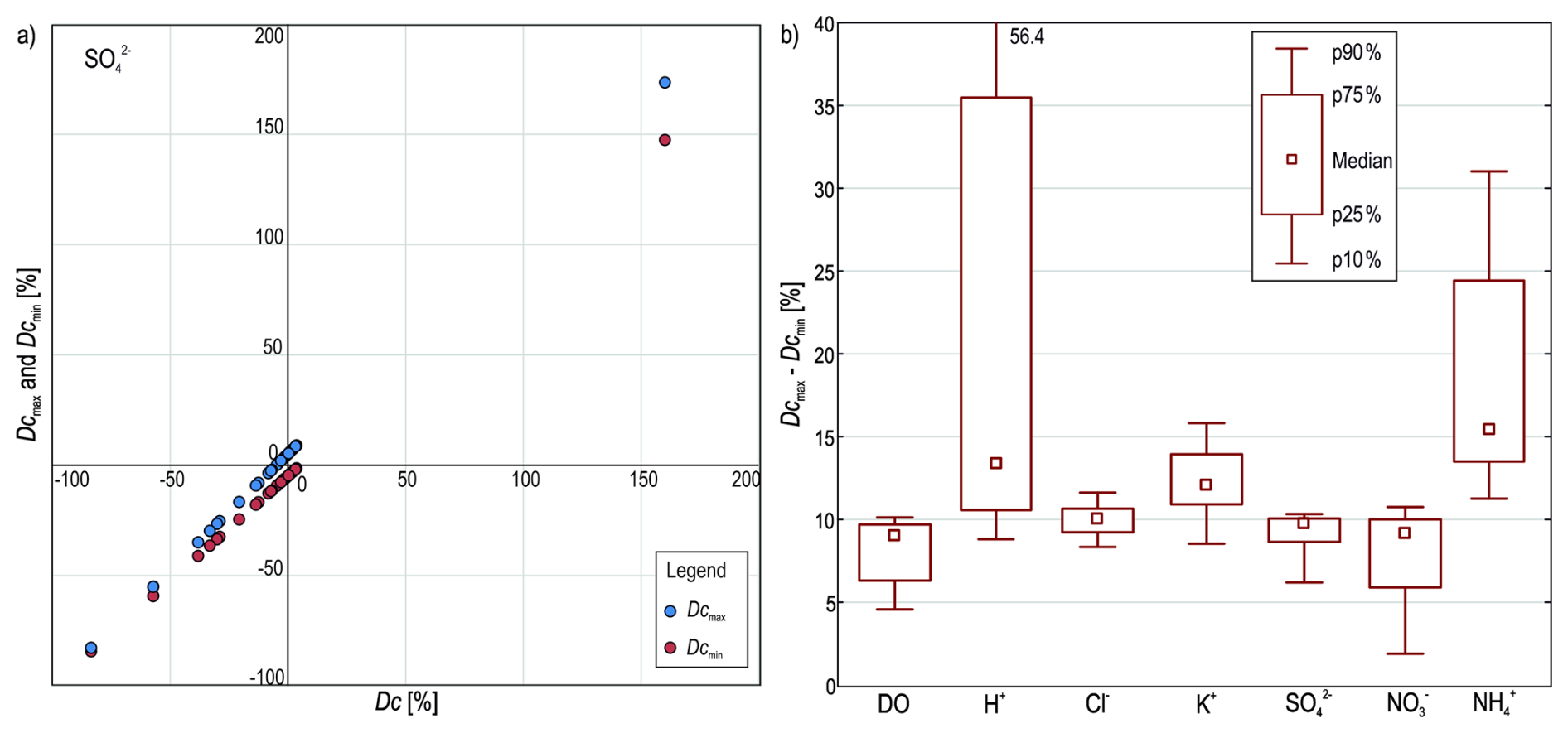
Figure A1The lowest (Dcmin) and highest (Dcmax) possible Dc values, taking into account the percent relative errors of the chemical analysis, using the difference in concentration in pond water and stream water above the ponds as an example (a). The differences between the lowest (Dcmin) and highest (Dcmax) possible Dc values for the selected chemical parameters are shown in (b).
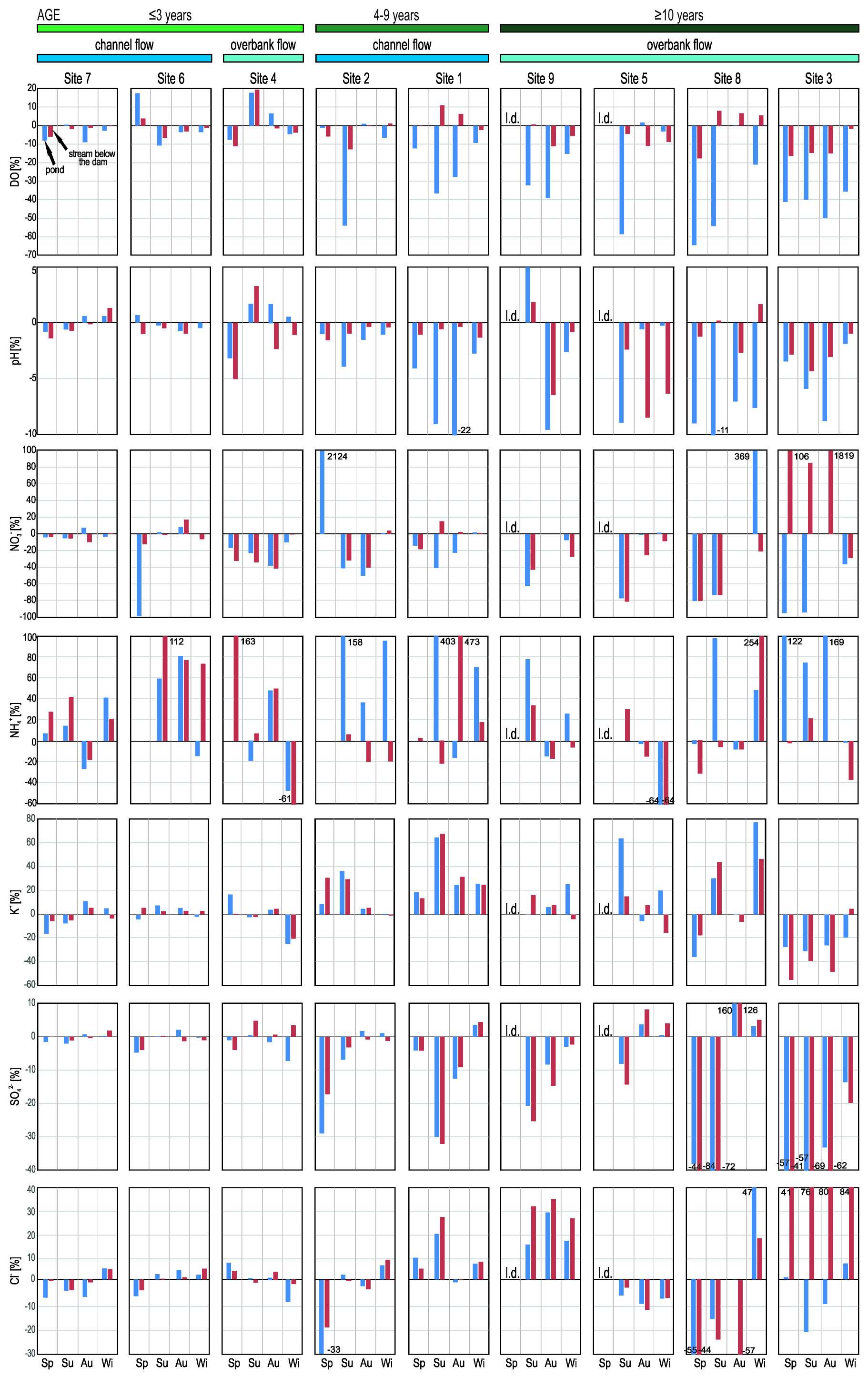
Figure A2Percentage changes (Dc) in selected physico-chemical parameters in and below beaver ponds compared to their upstream values (Sp – spring; Su – summer; Au – autumn; Wi – winter; l.d. – lack of data). Only the parameters for which are shown.
Table A1Statistical characteristics of absolute differences () of physico-chemical parameters values in ponds and streams below the beaver dams in relation to values in streams above the beaver dams (n=34). Average absolute differences are marked in bold.
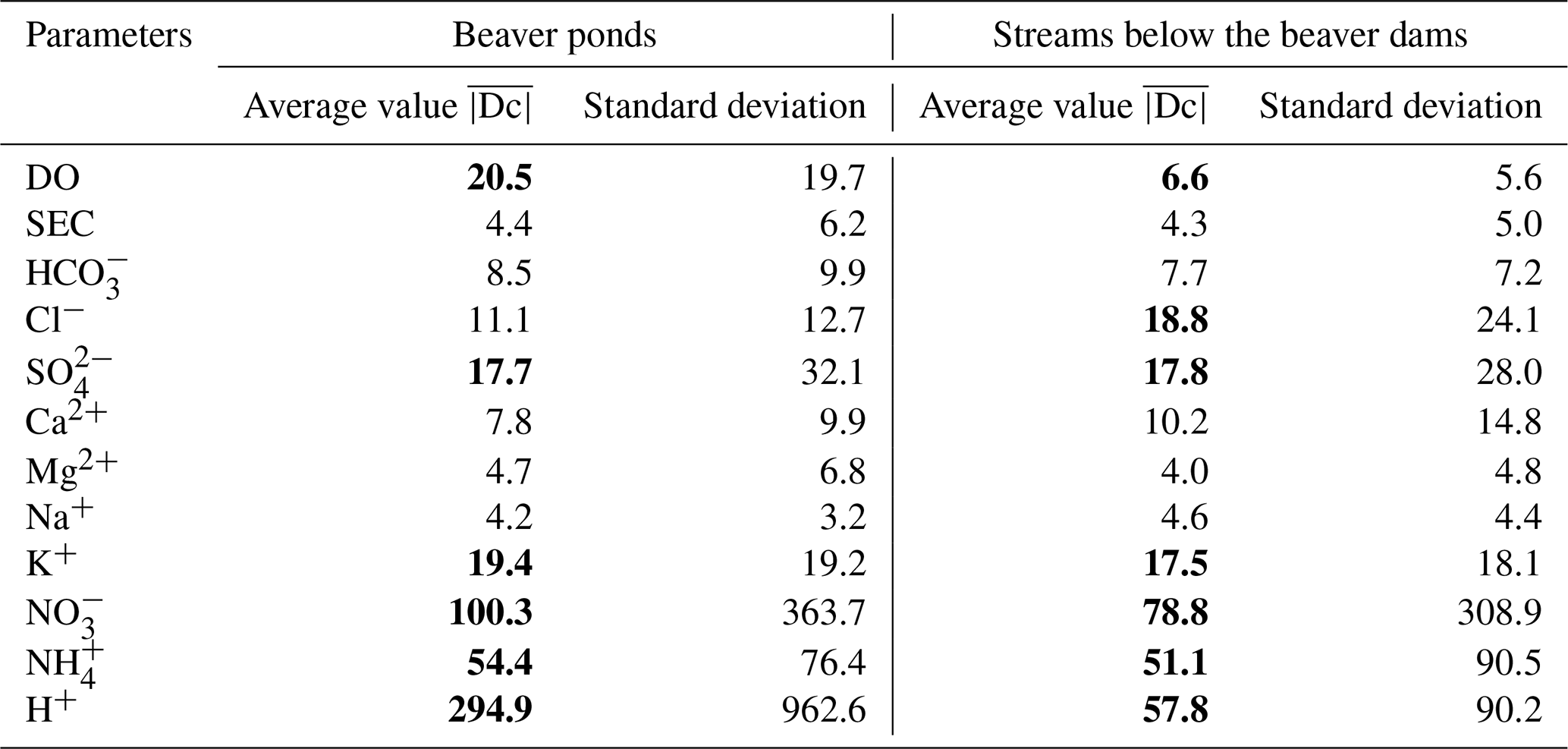
Table A2Correlations between upstream values and their respective Dc in the beaver ponds and below the ponds (p<0.05 are marked in bold).
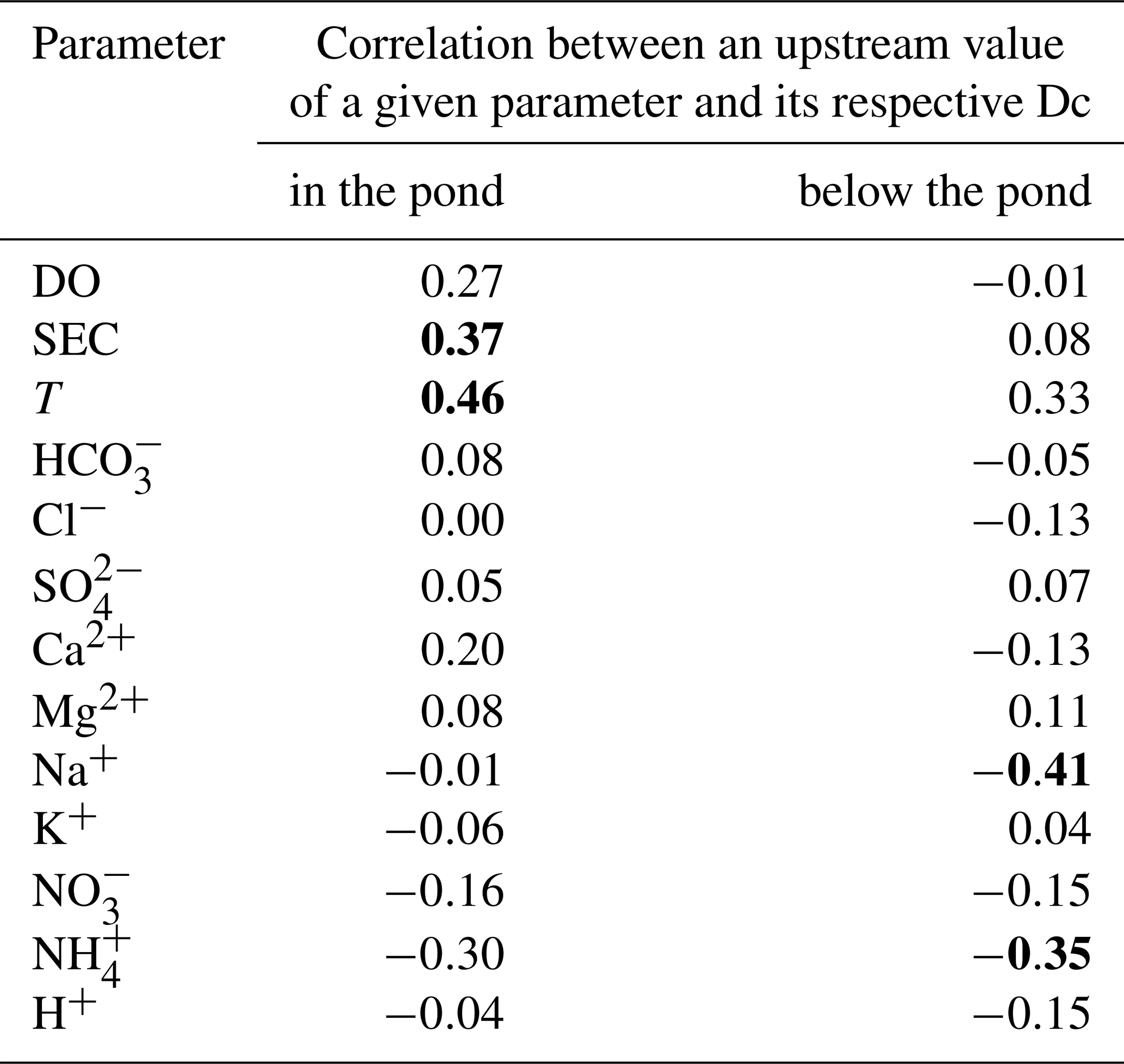
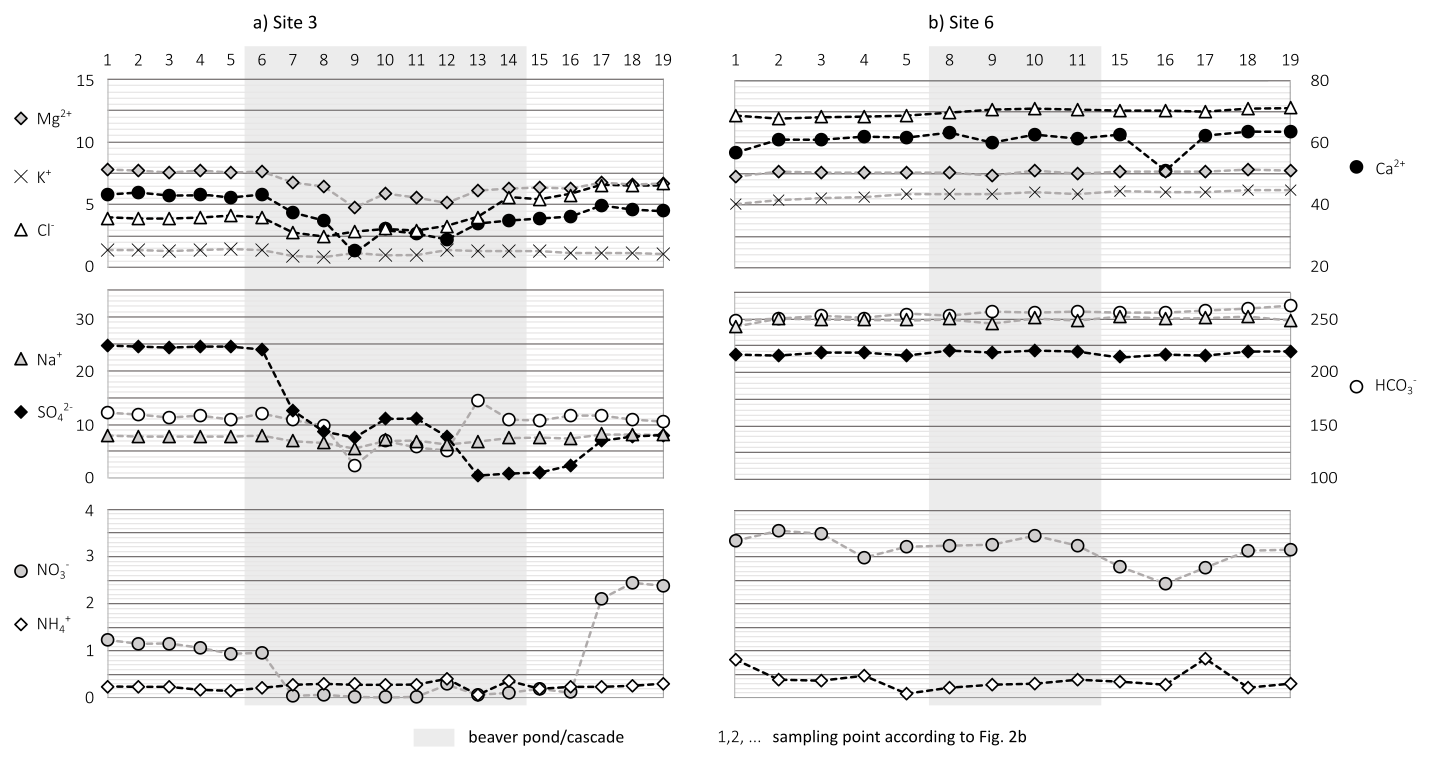
Figure B1Concentrations of the chemical components of water [mg L−1] in the longitudinal stream profiles at study sites 3 (a) and 6 (b) on 10 September 2023.
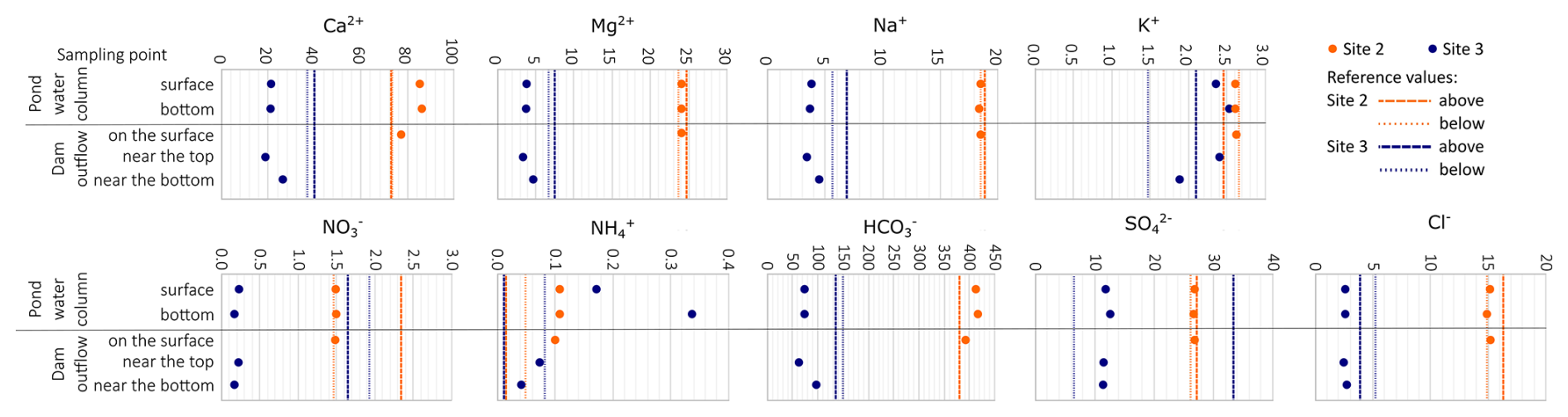
Figure B2Average concentration of the chemical components of water [mg L−1] in the vertical profiles of study sites 2 and 3 on 10 July 2024.
The data that support the findings of this study are available at Zenodo open access data repository (https://doi.org/10.5281/zenodo.17937225, Wąs et al., 2025).
JW: Conceptualization, Project administration, Methodology, Investigation, Formal analysis, Visualization, Writing – original draft, Writing – review and editing. JPS: Methodology, Investigation, Formal analysis, Visualization, Writing – original draft, Writing – review and editing. MK-S: Conceptualization, Funding acquisition, Project administration, Methodology, Investigation, Formal analysis, Writing – review and editing, Supervision. EG: Investigation, Writing – review and editing, Supervision.
The contact author has declared that none of the authors has any competing interests.
Publisher's note: Copernicus Publications remains neutral with regard to jurisdictional claims made in the text, published maps, institutional affiliations, or any other geographical representation in this paper. The authors bear the ultimate responsibility for providing appropriate place names. Views expressed in the text are those of the authors and do not necessarily reflect the views of the publisher.
The laboratory analyses were carried out at the Center for Research and Analysis at the Jan Kochanowski University in Kielce and at the Hydrological and Chemical Laboratory at the Institute of Geography and Spatial Management, Jagiellonian University in Kraków. We would like to thank all of our supporters for their crucial assistance during the fieldwork and laboratory analyses. We would like to thank the reviewers for their insightful comments, which have significantly improved the manuscript.
This research has been supported by the Narodowe Centrum Nauki (grant no. 2020/39/O/ST10/01354).
This paper was edited by Gabriel Singer and reviewed by Gabriel Singer and two anonymous referees.
Affek, A. N., Jabs-Sobocińska, Z., Wolski, J., and Radeloff, V. C.: Pockets of persistence of agricultural land use during the socioeconomic shock of forced post-WWII displacements in the Carpathians, Land Use Policy, 131, 106678, https://doi.org/10.1016/j.landusepol.2023.106678, 2023.
Anderson, A. and Fidel, R.: Introduction to soil science, 2nd edn., Iowa State University Digital Press, Ames, Iowa, 366 pp., https://doi.org/10.31274/isudp.2025.201, 2025.
Balejčíková, L., Tall, A., Kandra, B., and Pavelková, D.: Relationship of nitrates and nitrites in the water environment with humans and their activity, Acta Hydrol. Slovaca, 21, 74–81, https://doi.org/10.31577/ahs-2020-0021.01.0009, 2020.
Bański, J.: The consequences of changes of ownership for agricultural land use in Central European countries following the collapse of the Eastern Bloc, Land Use Policy, 66, 120–130, https://doi.org/10.1016/j.landusepol.2017.04.045, 2017.
Bason, C. W., Kroes, D. E., and Brinson, M. M.: The effect of beaver ponds on water quality in rural coastal plain streams, Southeast. Nat., 16, 584–602, https://doi.org/10.1656/058.016.0408, 2017.
Błędzki, L. A., Bubier, J. L., Moulton, L. A., and Kyker-Snowman, T. D.: Downstream effects of beaver ponds on the water quality of New England first- and second-order streams, Ecohydrology, 4, 698–707, https://doi.org/10.1002/eco.163, 2011.
Borzuchowski, J. and Olędzki, J. R.: Cyfrowa mapa geomorfologiczna Karpat, Teledetekcja Środowiska, 46, 52–71, 2011.
Brazier, R. E., Puttock, A., Graham, H. A., Auster, R. E., Davies, K. H., and Brown, C. M. L.: Beaver: Nature's ecosystem engineers, WIREs Water, 8, e1494, https://doi.org/10.1002/wat2.1494, 2021.
Briggs, M. A., Lautz, L. K., McKenzie, J. M., Gordon, R. P., and Hare, D. K.: Using high-resolution distributed temperature sensing to quantify spatial and temporal variability in vertical hyporheic flux, Water Resour. Res., 48, W02527, https://doi.org/10.1029/2011WR011227, 2012.
Briggs, M. A., Lautz, L. K., Hare, D. K., and González-Pinzón, R.: Relating hyporheic fluxes, residence times, and redox-sensitive biogeochemical processes upstream of beaver dams, Freshw. Sci., 32, 622–641, https://doi.org/10.1899/12-110.1, 2013.
Burtan, J., Cieszkowski, M., Ślączka, A., and Zuchiewicz, W.: Szczegółowa mapa geologiczna Polski 1:50 000, arkusz Męcina (1018, M-34-78-C), Państwowy Instytut Geologiczny, Warszawa, ISBN 978-83-66888-64-7, 1994.
Bylak, A., Kochman-Kędziora, N., Kukuła, E., and Kukuła, K.: Beaver-related restoration: An opportunity for sandy lowland streams in a human-dominated landscape, J. Environ. Manage., 351, 119799, https://doi.org/10.1016/j.jenvman.2023.119799, 2024.
CARPATCLIM: CARPATCLIM Database, European Commission – JRC, https://www.carpatclim-eu.org (last access: 26 December 2024), 2013.
Čanády, A., Krišovský, P., Bajomi, B., Huber, A., Czabán, D., and Olekšák, M.: Is new spread of the European beaver in Pannonian basin an evidence of the species recovery?, European Journal of Ecology, 2, 44–63, https://doi.org/10.1515/eje-2016-0015, 2016.
Central Statistical Office of Poland, Statistical Yearbook of Agriculture, https://www.stat.gov.pl (last access: 28 October 2025), 2025.
Cirmo, C. P. and Driscoll, C. T.: Beaver pond biogeochemistry: acid neutralizing capacity generation in a headwater wetland, Wetlands, 13, 277–292, 1993.
Cirmo, C. P. and Driscoll, C. T.: The impacts of a watershed CaCO3 treatment on stream and wetland biogeochemistry in the Adirondack Mountains, Biogeochemistry, 32, 265–297, 1996.
Čiuldienė, D., Vigricas, E., Belova, O., Aleinikovas, M., and Armolaitis, K.: The effect of beaver dams on organic carbon, nutrients and methyl mercury distribution in impounded waterbodies, Wildlife Biol., 2020, 1–8, https://doi.org/10.1111/wlb.00678, 2020.
David, M. B. and Vance, G. F.: Chemical character and origin of organic acids in streams and seepage lakes of central Maine, Biogeochemistry, 12, 17–41, 1991.
Dewey, C., Fox, P. M., Bouskill, N. J., Dwivedi, D., Nico, P., and Fendorf, S.: Beaver dams overshadow climate extremes in controlling riparian hydrology and water quality, Nat. Commun., 13, 6509, https://doi.org/10.1038/s41467-022-34022-0, 2022.
Drever, J. I.: The Geochemistry of Natural Waters: Surface and Groundwater Environments, 3rd edn., Prentice Hall, Upper Saddle River, New Jersey, 436 pp., ISBN 9780132727907, 1997.
Driscoll, C. T., Fuller, R. D., and Schecher, W. D.: The role of organic acids in the acidification of surface waters in the eastern US, Water Air Soil. Poll., 43, 21–40, 1989.
Dzięciołowski, R. and Gozdziewski, J.: The reintroduction of European beaver, Castor fiber, in Poland: a Success Story, in: Beaver protection, management, and utilization in Europe and North America, edited by: Busher, P. E. and Dzięciołowski, R., Kluwer Academic/Plenum Publishers, New York, 31–35, ISBN 978-1-4613-7165-6, 1999.
Ecke, F., Levanoni, O., Audet, J., Carlson, P., Eklöf, K., Hartman, G., McKie, B., Ledesma, J., Segersten, J., Truchy, A., and Futter, M.: Meta-analysis of environmental effects of beaver in relation to artificial dams, Environ. Res. Lett., 12, 113002, https://doi.org/10.1088/1748-9326/aa8979, 2017.
EU-Hydro River Network Database, European Union's Copernicus Land Monitoring Service information, https://doi.org/10.2909/393359a7-7ebd-4a52-80ac-1a18d5f3db9c, 2020.
European Digital Elevation Model (EU-DEM), Copernicus Land Monitoring Service, European Environment Agency, https://sdi.eea.europa.eu/catalogue/srv/api/records/d08852bc-7b5f-4835-a776-08362e2fbf4b (last access: 2022), 2016.
Fairfax, E. and Westbrook, C.: The ecology and evolution of beavers: ecosystem engineers that ameliorate climate change, Annu. Rev. Ecol. Evol. S., 55, https://doi.org/10.1146/annurev-ecolsys-102722-122317, 2024.
Fuller, M. R. and Peckarsky, B. L.: Does the morphology of beaver ponds alter downstream ecosystems?, Hydrobiol., 668, 35–48, https://doi.org/10.1007/s10750-011-0611-x, 2011.
Gilewska, S., Klimkowa, M., and Starkel, L.: The 1:500 000 Geomorphological Map of Poland, Geographia Polonica, 48, 7–24, 1982.
Giriat, D., Gorczyca, E., and Sobucki, M.: Beaver ponds' impact on fluvial processes (Beskid Niski Mts., SE Poland), Sci. Total. Environ., 544, 339–353, https://doi.org/10.1016/j.scitotenv.2015.11.103, 2016.
Golonka, J., Waśkowska, A., and Ślączka, A.: The Western Outer Carpathians: Origin and evolution, J. Appl. Reg. Geol./Z. Dt. Ges. Geowiss., 170, 229–254, https://doi.org/10.1127/zdgg/2019/0193, 2019.
Gorczyca, E., Krzemień, K., Sobucki, M., and Jarzyna, K.: Can beaver impact promote river renaturalization? The example of the Raba River, southern Poland, Sci. Total. Environ., 615, 1048–1060, 2018.
Green, K. C. and Westbrook, C. J.: Changes in riparian area structure, channel hydraulics, and sediment yield following loss of beaver dams, BC Journal of Ecosystems and Management, 10, 68–79, https://doi.org/10.22230/jem.2009v10n1a412, 2009.
Gurnell, A. M.: The hydrogeomorphological effects of beaver dam-building activity, Prog. Phys. Geog., 22, 167–189, https://doi.org/10.1177/030913339802200202, 1998.
Hallberg, L., Larsen, A., Ceperley, N., d'Epagnier, R., Brouwers, T. F., Schaefli, B., Thurnheer, S., Barba, J., Angst, C., Dennis, M., and Larsen, J. R.: Beavers can convert stream corridors to persistent carbon sinks, Commun. Earth and Environ., 7, 227, https://doi.org/10.1038/s43247-026-03283-8, 2026.
Halley, D. J., Saveljev, A. P., and Rosell, F.: Population and distribution of beavers Castor fiber and Castor canadensis in Eurasia, Mammal Rev., 51, 1–24, https://doi.org/10.1111/mam.12216, 2020.
Harthun, M.: Influence of the Damming-up by Beavers (Castor fiber albicus) on Physical and Chemical Parameters of Highland Brooks (Hesse, Germany), Limnologica, 30, 21–35, 2000.
Hites, R. A.: Correcting for censored environmental measurements, Environ. Sci. Technol., 53, 11059–11060, 2019.
Holtmeier, F. K.: Keystone Species, in: Animals' Influence on the Landscape and Ecological Importance: Natives, Newcomers, Homecomers, Springer, Dordrecht, 295–331, https://doi.org/10.1007/978-94-017-9294-3_4, 2015.
Horgby, Å., Segatto, P. L., Bertuzzo, E., Lauerwald, R., Lehner, B., Ulseth, A. J., Vennemann, T. W., and Battin, T. J.: Unexpected large evasion fluxes of carbon dioxide from turbulent streams draining the world's mountains, Nat. Commun., 10, 4888, https://doi.org/10.1038/s41467-019-12905-z, 2019.
Jankowski, L. S.: Szczegółowa mapa geologiczna Polski 1:50 000, arkusz Rzepiennik (1020, M-34-79-C), Państwowy Instytut Geologiczny, Warszawa, ISBN 978-83-7863-332-7, 1997.
Jones, C. G., Lawton, J. H., and Shachak, M.: Organisms as ecosystem engineers, OIKOS, 69, 373–386, https://doi.org/10.2307/3545850, 1994.
Kalvīte, Z., Lībiete, Z., Kļaviņša, I., Bārdule, A., and Bičkovskis, K.: The impact of beaver dam removal on the chemical properties of water in drainage ditches in peatland forests, Scand. J. Forest. Res., 36, 1–14, https://doi.org/10.1080/02827581.2020.1855364, 2021.
Klotz, R. L.: Influence of beaver ponds on the phosphorus concentration of stream water, Can. J. Fish. Aquat. Sci., 55, 5, https://doi.org/10.1139/f97-318, 1998.
Klotz, R. L.: Reduction of high nitrate concentrations in a Central New York State stream impounded by beaver, Northeast. Nat., 17, 349–356, https://www.jstor.org/stable/40959749 (last access: 15 January 2025), 2010.
Kolecka, N., Kozak, J., Kaim, D., Dobosz, M., Ostafin, K., Ostapowicz, K., Wężyk, P., and Price, B.: Understanding farmland abandonment in the Polish Carpathians, Appl. Geogr., 88, 62–72, https://doi.org/10.1016/j.apgeog.2017.09.002, 2017.
Kolecka, N. and Kozak, J.: Wall-to-wall parcel-level mapping of agricultural land abandonment in the Polish Carpathians, Land, 8, 129, https://doi.org/10.3390/land8090129, 2019.
Kopciowski, R.: Szczegółowa mapa geologiczna Polski 1:50 000, arkusz Zborów (1054, M-34-91-D), Państwowy Instytut Geologiczny, Warszawa, ISBN 978-83-7863-333-4, 2000.
Kopciowski, R., Zimnal, Z., Chrząstowski., Jankowski, L., and Szymakowska, F.: Szczegółowa mapa geologiczna Polski 1:50 000, arkusz Gorlice (1037, M-34-91-A), Państwowy Instytut Geologiczny, Warszawa, ISBN 978-83-7863-328-0, 1997.
Kováčik, M., Bóna, J., Gazdačko, L., Kobulský, J., Maglay, J., and Kučera, M.: Geological Map of the Nízke Beskydy Mts. Western Part, Ministerstvo životného prostredia Slovenskej republiky, Bratislava, ISBN 978-80-89343-44-7, 2011.
Kroczak, R., Fidelus-Orzechowska, J., Bucała-Hrabia, A., and Bryndal, T.: Land use and land cover changes in small Carpathian catchments between the mid-19th and early 21st centuries and their record on the land surface, J. Mt. Sci., 15, 2561–2578, https://doi.org/10.1007/s11629-018-5095-y, 2018.
Larsen, A., Larsen, J. R., and Lane, S. N.: Dam builders and their works: Beaver influences on the structure and function of river corridor hydrology, geomorphology, biogeochemistry and ecosystems, Earth-Sci. Rev., 218, 103623, https://doi.org/10.1016/j.earscirev.2021.103623, 2021.
Law, A., McLean, F., and Willby, N. J.: Habitat engineering by beaver benefits aquatic biodiversity and ecosystem processes in agricultural streams, Freshwater Biol., 61, 486–499, https://doi.org/10.1111/fwb.12721, 2016.
Lazar, J. G., Addy, K., Gold, A. J., Groffman, P. M., McKinney, R. A., and Kellogg, D. Q.: Beaver ponds: Resurgent nitrogen sinks for rural watersheds in the northeastern United States, J. Environ. Qual., 44, 1684–1693, https://doi.org/10.2134/jeq2014.12.0540, 2015.
Lazikova, J., Rumanovska, L., Takac, I., and Lazikova, Z.: Land fragmentation and efforts to prevent it in Slovak legislation, Agr. Econ.-Czech., 63, 559–568, https://doi.org/10.17221/180/2016-AGRICECON, 2017.
Lieskovský, J., Bezák, P., Špulerová, J., Lieskovský, T., Koleda, P., Dobrovodská, M., Bürgi, M., and Gimmi, U.: The abandonment of traditional agricultural landscape in Slovakia – Analysis of extent and driving forces, J. Rural. Stud., 37, 75–84, https://doi.org/10.1016/j.jrurstud.2014.12.007, 2015.
Lizarralde, M. S., Deferrari, G. A., Alvarez, S. E., and Escobar, J. M.: Effects of beaver (Castor canadensis) on the nutrient dynamics of the southern beech forests of Tierra del Fuego (Argentina), Ecología Austral, 6, 101–105, 1996.
Łajczak, A., Margielewski, W., Rączkowska, Z., and Święchowicz, J.: Contemporary geomorphic processes in the Polish Carpathians under changing human impact, Episodes Journal of International Geoscience, 37, 21–32, https://doi.org/10.18814/epiiugs/2014/v37i1/003, 2014.
Majerova, M., Neilson, B. T., and Roper, B. B.: Beaver dam influences on streamflow hydraulic properties and thermal regimes, Sci. Total. Environ., 718, 134853, https://doi.org/10.1016/j.scitotenv.2019.134853, 2020.
Marciniec, P. and Zimnal, Z.: Szczegółowa mapa geologiczna Polski 1:50 000, arkusz Tuchów (1001, M-34-79-A), Państwowy Instytut Geologiczny, Warszawa, ISBN 978-83-7863-575-8, 2009.
Maret, T. J., Parker, M., and Fannin, T. E.: The effect of beaver ponds on the nonpoint source water quality of a stream in southwestern Wyoming, Water R., 21, 263–268, 1987.
Margolis, B. E., Castro, M. S., and Raesly, R. L.: The impact of beaver impoundments on the water chemistry of two Appalachian streams, Can. J. Fish. Aquat. Sci., 58, 2271–2283, https://doi.org/10.1139/cjfas-58-11-2271, 2001.
Meentemeyer, R. K. and Butler, D. R.: Hydrogeomorphic effects of beaver dams in Glacier National Park, Montana, Phys. Geogr., 20, 436–446, https://doi.org/10.1080/02723646.1999.10642688, 1999.
Murray, D., Neilson, B. T., and Brahney, J.: Source or sink? Quantifying beaver pond influence on non-point source pollutant transport in the Intermountain West, J. Environ. Manage., 285, 112127, https://doi.org/10.1016/j.jenvman.2021.112127, 2021.
Naiman, R. J. and Melillo, J. M.: Nitrogen budget of a subarctic stream altered by beaver (Castor canadensis), Oecologia, 62, 150–155, 1984.
Naiman, R. J., Melillo, J. M., and Hobbie, J. E.: Ecosystem alteration of boreal forest streams by beaver (Castor canadensis), Ecology, 67, 1254–1269, https://doi.org/10.2307/1938681, 1986.
Naiman, R. J., Pinay, G., Johnston, C. A., and Pastor, J.: Beaver influences on the long-term biogeochemical characteristics of boreal forest drainage networks, Ecology, 75, 905–921, https://doi.org/10.2307/1939415, 1994.
Nolet, B. A. and Rosell, F.: Comeback of the beaver Castor fiber: an overview of old and new conservation problems, Biol. Conserv., 83, 165–173, https://doi.org/10.1016/S0006-3207(97)00066-9, 1998.
Pachinger, K. and Hulik, T.: Origin, present conditions, and future prospects of the Slovakian beaver population, in: Beaver protection, management, and utilization in Europe and North America, edited by: Busher, P. E., Dzięciołowski, R., Kluwer Academic/Plenum Publishers, New York, 43–51, ISBN 978-1-4613-7165-6, 1999.
Palarea-Albaladejo, J. and Martín-Fernández, J. A.: Values below detection limit in compositional chemical data, Anal. Chim. Acta., 764, 32–43, https://doi.org/10.1016/j.aca.2012.12.029, 2013.
Pazúr, R., Lieskovský, J., Feranec, J., and Ot'ahel', J.: Spatial determinants of abandonment of large-scale arable lands and managed grasslands in Slovakia during the periods of post-socialist transition and European Union accession, Appl. Geogr., 54, 118–128, https://doi.org/10.1016/j.apgeog.2014.07.014, 2014.
Pekárová, P., Pekár, J., and Miklánek, P.: Impact of water sampling frequency on estimating water quality status in the Ondava River, Ecohydrol. Hydrobiol., 6, 105–113, https://doi.org/10.1016/S1642-3593(06)70132-X, 2006.
Pollock, M. M., Heim, M., and Werner, D.: Hydrologic and geomorphic effects of beaver dams and their influence on fishes, Am. Fish. S. S., 37 , 213–234, 2003.
Puttock, A., Graham, H. A., Cunliffe, A. M., Elliott, M., and Brazier, R. E.: Eurasian beaver activity increases water storage, attenuates flow and mitigates diffuse pollution from intensively-managed grasslands, Sci. Total. Environ., 576, 430–443, https://doi.org/10.1016/j.scitotenv.2016.10.122, 2017.
Puttock, A., Graham, H. A., Carless, D., and Brazier, R. E.: Sediment and nutrient storage in a beaver engineered wetland, Earth Surf. Proc. Land., 43, 2358–2370, https://doi.org/10.1002/esp.4398, 2018.
Qu, W., Suo, L., Liu, R., Liu, M., Zhao, Y., Xia, L., Fan, Y., Zhang, Q., and Gao, Z.: Influence of Temperature on Denitrification and Microbial Community Structure and Diversity: A Laboratory Study on Nitrate Removal from Groundwater, Water, 14, 436, https://doi.org/10.3390/w14030436, 2022.
Rączkowska, Z., Łajczak, A., Margielewski, W., and Święchowicz, J.: Recent Landform Evolution in the Polish Carpathians: Geological and Geomorphological Settings, in: Recent Landform Evolution, The Carpatho-Balkan-Dinaric Region, edited by: Loczy, D. Stankoviansky, M., and Kotarba, A., Springer, Dordrecht, Heidelberg, London, New York, 51–53, https://doi.org/10.1007/978-94-007-2448-8_5, 2012.
Rosell, F., Bozsér, O., Collen, P., and Parker, H.: Ecological impact of beavers Castor fiber and Castor canadensis and their ability to modify ecosystems, Mammal Rev., 35, 248–276, https://doi.org/10.1111/j.1365-2907.2005.00067.x, 2005.
Smith, M. E., Driscoll, C. T., Wyskowski, B. J., Brooks, C. M., and Cosentini, C. C.: Modification of stream ecosystem structure and function by beaver (Castor canadensis) in the Adirondack Mountains, Can. J. Zool., 69, 55–61, https://doi.org/10.1139/z91-009, 1991.
Siman, C. and Velísková, Y.: Consumption of fertilizers in districts of Slovakia in the period 2006–2015, Acta Agrar. Debreceniensis, 150, 389–398, https://doi.org/10.34101/actaagrar/150/1735, 2018.
Siwek, J. P.: Environmental and anthropogenic determinants of water chemistry in the Carpathians, in: Quality of water resources in Poland, edited by: Zeleňáková, M., Kubiak-Wójcicka, K., and Negm, A. M., Springer Water, Cham, Switzerland, 297–319, https://doi.org/10.1007/978-3-030-64892-3_13, 2021.
Smufer, F., Casas-Ruiz, J. P., St-Pierre, A., and del Giorgio, P. A.: Integrating beaver ponds into the carbon emission budget of boreal aquatic networks: a case study at the watershed scale, Ecosystems, 26, 1309–1325, https://doi.org/10.1007/s10021-023-00835-3, 2023.
Solár, J. and Tomaškovič, J.: Physicochemical properties of mountain streams in the High and Western Tatras, Environ. Monit. Assess., 195, 1543, https://doi.org/10.1007/s10661-023-12158-w, 2023.
Songster-Alpin, M. S. and Klotz, R. L.: A comparison of electron transport system activity in stream and beaver pond sediments, Can. J. Fish. Aquat. Sci., 52, 1318–1326, https://doi.org/10.1139/f95-128, 1995.
Starkel, L.: Ewolucja środowiska przyrodniczego Karpat w okresie działalności człowieka, Problemy Zagospodarowania Ziem Górskich, 29, 34–46, 1990.
Stefanakis, A., Akratos, Ch. S., and Tsihrintzis, V. A.: Vertical Flow Constructed Wetlands. Eco-engineering Systems for Wastewater and Sludge Treatment, 1st edn., Elsevier, Amsterdam, Oxford, Waltham, 392 pp., ISBN 978-0-12-404612-2, 2014.
Ślączka, A., Kruglov, S., Golonka, J., Oszczypko, N., and Popadyuk, I.: Geology and hydrocarbon resources of the Outer Carpathians, Poland, Slovakia, and Ukraine: general geology, in: AAPG Memoir 84, The Carpathians and their foreland: Geology and hydrocarbon resources, edited by: Golonka, J. and Picha, F., AAPG Bull., 221–258, https://doi.org/10.1306/985610M843070, 2006.
Stevenson, J. R., Dunham, J. B., Wondzell, S. M., and Taylor, J.: Dammed water quality – Longitudinal stream responses below beaver ponds in the Umpqua River Basin, Oregon, Ecohydrology, 15, e2430, https://doi.org/10.1002/eco.2430, 2022.
Sutton-Grier, A. E., Keller, J. K., Koch, R., Gilmour, C., and Megonigal, J. P.: Electron donors and acceptors influence anaerobic soil organic matter mineralization in tidal marshes, Soil Biol. Biochem., 43, 1576–1583, https://doi.org/10.1016/j.soilbio.2011.04.008, 2011.
Święchowicz, J., Margielewski, W., Starkel, L., Łajczak, A., Pietrzak, M., Krzemień, K., Gorczyca, E., and Bucała-Hrabia, A.: Współczesna ewolucja rzeźby Karpat Zewnętrznych i Podhala, edited by: Kostrzewski, A., Krzemień, K., Migoń, P., Starkel, L.,Winowski, M., Zwoliński, Z. Współczesne przemiany rzeźby Polski, 2nd edn., Bogucki Wyd Nauk, Poznań, 97–222, ISBN 978-83-7986-382-2, 2021.
Szalai, S., Auer, I., Hiebl, J., Milkovich, J., Radim, T. Stepanek, P., Zahradnicek, P., Bihari, Z., Lakatos, M., Szentimrey, T., Limanowka, D., Kilar, P., Cheval, S., Deak, Gy., Mihic, D., Antolovic, I., Mihajlovic, V., Nejedlik, P., Stastny, P., Mikulova, K., Nabyvanets, I., Skyryk, O., Krakovskaya, S.Vogt, J., Antofie, T., and Spinoni, J.: Climate of the Greater Carpathian Region, Final Technical Report, https://www.carpatclim-eu.org (last access: 26 December 2024) 2013.
Thompson, S., Vehkaoja, M., Pellikka, J., and Nummi, P.: Ecosystem services provided by beavers Castor spp., Mammal Rev., 51, 25–39, https://doi.org/10.1111/mam.12220, 2021.
Valachovič, D.: European beaver (Castor fiber), in: Mammals of Slovakia: Distribution, Bionomy and Protection, edited by: Krištofík, J. and Danko, Š., VEDA – Slovak Academy of Sciences Publishing House, Bratislava, 81–85, ISBN 978-80-224-1264-3, 2012.
Walse, C., Berg, B., and Sverdrup, H.: Review and synthesis of experimental data on organic matter decomposition with respect to the effect of temperature, moisture, and acidity, Environ. Rev., 6, 25–40, https://doi.org/10.1139/a98-001, 1998.
Wang, C., He, T., Zhang, M., Zheng, C., Yang, L., and Yang, L.: Review of the mechanisms involved in dissimilatory nitrate reduction to ammonium and the efficacies of these mechanisms in the environment, Environ. Pollut., 345, 123480, https://doi.org/10.1016/j.envpol.2024.123480, 2024.
Wąs, J., Siwek, J., Kijowska-Strugała, M., and Gorczyca, E.: Water chemistry in beaver-modified streams in the Western Carpathians (Poland and Slovakia), Zenodo [data set], https://doi.org/10.5281/zenodo.17937225, 2025.
Wegener, P., Covino, T., and Wohl, E.: Beaver-mediated lateral hydrologic connectivity, fluvial carbon and nutrient flux, and aquatic ecosystem metabolism, Water Resour. Res., 53, 4606–4623, https://doi.org/10.1002/2016WR019790, 2017.
Wohl, E., Dwire, K., Sutfin, N., Polvi, L., and Bazan, R.: Mechanisms of carbon storage in mountainous headwater rivers, Nat. Commun., 3, 1263, https://doi.org/10.1038/ncomms2274, 2012.
Wright, J. P., Jones, C. G., and Flecker, A. S.: An ecosystem engineer, the beaver, increases species richness at the landscape scale, Oecologia, 132, 96–101, https://doi.org/10.1007/s00442-002-0929-1, 2002.
Wróbel, M. and Krysztofiak-Kaniewska, A.: Long-term dynamics of and potential management strategies for the beaver (Castor fiber) population in Poland, European Zoological Journal, 87, 116–121, https://doi.org/10.1080/24750263.2020.1727969, 2020.
Wrzesiński, D.: Identyfikacja cech reżimu odpływu rzek w Polsce na różnych poziomach grupowania, Badania Fizjograficzne, 68, 265–278, 2017.
Żurowski, W.: Bobry w górach, Przyroda Polska, 6, 10–11, 1986.
Żurowski, W. and Kasperczyk, B.: Results of beaver reintroduction in some Carpathian mountain streams, Ochrona Przyrody, Zakład Ochrony Przyrody i Zasobów Naturalnych PAN, 47, 201–213, 1990.
- Abstract
- Introduction
- Methods
- Results
- Discussion
- Conclusions
- Appendix A: Variation in percentage changes of physico-chemical parameters at all study sites
- Appendix B: Concentrations of the chemical components in the longitudinal and vertical profiles
- Data availability
- Author contributions
- Competing interests
- Disclaimer
- Acknowledgements
- Financial support
- Review statement
- References
- Abstract
- Introduction
- Methods
- Results
- Discussion
- Conclusions
- Appendix A: Variation in percentage changes of physico-chemical parameters at all study sites
- Appendix B: Concentrations of the chemical components in the longitudinal and vertical profiles
- Data availability
- Author contributions
- Competing interests
- Disclaimer
- Acknowledgements
- Financial support
- Review statement
- References