
Articles | Volume 23, issue 19
https://doi.org/10.5194/bg-23-6979-2026
© Author(s) 2026. This work is distributed under
the Creative Commons Attribution 4.0 License.
the Creative Commons Attribution 4.0 License.
https://doi.org/10.5194/bg-23-6979-2026
© Author(s) 2026. This work is distributed under
the Creative Commons Attribution 4.0 License.
the Creative Commons Attribution 4.0 License.
Research article
| 
07 Oct 2026
Research article |
| 07 Oct 2026
| 07 Oct 2026
Biomarkers and diatoms as tracers of phytoplankton communities and past sea ice conditions in the southwestern Ross Sea, Antarctica: drivers and variability over the last 200 years
Emma M. de Jong
Antarctic Research Centre, Victoria University of Wellington, Wellington, 6021, New Zealand
Xavier Crosta
UMR 5805 EPOC CNRS, University of Bordeaux, Bordeaux INP, Pessac, France
Sebastian Naeher
Department of Soil and Environmental Sciences, Lincoln University, Lincoln, 7647, New Zealand
Bella Duncan
Antarctic Research Centre, Victoria University of Wellington, Wellington, 6021, New Zealand
Earth Sciences New Zealand, Lower Hutt, 5010, New Zealand
Johan Etourneau
UMR 5805 EPOC CNRS, University of Bordeaux, Bordeaux INP, Pessac, France
Jae Il Lee
Korea Polar Research Institute, Incheon 21990, Republic of Korea
Robert McKay
Antarctic Research Centre, Victoria University of Wellington, Wellington, 6021, New Zealand
V. Holly L. Winton
CORRESPONDING AUTHOR

Antarctic Research Centre, Victoria University of Wellington, Wellington, 6021, New Zealand
Related authors
No articles found.
Alexander Mattin, Simon J. Barker, V. Holly L. Winton, Andrea Burke, William Hutchison, Patrick J. Sugden, Kirstin Krüger, Alexa R. Van Eaton, Larry G. Mastin, Michael Sigl, Eric W. Wolff, Shuji Fujita, Kumiko Goto-Azuma, Ikumi Oyabu, Motohiro Hirabayashi, Anders Svensson, Magali Verkerk, Colin J. N. Wilson, Stephen B. Piva, Nels A. Iverson, Nelia W. Dunbar, Helle A. Kjær, Nancy A. N. Bertler, Mirko Severi, Andrei V. Kurbatov, and Dominic A. Winski
EGUsphere, https://doi.org/10.5194/egusphere-2026-3434, https://doi.org/10.5194/egusphere-2026-3434, 2026
This preprint is open for discussion and under review for Climate of the Past (CP).
Short summary
Short summary
This study presents evidence of the ~25.3 Ōruanui supereruption preserved in Antarctic ice cores. Glaciochemical signals and volcanic ash were identified across multiple sites, revealing regional differences in volcanic transport, deposition, and preservation. Combining ice core records with climate model simulations, we show the eruption likely caused substantial short-term global cooling and atmospheric change but was unlikely to trigger long-term climate shifts.
Thibault Sutre, Johan Etourneau, Xavier Crosta, Nanako O. Ogawa, Robert McKay, Hisami Suga, Naohiko Ohkouchi, and Carlota Escutia
EGUsphere, https://doi.org/10.5194/egusphere-2026-1897, https://doi.org/10.5194/egusphere-2026-1897, 2026
Short summary
Short summary
Antarctic coastal waters are highly productive, but long-term changes in nutrient supply remain poorly understood. We present the first 2,000-year record of nitrogen isotopes in chlorophyll from Adélie Land, East Antarctica, to reconstruct this part of the nutrient cycle. The results suggest that changes in sea ice and climate influenced the supply of nitrate-rich deep waters and marine phytoplankton productivity.
Olga Albot, Joshua Ratcliffe, Richard Levy, Sebastian Naeher, Daniel J. King, Catherine Ginnane, Jocelyn Turnbull, Mary Jill Ira Banta, Christopher Wood, Jenny Dahl, Jannine Cooper, and Andy Phillips
Biogeosciences, 23, 2155–2178, https://doi.org/10.5194/bg-23-2155-2026, https://doi.org/10.5194/bg-23-2155-2026, 2026
Short summary
Short summary
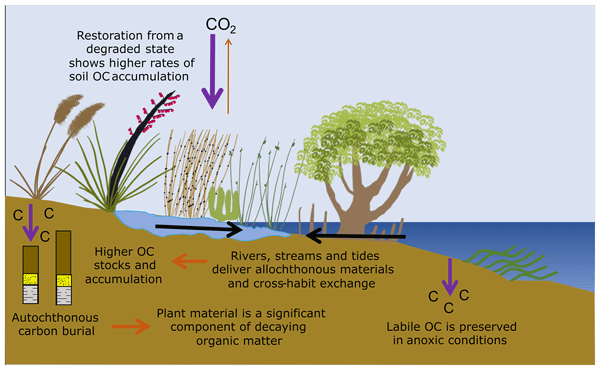
Saltmarshes store carbon in their soils, contributing to climate change mitigation. We analysed five sites across New Zealand and found that carbon storage and accumulation rates vary widely with geomorphic setting, land use history and sediment inputs. Plant material was a major source of carbon in the soil and has been preserved in basal sediments for several centuries. These results improve national blue carbon estimates and highlight the role of saltmarshes as natural climate solutions.
Hana Ishii, Osamu Seki, Masanobu Yamamoto, and Bella Duncan
Clim. Past, 22, 585–604, https://doi.org/10.5194/cp-22-585-2026, https://doi.org/10.5194/cp-22-585-2026, 2026
Short summary
Short summary
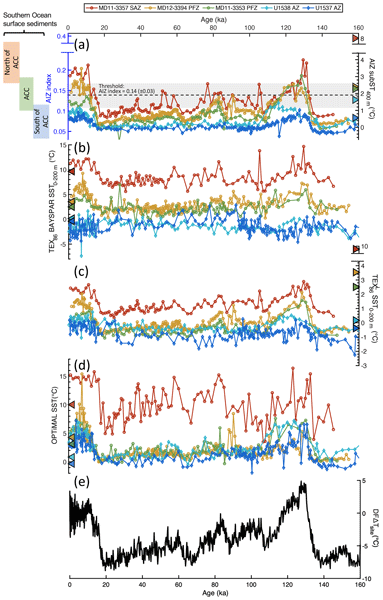
We explore the utility of the archaeal-derived lipid biomarker as paleoenvironmental proxies in the Southern Ocean. Based on a reanalysis of the Southern Ocean dataset, we propose a new indicator for reconstructing zonal water mass movements in the Southern Ocean and temperatures in the Antarctic Zone. Applying this method to late Pleistocene sediment cores validates its reliability, confirming a valuable new tool for reconstructing the paleoenvironment of the Southern Ocean.
Andrés S. Rigual-Hernández, Amy Leventer, Manuel Fernández-Barba, José A. Flores, Gabriel Navarro, Johan Etourneau, Dimitris Evangelinos, Megan Duffy, Carlota Escutia, Fernando Bohoyo, José M. Sánchez-Santos, Manon Sabourdy, Francisco J. Jiménez-Espejo, and María A. Bárcena
Biogeosciences, 22, 7205–7232, https://doi.org/10.5194/bg-22-7205-2025, https://doi.org/10.5194/bg-22-7205-2025, 2025
Short summary
Short summary
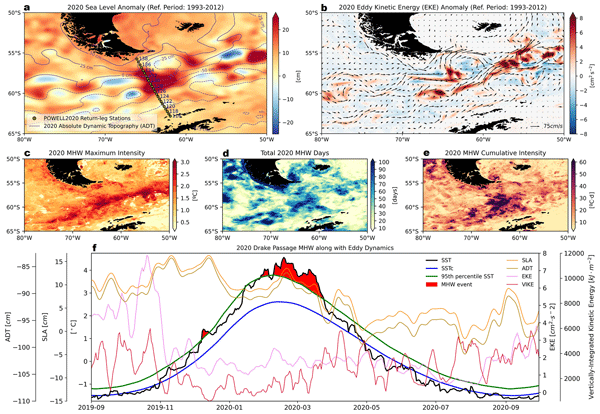
We studied the abundance and composition of key phytoplankton groups in the Drake Passage and Antarctic Peninsula before and during a marine heatwave in summer 2020. An anticyclonic eddy transported warmer waters into the southern Drake Passage. This led to higher diatom abundance and an increase in the abundance of a small diatom species in the southern Drake Passage while reducing coccolithophore populations. The consequences on marine ecosystems and biogeochemical cycles remain uncertain.
Peter K. Bijl, Kasia K. Śliwińska, Bella Duncan, Arnaud Huguet, Sebastian Naeher, Ronnakrit Rattanasriampaipong, Claudia Sosa-Montes de Oca, Alexandra Auderset, Melissa A. Berke, Bum Soo Kim, Nina Davtian, Tom Dunkley Jones, Desmond D. Eefting, Felix J. Elling, Pierrick Fenies, Gordon N. Inglis, Lauren O'Connor, Richard D. Pancost, Francien Peterse, Addison Rice, Appy Sluijs, Devika Varma, Wenjie Xiao, and Yi Ge Zhang
Biogeosciences, 22, 6465–6508, https://doi.org/10.5194/bg-22-6465-2025, https://doi.org/10.5194/bg-22-6465-2025, 2025
Short summary
Short summary
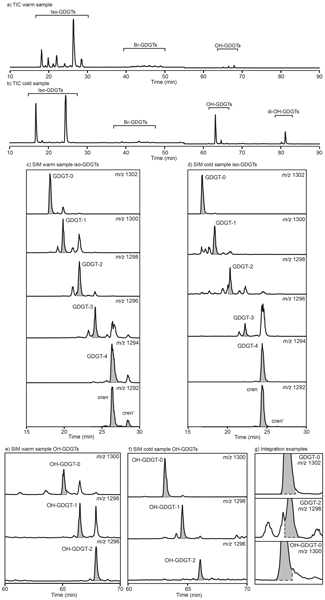
Many academic laboratories worldwide process environmental samples for analysis of membrane lipid molecules of archaea, for the reconstruction of past environmental conditions. However, the sample workup scheme involves many steps, each of which has a risk of contamination or bias, affecting the results. This paper reviews steps involved in sampling, extraction and analysis of lipids, interpretation and archiving of the data. This ensures reproducible, reusable, comparable and consistent data.
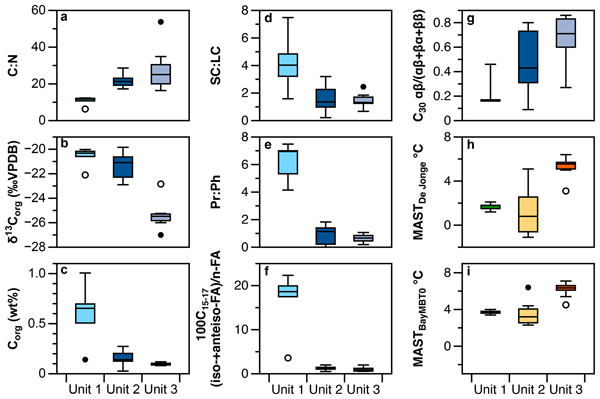
Marjolaine Verret, Sebastian Naeher, Denis Lacelle, Catherine Ginnane, Warren Dickinson, Kevin Norton, Jocelyn Turnbull, and Richard Levy
Biogeosciences, 22, 5771–5786, https://doi.org/10.5194/bg-22-5771-2025, https://doi.org/10.5194/bg-22-5771-2025, 2025
Short summary
Short summary
15 million years ago, the McMurdo Dry Valleys of Antarctica were dominated by a tundra environment. In contrast, the modern environment is amongst the coldest and driest on Earth. Using a permafrost core, this paper investigates the shift from a tundra- to a bacteria-dominated landscape. By differentiating between ancient and modern organic material, we further our understanding of preservation of ancient organic material and its response and contribution to future climate change.
Zanna Chase, Karen E. Kohfeld, Amy Leventer, David Lund, Xavier Crosta, Laurie Menviel, Helen C. Bostock, Matthew Chadwick, Samuel L. Jaccard, Jacob Jones, Alice Marzocchi, Katrin J. Meissner, Elisabeth Sikes, Louise C. Sime, and Luke Skinner
EGUsphere, https://doi.org/10.5194/egusphere-2025-3504, https://doi.org/10.5194/egusphere-2025-3504, 2025
Short summary
Short summary
The impact of recent dramatic declines in Antarctic sea ice on the Earth system are uncertain. We reviewed how sea ice affects ocean circulation, ice sheets, winds, and the carbon cycle by considering theory and modern observations alongside paleo-proxy reconstructions. We found evidence for connections between sea ice and these systems but also conflicting results, which point to missing knowledge. Our work highlights the complex role of sea ice in the Earth system.
Bella J. Duncan, Robert McKay, Richard Levy, Joseph G. Prebble, Timothy Naish, Osamu Seki, Christoph Kraus, Heiko Moossen, G. Todd Ventura, Denise K. Kulhanek, and James Bendle
EGUsphere, https://doi.org/10.5194/egusphere-2024-4021, https://doi.org/10.5194/egusphere-2024-4021, 2025
Preprint archived
Short summary
Short summary
We use plant wax compound specific stable isotopes to investigate how ancient Antarctic vegetation adapted to glacial conditions 23 million years ago. We find plants became less water efficient to prioritise photosynthesis during short, harsh growing seasons. Ecosystem changes also included enhanced aridity, and a shift to a stunted, low elevation vegetation. This shows the adaptability of ancient Antarctic vegetation under atmospheric CO2 conditions comparable to modern.
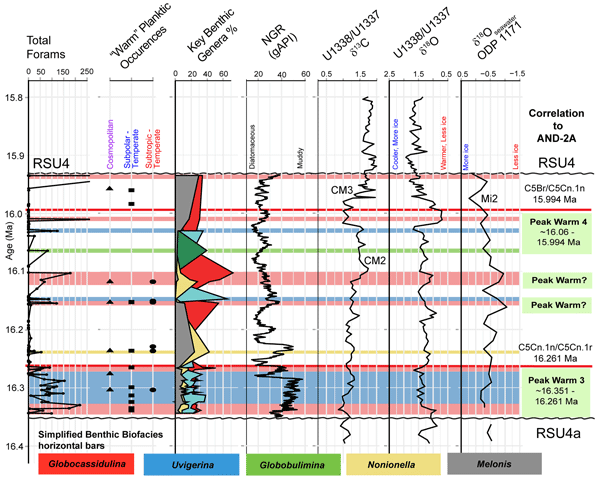
Samantha E. Bombard, R. Mark Leckie, Imogen M. Browne, Amelia E. Shevenell, Robert M. McKay, David M. Harwood, and the IODP Expedition 374 Scientists
J. Micropalaeontol., 43, 383–421, https://doi.org/10.5194/jm-43-383-2024, https://doi.org/10.5194/jm-43-383-2024, 2024
Short summary
Short summary
The Ross Sea record of the Miocene Climatic Optimum (~16.9–14.7 Ma) and the Middle Miocene Climate Transition (~14.7–13.8 Ma) can provide critical insights into the Antarctic ocean–cryosphere system during an ancient time of extreme warmth and subsequent cooling. Benthic foraminifera inform us about water masses, currents, and glacial conditions in the Ross Sea, and planktic foram invaders can inform us of when warm waters melted the Antarctic Ice Sheet in the past.
Chinmay Dash, Yeong Bae Seong, Ajay Kumar Singh, Min Kyung Lee, Jae Il Lee, Kyu-Cheul Yoo, Hyun Hee Rhee, and Byung Yong Yu
Clim. Past Discuss., https://doi.org/10.5194/cp-2024-38, https://doi.org/10.5194/cp-2024-38, 2024
Revised manuscript not accepted
Short summary
Short summary
This study explores sediment core RS15-LC47 from the Ross Sea over the past 800,000 years, examining changes in sea-ice dynamics and deposition environments. It integrates various data to reveal shifts related to Circumpolar Deep Water influx and Antarctic currents, particularly during significant climate transitions. Results highlight potential West Antarctic Ice Sheet collapses in warmer periods, offering new insights into the area's paleoclimate and sedimentary processes.
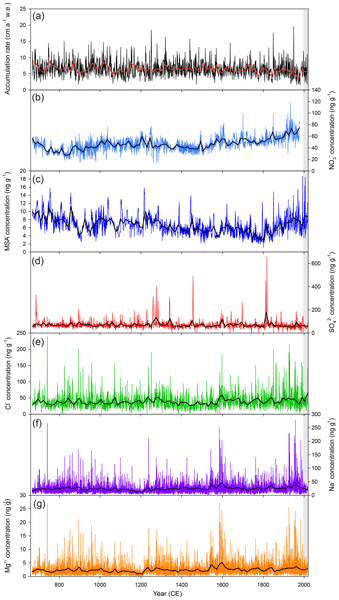
V. Holly L. Winton, Robert Mulvaney, Joel Savarino, Kyle R. Clem, and Markus M. Frey
Clim. Past, 20, 1213–1232, https://doi.org/10.5194/cp-20-1213-2024, https://doi.org/10.5194/cp-20-1213-2024, 2024
Short summary
Short summary
In 2018, a new 120 m ice core was drilled in a region located under the Antarctic ozone hole. We present the first results including a 1300-year record of snow accumulation and aerosol chemistry. We investigate the aerosol and moisture source regions and atmospheric processes related to the ice core record and discuss what this means for developing a record of past ultraviolet radiation and ozone depletion using the stable isotopic composition of nitrate measured in the same ice core.
Isabel A. Dove, Ian W. Bishop, Xavier Crosta, Natascha Riedinger, R. Patrick Kelly, and Rebecca S. Robinson
EGUsphere, https://doi.org/10.5194/egusphere-2023-2564, https://doi.org/10.5194/egusphere-2023-2564, 2023
Preprint archived
Short summary
Short summary
The diatom-bound nitrogen isotope proxy is used to study how efficiently diatoms in the Southern Ocean help to remove CO2 from the atmosphere, but may be biased by different diatom species. We examine a specific type of diatom, Chaetoceros resting spores (CRS), commonly preserved in Southern Ocean sediments. We find that CRS record surprisingly low δ15NDB values compared to other diatoms, yet changes in their relative abundance over time does not significantly bias previously published records.
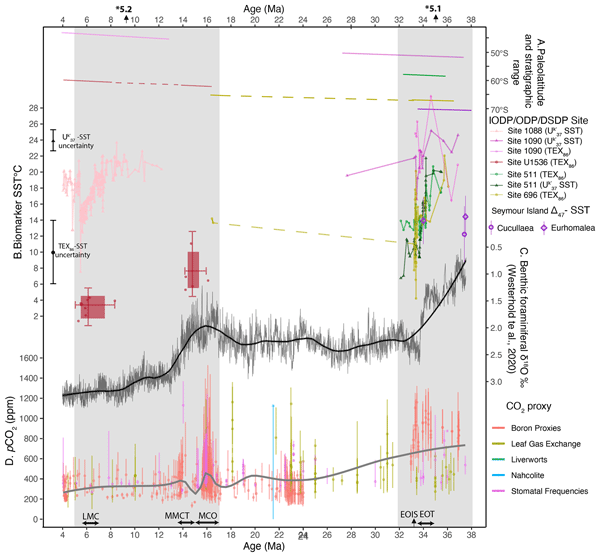
Frida S. Hoem, Adrián López-Quirós, Suzanna van de Lagemaat, Johan Etourneau, Marie-Alexandrine Sicre, Carlota Escutia, Henk Brinkhuis, Francien Peterse, Francesca Sangiorgi, and Peter K. Bijl
Clim. Past, 19, 1931–1949, https://doi.org/10.5194/cp-19-1931-2023, https://doi.org/10.5194/cp-19-1931-2023, 2023
Short summary
Short summary
We present two new sea surface temperature (SST) records in comparison with available SST records to reconstruct South Atlantic paleoceanographic evolution. Our results show a low SST gradient in the Eocene–early Oligocene due to the persistent gyral circulation. A higher SST gradient in the Middle–Late Miocene infers a stronger circumpolar current. The southern South Atlantic was the coldest region in the Southern Ocean and likely the main deep-water formation location in the Middle Miocene.
Georgia R. Grant, Jonny H. T. Williams, Sebastian Naeher, Osamu Seki, Erin L. McClymont, Molly O. Patterson, Alan M. Haywood, Erik Behrens, Masanobu Yamamoto, and Katelyn Johnson
Clim. Past, 19, 1359–1381, https://doi.org/10.5194/cp-19-1359-2023, https://doi.org/10.5194/cp-19-1359-2023, 2023
Short summary
Short summary
Regional warming will differ from global warming, and climate models perform poorly in the Southern Ocean. We reconstruct sea surface temperatures in the south-west Pacific during the mid-Pliocene, a time 3 million years ago that represents the long-term outcomes of 3 °C warming, which is expected for the future. Comparing these results to climate model simulations, we show that the south-west Pacific region will warm by 1 °C above the global average if atmospheric CO2 remains above 350 ppm.
Elizabeth R. Thomas, Diana O. Vladimirova, Dieter R. Tetzner, B. Daniel Emanuelsson, Nathan Chellman, Daniel A. Dixon, Hugues Goosse, Mackenzie M. Grieman, Amy C. F. King, Michael Sigl, Danielle G. Udy, Tessa R. Vance, Dominic A. Winski, V. Holly L. Winton, Nancy A. N. Bertler, Akira Hori, Chavarukonam M. Laluraj, Joseph R. McConnell, Yuko Motizuki, Kazuya Takahashi, Hideaki Motoyama, Yoichi Nakai, Franciéle Schwanck, Jefferson Cardia Simões, Filipe Gaudie Ley Lindau, Mirko Severi, Rita Traversi, Sarah Wauthy, Cunde Xiao, Jiao Yang, Ellen Mosely-Thompson, Tamara V. Khodzher, Ludmila P. Golobokova, and Alexey A. Ekaykin
Earth Syst. Sci. Data, 15, 2517–2532, https://doi.org/10.5194/essd-15-2517-2023, https://doi.org/10.5194/essd-15-2517-2023, 2023
Short summary
Short summary
The concentration of sodium and sulfate measured in Antarctic ice cores is related to changes in both sea ice and winds. Here we have compiled a database of sodium and sulfate records from 105 ice core sites in Antarctica. The records span all, or part, of the past 2000 years. The records will improve our understanding of how winds and sea ice have changed in the past and how they have influenced the climate of Antarctica over the past 2000 years.
Maria-Elena Vorrath, Juliane Müller, Paola Cárdenas, Thomas Opel, Sebastian Mieruch, Oliver Esper, Lester Lembke-Jene, Johan Etourneau, Andrea Vieth-Hillebrand, Niko Lahajnar, Carina B. Lange, Amy Leventer, Dimitris Evangelinos, Carlota Escutia, and Gesine Mollenhauer
Clim. Past, 19, 1061–1079, https://doi.org/10.5194/cp-19-1061-2023, https://doi.org/10.5194/cp-19-1061-2023, 2023
Short summary
Short summary
Sea ice is important to stabilize the ice sheet in Antarctica. To understand how the global climate and sea ice were related in the past we looked at ancient molecules (IPSO25) from sea-ice algae and other species whose dead cells accumulated on the ocean floor over time. With chemical analyses we could reconstruct the history of sea ice and ocean temperatures of the past 14 000 years. We found out that sea ice became less as the ocean warmed, and more phytoplankton grew towards today's level.
Matthew Chadwick, Xavier Crosta, Oliver Esper, Lena Thöle, and Karen E. Kohfeld
Clim. Past, 18, 1815–1829, https://doi.org/10.5194/cp-18-1815-2022, https://doi.org/10.5194/cp-18-1815-2022, 2022
Short summary
Short summary
Algae preserved in seafloor sediments have allowed us to reconstruct how Antarctic sea ice has varied between cold and warm time periods in the last 130 000 years. The patterns and timings of sea-ice increase and decrease vary between different parts of the Southern Ocean. Sea ice is most sensitive to changing climate at the external edges of Southern Ocean gyres (large areas of rotating ocean currents).
Xavier Crosta, Karen E. Kohfeld, Helen C. Bostock, Matthew Chadwick, Alice Du Vivier, Oliver Esper, Johan Etourneau, Jacob Jones, Amy Leventer, Juliane Müller, Rachael H. Rhodes, Claire S. Allen, Pooja Ghadi, Nele Lamping, Carina B. Lange, Kelly-Anne Lawler, David Lund, Alice Marzocchi, Katrin J. Meissner, Laurie Menviel, Abhilash Nair, Molly Patterson, Jennifer Pike, Joseph G. Prebble, Christina Riesselman, Henrik Sadatzki, Louise C. Sime, Sunil K. Shukla, Lena Thöle, Maria-Elena Vorrath, Wenshen Xiao, and Jiao Yang
Clim. Past, 18, 1729–1756, https://doi.org/10.5194/cp-18-1729-2022, https://doi.org/10.5194/cp-18-1729-2022, 2022
Short summary
Short summary
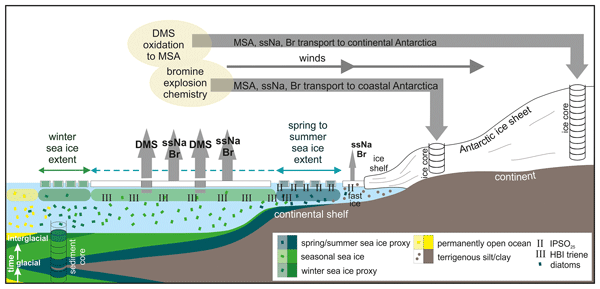
Despite its importance in the global climate, our knowledge of Antarctic sea-ice changes throughout the last glacial–interglacial cycle is extremely limited. As part of the Cycles of Sea Ice Dynamics in the Earth system (C-SIDE) Working Group, we review marine- and ice-core-based sea-ice proxies to provide insights into their applicability and limitations. By compiling published records, we provide information on Antarctic sea-ice dynamics over the past 130 000 years.
Christopher J. Hollis, Sebastian Naeher, Christopher D. Clowes, B. David A. Naafs, Richard D. Pancost, Kyle W. R. Taylor, Jenny Dahl, Xun Li, G. Todd Ventura, and Richard Sykes
Clim. Past, 18, 1295–1320, https://doi.org/10.5194/cp-18-1295-2022, https://doi.org/10.5194/cp-18-1295-2022, 2022
Short summary
Short summary
Previous studies of Paleogene greenhouse climates identified short-lived global warming events, termed hyperthermals, that provide insights into global warming scenarios. Within the same time period, we have identified a short-lived cooling event in the late Paleocene, which we term a hypothermal, that has potential to provide novel insights into the feedback mechanisms at work in a greenhouse climate.
Ryan A. Green, Laurie Menviel, Katrin J. Meissner, Xavier Crosta, Deepak Chandan, Gerrit Lohmann, W. Richard Peltier, Xiaoxu Shi, and Jiang Zhu
Clim. Past, 18, 845–862, https://doi.org/10.5194/cp-18-845-2022, https://doi.org/10.5194/cp-18-845-2022, 2022
Short summary
Short summary
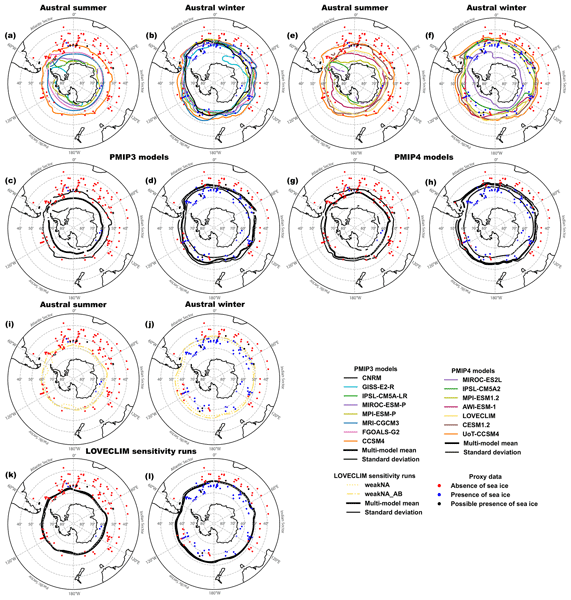
Climate models are used to predict future climate changes and as such, it is important to assess their performance in simulating past climate changes. We analyze seasonal sea-ice cover over the Southern Ocean simulated from numerical PMIP3, PMIP4 and LOVECLIM simulations during the Last Glacial Maximum (LGM). Comparing these simulations to proxy data, we provide improved estimates of LGM seasonal sea-ice cover. Our estimate of summer sea-ice extent is 20 %–30 % larger than previous estimates.
Jacob Jones, Karen E. Kohfeld, Helen Bostock, Xavier Crosta, Melanie Liston, Gavin Dunbar, Zanna Chase, Amy Leventer, Harris Anderson, and Geraldine Jacobsen
Clim. Past, 18, 465–483, https://doi.org/10.5194/cp-18-465-2022, https://doi.org/10.5194/cp-18-465-2022, 2022
Short summary
Short summary
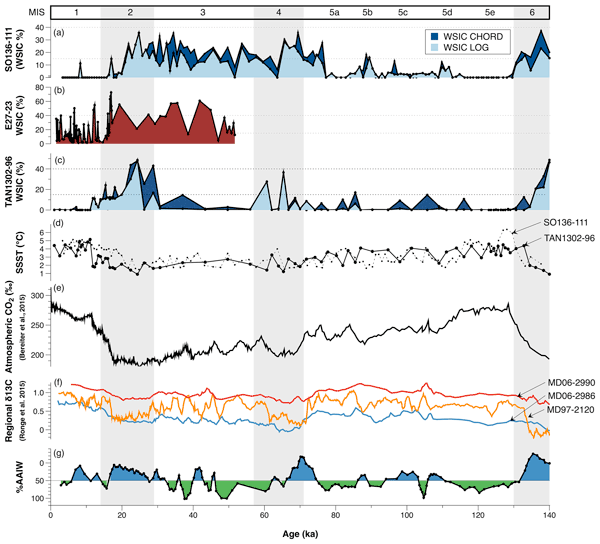
We provide new winter sea ice and summer sea surface temperature estimates for marine core TAN1302-96 (59° S, 157° E) in the Southern Ocean. We find that sea ice was not consolidated over the core site until ~65 ka and therefore believe that sea ice may not have been a major contributor to early glacial CO2 drawdown. Sea ice does appear to have coincided with Antarctic Intermediate Water production and subduction, suggesting it may have influenced intermediate ocean circulation changes.
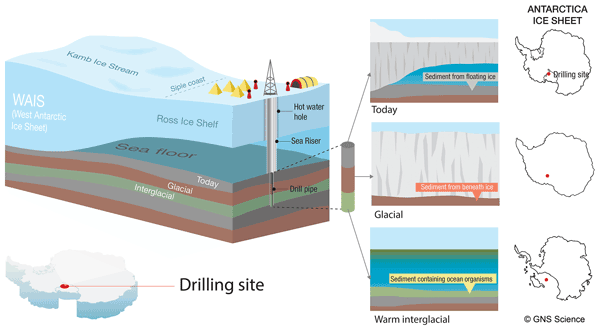
Molly O. Patterson, Richard H. Levy, Denise K. Kulhanek, Tina van de Flierdt, Huw Horgan, Gavin B. Dunbar, Timothy R. Naish, Jeanine Ash, Alex Pyne, Darcy Mandeno, Paul Winberry, David M. Harwood, Fabio Florindo, Francisco J. Jimenez-Espejo, Andreas Läufer, Kyu-Cheul Yoo, Osamu Seki, Paolo Stocchi, Johann P. Klages, Jae Il Lee, Florence Colleoni, Yusuke Suganuma, Edward Gasson, Christian Ohneiser, José-Abel Flores, David Try, Rachel Kirkman, Daleen Koch, and the SWAIS 2C Science Team
Sci. Dril., 30, 101–112, https://doi.org/10.5194/sd-30-101-2022, https://doi.org/10.5194/sd-30-101-2022, 2022
Short summary
Short summary
How much of the West Antarctic Ice Sheet will melt and how quickly it will happen when average global temperatures exceed 2 °C is currently unknown. Given the far-reaching and international consequences of Antarctica’s future contribution to global sea level rise, the SWAIS 2C Project was developed in order to better forecast the size and timing of future changes.
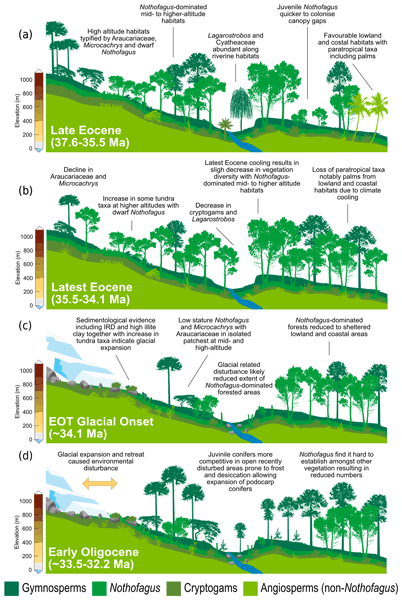
Nick Thompson, Ulrich Salzmann, Adrián López-Quirós, Peter K. Bijl, Frida S. Hoem, Johan Etourneau, Marie-Alexandrine Sicre, Sabine Roignant, Emma Hocking, Michael Amoo, and Carlota Escutia
Clim. Past, 18, 209–232, https://doi.org/10.5194/cp-18-209-2022, https://doi.org/10.5194/cp-18-209-2022, 2022
Short summary
Short summary
New pollen and spore data from the Antarctic Peninsula region reveal temperate rainforests that changed and adapted in response to Eocene climatic cooling, roughly 35.5 Myr ago, and glacially related disturbance in the early Oligocene, approximately 33.5 Myr ago. The timing of these events indicates that the opening of ocean gateways alone did not trigger Antarctic glaciation, although ocean gateways may have played a role in climate cooling.
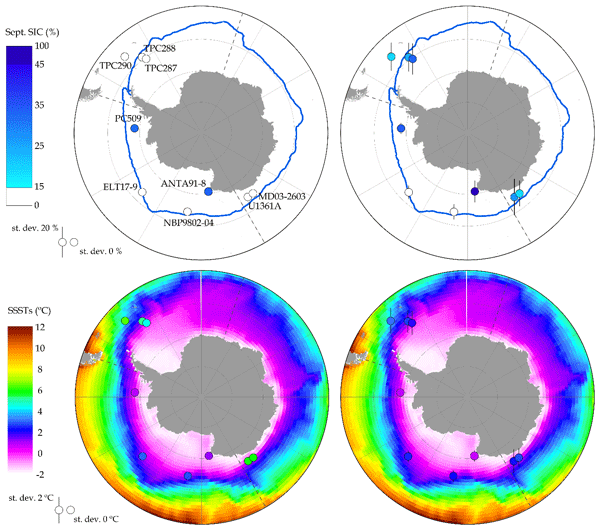
Matthew Chadwick, Claire S. Allen, Louise C. Sime, Xavier Crosta, and Claus-Dieter Hillenbrand
Clim. Past, 18, 129–146, https://doi.org/10.5194/cp-18-129-2022, https://doi.org/10.5194/cp-18-129-2022, 2022
Short summary
Short summary
Algae preserved in marine sediments have allowed us to reconstruct how much winter sea ice was present around Antarctica during a past time period (130 000 years ago) when the climate was warmer than today. The patterns of sea-ice increase and decrease vary between different parts of the Southern Ocean. The Pacific sector has a largely stable sea-ice extent, whereas the amount of sea ice in the Atlantic sector is much more variable with bigger decreases and increases than other regions.
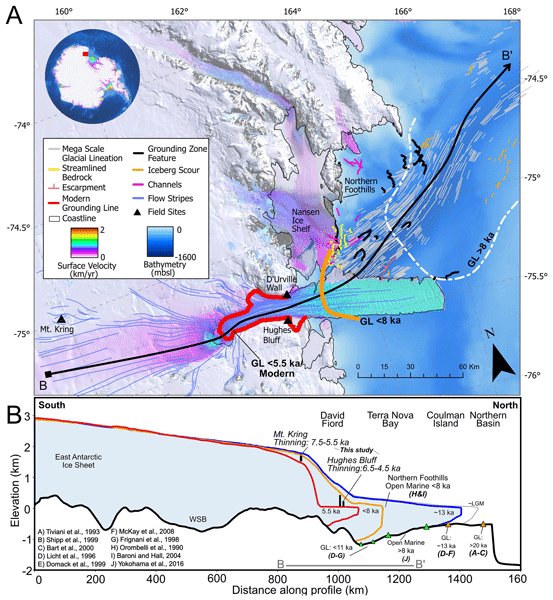
Jamey Stutz, Andrew Mackintosh, Kevin Norton, Ross Whitmore, Carlo Baroni, Stewart S. R. Jamieson, Richard S. Jones, Greg Balco, Maria Cristina Salvatore, Stefano Casale, Jae Il Lee, Yeong Bae Seong, Robert McKay, Lauren J. Vargo, Daniel Lowry, Perry Spector, Marcus Christl, Susan Ivy Ochs, Luigia Di Nicola, Maria Iarossi, Finlay Stuart, and Tom Woodruff
The Cryosphere, 15, 5447–5471, https://doi.org/10.5194/tc-15-5447-2021, https://doi.org/10.5194/tc-15-5447-2021, 2021
Short summary
Short summary
Understanding the long-term behaviour of ice sheets is essential to projecting future changes due to climate change. In this study, we use rocks deposited along the margin of the David Glacier, one of the largest glacier systems in the world, to reveal a rapid thinning event initiated over 7000 years ago and endured for ~ 2000 years. Using physical models, we show that subglacial topography and ocean heat are important drivers for change along this sector of the Antarctic Ice Sheet.
Kelly-Anne Lawler, Giuseppe Cortese, Matthieu Civel-Mazens, Helen Bostock, Xavier Crosta, Amy Leventer, Vikki Lowe, John Rogers, and Leanne K. Armand
Earth Syst. Sci. Data, 13, 5441–5453, https://doi.org/10.5194/essd-13-5441-2021, https://doi.org/10.5194/essd-13-5441-2021, 2021
Short summary
Short summary
Radiolarians found in marine sediments are used to reconstruct past Southern Ocean environments. This requires a comprehensive modern dataset. The Southern Ocean Radiolarian (SO-RAD) dataset includes radiolarian counts from sites in the Southern Ocean. It can be used for palaeoceanographic reconstructions or to study modern species diversity and abundance. We describe the data collection and include recommendations for users unfamiliar with procedures typically used by the radiolarian community.
Kate E. Ashley, Xavier Crosta, Johan Etourneau, Philippine Campagne, Harry Gilchrist, Uthmaan Ibraheem, Sarah E. Greene, Sabine Schmidt, Yvette Eley, Guillaume Massé, and James Bendle
Biogeosciences, 18, 5555–5571, https://doi.org/10.5194/bg-18-5555-2021, https://doi.org/10.5194/bg-18-5555-2021, 2021
Short summary
Short summary
We explore the potential for the use of carbon isotopes of algal fatty acid as a new proxy for past primary productivity in Antarctic coastal zones. Coastal polynyas are hotspots of primary productivity and are known to draw down CO2 from the atmosphere. Reconstructions of past productivity changes could provide a baseline for the role of these areas as sinks for atmospheric CO2.
Cited articles
Al-Handal, A. Y. and Wulff, A.: Marine benthic diatoms from Potter Cove, King George Island, Antarctica, https://doi.org/10.1515/BOT.2008.007, 2008.
Allen, C. S. and Weich, Z. C.: Variety and Distribution of Diatom-Based Sea Ice Proxies in Antarctic Marine Sediments of the Past 2000 Years, Geosciences, 12, https://doi.org/10.3390/geosciences12080282, 2022.
Almandoz, G. O., Ferreyra, G. A., Schloss, I. R., Dogliotti, A. I., Rupolo, V., Paparazzo, F. E., Esteves, J. L., and Ferrario, M. E.: Distribution and ecology of Pseudo-nitzschia species (Bacillariophyceae) in surface waters of the Weddell Sea (Antarctica), Polar Biol., 31, 429–442, https://doi.org/10.1007/s00300-007-0369-9, 2008.
Andreoli, C., Tolomio, C., Moro, I., Radice, M., Moschin, E., and Bellato, S.: Diatoms and dinoflagellates in Terra Nova Bay (Ross Sea-Antarctica) during austral summer 1990, Polar Biol., 15, 465–475, https://doi.org/10.1007/BF00237460, 1995.
Annett, A. L., Carson, D. S., Crosta, X., Clarke, A., and Ganeshram, R. S.: Seasonal progression of diatom assemblages in surface waters of Ryder Bay, Antarctica, Polar Biol., 33, 13–29, https://doi.org/10.1007/s00300-009-0681-7, 2010.
Appleby, P. G.: Chronostratigraphic Techniques in Recent Sediments, in: Tracking Environmental Change Using Lake Sediments. Developments in Paleoenvironmental Research, edited by: Last, W. M. and Smol, J. P., vol 1, Springer, Dordrecht, https://doi.org/10.1007/0-306-47669-X_9, 2002.
Armand, L. K., Crosta, X., Romero, O., and Pichon, J.-J.: The biogeography of major diatom taxa in Southern Ocean sediments: 1. Sea ice related species, Palaeogeogr. Palaeocl., 223, 93–126, https://doi.org/10.1016/j.palaeo.2005.02.015, 2005.
Arrigo, K. R.: A coupled ocean-ecosystem model of the Ross Sea: 2. Iron regulation of phytoplankton taxonomic variability and primary production, J. Geophys. Res., 108, https://doi.org/10.1029/2001jc000856, 2003.
Arrigo, K. R. and van Dijken, G. L.: Annual changes in sea-ice, chlorophyll a, and primary production in the Ross Sea, Antarctica, Deep-Sea Res. Pt. II, 51, 117–138, https://doi.org/10.1016/j.dsr2.2003.04.003, 2004.
Arrigo, K. R., DiTullio, G. R., Dunbar, R. B., Robinson, D. H., VanWoert, M., Worthen, D. L., and Lizotte, M. P.: Phytoplankton taxonomic variability in nutrient utilization and primary production in the Ross Sea, J. Geophys. Res.-Oceans, 105, 8827–8846, https://doi.org/10.1029/1998JC000289, 2000.
Arrigo, K. R., Van Dijken, G. L., and Bushinsky, S.: Primary production in the Southern Ocean, 1997–2006, J. Geophys. Res., 113, https://doi.org/10.1029/2007jc004551, 2008.
Arrigo, K. R., van Dijken, G. L., and Strong, A. L.: Environmental controls of marine productivity hot spots around Antarctica, J. Geophys. Res.-Oceans, 120, 5545–5565, https://doi.org/10.1002/2015jc010888, 2015.
Ashley, K. E., Crosta, X., Etourneau, J., Campagne, P., Gilchrist, H., Ibraheem, U., Greene, S. E., Schmidt, S., Eley, Y., Massé, G., and Bendle, J.: Exploring the use of compound-specific carbon isotopes as a palaeoproductivity proxy off the coast of Adélie Land, East Antarctica, Biogeosciences, 18, 5555–5571, https://doi.org/10.5194/bg-18-5555-2021, 2021.
Baldauf, J. G. and Barron, J. A.: 29. Diatom Biostratigraphy: Kerguelen Plateau and Prydz Bay Regions of the Southern Ocean, Proceedings of the Ocean Drilling Program, Scientific Results, vol. 119, https://doi.org/10.2973/odp.proc.sr.119.135.1991, 1991.
Barbara, L., Crosta, X., Leventer, A., Schmidt, S., Etourneau, J., Domack, E., and Massé, G.: Environmental responses of the Northeast Antarctic Peninsula to the Holocene climate variability, Paleoceanography, 31, 131–147, https://doi.org/10.1002/2015PA002785, 2016.
Beans, C., Hecq, J.-H., Koubbi, P., Vallet, C., Wright, S., and Goffart, A.: A study of the diatom-dominated microplankton summer assemblages in coastal waters from Terre Adélie to the Mertz Glacier, East Antarctica (139° E–145° E), Polar Biol., 31, 1101–1117, https://doi.org/10.1007/s00300-008-0452-x, 2008.
Belt, S. T.: Source-specific biomarkers as proxies for Arctic and Antarctic sea ice, Org. Geochem., 125, 277–298, https://doi.org/10.1016/j.orggeochem.2018.10.002, 2018.
Belt, S. T. and Müller, J.: The Arctic sea ice biomarker IP25: a review of current understanding, recommendations for future research and applications in palaeo sea ice reconstructions, Quaternary Sci. Rev., 79, 9–25, https://doi.org/10.1016/j.quascirev.2012.12.001, 2013.
Belt, S. T., Smik, L., Brown, T. A., Kim, J.-H., Rowland, S., Allen, C. S., Gal, J.-K., Shin, K.-H., Lee, J. I., and Taylor, K.: Source identification and distribution reveals the potential of the geochemical Antarctic sea ice proxy IPSO25, Nat. Commun., 7, 12655, https://doi.org/10.1038/ncomms12655, 2016.
Bhattacharya, S., Mapder, T., Fernandes, S., Roy, C., Sarkar, J., Rameez, M. J., Mandal, S., Sar, A., Chakraborty, A. K., Mondal, N., Chatterjee, S., Dam, B., Peketi, A., Chakraborty, R., Mazumdar, A., and Ghosh, W.: Sedimentation rate and organic matter dynamics shape microbiomes across a continental margin, Biogeosciences, 18, 5203–5222, https://doi.org/10.5194/bg-18-5203-2021, 2021.
Bolinesi, F., Saggiomo, M., Ardini, F., Castagno, P., Cordone, A., Fusco, G., Rivaro, P., Saggiomo, V., and Mangoni, O.: Spatial-Related Community Structure and Dynamics in Phytoplankton of the Ross Sea, Antarctica, Frontiers in Marine Science, 7, https://doi.org/10.3389/fmars.2020.574963, 2020.
Boyd, P. W., Lennartz, S. T., Glover, D. M., and Doney, S. C.: Biological ramifications of climate-change-mediated oceanic multi-stressors, Nat. Clim. Change, 5, 71–79, https://doi.org/10.1038/NCLIMATE2441, 2015.
Brett, G. M., Irvin, A., Rack, W., Haas, C., Langhorne, P. J., and Leonard, G. H.: Variability in the distribution of fast ice and the sub-ice platelet layer near McMurdo Ice Shelf, J. Geophys. Res.-Oceans, 125, e2019JC015678, https://doi.org/10.1029/2019JC015678, 2020.
Bruel, R. and Sabatier, P.: serac: an R package for ShortlivEd RAdionuclide chronology of recent sediment cores, J. Environ. Radioact., 225, 106449, https://doi.org/10.1016/j.jenvrad.2020.106449, 2020.
Burckle, L. H.: Diatom distribution and paleoceanographic reconstruction in the Southern Ocean – Present and Last Glacial Maximum, Mar. Micropaleontol., 9, 241–261, https://doi.org/10.1016/0377-8398(84)90015-X, 1984.
Burckle, L. H., Jacobs, S. S., and McLaughlin, R. B.: Late austral spring diatom distribution between New Zealand and the Ross Ice Shelf, Antarctica: Hydrographic and sediment correlations, Micropaleontology, 33, 74–81, https://doi.org/10.2307/1485528, 1987.
Campagne, P., Crosta, X., Schmidt, S., Noëlle Houssais, M., Ther, O., and Massé, G.: Sedimentary response to sea ice and atmospheric variability over the instrumental period off Adélie Land, East Antarctica, Biogeosciences, 13, 4205–4218, https://doi.org/10.5194/bg-13-4205-2016, 2016.
Cau, A., Ennas, C., Moccia, D., Mangoni, O., Bolinesi, F., Saggiomo, M., Granata, A., Guglielmo, L., Swadling, K. M., and Pusceddu, A.: Particulate organic matter release below melting sea ice (Terra Nova Bay, Ross Sea, Antarctica): Possible relationships with zooplankton, J. Marine Syst., 217, https://doi.org/10.1016/j.jmarsys.2021.103510, 2021.
Chiarini, F., Ravaioli, M., and Capotondi, L.: Interannual variability of vertical particle fluxes in the Ross Sea (Antarctica), Nat. Conserv., 34, 417–440, https://doi.org/10.3897/natureconservation.34.30732, 2019.
Crosta, X. and Koç, N.: Chapter eight diatoms: From micropaleontology to isotope geochemistry, Developments in Marine Geology, 1, 327–369, https://doi.org/10.1016/S1572-5480(07)01013-5, 2007.
Crosta, X., Sturm, A., Armand, L., and Pichon, J.-J.: Late Quaternary sea ice history in the Indian sector of the Southern Ocean as recorded by diatom assemblages, Mar. Micropaleontol., 50, 209–223, https://doi.org/10.1016/S0377-8398(03)00072-0, 2004.
Crosta, X., Romero, O., Armand, L. K., and Pichon, J.-J.: The biogeography of major diatom taxa in Southern Ocean sediments: 2. Open ocean related species, Palaeogeogr. Palaeocl., 223, 66–92, 2005.
Crosta, X., Denis, D., and Ther, O.: Sea ice seasonality during the holocene, adelie land, east antarctica, Mar. Micropaleontol., 66, 222–232, https://doi.org/10.1016/j.marmicro.2007.10.001, 2008.
Crosta, X., Shukla, S. K., Ther, O., Ikehara, M., Yamane, M., and Yokoyama, Y.: Last Abundant Appearance Datum of Hemidiscus karstenii driven by climate change, Mar. Micropaleontol., 157, 101861, https://doi.org/10.1016/j.marmicro.2020.101861, 2020.
Cunningham, W. L. and Leventer, A.: Diatom assemblages in surface sediments of the Ross Sea: relationship to present oceanographic conditions, Antarct. Sci., 10, 134–146, https://doi.org/10.1017/S0954102098000182, 1998.
Cunningham, W. L., Leventer, A., Andrews, J. T., Jennings, A. E., and Licht, K. J.: Late Pleistocene-Holocene marine conditions in the Ross Sea, Antarctica: evidence from the diatom record, The Holocene, 9, 129–139, https://doi.org/10.1191/095968399675624796, 1999.
Dalaiden, Q., Goosse, H., Rezsöhazy, J., and Thomas, E. R.: Reconstructing atmospheric circulation and sea-ice extent in the West Antarctic over the past 200 years using data assimilation, Clim. Dynam., 57, 3479–3503, https://doi.org/10.1007/s00382-021-05879-6, 2021.
Dalaiden, Q., Goosse, H., Holland, P. R., and Barthelemy, A.: Dynamical reconstruction of Southern Ocean and Antarctic climate variability since 1700, Scientific Data, 12, 1574, https://doi.org/10.1038/s41597-025-05808-w, 2025.
Dale, E. R., McDonald, A. J., Coggins, J. H. J., and Rack, W.: Atmospheric forcing of sea ice anomalies in the Ross Sea polynya region, The Cryosphere, 11, 267–280, https://doi.org/10.5194/tc-11-267-2017, 2017.
Dalsgaard, J., John, M. S., Kattner, G., Müller-Navarra, D., and Hagen, W.: Fatty acid trophic markers in the pelagic marine environment, Advances in Marine Biology, Academic Press, 46, 225–340, ISBN 9780120261468, https://doi.org/10.1016/S0065-2881(03)46005-7, 2003.
de Jong, E. M., Winton, V. H. L., Crosta, X., Naeher, S., Duncan, B., Étourneau, J., Lee, J. I., and McKay, R. M.: Biomarkers and diatoms in a transect of southwestern Ross Sea sediment cores, PANGAEA [data set], https://doi.org/10.1594/PANGAEA.989298, 2026.
DeJong, H. B., Dunbar, R. B., Koweek, D. A., Mucciarone, D. A., Bercovici, S. K., and Hansell, D. A.: Net community production and carbon export during the late summer in the Ross Sea, Antarctica, Global Biogeochem. Cy., 31, 473–491, https://doi.org/10.1002/2016GB005417, 2017.
Denis, D., Crosta, X., Zaragosi, S., Romero, O., Martin, B., and Mas, V.: Seasonal and subseasonal climate changes recorded in laminated diatom ooze sediments, Adelie Land, East Antarctica, The Holocene, 16, 1137–1147, https://doi.org/10.1177/0959683606069414, 2006.
Denis, D., Crosta, X., Schmidt, S., Carson, D. S., Ganeshram, R. S., Renssen, H., Crespin, J., Ther, O., Billy, I., and Giraudeau, J.: Holocene productivity changes off Adélie land (East Antarctica), Paleoceanography, 24, https://doi.org/10.1029/2008PA001689, 2009.
Deppeler, S. L. and Davidson, A. T.: Southern Ocean Phytoplankton in a Changing Climate, Frontiers in Marine Science, 4, https://doi.org/10.3389/fmars.2017.00040, 2017.
DiTullio, G., Grebmeier, J., Arrigo, K., Lizotte, M., Robinson, D., Leventer, A., Barry, J., VanWoert, M., and Dunbar, R.: Rapid and early export of Phaeocystis antarctica blooms in the Ross Sea, Antarctica, Nature, 404, 595–598, https://doi.org/10.1038/35007061, 2000.
Dong, Y., Bakker, D. C., Bell, T. G., Yang, M., Landschützer, P., Hauck, J., Rödenbeck, C., Kitidis, V., Bushinsky, S. M., and Liss, P. S.: Direct observational evidence of strong CO2 uptake in the Southern Ocean, Science Advances, 10, eadn5781, https://doi.org/10.1126/sciadv.adn5781, 2024.
Dunbar, R. B., Leventer, A. R., and Mucciarone, D. A.: Water column sediment fluxes in the Ross Sea, Antarctica: Atmospheric and sea ice forcing, J. Geophys. Res.-Oceans, 103, 30741–30759, https://doi.org/10.1029/1998JC900001, 1998.
Eikrem, W., Medlin, L. K., Henderiks, J., Rokitta, S., Rost, B., Probert, I., Throndsen, J., and Edvardsen, B.: Haptophyta, in: Handbook of the Protists, Springer, 1–61, https://doi.org/10.1007/978-3-319-32669-6_38-1, 2016.
Elliott, D. T., Tang, K. W., and Shields, A. R.: Mesozooplankton beneath the summer sea ice in McMurdo Sound, Antarctica: abundance, species composition, and DMSP content, Polar Biol., 32, 113–122, https://doi.org/10.1007/s00300-008-0511-3, 2009.
Esper, O. and Gersonde, R.: New tools for the reconstruction of Pleistocene Antarctic sea ice, Palaeogeogr. Palaeocl., 399, 260–283, https://doi.org/10.1016/j.palaeo.2014.01.019, 2014.
Etourneau, J., Collins, L. G., Willmott, V., Kim, J.-H., Barbara, L., Leventer, A., Schouten, S., Sinninghe Damsté, J. S., Bianchini, A., Klein, V., Crosta, X., and Massé, G.: Holocene climate variations in the western Antarctic Peninsula: evidence for sea ice extent predominantly controlled by changes in insolation and ENSO variability, Clim. Past, 9, 1431–1446, https://doi.org/10.5194/cp-9-1431-2013, 2013.
Fahl, K. and Kattner, G.: Lipid content and fatty acid composition of algal communities in sea-ice and water from the Weddell Sea (Antarctica), Polar Biol., 13, 405–409, https://doi.org/10.1007/BF01681982, 1993.
Fenner, J., Schrader, H.-J., and Wienigk, H.: Diatom phytoplankton studies in the southern Pacific Ocean, composition and correlation to the Antarctic Convergence and its paleoecological significance, Initial Reports of the Deep Sea Drilling Project, https://doi.org/10.2973/dsdp.proc.35.app3.1976, 1976.
Flynn, W.: The determination of low levels of polonium-210 in environmental materials, Anal. Chim. Acta, 43, 221–227, https://doi.org/10.1016/S0003-2670(00)89210-7, 1968.
Froneman, P., Perissinotto, R., McQuaid, C., and Laubscher, R.: Summer distribution of netphytoplankton in the Atlantic sector of the Southern Ocean, Polar Biol., 15, 77–84, https://doi.org/10.1007/BF00241045, 1995.
Fryxell, G. A.: Marine phytoplankton at the Weddell Sea ice edge: seasonal changes at the specific level, Polar Biol., 10, 1–18, https://doi.org/10.1007/BF00238285, 1989.
Fryxell, G. and Prasad, A.: Eucampia antarctica var. recta (Mangin) stat. nov.(Biddulphiaceae, Bacillariophyceae): life stages at the Weddell Sea ice edge, Phycologia, 29, 27–38, 1990.
Garrison, D. L., Buck, K. R., and Fryxell, G. A.: Algal assemblages in Antarctic pack ice and in ice‐edge plankton 1, J. Phycol., 23, 564–572, https://doi.org/10.1111/j.1529-8817.1987.tb04206.x, 1987.
Gersonde, R. and Zielinski, U.: The reconstruction of late Quaternary Antarctic sea-ice distribution – the use of diatoms as a proxy for sea-ice, Palaeogeogr. Palaeocl., 162, 263–286, https://doi.org/10.1016/S0031-0182(00)00131-0, 2000.
Gilmer, G., Riesselman, C. R., Kim, S., Yoo, K. C., Lee, J. I., Lee, M. K., Ginnane, C. E., Rosenheim, B. E., Turnbull, J., and Parker, R.: Increased sea ice duration in Moubray Bay, northwest Ross Sea linked to early Holocene wind strength, Paleoceanogr. Paleocl., 40, e2024PA004930, https://doi.org/10.1029/2024PA004930, 2025.
Grigorov, I., Rigual-Hernandez, A. S., Honjo, S., Kemp, A. E., and Armand, L. K.: Settling fluxes of diatoms to the interior of the Antarctic circumpolar current along 170° W, Deep-Sea Res. Pt. I, 93, 1–13, https://doi.org/10.1016/j.dsr.2014.07.008, 2014.
Guo, X., Zhao, J., Pan, J., and Sun, Y.: Organic matter composition in sediments recording sea surface phytoplankton community structure in Prydz Bay of Antarctica, Org. Geochem., 104828, https://doi.org/10.1016/j.orggeochem.2024.104828, 2024.
Haddad, R. I., Martens, C. S., and Farrington, J. W.: Quantifying early diagenesis of fatty acids in a rapidly accumulating coastal marine sediment, Org. Geochem., 19, 205–216, https://doi.org/10.1016/0146-6380(92)90037-X, 1992.
Hamm, C., Reigstad, M., Riser, C. W., Mühlebach, A., and Wassmann, P.: On the trophic fate of Phaeocystis pouchetii. VII. Sterols and fatty acids reveal sedimentation of P. pouchetii-derived organic matter via krill fecal strings, Mar. Ecol. Prog. Ser., 209, 55–69, https://doi.org/10.3354/meps209055, 2001.
Hasle, G. R.: An analysis of the phytoplankton of the Pacific Southern Ocean: abundance, composition, and distribution during the Brategg Expedition, 1947–1948, Hvalradets skrifter, 52, 1–168, 1969.
Hayward, A., Pinkerton, M. H., and Gutierrez-Rodriguez, A.: phytoclass: A pigment-based chemotaxonomic method to determine the biomass of phytoplankton classes, Limnol. Oceanogr.-Meth., 21, 220–241, https://doi.org/10.1002/lom3.10541, 2023.
Hayward, A., Wright, S. W., Carroll, D., Law, C. S., Wongpan, P., Gutiérrez-Rodriguez, A., and Pinkerton, M. H.: Antarctic phytoplankton communities restructure under shifting sea-ice regimes, Nat. Clim. Change, 1–8, https://doi.org/10.1038/s41558-025-02379-x, 2025.
Heidemann, A. C., Westwood, K. J., Foppert, A., Wright, S. W., Klocker, A., Vives, C. R., Wotherspoon, S., and Bestley, S.: Drivers of phytoplankton distribution, abundance and community composition off East Antarctica, from 55–80° E (CCAMLR Division 58.4. 2 East), Frontiers in Marine Science, 11, 1454421, https://doi.org/10.3389/fmars.2024.1454421, 2024.
Henley, S. F., Cavan, E. L., Fawcett, S. E., Kerr, R., Monteiro, T., Sherrell, R. M., Bowie, A. R., Boyd, P. W., Barnes, D. K. A., Schloss, I. R., Marshall, T., Flynn, R., and Smith, S.: Changing Biogeochemistry of the Southern Ocean and Its Ecosystem Implications, Frontiers in Marine Science, 7, https://doi.org/10.3389/fmars.2020.00581, 2020.
Horner, R.: Algal species reported from sea ice, Sea ice biota, CRC Press, Boca Raton, 191–203, 1985.
Johns, L., Wraige, E., Belt, S., Lewis, C., Massé, G., Robert, J.-M., and Rowland, S.: Identification of a C25 highly branched isoprenoid (HBI) diene in Antarctic sediments, Antarctic sea-ice diatoms and cultured diatoms, Org. Geochem., 30, 1471–1475, https://doi.org/10.1016/S0146-6380(99)00112-6, 1999.
Johnson, K. M., McKay, R. M., Etourneau, J., Jiménez-Espejo, F. J., Albot, A., Riesselman, C. R., Bertler, N. A., Horgan, H. J., Crosta, X., and Bendle, J.: Sensitivity of Holocene East Antarctic productivity to subdecadal variability set by sea ice, Nat. Geosci., 1–7, https://doi.org/10.1038/s41561-021-00816-y, 2021.
Kalpana, M., Routh, J., Fietz, S., Lone, M. A., and Mangini, A.: Sources, Distribution and Paleoenvironmental Application of Fatty Acids in Speleothem Deposits From Krem Mawmluh, Northeast India, Front. Earth Sci., 9, 687376, https://doi.org/10.3389/feart.2021.687376, 2021.
Kaneda, T.: Iso-and anteiso-fatty acids in bacteria: biosynthesis, function, and taxonomic significance, Microbiol. Rev., 55, 288–302, https://doi.org/10.1128/mr.55.2.288-302.1991, 1991.
Kassambara, A. and Mundt, F.: factoextra: Extract and Visualize the Results of Multivariate Data Analyses (R package version 1.0.7), The R Foundation [code], https://doi.org/10.32614/cran.package.factoextra, 2016.
Kim, M., Hwang, J., Kim, H. J., Kim, D., Yang, E. J., Ducklow, H. W., La Hyoung, S., Lee, S. H., Park, J., and Lee, S.: Sinking particle flux in the sea ice zone of the Amundsen shelf, Antarctica, Deep-Sea Res. Pt. I, 101, 110–117, https://doi.org/10.1155/2019/3717239, 2015.
Krauzig, N., Flocco, D., Kern, S., and Zambianchi, E.: Exploring sea ice transport dynamics at the eastern gate of the Ross Sea, Deep-Sea Res. Pt. II, 218, 105428, https://doi.org/10.1016/j.dsr2.2024.105428, 2024.
Krebs, W., Lipps, J. H., and Burckle, L. H.: Ice diatom floras, Arthur Harbor, Antarctica, Polar Biol., 7, 163–171, https://doi.org/10.1007/BF00259204, 1987.
Lamping, N., Müller, J., Esper, O., Hillenbrand, C.-D., Smith, J. A., and Kuhn, G.: Highly branched isoprenoids reveal onset of deglaciation followed by dynamic sea-ice conditions in the western Amundsen Sea, Antarctica, Quaternary Sci. Rev., 228, 106103, https://doi.org/10.1016/j.quascirev.2019.106103, 2020.
Lamping, N., Müller, J., Hefter, J., Mollenhauer, G., Haas, C., Shi, X., Vorrath, M.-E., Lohmann, G., and Hillenbrand, C.-D.: Evaluation of lipid biomarkers as proxies for sea ice and ocean temperatures along the Antarctic continental margin, Clim. Past, 17, 2305–2326, https://doi.org/10.5194/cp-17-2305-2021, 2021.
Ledford-Hoffman, P. A., DeMaster, D., and Nittrouer, C.: Biogenic-silica accumulation in the Ross Sea and the importance of Antarctic continental-shelf deposits in the marine silica budget, Geochim. Cosmochim. Ac., 50, 2099–2110, https://doi.org/10.1016/0016-7037(86)90263-2, 1986.
Leventer, A.: Sediment trap diatom assemblages from the northern Antarctic Peninsula region, Deep-Sea Res. Pt. A, 38, 1127–1143, https://doi.org/10.1016/0198-0149(91)90099-2, 1991.
Leventer, A. and Dunbar, R. B.: Diatom flux in McMurdo sound, Antarctica, Mar. Micropaleontol., 12, 49–64, https://doi.org/10.1016/0377-8398(87)90013-2, 1987.
Leventer, A. and Dunbar, R. B.: Recent diatom record of McMurdo Sound, Antarctica: Implications for history of sea ice extent, Paleoceanography, 3, 259–274, https://doi.org/10.1029/PA003i003p00259, 1988.
Leventer, A., Dunbar, R. B., and DeMaster, D. J.: Diatom evidence for late Holocene climatic events in Granite Harbor, Antarctica, Paleoceanography, 8, 373–386, https://doi.org/10.1029/93PA00561, 1993.
Leventer, A., Domack, E., Dunbar, R., Pike, J., Stickley, C., Maddison, E. J., Brachfeld, S., Manley, P. L., and McClennen, C.: East Antarctic Margin marine sediment record of deglaciation, GSA Today, 16, https://doi.org/10.1130/gsat01612a.1, 2006.
Maddison, E. J., Pike, J., Leventer, A., Dunbar, R., Brachfeld, S., Domack, E. W., Manley, P., and McClennen, C.: Post-glacial seasonal diatom record of the Mertz Glacier Polynya, East Antarctica, Mar. Micropaleontol., 60, 66–88, https://doi.org/10.1016/j.marmicro.2006.03.001, 2006.
Maddison, E. J., Pike, J., and Dunbar, R.: Seasonally laminated diatom-rich sediments from Dumont d'Urville Trough, East Antarctic margin: Late-Holocene neoglacial sea-ice conditions, The Holocene, 22, 857–875, https://doi.org/10.1177/0959683611434223, 2012.
Mangoni, O., Saggiomo, V., Bolinesi, F., Margiotta, F., Budillon, G., Cotroneo, Y., Misic, C., Rivaro, P., and Saggiomo, M.: Phytoplankton blooms during austral summer in the Ross Sea, Antarctica: Driving factors and trophic implications, PLoS One, 12, e0176033, https://doi.org/10.1371/journal.pone.0176033, 2017.
Mangoni, O., Saggiomo, M., Bolinesi, F., Castellano, M., Povero, P., Saggiomo, V., and DiTullio, G. R.: Phaeocystis antarctica unusual summer bloom in stratified antarctic coastal waters (Terra Nova Bay, Ross Sea), Mar. Environ. Res., 151, 104733, https://doi.org/10.1016/j.marenvres.2019.05.012, 2019.
Matsuoka, K., Skoglund, A., Roth, G., de Pomereu, J., Griffiths, H., Headland, R., Herried, B., Katsumata, K., Le Brocq, A., Licht, K., Morgan, F., Neff, P. D., Ritz, C., Scheinert, M., Tamura, T., Van de Putte, A., van den Broeke, M., von Deschwanden, A., Deschamps-Berger, C., Van Liefferinge, B., Tronstad, S., and Melvær, Y.: Quantarctica, an integrated mapping environment for Antarctica, the Southern Ocean, and sub-Antarctic islands, Environ. Modell. Softw., 140, https://doi.org/10.1016/j.envsoft.2021.105015, 2021.
McMinn, A. and Ryan, K. G.: In situ net primary productivity of an Antarctic fast ice bottom algal community, Aquat. Microb. Ecol., 21, 177–185, https://doi.org/10.3354/ame021177, 2000.
McMinn, A., Martin, A., and Ryan, K.: Phytoplankton and sea ice algal biomass and physiology during the transition between winter and spring (McMurdo Sound, Antarctica), Polar Biol., 33, 1547–1556, https://doi.org/10.1007/s00300-010-0844-6, 2010.
Meyers, P. A.: Organic geochemical proxies of paleoceanographic, paleolimnologic, and paleoclimatic processes, Org. Geochem., 27, 213–250, https://doi.org/10.1016/S0146-6380(97)00049-1, 1997.
Mezgec, K., Stenni, B., Crosta, X., Masson-Delmotte, V., Baroni, C., Braida, M., Ciardini, V., Colizza, E., Melis, R., Salvatore, M. C., Severi, M., Scarchilli, C., Traversi, R., Udisti, R., and Frezzotti, M.: Holocene sea ice variability driven by wind and polynya efficiency in the Ross Sea, Nat. Commun., 8, 1334, https://doi.org/10.1038/s41467-017-01455-x, 2017.
Moriwaki, K.: Diatoms in water column and sea-ice in Lützow-Holm Bay, Antarctica, and their preservation in the underlying sediments, Bulletin of the National Science Museum. Series C, 16, 15–39, 1990.
Naeher, S., Smittenberg, R. H., Gilli, A., Kirilova, E. P., Lotter, A. F., and Schubert, C. J.: Impact of recent lake eutrophication on microbial community changes as revealed by high resolution lipid biomarkers in Rotsee (Switzerland), Org. Geochem., 49, 86–95, https://doi.org/10.1016/j.orggeochem.2012.05.014, 2012.
Nichols, D. S., Nichols, P. D., and Sullivan, C. W.: Fatty acid, sterol and hydrocarbon composition of Antarctic sea ice diatom communities during the spring bloom in McMurdo Sound, Antarct. Sci., 5, 271–278, https://doi.org/10.1017/S0954102093000367, 1993.
Nichols, P. D., Palmisano, A. C., Smith, G. A., and White, D. C.: Lipids of the Antarctic sea ice diatom Nitzschia cylindrus, Phytochemistry, 25, 1649–1653, https://doi.org/10.1016/S0031-9422(00)81228-5, 1986.
Nichols, P. D., Skerratt, J. H., Davidson, A., Burton, H., and Mcmeekin, T. A.: Lipids of cultured Phaeocystis pouchetii: signatures for food-web, biogeochemical and environmental studies in Antarctica and the Southern Ocean, Phytochemistry, 30, 3209–3214, https://doi.org/10.1016/0031-9422(91)83177-M, 1991.
Noble, A. E., Moran, D. M., Allen, A. E., and Saito, M. A.: Dissolved and particulate trace metal micronutrients under the McMurdo Sound seasonal sea ice: basal sea ice communities as a capacitor for iron, Front. Chem., 1, 25, https://doi.org/10.3389/fchem.2013.00025, 2013.
Peck, V. L., Allen, C. S., Kender, S., McClymont, E. L., and Hodgson, D. A.: Oceanographic variability on the West Antarctic Peninsula during the Holocene and the influence of upper circumpolar deep water, Quaternary Sci. Rev., 119, 54–65, https://doi.org/10.1016/j.quascirev.2015.04.002, 2015.
Pinkerton, M. H., Boyd, P. W., Deppeler, S., Hayward, A., Höfer, J., and Moreau, S.: Evidence for the impact of climate change on primary producers in the Southern Ocean, Frontiers in Ecology and Evolution, 9, 134, https://doi.org/10.3389/fevo.2021.592027, 2021.
Presti, M., De Santis, L., Busetti, M., and Harris, P. T.: Late Pleistocene and Holocene sedimentation on the George V continental shelf, East Antarctica, Deep-Sea Res. Pt. II, 50, 1441–1461, https://doi.org/10.1016/S0967-0645(03)00068-7, 2003.
Radlwimmer, A. L., Leonard, G. H., Pauling, A. G., Smith, I. J., and Montiel, F.: Increasing winter storminess in the southern Ross Sea, Antarctica, and its impact on land-fast sea-ice, Geophys. Res. Lett., 53, e2026GL123090, https://doi.org/10.1029/2026GL123090, 2026.
Rampen, S. W., Abbas, B. A., Schouten, S., and Sinninghe Damste, J. S.: A comprehensive study of sterols in marine diatoms (Bacillariophyta): Implications for their use as tracers for diatom productivity, Limnol. Oceanogr., 55, 91–105, https://doi.org/10.4319/lo.2010.55.1.0091, 2010.
Ratnarajah, L., Puigcorbé, V., Moreau, S., Roca-Martí, M., Janssens, J., Corkill, M., Duprat, L., Genovese, C., Lieser, J., and Masqué, P.: Distribution and export of particulate organic carbon in East Antarctic coastal polynyas, Deep-Sea Res. Pt. I, 190, 103899, https://doi.org/10.1016/j.dsr.2022.103899, 2022.
R Core Team: R: A Language and Environment for Statistical Computing (4.4.1), R Foundation for Statistical Computing [code], https://doi.org/10.32614/R.manuals, 2024.
Rhodes, R. H., Bertler, N. A. N., Baker, J. A., Steen-Larsen, H. C., Sneed, S. B., Morgenstern, U., and Johnsen, S. J.: Little Ice Age climate and oceanic conditions of the Ross Sea, Antarctica from a coastal ice core record, Clim. Past, 8, 1223–1238, https://doi.org/10.5194/cp-8-1223-2012, 2012.
Riaux-Gobin, C., Tréguer, P., Poulin, M., and Vétion, G.: Nutrients, algal biomass and communities in land-fast ice and seawater off Adélie Land (Antarctica), Antarct. Sci., 12, 160–171, https://doi.org/10.1017/S0954102000000213, 2000.
Riaux-Gobin, C., Poulin, M., Prodon, R., and Tréguer, P.: Land-fast ice microalgal and phytoplanktonic communities (Adélie Land, Antarctica) in relation to environmental factors during ice break-up, Antarct. Sci., 15, 353–364, https://doi.org/10.1017/S0954102003001378, 2003.
Riaux-Gobin, C., Poulin, M., Dieckmann, G., Labrune, C., and Vétion, G.: Spring phytoplankton onset after the ice break-up and sea-ice signature (Adélie Land, East Antarctica), Polar Res., 30, 5910, https://doi.org/10.3402/polar.v30i0.5910, 2011.
Rigual-Hernández, A. S., Trull, T. W., Bray, S. G., Cortina, A., and Armand, L. K.: Latitudinal and temporal distributions of diatom populations in the pelagic waters of the Subantarctic and Polar Frontal zones of the Southern Ocean and their role in the biological pump, Biogeosciences, 12, 5309–5337, https://doi.org/10.5194/bg-12-5309-2015, 2015.
Rigual-Hernández, A. S., Trull, T. W., Bray, S. G., and Armand, L. K.: The fate of diatom valves in the Subantarctic and Polar Frontal Zones of the Southern Ocean: Sediment trap versus surface sediment assemblages, Palaeogeogr. Palaeocl., 457, 129–143, https://doi.org/10.1016/j.palaeo.2016.06.004, 2016.
Rontani, J.-F., Charriere, B., Forest, A., Heussner, S., Vaultier, F., Petit, M., Delsaut, N., Fortier, L., and Sempéré, R.: Intense photooxidative degradation of planktonic and bacterial lipids in sinking particles collected with sediment traps across the Canadian Beaufort Shelf (Arctic Ocean), Biogeosciences, 9, 4787–4802, https://doi.org/10.5194/bg-9-4787-2012, 2012.
Rontani, J.-F., Smik, L., Belt, S. T., Vaultier, F., Armbrecht, L., Leventer, A., and Armand, L. K.: Abiotic degradation of highly branched isoprenoid alkenes and other lipids in the water column off East Antarctica, Mar. Chem., 210, 34–47, https://doi.org/10.1016/j.marchem.2019.02.004, 2019.
Ryan-Keogh, T. J., DeLizo, L. M., Smith Jr., W. O., Sedwick, P. N., McGillicuddy Jr., D. J., Moore, C. M., and Bibby, T. S.: Temporal progression of photosynthetic-strategy in phytoplankton in the Ross Sea, Antarctica, J. Marine Syst., 166, 87–96, https://doi.org/10.1016/j.jmarsys.2016.08.014, 2017.
Sadatzki, H., Opdyke, B., Menviel, L., Leventer, A., Hope, J. M., Brocks, J. J., Fallon, S., Post, A. L., O'brien, P. E., and Grant, K.: Early sea ice decline off East Antarctica at the last glacial–interglacial climate transition, Science Advances, 9, eadh9513, https://doi.org/10.1126/sciadv.adh9513, 2023.
Saggiomo, M., Escalera, L., Bolinesi, F., Rivaro, P., Saggiomo, V., and Mangoni, O.: Diatom diversity during two austral summers in the Ross Sea (Antarctica), Mar. Micropaleontol., 165, https://doi.org/10.1016/j.marmicro.2021.101993, 2021.
Schloss, I. R., Ferreyra, G. A., Mercuri, G., and Kowalke, J.: Particle flux in an Antarctic shallow coastal environment: a sediment trap study, Scientia Marina, 63, 99–111, https://doi.org/10.3989/scimar.1999.63s199, 1999.
Schmidt, K., Brown, T. A., Belt, S. T., Ireland, L. C., Taylor, K. W. R., Thorpe, S. E., Ward, P., and Atkinson, A.: Do pelagic grazers benefit from sea ice? Insights from the Antarctic sea ice proxy IPSO25, Biogeosciences, 15, 1987–2006, https://doi.org/10.5194/bg-15-1987-2018, 2018.
Schofield, O., Cimino, M., Doney, S., Friedlaender, A., Meredith, M., Moffat, C., Stammerjohn, S., Van Mooy, B., and Steinberg, D.: Antarctic pelagic ecosystems on a warming planet, Trends Ecol. Evol., https://doi.org/10.1016/j.tree.2024.08.007, 2024.
Sinclair, K. E., Bertler, N. A. N., Bowen, M. M., and Arrigo, K. R.: Twentieth century sea-ice trends in the Ross Sea from a high-resolution, coastal ice-core record, Geophys. Res. Lett., 41, 3510–3516, https://doi.org/10.1002/2014gl059821, 2014.
Skerratt, J., Nichols, P., McMeekin, T., and Burton, H.: Seasonal and inter-annual changes in planktonic biomass and community structure in eastern Antarctica using signature lipids, Mar. Chem., 51, 93–113, https://doi.org/10.1016/0304-4203(95)00047-U, 1995.
Skerratt, J. H., Davidson, A. D., Nichols, P. D., and McMeekin, T. A.: Effect of UV-B on lipid content of three Antarctic marine phytoplankton, Phytochemistry, 49, 999–1007, https://doi.org/10.1016/S0031-9422(97)01068-6, 1998.
Smik, L., Cabedo-Sanz, P., and Belt, S. T.: Semi-quantitative estimates of paleo Arctic sea ice concentration based on source-specific highly branched isoprenoid alkenes: A further development of the PIP25 index, Org. Geochem., 92, 63–69, https://doi.org/10.1016/j.orggeochem.2015.12.007, 2016a.
Smik, L., Belt, S. T., Lieser, J. L., Armand, L. K., and Leventer, A.: Distributions of highly branched isoprenoid alkenes and other algal lipids in surface waters from East Antarctica: Further insights for biomarker-based paleo sea-ice reconstruction, Org. Geochem., 95, 71–80, https://doi.org/10.1016/j.orggeochem.2016.02.011, 2016b.
Smith, G. A., Nichols, P. D., and White, D. C.: Fatty acid composition and microbial activity of benthic marine sediment from McMurdo Sound, Antarctica, FEMS Microbiol. Ecol., 2, 219–231, https://doi.org/10.1111/j.1574-6968.1986.tb01732.x, 1986.
Spreen, G., Kaleschke, L., and Heygster, G.: Sea ice remote sensing using AMSR-E 89 GHz channels, J. Geophys. Res.-Oceans, 113, https://doi.org/10.1029/2005JC003384, 2008.
Stenni, B., Curran, M. A. J., Abram, N. J., Orsi, A., Goursaud, S., Masson-Delmotte, V., Neukom, R., Goosse, H., Divine, D., van Ommen, T., Steig, E. J., Dixon, D. A., Thomas, E. R., Bertler, N. A. N., Isaksson, E., Ekaykin, A., Werner, M., and Frezzotti, M.: Antarctic climate variability on regional and continental scales over the last 2000 years, Clim. Past, 13, 1609–1634, https://doi.org/10.5194/cp-13-1609-2017, 2017.
Stickley, C., Pike, J., and Leventer, A.: Productivity events of the marine diatom Thalassiosira tumida (Janisch) Hasle recorded in deglacial varves from the East Antarctic Margin, Mar. Micropaleontol., 59, 184–196, https://doi.org/10.1016/j.marmicro.2006.02.009, 2006.
Stoecker, D. K., Putt, M., and Moisan, T.: Nano-and microplankton dynamics during the spring Phaeocystis sp. bloom in McMurdo Sound, Antarctica, J. Mar. Biol. Assoc. UK, 75, 815–832, https://doi.org/10.1017/S0025315400038170, 1995.
Tesi, T., Belt, S. T., Gariboldi, K., Muschitiello, F., Smik, L., Finocchiaro, F., Giglio, F., Colizza, E., Gazzurra, G., Giordano, P., Morigi, C., Capotondi, L., Nogarotto, A., Köseoğlu, D., Di Roberto, A., Gallerani, A., and Langone, L.: Resolving sea ice dynamics in the north-western Ross Sea during the last 2.6 ka: From seasonal to millennial timescales, Quaternary Sci. Rev., 237, https://doi.org/10.1016/j.quascirev.2020.106299, 2020.
Thomas, E. R., Allen, C. S., Etourneau, J., King, A. C., Severi, M., Winton, V. H. L., Mueller, J., Crosta, X., and Peck, V. L.: Antarctic sea ice proxies from marine and ice core archives suitable for reconstructing sea Ice over the past 2000 Years, Geosciences, 9, 506, https://doi.org/10.3390/geosciences9120506, 2019.
Thomson, P. G., Wright, S. W., Bolch, C. J., Nichols, P. D., Skerratt, J. H., and McMinn, A.: Antarctic Distribution, Pigment and Lipid Composition, and Molecular Identification of the Brine Dinoflagellate Polarella Glacialis (DINOPHYCEAE) 1, J. Phycol., 40, 867–873, https://doi.org/10.1111/j.1529-8817.2004.03169.x, 2004.
Torricella, F., Crosta, X., Capotondi, L., Battaglia, F., Giordano, P., Langone, L., Morigi, C., Pochini, E., Belt, S., and Tesi, T.: Diatom ecology in fast ice environment: Insights from laminated sedimentary patterns in Edisto Inlet, Antarctica, Mar. Micropaleontol., 204, 102560, https://doi.org/10.1016/j.marmicro.2026.102560, 2026.
Truax, O. J., Riesselman, C. R., Wilson, G. S., Stevens, C. L., Parker, R. L., Lee, J. I., McKay, R. M., Rosenheim, B. E., Ginnane, C. E., and Turnbull, J. C.: Holocene paleoceanographic variability in Robertson Bay, Ross Sea, Antarctica: A marine record of ocean, ice sheet, and climate connectivity, Quaternary Sci. Rev., 332, 108635, https://doi.org/10.1016/j.quascirev.2024.108635, 2024.
Verret, M., Naeher, S., Lacelle, D., Ginnane, C., Dickinson, W., Norton, K., Turnbull, J., and Levy, R.: Preservation and degradation of ancient organic matter in mid-Miocene Antarctic permafrost, Biogeosciences, 22, 5771–5786, https://doi.org/10.5194/bg-22-5771-2025, 2025.
Villinski, J. C., Hayes, J. M., Brassell, S. C., Riggert, V. L., and Dunbar, R. B.: Sedimentary sterols as biogeochemical indicators in the Southern Ocean, Org. Geochem., 39, 567–588, https://doi.org/10.1016/j.orggeochem.2008.01.009, 2008.
Volkman, J. K.: Lipid markers for marine organic matter, Marine organic matter: Biomarkers, isotopes and DNA, 27–70, https://doi.org/10.1007/698_2_002, 2006.
Vorrath, M.-E., Müller, J., Esper, O., Mollenhauer, G., Haas, C., Schefuß, E., and Fahl, K.: Highly branched isoprenoids for Southern Ocean sea ice reconstructions: a pilot study from the Western Antarctic Peninsula, Biogeosciences, 16, 2961–2981, https://doi.org/10.5194/bg-16-2961-2019, 2019.
Vorrath, M.-E., Müller, J., Rebolledo, L., Cárdenas, P., Shi, X., Esper, O., Opel, T., Geibert, W., Muñoz, P., Haas, C., Kuhn, G., Lange, C. B., Lohmann, G., and Mollenhauer, G.: Sea ice dynamics in the Bransfield Strait, Antarctic Peninsula, during the past 240 years: a multi-proxy intercomparison study, Clim. Past, 16, 2459–2483, https://doi.org/10.5194/cp-16-2459-2020, 2020.
Vorrath, M.-E., Müller, J., Cárdenas, P., Opel, T., Mieruch, S., Esper, O., Lembke-Jene, L., Etourneau, J., Vieth-Hillebrand, A., Lahajnar, N., Lange, C. B., Leventer, A., Evangelinos, D., Escutia, C., and Mollenhauer, G.: Deglacial and Holocene sea-ice and climate dynamics in the Bransfield Strait, northern Antarctic Peninsula, Clim. Past, 19, 1061–1079, https://doi.org/10.5194/cp-19-1061-2023, 2023.
Wakeham, S. G., Farrington, J. W., and Gagosian, R. B.: Variability in lipid flux and composition of particulate matter in the Peru upwelling region, Org. Geochem., 6, 203–215, https://doi.org/10.1016/0146-6380(84)90042-1, 1984.
Wakeham, S. G., Hedges, J. I., Lee, C., Peterson, M. L., and Hernes, P. J.: Compositions and transport of lipid biomarkers through the water column and surficial sediments of the equatorial Pacific Ocean, Deep-Sea Res. Pt. II, 44, 2131–2162, https://doi.org/10.1016/S0967-0645(97)00035-0, 1997.
Warnock, J. P. and Scherer, R. P.: Diatom species abundance and morphologically-based dissolution proxies in coastal Southern Ocean assemblages, Cont. Shelf Res., 102, 1–8, https://doi.org/10.1016/j.csr.2015.04.012, 2015.
Willis, M. D., Lannuzel, D., Else, B., Angot, H., Campbell, K., Crabeck, O., Delille, B., Hayashida, H., Lizotte, M., and Loose, B.: Polar oceans and sea ice in a changing climate, Elementa, 11, https://doi.org/10.1525/elementa.2023.00056, 2023.
Wilson, S., Steinberg, D., Chu, F.-L., and Bishop, J.: Feeding ecology of mesopelagic zooplankton of the subtropical and subarctic North Pacific Ocean determined with fatty acid biomarkers, Deep-Sea Res. Pt. I, 57, 1278–1294, https://doi.org/10.1016/j.dsr.2010.07.005, 2010.
Wing, S., McLeod, R., Leichter, J., Frew, R., and Lamare, M.: Sea ice microbial production supports Ross Sea benthic communities: influence of a small but stable subsidy, Ecology, 93, 314–323, https://doi.org/10.1890/11-0996.1, 2012.
Winton, V., Edwards, R., Delmonte, B., Ellis, A., Andersson, P., Bowie, A., Bertler, N., Neff, P., and Tuohy, A.: Multiple sources of soluble atmospheric iron to Antarctic waters, Global Biogeochem. Cy., 30, 421–437, https://doi.org/10.1002/2015GB005265, 2016.
Wisnieski, E., Bícego, M. C., Montone, R. C., Figueira, R. C., Ceschim, L. M., Mahiques, M. M., and Martins, C. C.: Characterization of sources and temporal variation in the organic matter input indicated by n-alkanols and sterols in sediment cores from Admiralty Bay, King George Island, Antarctica, Polar Biol., 37, 483–496, https://doi.org/10.1007/s00300-014-1445-6, 2014.
Yang, G., Li, C., Guilini, K., Peng, Q., Wang, Y., Zhang, Y., and Zhang, Y.: Feeding strategies of four dominant copepod species in Prydz Bay, Antarctica: insights from a combined fatty acid biomarker and stable isotopic approach, Deep-Sea Res. Pt. I, 114, 55–63, https://doi.org/10.1016/j.dsr.2016.04.016, 2016.
Yang, J., Xiao, C., Liu, J., Li, S., and Qin, D.: Variability of Antarctic sea ice extent over the past 200 years, Sci. Bull., 66, 2394–2404, https://doi.org/10.1016/j.scib.2021.07.028, 2021.
Yuan, N., Ding, M., Ludescher, J., and Bunde, A.: Increase of the Antarctic Sea Ice Extent is highly significant only in the Ross Sea, Sci. Rep.-UK, 7, 41096, https://doi.org/10.1038/srep41096, 2017.
Zhang, B., Pethybridge, H., Virtue, P., Chang, K. J. L., and Nichols, P. D.: Exploring the feeding ecology of 16 mesopelagic fish species using fatty acid trophic markers, Marine Biology, 173, 11, https://doi.org/10.1007/s00227-025-04769-3, 2026.
Zielinski, U. and Gersonde, R.: Diatom distribution in Southern Ocean surface sediments (Atlantic sector): Implications for paleoenvironmental reconstructions, Palaeogeogr. Palaeocl., 129, 213–250, https://doi.org/10.1016/S0031-0182(96)00130-7, 1997.
Short summary
This study examines chemical and biological traces (biomarkers) of microscopic algae in Antarctic sediments. We show how sea ice conditions and different phytoplankton communities influence the types of biomarkers preserved on the seafloor, and how these records reveal an overall increase in sea ice duration in the Ross Sea over the past 200 years.
This study examines chemical and biological traces (biomarkers) of microscopic algae in...


Altmetrics
Final-revised paper
Preprint