
Articles | Volume 23, issue 19
https://doi.org/10.5194/bg-23-7183-2026
© Author(s) 2026. This work is distributed under
the Creative Commons Attribution 4.0 License.
the Creative Commons Attribution 4.0 License.
https://doi.org/10.5194/bg-23-7183-2026
© Author(s) 2026. This work is distributed under
the Creative Commons Attribution 4.0 License.
the Creative Commons Attribution 4.0 License.
Research article
| Highlight paper
| 
13 Oct 2026
Research article | Highlight paper |
| 13 Oct 2026
| 13 Oct 2026
Temperate marine macrophytes are highly variable sources of Biogenic Volatile Organic Compounds – a comparative study from the Baltic Sea and NE Atlantic

Tvärminne Zoological Station, Faculty of Biological and Environmental Sciences, University of Helsinki, Hanko, Finland
Institute for Atmospheric and Earth System Research, Faculty of Science, University of Helsinki, Helsinki, Finland
Jian Zhao
Institute for Atmospheric and Earth System Research, Faculty of Science, University of Helsinki, Helsinki, Finland
Claudia L. Cara-Ortega
Botany and Plant Science, Ryan Institute and School of Natural Sciences, University of Galway, Galway, H91 TK33, Ireland
Kirsten N. Fossum
School of Natural Sciences, Physics, Ryan Institute's Centre for Climate & Air Pollution Studies, University of Galway, Galway, H91 CF50, Ireland
Frans Graeffe
Institute for Atmospheric and Earth System Research, Faculty of Science, University of Helsinki, Helsinki, Finland
Lu Lei
School of Natural Sciences, Physics, Ryan Institute's Centre for Climate & Air Pollution Studies, University of Galway, Galway, H91 CF50, Ireland
Dagmar B. Stengel
Botany and Plant Science, Ryan Institute and School of Natural Sciences, University of Galway, Galway, H91 TK33, Ireland
Roseline C. Thakur
Institute for Atmospheric and Earth System Research, Faculty of Science, University of Helsinki, Helsinki, Finland
Jurgita Ovadnevaite
School of Natural Sciences, Physics, Ryan Institute's Centre for Climate & Air Pollution Studies, University of Galway, Galway, H91 CF50, Ireland
Mikael Ehn
Institute for Atmospheric and Earth System Research, Faculty of Science, University of Helsinki, Helsinki, Finland
Camilla Gustafsson
Tvärminne Zoological Station, Faculty of Biological and Environmental Sciences, University of Helsinki, Hanko, Finland
Related authors
No articles found.
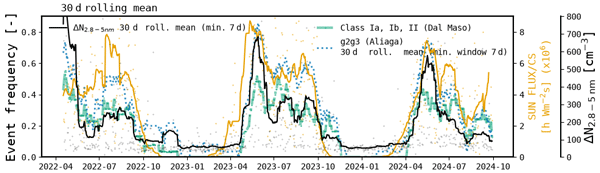
Dominic Heslin-Rees, Peter Tunved, Diego Aliaga, Janne Lampilahti, Ilona Riipinen, Annica M. L. Ekman, Ki-Tae Park, Martina Mazzini, Stefania Gilardoni, Roseline Thakur, Kihong Park, Young Jun Yoon, Kitack Lee, Mikko Sipilä, Mauro Mazzola, and Radovan Krejci
Aerosol Research, 4, 457–483, https://doi.org/10.5194/ar-4-457-2026, https://doi.org/10.5194/ar-4-457-2026, 2026
Short summary
Short summary
New particles form in the atmosphere and can influence the climate. We studied Arctic new particle formation (NPF) from 2022 to 2024 at the Zeppelin Observatory, on Svalbard. NPF occurs from April to November, peaking in late spring as sunlight increases. Some particles measured on-site grow large enough to seed clouds. Sunlight and existing aerosol particles strongly impact the likelihood of NPF, which mainly originates from marine regions, particularly the Greenland Sea.
Liine Heikkinen, Rahul Ranjan, Sini Talvinen, Niels Behr, Sara M. Blichner, Maura Dewey, Lauri R. Ahonen, Mikael Ehn, Annica M. L. Ekman, Radovan Krejci, Tuukka Petäjä, Peter Tunved, and Ilona Riipinen
EGUsphere, https://doi.org/10.5194/egusphere-2026-5082, https://doi.org/10.5194/egusphere-2026-5082, 2026
This preprint is open for discussion and under review for Atmospheric Chemistry and Physics (ACP).
Short summary
Short summary
The impacts of clouds on atmospheric particulate matter (PM) composition are not well understood. Here, we use a new method to infer these interactions as particle number size distributions with bimodal shapes serve as markers of chemical cloud processing. Using concurrent PM composition data from a boreal forest in Finland, we find cloud chemistry to enrich PM in sulfate, but no enhanced formation of organics was observed, despite the abundance of precursors emitted by the forest.
Nanna Myllys, Tinja Olenius, Juha Kangasluoma, Dominik Stolzenburg, Theo Kurtén, Matti Rissanen, James Smith, and Mikael Ehn
EGUsphere, https://doi.org/10.5194/egusphere-2026-3785, https://doi.org/10.5194/egusphere-2026-3785, 2026
Short summary
Short summary
Recent study proposed that organic nanoparticles can form when carboxylic acids stick together through hydrogen-bond interactions. We re-examined this idea and showed by cluster kinetics simulations that this mechanism cannot explain organic nanoparticle formation in the atmosphere. These findings are important to understand the complexity of atmospheric nanoparticle formation.
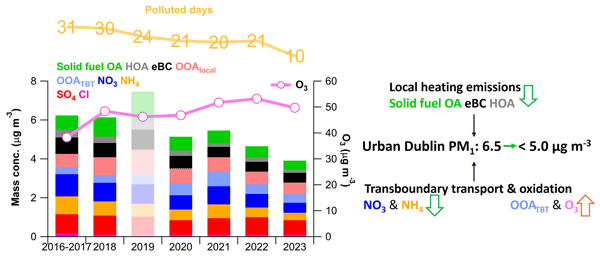
Lu Lei, Wei Xu, Chunshui Lin, Kirsten N. Fossum, Darius Ceburnis, John Gallagher, Colin O'Dowd, and Jurgita Ovadnevaite
Atmos. Chem. Phys., 26, 10927–10946, https://doi.org/10.5194/acp-26-10927-2026, https://doi.org/10.5194/acp-26-10927-2026, 2026
Short summary
Short summary
Home heating is the major driver of air pollution across Europe, yet pollution trends and mitigation responses remain limited. PM1 observations from 2016–2023 in a temperate European city influenced by continental pollution reveal changing sources and composition. Major pollution contributors were identified, shaping clear seasonal patterns. Air quality has improved with reduced heating emissions and regional precursors reductions, while secondary organic aerosols show increasing importance.
Nishant Nishant, Janina Pykäri, Roel Lammerant, Anna Villnäs, Camilla Gustafsson, Alf Norkko, Gregory Cowie, and Tom Jilbert
EGUsphere, https://doi.org/10.5194/egusphere-2026-4456, https://doi.org/10.5194/egusphere-2026-4456, 2026
This preprint is open for discussion and under review for Biogeosciences (BG).
Short summary
Short summary
Carbon storage in shallow coastal sediments varies strongly with wave exposure and local environmental conditions. Across 20 shallow brackish-water coastal sites in Southern Finland, sheltered sediments held much more carbon than wave-exposed sediments. The carbon-rich sediments further showed more active ongoing carbon breakdown. Our approach highlights the diversity of shallow coastal seafloor environments in terms of sediment carbon storage and recycling.
Samuel Ruhl, Matthias Kohl, Rima Baalbaki, Christos Xenofontos, Ryan Vella, Sergey Gromov, Xu-Cheng He, Jiali Shen, Dina Alfaouri, Samira Atabakhsh, Lubna Dada, Jenna DeVivo, Jonathan Duplissy, Imad El Haddad, Hartwig Harder, Tuija Jokinen, Heikki Junninen, Vijay P. Kanawade, Milin K. Sebastian, Hannah Klebach, Markku Kulmala, Felix Kunkler, Jos Lelieveld, Katrianne Lehtipalo, Clara J. Lietzke, Lu Liu, Roy Mauldin, Bernhard Mentler, Ottmar Möhler, Tuukka Petäjä, Douglas M. Russell, Mario Simon, Roseline C. Thakur, Wenjuan Yu, Jiangyi Zhang, Zhensen Zheng, Jasper Kirkby, Holger Tost, Theodoros Christoudias, Rolf Sander, and Andrea Pozzer
EGUsphere, https://doi.org/10.5194/egusphere-2026-4020, https://doi.org/10.5194/egusphere-2026-4020, 2026
This preprint is open for discussion and under review for Atmospheric Chemistry and Physics (ACP).
Short summary
Short summary
Marine microbes release sulfur gases that form tiny particles able to seed clouds. Using a global chemistry-climate model, we compare four schemes for how these gases oxidise and test them against ship and ground measurements. We find that methanesulfonic acid can drive new particle formation as strongly as sulfuric acid over the cold Southern Ocean, supplying around 25 % of the cloud-forming particles there, a natural, climate-relevant source that models often overlook.
Chengfeng Liu, Otso Peräkylä, Lauri Ahonen, Ilona Ylivinkka, Petri Keronen, Douglas R. Worsnop, Tuukka Petäjä, Markku Kulmala, Mikael Ehn, and Nina Sarnela
EGUsphere, https://doi.org/10.5194/egusphere-2026-2773, https://doi.org/10.5194/egusphere-2026-2773, 2026
This preprint is open for discussion and under review for Atmospheric Chemistry and Physics (ACP).
Short summary
Short summary
Forests emit invisible vapors that form climate-regulating atmospheric particles. To track these seasonal changes, we continuously analyzed forest air for four years. We discovered that heavier plant emissions (sesquiterpenes and diterpenes)—rather than the lighter ones (monoterpenes) previously assumed—may drive particle creation in spring and summer. This insight is crucial for predicting how forests will influence the global climate as temperatures rise.
Maoyu Cao, Chao Yan, Yuliang Liu, Dafeng Ge, Junchao Yin, Yuanyuan Li, Tao Xu, Ziqian Wei, Jinbo Wang, Ying Zhang, Zhenning Wang, Valter Mickwitz, Ziheng Chen, Bisen Han, Jianxun Wang, Caijun Zhu, Ximeng Qi, Qiaozhi Zha, Xuguang Chi, Zhe Wang, Jian Zhao, Mikael Ehn, Wei Nie, Jingkun Jiang, and Aijun Ding
EGUsphere, https://doi.org/10.5194/egusphere-2026-3647, https://doi.org/10.5194/egusphere-2026-3647, 2026
Short summary
Short summary
Fine airborne particles affect air quality, human health, and climate, yet their molecular composition is difficult to measure. Using a newly characterized instrument that detects these molecules in real time, we carried out the first such study in an eastern Chinese city. We find that particle composition is shaped not only by molecules condensing from the air, but also by chemical reactions within the particles, with natural and human sources and regional transport all contributing.
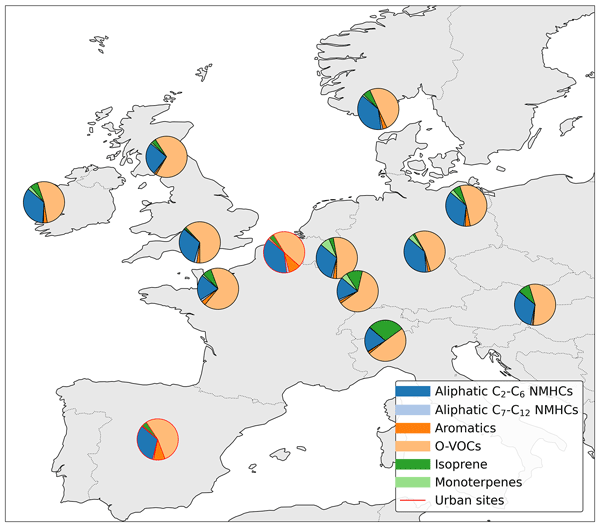
Wenche Aas, Thérèse Salameh, Robert Wegener, Heidi Hellén, Jean-Luc Jaffrezo, Pontus Roldin, Elisabeth Alonso-Blanco, Andres Alastuey, Crist Amelynck, Jgor Arduini, Benjamin Bergmans, Marie Bertrand, Agnes Borbon, Efstratios Bourtsoukidis, Laetitia Bouvier, David Butterfield, Iris Buxbaum, Darius Ceburnis, Anja Claude, Augustin Colette, Aurélie Colomb, Sophie Darfeuil, James Dernie, Maximilien Desservettaz, Elías Díaz-Ramiro, Marvin Dufresne, René Dubus, Mario Duval, Marie Dury, Anna Font, Kirsten N. Fossum, Evelyn Freney, Gotzon Gangoiti, Yao Ge, Maria Carmen Gomez, Francisco J. Gómez-Moreno, Marie Gohy, Valérie Gros, Paul Hamer, Bryan Hellack, Hartmut Herrmann, Robert Holla, Adéla Holubová, Niels R. Jensen, Tuija Jokinen, Matthew Jones, Uwe Käfer, Lukas Kesper, Dieter Klemp, Dagmar Kubistin, Angela Marinoni, Martina Mazzini, Vy Ngoc Thuy Dinh, Jurgita Ovadnevaite, Tuukka Petäjä, Miguel Portillo-Estrada, Jitka Přívozníková, Jean-Philippe Putaud, Stefan Reimann, Laura Renzi, Veronique Riffault, Stuart Ritchie, Chris Robins, Begoña Artíñano Rodríguez de Torres, Laurent Poulain, Julian Rüdiger, Agnieszka Sanocka, Estibaliz Saez de Camara Oleaga, Niels Schoon, Roger Seco, Ivan Simmons, Leïla Simon, David Simpson, Sverre Solberg, Emmanuel Tison, August Thomasson, Svetlana Tsyro, Marsailidh Twigg, Toni Tykkä, Bert Verreyken, Ågot Watne, Katie Williams, Ana Maria Yáñez-Serrano, Karen Yeung, Ilona Ylivinkka, and Karl Espen Yttri
Atmos. Chem. Phys., 26, 8717–8751, https://doi.org/10.5194/acp-26-8717-2026, https://doi.org/10.5194/acp-26-8717-2026, 2026
Short summary
Short summary
A one-week intensive measurement campaign during the 2022 European heatwave included monitoring of ozone, volatile organic compounds, aerosol chemical composition, and organic tracers to investigate air pollution sources. Results showed that emissions from vegetation and human activities contributed to peaks in ozone and secondary organic aerosol particles. Differences between measurements and model simulations underline the need for better characterization of sources and formation pathways.
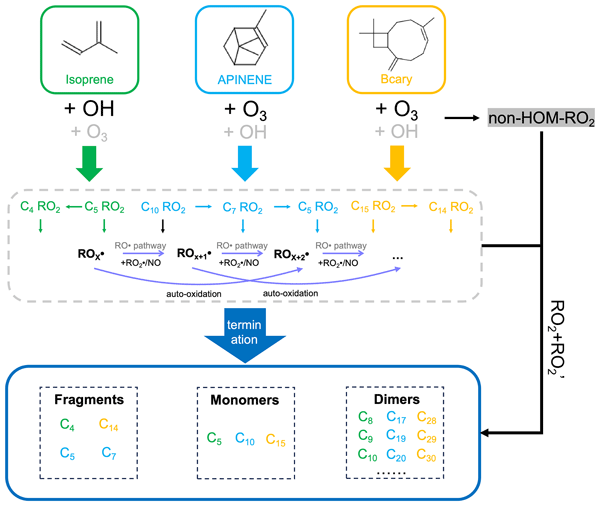
Liwen Yang, Wei Nie, Mikael Ehn, Chao Yan, Lubna Dada, Yuliang Liu, Pontus Roldin, and Aijun Ding
Geosci. Model Dev., 19, 5155–5172, https://doi.org/10.5194/gmd-19-5155-2026, https://doi.org/10.5194/gmd-19-5155-2026, 2026
Short summary
Short summary
SIM-HOM (Sesquiterpene, Isoprene, and Monoterpene-derived Highly Oxygenated organic Molecules) is a mechanistic module simulating HOM formation from primary biogenic precursors. By providing quasi-molecular resolution, it quantifies the low-volatility compounds that drive secondary organic aerosol formation, robustly linking complex gas-phase chemistry to aerosol dynamics and climate impacts.
Gaurav K. Srivastav, Aasif A. Wagay, Janne Lampilahti, Jaswant Rathore, Ravi K. Kunchala, Dilip Ganguly, Markku Kulmala, Tuukka Petäjä, Pauli Paasonen, Roseline C. Thakur, and Shahzad Gani
EGUsphere, https://doi.org/10.5194/egusphere-2026-2212, https://doi.org/10.5194/egusphere-2026-2212, 2026
Short summary
Short summary
Particle formation events affect climate and air quality. Using measurements of particle number concentrations down to very small particles (~3 nm) in polluted northern India, we show that these events occur frequently in summer under reduced background particle load. However, in this environment, emissions and changing air masses can mask or distort these events, making them difficult to detect. Such environments require adaptation of standard analytical methods used in cleaner regions.
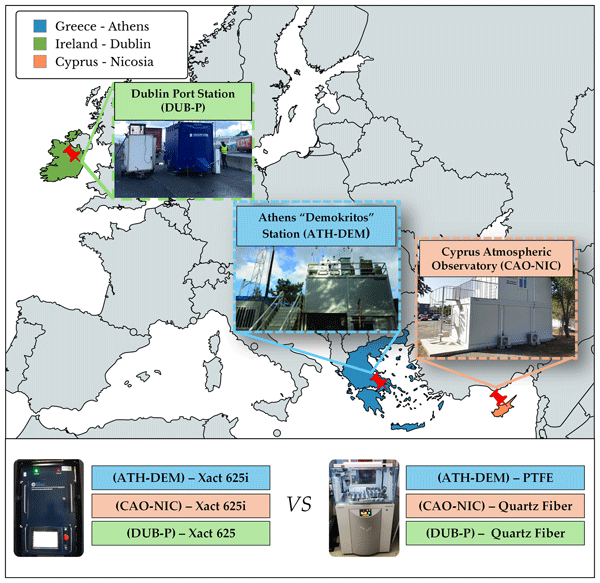
Stefanos Papagiannis, Manousos I. Manousakas, Dimitrios F. Anagnostopoulos, Michael Pikridas, Rima Baalbaki, Jean Sciare, Niall O'Sullivan, Stig Hellebust, John Wenger, Kirsten N. Fossum, Jurgita Ovadnevaite, Anja Tremper, David Green, Konstantinos Eleftheriadis, and Evangelia Diapouli
Atmos. Meas. Tech., 19, 3491–3509, https://doi.org/10.5194/amt-19-3491-2026, https://doi.org/10.5194/amt-19-3491-2026, 2026
Short summary
Short summary
We compared near real-time and benchtop XRF spectrometers measuring trace elements in airborne particles across three European cities. Results show filter material dictates accuracy: Teflon yielded strong inter-instrument agreement, while quartz caused systematic attenuation errors for light elements. Because empirical corrections left residual biases, using optimal substrates—preferably Teflon—is essential for accurately tracking pollution sources.
Emmanuel Chevassus, Vaios Moschos, Kirsten N. Fossum, Lu Lei, Liz Coleman, Dagmar B. Stengel, Vignesh Prabhu, Wei Xu, Darius Ceburnis, Colin O'Dowd, and Jurgita Ovadnevaite
EGUsphere, https://doi.org/10.5194/egusphere-2026-2745, https://doi.org/10.5194/egusphere-2026-2745, 2026
Short summary
Short summary
The ocean is a major source of tiny airborne particles that can influence clouds and climate, but their biological controls remain poorly understood. Here, one year of measurements at Mace Head, Ireland, was combined with ocean biology and air transport data. Sea spray particle formation was found to depend on plankton community, small marine animals, and the combined effects of season, wind, waves and temperature. These results call for mesocosm experiments to better represent sea spray.
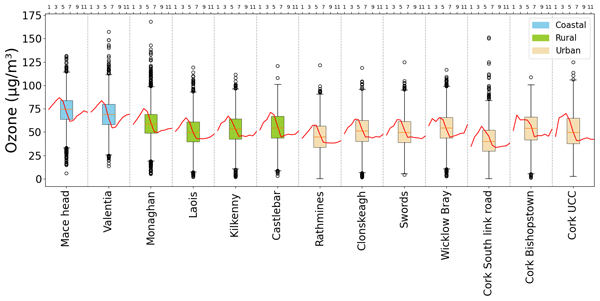
Nikhil Korhale, Tabish Ansari, Tim Butler, Jurgita Ovadnevaite, Emmanuel Chevassus, Darius Ceburnis, Damien Martin, Colin D. O'Dowd, and Liz Coleman
Atmos. Chem. Phys., 26, 6557–6577, https://doi.org/10.5194/acp-26-6557-2026, https://doi.org/10.5194/acp-26-6557-2026, 2026
Short summary
Short summary
We investigate the distribution and trends of surface ozone and its precursors over Ireland using advanced modelling to determine the drivers of ozone. Trajectory analysis is used to trace the origins of air masses, revealing the impact of transboundary pollution and atmospheric transport. The rising trend has been observed at urban sites over the past two decades, but without a similar trend at coastal sites. Coastal areas consistently show higher ozone levels than rural and urban areas.
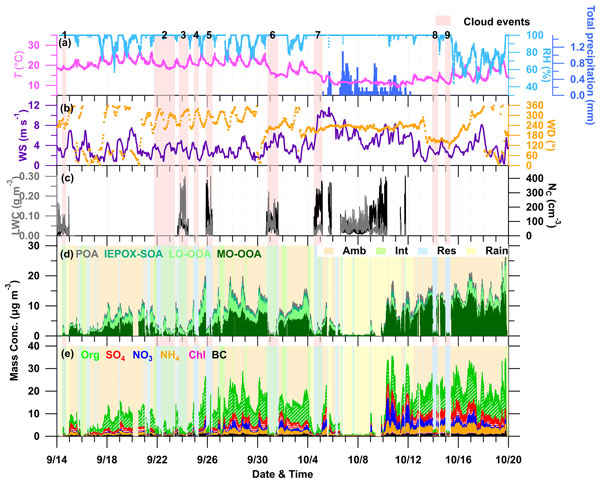
Yi Zhang, Weiqi Xu, Yan Li, Guohua Zhang, Dantong Liu, Ye Kuang, Yu Zhang, Wei Zhou, Xiaocong Peng, Bojiang Su, Weihong Huang, Zijun Zhang, Liu Yang, Yangzhou Wu, Siyuan Li, Shitong Zhao, Lanzhong Liu, Xiaole Pan, Zifa Wang, Xinhui Bi, Mikael Ehn, Douglas R. Worsnop, and Yele Sun
Atmos. Chem. Phys., 26, 5617–5634, https://doi.org/10.5194/acp-26-5617-2026, https://doi.org/10.5194/acp-26-5617-2026, 2026
Short summary
Short summary
This study explores how clouds influence the chemical composition of air particles through field research at a high-altitude station in southeastern China across different seasons. We found that different cloud types cause varying degrees of chemical changes in these particles. These findings enhance our understanding of the impact of clouds on air quality and contribute to improving climate models.
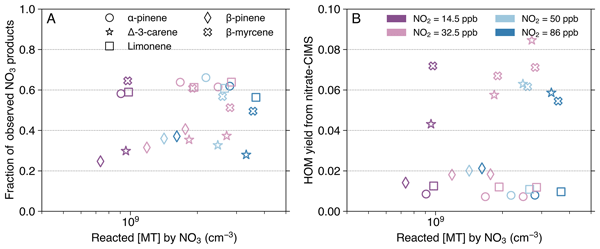
Jiangyi Zhang, Yi Zhang, Hannu Koskenvaara, Jian Zhao, and Mikael Ehn
Atmos. Chem. Phys., 26, 3933–3949, https://doi.org/10.5194/acp-26-3933-2026, https://doi.org/10.5194/acp-26-3933-2026, 2026
Short summary
Short summary
Using a free-jet flow-tube system, we observed a wide range of radicals and closed-shell products from NO3 oxidation of five monoterpenes (α-pinene, Δ-3-carene, limonene, β-pinene, and β-myrcene). Results highlight that the product formation is highly structure-dependent. Our study provides individual product yields, radical distributions, and HOM (highly oxygenated organic molecule) yields, which are all essential for correctly implementing monoterpene + NO3 oxidation mechanisms into models.
Jingye Ren, Wei Xu, Ru-Jin Huang, Fang Zhang, Ying Wang, Lu Chen, Jurgita Ovadnevaite, Darius Ceburnis, Colin O'Dowd, and Yele Sun
Atmos. Chem. Phys., 26, 2985–3000, https://doi.org/10.5194/acp-26-2985-2026, https://doi.org/10.5194/acp-26-2985-2026, 2026
Short summary
Short summary
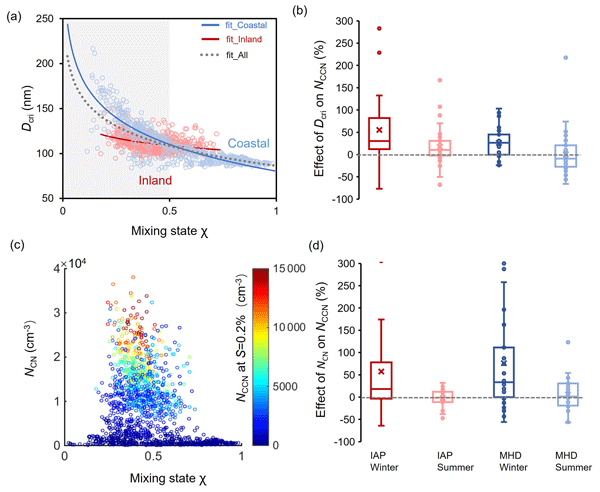
Impact of mixing state on cloud condensation nuclei (CCN) was incorporated in limited modeling with simplified assumption. This study derived a mixing state index from hygroscopicity and systematically investigated the covariation between the mixing state and CCN activity in inland and coastal air. We propose a practical approach for estimating critical diameter from mixing state index, applicable when the aerosol particles are not highly aged.

Margaret F. Williamson, Tom Jilbert, Alf Norkko, and Camilla Gustafsson
Biogeosciences, 23, 1327–1340, https://doi.org/10.5194/bg-23-1327-2026, https://doi.org/10.5194/bg-23-1327-2026, 2026
Short summary
Short summary
Reed bed carbon (C) storage is a topic of interest due to increased global distribution of reeds. C budgets to combat climate change often catalog reed beds as saltmarshes. Our findings show that reed beds are unique from saltmarshes, C storage is highest in reed bed sediments, and that reed bed zones may impact C storage. Further research into reed bed C is needed to better combat climate change and to ensure reeds are managed in a way that does not release excess C.
Petri Clusius, Metin Baykara, Carlton Xavier, Putian Zhou, Juniper Tyree, Benjamin Foreback, Mikko Äijälä, Frans Graeffe, Tuukka Petäjä, Markku Kulmala, Pauli Paasonen, Paul I. Palmer, and Michael Boy
Atmos. Chem. Phys., 26, 1967–1992, https://doi.org/10.5194/acp-26-1967-2026, https://doi.org/10.5194/acp-26-1967-2026, 2026
Short summary
Short summary
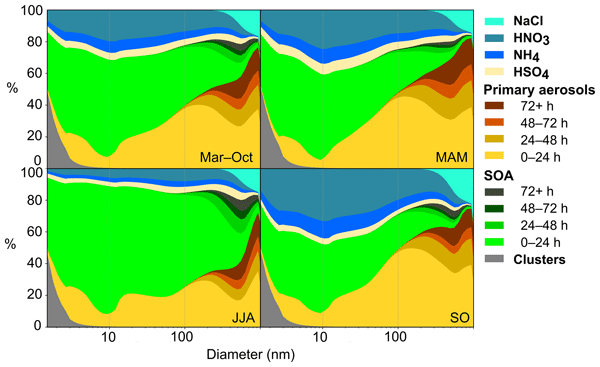
Cloud condensation nuclei are necessary to form clouds, and their size distribution affects cloud properties and therefore Earth’s energy budget. This study modelled the origins of cloud condensation nuclei at SMEAR II, Hyytiälä, Finland, and found that primary emissions and new particle formation separately contribute to more than half of the condensation nuclei, but they suppress each other, leading to current concentrations. Largest condensation nuclei originated mostly from emissions.
Maija Peltola, Roseline Thakur, Kurt Spence, Janne Lampilahti, Ronja Mäkelä, Sasu Karttunen, Ekaterina Ezhova, Sami Haapanala, Aki Vähä, Juha Kangasluoma, Tommy Chan, Pauli Paasonen, Joanna Norkko, Alf Norkko, Markku Kulmala, and Mikael Ehn
Atmos. Chem. Phys., 26, 489–513, https://doi.org/10.5194/acp-26-489-2026, https://doi.org/10.5194/acp-26-489-2026, 2026
Short summary
Short summary
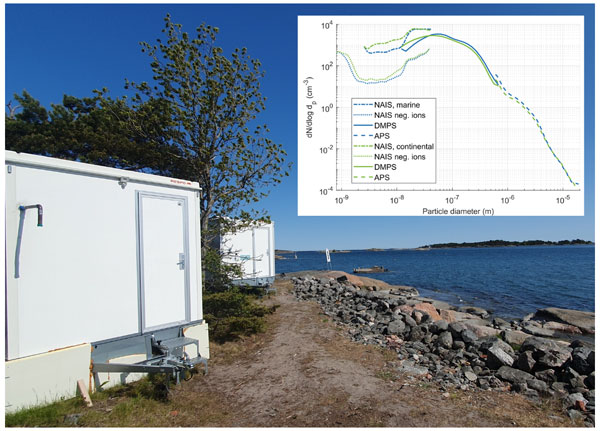
Here, we report aerosol properties from a new atmospheric observatory established at the Finnish Baltic Sea Coast. Aerosol formation was observed when air masses crossed over the continent whereas less newly formed particles were observed when the winds were from the sea. Aerosol formation was favoured by low condensation sink and sunny dry conditions.
Baihua Chen, Lu Lei, Emmanuel Chevassus, Wei Xu, Ling Zhen, Haobin Zhong, Lin Wang, Chunshui Lin, Ru-Jin Huang, Darius Ceburnis, Colin O'Dowd, and Jurgita Ovadnevaite
Atmos. Chem. Phys., 25, 14205–14219, https://doi.org/10.5194/acp-25-14205-2025, https://doi.org/10.5194/acp-25-14205-2025, 2025
Short summary
Short summary
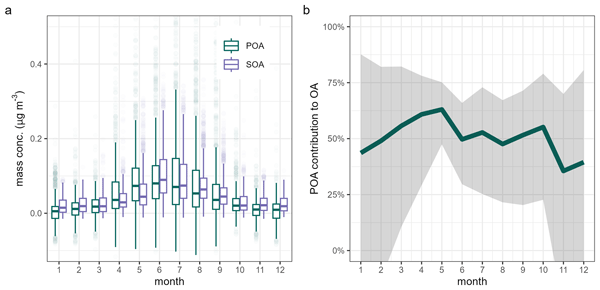
This study uses machine learning to separate marine primary organic aerosol (POA) and secondary organic aerosol (SOA) from 1 decade of high-resolution data. POA averages 51 % of marine organic aerosols annually, peaking at 63 % in summer. A support vector regression model, validated via fuzzy clustering and Monte Carlo simulations, identifies seasonal patterns of POA linked to biological activity. We found diverse impacts of marine POA and SOA on the aerosol hygroscopicity and mixing state.
Frans Graeffe, Kalle Kupi, Hilkka Timonen, and Mikael Ehn
Atmos. Chem. Phys., 25, 10837–10851, https://doi.org/10.5194/acp-25-10837-2025, https://doi.org/10.5194/acp-25-10837-2025, 2025
Short summary
Short summary
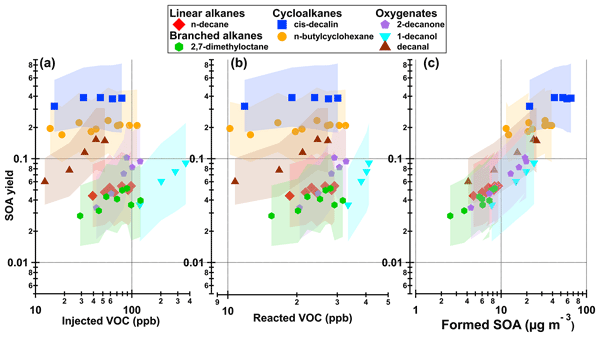
Alkanes are a major part of anthropogenic emissions in urban areas, and known for producing secondary organic aerosol (SOA). We measured SOA yields of seven alkanes and their oxygenated derivatives in oxidation flow reactor (OFR) measurements to assess their role in SOA formation. In addition, we observed that cyclic structure enhances SOA production. Furthermore, our observations indicate that multi-generational hydroxyl radical (OH) oxidation is important in the SOA formation.
Piaopiao Ke, Anna Lintunen, Pasi Kolari, Annalea Lohila, Santeri Tuovinen, Janne Lampilahti, Roseline Thakur, Maija Peltola, Otso Peräkylä, Tuomo Nieminen, Ekaterina Ezhova, Mari Pihlatie, Asta Laasonen, Markku Koskinen, Helena Rautakoski, Laura Heimsch, Tom Kokkonen, Aki Vähä, Ivan Mammarella, Steffen Noe, Jaana Bäck, Veli-Matti Kerminen, and Markku Kulmala
Biogeosciences, 22, 3235–3251, https://doi.org/10.5194/bg-22-3235-2025, https://doi.org/10.5194/bg-22-3235-2025, 2025
Short summary
Short summary
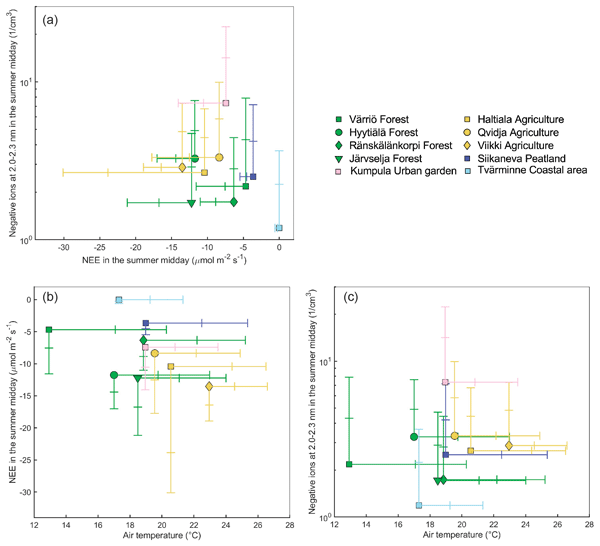
Our research explores diverse ecosystems’ roles in climate cooling via the concept of CarbonSink+ potential. We measured CO2 uptake and local aerosol production in forests, farms, peatlands, urban gardens, and coastal areas across Finland and Estonia. The long-term data reveal that, while forests are vital with regard to CarbonSink+ potential, farms and urban gardens also play significant roles. These insights can help optimize management policy of natural resources to mitigate global warming.
Yuanyuan Luo, Lauri Franzon, Jiangyi Zhang, Nina Sarnela, Neil M. Donahue, Theo Kurtén, and Mikael Ehn
Atmos. Chem. Phys., 25, 4655–4664, https://doi.org/10.5194/acp-25-4655-2025, https://doi.org/10.5194/acp-25-4655-2025, 2025
Short summary
Short summary
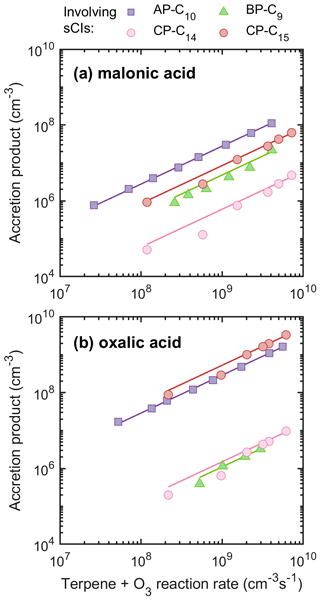
This study explores the formation of accretion products from reactions involving highly reactive compounds, Criegee intermediates. We focused on three types of terpenes, common in nature, and their reactions with specific acids. Our findings reveal that these reactions efficiently produce expected compounds. This research enhances our understanding of how these reactions affect air quality and climate by contributing to aerosol formation, crucial for atmospheric chemistry.
Emmanuel Chevassus, Kirsten N. Fossum, Darius Ceburnis, Lu Lei, Chunshui Lin, Wei Xu, Colin O'Dowd, and Jurgita Ovadnevaite
Atmos. Chem. Phys., 25, 4107–4129, https://doi.org/10.5194/acp-25-4107-2025, https://doi.org/10.5194/acp-25-4107-2025, 2025
Short summary
Short summary
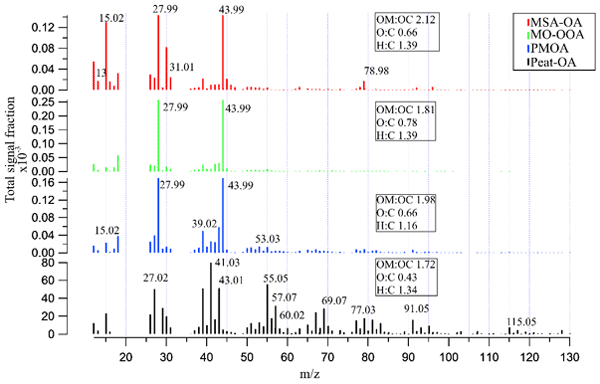
This study presents the first source apportionment of organic aerosol at Mace Head via high-resolution mass spectrometry. Introducing transfer entropy as a novel method reveals that aged organic aerosol originates from both open-ocean ozonolysis and local peat-burning oxidation. Methanesulfonic acid and organic sea spray both mirror phytoplankton activity, with the former closely tied to coccolithophore blooms and the latter linked to diatoms, chlorophytes, and cyanobacteria.
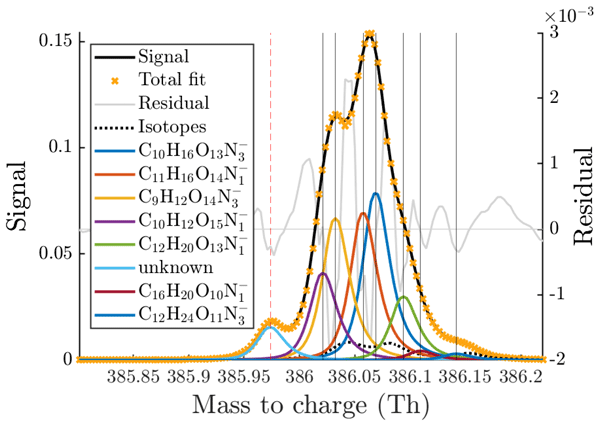
Valter Mickwitz, Otso Peräkylä, Frans Graeffe, Douglas Worsnop, and Mikael Ehn
Atmos. Meas. Tech., 18, 1537–1559, https://doi.org/10.5194/amt-18-1537-2025, https://doi.org/10.5194/amt-18-1537-2025, 2025
Short summary
Short summary
This work presents and evaluates an algorithm that automatically conducts the steps of fitting peaks and identifying formulas – necessary but time-consuming steps for most applications of mass spectrometry in atmospheric science. The aim of the algorithm is to save researchers working on these tasks significant amounts of time and allow them to proceed with their analysis. The work demonstrates that this algorithm can achieve the goal of speeding up analysis and provide accurate formulas.
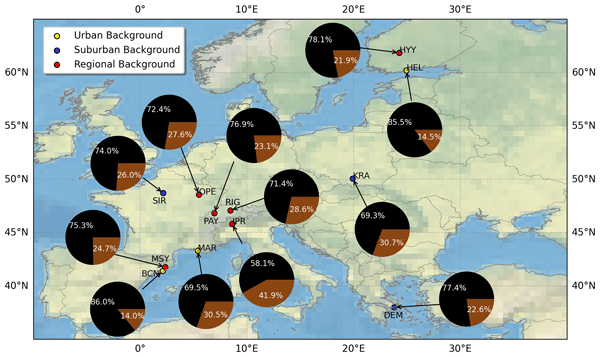
Hector Navarro-Barboza, Jordi Rovira, Vincenzo Obiso, Andrea Pozzer, Marta Via, Andres Alastuey, Xavier Querol, Noemi Perez, Marjan Savadkoohi, Gang Chen, Jesus Yus-Díez, Matic Ivancic, Martin Rigler, Konstantinos Eleftheriadis, Stergios Vratolis, Olga Zografou, Maria Gini, Benjamin Chazeau, Nicolas Marchand, Andre S. H. Prevot, Kaspar Dallenbach, Mikael Ehn, Krista Luoma, Tuukka Petäjä, Anna Tobler, Jaroslaw Necki, Minna Aurela, Hilkka Timonen, Jarkko Niemi, Olivier Favez, Jean-Eudes Petit, Jean-Philippe Putaud, Christoph Hueglin, Nicolas Pascal, Aurélien Chauvigné, Sébastien Conil, Marco Pandolfi, and Oriol Jorba
Atmos. Chem. Phys., 25, 2667–2694, https://doi.org/10.5194/acp-25-2667-2025, https://doi.org/10.5194/acp-25-2667-2025, 2025
Short summary
Short summary
Brown carbon (BrC) absorbs ultraviolet (UV) and visible light, influencing climate. This study explores BrC's imaginary refractive index (k) using data from 12 European sites. Residential emissions are a major organic aerosol (OA) source in winter, while secondary organic aerosol (SOA) dominates in summer. Source-specific k values were derived, improving model accuracy. The findings highlight BrC's climate impact and emphasize source-specific constraints in atmospheric models.
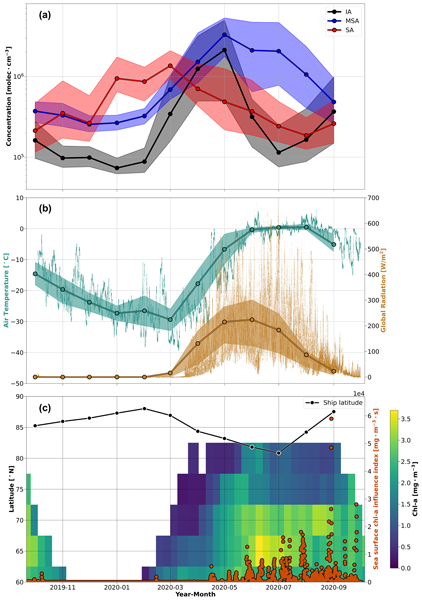
Matthew Boyer, Diego Aliaga, Lauriane L. J. Quéléver, Silvia Bucci, Hélène Angot, Lubna Dada, Benjamin Heutte, Lisa Beck, Marina Duetsch, Andreas Stohl, Ivo Beck, Tiia Laurila, Nina Sarnela, Roseline C. Thakur, Branka Miljevic, Markku Kulmala, Tuukka Petäjä, Mikko Sipilä, Julia Schmale, and Tuija Jokinen
Atmos. Chem. Phys., 24, 12595–12621, https://doi.org/10.5194/acp-24-12595-2024, https://doi.org/10.5194/acp-24-12595-2024, 2024
Short summary
Short summary
We analyze the seasonal cycle and sources of gases that are relevant for the formation of aerosol particles in the central Arctic. Since theses gases can form new particles, they can influence Arctic climate. We show that the sources of these gases are associated with changes in the Arctic environment during the year, especially with respect to sea ice. Therefore, the concentration of these gases will likely change in the future as the Arctic continues to warm.
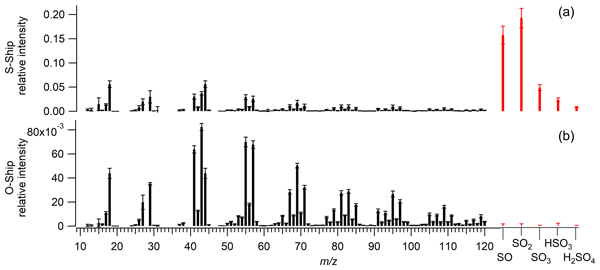
Kirsten N. Fossum, Chunshui Lin, Niall O'Sullivan, Lu Lei, Stig Hellebust, Darius Ceburnis, Aqeel Afzal, Anja Tremper, David Green, Srishti Jain, Steigvilė Byčenkienė, Colin O'Dowd, John Wenger, and Jurgita Ovadnevaite
Atmos. Chem. Phys., 24, 10815–10831, https://doi.org/10.5194/acp-24-10815-2024, https://doi.org/10.5194/acp-24-10815-2024, 2024
Short summary
Short summary
The chemical composition and sources of submicron aerosol in the Dublin Port area were investigated over a month-long campaign. Two distinct types of ship emissions were identified and characterised: sulfate-rich plumes from the use of heavy fuel oil with scrubbers and organic-rich plumes from the use of low-sulfur fuels. The latter were more frequent, emitting double the particle number and having a typical V / Ni ratio for ship emission.
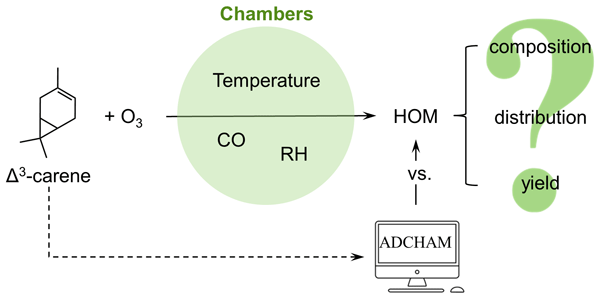
Yuanyuan Luo, Ditte Thomsen, Emil Mark Iversen, Pontus Roldin, Jane Tygesen Skønager, Linjie Li, Michael Priestley, Henrik B. Pedersen, Mattias Hallquist, Merete Bilde, Marianne Glasius, and Mikael Ehn
Atmos. Chem. Phys., 24, 9459–9473, https://doi.org/10.5194/acp-24-9459-2024, https://doi.org/10.5194/acp-24-9459-2024, 2024
Short summary
Short summary
∆3-carene is abundantly emitted from vegetation, but its atmospheric oxidation chemistry has received limited attention. We explored highly oxygenated organic molecule (HOM) formation from ∆3-carene ozonolysis in chambers and investigated the impact of temperature and relative humidity on HOM formation. Our findings provide new insights into ∆3-carene oxidation pathways and their potential to impact atmospheric aerosols.
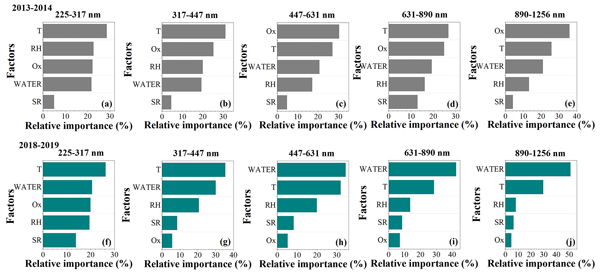
Jing Duan, Ru-Jin Huang, Ying Wang, Wei Xu, Haobin Zhong, Chunshui Lin, Wei Huang, Yifang Gu, Jurgita Ovadnevaite, Darius Ceburnis, and Colin O'Dowd
Atmos. Chem. Phys., 24, 7687–7698, https://doi.org/10.5194/acp-24-7687-2024, https://doi.org/10.5194/acp-24-7687-2024, 2024
Short summary
Short summary
The chemical composition of atmospheric particles has shown significant changes in recent years. We investigated the potential effects of changes in inorganics on aerosol water uptake and, thus, secondary organic aerosol formation in wintertime haze based on the size-resolved measurements of non-refractory fine particulate matter (NR-PM2.5) in Xi’an, northwestern China. We highlight the key role of aerosol water as a medium to link inorganics and organics in their multiphase processes.
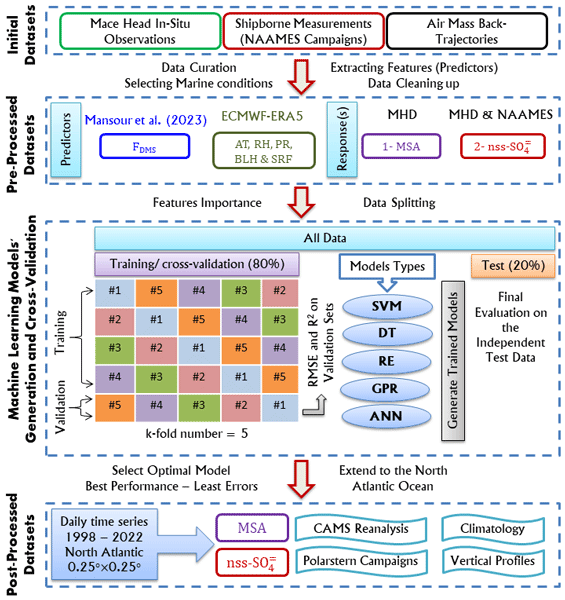
Karam Mansour, Stefano Decesari, Darius Ceburnis, Jurgita Ovadnevaite, Lynn M. Russell, Marco Paglione, Laurent Poulain, Shan Huang, Colin O'Dowd, and Matteo Rinaldi
Earth Syst. Sci. Data, 16, 2717–2740, https://doi.org/10.5194/essd-16-2717-2024, https://doi.org/10.5194/essd-16-2717-2024, 2024
Short summary
Short summary
We propose and evaluate machine learning predictive algorithms to model freshly formed biogenic methanesulfonic acid and sulfate concentrations. The long-term constructed dataset covers the North Atlantic at an unprecedented resolution. The improved parameterization of biogenic sulfur aerosols at regional scales is essential for determining their radiative forcing, which could help further understand marine-aerosol–cloud interactions and reduce uncertainties in climate models
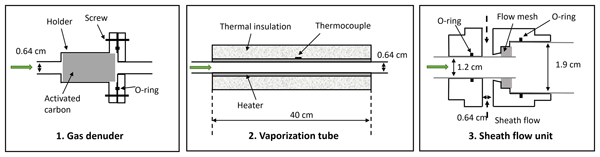
Jian Zhao, Valter Mickwitz, Yuanyuan Luo, Ella Häkkinen, Frans Graeffe, Jiangyi Zhang, Hilkka Timonen, Manjula Canagaratna, Jordan E. Krechmer, Qi Zhang, Markku Kulmala, Juha Kangasluoma, Douglas Worsnop, and Mikael Ehn
Atmos. Meas. Tech., 17, 1527–1543, https://doi.org/10.5194/amt-17-1527-2024, https://doi.org/10.5194/amt-17-1527-2024, 2024
Short summary
Short summary
Organic aerosol constitutes a significant portion of atmospheric fine particles but is less characterized due to its vast number of constituents. Recently, we developed a system for online measurements of particle-phase highly oxygenated organic molecules (HOMs). In this work, we systematically characterized the system, developed a new unit to enhance its performance, and demonstrated the essential role of thermograms in inferring volatility and quantifying HOMs in organic aerosols.
Jiangyi Zhang, Jian Zhao, Yuanyuan Luo, Valter Mickwitz, Douglas Worsnop, and Mikael Ehn
Atmos. Chem. Phys., 24, 2885–2911, https://doi.org/10.5194/acp-24-2885-2024, https://doi.org/10.5194/acp-24-2885-2024, 2024
Short summary
Short summary
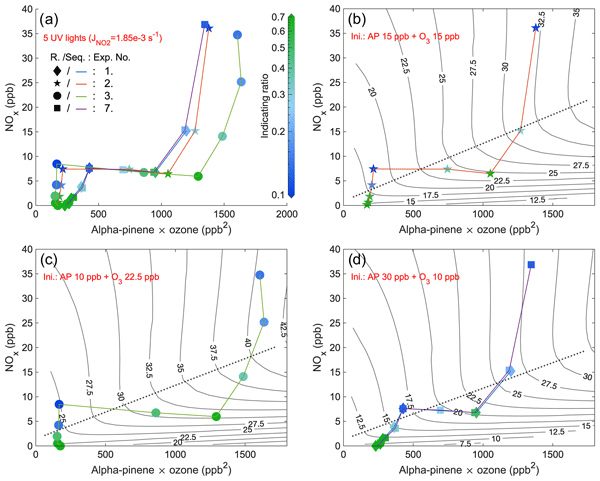
Due to the intrinsic connection between the formation pathways of O3 and HOMs, the ratio of HOM dimers or non-nitrate monomers to HOM organic nitrates could be used to determine O3 formation regimes. Owing to the fast formation and short lifetimes of HOMs, HOM-based indicating ratios can describe O3 formation in real time. Despite the success of our approach in this simple laboratory system, applicability to the much more complex atmosphere remains to be determined.
Magdalena Okuljar, Olga Garmash, Miska Olin, Joni Kalliokoski, Hilkka Timonen, Jarkko V. Niemi, Pauli Paasonen, Jenni Kontkanen, Yanjun Zhang, Heidi Hellén, Heino Kuuluvainen, Minna Aurela, Hanna E. Manninen, Mikko Sipilä, Topi Rönkkö, Tuukka Petäjä, Markku Kulmala, Miikka Dal Maso, and Mikael Ehn
Atmos. Chem. Phys., 23, 12965–12983, https://doi.org/10.5194/acp-23-12965-2023, https://doi.org/10.5194/acp-23-12965-2023, 2023
Short summary
Short summary
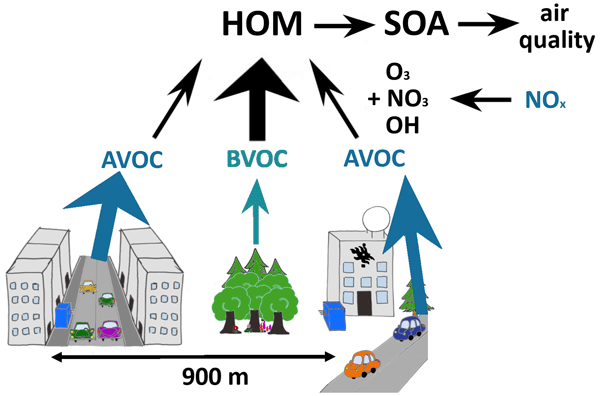
Highly oxygenated organic molecules (HOMs) form secondary organic aerosol that affects air quality and health. In this study, we demonstrate that in a moderately polluted city with abundant vegetation, the composition of HOMs is largely controlled by the effect of NOx on the biogenic volatile organic compound oxidation. Comparing the results from two nearby stations, we show that HOM composition and formation pathways can change considerably within small distances in urban environments.
Melissa Meder, Otso Peräkylä, Jonathan G. Varelas, Jingyi Luo, Runlong Cai, Yanjun Zhang, Theo Kurtén, Matthieu Riva, Matti Rissanen, Franz M. Geiger, Regan J. Thomson, and Mikael Ehn
Atmos. Chem. Phys., 23, 4373–4390, https://doi.org/10.5194/acp-23-4373-2023, https://doi.org/10.5194/acp-23-4373-2023, 2023
Short summary
Short summary
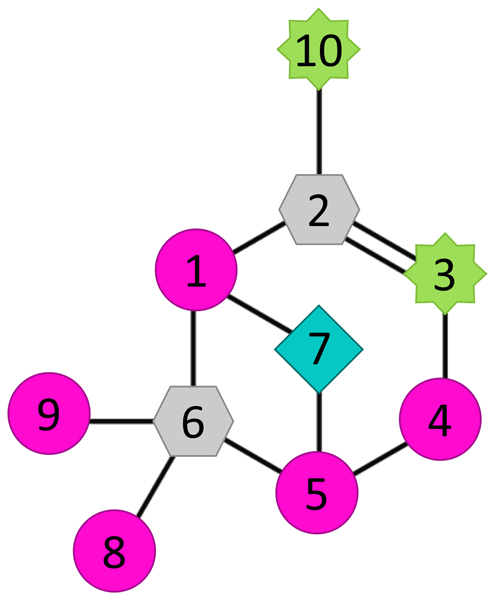
We discuss and show the viability of a method where multiple isotopically labelled precursors are used for probing the formation pathways of highly oxygenated organic molecules (HOMs) from the oxidation of the monoterpene a-pinene. HOMs are very important for secondary organic aerosol (SOA) formation in forested regions, and monoterpenes are the single largest source of SOA globally. The fast reactions forming HOMs have thus far remained elusive despite considerable efforts over the last decade.
Ella Häkkinen, Jian Zhao, Frans Graeffe, Nicolas Fauré, Jordan E. Krechmer, Douglas Worsnop, Hilkka Timonen, Mikael Ehn, and Juha Kangasluoma
Atmos. Meas. Tech., 16, 1705–1721, https://doi.org/10.5194/amt-16-1705-2023, https://doi.org/10.5194/amt-16-1705-2023, 2023
Short summary
Short summary
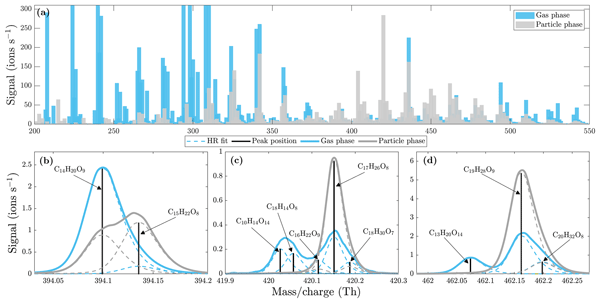
Highly oxygenated compounds contribute to the formation and growth of atmospheric organic aerosol and thus impact the global climate. Knowledge of their transformations and fate after condensing into the particle phase has been limited by the lack of suitable detection techniques. Here, we present an online method for measuring highly oxygenated compounds from organic aerosol. We evaluate the performance of the method and demonstrate that the method is applicable to different organic species.
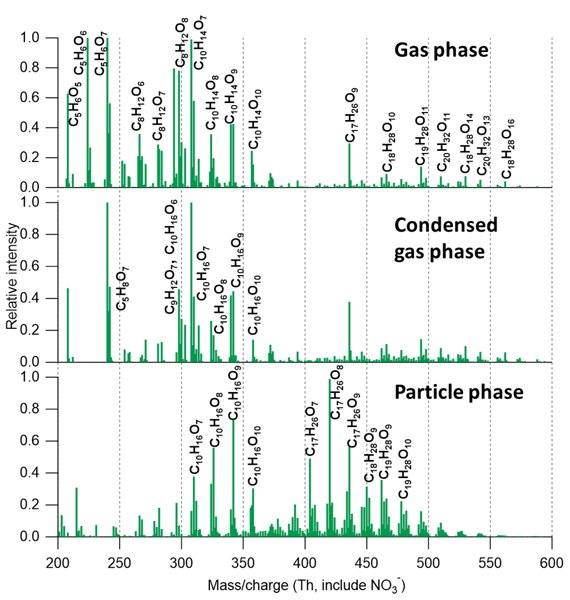
Jian Zhao, Ella Häkkinen, Frans Graeffe, Jordan E. Krechmer, Manjula R. Canagaratna, Douglas R. Worsnop, Juha Kangasluoma, and Mikael Ehn
Atmos. Chem. Phys., 23, 3707–3730, https://doi.org/10.5194/acp-23-3707-2023, https://doi.org/10.5194/acp-23-3707-2023, 2023
Short summary
Short summary
Based on the combined measurements of gas- and particle-phase highly oxygenated organic molecules (HOMs) from α-pinene ozonolysis, enhancement of dimers in particles was observed. We conducted experiments wherein the dimer to monomer (D / M) ratios of HOMs in the gas phase were modified (adding CO / NO) to investigate the effects of the corresponding D / M ratios in the particles. These results are important for a better understanding of secondary organic aerosol formation in the atmosphere.
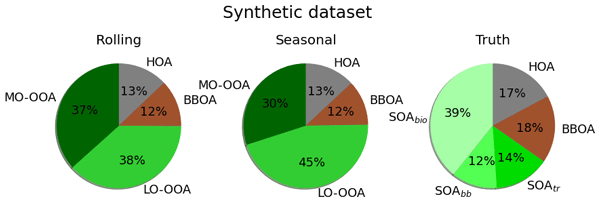
Marta Via, Gang Chen, Francesco Canonaco, Kaspar R. Daellenbach, Benjamin Chazeau, Hasna Chebaicheb, Jianhui Jiang, Hannes Keernik, Chunshui Lin, Nicolas Marchand, Cristina Marin, Colin O'Dowd, Jurgita Ovadnevaite, Jean-Eudes Petit, Michael Pikridas, Véronique Riffault, Jean Sciare, Jay G. Slowik, Leïla Simon, Jeni Vasilescu, Yunjiang Zhang, Olivier Favez, André S. H. Prévôt, Andrés Alastuey, and María Cruz Minguillón
Atmos. Meas. Tech., 15, 5479–5495, https://doi.org/10.5194/amt-15-5479-2022, https://doi.org/10.5194/amt-15-5479-2022, 2022
Short summary
Short summary
This work presents the differences resulting from two techniques (rolling and seasonal) of the positive matrix factorisation model that can be run for organic aerosol source apportionment. The current state of the art suggests that the rolling technique is more accurate, but no proof of its effectiveness has been provided yet. This paper tackles this issue in the context of a synthetic dataset and a multi-site real-world comparison.
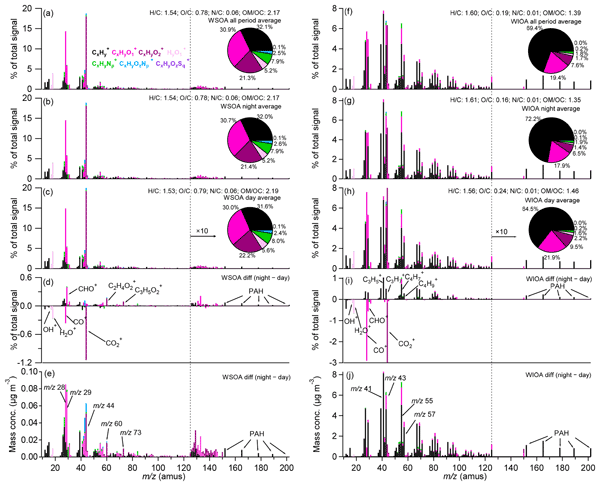
Zhiqiang Zhang, Yele Sun, Chun Chen, Bo You, Aodong Du, Weiqi Xu, Yan Li, Zhijie Li, Lu Lei, Wei Zhou, Jiaxing Sun, Yanmei Qiu, Lianfang Wei, Pingqing Fu, and Zifa Wang
Atmos. Chem. Phys., 22, 10409–10423, https://doi.org/10.5194/acp-22-10409-2022, https://doi.org/10.5194/acp-22-10409-2022, 2022
Short summary
Short summary
We present a comprehensive characterization of water-soluble organic aerosol and the first mass spectral characterization of water-insoluble organic aerosol in the cold season in Beijing by integrating online and offline aerosol mass spectrometer measurements. WSOA comprised dominantly secondary OA and showed large changes during the transition season from autumn to winter. WIOA was characterized by prominent hydrocarbon ions series, low oxidation states, and significant day–night differences.
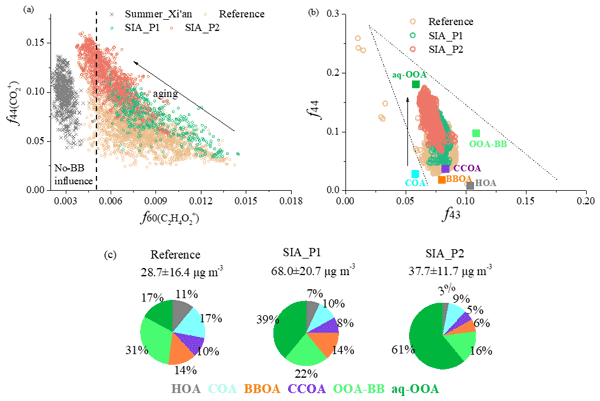
Jing Duan, Ru-Jin Huang, Yifang Gu, Chunshui Lin, Haobin Zhong, Wei Xu, Quan Liu, Yan You, Jurgita Ovadnevaite, Darius Ceburnis, Thorsten Hoffmann, and Colin O'Dowd
Atmos. Chem. Phys., 22, 10139–10153, https://doi.org/10.5194/acp-22-10139-2022, https://doi.org/10.5194/acp-22-10139-2022, 2022
Short summary
Short summary
Biomass-burning-influenced oxygenated organic aerosol (OOA-BB), formed from the photochemical oxidation and aging of biomass burning OA (BBOA), was resolved in urban Xi’an. The aqueous-phase processed oxygenated OA (aq-OOA) concentration was more dependent on secondary inorganic aerosol (SIA) content and aerosol liquid water content (ALWC). The increased aq-OOA contribution during SIA-enhanced periods likely reflects OA evolution due to the addition of alcohol or peroxide groups
Carlton Xavier, Metin Baykara, Robin Wollesen de Jonge, Barbara Altstädter, Petri Clusius, Ville Vakkari, Roseline Thakur, Lisa Beck, Silvia Becagli, Mirko Severi, Rita Traversi, Radovan Krejci, Peter Tunved, Mauro Mazzola, Birgit Wehner, Mikko Sipilä, Markku Kulmala, Michael Boy, and Pontus Roldin
Atmos. Chem. Phys., 22, 10023–10043, https://doi.org/10.5194/acp-22-10023-2022, https://doi.org/10.5194/acp-22-10023-2022, 2022
Short summary
Short summary
The focus of this work is to study and improve our understanding of processes involved in the formation and growth of new particles in a remote Arctic marine environment. We run the 1D model ADCHEM along air mass trajectories arriving at Ny-Ålesund in May 2018. The model finds that ion-mediated H2SO4–NH3 nucleation can explain the observed new particle formation at Ny-Ålesund. The growth of particles is driven via H2SO4 condensation and formation of methane sulfonic acid in the aqueous phase.
Haobin Zhong, Ru-Jin Huang, Chunshui Lin, Wei Xu, Jing Duan, Yifang Gu, Wei Huang, Haiyan Ni, Chongshu Zhu, Yan You, Yunfei Wu, Renjian Zhang, Jurgita Ovadnevaite, Darius Ceburnis, and Colin D. O'Dowd
Atmos. Chem. Phys., 22, 9513–9524, https://doi.org/10.5194/acp-22-9513-2022, https://doi.org/10.5194/acp-22-9513-2022, 2022
Short summary
Short summary
To investigate the physico-chemical properties of aerosol transported from major pollution regions in China, observations were conducted ~200 m above the ground at the junction location of the two key pollution areas. We found that the formation efficiency, oxidation state and production rate of secondary aerosol were different in the transport sectors from different pollution regions, and they were largely enhanced by the regional long-distance transport.
Lisa J. Beck, Siegfried Schobesberger, Heikki Junninen, Janne Lampilahti, Antti Manninen, Lubna Dada, Katri Leino, Xu-Cheng He, Iida Pullinen, Lauriane L. J. Quéléver, Anna Franck, Pyry Poutanen, Daniela Wimmer, Frans Korhonen, Mikko Sipilä, Mikael Ehn, Douglas R. Worsnop, Veli-Matti Kerminen, Tuukka Petäjä, Markku Kulmala, and Jonathan Duplissy
Atmos. Chem. Phys., 22, 8547–8577, https://doi.org/10.5194/acp-22-8547-2022, https://doi.org/10.5194/acp-22-8547-2022, 2022
Short summary
Short summary
The presented article introduces an overview of atmospheric ions and their composition above the boreal forest. We provide the results of an extensive airborne measurement campaign with an air ion mass spectrometer and particle measurements, showing their diurnal evolution within the boundary layer and free troposphere. In addition, we compare the airborne dataset with the co-located data from the ground at SMEAR II station, Finland.
Roseline C. Thakur, Lubna Dada, Lisa J. Beck, Lauriane L. J. Quéléver, Tommy Chan, Marjan Marbouti, Xu-Cheng He, Carlton Xavier, Juha Sulo, Janne Lampilahti, Markus Lampimäki, Yee Jun Tham, Nina Sarnela, Katrianne Lehtipalo, Alf Norkko, Markku Kulmala, Mikko Sipilä, and Tuija Jokinen
Atmos. Chem. Phys., 22, 6365–6391, https://doi.org/10.5194/acp-22-6365-2022, https://doi.org/10.5194/acp-22-6365-2022, 2022
Short summary
Short summary
Every year intense cyanobacterial and macroalgal blooms occur in the Baltic Sea and in the coastal areas surrounding Helsinki, yet no studies have addressed the impact of biogenic emissions from these blooms on gas vapor concentrations, which in turn could influence new particle formation. This is the first study of its kind to address the chemistry driving new particle formation (NPF) during a bloom period in this region, highlighting the role of biogenic sulfuric acid and iodic acid.
Yuanyuan Luo, Olga Garmash, Haiyan Li, Frans Graeffe, Arnaud P. Praplan, Anssi Liikanen, Yanjun Zhang, Melissa Meder, Otso Peräkylä, Josep Peñuelas, Ana María Yáñez-Serrano, and Mikael Ehn
Atmos. Chem. Phys., 22, 5619–5637, https://doi.org/10.5194/acp-22-5619-2022, https://doi.org/10.5194/acp-22-5619-2022, 2022
Short summary
Short summary
Diterpenes were only recently observed in the atmosphere, and little is known of their atmospheric fates. We explored the ozonolysis of the diterpene kaurene in a chamber, and we characterized the oxidation products for the first time using chemical ionization mass spectrometry. Our findings highlight similarities and differences between diterpenes and smaller terpenes during their atmospheric oxidation.
Haiyan Li, Thomas Golin Almeida, Yuanyuan Luo, Jian Zhao, Brett B. Palm, Christopher D. Daub, Wei Huang, Claudia Mohr, Jordan E. Krechmer, Theo Kurtén, and Mikael Ehn
Atmos. Meas. Tech., 15, 1811–1827, https://doi.org/10.5194/amt-15-1811-2022, https://doi.org/10.5194/amt-15-1811-2022, 2022
Short summary
Short summary
This work evaluated the potential for PTR-based mass spectrometers to detect ROOR and ROOH peroxides both experimentally and through computations. Laboratory experiments using a Vocus PTR observed only noisy signals of potential dimers during α-pinene ozonolysis and a few small signals of dimeric compounds during cyclohexene ozonolysis. Quantum chemical calculations for model ROOR and ROOH systems showed that most of these peroxides should fragment partially following protonation.
Tuija Jokinen, Katrianne Lehtipalo, Roseline Cutting Thakur, Ilona Ylivinkka, Kimmo Neitola, Nina Sarnela, Totti Laitinen, Markku Kulmala, Tuukka Petäjä, and Mikko Sipilä
Atmos. Chem. Phys., 22, 2237–2254, https://doi.org/10.5194/acp-22-2237-2022, https://doi.org/10.5194/acp-22-2237-2022, 2022
Short summary
Short summary
New particle formation is an important source of cloud condensation nuclei; however, long-term measurements of aerosol-forming vapors are close to nonexistent in the Arctic. Here, we report 7 months of CI-APi-TOF measurements of sulfuric acid, iodic acid, methane sulfonic acid and the sum of highly oxygenated organic molecules from the SMEAR I station in the Finnish subarctic. The results help us to understand atmospheric chemical processes and aerosol formation in this rapidly changing area.

Ditte Taipale, Veli-Matti Kerminen, Mikael Ehn, Markku Kulmala, and Ülo Niinemets
Atmos. Chem. Phys., 21, 17389–17431, https://doi.org/10.5194/acp-21-17389-2021, https://doi.org/10.5194/acp-21-17389-2021, 2021
Short summary
Short summary
Larval feeding and fungal infections of leaves can greatly change the emission of volatile compounds from plants and thereby influence aerosol processes in the air. We developed a model that considers the dynamics of larvae and fungi and the dependency of the emission on the severity of stress. We show that the infections can be highly atmospherically relevant during long periods of time and at times more important to consider than the parameters that are currently used in emission models.

Chunshui Lin, Darius Ceburnis, Anna Trubetskaya, Wei Xu, William Smith, Stig Hellebust, John Wenger, Colin O'Dowd, and Jurgita Ovadnevaite
Atmos. Meas. Tech., 14, 6905–6916, https://doi.org/10.5194/amt-14-6905-2021, https://doi.org/10.5194/amt-14-6905-2021, 2021
Short summary
Short summary
Source apportionment of solid-fuel-burning emissions can be complicated by the use of different fuels, stoves, and burning conditions. Here, the organic aerosol mass spectra produced from burning a range of solid fuels in several stoves were compared. This study accounts for the source variability and provides better constraints on the primary factor contributions to the ambient organic aerosol estimations, holding significant implications for public health and policymakers.
Cited articles
Abrahamsson, K., Choo, K.-S., Pedersén, M., Johansson, G., and Snoeijs, P.: Effects of temperature on the production of hydrogen peroxide and volatile halocarbons by brackish-water algae, Phytochemistry, 64, 725–734, https://doi.org/10.1016/S0031-9422(03)00419-9, 2003.
Arfin, T., Pillai, A. M., Mathew, N., Tirpude, A., Bang, R., and Mondal, P.: An overview of atmospheric aerosol and their effects on human health, Environ. Sci. Pollut. R., 30, 125347–125369, https://doi.org/10.1007/s11356-023-29652-w, 2023.
Asher, E. C., Dacey, J. W. H., Stukel, M., Long, M. C., and Tortell, P. D.: Processes driving seasonal variability in DMS, DMSP, and DMSO concentrations and turnover in coastal Antarctic waters, Limnol. Oceanogr., 62, 104–124, https://doi.org/10.1002/lno.10379, 2017.
Bäck, S., Collins, J. C., and Russell, G.: Comparative ecophysiology of Baltic and Atlantic Fucus vesiculosus, Mar. Ecol.-Prog. Ser., 84, 71–82, https://doi.org/10.3354/meps084071, 1992.
Bourtsoukidis, E., Guenther, A., Wang, H., Economou, T., Lazoglou, G., Christodoulou, A., Christoudias, T., Nölscher, A., Yañez-Serrano, A. M., and Peñuelas, J.: Environmental Change Is Reshaping the Temperature Sensitivity of Sesquiterpene Emissions and Their Atmospheric Impacts, Glob. Change Biol., 31, e70258, https://doi.org/10.1111/gcb.70258, 2025.
Boy, M., Zhou, P., Kurtén, T., Chen, D., Xavier, C., Clusius, P., Roldin, P., Baykara, M., Pichelstorfer, L., Foreback, B., Bäck, J., Petäjä, T., Makkonen, R., Kerminen, V.-M., Pihlatie, M., Aalto, J., and Kulmala, M.: Positive feedback mechanism between biogenic volatile organic compounds and the methane lifetime in future climates, npj Clim. Atmos. Sci., 5, 72, https://doi.org/10.1038/s41612-022-00292-0, 2022.
Bravo-Linares, C. M., Mudge, S. M., and Loyola-Sepulveda, R. H.: Production of volatile organic compounds (VOCs) by temperate macroalgae: The use of solid phase microextraction (SPME) coupled to GC-MS as method of analysis, J. Chil. Chem. Soc., 55, 227–232, https://doi.org/10.4067/S0717-97072010000200018, 2010.
Broadgate, W. J., Malin, G., Küpper, F. C., Thompson, A., and Liss, P. S.: Isoprene and other non-methane hydrocarbons from seaweeds: a source of reactive hydrocarbons to the atmosphere, Mar. Chem., 88, 61–73, https://doi.org/10.1016/j.marchem.2004.03.002, 2004.
Carpenter, L. J., Archer, S. D., and Beale, R.: Ocean-atmosphere trace gas exchange, Chem. Soc. Rev, 41, 6473–6506, https://doi.org/10.1039/C2CS35121H, 2012.
Coggon, M. M., Stockwell, C. E., Claflin, M. S., Pfannerstill, E. Y., Xu, L., Gilman, J. B., Marcantonio, J., Cao, C., Bates, K., Gkatzelis, G. I., Lamplugh, A., Katz, E. F., Arata, C., Apel, E. C., Hornbrook, R. S., Piel, F., Majluf, F., Blake, D. R., Wisthaler, A., Canagaratna, M., Lerner, B. M., Goldstein, A. H., Mak, J E., and Warneke, C.: Identifying and correcting interferences to PTR-ToF-MS measurements of isoprene and other urban volatile organic compounds, Atmos. Meas. Tech., 17, 801–825, https://doi.org/10.5194/amt-17-801-2024, 2024.
Conway, J. R., Lex, A., and Gehlenborg, N.: UpSetR: An R package for the visualization of intersecting sets and their properties, Bioinformatics, 33, 2938–2940, https://doi.org/10.1093/bioinformatics/btx364, 2017.
Coquin, S., Ormeno, E., Pasqualini, V., Monnier, B., Culioli, G., Lecareux, C., Fernandez, C., and Saunier, A.: Chemical diversity of Mediterranean seagrasses volatilome, Metabolites, 14, 705, https://doi.org/10.3390/metabo14120705, 2024.
Coquin, S., Ormeno, E., Ouisse, V., Pasqualini, V., Monnier, B., Lecareux, C., Fernandez, C., and Saunier, A.: Seasonal and spatial shifts in the volatile chemical profile of Cymodocea nodosa across marine and lagoon ecosystems, Sci. Rep., 2026, https://doi.org/10.1038/s41598-026-40760-8, 2026.
Curson, A. R., Todd, J. D., Sullivan, M. J., and Johnston, A. W.: Catabolism of dimethylsulphoniopropionate: microorganisms, enzymes and genes, Nat. Rev. Microbiol., 9, 849–859, https://doi.org/10.1038/nrmicro2653. PMID: 21986900, 2011.
Duarte, C. M., Gattuso J.-P., Hancke K., Gundersen H., Filbee-Dexter K., Pedersen M. F., Middelburg J. J., Burrows M. T., Krumhansl K. A., Wernberg, T., Moor, P., Pessarrodona, A., Orberg, S. B., Pinto, I. S., Assis, J., Queiros, A. M., Smale, D. A., Bekkby, T., Serrao, E. A., and Krause-Jensen, D.: Global estimates of the extent and production of macroalgal forests, Global Ecol. Biogeogr., 31, 1422–1439, https://doi.org/10.1111/geb.13515, 2022.
Dunic, J. C., Brown, C. J., Turschwell, M. P., and Côté, I. M.: Long-term declines and recovery of meadow area across the world's seagrass bioregions, Glob. Change Biol., 1–14, https://doi.org/10.1111/gcb.15684, 2021.
Eger, A. M., Marzinelli, E. M., Beas-Luna, R., Blain, C. O., Blamey, L. K., Byrnes, J. E. K., Carnell, P. E., Choi, C. G., Hessing-Lewis, M., Kim, K. Y., Kumagai, N. H., Lorda, J., Moore, P., Nakamura, Y., Pérez-Matus, A., Pontier, O., Smale, D., Steinberg, P. D., and Vergés, A.: The value of ecosystem services in global marine kelp forests, Nat. Commun., 14, 1894, https://doi.org/10.1038/s41467-023-37385-0, 2023.
Exton, D. A., McGenity, T. J., Steinke, M., Smith, D. J., and Suggett, D. J.: Uncovering the volatile nature of tropical coastal marine ecosystems in a changing world, Glob. Change Biol., 21, 1383–1394, https://doi.org/10.1111/gcb.12764, 2015.
Fink, P.: Ecological functions of volatile organic compounds in aquatic systems, Mar. Freshw. Behav. Phy., 40, 155–168, https://doi.org/10.1080/10236240701602218, 2007.
Foster, N. R., Gomis, E., Montemayor, D. I., Strydom, S., Mateo, M. A., Serrano, E., Ricart, A. M., Dahl, M., Mazarrasa, I., Cisternas, P., Whiteley, H., Bates, E. J., Puigcorbé, V., Moreda, U., Truc, M., Inostroza, K., Huertas, R., McCallum, R., Lafratta, A., Webster, C. L., O'Dea, C. M., Said, N. E., Duarte, C. M., Lavery, P. S., and Serrano, O.: Global Patterns and Drivers of Seagrass Biomass, Net Primary Production and Meadow Structure, J. Biogeogr., 52, e70041, https://doi.org/10.1111/jbi.70041, 2025.
Fu, P., Kawamura, K., and Miura, K.: Molecular characterization of marine organic aerosols collected during a round-the-world cruise, J. Geophys. Res.-Atmos., 116, D13302, https://doi.org/10.1029/2011JD015604, 2011.
Gantt, B., Xu, J., Meskhidze, N., Zhang, Y., Nenes, A., Ghan, S. J., Liu, X., Easter, R., and Zaveri, R.: Global distribution and climate forcing of marine organic aerosol – Part 2: Effects on cloud properties and radiative forcing, Atmos. Chem. Phys., 12, 6555–6563, https://doi.org/10.5194/acp-12-6555-2012, 2012.
Gräfnings, M., Luo, Y., Zhao, J., Cara-Ortega, C. L., Fossum, K. N., Graeffe, F., Lei, L., Stengel, D. B., Thakur, R. C., Ovadnevaite, J., Ehn, M., and Gustafsson, C.: Macrophyte Biogenic Volatile Organic compound emission rates from the Baltic Sea and NE Atlantic, 2025, Dataset version 1, Bolin Centre Database [data set], https://doi.org/10.17043/coastclim-grafnings-2026-coastvoc-1, 2026.
Guenther, A., Hewitt, C. N., Erickson, D., Fall, R., Geron, C., Graedel, T., Harley, P., Klinger, L., Lerdau, M., McKay, W. A., Pierce, T., Scholes, B., Steinbrecher, R., Tallamraju, R., Taylor, J., and Zimmerman, P.: A global model of natural volatile organic compound emissions, J. Geophys. Res.-Atmos., 100, 8873–8892, https://doi.org/10.1029/94JD02950, 1995.
Guenther, A. B., Jiang, X., Heald, C. L., Sakulyanontvittaya, T., Duhl, T., Emmons, L. K., and Wang, X.: The Model of Emissions of Gases and Aerosols from Nature version 2.1 (MEGAN2.1): an extended and updated framework for modeling biogenic emissions, Geosci. Model Dev., 5, 1471–1492, https://doi.org/10.5194/gmd-5-1471-2012, 2012.
Halsey, K. H. and Giovannoni, S. J.: Biological controls on marine volatile organic compound emissions: A balancing act at the sea–air interface, Earth-Sci. Rev., 240, 104360, https://doi.org/10.1016/j.earscirev.2023.104360, 2023.
Hoffmann, E. H., Tilgner, A., Schrödner, R., Bräuer, P., Wolke, R., and Herrmann, H.: An advanced modeling study on the impacts and atmospheric implications of multiphase dimethyl sulfide chemistry, P. Natl. Acad. Sci. USA, 113, 11776–11781, https://doi.org/10.1073/pnas.1606320113, 2016.
Hopkins, F. E., Bell, T. G., Yang, M., Suggett, D. J., and Steinke, M.: Air exposure of coral is a significant source of dimethylsulfide (DMS) to the atmosphere, Sci. Rep., 6, 36031, https://doi.org/10.1038/srep36031, 2016.
Hopkins, F. E., Archer, S. D., Bell, T. G., Suntharalingam, P., and Todd, J. D.: The biogeochemistry of marine dimethylsulfide, Nat. Rev. Earth Environ., 4, 361–376, https://doi.org/10.1038/s43017-023-00428-7, 2023.
Horincar, V. B., Parfene, G., Tyagi, A. K., Gottardi, D., Dinică, R., Guerzoni, M. E., and Bahrim, G.: Extraction and characterization of volatile compounds and fatty acids from red and green macroalgae from the Romanian Black Sea in order to obtain valuable bioadditives and biopreservatives, J. Appl. Phycol., 26, 551–559, https://doi.org/10.1007/s10811-013-0053-0, 2014.
Hrebien, V., Deschaseaux, E., and Eyre, B. D.: Isoprene fluxes from warm temperate and tropical seagrass communities, Mar. Ecol.-Prog. Ser., 676, 1–17, https://doi.org/10.3354/meps13830, 2021.
Jerković, I., Marijanović, Z., Roje, M., Kuś, P. M., Jokić, S., and Čož-Rakovac, R.: Phytochemical study of the headspace volatile organic compounds of fresh algae and seagrass from the Adriatic Sea (single point collection), PLOS ONE, 13, e0196462, https://doi.org/10.1371/journal.pone.0196462, 2018.
Jonkers, H. M., van Bergeijk, S. A., and van Gemerden, H.: Microbial production and consumption of dimethyl sulfide (DMS) in a sea grass (Zostera noltii)-dominated marine intertidal sediment ecosystem (Bassin d'Arcachon, France), FEMS Microbiol. Ecol., 31, 163–172, https://doi.org/10.1016/S0168-6496(99)00097-5, 2000.
Kang, M., Fu, P., Kawamura, K., Yang, F., Zhang, H., Zang, Z., Ren, H., Ren, L., Zhao, Y., Sun, Y., and Wang, Z.: Characterization of biogenic primary and secondary organic aerosols in the marine atmosphere over the East China Sea, Atmos. Chem. Phys., 18, 13947–13967, https://doi.org/10.5194/acp-18-13947-2018, 2018.
Kesselmeier, J. and Staudt, M.: Biogenic volatile organic compounds (VOC): An overview on emission, physiology and ecology, J. Atmos. Chem., 33, 23–88, https://doi.org/10.1023/A:1006127516791, 1999.
Krechmer, J., Lopez-Hilfiker, F., Koss, A., Hutterli, M., Stoermer, C., Deming, B., Kimmel, J., Warneke, C., Holzinger, R., Jayne, J., Worsnop, D., Fuhrer, K., Gonin, M., and de Gouw, J.: Evaluation of a New Reagent-Ion Source and Focusing Ion-Molecule Reactor for Proton-Transfer-Reaction Mass Spectrometry, Anal. Chem., 90, 12011–12018, https://doi.org/10.1021/acs.analchem.8b02641, 2018.
Lawson, C. A., Possell, M., Seymour, J. R., Raina, J.-B., and Suggett, D. J.: Coral endosymbionts (Symbiodiniaceae) emit species-specific volatilomes that shift when exposed to thermal stress, Sci. Rep., 9, 17395, https://doi.org/10.1038/s41598-019-53552-0, 2019.
Leedham Elvidge, E. C., Hughes, C., Keng, F. S. L., Phang, S.-M., Malin, G., and Sturges, W. T.: Emission of atmospherically significant halocarbons by naturally occurring and farmed tropical macroalgae, Biogeosciences, 10, 3615–3633, https://doi.org/10.5194/bg-10-3615-2013, 2013.
Lemfack, M. C., Gohlke, B.-O., Toguem, S. M. T., Preissner, S., Piechulla, B., and Preissner, R.: mVOC 2.0: a database of microbial volatiles, Nucleic Acids Res., 46, D1261–D1265, https://doi.org/10.1093/nar/gkx1016, 2018.
Li, H., Almeida, T. G., Luo, Y., Zhao, J., Palm, B. B., Daub, C. D., Huang, W., Mohr, C., Krechmer, J. E., Kurtén, T., and Ehn, M.: Fragmentation inside proton-transfer-reaction-based mass spectrometers limits the detection of ROOR and ROOH peroxides, Atmos. Meas. Tech., 15, 1811–1827, https://doi.org/10.5194/amt-15-1811-2022, 2022.
Lim, Y. B. and Ziemann, P. J.: Effects of molecular structure on aerosol yields from OH radical-initiated reactions of linear, branched, and cyclic alkanes in the presence of NOx, Environ. Sci. Technol., 43, 2328–2334, https://doi.org/10.1021/es803389s, 2009.
Macreadie, P. I., Costa, M. D. P., Atwood, T. B., Friess, D. A., Kelleway, J. J., Kennedy, H., Lovelock, C. E., Serrano, O., and Duarte, C. M.: Blue carbon as a natural climate solution, Nat. Rev. Earth Environ, 2, 826–839, https://doi.org/10.1038/s43017-021-00224-1, 2021.
Manca, F., Benedetti-Cecchi, L., Bradshaw, C. J. A., Cabeza, M., Gustafsson, C., Norkko, A. M., Roslin, T. V., Thomas, D. N., White, L., and Strona, G.: Projected loss of brown macroalgae and seagrasses with global environmental change, Nat. Commun., 15, 5344, https://doi.org/10.1038/s41467-024-48273-6, 2024.
Maruti, A., Durán-Guerrero, E., Barroso, C. G., and Castro, R.: Optimization of a multiple headspace sorptive extraction method coupled to gas chromatography-mass spectrometry for the determination of volatile compounds in macroalgae, J. Chromatogr. A, 1551, 41–51, https://doi.org/10.1016/j.chroma.2018.04.011, 2018.
McKenzie, L. J., Nordlund, L. M., Jones, B. L., Cullen-Unsworth, L. C., Roelfsema, C., and Unsworth, R. K. F.: The global distribution of seagrass meadows, Environ. Res. Lett., 15, 074041, https://doi.org/10.1088/1748-9326/ab7d06, 2020.
Nordlund, L. M., Koch, E. W., Barbier, E. B., and Creed, J. C.: Seagrass Ecosystem Services and Their Variability across Genera and Geographical Regions, PLOS ONE, 11, e0163091, https://doi.org/10.1371/journal.pone.0163091, 2016.
Oksanen, J., Simpson, G., Blanchet, F., Kindt, R., Legendre, P., Minchin, P., O'Hara, R., Solymos, P., Stevens, M., Szoecs, E., Wagner, H., Barbour, M., Bedward, M., Bolker, B., Borcard, D., Carvalho, G., Chirico, M., De Caceres, M., Durand, S., Evangelista, H., FitzJohn, R., Friendly, M., Furneaux, B., Hannigan, G., Hill, M., Lahti, L., McGlinn, D., Ouellette, M., Ribeiro Cunha, E., Smith, T., Stier, A., Ter Braak, C., and Weedon, J.: vegan: Community Ecology Package, R package version 2.6-4, CRAN [code], https://doi.org/10.32614/CRAN.package.vegan, 2022.
Peñuelas, J. and Llusià, J.: The complexity of factors driving volatile organic compound emissions by plants, Biol. Plantarum, 44, 481–487, https://doi.org/10.1023/A:1013797129428, 2001.
Pozzer, A. C., Gómez, P. A., and Weiss, J.: Volatile organic compounds in aquatic ecosystems – Detection, origin, significance and application, Sci. Total Environ., 838, 156155, https://doi.org/10.1016/j.scitotenv.2022.156155, 2022.
R Core Team: R: A Language and Environment for Statistical Computing, Version 4.3.0, R Foundation for Statistical Computing, https://www.R-project.org/ (last access: 8 October 2026), 2023.
Rubino, S., Peteiro, C., Aymerich, T., and Hortós, M.: Brown Macroalgae (Phaeophyceae): A Valuable Reservoir of Antimicrobial Compounds on Northern Coast of Spain, Mar. Drugs, 20, 775, https://doi.org/10.3390/md20120775, 2022.
Sartin, J. H., Halsall, C. J., Davison, B., Owen, S., and Hewitt, C. N.: Determination of biogenic volatile organic compounds (C8–C16) in the coastal atmosphere at Mace Head, Ireland, Anal. Chim. Ac., 428, 61–72, https://doi.org/10.1016/S0003-2670(00)01214-9, 2001.
Sartin, J. H., Halsall, C. J., Hayward, S., and Hewitt, C. N.: Emission rates of C8–C15 VOCs from seaweed and sand in the inter-tidal zone at Mace Head, Ireland, Atmos. Environ., 36, 5311–5321, https://doi.org/10.1016/S1352-2310(02)00639-8, 2002.
Saunier, A., Coquin, S., Nguyen, X.-M.-A., Shili, A., Ormeno, E., and Fernandez, C.: Biogenic volatile organic compounds from marine benthic organisms: a review, Mar. Environ. Res., 209, 107162, https://doi.org/10.1016/j.marenvres.2025.107162, 2025a.
Saunier, A., Kammer, J., Rocco, M., Wortham, H., Coquin, S., Raina, J.-B., Lecareux, C., Ormeno, E., and Fernandez, C.: BVOC emissions from Posidonia oceanica, the most abundant Mediterranean seagrass species, Chemosphere, 378, 144392, https://doi.org/10.1016/j.chemosphere.2025.144392, 2025b.
Stefels, J., Steinke, M., Turner, S. M., Malin, G., and Belviso, S.: Environmental constraints on the production and removal of dimethylsulphide (DMS) and implications for ecosystem modelling, Biogeochemistry, 83, 245–275, https://doi.org/10.1007/s10533-007-9091-5, 2007.
Steinke, M., Randell, L., Dumbrell, A. J., and Saha, M.: Chapter three – volatile biomarkers for aquatic ecological research, in Advances in Ecological Research, Academic Press, New York, 75–92, https://doi.org/10.1016/bs.aecr.2018.09.002, 2018.
Thakur, R. C., Peltola, M., Spence, K., Vähä, A., Haapanala, S., Ke, P., Ezhova, E., Hellén, H., Geilfus, N.-X., Chan, T., Norkko, J., Mammarella, I., Ehn, M., Norkko, A., and Kulmala, M.: Coastal-SMEAR – introduction to infrastructure and capacity of the atmospheric observatory in Tvärminne, Finland, Boreal Environ. Res., 30, 195–219, https://doi.org/10.60910/ber2025.7rkh-0d75, 2025.
Tripathi, N., Krumm, B. E., Edtbauer, A., Ringsdorf, A., Wang, N., Kohl, M., Vella, R., Machado, L. A. T., Pozzer, A., Lelieveld, J., and Williams, J.: Impacts of convection, chemistry, and forest clearing on biogenic volatile organic compounds over the Amazon, Nat. Commun., 16, 4692, https://doi.org/10.1038/s41467-025-59953-2, 2025.
Vella, R., Forrest, M., Pozzer, A., Tsimpidi, A. P., Hickler, T., Lelieveld, J., and Tost, H.: Influence of land cover change on atmospheric organic gases, aerosols, and radiative effects, Atmos. Chem. Phys., 25, 243–262, https://doi.org/10.5194/acp-25-243-2025, 2025.
Wada, S. and Hama, T.: Application of Gas Chromatography to Exuded Organic Matter Derived from Macroalgae, in Advanced Gas Chromatography – Progress in Agricultural, Biomedical and Industrial Applications, InTech, https://doi.org/10.5772/33684, 2012.
Wang, J., Li, J., Tchinda, N. T., and Du, L.: Marine biogenic volatile organic compounds: production, emission, atmospheric transformation, and climate effects, Curr. Pollut. Rep., 11, 37, https://doi.org/10.1007/s40726-025-00365-7, 2025.
Wernberg, T., Krumhansl, K., Filbee-Dexter, K., and Pedersen, M. F.: Chapter 3: Status and Trends for the World's Kelp Forests, in World Seas: An Environmental Evaluation, Elsevier, 22, https://doi.org/10.1016/B978-0-12-805052-1.00003-6, 2019.
Yáñez-Serrano, A. M., Filella, I., Llusià, J., Gargallo-Garriga, A., Granda, V., Bourtsoukidis, E., Williams, J., Seco, R., Cappellin, L., Werner, C., de Gouw, J., and Peñuelas, J.: GLOVOCS – Master compound assignment guide for PTR-MS users, Atmos. Environ., 244, 117929, https://doi.org/10.1016/j.atmosenv.2020.117929, 2021.
Yang, M., Archer, S. D., Blomquist, B. W., Ho, D. T., Lance, V. P., and Torres, R. J.: Lagrangian evolution of DMS during the Southern Ocean gas exchange experiment: The effects of vertical mixing and biological community shift, J. Geophys. Res.-Oceans, 118, 6774–6790, https://doi.org/10.1002/2013JC009329, 2013.
Yu, Z. and Li, Y.: Marine volatile organic compounds and their impacts on marine aerosol – A review, Sci. Total Environ., https://doi.org/10.1016/j.scitotenv.2021.145054, 2021.
Zhang, X.-H., Liu, J., Liu, J., Yang, G., Xue, C.-X., Curson, A. R. J., and Todd, J. D.: Biogenic production of DMSP and its degradation to DMS – their roles in the global sulfur cycle, Sci. China Life Sci., 62, 1296–1319, https://doi.org/10.1007/s11427-018-9524-y, 2019.
Zhang, Y., Wang, Y., Li, C., Li, Y., Yin, S., Claflin, M. S., Lerner, B. M., Worsnop, D., and Wang, L.: Interpretation of mass spectra by a Vocus proton-transfer-reaction mass spectrometer (PTR-MS) at an urban site: insights from gas chromatographic pre-separation, Atmos. Meas. Tech., 18, 3547–3568, https://doi.org/10.5194/amt-18-3547-2025, 2025.
Zhao, D., Yang, Y., Tham, Y. J., and Zou, S.: Emission of marine volatile organic compounds (VOCs) by phytoplankton – a review, Mar. Environ. Res., 191, 106177, https://doi.org/10.1016/j.marenvres.2023.106177, 2023.
Editorial statement
Marine macrophytes represent a poorly constrained source of biogenic volatile organic compounds with potential implications for atmospheric chemistry and climate. This study reveals remarkable chemical diversity, detecting 166 compounds emitted by three common macrophyte species, with substantial variation among species and between geographic regions. The findings demonstrate that commonly studied compounds such as dimethyl sulfide represent only part of a much broader suite of marine emissions and highlight the need to account for environmental and population-level variability when estimating their contribution to global budgets. The study provides an important foundation for better integrating coastal macrophytes into our understanding of ocean-atmosphere biogeochemical exchange.
Marine macrophytes represent a poorly constrained source of biogenic volatile organic compounds...
Short summary
Biogenic volatile organic compounds (BVOCs) emitted by Earth’s ecosystems have profound climate impacts, but emissions from marine benthic sources are poorly quantified. We quantified BVOC emission rates from three macrophytes across two contrasting marine regions and found highly diverse emission profiles with high intra‑ and interspecific variability. Our results underscore the need for more high-quality data, so that macrophyte emissions can eventually be integrated into marine BVOC budgets.
Biogenic volatile organic compounds (BVOCs) emitted by Earth’s ecosystems have profound climate...


Altmetrics
Final-revised paper
Preprint