
Articles | Volume 23, issue 20
https://doi.org/10.5194/bg-23-7627-2026
© Author(s) 2026. This work is distributed under
the Creative Commons Attribution 4.0 License.
the Creative Commons Attribution 4.0 License.
https://doi.org/10.5194/bg-23-7627-2026
© Author(s) 2026. This work is distributed under
the Creative Commons Attribution 4.0 License.
the Creative Commons Attribution 4.0 License.
Research article
| 
29 Oct 2026
Research article |
| 29 Oct 2026
| 29 Oct 2026
Shell hash promotes growth in Pacific littleneck clams (Leukoma staminea) by altering pore water chemistry
Hannah L. Kempf
Department of Earth and Planetary Sciences, University of California Davis, Davis, CA 95616, USA
Bodega Marine Laboratory, University of California Davis, Bodega Bay, CA 94923, USA
Alyssa J. Griffin
Department of Earth and Planetary Sciences, University of California Davis, Davis, CA 95616, USA
Bodega Marine Laboratory, University of California Davis, Bodega Bay, CA 94923, USA
Gabriel Ng
California Department of Fish and Wildlife, Sacramento, CA 95814, USA
Tessa M. Hill
Department of Earth and Planetary Sciences, University of California Davis, Davis, CA 95616, USA
Bodega Marine Laboratory, University of California Davis, Bodega Bay, CA 94923, USA
Tsim D. Schneider
Department of Anthropology, University of California Santa Cruz, Santa Cruz, CA 95064, USA
Sandra J. Carlson
Department of Earth and Planetary Sciences, University of California Davis, Davis, CA 95616, USA

Department of Earth and Planetary Sciences, University of California Davis, Davis, CA 95616, USA
Bodega Marine Laboratory, University of California Davis, Bodega Bay, CA 94923, USA
Related authors
No articles found.

Esther G. Kennedy, Meghan Zulian, Sara L. Hamilton, Tessa M. Hill, Manuel Delgado, Carina R. Fish, Brian Gaylord, Kristy J. Kroeker, Hannah M. Palmer, Aurora M. Ricart, Eric Sanford, Ana K. Spalding, Melissa Ward, Guadalupe Carrasco, Meredith Elliott, Genece V. Grisby, Evan Harris, Jaime Jahncke, Catherine N. Rocheleau, Sebastian Westerink, and Maddie I. Wilmot
Earth Syst. Sci. Data, 16, 219–243, https://doi.org/10.5194/essd-16-219-2024, https://doi.org/10.5194/essd-16-219-2024, 2024
Short summary
Short summary
We present a new synthesis of oceanographic observations along the US West Coast that has been optimized for multiparameter investigations of coastal warming, deoxygenation, and acidification risk. This synthesis includes both previously published and new observations, all of which have been consistently formatted and quality-controlled to facilitate high-resolution investigations of climate risks and consequences across a wide range of spatial and temporal scales.

Hannah M. Palmer, Veronica Padilla Vriesman, Caitlin M. Livsey, Carina R. Fish, and Tessa M. Hill
Clim. Past, 19, 199–232, https://doi.org/10.5194/cp-19-199-2023, https://doi.org/10.5194/cp-19-199-2023, 2023
Short summary
Short summary
To better understand and contextualize modern climate change, this systematic review synthesizes climate and oceanographic patterns in the Western United States and California Current System through the most recent 11.75 kyr. Through a literature review and coded analysis of past studies, we identify distinct environmental phases through time and linkages between marine and terrestrial systems. We explore climate change impacts on ecosystems and human–environment interactions.
Melissa Ward, Tye L. Kindinger, Heidi K. Hirsh, Tessa M. Hill, Brittany M. Jellison, Sarah Lummis, Emily B. Rivest, George G. Waldbusser, Brian Gaylord, and Kristy J. Kroeker
Biogeosciences, 19, 689–699, https://doi.org/10.5194/bg-19-689-2022, https://doi.org/10.5194/bg-19-689-2022, 2022
Short summary
Short summary
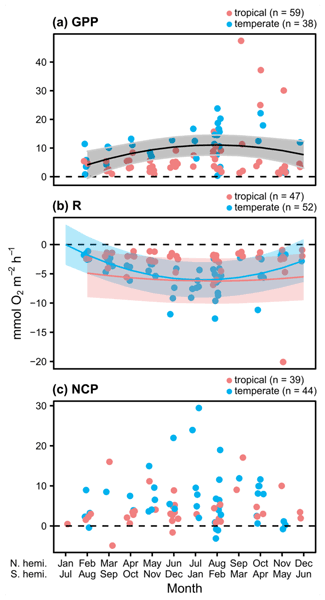
Here, we synthesize the results from 62 studies reporting in situ rates of seagrass metabolism to highlight spatial and temporal variability in oxygen fluxes and inform efforts to use seagrass to mitigate ocean acidification. Our analyses suggest seagrass meadows are generally autotrophic and variable in space and time, and the effects on seawater oxygen are relatively small in magnitude.

Veronica Padilla Vriesman, Sandra J. Carlson, and Tessa M. Hill
Biogeosciences, 19, 329–346, https://doi.org/10.5194/bg-19-329-2022, https://doi.org/10.5194/bg-19-329-2022, 2022
Short summary
Short summary
The shell of the California mussel contains alternating dark and light calcium carbonate increments that record whether the shell was growing normally under optimal conditions (light) or slowly under sub-optimal conditions (dark). However, the timing and specific environmental controls of growth band formation have not been tested. We investigated these controls and found links between stable seawater temperatures and light bands and highly variable or extreme temperatures and dark bands.
Cited articles
Acquafredda, M., Guo, X., and Munroe, D.: Transcriptomic response of the Atlantic surfclam (Spisula solidissima) to acute heat stress, Mar. Biotechnol., 26, 149–168, https://doi.org/10.1007/s10126-024-10285-0, 2024.
Andersson, A. J. and Mackenzie, F. T.: Effects of ocean acidification on benthic processes, organisms, and ecosystems, in: Ocean Acidification, edited by: Gattuso, J.-P. and Hansson, L., Oxford University Press, https://doi.org/10.1093/oso/9780199591091.003.0012, 2011.
Andrews, S.: FastQC: A Quality Control Tool for High Throughput Sequence Data. Babraham Bioinformatics, Babraham Institute. https://www.bioinformatics.babraham.ac.uk/projects/fastqc/ (last access: 9 April 2026), 2010.
Armstrong, E. J., Watson, S. A., Stillman, J. H., and Calosi, P.: Elevated temperature and carbon dioxide levels alter growth rates and shell composition in the fluted giant clam, Tridacna squamosa, Sci. Rep., 12, 11034, https://doi.org/10.1038/s41598-022-14503-4, 2022.
Atalay, S.: Indigenous science for a world in crisis, Public Archaeol., 19, 37–52, https://doi.org/10.1080/14655187.2020.1781492, 2020.
Baker, R.: The clam “gardens” of Tomales Bay, News from Native California, 6, 28–29, 1992.
Barber, J. S., Ruff, C. P., McArdle, J. T., Hunter, L. L., Speck, C. A., Rogers, D. W., and Greiner, C. M.: Intertidal clams exhibit population synchrony across spatial and temporal scales, Limnol. Oceanogr., 64, S284–S300, https://doi.org/10.1002/lno.11085, 2019.
Barton, A., Waldbusser, G., Feely, R., Weisberg, S., Newton, J., Hales, B., Cudd, S., Eudeline, B., Langdon, C., Jefferds, I., King, T., Suhrbier, A., and McLaughlin, K.: Impacts of coastal acidification on the Pacific Northwest shellfish industry and adaptation strategies implemented in response, Oceanography, 28, 146–159, https://doi.org/10.5670/oceanog.2015.38, 2015.
Bates, D., Mächler, M., Bolker, B., and Walker, S.: Fitting linear mixed-effects models using lme4, J. Stat. Softw., 67, 1–48, https://doi.org/10.18637/jss.v067.i01, 2015.
Beal, B. F., Coffin, C. R., Randall, S. F., Goodenow, C. A., Pepperman, K. E., and Ellis, B. W.: Interactive effects of shell hash and predator exclusion on 0-year class recruits of two infaunal intertidal bivalve species in Maine, USA, J. Exp. Mar. Biol. Ecol., 530–531, 151441, https://doi.org/10.1016/j.jembe.2020.151441, 2020.
Bednaršek, N., Feely, R. A., Howes, E. L., Hunt, B. P. V., Kessouri, F., León, P., Lischka, S., Maas, A. E., McLaughlin, K., Nezlin, N. P., Sutula, M., and Weisberg, S. B.: Systematic review and meta-analysis toward synthesis of thresholds of ocean acidification impacts on calcifying pteropods and interactions with warming, Front. Mar. Sci., 6, 227, https://doi.org/10.3389/fmars.2019.00227, 2019.
Bednaršek, N., van de Mortel, H., Pelletier, G., García-Reyes, M., Feely, R. A., and Dickson, A. G.: Assessment framework to predict sensitivity of marine calcifiers to ocean alkalinity enhancement – identification of biological thresholds and importance of precautionary principle, Biogeosciences, 22, 473–498, https://doi.org/10.5194/bg-22-473-2025, 2025.
Bendell, L. I.: Evidence for declines in the native Leukoma staminea as a result of the intentional introduction of the non-native Venerupis philippinarum in coastal British Columbia, Canada, Estuaries Coast., 37, 369–380, 2014.
Benítez, S., Lagos, N. A., Osores, S., Opitz, T., Duarte, C. M., Navarro, J. M., and Lardies, M. A.: High pCO2 levels affect metabolic rate, but not feeding behavior and fitness, of farmed giant mussel Choromytilus chorus, Aquacult. Environ. Interact., 10, 267–278, 2018.
Biçe, K., Myers Stewart, T., Waldbusser, G. G., and Meile, C.: The effect of carbonate mineral additions on biogeochemical conditions in surface sediments and benthic–pelagic exchange fluxes, Biogeosciences, 22, 641–657, https://doi.org/10.5194/bg-22-641-2025, 2025.
Bolger, A. M., Lohse, M., and Usadel, B.: Trimmomatic: a flexible trimmer for Illumina sequence data, Bioinformatics, 30, 2114–2120, https://doi.org/10.1093/bioinformatics/btu170, 2014.
Bryant, D. M., Johnson, K., DiTommaso, T., Tickle, T., Couger, M. B., Payzin-Dogru, D., Lee, T. J., Leigh, N. D., Kuo, T.-H., Davis, F. G., Bateman, J., Bryant, S., Guzikowski, A. R., Tsai, S. L., Coyne, S., Ye, W. W., Freeman, R. M., Peshkin, L., Tabin, C. J., Regev A., Haas, B. J., and Whited, J. L.: A tissue-mapped axolotl de novo transcriptome enables identification of limb regeneration factors, Cell Rep., 18, 762–776, https://doi.org/10.1016/j.celrep.2016.12.063, 2017.
Burdige, D. J., Zimmerman, R. C., and Hu, X.: Rates of carbonate dissolution in permeable sediments estimated from pore-water profiles: the role of sea grasses, Limnol. Oceanogr., 53, 549–565, https://doi.org/10.4319/lo.2008.53.2.0549, 2008.
Caldeira, K. and Wickett, M. E.: Anthropogenic carbon and ocean pH, Nature, 425, 365, https://doi.org/10.1038/425365a, 2003.
Cantalapiedra, C. P., Hernández-Plaza, A., Letunic, I., Bork, P., and Huerta-Cepas, J.: eggNOG-mapper v2: functional annotation, orthology assignments, and domain prediction at the metagenomic scale, Mol. Biol. Evol., 38, 5825–5829, https://doi.org/10.1093/molbev/msab293, 2021.
Checkley, D. and Barth, J.: Patterns and processes in the California Current System, Prog. Oceanogr., 83, 49–64, https://doi.org/10.1016/j.pocean.2009.07.028, 2009.
Clements, J. C. and Chopin, T.: Ocean acidification and marine aquaculture in North America: potential impacts and mitigation strategies, Rev. Aquacult., 9, 326–341, https://doi.org/10.1111/raq.12140, 2017.
Cox, K. D., Gerwing, T. G., Macdonald, T., Hessing-Lewis, M., Millard-Martin, B., Command, R. J., Juanes, F., and Dudas, S. E.: Infaunal community responses to ancient clam gardens, ICES J. Mar. Sci., 76, 2362–2373, https://doi.org/10.1093/icesjms/fsz153, 2019.
Curtin, T. P., Volkenborn, N., Dwyer, I. P., Aller, R. C., Zhu, Q., and Gobler, C. J.: Buffering muds with bivalve shell significantly increases the settlement, growth, survival, and burrowing of the early life stages of the northern quahog, Mercenaria mercenaria, and other calcifying invertebrates, Estuar. Coast. Shelf Sci., 264, 107686, https://doi.org/10.1016/j.ecss.2021.107686, 2022.
Dashfield, S. L., Somerfield, P. J., Widdicombe, S., Austen, M. C., and Nimmo, M.: Impacts of ocean acidification and burrowing urchins on within-sediment pH profiles and subtidal nematode communities, J. Exp. Mar. Biol. Ecol., 365, 46–52, https://doi.org/10.1016/j.jembe.2008.07.039, 2008.
Davidson, N. M. and Oshlack, A.: Corset: enabling differential gene expression analysis for de novo assembled transcriptomes, Genome Biol., 15, 410, https://doi.org/10.1186/s13059-014-0410-6, 2014.
Davis, C. V., Hewett, K., Hill, T. M., Largier, J. L., Gaylord, B., and Jahncke, J.: Reconstructing aragonite saturation state based on an empirical relationship for northern California, Estuaries Coast., 41, 2056–2069, https://doi.org/10.1007/s12237-018-0372-0, 2018.
de Vries, A. and van Steeg, H.: Xpaknockout mice, Semin. Cancer Biol., 7, 229–240, https://doi.org/10.1006/scbi.1996.0031, 1996.
Deur, D., Dick, A., Recalma-Clutesi, K., and Turner, N. J.: Kwakwaka'wakw “Clam Gardens”, Hum. Ecol., 43, 201–212, https://doi.org/10.1007/s10745-015-9743-3, 2015.
Dodd, L. F., Grabowski, J. H., Piehler, M. F., Westfield, I., and Ries, J. B.: Juvenile eastern oysters more resilient to extreme ocean acidification than their mud crab predators, Geochem. Geophys. Geosyst., 22, e2020GC009180, https://doi.org/10.1029/2020GC009180, 2021.
Doney, S. C., Fabry, V. J., Feely, R. A., and Kleypas, J. A.: Ocean acidification: the other CO2 problem, Annu. Rev. Mar. Sci., 1, 169–192, https://doi.org/10.1146/annurev.marine.010908.163834, 2009.
Doney, S. C., Busch, D. S., Cooley, S. R., and Kroeker, K. J.: The impacts of ocean acidification on marine ecosystems and reliant human communities, Annu. Rev. Environ. Resour., 45, 83–112, https://doi.org/10.1146/annurev-environ-012320-083019, 2020.
Doyle, B. and Bendell, L. I.: An evaluation of the efficacy of shell hash for the mitigation of intertidal sediment acidification, Ecosphere, 13, e4003, https://doi.org/10.1002/ecs2.4003, 2022.
Ericson, J. A. and Ragg, N. L. C.: Effects of crushed mussel, Perna canaliculus, shell enrichment on seawater carbonate buffering and development of conspecific larvae exposed to near-future ocean acidification, J. World Aquacult. Soc., 53, 271–289, https://doi.org/10.1111/jwas.12779, 2021.
Feder, H. M., Hendee, J. C., Holmes, P., Mueller, G. J., and Paul, A. J.: Examination of a reproductive cycle of Protothaca staminea using histology, wet weight-dry weight ratios, and condition indices, Veliger, 22, 182–187, 1979.
Feely, R. A., Sabine, C. L., Hernandez-Ayon, J. M., Ianson, D., and Hales, B.: Evidence for upwelling of corrosive “acidified” water onto the continental shelf, Science, 320, 1490–1492, https://doi.org/10.1126/science.1155676, 2008.
Feely, R. A., Klinger, T., Newton, J. A., and Chadsey, M.: Scientific summary of ocean acidification in Washington State marine waters, Rep., Off. Ocean. Atmos. Res., Natl. Ocean. Atmos. Adm., Silver Spring, MD, https://repository.library.noaa.gov/view/noaa/11135 (last access: 20 October 2026), 2012.
Fraser, C. M. and Smith, G. M.: Notes on the ecology of the little neck clam, Paphia staminea Conrad, Trans. R. Soc. Can., 22, 249–269, 1928.
Gold, D. A.: DavidGoldLab/2025_Leukoma_RNA-Seq: Shell hash code (Version shell_hash), Zenodo [software], https://doi.org/10.5281/zenodo.19488332, 2026a.
Gold, D.: Shell hash promotes growth in Pacific littleneck clams (Leukoma staminea) by altering pore water chemistry, V1, Harvard Dataverse [data set], https://doi.org/10.7910/DVN/DL8BY0, 2026b.
Gold, D. A. and Vermeij, G. J.: Deep resilience: an evolutionary perspective on calcification in an age of ocean acidification, Front. Physiol., 14, 1092321, https://doi.org/10.3389/fphys.2023.1092321, 2023.
Grabherr, M. G., Haas, B. J., Yassour, M., Levin, J. Z., Thompson, D. A., Amit, I., Adiconis, X., Fan, L., Raychowdhury, R., Zeng, Q., Chen, Z., Mauceli E., Hacohen, N., Gnirke, A., Rhind, N., di Palma, F., Birren, B. W., Nusbaum, C., Lindblad-Toh, K., Friedman, N., and Regev, A.:: Full-length transcriptome assembly from RNA-Seq data without a reference genome, Nat. Biotechnol., 29, 644–652, https://doi.org/10.1038/nbt.1883, 2011.
Green, M. A., Jones, M. E., Boudreau, C. L., Moore, R. L., and Westman, B. A.: Dissolution mortality of juvenile bivalves in coastal marine deposits, Limnol. Oceanogr., 49, 727–734, https://doi.org/10.4319/lo.2004.49.3.0727, 2004.
Green, M. A., Waldbusser, G. G., Reilly, S. L., Emerson, K., and O'Donnell, S.: Death by dissolution: sediment saturation state as a mortality factor for juvenile bivalves, Limnol. Oceanogr., 54, 1037–1047, https://doi.org/10.4319/lo.2009.54.4.1037, 2009.
Green, M. A., Waldbusser, G. G., Hubazc, L., Cathcart, E., and Hall, J.: Carbonate mineral saturation state as the recruitment cue for settling bivalves in marine muds, Estuaries Coast., 36, 18–27, https://doi.org/10.1007/s12237-012-9549-0, 2013.
Greiner, C. M., Klinger, T., Ruesink, J. L., Barber, J. S., and Horwith, M.: Habitat effects of macrophytes and shell on carbonate chemistry and juvenile clam recruitment, survival, and growth, J. Exp. Mar. Biol. Ecol., 509, 8–15, https://doi.org/10.1016/j.jembe.2018.08.006, 2018.
Groesbeck, A., Rowell, K., Lepofsky, D., and Solomon, A.: Ancient clam gardens increased shellfish production: adaptive strategies from the past can inform food security today, PLoS ONE, 9, e91235, https://doi.org/10.1371/journal.pone.0091235, 2014.
Haas, B. J., Papanicolaou, A., Yassour, M., Grabherr, M., Blood, P. D., Bowden, J., Couger, M. B., Eccles, D., Li, B., Lieber, M., MacManes, M. D., Ott, M., Orvis, J., Pochet, N., Strozzi, F., Weeks, N., Westerman, R., William, T., Dewey, C. N., Henschel, R., LeDuc, R. D., Friedman, N., and Regev, A.: De novo transcript sequence reconstruction from RNA-seq using the Trinity platform for reference generation and analysis, Nat. Protoc., 8, 1494–1512, https://doi.org/10.1038/nprot.2013.084, 2013.
Hatch, M. B. A., Parrish, J. K., Heppell, S. S., Augustine, S., Campbell, L., Divine, L. M., Donatuto, J., Groesbeck, A. S., and Smith, N. F.: Boundary spanners: a critical role for enduring collaborations between Indigenous communities and mainstream scientists, Ecol. Soc., 28, https://doi.org/10.5751/ES-13887-280141, 2023.
Hickey, B. M. and Banas, N. S.: Oceanography of the U.S. Pacific Northwest coastal ocean and estuaries with application to coastal ecology, Estuaries, 26, 1010–1031, https://doi.org/10.1007/BF02803360, 2003.
Hiebert, T. C.: Leukoma staminea, in: Oregon Estuarine Invertebrates: Rudys' Illustrated Guide to Common Species, 3rd edn., University of Oregon Libraries and Oregon Institute of Marine Biology, https://scholarsbank.uoregon.edu/xmlui/bitstream/handle/1794/12918/L_staminea_2016_final.pdf (last access: 20 October 2026), 2015.
Hönisch, B., Ridgwell, A., Schmidt, D. N., Thomas, E., Gibbs, S. J., Sluijs, A., Zeebe, R., Kump, L., Martindale, R. C., Greene, S. E., Kiessling, W., Ries, J., Zachos, J. C., Royer, D. L., Barker, S., Marchitto, T. M., Moyer, R., Pelejero, C., Ziveri, P., Foster, G. L., and Williams, B.: The geological record of ocean acidification, Science, 335, 1058–1063, https://doi.org/10.1126/science.1208277, 2012.
Hu, N., Wang, Z., and Sun, J.: A global meta-analysis reveals consistently negative effects of ocean acidification on marine cultured bivalves: implications for future bivalve aquaculture, Rev. Fish Biol. Fish., 36, 10, https://doi.org/10.1007/s11160-025-10005-4, 2026.
Jackley, J., Gardner, L., Djunaedi, A., and Salomon, A.: Ancient clam gardens, traditional management portfolios, and the resilience of coupled human-ocean systems, Ecol. Soc., 21, https://doi.org/10.5751/ES-08747-210420, 2016.
Justice, D. H.: A better world becoming: placing critical Indigenous studies, in: Critical Indigenous Studies: Engagements in First World Location, edited by: Moreton-Robinson, A., University of Arizona Press, Tucson, USA, 19–32, ISBN 9780816532735, 0816532737, 2016.
Kempf, H. L., Gold, D. A., and Carlson, S. J.: Investigating the relationship between growth rate, shell morphology, and trace element composition of the Pacific littleneck clam (Leukoma staminea): implications for paleoclimate reconstructions, Minerals, 13, 814, https://doi.org/10.3390/min13060814, 2023.
Kimmerer, R. W. and Artelle, K. A.: Time to support Indigenous science, Science, 383, 243, https://doi.org/10.1126/science.ado0684, 2024.
Kindeberg, T., Bates, N. R., Courtney, T. A., Cyronak, T., Griffin, A., Mackenzie, F. T., Paulsen, M.-L., and Andersson, A. J.: Porewater carbonate chemistry dynamics in a temperate and a subtropical seagrass system, Aquat. Geochem., 26, 375–399, https://doi.org/10.1007/s10498-020-09378-8, 2020.
Kleypas, J. A., Buddemeier, R. W., Archer, D., Gattuso, J. P., Langdon, C., and Opdyke, B. N.: Geochemical consequences of increased atmospheric carbon dioxide on coral reefs, Science, 284, 118–120, https://doi.org/10.1126/science.284.5411.118, 1999.
Lagos, N. A., Benítez, S., Duarte, C. M., Lardies, M. A., Broitman, B. R., Tapia, C., Tapia, P., Widdicombe, S., and Vargas, C. A.: Effects of temperature and ocean acidification on shell characteristics of Argopecten purpuratus: implications for scallop aquaculture in an upwelling-influenced area, Aquacult. Environ. Interact., 8, 357–370, 2016.
Largier, J. L.: Upwelling bays: how coastal upwelling controls circulation, habitat, and productivity in bays, Annu. Rev. Mar. Sci., 12, 415–447, https://doi.org/10.1146/annurev-marine-010419-011020, 2020.
Lee, K., Kim, T. W., Byrne, R. H., Millero, F. J., Feely, R. A., and Liu, Y. M.: The universal ratio of boron to chlorinity for the North Pacific and North Atlantic oceans, Geochim. Cosmochim. Ac., 74, 1801–1811, 2010.
Lepofsky, D., Smith, N., Cardinal, N., Harper, J., Morris, M., Elroy White, G., Bouchard, R., Kennedy, D., Solomon, A., Puckett, M., and Rowell, K.: Ancient shellfish mariculture on the Northwest Coast of North America, Am. Antiq., 80, 236–259, 2015.
Li, J., Zhou, Y., Qin, Y., Wei, J., Shigong, P., Ma, H., Li, Y., Yuan, X., Zhao, L., Yan, H., Zhang, Y., and Yu, Z.: Assessment of the juvenile vulnerability of symbiont-bearing giant clams to ocean acidification, Sci. Total Environ., 812, 152265, https://doi.org/10.1016/j.scitotenv.2021.152265, 2022.
Lueker, T. J., Dickson, A. G., and Keeling, C. D.: Ocean pCO2 calculated from dissolved inorganic carbon, alkalinity, and equations for K1 and K2: validation based on laboratory measurements of CO2 in gas and seawater at equilibrium, Mar. Chem., 70, 105–119, 2000.
Mackenzie, F. T. and Andersson, A. J.: Biological control on diagenesis: influence of bacteria and relevance to ocean acidification, in: Encyclopedia of Geobiology, edited by: Reitner, J. and Thiel, V., Springer Netherlands, 137–143, https://doi.org/10.1007/978-1-4020-9212-1_73, 2011.
Mackenzie, C. L., Pearce, C. M., Leduc, S., Roth, D., Kellogg, C. T. E., Clemente-Carvalho, R. B. G., and Green, T. J.: Impacts of seawater pH buffering on the larval microbiome and carry-over effects on later-life disease susceptibility in Pacific oysters, Appl. Environ. Microbiol., 88, e01654-22, https://doi.org/10.1128/aem.01654-22, 2022.
Macreadie, P. I., Anton, A., Raven, J. A., Beaumont, N., Connolly, R. M., Friess, D. A., Kelleway, J. J., Kennedy, H., Kuwae, T., Lavery, P. S., Lovelock, C. E., Smale, D. A., Apostolaki, E. T., Atwood, T. B., Baldock, J., Bianchi, T. S., Chmura, G. L., Eyre, B. D., Fourqurean, J. W., Hall-Spencer, J. M., Huxham, M., Hendriks, I. E., Krause-Jensen, D., Laffoley, D., Luisetti, T., Marbà, N., Masque, P., McGlathery, K. J., Megonigal, J. P., Murdiyarso, D., Russell, B. D., Santos, R., Serrano, O., Silliman, B. R., Watanabe, K., and Duarte, C. M..: The future of blue carbon science, Nat. Commun., 10, 3998, https://doi.org/10.1038/s41467-019-11693-w, 2019.
McGarrigle, S. A., Francis, M. C., and Hunt, H. L.: Effects of experimental addition of algae and shell hash on an infaunal mudflat community, Estuaries Coast., 47, 1617–1636, https://doi.org/10.1007/s12237-024-01378-z, 2024.
Moran, A. and Marko, P.: A simple technique for physical marking of larvae of marine bivalves, J. Shellfish Res., 24, 567–571, https://doi.org/10.2983/0730-8000(2005)24[567:ASTFPM]2.0.CO;2, 2005.
Orr, J. C., Fabry, V. J., Aumont, O., Bopp, L., Doney, S. C., Feely, R. A., Gnanadesikan, A., Gruber, N., Ishida, A., Joos, F., Key, R. M., Lindsay, K., Maier-Reimer, E., Matear, R., Monfray, P., Mouchet, A., Najjar, R. G., Plattner, G.-K., Rodgers, K. B., Sabine, C. L., Sarmiento, J. L., Schlitzer, R., Slater, R. D., Totterdell, I. J., Weirig, M.-F., Yamanaka, Y., and Yool, A.: Anthropogenic ocean acidification over the twenty-first century and its impact on calcifying organisms, Nature, 437, 681–686, https://doi.org/10.1038/nature04095, 2005.
Pan, Y.-R. and Lee, E. Y.-H. P.: UV-dependent interaction between Cep164 and XPA mediates localization of Cep164 at sites of DNA damage and UV sensitivity, Cell Cycle, 8, 655–664, https://doi.org/10.4161/cc.8.4.7844, 2009.
Patro, R., Duggal, G., Love, M. I., Irizarry, R. A., and Kingsford, C.: Salmon provides fast and bias-aware quantification of transcript expression, Nat. Methods, 14, 417–419, https://doi.org/10.1038/nmeth.4197, 2017.
Pinheiro, J. and Bates, D.: Mixed-Effects Models in S and S-PLUS, Springer, ISBN 978-0-387-98957-0, 2000.
Raghavan, V., Kraft, L., Mesny, F., and Rigerte, L.: A simple guide to de novo transcriptome assembly and annotation, Brief. Bioinform., 23, bbab563, https://doi.org/10.1093/bib/bbab563, 2022.
Renforth, P. and Henderson, G.: Assessing ocean alkalinity for carbon sequestration, Rev. Geophys., 55, 636–674, https://doi.org/10.1002/2016RG000533, 2017.
Ries, J. B., Cohen, A. L., and McCorkle, D. C.: Marine calcifiers exhibit mixed responses to CO2-induced ocean acidification, Geology, 37, 1131–1134, https://doi.org/10.1130/G30210A.1, 2009.
Robinson, M. D., McCarthy, D. J., and Smyth, G. K.: edgeR: a Bioconductor package for differential expression analysis of digital gene expression data, Bioinformatics, 26, 139–140, https://doi.org/10.1093/bioinformatics/btp616, 2010.
Sabine, C. L., Feely, R. A., Gruber, N., Key, R. M., Lee, K., Bullister, J. L., Wanninkhof, R., Wong, C. S., Wallace, D. W. R., Tilbrook, B., Millero, F. J., Peng, T.-H., Kozyr, A., Ono, T., and Rios, A. F.: The oceanic sink for anthropogenic CO2, Science, 305, 367–371, https://doi.org/10.1126/science.1097403, 2004.
Saderne, V., Geraldi, N. R., Macreadie, P. I., Maher, D. T., Middelburg, J. J., Serrano, O., Almahasheer, H., Arias-Ortiz, A., Cusack, M., Eyre, B. D., Fourqurean, J. W., Kennedy, H., Krause-Jensen, D., Kuwae, T., Lavery, P. S., Lovelock, C. E., Marba, N., Masqué, P., Mateo, M. A., Mazarrasa, I., McGlathery, K. J., Oreska, M. P. J., Sanders, C. J., Santos, I. R., Smoak, J. M., Tanaya, T., Watanabe, K., and Duarte, C. M.: Role of carbonate burial in blue carbon budgets, Nat. Commun., 10, 1106, https://doi.org/10.1038/s41467-019-08842-6, 2019.
Salter, N.: Ancient clam gardens magnify bivalve production by moderating ambient temperature and enhancing sediment carbonate, Master's thesis, Simon Fraser University, 79 pp., https://summit.sfu.ca/item/18596 (last access: 20 October 2026), 2018.
Schindelin, J., Arganda-Carreras, I., Frise, E., Kaynig, V., Longair, M., Pietzsch, T., Preibisch, S., Rueden, C., Saalfeld, S., Schmid, B., Tinevez, J.-Y., White, D. J., Hartenstein, V., Eliceiri, K., Tomancak, P., and Cardona, A.: Fiji: an open-source platform for biological-image analysis, Nat. Methods, 9, 676–682, https://doi.org/10.1038/nmeth.2019, 2012.
Schneider, T., DeAntoni, G., Hill, A., and Apodaca, A.: Indigenous persistence and foodways at the Toms Point Trading Post (CA-MRN-202), Tomales Bay, California, J. Calif. Great Basin Anthropol., 38, 51–73, 2018.
Schwaner, C., Pales Espinosa, E., and Allam, B.: RNAi silencing of the biomineralization gene perlucin impairs oyster ability to cope with ocean acidification, Int. J. Mol. Sci., 24, 3661, https://doi.org/10.3390/ijms24043661, 2023.
Sleight, V. A., Antczak, P., Falciani, F., and Clark, M. S.: Computationally predicted gene regulatory networks in molluscan biomineralization identify extracellular matrix production and ion transportation pathways, Bioinformatics, 36, 1326–1332, https://doi.org/10.1093/bioinformatics/btz754, 2020.
Sordo, L., Duarte, C., Joaquim, S., Gaspar, M. B., and Matias, D.: Long-term effects of high CO2 on growth and survival of juveniles of the striped venus clam Chamelea gallina: implications of seawater carbonate chemistry, Mar. Biol., 168, 123, https://doi.org/10.1007/s00227-021-03931-x, 2021.
Tadlock, S.: “One day you're gonna know you won't starve here”: A Social and Cultural Exploration of Coast Salish Restoration of Clam Gardens, MA thesis, Department of Public Health, University of Washington, Seattle, https://digital.lib.washington.edu/researchworks/items/aba05cb4-42fb-41a1-aeeb-68cf5a15f231 (last access: 20 October 2026), 2019.
Takesue, R. K. and van Geen, A.: Mg/Ca, Sr/Ca, and stable isotopes in modern and Holocene Protothaca staminea shells from a northern California coastal upwelling region, Geochim. Cosmochim. Ac., 68, 3845–3861, https://doi.org/10.1016/j.gca.2004.03.021, 2004.
Toniello, G., Lepofsky, D., Lertzman-Lepofsky, G., Salomon, A., and Rowell, K.: 11,500 y of human–clam relationships provide long-term context for intertidal management in the Salish Sea, British Columbia, P. Natl. Acad. Sci. USA, 116, 22106–22114, 2019.
Waldbusser, G. G., Hales, B., Langdon, C. J., Haley, B. A., Schrader, P., Brunner, E. L., Gray, M. W., Miller, C. A., and Gimenez, I.: Saturation-state sensitivity of marine bivalve larvae to ocean acidification, Nat. Clim. Change, 5, 273–280, https://doi.org/10.1038/nclimate2479, 2015.
White, E., Artelle, K. A., Brown, E., Brown, K., Chan, D. E., and Housty, W.:  model for centering Indigenous knowledge and governance, Conserv. Biol., 38, e14398, https://doi.org/10.1111/cobi.14398, 2024.
Whyte, K. P., Brewer, J. P., and Johnson, J. T.: Weaving Indigenous science, protocols and sustainability science, Sustain. Sci., 11, 25–32, https://doi.org/10.1007/s11625-015-0296-6, 2016.
Wickham, S. B., Augustine, S., Forney, A., Mathews, D. L., Shackelford, N., Walkus, J., and Trant, A. J.: Incorporating place-based values into ecological restoration, Ecol. Soc., 27, 32, https://doi.org/10.5751/ES-13370-270332, 2022.
Widdicombe, S., Spicer, J. I., and Kitidis, V.: Effects of ocean acidification on sediment fauna, in: Ocean Acidification, edited by: Gattuso, J.-P., Hansson, L., Gattuso, J.-P., and Hansson, L., Oxford University Press, Oxford, New York, ISBN 978-0-19- 959109-1, 2011.
Zachos, J. C., Dickens, G. R., and Zeebe, R. E.: An early Cenozoic perspective on greenhouse warming and carbon-cycle dynamics, Nature, 451, 279–283, https://doi.org/10.1038/nature06588, 2008.
Zeebe, R. E. and Wolf-Gladrow, D.: CO2 in Seawater: Equilibrium, Kinetics, Isotopes, Elsevier, ISBN 9780080529226, 0080529224, 2001.
Short summary
We studied whether mixing crushed shell into sediment can help Pacific littleneck clams cope with acidic seawater. In a 90-day experiment, young clams grew better with shell material present, even under acidic conditions. The shell pieces raised sediment water acidity levels in a helpful way, and clam growth looked much like clams in normal seawater. This suggests a simple, practical way to protect valuable shellfish and support healthier coastal ecosystems.
We studied whether mixing crushed shell into sediment can help Pacific littleneck clams cope...


Altmetrics
Final-revised paper
Preprint