
the Creative Commons Attribution 4.0 License.
the Creative Commons Attribution 4.0 License.
 | 19 Nov 2026
Ground-truthing the application of compound-specific stable isotopes of amino acids to planktic foraminifera tests from Santa Barbara Basin

Emily Havard
Stephanie Christensen
Genevieve M. Pugsley
Matthew D. McCarthy
Catherine V. Davis
Planktic foraminifera form shells that are preserved in ocean sediments and are used in a variety of paleoproxy and biostratigraphic applications. However, species-specific ecology can complicate the interpretation of planktic foraminifera-based proxies, and limited options exist for examining the ecology of extinct species. Here we apply test-bound compound-specific stable isotopes of amino acids (CSI-AA) to examine the trophic ecology of extant planktic foraminifera. We measure CSI-AA in planktic foraminifera shells collected in sediment traps from the Santa Barbara Basin, CA, specifically the three most abundant species in this region: Globigerina bulloides, Neogloboquadrina incompta, and Turborotalita quinqueloba. The nitrogen CSI-AA of all three species suggest that planktic foraminifera have metazoan-like metabolisms, and that trophic position estimates using CSI-AA are appropriate for planktic foraminifera. All three species had trophic positions near 2 (primary consumer), with no evidence for mixotrophy or photosymbionts. Carbon CSI-AA, in combination with a Bayesian stable isotope mixing model, indicates that the three species occupied separate niches based on diet. Globigerina bulloides fed opportunistically on all groups of phytoplankton available in Santa Barbara Basin, adjusting its diet with seasonal changes in phytoplankton assemblage. Turborotalita quinqueloba specialized in diatoms but consumed some heterotrophic bacteria and cyanobacteria. Neogloboquadrina incompta consumed primarily heterotrophic bacteria and some dinoflagellates. Our results align with the current understanding of each species' ecology while further defining their niches. Our findings suggest that CSI-AA is a promising tool for understanding the trophic ecology of planktic foraminifera, and we make recommendations for future applications of CSI-AA to fossil specimens.
- Article
(4558 KB) - Full-text XML
- BibTeX
- EndNote


Despite their fundamental importance to paleoceanography, many questions remain about the ecology of planktic foraminifera. Planktic foraminifera are single-celled amoeboid protists that precipitate calcium carbonate shells. These shells, or tests, are preserved in marine sediments and constitute a rich historical record of the oceans. A variety of paleoproxies for physical and biogeochemical ocean conditions have been developed using elemental and stable isotope analyses of planktic foraminifera (Katz et al., 2010; Kucera, 2007). Planktic foraminifera are essential to biostratigraphy in carbonate-rich ocean sediments and the relative abundance of planktic foraminifera species has been used as a paleotemperature indicator (Imbrie and Kipp, 1971; Petrizzo et al., 2024).
Planktic foraminifera species have varying and wide-ranging trophic ecology: they can be primary consumers and secondary consumers (Spindler et al., 1984), detritivores (Bird et al., 2018; Fehrenbacher et al., 2018), and mixotrophs (Uhle et al., 1997, 1999). Mixotrophic species host photosynthetic symbionts (Takagi et al., 2019), which can assimilate inorganic nitrogen as a nutrient source (Lekieffre et al., 2020). The foraminifera themselves can also assimilate inorganic nitrogen (Bird et al., 2020). The ecology of individual species can influence the interpretation of foraminifera-based paleoproxies. For example, the presence and abundance of photosynthetic symbionts can alter the inorganic carbon stable isotope ratios in foraminifera tests (Spero et al., 1991) and therefore have a confounding influence on records of past changes in the marine carbon cycle. If a species adopts symbionts over time and their carbon stable isotope composition changes, this could be mistakenly interpreted as a change in the global carbon cycle (Gaskell and Hull, 2019). Foraminifera-bound δ15N has proven to be an extremely valuable proxy for nitrogen cycling and ocean circulation (e.g., Ren et al., 2009, 2015; Auderset et al., 2022; Farmer et al., 2023), but like δ13C, the interpretation of this proxy can be complicated by trophic ecology, specifically the presence/absence of symbionts (Auderset et al., 2025). Examinations of cytoplasm contents, observations from culture, and metagenomic methods have been employed to understand the ecology of extant species (e.g. Bé et al., 1977; Bird et al., 2017, 2018; Takagi et al., 2019; Reynolds et al., 2025), yet much remains unknown. These methods, however, are not feasible for extinct species or fossil specimens.
Compound-specific stable isotopes of amino acids (CSI-AA) have been applied extensively to studies of trophic ecology, and CSI-AA should be particularly useful for studies of planktic foraminifera. Nitrogen isotopes of amino acids can be used to investigate the trophic position, or level in the food web, of organisms as well as nitrogen sources to the food web (Ohkouchi et al., 2017). This utility is derived from differential nitrogen isotope fractionation in amino acids during heterotrophic metabolism: significant fractionation of nitrogen in a subset of amino acids (called “trophic” amino acids) and minimal fractionation in other amino acids (the “source” amino acids; McMahon and McCarthy, 2016). With empirical values of differential fractionation from feeding studies, the trophic level of an organism can be estimated using a trophic position calculation from the δ15N values of amino acids (Chikaraishi et al., 2007). Multiple methods for calculating trophic position have been developed to more accurately reconstruct trophic level in different organisms. Source amino acids may also be used to reconstruct the baseline δ15N value in an organism's diet.
Carbon isotopes of essential amino acids, or those amino acids that are not synthesized by heterotrophs, can be used to estimate the primary carbon sources in a consumer's diet (Larsen et al., 2009). The routing of carbon during synthesis of amino acid carbon backbones in the Tricarboxylic Acid Cycle creates carbon isotopic fractionation among essential amino acids that is distinct to different primary producer groups (Hayes, 2001; Scott et al., 2006; Larsen et al., 2009). Stable isotope mixing model approaches, originally developed for bulk δ15N and δ13C, can be used to determine the proportion of primary producers to an organism's diet (e.g. Larsen et al., 2013; McMahon et al., 2015). This approach is often referred to as CSI-AA “fingerprinting”. Because essential amino acids are only synthesized by primary producers (and some heterotrophic microbes), this approach is limited to primary-producer end-members.
Together, nitrogen and carbon isotopes of amino acids can be used to estimate (1) the trophic position or level of an organism and (2) the primary carbon sources to that organism. Combined, these two results can provide detailed information about the diet of an organism. CSI-AA has been used to examine the ecology of live-caught benthic and planktic foraminifera with intact cytoplasm (Nomaki et al., 2025; Toue et al., 2022; Tsuchiya et al., 2018). Trophic positions were estimated for the live-caught planktic foraminifera Neogloboquadrina dutertrei (trophic position of 2.4, or omnivory) and Pulleniatina obliquiloculata (trophic position of 2.1, or herbivory) in Suruga Bay, Japan by Toue et al. (2022). Amino acids also constitute a major fraction of the organic lining of the foraminifera test (Paoloni et al., 2023) and thus are preserved in fossil specimens (King and Hare, 1972). Our study focuses on test-bound amino acids from planktic foraminifera tests collected in a moored sediment trap. These tests should be analogous to sediment core-top fossils in nitrogen content (Smart et al., 2018) but would not have been subject to diagenesis.
The Santa Barbara Basin (SBB) provides an ideal study site for studies of planktic foraminifera ecology. The three most abundant extant planktic foraminifera species in the Santa Barbara Basin (Black et al., 2001; Havard et al., 2025; Kincaid et al., 2000): Globigerina bulloides (d'Orbigny, 1826), Neogloboquadrina incompta (Cifelli, 1961), and Turborotalita quinqueloba (Natland, 1938) have been extensively studied in the wild and in culture. SBB is also the location of multiple planktic foraminifera-based climate archives (e.g. Hendy et al., 2004; Hendy and Kennett, 2000; Kennett and Ingram, 1995; White et al., 2013), thus planktic foraminifera ecology also has direct relevance to paleoceanographic studies.
We apply CSI-AA to planktic foraminifera from SBB to ground-truth the application of this method to planktic foraminifera tests and investigate the ecology of the three most abundant species. We compare our results to previous studies of the ecology and behavior of G. bulloides, T. quinqueloba, and N. incompta. Our findings confirm the utility of CSI-AA for examining the ecology of planktic foraminifera species as well as define the ecological niches of each of these three species in SBB.
2.1 Sampling location and sediment trap
The Santa Barbara Channel, which contains the SBB, is a highly dynamic system driven by seasonal changes in wind forcing (Harms and Winant, 1998). In the spring, equatorward winds create conditions favorable for upwelling off Point Conception and flow is equatorward (Fig. 1; Harms and Winant, 1998), which delivers nutrients to surface waters in SBB that support new production and plankton blooms (Brzezinski and Washburn, 2011). In late spring the flow reverses to poleward, and cyclonic circulation occurs in the channel through fall (Harms and Winant, 1998). During this time, cyclonic eddies can bring nutrients to the surface and entrain nutrients and phytoplankton from upwelled waters north of Point Conception (Brzezinski and Washburn, 2011). Chlorophyte and prymnesiophyte phytoplankton bloom first in response to upwelling, followed by diatoms (Catlett et al., 2021). Diatoms dominate pigment concentrations throughout the year, and diatom blooms peak in spring, after which smaller blooms occur sporadically through the summer (Anderson et al., 2008). The remainder of the year, stratified conditions favor a cyanobacteria- and nanoeukaryote-dominated mixed assemblage and winter-time precipitation and freshwater runoff favor dinoflagellate blooms (Catlett et al., 2021).
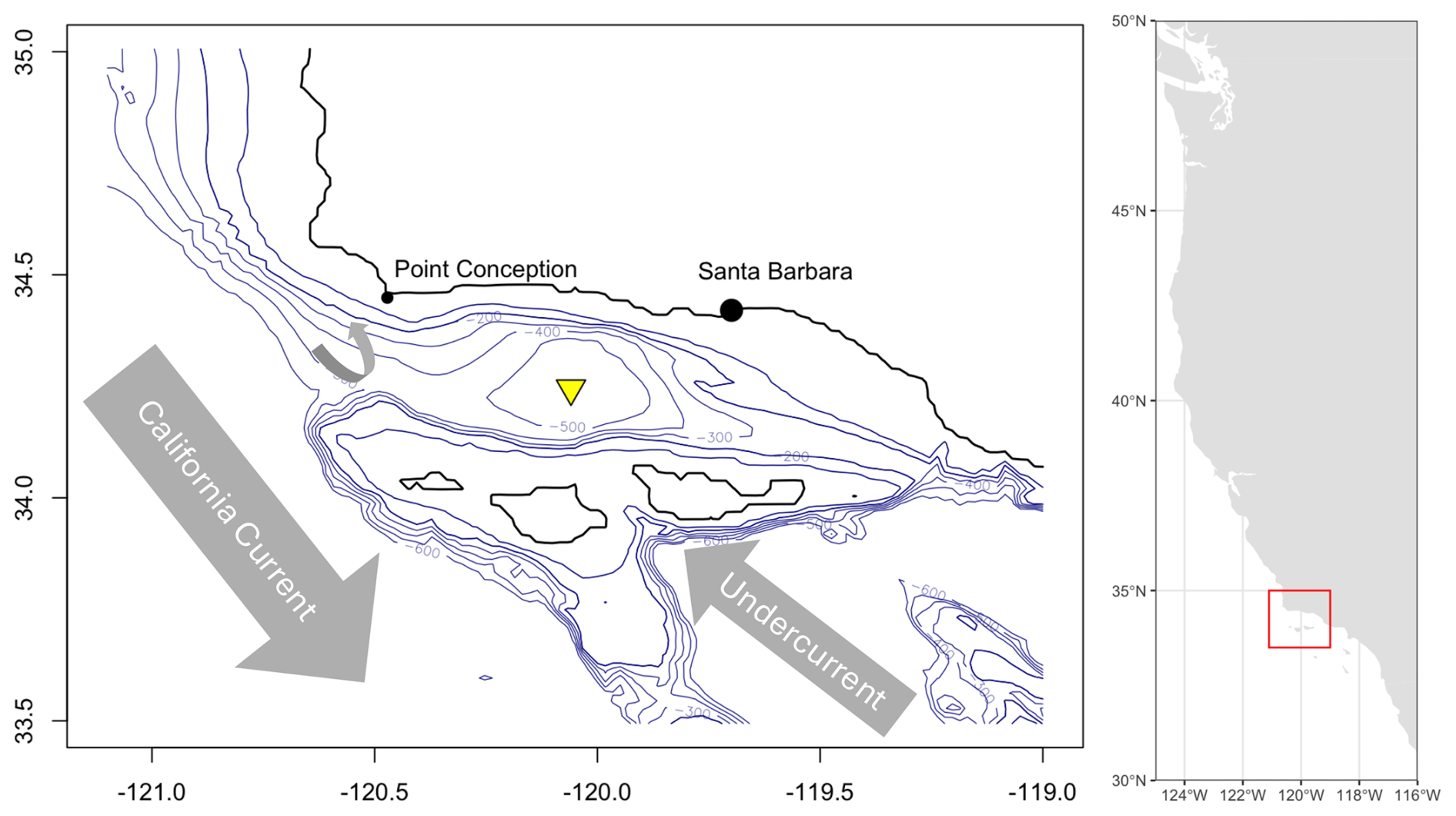
Figure 1Map of Santa Barbara Basin with bathymetry, relative directions of the California Current and California Undercurrent, and location of sediment trap (triangle). In the spring, the California Current dominates the circulation through the basin, and upwelling forms off Point Conception. In the fall and winter, the undercurrent dominates circulation. Bathymetry data are from NOAA.
Samples were collected using a McLane Parflux 78H sediment trap deployed at depths > 400 m (water column depth ∼ 589 m; Eichhubl et al., 2002) in the central SBB (34.2450389, −120.0592917; Fig. 1). The sampling interval was 10 to 14 d and samples were preserved in borate-buffered formalin solution. This study consists of samples from deployments from 2018 to 2021, excluding May through November 2020.
We split the sediment trap fluxes into two seasons, fall/winter and spring/summer, based on measurements of δ15N and δ13C in the organic matter flux to the sediment trap in SBB (Davis et al., 2019). The months October through January (our fall/winter) had lower δ13C values than the other months of the year (p< 0.05; Davis et al., 2019). The remaining months (spring/summer) included the months with the highest δ13C values and lowest δ15N values.
2.2 Sample processing
A 1/16th split of the sediment trap sample was used for foraminiferal flux and species counts, as described in Havard et al. (2025). Briefly, samples were rinsed with tap water over a 125 µm sieve and foraminifera tests were removed from other trap material using a fine paintbrush. Foraminifera tests were dried on a micropaleontology slide, then species were identified by test morphology and sorted (Fig. 2).
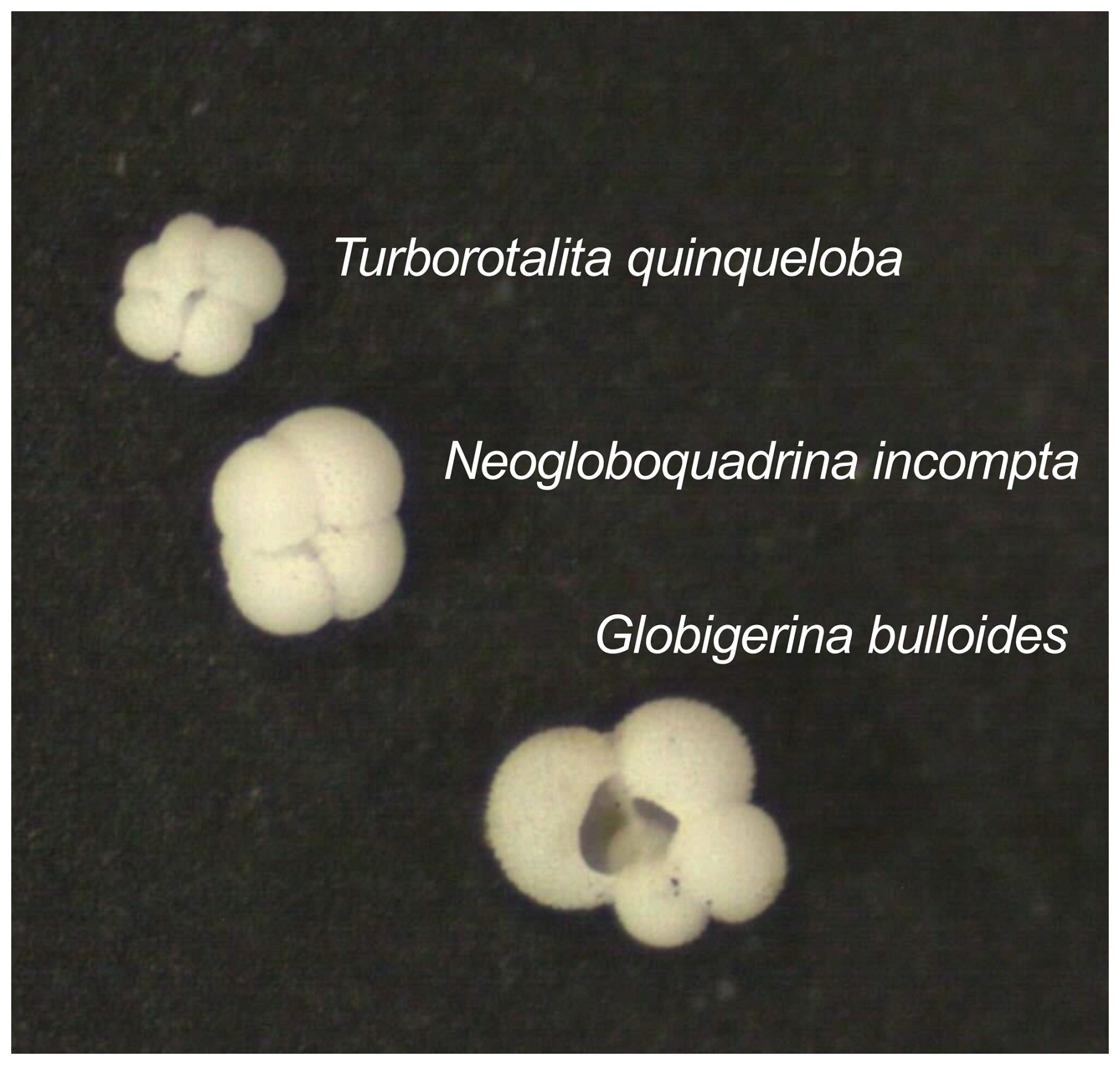
Figure 2Pictures of three most abundant planktic foraminifera in SBB on a micropaleontology slide.
Tests of the three most abundant species were moved to separate micropaleontology slides. Tests were inspected under a dissecting microscope to ensure that they were free of cytoplasm and that no organic particles were adhered to the exterior or interior of tests. Any organic particles were gently removed with a wet brush. The tests were counted and weighed on a microbalance. Tests from multiple sediment trap samples were combined to achieve a sample of 5–10 mg (Table 1). The weights of individual sediment trap collections were used to estimate the proportion of each sample from each season (Table 1). Because the tests were recovered from a loose matrix and were not subject to diagenesis, a gentle cleaning protocol was used to remove any amino acids that may have been adhered to the exterior of the test. This gentle protocol also ensures that test-bound amino acids were not fractionated, as there was no heat added or reaction with oxidizing or reducing agents. The sample was gently rinsed with methanol three times, then dried.

2.3 Compound-specific stable isotope analysis of amino acids
CSI-AA were measured at the UC Santa Cruz Stable Isotope Lab. The preparation of foraminifera tests for CSI-AA follows the methods of Vokhshoori et al. (2022) for preparing bivalve shell organic matter. Tests were first demineralized by adding ∼ 1 mL 1N HCl to dissolve carbonate, then stored at 4 °C overnight to complete the demineralization reaction. The HCl was then evaporated under N2 instead of filtration or centrifugation. The remaining organic matter was hydrolyzed with ∼ 1 mL 6N HCl at 110 °C for 20 h after the vial was purged with N2 to remove oxygen. Samples were purified by cation-exchange chromatography with DOWEX 50WX8–400 resin (Metges et al., 1996). Amino acids were measured as trifluoroacetyl isopropyl ester derivatives following Silfer et al. (1991). After drying under N2, samples were esterified with a 1:5 mixture of acetyl chloride : isopropanol at 110 °C for 60 min. Samples were dried again under N2, then trifluoroacetylation was completed using a 1:3 mixture of trifluoroacetic anhydride (TFAA) and dichloromethane (DCM) at 100 °C for 15 min. Inorganic salts were removed from samples by liquid-liquid extraction of derivatized amino acids in chloroform and an aqueous 1 M phosphate buffer (Ueda et al., 1989). Trifluoroacetylation was completed again after liquid-liquid extraction. Samples were dried and dissolved in ethyl acetate for gas chromatography-isotope ratio mass spectrometry (GC-C-IRMS).
Amino acid stable isotopes were measured on a Thermo 1310 Trace gas chromatograph coupled to an Isolink II (Thermo combustion reactor 1000 °C), Conflo IV, and Thermo Delta V Plus IRMS at the UCSC-SIL. Amino acids were separated for δ15N analyses using a BPX5 column (60 m × 0.32 mm, 1 µm film thickness; SGE Analytical Science, Trajan, Austin, TX, USA) and for δ13C analyses using a DB-5 column (50 m × 0.32 mm × 0.52 µm film thickness; Agilent Technologies, Santa Clara, CA, USA). Samples were then analyzed, alternating every three injections with an authentic amino acid standard mixture of known δ13C and δ15N values. The injector temperature was 250 °C with He column flow rate of 2 mL min−1. The GC temperature program for nitrogen isotope analysis: initial temp = 70 °C hold for 1 min; ramp 1 = 10 °C min−1 to 185 °C, hold for 2 min; ramp 2 = 2 °C min−1 to 200 °C, hold for 10 min; ramp 3 = 30 °C min−1 to 300 °C, hold for 6 min. The GC temperature program for carbon isotope analysis was: initial temp = 75 °C hold for 2 min; ramp 1 = 4 °C min−1 to 90 °C, hold for 4 min; ramp 2 = 4 °C min−1 to 185 °C, hold for 5 min; ramp 3 = 10 °C min−1 to 250 °C, hold for 2 min; ramp 4 = 20 °C min−1 to 300 °C, hold for 5 min. Amino acids included in analysis were: alanine (Ala), glycine (Gly), threonine (Thr), serine (Ser), valine (Val), leucine (Leu), isoleucine (Ile), proline (Pro), aspartic acid/asparagine (Asx), glutamic acid/glutamine (Glx), phenylalanine (Phe), and lysine (Lys). The δ13C of amino acids was corrected for carbon added during derivatization using standard values from the same derivative batch, following the methods of Silfer et al. (1991). A small δ15N correction was made for samples in each run based on the offset from known standard values for each amino acid in that same run. Reproducibility was estimated by the standard deviation of triplicate injections of each sample. Accuracy was checked by analyzing an in-house long-term lab reference material (cyanobacteria) with every sample set.
2.4 Amino acid-based statistical analyses
2.4.1 Trophic Positions
Trophic and source amino acids were designated following Chikaraishi et al. (2007). Trophic position was estimated in three ways, due to a lack of information about the fractionation of trophic amino acids in foraminifera. The first, denoted here as TP-Glx, was developed for metazoans and uses the δ15N values of Glx and Phe according to the formulation of Chikaraishi et al. (2009):
where βGlx−Phe is 3.4 ‰ and ΔGlx is 7.6 ‰ (Chikaraishi et al., 2009). These values have been applied in studies of metazoan zooplankton (Hannides et al., 2013; Shea et al., 2023).
The second method, using alanine as the trophic amino acid, denoted here as TP-Ala, is employed to capture protistan steps in the food web, which are not captured by the TP-Glx method (Gutiérrez-Rodríguez et al., 2014; Décima et al., 2017).
Where βAla−Phe is 3.2 ‰ and ΔAla is 6.1 ‰ (Décima et al., 2017; Chikaraishi et al., 2009).
Feeding studies suggest different alanine trophic discrimination factors for protists and metazoans (Décima et al., 2017; Gutiérrez-Rodríguez et al., 2014), thus we also implement the multi-TDF model (McMahon and McCarthy, 2016) assuming a single protistan step for an alanine-based trophic position, TP-Ala-multi:
Where βAla−Phe is 3.2 ‰, ΔAla1 is 4.5 ‰, and ΔAla2 is 6.1 ‰ (Décima et al., 2017; Chikaraishi et al., 2009). This third calculation is most appropriate in the case that (1) foraminifera fractionate Glx and Ala like metazoans, and (2) other protists may be in the foraminifera food web.
Calculation of propagated uncertainty for trophic position followed Jarman et al. (2017) and was determined using the standard deviation of βGlx, ΔGlx, βAla, and ΔAla1 and ΔAla2 from Chikaraishi et al. (2009; 0.9 ‰, 1.1 ‰, 1.2 ‰, 0.2 ‰ and 2.1 ‰, respectively), and the analytical uncertainty for the amino acid δ15N of each sample. Propagated errors in the TP calculations are driven primarily by the standard deviations of ΔAla and ΔGlx, which are empirically derived from feeding experiments.
2.4.2 Bayesian stable isotope mixing model dietary analysis
The δ13C of essential amino acids normalized to average essential amino acid δ13C was used to apportion end-members to the diet of each foraminifera sample following McMahon et al. (2015). A Bayesian mixing model (Markov chain Monte Carlo for stable isotope data with only single target organisms; MixSIAR R-package; Stock et al., 2018) was run for foraminifera using five end-members (cyanobacteria, diatoms, dinoflagellates, heterotrophic bacteria, and nanoeukaryotes) and their standard deviations. End members were chosen based upon the known phytoplankton composition of SBB (Catlett et al., 2021). End-members are entered into the model as the average and standard deviation of all taxa in an end-member group. These end-members were generated using published values from the literature (Larsen et al., 2013; Pugsley, 2025; Stahl et al., 2023); data in Table A1. The essential amino acids used were: Thr, Val, Leu, Ile, Lys. Phe was excluded because Phe δ13C values of foraminifera were outside the range of end-member values (Fig. 3). Each amino acid δ13C value in the end-members and unknowns was normalized to the average δ13C of all amino acids used to eliminate baseline δ13C variability and isolate patterns among essential amino acids. The model was run with the default weakly informative prior, 500 000 iterations, 50 000 burn-in, reporting every 10 000 iterations, and thinned by 15 iterations.
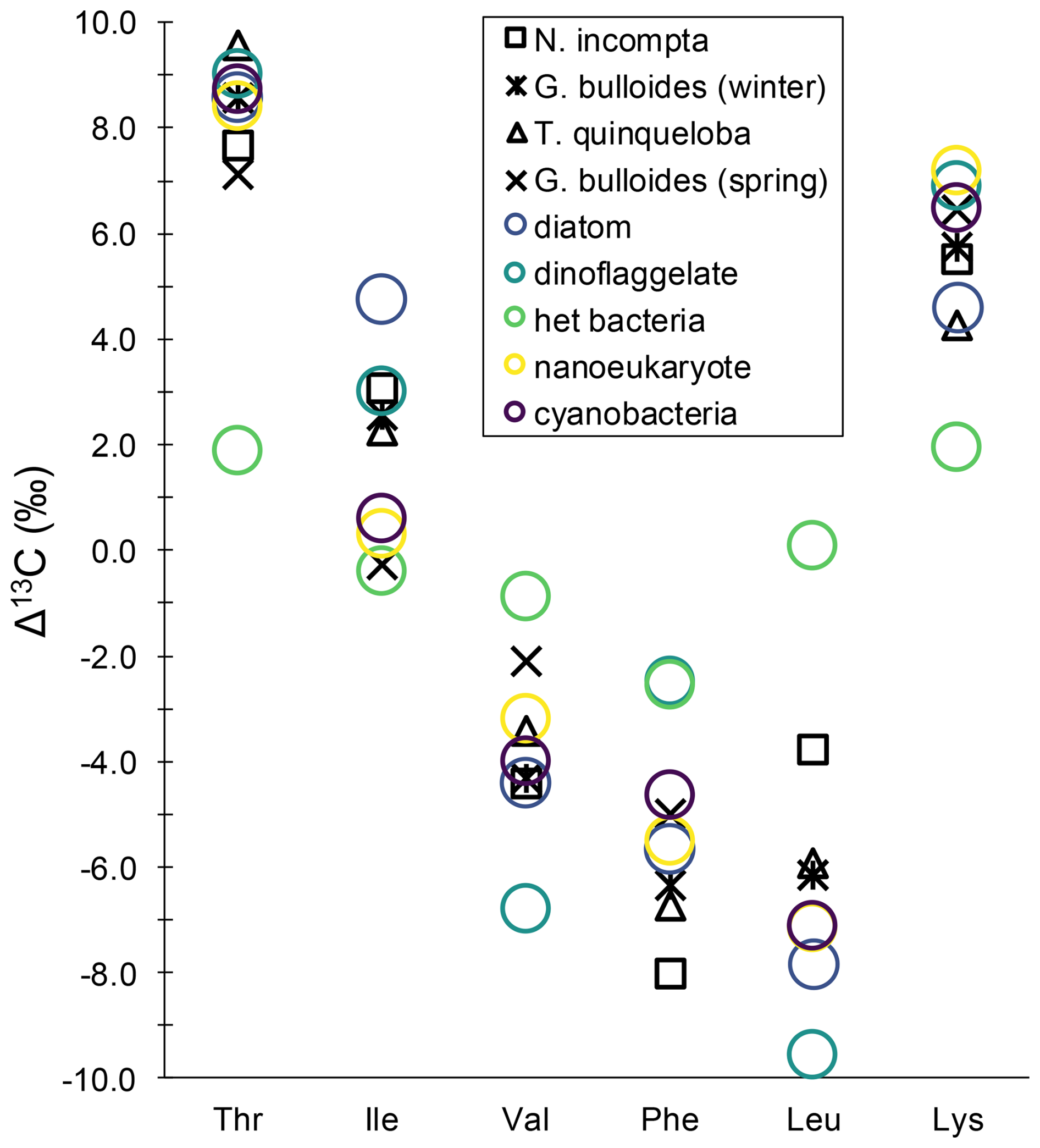
Figure 3Essential amino acid δ13C values normalized to the average of essential amino acid δ13C for foraminifera samples and end-members.
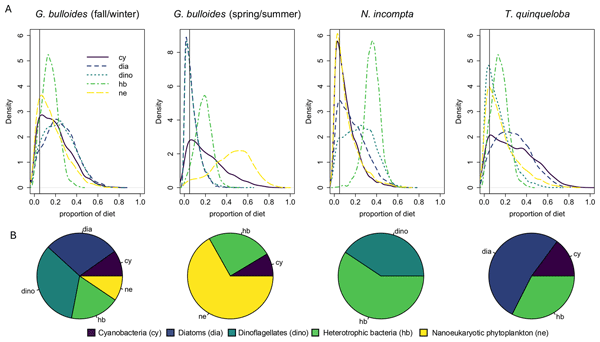
Model posterior distributions were often skewed, owing to the upper and lower limits of 0 and 1 for modelled proportions (Fig. 7). Iterating on the methods from Doherty et al., 2025a, the maximum of the kernel density estimation of model posterior distributions was used to estimate the proportion of each end-member to the diet (Fig. 7). If this value was less than 5 %, it was assumed that the end-member had a negligible contribution to the diet and it was excluded. Due to the qualitative nature of this approach, single values are not reported for end-member contributions to diet and instead represented in pie charts.
See data availability for complete CSI-AA data.
3.1 Nitrogen stable isotope ratios of amino acids
In all samples, trophic amino acids had a higher δ15N value than source amino acids; the average δ15N value of trophic amino acids ranged from 14.9 ‰ ± 0.4 ‰ to 16.2 ‰ ± 0.5 ‰ and the average δ15N value of source amino acids ranged from 6.6 ‰ ± 0.4 ‰ to 8.4 ‰ ± 0.5 ‰ (Fig. 4). Both Ala and Glx were enriched relative to source amino acids in all samples. Globigerina bulloides in the fall/winter and T. quinqueloba had the highest average source AA δ15N (8.4 ‰ ± 0.5 ‰ and 8.2 ‰ ± 0.7 ‰, respectively). Globigerina bulloides in the spring/summer and N. incompta had lower average source amino acid δ15N (7.0 ‰ ± 0.3 ‰ and 6.6 ‰ ± 0.4 ‰, respectively). In all samples, Thr δ15N was lower than the δ15N of source amino acids.
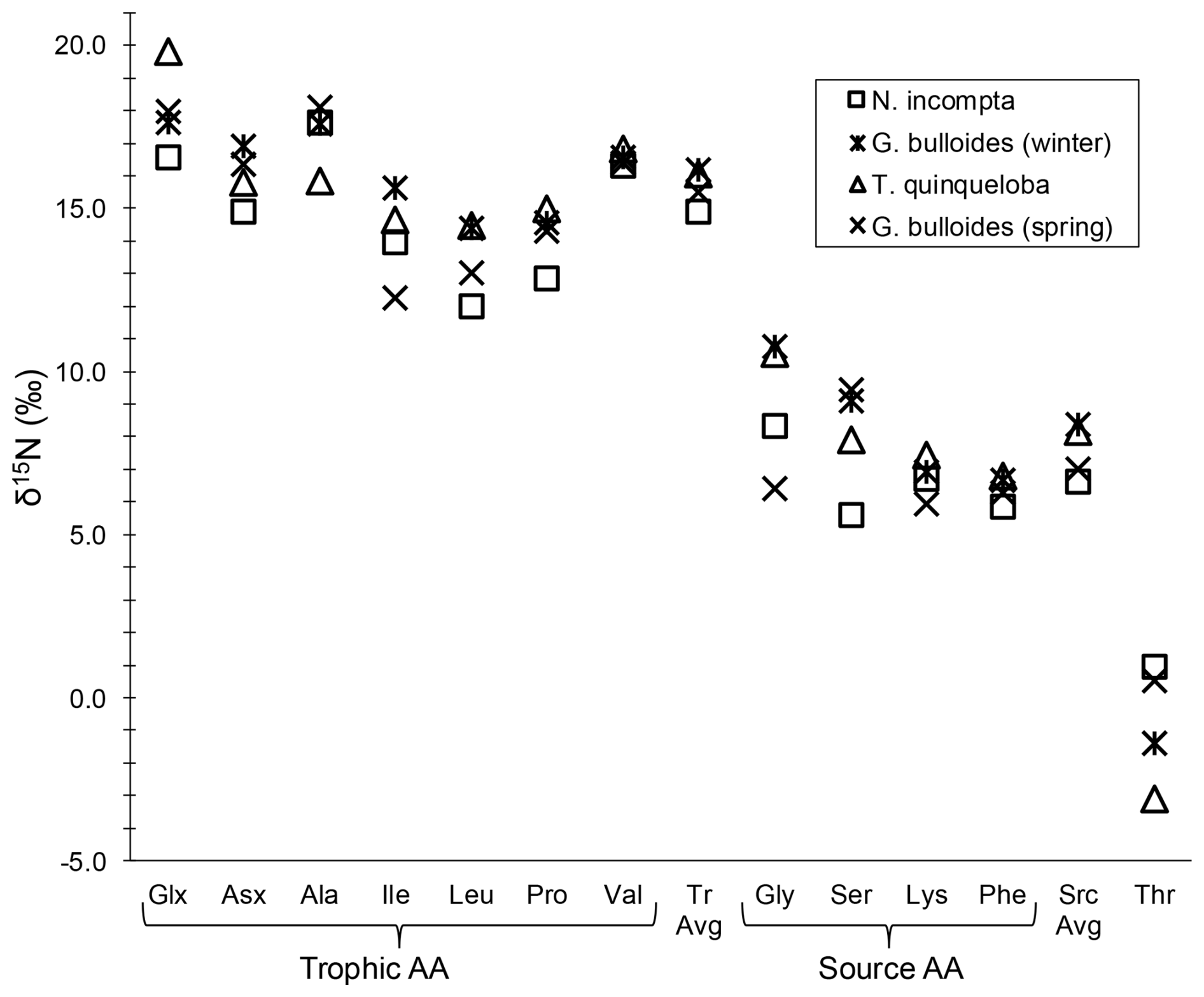
Figure 4Amino acid δ15N values for planktic foraminifera. Analytical uncertainty is included in symbol size. The average δ15N of trophic amino acids (Tr Avg) and source amino acids (Src Avg) are included. Analytical uncertainty is smaller than symbol size.
3.2 Trophic position estimates
Trophic position estimates were very similar between G. bulloides and N. incompta (Fig. 5). Globigerina bulloides in fall/winter had a TP-Glx of 2.0 ± 0.3 and a TP-Ala of 2.3 ± 0.9. In the spring and summer, G. bulloides trophic position estimates were nearly identical: TP-Glx was 2.1 ± 0.3 and TP-Ala was 2.4 ± 0.9. Neogloboquadrina incompta had a TP-Glx of 2.0 ± 0.3 and a TP-Ala 2.4 ± 0.9, almost identical to G. bulloides in the fall/winter. In these two species TP-Ala was higher than TP-Glx by 0.3–0.4. Turborotalita quinqueloba had a TP-Glx of 2.3 ± 0.4 and a TP-Ala 2.0 ± 0.7.

Figure 5Trophic position estimates of foraminifera using the TP-Ala-multi, TP-Ala, and TP-Glx estimates. Corresponding trophic level is noted on the right side of the plot. Error bars represent propagated error for TP calculations.
Trophic position estimates using the multi-TDF model were higher than TP-Ala and TP-Glx for G. bulloides and N. incompta. Globigerina bulloides in fall/winter had a TP-Ala-multi of 2.7 ± 0.9. In the spring and summer, G. bulloides TP-Ala-multi was 2.5 ± 0.9. Neogloboquadrina incompta had a TP-Ala-multi of 2.7 ± 0.9, again identical to G. bulloides in the fall/winter. Turborotalita quinqueloba had a TP-Ala-multi of 2.2 ± 0.9, slightly higher than its TP-Ala and slightly lower than its TP-Glx.
3.3 Carbon stable isotope ratios of amino acids
Amino acid δ13C values ranged from −28.0 ‰ ± 0.2 ‰ to −0.5 ‰ ± 0.3 ‰ (Fig. 6). The weighted average δ13C of total hydrolysable amino acids (THAA) was −13.2 ‰ ± 0.2 ‰ for N. incompta, −14.9 ‰ ± 0.4 ‰ for T. quinqueloba, −14.2 ‰ ± 0.4 ‰ for G. bulloides in the fall/winter, and −16.3 ‰ ± 0.3 ‰ for G. bulloides in the spring/summer (Fig. 6).

Figure 6Amino acid δ13C values for planktic foraminifera including the weighted average of total hydrolysable amino acids (THAA). Analytical uncertainty is smaller than symbol size.
3.4 Bayesian stable isotope mixing model diet apportioning
We present the results of the Bayesian stable isotope mixing model as qualitative pie charts (Fig. 7). As discussed in the methods (Sect. 2.4.2), posterior distributions were often skewed (Fig. 7) and therefore representing the results with a single value was not ideal. These charts are intended to represent what was present in the diet and relative contributions of each end-member, but not absolute percentages of the end-members in the diet.

Figure 7Kernel density estimation plots of posterior distributions of Bayesian stable isotope mixing model runs for each species including all end-members (A). Solid line at 5 % to show minimum cutoff for inclusion in pie charts. Bayesian mixing model-derived diet proportions of end-members based on the maximum of density plots (B).
Heterotrophic bacteria were present in all diets. In the fall and winter, G. bulloides had a mixed diet which included all end-members but primarily consisted of diatoms and dinoflagellates. In the spring and summer, G. bulloides consumed primarily nanoeukaryotes, with some heterotrophic bacteria and cyanobacteria. Turborotalita quinqueloba consumed primarily diatoms and heterotrophic bacteria with some cyanobacteria. Neogloboquadrina incompta consumed heterotrophic bacteria and dinoflagellates.
4.1 Planktic foraminifera have metazoan-like metabolisms
Our results indicate that CSI-AA represents an important new tool for understanding the ecology of planktic foraminifera, and that test-bound amino acids can be used for CSI-AA. The relative δ15N values of amino acids match expectations for marine consumers (Fig. 4); trophic amino acids had higher δ15N values than source amino acids (Fig. 4). In these foraminifera Glx and Ala were both enriched in 15N relative to source amino acids, unlike other heterotrophic marine protists (Décima et al., 2017; Gutiérrez-Rodríguez et al., 2014). TP-Ala and TP-Glx were also similar in all species (Fig. 5); if foraminifera had protist-like metabolisms there should be a large and consistent offset in TP-Ala and TP-Glx, with higher TP-Ala values relative to TP-Glx. TP-Glx was actually higher than TP-Ala for T. quinqueloba, eliminating the possibility of protist-like fractionation of Ala and Glx in planktic foraminifera. The small offset between TP-Ala and TP-Glx values of G. bulloides and N. incompta instead suggests that other protists may have been in the diet or food web of these foraminifera (see Sect. 4.2).
The 15N depletion of Thr relative to all other amino acids in these foraminifera also suggests that planktic foraminifera have metazoan-like metabolisms. In marine plankton this fractionation has been observed primarily in metazoans (Doherty et al., 2021) and has not previously been observed in heterotrophic protists (Décima et al., 2017; Gutiérrez-Rodríguez et al., 2014). The distinct fractionation of Thr is thought to be derived from protein uptake and/or gluconeogenesis in metazoan metabolisms (Fuller and Petzke, 2017). The relative δ13C values of nonessential amino acids (Fig. 6) resembled those of fish muscle and other animal tissues, also suggesting similar isotopic routing and biosynthesis pathways to metazoans (McMahon et al., 2010).
Our finding that planktic foraminifera have metazoan-like metabolisms (as reflected in trophic AA fractionation) suggests more diversity among protist amino acid metabolisms than previously considered. Marine protists include an extremely diverse group of organisms (de Vargas et al., 2015), but studies on amino acid nitrogen isotope fractionation in protists has been previously limited to Oxyrrhis marina, a heterotrophic dinoflagellate, and Favella spp., a genus of ciliate (Décima et al., 2017; Gutiérrez-Rodríguez et al., 2014). Ciliates and dinoflagellates are grouped in the same clade (Alveolata), distinct from the Rhizaria clade, which includes foraminifera and radiolaria (Faktorová et al., 2020). Our findings suggest that the difference in Glx and Ala fractionation in “heterotrophic protists” may not be broadly applicable to all marine protists, as it has been interpreted in previous studies (Bode et al., 2021; Décima et al., 2017; Fernández-Urruzola et al., 2023; Shea et al., 2023; Viana et al., 2023), but could be used as an indicator more specifically dinoflagellate and/or ciliate presence in the marine food web. At a minimum, our results suggest that foraminifera in a marine food web would not result in a difference between TP-Glx and TP-Ala or TP-Ala-multi. Further studies examining the amino acid metabolisms of more species and clades of marine protists would improve CSI-AA-based estimates of microbial loop contributions to the marine food web.
4.2 Trophic niches of planktic foraminifera in SBB
Our results match expectations for possible trophic positions of planktic foraminifera, which range from ∼ 1 to ∼ 3 based on observations of cytoplasm contents and feeding in culture (Lekieffre et al., 2020; Reynolds et al., 2025; Schiebel and Hemleben, 2017; Spindler et al., 1984). Heterotrophic feeding on phytoplankton, heterotrophic bacteria, detritus, and zooplankton could result in trophic positions of 2 or greater, and assimilation of inorganic nitrogen by the foraminifer or algal symbionts would result in a trophic position ∼ 1 (Fig. 8). In corals, mixotrophy results in trophic positions between 1 and 2 (Wall et al., 2021). Heterotrophic bacteria are capable of both de novo synthesis of amino acids and trophic fractionation of amino acids, and thus a diet of heterotrophic bacteria could result in a trophic position of ∼ 2 or ∼ 3 (Yamaguchi et al., 2017). However, de novo synthesis of amino acids by heterotrophic bacteria will result in a diagnostic essential amino acid δ13C fingerprint (Larsen et al., 2009), and heterotrophic bacteria would appear in the Bayesian stable isotope mixing model diet apportioning results.

Figure 8Summary of dietary strategies of planktic foraminifera and potential resulting trophic positions (TP).
The planktic foraminifera community in SBB responds to regional seasonality. In SBB sediment trap collections from 2014–2021 (the same sediment traps used in this study), G. bulloides was consistently abundant and dominate the species assemblage in spring and winter (Havard et al., 2025). Globigerina bulloides fluxes peaked in spring and summer, as did those of T. quinqueloba (Havard et al., 2025). Turborotalita quinqueloba had high relative abundances in spring and summer, and much lower abundances in fall and winter (Havard et al., 2025). Neogloboquadrina incompta was present year-round, but its relative abundance was highest in the fall when fluxes of G. bulloides and T. quinqueloba were low (Havard et al., 2025). This seasonal variability in the three most abundant planktic foraminifera species suggests that these species occupy different ecological niches in SBB. All three species occupy similar depth habitats at or just below the chlorophyll maximum in SBB (Field, 2004).
Trophic positions were estimated for the live-caught planktic foraminifera Neogloboquadrina dutertrei and Pulleniatina obliquiloculata in Suruga Bay, Japan by Toue et al. (2022). They found that N. dutertrei was omnivorous (TP-Glx of 2.4) and P. obliquiloculata was a primary consumer (TP-Glx of 2.1). The authors suggested that the species maintain separate trophic niches to avoid competition with one another. In contrast, the three most abundant planktic foraminifera species in SBB were all primary consumers with TP-Glx of ∼ 2. None of the three species in this study were expected to host symbionts (Takagi et al., 2019), although cyanobacterial endobionts have been observed within G. bulloides specimens (Bird et al., 2017; further discussed in Sect. 4.3.1). The results of the Bayesian mixing model suggest that each species had a distinct diet (Fig. 7), despite similar trophic position estimates among the species (Fig. 5). This finding may indicate that the three most abundant planktic foraminifera species in SBB separate into niches based on their diet preferences, and not by trophic level as in Suruga Bay (Toue et al., 2022). We also find that G. bulloides varied its diet with season. Heterotrophic bacteria featured in the diets of all three species, which is not surprising given their ubiquity in marine ecosystems (Azam and Malfatti, 2007; Whitman et al., 1998).
Because our results indicate that foraminifera metabolisms fractionate amino acids like metazoans, we interpret the results from the TP-Ala-multi trophic position calculation to estimate the contributions of other protists to foraminifera diets. Given the above discussion of Glx and Ala fractionation in marine protists, the differences in TP-Ala-multi and TP-Glx in G. bulloides and N. incompta likely indicate of the presence of heterotrophic dinoflagellates or ciliates and/or mixotrophic dinoflagellates in their food webs (see Sect. 4.1; Viana et al., 2023; Décima et al., 2017). Fall/winter G. bulloides and N. incompta were the only two that had dinoflagellates in their diet (Fig. 7), and these two samples also had the greatest differences in TP-Ala-multi and TP-Glx (0.7; Fig. 5). Dinoflagellates can engage in mixotrophy (Jeong et al., 2010), and mixotrophic dinoflagellates would be observed in both the TP-Ala-multi calculation (not in TP-Glx) and the essential amino acid δ13C fingerprints (Décima et al., 2017; Larsen et al., 2013). Thus the differences in TP-Ala-multi and TP-Glx for fall/winter G. bulloides and N. incompta may be derived from their consumption of mixotrophic dinoflagellates. There is a smaller offset in TP-Ala-multi and TP-Glx for G. bulloides in spring/summer (0.4, Fig. 5) and dinoflagellates do not appear in the essential amino acid δ13C fingerprints for this sample (Fig. 7). This may suggest that heterotrophic dinoflagellates or ciliates were present in the G. bulloides food web in spring/summer, but mixotrophic or autotrophic dinoflagellates were not major contributors to their diet in this season. TP-Glx was slightly higher (0.1, Fig. 5) than TP-Ala-multi for T. quinqueloba, and no dinoflagellates appear in its diet (Fig. 7). This suggests that ciliates and dinoflagellates were not present in the food web of T. quinqueloba.
4.3 Comparison of results to known ecology of species
4.3.1 Globigerina bulloides
Globigerina bulloides is one of the most widely distributed species of planktic foraminifera, and it is found in subtropic to subpolar waters in the North Pacific (Darling et al., 2025; Taylor et al., 2018). Understanding the ecology of G. bulloides is complicated by its genetic diversity: this species is in fact a morphospecies consisting of ten cryptic species (Morard et al., 2024). Two genotypes have been identified in Santa Barbara Basin, but one genotype was only found in a single specimen (Darling et al., 2003). We therefore anticipate that our samples of G. bulloides only contain one genotype (IId), which has also been identified in other parts of the California Current Ecosystem (Bird et al., 2017).
Globigerina bulloides is known as a generalist, feeding mostly on primary producers in cooler waters (Bé and Tolderlund, 1971; Grigoratou et al., 2021; Schiebel et al., 1997; Schiebel and Hemleben, 2017). Live-caught G. bulloides have also been observed feeding on small zooplankton caught in their spines (Spero and Lea, 1996), and it is commonly hypothesized that spines serve as a mechanism for capturing motile prey such as zooplankton. In culture, G. bulloides will feed on Artemia, although there is evidence that they prefer diatoms, chlorophytes, and some bacteria (Lee et al., 1966), and respond well to feeding with microalgae (Sykes et al., 2024). Globigerina bulloides can also assimilate inorganic nitrogen (ammonium) in the absence of other nitrogen sources and incorporate this nitrogen into organelles (Bird et al., 2020). Recent work has revealed the genetic diversity of G. bulloides, which consists of multiple genotypes/cryptic species in the North Pacific and the Santa Barbara Channel (Darling et al., 2025). This diversity may explain contradictory observations of carnivory and herbivory in G. bulloides specimens and cultures.
We found that G. bulloides from both seasons in SBB had a TP-Glx ∼ 2, confirming that G. bulloides in SBB were primarily herbivorous (Fig. 5). It is possible that a combination of inorganic nitrogen assimilation, herbivory, and carnivory resulted in TP-Glx ∼ 2, but this is unlikely considering the above observations from culture. As discussed in Sect. 4.1, some heterotrophic protists and/or mixotrophic dinoflagellates are likely incorporated into the G. bulloides diet, due to the offset in TP-Glx and TP-Ala-multi values.
While G. bulloides does not have photosymbionts (Takagi et al., 2019), G. bulloides in the California Current were found with intact cyanobacteria cells in their cytoplasm (Bird et al., 2017). These endobionts may be regional, seasonal, genotype-dependent, or serve a function other than photosymbiosis (Takagi et al., 2019). Our trophic position estimates suggest that G. bulloides was not relying on symbionts as a significant source of nutrition (trophic position > 2; Figs. 5 and 7). However, cyanobacteria appear in the diet of G. bulloides in both spring and winter (Fig. 7). The incorporation of intact cyanobacteria cells may therefore be a feeding strategy for G. bulloides, which could incorporate the cells to ultimately digest them. Heterotrophic bacteria were also found in both diets, matching results from 16S rRNA metabarcoding of G. bulloides in the California Current, which found heterotrophic bacteria in their cytoplasm (Bird et al., 2017). As discussed in Sect. 4.1, the inclusion of heterotrophic bacteria in the diet of G. bulloides likely reflects the ubiquity of heterotrophic bacteria in plankton ecosystems.
The phytoplankton available to G. bulloides can be assessed using publicly available HPLC-determined pigment concentration data from the Plumes and Blooms program, which monitors phytoplankton community structure in Santa Barbara Channel (SCB Marine Biodiversity Observation Network et al., 2025). We used the pigment data from the station closest to the sediment trap (Station 4) and at 20 m, where we anticipate the highest abundance of G. bulloides during fall and winter (Field, 2004). We assigned taxonomic significance to pigments following Catlett et al. (2021) and corresponding to our diet end-members: peridinin for dinoflagellates, zeaxanthin for cyanobacteria/picophytoplankton, fucoxanthin for diatoms, and total chlorophyll b and 19'-hexanoyloxyfucoxanthin for nanoeukaryotic phytoplankton. Globigerina bulloides had a mixed diet in the fall and winter (Fig. 7), corresponding to the mixed assemblage and freshwater-runoff driven dinoflagellate blooms that are common in these seasons (Catlett et al., 2021). Pigments confirm that, during the seasons that comprise the fall/winter G. bulloides sample, all four phytoplankton diet end-members were available (Fig. 10). This finding indicates that G. bulloides consumes whichever phytoplankton are available in the environment.
The G. bulloides sample from spring and summer only had nanoeukaryotes, heterotrophic bacteria, and cyanobacteria in its diet. This is a surprising finding, considering diatom blooms are expected in the spring in SBB. This sample consists of specimens from a single year (February–July 2019; Table 1), and in March 2019 the highest planktic foraminifera flux occurred for the entire 2014–2021 record (3.895 foraminifera per m−2 d−1, almost 5 times the average for the record; Havard et al., 2025). This event was driven by G. bulloides (Havard et al., 2025), and 51 % by weight of the spring/summer G. bulloides sample in this study was derived from this event. No Plumes and Blumes pigment data was collected during this month, but it was followed by diatom and nanoeukaryote blooms in April 2019 (Fig. 9). It is possible that G. bulloides became more selective during this season, or a different genotype was present than in the fall and winter, but it is most likely that nanoeukaryotes were the most abundant source of food available during this time. Nanoeukaryote blooms often precede diatom blooms in SBB (Catlett et al., 2021), and nanoeukaryotes were abundant in the months following March 2019 (Fig. 9).
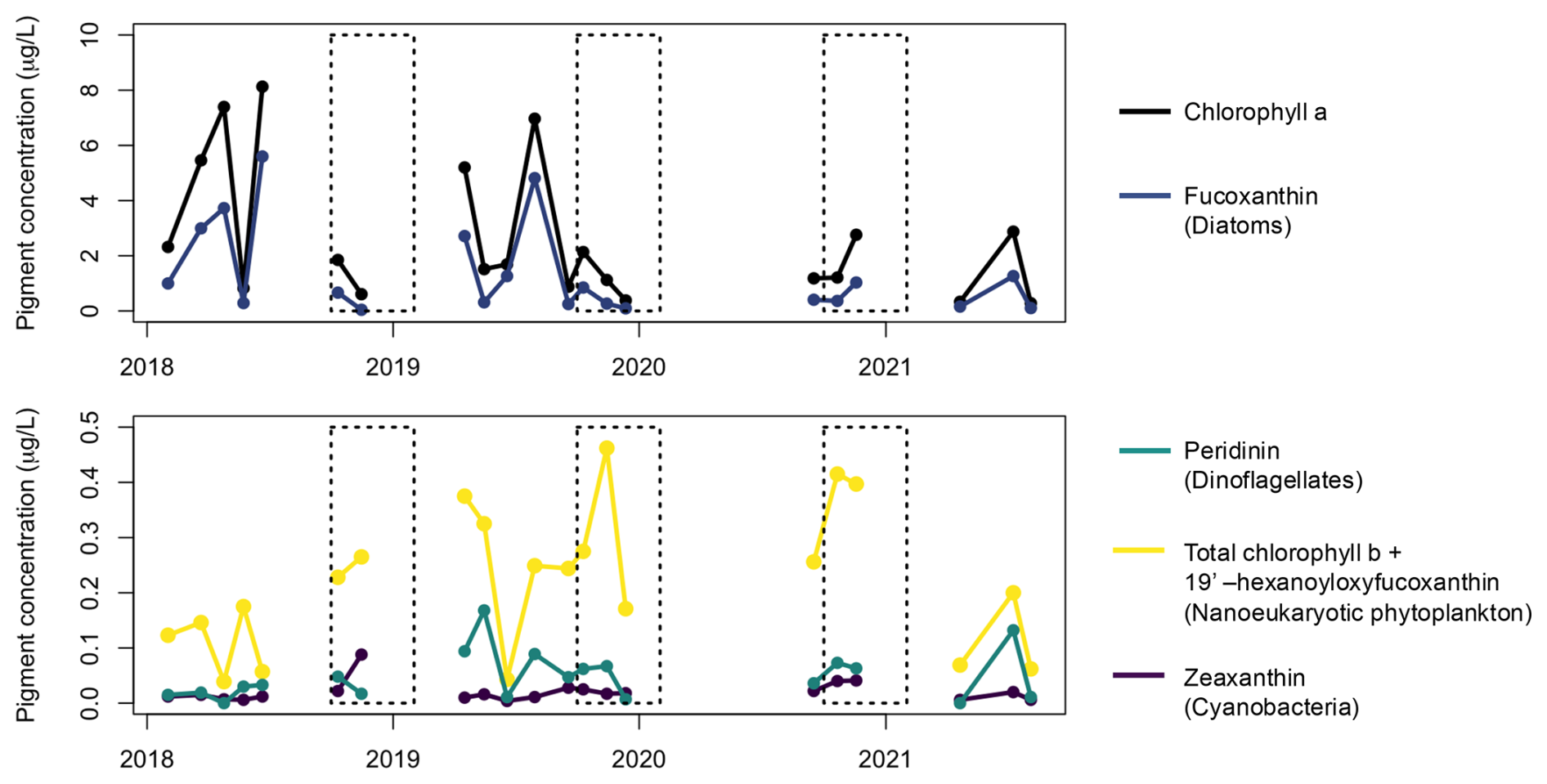
Figure 9Pigment concentration data from Plumes and Blumes station 4 at 20 m. Taxonomic assignments following Catlett et al. (2021). Dotted boxes highlight the three seasons that constitute the fall/winter G. bulloides sample.
Our CSI-AA-resolved ecology for G. bulloides in SBB matches some previous observations of G. bulloides as herbivorous and a generalist. Havard et al. (2025) found that G. bulloides from these same sediment traps were not correlated with any sediment trap flux, phytoplankton pigment, or other environmental variables from 2014–2021, suggesting that our findings are true more broadly for G. bulloides in SBB. Globigerina bulloides has been used as an upwelling indicator, but this use is not appropriate in SBB due to G. bulloides' generalist nature, lack of correlation with other upwelling indicators, and year-round presence (Kincaid et al., 2000; Havard et al., 2025).
4.3.2 Turborotalita quinquqleloba
In contrast to G. bulloides, T. quinqueloba flux is closely linked to upwelling in SBB (Havard et al., 2025), and this is likely due to its dietary preference for diatoms. Havard et al. (2025) found correlations between the flux of T. quinqueloba individuals and the coastal upwelling transport index, thermocline structure in SBB, and biogenic opal. The results of the Bayesian stable isotope mixing model indicate that diatoms made up approximately half of the diet of T. quinqueloba (Fig. 7). Additionally, 89 % of the T. quinqueloba sample by weight came from the spring and summer (Table 1), when both diatom blooms occur in SBB in response to upwelling (Catlett et al., 2021) and T. quiqueloba abundance is greatest (Havard et al., 2025). The cyanobacteria in the diet of T. quinqueloba may have derived from the 11 % of the sample that was collected during other seasons, when stratification favors cyanobacteria production (Catlett et al., 2021). The similarity between the TP-Glx and TP-Ala-multi values for T. quinqueloba suggest that there were likely no dinoflagellates or ciliates in the T. quinqueloba food web.
Interestingly, heterotrophic bacteria a significant portion of the T. quinqueloba diet (Fig. 7). Heterotrophic bacteria are ubiquitous in marine microbial communities, but are especially enriched in phytoplankton blooms, where they recycle phytoplankton-derived organic matter and form associations with specific phytoplankton species (Buchan et al., 2014). Their contribution to the diet of T. quinqueloba may be caused by their relationship with blooming diatoms. Diatoms produce transparent exopolymer particles (TEP), which are colonized by bacteria (Passow, 2002). The presence of bacteria may also stimulate TEP production and allow for aggregation of specific diatom species (Gärdes et al., 2011). These diatom-associated heterotrophic bacteria may have been incorporated in the diet of T. quinqueloba by chance through the consumption of TEP, or T. quinqueloba may specifically target heterotrophic bacteria. The TP-Glx of T. quinqueloba was > 2, indicating that at least some of the heterotrophic bacteria in the diet were likely feeding on phytoplankton or phytodetritus.
4.3.3 Neogloboquadrina incompta
Growing evidence suggests that nonspinose planktic foraminifera, including N. incompta, inhabit particle microenvironments or feeding cysts of marine snow. Neogloboquadrina incompta is often, but not always, found within an aggregation of particulate organic matter when collected (Bird et al., 2018). Transmission electron microscopy (TEM) of the particle microenvironment of the nonspinose planktic foraminifer Globignerinita glutinata indicated that these habitats are likely structured feeding cysts (Spindler et al., 1984). Microhabitats as a feeding environment are further supported by the observation that some nonspinose planktic foraminifera prefer to feed on marine snow over Artemia in culture (Reynolds et al., 2025). Trace element to calcium ratios, particularly those of Ba, Zn, and Mn, indicate that most nonspinose species are not calcifying in ambient seawater (Doherty et al., 2025b; Fehrenbacher et al., 2018; Richey et al., 2022). Neogloboquadrina incompta from the northern California Current also had these trace element signatures (Hupp and Fehrenbacher, 2024).
We therefore anticipate that N. incompta from SBB were living inside particle microhabitats and likely feeding on marine snow. As discussed in Sect. 4.1, the trophic positions estimated for N. incompta indicate that it is a primary consumer, and the difference between the TP-Glx and TP-Ala-multi calculations also suggest that heterotrophic protists were present in its diet. Heterotrophic protists quickly colonize marine snow (Artolozaga et al., 1997) and dinoflagellates made up a significant proportion of N. incompta's diet (Fig. 7). Dinoflagellates are abundant in marine snow in the California Current, and some of these dinoflagellates may be mixotrophic or heterotrophic (Durkin et al., 2022).
The majority of N. incompta's diet consisted of heterotrophic bacteria (Fig. 7). This finding is consistent with 16s rRNA gene metabarcoding completed by Bird et al. (2018) of N. incompta from the northern California Current, which indicated that bacteria were the primary food source for this species. Bird et al. (2018) found no phytoplankton in the metagenome of these specimens, although their TEM observations suggested that N. incompta did sometimes feed on phytoplankton. The N. incompta sample in this study was evenly split by weight between seasons (Table 1), and thus the diet may integrate seasonal changes in available food. Gammaproteobacteria, the most abundant in the 16s rRNA gene metabarcoding (Bird et al., 2018), are also abundant in marine snow in SBB (DeLong et al., 1993). While Bird et al. (2018) found that the chitinoclastic orders Altermonaldes and Vibrionales were the most abundant in the N. incompta diet, N. incompta most likely targets available heterotrophic bacteria and does not prefer these specific orders. However, these orders recycle carbon and nitrogen from insoluble chitin, which suggests that N. incompta may be a part of the microbial loop (Bird et al., 2018).
Our results support the developing hypothesis that N. incompta is a bacteriovore, and that it may use marine snow feeding cysts to access its preferred Gammaproteobacteria prey. Neogloboquadrina incompta is present year-round in SBB (Havard et al., 2025), and thus its dietary niche may be a strategy to support populations when phytoplankton prey are scarce. This dietary strategy may also be common among other nonspinose planktic foraminifera, and future CSI-AA trophic analyses on both particles and foraminifera could further describe the relationship between the particle microhabitat and the diet of nonspinose planktic foraminifera.
4.4 Prospect of applying CSI-AA to fossil foraminifera tests
We have shown here that CSI-AA data from modern planktic foraminifera tests not only preserve isotopic information but can provide important new ecological insights. Given that these tests constitute a major paleoarchive in marine sediments, an obvious subsequent question is if CSI-AA analyses can be extended to the fossil record. Here, we discuss several important considerations for expanding the application of CSI-AA to fossil foraminifera tests.
4.4.1 Method considerations
First, application of CSI-AA to planktic foraminifera tests can be methodologically challenging. GC-C-IRMS methods require large quantities of amino acid relative to other mass-spectrometry methods, despite the fact that GC-C-IRMS is one of the most sensitive methods for compound-specific stable isotope analysis of carbon and nitrogen (Close, 2019; Silverman et al., 2022). Measurements are also ideally made in triplicate for degraded or fossil samples, and limitations on the amount of solvent injected into the GC inlet will ultimately constrain the final solvent volume of a sample. For example, a typical maximum solvent injection volume may be ∼ 2 µL, and thus a sample containing 4 injections worth of amino acids must be dissolved in 8 µL or less solvent. These small volumes necessitate manual injections and can be challenging to work with, as solvent will quickly evaporate. We found that 5–10 mg of dry test material from our samples was required to make triplicate injections for both carbon and nitrogen CSI-AA. Quantifying amino acid abundance first in tests via GC-MS is therefore recommended for estimating the dry weight of tests required for CSI-AA. Estimates should consider the sensitivity of the IRMS to be used, as this varies between instruments. See Fig. B1 for a framework for calculating required sample volumes based on instrument sensitivity, adapted from Close (2019). Amino acids are also lost over time from fossil tests (King and Hare, 1972), and thus more material would be required for analysis of fossil specimens. In fossil specimens, additional care must also be taken to remove amino acids derived from sedimentary organic matter, which may fill or adhere to the test.
4.4.2 Potential value of CSI-AA for paleoproxy interpretation
If CSI-AA measurements can be made in fossil tests, this approach has significant potential as a paleoproxy. First, 15N CSI-AA could be deployed as an additional method for producing foraminifera-bound δ15N for use as a nitrogen cycle paleoproxy. Amino acids likely constitute the majority of foraminifera-bound nitrogen (Paoloni et al., 2023), and thus amino acid δ15N values should be proportional to bulk δ15N. Source amino acid δ15N is expected to record the δ15N of the nitrogen sources to planktic foraminifera without the confounding influence of trophic fractionation (Auderset et al., 2025), as these values are preserved from diet to consumer (Chikaraishi et al., 2007). Given the large differences in sample material required for CSI-AA (5–10 mg) vs. foraminifera-bound bulk nitrogen (1–3 mg; Smart et al., 2018), CSI-AA is unlikely to provide the high-resolution reconstructions necessary for many paleoproxy applications. However, it could be invaluable in constraining possible symbioses, or relative diets from a given interval or horizon, which could then be used to contextualize finer bulk isotope records.
In addition to trophic level, diet can also play a role in bulk δ15N. For example, cyanobacteria and other prokaryotes are more likely to assimilate recycled nitrogen as ammonium, which has a lower δ15N value, and eukaryotes are more likely to assimilate new nitrogen as nitrate, which has a higher δ15N value (Fawcett et al., 2011). Our essential amino acid 13C CSI-AA fingerprinting results suggest that these patterns may also be observed in planktic foraminifera. Neogloboquadrina incompta, which had a diet of approximately half heterotrophic bacteria, had the lowest source amino acid δ15N values.
Diet likely plays a role in δ15N variability among species, even when species occupy the same trophic level (Auderset et al., 2025). We therefore suggest that CSI-AA is best used to answer questions about the ecology of planktic foraminifera at the species level by providing information about both trophic position and diet, which may contribute to the interpretation of the foraminifera-bound δ15N paleoproxy.
Our findings suggest that CSI-AA are a promising tool for understanding the trophic ecology of planktic foraminifera, and that CSI-AA could be extended from modern foraminifera into the fossil record. We have shown that nitrogen stable isotope ratios of amino acids can be used to reliably reproduce trophic position in planktic foraminifera, and carbon stable isotope ratios of amino acids can be used to reconstruct dietary carbon sources. Our results from modern tests indicate that amino acid stable isotope ratios should be preserved in fossil specimens, although work must be done to understand sample size limitations, preservation limitations, and sediment contamination.
Our findings also illuminate the ecology of the most abundant planktic foraminifera in SBB. While the three most abundant species in SBB occupied the same trophic level, each had their own niche determined by their dietary preferences. Despite conflicting findings in the literature, our results suggest that G. bulloides in SBB were not feeding on zooplankton or engaging in symbiosis with cyanobacteria, but cyanobacteria were important to their diet. The trophic ecology of G. bulloides and T. quinqueloba also supports the closer association of T. quinqueloba with upwelling in SBB; T. quinqueloba specialized in diatoms, while G. bulloides was a generalist. Neogloboquadrina incompta were likely living in particle microenvironments and specialized in heterotrophic bacteria. This niche may be common among nonspinose planktic foraminifera, providing a consistent source of nutrition when phytoplankton prey are scarce. While these results broadly agree with diet expectations for these species from the literature, they also demonstrate the unique potential of CSI-AA to improve the specificity of diet estimates for planktic foraminifera from a particular region or period. These estimates are not limited to live-caught foraminifera with intact cytoplasm, but may be based on sediment trap and, likely, core-top samples. As we have shown, diet information gained from CSI-AA may provide surprises, differing from diet expectations based on the literature. This information can also provide invaluable context for the interpretation of bulk isotope ratios from test carbonate or foraminifera-bound organic matter. Further studies using CSI-AA could determine ecological niches of other planktic foraminifera species in other environments, providing a much more detailed understanding of planktic foraminifera ecology.
Table A1Sources of essential amino acid δ13C values for end-members in Bayesian mixing model.

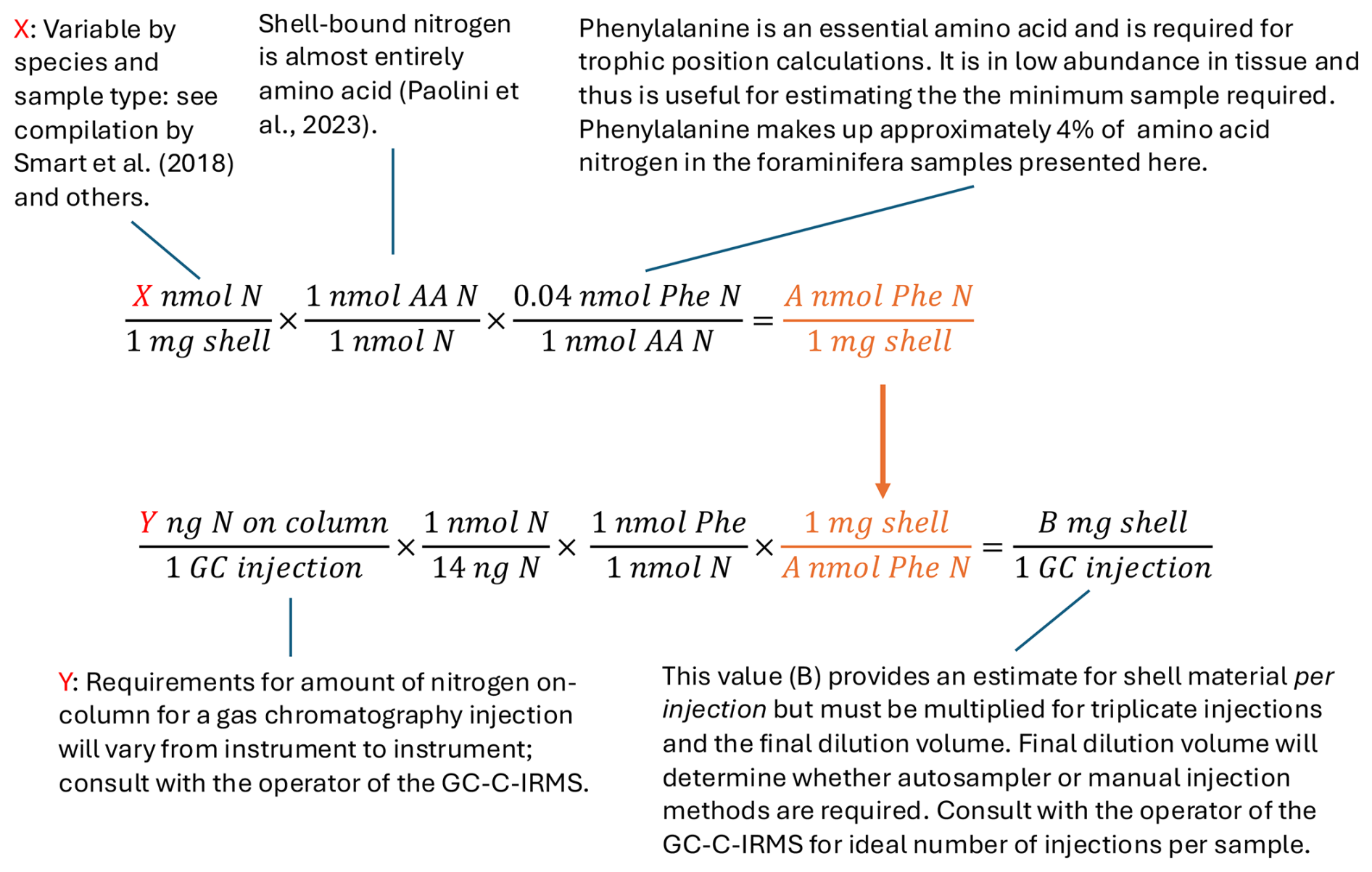
Figure B1Schematic representation for calculating the amount of foraminifera test required for a single GC-C-IRMS injection.
All CSI-AA data from this study are available through BCO-DMO: https://doi.org/10.26008/1912/bco-dmo.986825.1 (Doherty et al., 2025c); https://doi.org/10.26008/1912/bco-dmo.989777.1 (Doherty et al., 2025d).
SCD, CVD, and MDM conceptualized the research. MDM and CVD provided resources and were responsible for funding acquisition, project administration, and supervision. SC, SCD, GMP, and EH contributed to the development of methodology, data collection and data curation. SCD was responsible for formal analysis and visualization. SCD prepared the manuscript with contributions from all co-authors.
The contact author has declared that none of the authors has any competing interests.
Publisher's note: Copernicus Publications remains neutral with regard to jurisdictional claims made in the text, published maps, institutional affiliations, or any other geographical representation in this paper. The authors bear the ultimate responsibility for providing appropriate place names. Views expressed in the text are those of the authors and do not necessarily reflect the views of the publisher.
We'd like to thank Eric Tappa and the captain and crew of the R/V Shearwater for deploying and recovering the SBB sediment traps. Katherine Cherry assisted with processing sediment trap samples.
This research has been supported by the National Science Foundation, Directorate for Geosciences (grant nos. OCE 2303608, OCE 2223074, and OCE 2303609).
This paper was edited by Jack Middelburg and reviewed by two anonymous referees.
Anderson, C. R., Siegel, D. A., Brzezinski, M. A., and Guillocheau, N.: Controls on temporal patterns in phytoplankton community structure in the Santa Barbara Channel, California, J. Geophys. Res.-Oceans, 113, https://doi.org/10.1029/2007JC004321, 2008.
Artolozaga, I., Santamaría, E., López, A., Ayo, B., and Iriberri, J.: Succession of bacterivorous protists on laboratory-made marine snow, J. Plankton Res., 19, 1429–1440, https://doi.org/10.1093/plankt/19.10.1429, 1997.
Auderset, A., Moretti, S., Taphorn, B., Ebner, P.-R., Kast, E., Wang, X. T., Schiebel, R., Sigman, D. M., Haug, G. H., and Martínez-García, A.: Enhanced ocean oxygenation during Cenozoic warm periods, Nature, 609, 77–82, https://doi.org/10.1038/s41586-022-05017-0, 2022.
Auderset, A., Smart, S. M., Ryu, Y., Marconi, D., Ren, H. A., Heins, L., Vonhof, H., Schiebel, R., Repschläger, J., Sigman, D. M., Haug, G. H., and Martínez-García, A.: Effects of photosymbiosis and related processes on planktic foraminifera-bound nitrogen isotopes in South Atlantic sediments, Biogeosciences, 22, 1887–1905, https://doi.org/10.5194/bg-22-1887-2025, 2025.
Azam, F. and Malfatti, F.: Microbial structuring of marine ecosystems, Nat. Rev. Microbiol., 5, 782–791, https://doi.org/10.1038/nrmicro1747, 2007.
Bé, A. W. H. and Tolderlund, D.: Distribution and ecology of living planktonic foraminifera in surface waters of the Atlantic and Indian Oceans, The micropaleontology of oceans, 105–149, https://doi.org/10.2307/1485330, 1971.
Bé, A. W. H., Hemleben, C., Anderson, O. R., Spindler, M., Hacunda, J., and Tuntivate-Choy, S.: Laboratory and Field Observations of Living Planktonic Foraminifera, Micropaleontology, 23, 155–179, https://doi.org/10.2307/1485330, 1977.
Bird, C., Darling, K. F., Russell, A. D., Davis, C. V., Fehrenbacher, J., Free, A., Wyman, M., and Ngwenya, B. T.: Cyanobacterial endobionts within a major marine planktonic calcifier (Globigerina bulloides, Foraminifera) revealed by 16S rRNA metabarcoding, Biogeosciences, 14, 901–920, https://doi.org/10.5194/bg-14-901-2017, 2017.
Bird, C., Darling, K. F., Russell, A. D., Fehrenbacher, J. S., Davis, C. V., Free, A., and Ngwenya, B. T.: 16S rRNA gene metabarcoding and TEM reveals different ecological strategies within the genus Neogloboquadrina (planktonic foraminifer), PLoS One, 13, 1–26, https://doi.org/10.1371/journal.pone.0191653, 2018.
Bird, C., LeKieffre, C., Jauffrais, T., Meibom, A., Geslin, E., Filipsson, H. L., Maire, O., Russell, A. D., and Fehrenbacher, J. S.: Heterotrophic Foraminifera Capable of Inorganic Nitrogen Assimilation, Front. Microbiol., 11, 1–13, https://doi.org/10.3389/fmicb.2020.604979, 2020.
Black, D. E., Thunell, R. C., and Tappa, E. J.: Planktonic foraminiferal response to the 1997–1998 El Niño: A sediment-trap record from the Santa Barbara Basin, Geology, 29, 1075–1078, https://doi.org/10.1130/0091-7613(2001)029<1075:PFRTTE>2.0.CO;2, 2001.
Bode, A., Olivar, M. P., and Hernández-León, S.: Trophic indices for micronektonic fishes reveal their dependence on the microbial system in the North Atlantic, Sci. Rep., 11, 8488, https://doi.org/10.1038/s41598-021-87767-x, 2021.
Brzezinski, M. A. and Washburn, L.: Phytoplankton primary productivity in the Santa Barbara Channel: Effects of wind-driven upwelling and mesoscale eddies, J. Geophys. Res.-Oceans, 116, https://doi.org/10.1029/2011JC007397, 2011.
Buchan, A., LeCleir, G. R., Gulvik, C. A., and González, J. M.: Master recyclers: features and functions of bacteria associated with phytoplankton blooms, Nat. Rev. Microbiol., 12, 686–698, https://doi.org/10.1038/nrmicro3326, 2014.
Catlett, D., Siegel, D. A., Simons, R. D., Guillocheau, N., Henderikx-Freitas, F., and Thomas, C. S.: Diagnosing seasonal to multi-decadal phytoplankton group dynamics in a highly productive coastal ecosystem, Prog. Oceanogr., 197, 102637, https://doi.org/10.1016/j.pocean.2021.102637, 2021.
Chikaraishi, Y., Kashiyama, Y., Ogawa, N. O., Kitazato, H., and Ohkouchi, N.: Metabolic control of nitrogen isotope composition of amino acids in macroalgae and gastropods: Implications for aquatic food web studies, Mar. Ecol. Prog. Ser., 342, 85–90, https://doi.org/10.3354/meps342085, 2007.
Chikaraishi, Y., Ogawa, N. O., Kashiyama, Y., Takano, Y., Suga, H., Tomitani, A., Miyashita, H., Kitazato, H., and Ohkouchi, N.: Determination of aquatic food-web structure based on compound-specific nitrogen isotopic composition of amino acids, Limnol. Oceanogr.-Methods, 7, 740–750, 2009.
Close, H. G.: Compound-Specific Isotope Geochemistry in the Ocean, Ann. Rev. Mar. Sci., 11, 27–56, https://doi.org/10.1146/annurev-marine-121916-063634, 2019.
Darling, K. F., Kucera, M., Wade, C. M., von Langen, P., and Pak, D.: Seasonal distribution of genetic types of planktonic foraminifer morphospecies in the Santa Barbara Channel and its paleoceanographic implications, Paleoceanography, 18, https://doi.org/10.1029/2001PA000723, 2003.
Darling, K. F., Weiner, A. K. M., Kurasawa, A., Toyofuku, T., Nishi, H., and Kitazato, H.: The genetic isolation of planktonic foraminifera in the North Pacific gyre and adjacent marginal seas, Mar. Micropaleontol., 199, 102473, https://doi.org/10.1016/j.marmicro.2025.102473, 2025.
Davis, C. V., Ontiveros-Cuadras, J. F., Benitez-Nelson, C., Schmittner, A., Tappa, E. J., Osborne, E., and Thunell, R. C.: Ongoing Increase in Eastern Tropical North Pacific Denitrification as Interpreted Through the Santa Barbara Basin Sedimentary δ15N Record, Paleoceanography and Paleoclimatology, 34, 1554–1567, https://doi.org/10.1029/2019PA003578, 2019.
Décima, M., Landry, M. R., Bradley, C. J., and Fogel, M. L.: Alanine δ15N trophic fractionation in heterotrophic protists, Limnol. Oceanogr., 62, 2308–2322, https://doi.org/10.1002/lno.10567, 2017.
DeLong, E. F., Franks, D. G., and Alldredge, A. L.: Phylogenetic diversity of aggregate-attached vs. free-living marine bacterial assemblages, Limnol. Oceanogr., 38, 924–934, https://doi.org/10.4319/lo.1993.38.5.0924, 1993.
de Vargas, C., Audic, S., Henry, N., Decelle, J., Mahé, F., Logares, R., Lara, E., Berney, C., Le Bescot, N., Probert, I., Carmichael, M., Poulain, J., Romac, S., Colin, S., Aury, J.-M., Bittner, L., Chaffron, S., Dunthorn, M., Engelen, S., Flegontova, O., Guidi, L., Horák, A., Jaillon, O., Lima-Mendez, G., Lukeš, J., Malviya, S., Morard, R., Mulot, M., Scalco, E., Siano, R., Vincent, F., Zingone, A., Dimier, C., Picheral, M., Searson, S., Kandels-Lewis, S., Tara Oceans Coordinators, Acinas, S. G., Bork, P., Bowler, C., Gorsky, G., Grimsley, N., Hingamp, P., Iudicone, D., Not, F., Ogata, H., Pesant, S., Raes, J., Sieracki, M. E., Speich, S., Stemmann, L., Sunagawa, S., Weissenbach, J., Wincker, P., and Karsenti, E.: Eukaryotic plankton diversity in the sunlit ocean, Science, 348, 1261605, https://doi.org/10.1126/science.1261605, 2015.
Doherty, S. C., Maas, A. E., Steinberg, D. K., Popp, B. N., and Close, H. G.: Distinguishing zooplankton fecal pellets as a component of the biological pump using compound-specific isotope analysis of amino acids, Limnol. Oceanogr., 1–15, https://doi.org/10.1002/lno.11793, 2021.
Doherty, S. C., Choy, C. A., Paul, N. L., and Close, H. G.: Microbial and Metazoan Activity in Monterey Bay, CA Recorded in Nitrogen Isotope Ratios of Sinking and Suspended Particles, J. Geophys. Res.-Oceans, 130, e2025JC022372, https://doi.org/10.1029/2025JC022372, 2025a.
Doherty, S. C., Davis, C. V., and Fehrenbacher, J. S.: Planktic foraminifera record the succession of anaerobic metabolisms in particle microenvironments across a pelagic oxygen gradient, Geochim. Cosmochim. Ac., https://doi.org/10.1016/j.gca.2025.03.008, 2025b.
Doherty, S. C., Christensen, S., Davis, C. V., and McCarthy, M. D.: Compound-specific carbon stable isotopes of amino acids in planktic foraminifera from Santa Barbara Basin sediment traps from 2018 to 2021, Biological and Chemical Oceanography Data Management Office (BCO-DMO) [data set], (Version 1), https://doi.org/10.26008/1912/bco-dmo.986825.1, 2025c.
Doherty, S. C., Christensen, S., Davis, C. V., and McCarthy, M. D.: Compound-specific nitrogen stable isotopes of amino acids in planktic foraminifera from Santa Barbara Basin sediment traps from 2018 to 2021. Biological and Chemical Oceanography Data Management Office (BCO-DMO) [data set], (Version 1), https://doi.org/10.26008/1912/bco-dmo.989777.1, 2025d.
Durkin, C. A., Cetinić, I., Estapa, M., Ljubešić, Z., Mucko, M., Neeley, A., and Omand, M.: Tracing the path of carbon export in the ocean though DNA sequencing of individual sinking particles, ISME J., 16, 1896–1906, https://doi.org/10.1038/s41396-022-01239-2, 2022.
Eichhubl, P., Greene, H. G., and Maher, N.: Physiography of an active transpressive margin basin: high-resolution bathymetry of the Santa Barbara basin, Southern California continental borderland, Mar. Geol., 184, 95–120, https://doi.org/10.1016/S0025-3227(01)00280-8, 2002.
Faktorová, D., Nisbet, R. E. R., Fernández Robledo, J. A., Casacuberta, E., Sudek, L., Allen, A. E., Ares, M., Aresté, C., Balestreri, C., Barbrook, A. C., Beardslee, P., Bender, S., Booth, D. S., Bouget, F.-Y., Bowler, C., Breglia, S. A., Brownlee, C., Burger, G., Cerutti, H., Cesaroni, R., Chiurillo, M. A., Clemente, T., Coles, D. B., Collier, J. L., Cooney, E. C., Coyne, K., Docampo, R., Dupont, C. L., Edgcomb, V., Einarsson, E., Elustondo, P. A., Federici, F., Freire-Beneitez, V., Freyria, N. J., Fukuda, K., García, P. A., Girguis, P. R., Gomaa, F., Gornik, S. G., Guo, J., Hampl, V., Hanawa, Y., Haro-Contreras, E. R., Hehenberger, E., Highfield, A., Hirakawa, Y., Hopes, A., Howe, C. J., Hu, I., Ibañez, J., Irwin, N. A. T., Ishii, Y., Janowicz, N. E., Jones, A. C., Kachale, A., Fujimura-Kamada, K., Kaur, B., Kaye, J. Z., Kazana, E., Keeling, P. J., King, N., Klobutcher, L. A., Lander, N., Lassadi, I., Li, Z., Lin, S., Lozano, J.-C., Luan, F., Maruyama, S., Matute, T., Miceli, C., Minagawa, J., Moosburner, M., Najle, S. R., Nanjappa, D., Nimmo, I. C., Noble, L., Novák Vanclová, A. M. G., Nowacki, M., Nuñez, I., Pain, A., Piersanti, A., Pucciarelli, S., Pyrih, J., Rest, J. S., Rius, M., Robertson, D., Ruaud, A., Ruiz-Trillo, I., Sigg, M. A., Silver, P. A., Slamovits, C. H., Jason Smith, G., Sprecher, B. N., Stern, R., Swart, E. C., Tsaousis, A. D., Tsypin, L., Turkewitz, A., Turnšek, J., Valach, M., Vergé, V., von Dassow, P., von der Haar, T., Waller, R. F., Wang, L., Wen, X., Wheeler, G., Woods, A., Zhang, H., Mock, T., Worden, A. Z., and Lukeš, J.: Genetic tool development in marine protists: emerging model organisms for experimental cell biology, Nat. Methods, 17, 481–494, https://doi.org/10.1038/s41592-020-0796-x, 2020.
Farmer, J. R., Pico, T., Underwood, O. M., Cleveland Stout, R., Granger, J., Cronin, T. M., Fripiat, F., Martínez-García, A., Haug, G. H., and Sigman, D. M.: The Bering Strait was flooded 10 000 years before the Last Glacial Maximum, P. Natl. Acad. Sci., 120, e2206742119, https://doi.org/10.1073/pnas.2206742119, 2023.
Fawcett, S. E., Lomas, M. W., Casey, J. R., Ward, B. B., and Sigman, D. M.: Assimilation of upwelled nitrate by small eukaryotes in the Sargasso Sea, Nat. Geosci., 4, 717–722, https://doi.org/10.1038/ngeo1265, 2011.
Fehrenbacher, J. S., Russell, A. D., Davis, C. V., Spero, H. J., Chu, E., and Hönisch, B.: ratios in the non-spinose planktic foraminifer Neogloboquadrina dutertrei: Evidence for an organic aggregate microhabitat, Geochim. Cosmochim. Ac., 236, 361–372, https://doi.org/10.1016/j.gca.2018.03.008, 2018.
Fernández-Urruzola, I., Bode, A., Loick-Wilde, N., Schneider, W., Lindsay, D., and Escribano, R.: Trophic ecology of midwater zooplankton along a productivity gradient in the Southeast Pacific, Front. Mar. Sci., 10, 2023.
Field, D. B.: Variability in vertical distributions of planktonic foraminifera in the California Current: Relationships to vertical ocean structure, Paleoceanography, 19, https://doi.org/10.1029/2003PA000970, 2004.
Fuller, B. T. and Petzke, K. J.: The dietary protein paradox and threonine 15N-depletion: Pyridoxal-5'-phosphate enzyme activity as a mechanism for the δ15N trophic level effect, Rapid Commun. Mass Sp., 31, 705–718, https://doi.org/10.1002/rcm.7835, 2017.
Gärdes, A., Iversen, M. H., Grossart, H.-P., Passow, U., and Ullrich, M. S.: Diatom-associated bacteria are required for aggregation of Thalassiosira weissflogii, ISME J., 5, 436–445, https://doi.org/10.1038/ismej.2010.145, 2011.
Gaskell, D. E. and Hull, P. M.: Symbiont arrangement and metabolism can explain high δ13C in Eocene planktonic foraminifera, Geology, 47, 1156–1160, https://doi.org/10.1130/G46304.1, 2019.
Grigoratou, M., Monteiro, F. M., Ridgwell, A., and Schmidt, D. N.: Investigating the benefits and costs of spines and diet on planktonic foraminifera distribution with a trait-based ecosystem model, Mar. Micropaleontol., 166, 102004, https://doi.org/10.1016/j.marmicro.2021.102004, 2021.
Gutiérrez-Rodríguez, A., Décima, M., Popp, B. N., and Landry, M. R.: Isotopic invisibility of protozoan trophic steps in marine food webs, Limnol. Oceanogr., 59, 1590–1598, https://doi.org/10.4319/lo.2014.59.5.1590, 2014.
Hannides, C. C. S., Popp, B. N., Anela Choy, C., and Drazen, J. C.: Midwater zooplankton and suspended particle dynamics in the North Pacific Subtropical Gyre: A stable isotope perspective, Limnol. Oceanogr., 58, 1931–1936, https://doi.org/10.4319/lo.2013.58.6.1931, 2013.
Harms, S. and Winant, C. D.: Characteristic patterns of the circulation in the Santa Barbara Channel, J. Geophys. Res.-Oceans, 103, 3041–3065, https://doi.org/10.1029/97JC02393, 1998.
Havard, E., Cherry, K., Benitez-Nelson, C., Tappa, E., and Davis, C. V.: Decreasing foraminiferal flux in response to ongoing climate change in the Santa Barbara Basin, California, Biogeosciences, 22, 4035–4060, https://doi.org/10.5194/bg-22-4035-2025, 2025.
Hayes, J. M.: Fractionation of the Isotopes of Carbon and Hydrogen in Biosynthetic Processes, Rev. Mineral. Geochem., 43, 225–277, https://doi.org/10.2138/gsrmg.43.1.225, 2001.
Hendy, I. L. and Kennett, J. P.: Dansgaard-Oeschger Cycles and the California Current System: Planktonic foraminiferal response to rapid climate change in Santa Barbara Basin, Ocean Drilling Program Hole 893A, Paleoceanography, 15, 30–42, https://doi.org/10.1029/1999PA000413, 2000.
Hendy, I. L., Pedersen, T. F., Kennett, J. P., and Tada, R.: Intermittent existence of a southern Californian upwelling cell during submillennial climate change of the last 60 kyr, Paleoceanography, 19, https://doi.org/10.1029/2003PA000965, 2004.
Hupp, B. N. and Fehrenbacher, J. S.: Intratese Trace Element Variability in Polar and Subpolar Planktic Foraminfera: Insights into Vital Effects, Ontogeny, and Biomineralization Processes, J. Foramin. Res., 54, 355–374, https://doi.org/10.61551/gsjfr.54.4.355, 2024.
Imbrie, J. and Kipp, N. G.: A new micropaleontological method for quantitative paleoclimatology: Application to a Late Pleistocene Caribbean core, in: The Late Cenozoic Glacial Ages, edited by: Turekian, K., Yale University Press, New Haven, Conn., 71–181, ISBN 9780300014204, 1971.
Jarman, C. L., Larsen, T., Hunt, T., Lipo, C., Solsvik, R., Wallsgrove, N., Ka'apu-Lyons, C., Close, H. G., and Popp, B. N.: Diet of the prehistoric population of Rapa Nui (Easter Island, Chile) shows environmental adaptation and resilience, Am. J. Phys. Anthropol., 164, 343–361, https://doi.org/10.1002/ajpa.23273, 2017.
Jeong, H. J., Yoo, Y. D., Kim, J. S., Seong, K. A., Kang, N. S., and Kim, T. H.: Growth, feeding and ecological roles of the mixotrophic and heterotrophic dinoflagellates in marine planktonic food webs, Ocean Sci. J., 45, 65–91, https://doi.org/10.1007/s12601-010-0007-2, 2010.
Katz, M. E., Cramer, B. S., Franzese, A., Hönisch, B., Miller, K. G., Rosenthal, Y., and Wright, J. D.: Traditional and Emerging Geochemical Proxies in Foraminifera, J. Foramin. Res., 40, 165–192, https://doi.org/10.2113/gsjfr.40.2.165, 2010.
Kennett, J. P. and Ingram, B. L.: A 20 000-year record of ocean circulation and climate change from the Santa Barbara basin, Nature, 377, 510–514, https://doi.org/10.1038/377510a0, 1995.
Kincaid, E., Thunell, R. C., Le, J., Lange, C. B., Weinheimer, A. L., and Reid, F. M. H.: Planktonic foraminiferal fluxes in the Santa Barbara Basin: response to seasonal and interannual hydrographic changes, Deep Sea Res.-Pt. II, 47, 1157–1176, https://doi.org/10.1016/S0967-0645(99)00140-X, 2000.
King, K. and Hare, P. E.: Amino Acid Composition of the Test as a Taxonomic Character for Living and Fossil Planktonic Foraminifera, Micropaleontology, 18, 285, https://doi.org/10.2307/1485009, 1972.
Kucera, M.: Chapter six planktonic foraminifera as tracers of past oceanic environments, Developments in Marine Geology, 1, 213–262, 2007.
Larsen, T., Lee Taylor, D., Leigh, M. B., and O'Brien, D. M.: Stable isotope fingerprinting: A novel method for identifying plant, fungal, or bacterial origins of amino acids, Ecology, 90, 3526–3535, https://doi.org/10.1890/08-1695.1, 2009.
Larsen, T., Ventura, M., Andersen, N., O'Brien, D. M., Piatkowski, U., and McCarthy, M. D.: Tracing Carbon Sources through Aquatic and Terrestrial Food Webs Using Amino Acid Stable Isotope Fingerprinting, PLoS One, 8, https://doi.org/10.1371/journal.pone.0073441, 2013.
Lee, J. J., McEnery, M., Pierce, S., Freudenthal, H. D., and Muller, W. A.: Tracer Experiments in Feeding Littoral Foraminifera, J. Protozool., 13, 659–670, https://doi.org/10.1111/j.1550-7408.1966.tb01978.x, 1966.
Lekieffre, C., Spero, H. J., Fehrenbacher, J. S., Russell, A. D., Ren, H., Geslin, E., and Meibom, A.: Ammonium is the preferred source of nitrogen for planktonic foraminifer and their dinoflagellate symbionts: N recycling in a symbiotic foraminifer, P. Roy. Soc. B.-Biol. Sci., 287, https://doi.org/10.1098/rspb.2020.0620, 2020.
McMahon, K. W. and McCarthy, M. D.: Embracing variability in amino acid δ15N fractionation: Mechanisms, implications, and applications for trophic ecology, Ecosphere, 7, 1–26, https://doi.org/10.1002/ecs2.1511, 2016.
McMahon, K. W., Fogel, M. L., Elsdon, T. S., and Thorrold, S. R.: Carbon isotope fractionation of amino acids in fish muscle reflects biosynthesis and isotopic routing from dietary protein, J. Anim. Ecol., 79, 1132–1141, https://doi.org/10.1111/j.1365-2656.2010.01722.x, 2010.
McMahon, K. W., McCarthy, M. D., Sherwood, O. A., Larsen, T., and Guilderson, T. P.: Millennial-scale plankton regime shifts in the subtropical North Pacific Ocean, Science, 350, 1530–1533, https://doi.org/10.1126/science.aaa9942, 2015.
Metges, C. C., Petzke, K.-J., and Hennig, U.: Gas Chromatography/Combustion/Isotope Ratio Mass Spectrometric Comparison of N -Acetyl- and N-Pivaloyl Amino Acid Esters to Measure 15N Isotopic Abundances in Physiological Samples: A Pilot Study on Amino Acid Synthesis in the Upper Gastro-intestinal Tract of Minipigs, J. Mass Sp., 31, 367–376, https://doi.org/10.1002/(SICI)1096-9888(199604)31:4<367::AID-JMS310>3.0.CO;2-V, 1996.
Morard, R., Darling, K. F., Weiner, A. K. M., Hassenrück, C., Vanni, C., Cordier, T., Henry, N., Greco, M., Vollmar, N. M., Milivojevic, T., Rahman, S. N., Siccha, M., Meilland, J., Jonkers, L., Quillévéré, F., Escarguel, G., Douady, C. J., de Garidel-Thoron, T., de Vargas, C., and Kucera, M.: The global genetic diversity of planktonic foraminifera reveals the structure of cryptic speciation in plankton, Biol. Rev., 99, 1218–1241, https://doi.org/10.1111/brv.13065, 2024.
Nomaki, H., Ishitani, Y., Okada, S., Isobe, N., and Ishikawa, N. F.: A Scavenging Behavior of Cyclammina cancellata (Foraminifera, Rhizaria) on a Crustacean Carcass: Amino Acid Nitrogen Isotope and Microbiome Analyses, Mar. Ecol., 46, e70023, https://doi.org/10.1111/maec.70023, 2025.
Ohkouchi, N., Chikaraishi, Y., Close, H. G., Fry, B., Larsen, T., Madigan, D. J., McCarthy, M. D., McMahon, K. W., Nagata, T., Naito, Y. I., Ogawa, N. O., Popp, B. N., Steffan, S., Takano, Y., Tayasu, I., Wyatt, A. S. J., Yamaguchi, Y. T., and Yokoyama, Y.: Advances in the application of amino acid nitrogen isotopic analysis in ecological and biogeochemical studies, Org. Geochem., 113, 150–174, https://doi.org/10.1016/j.orggeochem.2017.07.009, 2017.
Paoloni, T., Hoogakker, B., Navarro Rodriguez, A., Pereira, R., McClymont, E. L., Jovane, L., and Magill, C.: Composition of planktonic foraminifera test-bound organic material and implications for carbon cycle reconstructions, Front. Mar. Sci., 10, 2023.
Passow, U.: Production of transparent exopolymer particles (TEP) by phyto- and bacterioplankton, Mar. Ecol. Prog. Ser., 236, 1–12, https://doi.org/10.3354/meps236001, 2002.
Petrizzo, M. R., King, D. J., Pearson, P. N., Huber, B. T., and Wade, B. S.: Planktonic foraminifera in biostratigraphy and biochronology, nos, 106050, https://doi.org/10.1127/nos/2024/0840, 2024.
Pugsley, G.: Evaluation and Application of Amino Acid Carbon and Nitrogen Isotope Proxies for Reconstructing Past Plankton Ecosystem Change, PhD diss., University of California, Santa Cruz, ISBN 9798288887918, 2025.
Ren, H., Sigman, D. M., Meckler, A. N., Plessen, B., Robinson, R. S., Rosenthal, Y., and Haug, G. H.: Foraminiferal isotope evidence of reduced nitrogen fixation in the ice age Atlantic ocean, Science, 323, 244–248, https://doi.org/10.1126/science.1165787, 2009.
Ren, H., Studer, A. S., Serno, S., Sigman, D. M., Winckler, G., Anderson, R. F., Oleynik, S., Gersonde, R., and Haug, G. H.: Glacial-to-interglacial changes in nitrate supply and consumption in the subarctic North Pacific from microfossil-bound N isotopes at two trophic levels, Paleoceanography, 30, 1217–1232, https://doi.org/10.1002/2014PA002765, 2015.
Reynolds, C. E., Fehrenbacher, J. S., Thirumalai, K., Tappa, E. J., and Richey, J. N.: Insights From Growing Globorotalia Truncatulinoides And Globorotalia Menardii In The Laboratory, J. Foramin. Res., 55, 131–143, https://doi.org/10.61551/gsjfr.55.2.131, 2025.
Richey, J. N., Fehrenbacher, J. S., Reynolds, C. E., Davis, C. V., and Spero, H. J.: Barium enrichment in the non-spinose planktic foraminifer, Globorotalia truncatulinoides, Geochim. Cosmochim. Ac., 333, 184–199, https://doi.org/10.1016/j.gca.2022.07.006, 2022.
SCB Marine Biodiversity Observation Network, Catlett, D., Siegel, D. A., Guillocheau, N., and Kui, L.: Plumes and Blooms: phytoplankton pigment concentration, Environmental Data Initiative [data set], https://doi.org/10.6073/pasta/83c8f5f67906b129abbc66c13d45b809, 2025.
Schiebel, R. and Hemleben, C.: Planktic foraminifers in the modern ocean, Springer, Berlin, 1–358, https://doi.org/10.1007/978-3-662-50297-6, 2017.
Schiebel, R., Bijma, J., and Hemleben, C.: Population dynamics of the planktic foraminifer Globigerina bulloides from the eastern North Atlantic, Deep Sea Res.-Pt. I, 44, 1701–1713, https://doi.org/10.1016/S0967-0637(97)00036-8, 1997.
Scott, J. H., O'Brien, D. M., Emerson, D., Sun, H., McDonald, G. D., Salgado, A., and Fogel, M. L.: An examination of the carbon isotope effects associated with amino acid biosynthesis, Astrobiology, 6, 867–880, https://doi.org/10.1089/ast.2006.6.867, 2006.
Shea, C. H., Wojtal, P. K., Close, H. G., Maas, A. E., Stamieszkin, K., Cope, J. S., Steinberg, D. K., Wallsgrove, N., and Popp, B. N.: Small particles and heterotrophic protists support the mesopelagic zooplankton food web in the subarctic northeast Pacific Ocean, Limnol. Oceanogr., 68, https://doi.org/10.1002/lno.12397, 2023.
Silfer, J. A., Engel, M. H., Macko, S. A., and Jumeau, E. J.: Stable carbon isotope analysis of amino acid enantiomers by conventional isotope ratio mass spectrometry and combined gas chromatography isotope ratio mass spectrometry, Anal. Chem., 63, 370–374, https://doi.org/10.1021/ac00004a014, 1991.
Silverman, S. N., Phillips, A. A., Weiss, G. M., Wilkes, E. B., Eiler, J. M., and Sessions, A. L.: Practical considerations for amino acid isotope analysis, Org. Geochem., 164, 104345, https://doi.org/10.1016/j.orggeochem.2021.104345, 2022.
Smart, S. M., Ren, H., Fawcett, S. E., Schiebel, R., Conte, M., Rafter, P. A., Ellis, K. K., Weigand, M. A., Oleynik, S., Haug, G. H., and Sigman, D. M.: Ground-truthing the planktic foraminifer-bound nitrogen isotope paleo-proxy in the Sargasso Sea, Geochim. Cosmochim. Ac., 235, 463–482, https://doi.org/10.1016/j.gca.2018.05.023, 2018.
Spero, H. J. and Lea, D. W.: Experimental determination of stable isotope variability in Globigerina bulloides: implications for paleoceanographic reconstructions, Mar. Micropaleontol., 28, 231–246, https://doi.org/10.1016/0377-8398(96)00003-5, 1996.
Spero, H. J., Lerche, I., and Williams, D. F.: Opening the carbon isotope “vital effect” black box, 2, Quantitative model for interpreting foraminiferal carbon isotope data, Paleoceanography, 6, 639–655, https://doi.org/10.1029/91PA02022, 1991.
Spindler, M., Hemleben, C., Salomons, J. B., and Smit, L. P.: Feeding behavior of some planktonic foraminifers in laboratory cultures, J. Foramin. Res., 14, 237–249, https://doi.org/10.2113/gsjfr.14.4.237, 1984.
Stahl, A. R., Rynearson, T. A., and McMahon, K. W.: Amino acid carbon isotope fingerprints are unique among eukaryotic microalgal taxonomic groups, Limnol. Oceanogr., 68, 1331–1345, https://doi.org/10.1002/lno.12350, 2023.
Stock, B. C., Jackson, A. L., Ward, E. J., Parnell, A. C., Phillips, D. L., and Semmens, B. X.: Analyzing mixing systems using a new generation of Bayesian tracer mixing models, PeerJ, 6, e5096, https://doi.org/10.7717/peerj.5096, 2018.
Sykes, F. E., Meilland, J., Westgård, A., Chalk, T. B., Chierici, M., Foster, G. L., and Ezat, M. M.: Large-scale culturing of the subpolar foraminifera Globigerina bulloides reveals tolerance to a large range of environmental parameters associated to different life-strategies and an extended lifespan, J. Plankton Res., fbae029, https://doi.org/10.1093/plankt/fbae029, 2024.
Takagi, H., Kimoto, K., Fujiki, T., Saito, H., Schmidt, C., Kucera, M., and Moriya, K.: Characterizing photosymbiosis in modern planktonic foraminifera, Biogeosciences, 16, 3377–3396, https://doi.org/10.5194/bg-16-3377-2019, 2019.
Taylor, B. J., Rae, J. W. B., Gray, W. R., Darling, K. F., Burke, A., Gersonde, R., Abelmann, A., Maier, E., Esper, O., and Ziveri, P.: Distribution and ecology of planktic foraminifera in the North Pacific: Implications for paleo-reconstructions, Quaternary Sci. Rev., 191, 256–274, https://doi.org/10.1016/j.quascirev.2018.05.006, 2018.
Toue, R., Fujita, K., Tsuchiya, M., Chikaraishi, Y., Sasaki, Y., and Ohkouchi, N.: Trophic niche separation of two non-spinose planktonic foraminifers Neogloboquadrina dutertrei and Pulleniatina obliquiloculata, Prog. Earth Planet. Sci., 9, https://doi.org/10.1186/s40645-022-00478-3, 2022.
Tsuchiya, M., Chikaraishi, Y., Nomaki, H., Sasaki, Y., Tame, A., Uematsu, K., and Ohkouchi, N.: Compound-specific isotope analysis of benthic foraminifer amino acids suggests microhabitat variability in rocky shoreenvironments, Ecol. Evol., 8, 8380–8395, https://doi.org/10.1002/ece3.4358, 2018.
Ueda, Kimio., Morgan, S. L., Fox, ., Gilbart, J., Sonesson, A., Larsson, L., and Odham, G.: D-Alanine as a chemical marker for the determination of streptococcal cell wall levels in mammalian tissues by gas chromatography/negative ion chemical ionization mass spectrometry, Anal. Chem., 61, 265–270, https://doi.org/10.1021/ac00178a015, 1989.
Uhle, M. E., Macko, S. A., Spero, H. J., Engel, M. H., and Lea, D. W.: Sources of carbon and nitrogen in modern planktonic foraminifera: The role of algal symbionts as determined by bulk and compound specific stable isotopic analyses, Org. Geochem., 27, 103–113, https://doi.org/10.1016/S0146-6380(97)00075-2, 1997.
Uhle, M. E., Macko, S. A., Spero, H. J., David W, L., Ruddiman, W. F., and Engel, M. H.: The fate of nitrogen in the Orbulina universa foraminifera-symbiont system determined by nitrogen isotope analyses of shell-bound organic matter, Limnol. Oceanogr., 44, 1968–1977, https://doi.org/10.4319/lo.1999.44.8.1968, 1999.
Viana, I. G., García-Seoane, R., and Bode, A.: A missing trophic link: Contribution of the microbial loop to the estimation of the trophic position of pelagic consumers, Limnol. Oceanogr., 68, https://doi.org/10.1002/lno.12445, 2023.
Vokhshoori, N. L., Tipple, B. J., Teague, L., Bailess, A., and McCarthy, M. D.: Calibrating bulk and amino acid δ13C and δ15N isotope ratios between bivalve soft tissue and shell for paleoecological reconstructions, Palaeogeogr. Palaeocl., 595, 110979, https://doi.org/10.1016/j.palaeo.2022.110979, 2022.
Wall, C. B., Wallsgrove, N. J., Gates, R. D., and Popp, B. N.: Amino acid δ13C and δ15N analyses reveal distinct species-specific patterns of trophic plasticity in a marine symbiosis, Limnol. Oceanogr., 66, 2033–2050, https://doi.org/10.1002/lno.11742, 2021.
White, S. M., Hill, T. M., Kennett, J. P., Behl, R. J., and Nicholson, C.: Millennial-scale variability to 735 ka: High-resolution climate records from Santa Barbara Basin, CA, Paleoceanography, 28, 213–226, https://doi.org/10.1002/palo.20022, 2013.
Whitman, W. B., Coleman, D. C., and Wiebe, W. J.: Prokaryotes: The unseen majority, P. Natl. Acad. Sci., 95, 6578–6583, https://doi.org/10.1073/pnas.95.12.6578, 1998.
Yamaguchi, Y. T., Chikaraishi, Y., Takano, Y., Ogawa, N. O., Imachi, H., Yokoyama, Y., and Ohkouchi, N.: Fractionation of nitrogen isotopes during amino acid metabolism in heterotrophic and chemolithoautotrophic microbes across Eukarya, Bacteria, and Archaea: Effects of nitrogen sources and metabolic pathways, Org. Geochem., 111, 101–112, https://doi.org/10.1016/j.orggeochem.2017.04.004, 2017.