
Articles | Volume 22, issue 11
https://doi.org/10.5194/bg-22-2653-2025
© Author(s) 2025. This work is distributed under
the Creative Commons Attribution 4.0 License.
the Creative Commons Attribution 4.0 License.
https://doi.org/10.5194/bg-22-2653-2025
© Author(s) 2025. This work is distributed under
the Creative Commons Attribution 4.0 License.
the Creative Commons Attribution 4.0 License.
Research article
| 
12 Jun 2025
Research article |
| 12 Jun 2025
| 12 Jun 2025
Foliar nutrient uptake from dust sustains plant nutrition

The Department of Environment, Geoinformatics and Urban planning Sciences, Ben-Gurion University of the Negev, Beer Sheva, Israel
The Department of Civil Engineering, Ariel University, Ariel, Israel
Daniel Palchan
The Department of Civil Engineering, Ariel University, Ariel, Israel
Elnatan Golan
Institute of Soil, Water and Environmental Sciences, Gilat Research Center, Agricultural Research Organization, Gilat, Israel
Ran Erel
Institute of Soil, Water and Environmental Sciences, Gilat Research Center, Agricultural Research Organization, Gilat, Israel
Daniele Andronico
Istituto Nazionale di Geofisica e Vulcanologia, Sezione di Catania – Osservatorio Etneo, Rome, Italy
Avner Gross
The Department of Environment, Geoinformatics and Urban planning Sciences, Ben-Gurion University of the Negev, Beer Sheva, Israel
Related authors
Avner Gross, Tana Wood, Jan-Berend Stuut, Eliezer Halpert, and Anton Lokshin
EGUsphere, https://doi.org/10.5194/egusphere-2026-4320, https://doi.org/10.5194/egusphere-2026-4320, 2026
This preprint is open for discussion and under review for Biogeosciences (BG).
Short summary
Short summary
African dust supplies phosphorus to Caribbean forests, but its fate after deposition is poorly understood. In a Puerto Rican tropical forest, we found that dust phosphorus added to soil rapidly entered less available pools, whereas contact with leaf surfaces increased its labile fraction and promoted uptake of dust-derived material. These results suggest that forest canopies may provide an overlooked pathway for processing atmospheric phosphorus before it reaches the soil.
Anton Lokshin, Daniel Palchan, and Avner Gross
Biogeosciences, 21, 2355–2365, https://doi.org/10.5194/bg-21-2355-2024, https://doi.org/10.5194/bg-21-2355-2024, 2024
Short summary
Short summary
Ash particles from wildfires are rich in phosphorus (P), a crucial nutrient that constitutes a limiting factor in 43 % of the world's land ecosystems. We hypothesize that wildfire ash could directly contribute to plant nutrition. We find that fire ash application boosts the growth of plants, but the only way plants can uptake P from fire ash is through the foliar uptake pathway and not through the roots. The fertilization impact of fire ash was also maintained under elevated levels of CO2.
Avner Gross, Tana Wood, Jan-Berend Stuut, Eliezer Halpert, and Anton Lokshin
EGUsphere, https://doi.org/10.5194/egusphere-2026-4320, https://doi.org/10.5194/egusphere-2026-4320, 2026
This preprint is open for discussion and under review for Biogeosciences (BG).
Short summary
Short summary
African dust supplies phosphorus to Caribbean forests, but its fate after deposition is poorly understood. In a Puerto Rican tropical forest, we found that dust phosphorus added to soil rapidly entered less available pools, whereas contact with leaf surfaces increased its labile fraction and promoted uptake of dust-derived material. These results suggest that forest canopies may provide an overlooked pathway for processing atmospheric phosphorus before it reaches the soil.
Ehud Lavner, Avner Gross, Uri Nachshon, Lior Netzer, and Elad Levintal
EGUsphere, https://doi.org/10.5194/egusphere-2026-1910, https://doi.org/10.5194/egusphere-2026-1910, 2026
Short summary
Short summary
Wells can act as pathways for gases to move between underground environments and the atmosphere, yet the processes controlling this exchange are not well understood. We monitored carbon dioxide and oxygen in two types of wells for a year. A dry well released more carbon dioxide because air was pumped by pressure changes, while a groundwater-filled well limited this flow. These findings show that well design strongly influences gas emissions and should be considered in environmental management.
Alessandro Tadini, Andrea Bevilacqua, Mattia de' Michieli Vitturi, Emmie M. Bonilauri, Andrew J. L. Harris, Matteo Cerminara, Tomaso Esposti Ongaro, Augusto Neri, Raphaël Paris, Marco Pistolesi, Matteo Trolese, Juan F. Rodríguez-Gálvez, Daniele Andronico, Antonella Bertagnini, Sonia Calvari, Daniele Casalbore, Michael Cassidy, Riccardo Civico, Elisabetta Del Bello, Alessio Di Roberto, Alessandro Fornaciai, Anita Grezio, Lucia Gurioli, Carl B. Harbitz, Giorgio Lacanna, Finn Løvholt, Michael Marani, Massimo Pompilio, Tullio Ricci, Mauro Rosi, Laura Sandri, Roger Urgeles, and Marija Voloschina
EGUsphere, https://doi.org/10.5194/egusphere-2026-1310, https://doi.org/10.5194/egusphere-2026-1310, 2026
Short summary
Short summary
This study examines tsunami hazards linked to volcanic activity at Stromboli volcano, Italy and is aimed at developing a first Probabilistic Tsunami Hazard Assessment. In particular, in this study a review identified 16 tsunamis (1879–2024), mostly linked to paroxysmal eruptions. Expert elicitation suggests tsunamigenic landslides may recur every 10–12 years, with high likelihood along the Sciara del Fuoco, especially at mid-elevations and moderate volumes, informing future hazard assessment.
Anton Lokshin, Daniel Palchan, and Avner Gross
Biogeosciences, 21, 2355–2365, https://doi.org/10.5194/bg-21-2355-2024, https://doi.org/10.5194/bg-21-2355-2024, 2024
Short summary
Short summary
Ash particles from wildfires are rich in phosphorus (P), a crucial nutrient that constitutes a limiting factor in 43 % of the world's land ecosystems. We hypothesize that wildfire ash could directly contribute to plant nutrition. We find that fire ash application boosts the growth of plants, but the only way plants can uptake P from fire ash is through the foliar uptake pathway and not through the roots. The fertilization impact of fire ash was also maintained under elevated levels of CO2.
Cited articles
Aciego, S. M., Riebe, C. S., Hart, S. C., Blakowski, M. A., Carey, C. J., Aarons, S. M., Dove, N. C., Botthoff, J. K., Sims, K. W. W., and Aronson, E. L.: Dust outpaces bedrock in nutrient supply to montane forest ecosystems, Nat. Commun., 8, 14800, https://doi.org/10.1038/ncomms14800, 2017.
Arvin, L. J., Riebe, C. S., Aciego, S. M., and Blakowski, M. A.: Global patterns of dust and bedrock nutrient supply to montane ecosystems, Sci. Adv., 3, eaao1588, https://doi.org/10.1126/sciadv.aao1588, 2017.
Bauters, M., Drake, T. W., Wagner, S., Baumgartner, S., Makelele, I. A., Bodé, S., Verheyen, K., Verbeeck, H., Ewango, C., Cizungu, L., Van Oost, K., and Boeckx, P.: Fire-derived phosphorus fertilization of African tropical forests, Nat. Commun., 12, 5129, https://doi.org/10.1038/S41467-021-25428-3, 2021.
Bradl, H. B.: Adsorption of heavy metal ions on soils and soils constituents, J. Colloid Interf. Sci., 277, 1–18, https://doi.org/10.1016/J.JCIS.2004.04.005, 2004.
Bukovac, M. J. and Wittwer, S. H.: Absorption and mobility of foliar applied nutrients, Plant Physiol., 32, 428–435, https://doi.org/10.1104/pp.32.5.428, 1957.
Burkhardt, J., Basi, S., Paryar, S., and Hunsche, M.: Stomatal penetration by aqueous solutions- an update involving leaf surface particles, New Phytol., 196, 774–787, 2012.
Chadwick, O. A., Derry, L. A., Vitousek, P. M., Huebert, B. J., and Hedin, L. O.: Changing sources of nutrients during four million years of ecosystem development, Nature, 397, 491–497, https://doi.org/10.1038/17276, 1999.
Ciriminna, R., Scurria, A., Tizza, G., and Pagliaro, M.: Volcanic ash as multi-nutrient mineral fertilizer: Science and early applications, JSFA Reports, 2, 528–534, https://doi.org/10.1002/JSF2.87, 2022.
Clarkson, D. T. and Hanson, J. B.: The mineral nutrition of higher plants, Ann. Rev. Plant Physiol, 31, 239–298, 1980.
Dam, T. T. N., Angert, A., Krom, M. D., Bigio, L., Hu, Y., Beyer, K. A., Mayol-Bracero, O. L., Santos-Figueroa, G., Pio, C., and Zhu, M.: X-ray Spectroscopic Quantification of Phosphorus Transformation in Saharan Dust during Trans-Atlantic Dust Transport, Environ. Sci. Technol, 55, 12694–12703, https://doi.org/10.1021/acs.est.1c01573, 2021.
Eger, A., Almond, P. C., and Condron, L. M.: Phosphorus fertilization by active dust deposition in a super-humid, temperate environment – Soil phosphorus fractionation and accession processes, Global Biogeochem. Cy., 27, 108–118, https://doi.org/10.1002/GBC.20019, 2013.
Fageria, N. K., Barbosa Filho, M. P., Moreira, A., and Guimarães, C. M.: Foliar fertilization of crop plants, J. Plant Nutr., 32, 1044–1064, https://doi.org/10.1080/01904160902872826, 2009.
Eichert, T. and Fernández, V.: Foliar nutrient absorption: principles and prospects, in: Marschner’s Mineral Nutrition of Plants, 4th Edn., edited by: Rengel, Z., Cakmak, I., and White, P. J., Academic Press, London, UK, 123–150, https://doi.org/10.1016/B978-0-12-819773-8.00014-9, 2022.
Farmer, J. R., Hönisch, B., Haynes, L. L., Kroon, D., Jung, S., Ford, H. L., Raymo, M. E., Jaume-Seguí, M., Bell, D. B., Goldstein, S. L., Pena, L. D., Yehudai, M., and Kim, J.: Deep Atlantic Ocean carbon storage and the rise of 100,000-year glacial cycles, Nat. Geosci., 12, 355–360, https://doi.org/10.1038/s41561-019-0334-6, 2019.
Fernández, V. and Eichert, T.: Uptake of hydrophilic solutes through plant leaves: current state of knowledge and perspectives of foliar fertilization, Crit. Rev. Plant Sci., 28, 36–68, https://doi.org/10.1080/07352680902743069, 2009.
Fernández, V., Guzmán, P., Peirce, C. A., McBeath, T. M., Khayet, M., and McLaughlin, M. J.: Effect of wheat phosphorus status on leaf surface properties and permeability to foliar-applied phosphorus, Plant Soil, 384, 7–20, 2014.
Fernando, N., Panozzo, J., Tausz, M., Norton, R., Fitzgerald, G., and Seneweera, S.: Rising atmospheric CO2 concentration affects mineral nutrient and protein concentration of wheat grain, Food Chem., 133, 1307–1311, https://doi.org/10.1016/j.foodchem.2012.02.032, 2012.
Gojon, A., Cassan, O., Bach, L., Lejay, L., and Martin, A.: The decline of plant mineral nutrition under rising CO2: physiological and molecular aspects of a bad deal, Trends Plant Sci., 28, 185–198, https://doi.org/10.1016/J.TPLANTS.2022.09.002, 2023.
Goll, D. S., Bauters, M., Zhang, H., Ciais, P., Balkanski, Y., Wang, R., and Verbeeck, H.: Atmospheric phosphorus deposition amplifies carbon sinks in simulations of a tropical forest in Central Africa, New Phytol., 237, 2054–2068, https://doi.org/10.1111/NPH.18535, 2023.
Gross, A., Goren, T., Pio, C., Cardoso, J., Tirosh, O., Todd, M. C., Rosenfeld, D., Weiner, T., Custoio, D., and Angert, A.: Variability in Sources and Concentrations of Saharan Dust Phosphorus over the Atlantic Ocean, Environ. Sci. Tech. Let., 2, 31–37, https://doi.org/10.1021/ez500399z, 2015.
Gross, A., Palchan, D., Krom, M. D., and Angert, A.: Elemental and isotopic composition of surface soils from key Saharan dust sources, Chem. Geol., 442, 54–61, https://doi.org/10.1016/j.chemgeo.2016.09.001, 2016a.
Gross, A., Turner, B. L., Goren, T., Berry, A., and Angert, A.: Tracing the Sources of Atmospheric Phosphorus Deposition to a Tropical Rain Forest in Panama Using Stable Oxygen Isotopes, Environ. Sci. Technol., 50, 1147–1156, https://doi.org/10.1021/ACS.EST.5B04936, 2016b.
Gross, A., Tiwari, S., Shtein, I., and Erel, R.: Direct foliar uptake of phosphorus from desert dust, New Phytol., 230, 2213–2225, https://doi.org/10.1111/nph.17344, 2021.
Guieu, C., Dulac, F., Desboeufs, K., Wagener, T., Pulido-Villena, E., Grisoni, J.-M., Louis, F., Ridame, C., Blain, S., Brunet, C., Bon Nguyen, E., Tran, S., Labiadh, M., and Dominici, J.-M.: Large clean mesocosms and simulated dust deposition: a new methodology to investigate responses of marine oligotrophic ecosystems to atmospheric inputs, Biogeosciences, 7, 2765–2784, https://doi.org/10.5194/bg-7-2765-2010, 2010.
Hinsinger, P.: Bioavailability of soil inorganic P in the rhizosphere as affected by root-induced chemical changes: A review, Plant Soil, 237, 173–195, https://doi.org/10.1023/A:1013351617532, 2001.
IPCC: Climate Change 2021: The Physical Science Basis. Contribution of Working Group I to the Sixth Assessment Report of the Intergovernmental Panel on Climate Change, edited by: Masson-Delmotte, V., Zhai, P., Pirani, A., Connors, S. L., Péan, C., Berger, S., Caud, N., Chen, Y., Goldfarb, L., Gomis, M. I., Huang, M., Leitzell, K., Lonnoy, E., Matthews, J. B. R., Maycock, T. K., Waterfield, T., Yelekçi, O., Yu, R., and Zhou, B., Cambridge University Press, Cambridge, United Kingdom and New York, NY, USA, 2391 pp., https://doi.org/10.1017/9781009157896, 2021.
Ishfaq, M., Kiran, A., ur Rehman, H., Farooq, M., Ijaz, N. H., Nadeem, F., Azeem, I., Li, X., and Wakeel, A.: Foliar nutrition: potential and challenges under multifaceted agriculture, Environ. Exp. Bot., 200, 104909, https://doi.org/10.1016/j.envexpbot.2022.104909, 2022.
Jweda, J., Bolge, L., Class, C., and Goldstein, S. L.: High Precision Sr-Nd-Hf-Pb Isotopic Compositions of USGS Reference Material BCR-2, Geostand. Geoanal. Res., 40, 101–115, https://doi.org/10.1111/j.1751-908X.2015.00342.x, 2016.
Kok, J. F., Adebiyi, A. A., Albani, S., Balkanski, Y., Checa-Garcia, R., Chin, M., Colarco, P. R., Hamilton, D. S., Huang, Y., Ito, A., Klose, M., Li, L., Mahowald, N. M., Miller, R. L., Obiso, V., Pérez García-Pando, C., Rocha-Lima, A., and Wan, J. S.: Contribution of the world's main dust source regions to the global cycle of desert dust, Atmos. Chem. Phys., 21, 8169–8193, https://doi.org/10.5194/acp-21-8169-2021, 2021.
Lal, R.: Soil degradation as a reason for inadequate human nutrition, Food Secur., 1, 45–57, https://doi.org/10.1007/S12571-009-0009-Z, 2009.
Lambers, H., Albornoz, F. E., Arruda, A. J., Barker, T., Finnegan, P. M., Gille, C., Gooding, H., Png, K., Ranathunge, K., and Zhong, H.: Nutrient-acquisition strategies, in: A Jewel in the Crown of a Global Biodiversity Hotspot, edited by: Lambers, H., Kwongan Foundation and the Western Australian Naturalists' Club Inc., Perth, Australia, 227–248, ISBN 978-0-9590041-3-6, 2019.
Langmann, B.: Volcanic ash versus mineral dust: atmospheric processing and environmental and climate impacts, ISRN Atmos. Sci., 2013, 245076, https://doi.org/10.1155/2013/245076, 2013.
Lokshin, A., Palchan, D., and Gross, A.: Direct foliar phosphorus uptake from wildfire ash, Biogeosciences, 21, 2355–2365, https://doi.org/10.5194/bg-21-2355-2024, 2024a.
Lokshin, A., Gross, A., Dor, Y. B., and Palchan, D.: Rare earth elements as a tool to study the foliar nutrient uptake phenomenon under ambient and elevated atmospheric CO2 concentration, Sci. Total Environ., 948, 174695, https://doi.org/10.1016/J.SCITOTENV.2024.174695, 2024b.
Loladze, I.: Rising atmospheric CO2 and human nutrition: toward globally imbalanced plant stoichiometry, Trends Ecol. Evol., 17, 457–461, https://doi.org/10.1016/S0169-5347(02)02587-9, 2002.
Loladze, I.: Hidden shift of the ionome of plants exposed to elevated CO2 depletes minerals at the base of human nutrition, Elife, 3, e02245, https://doi.org/10.7554/ELIFE.02245, 2014.
Longo, A. F., Ingall, E. D., Diaz, J. M., Oakes, M., King, L. E., Nenes, A., Mihalopoulos, N., Violaki, K., Avila, A., and Benitez-Nelson, C. R.: P-NEXFS analysis of aerosol phosphorus delivered to the Mediterranean Sea, Geophys. Res. Lett., 41, 4043–4049, 2014.
Lowe, N. M.: The global challenge of hidden hunger: perspectives from the field, P. Nutr. Soc., 80, 283–289, https://doi.org/10.1017/S0029665121000902, 2021.
Marschner, H., Kirkby, E. A., and Engels, C.: Importance of Cycling and Recycling of Mineral Nutrients within Plants for Growth and Development, Bot. Acta, 110, 265–273, https://doi.org/10.1111/J.1438-8677.1997.TB00639.X, 1997.
Muhammad, S., Wuyts, K., and Samson, R.: Atmospheric net particle accumulation on 96 plant species with contrasting morphological and anatomical leaf characteristics in a common garden experiment, Atmos. Environ., 202, 328–344, https://doi.org/10.1016/J.Atmosenv.2019.01.015, 2019.
Myers, S. S., Zanobetti, A., Kloog, I., Huybers, P., Leakey, A. D. B., Bloom, A. J., Carlisle, E., Dietterich, L. H., Fitzgerald, G., Hasegawa, T., Holbrook, N. M., Nelson, R. L., Ottman, M. J., Raboy, V., Sakai, H., Sartor, K. A., Schwartz, J., Seneweera, S., Tausz, M., and Usui, Y.: Increasing CO2 threatens human nutrition, Nature, 510, 139–142, https://doi.org/10.1038/nature13179, 2014.
Nakamaru, Y., Nanzyo, M., and Yamasaki, S. I.: Utilization of apatite in fresh volcanic ash by pigeonpea and chickpea, Soil Sci. Plant Nutr., 46, 591–600, https://doi.org/10.1080/00380768.2000.10409124, 2000.
Okin, G. S., Mahowald, N., Chadwick, O. A., and Artaxo, P.: Impact of desert dust on the biogeochemistry of phosphorus in terrestrial ecosystems, Global Biogeochem. Cy., 18, GB2005, https://doi.org/10.1029/2003GB002145, 2004.
Palchan, D., Stein, M., Almogi-Labin, A., Erel, Y., and Goldstein, S. L.: Dust transport and synoptic conditions over the Sahara–Arabia deserts during the MIS6/5 and 2/1 transitions from grain-size, chemical and isotopic properties of Red Sea cores, Earth Planet Sc. Lett., 382, 125–139, https://doi.org/10.1016/j.epsl.2013.09.013, 2013.
Palchan, D., Erel, Y., and Stein, M.: Geochemical characterization of contemporary fine detritus in the Dead Sea watershed, Chem. Geol., 494, 30–42, https://doi.org/10.1016/J.Chemgeo.2018.07.013, 2018.
Parasuraman, P., Pattnaik, S., and Busi, S.: Chapter 10 – Phyllosphere Microbiome: Functional Importance in Sustainable Agriculture, in: New and Future Developments in Microbial Biotechnology and Bioengineering, edited by: Singh, J. S. and Singh, D. P., Elsevier, Amsterdam, the Netherlands, 135–148, https://doi.org/10.1016/B978-0-444-64191-5.00010-9, 2019.
Shakir, S., Zaidi, S. S. e. A., de Vries, F. T., and Mansoor, S.: Plant genetic networks shaping phyllosphere microbial community, Trends Genet., 37, 306–316, https://doi.org/10.1016/j.tig.2020.09.010, 2021.
Shahzad, B., Tanveer, M., Hassan, W., Shah, A. N., Anjum, S. A., Cheema, S. A., Ali, I., and Rehman, A.: Nickel; whether toxic or essential for plants and environment – A review, Plant Physiol. Biochem., 132, 641–651, https://doi.org/10.1016/j.plaphy.2018.10.014, 2018.
Schonherr, J.: Characterization of aqueous pores in plant cuticles and permeation of ionic solutes, J. Exp. Bot., 57, 2471–2491, 2006.
Starr, M., Klein, T., and Gross, A.: Direct foliar acquisition of desert dust phosphorus fertilizes forest trees despite reducing photosynthesis, Tree Physiol., 43, 794–804, https://doi.org/10.1093/treephys/tpad012, 2023.
St.Clair, S. B. and Lynch, J. P.: The opening of Pandora's Box: climate change impacts on soil fertility and crop nutrition in developing countries, 335, 101–115, https://doi.org/10.1007/s11104-010-0328-z, 2010.
Stein, M. and Goldstein, S. L.: From plume head to continental lithosphere in the Arabian-Nubian shield, Nature, 382, 773–778, 1996.
Stockdale, A., Krom, M. D., Mortimer, R. J. G., Benning, L. G., Carslaw, K. S., Herbert, R. J., Shi, Z., Myriokefalitakis, S., Kanakidou, M., and Nenes, A.: Understanding the nature of atmospheric acid processing of mineral dusts in supplying bioavailable phosphorus to the oceans, P. Natl. Acad. Sci. USA, 113, 14639–14644, 2016.
Tanaka, T., Togashi, S., Kamioka, H., Amakawa, H., Kagami, H., Hamamoto, T., Yuhara, M., Orihashi, Y., Yoneda, S., Shimizu, H., Kunimaru, T., Takahashi, K., Yanagi, T., Nakano, T., Fujimaki, H., Shinjo, R., Asahara, Y., Tanimizu, M., and Dragusanu, C.: JNdi-1: a neodymium isotopic reference in consistency with LaJolla neodymium, Chem. Geol., 168, 279–281, https://doi.org/10.1016/S0009-2541(00)00198-4, 2000.
Tiwari, S., Erel, R., and Gross, A.: Chemical processes in receiving soils accelerate solubilisation of phosphorus from desert dust and fire ash, Eur. J. Soil Sci., 73, e13270, https://doi.org/10.1111/EJSS.13270, 2022.
Van Langenhove, L., Verryckt, L. T., Bréchet, L., Courtois, E. A., Stahl, C., Hofhansl, F., Bauters, M., Sardans, J., Boeckx, P., Fransen, E., Peñuelas, J., and Janssens, I. A.: Atmospheric deposition of elements and its relevance for nutrient budgets of tropical forests, Biogeochemistry, 149, 175–193, https://doi.org/10.1007/s10533-020-00673-8, 2020.
Wasserburg, G. J., Jacobsen, S. B., DePaolo, D. J., McCulloch, M. T., and Wen, T.: Precise determination of Sm
Wittwer, S. H. and Teubner, F. G.: Foliar absorption of mineral nutrients, Annu. Rev. Plant Physiol., 10, 13–30, https://doi.org/10.1146/annurev.pp.10.060159.000305, 1959.
Zhu, C., Kobayashi, K., Loladze, I., Zhu, J., Jiang, Q., Xu, X., Liu, G., Seneweera, S., Ebi, K. L., Drewnowski, A., Fukagawa, N. K., and Ziska, L. H.: Carbon dioxide (CO2) levels this century will alter the protein, micronutrients, and vitamin content of rice grains with potential health consequences for the poorest rice-dependent countries, Sci. Adv., 4, eaaq1012, https://doi.org/10.1126/Sciadv.aaq1012, 2018.
Short summary
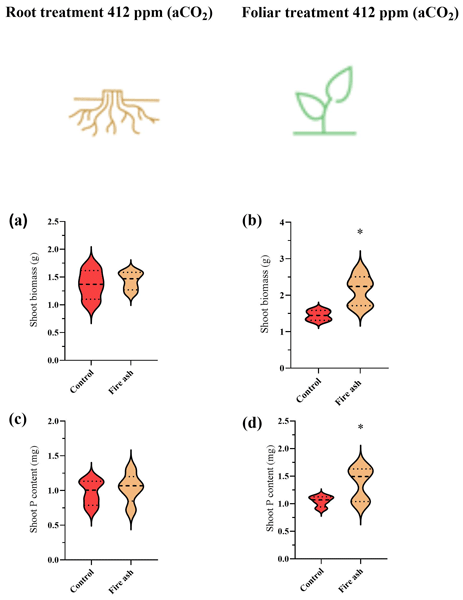
Our research explores how chickpea plants can absorb essential nutrients like phosphorus, iron, and nickel directly from dust deposited on their leaves in addition to uptake through their roots. This process is particularly effective under higher levels of atmospheric CO2, leading to increased plant growth. By using Nd isotopic tools, we traced the nutrients from dust and found that certain leaf traits enhance this uptake. This discovery may become increasingly important as CO2 levels rise.
Our research explores how chickpea plants can absorb essential nutrients like...


Altmetrics
Final-revised paper
Preprint