
Articles | Volume 22, issue 22
https://doi.org/10.5194/bg-22-6895-2025
© Author(s) 2025. This work is distributed under
the Creative Commons Attribution 4.0 License.
the Creative Commons Attribution 4.0 License.
https://doi.org/10.5194/bg-22-6895-2025
© Author(s) 2025. This work is distributed under
the Creative Commons Attribution 4.0 License.
the Creative Commons Attribution 4.0 License.
Research article
| 
19 Nov 2025
Research article |
| 19 Nov 2025
| 19 Nov 2025
Balancing water column and sedimentary 234Th fluxes to quantify coastal marine carbon export
Madeline G. Healey
CORRESPONDING AUTHOR
Department of Oceanography, Dalhousie University, Halifax, Nova Scotia, Canada
Erin E. Black
Department of Earth and Environment, University of Rochester, Rochester, New York, USA
Christopher K. Algar
Department of Oceanography, Dalhousie University, Halifax, Nova Scotia, Canada
Maria Armstrong
Department of Oceanography, Dalhousie University, Halifax, Nova Scotia, Canada
Stephanie S. Kienast
Department of Oceanography, Dalhousie University, Halifax, Nova Scotia, Canada
Related authors
Montserrat Roca-Martí, Madeline Healey, Colleen E. McBride, Rachel Sipler, Emmanuel Devred, Carolina Cisternas-Novoa, Elisa Romanelli, Kyoko Ohashi, and Stephanie S. Kienast
EGUsphere, https://doi.org/10.5194/egusphere-2025-3671, https://doi.org/10.5194/egusphere-2025-3671, 2025
Short summary
Short summary
We studied a historically large spring phytoplankton bloom in the Labrador Sea to quantify how much carbon reaches the deep ocean. Despite high productivity, only a small fraction of organic carbon sank below the ocean's productive layer, suggesting a limited role of the dominant phytoplankton species (Phaeocystis) in carbon export. Our findings highlight the need for long-term observations to better assess the ocean’s role in carbon sequestration.
Henriette M. Kolling, Markus Kienast, Peter Matzerath, Julia Gottschalk, Stephanie Kienast, Daniel A. Frick, Felix Gross, Jack Wharton, David Thornalley, and Ralph R. Schneider
EGUsphere, https://doi.org/10.5194/egusphere-2026-809, https://doi.org/10.5194/egusphere-2026-809, 2026
Short summary
Short summary
We studied past ocean conditions on the Scotian Shelf to understand how warm Gulf Stream waters reached this region in the past. Using chemical signals preserved in microscopic shells from seafloor sediments, we reconstructed sea surface temperature and salinity over the last 8,500 years. We found repeated warm-water intrusions during the mid to late Holocene, similar in strength to those observed today, providing important context for modern ocean warming.
Arnaud Laurent, Bin Wang, Dariia Atamanchuk, Subhadeep Rakshit, Kumiko Azetsu-Scott, Chris Algar, and Katja Fennel
Biogeosciences, 23, 115–135, https://doi.org/10.5194/bg-23-115-2026, https://doi.org/10.5194/bg-23-115-2026, 2026
Short summary
Short summary
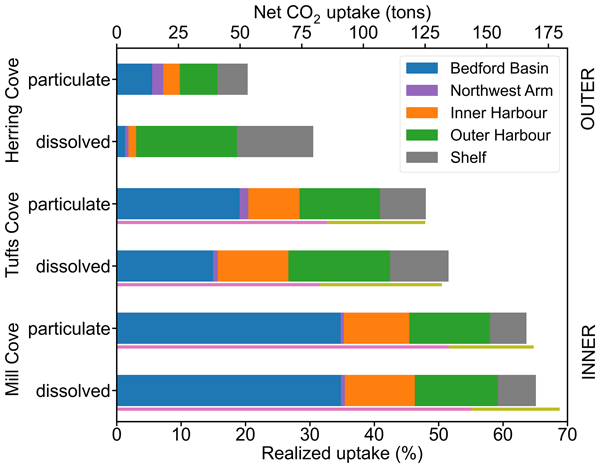
Surface ocean alkalinity enhancement, through the release of alkaline materials, is a technology that could increase the storage of anthropogenic carbon in the ocean. Halifax Harbour (Canada) is a current test site for operational alkalinity addition. Here, we present a model of Halifax Harbour that simulates alkalinity addition at various locations of the harbour and quantifies the resulting net CO2 uptake. The model can be relocated to study alkalinity addition in other coastal systems.
Montserrat Roca-Martí, Madeline Healey, Colleen E. McBride, Rachel Sipler, Emmanuel Devred, Carolina Cisternas-Novoa, Elisa Romanelli, Kyoko Ohashi, and Stephanie S. Kienast
EGUsphere, https://doi.org/10.5194/egusphere-2025-3671, https://doi.org/10.5194/egusphere-2025-3671, 2025
Short summary
Short summary
We studied a historically large spring phytoplankton bloom in the Labrador Sea to quantify how much carbon reaches the deep ocean. Despite high productivity, only a small fraction of organic carbon sank below the ocean's productive layer, suggesting a limited role of the dominant phytoplankton species (Phaeocystis) in carbon export. Our findings highlight the need for long-term observations to better assess the ocean’s role in carbon sequestration.
Catherine Brenan, Markus Kienast, Vittorio Maselli, Christopher K. Algar, Benjamin Misiuk, and Craig J. Brown
Biogeosciences, 21, 4569–4586, https://doi.org/10.5194/bg-21-4569-2024, https://doi.org/10.5194/bg-21-4569-2024, 2024
Short summary
Short summary
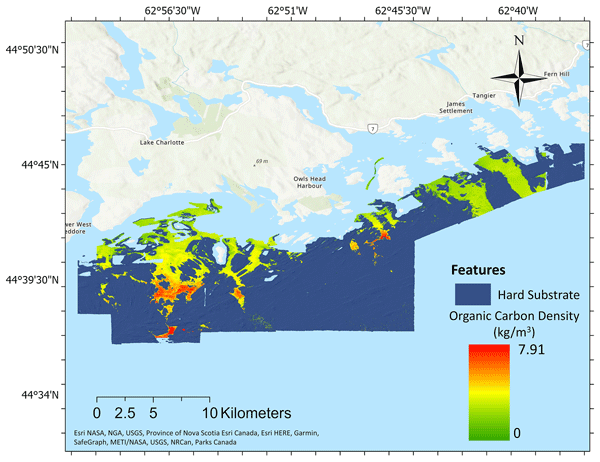
Quantifying how much organic carbon is stored in seafloor sediments is key to assessing how human activities can accelerate the process of carbon storage at the seabed, an important consideration for climate change. This study uses seafloor sediment maps to model organic carbon content. Carbon estimates were 12 times higher when assuming the absence of detailed sediment maps, demonstrating that high-resolution seafloor mapping is critically important for improved estimates of organic carbon.
Katja Fennel, Matthew C. Long, Christopher Algar, Brendan Carter, David Keller, Arnaud Laurent, Jann Paul Mattern, Ruth Musgrave, Andreas Oschlies, Josiane Ostiguy, Jaime B. Palter, and Daniel B. Whitt
State Planet, 2-oae2023, 9, https://doi.org/10.5194/sp-2-oae2023-9-2023, https://doi.org/10.5194/sp-2-oae2023-9-2023, 2023
Short summary
Short summary
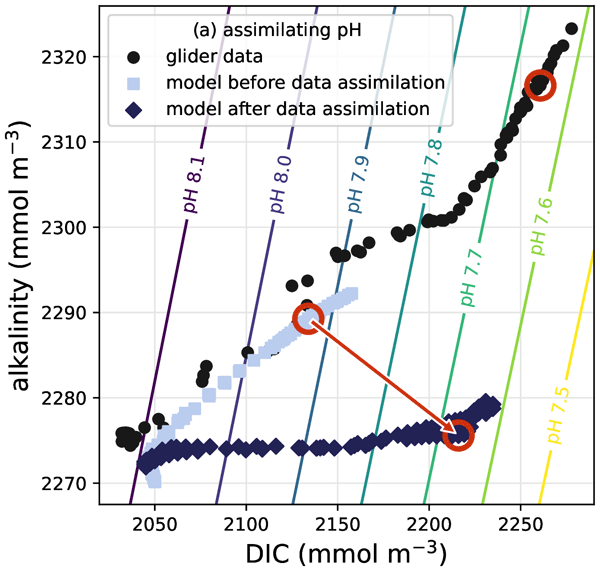
This paper describes biogeochemical models and modelling techniques for applications related to ocean alkalinity enhancement (OAE) research. Many of the most pressing OAE-related research questions cannot be addressed by observation alone but will require a combination of skilful models and observations. We present illustrative examples with references to further information; describe limitations, caveats, and future research needs; and provide practical recommendations.
Cited articles
Aller, R. C. and Cochran, J. K.:
Amiel, D. and Cochran, J. K.: Terrestrial and marine POC fluxes derived from 234Th distributions and δ13C measurements on the Mackenzie Shelf, Journal of Geophysical Research: Oceans, 113, C03S13, https://doi.org/10.1029/2007JC004260, 2008.
Baskaran, M., Swarzenski, P. W., and Porcelli, D.: Role of colloidal material in the removal of 234Th in the Canada Basin of the Arctic Ocean, Deep-Sea Research Part I, 50, 1353–1373, https://doi.org/10.1016/S0967-0637(03)00140-7, 2003.
Bhat, S. G., Krishnaswami, S., Lal, D., Rama, and Moore, W. S.:
Black, E. E., Algar, C. K., Armstrong, M., and Kienast, S. S.: Insights into constraining coastal carbon export from radioisotopes, Frontiers in Marine Science, 10, 1254316, https://doi.org/10.3389/fmars.2023.1254316, 2023.
Boetius, A., Albrecht, S., Bakker, K., Bienhold, C., Felden, J., Fernández-Méndez, M., Hendricks, S., Katlein, C., Lalande, C., Krumpen, T., Nicolaus, M., Peeken, I., Rabe, B., Rogacheva, A., Rybakova, E., Somavilla, R., and Wenzhöfer, F., and RV Polarstern ARK-XXVII/3 Shipboard Science Party: Export of algal biomass from the melting Arctic sea ice, Science, 339, 1430–1432, https://doi.org/10.1126/science.1231346, 2013.
Bolaños, L. M., Karp-Boss, L., Choi, C. J., Worden, A. Z., Graff, J. R., Haëntjens, N., Chase, A. P., Della Penna, A., Gaube, P., Morison, F., Menden-Deuer, S., Westberry, T. K., O'Malley, R. T., Boss, E., Behrenfeld, M. J., and Giovannoni, S. J.: Small phytoplankton dominate western North Atlantic biomass, The ISME Journal, 14, 1663–1674, https://doi.org/10.1038/s41396-020-0636-0, 2020.
Buckley, D. E., Smith, J. N., and Winters, G. V.: Accumulation of contaminant metals in marine sediments of Halifax Harbour, Nova Scotia: Environmental factors and historical trends, Applied Geochemistry, 10, 175–195, https://doi.org/10.1016/0883-2927(94)00053-9, 1995.
Buesseler, K. O. and Boyd, P. W.: Shedding light on processes that control particle export and flux attenuation in the twilight zone of the open ocean, Limnology and Oceanography, 54, 1210–1232, https://doi.org/10.4319/lo.2009.54.4.1210, 2009.
Buesseler, K. O., Bacon, M. P., Cochran, J. K., and Livingston, H. D.: Carbon and nitrogen export during the JGOFS North Atlantic Bloom Experiment estimated from 234Th : 238U disequilibria, Deep-Sea Research, 39, 1115–1137, 1992.
Buesseler, K. O., Andrews, J. A., Hartman, M. C., Belastock, R., and Chai, F.: Regional estimates of the export flux of particulate organic carbon derived from thorium-234 during the JGOFS EqPac program, Deep-Sea Research Part II, 42, 777–804, https://doi.org/10.1016/0967-0645(95)00043-P, 1995.
Buesseler, K. O., Benitez-Nelson, C. R., Moran, S. B., Burd, A., Charette, M., Cochran, J. K., Coppola, L., Fisher, N. S., Fowler, S. W., Gardner, W. D., Guo, L. D., Gustafsson, Ö., Lamborg, C. H., Masqué, P., Miquel, J. C., Passow, U., Santschi, P. H., Savoye, N., Stewart, G., Trull, T., and Wilkinson, D.: An assessment of particulate organic carbon to thorium-234 ratios in the ocean and their impact on the application of 234Th as a POC flux proxy, Marine Chemistry, 100, 213–233, https://doi.org/10.1016/j.marchem.2005.10.013, 2006.
Buesseler, K. O., Antia, A. N., Chen, M., Fowler, S. W., Gardner, W. D., Gustafsson, Ö., Harada, K., Michaels, A. F., Rutgers van der Loeff, M., Sarin, M., Steinberg, D. K., and Trull, T.: An assessment of the use of sediment traps for estimating upper-ocean particle fluxes, Journal of Marine Research, 65, 345–416, https://doi.org/10.1357/002224007781567621, 2007.
Buesseler, K. O., Boyd, P. W., Black, E. E., and Siegel, D. A.: Metrics that matter for assessing the ocean biological carbon pump, Proceedings of the National Academy of Sciences, 117, 9679–9687, https://doi.org/10.1073/pnas.1918114117, 2020.
Burt, W. J., Thomas, H., Fennel, K., and Horne, E.: Sediment-water column fluxes of carbon, oxygen and nutrients in Bedford Basin, Nova Scotia, inferred from 224Ra measurements, Biogeosciences, 10, 53–66, https://doi.org/10.5194/bg-10-53-2013, 2013.
Burt, W., Rackley, S., Izett, R., Vallis, J., Sadoon, O., Rau, G., Melashvili, M., and Cross, T.: Planetary Technologies' groundbreaking marine carbon dioxide removal (mCDR) project in Halifax, and the emergence of Halifax as a global mCDR hub, OCEANS 2024 – Halifax, 1–6, https://doi.org/10.1109/OCEANS55160.2024.10754096, 2024.
Butman, C. A.: Sediment-trap experiments on the importance of hydrodynamical processes in distributing settling invertebrate larvae in near-bottom waters, Journal of Experimental Marine Biology and Ecology, 134, 37–88, https://doi.org/10.1016/0022-0981(90)90055-H, 1989.
Cai, P., Dai, M., Lv, D., and Chen, W.: An improvement in the small-volume technique for determining thorium-234 in seawater, Marine Chemistry, 100, 282–288, https://doi.org/10.1016/j.marchem.2005.10.016, 2006.
Cai, Y., Guo, L., Wang, X., and Aiken, G. R.: Abundance, stable isotopic composition, and export fluxes of DOC, POC, and DIC from the Lower Mississippi River during 2006–2008, Journal of Geophysical Research: Biogeosciences, 120, 2273–2288, https://doi.org/10.1002/2015JG003139, 2015.
Ceballos-Romero, E., De Soto, F., Le Moigne, F. A. C., García-Tenorio, R., and Villa-Alfageme, M.: 234Th-derived particle fluxes and seasonal variability: When is the SS assumption reliable? Insights from a novel approach for carbon flux simulation, Geophysical Research Letters, 45, e2018GL079968, https://doi.org/10.1029/2018GL079968, 2018.
Ceballos-Romero, E., Buesseler, K. O., and Villa-Alfageme, M.: Revisiting five decades of 234Th data: a comprehensive global oceanic compilation, Earth Syst. Sci. Data, 14, 2639–2679, https://doi.org/10.5194/essd-14-2639-2022, 2022.
Charette, M. A. and Moran, S. B.: Rates of particle scavenging and particulate organic carbon export estimated using 234Th as a tracer in the subtropical and equatorial Atlantic Ocean, Deep-Sea Research Part II, 46, 885–906, https://doi.org/10.1016/S0967-0645(99)00006-5, 1999.
Charette, M. A., Moran, S. B., Pike, S. M., and Smith, J. N.: Investigating the carbon cycle in the Gulf of Maine using the natural tracer thorium-234, Journal of Geophysical Research: Oceans, 106, 11553–11579, https://doi.org/10.1029/1999JC000277, 2001.
Clevenger, S. J., Benitez-Nelson, C. R., Drysdale, J., Pike, S., Puigcorbé, V., and Buesseler, K. O.: Review of the analysis of 234Th in small-volume (2–4 L) seawater samples: Improvements and recommendations, Journal of Radioanalytical and Nuclear Chemistry, 329, 1–13, https://doi.org/10.1007/s10967-021-07772-2, 2021.
Coale, K. H. and Bruland, K. W.: 234Th:238U disequilibria within the California Current, Limnology and Oceanography, 30, 22–33, https://doi.org/10.4319/lo.1985.30.1.0022, 1985.
Cochran, J. K., Barnes, C., Achman, D., and Hirschberg, D. J.: Thorium-234/uranium-238 disequilibrium as an indicator of scavenging rates and particulate organic carbon fluxes in the Northeast Water Polynya, Greenland, Journal of Geophysical Research: Oceans, 100, 4399–4410, https://doi.org/10.1029/94JC01954, 1995.
Environment and Climate Change Canada: Historical climate data: Halifax International Airport [data set], https://climate.weather.gc.ca/historical_data/search_historic_data_e.html (last access: 30 September 2025), 2018.
Evangeliou, N., Florou, H., and Scoullos, M.: POC and particulate 234Th export fluxes estimated using
Fader, G. B. J. and Miller, R. O.: Surficial geology, Halifax Harbour, Nova Scotia, Natural Resources Canada, 590 pp., https://doi.org/10.4095/224797, 2008.
Falkowski, P. G., Flagg, C. N., Rowe, G. T., Smith, S. L., Whitledge, T. E., and Wirick, C. D.: The fate of a spring phytoplankton bloom: Export or oxidation?, Continental Shelf Research, 8, 457–484, https://doi.org/10.1016/0278-4343(88)90064-7, 1988.
Faust, J. C. and Knies, J.: Organic matter sources in North Atlantic fjord sediments, Geochemistry, Geophysics, Geosystems, 20, 2872–2885, https://doi.org/10.1029/2019GC008382, 2019.
Fennel, K., Long, M. C., Algar, C., Carter, B., Keller, D., Laurent, A., Mattern, J. P., Musgrave, R., Oschlies, A., Ostiguy, J., Palter, J. B., and Whitt, D. B.: Modelling considerations for research on ocean alkalinity enhancement (OAE), in: Guide to Best Practices in Ocean Alkalinity Enhancement Research, edited by: Oschlies, A., Stevenson, A., Bach, L. T., Fennel, K., Rickaby, R. E. M., Satterfield, T., Webb, R., and Gattuso, J.-P., Copernicus Publications, State Planet, 2-oae2023, 9, https://doi.org/10.5194/sp-2-oae2023-9-2023, 2023.
Fisheries and Oceans Canada: Bedford Basin Monitoring Program (BBMP), https://www.bio.gc.ca/science/monitoring-monitorage/bbmp-pobb/bbmp-pobb-en.php (last access: 30 September 2025), 2025.
Forster, S., Turnewitsch, R., Powilleit, M., Werk, S., Peine, F., Ziervogel, K., and Kersten, M.: Thorium-234-derived information on particle residence times and sediment deposition in shallow waters of the south-western Baltic Sea, Journal of Marine Systems, 75, 360–370, https://doi.org/10.1016/j.jmarsys.2008.04.004, 2009.
Foster, J. M. and Shimmield, G. B.: 234Th as a tracer of particle flux and POC export in the northern North Sea during a coccolithophore bloom, Deep-Sea Research Part II, 49, 2965–2977, https://doi.org/10.1016/S0967-0645(02)00066-8, 2002.
GEBCO Compilation Group: GEBCO_2022 Grid, British Oceanographic Data Centre (BODC) [data set], https://doi.org/10.5285/e0f0bb80-ab44-2739-e053-6c86abc0289c, 2022.
Graff, J. R., Nelson, N. B., Roca-Martí, M., Kramer, S. J., Erickson, Z., Cetinić, I., Buesseler, K. O., Passow, U., Zhang, X., Benitez-Nelson, C., Bisson, K., Close, H. G., Crockford, T., Fox, J., Halewood, S., Lam, P., Roesler, C., Sweet, J., VerWey, B., Xiong, Y., and Siegel, D. A.: Reconciliation of total particulate organic carbon and nitrogen measurements determined using contrasting methods in the North Pacific Ocean (NASA EXPORTS), Elementa: Science of the Anthropocene, 11, 00112, https://doi.org/10.1525/elementa.2022.00112, 2023.
Haas, S., Robicheau, B. M., Rakshit, S., Tolman, J., Algar, C. K., LaRoche, J., and Wallace, D. W. R.: Physical mixing in coastal waters controls and decouples nitrification via biomass dilution, Proceedings of the National Academy of Sciences, 118, e2004877118, https://doi.org/10.1073/pnas.2004877118, 2021.
Hargrave, B. T. and Taguchi, S.: Origin of deposited material sedimented in a marine bay, Journal of the Fisheries Research Board of Canada, 35, 1604–1613, https://doi.org/10.1139/f78-250, 1978.
Healey, M. and Kienast, S. S.: Seawater radioisotope (234Th) and carbon from sampling conducted at the Compass Station in Bedford Basin, Nova Scotia, Canada from 2021 to 2024, Biological and Chemical Oceanography Data Management Office (BCO-DMO) [data set], https://doi.org/10.26008/1912/bco-dmo.988716.1, 2025.
Healey, M. and Kienast, S. S.: Sediment radioisotope (234Th) and carbon from sampling conducted at the Compass Station in Bedford Basin, Nova Scotia, Canada from 2021 to 2024, Biological and Chemical Oceanography Data Management Office (BCO-DMO) [data set], https://doi.org/10.26008/1912/bco-dmo.988753.1, 2025.
Hung, C.-C., Gong, G.-C., and Santschi, P. H.: 234Th in different size classes of sediment-trap collected particles from the northwestern Pacific Ocean, Geochimica et Cosmochimica Acta, 91, 60–74, https://doi.org/10.1016/j.gca.2012.05.017, 2012.
Kepkay, P. E., Niven, S. E. H., and Jellett, J. F.: Colloidal organic carbon and phytoplankton speciation during a coastal bloom, Journal of Plankton Research, 19, 369–389, https://doi.org/10.1093/plankt/19.3.369, 1997.
Lalande, C., Moran, S. B., Wassmann, P., Grebmeier, J. M., and Cooper, L. W.: 234Th-derived particulate organic carbon fluxes in the northern Barents Sea with comparison to drifting sediment trap fluxes, Journal of Marine Systems, 73, 103–113, https://doi.org/10.1016/j.jmarsys.2007.09.004, 2008.
Lam, P. J., Ohnemus, D. C., and Auro, M. E.: Size-fractionated major particle composition and concentrations from the US GEOTRACES North Atlantic zonal transect, Deep-Sea Research Part II: Topical Studies in Oceanography, 116, 303–320, https://doi.org/10.1016/j.dsr2.2014.11.020, 2015.
Lepore, K., Moran, S. B., Grebmeier, J. M., Cooper, L. W., Lalande, C., Maslowski, W., Hill, V., Bates, N. R., Hansell, D. A., Mathis, J. T., and Kelly, R. P.: Seasonal and interannual changes in particulate organic carbon export and deposition in the Chukchi Sea, Journal of Geophysical Research: Oceans, 112, C10S90, https://doi.org/10.1029/2006JC003555, 2007.
Li, W. K. W. and Dickie, P. M.: Monitoring phytoplankton, bacterioplankton and virioplankton in a coastal inlet (Bedford Basin) by flow cytometry, Cytometry, 44, 236–246, https://doi.org/10.1002/1097-0320(20010701)44:3<236::AID-CYTO1116>3.0.CO;2-5, 2001.
Li, W. K. W. and Harrison, W. G.: Propagation of an atmospheric climate signal to phytoplankton in a small marine basin, Limnology and Oceanography, 53, 1734–1745, https://doi.org/10.4319/lo.2008.53.5.1734, 2008.
Lin, W., Chen, L., Zeng, S., Li, T., Wang, Y., and Yu, K.: Residual β activity of particulate 234Th as a novel proxy for tracking sediment resuspension in the ocean, Scientific Reports, 6, 27069, https://doi.org/10.1038/srep27069, 2016.
Longhurst, A., Sathyendranath, S., Platt, T., and Caverhill, C.: An estimate of global primary production in the ocean from satellite radiometer data, Journal of Plankton Research, 17, 1245–1271, https://doi.org/10.1093/plankt/17.6.1245, 1995.
Luo, Y., Miller, L. A., De Baere, B., Soon, M., and Francois, R.: POC fluxes measured by sediment traps and 234Th : 238U disequilibrium in Saanich Inlet, British Columbia, Marine Chemistry, 162, 19–29, https://doi.org/10.1016/j.marchem.2014.03.001, 2014.
Martin, J. H., Knauer, G. A., Karl, D. M., and Broenkow, W. W.: VERTEX: Carbon cycling in the northeast Pacific, Deep-Sea Research Part A, 34, 267–285, https://doi.org/10.1016/0198-0149(87)90086-0, 1987.
Muller-Karger, F. E., Varela, R., Thunell, R., Luerssen, R., Hu, C., and Walsh, J. J.: The importance of continental margins in the global carbon cycle, Geophysical Research Letters, 32, L01602, https://doi.org/10.1029/2004GL021346, 2005.
Niven, S. E. H., Kepkay, P. E., and Boraie, A.: Colloidal organic carbon and colloidal 234Th dynamics during a coastal phytoplankton bloom, Deep-Sea Research Part II, 42, 257–273, https://doi.org/10.1016/0967-0645(95)00014-H, 1995.
Owens, S. A., Buesseler, K. O., and Sims, K. W. W.: Re-evaluating the 238U–salinity relationship in seawater: Implications for the 238U–234Th disequilibrium method, Marine Chemistry, 127, 31–39, https://doi.org/10.1016/j.marchem.2011.07.005, 2011.
Owens, S. A., Pike, S., and Buesseler, K. O.: Thorium-234 as a tracer of particle dynamics and upper-ocean export in the Atlantic Ocean, Deep-Sea Research Part II: Topical Studies in Oceanography, 116, 42–59, https://doi.org/10.1016/j.dsr2.2014.11.010, 2015.
Pike, S. M., Buesseler, K. O., Andrews, J., and Savoye, N.: Quantification of 234Th recovery in small-volume seawater samples by inductively coupled plasma mass spectrometry, Journal of Radioanalytical and Nuclear Chemistry, 263, 355–360, https://doi.org/10.1007/s10967-005-0594-z, 2005.
Platt, T.: Analysis of the importance of spatial and temporal heterogeneity in the estimation of annual production by phytoplankton in a small, enriched, marine basin, Journal of Experimental Marine Biology and Ecology, 18, 99–109, 1975.
Puigcorbé, V., Masqué, P., and Le Moigne, F. A. C.: Global database of ratios of particulate organic carbon to thorium-234 in the ocean: improving estimates of the biological carbon pump, Earth Syst. Sci. Data, 12, 1267–1285, https://doi.org/10.5194/essd-12-1267-2020, 2020.
Rakshit, S., Dale, A. W., Wallace, D. W., and Algar, C. K.: Sources and sinks of bottom-water oxygen in a seasonally hypoxic fjord, Frontiers in Marine Science, 10, 1148091, https://doi.org/10.3389/fmars.2023.1148091, 2023.
Rakshit, S., Glock, N., Dale, A. W., Armstrong, M. M. L., Scholz, F., Mutzberg, A., and Algar, C. K.: Foraminiferal denitrification and deep bioirrigation influence benthic biogeochemical cycling in a seasonally hypoxic fjord, Geochimica et Cosmochimica Acta, 388, 268–282, https://doi.org/10.1016/j.gca.2024.10.010, 2025.
Robicheau, B. M., Tolman, J., Bertrand, E. M., and LaRoche, J.: Highly resolved interannual phytoplankton community dynamics of the coastal Northwest Atlantic, ISME Communications, 2, 38, https://doi.org/10.1038/s43705-022-00119-2, 2022.
Shan, S. and Sheng, J.: Examination of circulation, flushing time and dispersion in Halifax Harbour of Nova Scotia, Water Quality Research Journal, 47, 353–374, https://doi.org/10.2166/wqrjc.2012.041, 2012.
Shan, S., Sheng, J., Thompson, K. R., and Greenberg, D. A.: Simulating the three-dimensional circulation and hydrography of Halifax Harbour using a multi-nested coastal ocean circulation model, Ocean Dynamics, 61, 951–976, https://doi.org/10.1007/s10236-011-0398-3, 2011.
Shi, Q. and Wallace, D.: A 3-year time series of volatile organic iodocarbons in Bedford Basin, Nova Scotia: a northwestern Atlantic fjord, Ocean Sci., 14, 1385–1403, https://doi.org/10.5194/os-14-1385-2018, 2018.
Siegel, D. A., Buesseler, K. O., Doney, S. C., Sailley, S. F., Behrenfeld, M. J., and Boyd, P. W.: Global assessment of ocean carbon export by combining satellite observations and food-web models, Global Biogeochemical Cycles, 28, 181–196, https://doi.org/10.1002/2013GB004743, 2014.
Trimble, S. M. and Baskaran, M.: The role of suspended particulate matter in 234Th scavenging and 234Th-derived export fluxes of POC in the Canada Basin of the Arctic Ocean, Marine Chemistry, 96, 1–19, https://doi.org/10.1016/j.marchem.2004.10.003, 2005.
Turnewitsch, R. and Springer, B. M.: Do bottom mixed layers influence 234Th dynamics in the abyssal near-bottom water column?, Deep-Sea Research Part I, 48, 239–257, 2001.
Wassmann, P.: Sedimentation and benthic mineralization of organic detritus in a Norwegian fjord, Marine Biology, 83, 83–94, https://doi.org/10.1007/BF00393088, 1984.
Wei, C.-L. and Murray, J. W.: Temporal variations of 234Th activity in the water column of Dabob Bay: Particle scavenging, Limnology and Oceanography, 37, 296–314, https://doi.org/10.4319/lo.1992.37.2.0296, 1992.
Yang, W., Tian, J., Chen, M., Zheng, M., and Chen, M.: A new radiotracer for particulate carbon dynamics: Examination of 210Bi–210Pb in seawater, Geochemistry, Geophysics, Geosystems, 23, e2022GC010656, https://doi.org/10.1029/2022GC010656, 2022.
Ziervogel, K., Sweet, J., Juhl, A. R., and Passow, U.: Sediment resuspension and associated extracellular enzyme activities measured ex situ: A mechanism for benthic–pelagic coupling in the deep Gulf of Mexico, Frontiers in Marine Science, 8, 668621, https://doi.org/10.3389/fmars.2021.668621, 2021.
Short summary
This study presents new data from 2021–2024 aimed at improving our understanding of coastal carbon export and storage in a temperate fjord in the Northwest Atlantic. By applying natural tracers in seawater and sediment, we assess short-term carbon dynamics and provide quasi-seasonal observations. The results refine carbon flux estimates in a well-studied site that is emerging as a key location for coastal ocean research.
This study presents new data from 2021–2024 aimed at improving our understanding of coastal...


Altmetrics
Final-revised paper
Preprint