
Articles | Volume 22, issue 23
https://doi.org/10.5194/bg-22-7745-2025
© Author(s) 2025. This work is distributed under
the Creative Commons Attribution 4.0 License.
the Creative Commons Attribution 4.0 License.
https://doi.org/10.5194/bg-22-7745-2025
© Author(s) 2025. This work is distributed under
the Creative Commons Attribution 4.0 License.
the Creative Commons Attribution 4.0 License.
Research article
| 
08 Dec 2025
Research article |
| 08 Dec 2025
| 08 Dec 2025
Wind and phytoplankton dynamics drive seasonal and short-term variability of suspended matter in a tidal basin

Alfred-Wegener-Institut Helmholtz-Zentrum für Polar- und Meeresforschung, Bremerhaven, Germany
Wadden Sea Station Sylt, Alfred-Wegener-Institut Helmholtz-Zentrum für Polar- und Meeresforschung, List/Sylt, Germany
Vera Sidorenko
Alfred-Wegener-Institut Helmholtz-Zentrum für Polar- und Meeresforschung, Bremerhaven, Germany
Wadden Sea Station Sylt, Alfred-Wegener-Institut Helmholtz-Zentrum für Polar- und Meeresforschung, List/Sylt, Germany
Alexey Androsov
Alfred-Wegener-Institut Helmholtz-Zentrum für Polar- und Meeresforschung, Bremerhaven, Germany
Wadden Sea Station Sylt, Alfred-Wegener-Institut Helmholtz-Zentrum für Polar- und Meeresforschung, List/Sylt, Germany
Sabine Horn
Wadden Sea Station Sylt, Alfred-Wegener-Institut Helmholtz-Zentrum für Polar- und Meeresforschung, List/Sylt, Germany
Sara Rubinetti
Alfred-Wegener-Institut Helmholtz-Zentrum für Polar- und Meeresforschung, Bremerhaven, Germany
Dipartimento per lo Sviluppo Sostenibile e la Transizione Ecologica, University of Piemonte Orientale, Vercelli, Italy
Ivan Kuznetsov
Alfred-Wegener-Institut Helmholtz-Zentrum für Polar- und Meeresforschung, Bremerhaven, Germany
Karen Helen Wiltshire
Wadden Sea Station Sylt, Alfred-Wegener-Institut Helmholtz-Zentrum für Polar- und Meeresforschung, List/Sylt, Germany
Climate Science Trinity College Dublin, Dublin, Ireland
Justus van Beusekom
Wadden Sea Station Sylt, Alfred-Wegener-Institut Helmholtz-Zentrum für Polar- und Meeresforschung, List/Sylt, Germany
Institute for Carbon Cycles, Helmholtz Centre Hereon, Geesthacht, Germany
Related authors
No articles found.
Yanan Zhao, Vera Sidorenko, Carsten Lemmen, and Ingeborg Bussmann
EGUsphere, https://doi.org/10.5194/egusphere-2026-4822, https://doi.org/10.5194/egusphere-2026-4822, 2026
This preprint is open for discussion and under review for Biogeosciences (BG).
Short summary
Short summary
Shallow coastal waters release methane, a strong greenhouse gas, but bacteria living in the water consume part of it before it reaches the air. How fast they do this can normally only be measured in the laboratory, so it is rarely known. Using four years of measurements from the Elbe estuary and the German Bight, we found that this speed can be predicted from temperature, salinity and nutrients alone, making it possible to estimate the methane removal from routine monitoring data.
Chueh-Chen Tung, Moritz Holtappels, Alexa Wrede, Male Köster, Lasse Sander, Jan Beermann, Vera Sidorenko, and Lars Gutow
EGUsphere, https://doi.org/10.5194/egusphere-2026-966, https://doi.org/10.5194/egusphere-2026-966, 2026
Short summary
Short summary
Using 171 taxa from 50 stations in the southeastern North Sea, we show that environmental gradients structure benthic macrofaunal communities and their traits. Deeper communities had higher bioturbation and bioirrigation, whereas shallow communities showed greater respiration and secondary production. Environmental gradients also shifted biodiversity–ecosystem functioning relationships, highlighting macrofaunal control of carbon sequestration–related processes in shelf sea sediments.

Andreas Neumann, Justus E. E. van Beusekom, Alexander Bratek, Jana Friedrich, Jürgen Möbius, Tina Sanders, Hendrik Wolschke, and Kirstin Dähnke
Biogeosciences, 23, 1103–1116, https://doi.org/10.5194/bg-23-1103-2026, https://doi.org/10.5194/bg-23-1103-2026, 2026
Short summary
Short summary
The North-Western shelf of the Black Sea is substantially influenced by the discharge of nutrients from River Danube. We have sampled the sediment there and measured particulate carbon and nitrogen to reconstruct the variability of nitrogen sources to the NW shelf. Our results demonstrate that the balance of riverine nitrogen input and marine nitrogen fixation is sensitive to climate changes. Nitrogen from human activities is detectable in NW shelf sediment since the 12th century.

Alejandra Quintanilla-Zurita, Benjamin Rabe, Claudia Wekerle, Torsten Kanzow, Ivan Kuznetsov, Sinhue Torres-Valdes, Enric Pallàs-Sanz, and Ying-Chih Fang
Ocean Sci., 22, 305–328, https://doi.org/10.5194/os-22-305-2026, https://doi.org/10.5194/os-22-305-2026, 2026
Short summary
Short summary
During a year-long Arctic expedition, we discovered nine underwater eddies beneath the sea ice in the central Arctic Ocean. These hidden structures form within a layered part of the ocean just below the surface and may reshape water layers and transport heat, freshwater, and nutrients. Using drifting ice platforms, we measured their size, depth, and motion to understand how they form.
Mona Norbisrath, Justus E. E. van Beusekom, and Helmuth Thomas
Ocean Sci., 20, 1423–1440, https://doi.org/10.5194/os-20-1423-2024, https://doi.org/10.5194/os-20-1423-2024, 2024
Short summary
Short summary
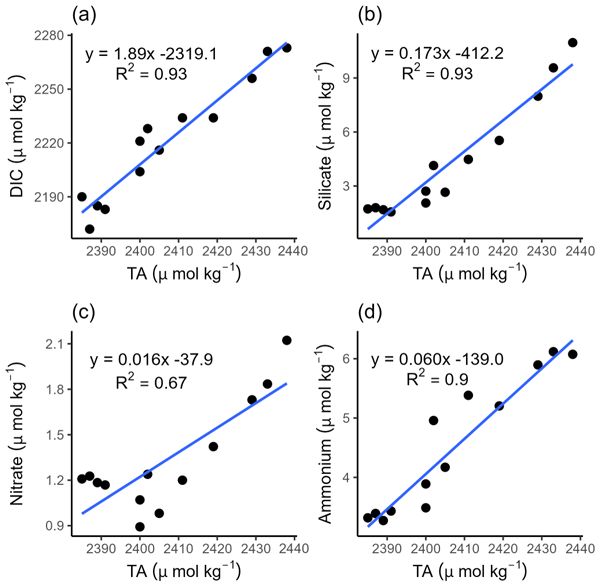
We present an observational study investigating total alkalinity (TA) in the Dutch Wadden Sea. Discrete water samples were used to identify the TA spatial distribution patterns and locate and shed light on TA sources. By observing a tidal cycle, the sediments and pore water exchange were identified as local TA sources. We assumed metabolically driven CaCO3 dissolution as the TA source in the upper, oxic sediments and anaerobic metabolic processes as TA sources in the deeper, anoxic ones.
Felipe de Luca Lopes de Amorim, Areti Balkoni, Vera Sidorenko, and Karen Helen Wiltshire
Ocean Sci., 20, 1247–1265, https://doi.org/10.5194/os-20-1247-2024, https://doi.org/10.5194/os-20-1247-2024, 2024
Short summary
Short summary
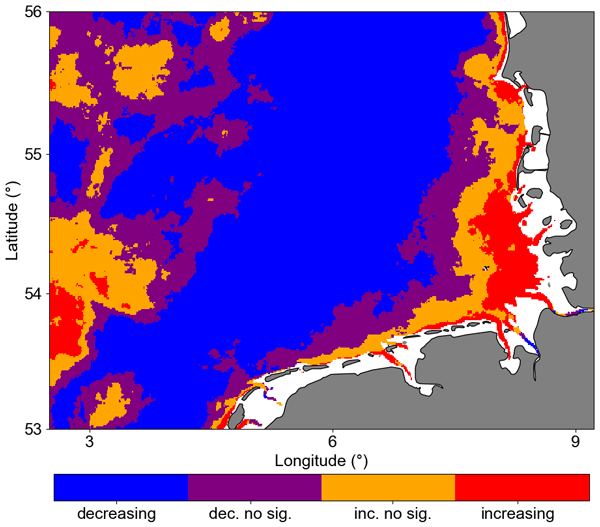
We studied the increasing or decreasing of chlorophyll a abundance in the German Bight. Chlorophyll a is the pigment present in algae that allows them to capture energy from the sun and indicates both the growth of the algae and the health of the environment. Most of the German Bight has decreasing chlorophyll a concentration in the analysed period. In addition, about 45 % of the changes happening in chlorophyll a were connected with changes in temperature.
Ivan Kuznetsov, Benjamin Rabe, Alexey Androsov, Ying-Chih Fang, Mario Hoppmann, Alejandra Quintanilla-Zurita, Sven Harig, Sandra Tippenhauer, Kirstin Schulz, Volker Mohrholz, Ilker Fer, Vera Fofonova, and Markus Janout
Ocean Sci., 20, 759–777, https://doi.org/10.5194/os-20-759-2024, https://doi.org/10.5194/os-20-759-2024, 2024
Short summary
Short summary
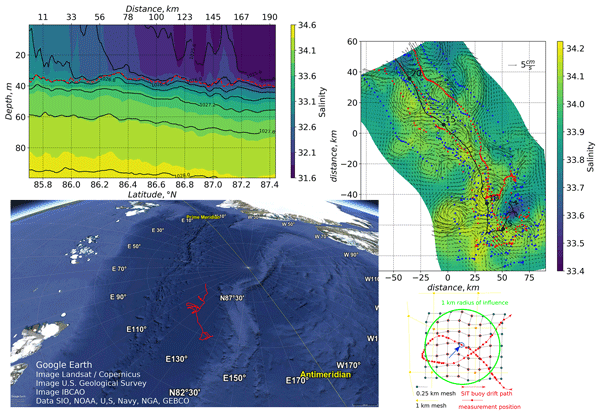
Our research introduces a tool for dynamically mapping the Arctic Ocean using data from the MOSAiC experiment. Incorporating extensive data into a model clarifies the ocean's structure and movement. Our findings on temperature, salinity, and currents reveal how water layers mix and identify areas of intense water movement. This enhances understanding of Arctic Ocean dynamics and supports climate impact studies. Our work is vital for comprehending this key region in global climate science.
Alexey Androsov, Sven Harig, Natalia Zamora, Kim Knauer, and Natalja Rakowsky
Nat. Hazards Earth Syst. Sci., 24, 1635–1656, https://doi.org/10.5194/nhess-24-1635-2024, https://doi.org/10.5194/nhess-24-1635-2024, 2024
Short summary
Short summary
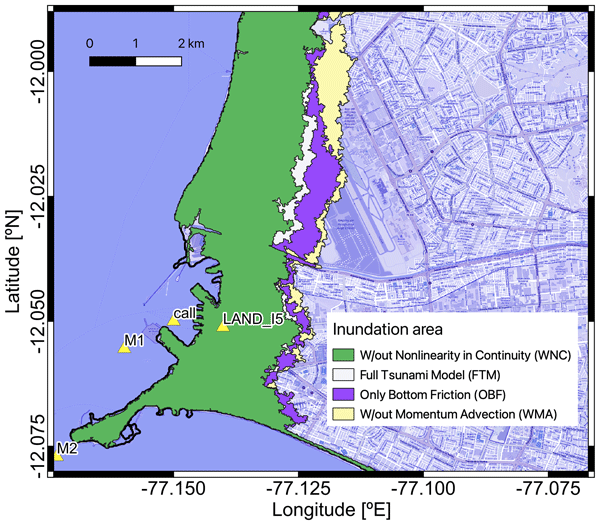
Two numerical codes are used in a comparative analysis of the calculation of the tsunami wave due to an earthquake along the Peruvian coast. The comparison primarily evaluates the flow velocity fields in flooded areas. The relative importance of the various parts of the equations is determined, focusing on the nonlinear terms. The influence of the nonlinearity on the degree and volume of flooding, flow velocity, and small-scale fluctuations is determined.
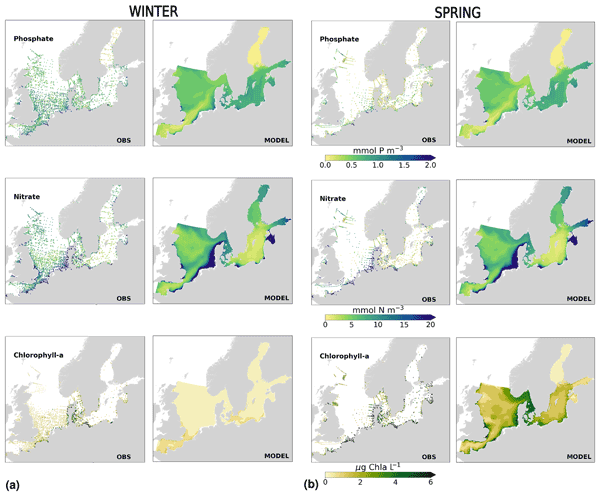
Itzel Ruvalcaba Baroni, Elin Almroth-Rosell, Lars Axell, Sam T. Fredriksson, Jenny Hieronymus, Magnus Hieronymus, Sandra-Esther Brunnabend, Matthias Gröger, Ivan Kuznetsov, Filippa Fransner, Robinson Hordoir, Saeed Falahat, and Lars Arneborg
Biogeosciences, 21, 2087–2132, https://doi.org/10.5194/bg-21-2087-2024, https://doi.org/10.5194/bg-21-2087-2024, 2024
Short summary
Short summary
The health of the Baltic and North seas is threatened due to high anthropogenic pressure; thus, different methods to assess the status of these regions are urgently needed. Here, we validated a novel model simulating the ocean dynamics and biogeochemistry of the Baltic and North seas that can be used to create future climate and nutrient scenarios, contribute to European initiatives on de-eutrophication, and provide water quality advice and support on nutrient load reductions for both seas.
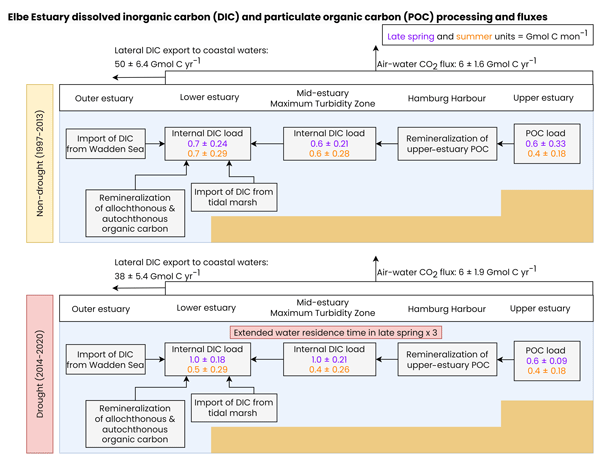
Louise C. V. Rewrie, Burkard Baschek, Justus E. E. van Beusekom, Arne Körtzinger, Gregor Ollesch, and Yoana G. Voynova
Biogeosciences, 20, 4931–4947, https://doi.org/10.5194/bg-20-4931-2023, https://doi.org/10.5194/bg-20-4931-2023, 2023
Short summary
Short summary
After heavy pollution in the 1980s, a long-term inorganic carbon increase in the Elbe Estuary (1997–2020) was fueled by phytoplankton and organic carbon production in the upper estuary, associated with improved water quality. A recent drought (2014–2020) modulated the trend, extending the water residence time and the dry summer season into May. The drought enhanced production of inorganic carbon in the estuary but significantly decreased the annual inorganic carbon export to coastal waters.
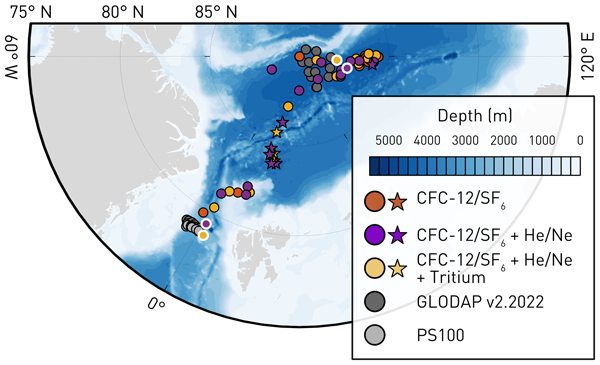
Céline Heuzé, Oliver Huhn, Maren Walter, Natalia Sukhikh, Salar Karam, Wiebke Körtke, Myriel Vredenborg, Klaus Bulsiewicz, Jürgen Sültenfuß, Ying-Chih Fang, Christian Mertens, Benjamin Rabe, Sandra Tippenhauer, Jacob Allerholt, Hailun He, David Kuhlmey, Ivan Kuznetsov, and Maria Mallet
Earth Syst. Sci. Data, 15, 5517–5534, https://doi.org/10.5194/essd-15-5517-2023, https://doi.org/10.5194/essd-15-5517-2023, 2023
Short summary
Short summary
Gases dissolved in the ocean water not used by the ecosystem (or "passive tracers") are invaluable to track water over long distances and investigate the processes that modify its properties. Unfortunately, especially so in the ice-covered Arctic Ocean, such gas measurements are sparse. We here present a data set of several passive tracers (anthropogenic gases, noble gases and their isotopes) collected over the full ocean depth, weekly, during the 1-year drift in the Arctic during MOSAiC.
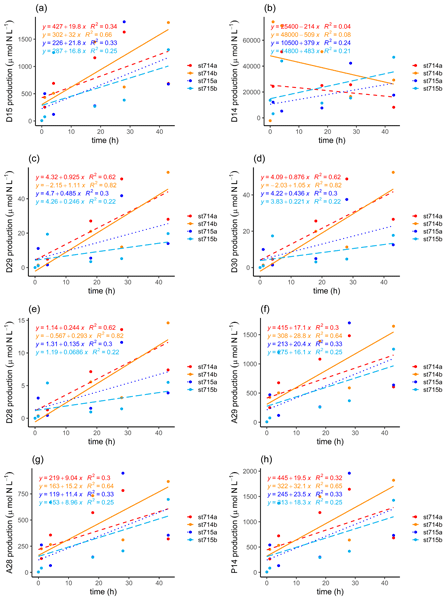
Mona Norbisrath, Andreas Neumann, Kirstin Dähnke, Tina Sanders, Andreas Schöl, Justus E. E. van Beusekom, and Helmuth Thomas
Biogeosciences, 20, 4307–4321, https://doi.org/10.5194/bg-20-4307-2023, https://doi.org/10.5194/bg-20-4307-2023, 2023
Short summary
Short summary
Total alkalinity (TA) is the oceanic capacity to store CO2. Estuaries can be a TA source. Anaerobic metabolic pathways like denitrification (reduction of NO3− to N2) generate TA and are a major nitrogen (N) sink. Another important N sink is anammox that transforms NH4+ with NO2− into N2 without TA generation. By combining TA and N2 production, we identified a TA source, denitrification, occurring in the water column and suggest anammox as the dominant N2 producer in the bottom layer of the Ems.
Johannes J. Rick, Mirco Scharfe, Tatyana Romanova, Justus E. E. van Beusekom, Ragnhild Asmus, Harald Asmus, Finn Mielck, Anja Kamp, Rainer Sieger, and Karen H. Wiltshire
Earth Syst. Sci. Data, 15, 1037–1057, https://doi.org/10.5194/essd-15-1037-2023, https://doi.org/10.5194/essd-15-1037-2023, 2023
Short summary
Short summary
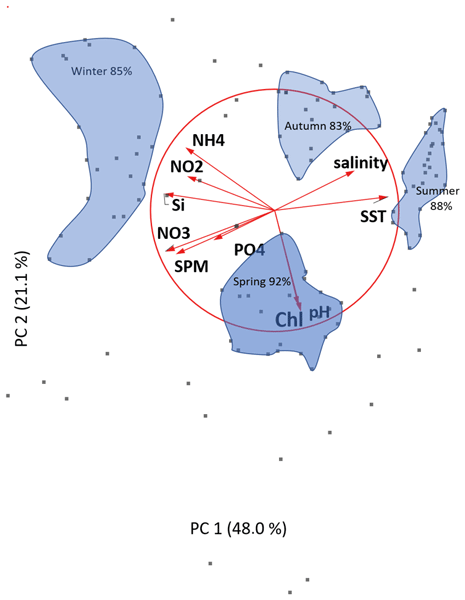
The Sylt Roads (Wadden Sea) time series is illustrated. Since 1984, the water temperature has risen by 1.1 °C, while pH and salinity decreased by 0.2 and 0.3 units. Nutrients (P, N) displayed a period of high eutrophication until 1998 and have decreased since 1999, while Si showed a parallel increase. Chlorophyll did not mirror these changes, probably due to a switch in nutrient limitation. Until 1998, algae were primarily limited by Si, and since 1999, P limitation has become more important.

Mona Norbisrath, Johannes Pätsch, Kirstin Dähnke, Tina Sanders, Gesa Schulz, Justus E. E. van Beusekom, and Helmuth Thomas
Biogeosciences, 19, 5151–5165, https://doi.org/10.5194/bg-19-5151-2022, https://doi.org/10.5194/bg-19-5151-2022, 2022
Short summary
Short summary
Total alkalinity (TA) regulates the oceanic storage capacity of atmospheric CO2. TA is also metabolically generated in estuaries and influences coastal carbon storage through its inflows. We used water samples and identified the Hamburg port area as the one with highest TA generation. Of the overall riverine TA load, 14 % is generated within the estuary. Using a biogeochemical model, we estimated potential effects on the coastal carbon storage under possible anthropogenic and climate changes.
Mario Hoppmann, Ivan Kuznetsov, Ying-Chih Fang, and Benjamin Rabe
Earth Syst. Sci. Data, 14, 4901–4921, https://doi.org/10.5194/essd-14-4901-2022, https://doi.org/10.5194/essd-14-4901-2022, 2022
Short summary
Short summary
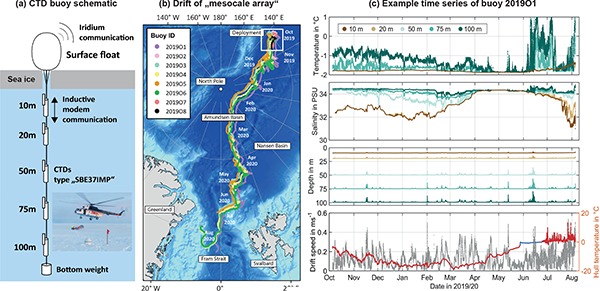
The role of eddies and fronts in the oceans is a hot topic in climate research, but there are still many related knowledge gaps, particularly in the ice-covered Arctic Ocean. Here we present a unique dataset of ocean observations collected by a set of drifting buoys installed on ice floes as part of the 2019/2020 MOSAiC campaign. The buoys recorded temperature and salinity data for 10 months, providing extraordinary insights into the properties and processes of the ocean along their drift.
Gesa Schulz, Tina Sanders, Justus E. E. van Beusekom, Yoana G. Voynova, Andreas Schöl, and Kirstin Dähnke
Biogeosciences, 19, 2007–2024, https://doi.org/10.5194/bg-19-2007-2022, https://doi.org/10.5194/bg-19-2007-2022, 2022
Short summary
Short summary
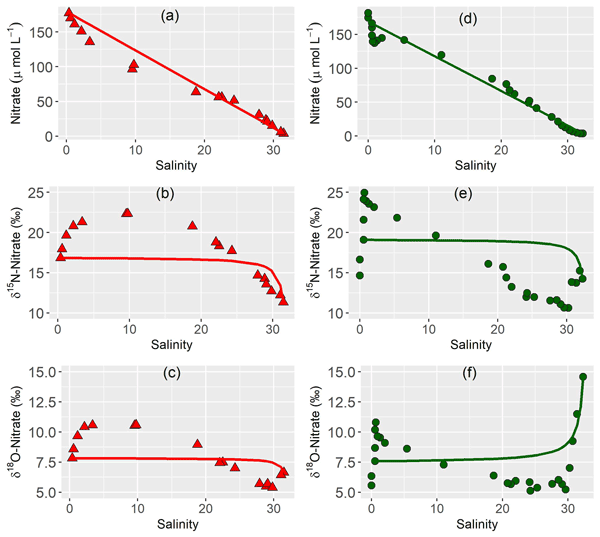
Estuaries can significantly alter nutrient loads before reaching coastal waters. Our study of the heavily managed Ems estuary (Northern Germany) reveals three zones of nitrogen turnover along the estuary with water-column denitrification in the most upstream hyper-turbid part, nitrate production in the middle reaches and mixing/nitrate uptake in the North Sea. Suspended particulate matter was the overarching control on nitrogen cycling in the hyper-turbid estuary.
Davide Zanchettin, Claudia Timmreck, Myriam Khodri, Anja Schmidt, Matthew Toohey, Manabu Abe, Slimane Bekki, Jason Cole, Shih-Wei Fang, Wuhu Feng, Gabriele Hegerl, Ben Johnson, Nicolas Lebas, Allegra N. LeGrande, Graham W. Mann, Lauren Marshall, Landon Rieger, Alan Robock, Sara Rubinetti, Kostas Tsigaridis, and Helen Weierbach
Geosci. Model Dev., 15, 2265–2292, https://doi.org/10.5194/gmd-15-2265-2022, https://doi.org/10.5194/gmd-15-2265-2022, 2022
Short summary
Short summary
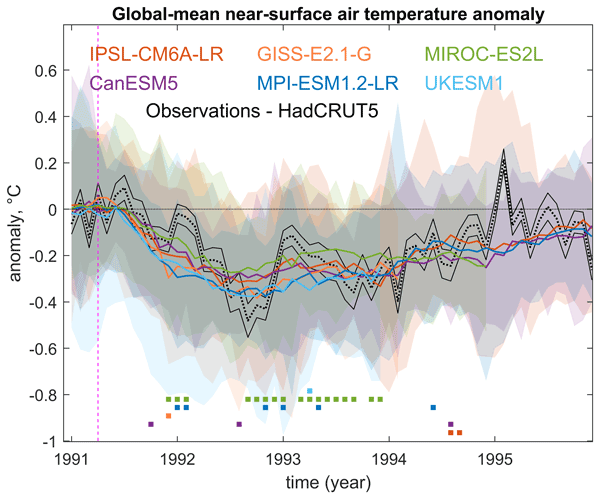
This paper provides metadata and first analyses of the volc-pinatubo-full experiment of CMIP6-VolMIP. Results from six Earth system models reveal significant differences in radiative flux anomalies that trace back to different implementations of volcanic forcing. Surface responses are in contrast overall consistent across models, reflecting the large spread due to internal variability. A second phase of VolMIP shall consider both aspects toward improved protocol for volc-pinatubo-full.
Vera Fofonova, Tuomas Kärnä, Knut Klingbeil, Alexey Androsov, Ivan Kuznetsov, Dmitry Sidorenko, Sergey Danilov, Hans Burchard, and Karen Helen Wiltshire
Geosci. Model Dev., 14, 6945–6975, https://doi.org/10.5194/gmd-14-6945-2021, https://doi.org/10.5194/gmd-14-6945-2021, 2021
Short summary
Short summary
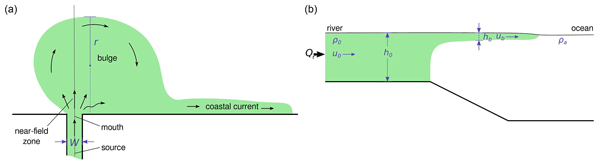
We present a test case of river plume spreading to evaluate coastal ocean models. Our test case reveals the level of numerical mixing (due to parameterizations used and numerical treatment of processes in the model) and the ability of models to reproduce complex dynamics. The major result of our comparative study is that accuracy in reproducing the analytical solution depends less on the type of applied model architecture or numerical grid than it does on the type of advection scheme.
Cited articles
Aarup, T.: Transparency of the North Sea and Baltic Sea – a Secchi depth data mining study, Oceanologia, 44, 323–337, 2002.
Andersen, T. J.: The role of fecal pellets in sediment settling at an intertidal mudflat, the Danish Wadden Sea, in: Proceedings in Marine Science, vol. 3, edited by: McAnally, W. H. and Mehta, A. J., Elsevier, 387–401, https://doi.org/10.1016/S1568-2692(00)80133-3, 2000.
Androsov, A., Fofonova, V., Kuznetsov, I., Danilov, S., Rakowsky, N., Harig, S., Brix, H., and Wiltshire, K. H.: FESOM-C (Version v2), Zenodo [code], https://doi.org/10.5281/zenodo.2085177, 2018.
Androsov, A., Fofonova, V., Kuznetsov, I., Danilov, S., Rakowsky, N., Harig, S., Brix, H., and Wiltshire, K. H.: FESOM-C v.2: coastal dynamics on hybrid unstructured meshes, Geosci. Model Dev., 12, 1009–1028, https://doi.org/10.5194/gmd-12-1009-2019, 2019.
Baird, D., Asmus, H., and Asmus, R.: Energy flow of a boreal intertidal ecosystem, the Sylt-Rømø Bight, Mar. Ecol. Prog. Ser., 279, 45–61, https://doi.org/10.3354/meps279045, 2004.
Baird, D., Asmus, H., and Asmus, R.: Trophic dynamics of eight intertidal communities of the Sylt-Rømø Bight ecosystem, northern Wadden Sea, Mar. Ecol. Prog. Ser., 351, 25–41, https://doi.org/10.3354/meps07137, 2007.
Bale, A., Morris, A., and Howland, R.: Seasonal sediment movement in the Tamar Estuary, Oceanol. Acta, 8, 1–6, 1985.
Bartholomä, A., Kubicki, A., Badewien, T. H., and Flemming, B. W.: Suspended sediment transport in the German Wadden Sea – seasonal variations and extreme events, Ocean Dynamics, 59, 213–225, https://doi.org/10.1007/s10236-009-0193-6, 2009.
Becherer, J., Flöser, G., Umlauf, L., and Burchard, H.: Estuarine circulation versus tidal pumping: Sediment transport in a well-mixed tidal inlet, JGR Oceans, 121, 6251–6270, https://doi.org/10.1002/2016JC011640, 2016.
Bruns, I., Bartholomä, A., Menjua, F., and Kopf, A.: Physical impact of bottom trawling on seafloor sediments in the German North Sea, Front. Earth Sci., 11, 1233163, https://doi.org/10.3389/feart.2023.1233163, 2023.
Burchard, H., Flöser, G., Staneva, J. V., Badewien, T. H., and Riethmüller, R.: Impact of Density Gradients on Net Sediment Transport into the Wadden Sea, J. Phys. Oceanogr., 38, 566–587, https://doi.org/10.1175/2007JPO3796.1, 2008.
Cadée, G. C.: Increased phytoplankton primary production in the Marsdiep area (Western Dutch Wadden Sea), Netherlands J. Sea Res., 20, 285–290, https://doi.org/10.1016/0077-7579(86)90050-5, 1986.
Christiansen, C., Vølund, G., Lund-Hansen, L. C., and Bartholdy, J.: Wind influence on tidal flat sediment dynamics: Field investigations in the Ho Bugt, Danish Wadden Sea, Mar. Geol., 235, 75–86, https://doi.org/10.1016/j.margeo.2006.10.006, 2006.
Cloern, J. E.: Turbidity as a control on phytoplankton biomass and productivity in estuaries, Cont. Shelf. Res., 7, 1367–1381, https://doi.org/10.1016/0278-4343(87)90042-2, 1987.
Colijn, F.: Light absorption in the waters of the Ems-Dollard estuary and its consequences for the growth of phytoplankton and microphytobenthos, Netherlands J. Sea Res., 15, 196–216, https://doi.org/10.1016/0077-7579(82)90004-7, 1982.
de Jonge, V. N.: Relations Between Annual Dredging Activities, Suspended Matter Concentrations, and the Development of the Tidal Regime in the Ems Estuary, Can. J. Fish. Aquat. Sci., 40, s289–s300, https://doi.org/10.1139/f83-290, 1983.
de Jonge, V. N. and de Jong, D. J.: “Global Change” Impact of Inter-Annual Variation in Water Discharge as a Driving Factor to Dredging and Spoil Disposal in the River Rhine System and of Turbidity in the Wadden Sea, Estuar. Coast. Shelf S., 55, 969–991, https://doi.org/10.1006/ecss.2002.1039, 2002.
de Jonge, V. N. and van Beusekom, J. E. E.: Wind- and tide-induced resuspension of sediment and microphytobenthos from tidal flats in the Ems estuary, Limnol. Oceanogr., 40, 776–778, https://doi.org/10.4319/lo.1995.40.4.0776, 1995.
Depestele, J., Ivanović, A., Degrendele, K., Esmaeili, M., Polet, H., Roche, M., Summerbell, K., Teal, L. R., Vanelslander, B., and O'Neill, F. G.: Measuring and assessing the physical impact of beam trawling, ICES Journal of Marine Science, 73, i15–i26, https://doi.org/10.1093/icesjms/fsv056, 2016.
Deutscher Wetterdienst (DWD): Hourly mean value from station observations of wind speed and wind direction for Germany, Version v24.03, DWD Climate Data Center (CDC) [data set], dataset ID: urn:x-wmo:md:de.dwd.cdc::obsgermany-climate-hourly-wind, https://opendata.dwd.de/climate_environment/CDC/observations_germany/climate/hourly/wind/ (last access: 28 February 2025), 2024a.
Deutscher Wetterdienst (DWD): Daily station observations (temperature, pressure, precipitation, sunshine duration, etc.) for Germany, Version v24.3, DWD Climate Data Center (CDC) [data set], dataset ID: urn:wmo:md:de-dwd-cdc:obsgermany-climate-daily-kl, https://opendata.dwd.de/climate_environment/CDC/observations_germany/climate/daily/kl/ (last access: 28 February 2025), 2024b.
Dissanayake, D. M. P. K., Ranasinghe, R., and Roelvink, J. A.: The morphological response of large tidal inlet/basin systems to relative sea level rise, Climatic Change, 113, 253–276, https://doi.org/10.1007/s10584-012-0402-z, 2012.
Dolch, T. and Reise, K.: Long-term displacement of intertidal seagrass and mussel beds by expanding large sandy bedforms in the northern Wadden Sea, J. Sea Res., 63, 93–101, https://doi.org/10.1016/j.seares.2009.10.004, 2010.
Dronkers, J.: Tidal asymmetry and estuarine morphology, Netherlands J. Sea Res., 20, 117–131, https://doi.org/10.1016/0077-7579(86)90036-0, 1986.
Dyer, K. R.: Chapter 14 Sediment Transport Processes in Estuaries, in: Developments in Sedimentology, vol. 53, Elsevier, 423–449, https://doi.org/10.1016/S0070-4571(05)80034-2, 1995.
Egbert, G. D. and Erofeeva, S. Y.: Efficient Inverse Modeling of Barotropic Ocean Tides, J. Atmos. Ocean. Tech., 19, 183–204, https://doi.org/10.1175/1520-0426(2002)019<0183:EIMOBO>2.0.CO;2, 2002.
Eisma, D.: Flocculation and de-flocculation of suspended matter in estuaries, Netherlands Journal of Sea Research, 20, 183–199, https://doi.org/10.1016/0077-7579(86)90041-4, 1986.
Engel, A. and Schartau, M.: Influence of transparent exopolymer particles (TEP) on sinking velocity of Nitzschia closterium aggregates, Mar. Ecol. Prog. Ser., 182, 69–76, https://doi.org/10.3354/meps182069, 1999.
Fettweis, M., Monbaliu, J., Baeye, M., Nechad, B., and van Den Eynde, D.: Weather and climate induced spatial variability of surface suspended particulate matter concentration in the North Sea and the English Channel, Methods in Oceanography, 3–4, 25–39, https://doi.org/10.1016/j.mio.2012.11.001, 2012.
Flöser, G., Burchard, H., and Riethmüller, R.: Observational evidence for estuarine circulation in the German Wadden Sea, Cont. Shelf. Res., 31, 1633–1639, https://doi.org/10.1016/j.csr.2011.03.014, 2011.
Fofonova, V., Androsov, A., Sander, L., Kuznetsov, I., Amorim, F., Hass, H. C., and Wiltshire, K. H.: Non-linear aspects of the tidal dynamics in the Sylt-Rømø Bight, south-eastern North Sea, Ocean Sci., 15, 1761–1782, https://doi.org/10.5194/os-15-1761-2019, 2019.
Friedrichs, C. and Perry, J.: Tidal salt marsh morphodynamics: a synthesis, J. Coastal Res., 27, 7–37, 2001.
Friedrichs, C. T. and Aubrey, D. G.: Non-linear tidal distortion in shallow well-mixed estuaries: a synthesis, Estuar. Coast. Shelf S., 27, 521–545, https://doi.org/10.1016/0272-7714(88)90082-0, 1988.
Graf, G. and Rosenberg, R.: Bioresuspension and biodeposition: a review, J. Marine Syst., 11, 269–278, https://doi.org/10.1016/S0924-7963(96)00126-1, 1997.
Hagen, R., Winter, C., and Kösters, F.: Changes in tidal asymmetry in the German Wadden Sea, Ocean Dynamics, 72, 325–340, https://doi.org/10.1007/s10236-022-01509-9, 2022.
Hommersom, A., Peters, S., Wernand, M. R., and de Boer, J.: Spatial and temporal variability in bio-optical properties of the Wadden Sea, Estuar. Coast. Shelf S., 83, 360–370, https://doi.org/10.1016/j.ecss.2009.03.042, 2009.
Jansen, H., van Den Bogaart, L., Hommersom, A., and Capelle, J.: Spatio-temporal analysis of sediment plumes formed by mussel fisheries and aquaculture in the western Wadden Sea, Aquacult. Environ. Interact., 15, 145–159, https://doi.org/10.3354/aei00458, 2023.
Jeffrey, S. W. and Humphrey, G. F.: New spectrophotometric equations for determining chlorophylls a, b, c1 and c2 in higher plants, algae and natural phytoplankton, Biochemie und Physiologie der Pflanzen, 167, 191–194, https://doi.org/10.1016/S0015-3796(17)30778-3, 1975.
Jung, A., van Der Veer, H., Philippart, C., Waser, A., Ens, B., de Jonge, V., and Schückel, U.: Impacts of macrozoobenthic invasions on a temperate coastal food web, Mar. Ecol. Prog. Ser., 653, 19–39, https://doi.org/10.3354/meps13499, 2020.
Konyssova, G., Sidorenko, V., Androsov, A., Sander, L., Danilov, S., Rubinetti, S., Burchard, H., Winter, C., Wiltshire, K. H.: Changes in tidal dynamics in response to sea level rise in the Sylt-Rømø Bight (Wadden Sea), Ocean Dynamics, 75, 43, https://doi.org/10.1007/s10236-025-01688-1, 2025.
Kuznetsov, I., Androsov, A., Fofonova, V., Danilov, S., Rakowsky, N., Harig, S., and Wiltshire, K. H.: Evaluation and Application of Newly Designed Finite Volume Coastal Model FESOM-C, Effect of Variable Resolution in the Southeastern North Sea, Water, 12, 1412, https://doi.org/10.3390/w12051412, 2020.
Kuznetsov, I., Rabe, B., Androsov, A., Fang, Y.-C., Hoppmann, M., Quintanilla-Zurita, A., Harig, S., Tippenhauer, S., Schulz, K., Mohrholz, V., Fer, I., Fofonova, V., and Janout, M.: Dynamical reconstruction of the upper-ocean state in the central Arctic during the winter period of the MOSAiC expedition, Ocean Sci., 20, 759–777, https://doi.org/10.5194/os-20-759-2024, 2024.
Lettmann, K. A., Wolff, J.-O., and Badewien, T. H.: Modeling the impact of wind and waves on suspended particulate matter fluxes in the East Frisian Wadden Sea (southern North Sea), Ocean Dynamics, 59, 239–262, https://doi.org/10.1007/s10236-009-0194-5, 2009.
Loebl, M., Dolch, T., and van Beusekom, J. E. E.: Annual dynamics of pelagic primary production and respiration in a shallow coastal basin, J. Sea Res., 58, 269–282, https://doi.org/10.1016/j.seares.2007.06.003, 2007.
Lunau, M., Lemke, A., Dellwig, O., and Simon, M.: Physical and biogeochemical controls of microaggregate dynamics in a tidally affected coastal ecosystem, Limnol. Oceanogr., 51, 847–859, https://doi.org/10.4319/lo.2006.51.2.0847, 2006.
Maerz, J., Hofmeister, R., van der Lee, E. M., Gräwe, U., Riethmüller, R., and Wirtz, K. W.: Maximum sinking velocities of suspended particulate matter in a coastal transition zone, Biogeosciences, 13, 4863–4876, https://doi.org/10.5194/bg-13-4863-2016, 2016.
Maerz, J. and Wirtz, K.: Resolving physically and biologically driven suspended particulate matter dynamics in a tidal basin with a distribution-based model, Estuar. Coast. Shelf S., 84, 128–138, https://doi.org/10.1016/j.ecss.2009.05.015, 2009.
Neder, C., Fofonova, V., Androsov, A., Kuznetsov, I., Abele, D., Falk, U., Schloss, I. R., Sahade, R., and Jerosch, K.: Modelling suspended particulate matter dynamics at an Antarctic fjord impacted by glacier melt, J. Marine Syst., 231, 103734, https://doi.org/10.1016/j.jmarsys.2022.103734, 2022.
Passow, U.: Transparent exopolymer particles (TEP) in aquatic environments, Prog. Oceanogr., 55, 287–333, https://doi.org/10.1016/S0079-6611(02)00138-6, 2002.
Pawlowicz, R., Beardsley, B., and Lentz, S.: Classical tidal harmonic analysis including error estimates in MATLAB using T_TIDE, Comput. Geosci., 28, 929–937, https://doi.org/10.1016/S0098-3004(02)00013-4, 2002.
Postma, H.: Sediment transport and sedimentation in the estuarine environment, American Association of Advanced Sciences, 83, 158–179, 1967.
Postma, H.: Exchange of materials between the North Sea and the Wadden Sea, Mar. Geol., 40, 199–213, https://doi.org/10.1016/0025-3227(81)90050-5, 1981.
Purkiani, K., Becherer, J., Flöser, G., Gräwe, U., Mohrholz, V., Schuttelaars, H. M., and Burchard, H.: Numerical analysis of stratification and destratification processes in a tidally energetic inlet with an ebb tidal delta, J. Geophys. Res. Oceans, 120, 225–243, https://doi.org/10.1002/2014JC010325, 2015.
Rick, J. J., Romanova, T., and Wiltshire, K. H.: Hydrochemistry time series at List Reede, Sylt, Germany, in 2014, Alfred Wegener Institute – Wadden Sea Station Sylt, PANGAEA [data set], https://doi.org/10.1594/PANGAEA.873549, 2017a.
Rick, J. J., Romanova, T., and Wiltshire, K. H.: Hydrochemistry time series at List Ferry Terminal, Sylt, Germany, in 2014, Alfred Wegener Institute – Wadden Sea Station Sylt, PANGAEA [data set], https://doi.org/10.1594/PANGAEA.873547, 2017b.
Rick, J. J., Romanova, T., and Wiltshire, K. H.: Hydrochemistry time series at List Reede, Sylt, Germany, in 2015 (Version 2), Alfred Wegener Institute – Wadden Sea Station Sylt, PANGAEA [data set], https://doi.org/10.1594/PANGAEA.918018, 2020a.
Rick, J. J., Romanova, T., and Wiltshire, K. H.: Hydrochemistry time series at List Entrance Koenigshafen, Sylt, Germany, in 2015 (Version 2), Alfred Wegener Institute – Wadden Sea Station Sylt, PANGAEA [data set], https://doi.org/10.1594/PANGAEA.918032, 2020b.
Rick, J. J., Romanova, T., and Wiltshire, K. H.: Hydrochemistry time series at List Ferry Terminal, Sylt, Germany, in 2015 (Version 2), Alfred Wegener Institute – Wadden Sea Station Sylt, PANGAEA [data set], https://doi.org/10.1594/PANGAEA.918027, 2020c.
Rick, J. J., Romanova, T., and Wiltshire, K. H.: Hydrochemistry time series at List Reede, Sylt, Germany, in 2016 (Version 2), Alfred Wegener Institute – Wadden Sea Station Sylt, PANGAEA [data set], https://doi.org/10.1594/PANGAEA.918023, 2020d.
Rick, J. J., Romanova, T., and Wiltshire, K. H.: Hydrochemistry time series at List Entrance Koenigshafen, Sylt, Germany, in 2016 (Version 2), Alfred Wegener Institute – Wadden Sea Station Sylt, PANGAEA [data set], https://doi.org/10.1594/PANGAEA.918033, 2020e.
Rick, J. J., Romanova, T., and Wiltshire, K. H.: Hydrochemistry time series at List Ferry Terminal, Sylt, Germany, in 2016 (Version 2), Alfred Wegener Institute – Wadden Sea Station Sylt, PANGAEA [data set], https://doi.org/10.1594/PANGAEA.918028, 2020f.
Rick, J. J., Romanova, T., and Wiltshire, K. H.: Hydrochemistry time series at List Reede, Sylt, Germany, in 2017, Alfred Wegener Institute – Wadden Sea Station Sylt, PANGAEA [data set], https://doi.org/10.1594/PANGAEA.918024, 2020g.
Rick, J. J., Romanova, T., and Wiltshire, K. H.: Hydrochemistry time series at List Entrance Koenigshafen, Sylt, Germany, in 2017, Alfred Wegener Institute – Wadden Sea Station Sylt, PANGAEA [data set], https://doi.org/10.1594/PANGAEA.918034, 2020h.
Rick, J. J., Romanova, T., and Wiltshire, K. H.: Hydrochemistry time series at List Ferry Terminal, Sylt, Germany, in 2017, Alfred Wegener Institute – Wadden Sea Station Sylt, PANGAEA [data set], https://doi.org/10.1594/PANGAEA.918029, 2020i.
Rick, J. J., Romanova, T., and Wiltshire, K. H.: Hydrochemistry time series at List Reede, Sylt, Germany, in 2018, Alfred Wegener Institute – Wadden Sea Station Sylt, PANGAEA [data set], https://doi.org/10.1594/PANGAEA.918025, 2020j.
Rick, J. J., Romanova, T., and Wiltshire, K. H.: Hydrochemistry time series at List Entrance Koenigshafen, Sylt, Germany, in 2018, Alfred Wegener Institute – Wadden Sea Station Sylt, PANGAEA [data set], https://doi.org/10.1594/PANGAEA.918035, 2020k.
Rick, J. J., Romanova, T., and Wiltshire, K. H.: Hydrochemistry time series at List Ferry Terminal, Sylt, Germany, in 2018, Alfred Wegener Institute – Wadden Sea Station Sylt, PANGAEA [data set], https://doi.org/10.1594/PANGAEA.918030, 2020l.
Rick, J. J., Romanova, T., and Wiltshire, K. H.: Hydrochemistry time series at List Reede, Sylt, Germany, in 2019, Alfred Wegener Institute – Wadden Sea Station Sylt, PANGAEA [data set], https://doi.org/10.1594/PANGAEA.918026, 2020m.
Rick, J. J., Romanova, T., and Wiltshire, K. H.: Hydrochemistry time series at List Entrance Koenigshafen, Sylt, Germany, in 2019, Alfred Wegener Institute – Wadden Sea Station Sylt, PANGAEA [data set], https://doi.org/10.1594/PANGAEA.918036, 2020n.
Rick, J. J., Romanova, T., and Wiltshire, K. H.: Hydrochemistry time series at List Ferry Terminal, Sylt, Germany, in 2019, Alfred Wegener Institute – Wadden Sea Station Sylt, PANGAEA [data set], https://doi.org/10.1594/PANGAEA.918031, 2020o.
Rick, J. J., Scharfe, M., Romanova, T., van Beusekom, J. E. E., Asmus, R., Asmus, H., Mielck, F., Kamp, A., Sieger, R., and Wiltshire, K. H.: An evaluation of long-term physical and hydrochemical measurements at the Sylt Roads Marine Observatory (1973–2019), Wadden Sea, North Sea, Earth Syst. Sci. Data, 15, 1037–1057, https://doi.org/10.5194/essd-15-1037-2023, 2023.
Rubinetti, S., Fofonova, V., Arnone, E., and Wiltshire, K. H.: A Complete 60-Year Catalog of Wind Events in the German Bight (North Sea) Derived From ERA5 Reanalysis Data, Earth and Space Science, 10, e2023EA003020, https://doi.org/10.1029/2023EA003020, 2023.
Schartau, M., Riethmüller, R., Flöser, G., van Beusekom, J. E. E., Krasemann, H., Hofmeister, R., and Wirtz, K.: On the separation between inorganic and organic fractions of suspended matter in a marine coastal environment, Prog. Oceanogr., 171, 231–250, https://doi.org/10.1016/j.pocean.2018.12.011, 2019.
Sidorenko, V., Rubinetti, S., Akimova, A., Pogoda, B., Androsov, A., Beng, K. C., Sell, A. F., Pineda-Metz, S. E. A., Wegner, K. M., Brand, S. C., Shama, L. N. S., Wollschläger, J., Klemm, K., Rahdarian, A., Winter, C., Badewien, T., Kuznetsov, I., Herrling, G., Laakmann, S., and Wiltshire, K. H.: Connectivity and larval drift across marine protected areas in the German bight, North Sea: Necessity of stepping stones, J. Sea Res., 204, 102563, https://doi.org/10.1016/j.seares.2025.102563, 2025.
Skogen, M., Ji, R., Akimova, A., Daewel, U., Hansen, C., Hjøllo, S., van Leeuwen, S., Maar, M., Macias, D., Mousing, E., Almroth-Rosell, E., Sailley, S., Spence, M., Troost, T., and van de Wolfshaar, K.: Disclosing the truth: Are models better than observations?, Mar. Ecol. Prog. Ser., 680, 7–13, https://doi.org/10.3354/meps13574, 2021.
Sprong, P. A. A., Fofonova, V., Wiltshire, K. H., Neuhaus, S., Ludwichowski, K. U., Käse, L., Androsov, A., and Metfies, K.: Spatial dynamics of eukaryotic microbial communities in the German Bight, J. Sea Res., 163, 101914, https://doi.org/10.1016/j.seares.2020.101914, 2020.
Stal, L. J.: Microphytobenthos as a biogeomorphological force in intertidal sediment stabilization, Ecol. Eng., 36, 236–245, https://doi.org/10.1016/j.ecoleng.2008.12.032, 2010.
Toullec, J., Vincent, D., Frohn, L., Miner, P., Le Goff, M., Devesa, J., and Moriceau, B.: Copepod Grazing Influences Diatom Aggregation and Particle Dynamics, Front. Mar. Sci., 6, 751, https://doi.org/10.3389/fmars.2019.00751, 2019.
Turner, J.: Zooplankton fecal pellets, marine snow and sinking phytoplankton blooms, Aquat. Microb. Ecol., 27, 57–102, https://doi.org/10.3354/ame027057, 2002.
van Beusekom, J. E. E. and de Jonge, V. N.: Long-term changes in Wadden Sea nutrient cycles: importance of organic matter import from the North Sea, in: Nutrients and Eutrophication in Estuaries and Coastal Waters, edited by: Orive, E., Elliott, M., and de Jonge, V. N., Springer Netherlands, Dordrecht, 185–194, https://doi.org/10.1007/978-94-017-2464-7_15, 2002.
van Beusekom, J. E. E., Brockmann, U. H., Hesse, K.-J., Hickel, W., Poremba, K., and Tillmann, U.: The importance of sediments in the transformation and turnover of nutrients and organic matter in the Wadden Sea and German Bight, Deutsche Hydrographische Zeitschrift, 51, 245–266, https://doi.org/10.1007/BF02764176, 1999.
van Maren, D. S., van Kessel, T., Cronin, K., and Sittoni, L.: The impact of channel deepening and dredging on estuarine sediment concentration, Cont. Shelf. Res., 95, 1–14, https://doi.org/10.1016/j.csr.2014.12.010, 2015.
Verney, R., Lafite, R., and Brun-Cottan, J.-C.: Flocculation Potential of Estuarine Particles: The Importance of Environmental Factors and of the Spatial and Seasonal Variability of Suspended Particulate Matter, Estuar. Coast., 32, 678–693, https://doi.org/10.1007/s12237-009-9160-1, 2009.
Winterwerp, J. C.: Stratification effects by cohesive and noncohesive sediment, J. Geophys. Res., 106, 22559–22574, https://doi.org/10.1029/2000JC000435, 2001.
Wotton, R.: The Essential Role of Exopolymers (Eps) in Aquatic Systems, in: Oceanography and Marine Biology, vol. 20042243, edited by: Gibson, R., Atkinson, R., and Gordon, J., CRC Press, 57–94, https://doi.org/10.1201/9780203507810.ch3, 2004.
Short summary
Combining long-term measurements, ocean modelling, and machine learning, we investigated the processes controlling suspended particulate matter concentrations in a Wadden Sea basin. Winter concentrations are shaped mainly by wind and tides, while biological activity exerts stronger influence in spring and summer. The study also reveals different short-term dynamics at shallow and deep sites, improving interpretation of long-term coastal observations.
Combining long-term measurements, ocean modelling, and machine learning, we investigated the...


Altmetrics
Final-revised paper
Preprint