
Articles | Volume 22, issue 23
https://doi.org/10.5194/bg-22-7929-2025
© Author(s) 2025. This work is distributed under
the Creative Commons Attribution 4.0 License.
the Creative Commons Attribution 4.0 License.
https://doi.org/10.5194/bg-22-7929-2025
© Author(s) 2025. This work is distributed under
the Creative Commons Attribution 4.0 License.
the Creative Commons Attribution 4.0 License.
Research article
| 
11 Dec 2025
Research article |
| 11 Dec 2025
| 11 Dec 2025
Bioaccumulation as a driver of high MeHg in the North and Baltic Seas
David J. Amptmeijer
CORRESPONDING AUTHOR

Matter Transport and Ecosystem Dynamics, Helmholtz-Zentrum Hereon, Geesthacht, Germany
Elena Mikheeva
Matter Transport and Ecosystem Dynamics, Helmholtz-Zentrum Hereon, Geesthacht, Germany
Ute Daewel
Matter Transport and Ecosystem Dynamics, Helmholtz-Zentrum Hereon, Geesthacht, Germany
Johannes Bieser
Matter Transport and Ecosystem Dynamics, Helmholtz-Zentrum Hereon, Geesthacht, Germany
Corinna Schrum
Matter Transport and Ecosystem Dynamics, Helmholtz-Zentrum Hereon, Geesthacht, Germany
Universität Hamburg, Institute for Marine Sciences, Mittelweg 177, 20146 Hamburg, Germany
Related authors
David J. Amptmeijer, Ulrike Hanz, Corinna Schrum, and Johannes Bieser
Biogeosciences, 23, 4057–4081, https://doi.org/10.5194/bg-23-4057-2026, https://doi.org/10.5194/bg-23-4057-2026, 2026
Short summary
Short summary
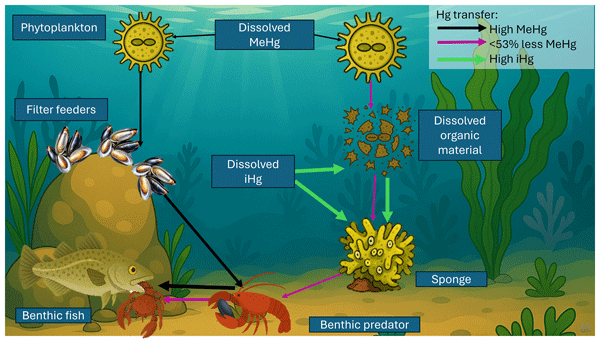
Sponges have unusually low methylmercury (MeHg) and high inorganic mercury (iHg) bioaccumulation compared to other macrobenthos. This pattern has been attributed to MeHg demethylation by symbiotic bacteria. Our model demonstrates an alternative explanation that dissolved organic matter (DOM) consumption by sponges can increase iHg and decrease MeHg levels. Low MeHg in sponges at the food web base may further limit MeHg bioaccumulation in higher trophic levels.
David J. Amptmeijer, Andrea Padilla, Sofia Modesti, Corinna Schrum, and Johannes Bieser
Biogeosciences, 22, 7483–7503, https://doi.org/10.5194/bg-22-7483-2025, https://doi.org/10.5194/bg-22-7483-2025, 2025
Short summary
Short summary
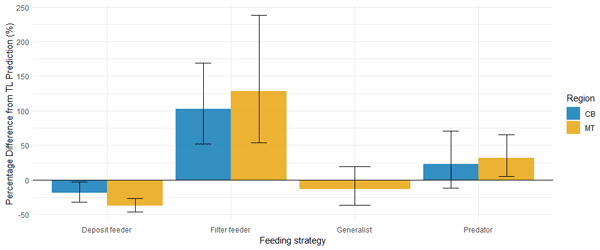
This paper combines a literature review with a 1D Hg speciation and bioaccumulation model to assess how feeding strategy affects inorganic and methylmercury at the base of marine food webs. We find filter feeders have higher MeHg, while suspension feeders have very low MeHg, highlighting feeding strategy as a key driver of MeHg variability.
David J. Amptmeijer and Johannes Bieser
Biogeosciences, 22, 7425–7440, https://doi.org/10.5194/bg-22-7425-2025, https://doi.org/10.5194/bg-22-7425-2025, 2025
Short summary
Short summary
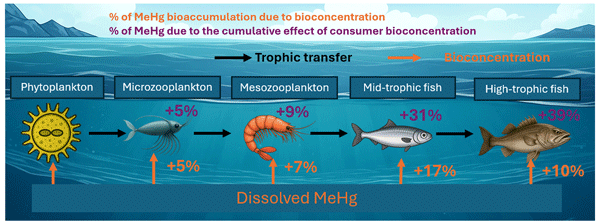
The mercury (Hg) form of most concern is monomethylmercury (MMHg⁺) due to its neurotoxicity and ability to bioaccumulate in seafood. Bioaccumulation in seafood occurs via bioconcentration (direct uptake) and biomagnification (trophic transfer). Our study separates these processes, showing that bioconcentration increases MMHg⁺ in high trophic level fish by 15 % per level, contributing 28–49 % of MMHg⁺ in Atlantic cod. These findings can be used to inform efficient Hg modeling strategies.

Johannes Bieser, David J. Amptmeijer, Ute Daewel, Joachim Kuss, Anne L. Soerensen, and Corinna Schrum
Geosci. Model Dev., 16, 2649–2688, https://doi.org/10.5194/gmd-16-2649-2023, https://doi.org/10.5194/gmd-16-2649-2023, 2023
Short summary
Short summary
MERCY is a 3D model to study mercury (Hg) cycling in the ocean. Hg is a highly harmful pollutant regulated by the UN Minamata Convention on Mercury due to widespread human emissions. These emissions eventually reach the oceans, where Hg transforms into the even more toxic and bioaccumulative pollutant methylmercury. MERCY predicts the fate of Hg in the ocean and its buildup in the food chain. It is the first model to consider Hg accumulation in fish, a major source of Hg exposure for humans.
Veronika Mohr, Corinna Schrum, and Wenyan Zhang
Biogeosciences, 23, 5715–5739, https://doi.org/10.5194/bg-23-5715-2026, https://doi.org/10.5194/bg-23-5715-2026, 2026
Short summary
Short summary
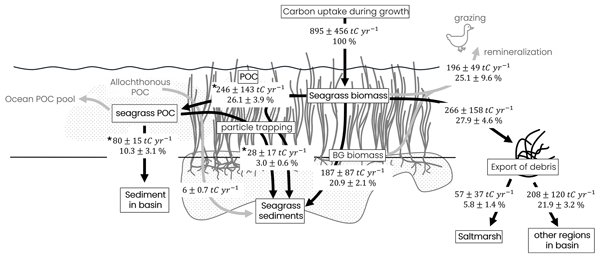
Intertidal seagrass meadows are often considered important blue carbon ecosystems, but their role in highly dynamic environments is uncertain. Using a coupled hydrodynamic–ecosystem model, we quantify carbon uptake, burial, and export in a Wadden Sea tidal basin. We show that sequestration rates are low, depend on meadow persistence, and that a substantial fraction of seagrass carbon is redistributed within the basin and to salt marshes.
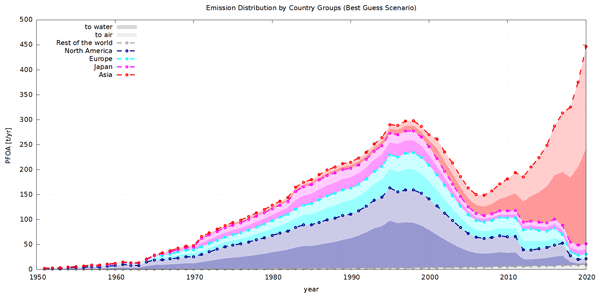
Pascal Simon, Martin Otto Paul Ramacher, Stefan Hagemann, Volker Matthias, Hanna Joerss, and Johannes Bieser
Earth Syst. Sci. Data, 18, 5713–5737, https://doi.org/10.5194/essd-18-5713-2026, https://doi.org/10.5194/essd-18-5713-2026, 2026
Short summary
Short summary
Per- and Polyfluorinated Alkyl Substances (PFAS) constitute a group of often toxic, persistent, and bioaccumulative substances. We constructed a global Emissions model and inventory based on multiple datasets for 23 widely used PFAS. The model computes temporally and spatially resolved model ready emissions distinguishing between emissions to air and emissions to water covering the time span from 1950 up until 2020 on an annual basis to be used for chemistry transport modelling.
Vijith Vijayakumaran, Rebecca Millington, Jorn Bruggeman, Josefine Hahn, Helen Powley, Gennadi Lessin, Anja Lindenthal, Corinna Schrum, and Ute Daewel
EGUsphere, https://doi.org/10.5194/egusphere-2026-3078, https://doi.org/10.5194/egusphere-2026-3078, 2026
This preprint is open for discussion and under review for Geoscientific Model Development (GMD).
Short summary
Short summary
We present ECOSMO End-to-End v2.0, a set of fish and macrobenthos functional-group modules that can be two-way coupled to lower-trophic-level marine ecosystem models. Using a one-dimensional setup, we tested these plug-and-play modules coupled to three models used in the Copernicus Marine Service framework. Simulations show that macrobenthos increase bottom-layer nutrients and are essential for realistic fish production, while fish and macrobenthos strengthen top-down control on plankton.
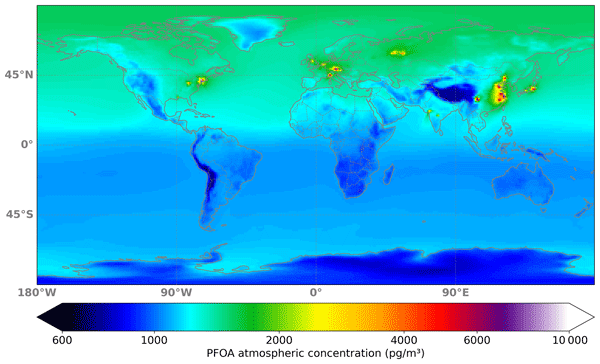
Hiram Meza-Landero, Julia Bruckert, Ronny Petrik, Pascal Simon, Elena Mikheeva, Heike Vogel, Volker Matthias, Johannes Bieser, and Martin Otto Paul Ramacher
Geosci. Model Dev., 19, 6587–6626, https://doi.org/10.5194/gmd-19-6587-2026, https://doi.org/10.5194/gmd-19-6587-2026, 2026
Short summary
Short summary
To understand how persistent hazardous industrial chemicals travel through the air and are deposited back on Earth's surface, we created a new computer model that combines meteorology and chemistry in clouds and clean air. Using the most recent global emissions data, this model represents the trajectory and changes of these chemicals, matching patterns in many areas and overlooking others. The work seeks to improve global monitoring and modeling of hazardous chemicals.
David J. Amptmeijer, Ulrike Hanz, Corinna Schrum, and Johannes Bieser
Biogeosciences, 23, 4057–4081, https://doi.org/10.5194/bg-23-4057-2026, https://doi.org/10.5194/bg-23-4057-2026, 2026
Short summary
Short summary
Sponges have unusually low methylmercury (MeHg) and high inorganic mercury (iHg) bioaccumulation compared to other macrobenthos. This pattern has been attributed to MeHg demethylation by symbiotic bacteria. Our model demonstrates an alternative explanation that dissolved organic matter (DOM) consumption by sponges can increase iHg and decrease MeHg levels. Low MeHg in sponges at the food web base may further limit MeHg bioaccumulation in higher trophic levels.
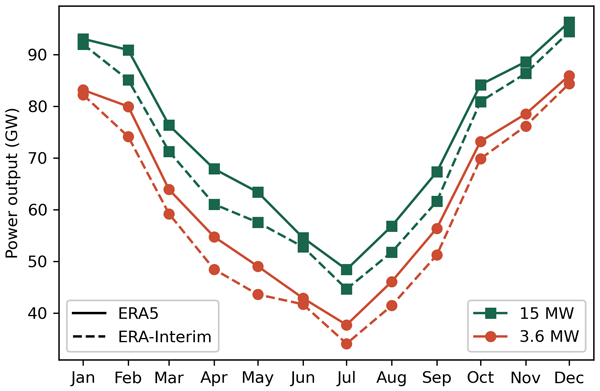
Alberto Elizalde, Naveed Akhtar, Beate Geyer, and Corinna Schrum
Wind Energ. Sci., 11, 1077–1095, https://doi.org/10.5194/wes-11-1077-2026, https://doi.org/10.5194/wes-11-1077-2026, 2026
Short summary
Short summary
As green energy demand rises, offshore wind farms in the North Sea are expanding. This study examines the uncertainties in power output predictions, considering turbine arrangements and different atmospheric situations. Using an advanced climate model, we found that power output can vary by up to 10 % due to these reasons. The findings are vital for accurate economic and environmental planning. This research will contribute to a better understanding of the potential of offshore wind energy.
David J. Amptmeijer, Andrea Padilla, Sofia Modesti, Corinna Schrum, and Johannes Bieser
Biogeosciences, 22, 7483–7503, https://doi.org/10.5194/bg-22-7483-2025, https://doi.org/10.5194/bg-22-7483-2025, 2025
Short summary
Short summary
This paper combines a literature review with a 1D Hg speciation and bioaccumulation model to assess how feeding strategy affects inorganic and methylmercury at the base of marine food webs. We find filter feeders have higher MeHg, while suspension feeders have very low MeHg, highlighting feeding strategy as a key driver of MeHg variability.
David J. Amptmeijer and Johannes Bieser
Biogeosciences, 22, 7425–7440, https://doi.org/10.5194/bg-22-7425-2025, https://doi.org/10.5194/bg-22-7425-2025, 2025
Short summary
Short summary
The mercury (Hg) form of most concern is monomethylmercury (MMHg⁺) due to its neurotoxicity and ability to bioaccumulate in seafood. Bioaccumulation in seafood occurs via bioconcentration (direct uptake) and biomagnification (trophic transfer). Our study separates these processes, showing that bioconcentration increases MMHg⁺ in high trophic level fish by 15 % per level, contributing 28–49 % of MMHg⁺ in Atlantic cod. These findings can be used to inform efficient Hg modeling strategies.
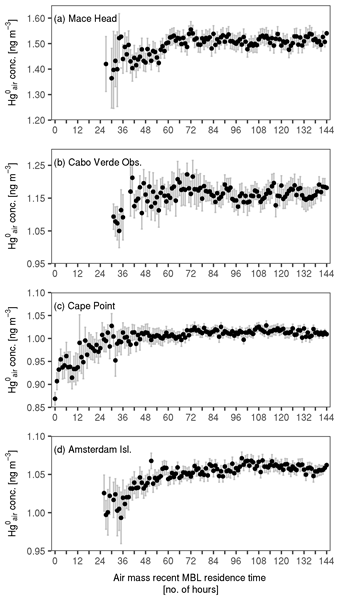
Koketso M. Molepo, Johannes Bieser, Alkuin M. Koenig, Ian M. Hedgecock, Ralf Ebinghaus, Aurélien Dommergue, Olivier Magand, Hélène Angot, Oleg Travnikov, Lynwill Martin, Casper Labuschagne, Katie Read, and Yann Bertrand
Atmos. Chem. Phys., 25, 9645–9668, https://doi.org/10.5194/acp-25-9645-2025, https://doi.org/10.5194/acp-25-9645-2025, 2025
Short summary
Short summary
Mercury exchange between the ocean and atmosphere is poorly understood due to limited in situ data. Here, using atmospheric mercury observations from ground-based monitoring stations along with air mass trajectories, we found that atmospheric Hg levels increase with air mass ocean exposure time, matching predictions for ocean Hg emissions. This finding indicates that ocean emissions directly influence atmospheric Hg levels and enables us to estimate these emissions on a global scale.
Feifei Liu, Ute Daewel, Jan Kossack, Kubilay Timur Demir, Helmuth Thomas, and Corinna Schrum
Biogeosciences, 22, 3699–3719, https://doi.org/10.5194/bg-22-3699-2025, https://doi.org/10.5194/bg-22-3699-2025, 2025
Short summary
Short summary
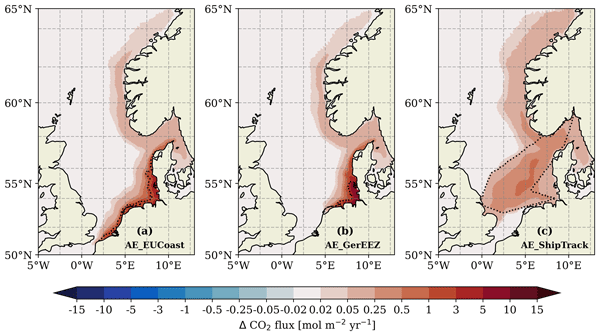
Ocean alkalinity enhancement (OAE) boosts oceanic CO₂ absorption, offering a climate solution. Using a regional model, we examined OAE in the North Sea, revealing that shallow coastal areas achieve higher CO₂ uptake than offshore where alkalinity is more susceptible to deep-ocean loss. Long-term carbon storage is limited, and pH shifts vary by location. Our findings guide OAE deployment to optimize carbon removal while minimizing ecological effects, supporting global climate mitigation efforts.
Kubilay Timur Demir, Moritz Mathis, Jan Kossack, Feifei Liu, Ute Daewel, Christoph Stegert, Helmuth Thomas, and Corinna Schrum
Biogeosciences, 22, 2569–2599, https://doi.org/10.5194/bg-22-2569-2025, https://doi.org/10.5194/bg-22-2569-2025, 2025
Short summary
Short summary
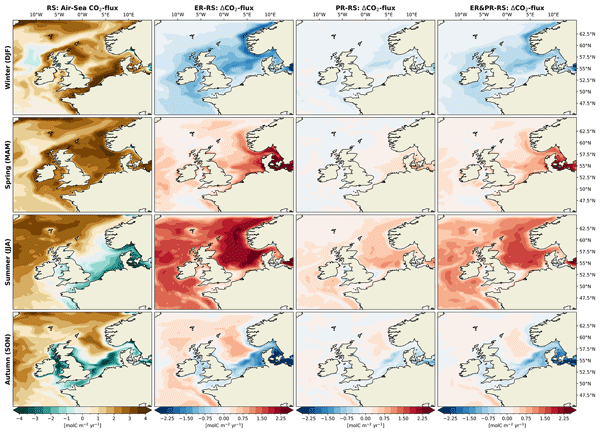
This study examines how variations in the ratios of carbon, nitrogen, and phosphorus in organic matter affect carbon cycling in the northwest European shelf seas. Traditional models with fixed ratios tend to underestimate biological carbon uptake. By integrating variable ratios into a regional model, we find that carbon dioxide uptake increases by 9 %–31 %. These results highlight the need to include variable ratios for accurate assessments of regional and global carbon cycles.
Hoa Nguyen, Ute Daewel, Neil Banas, and Corinna Schrum
Geosci. Model Dev., 18, 2961–2982, https://doi.org/10.5194/gmd-18-2961-2025, https://doi.org/10.5194/gmd-18-2961-2025, 2025
Short summary
Short summary
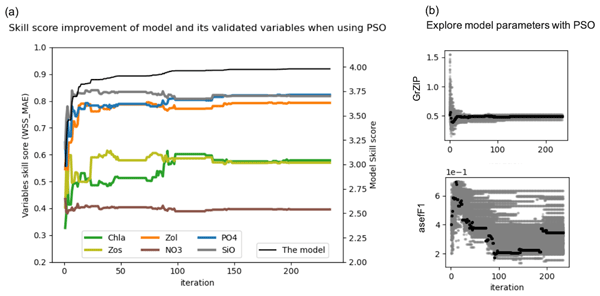
Parameterization is key in modeling to reproduce observations well but is often done manually. This study presents a particle-swarm-optimizer-based toolbox for marine ecosystem models, compatible with the Framework for Aquatic Biogeochemical Models, thus enhancing its reusability. Applied to the Sylt ecosystem, the toolbox effectively (1) identified multiple parameter sets that matched observations well, providing different insights into ecosystem dynamics, and (2) optimized model complexity.
Ashu Dastoor, Hélène Angot, Johannes Bieser, Flora Brocza, Brock Edwards, Aryeh Feinberg, Xinbin Feng, Benjamin Geyman, Charikleia Gournia, Yipeng He, Ian M. Hedgecock, Ilia Ilyin, Jane Kirk, Che-Jen Lin, Igor Lehnherr, Robert Mason, David McLagan, Marilena Muntean, Peter Rafaj, Eric M. Roy, Andrei Ryjkov, Noelle E. Selin, Francesco De Simone, Anne L. Soerensen, Frits Steenhuisen, Oleg Travnikov, Shuxiao Wang, Xun Wang, Simon Wilson, Rosa Wu, Qingru Wu, Yanxu Zhang, Jun Zhou, Wei Zhu, and Scott Zolkos
Geosci. Model Dev., 18, 2747–2860, https://doi.org/10.5194/gmd-18-2747-2025, https://doi.org/10.5194/gmd-18-2747-2025, 2025
Short summary
Short summary
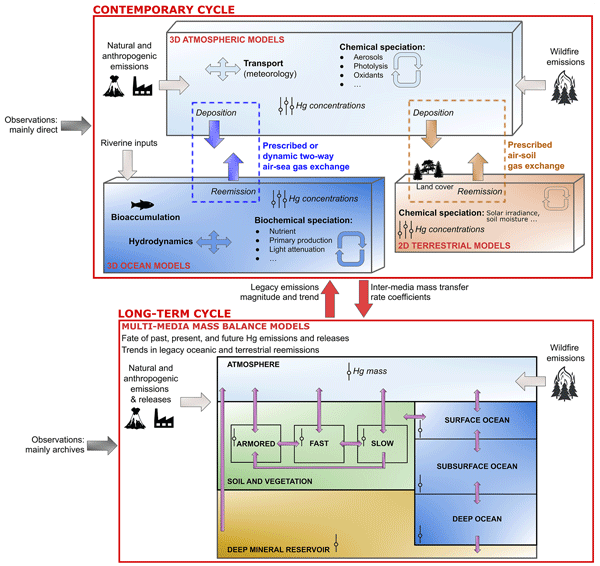
This paper introduces the Multi-Compartment Mercury (Hg) Modeling and Analysis Project (MCHgMAP) aimed at informing the effectiveness evaluations of two multilateral environmental agreements: the Minamata Convention on Mercury and the Convention on Long-Range Transboundary Air Pollution. The experimental design exploits a variety of models (atmospheric, land, oceanic ,and multimedia mass balance models) to assess the short- and long-term influences of anthropogenic Hg releases into the environment.
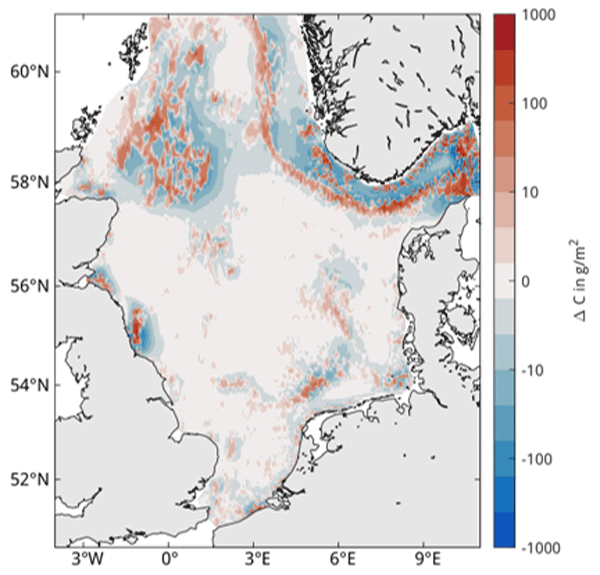
Lucas Porz, Wenyan Zhang, Nils Christiansen, Jan Kossack, Ute Daewel, and Corinna Schrum
Biogeosciences, 21, 2547–2570, https://doi.org/10.5194/bg-21-2547-2024, https://doi.org/10.5194/bg-21-2547-2024, 2024
Short summary
Short summary
Seafloor sediments store a large amount of carbon, helping to naturally regulate Earth's climate. If disturbed, some sediment particles can turn into CO2, but this effect is not well understood. Using computer simulations, we found that bottom-contacting fishing gears release about 1 million tons of CO2 per year in the North Sea, one of the most heavily fished regions globally. We show how protecting certain areas could reduce these emissions while also benefitting seafloor-living animals.
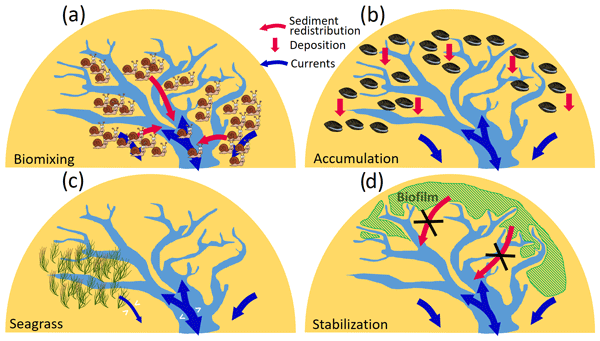
Peter Arlinghaus, Corinna Schrum, Ingrid Kröncke, and Wenyan Zhang
Earth Surf. Dynam., 12, 537–558, https://doi.org/10.5194/esurf-12-537-2024, https://doi.org/10.5194/esurf-12-537-2024, 2024
Short summary
Short summary
Benthos is recognized to strongly influence sediment stability, deposition, and erosion. This is well studied on small scales, but large-scale impact on morphological change is largely unknown. We quantify the large-scale impact of benthos by modeling the evolution of a tidal basin. Results indicate a profound impact of benthos by redistributing sediments on large scales. As confirmed by measurements, including benthos significantly improves model results compared to an abiotic scenario.
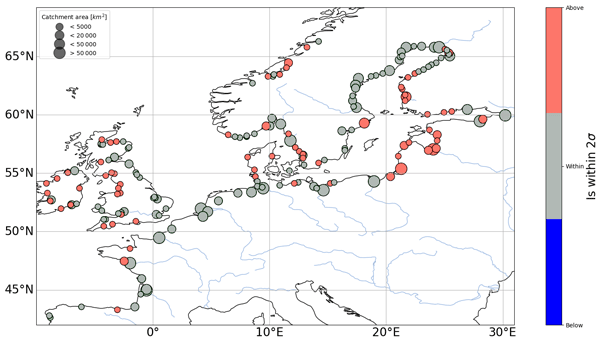
Philipp Heinrich, Stefan Hagemann, Ralf Weisse, Corinna Schrum, Ute Daewel, and Lidia Gaslikova
Nat. Hazards Earth Syst. Sci., 23, 1967–1985, https://doi.org/10.5194/nhess-23-1967-2023, https://doi.org/10.5194/nhess-23-1967-2023, 2023
Short summary
Short summary
High seawater levels co-occurring with high river discharges have the potential to cause destructive flooding. For the past decades, the number of such compound events was larger than expected by pure chance for most of the west-facing coasts in Europe. Additionally rivers with smaller catchments showed higher numbers. In most cases, such events were associated with a large-scale weather pattern characterized by westerly winds and strong rainfall.
Johannes Bieser, David J. Amptmeijer, Ute Daewel, Joachim Kuss, Anne L. Soerensen, and Corinna Schrum
Geosci. Model Dev., 16, 2649–2688, https://doi.org/10.5194/gmd-16-2649-2023, https://doi.org/10.5194/gmd-16-2649-2023, 2023
Short summary
Short summary
MERCY is a 3D model to study mercury (Hg) cycling in the ocean. Hg is a highly harmful pollutant regulated by the UN Minamata Convention on Mercury due to widespread human emissions. These emissions eventually reach the oceans, where Hg transforms into the even more toxic and bioaccumulative pollutant methylmercury. MERCY predicts the fate of Hg in the ocean and its buildup in the food chain. It is the first model to consider Hg accumulation in fish, a major source of Hg exposure for humans.

Veli Çağlar Yumruktepe, Annette Samuelsen, and Ute Daewel
Geosci. Model Dev., 15, 3901–3921, https://doi.org/10.5194/gmd-15-3901-2022, https://doi.org/10.5194/gmd-15-3901-2022, 2022
Short summary
Short summary
We describe the coupled bio-physical model ECOSMO II(CHL), which is used for regional configurations for the North Atlantic and the Arctic hind-casting and operational purposes. The model is consistent with the large-scale climatological nutrient settings and is capable of representing regional and seasonal changes, and model primary production agrees with previous measurements. For the users of this model, this paper provides the underlying science, model evaluation and its development.
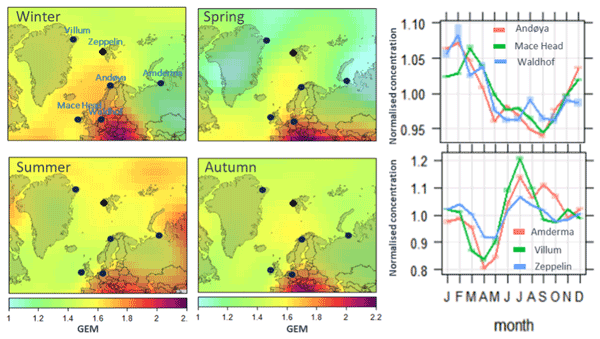
Danilo Custódio, Katrine Aspmo Pfaffhuber, T. Gerard Spain, Fidel F. Pankratov, Iana Strigunova, Koketso Molepo, Henrik Skov, Johannes Bieser, and Ralf Ebinghaus
Atmos. Chem. Phys., 22, 3827–3840, https://doi.org/10.5194/acp-22-3827-2022, https://doi.org/10.5194/acp-22-3827-2022, 2022
Short summary
Short summary
As a poison in the air that we breathe and the food that we eat, mercury is a human health concern for society as a whole. In that regard, this work deals with monitoring and modelling mercury in the environment, improving wherewithal, identifying the strength of the different components at play, and interpreting information to support the efforts that seek to safeguard public health.
Stefano Galmarini, Paul Makar, Olivia E. Clifton, Christian Hogrefe, Jesse O. Bash, Roberto Bellasio, Roberto Bianconi, Johannes Bieser, Tim Butler, Jason Ducker, Johannes Flemming, Alma Hodzic, Christopher D. Holmes, Ioannis Kioutsioukis, Richard Kranenburg, Aurelia Lupascu, Juan Luis Perez-Camanyo, Jonathan Pleim, Young-Hee Ryu, Roberto San Jose, Donna Schwede, Sam Silva, and Ralf Wolke
Atmos. Chem. Phys., 21, 15663–15697, https://doi.org/10.5194/acp-21-15663-2021, https://doi.org/10.5194/acp-21-15663-2021, 2021
Short summary
Short summary
This technical note presents the research protocols for phase 4 of the Air Quality Model Evaluation International Initiative (AQMEII4). This initiative has three goals: (i) to define the state of wet and dry deposition in regional models, (ii) to evaluate how dry deposition influences air concentration and flux predictions, and (iii) to identify the causes for prediction differences. The evaluation compares LULC-specific dry deposition and effective conductances and fluxes.
Cited articles
Allison, J. D., Allison, T. L., and Ambrose, R. B.: Partition coefficients for metals in surface water, soil, and waste, Tech. rep., US Environmental Protection Agency, Washington, D.C., https://cfpub.epa.gov/si/si_public_record_report.cfm?Lab=NERL&dirEntryId=135783 (last access: 7 April 2023), 2005. a
Amptmeijer, D. and Bieser, J.: mercury-bioaccumulation-thesis, Zenodo [code], https://doi.org/10.5281/zenodo.17372353, 2025. a
Andersson, M. E., Sommar, J., Gårdfeldt, K., and Lindqvist, O.: Enhanced concentrations of dissolved gaseous mercury in the surface waters of the Arctic Ocean, Mar. Chem., 110, 190–194, https://doi.org/10.1016/j.marchem.2008.04.002, 2008. a
Arrhenius, F. and Hansson, S.: Growth and seasonal changes in energy content of young Baltic Sea herring, Clupea harengus L.), ICES J. Mar. Sc., 53, 792–801, 1996. a
Backhaus, J. O.: A semi-implicit scheme for the shallow water equations for application to shelf sea modelling, Cont. Shelf Res., 2, 243–254, https://doi.org/10.1016/0278-4343(82)90020-6, 1983. a
Baeyens, W., Leermakers, M., Papina, T., Saprykin, A., Brion, N., Noyen, J., De Gieter, M., Elskens, M., and Goeyens, L.: Bioconcentration and Biomagnification of Mercury and Methylmercury in North Sea and Scheldt Estuary Fish, Arch. Environ. Contam. Toxicol., 45, 498–508, https://doi.org/10.1007/s00244-003-2136-4, 2003. a
Bieser, J., Amptmeijer, D. J., Daewel, U., Kuss, J., Soerensen, A. L., and Schrum, C.: The 3D biogeochemical marine mercury cycling model MERCY v2.0 – linking atmospheric Hg to methylmercury in fish, Geosci. Model Dev., 16, 2649–2688, https://doi.org/10.5194/gmd-16-2649-2023, 2023. a, b, c, d, e, f, g, h, i, j, k, l, m, n, o, p
Borgå, K., Fisk, A. T., Hoekstra, P. F., and Muir, D. C. G.: Biological and chemical factors of importance in the bioaccumulation and trophic transfer of persistent organochlorine contaminants in Arctic marine food webs, Environ. Toxicol. Chem., 23, https://doi.org/10.1897/03-518, 2004. a
Bridges, C. C. and Zalups, R. K.: Transport of inorganic mercury and methylmercury in target tissues and organs, J. Toxicol. Environ. Health B, 13, 385–410, https://doi.org/10.1080/10937401003673750, 2010. a
Bruggeman, J. and Bolding, K.: A general framework for aquatic biogeochemical models, Environmental Modelling & Software, 61, 249–265, https://doi.org/10.1016/J.ENVSOFT.2014.04.002, 2014. a
Bryan, G. W.: Bioaccumulation of Marine Pollutants, Philos. T. Roy. Soc. Lond. B, 286, 483–505, 1979. a
Bullock, O. R. and Brehme, K. A.: Atmospheric mercury simulation using the CMAQ model: Formulation description and analysis of wet deposition results, Atmos. Environ., 36, 2135–2146, https://doi.org/10.1016/S1352-2310(02)00220-0, 2002. a
Burchard, H., Bolding, K., and Villarreal, M. R.: GOTM, a General Ocean Turbulence Model. Theory, implementation and test cases, Tech. rep., Report number: Report EUR 18745, 1999. a
Burson, A., Stomp, M., Akil, L., Brussaard, C. P., and Huisman, J.: Unbalanced reduction of nutrient loads has created an offshore gradient from phosphorus to nitrogen limitation in the North Sea, Limnol. Oceanogr., 61, 869–888, https://doi.org/10.1002/LNO.10257, 2016. a
Cossa, D., Durrieu de Madron, X., Schäfer, J., Lanceleur, L., Guédron, S., Buscail, R., Thomas, B., Castelle, S., and Naudin, J. J.: The open sea as the main source of methylmercury in the water column of the Gulf of Lions (Northwestern Mediterranean margin), Geochim. Cosmochim. Ac., 199, 222–237, https://doi.org/10.1016/J.GCA.2016.11.037, 2017. a
Counter, S. A. and Buchanan, L. H.: Mercury exposure in children: a review, Toxicol. Appl. Pharmacol., 198, 209–230. https://doi.org/10.1016/j.taap.2003.11.032, 2004. a
Cresson, P., Travers-Trolet, M., Rouquette, M., Timmerman, C. A., Giraldo, C., Lefebvre, S., and Ernande, B.: Underestimation of chemical contamination in marine fish muscle tissue can be reduced by considering variable wet:dry weight ratios, Mar. Pollut. Bull., 123, 279–285, https://doi.org/10.1016/j.marpolbul.2017.08.046, 2017. a
Cruz, M. H., Kriest, I., Saranga José, Y., Kiko, R., Hauss, H., and Oschlies, A.: Zooplankton mortality effects on the plankton community of the northern Humboldt Current System: Sensitivity of a regional biogeochemical model, Biogeosciences, 18, 2891–2916, https://doi.org/10.5194/bg-18-2891-2021, 2021. a
Daan, R. and Mulder, M.: The macrobenthic fauna in the Dutch sector of the North Sea in 2003 and a comparison with previous data, NIOZ-RAPPORT 2001-2, 97 pp. https://open.rijkswaterstaat.nl/@161190/the-macrobenthic-fauna-the-dutch-sector/ (last access: 12 August 2025), 2001. a
Daewel, U. and Schrum, C.: Simulating long-term dynamics of the coupled North Sea and Baltic Sea ecosystem with ECOSMO II: Model description and validation, J. Mar. Syst., 119-120, 30–49, https://doi.org/10.1016/J.JMARSYS.2013.03.008, 2013. a, b, c, d
Daewel, U., Schrum, C., and MacDonald, J. I.: Towards end-to-end (E2E) modelling in a consistent NPZD-F modelling framework (ECOSMO E2E-v1.0): Application to the North Sea and Baltic Sea, Geosci. Model Dev., 12, 1765–1789, https://doi.org/10.5194/gmd-12-1765-2019, 2019. a, b, c, d, e, f, g, h, i, j, k
Driscoll, C. T., Mason, R. P., Man Chan, H., Jacob, D. J., and Pirrone, N.: Mercury as a Global Pollutant: Sources, Pathways, and Effects Terms of Use, Environ. Sci. Technol, 47, https://doi.org/10.1021/es305071v, 2013. a
Egbert, G. D. and Erofeeva, S. Y.: Efficient Inverse Modeling of Barotropic Ocean Tides, J. Atmos. Ocean. Tech., 19, 183–204, https://doi.org/10.1175/1520-0426(2002)019<0183:EIMOBO>2.0.CO;2, 2002. a
Essa, A. M., Macaskie, L. E., and Brown, N. L.: Mechanisms of mercury bioremediation, Biochem. Soc. Transact., 30, 672–674, https://doi.org/10.1042/BST0300672, 2002. a
Garcia, H. E., Boyer, T. P., Baranova, O. K., Locarnini, R. A., Mishonov, A. V., Grodsky, A., Paver, C. R., Weathers, K. W., Smolyar, I. V., Reagan, J. R., Seidov, D., and Zweng, M. W.: World Ocean Atlas 2018: Product Documentation, edited by: Mishonov, A., NOAA, https://doi.org/10.25923/tzyw-rp36, 2019. a
Garcia-Arevalo, I., Berard, J.-B., Bieser, J., Le Faucheur, S., Hubert, C., Lacour, T., Thomas, B., Cossa, D., and Knoery, J.: Mercury Accumulation Pathways in a Model Marine Microalgae: Sorption, Uptake, and Partition Kinetics, ACS Est. Water, 4, 2826–2835, https://doi.org/10.1021/acsestwater.3c00795, 2024. a, b
GEBCO Bathymetric Compilation Group: The GEBCO_2020 Grid – a continuous terrain model of the global oceans and land, Tech. rep., https://doi.org/10.5285/a29c5465-b138-234d-e053-6c86abc040b9, 2020. a
Gente, S., Minet, A., Lopes, C., Tessier, E., Gassie, C., Guyoneaud, R., Swarzenski, P. W., Bustamante, P., Metian, M., Amouroux, D., and Lacoue-Labarthe, T.: In Vivo Mercury (De)Methylation Metabolism in Cephalopods under Different pCO2 Scenarios, Environ. Sci. Technol., 57, 5770, https://doi.org/10.1021/acs.est.2c08513, 2023. a
Gorokhova, E., Soerensen, A. L., and Motwani, N. H.: Mercury-methylating bacteria are associated with copepods: A proof-of-principle survey in the Baltic Sea, PLoS ONE, 15, https://doi.org/10.1371/journal.pone.0230310, 2020. a, b
Harada, M.: Minamata Disease: Methylmercury Poisoning in Japan Caused by Environmental Pollution, Crit. Rev. Toxicol., 25, 1–24, https://doi.org/10.3109/10408449509089885, 1995. a
Heip, C., Basford, D., Craeymeersch, J. A., Dewarumez, J.-M., Dorjes, J., de Wilde, P., Duineveld, G., Eleftheriou, A., J Herman, P. M., Niermann, U., Kingston, P., Kiinitzer, A., Rachor, E., Rumohr, H., Soetaert, K., Soltwedel Heip, T., Wilde, D., Heip, A., Craeymeersch, C. J., Soetaert, A., Laboratory, M., and Kiinitzer, S. A.: Trends in biomass, density and diversity of North Sea macrofauna, ICESJ. Mar. Sci., 49, 13–22, https://doi.org/10.1093/icesjms/49.1.13, 1992. a, b
Hjerne, O., Hajdu, S., Larsson, U., Downing, A. S., and Winder, M.: Climate Driven Changes in Timing, Composition and Magnitude of the Baltic Sea Phytoplankton Spring Bloom, Front. Mar. Sci., 6, https://doi.org/10.3389/fmars.2019.00482, 2019. a
Holm, P., Nicholls, J., Hayes, P. W., Ivinson, J., and Allaire, B.: Accelerated extractions of North Atlantic cod and herring, 1520–1790, Fish Fisheries, 23, 54–72, https://doi.org/10.1111/FAF.12598, 2022. a
Hsi, H.-C., Hsu, Y.-W., Chang, T.-C., and Chien, L.-C.: Methylmercury Concentration in Fish and Risk-Benefit Assessment of Fish Intake among Pregnant versus Infertile Women in Taiwan, Plos One, 17, https://doi.org/10.1371/journal.pone.0155704, 2016. a
ICES: Mercury data (biota) from the ICES DOME database (Contaminants and biological effects of contaminants in biota), Data Outputs, https://doi.org/10.17895/ices.pub.5951, 2020. a
ICES: Greater North Sea ecoregion – fisheries overview, https://doi.org/10.17895/ICES.ADVICE.21641360.V1, 2022. a
Jennings, S. and Van Der Molen, J.: Trophic levels of marine consumers from nitrogen stable isotope analysis: estimation and uncertainty, ICES J. Mar. Sci., 72, 2289–2300, https://doi.org/10.1093/ICESJMS/FSV120, 2015. a
Kendzierska, H. and Janas, U.: Functional diversity of macrozoobenthos under adverse oxygen conditions in the southern Baltic Sea, Sci. Rep., 14, https://doi.org/10.1038/s41598-024-59354-3, 2024. a, b
Kim, E., Mason, R. P., and Bergeron, C. M.: A modeling study on methylmercury bioaccumulation and its controlling factors, Ecol. Model., 218, 267–289, https://doi.org/10.1016/J.ECOLMODEL.2008.07.008, 2008. a
Krause, M. and Martens, P.: Distribution patterns of mesozooplankton biomass in the North Sea, Helgolander Meeresuntersuchungen, 44, 295–327, https://doi.org/10.1007/BF02365469, 1990. a, b
Kuss, J.: Water-air gas exchange of elemental mercury: An experimentally determined mercury diffusion coefficient for Hg0 water-air flux calculations, Limnol. Oceanogr., 59, 1461–1467, https://doi.org/10.4319/lo.2014.59.5.1461, 2014. a, b, c
Kuss, J., Holzmann, J., and Ludwig, R.: An elemental mercury diffusion coefficient for natural waters determined by molecular dynamics simulation, Environ. Sci. Technol., 43, 3183–3186, https://doi.org/10.1021/ES8034889, 2009. a
Kuss, J., Wasmund, N., Nausch, n., and Labrenz, M.: Mercury Emission by the Baltic Sea: A Consequence of Cyanobacterial Activity, Photochemistry, And Low-Light Mercury Transformation, Environ. Sci. Technol, 49, 11449–11457, https://doi.org/10.1021/acs.est.5b02204, 2015. a, b, c, d
Kuss, J., Cordes, F., Mohrholz, V., Nausch, n., Naumann, M., Kru, S., and Schulz-Bull, D. E.: The Impact of the Major Baltic Inflow of December 2014 on the Mercury Species Distribution in the Baltic Sea, Environ. Sci. Technol., 51, 11692–11700, https://doi.org/10.1021/acs.est.7b03011, 2017. a, b, c
Kuss, J., Krüger, S., Ruickoldt, J., and Wlost, K. P.: High-resolution measurements of elemental mercury in surface water for an improved quantitative understanding of the Baltic Sea as a source of atmospheric mercury, Atmos. Chem. Phy., 18, 4361–4376, https://doi.org/10.5194/acp-18-4361-2018, 2018. a
Kwasigroch, U., Bełdowska, M., Jȩdruch, A., and Łukawska-Matuszewska, K.: Distribution and bioavailability of mercury in the surface sediments of the Baltic Sea, Environ. Sci. Pollut. Res., 28, 35690–35708, https://doi.org/10.1007/S11356-021-13023-4, 2021. a
Kwaśniak, J., Falkowska, L., and Kwaśniak, M.: The assessment of organic mercury in Baltic fish by use of an in vitro digestion model, Food Chem., 132, 752–758, https://doi.org/10.1016/j.foodchem.2011.11.028, 2012. a
Lavoie, R. A., Jardine, T. D., Chumchal, M. M., Kidd, K. A., and Campbell, L. M.: Biomagnification of Mercury in Aquatic Food Webs: A Worldwide Meta-Analysis, Environ. Sci. Technol., 47, 13385–13394, https://doi.org/10.1021/es403103t, 2013. a, b
Lee, C. S. and Fisher, N. S.: Methylmercury uptake by diverse marine phytoplankton, Limnol. Oceanogr., 61, 1626–1639, https://doi.org/10.1002/lno.10318, 2016. a, b
Lehmann, A., Myrberg, K., Post, P., Chubarenko, I., Dailidiene, I., Hinrichsen, H.-H., Hüssy, K., Liblik, T., Meier, H. E. M., Lips, U., and Bukanova, T.: Salinity dynamics of the Baltic Sea, Earth Syst. Dynam., 13, 373–392, https://doi.org/10.5194/esd-13-373-2022, 2022. a
Mackay, D. and Fraser, A.: Bioaccumulation of persistent organic chemicals: mechanisms and models, Environ. Pollut., 110, 375–391, https://doi.org/10.1016/S0269-7491(00)00162-7, 2000. a
Mason, R. P., Reinfelder, J. R., and Morel, F. M.: Bioaccumulation of mercury and methylmercury, Water Air Soil Pollut., 80, 915–921, https://doi.org/10.1007/BF01189744, 1995. a, b
Menden-Deuer, S. and Lessard, E. J.: Carbon to volume relationships for dinoflagellates, diatoms, and other protist plankton, Limnol. Oceanogr., 45, 569–579, https://doi.org/10.4319/lo.2000.45.3.0569, 2000. a
Montagnes, D. J. S. and Fenton, A.: Prey-abundance affects zooplankton assimilation efficiency and the outcome of biogeochemical models, Ecol. Model., 243, 1–7, https://doi.org/10.1016/j.ecolmodel.2012.05.006, 2012. a
Morel, F. M. M., Kraepiel, A. M. L., and Amyot, M.: The Chemical Cycle and Bioaccumulation of Mercury, Annu. Rev. Ecol. Systemat., 29, 543–566, 1998. a
Nausch, G., Mattheus, W., and Feistel, R.: Hydrographic and hydrochemical conditions in the Gotland Deep area between 1992 and 2003, Oceanologia, 45, 557–569, 2003. a
Nfon, E., Cousins, I. T., Järvinen, O., Mukherjee, A. B., Verta, M., and Broman, D.: Trophodynamics of mercury and other trace elements in a pelagic food chain from the Baltic Sea, Sci. Total Environ., 407, 6267–6274, https://doi.org/10.1016/j.scitotenv.2009.08.032, 2009. a, b, c, d
Ojaveer, E., Lumberg, A., Ojaveer Ojaveer, H., Ojaveer, E., Lumberg, A., and Ojaveer, H.: Highlights of zooplankton dynamics in Estonian waters (Baltic Sea), ICES J. Mar. Sci., 55, 748–755, https://doi.org/10.1006/JMSC.1998.0393, 1998. a, b
Olenina, I., Hajdu, S., Andersson, A., Wasmund, N., Busch, S., Göbel, E., Gromisz, S., Huseby, S., Huttunen, M., Jaanus, A., Kokkonen, P., Ledaine, I., and Niemkiewicz, E.: Biovolumes and size-classes of phytoplankton in the Baltic Sea, HELCOM Balt. Sea Environ. Proc. No. 106, 110–114, https://epic.awi.de/id/eprint/30141/1/bsep106.pdf (last access: 18 November 2025), 2003. a, b
Oliveri, E., Salvagio Manta, D., Bonsignore, M., Cappello, S., Tranchida, G., Bagnato, E., Sabatino, N., Santisi, S., and Sprovieri, M.: Mobility of mercury in contaminated marine sediments: Biogeochemical pathways, Mar. Chem., 186, 1–10, https://doi.org/10.1016/J.MARCHEM.2016.07.002, 2016. a
Orani, A. M., Vassileva, E., Azemard, S., and Thomas, O. P.: Comparative study on Hg bioaccumulation and biotransformation in Mediterranean and Atlantic sponge species, Chemosphere, 260, 127515, https://doi.org/10.1016/J.CHEMOSPHERE.2020.127515, 2020. a
OSPAR: Winter Nutrient Concentrations in the Greater North Sea, Kattegat and Skagerrak, https://oap.ospar.org/en/ospar-assessments/intermediate-assessment-2017/pressures-human-activities/eutrophication/nutrients-concentrations/ (last access: 18 November 2025), 2017. a
OSPAR Commission: Concentrations of Chlorophyll-a in the Greater North Sea and Celtic Seas, Tech. rep., https://oap-cloudfront.ospar.org/media/filer_public/85/18/8518dd81-798c-4627-adf8-a440808e518e/chlorophyll.pdf (last access: 18 November 2025), 2017. a
Outridge, P. M., Mason, R. P., Wang, F., Guerrero, S., and Heimbürger-Boavida, L. E.: Updated Global and Oceanic Mercury Budgets for the United Nations Global Mercury Assessment 2018, Environ. Sci. Technol., 52, 11466–11477, https://doi.org/10.1021/acs.est.8b01246, 2018. a, b, c
Pickhardt, P. C. and Fisher, N. S.: Accumulation of inorganic and methylmercury by freshwater phytoplankton in two contrasting water bodies, Environ. Sci. Technol., 41, 125–131, https://doi.org/10.1021/es060966w, 2007. a, b
Pickhardt, P. C., Stepanova, M., and Fisher, N. S.: Contrasting uptake routes and tissue distributions of inorganic and methylmercury in mosquitofish (Gambusia affinis) and redear sunfish (Lepomis microlophus), Environ. Toxicol. Chem., 25, 2132–2142, https://doi.org/10.1897/05-595R.1, 2006. a
Polak-Juszczak, L.: Bioaccumulation of mercury in the trophic chain of flatfish from the Baltic Sea, Chemosphere, 89, 585–591, https://doi.org/10.1016/j.chemosphere.2012.05.057, 2012. a
Polak-Juszczak, L.: Distribution of organic and inorganic mercury in the tissues and organs of fish from the southern Baltic Sea, Environ. Sci. Pollut. Res., 25, 34181–34189, https://doi.org/10.1007/s11356-018-3336-9, 2018. a
Ravichandran, M.: Interactions between mercury and dissolved organic matter – A review, Chemosphere, 55, 319–331, https://doi.org/10.1016/J.CHEMOSPHERE.2003.11.011, 2004. a
Reinhart, B., Kidd, K. A., Curry, R. A., and O'driscoll, N. J.: Mercury bioaccumulation in aquatic biota along a salinity gradient in the Saint John River estuary Quantitative modeling of existing and future fish habitats in the Saint John River View project Emerging contaminants View project, J. Environ. Sci., https://doi.org/10.1016/j.jes.2018.02.024, 2018. a
Ricciardi, A. and Bourget, E.: Weight-to-weight conversion factors for marine benthic macroinvertebrates, Mar. Ecol.-Prog. Ser., 163, 245–251, https://doi.org/10.3354/meps163245, 1998. a
Rosati, G., Canu, D., Lazzari, P., and Solidoro, C.: Assessing the spatial and temporal variability of methylmercury biogeochemistry and bioaccumulation in the Mediterranean Sea with a coupled 3D model, Biogeosciences, 19, 3663–3682, https://doi.org/10.5194/bg-19-3663-2022, 2022. a
Savage, C., Leavitt, P. R., and Elmgren, R.: Effects of land use, urbanization, and climate variability on coastal eutrophication in the Baltic Sea, Limnol. Oceanogr., 55, 1033–1046, https://doi.org/10.4319/LO.2010.55.3.1033, 2010. a
Schartup, A. T., Qureshi, A., Dassuncao, C., Thackray, C. P., Harding, G., and Sunderland, E. M.: A Model for Methylmercury Uptake and Trophic Transfer by Marine Plankton, Environ. Sci. Technol, 52, 18, https://doi.org/10.1021/acs.est.7b03821, 2018. a
Schrum, C. and Backhaus, J. O.: Sensitivity of atmosphere–ocean heat exchange and heat content in the North Sea and the Baltic Sea, Tellus A, 51, 526–549, https://doi.org/10.1034/J.1600-0870.1992.00006.X, 1999. a
Schrum, C., Alekseeva, I., and St. John, M.: Development of a coupled physical–biological ecosystem model ECOSMO: Part I: Model description and validation for the North Sea, J. Mar. Syst., 61, 79–99, https://doi.org/10.1016/J.JMARSYS.2006.01.005, 2006. a, b
Shelley, C. E. and Johnson, D. W.: Larval fish in a warming ocean: a bioenergetic study of temperature-dependent growth and assimilation efficiency, Mar. Ecol.-Prog. Ser., 691, 97–114, https://doi.org/10.3354/MEPS14057, 2022. a
Sicko-Goad, L. M., Schelske, C. L., and Stoermer, E. F.: Estimation of intracellular carbon and silica content of diatoms from natural assemblages using morphometric techniques', Limnol. Oceanogr., 29, 1170–178, https://doi.org/10.4319/lo.1984.29.6.1170, 1984. a
Steger, J., Pehlke, H., Lebreton, B., Brey, T., and Dannheim, J.: Benthic trophic networks of the southern North Sea: Contrasting soft-sediment communities share high food web similarity, Mar. Ecol.-Prog. Ser., 628, 17–36, https://doi.org/10.3354/meps13069, 2019. a
Stelmakh, L. and Kovrigina, N.: Phytoplankton Growth Rate and Microzooplankton Grazing under Conditions of Climatic Changes and Anthropogenic Pollution in the Coastal Waters of the Black Sea (Sevastopol Region), Water, 13, 3230, https://doi.org/10.3390/w13223230, 2021. a
Strickland, J. D. H.: Measuring the Production of Marine Phytoplankton, The fisheries research board of canada, 122 pp., https://waves-vagues.dfo-mpo.gc.ca/Library/10157.pdf (last access: 18 November 2025), 1960. a
Takanezawa, Y., Ishikawa, K., Nakayama, S., Nakamura, R., Ohshiro, Y., Uraguchi, S., and Kiyono, M.: Conversion of methylmercury into inorganic mercury via organomercurial lyase (MerB) activates autophagy and aggresome formation, Sci. Rep., 13, https://doi.org/10.1038/s41598-023-47110-y, 2023. a
Tesán Onrubia, J. A., Petrova, M. V., Puigcorbé, V., Black, E. E., Valk, O., Dufour, A., Hamelin, B., Buesseler, K. O., Masqué, P., Le Moigne, F. A., Sonke, J. E., Rutgers Van Der Loeff, M., and Heimbürger-Boavida, L. E.: Mercury Export Flux in the Arctic Ocean Estimated from 234Th/238U Disequilibria, ACS Earth Space Chem., 4, 795–801, https://doi.org/10.1021/acsearthspacechem.0c00055, 2020. a
Thurow, F.: Estimation of the total fish biomass in the Baltic Sea during the 20th century, ICES J. Mar. Sci., 54, 444–461, https://doi.org/10.1006/jmsc.1996.0195, 1997. a, b, c
Trevors, J. T.: Mercury methylation by bacteria, J. Basic Microbiol., 26, 499–504, https://doi.org/10.1002/jobm.3620260811, 1986. a
Trudel, M. and Rasmussen, J. B.: Modeling the elimination of mercury by fish, Environ. Sci. Technol., 31, 1716–1722, https://doi.org/10.1021/es960609t, 1997. a, b
Tsui, M. T. and Wang, W. X.: Uptake and Elimination Routes of Inorganic Mercury and Methylmercury in Daphnia magna, Environmental Science and Technology, 38, 808–816, https://doi.org/10.1021/es034638x, 2004. a, b, c, d
UNEP: Guidance on monitoring of mercury and mercury compounds to support evaluation of the effectiveness of the Minamata Convention, UNEP/MC/COP.4/INF/12, UNEP – United Nations Environment, Geneva, Switzerland, https://www.mercuryconvention.org/en/meetings/cop4#sec971 (last access: 18 November 2025), 2021. a
Van Leeuwen, S., Tett, P., Mills, D., and Van Der Molen, J.: Stratified and nonstratified areas in the North Sea: Long-term variability and biological and policy implications, J. Geophys. Res.-Oceans, 120, 4670–4686, https://doi.org/10.1002/2014JC010485, 2015. a, b
Vermaat, J. E., McQuatters-Gollop, A., Eleveld, M. A., and Gilbert, A. J.: Past, present and future nutrient loads of the North Sea: Causes and consequences, Estuar. Coast. Shelf Sci., 80, 53–59, https://doi.org/10.1016/j.ecss.2008.07.005, 2008. a
Walve, J. and Larsson, U.: Carbon, nitrogen and phosphorus stoichiometry of crustacean zooplankton in the Baltic Sea: implications for nutrient recycling, J. Plankt. Res., 21, 2309–2321, 1999. a
Wang, W. and Wong, R.: Bioaccumulation kinetics and exposure pathways of inorganic mercury and methylmercury in a marine fish, the sweetlips Plectorhinchus gibbosus, Mar. Ecol.-Prog. Ser., 261, https://doi.org/10.3354/meps261257, 2003. a, b, c, d
Wouters, H., Berckmans, J., Maes, R., Vanuytrecht, E., and De Ridder, K.: Global bioclimatic indicators from 1979 to 2018 derived from reanalysis, version 1.0, Copernicus Climate Change Service (C3S) Climate Data Store (CDS) [data set], https://doi.org/10.24381/cds.bce175f0, 2021. a
Zagar, D., Romano, E., and Barra, M.: Mass balance of mercury in the Mediterranean Sea, Mar. Chem., 107, 89–102, https://doi.org/10.1016/j.marchem.2006.10.001, 2006. a, b
Zhang, Y., Soerensen, A. L., Schartup, A. T., Sunderland, E. M., and Paulson, J. A.: A Global Model for Methylmercury Formation and Uptake at the Base of Marine Food Webs, Global Biogeochem. Cy., 34, https://doi.org/10.1029/2019GB006348, 2020. a
Zhong, H. and Wang, W.-X.: Controls of Dissolved Organic Matter and Chloride on Mercury Uptake by a Marine Diatom, Environ. Sci. Technol., 43, 8993–9003, https://doi.org/10.1021/es901646k, 2009. a
Short summary
We integrate bioaccumulation and biotic Hg transformations into a coupled ecosystem–mercury model to assess their effect on marine Hg cycling. Bioaccumulation increases methylmercury levels, especially in productive coastal waters, and alters Hg exchange between the Baltic and North Seas. These results highlight strong ecosystem feedbacks on marine Hg dynamics.
We integrate bioaccumulation and biotic Hg transformations into a coupled ecosystem–mercury...


Altmetrics
Final-revised paper
Preprint