
Articles | Volume 23, issue 4
https://doi.org/10.5194/bg-23-1365-2026
© Author(s) 2026. This work is distributed under
the Creative Commons Attribution 4.0 License.
the Creative Commons Attribution 4.0 License.
https://doi.org/10.5194/bg-23-1365-2026
© Author(s) 2026. This work is distributed under
the Creative Commons Attribution 4.0 License.
the Creative Commons Attribution 4.0 License.
Research article
| 
23 Feb 2026
Research article |
| 23 Feb 2026
| 23 Feb 2026
Phenology, fluxes and their drivers in major Indian agroecosystems: A modeling study using the Community Land Model (CLM5)
Kangari Narender Reddy
CORRESPONDING AUTHOR
Centre for Atmospheric Sciences, Indian Institute of Technology Delhi, New Delhi, Delhi, 110016, India
National Centre for Atmospheric Sciences, Department of Meteorology, University of Reading, Reading, RG6 6ES, United Kingdom
Somnath Baidya Roy
Centre for Atmospheric Sciences, Indian Institute of Technology Delhi, New Delhi, Delhi, 110016, India
Related authors
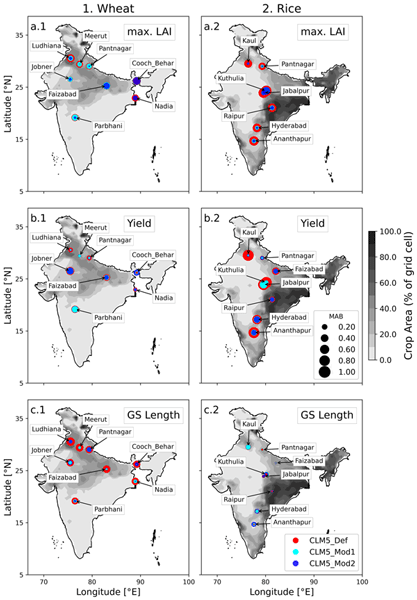
Kangari Narender Reddy, Somnath Baidya Roy, Sam S. Rabin, Danica L. Lombardozzi, Gudimetla Venkateswara Varma, Ruchira Biswas, and Devavat Chiru Naik
Geosci. Model Dev., 18, 763–785, https://doi.org/10.5194/gmd-18-763-2025, https://doi.org/10.5194/gmd-18-763-2025, 2025
Short summary
Short summary
The study aimed to improve the representation of wheat and rice in a land model for the Indian region. The modified model performed significantly better than the default model in simulating crop phenology, yield, and carbon, water, and energy fluxes compared to observations. The study highlights the need for global land models to use region-specific crop parameters for accurately simulating vegetation processes and land surface processes.
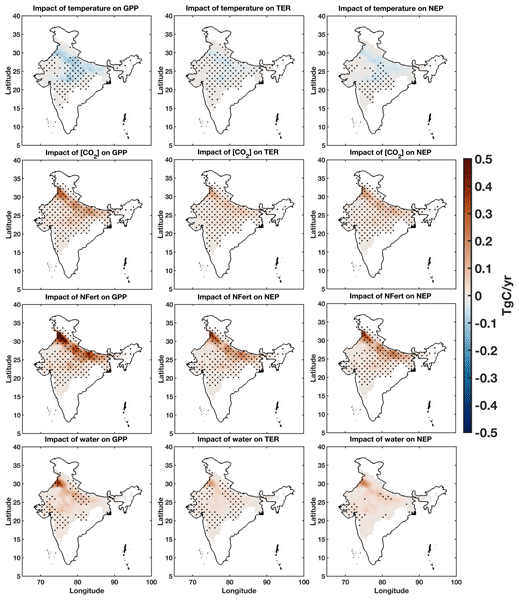
Kangari Narender Reddy, Shilpa Gahlot, Somnath Baidya Roy, Gudimetla Venkateswara Varma, Vinay Kumar Sehgal, and Gayatri Vangala
Earth Syst. Dynam., 14, 915–930, https://doi.org/10.5194/esd-14-915-2023, https://doi.org/10.5194/esd-14-915-2023, 2023
Short summary
Short summary
Carbon fluxes from agroecosystems change the carbon cycle and the amount of CO2 in the air. Using the Integrated Science Assessment Model (ISAM), we looked at the carbon cycle in areas where spring wheat is grown. The results showed that fluxes vary a lot between regions, mostly because planting times are different. According to our investigation into which variables have the greatest impact on the carbon cycle, nitrogen fertilizers added to crops have the greatest impact on carbon uptake.
Pramit Kumar Deb Burman, Amol Kale, Yogesh K. Tiwari, Suraj Reddy Rodda, Sandipan Mukherjee, Pulakesh Das, Arunima Jayachandran, Dipankar Sarma, Palingamoorthy Gnanamoorthy, Nirmali Gogoi, Somnath Baidya Roy, Ganapati S. Bhat, and Kazuhito Ichii
EGUsphere, https://doi.org/10.5194/egusphere-2026-3597, https://doi.org/10.5194/egusphere-2026-3597, 2026
This preprint is open for discussion and under review for Biogeosciences (BG).
Short summary
Short summary
Accurate estimates of terrestrial carbon uptake are required to strategise effective climate mitigation measures. Several remotely sensed and modelled global datasets are available for such purposes, none of which is developed using in-situ measurements from India. We objectively evaluated the performance of these datasets over India. We find that machine learning algorithms perform best over croplands and forests, whereas satellite observations perform better over grasslands.
Anasuya Barik and Somnath Baidya Roy
EGUsphere, https://doi.org/10.5194/egusphere-2026-1454, https://doi.org/10.5194/egusphere-2026-1454, 2026
This preprint is open for discussion and under review for Natural Hazards and Earth System Sciences (NHESS).
Short summary
Short summary
We developed a framework to assess fire risk by combining weather conditions, vegetation, and human activity in tropical fragmented forest systems with India as an example. Using long-term fire observations and weather data from India as an example, we mapped where fires are most likely to occur. Results show that hot and dry weather drives fire risk, while landscape and human factors shape local patterns.
Kangari Narender Reddy, Somnath Baidya Roy, Sam S. Rabin, Danica L. Lombardozzi, Gudimetla Venkateswara Varma, Ruchira Biswas, and Devavat Chiru Naik
Geosci. Model Dev., 18, 763–785, https://doi.org/10.5194/gmd-18-763-2025, https://doi.org/10.5194/gmd-18-763-2025, 2025
Short summary
Short summary
The study aimed to improve the representation of wheat and rice in a land model for the Indian region. The modified model performed significantly better than the default model in simulating crop phenology, yield, and carbon, water, and energy fluxes compared to observations. The study highlights the need for global land models to use region-specific crop parameters for accurately simulating vegetation processes and land surface processes.
Kangari Narender Reddy, Shilpa Gahlot, Somnath Baidya Roy, Gudimetla Venkateswara Varma, Vinay Kumar Sehgal, and Gayatri Vangala
Earth Syst. Dynam., 14, 915–930, https://doi.org/10.5194/esd-14-915-2023, https://doi.org/10.5194/esd-14-915-2023, 2023
Short summary
Short summary
Carbon fluxes from agroecosystems change the carbon cycle and the amount of CO2 in the air. Using the Integrated Science Assessment Model (ISAM), we looked at the carbon cycle in areas where spring wheat is grown. The results showed that fluxes vary a lot between regions, mostly because planting times are different. According to our investigation into which variables have the greatest impact on the carbon cycle, nitrogen fertilizers added to crops have the greatest impact on carbon uptake.
Axel Kleidon, Gabriele Messori, Somnath Baidya Roy, Ira Didenkulova, and Ning Zeng
Earth Syst. Dynam., 14, 241–242, https://doi.org/10.5194/esd-14-241-2023, https://doi.org/10.5194/esd-14-241-2023, 2023

Tanvi Gupta and Somnath Baidya Roy
Adv. Geosci., 56, 129–139, https://doi.org/10.5194/adgeo-56-129-2021, https://doi.org/10.5194/adgeo-56-129-2021, 2021
Short summary
Short summary
In this paper we study how the momentum extracted by wind turbines get replenished so that the wind farm can continue to function. We use a numerical model to simulate the dynamics of a hypothetical coastal wind farm in the Arabian Sea under sea breeze conditions. Results show that vertical turbulent eddies can replenish more than half of the lost momentum, but horizontal advection also plays a role near the wind farm edges especially in sparsely packed wind farms.
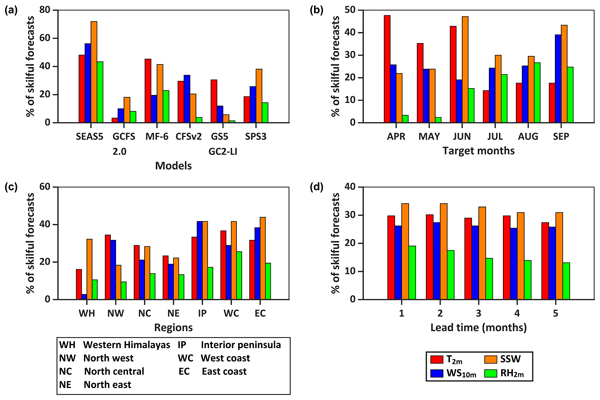
Aheli Das and Somnath Baidya Roy
Adv. Geosci., 56, 89–96, https://doi.org/10.5194/adgeo-56-89-2021, https://doi.org/10.5194/adgeo-56-89-2021, 2021
Short summary
Short summary
In this study we evaluated subseasonal-seasonal scale forecasts of solar radiation, wind speed, temperature and relative humidity over India from 6 global models by comparing against observations. Results show that the overall quality of the forecasts are not good. However, they demonstrate enough skill suggesting that further improvement through calibration may make then useful for the renewable energy sector.
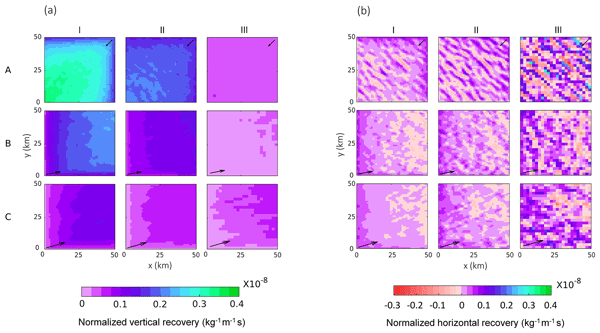
Tanvi Gupta and Somnath Baidya Roy
Wind Energ. Sci., 6, 1089–1106, https://doi.org/10.5194/wes-6-1089-2021, https://doi.org/10.5194/wes-6-1089-2021, 2021
Short summary
Short summary
Wind turbines extract momentum from atmospheric flow and convert that to electricity. This study explores recovery processes in wind farms that replenish the momentum so that wind farms can continue to function. Experiments with a numerical model show that momentum transport by turbulent eddies from above the wind turbines is the major contributor to recovery except for strong wind conditions and low wind turbine density, where horizontal advection can also play a major role.
Cited articles
Alberto, M. C. R., Wassmann, R., Hirano, T., Miyata, A., Kumar, A., Padre, A., and Amante, M.: CO2/heat fluxes in rice fields: Comparative assessment of flooded and non-flooded fields in the Philippines, Agr. Forest Meteorol., 149, 1737–1750, https://doi.org/10.1016/j.agrformet.2009.06.003, 2009.
ASG-2023: Agricultural Statistics at a Glance 2023, Division of Economics, Statistics and Evaluation, Department of Agriculture and Farmers Welfare, Ministry of Agriculture and Farmers Welfare, Government of India, https://github.com/KNR8070/Biogeosciences_manuscript-/blob/main/Agricultural-Statistics-at-a-Glance-2023.pdf (last access: February 2026), 2024.
Badger, A. M. and Dirmeyer, P. A.: Climate response to Amazon forest replacement by heterogeneous crop cover, Hydrol. Earth Syst. Sci., 19, 4547–4557, https://doi.org/10.5194/hess-19-4547-2015, 2015.
Bhattacharya, P., Neogi, S., Roy, K. S., Dash, P. K., Tripathi, R., and Rao, K. S.: Net ecosystem CO2 exchange and carbon cycling in tropical lowland flooded rice ecosystem, Nutr. Cycl. Agroecosyst., 95, 133–144, https://doi.org/10.1007/s10705-013-9553-1, 2013.
Boas, T., Bogena, H., Grünwald, T., Heinesch, B., Ryu, D., Schmidt, M., Vereecken, H., Western, A., and Hendricks Franssen, H.-J.: Improving the representation of cropland sites in the Community Land Model (CLM) version 5.0, Geosci. Model Dev., 14, 573–601, https://doi.org/10.5194/gmd-14-573-2021, 2021.
Boas, T., Bogena, H. R., Ryu, D., Vereecken, H., Western, A., and Hendricks Franssen, H.-J.: Seasonal soil moisture and crop yield prediction with fifth-generation seasonal forecasting system (SEAS5) long-range meteorological forecasts in a land surface modelling approach, Hydrol. Earth Syst. Sci., 27, 3143–3167, https://doi.org/10.5194/hess-27-3143-2023, 2023.
Bonan, G. B. and Doney, S. C.: Climate, ecosystems, and planetary futures: The challenge to predict life in Earth system models, Science, 359, eaam8328, https://doi.org/10.1126/science.aam8328, 2018.
Chen, C., Dan, L. I., Zhiqiu, G., Tang, J., Xiaofeng, G., Linlin, W., and Bingcheng, W.: Seasonal and interannual variations of carbon exchange over a rice-wheat rotation system on the north china plain, Advan. Atmos. Sci., 32, 1365–1380, https://doi.org/10.1007/s00376-015-4253-1, 2015.
Cheng, Y., Huang, M., Zhu, B., Bisht, G., Zhou, T., Liu, Y., Song, F., and He, X.: Validation of the Community Land Model Version 5 Over the Contiguous United States (CONUS) Using In-Situ and Remote Sensing Data Sets, J. Geophys. Res.-Atmos., 126, 1–27, https://doi.org/10.1029/2020JD033539, 2021.
Chenu, K., Porter, J. R., Martre, P., Basso, B., Chapman, S. C., Ewert, F., Bindi, M., and Asseng, S.: Contribution of crop models to adaptation in wheat, Trends Plant Sci., 22, 472–490, https://doi.org/10.1016/j.tplants.2017.02.003, 2017.
Collier, N., Hoffman, F. M., Lawrence, D. M., Keppel-Aleks, G., Koven, C. D., Riley, W. J., Mu, M., and Randerson, J. T.: The International Land Model Benchmarking (ILAMB) System: Design, Theory, and Implementation, J. Adv. Model. Earth Sy., 10, 2731–2754, https://doi.org/10.1029/2018MS001354, 2018.
Crameri, F.: Scientific color maps, Zenodo, https://doi.org/10.5281/zenodo.1243862, 2018.
Crameri, F., Shephard, G. E., and Heron, P. J.: The misuse of color in science communication, Nat. Commun., 11, 5444, https://doi.org/10.1038/s41467-020-19160-7, 2020.
Denager, T., Sonnenborg, T. O., Looms, M. C., Bogena, H., and Jensen, K. H.: Point-scale multi-objective calibration of the Community Land Model (version 5.0) using in situ observations of water and energy fluxes and variables, Hydrol. Earth Syst. Sci., 27, 2827–2845, https://doi.org/10.5194/hess-27-2827-2023, 2023.
FAO: FAOSTAT statistical database: Production, https://www.fao.org/faostat/en/#data (last access: 20 October 2024), 2022.
Fisher, R. A. and Koven, C. D.: Perspectives on the Future of Land Surface Models and the Challenges of Representing Complex Terrestrial Systems, J. Adv. Model. Earth Sy., 12, e2018MS001453, https://doi.org/10.1029/2018ms001453, 2020.
Gahlot, S., Lin, T.-S., Jain, A. K., Baidya Roy, S., Sehgal, V. K., and Dhakar, R.: Impact of environmental changes and land management practices on wheat production in India, Earth Syst. Dynam., 11, 641–652, https://doi.org/10.5194/esd-11-641-2020, 2020.
Harrison, S. P., Cramer, W., Franklin, O., Prentice, I. C., Wang, H., Brännström, Å., de Boer, H., Dieckmann, U., Joshi, J., Keenan, T. F., Lavergne, A., Manzoni, S., Mengoli, G., Morfopoulos, C., Peñuelas, J., Pietsch, S., Rebel, K. T., Ryu, Y., Smith, N. G., Stocker, B. D., and Wright, I. J.: Eco-evolutionary optimality as a means to improve vegetation and land-surface models, New Phytol., 231, 2125–2141, https://doi.org/10.1111/nph.17558, 2021.
Hossen, M. S., Mano, M., Miyata, A., Baten, M. A., and Hiyama, T.: Seasonality of ecosystem respiration in a double-cropping paddy field in Bangladesh, Biogeosciences Discuss., 8, 8693–8721, https://doi.org/10.5194/bgd-8-8693-2011, 2011.
Hussain, M. M. and Mahmud, I.: pyMannKendall: a python package for non-parametric Mann Kendall family of trend tests, J. Open Source Softw., 4, 1556, https://doi.org/10.21105/joss.01556, 2019.
Ingwersen, J., Högy, P., Wizemann, H. D., Warrach-Sagi, K., and Streck, T.: Coupling the land surface model Noah-MP with the generic crop growth model Gecros: Model description, calibration and validation, Agr. Forest Meteorol., 262, 322–339, https://doi.org/10.1016/j.agrformet.2018.06.023, 2018.
Jung, M., Koirala, S., Weber, U., Ichii, K., Gans, F., Camps-Valls, G., Papale, D., Schwalm, C., Tramontana, G., and Reichstein, M.: The FLUXCOM ensemble of global land-atmosphere energy fluxes, Sci. Data, 6, https://doi.org/10.1038/s41597-019-0076-8, 2019.
Ke, P., Ciais, P., Sitch, S., Li, W., Bastos, A., Liu, Z., Xu, Y., Gui, X., Bian, J., Goll, D. S., Xi, Y., Li, W., O'Sullivan, M., de Souza, J. G., Friedlingstein, P., and Chevallier, F.: Low latency carbon budget analysis reveals a large decline of the land carbon sink in 2023, Atmospheric and Oceanic Physics, https://doi.org/10.48550/arXiv.2407.12447, 2024.
Kumar, A., Bhatia, A., Sehgal, V. K., Tomer, R., Jain, N., and Pathak, H.: Net Ecosystem Exchange of Carbon Dioxide in Rice-Spring Wheat System of Northwestern Indo-Gangetic Plains, Land, 10, 701, https://doi.org/10.3390/land10070701, 2021.
Lawrence, D. M., Hurtt, G. C., Arneth, A., Brovkin, V., Calvin, K. V., Jones, A. D., Jones, C. D., Lawrence, P. J., de Noblet-Ducoudré, N., Pongratz, J., Seneviratne, S. I., and Shevliakova, E.: The Land Use Model Intercomparison Project (LUMIP) contribution to CMIP6: rationale and experimental design, Geosci. Model Dev., 9, 2973–2998, https://doi.org/10.5194/gmd-9-2973-2016, 2016.
Lawrence, D. M., Fisher, R., Koven, C., Oleson, K., Svenson, S., Vertenstein, M. (coordinating lead authors), Andre, B., Bonan, G., Ghimire, B., van Kampenhout, L., Kennedy, D., Kluzek, E., Knox, R., Lawrence, P., Li, F., Li, H., Lombardozzi, D., Lu, Y., Perket, J., Riley, W., Sacks, W., Shi, M., Wieder, W., Xu, C. (lead authors), Ali, A., Badger, A., Bisht, G., Broxton, P., Brunke, M., Buzan, J., Clark, M., Craig, T., Dahlin, K., Drewniak, B., Emmons, L., Fisher, J., Flanner, M., Gentine, P., Lenaerts, J., Levis, S., Leung, L. R., Lipscomb, W., Pelletier, J., Ricciuto, D., M., Sanderson, B., Shuman, J., Slater, A., Subin, Z., Tang, J., Tawfik, A., Thomas, Q., Tilmes, S., Vitt, F., and Zeng, X.: Technical Description of version 5.0 of the Community Land Model (CLM), Natl. Cent. Atmospheric Res. (NCAR), http://www.cesm.ucar.edu/models/cesm2/land/CLM50_Tech_Note.pdf (last access: 8 July 2024), 2018.
Lawrence, P., Lawrence, D. M., Hurtt, G. C., and Calvin, K. V.: Advancing our understanding of the impacts of historic and projected land use in the Earth System: The Land Use Model Intercomparison Project (LUMIP), AGU Fall Meeting 2019, San Francisco, USA, 9–13 December 2019, abstract: GC23B-01, https://ui.adsabs.harvard.edu/abs/2019AGUFMGC23B..01L/abstract (last access: 18 February 2026), 2019.
Levis, S., Badger, A., Drewniak, B., Nevison, C., and Ren, X.: CLMcrop yields and water requirements: avoided impacts by choosing RCP 4.5 over 8.5, Clim. Change, 146, 501–515, https://doi.org/10.1007/s10584-016-1654-9, 2016.
Liu, J., Baker, D., Basu, S., Bowman, K., Byrne, B., Chevallier, F., He, W., Jiang, F., Johnson, M. S., Kubar, T. L., and Li, X.: The reduced net carbon uptake over Northern Hemisphere land causes the close-to-normal CO2 growth rate in 2021 La Niña, Science Advances, 10, eadl2201, https://doi.org/10.1126/sciadv.adl2201, 2024.
Liu, W., Yang, H., Folberth, C., Wang, X., Luo, Q., and Schulin, R.: Global investigation of impacts of PET methods on simulating crop-water relations for maize, Agr. Forest Meteorol., 221, 164–175, https://doi.org/10.1016/j.agrformet.2016.02.017, 2016.
Liu, Y., Wan, K. Y., Tao, Y., Li, Z. G., Zhang, G. S., Li, S. L., and Chen, F.: Carbon dioxide flux from rice paddy soils in central China: effects of intermittent flooding and draining cycles, Plos one, 8, e56562, https://doi.org/10.1371/journal.pone.0056562, 2013.
Lokupitiya, E., Denning, A. S., Schaefer, K., Ricciuto, D., Anderson, R., Arain, M. A., Baker, I., Barr, A. G., Chen, G., Chen, J. M., Ciais, P., Cook, D. R., Dietze, M. C., El Maayar, M., Fischer, M., Grant, R., Hollinger, D., Izaurralde, C., Jain, A., Kucharik, C. J., Li, Z., Liu, S., Li, L., Matamala, R., Peylin, P., Price, D., Running, S. W., Sahoo, A., Sprintsin, M., Suyker, A. E., Tian, H., Tonitto, C., Torn, M. S., Verbeeck, H., Verma, S. B., and Xue, Y.: Carbon and energy fluxes in cropland ecosystems: a model-data comparison, Biogeochemistry, 129, 53–76, https://doi.org/10.1007/s10533-016-0219-3, 2016.
Lombardozzi, D. L., Lu, Y., Lawrence, P. J., Lawrence, D. M., Swenson, S., Oleson, K. W., Wieder, W. R., and Ainsworth, E. A.: Simulating Agriculture in the Community Land Model Version 5, J. Geophys. Res.-Biogeo., 125, e2019JG005529, https://doi.org/10.1029/2019JG005529, 2020.
Mathur, R. and AchutaRao, K.: A modelling exploration of the sensitivity of the India's climate to irrigation, Clim. Dynam., 54, 1851–1872, https://doi.org/10.1007/s00382-019-05090-8, 2020.
Migliavacca, M., Musavi, T., Mahecha, M. D., Nelson, J. A., Knauer, J., Baldocchi, D. D., Perez-Priego, O., Christiansen, R., Peters, J., Anderson, K., Bahn, M., Black, T. A., Blanken, P. D., Bonal, D., Buchmann, N., Caldararu, S., Carrara, A., Carvalhais, N., Cescatti, A., Chen, J., Cleverly, J., Cremonese, E., Desai, A. R., El-Madany, T., Farella, M. M., Fernández-Martínez, M., Filippa, G., Forkel, M., Galvagno, M., Gomarasca, U., Gough, C., Göckede, M., Ibrom, A., Ikawa, H., Janssens, I., Jung, M., Kattge, J., Keenan, T., Knohl, A., Kobayashi, H., Kraemer, G., Law, B. E., Liddell, M., Ma, X., Mammarella, I., Martini, D., Macfarlane, C., Matteucci, G., Montagnani, L., Pabon-Moreno, D., Panigada, C., Papale, D., Pendall, E., Penuelas, J., Phillips, R. P., Reich, P. B., Rossini, M., Rotenberg, E., Scott, R., Stahl, C., Weber, U., Wohlfahrt, G., Wolf, S., Wright, I., Yakir, D., Zaehle, S., and Reichstein, M.: The three major axes of terrestrial ecosystem function, Nature, 598, 468–472, https://doi.org/10.1038/s41586-021-03939-9, 2021.
Oo, A. Z., Yamamoto, A., Ono, K., Umamageswari, C., Mano, M., Vanitha, K., Elayakumar, P., Matsuura, S., Bama, K. S., Raju, M., and Inubushi, K.: Ecosystem carbon dioxide exchange and water use efficiency in a triple-cropping rice paddy in Southern India: A two-year field observation, Sci. Total Environ., 854, 158541, https://doi.org/10.1016/j.scitotenv.2022.158541, 2023.
Ozdogan, M.: Exploring the potential contribution of irrigation to global agricultural primary productivity, Global Biogeochem. Cy., 25, GB3016, https://doi.org/10.1029/2009GB003720, 2011.
Patel, N. R., Dadhwal, V. K., and Saha, S. K.: Measurement and Scaling of Carbon Dioxide (CO2) Exchanges in Wheat Using Flux-Tower and Remote Sensing, J. Indian Soc. Remote, 39, 383–391, https://doi.org/10.1007/s12524-011-0107-1, 2011.
Patel, N. R., Pokhariyal, S., Chauhan, P., and Dadhwal, V. K.: Dynamics of CO2 fluxes and controlling environmental factors in sugarcane (C4)–wheat (C3) ecosystem of dry sub-humid region in India, Int. J. Biometeorol., 65, 1069–1084, https://doi.org/10.1007/s00484-021-02088-y, 2021.
PlotDigitizer: Version 3.1.6, https://plotdigitizer.com, last access: April 2025.
Portmann, F. T., Siebert, S., and Döll, P.: Mirca2000 – global monthly irrigated and rainfed crop areas around the year 2000: A new high-resolution data set for agricultural and hydrological modelling, Global Biogeochem. Cy., 24, GB1011, https://doi.org/10.1029/2008GB003435, 2010.
Raczka, B., Hoar, T. J., Duarte, H. F., Fox, A. M., Anderson, J. L., Bowling, D. R., and Lin, J. C.: Improving CLM5.0 biomass and carbon exchange across the Western United States using a data assimilation system, J. Adv. Model. Earth Sy., 13, e2020MS002421, https://doi.org/10.1029/2020MS002421, 2021.
Reddy, K. N., and Baidya Roy, S.: Dataset for manuscript – Phenology, fluxes, and their drivers in major Indian agroecosystems: A modeling study using the Community Land Model (CLM5), Zenodo [data set, code], https://doi.org/10.5281/zenodo.15291023, 2025.
Reddy, K. N., Gahlot, S., Baidya Roy, S., Varma, G. V., Sehgal, V. K., and Vangala, G.: Carbon fluxes in spring wheat agroecosystem in India, Earth Syst. Dynam., 14, 915–930, https://doi.org/10.5194/esd-14-915-2023, 2023.
Reddy, K. N., Baidya Roy, S., Rabin, S. S., Lombardozzi, D. L., Varma, G. V., Biswas, R., and Naik, D. C.: Improving the representation of major Indian crops in the Community Land Model version 5.0 (CLM5) using site-scale crop data, Geosci. Model Dev., 18, 763–785, https://doi.org/10.5194/gmd-18-763-2025, 2025.
Saito, M., Miyata, A., Nagai, H., and Yamada, T.: Seasonal variation of carbon dioxide exchange in rice paddy field in Japan, Agric. For. Meteorol., 135, 93–109, https://doi.org/10.1016/j.agrformet.2005.10.007, 2005.
Schmidt, M., Reichenau, T. G., Fiener, P., and Schneider, K.: The carbon budget of a winter wheat field: An eddy covariance analysis of seasonal and inter-annual variability, Agric. For. Meteorol., 165, 114–126, https://doi.org/10.1016/j.agrformet.2012.05.012, 2012.
Seo, H. and Kim, Y.: Forcing the Global Fire Emissions Database burned-area dataset into the Community Land Model version 5.0: impacts on carbon and water fluxes at high latitudes, Geosci. Model Dev., 16, 4699–4713, https://doi.org/10.5194/gmd-16-4699-2023, 2023.
Song, J., Miller, G. R., Cahill, A. T., Aparecido, L. M. T., and Moore, G. W.: Modeling land surface processes over a mountainous rainforest in Costa Rica using CLM4.5 and CLM5, Geosci. Model Dev., 13, 5147–5173, https://doi.org/10.5194/gmd-13-5147-2020, 2020.
Varma, G. V., Reddy, K. N., Baidya Roy, S., Yadav, R., Vangala, G., and Biswas, R.: Indian cereal crops (wheat and rice) phenology and agricultural management data across Indian croplands from 1960s to 2020, PANGAEA [data set], https://doi.org/10.1594/PANGAEA.964634, 2024.
Wagle, P., Gowda, P. H., Northup, B. K., Neel, J. P., Starks, P. J., Turner, K. E., Moriasi, D. N., Xiao, X., and Steiner, J. L.: Carbon dioxide and water vapor fluxes of multi-purpose winter wheat production systems in the US Southern Great Plains, Agric. For. Meteorol., 310, 108631, https://doi.org/10.1016/j.agrformet.2021.108631, 2021.
Wang, K. and Dickinson, R. E.: A review of global terrestrial evapotranspiration: Observation, modeling, climatology, and climatic variability, Rev. Geophys., 50, RG2005, https://doi.org/10.1029/2011RG000373, 2012.
Yin, D., Yan, J., Li, F., and Song, T.: Evaluation of global gridded crop models in simulating sugarcane yield in China, Atmos. Ocean. Sci. Lett., 16, 100329, https://doi.org/10.1016/j.aosl.2023.100329, 2023.
Yu, G. R., Chen, Z., and Wang, Y. P.: Carbon, water and energy fluxes of terrestrial ecosystems in China, Agric. For. Meteorol., 109890, https://doi.org/10.1016/j.agrformet.2024.109890, 2024.
Zanaga, D., Van De Kerchove, R., Daems, D., De Keersmaecker, W., Brockmann, C., Kirches, G., Wevers, J., Cartus, O., Santoro, M., Fritz, S., Lesiv, M., Herold, M., Tsendbazar, N.-E., Xu, P., Ramoino, F., and Arino, O.: ESA WorldCover 10 m 2021 v200, Zenodo [data set], https://doi.org/10.5281/zenodo.7254221, 2022.
Zhao, Z., Dong, J., Zhang, G., Yang, J., Liu, R., Wu, B., and Xiao, X.: Improved phenology-based rice mapping algorithm by integrating optical and radar data, Remote Sens. Environ., 315, 114460, https://doi.org/10.1016/j.rse.2024.114460, 2024.
Zou, M., Yang, K., Lu, H., Ren, Y., Sun, J., Wang, H., Tan, S., and Zhao, L.: Integrating eco-evolutionary optimality principle and land processes for evapotranspiration estimation, J. Hydrol., 616, 128855, https://doi.org/10.1016/j.jhydrol.2022.128855, 2023.
Short summary
Croplands cover more than half of India, yet how they exchange water and carbon with the environment over time is not well known. Using long-term data from 1970–2014, this study shows that managment practices have large impacts. Irrigation and fertiliser use strongly boost crop growth and alter land–atmosphere exchanges, highlighting how management choices shape productivity and environmental outcomes across India.
Croplands cover more than half of India, yet how they exchange water and carbon with the...


Altmetrics
Final-revised paper
Preprint