
Articles | Volume 23, issue 4
https://doi.org/10.5194/bg-23-1527-2026
© Author(s) 2026. This work is distributed under
the Creative Commons Attribution 4.0 License.
the Creative Commons Attribution 4.0 License.
https://doi.org/10.5194/bg-23-1527-2026
© Author(s) 2026. This work is distributed under
the Creative Commons Attribution 4.0 License.
the Creative Commons Attribution 4.0 License.
Research article
| Highlight paper
| 
26 Feb 2026
Research article | Highlight paper |
| 26 Feb 2026
| 26 Feb 2026
Nutrient flows and biogeomorphic feedbacks: linking seabird guano to plant traits and morphological change on sandy islands
Floris F. van Rees
CORRESPONDING AUTHOR
Department of Coastal Systems, Royal Netherlands Institute for Sea Research (NIOZ), 't Horntje, 1797 SZ, the Netherlands
Department of Physical Geography, Utrecht University, Utrecht, 3584 CS, the Netherlands
Department of Ecosystems and Sediment Dynamics, Deltares, Delft, 2629 HV, the Netherlands
Laura L. Govers
Department of Coastal Systems, Royal Netherlands Institute for Sea Research (NIOZ), 't Horntje, 1797 SZ, the Netherlands
Groningen Institute for Evolutionary Life Sciences (GELIFES), University of Groningen, Groningen, 9700 CC, the Netherlands
Polina Guseva
Department of Physical Geography, Utrecht University, Utrecht, 3584 CS, the Netherlands
Maarten P. A. Zwarts
Department of Physical Geography, Utrecht University, Utrecht, 3584 CS, the Netherlands
Camille Tuijnman
Department of Physical Geography, Utrecht University, Utrecht, 3584 CS, the Netherlands
Cornelis J. Camphuysen
Department of Coastal Systems, Royal Netherlands Institute for Sea Research (NIOZ), 't Horntje, 1797 SZ, the Netherlands
Gerben Ruessink
Department of Physical Geography, Utrecht University, Utrecht, 3584 CS, the Netherlands
Valérie C. Reijers
Department of Physical Geography, Utrecht University, Utrecht, 3584 CS, the Netherlands
Related authors
No articles found.
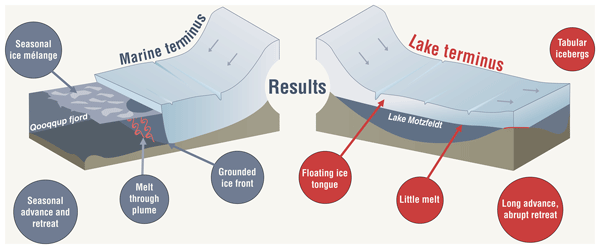
Florian Vacek, Faezeh M. Nick, Douglas Benn, Maarten P. A. Zwarts, Walter Immerzeel, and Roderik S. W. van de Wal
The Cryosphere, 20, 3827–3845, https://doi.org/10.5194/tc-20-3827-2026, https://doi.org/10.5194/tc-20-3827-2026, 2026
Short summary
Short summary
We studied a unique glacier in South Greenland that ends in both a lake and the ocean. Using satellite data and field work, we found that the two glacier fronts behave very differently even under the same climate. At the lake glacier we identify a floating ice tongue and we infer little melt below water. The lake glacier experienced a sudden large breakup. Our work suggests that lake and marine glacier fronts must be treated differently in model simulations.

Marco Schrijver, Maarten van der Vegt, Gerben Ruessink, and Maarten G. Kleinhans
Earth Surf. Dynam., 13, 1093–1108, https://doi.org/10.5194/esurf-13-1093-2025, https://doi.org/10.5194/esurf-13-1093-2025, 2025
Short summary
Short summary
To gain insight into the sediment transport onto a mid-channel bar in an estuary, we measured current velocities on and along the tidal flat during six months. Our analysis shows that intertidal currents have a more pronounced three-dimensional pattern than those on shore-connected tidal flats. This has consequences for sediment transport and morphodynamics. Existing models for tidal flats underestimate flow velocities and sediment dynamics on mid-channel bars.
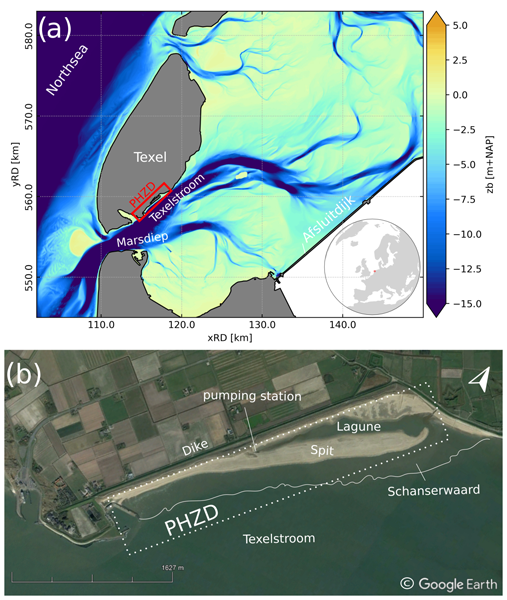
Marlies A. van der Lugt, Jorn W. Bosma, Matthieu A. de Schipper, Timothy D. Price, Marcel C. G. van Maarseveen, Pieter van der Gaag, Gerben Ruessink, Ad J. H. M. Reniers, and Stefan G. J. Aarninkhof
Earth Syst. Sci. Data, 16, 903–918, https://doi.org/10.5194/essd-16-903-2024, https://doi.org/10.5194/essd-16-903-2024, 2024
Short summary
Short summary
A 6-week field campaign was carried out at a sheltered sandy beach on Texel along the Dutch Wadden Sea with the aim of gaining new insights into the driving processes behind sheltered beach morphodynamics. Detailed measurements of the local hydrodynamics, bed-level changes and sediment composition were collected. The morphological evolution on this sheltered site is the result of the subtle interplay between waves, currents and bed composition.
Cited articles
Aerts, R., Van Overtveld, K., Haile, M., Hermy, M., Deckers, J., and Muys, B.: Species composition and diversity of small Afromontane forest fragments in northern Ethiopia, Plant Ecol., 187, 127–142, https://doi.org/10.1007/s11258-006-9137-0, 2006.
Allen, J. R. L.: Morphodynamics of Holocene salt marshes: A review sketch from the Atlantic and Southern North Sea coasts of Europe, Quat. Sci. Rev., 19, 1155–1231, https://doi.org/10.1016/S0277-3791(99)00034-7, 2000.
Anderson, W. B. and Polis, G. A.: Nutrient Fluxes from water to land: seabirds affect plant nutrient status on Gulf of California islands, Oecologia, 118, 324–332, 1999.
Anderson, W. B., Wait, D. A., and Stapp, P.: Resources from another place and time: Responses to pulses in a spatially subsidized system, Ecology, 89, 660–670, https://doi.org/10.1890/07-0234.1, 2008.
Appoo, J. and Bunbury, N.: Seabird nutrient subsidies enrich mangrove ecosystems and are exported to nearby coastal habitats, iScience, 27, 109404, https://doi.org/10.1016/j.isci.2024.109404, 2024.
Bailey, L. D., Ens, B. J., Both, C., Heg, D., Oosterbeek, K., and van De Pol, M.: No phenotypic plasticity in nest-site selection in response to extreme flooding events, Philos. Trans. R. Soc. B Biol. Sci., 372, 20160139, https://doi.org/10.1098/rstb.2016.0139, 2017.
Bakka, H., Rue, H., Fuglstad, G. A., Riebler, A., Bolin, D., Illian, J., Krainski, E., Simpson, D., and Lindgren, F.: Spatial modeling with R-INLA: A review, Wiley Interdiscip. Rev. Comput. Stat., 10, 1–24, https://doi.org/10.1002/wics.1443, 2018.
Bakker, J. P., Berg, M. P., Grootjans, A. P., Olff, H., Schrama, M., and Reijers, V. C.: Biogeomorphological aspects of a model barrier island and its surroundings – Interactions between abiotic conditions and biota shaping the tidal and terrestrial landscape: A synthesis, Ocean Coast. Manag., 239, 106624, https://doi.org/10.1016/j.ocecoaman.2023.106624, 2023.
Barrett, K., Anderson, W. B., Wait, D. A., Grismer, L. L., Polis, G. A., and Rose, M. D.: Marine subsidies alter the diet and abundance of insular and coastal lizard populations, Oikos, 109, 145–153, https://doi.org/10.1111/j.0030-1299.2005.13728.x, 2005.
De Battisti, D., Fowler, M. S., Jenkins, S. R., Skov, M. W., Rossi, M., Bouma, T. J., Neyland, P. J., and Griffin, J. N.: Intraspecific root trait variability along environmental gradients affects salt marsh resistance to lateral erosion, Front. Ecol. Evol., 7, 1–11, https://doi.org/10.3389/fevo.2019.00150, 2019.
De Battisti, D., Fowler, M. S., Jenkins, S. R., Skov, M. W., Bouma, T. J., Neyland, P. J., and Griffin, J. N.: Multiple trait dimensions mediate stress gradient effects on plant biomass allocation, with implications for coastal ecosystem services, J. Ecol., 108, 1227–1240, https://doi.org/10.1111/1365-2745.13393, 2020.
Bauer, S. and Hoye, B. J.: Migratory animals couple biodiversity and ecosystem functioning worldwide, Science, 344, https://doi.org/10.1126/science.1242552, 2014.
Benkwitt, C. E., Gunn, R. L., Le Corre, M., Carr, P., and Graham, N. A. J.: Rat eradication restores nutrient subsidies from seabirds across terrestrial and marine ecosystems, Curr. Biol., 31, 2704-2711.e4, https://doi.org/10.1016/j.cub.2021.03.104, 2021.
Boere, G. C. and Piersma, T.: Flyway protection and the predicament of our migrant birds: A critical look at international conservation policies and the Dutch Wadden Sea, Ocean Coast. Manag., 68, 157–168, https://doi.org/10.1016/j.ocecoaman.2012.05.019, 2012.
Bokhorst, S., Convey, P., and Aerts, R.: Nitrogen inputs by marine vertebrates drive abundance and richness in Antarctic terrestrial ecosystems., Curr. Biol., 29, 1721–1727, 2019.
Bonte, D., Batsleer, F., Provoost, S., Reijers, V., Vandegehuchte, M. L., Van De Walle, R., Dan, S., Matheve, H., Rauwoens, P., Strypsteen, G., Suzuki, T., Verwaest, T., and Hillaert, J.: Biomorphogenic Feedbacks and the Spatial Organization of a Dominant Grass Steer Dune Development, Front. Ecol. Evol., 9, 1–12, https://doi.org/10.3389/fevo.2021.761336, 2021.
Buelow, C. A., Baker, R., Reside, A. E., and Sheaves, M.: Nutrient subsidy indicators predict the presence of an avian mobile-link species, Ecol. Indic., 89, 507–515, https://doi.org/10.1016/j.ecolind.2018.02.029, 2018.
Cavender-bares, J., Schneider, F. D., Santos, M. J., Armstrong, A., Carnaval, A., Dahlin, K. M., Fatoyinbo, L., Hurtt, G. C., Schimel, D., Townsend, P. A., Ustin, S. L., Wang, Z., and Wilson, A. M.: Integrating remote sensing with ecology and evolution to advance biodiversity conservation, Nat. Ecol. Evol., 6, 506–519, https://doi.org/10.1038/s41559-022-01702-5, 2022.
Compton, T. J., Holthuijsen, S., Koolhaas, A., Dekinga, A., ten Horn, J., Smith, J., Galama, Y., Brugge, M., van der Wal, D., van der Meer, J., van der Veer, H. W., and Piersma, T.: Distinctly variable mudscapes: Distribution gradients of intertidal macrofauna across the Dutch Wadden Sea, J. Sea Res., 82, 103–116, https://doi.org/10.1016/j.seares.2013.02.002, 2013.
Corenblit, D., Baas, A. C. W., Bornette, G., Darrozes, J., Delmotte, S., Francis, R. A., Gurnell, A. M., Julien, F., Naiman, R. J., and Steiger, J.: Feedbacks between geomorphology and biota controlling Earth surface processes and landforms: A review of foundation concepts and current understandings, Earth-Science Rev., 106, 307–331, https://doi.org/10.1016/j.earscirev.2011.03.002, 2011.
Derijckere, J., Strypsteen, G., and Rauwoens, P.: Early-stage development of an artificial dune with varying plant density and distribution, Geomorphology, 437, 108806, https://doi.org/10.1016/j.geomorph.2023.108806, 2023.
DeRose-Wilson, A., Fraser, J. D., Karpanty, S. M., and Catlin, D. H.: Nest-site selection and demography of Wilson's Plovers on a North Carolina barrier island., J. F. Ornithol., 84, 329–344, 2013.
Dickey, J., Wengrove, M., Cohn, N., Ruggiero, P., and Hacker, S. D.: Observations and modeling of shear stress reduction and sediment flux within sparse dune grass canopies on managed coastal dunes, Earth Surf. Process. Landforms, 48, 907–922, https://doi.org/10.1002/esp.5526, 2023.
Dunn, R. E., Carr, P., Benkwitt, C. E., Graham, N. A. J., Maury, O., and Barrier, N.: Island restoration to rebuild seabird populations and amplify coral reef functioning, Conserv. Biol., 39, 1–12, https://doi.org/10.1111/cobi.14313, 2025.
Ellis, J. C.: Marine birds on land: A review of plant biomass, species richness, and community composition in seabird colonies, Plant Ecol., 181, 227–241, https://doi.org/10.1007/s11258-005-7147-y, 2005.
Ericsson, T.: Growth and shoot: root ratio of seedlings in relation to nutrient availability, Plant Soil, 168–169, 205–214, https://doi.org/10.1007/BF00029330, 1995.
Forsberg, P. L., Ernstsen, V. B., Andersen, T. J., Winter, C., Becker, M., and Kroon, A.: The effect of successive storm events and seagrass coverage on sediment suspension in a coastal lagoon, Estuar. Coast. Shelf Sci., 212, 329–340, https://doi.org/10.1016/j.ecss.2018.07.006, 2018.
Foster, C. R., Amos, A. F., and Fuiman, L. A.: Trends in abundance of coastal birds and human activity on a Texas barrier Island over three decades, Estuaries and Coasts, 32, 1079–1089, https://doi.org/10.1007/s12237-009-9224-2, 2009.
Hahn, S., Bauer, S., and Klaassen, M.: Estimating the contribution of carnivorous waterbirds to nutrient loading in freshwater habitats, Freshw. Biol., 52, 2421–2433, https://doi.org/10.1111/j.1365-2427.2007.01838.x, 2007.
Heiri, O., Lotter, A. F., and Lemcke, G.: Loss on ignition as a method for estimating organic and carbonate content in sediments: reproducibility and comparability of results, J. Paleolimnol., 25, 101–110, 2001.
Jones, H. P. and Kress, S. W.: A review of the world's active seabird restoration projects, J. Wildl. Manage., 76, 2–9, https://doi.org/10.1002/jwmg.240, 2012.
Jones, H. P., Borrelle, S. B., and Rankin, L. L.: Land–sea linkages depend on macroalgal species, predator invasion history in a New Zealand archipelago, Restor. Ecol., 31, 1–11, https://doi.org/10.1111/rec.13798, 2023.
Jones, H. P., Appoo, J., Benkwitt, C. E., Borrelle, S. B., Dunn, R. E., Epstein, H. E., Fowlke, L. A., Holmes, N. D., Jeannot, L., Malhi, Y., and Rankin, L. L.: The circular seabird economy is critical for oceans , islands and people, Nat. Rev. Biodivers., 1–14, https://doi.org/10.1038/s44358-025-00099-w, 2025.
Joyce, M. A., Crotty, S. M., Angelini, C., Cordero, O., Ortals, C., de Battisti, D., and Griffin, J. N.: Wrack enhancement of post-hurricane vegetation and geomorphological recovery in a coastal dune, PLoS One, 17, 1–14, https://doi.org/10.1371/journal.pone.0273258, 2022.
Kabat, P., Bazelmans, J., van Dijk, J., Herman, P. M. J., van Oijen, T., Pejrup, M., Reise, K., Speelman, H., and Wolff, W. J.: The Wadden Sea Region: Towards a science for sustainable development, Ocean Coast. Manag., 68, 4–17, https://doi.org/10.1016/j.ocecoaman.2012.05.022, 2012.
Kahmen, A., Perner, J., Audorff, V., Weisser, W., and Buchmann, N.: Effects of plant diversity, community composition and environmental parameters on productivity in montane European grasslands, Oecologia, 142, 606–615, https://doi.org/10.1007/s00442-004-1749-2, 2005.
Karasov, W. H.: Digestion in birds: chemical and physiological determinants and ecological implications, Stud. Avian Biol., 13, 1–4, 1990.
Kim, D. and Lee, K.: Landforms as combined expressions of multiple reciprocally interacting species: Refining the ecosystem engineering concept, Earth-Science Rev., 232, 104152, https://doi.org/10.1016/j.earscirev.2022.104152, 2022.
Koffijberg, K., Frikke, J., Hälterlein, B., Laursen, K., Reichert, G., and Soldaat, L.: Wadden Sea Quality Status Report – Breeding birds, Wadden Sea Qual. Status Rep., 2017, 146–147, 2017.
Kooijman, A. M. and Besse, M.: The higher availability of N and P in lime-poor than in lime-rich coastal dunes in the Netherlands, J. Ecol., 90, 394–403, 2002.
Kuriyama, Y., Mochizuki, N., and Nakashima, T.: Influence of vegetation on aeolian sand transport rate from a backshore to a foredune at Hasaki, Japan, Sedimentology, 52, 1123–1132, https://doi.org/10.1111/j.1365-3091.2005.00734.x, 2005.
Lammers, C., van de Ven, C. N., van der Heide, T., and Reijers, V. C.: Are Ecosystem Engineering Traits Fixed or Flexible: A Study on Clonal Expansion Strategies in Co-occurring Dune Grasses, Ecosystems, 26, 1195–1208, https://doi.org/10.1007/s10021-023-00826-4, 2023.
Lansu, E. M., Reijers, V. C., Höfer, S., Luijendijk, A., Rietkerk, M., Wassen, M. J., Lammerts, E. J., and van der Heide, T.: A global analysis of how human infrastructure squeezes sandy coasts, Nat. Commun., 15, 1–7, https://doi.org/10.1038/s41467-023-44659-0, 2024.
Lansu, E. M., Fischman, H. S., Angelini, C., Hijner, N., Geelen, L., Groenendijk, D., Höfer, S., Kooijman, A. M., Rietkerk, M., Tonkens, S., de Vries, S., Wassen, M., van Weerlee, E., Wille, D., Reijers, V., and van der Heide, T.: How human infrastructure threatens biodiversity by squeezing sandy coasts, Curr. Biol., 5210–5219, https://doi.org/10.1016/j.cub.2025.09.027, 2025.
Lefcheck, J. S.: piecewiseSEM: Piecewise structural equation modelling in r for ecology, evolution, and systematics, Methods Ecol. Evol., 7, 573–579, https://doi.org/10.1111/2041-210X.12512, 2016.
Lausch, A., Jung, A., Bastian, O., Klotz, S., Leitão, P. J., Rocchini, D., and Skidmore, A. K.: Understanding and assessing vegetation health by in situ species and remote-sensing approaches, Methods Ecol. Evol., 9, 1799–1809, https://doi.org/10.1111/2041-210X.13025, 2018.
Le Gouvello, D. Z. M., Nel, R., Harris, L. R., Bezuidenhout, K., and Woodborne, S.: Identifying potential pathways for turtle-derived nutrients cycling through beach ecosystems, Mar. Ecol. Prog. Ser., 583, 49–62, https://doi.org/10.3354/meps12351, 2017.
Loder III, T. C., Ganning, B., and Love, J. A.: Ammonia nitrogen dynamics in coastal rockpools affected by gull guano., J. Exp. Mar. Bio. Ecol., 196, 113–129, 1996.
Macreadie, P. I., Anton, A., Raven, J. A., Beaumont, N., Connolly, R. M., Friess, D. A., Kelleway, J. J., Kennedy, H., Kuwae, T., Lavery, P. S., Lovelock, C. E., Smale, D. A., Apostolaki, E. T., Atwood, T. B., Baldock, J., Bianchi, T. S., Chmura, G. L., Eyre, B. D., Fourqurean, J. W., Hall-Spencer, J. M., Huxham, M., Hendriks, I. E., Krause-Jensen, D., Laffoley, D., Luisetti, T., Marbà, N., Masque, P., McGlathery, K. J., Megonigal, J. P., Murdiyarso, D., Russell, B. D., Santos, R., Serrano, O., Silliman, B. R., Watanabe, K., and Duarte, C. M.: The future of Blue Carbon science, Nat. Commun., 10, 1–13, https://doi.org/10.1038/s41467-019-11693-w, 2019.
Marin-Diaz, B., Govers, L. L., Olff, H., and Bouma, T. J.: How grazing management can maximize erosion resistance of salt marshes, J. Appl. Ecol., 58, 1533–1544, https://doi.org/10.1111/1365-2664.13888, 2021.
Maron, J. L., Estes, J. A., Croll, D. A., Danner, E. M., Elmendorf, S. C., and Buckelew, S. L.: An introduced predator alters Aleutian Island plant communities by thwarting nutrient subsidies, Ecol. Monogr., 76, 3–24, https://doi.org/10.1890/05-0496, 2006.
McInturf, A. G., Pollack, L., Yang, L. H., and Spiegel, O.: Vectors with autonomy: what distinguishes animal-mediated nutrient transport from abiotic vectors?, Biol. Rev., 94, 1761–1773, https://doi.org/10.1111/brv.12525, 2019.
McKane, R. B., Grigal, D. F., and Russelle, M. P.: Spatiotemporal Differences in 15N Uptake and the Organization of an Old-Field Plant Community, Ecology, 71, 1126–1132, 1990.
McLeod, E., Chmura, G. L., Bouillon, S., Salm, R., Björk, M., Duarte, C. M., Lovelock, C. E., Schlesinger, W. H., and Silliman, B. R.: A blueprint for blue carbon: Toward an improved understanding of the role of vegetated coastal habitats in sequestering CO2, Front. Ecol. Environ., 9, 552–560, https://doi.org/10.1890/110004, 2011.
McLoughlin, P. D., Lysak, K., Debeffe, L., Perry, T., and Hobson, K. A.: Density-dependent resource selection by a terrestrial herbivore in response to sea-to-land nutrient transfer by seals, Ecology, 97, 1929–1937, https://doi.org/10.1002/ecy.1451, 2016.
Miller, T. E., Gornish, E. S., and Buckley, H. L.: Climate and coastal dune vegetation: Disturbance, recovery, and succession, Plant Ecol., 206, 97–104, https://doi.org/10.1007/s11258-009-9626-z, 2010.
Morton, J. P., Fischman, H. S., Cordero, O., Crabill, J. T., Anthony, M. R., Schneider, M. A., Adams, P. N., and Angelini, C.: Strategic planting and nutrient amendments to accelerate the revegetation of rapidly retreating coastal dunes, J. Appl. Ecol., 62, 267–279, https://doi.org/10.1111/1365-2664.14859, 2025.
Nagy, K. A., Girard, I. A., and Brown, T. K.: Energetics of free-ranging mammals, reptiles, and birds, Annu. Rev. Nutr., 19, 247–277, https://doi.org/10.1146/annurev.nutr.19.1.247, 1999.
Olff, H., Huisman, J., and Toorent, B. F. V. A. N.: Sand Dunes Species dynamics and nutrient accumulation during early primary succession in coastal sand dunes, J. Ecol., 81, 693–706, 1993.
Otero, X. L., De La Peña-Lastra, S., Pérez-Alberti, A., Ferreira, T. O., and Huerta-Diaz, M. A.: Seabird colonies as important global drivers in the nitrogen and phosphorus cycles, Nat. Commun., 9, 246, https://doi.org/10.1038/s41467-017-02446-8, 2018.
Paleczny, M., Hammill, E., Karpouzi, V., and Pauly, D.: Population trend of the world's monitored seabirds, 1950–2010, PLoS One, 10, 1–11, https://doi.org/10.1371/journal.pone.0129342, 2015.
Peña-Lastra, S. D. La, Torre, F., Carballeira, R., Santiso, M. J., Pérez-Alberti, A., and Otero, X. L.: The Rapid Effects of Yellow-Legged Gull (Larus michahellis) Colony on Dune Habitats and Plant Landscape in the Atlantic Islands National Park (NW Spain), Land, 11, https://doi.org/10.3390/land11020258, 2022.
Pit, I. R., Wassen, M. J., Kooijman, A. M., Dekker, S. C., Griffioen, J., Arens, S. M., and van Dijk, J.: Can sand nourishment material affect dune vegetation through nutrient addition?, Sci. Total Environ., 725, https://doi.org/10.1016/j.scitotenv.2020.138233, 2020.
Polis, G. A., Anderson, W. B., and Holt, R. D.: Toward an integration of landscape and food web ecology: the dynamics of spatially subsidized food webs., Annu. Rev. Ecol. Syst., 28, 289–316, 1997.
Poorter, H. and Nagel, O.: The role of biomass allocation in the growth response of plants to different levels of light, CO2, nutrients and water: a quantitative review., Funct. Plant Biol., 27, 595–607, 2000.
Raynor, E. J., Pierce, A. R., Leumas, C. M., and Rohwer, F. C.: Breeding habitat requirements and colony formation by royal terns (thalasseus maximus) and sandwich terns (t. Sandvicensis) on barrier Islands in the gulf of Mexico, Auk, 129, 763–772, https://doi.org/10.1525/auk.2012.11181, 2012.
Reijers, V. C., Hoeks, S., van Belzen, J., Siteur, K., de Rond, A. J. A., van de Ven, C. N., Lammers, C., van de Koppel, J., and van der Heide, T.: Sediment availability provokes a shift from Brownian to Lévy-like clonal expansion in a dune building grass, Ecol. Lett., 24, 258–268, https://doi.org/10.1111/ele.13638, 2021.
Reijers, V. C., van Rees, F., van der Heide, T., Oost, A. P., Ruessink, G., Koffijberg, K., Camphuysen, K. C. J., Penning, E., Hijner, N., and Govers, L. L.: Birds influence vegetation coverage and structure on sandy biogeomorphic islands in the Dutch Wadden Sea, Sci. Total Environ., 950, https://doi.org/10.1016/j.scitotenv.2024.175254, 2024.
Riddick, S. N., Dragosits, U., Blackall, T. D., Daunt, F., Wanless, S., and Sutton, M. A.: The global distribution of ammonia emissions from seabird colonies, Atmos. Environ., 55, 319–327, 2012.
Rijkswaterstaat: LIDAR elevation data of the Dutch coast, Version 1, 4TU.ResearchData [data set], https://doi.org/10.4121/uuid:8a8a91bc-e520-4d19-a127-5fd2232cc58e, 2017.
Savage, C.: Seabird nutrients are assimilated by corals and enhance coral growth rates, Sci. Rep., 9, 4284, https://doi.org/10.1038/s41598-019-41030-6, 2019.
Schulte Ostermann, T., Heuner, M., Fuchs, E., Temmerman, S., Schoutens, K., Bouma, T. J., and Minden, V.: Unraveling plant strategies in tidal marshes by investigating plant traits and environmental conditions, J. Veg. Sci., 32, 1–17, https://doi.org/10.1111/jvs.13038, 2021.
Schwarz, C., Gourgue, O., van Belzen, J., Zhu, Z., Bouma, T. J., van de Koppel, J., Ruessink, G., Claude, N., and Temmerman, S.: Self-organization of a biogeomorphic landscape controlled by plant life-history traits, Nat. Geosci., 11, 672–677, https://doi.org/10.1038/s41561-018-0180-y, 2018.
Shipley, B.: Confirmatory path analysis in a generalized multilevel context, Ecology, 90, 363–368, https://doi.org/10.1890/08-1034.1, 2009.
Spalding, M. D., Ruffo, S., Lacambra, C., Meliane, I., Hale, L. Z., Shepard, C. C., and Beck, M. W.: The role of ecosystems in coastal protection: Adapting to climate change and coastal hazards, Ocean Coast. Manag., 90, 50–57, https://doi.org/10.1016/j.ocecoaman.2013.09.007, 2014.
Spatz, D. R., Young, L. C., Holmes, N. D., Jones, H. P., VanderWerf, E. A., Lyons, D. E., Kress, S., Miskelly, C. M., and Taylor, G. A.: Tracking the global application of conservation translocation and social attraction to reverse seabird declines., Proc. Natl. Acad. Sci., 120, e2214574120, https://doi.org/10.1073/pnas.2214574120, 2023.
Stallins, J. A.: Geomorphology and ecology: Unifying themes for complex systems in biogeomorphology, Geomorphology, 77, 207–216, https://doi.org/10.1016/j.geomorph.2006.01.005, 2006.
Steibl, S., Bunbury, N., Young, H. S., and Russell, J. C.: A renaissance of atoll ecology., Annu. Rev. Ecol. Evol. Syst., 55, 301–322, 2024.
Strypsteen, G., de Vries, S., Van Westen, B., Bonte, D., Homberger, J.-M., Hallin, C., and Rauwoens, P.: Vertical Growth Rate of Planted Vegetation Controls Dune Growth on a Sandy Beach, Coast. Eng., 194, 104624, https://doi.org/10.1016/j.coastaleng.2024.104624, 2024.
Sutton-Grier, A. E. and Sandifer, P. A.: Conservation of Wetlands and Other Coastal Ecosystems: a Commentary on their Value to Protect Biodiversity, Reduce Disaster Impacts, and Promote Human Health and Well-Being, Wetlands, 39, 1295–1302, https://doi.org/10.1007/s13157-018-1039-0, 2019.
Tobias, J. A., Sheard, C., Pigot, A. L., Devenish, A. J. M., Yang, J., Sayol, F., Alioravainen, N., Weeks, T. L., Barber, R. A., Walkden, P. A., Macgregor, H. E. A., Jones, S. E. I., Vincent, C., Phillips, A. G., Marples, N. M., Centellas, F. A. M.-, Silva, V. L.-, Claramunt, S., Darski, B., Freeman, B. G., Bregman, T. P., Cooney, C. R., Hughes, E. C., Capp, E. J. R., Wolfe, J. D., Chapman, P. M., Daly, B. G., Sorensen, M. C., Neu, A., Ford, M. A., Mayhew, R. J., Fabio, L., Kelly, D. J., Annorbah, N. N. D., Pollock, H. S., Zhang, A. M. G.-, Mcentee, J. P., Carlos, J., Meneses, C. G., Muñoz, M. C., and Powell, L. L.: AVONET: morphological , ecological and geographical data for all birds, Ecol. Lett., 25, 581–597, https://doi.org/10.1111/ele.13898, 2022.
Tucker, C. J.: Red and photographic infrared linear combinations for monitoring vegetation, Remote Sens. Environ., 8, 127–150, https://doi.org/10.1016/0034-4257(79)90013-0, 1979.
Van Boxel, J. H., Arens, S. M., and Van Dijk, P. M.: Aeolian processes across transverse dunes. I: Modelling the air flow, Earth Surf. Process. Landforms, 24, 255–270, https://doi.org/10.1002/(sici)1096-9837(199903)24:3<255::aid-esp962>3.0.co;2-3, 1999.
van de Pol, M., Bailey, L. D., Frauendorf, M., Allen, A. M., van der Sluijs, M., Hijner, N., Brouwer, L., de Kroon, H., Jongejans, E., and Ens, B. J.: Sea-level rise causes shorebird population collapse before habitats drown, Nat. Clim. Chang., 14, 839–844, https://doi.org/10.1038/s41558-024-02051-w, 2024.
van de Ven, C. N., Reijers, V. C., Lammers, C., van Belzen, J., Chung, Y., Bouma, T. J., and van der Heide, T.: Establishing cordgrass plants cluster their shoots to avoid ecosystem engineering, Funct. Ecol., 37, 1339–1349, https://doi.org/10.1111/1365-2435.14302, 2023.
van Maanen, B., Coco, G., and Bryan, K. R.: On the ecogeomorphological feedbacks that control tidal channel network evolution in a sandy mangrove setting, Proc. R. Soc. A Math. Phys. Eng. Sci., 471, 20150115, https://doi.org/10.1098/rspa.2015.0115, 2015.
van Rees, F.: Model Code and Data of Nutrient Flows and Biogeomorphic Feedbacks: Linking Seabird Guano to Plant traits and Morphological Change on Sandy Islands (Version 100), Zenodo [data set] and [code], https://doi.org/10.5281/zenodo.18659893, 2026.
Wainright, S. C., Haney, J. C., Kerr, C., Golovkin, A. N., and Flint, M. V.: Utilization of nitrogen derived from seabird guano by terrestrial and marine plants at St. Paul, Pribilof Islands, Bering Sea, Alaska, Mar. Biol., 131, 63–71, https://doi.org/10.1007/s002270050297, 1998.
Woods, N. N. and Zinnert, J. C.: Shrub encroachment of coastal ecosystems depends on dune elevation, Plant Ecol., 225, 1047–1057, https://doi.org/10.1007/s11258-024-01453-2, 2024.
Young, H. S., McCauley, D. J., and Dirzo, R.: Differential responses to guano fertilization among tropical tree species with varying functional traits, Am. J. Bot., 98, 207–214, https://doi.org/10.3732/ajb.1000159, 2011.
Zarnetske, P. L., Hacker, S. D., Seabloom, E. W., Ruggiero, P., Killian, J. R., Maddux, T. B., and Cox, D.: Biophysical feedback mediates effects of invasive grasses on coastal dune shape, Ecology, 93, 1439–1450, https://doi.org/10.1890/11-1112.1, 2012.
Zhang, K., Cao, J., Yin, H., Wang, J., Wang, X., Yang, Y., and Xi, Z.: Microclimate diversity drives grape quality difference at high-altitude: Observation using PCA analysis and structural equation modeling (SEM), Food Res. Int., 191, 114644, https://doi.org/10.1016/j.foodres.2024.114644, 2024.
Zuur, A. F. and Ieno, E. N.: Beginner's guide to spatial, temporal and spatial-temporal ecological. Volume II: GAM and zero-inflated models.data analysis with R-INLA. Volume II: GAM and zero-inflated models, Highland Statistics Ltd., ISBN 978-0-9571741-4-6, 2018.
Editorial statement
Seabird guano is a vital nutrient source that drives "biogeomorphic feedbacks," shifting plant communities toward sediment-stabilizing species that physically reshape coastal landscapes. Van Rees and others demonstrate that guano-derived nitrogen enhances vegetation productivity and sediment retention, particularly in nutrient-poor sandy environments. These findings suggest that declining seabird populations could indirectly accelerate habitat loss due to the critical role of seabirds as "ecosystem engineers" who help build the very landscapes they depend on for survival, which has clear conservation implications.
Seabird guano is a vital nutrient source that drives "biogeomorphic feedbacks," shifting plant...
Short summary
Seabird guano enriches nitrogen-loving plants and boost plants to trap sediment, driving the gradual growth and reshaping of coastal islands. By pairing on-site plant surveys with satellite imagery and elevation data, we show these effects vary with elevation, soil type, and season. Birds thus engineer and sustain their own breeding habitats. For conservation managers, protecting colonies is key to preserving the dynamic island landscapes these and other species rely on.
Seabird guano enriches nitrogen-loving plants and boost plants to trap sediment, driving the...


Altmetrics
Final-revised paper
Preprint