
Articles | Volume 23, issue 4
https://doi.org/10.5194/bg-23-1681-2026
© Author(s) 2026. This work is distributed under
the Creative Commons Attribution 4.0 License.
the Creative Commons Attribution 4.0 License.
https://doi.org/10.5194/bg-23-1681-2026
© Author(s) 2026. This work is distributed under
the Creative Commons Attribution 4.0 License.
the Creative Commons Attribution 4.0 License.
Research article
| 
03 Mar 2026
Research article |
| 03 Mar 2026
| 03 Mar 2026
Effects of basalt and biochar addition on base cations and trace metals in plants and soil in an urban field trial
Arthur Vienne
CORRESPONDING AUTHOR

Biobased Sustainability Engineering (SUSTAIN), Department of Bioscience Engineering, University of Antwerp, Antwerp, Belgium
Jennifer Newell
School of Natural and Built Environment, Queen's University Belfast, Belfast, UK
Jasper Roussard
Biobased Sustainability Engineering (SUSTAIN), Department of Bioscience Engineering, University of Antwerp, Antwerp, Belgium
Rory Doherty
School of Natural and Built Environment, Queen's University Belfast, Belfast, UK
Siobhan F. Cox
School of Natural and Built Environment, Queen's University Belfast, Belfast, UK
Gary Lyons
Agri-Environment Branch, Agri-Food and Biosciences Institute, Northern Ireland, UK
Biobased Sustainability Engineering (SUSTAIN), Department of Bioscience Engineering, University of Antwerp, Antwerp, Belgium
Related authors
Arthur Vienne, Patrick Frings, Jet Rijnders, Lucilla Boito, Jens Hartmann, Harun Niron, Reinaldy Poetra, Miguel Portillo Estrada, Tom Reershemius, Laura Steinwidder, Tim Jesper Suhrhoff, and Sara Vicca
SOIL, 12, 421–440, https://doi.org/10.5194/soil-12-421-2026, https://doi.org/10.5194/soil-12-421-2026, 2026
Short summary
Short summary
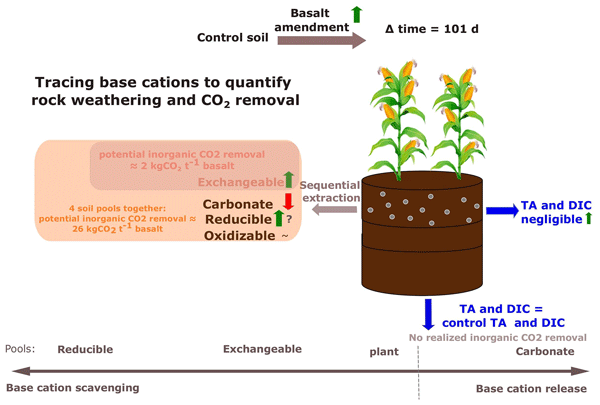
Our study explores Enhanced Weathering (EW) using basalt rock dust to combat climate change. We treated maize-planted mesocosms with varying basalt amounts and monitored them for 101 d. Surprisingly, we found no significant realized inorganic CO2 removal. However, rock weathering was evident through increased exchangeable bases. While inorganic CO2 removal was not realized within this experiment, basalt amendment may enhance soil health and potentially long-term carbon sequestration.
Jelle Bijma, Mathilde Hagens, Jens S. Hammes, Noah Planavsky, Philip A. E. Pogge von Strandmann, Tom Reershemius, Christopher T. Reinhard, Phil Renforth, Tim J. Suhrhoff, Sara Vicca, Arthur Vienne, and Dieter Wolf-Gladrow
Biogeosciences, 23, 53–75, https://doi.org/10.5194/bg-23-53-2026, https://doi.org/10.5194/bg-23-53-2026, 2026
Short summary
Short summary
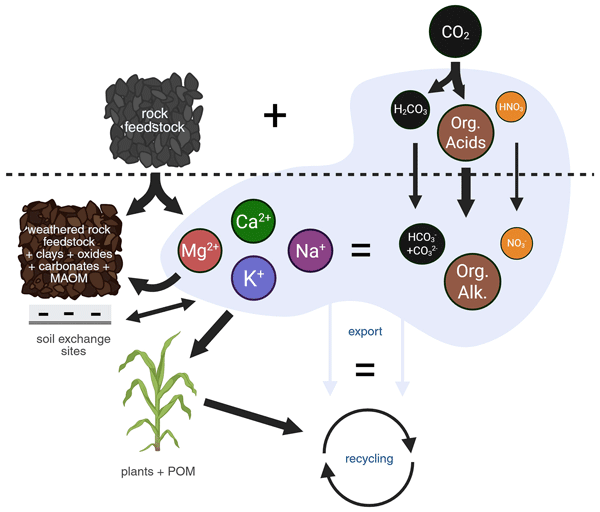
Enhanced rock weathering is a nature based negative emission technology, that permanently stores CO2. It requires rock-flour to be added to arable land with the help of farmers. To be eligible for carbon credits calls for a simple but scientifically solid, so called, Monitoring, Reporting & Verification” (MRV). We demonstrate that the commonly used carbon-based accounting is ill-suited to close the balance in open systems such as arable land, and argue for cation-based accounting strategy.
Jens S. Hammes, Jens Hartmann, Johannes A. C. Barth, Tobias Linke, Ingrid Smet, Mathilde Hagens, Philip A. E. Pogge von Strandmann, Tom Reershemius, Bruno Casimiro, Arthur Vienne, Anna A. Stoeckel, Ralf Steffens, and Dirk Paessler
EGUsphere, https://doi.org/10.5194/egusphere-2025-5402, https://doi.org/10.5194/egusphere-2025-5402, 2025
Short summary
Short summary
To test enhanced weathering's efficacy, we ran a two-year greenhouse study under warm, wet conditions, comparing several rock additives across farm soils. We tracked alkalinity and cation soil pools. Soil type was decisive: acidic, low-buffer soils exported more additional alkalinity, while alkaline or pH neutral soils retained it in cation pools. The results point to where enhanced weathering can deliver durable carbon removal and underscore the need for long, well-controlled trials.
Lucilla Boito, Jet Rijnders, Laura Steinwidder, Patrick Frings, Arthur Vienne, Mirthe Maes, Erik Verbruggen, and Sara Vicca
EGUsphere, https://doi.org/10.1101/2025.11.03.686277, https://doi.org/10.1101/2025.11.03.686277, 2025
Short summary
Short summary
We explored whether adding basalt and beneficial fungi to soil could improve soil health and crop growth. Basalt improved soil chemistry, confirming its role as a soil improver, while the fungi had little effect. Crop yield remained unchanged, showing that benefits depend on soil type. Our study helps clarify how soil amendments work and when they may support farming and climate solutions.
Jet Rijnders, Arthur Vienne, and Sara Vicca
Biogeosciences, 22, 2803–2829, https://doi.org/10.5194/bg-22-2803-2025, https://doi.org/10.5194/bg-22-2803-2025, 2025
Short summary
Short summary
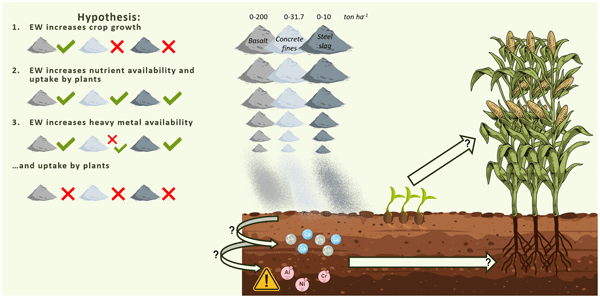
A mesocosm experiment was set up to investigate how maize responds to the application of basalt, concrete fines, and steel slag, using a dose–response approach. Biomass increased with basalt application but did not change with concrete fines or steel slag, except for increased tassel biomass. Mg, Ca, and Si generally increased in the crops, whereas toxic trace elements remained unaffected or even decreased in the plants. Overall, crops were positively affected by the application of silicate materials.
Arthur Vienne, Patrick Frings, Jet Rijnders, Lucilla Boito, Jens Hartmann, Harun Niron, Reinaldy Poetra, Miguel Portillo Estrada, Tom Reershemius, Laura Steinwidder, Tim Jesper Suhrhoff, and Sara Vicca
SOIL, 12, 421–440, https://doi.org/10.5194/soil-12-421-2026, https://doi.org/10.5194/soil-12-421-2026, 2026
Short summary
Short summary
Our study explores Enhanced Weathering (EW) using basalt rock dust to combat climate change. We treated maize-planted mesocosms with varying basalt amounts and monitored them for 101 d. Surprisingly, we found no significant realized inorganic CO2 removal. However, rock weathering was evident through increased exchangeable bases. While inorganic CO2 removal was not realized within this experiment, basalt amendment may enhance soil health and potentially long-term carbon sequestration.
Jet Rijnders, Lucilla Boito, Laura Steinwidder, Jasper Roussard, Patrick Frings, Harun Niron, and Sara Vicca
EGUsphere, https://doi.org/10.5194/egusphere-2026-603, https://doi.org/10.5194/egusphere-2026-603, 2026
Short summary
Short summary
Crushed volcanic rock has been proposed as a way to remove carbon dioxide from the air while improving soil quality. We tested this idea by growing maize in soil with and without the rock and with earthworms. The rock raised soil nutrients, and earthworms boosted these effects. Plant growth stayed similar, but some metals built up in roots. This approach could support farming and climate goals, yet food safety risks must be managed.
Jelle Bijma, Mathilde Hagens, Jens S. Hammes, Noah Planavsky, Philip A. E. Pogge von Strandmann, Tom Reershemius, Christopher T. Reinhard, Phil Renforth, Tim J. Suhrhoff, Sara Vicca, Arthur Vienne, and Dieter Wolf-Gladrow
Biogeosciences, 23, 53–75, https://doi.org/10.5194/bg-23-53-2026, https://doi.org/10.5194/bg-23-53-2026, 2026
Short summary
Short summary
Enhanced rock weathering is a nature based negative emission technology, that permanently stores CO2. It requires rock-flour to be added to arable land with the help of farmers. To be eligible for carbon credits calls for a simple but scientifically solid, so called, Monitoring, Reporting & Verification” (MRV). We demonstrate that the commonly used carbon-based accounting is ill-suited to close the balance in open systems such as arable land, and argue for cation-based accounting strategy.
Jens S. Hammes, Jens Hartmann, Johannes A. C. Barth, Tobias Linke, Ingrid Smet, Mathilde Hagens, Philip A. E. Pogge von Strandmann, Tom Reershemius, Bruno Casimiro, Arthur Vienne, Anna A. Stoeckel, Ralf Steffens, and Dirk Paessler
EGUsphere, https://doi.org/10.5194/egusphere-2025-5402, https://doi.org/10.5194/egusphere-2025-5402, 2025
Short summary
Short summary
To test enhanced weathering's efficacy, we ran a two-year greenhouse study under warm, wet conditions, comparing several rock additives across farm soils. We tracked alkalinity and cation soil pools. Soil type was decisive: acidic, low-buffer soils exported more additional alkalinity, while alkaline or pH neutral soils retained it in cation pools. The results point to where enhanced weathering can deliver durable carbon removal and underscore the need for long, well-controlled trials.
Lucilla Boito, Jet Rijnders, Laura Steinwidder, Patrick Frings, Arthur Vienne, Mirthe Maes, Erik Verbruggen, and Sara Vicca
EGUsphere, https://doi.org/10.1101/2025.11.03.686277, https://doi.org/10.1101/2025.11.03.686277, 2025
Short summary
Short summary
We explored whether adding basalt and beneficial fungi to soil could improve soil health and crop growth. Basalt improved soil chemistry, confirming its role as a soil improver, while the fungi had little effect. Crop yield remained unchanged, showing that benefits depend on soil type. Our study helps clarify how soil amendments work and when they may support farming and climate solutions.
Jet Rijnders, Arthur Vienne, and Sara Vicca
Biogeosciences, 22, 2803–2829, https://doi.org/10.5194/bg-22-2803-2025, https://doi.org/10.5194/bg-22-2803-2025, 2025
Short summary
Short summary
A mesocosm experiment was set up to investigate how maize responds to the application of basalt, concrete fines, and steel slag, using a dose–response approach. Biomass increased with basalt application but did not change with concrete fines or steel slag, except for increased tassel biomass. Mg, Ca, and Si generally increased in the crops, whereas toxic trace elements remained unaffected or even decreased in the plants. Overall, crops were positively affected by the application of silicate materials.
Niel Verbrigghe, Niki I. W. Leblans, Bjarni D. Sigurdsson, Sara Vicca, Chao Fang, Lucia Fuchslueger, Jennifer L. Soong, James T. Weedon, Christopher Poeplau, Cristina Ariza-Carricondo, Michael Bahn, Bertrand Guenet, Per Gundersen, Gunnhildur E. Gunnarsdóttir, Thomas Kätterer, Zhanfeng Liu, Marja Maljanen, Sara Marañón-Jiménez, Kathiravan Meeran, Edda S. Oddsdóttir, Ivika Ostonen, Josep Peñuelas, Andreas Richter, Jordi Sardans, Páll Sigurðsson, Margaret S. Torn, Peter M. Van Bodegom, Erik Verbruggen, Tom W. N. Walker, Håkan Wallander, and Ivan A. Janssens
Biogeosciences, 19, 3381–3393, https://doi.org/10.5194/bg-19-3381-2022, https://doi.org/10.5194/bg-19-3381-2022, 2022
Short summary
Short summary
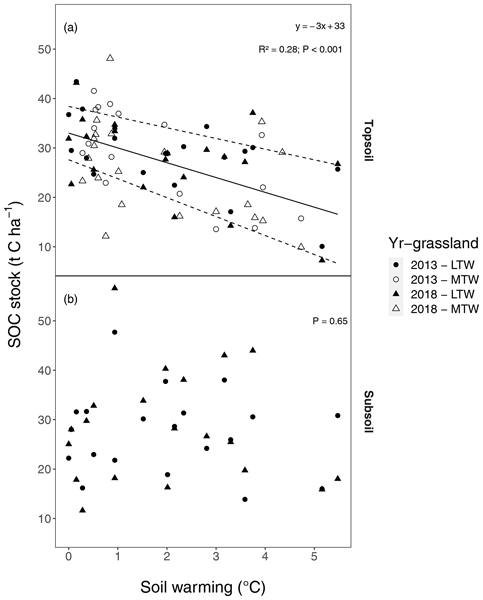
In subarctic grassland on a geothermal warming gradient, we found large reductions in topsoil carbon stocks, with carbon stocks linearly declining with warming intensity. Most importantly, however, we observed that soil carbon stocks stabilised within 5 years of warming and remained unaffected by warming thereafter, even after > 50 years of warming. Moreover, in contrast to the large topsoil carbon losses, subsoil carbon stocks remained unaffected after > 50 years of soil warming.

Melanie S. Verlinden, Hamada AbdElgawad, Arne Ven, Lore T. Verryckt, Sebastian Wieneke, Ivan A. Janssens, and Sara Vicca
Biogeosciences, 19, 2353–2364, https://doi.org/10.5194/bg-19-2353-2022, https://doi.org/10.5194/bg-19-2353-2022, 2022
Short summary
Short summary
Zea mays grows in mesocosms with different soil nutrition levels. At low phosphorus (P) availability, leaf physiological activity initially decreased strongly. P stress decreased over the season. Arbuscular mycorrhizal fungi (AMF) symbiosis increased over the season. AMF symbiosis is most likely responsible for gradual reduction in P stress.
Lore T. Verryckt, Sara Vicca, Leandro Van Langenhove, Clément Stahl, Dolores Asensio, Ifigenia Urbina, Romà Ogaya, Joan Llusià, Oriol Grau, Guille Peguero, Albert Gargallo-Garriga, Elodie A. Courtois, Olga Margalef, Miguel Portillo-Estrada, Philippe Ciais, Michael Obersteiner, Lucia Fuchslueger, Laynara F. Lugli, Pere-Roc Fernandez-Garberí, Helena Vallicrosa, Melanie Verlinden, Christian Ranits, Pieter Vermeir, Sabrina Coste, Erik Verbruggen, Laëtitia Bréchet, Jordi Sardans, Jérôme Chave, Josep Peñuelas, and Ivan A. Janssens
Earth Syst. Sci. Data, 14, 5–18, https://doi.org/10.5194/essd-14-5-2022, https://doi.org/10.5194/essd-14-5-2022, 2022
Short summary
Short summary
We provide a comprehensive dataset of vertical profiles of photosynthesis and important leaf traits, including leaf N and P concentrations, from two 3-year, large-scale nutrient addition experiments conducted in two tropical rainforests in French Guiana. These data present a unique source of information to further improve model representations of the roles of N and P, and other leaf nutrients, in photosynthesis in tropical forests.
Cited articles
Almassy, D. and Maia, S.: Urban Nature Atlas, Naturvation Project, NATURVATION, Central European University, https://una.city/sites/default/files/Analysis report_27Oct.pdf (last access: 23 February 2026), 2022.
Al-Mur, B. A.: Geochemical fractionation of heavy metals in sediments of the Red Sea, Saudi Arabia, Oceanologia, 62, 31–44, https://doi.org/10.1016/j.oceano.2019.07.001, 2020.
Amann, T. and Hartmann, J.: Ideas and perspectives: Synergies from co-deployment of negative emission technologies, Biogeosciences, 16, 2949–2960, https://doi.org/10.5194/bg-16-2949-2019, 2019.
Anthony, T. L., Jones, A. R., and Silver, W. L.: Supplementing Enhanced Weathering With Organic Amendments Accelerates the Net Climate Benefit of Soil Amendments in Rangeland Soils, AGU Advances, 6, https://doi.org/10.1029/2024AV001480, 2025.
Barałkiewicz, D. and Siepak, J.: Chromium, Nickel and Cobalt in Environmental Samples and Existing Legal Norms, Polish Journal of Environmental Studies, 8, 201–208, 1999.
Beerling, D. J., Leake, J. R., Long, S. P., Scholes, J. D., Ton, J., Nelson, P. N., Bird, M., Kantzas, E., Taylor, L. L., Sarkar, B., Kelland, M., DeLucia, E., Kantola, I., Müller, C., Rau, G., and Hansen, J.: Farming with crops and rocks to address global climate, food and soil security perspective, Nature Plants, 4, 138–147, https://doi.org/10.1038/s41477-018-0108-y, 2018.
Beerling, D. J., Kantzas, E. P., Lomas, M. R., Wade, P., Eufrasio, R. M., Renforth, P., Sarkar, B., Andrews, M. G., James, R. H., Pearce, C. R., Mercure, J. F., Pollitt, H., Holden, P. B., Edwards, N. R., Khanna, M., Koh, L., Quegan, S., Pidgeon, N. F., Janssens, I. A., and Banwart, S. A.: Potential for large-scale CO2 removal via enhanced rock weathering with croplands, Nature, 583, 242–248, https://doi.org/10.1038/s41586-020-2448-9, 2020.
Beerling, D. J., Epihov, D. Z., Kantola, I. B., Masters, M. D., Reershemius, T., Planavsky, N. J., and Reinhard, C. T.: Enhanced weathering in the US Corn Belt delivers carbon removal with agronomic benefits, PNAS, 1–10, https://doi.org/10.1073/pnas.2319436121, 2024.
Beesley, L. and Hardman, M.: Social prescribing of urban agriculture: The importance of minimizing risks from soil contamination, Cities, 149, 104971, https://doi.org/10.1016/j.cities.2024.104971, 2024.
Boito, L., Steinwidder, L., Rijnders, J., Berwouts, J., Janse, S., Niron, H., Roussard, J., Vienne, A., and Vicca, S.: Enhanced Rock Weathering Altered Soil Organic Carbon Fluxes in a Plant Trial, Global Change Biology, 31, 1–19, https://doi.org/10.1111/gcb.70373, 2025.
Buss, W., Yeates, K., Rohling, E. J., and Borevitz, J.: Enhancing natural cycles in agro-ecosystems to boost plant carbon capture and soil storage, Oxford Open Climate Change, 1, 1–13, https://doi.org/10.1093/oxfclm/kgab006, 2021.
CDR.fyi: CDR.fyi, CDR.fyi Inc., https://www.cdr.fyi/ (last access: 23 February 2026), 2026.
Chen, L., Li, W., and Xiao, Y.: Biochar and nitrogen fertilizer increase Glomus synergism and abundance and promote Trifolium pratense growth while inhibiting pollutant accumulation, Ecological Indicators, 133, 108377, https://doi.org/10.1016/j.ecolind.2021.108377, 2021.
Cohen-Shacham, E., Walters, G., Janzen, C., and Maginnis, S.: Nature-based Solutions to address global societal challenges, IUCN, Gland, Switzerland, https://doi.org/10.2305/IUCN.CH.2016.13.en, 2016.
Cox, S. F., Chelliah, M. C. M., McKinley, J. M., Palmer, S., Ofterdinger, U., Young, M. E., Cave, M. R., and Wragg, J.: The importance of solid-phase distribution on the oral bioaccessibility of Ni and Cr in soils overlying Palaeogene basalt lavas, Northern Ireland, Environmental Geochemistry and Health, 35, 553–567, https://doi.org/10.1007/s10653-013-9539-6, 2013.
Cox, S. F., Rollinson, G., and McKinley, J. M.: Mineralogical characterisation to improve understanding of oral bioaccessibility of Cr and Ni in basaltic soils in Northern Ireland, Journal of Geochemical Exploration, 183, 166–177, https://doi.org/10.1016/j.gexplo.2017.02.006, 2017.
Dong, X., Singh, B. P., Li, G., Lin, Q., and Zhao, X.: Biochar increased field soil inorganic carbon content five years after application, Soil and Tillage Research, 186, 36–41, https://doi.org/10.1016/j.still.2018.09.013, 2019.
Dupla, X., Möller, B., and Baveye, P. C.: Potential accumulation of toxic trace elements in soils during enhanced rock weathering, European Journal of Soil Science, 1–14, https://doi.org/10.1111/ejss.13343, 2023.
Dupla, X., Claustre, R., Bonvin, E., Graf, I., Le Bayon, R. C., and Grand, S.: Let the dust settle: Impact of enhanced rock weathering on soil biological, physical, and geochemical fertility, Science of the Total Environment, 954, https://doi.org/10.1016/j.scitotenv.2024.176297, 2024.
Farooqi, Z. U. R., Sabir, M., Zeeshan, N., Naveed, K., and Hussain, M. M.: Enhancing Carbon Sequestration Using Organic Amendments and Agricultural Practices, in: Carbon Capture, Utilization and Sequestration, edited by: Ramesh, S., IntechOpen, London, UK, Chap. 2, 17–36, https://doi.org/10.5772/intechopen.79336, 2018.
Fuss, S., Lamb, W. F., Callaghan, M. W., Hilaire, J., Creutzig, F., Amann, T., Beringer, T., De Oliveira Garcia, W., Hartmann, J., Khanna, T., Luderer, G., Nemet, G. F., Rogelj, J., Smith, P., Vicente, J. V., Wilcox, J., Del Mar Zamora Dominguez, M., and Minx, J. C.: Negative emissions – Part 2: Costs, potentials and side effects, Environmental Research Letters, 13, https://doi.org/10.1088/1748-9326/aabf9f, 2018.
Griffin, D. E., Wang, D., Parikh, S. J., and Scow, K. M.: Short-lived effects of walnut shell biochar on soils and crop yields in a long-term field experiment, Agriculture, Ecosystems and Environment, 236, 21–29, https://doi.org/10.1016/j.agee.2016.11.002, 2017.
Haque, F., Santos, R. M., and Chiang, Y. W.: CO2 sequestration by wollastonite-amended agricultural soils – An Ontario field study, International Journal of Greenhouse Gas Control, 97, 103017, https://doi.org/10.1016/j.ijggc.2020.103017, 2020a.
Haque, F., Santos, R. M., and Chiang, Y. W.: Optimizing Inorganic Carbon Sequestration and Crop Yield With Wollastonite Soil Amendment in a Microplot Study, Frontiers in Plant Science, 11, 1–12, https://doi.org/10.3389/fpls.2020.01012, 2020b.
Haque, F., Santos, R. M., and Chiang, Y. W.: Urban Farming with Enhanced Rock Weathering As a Prospective Climate Stabilization Wedge, Environmental Science and Technology, 10–13, https://doi.org/10.1021/acs.est.1c04111, 2021.
Honvault, N., Tiouchichine, M. L., Sauze, J., Piel, C., Landais, D., Devidal, S., Gritti, E., Bosch, D., and Milcu, A.: Additive effects of basalt enhanced weathering and biochar co-application on carbon sequestration, soil nutrient status and plant performance in a mesocosm experiment, Applied Geochemistry, 169, https://doi.org/10.1016/j.apgeochem.2024.106054, 2024.
Iff, N., Renforth, P., and Pogge von Strandmann, P. A. E.: The dissolution of olivine added to soil at 32 °C: the fate of weathering products and its implications for enhanced weathering at different temperatures, Frontiers in Climate, 6, 1–18, https://doi.org/10.3389/fclim.2024.1252210, 2024.
IPCC: Summary for Policymakers, Climate Change 2021: The Physical Science Basis. Contribution of Working Group I to the Sixth Assessment Report of the Intergovernmental Panel on Climate Change, https://doi.org/10.1017/9781009157896.001, 2021.
Kantola, I. B., Blanc-Betes, E., Masters, M. D., DeLucia, E. H., Marklein, A., Moore, C. E., Haden, A. Von, Bernacchi, C. J., Wolf, A., Epihov, D. Z., Beerling, D. J., and Delucia, E. H.: Improved net carbon budgets in the US Midwest through direct measured impacts of enhanced weathering, Global Change Biology, 29, 1–17, https://doi.org/10.1111/gcb.16903, 2023.
Kelland, M. E., Wade, P. W., Lewis, A. L., Taylor, L. L., Sarkar, B., Andrews, M. G., Lomas, M. R., Cotton, T. E. A., Kemp, S. J., James, R. H., Pearce, C. R., Hartley, S. E., Hodson, M. E., Leake, J. R., Banwart, S. A., and Beerling, D. J.: Increased yield and CO2 sequestration potential with the C4 cereal Sorghum bicolor cultivated in basaltic rock dust-amended agricultural soil, Global Change Biology, 26, 3658–3676, https://doi.org/10.1111/gcb.15089, 2020.
Laird, D. A., Novak, J. M., Collins, H. P., Ippolito, J. A., Karlen, D. L., Lentz, R. D., Sistani, K. R., Spokas, K., and Van Pelt, R. S.: Multi-year and multi-location soil quality and crop biomass yield responses to hardwood fast pyrolysis biochar, Geoderma, 289, 46–53, https://doi.org/10.1016/j.geoderma.2016.11.025, 2017.
Larkin, C. S., Andrews, M. G., Pearce, C. R., Yeong, K. L., Beerling, D. J., Bellamy, J., Benedick, S., Freckleton, R. P., Goring-harford, H., Sadekar, S., and James, R. H.: Quantification of CO2 removal in a large-scale enhanced weathering field trial on an oil palm plantation in Sabah, Malaysia, Frontiers in Climate, 4, https://doi.org/10.3389/fclim.2022.959229, 2022.
Liu, X., Zhang, A., Ji, C., Joseph, S., Bian, R., Li, L., Pan, G., and Paz-Ferreiro, J.: Biochar's effect on crop productivity and the dependence on experimental conditions-a meta-analysis of literature data, Plant and Soil, 373, 583–594, https://doi.org/10.1007/s11104-013-1806-x, 2013.
Mei, Y., Zhuang, S., and Wang, J.: Adsorption of heavy metals by biochar in aqueous solution: A review, Science of the Total Environment, 968, 178898, https://doi.org/10.1016/j.scitotenv.2025.178898, 2025.
Meng, L., Wu, Y., Mu, M., Wang, Z., Chen, Z., Wang, L., Ma, Z., Cui, G., and Yin, X.: Effects of different concentrations of biochar amendments and Pb toxicity on rhizosphere soil characteristics and bacterial community of red clover (Trifolium pretense L.), Frontiers in Plant Science, 14, 1–13, https://doi.org/10.3389/fpls.2023.1112002, 2023.
Niron, H., Vienne, A., Frings, P., Poetra, R., and Vicca, S.: Exploring the synergy of enhanced weathering and Bacillus subtilis: A promising strategy for sustainable agriculture, Global Change Biology, 30, 1–18, https://doi.org/10.1111/gcb.17511, 2024.
Palandri, J. L. and Kharaka, Y. K.: A compilation of rate parameters of water-mineral interaction kinetics for application to geochemical modeling, USGS Open File Report, 71, 2004–1068, https://doi.org/10.3133/ofr20041068, 2004.
Pescatore, A., Grassi, C., Rizzo, A. M., Orlandini, S., and Napoli, M.: Effects of biochar on berseem clover (Trifolium alexandrinum L.) growth and heavy metal (Cd, Cr, Cu, Ni, Pb, and Zn) accumulation, Chemosphere, 287, 131986, https://doi.org/10.1016/j.chemosphere.2021.131986, 2022.
Pogge von Strandmann, P. A. E., He, X., Zhou, Y., and Wilson, D. J.: Comparing open versus closed system weathering experiments using lithium isotopes, Applied Geochemistry, 189, 106458, https://doi.org/10.1016/j.apgeochem.2025.106458, 2025.
Power, I. M., Hatten, V. N. J., Guo, M., Rausis, K., and Klyn-Hesselink, H.: Are enhanced rock weathering rates overestimated? A few geochemical and mineralogical pitfalls, Frontiers in Climate, 6, 1–9, https://doi.org/10.3389/fclim.2024.1510747, 2025.
Rijnders, J., Vienne, A., and Vicca, S.: Effects of basalt, concrete fines, and steel slag on maize growth and heavy metal accumulation in an enhanced weathering experiment, Biogeosciences, 22, 2803–2825, https://doi.org/10.5194/bg-22-2803-2025, 2025.
Rogelj, J., Shindell, D., Jiang, K., Fifita, S., Forster, P., Ginzburg, C., Handa, C., Kheshgi, H., Kobayashi, S., Kriegler, E., Mundaca, L., Séférian, R., and Vilariño, M. V.: Mitigation Pathways Compatible with 1.5 °C in the Context of Sustainable Development, in: Global Warming of 1.5 °C. An IPCC Special Report on the impacts of global warming of 1.5 °C above pre-industrial levels and related global greenhouse gas emission pathways, in the context of strengthening the global response to the threat of climate change, sustainable development, and efforts to eradicate poverty, edited by: Masson-Delmotte, V., Zhai, P., Pörtner, H.-O., Roberts, D., Skea, J., Shukla, P. R., Pirani, A., Moufouma-Okia, W., Péan, C., Pidcock, R., Connors, S., Matthews, J. B. R., Chen, Y., Zhou, X., Gomis, M. I., Lonnoy, E., Maycock, T., Tignor, M., and Waterfield, T., Cambridge University Press, Cambridge, UK and New York, NY, USA, Chap. 2, 93–174, https://doi.org/10.1017/9781009157940.004, 2018.
Sanei, H., Rudra, A., Zia, M., Kousted, S., Sindlev, B., Zheng, X., Nielsen, B., and Ingermann, H.: Assessing biochar's permanence: An inertinite benchmark, International Journal of Coal Geology, 281, https://doi.org/10.1016/j.coal.2023.104409, 2024.
Silva Gonzaga, M. I., Oliveira da Silva, P. S., Carlos de Jesus Santos, J., and Ganassali de Oliveira Junior, L. F.: Biochar increases plant water use efficiency and biomass production while reducing Cu concentration in Brassica juncea L. in a Cu-contaminated soil, Ecotoxicology and Environmental Safety, 183, 109557, https://doi.org/10.1016/j.ecoenv.2019.109557, 2019.
Steinwidder, L., Boito, L., Frings, P. J., Niron, H., Rijnders, J., de Schutter, A., Vienne, A., and Vicca, S.: Beyond Inorganic C: Soil Organic C as a Key Pathway for Carbon Sequestration in Enhanced Weathering, Global Change Biology, 31, https://doi.org/10.1111/gcb.70340, 2025.
Sun, S. S., Ao, M., Geng, K. R., Chen, J. Q., Deng, T. H. B., Li, J. J., Guan, Z. T., Mo, B. L., Liu, T., Yang, W. J., Tang, Y. T., and Qiu, R. L.: Enrichment and speciation of chromium during basalt weathering: Insights from variably weathered profiles in the Leizhou Peninsula, South China, Science of the Total Environment, 822, 153304, https://doi.org/10.1016/j.scitotenv.2022.153304, 2022.
Taylor, L., Driscoll, C., Groffman, P., Rau, G., Blum, J., and Beerling, D.: Increased carbon capture by a silicate-treated forested watershed affected by acid deposition, Biogeosciences, 18, 169–188, https://doi.org/10.5194/bg-18-169-2021, 2021.
Tessier, A., Campbell, P. G. C., and Bisson, M.: Sequential Extraction Procedure for the Speciation of Particulate Trace Metals, Analytical Chemistry, 51, 844–851, https://doi.org/10.1021/ac50043a017, 1979.
Van Bemmelen, J.: Über Die Bestimmung Des Wassers, Des Humus, Des Schwefels, Der in Den Colloïdalen Silikaten Gebundenen Kieselsäure, Des Mangans U. S. W. Im Ackerboden, Die Landwirthschaftlichen Versuchs-Stationen, 37, 279–290, 1890.
van Raffe, F., Comans, R. N. J., and Groenenberg, J. E.: Chromium(III) Binding to Purified Fulvic and Humic Acids and Their Solid-Solution Partitioning and Speciation in Soil, ACS Earth and Space Chemistry, 9, 1815–1824, https://doi.org/10.1021/acsearthspacechem.5c00075, 2025.
Vienne, A.: Belfast Upsurge project: Basalt + Biochar experiment with clover and mustard plants, Zenodo [data set], https://doi.org/10.5281/zenodo.15001309, 2025.
Vienne, A., Frings, P., Poblador, S., Steinwidder, L., Rijnders, J., Schoelynck, J., Vinduskova, O., and Vicca, S.: Earthworms in an enhanced weathering mesocosm experiment: Effects on soil carbon sequestration, base cation exchange and soil CO2 efflux, Soil Biology and Biochemistry, 199, 109596, https://doi.org/10.1016/j.soilbio.2024.109596, 2024.
Vienne, A., Frings, P., Rijnders, J., Suhrhoff, T. J., Reershemius, T., Poetra, R. P., Hartmann, J., Niron, H., Estrada, M. P., Steinwidder, L., Boito, L., and Vicca, S.: Weathering without inorganic CDR revealed through cation tracing, EGUsphere [preprint], https://doi.org/10.5194/egusphere-2025-1667, 2025.
Viotti, P., Marzeddu, S., Antonucci, A., Décima, M. A., Lovascio, P., Tatti, F., and Boni, M. R.: Biochar as Alternative Material for Heavy Metal Adsorption from Groundwaters: Lab-Scale (Column) Experiment Review, Materials, 17, 1–53, https://doi.org/10.3390/ma17040809, 2024.
Vorrath, M.-E., Amann, T., Meyer, J., Hagemann, N., Aldrich, C., Börker, J., Seedtke, M., Hagens, M., Eschenbach, A., and Hartmann, J.: Pyrogenic carbon and carbonating minerals for carbon capture and storage (PyMiCCS) part II: organic and inorganic carbon dioxide removal in an Oxisol, Frontiers in Climate, 1–18, https://doi.org/10.3389/fclim.2025.1592454, 2025.
Wang, Q., Wang, B., Ma, Y., Zhang, X., Lyu, W., and Chen, M.: Stabilization of heavy metals in biochar derived from plants in antimony mining area and its environmental implications, Environmental Pollution, 300, 118902, https://doi.org/10.1016/j.envpol.2022.118902, 2022.
Xu, Y., Axe, L., Boonfueng, T., Tyson, T. A., Trivedi, P., and Pandya, K.: Ni(II) complexation to amorphous hydrous ferric oxide: An X-ray absorption spectroscopy study, Journal of Colloid and Interface Science, 314, 10–17, https://doi.org/10.1016/j.jcis.2007.05.037, 2007.
Yusuf, M., Fariduddin, Q., Hayat, S., and Ahmad, A.: Nickel: An overview of uptake, essentiality and toxicity in plants, Bulletin of Environmental Contamination and Toxicology, 86, 1–17, https://doi.org/10.1007/s00128-010-0171-1, 2011.
Zang, Y., Wang, M., Shohag, M. J. I., Lu, L., He, T., Liao, C., Zhang, Z., Chen, J., You, X., Zhao, Y., Wei, Y., and Tian, S.: Biochar performance for preventing cadmium and arsenic accumulation, and the health risks associated with mustard (Brassica juncea) grown in co-contaminated soils, Ecotoxicology and Environmental Safety, 263, 115216, https://doi.org/10.1016/j.ecoenv.2023.115216, 2023.
Zhou, R., Zhang, M., and Shao, S.: Optimization of target biochar for the adsorption of target heavy metal ion, Scientific Reports, 12, 1–17, https://doi.org/10.1038/s41598-022-17901-w, 2022.
Short summary
We explored whether adding crushed volcanic rock and charcoal to soil could help store inorganic carbon, improve plant growth and reduce harmful metals in crops. The crushed rock did not increase plant growth or inorganic carbon in soil and nutrients released from the rock may have moved into other stable soil forms rather than forming carbonates. In contrast, charcoal improved plant growth and reduced metal uptake. Using both rocks and charcoal together offered no extra observable benefits.
We explored whether adding crushed volcanic rock and charcoal to soil could help store inorganic...


Altmetrics
Final-revised paper
Preprint