
Articles | Volume 23, issue 5
https://doi.org/10.5194/bg-23-1755-2026
© Author(s) 2026. This work is distributed under
the Creative Commons Attribution 4.0 License.
the Creative Commons Attribution 4.0 License.
https://doi.org/10.5194/bg-23-1755-2026
© Author(s) 2026. This work is distributed under
the Creative Commons Attribution 4.0 License.
the Creative Commons Attribution 4.0 License.
Research article
| 
04 Mar 2026
Research article |
| 04 Mar 2026
| 04 Mar 2026
Tropical wet season runoff mobilises younger carbon in rainforest streams but older carbon in agricultural streams

Research Institute for the Environment and Livelihoods, Charles Darwin University, Darwin, NT, Australia
College of Science and Engineering, James Cook University, Cairns, QLD, Australia
Vanessa Solano
Research Institute for the Environment and Livelihoods, Charles Darwin University, Darwin, NT, Australia
now at: Groupe de Recherche Interuniversitaire en Limnologie, Département des Sciences Biologiques, Université du Québec à Montréal, Montréal, QC, Canada
Dioni I. Cendón
Australian Nuclear Science and Technology Organisation, Lucas Heights, NSW, Australia
School of Biological, Earth and Environmental Sciences, UNSW Sydney, Sydney, NSW, Australia
Francesco Ulloa-Cedamanos
Research Institute for the Environment and Livelihoods, Charles Darwin University, Darwin, NT, Australia
Liza K. McDonough
Australian Nuclear Science and Technology Organisation, Lucas Heights, NSW, Australia
School of Biological, Earth and Environmental Sciences, UNSW Sydney, Sydney, NSW, Australia
Robert G. M. Spencer
National High Magnetic Field Laboratory Geochemistry Group, Department of Earth, Ocean, and Atmospheric Science, Florida State University, Tallahassee, FL, USA
Niels C. Munksgaard
College of Science and Engineering, James Cook University, Cairns, QLD, Australia
Lindsay B. Hutley
Research Institute for the Environment and Livelihoods, Charles Darwin University, Darwin, NT, Australia
Jean-Sébastien Moquet
Institut des Sciences de la Terre d'Orléans, Université d'Orléans-CNRS-BRGM, Orléans, France
David E. Butman
School of Environmental and Forest Sciences, University of Washington, Seattle, WA, USA
Related authors
Francesco Ulloa-Cedamanos, Adam T. Rexroade, Yihan Li, Lindsay B. Hutley, Wei Wen Wong, Marcus B. Wallin, Josep G. Canadell, Anna Lintern, and Clément Duvert
Earth Syst. Sci. Data, 18, 2723–2748, https://doi.org/10.5194/essd-18-2723-2026, https://doi.org/10.5194/essd-18-2723-2026, 2026
Short summary
Short summary
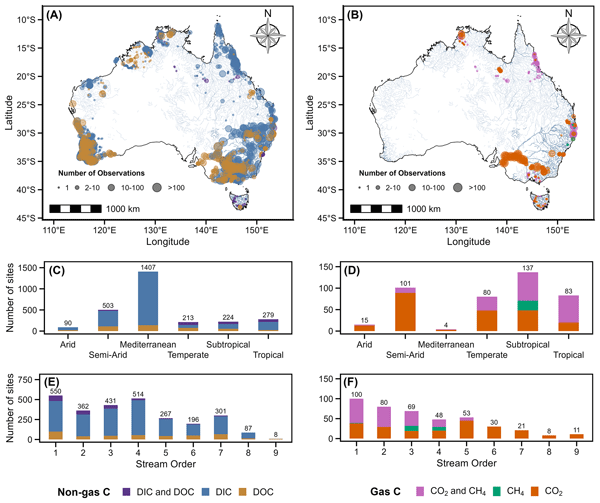
Rivers and streams play a key role in how carbon moves through the environment, but we know little about this in Australia. To help close this gap, we compile the first national database of carbon data from rivers and streams, combining past studies, government records, and new data. The data show where and when carbon was measured and reveal major gaps in long-term monitoring. This new resource will help scientists understand carbon and water systems across Australia.
Stephen Lee, Dylan J. Irvine, Clément Duvert, Gabriel C. Rau, and Ian Cartwright
Hydrol. Earth Syst. Sci., 28, 1771–1790, https://doi.org/10.5194/hess-28-1771-2024, https://doi.org/10.5194/hess-28-1771-2024, 2024
Short summary
Short summary
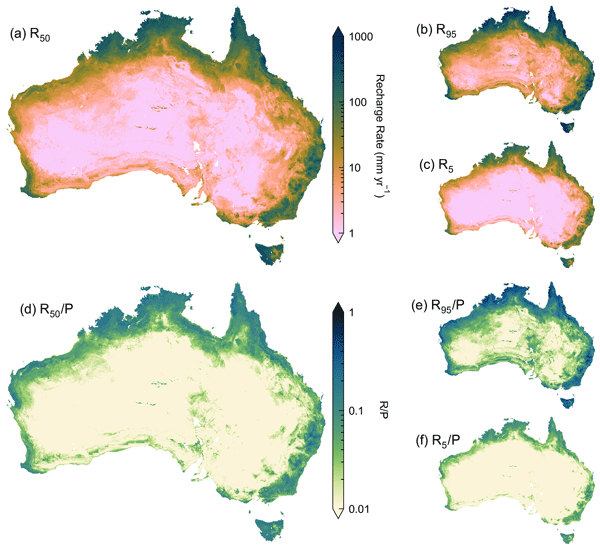
Global groundwater recharge studies collate recharge values estimated using different methods that apply to different timescales. We develop a recharge prediction model, based solely on chloride, to produce a recharge map for Australia. We reveal that climate and vegetation have the most significant influence on recharge variability in Australia. Our recharge rates were lower than other models due to the long timescale of chloride in groundwater. Our method can similarly be applied globally.
Danlu Guo, Camille Minaudo, Anna Lintern, Ulrike Bende-Michl, Shuci Liu, Kefeng Zhang, and Clément Duvert
Hydrol. Earth Syst. Sci., 26, 1–16, https://doi.org/10.5194/hess-26-1-2022, https://doi.org/10.5194/hess-26-1-2022, 2022
Short summary
Short summary
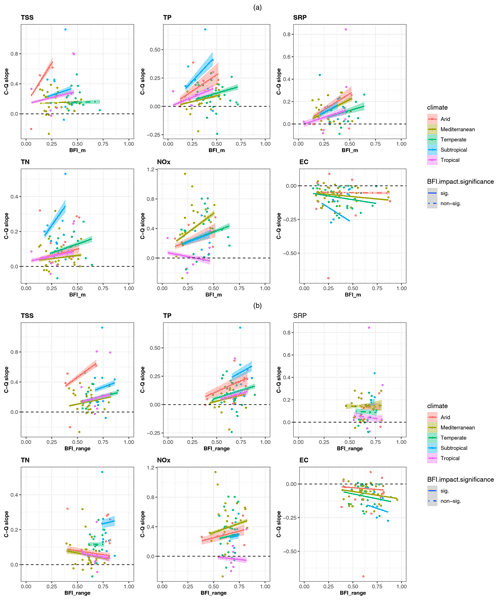
We investigate the impact of baseflow contribution on concentration–flow (C–Q) relationships across the Australian continent. We developed a novel Bayesian hierarchical model for six water quality variables across 157 catchments that span five climate zones. For sediments and nutrients, the C–Q slope is generally steeper for catchments with a higher median and a greater variability of baseflow contribution, highlighting the key role of variable flow pathways in particulate and solute export.
Caitlin A. Selfe, Karina Meredith, Liza McDonough, Justine Shaw, Stephen J. Roberts, and Krystyna M. Saunders
Biogeosciences, 23, 3807–3827, https://doi.org/10.5194/bg-23-3807-2026, https://doi.org/10.5194/bg-23-3807-2026, 2026
Short summary
Short summary
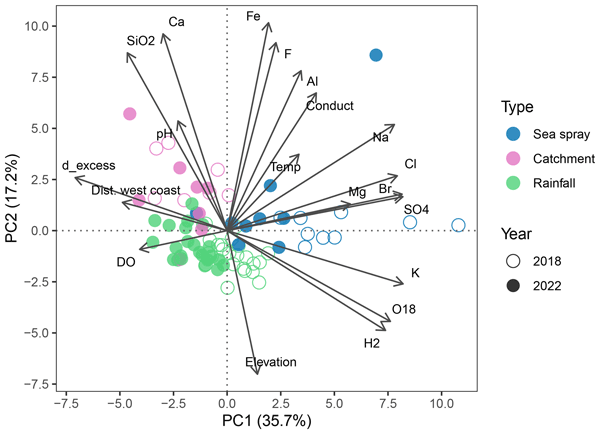
This study presents an updated diatom–conductivity model to reconstruct past Southern Hemisphere westerly wind strength from lake sediments on sub-Antarctic Macquarie Island. We analysed diatom–environment relationships using seasonal and multi-year water chemistry and isotope data. Diatoms respond strongly to changes in lake water conductivity driven by wind-blown sea spray. The model provides a reliable tool for tracking long-term wind patterns and understanding past and future climate change.
Francesco Ulloa-Cedamanos, Adam T. Rexroade, Yihan Li, Lindsay B. Hutley, Wei Wen Wong, Marcus B. Wallin, Josep G. Canadell, Anna Lintern, and Clément Duvert
Earth Syst. Sci. Data, 18, 2723–2748, https://doi.org/10.5194/essd-18-2723-2026, https://doi.org/10.5194/essd-18-2723-2026, 2026
Short summary
Short summary
Rivers and streams play a key role in how carbon moves through the environment, but we know little about this in Australia. To help close this gap, we compile the first national database of carbon data from rivers and streams, combining past studies, government records, and new data. The data show where and when carbon was measured and reveal major gaps in long-term monitoring. This new resource will help scientists understand carbon and water systems across Australia.
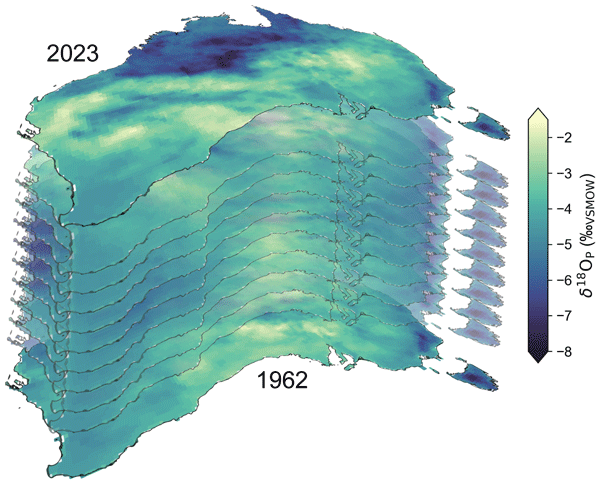
Georgina Falster, Gab Abramowitz, Sanaa Hobeichi, Catherine Hughes, Pauline Treble, Nerilie J. Abram, Michael I. Bird, Alexandre Cauquoin, Bronwyn Dixon, Russell Drysdale, Chenhui Jin, Niels Munksgaard, Bernadette Proemse, Jonathan J. Tyler, Martin Werner, and Carol V. Tadros
Hydrol. Earth Syst. Sci., 30, 289–315, https://doi.org/10.5194/hess-30-289-2026, https://doi.org/10.5194/hess-30-289-2026, 2026
Short summary
Short summary
We used a random forest approach to produce estimates of monthly precipitation stable isotope variability from 1962–2023, at high resolution across the entire Australian continent. Comprehensive skill and sensitivity testing shows that our random forest models skilfully predict precipitation isotope values in places and times that observations are not available. We make all outputs freely available, facilitating use in fields from ecology and hydrology to archaeology and forensic science.
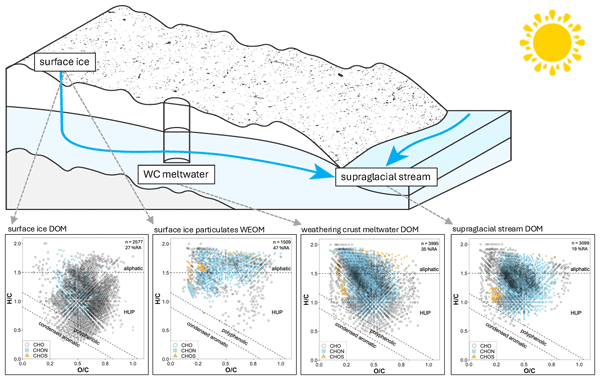
Eva L. Doting, Ian T. Stevens, Anne M. Kellerman, Pamela E. Rossel, Runa Antony, Amy M. McKenna, Martyn Tranter, Liane G. Benning, Robert G. M. Spencer, Jon R. Hawkings, and Alexandre M. Anesio
Biogeosciences, 22, 41–53, https://doi.org/10.5194/bg-22-41-2025, https://doi.org/10.5194/bg-22-41-2025, 2025
Short summary
Short summary
This study provides the first evidence for biogeochemical cycling of supraglacial dissolved organic matter (DOM) in meltwater flowing through the porous crust of weathering ice that covers glacier ice surfaces during the melt season. Movement of water through the weathering crust is slow, allowing microbes and solar radiation to alter the DOM in glacial meltwaters. This is important as supraglacial meltwaters deliver DOM to downstream aquatic environments.
Stephen Lee, Dylan J. Irvine, Clément Duvert, Gabriel C. Rau, and Ian Cartwright
Hydrol. Earth Syst. Sci., 28, 1771–1790, https://doi.org/10.5194/hess-28-1771-2024, https://doi.org/10.5194/hess-28-1771-2024, 2024
Short summary
Short summary
Global groundwater recharge studies collate recharge values estimated using different methods that apply to different timescales. We develop a recharge prediction model, based solely on chloride, to produce a recharge map for Australia. We reveal that climate and vegetation have the most significant influence on recharge variability in Australia. Our recharge rates were lower than other models due to the long timescale of chloride in groundwater. Our method can similarly be applied globally.
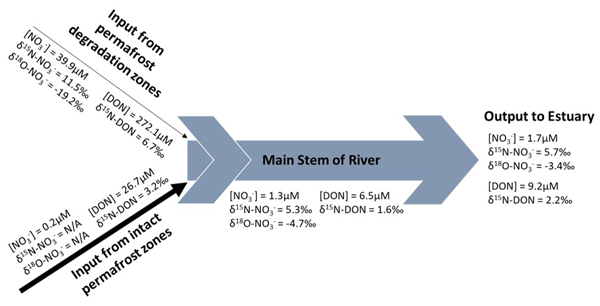
Adam Francis, Raja S. Ganeshram, Robyn E. Tuerena, Robert G. M. Spencer, Robert M. Holmes, Jennifer A. Rogers, and Claire Mahaffey
Biogeosciences, 20, 365–382, https://doi.org/10.5194/bg-20-365-2023, https://doi.org/10.5194/bg-20-365-2023, 2023
Short summary
Short summary
Climate change is causing extensive permafrost degradation and nutrient releases into rivers with great ecological impacts on the Arctic Ocean. We focused on nitrogen (N) release from this degradation and associated cycling using N isotopes, an understudied area. Many N species are released at degradation sites with exchanges between species. N inputs from permafrost degradation and seasonal river N trends were identified using isotopes, helping to predict climate change impacts.
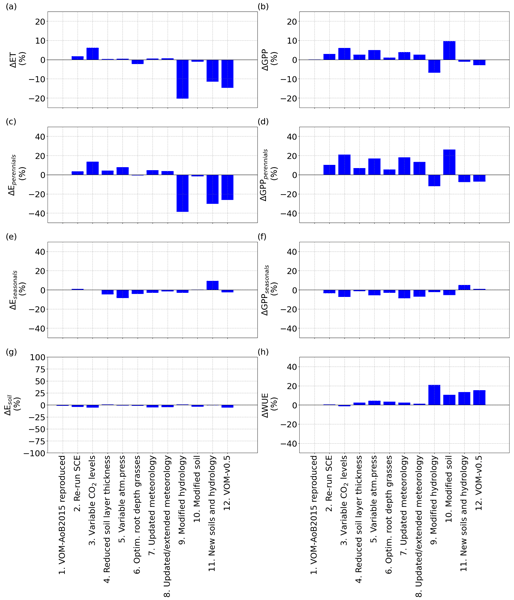
Remko C. Nijzink, Jason Beringer, Lindsay B. Hutley, and Stanislaus J. Schymanski
Geosci. Model Dev., 15, 883–900, https://doi.org/10.5194/gmd-15-883-2022, https://doi.org/10.5194/gmd-15-883-2022, 2022
Short summary
Short summary
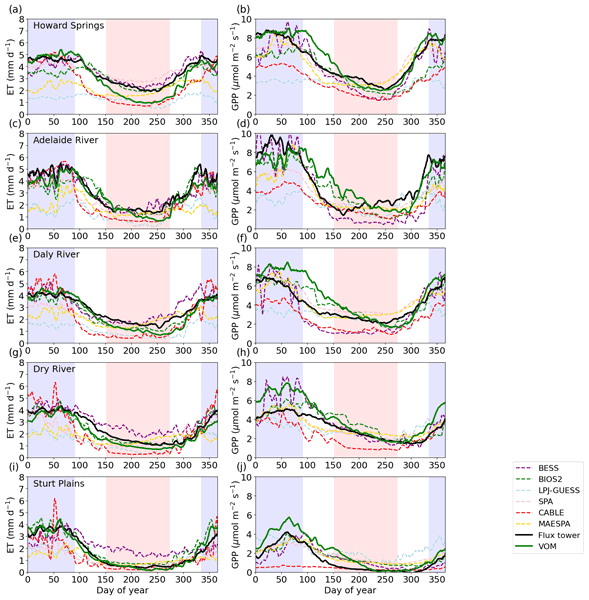
The Vegetation Optimality Model (VOM) is a coupled water–vegetation model that predicts vegetation properties rather than determines them based on observations. A range of updates to previous applications of the VOM has been made for increased generality and improved comparability with conventional models. This showed that there is a large effect on the simulated water and carbon fluxes caused by the assumption of deep groundwater tables and updated soil profiles in the model.
Remko C. Nijzink, Jason Beringer, Lindsay B. Hutley, and Stanislaus J. Schymanski
Hydrol. Earth Syst. Sci., 26, 525–550, https://doi.org/10.5194/hess-26-525-2022, https://doi.org/10.5194/hess-26-525-2022, 2022
Short summary
Short summary
Most models that simulate water and carbon exchanges with the atmosphere rely on information about vegetation, but optimality models predict vegetation properties based on general principles. Here, we use the Vegetation Optimality Model (VOM) to predict vegetation behaviour at five savanna sites. The VOM overpredicted vegetation cover and carbon uptake during the wet seasons but also performed similarly to conventional models, showing that vegetation optimality is a promising approach.
Danlu Guo, Camille Minaudo, Anna Lintern, Ulrike Bende-Michl, Shuci Liu, Kefeng Zhang, and Clément Duvert
Hydrol. Earth Syst. Sci., 26, 1–16, https://doi.org/10.5194/hess-26-1-2022, https://doi.org/10.5194/hess-26-1-2022, 2022
Short summary
Short summary
We investigate the impact of baseflow contribution on concentration–flow (C–Q) relationships across the Australian continent. We developed a novel Bayesian hierarchical model for six water quality variables across 157 catchments that span five climate zones. For sediments and nutrients, the C–Q slope is generally steeper for catchments with a higher median and a greater variability of baseflow contribution, highlighting the key role of variable flow pathways in particulate and solute export.
Cited articles
Aiken, G. R., Spencer, R. G. M., Striegl, R. G., Schuster, P. F., and Raymond, P. A.: Influences of glacier melt and permafrost thaw on the age of dissolved organic carbon in the Yukon River basin, Global Biogeochem. Cy., 28, 525–537, https://doi.org/10.1002/2013GB004764, 2014.
Barnes, R. T., Butman, D. E., Wilson, H., and Raymond, P. A.: Riverine export of aged carbon driven by flow path depth and residence time, Environ. Sci. Technol., 52, 1028–1035, https://doi.org/10.1021/acs.est.7b04717, 2018.
Battin, T. J., Lauerwald, R., Bernhardt, E. S., Bertuzzo, E., Gener, L. G., Hall, R. O., Hotchkiss, E. R., Maavara, T., Pavelsky, T. M., Ran, L., Raymond, P., Rosentreter, J. A., and Regnier, P.: River ecosystem metabolism and carbon biogeochemistry in a changing world, Nature, 613, 449–459, https://doi.org/10.1038/s41586-022-05500-8, 2023.
Beck, H. E., McVicar, T. R., Vergopolan, N., Berg, A., Lutsko, N. J., Dufour, A., Zeng, Z., Jiang, X., van Dijk, A. I. J. M., and Miralles, D. G.: High-resolution (1 km) Köppen-Geiger maps for 1901–2099 based on constrained CMIP6 projections, Sci. Data, 10, 724, https://doi.org/10.1038/s41597-023-02549-6, 2023.
Behnke, M. I., Fellman, J. B., D'Amore, D. V., Gomez, S. M., and Spencer, R. G. M.: From canopy to consumer: what makes and modifies terrestrial DOM in a temperate forest, Biogeochemistry, 164, 185–205, https://doi.org/10.1007/s10533-022-00906-y, 2023.
Berggren, M., Laudon, H., Haei, M., Ström, L., and Jansson, M.: Efficient aquatic bacterial metabolism of dissolved low-molecular-weight compounds from terrestrial sources, The ISME Journal, 4, 408–416, https://doi.org/10.1038/ismej.2009.120, 2009.
Billett, M. F., Garnett, M. H., and Harvey, F.: UK peatland streams release old carbon dioxide to the atmosphere and young dissolved organic carbon to rivers, Geophys. Res. Lett., 34, https://doi.org/10.1029/2007GL031797, 2007.
Bouillon, S., Dehairs, F., Schiettecatte, L.-S., and Borges, A. V.: Biogeochemistry of the Tana estuary and delta (northern Kenya), Limnol. Oceanogr., 52, 46–59, https://doi.org/10.4319/lo.2007.52.1.0046, 2007.
Bouillon, S., Yambélé, A., Spencer, R. G. M., Gillikin, D. P., Hernes, P. J., Six, J., Merckx, R., and Borges, A. V.: Organic matter sources, fluxes and greenhouse gas exchange in the Oubangui River (Congo River basin), Biogeosciences, 9, 2045–2062, https://doi.org/10.5194/bg-9-2045-2012, 2012.
Bowman, D. M. J. S., Cook, G. D., and Zoppi, U.: Holocene boundary dynamics of a northern Australian monsoon rainforest patch inferred from isotopic analysis of carbon (14C and δ13C) and nitrogen (δ15N) in soil organic matter, Austral Ecol., 29, 605–612, https://doi.org/10.1111/j.1442-9993.2004.01394.x, 2004.
Bureau of Meteorology: Climate Data Online: http://www.bom.gov.au/climate/data, last access: 21 February 2025.
Butman, D. E., Wilson, H. F., Barnes, R. T., Xenopoulos, M. A., and Raymond, P. A.: Increased mobilization of aged carbon to rivers by human disturbance, Nat. Geosci., 8, 112–116, https://doi.org/10.1038/ngeo2322, 2015.
Campeau, A., Bishop, K., Amvrosiadi, N., Billett, M. F., Garnett, M. H., Laudon, H., Öquist, M. G., and Wallin, M. B.: Current forest carbon fixation fuels stream CO2 emissions, Nat. Commun., 10, 1876, https://doi.org/10.1038/s41467-019-09922-3, 2019.
Carvalho, M. C.: Adapting an elemental analyser to perform high-temperature catalytic oxidation for dissolved organic carbon measurements in water, Rapid Commun. Mass Sp., 37, e9451, https://doi.org/10.1002/rcm.9451, 2023.
Chen, S., Zhong, J., Ran, L., Yi, Y., Wang, W., Yan, Z., Li, S., and Mostofa, K. M. G.: Geomorphologic controls and anthropogenic impacts on dissolved organic carbon from mountainous rivers: insights from optical properties and carbon isotopes, Biogeosciences, 20, 4949–4967, https://doi.org/10.5194/bg-20-4949-2023, 2023.
Chen, Z. L., Yi, Y., Fu, W., Liang, W., Li, P., Wang, K., Zhang, L., Dong, K., Li, S.-L., Xu, S., and He, D.: Severe flood modulates the sources and age of dissolved organic carbon in the Yangtze River Estuary, Environ. Res., 252, 119040, https://doi.org/10.1016/j.envres.2024.119040, 2024.
Coble, A. A., Wymore, A. S., Potter, J. D., and McDowell, W. H.: Land use overrides stream order and season in driving dissolved organic matter dynamics throughout the year in a river network, Environ. Sci. Technol., 56, 2009–2020, https://doi.org/10.1021/acs.est.1c06305, 2022.
Coble, P. G.: Characterization of marine and terrestrial DOM in seawater using excitation-emission matrix spectroscopy, Mar. Chem., 51, 325–346, https://doi.org/10.1016/0304-4203(95)00062-3, 1996.
Congedo, L.: Semi-Automatic Classification Plugin: A Python tool for the download and processing of remote sensing images in QGIS., J. Open Source Softw., 6, 3172, https://doi.org/10.21105/joss.03172, 2021.
Dean, J. F., Coxon, G., Zheng, Y., Bishop, J., Garnett, M. H., Bastviken, D., Galy, V., Spencer, R. G. M., Tank, S. E., Tipper, E. T., Vonk, J. E., Wallin, M. B., Zhang, L., Evans, C. D., and Hilton, R. G.: Old carbon routed from land to the atmosphere by global river systems, Nature, 642, 105–111, https://doi.org/10.1038/s41586-025-09023-w, 2025.
Don, A., Schumacher, J., and Freibauer, A.: Impact of tropical land-use change on soil organic carbon stocks – a meta-analysis, Glob. Change Biol., 17, 1658–1670, https://doi.org/10.1111/j.1365-2486.2010.02336.x, 2011.
Drake, T. W., Van Oost, K., Barthel, M., Bauters, M., Hoyt, A. M., Podgorski, D. C., Six, J., Boeckx, P., Trumbore, S. E., Cizungu Ntaboba, L., and Spencer, R. G. M.: Mobilization of aged and biolabile soil carbon by tropical deforestation, Nat. Geosci., 12, 541–546, https://doi.org/10.1038/s41561-019-0384-9, 2019.
Drake, T. W., Podgorski, D. C., Dinga, B., Chanton, J. P., Six, J., and Spencer, R. G. M.: Land-use controls on carbon biogeochemistry in lowland streams of the Congo Basin, Glob. Change Biol., 26, 1374–1389, https://doi.org/10.1111/gcb.14889, 2020.
Duvert, C.: Dataset: stream carbon age in the Australian humid tropics, HydroShare [data set], http://www.hydroshare.org/resource/c5e20d5ffe5441e2bf54ba0561fb4dd4 (last access: 4 March 2026), 2025.
Duvert, C., Hutley, L. B., Birkel, C., Rudge, M., Munksgaard, N. C., Wynn, J. G., Setterfield, S. A., Cendón, D. I., and Bird, M. I.: Seasonal shift from biogenic to geogenic fluvial carbon caused by changing water sources in the wet-dry tropics, J. Geophys. Res.-Biogeo., 125, e2019JG005384, https://doi.org/10.1029/2019JG005384, 2020.
Evans, C. D., Page, S. E., Jones, T., Moore, S., Gauci, V., Laiho, R., Hruška, J., Allott, T. E. H., Billett, M. F., Tipping, E., Freeman, C., and Garnett, M. H.: Contrasting vulnerability of drained tropical and high-latitude peatlands to fluvial loss of stored carbon, Global Biogeochem. Cy., 28, 1215–1234, https://doi.org/10.1002/2013GB004782, 2014.
Evans, M. G., Alderson, D. M., Evans, C. D., Stimson, A., Allott, T. E. H., Goulsbra, C., Worrall, F., Crouch, T., Walker, J., Garnett, M. H., and Rowson, J.: Carbon loss pathways in degraded peatlands: New insights from radiocarbon measurements of peatland waters, J. Geophys. Res.-Biogeo., 127, e2021JG006344, https://doi.org/10.1029/2021JG006344, 2022.
Fallon, S. J., Fifield, L. K., and Chappell, J. M.: The next chapter in radiocarbon dating at the Australian National University: Status report on the single stage AMS, Nuclear Instruments and Methods in Physics Research Section B: Beam Interactions with Materials and Atoms, 268, 898–901, https://doi.org/10.1016/j.nimb.2009.10.059, 2010.
Fellman, J. B., Hood, E., and Spencer, R. G. M.: Fluorescence spectroscopy opens new windows into dissolved organic matter dynamics in freshwater ecosystems: A review, Limnol. Oceanogr., 55, 2452–2462, https://doi.org/10.4319/lo.2010.55.6.2452, 2010.
Geoscience Australia: Digital Elevation Model (DEM) of Queensland derived from LiDAR 5 Metre Grid, Geoscience Australia [data set], https://doi.org/10.26186/89644, 2015.
Graven, H., Keeling, R. F., and Rogelj, J.: Changes to carbon isotopes in atmospheric CO2 over the industrial era and into the future, Global Biogeochem. Cy., 34, e2019GB006170, https://doi.org/10.1029/2019GB006170, 2020.
Guo, D., Zhang, Q., Minaudo, C., Dupas, R., Duvert, C., Liu, S., Zhang, K., Bende-Michl, U., and Lintern, A.: Australian water quality trends over two decades show deterioration in the Great Barrier Reef region and recovery in the Murray-Darling Basin, Commun. Earth Environ., 6, 67, https://doi.org/10.1038/s43247-025-02044-3, 2025.
Hansen, A. M., Fleck, J., Kraus, T. E. C., Downing, B. D., von Dessonneck, T., and Bergamaschi, B. A.: Procedures for using the Horiba Scientific Aqualog® fluorometer to measure absorbance and fluorescence from dissolved organic matter, Reston, VA, Report 2018-1096, https://doi.org/10.3133/ofr20181096, 2018.
Harfmann, J. L., Guillemette, F., Kaiser, K., Spencer, R. G. M., Chuang, C.-Y., and Hernes, P. J.: Convergence of terrestrial dissolved organic matter composition and the role of microbial buffering in aquatic ecosystems, J. Geophys. Res.-Biogeo., 124, 3125–3142, https://doi.org/10.1029/2018JG004997, 2019.
Hobley, E., Baldock, J., Hua, Q., and Wilson, B.: Land-use contrasts reveal instability of subsoil organic carbon, Glob. Change Biol., 23, 955–965, https://doi.org/10.1111/gcb.13379, 2017.
Hotchkiss, E. R., Hall Jr., R. O., Sponseller, R. A., Butman, D., Klaminder, J., Laudon, H., Rosvall, M., and Karlsson, J.: Sources of and processes controlling CO2 emissions change with the size of streams and rivers, Nat. Geosci., 8, 696–699, https://doi.org/10.1038/ngeo2507, 2015.
Hua, Q., Jacobsen, G. E., Zoppi, U., Lawson, E. M., Williams, A. A., Smith, A. M., and McGann, M. J.: Progress in radiocarbon target preparation at the Antares AMS Centre, Radiocarbon, 43, 275–282, https://doi.org/10.1017/S003382220003811X, 2001.
Hudson, J. E., Levia, D. F., Wheeler, K. I., Winters, C. G., Vaughan, M. C. H., Chace, J. F., and Sleeper, R.: American beech leaf-litter leachate chemistry: Effects of geography and phenophase, J. Plant Nutr. Soil Sc., 181, 287–295, https://doi.org/10.1002/jpln.201700074, 2018.
Huguet, A., Vacher, L., Relexans, S., Saubusse, S., Froidefond, J. M., and Parlanti, E.: Properties of fluorescent dissolved organic matter in the Gironde Estuary, Org. Geochem., 40, 706–719, https://doi.org/10.1016/j.orggeochem.2009.03.002, 2009.
Iles, J. A., Pettit, N. E., Donn, M. J., and Grierson, P. F.: Phosphorus sorption characteristics and interactions with leaf litter-derived dissolved organic matter leachate in iron-rich sediments of a sub-tropical ephemeral stream, Aquat. Sci., 84, 56, https://doi.org/10.1007/s00027-022-00888-x, 2022.
Janeau, J. L., Gillard, L. C., Grellier, S., Jouquet, P., Le, T. P. Q., Luu, T. N. M., Ngo, Q. A., Orange, D., Pham, D. R., Tran, D. T., Tran, S. H., Trinh, A. D., Valentin, C., and Rochelle-Newall, E.: Soil erosion, dissolved organic carbon and nutrient losses under different land use systems in a small catchment in northern Vietnam, Agric. Water Manage., 146, 314–323, https://doi.org/10.1016/j.agwat.2014.09.006, 2014.
Jell, P. A. (Ed.): Geology of Queensland, Geological Survey of Queensland, Brisbane, QLD, Australia, ISBN 978-1-921489-76-1, https://geoscience.data.qld.gov.au/dataset/cr145752 (last access: 4 March 2026), 2013.
Ji, H., Wang, H., Wu, Z., Wang, D., Wang, X., Fu, P., Li, C., and Deng, W.: Source, composition and molecular diversity of dissolved and particulate organic matter varied with riparian land use in tropical coastal headstreams, Sci. Total Environ., 908, 168577, https://doi.org/10.1016/j.scitotenv.2023.168577, 2024.
Kemp, J. E., Lovatt, R. J., Bahr, J. C., Kahler, C. P., and Appelman, C. N.: Pre-clearing vegetation of the coastal lowlands of the Wet Tropics Bioregion, North Queensland, Cunninghamia, 10, 285–329, 2007.
Kroon, F. J., Thorburn, P., Schaffelke, B., and Whitten, S.: Towards protecting the Great Barrier Reef from land-based pollution, Glob. Change Biol., 22, 1985–2002, https://doi.org/10.1111/gcb.13262, 2016.
Kroon, F. J., Kuhnert, P. M., Henderson, B. L., Wilkinson, S. N., Kinsey-Henderson, A., Abbott, B., Brodie, J. E., and Turner, R. D. R.: River loads of suspended solids, nitrogen, phosphorus and herbicides delivered to the Great Barrier Reef lagoon, Mar. Pollut. Bull., 65, 167–181, https://doi.org/10.1016/j.marpolbul.2011.10.018, 2012.
Lambert, T., Teodoru, C. R., Nyoni, F. C., Bouillon, S., Darchambeau, F., Massicotte, P., and Borges, A. V.: Along-stream transport and transformation of dissolved organic matter in a large tropical river, Biogeosciences, 13, 2727–2741, https://doi.org/10.5194/bg-13-2727-2016, 2016.
Lee, S.-C., Shin, Y., Jeon, Y.-J., Lee, E.-J., Eom, J.-S., Kim, B., and Oh, N.-H.: Optical properties and 14C ages of stream DOM from agricultural and forest watersheds during storms, Environ. Pollut., 272, 116412, https://doi.org/10.1016/j.envpol.2020.116412, 2021.
Li, P., Wu, M., Li, T., Dumbrell, A. J., Saleem, M., Kuang, L., Luan, L., Wang, S., Li, Z., and Jiang, J.: Molecular weight of dissolved organic matter determines its interactions with microbes and its assembly processes in soils, Soil Biol. Biochem., 184, 109117, https://doi.org/10.1016/j.soilbio.2023.109117, 2023.
Liu, M., Raymond, P. A., Lauerwald, R., Zhang, Q., Trapp-Müller, G., Davis, K. L., Moosdorf, N., Xiao, C., Middelburg, J. J., Bouwman, A. F., Beusen, A. H. W., Peng, C., Lacroix, F., Tian, H., Wang, J., Li, M., Zhu, Q., Cohen, S., van Hoek, W. J., Li, Y., Li, Y., Yao, Y., and Regnier, P.: Global riverine land-to-ocean carbon export constrained by observations and multi-model assessment, Nat. Geosci., 17, 896–904, https://doi.org/10.1038/s41561-024-01524-z, 2024.
Liu, S., Kuhn, C., Amatulli, G., Aho, K., Butman, D. E., Allen, G. H., Lin, P., Pan, M., Yamazaki, D., Brinkerhoff, C., Gleason, C., Xia, X., and Raymond, P. A.: The importance of hydrology in routing terrestrial carbon to the atmosphere via global streams and rivers, P. Natl. Acad. Sci. USA, 119, e2106322119, https://doi.org/10.1073/pnas.2106322119, 2022.
Mann, P. J., Eglinton, T. I., McIntyre, C. P., Zimov, N., Davydova, A., Vonk, J. E., Holmes, R. M., and Spencer, R. G. M.: Utilization of ancient permafrost carbon in headwaters of Arctic fluvial networks, Nat. Commun., 6, 7856, https://doi.org/10.1038/ncomms8856, 2015.
Marwick, T. R., Tamooh, F., Teodoru, C. R., Borges, A. V., Darchambeau, F., and Bouillon, S.: The age of river-transported carbon: A global perspective, Global Biogeochem. Cy., 29, 122–137, https://doi.org/10.1002/2014GB004911, 2015.
Mayorga, E., Aufdenkampe, A. K., Masiello, C. A., Krusche, A. V., Hedges, J. I., Quay, P. D., Richey, J. E., and Brown, T. A.: Young organic matter as a source of carbon dioxide outgassing from Amazonian rivers, Nature, 436, 538–541, https://doi.org/10.1038/nature03880, 2005.
McDonough, L. K., Rutlidge, H., O'Carroll, D. M., Andersen, M. S., Meredith, K., Behnke, M. I., Spencer, R. G. M., McKenna, A. M., Marjo, C. E., Oudone, P., and Baker, A.: Characterisation of shallow groundwater dissolved organic matter in aeolian, alluvial and fractured rock aquifers, Geochim. Cosmochim. Ac., 273, 163–176, https://doi.org/10.1016/j.gca.2020.01.022, 2020.
McDonough, L. K., Andersen, M. S., Behnke, M. I., Rutlidge, H., Oudone, P., Meredith, K., O'Carroll, D. M., Santos, I. R., Marjo, C. E., Spencer, R. G. M., McKenna, A. M., and Baker, A.: A new conceptual framework for the transformation of groundwater dissolved organic matter, Nat. Commun., 13, 2153, https://doi.org/10.1038/s41467-022-29711-9, 2022.
McKergow, L. A., Prosser, I. P., Hughes, A. O., and Brodie, J.: Sources of sediment to the Great Barrier Reef World Heritage Area, Mar. Pollut. Bull., 51, 200–211, https://doi.org/10.1016/j.marpolbul.2004.11.029, 2005.
Miranda, F. S. D. M. E. and Avelar, A. D. S.: Dissolved organic carbon from the forest floor with different decomposition rates in a rainforest in south-eastern Brazil, Soil Res., 60, 50–64, https://doi.org/10.1071/SR21008, 2022.
Moore, S., Evans, C. D., Page, S. E., Garnett, M. H., Jones, T. G., Freeman, C., Hooijer, A., Wiltshire, A. J., Limin, S. H., and Gauci, V.: Deep instability of deforested tropical peatlands revealed by fluvial organic carbon fluxes, Nature, 493, 660–663, https://doi.org/10.1038/nature11818, 2013.
Moyer, R. P., Bauer, J. E., and Grottoli, A. G.: Carbon isotope biogeochemistry of tropical small mountainous river, estuarine, and coastal systems of Puerto Rico, Biogeochemistry, 112, 589–612, https://doi.org/10.1007/s10533-012-9751-y, 2013.
Müller, D., Warneke, T., Rixen, T., Müller, M., Jamahari, S., Denis, N., Mujahid, A., and Notholt, J.: Lateral carbon fluxes and CO2 outgassing from a tropical peat-draining river, Biogeosciences, 12, 5967–5979, https://doi.org/10.5194/bg-12-5967-2015, 2015.
Munksgaard, N. C., Wurster, C. M., and Bird, M. I.: Continuous analysis of δ18O and δD values of water by diffusion sampling cavity ring-down spectrometry: a novel sampling device for unattended field monitoring of precipitation, ground and surface waters, Rapid Commun. Mass Sp., 25, 3706–3712, https://doi.org/10.1002/rcm.5282, 2011.
Ohno, T.: Fluorescence Inner-Filtering Correction for Determining the Humification Index of Dissolved Organic Matter, Environ. Sci. Technol., 36, 742–746, https://doi.org/10.1021/es0155276, 2002.
Pucher, M., Wünsch, U., Weigelhofer, G., Murphy, K., Hein, T., and Graeber, D.: staRdom: Versatile software for analyzing spectroscopic data of dissolved organic matter in R, Water, 11, 2366, https://doi.org/10.3390/w11112366, 2019.
QGIS Development Team: QGIS Geographic Information System, Open Source Geospatial Foundation Project [code], https://github.com/qgis/QGIS (last access: 4 March 2026), 2019.
Remondi, F., Botter, M., Burlando, P., and Fatichi, S.: Variability of transit time distributions with climate and topography: A modelling approach, J. Hydrol., 569, 37–50, https://doi.org/10.1016/j.jhydrol.2018.11.011, 2019.
Rhyner, T. M. Y., Bröder, L., White, M. E., Mittelbach, B. V. A., Brunmayr, A., Hagedorn, F., Storck, F. R., Passera, L., Haghipour, N., Zobrist, J., and Eglinton, T. I.: Radiocarbon signatures of carbon phases exported by Swiss rivers in the Anthropocene, Philos. T. R. Soc. A, 381, 20220326, https://doi.org/10.1098/rsta.2022.0326, 2023.
Rocher-Ros, G., Stanley, E. H., Loken, L. C., Casson, N. J., Raymond, P. A., Liu, S., Amatulli, G., and Sponseller, R. A.: Global methane emissions from rivers and streams, Nature, 621, 530–535, https://doi.org/10.1038/s41586-023-06344-6, 2023.
Rosentreter, J. A. and Eyre, B. D.: Alkalinity and dissolved inorganic carbon exports from tropical and subtropical river catchments discharging to the Great Barrier Reef, Australia, Hydrol. Process., 34, 1530–1544, https://doi.org/10.1002/hyp.13679, 2020.
Sanderman, J., Lohse, K. A., Baldock, J. A., and Amundson, R.: Linking soils and streams: Sources and chemistry of dissolved organic matter in a small coastal watershed, Water Resour. Res., 45, https://doi.org/10.1029/2008WR006977, 2009.
Schlesinger, W. H.: Changes in soil carbon storage and associated properties with disturbance and recovery, in: The Changing Carbon Cycle: A Global Analysis, edited by: Trabalka, J. R., and Reichle, D. E., Springer New York, New York, NY, 194–220, https://doi.org/10.1007/978-1-4757-1915-4_11, 1986.
Shi, Z., Allison, S. D., He, Y., Levine, P. A., Hoyt, A. M., Beem-Miller, J., Zhu, Q., Wieder, W. R., Trumbore, S., and Randerson, J. T.: The age distribution of global soil carbon inferred from radiocarbon measurements, Nat. Geosci., 13, 555–559, https://doi.org/10.1038/s41561-020-0596-z, 2020.
Sickman, J. O., DiGiorgio, C. L., Lee Davisson, M., Lucero, D. M., and Bergamaschi, B.: Identifying sources of dissolved organic carbon in agriculturally dominated rivers using radiocarbon age dating: Sacramento–San Joaquin River Basin, California, Biogeochemistry, 99, 79–96, https://doi.org/10.1007/s10533-009-9391-z, 2010.
Solano, V., Duvert, C., Birkel, C., Maher, D. T., García, E. A., and Hutley, L. B.: Stream respiration exceeds CO2 evasion in a low-energy, oligotrophic tropical stream, Limnol. Oceanogr., 68, 1132–1146, https://doi.org/10.1002/lno.12334, 2023.
Solano, V., Duvert, C., Hutley, L. B., Cendón, D. I., Maher, D. T., and Birkel, C.: Seasonal wetlands make a relatively limited contribution to the dissolved carbon pool of a lowland headwater tropical stream, J. Geophys. Res.-Biogeo., 129, e2023JG007556, https://doi.org/10.1029/2023JG007556, 2024.
Spencer, R. G. M., Hernes, P. J., Aufdenkampe, A. K., Baker, A., Gulliver, P., Stubbins, A., Aiken, G. R., Dyda, R. Y., Butler, K. D., Mwamba, V. L., Mangangu, A. M., Wabakanghanzi, J. N., and Six, J.: An initial investigation into the organic matter biogeochemistry of the Congo River, Geochim. Cosmochim. Ac., 84, 614–627, https://doi.org/10.1016/j.gca.2012.01.013, 2012.
Spencer, R. G. M., Mann, P. J., Dittmar, T., Eglinton, T. I., McIntyre, C., Holmes, R. M., Zimov, N., and Stubbins, A.: Detecting the signature of permafrost thaw in Arctic rivers, Geophys. Res. Lett., 42, 2830–2835, https://doi.org/10.1002/2015GL063498, 2015.
Stubbins, A., Spencer, R. G. M., Chen, H., Hatcher, P. G., Mopper, K., Hernes, P. J., Mwamba, V. L., Mangangu, A. M., Wabakanghanzi, J. N., and Six, J.: Illuminated darkness: Molecular signatures of Congo River dissolved organic matter and its photochemical alteration as revealed by ultrahigh precision mass spectrometry, Limnol. Oceanogr., 55, 1467–1477, https://doi.org/10.4319/lo.2010.55.4.1467, 2010.
Stuiver, M. and Polach, H. A.: Discussion Reporting of 14C Data, Radiocarbon, 19, 355–363, https://doi.org/10.1017/S0033822200003672, 1977.
Tetzlaff, D., Seibert, J., McGuire, K. J., Laudon, H., Burns, D. A., Dunn, S. M., and Soulsby, C.: How does landscape structure influence catchment transit time across different geomorphic provinces?, Hydrol. Process., 23, 945–953, https://doi.org/10.1002/hyp.7240, 2009.
Tittel, J., Müller, C., Schultze, M., Musolff, A., and Knöller, K.: Fluvial radiocarbon and its temporal variability during contrasting hydrological conditions, Biogeochemistry, 126, 57–69, https://doi.org/10.1007/s10533-015-0137-9, 2015.
Tittel, J., Musolff, A., Rinke, K., and Büttner, O.: Anthropogenic transformation disconnects a lowland river from contemporary carbon stores in its catchment, Ecosystems, 25, 618–632, https://doi.org/10.1007/s10021-021-00675-z, 2022.
Vanclay, J. K.: Lessons from the Queensland Rainforests, J. Sustain. Forest., 3, 1–27, https://doi.org/10.1300/J091v03n02_01, 1996.
Van Gaelen, N., Verschoren, V., Clymans, W., Poesen, J., Govers, G., Vanderborght, J., and Diels, J.: Controls on dissolved organic carbon export through surface runoff from loamy agricultural soils, Geoderma, 226–227, 387–396, https://doi.org/10.1016/j.geoderma.2014.03.018, 2014.
Van Stan, J. T. and Stubbins, A.: Tree-DOM: Dissolved organic matter in throughfall and stemflow, Limnol. Oceanogr. Lett., 3, 199–214, https://doi.org/10.1002/lol2.10059, 2018.
Waldron, S., Vihermaa, L., Evers, S., Garnett, M. H., Newton, J., and Henderson, A. C. G.: C mobilisation in disturbed tropical peat swamps: old DOC can fuel the fluvial efflux of old carbon dioxide, but site recovery can occur, Sci. Rep., 9, 11429, https://doi.org/10.1038/s41598-019-46534-9, 2019.
Wilcken, K. M., Hotchkis, M., Levchenko, V., Fink, D., Hauser, T., and Kitchen, R.: From carbon to actinides: A new universal 1MV accelerator mass spectrometer at ANSTO, Nuclear Instruments and Methods in Physics Research Section B: Beam Interactions with Materials and Atoms, 361, 133–138, https://doi.org/10.1016/j.nimb.2015.04.054, 2015.
Wilson, H. F. and Xenopoulos, M. A.: Ecosystem and seasonal control of stream dissolved organic carbon along a gradient of land use, Ecosystems, 11, 555–568, https://doi.org/10.1007/s10021-008-9142-3, 2008.
Xenopoulos, M. A., Barnes, R. T., Boodoo, K. S., Butman, D., Catalán, N., D'Amario, S. C., Fasching, C., Kothawala, D. N., Pisani, O., Solomon, C. T., Spencer, R. G. M., Williams, C. J., and Wilson, H. F.: How humans alter dissolved organic matter composition in freshwater: relevance for the Earth's biogeochemistry, Biogeochemistry, 154, 323–348, https://doi.org/10.1007/s10533-021-00753-3, 2021.
Short summary
This study examines the age and composition of carbon in tropical streams. We find that dissolved organic carbon (DOC) is centuries to millennia old, while dissolved inorganic carbon (DIC) is consistently younger, indicating a decoupling between the two. DOC age varies seasonally, with rainforest streams exporting younger DOC during high flow, while agricultural streams mobilise older DOC. Our results suggest land conversion alters carbon export, potentially worsening with climate change.
This study examines the age and composition of carbon in tropical streams. We find that...


Altmetrics
Final-revised paper
Preprint