
Articles | Volume 23, issue 5
https://doi.org/10.5194/bg-23-1795-2026
© Author(s) 2026. This work is distributed under
the Creative Commons Attribution 4.0 License.
the Creative Commons Attribution 4.0 License.
https://doi.org/10.5194/bg-23-1795-2026
© Author(s) 2026. This work is distributed under
the Creative Commons Attribution 4.0 License.
the Creative Commons Attribution 4.0 License.
Research article
| 
09 Mar 2026
Research article |
| 09 Mar 2026
| 09 Mar 2026
Species-specific differential dissolution morphology of selected coccolithophore species: an experimental study
Gerald Langer
CORRESPONDING AUTHOR

Institute of Environmental Science and Technology, Universitat Autònoma de Barcelona (ICTA-UAB), Barcelona, 08193, Spain
Marine Biogeosciences, Alfred Wegener Institute, Helmholtz-Zentrum für Polar- und Meeresforschung, 27570 Bremerhaven, Germany
Ian Probert
Sorbonne Université/CNRS, Roscoff Culture Collection, FR2424 Station Biologique de Roscoff, 29682 Roscoff, France
Jeremy R. Young
Earth Sciences, University College London, London WC1E 6BT, UK
Patrizia Ziveri
Institute of Environmental Science and Technology, Universitat Autònoma de Barcelona (ICTA-UAB), Barcelona, 08193, Spain
Catalan Institution for Research and Advanced Studies (ICREA), Barcelona, Spain
Department of Animal Biology, Plant Biology and Ecology (BABVE), Universitat Autònoma de Barcelona, Bellaterra, Spain
Related authors
Athina Kekelou, Gerald Langer, and Patrizia Ziveri
Biogeosciences, 23, 2831–2845, https://doi.org/10.5194/bg-23-2831-2026, https://doi.org/10.5194/bg-23-2831-2026, 2026
Short summary
Short summary
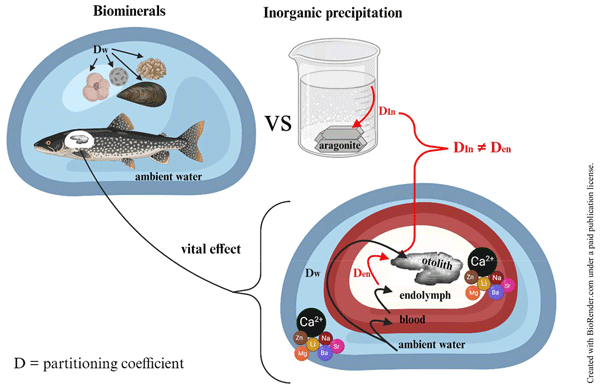
Fish otolith formation is key for understanding the incorporation of elements into biominerals. It is often assumed that the final step of biomineralization consists of inorganic precipitation as the fluid where biominerals form can hardly be sampled. Thanks to fish ear anatomy, this can be overcome with otoliths. By comparing otolith formation and inorganic precipitation, we proved that this assumption is not always true. Our findings could refine models and shed light on biomineralization.
Falilu O. Adekunbi, Michaël Grelaud, Gerald Langer, Lucian O. Chukwu, Marta Alvarez, Shakirudeen Odunuga, Kai G. Schulz, and Patrizia Ziveri
Biogeosciences, 22, 7865–7880, https://doi.org/10.5194/bg-22-7865-2025, https://doi.org/10.5194/bg-22-7865-2025, 2025
Short summary
Short summary
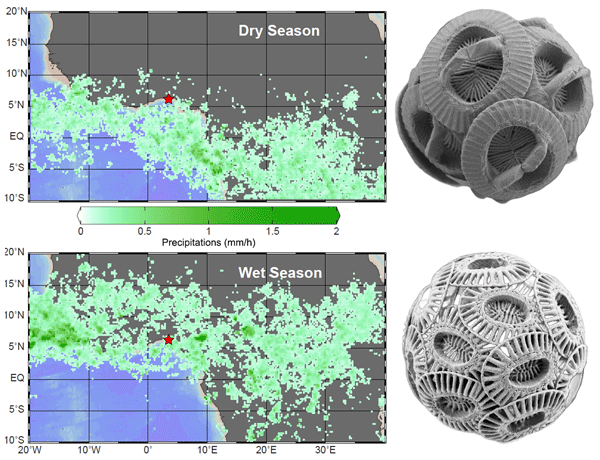
This study is the first to explore seasonal changes in coccolithophores, microscopic algae important for ocean life and the carbon cycle, off the coast of Nigeria. Their abundance and diversity increased during the rainy season, driven by shifts in the Intertropical Convergence Zone. Despite regional differences, these coastal communities show patterns similar to other parts of the world, revealing possible shared environmental pressures.
Stefania Bianco, Manuela Bordiga, Gerald Langer, Patrizia Ziveri, Federica Cerino, Andrea Di Giulio, and Claudia Lupi
Biogeosciences, 22, 1821–1837, https://doi.org/10.5194/bg-22-1821-2025, https://doi.org/10.5194/bg-22-1821-2025, 2025
Short summary
Short summary
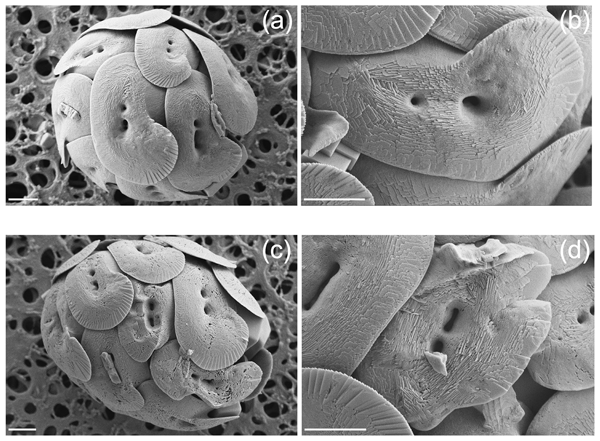
This work focuses on the response in culture experiments to increasing CO2 of the coccolithophore species Helicosphaera carteri, a unicellular marine calcifying microalgae. The absence of significant changes in coccolith malformations, along with stable size, shape, and calcification-to-photosynthesis ratio, is indicative of H. carteri low sensitivity to CO2 rise, together with its ability to maintain a stable contribution to the marine rain ratio under future climate changes.
Joost de Vries, Fanny Monteiro, Gerald Langer, Colin Brownlee, and Glen Wheeler
Biogeosciences, 21, 1707–1727, https://doi.org/10.5194/bg-21-1707-2024, https://doi.org/10.5194/bg-21-1707-2024, 2024
Short summary
Short summary
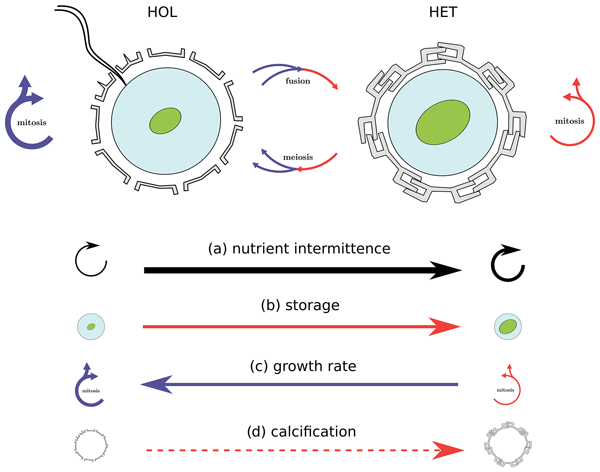
Calcifying phytoplankton (coccolithophores) utilize a life cycle in which they can grow and divide into two different phases. These two phases (HET and HOL) vary in terms of their physiology and distributions, with many unknowns about what the key differences are. Using a combination of lab experiments and model simulations, we find that nutrient storage is a critical difference between the two phases and that this difference allows them to inhabit different nitrogen input regimes.
Marta Álvarez, Maribel I. García-Ibáñez, Nico Lange, Alex Kozyr, Antón Velo, Toste Tanhua, Giuseppe Civitarese, Carolina Cantoni, Malek Belgacem, Katrin Schroeder, Rubén Acerbi, Laurent Coppola, Thibaut Wagener, Noelia M. Fajar, Susana Flecha, Michele Giani, Louisa Giannoudi, Elisa F. Guallart, Abed El Rahman Hassoun, Emma I. Huertas, Valeria Ibello, Mehdia A. Keraghel, Férial Louanchi, Anna Luchetta, Fiz F. Pérez, Carsten Schirnick, Ekaterini Souvermezoglou, Lidia Urbini, Montserrat Vidal, and Patrizia Ziveri
Earth Syst. Sci. Data, 18, 4915–4941, https://doi.org/10.5194/essd-18-4915-2026, https://doi.org/10.5194/essd-18-4915-2026, 2026
Short summary
Short summary
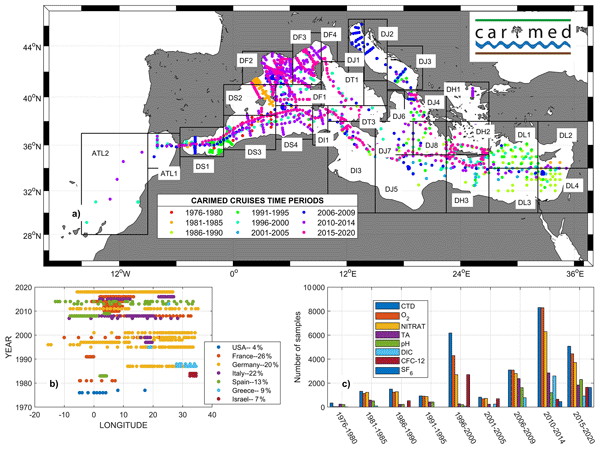
CARIMED (CARbon, tracers, and ancillary data In the MEDiterranean Sea) is a high-quality, FAIR (Findability, Accessibility, Interoperability, and Reusability) dataset integrating hydrographic, biogeochemical, and transient tracer data from 46 research cruises (1976–2018) across the Mediterranean Sea. The data underwent rigorous, basin-adapted quality control to remove systematic biases, unifying four decades of fragmented data, delivering two complementary products: the aggregated original cruise data product and the bias-adjusted data synthesis product.
Athina Kekelou, Gerald Langer, and Patrizia Ziveri
Biogeosciences, 23, 2831–2845, https://doi.org/10.5194/bg-23-2831-2026, https://doi.org/10.5194/bg-23-2831-2026, 2026
Short summary
Short summary
Fish otolith formation is key for understanding the incorporation of elements into biominerals. It is often assumed that the final step of biomineralization consists of inorganic precipitation as the fluid where biominerals form can hardly be sampled. Thanks to fish ear anatomy, this can be overcome with otoliths. By comparing otolith formation and inorganic precipitation, we proved that this assumption is not always true. Our findings could refine models and shed light on biomineralization.

Yi Zhang, Jeremy R. Young, Paul R. Bown, Chengshan Wang, and Xi Chen
J. Micropalaeontol., 45, 147–157, https://doi.org/10.5194/jm-45-147-2026, https://doi.org/10.5194/jm-45-147-2026, 2026
Short summary
Short summary
We developed a new global database of microscopic fossil algae, known as calcareous nannoplankton, from Cretaceous ocean sediments to improve the understanding of ancient oceans and climate change. By integrating data from numerous published studies and standardising species names and ages, we created the Uneptune database with about 175 000 fossil records. Hosted on the Nannotax website, it provides visualisation tools that help scientists explore global marine ecosystems during the Cretaceous.
Falilu O. Adekunbi, Michaël Grelaud, Gerald Langer, Lucian O. Chukwu, Marta Alvarez, Shakirudeen Odunuga, Kai G. Schulz, and Patrizia Ziveri
Biogeosciences, 22, 7865–7880, https://doi.org/10.5194/bg-22-7865-2025, https://doi.org/10.5194/bg-22-7865-2025, 2025
Short summary
Short summary
This study is the first to explore seasonal changes in coccolithophores, microscopic algae important for ocean life and the carbon cycle, off the coast of Nigeria. Their abundance and diversity increased during the rainy season, driven by shifts in the Intertropical Convergence Zone. Despite regional differences, these coastal communities show patterns similar to other parts of the world, revealing possible shared environmental pressures.
Stefania Bianco, Manuela Bordiga, Gerald Langer, Patrizia Ziveri, Federica Cerino, Andrea Di Giulio, and Claudia Lupi
Biogeosciences, 22, 1821–1837, https://doi.org/10.5194/bg-22-1821-2025, https://doi.org/10.5194/bg-22-1821-2025, 2025
Short summary
Short summary
This work focuses on the response in culture experiments to increasing CO2 of the coccolithophore species Helicosphaera carteri, a unicellular marine calcifying microalgae. The absence of significant changes in coccolith malformations, along with stable size, shape, and calcification-to-photosynthesis ratio, is indicative of H. carteri low sensitivity to CO2 rise, together with its ability to maintain a stable contribution to the marine rain ratio under future climate changes.
Joost de Vries, Fanny Monteiro, Gerald Langer, Colin Brownlee, and Glen Wheeler
Biogeosciences, 21, 1707–1727, https://doi.org/10.5194/bg-21-1707-2024, https://doi.org/10.5194/bg-21-1707-2024, 2024
Short summary
Short summary
Calcifying phytoplankton (coccolithophores) utilize a life cycle in which they can grow and divide into two different phases. These two phases (HET and HOL) vary in terms of their physiology and distributions, with many unknowns about what the key differences are. Using a combination of lab experiments and model simulations, we find that nutrient storage is a critical difference between the two phases and that this difference allows them to inhabit different nitrogen input regimes.
Paul N. Pearson, Jeremy Young, David J. King, and Bridget S. Wade
J. Micropalaeontol., 42, 211–255, https://doi.org/10.5194/jm-42-211-2023, https://doi.org/10.5194/jm-42-211-2023, 2023
Short summary
Short summary
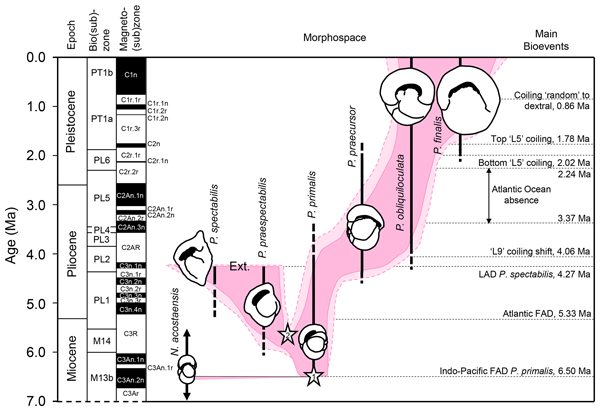
Planktonic foraminifera are marine plankton that have a long and continuous fossil record. They are used for correlating and dating ocean sediments and studying evolution and past climates. This paper presents new information about Pulleniatina, one of the most widespread and abundant groups, from an important site in the Pacific Ocean. It also brings together a very large amount of information on the fossil record from other sites globally.
Cited articles
Baumann, K.-H., Böckel, B., and Frenz, M.: Coccolith contribution to South Atlantic carbonate sedimentation, in: Coccolithophores, edited by: Thierstein, H. R. and Young, J. R., Springer Berlin Heidelberg, Berlin, Heidelberg, 367–402, https://doi.org/10.1007/978-3-662-06278-4_14, 2004.
Berger, W. H.: Deep-sea carbonates: evidence for a coccolith lysocline, Deep Sea Research and Oceanographic Abstracts, 20, 917–921, https://doi.org/10.1016/0011-7471(73)90110-1, 1973.
Bianco, S., Bordiga, M., Langer, G., Ziveri, P., Cerino, F., Di Giulio, A., and Lupi, C.: Low sensitivity of a heavily calcified coccolithophore under increasing CO2: the case study of Helicosphaera carteri, Biogeosciences, 22, 1821–1837, https://doi.org/10.5194/bg-22-1821-2025, 2025.
Broecker, W. and Clark, E.: Ratio of coccolith CaCO3 to foraminifera CaCO3 in late Holocene deep sea sediments, Paleoceanography, 24, 2009PA001731, https://doi.org/10.1029/2009PA001731, 2009.
Broecker, W. S. and Peng, T.-H.: Tracers in the Sea, Lamont-Doherty Geological Observatory, Columbia University, 690 pp., ISBN 978-9993186724, 1982.
Burns, D. A.: Phenotypes and dissolution morphotypes of the genus Gephyrocapsa kamptner and Emiliania huxleyi (Lohmann), New Zealand Journal of Geology and Geophysics, 20, 143–155, https://doi.org/10.1080/00288306.1977.10431596, 1977.
Cubillos, J. C., Henderiks, J., Beaufort, L., Howard, W. R., and Hallegraeff, G. M.: Reconstructing calcification in ancient coccolithophores: Individual coccolith weight and morphology of Coccolithus pelagicus (sensu lato), Marine Micropaleontology, 92–93, 29–39, https://doi.org/10.1016/j.marmicro.2012.04.005, 2012.
Daniels, C., Poulton, A., Young, J., Esposito, M., Humphreys, M., Ribas-Ribas, M., Tynan, E., and Tyrrell, T.: Species-specific calcite production reveals Coccolithus pelagicus as the key calcifier in the Arctic Ocean, Mar. Ecol. Prog. Ser., 555, 29–47, https://doi.org/10.3354/meps11820, 2016.
Daniels, C. J., Sheward, R. M., and Poulton, A. J.: Biogeochemical implications of comparative growth rates of Emiliania huxleyi and Coccolithus species, Biogeosciences, 11, 6915–6925, https://doi.org/10.5194/bg-11-6915-2014, 2014.
Drescher, B., Dillaman, R. M., and Taylor, A. R.: Coccolithogenesis In S cyphosphaera apsteinii (Prymnesiophyceae), Journal of Phycology, 48, 1343–1361, https://doi.org/10.1111/j.1529-8817.2012.01227.x, 2012.
Gafar, N. A., Eyre, B. D., and Schulz, K. G.: Particulate inorganic to organic carbon production as a predictor for coccolithophorid sensitivity to ongoing ocean acidification, Limnol. Oceanogr. Letters, 4, 62–70, https://doi.org/10.1002/lol2.10105, 2019.
Gerecht, A. C., Šupraha, L., Edvardsen, B., Langer, G., and Henderiks, J.: Phosphorus availability modifies carbon production in Coccolithus pelagicus (Haptophyta), Journal of Experimental Marine Biology and Ecology, 472, 24–31, https://doi.org/10.1016/j.jembe.2015.06.019, 2015.
Hassenkam, T., Johnsson, A., Bechgaard, K., and Stipp, S. L. S.: Tracking single coccolith dissolution with picogram resolution and implications for CO2 sequestration and ocean acidification, Proc. Natl. Acad. Sci. U.S.A., 108, 8571–8576, https://doi.org/10.1073/pnas.1009447108, 2011.
Henderiks, J., Sturm, D., Šupraha, L., and Langer, G.: Evolutionary Rates in the Haptophyta: Exploring Molecular and Phenotypic Diversity, JMSE, 10, 798, https://doi.org/10.3390/jmse10060798, 2022.
Henriksen, K., Young, J. R., Bown, P. R., and Stipp, S. L. S.: Coccolith biomineralisation studied with atomic force microscopy, Palaeontology, 47, 725–743, https://doi.org/10.1111/j.0031-0239.2004.00385.x, 2004.
Hoffmann, R., Kirchlechner, C., Langer, G., Wochnik, A. S., Griesshaber, E., Schmahl, W. W., and Scheu, C.: Insight into Emiliania huxleyi coccospheres by focused ion beam sectioning, Biogeosciences, 12, 825–834, https://doi.org/10.5194/bg-12-825-2015, 2015.
Holcová, K. and Scheiner, F.: An experimental study on post-mortem dissolution and overgrowth processes affecting coccolith assemblages: A rapid and complex process, Geobiology, 21, 193–209, https://doi.org/10.1111/gbi.12528, 2023.
Honjo, S.: Dissolution of suspended coccoliths in the deep-sea water column and sedimentation of coccolith ooze, in: Dissolution of Deep-sea Carbonates, Sliter, WV, Bé, AWH, Berger, WH, ISBN 978-1-970168-07-5, 1975.
Johns, C. T., Bondoc-Naumovitz, K. G., Matthews, A., Matson, P. G., Iglesias-Rodriguez, M. D., Taylor, A. R., Fuchs, H. L., and Bidle, K. D.: Adsorptive exchange of coccolith biominerals facilitates viral infection, Sci. Adv., 9, eadc8728, https://doi.org/10.1126/sciadv.adc8728, 2023.
Johnson, R., Langer, G., Rossi, S., Probert, I., Mammone, M., and Ziveri, P.: Nutritional response of a coccolithophore to changing PH and temperature, Limnology & Oceanography, 67, 2309–2324, https://doi.org/10.1002/lno.12204, 2022.
Kadan, Y., Tollervey, F., Varsano, N., Mahamid, J., and Gal, A.: Intracellular nanoscale architecture as a master regulator of calcium carbonate crystallization in marine microalgae, Proc. Natl. Acad. Sci. U.S.A., 118, e2025670118, https://doi.org/10.1073/pnas.2025670118, 2021.
Keller, M. D., Selvin, R. C., Claus, W., and Guillard, R. R. L.: MEDIA FOR THE CULTURE OF OCEANIC ULTRAPHYTOPLANKTON1,2, Journal of Phycology, 23, 633–638, https://doi.org/10.1111/j.1529-8817.1987.tb04217.x, 1987.
Klaas, C. and Archer, D. E.: Association of sinking organic matter with various types of mineral ballast in the deep sea: Implications for the rain ratio, Global Biogeochem. Cy., 16, https://doi.org/10.1029/2001GB001765, 2002.
Kleijne, A.: Distribution and malformation of extant calcareous nannoplankton in the Indonesian Seas, Marine Micropaleontology, 16, 293–316, https://doi.org/10.1016/0377-8398(90)90008-A, 1990.
Kottmeier, D. M., Chrachri, A., Langer, G., Helliwell, K. E., Wheeler, G. L., and Brownlee, C.: Reduced H+ channel activity disrupts pH homeostasis and calcification in coccolithophores at low ocean pH, P. Natl. Acad. Sci. USA, 119, e2118009119, https://doi.org/10.1073/pnas.2118009119, 2022.
Langer, G. and Benner, I.: Effect of elevated nitrate concentration on calcification in Emiliania huxleyi, J. Nannoplankton Res., 30, 77–82, https://doi.org/10.58998/jnr2158, 2009.
Langer, G. and Bode, M.: CO2 mediation of adverse effects of seawater acidification in Calcidiscus leptoporus, Geochem. Geophys. Geosyst., 12, 2010GC003393, https://doi.org/10.1029/2010GC003393, 2011.
Langer, G. and Ziveri, P.: Vulnerability to ocean acidification of marine calcifying organisms cannot be predicted from the mineral type in their shells, Limnol. Oceanogr. Letters, 10, 448–452, https://doi.org/10.1002/lol2.70020, 2025.
Langer, G., Gussone, N., Nehrke, G., Riebesell, U., Eisenhauer, A., Kuhnert, H., Rost, B., Trimborn, S., and Thoms, S.: Coccolith strontium to calcium ratios in Emiliania huxleyi: The dependence on seawater strontium and calcium concentrations, Limnol. Oceanogr., 51, 310–320, https://doi.org/10.4319/lo.2006.51.1.0310, 2006a.
Langer, G., Geisen, M., Baumann, K., Kläs, J., Riebesell, U., Thoms, S., and Young, J. R.: Species-specific responses of calcifying algae to changing seawater carbonate chemistry, Geochem. Geophys. Geosyst., 7, 2005GC001227, https://doi.org/10.1029/2005GC001227, 2006b.
Langer, G., Nehrke, G., and Jansen, S.: Dissolution of Calcidiscus leptoporus coccoliths in copepod guts? A morphological study, Mar. Ecol. Prog. Ser., 331, 139–146, https://doi.org/10.3354/meps331139, 2007.
Langer, G., Probert, I., Nehrke, G., and Ziveri, P.: The morphological response of Emiliania huxleyi to seawater carbonate chemistry changes: an inter-strain comparison, Journal of Nannoplankton Research, 32, 29–34, 2011.
Langer, G., Oetjen, K., and Brenneis, T.: Calcification of Calcidiscus leptoporus under nitrogen and phosphorus limitation, J. Exp. Mar. Biol. Ecol., 413, 131–137, https://doi.org/10.1016/j.jembe.2011.11.028, 2012.
Langer, G., Oetjen, K., and Brenneis, T.: On culture artefacts in coccolith morphology, Helgol. Mar. Res., 67, 359–369, https://doi.org/10.1007/s10152-012-0328-x, 2013.
Langer, G., Taylor, A. R., Walker, C. E., Meyer, E. M., Ben Joseph, O., Gal, A., Harper, G. M., Probert, I., Brownlee, C., and Wheeler, G. L.: Role of silicon in the development of complex crystal shapes in coccolithophores, New Phytologist, 231, 1845–1857, https://doi.org/10.1111/nph.17230, 2021.
Langer, G., Probert, I., Cox, M. B., Taylor, A., Harper, G. M., Brownlee, C., and Wheeler, G.: The Effect of cytoskeleton inhibitors on coccolith morphology in Coccolithus braarudii and Scyphosphaera apsteinii, Journal of Phycology, 59, 87–96, https://doi.org/10.1111/jpy.13303, 2023.
Matsuoka, H.: A new method to evaluate dissolution of CaCO3 in the deep-sea sediments, Transactions and proceedings of the Paleontological Society of Japan, The Paleontological Society of Japan, 430–434, https://doi.org/10.14825/prpsj1951.1990.157_430, 1990.
McIntyre, A. and McIntyre, R.: Coccolith concentration and differential solution in oceanic sediments, in: The micropaleontology of oceans, Cambridge University Press, Cambridge, 253–261, ISBN 9780521187480, 1971.
Meyer, E. M., Langer, G., Brownlee, C., Wheeler, G. L., and Taylor, A. R.: Sr in coccoliths of Scyphosphaera apsteinii: Partitioning behavior and role in coccolith morphogenesis, Geochimica et Cosmochimica Acta, 285, 41–54, https://doi.org/10.1016/j.gca.2020.06.023, 2020.
Milliman, J. D.: Production and accumulation of calcium carbonate in the ocean: Budget of a nonsteady state, Global Biogeochemical Cycles, 7, 927–957, https://doi.org/10.1029/93GB02524, 1993.
Milner, S., Langer, G., Grelaud, M., and Ziveri, P.: Ocean warming modulates the effects of acidification on Emiliania huxleyi calcification and sinking, Limnol. Oceanogr., 61, 1322–1336, https://doi.org/10.1002/lno.10292, 2016.
Morse, J. and Mackenzie, F.: Geochemistry of sedimentary carbonates, Elsevier, ISBN 978-0-444-88781-8, 1990.
Pierrot, D., Lewis, E., and Wallace, D. W. R.: MS Excel Program Developed for CO2 System Calculations, ORNL Environmental Sciences Division, https://doi.org/10.3334/CDIAC/otg.CO2SYS_XLS_CDIAC105a, 2012.
Roth, P. and Berger, W.: Distribution and dissolution of coccoliths in the south and central Pacific, in: CaCO3 dissolution in the deep sea, Cushman Foundation for Foraminiferal Research, Santa Barbara, CA, 87–113, ISBN 9781970168075, 1975.
Roth, P. H. and Coulbourn, W. T.: Floral and solution patterns of coccoliths in surface sediments of the North Pacific, Marine Micropaleontology, 7, 1–52, https://doi.org/10.1016/0377-8398(82)90014-7, 1982.
Sand, K. K., Pedersen, C. S., Sjöberg, S., Nielsen, J. W., Makovicky, E., and Stipp, S. L. S.: Biomineralization: Long-Term Effectiveness of Polysaccharides on the Growth and Dissolution of Calcite, Crystal Growth & Design, 14, 5486–5494, https://doi.org/10.1021/cg5006743, 2014.
Subhas, A. V., Rollins, N. E., Berelson, W. M., Erez, J., Ziveri, P., Langer, G., and Adkins, J. F.: The dissolution behavior of biogenic calcites in seawater and a possible role for magnesium and organic carbon, Marine Chemistry, 205, 100–112, https://doi.org/10.1016/j.marchem.2018.08.001, 2018.
Subhas, A. V., Dong, S., Naviaux, J. D., Rollins, N. E., Ziveri, P., Gray, W., Rae, J. W. B., Liu, X., Byrne, R. H., Chen, S., Moore, C., Martell-Bonet, L., Steiner, Z., Antler, G., Hu, H., Lunstrum, A., Hou, Y., Kemnitz, N., Stutsman, J., Pallacks, S., Dugenne, M., Quay, P. D., Berelson, W. M., and Adkins, J. F.: Shallow Calcium Carbonate Cycling in the North Pacific Ocean, Global Biogeochemical Cycles, 36, e2022GB007388, https://doi.org/10.1029/2022GB007388, 2022.
Sulpis, O., Jeansson, E., Dinauer, A., Lauvset, S. K., and Middelburg, J. J.: Calcium carbonate dissolution patterns in the ocean, Nat. Geosci., 14, 423–428, https://doi.org/10.1038/s41561-021-00743-y, 2021.
Walker, C. E., Heath, S., Salmon, D. L., Smirnoff, N., Langer, G., Taylor, A. R., Brownlee, C., and Wheeler, G. L.: An Extracellular Polysaccharide-Rich Organic Layer Contributes to Organization of the Coccosphere in Coccolithophores, Front. Mar. Sci., 5, 306, https://doi.org/10.3389/fmars.2018.00306, 2018a.
Walker, C. E., Taylor, A. R., Langer, G., Durak, G. M., Heath, S., Probert, I., Tyrrell, T., Brownlee, C., and Wheeler, G. L.: The requirement for calcification differs between ecologically important coccolithophore species, New Phytologist, 220, 147–162, https://doi.org/10.1111/nph.15272, 2018b.
Walker, J. M. and Langer, G.: Coccolith crystals: Pure calcite or organic-mineral composite structures?, Acta Biomaterialia, 125, 83–89, https://doi.org/10.1016/j.actbio.2021.02.025, 2021.
Walker, J. M., Greene, H. J. M., Moazzam, Y., Quinn, P. D., Parker, J. E., and Langer, G.: An uneven distribution of strontium in the coccolithophore Scyphosphaera apsteinii revealed by nanoscale X-ray fluorescence tomography, Environ. Sci.: Processes Impacts, 26, 966–974, https://doi.org/10.1039/D3EM00509G, 2024.
Wheeler, G. L., Sturm, D., and Langer, G.: Gephyrocapsa huxleyi (Emiliania huxleyi) as a model system for coccolithophore biology, Journal of Phycology, 59, 1123–1129, https://doi.org/10.1111/jpy.13404, 2023.
Yang, M., Batchelor-McAuley, C., Barton, S., Rickaby, R. E. M., Bouman, H. A., and Compton, R. G.: Opto-Electrochemical Dissolution Reveals Coccolith Calcium Carbonate Content, Angew. Chem. Int. Ed., 60, 20999–21006, https://doi.org/10.1002/anie.202108435, 2021.
Young, J. R.: Variation in Emiliania huxleyi coccolith morphology in samples from the Norwegian EHUX experiment, 1992, Sarsia, 79, 417–425, https://doi.org/10.1080/00364827.1994.10413573, 1994.
Young, J. R.: Scyphosphaera porosa Kamptner 1967 rediscovered in the plankton., J. Nannoplankton Res., 30, 35–38, https://doi.org/10.58998/jnr2292, 2008.
Young, J. R., Didymus, J. M., Brown, P. R., Prins, B., and Mann, S.: Crystal assembly and phylogenetic evolution in heterococcoliths, Nature, 356, 516–518, https://doi.org/10.1038/356516a0, 1992.
Young, J. R., Henriksen, K., and Probert, I.: Structure and morphogenesis of the coccoliths of the CODENET species, in: Coccolithophores, edited by: Thierstein, H. R. and Young, J. R., Springer Berlin Heidelberg, Berlin, Heidelberg, 191–216, https://doi.org/10.1007/978-3-662-06278-4_8, 2004.
Zeebe, R. and Wolf-Gladrow, D.: CO2 in Seawater: Equilibrium, Kinetics, Isotopes, Elsevier, Amsterdam, 346 pp., ISBN 9780444509468, 2001.
Ziveri, P., Baumann, K.-H., Böckel, B., Bollmann, J., and Young, J.: Present day coccolithophore-biogeography in the Atlantic Ocean, in: Coccolithophores: From Molecular Processes to Global Impact, Springer Verlag, 403–428, ISBN 978-3-540-21928-6, 2004.
Ziveri, P., De Bernardi, B., Baumann, K.-H., Stoll, H. M., and Mortyn, P. G.: Sinking of coccolith carbonate and potential contribution to organic carbon ballasting in the deep ocean, Deep Sea Research Part II: Topical Studies in Oceanography, 54, 659–675, https://doi.org/10.1016/j.dsr2.2007.01.006, 2007.
Ziveri, P., Passaro, M., Incarbona, A., Milazzo, M., Rodolfo-Metalpa, R., and Hall-Spencer, J. M.: Decline in Coccolithophore Diversity and Impact on Coccolith Morphogenesis Along a Natural CO2 Gradient, The Biological Bulletin, 226, 282–290, https://doi.org/10.1086/BBLv226n3p282, 2014.
Ziveri, P., Gray, W. R., Anglada-Ortiz, G., Manno, C., Grelaud, M., Incarbona, A., Rae, J. W. B., Subhas, A. V., Pallacks, S., White, A., Adkins, J. F., and Berelson, W.: Pelagic calcium carbonate production and shallow dissolution in the North Pacific Ocean, Nat. Commun., 14, 805, https://doi.org/10.1038/s41467-023-36177-w, 2023.
Ziveri, P., Langer, G., Chaabane, S., De Vries, J., Gray, W. R., Keul, N., Hatton, I. A., Manno, C., Norris, R., Pallacks, S., Young, J. R., Schiebel, R., Zarkogiannis, S., Anglada-Ortiz, G., Bianco, S., De Garidel-Thoron, T., Grelaud, M., Lucas, A., Probert, I., and Mortyn, P. G.: Calcifying plankton: From biomineralization to global change, Science, 390, eadq8520, https://doi.org/10.1126/science.adq8520, 2025.
Short summary
Coccolithophores are important marine CaCO3 producers and their biominerals, the coccoliths, partly dissolve in the upper water column where dissolution is unexpected. Studying coccolith dissolution in field samples is hampered by a paucity of experimental studies describing dissolution morphologies. Here we fill this gap by experimentally dissolving different coccolithophores and applying our results to field samples.
Coccolithophores are important marine CaCO3 producers and their biominerals, the coccoliths,...


Altmetrics
Final-revised paper
Preprint