
Articles | Volume 23, issue 7
https://doi.org/10.5194/bg-23-2431-2026
© Author(s) 2026. This work is distributed under
the Creative Commons Attribution 4.0 License.
the Creative Commons Attribution 4.0 License.
https://doi.org/10.5194/bg-23-2431-2026
© Author(s) 2026. This work is distributed under
the Creative Commons Attribution 4.0 License.
the Creative Commons Attribution 4.0 License.
Research article
| 
13 Apr 2026
Research article |
| 13 Apr 2026
| 13 Apr 2026
Temporary waterlogging alters CO2 flux dynamics but not cumulative emissions in cultivated mineral soils
Reija Kronberg
CORRESPONDING AUTHOR
Department of Agricultural Sciences, Unit of Environmental Soil Science, University of Helsinki, Viikinkaari 9, P.O. Box 56, 00014 Helsinki, Finland
Institute for Atmospheric and Earth System Research (INAR)/Faculty of Agriculture and Forestry, University of Helsinki, Viikinkaari 9, P.O. Box 56, 00014 Helsinki, Finland
Sanna Kanerva
Department of Agricultural Sciences, Unit of Environmental Soil Science, University of Helsinki, Viikinkaari 9, P.O. Box 56, 00014 Helsinki, Finland
Markku Koskinen
Department of Agricultural Sciences, Unit of Environmental Soil Science, University of Helsinki, Viikinkaari 9, P.O. Box 56, 00014 Helsinki, Finland
Institute for Atmospheric and Earth System Research (INAR)/Faculty of Agriculture and Forestry, University of Helsinki, Viikinkaari 9, P.O. Box 56, 00014 Helsinki, Finland
Tatu Polvinen
Department of Agricultural Sciences, Unit of Environmental Soil Science, University of Helsinki, Viikinkaari 9, P.O. Box 56, 00014 Helsinki, Finland
Institute for Atmospheric and Earth System Research (INAR)/Faculty of Agriculture and Forestry, University of Helsinki, Viikinkaari 9, P.O. Box 56, 00014 Helsinki, Finland
Tuomas Mattila
Finnish Environment Institute SYKE, Latokartanonkaari 11, 00790, Helsinki, Finland
Department of Agricultural Sciences, Unit of Environmental Soil Science, University of Helsinki, Viikinkaari 9, P.O. Box 56, 00014 Helsinki, Finland
Institute for Atmospheric and Earth System Research (INAR)/Faculty of Agriculture and Forestry, University of Helsinki, Viikinkaari 9, P.O. Box 56, 00014 Helsinki, Finland
Related authors
No articles found.
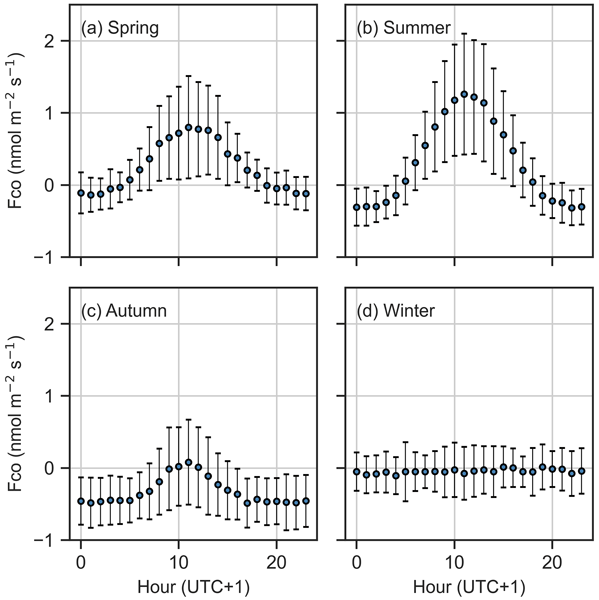
Asta Laasonen, Alexander Buzacott, Kukka-Maaria Kohonen, Erik Lundin, Alexander Meire, Mari Pihlatie, and Ivan Mammarella
Biogeosciences, 22, 7505–7518, https://doi.org/10.5194/bg-22-7505-2025, https://doi.org/10.5194/bg-22-7505-2025, 2025
Short summary
Short summary
Carbon monoxide (CO) is an important indirect greenhouse gas, but its terrestrial sinks and sources are poorly understood. We present the first CO flux measurements using the eddy covariance method in an Arctic peatland. Our results show that CO fluxes are dominated by two processes: radiation-driven emissions and soil uptake. Dry peatland areas acted as CO sinks, while wetter areas were CO sources. Our findings suggest that current global models may underestimate Arctic CO emissions.
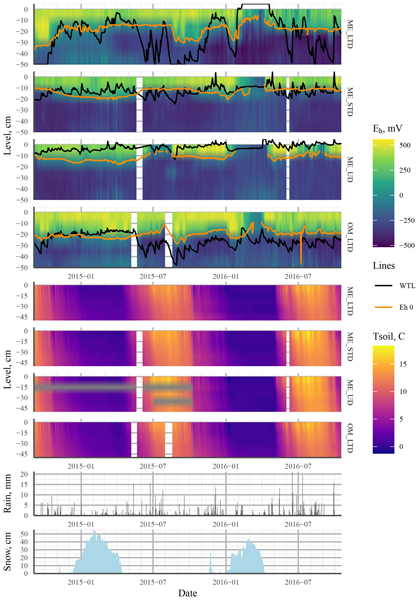
Markku Koskinen, Jani Anttila, Valerie Vranová, Ladislav Holík, Kevin Roche, Michel Vorenhout, Mari Pihlatie, and Raija Laiho
Biogeosciences, 22, 3989–4012, https://doi.org/10.5194/bg-22-3989-2025, https://doi.org/10.5194/bg-22-3989-2025, 2025
Short summary
Short summary
Redox potential, indicative of the active pathways of organic matter decomposition, was monitored for 2 years in a boreal peatland with three drainage regimes. Contrary to expectations, the water table level and redox potential were not found to be correlated in a monotonic fashion; thus, the relationship between the water table level and redox conditions is not modellable using non-dynamic models.
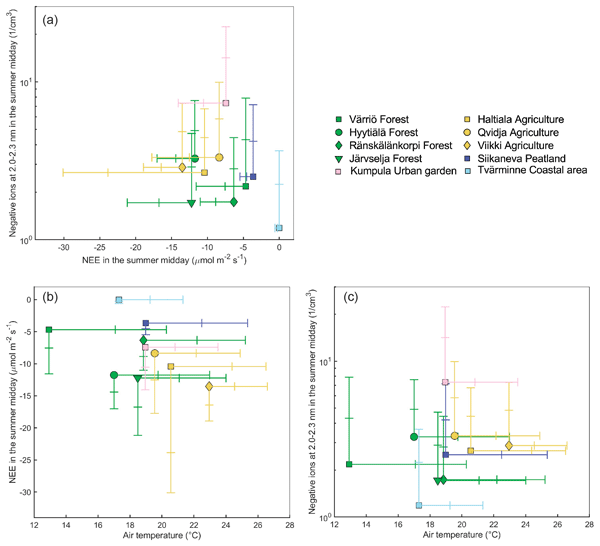
Piaopiao Ke, Anna Lintunen, Pasi Kolari, Annalea Lohila, Santeri Tuovinen, Janne Lampilahti, Roseline Thakur, Maija Peltola, Otso Peräkylä, Tuomo Nieminen, Ekaterina Ezhova, Mari Pihlatie, Asta Laasonen, Markku Koskinen, Helena Rautakoski, Laura Heimsch, Tom Kokkonen, Aki Vähä, Ivan Mammarella, Steffen Noe, Jaana Bäck, Veli-Matti Kerminen, and Markku Kulmala
Biogeosciences, 22, 3235–3251, https://doi.org/10.5194/bg-22-3235-2025, https://doi.org/10.5194/bg-22-3235-2025, 2025
Short summary
Short summary
Our research explores diverse ecosystems’ roles in climate cooling via the concept of CarbonSink+ potential. We measured CO2 uptake and local aerosol production in forests, farms, peatlands, urban gardens, and coastal areas across Finland and Estonia. The long-term data reveal that, while forests are vital with regard to CarbonSink+ potential, farms and urban gardens also play significant roles. These insights can help optimize management policy of natural resources to mitigate global warming.
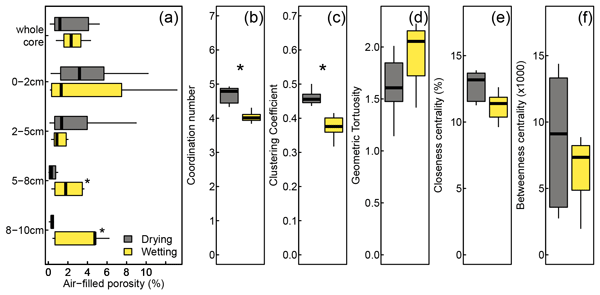
Lukas Kohl, Petri Kiuru, Marjo Palviainen, Maarit Raivonen, Markku Koskinen, Mari Pihlatie, and Annamari Laurén
Biogeosciences, 22, 1711–1727, https://doi.org/10.5194/bg-22-1711-2025, https://doi.org/10.5194/bg-22-1711-2025, 2025
Short summary
Short summary
We present an assay to illuminate heterogeneity in biogeochemical transformations within peat samples. For this, we injected isotope-labeled acetate into peat cores and monitored the release of label-derived gases, which we compared to microtomography images. The fraction of label converted to CO2 and the rapidness of this conversion were linked to injection depth and air-filled porosity.
Helena Rautakoski, Mika Korkiakoski, Jarmo Mäkelä, Markku Koskinen, Kari Minkkinen, Mika Aurela, Paavo Ojanen, and Annalea Lohila
Biogeosciences, 21, 1867–1886, https://doi.org/10.5194/bg-21-1867-2024, https://doi.org/10.5194/bg-21-1867-2024, 2024
Short summary
Short summary
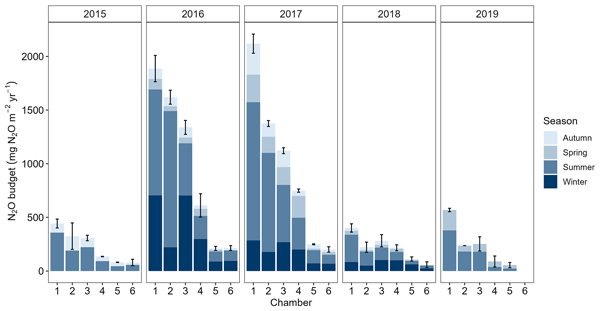
Current and future nitrous oxide (N2O) emissions are difficult to estimate due to their high variability in space and time. Several years of N2O fluxes from drained boreal peatland forest indicate high importance of summer precipitation, winter temperature, and snow conditions in controlling annual N2O emissions. The results indicate increasing year-to-year variation in N2O emissions in changing climate with more extreme seasonal weather conditions.
Olli Nevalainen, Olli Niemitalo, Istem Fer, Antti Juntunen, Tuomas Mattila, Olli Koskela, Joni Kukkamäki, Layla Höckerstedt, Laura Mäkelä, Pieta Jarva, Laura Heimsch, Henriikka Vekuri, Liisa Kulmala, Åsa Stam, Otto Kuusela, Stephanie Gerin, Toni Viskari, Julius Vira, Jari Hyväluoma, Juha-Pekka Tuovinen, Annalea Lohila, Tuomas Laurila, Jussi Heinonsalo, Tuula Aalto, Iivari Kunttu, and Jari Liski
Geosci. Instrum. Method. Data Syst., 11, 93–109, https://doi.org/10.5194/gi-11-93-2022, https://doi.org/10.5194/gi-11-93-2022, 2022
Short summary
Short summary
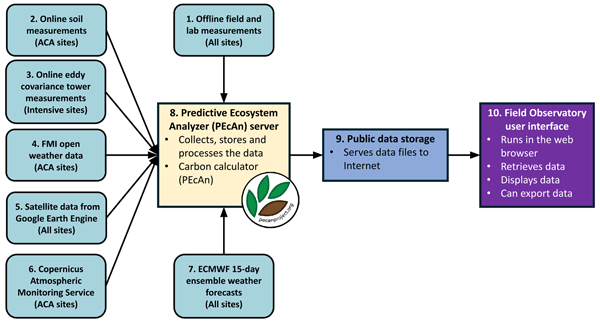
Better monitoring of soil carbon sequestration is needed to understand the best carbon farming practices in different soils and climate conditions. We, the Field Observatory Network (FiON), have therefore established a methodology for monitoring and forecasting agricultural carbon sequestration by combining offline and near-real-time field measurements, weather data, satellite imagery, and modeling. To disseminate our work, we built a website called the Field Observatory (fieldobservatory.org).
Cited articles
Asano, M., Wagai, R., Yamaguchi, N., Takeichi, Y., Maeda, M., Suga, H., and Takahashi, Y.: In Search of a Binding Agent: Nano-Scale Evidence of Preferential Carbon Associations with Poorly-Crystalline Mineral Phases in Physically-Stable, Clay-Sized Aggregates, Soil Syst., 2, 32, https://doi.org/10.3390/soilsystems2020032, 2018.
Aubrey, D. P. and Teskey, R. O.: Root-derived CO2 efflux via xylem stream rivals soil CO2 efflux, New Phytol. 184, 35–40, https://doi.org/10.1111/j.1469-8137.2009.02971.x, 2009.
Aubrey, D. P. and Teskey, R. O.: Xylem transport of root-derived CO2 caused a substantial underestimation of belowground respiration during a growing season, Glob. Change Biol., 27, 2991–3000, https://doi.org/10.1111/gcb.15624, 2021.
Bakdash, J. Z. and Marusich, L. R.: rmcorr: Repeated Measures Correlation, https://CRAN.R-project.org/package=rmcorr (last access: 8 April 2026), 2024.
Bhattacharyya, A., Campbell, A. N., Tfaily, M. M., Lin, Y., Kukkadapu, R. K., Silver, W. L., Nico, P. S., and Pett-Ridge, J.: Redox Fluctuations Control the Coupled Cycling of Iron and Carbon in Tropical Forest Soils, Environ. Sci. Technol., 52, 14129–14139, https://doi.org/10.1021/acs.est.8b03408, 2018.
Bingeman, C. W., Varner, J. E., and Martin, W. P.: The Effect of the Addition of Organic Materials on the Decomposition of an Organic Soil. Soil Sci. Soc. Am. J., 17, 34–38, https://doi.org/10.2136/sssaj1953.03615995001700010008x, 1953.
Box, G. E. P. and Cox, D. R.: An Analysis of Transformations, J. R. Stat. Soc. B, 26, 211–243, https://doi.org/10.1111/j.2517-6161.1964.tb00553.x, 1964.
Brooks, M. E., Kristensen, K., van Benthem, K. J., Magnusson, A., Berg, C. W., Nielsen, A., Skaug, H. J., Machler, M., and Bolker, B. M.: glmmTMB balances speed and flexibility among packages for zero-inflated generalized linear mixed modelling, The R journal, 9, 378–400, https://doi.org/10.3929/ethz-b-000240890, 2017.
Buettner, S. W., Kramer, M. G., Chadwick, O. A., and Thompson, A.: Mobilization of colloidal carbon during iron reduction in basaltic soils, Geoderma, 221–222, 139–145, https://doi.org/10.1016/j.geoderma.2014.01.012, 2014.
Chandregowda, M. H., Tjoelker, M. G., Pendall, E., Zhang, H., Churchill, A. C., and Power, S. A.: Belowground carbon allocation, root trait plasticity, and productivity during drought and warming in a pasture grass, J. Exp. Bot, 74, 2127–2145, https://doi.org/10.1093/jxb/erad021, 2023.
Chen, C., Hall, S. J., Coward, E., and Thompson, A.: Iron-mediated organic matter decomposition in humid soils can counteract protection, Nat. Commun., 11, 2255, https://doi.org/10.1038/s41467-020-16071-5, 2020.
Clemmensen, K. E., Bahr, A., Ovaskainen, O., Dahlberg, A., Ekblad, A., Wallander, H., Stenlid, J., Finlay, R. D., Wardle, D. A., and Lindahl, B. D.: Roots and Associated Fungi Drive Long-Term Carbon Sequestration in Boreal Forest, Science, 339, 1615–1618, https://doi.org/10.1126/science.1231923, 2013.
Cotrufo, M. F., Ranalli, M. G., Haddix, M. L., Six, J., and Lugato, E.: Soil carbon storage informed by particulate and mineral-associated organic matter, Nat. Geosci., 12, 989–994, https://doi.org/10.1038/s41561-019-0484-6, 2019.
Fairbairn, L., Rezanezhad, F., Gharasoo, M., Parsons, C. T., Macrae, M. L., Slowinski, S., and Van Cappellen, P.: Relationship between soil CO2 fluxes and soil moisture: Anaerobic sources explain fluxes at high water content, Geoderma, 434, 116493, https://doi.org/10.1016/j.geoderma.2023.116493, 2023.
Fernandez-Ugalde, O., Scarpa, S., Orgiazzi, A., Panagos, P., Van Liedekerke, M., Marechal, A., and Jones, A.: LUCAS 2018 soil module: presentation of dataset and results (No. JRC129926), Publications Office of the European Union, Luxembourg, https://doi.org/10.2760/215013, 2022.
Fiedler, S.: In Situ Long-Term-Measurement of Redox Potential in Redoximorphic Soils, Redox: Fundamentals, Processes and Applications, edited by: Schüring, J., Schulz, H. D., Fischer, W. R., Böttcher, J., and Duijnisveld, W. H. M., Springer, Berlin, Heidelberg, 81–94, https://doi.org/10.1007/978-3-662-04080-5_7, 2000.
Fiedler, S., Vepraskas, M. J., and Richardson, J. L.: Soil Redox Potential: Importance, Field Measurements, and Observations, Advances in Agronomy, edited by: Sparks, D. L., Academic Press, 1–54, https://doi.org/10.1016/S0065-2113(06)94001-2, 2007.
Ghezzehei, T. A., Sulman, B., Arnold, C. L., Bogie, N. A., and Berhe, A. A.: On the role of soil water retention characteristic on aerobic microbial respiration, Biogeosciences, 16, 1187–1209, https://doi.org/10.5194/bg-16-1187-2019, 2019.
Ginn, B., Meile, C., Wilmoth, J., Tang, Y., and Thompson, A.: Rapid Iron Reduction Rates Are Stimulated by High-Amplitude Redox Fluctuations in a Tropical Forest Soil, Environ. Sci. Technol. 51, 3250–3259, 2017.
Goffin, S., Wylock, C., Haut, B., Maier, M., Longdoz, B., and Aubinet, M.: Modeling soil CO2 production and transport to investigate the intra-day variability of surface efflux and soil CO2 concentration measurements in a Scots Pine Forest (Pinus Sylvestris, L.), Plant Soil, 390, 195–211, https://doi.org/10.1007/s11104-015-2381-0, 2015.
Greenway, H., Armstrong, W., and Colmer, T. D.: Conditions Leading to High CO2 (>5 kPa) in Waterlogged–Flooded Soils and Possible Effects on Root Growth and Metabolism, Ann. Bot.-London, 98, 9–32, https://doi.org/10.1093/aob/mcl076, 2006.
Grybos, M., Davranche, M., Gruau, G., Petitjean, P., and Pédrot, M.: Increasing pH drives organic matter solubilization from wetland soils under reducing conditions, Geoderma, 154, 13–19, https://doi.org/10.1016/j.geoderma.2009.09.001, 2009.
Hakala, K., Keskitalo, M., Eriksson, C., and Pitkänen, T.: Nutrient uptake and biomass accumulation for eleven different field crops, Agr. Food Sci., 18, 366–387, 2009.
Hanke, A., Cerli, C., Muhr, J., Borken, W., and Kalbitz, K.: Redox control on carbon mineralization and dissolved organic matter along a chronosequence of paddy soils, Eur. J. Soil Sci., 64, 476–487, https://doi.org/10.1111/ejss.12042, 2013.
Hanson, P. J., Edwards, N. T., Garten, C. T., and Andrews, J. A.: Separating root and soil microbial contributions to soil respiration: A review of methods and observations, Biogeochemistry, 48, 115–146, https://doi.org/10.1023/A:1006244819642, 2000.
Heikkinen, J., Ketoja, E., Nuutinen, V., and Regina, K.: Declining trend of carbon in Finnish cropland soils in 1974–2009, Glob. Change Biol., 19, 1456–1469, https://doi.org/10.1111/gcb.12137, 2013.
Heikkinen, J., Keskinen, R., Kostensalo, J., and Nuutinen, V.: Climate change induces carbon loss of arable mineral soils in boreal conditions, Glob. Change Biol., 28, 3960–3973, https://doi.org/10.1111/gcb.16164, 2022.
Heimsch, L., Vira, J., Fer, I., Vekuri, H., Tuovinen, J.-P., Lohila, A., Liski, J., and Kulmala, L.: Impact of weather and management practices on greenhouse gas flux dynamics on an agricultural grassland in Southern Finland, Agr. Ecosyst. Environ., 374, 109179, https://doi.org/10.1016/j.agee.2024.109179, 2024.
Hill, A. G., Bishop, E., Coles, L. E., McLauchlan, E. J., Meddle, D. W., Pater, M. J., Watson, C. A., and Whalley, C.: Standardised General Method for the Determination of Iron with 1,10-Phenantrhroline, Analyst, 103, 391–396, 1978.
Hirsch, A. I., Trumbore, S. E., and Goulden, M. L.: The surface CO2 gradient and pore-space storage flux in a high-porosity litter layer, Tellus B, 56, 312–321, https://doi.org/10.3402/tellusb.v56i4.16449, 2004.
Huang, W. and Hall, S. J.: Elevated moisture stimulates carbon loss from mineral soils by releasing protected organic matter, Nat. Commun., 8, 1774, https://doi.org/10.1038/s41467-017-01998-z, 2017.
Huang, W., Ye, C., Hockaday, W. C., and Hall, S. J.: Trade-offs in soil carbon protection mechanisms under aerobic and anaerobic conditions, Glob. Change Biol., 26, 3726–3737, https://doi.org/10.1111/gcb.15100, 2020.
Huang, W., Wang, K., Ye, C., Hockaday, W. C., Wang, G., and Hall, S. J.: High carbon losses from oxygen-limited soils challenge biogeochemical theory and model assumptions, Glob. Change Biol., 27, 6166–6180, https://doi.org/10.1111/gcb.15867, 2021.
IPCC: Sections 2–3, Climate Change 2023: Synthesis Report., Contribution of Working Groups I, II and III to the Sixth Assessment Report of the Intergovernmental Panel on Climate Change, edited by: Core Writing Team, Lee, H., and Romero, J., IPCC, Geneva, Switzerland, 184 pp., https://doi.org/10.59327/IPCC/AR6-9789291691647, 2023.
Ito, A. and Wagai, R.: Global distribution of clay-size minerals on land surface for biogeochemical and climatological studies, Sci. Data, 4, 170103, https://doi.org/10.1038/sdata.2017.103, 2017.
Jakobsen, P., Patrick, W. H. J., and Williams, B. G.: Sulfide and methane formation in soils and sediments, Soil Sci., 132, 279–287, 1981.
Jeanneau, L., Buysse, P., Denis, M., Gruau, G., Petitjean, P., Jaffrézic, A., Flechard, C., and Viaud, V.: Water Table Dynamics Control Carbon Losses from the Destabilization of Soil Organic Matter in a Small, Lowland Agricultural Catchment, Soil Syst., 4, 2, https://doi.org/10.3390/soilsystems4010002, 2020.
Jian, J., Du, X., Reiter, M. S., and Stewart, R. D.: A meta-analysis of global cropland soil carbon changes due to cover cropping, Soil Biol. Biochem., 143, 107735, https://doi.org/10.1016/j.soilbio.2020.107735, 2020.
Kaiser, K. and Guggenberger, G.: Mineral surfaces and soil organic matter, Eur. J. Soil Sci., 54, 219–236, 2003).
Kätterer, T., Reichstein, M., Andrén, O., and Lomander, A.: Temperature dependence of organic matter decomposition: a critical review using literature data analyzed with different models, Biol. Fert. Soils, 27, 258–262, https://doi.org/10.1007/s003740050430, 1998.
Kaye, J. P. and Quemada, M.: Using cover crops to mitigate and adapt to climate change. A review, Agron. Sustain. Dev., 37, 4, https://doi.org/10.1007/s13593-016-0410-x, 2017.
Keiluweit, M., Bougoure, J. J., Nico, P. S., Pett-Ridge, J., Weber, P. K., and Kleber, M.: Mineral protection of soil carbon counteracted by root exudates, Nat. Clim. Change, 5, 588–595, https://doi.org/10.1038/nclimate2580, 2015.
Keiluweit, M., Wanzek, T., Kleber, M., Nico, P., and Fendorf, S.: Anaerobic microsites have an unaccounted role in soil carbon stabilization, Nat. Commun., 8, 1771, https://doi.org/10.1038/s41467-017-01406-6, 2017.
Keskinen, R., Hillier, S., Liski, E., Nuutinen, V., Nyambura, M., and Tiljander, M.: Mineral composition and its relations to readily available element concentrations in cultivated soils of Finland, Acta Agr. Scand. B, 72, 751–760, https://doi.org/10.1080/09064710.2022.2075790, 2022.
Khan, I., Fahad, S., Wu, L., Zhou, W., Xu, P., Sun, Z., Salam, A., Imran, M., Jiang, M., Kuzyakov, Y., and Hu, R.: Labile organic matter intensifies phosphorous mobilization in paddy soils by microbial iron (III) reduction, Geoderma, 352, 185–196, https://doi.org/10.1016/j.geoderma.2019.06.011, 2019.
Kronberg, R.: A Schematic Illustration of the Soil Monolith Experiment Study Design, created in BioRender, https://BioRender.com/pg6cizz, last access: 12 June 2025.
Kronberg, R., Kanerva, S., Koskinen, M., Polvinen, T., Heinonsalo, J., and Pihlatie, M.: Controlled soil monolith experiment for studying the effects of waterlogging on redox processes, Geoderma, 452, 117110, https://doi.org/10.1016/j.geoderma.2024.117110, 2024.
Kronberg, R. A. M., Koskinen, M., Polvinen, T., Leinonen, L., Viinikainen, A., and Pihlatie, M.: Supporting data: Temporary waterlogging alters CO2 flux dynamics but not cumulative emissions in cultivated mineral soils, Zenodo [data set], https://doi.org/10.5281/zenodo.14438980, 2025.
Kuzyakov, Y.: Sources of CO2 efflux from soil and review of partitioning methods, Soil Biol. Biochem., 38, 425–448, https://doi.org/10.1016/j.soilbio.2005.08.020, 2006.
Kuzyakov, Y., Friedel, J. K., and Stahr, K.: Review of mechanisms and quantification of priming effects, Soil Biol. Biochem., 32, 1485–1498, https://doi.org/10.1016/S0038-0717(00)00084-5, 2000.
Lavallee, J. M., Soong, J. L., and Cotrufo, M. F.: Conceptualizing soil organic matter into particulate and mineral-associated forms to address global change in the 21st century, Glob. Change Biol., 26, 261–273, https://doi.org/10.1111/gcb.14859, 2020.
Lemola, R., Uusitalo, R., Hyväluoma, J., Sarvi, M., and Turtola, E.: Suomen peltojen maalajit, multavuus ja fosforipitoisuus: Vuodet 1996–2000 ja 2005–2009, Luonnonvarakeskus, ISBN 978-952-326-558-5, 2018.
Liu, Y., Jia, B., Zhang, Y., Cui, H., and Li, X. G.: The Effect of Waterlogging on Soil Organic Carbon Decomposition Is Dependent on Its Biochemistry, J. Soil Sci. Plant Nut., 23, 4609–4619, https://doi.org/10.1007/s42729-023-01377-2, 2023.
Liu, Y., Wang, X., Wen, Y., Cai, H., Song, X., and Zhang, Z.: Effects of freeze–thaw cycles on soil greenhouse gas emissions: A systematic review, Environ. Res., 248, 118386, https://doi.org/10.1016/j.envres.2024.118386, 2024.
Lovley, D. R.: Dissimilatory Fe(III) and Mn(IV) reduction, Microbiol. Rev., 55, 259–287, https://doi.org/10.1128/mr.55.2.259-287.1991, 1991.
Luo, Y. and Zhou, X.: Soil Respiration and the Environment, Academic Press, London, UK, https://doi.org/10.1016/B978-0-12-088782-8.X5000-1, 2006.
Maier, M., Schack-Kirchner, H., Hildebrand, E. E., and Holst, J.: Pore-space CO2 dynamics in a deep, well-aerated soil, Eur. J. Soil Sci., 61, 877–887, https://doi.org/10.1111/j.1365-2389.2010.01287.x, 2010.
Maier, M., Schack-Kirchner, H., Hildebrand, E. E., and Schindler, D.: Soil CO2 efflux vs. soil respiration: Implications for flux models, Agr. Forest Meteorol., 151, 1723–1730, https://doi.org/10.1016/j.agrformet.2011.07.006, 2011.
Mattila, T. J. and Vihanto, N.: Agricultural limitations to soil carbon sequestration: Plant growth, microbial activity, and carbon stabilization, Agr. Ecosyst. Environ., 367, 108986, https://doi.org/10.1016/j.agee.2024.108986, 2024.
Moyano, F. E., Manzoni, S., and Chenu, C.: Responses of soil heterotrophic respiration to moisture availability: An exploration of processes and models, Soil Biol. Biochem., 59, 72–85, https://doi.org/10.1016/j.soilbio.2013.01.002, 2013.
Moyano, F. E., Vasilyeva, N., and Menichetti, L.: Diffusion limitations and Michaelis–Menten kinetics as drivers of combined temperature and moisture effects on carbon fluxes of mineral soils, Biogeosciences, 15, 5031–5045, https://doi.org/10.5194/bg-15-5031-2018, 2018.
Muhammad, I., Wang, J., Sainju, U. M., Zhang, S., Zhao, F., and Khan, A.: Cover cropping enhances soil microbial biomass and affects microbial community structure: A meta-analysis, Geoderma, 381, 114696, https://doi.org/10.1016/j.geoderma.2020.114696, 2021.
Mui, N. T., Zhou, M., Parsons, D., and Smith, R. W.: Aerenchyma Formation in Adventitious Roots of Tall Fescue and Cocksfoot under Waterlogged Conditions, Agronomy, 11, 2487, https://doi.org/10.3390/agronomy11122487, 2021.
Nevalainen, O., Niemitalo, O., Fer, I., Juntunen, A., Mattila, T., Koskela, O., Kukkamäki, J., Höckerstedt, L., Mäkelä, L., Jarva, P., Heimsch, L., Vekuri, H., Kulmala, L., Stam, Å., Kuusela, O., Gerin, S., Viskari, T., Vira, J., Hyväluoma, J., Tuovinen, J.-P., Lohila, A., Laurila, T., Heinonsalo, J., Aalto, T., Kunttu, I., and Liski, J.: Towards agricultural soil carbon monitoring, reporting, and verification through the Field Observatory Network (FiON), Geosci. Instrum. Method. Data Syst., 11, 93–109, https://doi.org/10.5194/gi-11-93-2022, 2022.
Pan, W., Kan, J., Inamdar, S., Chen, C., and Sparks, D.: Dissimilatory microbial iron reduction release DOC (dissolved organic carbon) from carbon-ferrihydrite association, Soil Biol. Biochem., 103, 232–240, https://doi.org/10.1016/j.soilbio.2016.08.026, 2016.
Pavelka, M., Acosta, M., Kiese, R., Altimir, N., Brümmer, C., Crill, P., Darenova, E., Fuß, R., Gielen, B., Graf, A., Klemedtsson, L., Lohila, A., Longdoz, B., Lindroth, A., Nilsson, M., Jiménez, S. M., Merbold, L., Montagnani, L., Peichl, M., Pihlatie, M., Pumpanen, J., Ortiz, P. S., Silvennoinen, H., Skiba, U., Vestin, P., Weslien, P., Janous, D., and Kutsch, W.: Standardisation of chamber technique for CO2, N2O and CH4 fluxes measurements from terrestrial ecosystems, Int. Agrophys., 32, 569–587, https://doi.org/10.1515/intag-2017-0045, 2018.
Peters, V. and Conrad, R.: Sequential reduction processes and initiation of CH4 production upon flooding of oxic upland soils, Soil Biol. Biochem., 28, 371–382, https://doi.org/10.1016/0038-0717(95)00146-8, 1996.
Pinheiro, J. and Bates, D.: R Core Team: nlme: Linear and Nonlinear Mixed Effects Models. R package version 3.1-164, https://cran.r-project.org/web/packages/nlme/index.html (last access: 9 April 2026), 2023.
Poeplau, C., Aronsson, H., Myrbeck, Å., and Kätterer, T.: Effect of perennial ryegrass cover crop on soil organic carbon stocks in southern Sweden, Geoderma Reg., 4, 126–133, https://doi.org/10.1016/j.geodrs.2015.01.004, 2015.
Poeplau, C. and Don, A.: Carbon sequestration in agricultural soils via cultivation of cover crops – A meta-analysis, Agr. Ecosyst. Environ., 200, 33–41, https://doi.org/10.1016/j.agee.2014.10.024, 2015.
Ponnamperuma, F. N.: Chemical kinetics of wetland rice soils relative to soil fertility, Wetland Soils: Characterization, Classification, and Utilization, IRRI, 71–89, ISBN 971-104-139-1, 1985.
Possinger, A. R., Bailey, S. W., Inagaki, T. M., Kögel-Knabner, I., Dynes, J. J., Arthur, Z. A., and Lehmann, J.: Organo-mineral interactions and soil carbon mineralizability with variable saturation cycle frequency, Geoderma, 375, 114483, https://doi.org/10.1016/j.geoderma.2020.114483, 2020.
Raich, J. W. and Schlesinger, W. H.: The global carbon dioxide flux in soil respiration and its relationship to vegetation and climate, Tellus B, 44, 81–99, https://doi.org/10.1034/j.1600-0889.1992.t01-1-00001.x, 1992.
Rasmussen, C., Heckman, K., Wieder, W. R., Keiluweit, M., Lawrence, C. R., Berhe, A. A., Blankinship, J. C., Crow, S. E., Druhan, J. L., Hicks Pries, C. E., Marin-Spiotta, E., Plante, A. F., Schädel, C., Schimel, J. P., Sierra, C. A., Thompson, A., and Wagai, R.: Beyond clay: Towards an improved set of variables for predicting soil organic matter content, Biogeochemistry, 137, 297–306, https://doi.org/10.1007/s10533-018-0424-3, 2018.
R Core Team: R: A Language and Environment for Statistical Computing. R Foundation for Statistical Computing, https://www.R-project.org/ (last access: 9 April 2026), 2025.
Ruosteenoja, K. and Jylhä, K.: Projected climate change in Finland during the 21st century calculated from CMIP6 model simulations, Geophysica, 56, 39–69, 2022.
Russell, V. L.: Estimated Marginal Means, aka Least-Squares Means, R package version 1.8.5, https://CRAN.R-project.org/package=emmean (last access: 9 April 2026), 2023.
Ryan, M. G. and Law, B. E.: Interpreting, measuring, and modeling soil respiration, Biogeochemistry, 73, 3–27, https://doi.org/10.1007/s10533-004-5167-7, 2005.
Salonen, A.-R., de Goede, R., Creamer, R., Heinonsalo, J., and Soinne, H.: Soil organic carbon fractions and storage potential in Finnish arable soils, Eur. J. Soil Sci., 75, e13527, https://doi.org/10.1111/ejss.13527, 2024.
Sánchez-Cañete, E. P., Barron-Gafford, G. A., and Chorover, J.: A considerable fraction of soil-respired CO2 is not emitted directly to the atmosphere, Sci. Rep.-UK, 8, 13518, https://doi.org/10.1038/s41598-018-29803-x, 2018.
Sigg, L.: Redox Potential Measurements in Natural Waters: Significance, Concepts and Problems, Redox: Fundamentals, Processes and Applications, edited by: Schüring, J., Schulz, H. D., Fischer, W. R., Böttcher, J., and Duijnisveld, W. H. M., Springer, 81–94, https://doi.org/10.1007/978-3-662-04080-5_7, 2000.
Sippola, J.: Mineral composition and its relation to texture and to some chemical properties in Finnish subsoils, Ann. Agric. Fenn., 13, 169–234, 1974.
Snoeyenbos-West, O. L., Nevin, K. P., Anderson, R. T., and Lovley, D. R.: Enrichment of Geobacter Species in Response to Stimulation of Fe(III) Reduction in Sandy Aquifer Sediments, Microb. Ecol., 39, 153–167, https://doi.org/10.1007/s002480000018, 2000.
Stumm, W.: Aquatic Chemistry: Chemical Equilibria and Rates in Natural Waters, John Wiley and Sons, Incorporated, http://ebookcentral.proquest.com/lib/helsinki-ebooks/detail.action?docID=7103403, 1995.
Sulman, B. N., Phillips, R. P., Oishi, A. C., Shevliakova, E., and Pacala, S. W.: Microbe-driven turnover offsets mineral-mediated storage of soil carbon under elevated CO2, Nat. Clim. Change, 4, 1099–1102, https://doi.org/10.1038/nclimate2436, 2014.
Tautges, N. E., Chiartas, J. L., Gaudin, A. C. M., O'Geen, A. T., Herrera, I., and Scow, K. M.: Deep soil inventories reveal that impacts of cover crops and compost on soil carbon sequestration differ in surface and subsurface soils, Glob. Change Biol., 25, 3753–3766, https://doi.org/10.1111/gcb.14762, 2019.
Tete, E., Viaud, V., and Walter, C.: Organic carbon and nitrogen mineralization in a poorly-drained mineral soil under transient waterlogged conditions: an incubation experiment, Eur. J. Soil Sci., 66, 427–437, https://doi.org/10.1111/ejss.12234, 2015.
Torn, M. S., Trumbore, S. E., Chadwick, O. A., Vitousek, P. M., and Hendricks, D. M.: Mineral control of soil organic carbon storage and turnover, Nature, 389, 170–173, https://doi.org/10.1038/38260, 1997.
Uusitalo, R., Ylivainio, K., Hyväluoma, J., Rasa, K., Kaseva, J., Nylund, P., Pietola, L., and Turtola, E.: The effects of gypsum on the transfer of phosphorus and other nutrients through clay soil monoliths, Agr. Food Sci., 21, 260–278, https://doi.org/10.23986/afsci.4855, 2012.
Venables, W. N. and Ripley, B. D.: Random and Mixed Effects, Modern Applied Statistics with S, edited by: Venables, W. N. and Ripley, B. D., Springer, New York, 271–300, https://doi.org/10.1007/978-0-387-21706-2_10, 2002.
Vet, R., Artz, R. S., Carou, S., Shaw, M., Ro, C.-U., Aas, W., Baker, A., Bowersox, V. C., Dentener, F., Galy-Lacaux, C., Hou, A., Pienaar, J. J., Gillett, R., Forti, M. C., Gromov, S., Hara, H., Khodzher, T., Mahowald, N. M., Nickovic, S., Rao, P. S. P., and Reid, N. W.: A global assessment of precipitation chemistry and deposition of sulfur, nitrogen, sea salt, base cations, organic acids, acidity and pH, and phosphorus. Atmos. Environ., 93, 3–100, https://doi.org/10.1016/j.atmosenv.2013.10.060, 2014.
Virtanen, S., Simojoki, A., Knuutila, O., and Yli-Halla, M.: Monolithic lysimeters as tools to investigate processes in acid sulphate soil, Agr. Water Manage., 127, 48–58, https://doi.org/10.1016/j.agwat.2013.05.013, 2013.
von Lützow, M., Kögel-Knabner, I., Ekschmitt, K., Flessa, H., Guggenberger, G., Matzner, E., and Marschner, B.: SOM fractionation methods: Relevance to functional pools and to stabilization mechanisms, Soil Biol. Biochem., 39, 2183–2207, https://doi.org/10.1016/j.soilbio.2007.03.007, 2007.
Wickland, K. P. and Neff, J. C.: Decomposition of soil organic matter from boreal black spruce forest: environmental and chemical controls, Biogeochemistry, 87, 29–47, https://doi.org/10.1007/s10533-007-9166-3, 2008.
Williams, M. D. and Oostrom, M.: Oxygenation of anoxic water in a fluctuating water table system: an experimental and numerical study, J. Hydrol., 230, 70–85, https://doi.org/10.1016/S0022-1694(00)00172-4, 2000.
Winkler, P., Kaiser, K., Jahn, R., Mikutta, R., Fiedler, S., Cerli, C., Kölbl, A., Schulz, S., Jankowska, M., Schloter, M., Müller-Niggemann, C., Schwark, L., Woche, S. K., Kümmel, S., Utami, S. R., and Kalbitz, K.: Tracing organic carbon and microbial community structure in mineralogically different soils exposed to redox fluctuations, Biogeochemistry, 143, 31–54, https://doi.org/10.1007/s10533-019-00548-7, 2019.
Yong, R. N., Mohamed, A. M. O., and Wang, B. W.: Influence of amorphous silica and iron hydroxide on interparticle action and soil surface properties, Can. Geotech. J., 29, 803–818 , 1992.
Zeileis, A. and Grothendieck, G.: zoo: S3 Infrastructure for Regular and Irregular Time Series, https://doi.org/10.48550/arXiv.math/0505527, 2005.
Zhao, Q., Dunham-Cheatham, S., Adhikari, D., Chen, C., Patel, A., Poulson, S. R., Obrist, D., Verburg, P. S. J., Wang, X., Roden, E. R., Thompson, A., and Yang, Y.: Oxidation of soil organic carbon during an anoxic-oxic transition, Geoderma, 377, 114584, https://doi.org/10.1016/j.geoderma.2020.114584, 2020.
Zheng, J., Thornton, P. E., Painter, S. L., Gu, B., Wullschleger, S. D., and Graham, D. E.: Modeling anaerobic soil organic carbon decomposition in Arctic polygon tundra: insights into soil geochemical influences on carbon mineralization, Biogeosciences, 16, 663–680, https://doi.org/10.5194/bg-16-663-2019, 2019.
Short summary
We studied how off-season waterlogging affects CO2 fluxes and dissolved carbon dynamics in cultivated boreal mineral soils. The study was conducted with intact soil profiles in a greenhouse. Waterlogging reduced immediate CO2 efflux, but CO2 accumulated in porewater and was released to the atmosphere upon soil drying. Cumulative emissions remained unaltered. Our results suggest that temporary waterlogging does not suppress total CO₂ production in mineral soils as much as commonly assumed.
We studied how off-season waterlogging affects CO2 fluxes and dissolved carbon dynamics in...


Altmetrics
Final-revised paper
Preprint