
Articles | Volume 23, issue 7
https://doi.org/10.5194/bg-23-2569-2026
© Author(s) 2026. This work is distributed under
the Creative Commons Attribution 4.0 License.
the Creative Commons Attribution 4.0 License.
https://doi.org/10.5194/bg-23-2569-2026
© Author(s) 2026. This work is distributed under
the Creative Commons Attribution 4.0 License.
the Creative Commons Attribution 4.0 License.
Research article
| 
17 Apr 2026
Research article |
| 17 Apr 2026
| 17 Apr 2026
Disentangling the drivers of soil CO2 ventilation in a Mediterranean dryland using in situ and remote sensing techniques

Andalusian Institute for Earth System Research (IISTA-CEAMA), University of Granada, Granada, 18006, Spain
Department of Applied Physics, University of Granada, Granada, 18071, Spain
Irene Tovar
Izaña Atmospheric Research Center, Agencia Estatal de Meteorología (AEMET), Santa Cruz de Tenerife, 38300, Spain
Enrique Echeverría-Martín
Experimental Station of Arid Zones, Spanish National Research Council (EEZA-CSIC), Almería, 04120, Spain
Juana Andújar-Maqueda
Andalusian Institute for Earth System Research (IISTA-CEAMA), University of Granada, Granada, 18006, Spain
Department of Applied Physics, University of Granada, Granada, 18071, Spain
Pablo Ortiz-Amezcua
Department of Physics, University Carlos III of Madrid, 28911, Spain
Germán Cabrera-Carrillo
Andalusian Institute for Earth System Research (IISTA-CEAMA), University of Granada, Granada, 18006, Spain
Department of Ecology, University of Granada, Granada, 18071, Spain
Penélope Serrano-Ortiz
Andalusian Institute for Earth System Research (IISTA-CEAMA), University of Granada, Granada, 18006, Spain
Department of Ecology, University of Granada, Granada, 18071, Spain
Francisco Domingo
Experimental Station of Arid Zones, Spanish National Research Council (EEZA-CSIC), Almería, 04120, Spain
Lucas Alados-Arboledas
Andalusian Institute for Earth System Research (IISTA-CEAMA), University of Granada, Granada, 18006, Spain
Department of Applied Physics, University of Granada, Granada, 18071, Spain
Andrew S. Kowalski
Andalusian Institute for Earth System Research (IISTA-CEAMA), University of Granada, Granada, 18006, Spain
Department of Applied Physics, University of Granada, Granada, 18071, Spain
Enrique P. Sánchez-Cañete
Andalusian Institute for Earth System Research (IISTA-CEAMA), University of Granada, Granada, 18006, Spain
Department of Applied Physics, University of Granada, Granada, 18071, Spain
Juan Luis Guerrero-Rascado
Andalusian Institute for Earth System Research (IISTA-CEAMA), University of Granada, Granada, 18006, Spain
Department of Applied Physics, University of Granada, Granada, 18071, Spain
Related authors
Arlett Díaz-Zurita, Daniel Pérez-Ramírez, David N. Whiteman, Onel Rodríguez-Navarro, Víctor M. Naval-Hernández, Jorge Muñiz-Rosado, Soledad Fernández-Carvelo, Jesús Abril-Gago, Ana del Águila, Pablo Ortiz-Amezcua, Juan Antonio Bravo-Aranda, María José Granados-Muñoz, Juan Luis Guerrero-Rascado, Manuel Antón, Javier Vaquero-Martínez, Inmaculada Foyo-Moreno, Jose Antonio Benavent-Oltra, Lucas Alados-Arboledas, and Francisco Navas-Guzmán
Atmos. Meas. Tech., 19, 3169–3192, https://doi.org/10.5194/amt-19-3169-2026, https://doi.org/10.5194/amt-19-3169-2026, 2026
Short summary
Short summary
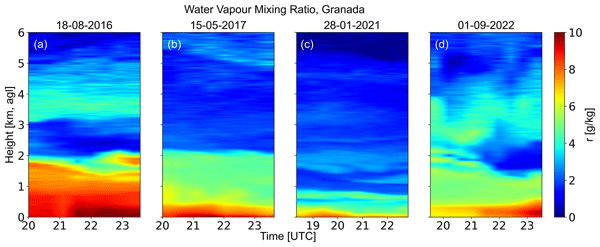
This study introduces a new hybrid calibration method for Raman lidar water vapour measurements that combines precipitable water vapour retrievals from Global Navigation Satellite System (GNSS) with ERA5 model data to reconstruct the lidar profile in the incomplete overlap region. The proposed methodology enables the retrieval of calibration constants with high temporal resolution, allowing accurate vertical profiling of water vapour from near the surface up to the upper troposphere.
María Ángeles López-Cayuela, Carmen Córdoba-Jabonero, Michaël Sicard, Jesús Abril-Gago, Vanda Salgueiro, Adolfo Comerón, María José Granados-Muñoz, Maria João Costa, Constantino Muñoz-Porcar, Juan Antonio Bravo-Aranda, Daniele Bortoli, Alejandro Rodríguez-Gómez, Lucas Alados-Arboledas, and Juan Luis Guerrero-Rascado
Atmos. Chem. Phys., 26, 6257–6281, https://doi.org/10.5194/acp-26-6257-2026, https://doi.org/10.5194/acp-26-6257-2026, 2026
Short summary
Short summary
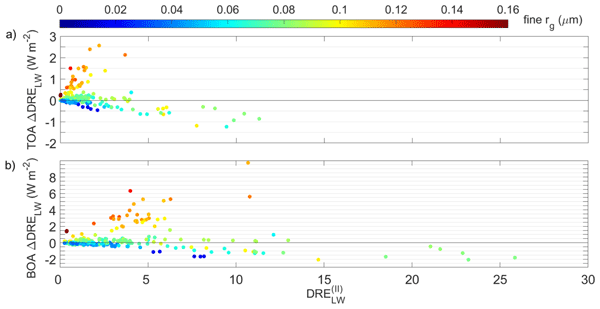
Due to the major radiative role of dust in Climate Change, a vertical assessment of the long-wave (and net) dust direct radiative effect of both fine and coarse dust, separately, is introduced. The study relies on an intense Saharan dust outbreak across the Iberian Peninsula, as observed by five lidar stations with coverage from south-west to north-east. A comparative evaluation with respect to total dust (no separation) is also performed. It complements a similar study in the short-wave range.
María-Ángeles López-Cayuela, Carmen Córdoba-Jabonero, Michaël Sicard, Jesús Abril-Gago, Vanda Salgueiro, Adolfo Comerón, María José Granados-Muñoz, Maria João Costa, Constantino Muñoz-Porcar, Juan Antonio Bravo-Aranda, Daniele Bortoli, Alejandro Rodríguez-Gómez, Lucas Alados-Arboledas, and Juan Luis Guerrero-Rascado
Atmos. Chem. Phys., 25, 3213–3231, https://doi.org/10.5194/acp-25-3213-2025, https://doi.org/10.5194/acp-25-3213-2025, 2025
Short summary
Short summary
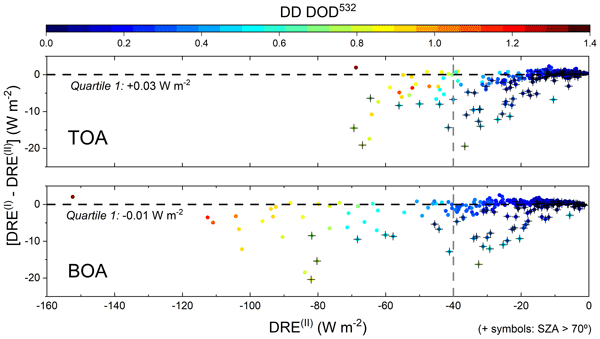
Due to the significant radiative role of dust in climate change, vertical assessments of the short-wave dust direct radiative effect of both fine and coarse dust particles are performed separately. The study is focused on an intense Saharan dust outbreak crossing the Iberian Peninsula in springtime monitored by five Iberian lidar stations with southwest–northeast coverage. A comparative study to evaluate the differences found by considering the total dust (no separation) is also examined.
Jesús Abril-Gago, Pablo Ortiz-Amezcua, Diego Bermejo-Pantaleón, Juana Andújar-Maqueda, Juan Antonio Bravo-Aranda, María José Granados-Muñoz, Francisco Navas-Guzmán, Lucas Alados-Arboledas, Inmaculada Foyo-Moreno, and Juan Luis Guerrero-Rascado
Atmos. Chem. Phys., 23, 8453–8471, https://doi.org/10.5194/acp-23-8453-2023, https://doi.org/10.5194/acp-23-8453-2023, 2023
Short summary
Short summary
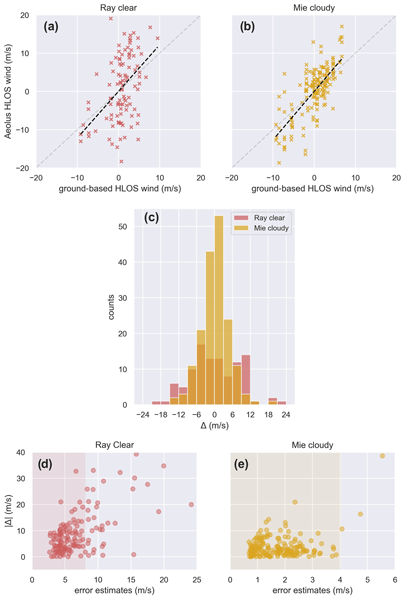
Validation activities of Aeolus wind products were performed in Granada with different upward-probing instrumentation (Doppler lidar system and radiosondes) and spatiotemporal collocation criteria. Specific advantages and disadvantages of each instrument were identified, and an optimal comparison criterion is proposed. Aeolus was proven to provide reliable wind products, and the upward-probing instruments were proven to be useful for Aeolus wind product validation activities.

María Ángeles López-Cayuela, Carmen Córdoba-Jabonero, Diego Bermejo-Pantaleón, Michaël Sicard, Vanda Salgueiro, Francisco Molero, Clara Violeta Carvajal-Pérez, María José Granados-Muñoz, Adolfo Comerón, Flavio T. Couto, Rubén Barragán, María-Paz Zorzano, Juan Antonio Bravo-Aranda, Constantino Muñoz-Porcar, María João Costa, Begoña Artíñano, Alejandro Rodríguez-Gómez, Daniele Bortoli, Manuel Pujadas, Jesús Abril-Gago, Lucas Alados-Arboledas, and Juan Luis Guerrero-Rascado
Atmos. Chem. Phys., 23, 143–161, https://doi.org/10.5194/acp-23-143-2023, https://doi.org/10.5194/acp-23-143-2023, 2023
Short summary
Short summary
An intense Saharan dust outbreak crossing the Iberian Peninsula in springtime was monitored to determinine the specific contribution of fine and coarse dust particles at five lidar stations, strategically covering its SW–central–NE pathway. Expected dust ageing along the transport started unappreciated. A different fine-dust impact on optical (~30 %) and mass (~10 %) properties was found. Use of polarized lidar measurements (mainly in elastic systems) for fine/coarse dust separation is crucial.
Jesús Abril-Gago, Juan Luis Guerrero-Rascado, Maria João Costa, Juan Antonio Bravo-Aranda, Michaël Sicard, Diego Bermejo-Pantaleón, Daniele Bortoli, María José Granados-Muñoz, Alejandro Rodríguez-Gómez, Constantino Muñoz-Porcar, Adolfo Comerón, Pablo Ortiz-Amezcua, Vanda Salgueiro, Marta María Jiménez-Martín, and Lucas Alados-Arboledas
Atmos. Chem. Phys., 22, 1425–1451, https://doi.org/10.5194/acp-22-1425-2022, https://doi.org/10.5194/acp-22-1425-2022, 2022
Short summary
Short summary
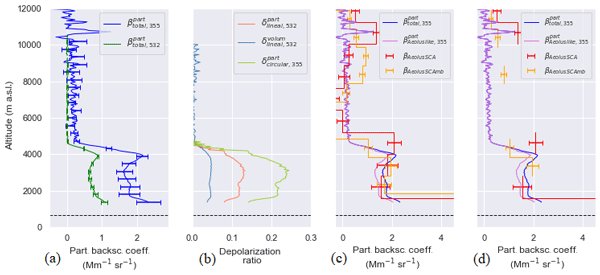
A validation of Aeolus reprocessed optical products is carried out via an intercomparison with ground-based measurements taken at several ACTRIS/EARLINET stations in western Europe. Case studies and a statistical analysis are presented. The stations are located in a hot spot between Africa and the rest of Europe, which guarantees a variety of aerosol types, from mineral dust layers to continental/anthropogenic aerosol, and allows us to test Aeolus performance under different scenarios.
Elena Bazo, Olga Ruiz-Galera, Francisco José Olmo Reyes, Lucas Alados-Arboledas, Alberto Cazorla, and Gloria Titos
EGUsphere, https://doi.org/10.5194/egusphere-2026-6200, https://doi.org/10.5194/egusphere-2026-6200, 2026
This preprint is open for discussion and under review for Atmospheric Chemistry and Physics (ACP).
Short summary
Short summary
We analyzed ice-nucleating particle (INP) concentrations at two contrasting and nearby environments: an urban station and a high mountain station in Southern Spain. We observed a clear seasonal pattern related to the presence of biological particles during spring and Saharan dust particles during summer and autumn. Additionally, we developed parameterizations based on aerosol optical properties (AOPs) to estimate INP concentrations in similar environments.
Matheus Tolentino, Lukas Pfitzenmaier, Tuomas Siipola, Ewan O’Connor, Simo Tukiainen, Juan Antonio Bravo-Aranda, Lucas Alados-Arboledas, and Maria José Granados-Muñoz
EGUsphere, https://doi.org/10.5194/egusphere-2026-5139, https://doi.org/10.5194/egusphere-2026-5139, 2026
This preprint is open for discussion and under review for Atmospheric Measurement Techniques (AMT).
Short summary
Short summary
Cloud radars are key for studies on cloud properties and development. However, their measurements can be biased when particles move too fast for the instrument to measure accurately due to technical limitations. We developed a new open-source tool that automatically identifies and corrects these biases. Tests under different weather conditions showed reliable performance, improving the quality of cloud observations and supporting more accurate weather, climate, and satellite validation studies.
Arlett Díaz-Zurita, Simone Brunamonti, Alexander Haefele, Martine Collaud Coen, Giovanni Martucci, Benjamin Tobias Brem, Martin Gysel-Beer, Hassan Lyamani, Gloria Titos, Daniel Pérez-Ramírez, Christoph Hüglin, Lucas Alados-Arboledas, Alejandro Keller, Frank Gunther Wienhold, Maxime Hervo, and Francisco Navas-Guzmán
EGUsphere, https://doi.org/10.5194/egusphere-2026-4361, https://doi.org/10.5194/egusphere-2026-4361, 2026
Short summary
Short summary
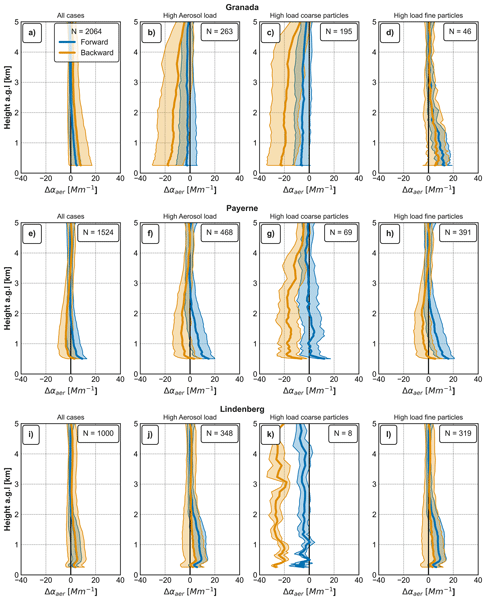
This study provides a unique framework for assessing aerosol hygroscopicity by combining Raman lidar observations with vertically resolved in situ measurements from the balloon-borne Compact Backscatter Aerosol Detector coupled with Vaisala RS41 radiosondes and ground-based tandem nephelometers. The three approaches showed good agreement. Raman lidar identified more than 200 hygroscopic aerosol layers, constituting one of the largest datasets available for statistical investigations.
Jorge Muñiz-Rosado, Alberto Cazorla, Eric Sauvageat, Alexander Haefele, Celia Herrero del Barrio, Ramiro González, Roberto Román, Pedro Luis Molina-Molero, Arlett Díaz-Zurita, Víctor Manuel Naval-Hernández, Onel Rodríguez-Navarro, María José Granados-Muñoz, Juan Antonio Bravo-Aranda, Milagros Herrera, Daniel Pérez-Ramírez, Lionel Doppler, Lucas Alados-Arboledas, and Francisco Navas-Guzmán
Atmos. Chem. Phys., 26, 10255–10285, https://doi.org/10.5194/acp-26-10255-2026, https://doi.org/10.5194/acp-26-10255-2026, 2026
Short summary
Short summary
Ceilometers can track dust and pollution particles in the atmosphere, but their measurements need validation. This study statistically compared two processing methods against thousands of measurements from sun-tracking instruments and balloon soundings at three European sites over two years. One method, using an independent calibration procedure, proved more accurate across all conditions, cutting uncertainties by around half. This supports its wider use for air quality monitoring.
Andrew S. Kowalski
Weather Clim. Dynam., 7, 1211–1217, https://doi.org/10.5194/wcd-7-1211-2026, https://doi.org/10.5194/wcd-7-1211-2026, 2026
Short summary
Short summary
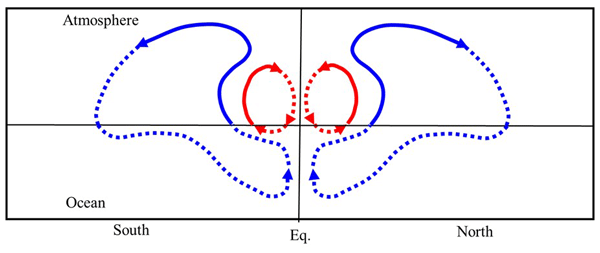
Textbooks describe the atmosphere’s north–south motion as closed circulation cells. This study shows that the water cycle also drives a subtle one-way flow of air, moving it from the humidified subtropics toward regions dried by rain and condensation. This hidden transport helps explain gradients of inert gases and suggests that large-scale atmospheric circulation may be more open than commonly assumed.
Arlett Díaz-Zurita, Daniel Pérez-Ramírez, David N. Whiteman, Onel Rodríguez-Navarro, Víctor M. Naval-Hernández, Jorge Muñiz-Rosado, Soledad Fernández-Carvelo, Jesús Abril-Gago, Ana del Águila, Pablo Ortiz-Amezcua, Juan Antonio Bravo-Aranda, María José Granados-Muñoz, Juan Luis Guerrero-Rascado, Manuel Antón, Javier Vaquero-Martínez, Inmaculada Foyo-Moreno, Jose Antonio Benavent-Oltra, Lucas Alados-Arboledas, and Francisco Navas-Guzmán
Atmos. Meas. Tech., 19, 3169–3192, https://doi.org/10.5194/amt-19-3169-2026, https://doi.org/10.5194/amt-19-3169-2026, 2026
Short summary
Short summary
This study introduces a new hybrid calibration method for Raman lidar water vapour measurements that combines precipitable water vapour retrievals from Global Navigation Satellite System (GNSS) with ERA5 model data to reconstruct the lidar profile in the incomplete overlap region. The proposed methodology enables the retrieval of calibration constants with high temporal resolution, allowing accurate vertical profiling of water vapour from near the surface up to the upper troposphere.
María Ángeles López-Cayuela, Carmen Córdoba-Jabonero, Michaël Sicard, Jesús Abril-Gago, Vanda Salgueiro, Adolfo Comerón, María José Granados-Muñoz, Maria João Costa, Constantino Muñoz-Porcar, Juan Antonio Bravo-Aranda, Daniele Bortoli, Alejandro Rodríguez-Gómez, Lucas Alados-Arboledas, and Juan Luis Guerrero-Rascado
Atmos. Chem. Phys., 26, 6257–6281, https://doi.org/10.5194/acp-26-6257-2026, https://doi.org/10.5194/acp-26-6257-2026, 2026
Short summary
Short summary
Due to the major radiative role of dust in Climate Change, a vertical assessment of the long-wave (and net) dust direct radiative effect of both fine and coarse dust, separately, is introduced. The study relies on an intense Saharan dust outbreak across the Iberian Peninsula, as observed by five lidar stations with coverage from south-west to north-east. A comparative evaluation with respect to total dust (no separation) is also performed. It complements a similar study in the short-wave range.
Elena Bazo, Olga Ruiz-Galera, Lucas Alados-Arboledas, Alexander Böhmländer, Kristina Höhler, Najin Kim, Larissa Lacher, Ottmar Möhler, Frascisco José Olmo, German Perez Fogwill, Ana A. Piedehierro, Nsikanabasi Silas Umo, André Welti, Gloria Titos, and Alberto Cazorla
Atmos. Meas. Tech., 19, 2695–2713, https://doi.org/10.5194/amt-19-2695-2026, https://doi.org/10.5194/amt-19-2695-2026, 2026
Short summary
Short summary
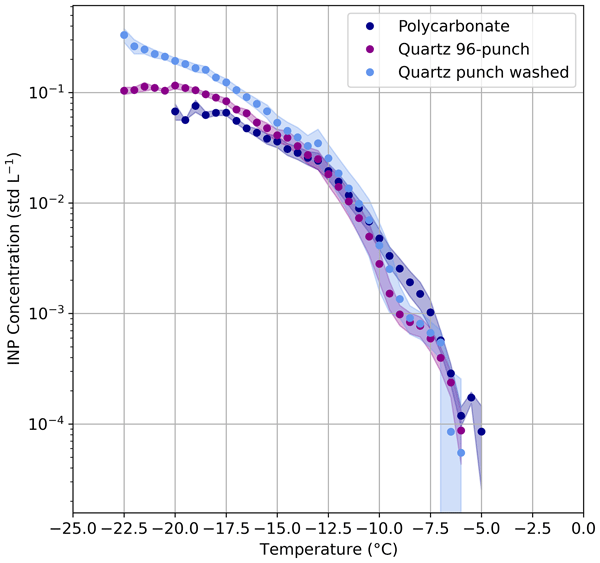
We evaluated different methods to obtain the ice nucleating particle (INP) concentration from ambient filters using GRAINS (GRAnada Ice Nuclei Spectrometer), the INP spectrometer at the Andalusian ObseRvatory of the Atmosphere (AGORA). We first characterized GRAINS and compared it to other INP devices. Then, we sampled polycarbonate and quartz filters for three months and tested three different particle extraction methods, finding general good agreement but that the INP concentration is systematically higher when using quartz filters.
Matheus Tolentino, Juan Antonio Bravo-Aranda, Juan Luis Guerrero-Rascado, Francisco Navas-Guzmán, Daniel Pérez-Ramírez, Lucas Alados-Arboledas, and Maria José Granados-Muñoz
Atmos. Meas. Tech., 19, 2079–2102, https://doi.org/10.5194/amt-19-2079-2026, https://doi.org/10.5194/amt-19-2079-2026, 2026
Short summary
Short summary
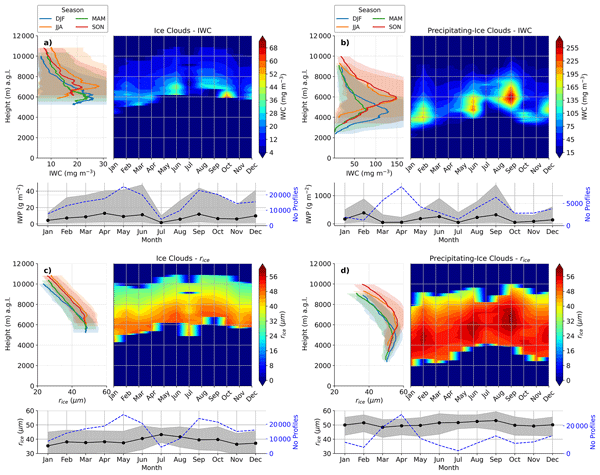
Clouds strongly influence weather and climate, yet long-term observations are rare in southern Europe. We analyzed five years of measurements in Granada, Spain, to study how different cloud types vary through the seasons. We developed a new method that improves cloud classification and found clear differences in height, thickness, and water content. These results provide valuable reference data to support satellite observations and climate models.
Andrew S. Kowalski, Ivan A. Janssens, and Oscar Pérez-Priego
Biogeosciences, 22, 8005–8012, https://doi.org/10.5194/bg-22-8005-2025, https://doi.org/10.5194/bg-22-8005-2025, 2025
Short summary
Short summary
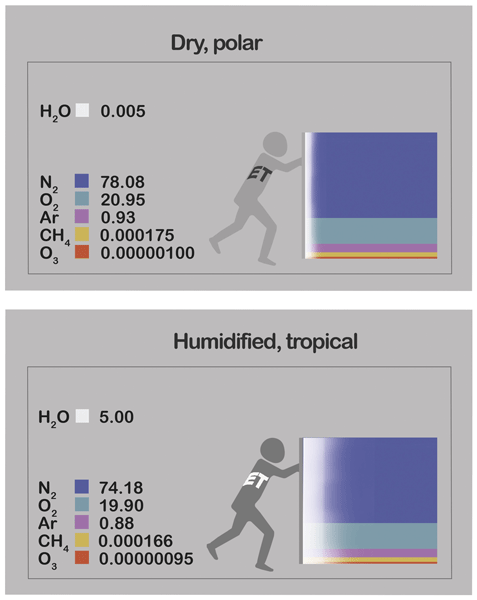
Humidification of air reduces the abundances of dry-air gas components such as oxygen, explaining why tropical humidity can be "stifling". This is overlooked due to the common expression of gas concentrations as fractions of dry air. Such neglect of water vapour also masks the key role of its sources and sinks in activating transport mechanisms of other gases. Humidity should be quantified whenever reporting gas concentrations.
Ana del Águila, Pablo Ortiz-Amezcua, Siham Tabik, Juan Antonio Bravo-Aranda, Sol Fernández-Carvelo, and Lucas Alados-Arboledas
Atmos. Chem. Phys., 25, 12549–12567, https://doi.org/10.5194/acp-25-12549-2025, https://doi.org/10.5194/acp-25-12549-2025, 2025
Short summary
Short summary
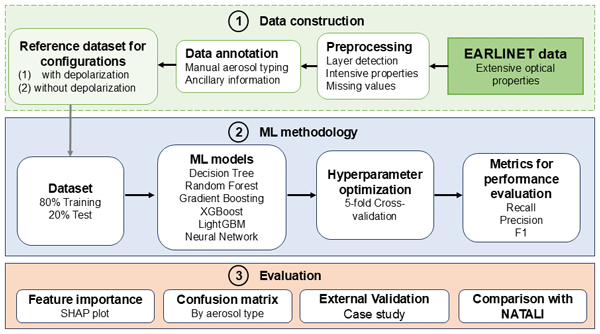
This study applies machine learning (ML) techniques to classify aerosols using high-resolution multiwavelength lidar data from EARLINET network. We developed a reference dataset and evaluated six ML models, with LightGBM achieving over 90 % accuracy. Depolarization data proved critical for improving dust classification. Validated against independent datasets, our approach improves aerosol classification and may help refine lidar-based processing strategies.
Andrew S. Kowalski
EGUsphere, https://doi.org/10.5194/egusphere-2025-2814, https://doi.org/10.5194/egusphere-2025-2814, 2025
Preprint archived
Short summary
Short summary
This manuscript demonstrates that a mass-based (inertial) framework is essential to the correct definition of diffusive transport, and therefore for defining Ficks first law. It invalidates the molar-based framework used by Roderick and Shakespeare (2025) to identify the contribution of the Soret effect (mass transport due to a temperature gradient) to open-water evaporation.
Jesús Yus-Díez, Luka Drinovec, Lucas Alados-Arboledas, Gloria Titos, Elena Bazo, Andrea Casans, Diego Patrón, Xavier Querol, Adolfo Gonzalez-Romero, Carlos Perez García-Pando, and Griša Močnik
Atmos. Meas. Tech., 18, 3073–3093, https://doi.org/10.5194/amt-18-3073-2025, https://doi.org/10.5194/amt-18-3073-2025, 2025
Short summary
Short summary
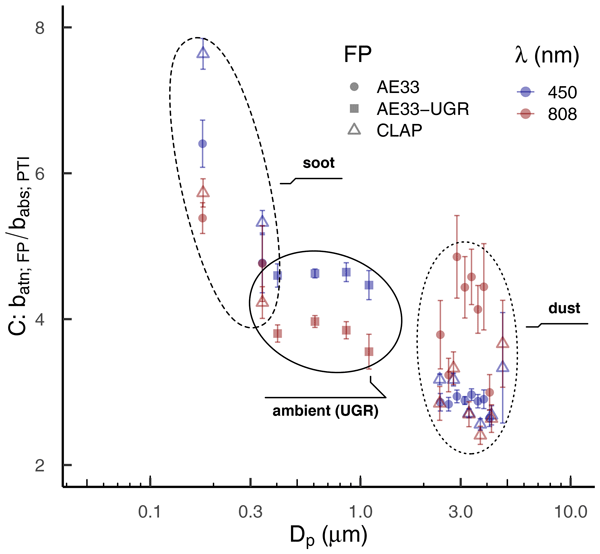
We have used absorption from a photothermal interferometer and scattering measurements to evaluate the most deployed filter photometers used to measure absorption for monitoring networks. We used soot- and dust-dominated aerosol samples in both laboratory and ambient settings. Our results indicated that one of these filter photometers, the MAAP (Multiangle Absorption Photometer), usually used as a pseudo-reference instrument, had 47 % higher absorption values than our reference measurements.
Elena Bazo, Daniel Pérez-Ramírez, Antonio Valenzuela, J. Vanderlei Martins, Gloria Titos, Alberto Cazorla, Fernando Rejano, Diego Patrón, Arlett Díaz-Zurita, Francisco José García-Izquierdo, David Fuertes, Lucas Alados-Arboledas, and Francisco José Olmo
Atmos. Chem. Phys., 25, 6325–6352, https://doi.org/10.5194/acp-25-6325-2025, https://doi.org/10.5194/acp-25-6325-2025, 2025
Short summary
Short summary
This works analyzes the aerosol scattering phase function for transported Saharan dust to the city of Granada – located in southwestern Europe. We use the novel technique polar imaging nephelometry that helps to determine the phase functions using a CMOS camera. The capability of measuring with polarized light helps to infer new properties about the mixture of Saharan dust particles with those of anthropogenic origin.
María-Ángeles López-Cayuela, Carmen Córdoba-Jabonero, Michaël Sicard, Jesús Abril-Gago, Vanda Salgueiro, Adolfo Comerón, María José Granados-Muñoz, Maria João Costa, Constantino Muñoz-Porcar, Juan Antonio Bravo-Aranda, Daniele Bortoli, Alejandro Rodríguez-Gómez, Lucas Alados-Arboledas, and Juan Luis Guerrero-Rascado
Atmos. Chem. Phys., 25, 3213–3231, https://doi.org/10.5194/acp-25-3213-2025, https://doi.org/10.5194/acp-25-3213-2025, 2025
Short summary
Short summary
Due to the significant radiative role of dust in climate change, vertical assessments of the short-wave dust direct radiative effect of both fine and coarse dust particles are performed separately. The study is focused on an intense Saharan dust outbreak crossing the Iberian Peninsula in springtime monitored by five Iberian lidar stations with southwest–northeast coverage. A comparative study to evaluate the differences found by considering the total dust (no separation) is also examined.
Andrew S. Kowalski
Biogeosciences, 22, 785–789, https://doi.org/10.5194/bg-22-785-2025, https://doi.org/10.5194/bg-22-785-2025, 2025
Short summary
Short summary
The laws of physics show that leaf oxygen is not photosynthetically enriched but extremely dilute due to the overwhelming effects of humidification. This challenges the prevailing diffusion-only paradigm regarding leaf gas exchanges because non-diffusive transport is required. Such transport also explains why fluxes of carbon dioxide and water vapour become decoupled at very high temperatures, as has been observed but not explained by plant physiologists.
Sergio Aranda-Barranco, Penélope Serrano-Ortiz, Andrew S. Kowalski, and Enrique P. Sánchez-Cañete
SOIL, 11, 213–232, https://doi.org/10.5194/soil-11-213-2025, https://doi.org/10.5194/soil-11-213-2025, 2025
Short summary
Short summary
This study investigated soil respiration and the main factors involved in a semi-arid environment (olive grove). For this purpose, 1 year's worth of automatic multi-chamber measurements was used, accompanied by ecosystem respiration data obtained using the eddy covariance technique. The soil respiration annual balance, Q10 parameter, rain pulses, and spatial and temporal variability of soil respiration are presented in this paper.
Fernando Rejano, Andrea Casans, Marta Via, Juan Andrés Casquero-Vera, Sonia Castillo, Hassan Lyamani, Alberto Cazorla, Elisabeth Andrews, Daniel Pérez-Ramírez, Andrés Alastuey, Francisco Javier Gómez-Moreno, Lucas Alados-Arboledas, Francisco José Olmo, and Gloria Titos
Atmos. Chem. Phys., 24, 13865–13888, https://doi.org/10.5194/acp-24-13865-2024, https://doi.org/10.5194/acp-24-13865-2024, 2024
Short summary
Short summary
This study provides valuable insights to improve cloud condensation nuclei (CCN) estimations at a high-altitude remote site which is influenced by nearby urban pollution. Understanding the factors that affect CCN estimations is essential to improve the CCN data coverage worldwide and assess aerosol–cloud interactions on a global scale. This is crucial for improving climate models, since aerosol–cloud interactions are the most important source of uncertainty in climate projections.
Ihab Alfadhel, Ignacio Peralta-Maraver, Isabel Reche, Enrique P. Sánchez-Cañete, Sergio Aranda-Barranco, Eva Rodríguez-Velasco, Andrew S. Kowalski, and Penélope Serrano-Ortiz
Biogeosciences, 21, 5117–5129, https://doi.org/10.5194/bg-21-5117-2024, https://doi.org/10.5194/bg-21-5117-2024, 2024
Short summary
Short summary
Inland saline lakes are crucial in the global carbon cycle, but increased droughts may alter their carbon exchange capacity. We measured CO2 and CH4 fluxes in a Mediterranean saline lake using the eddy covariance method under dry and wet conditions. We found the lake acts as a carbon sink during wet periods but not during droughts. These results highlight the importance of saline lakes in carbon sequestration and their vulnerability to climate-change-induced droughts.
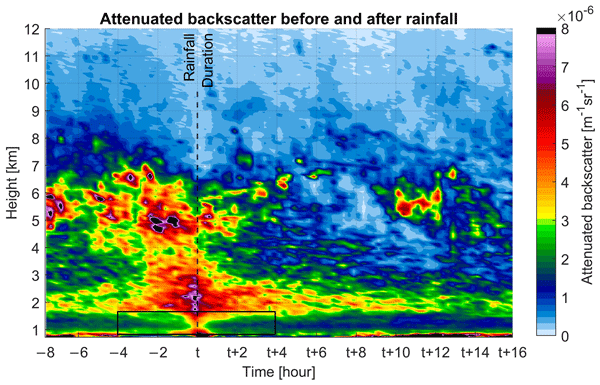
Wenyue Wang, Klemens Hocke, Leonardo Nania, Alberto Cazorla, Gloria Titos, Renaud Matthey, Lucas Alados-Arboledas, Agustín Millares, and Francisco Navas-Guzmán
Atmos. Chem. Phys., 24, 1571–1585, https://doi.org/10.5194/acp-24-1571-2024, https://doi.org/10.5194/acp-24-1571-2024, 2024
Short summary
Short summary
The south-central interior of Andalusia experiences complex precipitation patterns as a result of the semi-arid Mediterranean climate and the influence of Saharan dust. This study monitored the inter-relations between aerosols, clouds, meteorological variables, and precipitation systems using ground-based remote sensing and in situ instruments.
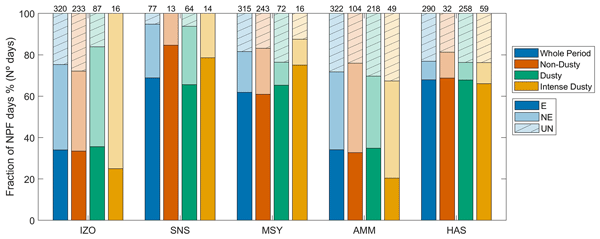
Juan Andrés Casquero-Vera, Daniel Pérez-Ramírez, Hassan Lyamani, Fernando Rejano, Andrea Casans, Gloria Titos, Francisco José Olmo, Lubna Dada, Simo Hakala, Tareq Hussein, Katrianne Lehtipalo, Pauli Paasonen, Antti Hyvärinen, Noemí Pérez, Xavier Querol, Sergio Rodríguez, Nikos Kalivitis, Yenny González, Mansour A. Alghamdi, Veli-Matti Kerminen, Andrés Alastuey, Tuukka Petäjä, and Lucas Alados-Arboledas
Atmos. Chem. Phys., 23, 15795–15814, https://doi.org/10.5194/acp-23-15795-2023, https://doi.org/10.5194/acp-23-15795-2023, 2023
Short summary
Short summary
Here we present the first study of the effect of mineral dust on the inhibition/promotion of new particle formation (NPF) events in different dust-influenced areas. Unexpectedly, we show that the occurrence of NPF events is highly frequent during mineral dust outbreaks, occurring even during extreme dust outbreaks. We also show that the occurrence of NPF events during mineral dust outbreaks significantly affects the potential cloud condensation nuclei budget.
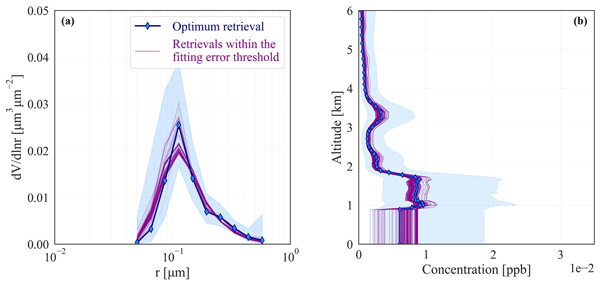
Alexandra Tsekeri, Anna Gialitaki, Marco Di Paolantonio, Davide Dionisi, Gian Luigi Liberti, Alnilam Fernandes, Artur Szkop, Aleksander Pietruczuk, Daniel Pérez-Ramírez, Maria J. Granados Muñoz, Juan Luis Guerrero-Rascado, Lucas Alados-Arboledas, Diego Bermejo Pantaleón, Juan Antonio Bravo-Aranda, Anna Kampouri, Eleni Marinou, Vassilis Amiridis, Michael Sicard, Adolfo Comerón, Constantino Muñoz-Porcar, Alejandro Rodríguez-Gómez, Salvatore Romano, Maria Rita Perrone, Xiaoxia Shang, Mika Komppula, Rodanthi-Elisavet Mamouri, Argyro Nisantzi, Diofantos Hadjimitsis, Francisco Navas-Guzmán, Alexander Haefele, Dominika Szczepanik, Artur Tomczak, Iwona S. Stachlewska, Livio Belegante, Doina Nicolae, Kalliopi Artemis Voudouri, Dimitris Balis, Athena A. Floutsi, Holger Baars, Linda Miladi, Nicolas Pascal, Oleg Dubovik, and Anton Lopatin
Atmos. Meas. Tech., 16, 6025–6050, https://doi.org/10.5194/amt-16-6025-2023, https://doi.org/10.5194/amt-16-6025-2023, 2023
Short summary
Short summary
EARLINET/ACTRIS organized an intensive observational campaign in May 2020, with the objective of monitoring the atmospheric state over Europe during the COVID-19 lockdown and relaxation period. The work presented herein focuses on deriving a common methodology for applying a synergistic retrieval that utilizes the network's ground-based passive and active remote sensing measurements and deriving the aerosols from anthropogenic activities over Europe.
Jesús Abril-Gago, Pablo Ortiz-Amezcua, Diego Bermejo-Pantaleón, Juana Andújar-Maqueda, Juan Antonio Bravo-Aranda, María José Granados-Muñoz, Francisco Navas-Guzmán, Lucas Alados-Arboledas, Inmaculada Foyo-Moreno, and Juan Luis Guerrero-Rascado
Atmos. Chem. Phys., 23, 8453–8471, https://doi.org/10.5194/acp-23-8453-2023, https://doi.org/10.5194/acp-23-8453-2023, 2023
Short summary
Short summary
Validation activities of Aeolus wind products were performed in Granada with different upward-probing instrumentation (Doppler lidar system and radiosondes) and spatiotemporal collocation criteria. Specific advantages and disadvantages of each instrument were identified, and an optimal comparison criterion is proposed. Aeolus was proven to provide reliable wind products, and the upward-probing instruments were proven to be useful for Aeolus wind product validation activities.
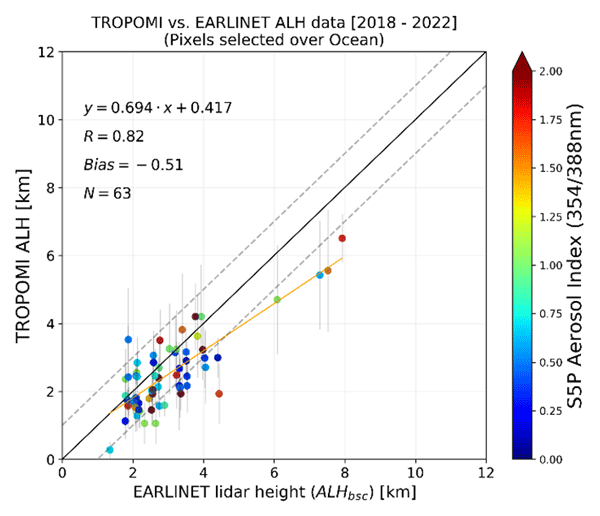
Konstantinos Michailidis, Maria-Elissavet Koukouli, Dimitris Balis, J. Pepijn Veefkind, Martin de Graaf, Lucia Mona, Nikolaos Papagianopoulos, Gesolmina Pappalardo, Ioanna Tsikoudi, Vassilis Amiridis, Eleni Marinou, Anna Gialitaki, Rodanthi-Elisavet Mamouri, Argyro Nisantzi, Daniele Bortoli, Maria João Costa, Vanda Salgueiro, Alexandros Papayannis, Maria Mylonaki, Lucas Alados-Arboledas, Salvatore Romano, Maria Rita Perrone, and Holger Baars
Atmos. Chem. Phys., 23, 1919–1940, https://doi.org/10.5194/acp-23-1919-2023, https://doi.org/10.5194/acp-23-1919-2023, 2023
Short summary
Short summary
Comparisons with ground-based correlative lidar measurements constitute a key component in the validation of satellite aerosol products. This paper presents the validation of the TROPOMI aerosol layer height (ALH) product, using archived quality assured ground-based data from lidar stations that belong to the EARLINET network. Comparisons between the TROPOMI ALH and co-located EARLINET measurements show good agreement over the ocean.
Simone Kotthaus, Juan Antonio Bravo-Aranda, Martine Collaud Coen, Juan Luis Guerrero-Rascado, Maria João Costa, Domenico Cimini, Ewan J. O'Connor, Maxime Hervo, Lucas Alados-Arboledas, María Jiménez-Portaz, Lucia Mona, Dominique Ruffieux, Anthony Illingworth, and Martial Haeffelin
Atmos. Meas. Tech., 16, 433–479, https://doi.org/10.5194/amt-16-433-2023, https://doi.org/10.5194/amt-16-433-2023, 2023
Short summary
Short summary
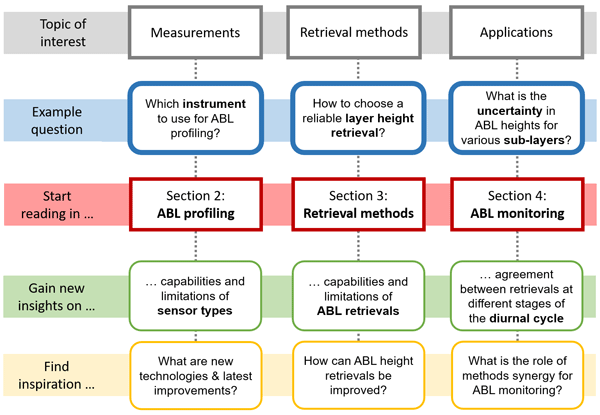
Profile observations of the atmospheric boundary layer now allow for layer heights and characteristics to be derived at high temporal and vertical resolution. With novel high-density ground-based remote-sensing measurement networks emerging, horizontal information content is also increasing. This review summarises the capabilities and limitations of various sensors and retrieval algorithms which need to be considered during the harmonisation of data products for high-impact applications.
María Ángeles López-Cayuela, Carmen Córdoba-Jabonero, Diego Bermejo-Pantaleón, Michaël Sicard, Vanda Salgueiro, Francisco Molero, Clara Violeta Carvajal-Pérez, María José Granados-Muñoz, Adolfo Comerón, Flavio T. Couto, Rubén Barragán, María-Paz Zorzano, Juan Antonio Bravo-Aranda, Constantino Muñoz-Porcar, María João Costa, Begoña Artíñano, Alejandro Rodríguez-Gómez, Daniele Bortoli, Manuel Pujadas, Jesús Abril-Gago, Lucas Alados-Arboledas, and Juan Luis Guerrero-Rascado
Atmos. Chem. Phys., 23, 143–161, https://doi.org/10.5194/acp-23-143-2023, https://doi.org/10.5194/acp-23-143-2023, 2023
Short summary
Short summary
An intense Saharan dust outbreak crossing the Iberian Peninsula in springtime was monitored to determinine the specific contribution of fine and coarse dust particles at five lidar stations, strategically covering its SW–central–NE pathway. Expected dust ageing along the transport started unappreciated. A different fine-dust impact on optical (~30 %) and mass (~10 %) properties was found. Use of polarized lidar measurements (mainly in elastic systems) for fine/coarse dust separation is crucial.
Jesús Abril-Gago, Juan Luis Guerrero-Rascado, Maria João Costa, Juan Antonio Bravo-Aranda, Michaël Sicard, Diego Bermejo-Pantaleón, Daniele Bortoli, María José Granados-Muñoz, Alejandro Rodríguez-Gómez, Constantino Muñoz-Porcar, Adolfo Comerón, Pablo Ortiz-Amezcua, Vanda Salgueiro, Marta María Jiménez-Martín, and Lucas Alados-Arboledas
Atmos. Chem. Phys., 22, 1425–1451, https://doi.org/10.5194/acp-22-1425-2022, https://doi.org/10.5194/acp-22-1425-2022, 2022
Short summary
Short summary
A validation of Aeolus reprocessed optical products is carried out via an intercomparison with ground-based measurements taken at several ACTRIS/EARLINET stations in western Europe. Case studies and a statistical analysis are presented. The stations are located in a hot spot between Africa and the rest of Europe, which guarantees a variety of aerosol types, from mineral dust layers to continental/anthropogenic aerosol, and allows us to test Aeolus performance under different scenarios.
Mariana Adam, Iwona S. Stachlewska, Lucia Mona, Nikolaos Papagiannopoulos, Juan Antonio Bravo-Aranda, Michaël Sicard, Doina N. Nicolae, Livio Belegante, Lucja Janicka, Dominika Szczepanik, Maria Mylonaki, Christina-Anna Papanikolaou, Nikolaos Siomos, Kalliopi Artemis Voudouri, Luca Alados-Arboledas, Arnoud Apituley, Ina Mattis, Anatoli Chaikovsky, Constantino Muñoz-Porcar, Aleksander Pietruczuk, Daniele Bortoli, Holger Baars, Ivan Grigorov, and Zahary Peshev
Atmos. Chem. Phys. Discuss., https://doi.org/10.5194/acp-2021-759, https://doi.org/10.5194/acp-2021-759, 2021
Revised manuscript not accepted
Short summary
Short summary
Results over 10 years of biomass burning events measured by EARLINET are analysed by means of the intensive parameters, based on the methodology described in Part I. Smoke type is characterized for each of the four geographical regions based on continental smoke origin. Relationships between intensive parameters or colour ratios are shown. The smoke is labelled in average as aged smoke.
Cited articles
Abril-Gago, J., Ortiz-Amezcua, P., Bermejo-Pantaleón, D., Andújar-Maqueda, J., Bravo-Aranda, J. A., Granados-Muñoz, M. J., Navas-Guzmán, F., Alados-Arboledas, L., Foyo-Moreno, I., and Guerrero-Rascado, J. L.: Validation activities of Aeolus wind products on the southeastern Iberian Peninsula, Atmos. Chem. Phys., 23, 8453–8471, https://doi.org/10.5194/acp-23-8453-2023, 2023.
Abril-Gago, J., Andújar-Maqueda, J., Ortiz-Amezcua, P., and Guerrero-Rascado, J.L.: SCARCE Campaign – Remote Sensing Datasets, Zenodo [data set], https://doi.org/10.5281/zenodo.11085247, 2024
Abril-Gago, J., Ortiz-Amezcua, P., Kowalski, A. S., Bravo-Aranda, J. A., Granados-Muñoz, M. J., Andújar-Maqueda, J., Alados-Arboledas, L., and Guerrero-Rascado, J. L.: Quantifying turbulent coarse particle transport over drylands of Southeastern Iberia using a stand-alone Doppler lidar methodology, Atmos. Res., 325, 108236, https://doi.org/10.1016/j.atmosres.2025.108236, 2025a.
Abril-Gago, J., Echeverría-Martín, E., Cabrera-Carrillo, G., Serrano-Ortiz, P., Sánchez-Cañete, E. P., and Guerrero-Rascado, J. L.: SCARCE campaign – atmospheric and soil datasets, Zenodo [data set], https://doi.org/10.5281/zenodo.15881541, 2025b.
Ahlström, A., Raupach, M. R., Schurgers, G., Smith, B., Arneth, A., Jung, M., Reichstein, M., Canadell, J. G., Friedlingstein, P., Jain, A. K., Kato, E., Poulter, B., Sitch, S., Stocker, B. D., Viovy, N., Wang, Y. P., Wiltshire, A., Zaehle, S., and Zeng, N.: The dominant role of semi-arid ecosystems in the trend and variability of the land CO2 sink, Science, 348, 895–899, https://doi.org/10.1126/science.aaa1668, 2015.
Andújar-Maqueda, J., Ortiz-Amezcua, P. Cariñanos, P., Abril-Gago, J., De Linares, C., de Arruda Moreira, G., Bravo-Aranda, J. A., Granados-Muñoz, M. J., Alados-Arboledas, L., and Guerrero-Rascado, J. L.: The Role of Atmospheric Boundary Layer Wind and Turbulence on Surface Pollen Levels, Agr. Forest Meteorol., 371, 110584, https://doi.org/10.1016/j.agrformet.2025.110584, 2025.
Baldocchi, D.: Measuring fluxes of trace gases and energy between ecosystems and the atmosphere – The state and future of the eddy covariance method, Glob. Change Biol., 20, 3600–3609, https://doi.org/10.1111/gcb.12649, 2014.
Brantley, S. L., Kubicki, J. D., and White, A. F.: Kinetics of Water–Rock Interaction, Springer, New York, 833 pp., https://doi.org/10.1007/978-0-387-73563-4, 2008.
Cazorla, A., Casquero-Vera, J. A., Román, R., Guerrero-Rascado, J. L., Toledano, C., Cachorro, V. E., Orza, J. A. G., Cancillo, M. L., Serrano, A., Titos, G., Pandolfi, M., Alastuey, A., Hanrieder, N., and Alados-Arboledas, L.: Near-real-time processing of a ceilometer network assisted with sun-photometer data: monitoring a dust outbreak over the Iberian Peninsula, Atmos. Chem. Phys., 17, 11861–11876, https://doi.org/10.5194/acp-17-11861-2017, 2017.
El-Kenawy, E.-S. M., Zerouali, B., Bailek, N., Bouchouich, K., Hassan, M. A. Almorox, J., Kuriqi, A., Eid, M., and Ibrahim, A.: Improved weighted ensemble learning for predicting the daily reference evapotranspiration under the semi-arid climate conditions, Environ. Sci. Pollut. Res., 29, 81279–81299, https://doi.org/10.1007/s11356-022-21410-8, 2022.
Faimon, J., Lang, M., Geršl, M., Sracek, O., and Bábek, O.: The “breathing spots” in karst areas – The sites of advective exchange of gases between soils and adjacent underground cavities, Theor. Appl. Climatol., 142, 85–101, https://doi.org/10.1007/s00704-020-03280-7, 2020.
Gibert, F., Koch, G. J., Beyon, J. Y., Hilton, T. W., Davis, K. J., Andrews, A., Flamant, P. H., and Singh, U. N.: Can CO2 Turbulent Flux Be Measured by Lidar? A Preliminary Study, J. Atmos. Oceanic Technol., 28, 365–377, https://doi.org/10.1175/2010JTECHA1446.1, 2011.
IPCC: Climate Change 2021: The Physical Science Basis. Contribution of Working Group I to the Sixth Assessment Report of the Intergovernmental Panel on Climate Change, edited by: Masson-Delmotte, V., Zhai, P., Pirani, A., Connors, S. L., Péan, C., Berger, S., Caud, N., Chen, Y., Goldfarb, L., Gomis, M. I., Huang, M., Leitzell, K., Lonnoy, E., Matthews, J. B. R., Maycock, T. K., Waterfield, T., Yelekçi, O., Yu, R., and Zhou, B., Cambridge University Press, Cambridge, United Kingdom and New York, NY, USA, 2391 pp., https://doi.org/10.1017/9781009157896, 2021.
Jones, E. P. and Smith, S. D.: A first measurement of sea-air CO2 flux by eddy correlation, J. Geophys. Res., 82, 5990–5992, https://doi.org/10.1029/JC082i037p05990, 1977.
Kotthaus, S., Haeffelin, M., Drouin, M.-A., Dupont, J.-C., Grimmond, S., Haefele, A., Hervo, M., Poltera, Y., and Wiegner, M.: Tailored Algorithms for the Detection of the Atmospheric Boundary Layer Height from Common Automatic Lidars and Ceilometers (ALC), Remote Sens., 12, 3259, https://doi.org/10.3390/rs12193259, 2020.
Kotthaus, S., Bravo-Aranda, J. A., Collaud Coen, M., Guerrero-Rascado, J. L., Costa, M. J., Cimini, D., O'Connor, E. J., Hervo, M., Alados-Arboledas, L., Jiménez-Portaz, M., Mona, L., Ruffieux, D., Illingworth, A., and Haeffelin, M.: Atmospheric boundary layer height from ground-based remote sensing: a review of capabilities and limitations, Atmos. Meas. Tech., 16, 433–479, https://doi.org/10.5194/amt-16-433-2023, 2023.
Kowalski, A. S., Serrano-Ortiz, P., Janssens, I. A., Sanchez-Moral, S., Cuezva, S., Domingo, F., Were, A., and Alados-Arboledas, L.: Can flux tower research neglect geochemical CO2 exchange?, Agr. Forest Meteorol., 148, 1045–1054, https://doi.org/10.1016/j.agrformet.2008.02.004, 2008.
Liu, Z. and Zhao, J.: Contribution of carbonate rock weathering to the atmospheric CO2 sink, Environ. Geol., 39, 1053–1058, https://doi.org/10.1007/s002549900072, 2000.
López-Ballesteros, A.,. Serrano-Ortiz, P., Sánchez-Cañete, E. P., Oyonarte, C., Kowalski, A. S., Pérez-Priego, Ó., and Domingo, F.: Enhancement of the net CO2 release of a semiarid grassland in SE Spain by rain pulses, J. Geophys. Res.-Biogeo., 121, 52–66, https://doi.org/10.1002/2015JG003091, 2016.
López-Ballesteros, A., Serrano-Ortiz, P., Kowalski, A. S., Sánchez-Canete, E. P., Scott, R. L., and Domingo, F.: Subterranean ventilation of allochthonous CO2 governs net CO2 exchange in a semiarid Mediterranean grassland, Agr. Forest Meteorol., 234, 115–126, https://doi.org/10.1016/j.agrformet.2016.12.021, 2017.
López-Ballesteros, A., Oyonarte, C., Kowalski, A. S., Serrano-Ortiz, P., Sánchez-Cañete, E. P., Moya, M. R., and Domingo, F.: Can land degradation drive differences in the C exchange of two similar semiarid ecosystems?, Biogeosciences, 15, 263–278, https://doi.org/10.5194/bg-15-263-2018, 2018.
Manninen, A. J.: Halo Lidar Toolbox, Github, https://github.com/manninenaj/HALO_lidar_toolbox (last access: 1 April 2026), 2019.
Manninen, A. J., Marke, T., Tuononen, M. J., and O'Connor, E. J.: Atmospheric boundary layer classification with Doppler lidar, J. Geophys. Res-Atmos., 123, 8172–8189, https://doi.org/10.1029/2017JD028169, 2018.
Mauder, M. and Foken T.: Impact of post-?eld data processing on eddy covariance ?ux estimates and energy balance closure, Meteorol. Z., 15, 597–609, 2006.
Moed, B. A., Nazaroff, W. W., and Sextro, R. G.: Soil as a source of indoor radon: generation, migration and entry, radon and its decay products in indoor air, in: Radon and its decay products in indoor air, edited by: Nazaroff, W. and Nero, A., Wiley, New York, 57–112, ISBN: 0-471-62810-7, 1988.
Moya, M. R., Sánchez-Cañete, E. P., Vargas, R., López-Ballesteros, A., Oyonarte, C., Kowalski, A. S., Serrano-Ortiz, P., and Domingo, F.: CO2 dynamics are strongly influenced by low frequency atmospheric pressure changes in semiarid grasslands, J. Geophys. Res. Geophys.-Biogeo., 124, 902–917, https://doi.org/10.1029/2018JG004961, 2019.
Moya, M. R., López-Ballesteros, A., Sánchez-Cañete, E. P., Serrano-Ortiz, P., Oyonarte, C., Domingo, F., and Kowalski, A. S.: Ecosystem CO2 release driven by wind occurs in drylands at global scale, Glob. Change Biol., 28, 5320–5333, https://doi.org/10.1111/gcb.16277, 2022.
O'Connor, E. J., Illingworth, A. J., Brooks, I. M., Westbrook, C. D., Hogan, R. J., Davies, F. and Brooks, B. J.: A Method for Estimating the Turbulent Kinetic Energy Dissipation Rate from a Vertically Pointing Doppler Lidar, and Independent Evaluation from Balloon-Borne In Situ Measurements, J. Atmos. Ocean.Technol., 27, 1652–1664, https://doi.org/10.1175/2010JTECHA1455.1, 2010.
Ortiz-Amezcua, P., Martínez-Herrera, A., Manninen, A. J., Pentikäinen, P. P., O'Connor, E. J., Guerrero-Rascado, J. L., and Alados-Arboledas, L.: Wind and Turbulence Statistics in the Urban Boundary Layer over a Mountain–Valley System in Granada, Spain, Remote Sens., 14, 2321, https://doi.org/10.3390/rs14102321, 2022a.
Ortiz-Amezcua, P., Andújar-Maqueda, J., Manninen, A. J., Pentikäinen, P., O'Connor, E. J., Stachlewska, I. S., de Arruda Moreira, G., Benavent-Oltra, J. A., Casquero-Vera, J. A., Poczta, P., Wang, D., Harenda, K. M., Chojnicki, B. H., Szczepanik, D. M., Janicka, Ł., Schüttemeyer, D., Alados-Arboledas, L., and Guerrero-Rascado, J. L.: Dynamics of the Atmospheric Boundary Layer over two middle-latitude rural sites with Doppler lidar, Atmos. Res., 280, 106434, https://doi.org/10.1016/j.atmosres.2022.106434, 2022b.
Pastorello, G., Trotta, C., Canfora, E., et al.: The FLUXNET2015 dataset and the ONEFlux processing pipeline for eddy covariance data, Scientific Data, 7, 225, https://doi.org/10.1038/s41597-020-0534-3, 2020.
Pentikäinen, P., O'Connor, E. J., Manninen, A. J., and Ortiz-Amezcua, P.: Methodology for deriving the telescope focus function and its uncertainty for a heterodyne pulsed Doppler lidar, Atmos. Meas. Tech., 13, 2849–2863, https://doi.org/10.5194/amt-13-2849-2020, 2020.
Piao, S., Huang, M., Liu, Z., Wang, X., Ciais, P., Canadell, J. G., Wang, K., Bastos, A., Friedlingstein, P., Houghton, R. A., Le Quéré, C., Liu, Y., Myneni, R. B., Peng, S., Pongratz, J., Sitch, S., Yan, T., Wang, Y., Zhu, Z., Wu, D., and Wang, T.: Lower land-use emissions responsible for increased net land carbon sink during the slow warming period, Nat. Geosci., 11, 739–743, https://doi.org/10.1038/s41561-018-0204-7, 2018.
Pla, C., Ruiz, M. C., Gil-Oncina, S., García-Martínez, N., Cañaveras, J. C., Cuezva, S., Fernández-Cortés, A., Sánchez-Moral, S., and Benavente, D.: 222Rn and CO2 monitoring in soil and indoor atmosphere to understand changes in the gaseous dynamics of Rull cave (Spain), Environ. Earth Sci., 82, 235, https://doi.org/10.1007/s12665-023-10885-4, 2023.
Rey, A., Pegoraro, E., Oyonarte, C., Were, A., Escribano, P., and Raimundo, J.: Impact of land degradation on soil respiration in a steppe (Stipa tenacissima L.) semi-arid ecosystem in the SE of Spain, Soil Biol. Biochem., 43, 393–403, https://doi.org/10.1016/j.soilbio.2010.11.007, 2011.
Rey, A., Oyonarte, C., Morán-López, T., Raimundo, J., and Pegoraro, E: Changes in soil moisture predict soil carbon losses upon rewetting in a perennial semiarid steppe in SE Spain, Geoderma, 287, 135–146, https://doi.org/10.1016/j.geoderma.2016.06.025, 2017.
Sanchez-Cañete, E. P., Serrano-Ortiz, P., Kowalski, A. S., Oyonarte, C., and Domingo, F.: Subterranean CO2 ventilation and its role in the net ecosystem carbon balance of a karstic shrubland, Geophys. Res. Lett., 38, L09802, https://doi.org/10.1029/2011GL047077, 2011.
Sánchez-Cañete, E. P., Kowalski, A. S., Serrano-Ortiz, P., Pérez-Priego, Ó., and Domingo, F.: Deep CO2 soil inhalation/exhalation induced by synoptic pressure changes and atmospheric tides in a carbonated semiarid steppe, Biogeosciences, 10, 6591–6600, https://doi.org/10.5194/bg-10-6591-2013, 2013.
Sánchez-Cañete, E. P., Oyonarte, C., Serrano-Ortiz, P., Curiel Yuste, J., Pérez-Priego, Ó., Domingo, F., and Kowalski, A. S.: Winds induce CO2 exchange with the atmosphere and vadose zone transport in a karstic ecosystem, J. Geophys. Res.-Biogeo., 121, 2049–2063, https://doi.org/10.1002/2016JG003500, 2016.
Schimel, D. S.: Terrestrial ecosystems and the carbon cycle, Glob. Change Biol., 1, 77–91, https://doi.org/10.1111/j.1365-2486.1995.tb00008.x, 1995.
Serrano-Ortiz, P., Roland, M., Sanchez-Moral, S., Janssens, I. A., Domingo, F., Godderis, Y., and Kowalski, A. S.: Hidden, abiotic CO2 flows and gaseous reservoirs in the terrestrial carbon cycle: Review and perspectives, Agr. Forest Meteorol., 150, 321–329, https://doi.org/10.1016/j.agrformet.2010.01.002, 2010.
Serrano-Ortiz, P., Oyonarte, C., Pérez-Priego, O., Reverter, B. R., Sánchez-Cañete, E. P., Were, A., Uclés, O., Morillas, L., and Domingo, F.: Ecological functioning in grass–shrub Mediterranean ecosystems measured by eddy covariance, Oecologia, 175, 1005–1017, https://doi.org/10.1007/s00442-014-2948-0, 2014.
Spötl, C., Fairchild, I. J., and Tooth, A. F.: Cave air control on dripwater geochemistry, Obir Caves (Austria): Implications for speleothem deposition in dynamically ventilated caves, Geochim. Cosmochim. Ac., 69, 2451–2468, https://doi.org/10.1016/j.gca.2004.12.009, 2005.
Stull, R. B.: An introduction to boundary layer meteorology, Springer, https://doi.org/10.1007/978-94-009-3027-8, 1988.
Vargas, R., Sánchez-Cañete, E.P., Serrano-Ortiz, P., Curiel Yuste, J., Domingo, F., López-Ballesteros, A., and Oyonarte, C.: Hot-moments of CO2 eflux in a water-limited grassland, Soil Syst., 2, 47, https://doi.org/10.3390/soilsystems2030047, 2018
Villarreal, S., Guevara, M., Alcaraz-Segura, D., Brunsell, N. A., Hayes, D., Loescher, H. W., and Vargas, R.: Ecosystem functional diversity and the representativeness of environmental networks across the conterminous United States, Agr. Forest Meteorol., 262, 423–433, https://doi.org/10.1016/j.agrformet.2018.07.016, 2018.
WMO (World Meteorological Organization): WMO Greenhouse Gas Bulletin No. 20 – 28 October 2024, World Meteorological Organization, Geneva, Switzerland, https://library.wmo.int/idurl/4/69057 (last access: 10 April 2026), 2024.
Zhuo, W., Iida, T., and Furukawa, M.: Modeling Radon Flux Density from the Earth's Surface, J. Nucl. Sci. Technol., 43, 479–482, https://doi.org/10.1080/18811248.2006.9711127, 2006.
Short summary
This study investigates non-biological soil CO2 ventilation in a semiarid Mediterranean shrubland and standardizes the criteria for its detection. Ten ventilation events were identified during the SCARCE (Synchronized Characterization of Aerosol, Radon and Carbon dioxide Exchanges in drylands) campaign, with several atmospheric parameters acting as drivers. Surface pressure emerged as the primary driver at the site, while friction velocity and boundary layer turbulence were also found to be relevant, highlighting the value of Doppler lidar for soil–atmosphere exchange studies.
This study investigates non-biological soil CO2 ventilation in a semiarid Mediterranean...


Altmetrics
Final-revised paper
Preprint