
Articles | Volume 23, issue 8
https://doi.org/10.5194/bg-23-2885-2026
© Author(s) 2026. This work is distributed under
the Creative Commons Attribution 4.0 License.
the Creative Commons Attribution 4.0 License.
https://doi.org/10.5194/bg-23-2885-2026
© Author(s) 2026. This work is distributed under
the Creative Commons Attribution 4.0 License.
the Creative Commons Attribution 4.0 License.
Research article
| 
29 Apr 2026
Research article |
| 29 Apr 2026
| 29 Apr 2026
Bacterial contribution to nitrogen processing in the atmosphere
Frédéric Mathonat
CORRESPONDING AUTHOR

Université Clermont Auvergne, CNRS, Clermont Auvergne INP, ICCF, 63000, Clermont-Ferrand, France
Université Clermont Auvergne, CNRS, LMGE, 63000, Clermont-Ferrand, France
now at: BRGM, 45060 Orléans, France
François Enault
Université Clermont Auvergne, CNRS, LMGE, 63000, Clermont-Ferrand, France
Raphaëlle Péguilhan
Department of Chemical and Biochemical Engineering, Technical University of Denmark, 2800 Kgs. Lyngby, Denmark
Muriel Joly
Université Clermont Auvergne, CNRS, Clermont Auvergne INP, ICCF, 63000, Clermont-Ferrand, France
Mariline Théveniot
Université Clermont Auvergne, CNRS, Clermont Auvergne INP, ICCF, 63000, Clermont-Ferrand, France
Jean-Luc Baray
Université Clermont Auvergne, CNRS, LaMP, 63000, Clermont-Ferrand, France
Barbara Ervens
Université Clermont Auvergne, CNRS, Clermont Auvergne INP, ICCF, 63000, Clermont-Ferrand, France
Pierre Amato
Université Clermont Auvergne, CNRS, LMGE, 63000, Clermont-Ferrand, France
Related authors
No articles found.
Leslie Nuñez López, Pierre Amato, and Barbara Ervens
EGUsphere, https://doi.org/10.5194/egusphere-2026-5013, https://doi.org/10.5194/egusphere-2026-5013, 2026
This preprint is open for discussion and under review for Biogeosciences (BG).
Short summary
Short summary
Clouds contain microorganisms that can biodegrade organics, potentially influencing the atmospheric carbon cycle. We present a framework to estimate biodegradation rates for common cloud-water constituents and shows that microbial abundance is the main controlling factor. Overall, biodegradation is a minor atmospheric sink, only important for a few individual compounds. These findings improve estimates of atmospheric sinks and help advance our understanding of airborne microbial activity.
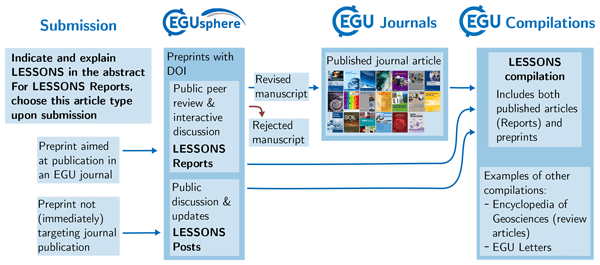
Ulrike Proske, John Hillier, Stefan Gaillard, Theresa Blume, Eduardo Queiroz Alves, Susanne Buiter, Ken S. Carslaw, Kirsten von Elverfeldt, Tim H. M. van Emmerik, Barbara Ervens, Rolf Hut, Sam Illingworth, Daniel Klotz, and Jonas Pyschik
Geosci. Commun., 9, 371–383, https://doi.org/10.5194/gc-9-371-2026, https://doi.org/10.5194/gc-9-371-2026, 2026
Short summary
Short summary
We explain a new article type that is being introduced in participating EGU publications. "LESSONS" articles describe the Limitations, Errors, Surprises, Shortcomings and Opportunities for New Science emerging from the scientific process. The publication of non-positive results and associated learnings aims to complete an unbiased record of the research effort, contributes to open and transparent science, allows the authors and others to learn, and may open opportunities for new science.
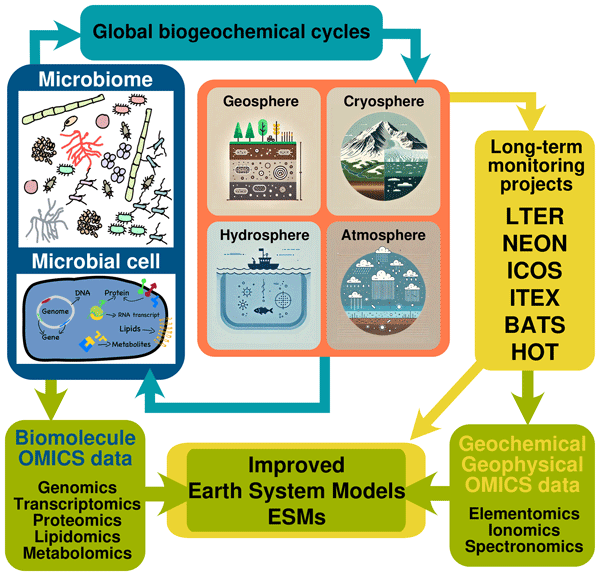
Elsa Abs, Christoph Keuschnig, Pierre Amato, Chris Bowler, Eric Capo, Alexander B. Chase, Luciana Chavez Rodriguez, Abraham N. Dabengwa, Thomas Dussarrat, Thomas Guzman, Linnea K. Hernandez, Jenni Hultman, Kirsten Küsel, Zhen Li, Anna Mankowski, William J. Riley, Scott R. Saleska, and Lisa Wingate
Biogeosciences, 23, 5205–5237, https://doi.org/10.5194/bg-23-5205-2026, https://doi.org/10.5194/bg-23-5205-2026, 2026
Short summary
Short summary
Meta-omics technologies offer new tools to understand how microbial and plant functional diversity shape biogeochemical cycles across ecosystems. This perspective explores how integrating omics data with ecological and modeling approaches can improve our understanding of greenhouse gas fluxes and nutrient dynamics, from soils to clouds, and from the past to the future. We highlight challenges and opportunities for scaling omics insights from local processes to Earth system models.
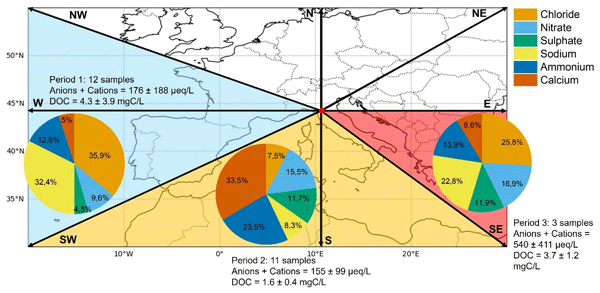
Pauline Nibert, Yi Wu, Muriel Joly, Pierre Amato, Paolo Cristofanelli, Francescopiero Calzolari, Jean-Luc Piro, Davide Putero, Simonetta Montaguti, Laura Renzi, Franziska Vogel, Marco Rapuano, Marcello Brigante, Christophe Verhaege, Jean-Luc Baray, Laurent Deguillaume, Angela Marinoni, Marco Zanatta, and Angelica Bianco
Atmos. Chem. Phys., 26, 6489–6506, https://doi.org/10.5194/acp-26-6489-2026, https://doi.org/10.5194/acp-26-6489-2026, 2026
Short summary
Short summary
This study provides the first chemical and microbiological characterization of cloud samples collected at Mt. Cimone (acronym CMN in ACTRIS, ICOS and GAW) in the Mediterranean basin. The chemical characterization is deeply discussed in relationship with back-trajectories and cloud processing. Air mass history do not fully explain the variability observed in the chemical composition. This highlights the complexity of emission sources, multiphasique exchanges, and transformations in clouds.
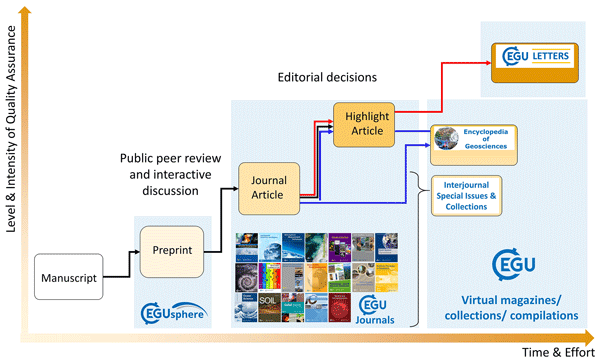
Barbara Ervens, Ken S. Carslaw, Thomas Koop, and Ulrich Pöschl
Atmos. Chem. Phys., 25, 13903–13952, https://doi.org/10.5194/acp-25-13903-2025, https://doi.org/10.5194/acp-25-13903-2025, 2025
Short summary
Short summary
Over 25 years, the European Geosciences Union (EGU) has demonstrated the success, viability and benefits of interactive open-access (OA) publishing with public peer review in its journals, its publishing platform EGUsphere and virtual compilations. The article summarizes the evolution of the EGU/Copernicus publications and of OA publishing with interactive public peer review at large by placing the EGU/Copernicus publications in the context of current and future global open science.
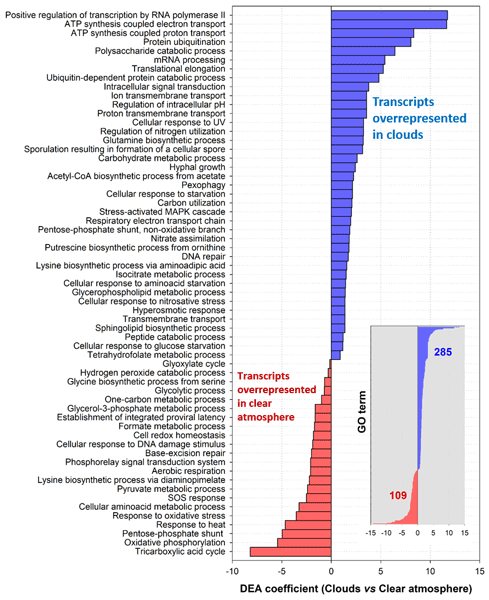
Raphaëlle Péguilhan, Florent Rossi, Muriel Joly, Engy Nasr, Bérénice Batut, François Enault, Barbara Ervens, and Pierre Amato
Biogeosciences, 22, 1257–1275, https://doi.org/10.5194/bg-22-1257-2025, https://doi.org/10.5194/bg-22-1257-2025, 2025
Short summary
Short summary
Using comparative metagenomics and metatranscriptomics, we examined the functioning of airborne microorganisms in clouds and a clear atmosphere. Clouds are atmospheric masses where multiple microbial processes are promoted compared with a clear atmosphere. Overrepresented microbial functions of interest include the processing of chemical compounds, biomass production, and regulation of oxidants. This has implications for biogeochemical cycles and microbial ecology.
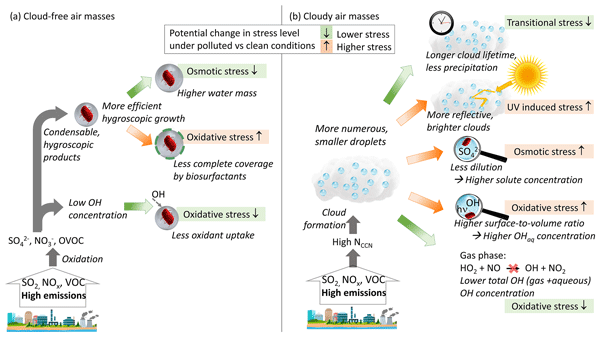
Barbara Ervens, Pierre Amato, Kifle Aregahegn, Muriel Joly, Amina Khaled, Tiphaine Labed-Veydert, Frédéric Mathonat, Leslie Nuñez López, Raphaëlle Péguilhan, and Minghui Zhang
Biogeosciences, 22, 243–256, https://doi.org/10.5194/bg-22-243-2025, https://doi.org/10.5194/bg-22-243-2025, 2025
Short summary
Short summary
Atmospheric microorganisms are a small fraction of Earth's microbiome, with bacteria being a significant part. Aerosolized bacteria are airborne for a few days, encountering unique chemical and physical conditions affecting stress levels and survival. We explore chemical and microphysical conditions bacteria encounter, highlighting potential nutrient and oxidant limitations and diverse effects by pollutants, which may ultimately impact the microbiome's role in global ecosystems and biodiversity.
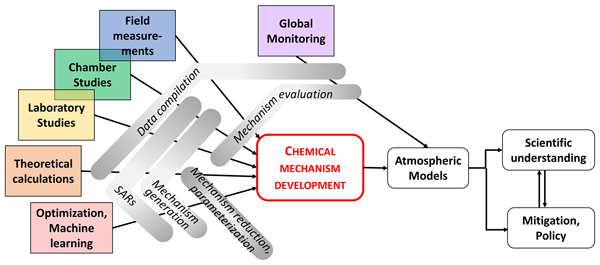
Barbara Ervens, Andrew Rickard, Bernard Aumont, William P. L. Carter, Max McGillen, Abdelwahid Mellouki, John Orlando, Bénédicte Picquet-Varrault, Paul Seakins, William R. Stockwell, Luc Vereecken, and Timothy J. Wallington
Atmos. Chem. Phys., 24, 13317–13339, https://doi.org/10.5194/acp-24-13317-2024, https://doi.org/10.5194/acp-24-13317-2024, 2024
Short summary
Short summary
Chemical mechanisms describe the chemical processes in atmospheric models that are used to describe the changes in the atmospheric composition. Therefore, accurate chemical mechanisms are necessary to predict the evolution of air pollution and climate change. The article describes all steps that are needed to build chemical mechanisms and discusses the advances and needs of experimental and theoretical research activities needed to build reliable chemical mechanisms.
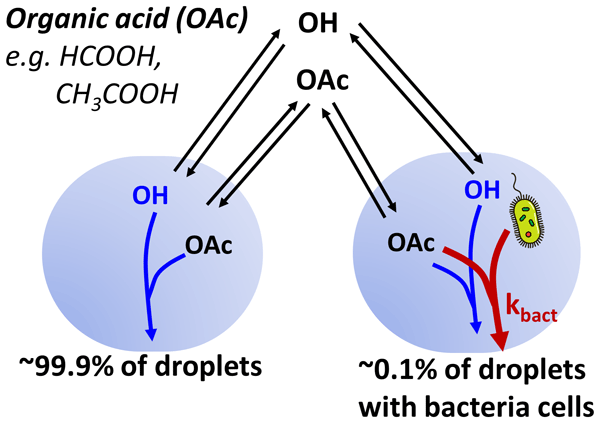
Leslie Nuñez López, Pierre Amato, and Barbara Ervens
Atmos. Chem. Phys., 24, 5181–5198, https://doi.org/10.5194/acp-24-5181-2024, https://doi.org/10.5194/acp-24-5181-2024, 2024
Short summary
Short summary
Living bacteria comprise a small particle fraction in the atmosphere. Our model study shows that atmospheric bacteria in clouds may efficiently biodegrade formic and acetic acids that affect the acidity of rain. We conclude that current atmospheric models underestimate losses of these acids as they only consider chemical processes. We suggest that biodegradation can affect atmospheric concentration not only of formic and acetic acids but also of other volatile, moderately soluble organics.
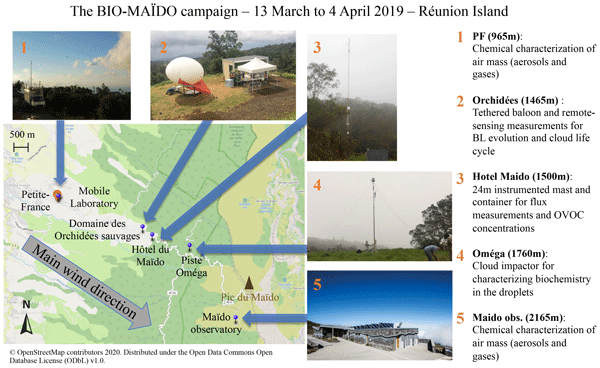
Maud Leriche, Pierre Tulet, Laurent Deguillaume, Frédéric Burnet, Aurélie Colomb, Agnès Borbon, Corinne Jambert, Valentin Duflot, Stéphan Houdier, Jean-Luc Jaffrezo, Mickaël Vaïtilingom, Pamela Dominutti, Manon Rocco, Camille Mouchel-Vallon, Samira El Gdachi, Maxence Brissy, Maroua Fathalli, Nicolas Maury, Bert Verreyken, Crist Amelynck, Niels Schoon, Valérie Gros, Jean-Marc Pichon, Mickael Ribeiro, Eric Pique, Emmanuel Leclerc, Thierry Bourrianne, Axel Roy, Eric Moulin, Joël Barrie, Jean-Marc Metzger, Guillaume Péris, Christian Guadagno, Chatrapatty Bhugwant, Jean-Mathieu Tibere, Arnaud Tournigand, Evelyn Freney, Karine Sellegri, Anne-Marie Delort, Pierre Amato, Muriel Joly, Jean-Luc Baray, Pascal Renard, Angelica Bianco, Anne Réchou, and Guillaume Payen
Atmos. Chem. Phys., 24, 4129–4155, https://doi.org/10.5194/acp-24-4129-2024, https://doi.org/10.5194/acp-24-4129-2024, 2024
Short summary
Short summary
Aerosol particles in the atmosphere play a key role in climate change and air pollution. A large number of aerosol particles are formed from the oxidation of volatile organic compounds (VOCs and secondary organic aerosols – SOA). An important field campaign was organized on Réunion in March–April 2019 to understand the formation of SOA in a tropical atmosphere mostly influenced by VOCs emitted by forest and in the presence of clouds. This work synthesizes the results of this campaign.

Amina Khaled, Minghui Zhang, and Barbara Ervens
Atmos. Chem. Phys., 22, 1989–2009, https://doi.org/10.5194/acp-22-1989-2022, https://doi.org/10.5194/acp-22-1989-2022, 2022
Short summary
Short summary
Chemical reactions with iron in clouds and aerosol form and cycle reactive oxygen species (ROS). Previous model studies assumed that all cloud droplets (particles) contain iron, while single-particle analyses showed otherwise. By means of a model, we explore the bias in predicted ROS budgets by distributing a given iron mass to either all or only a few droplets (particles). Implications for oxidation potential, radical loss and iron oxidation state are discussed.
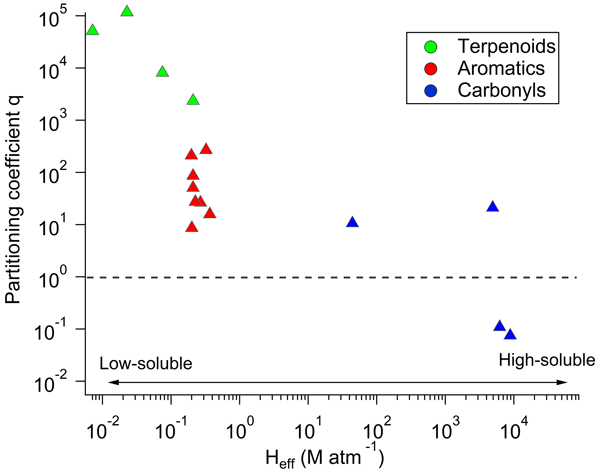
Pamela A. Dominutti, Pascal Renard, Mickaël Vaïtilingom, Angelica Bianco, Jean-Luc Baray, Agnès Borbon, Thierry Bourianne, Frédéric Burnet, Aurélie Colomb, Anne-Marie Delort, Valentin Duflot, Stephan Houdier, Jean-Luc Jaffrezo, Muriel Joly, Martin Leremboure, Jean-Marc Metzger, Jean-Marc Pichon, Mickaël Ribeiro, Manon Rocco, Pierre Tulet, Anthony Vella, Maud Leriche, and Laurent Deguillaume
Atmos. Chem. Phys., 22, 505–533, https://doi.org/10.5194/acp-22-505-2022, https://doi.org/10.5194/acp-22-505-2022, 2022
Short summary
Short summary
We present here the results obtained during an intensive field campaign conducted in March to April 2019 in Reunion. Our study integrates a comprehensive chemical and microphysical characterization of cloud water. Our investigations reveal that air mass history and cloud microphysical properties do not fully explain the variability observed in their chemical composition. This highlights the complexity of emission sources, multiphasic exchanges, and transformations in clouds.
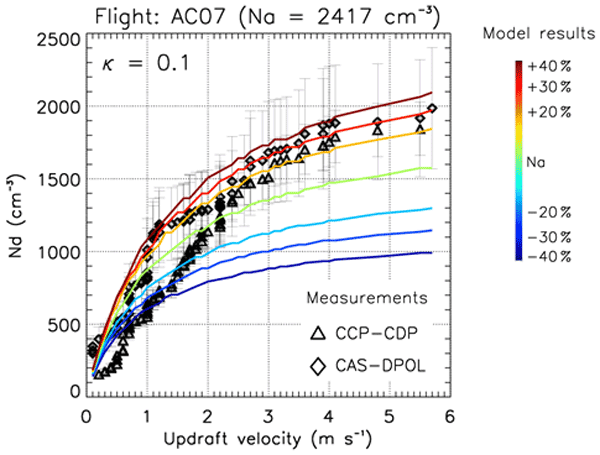
Ramon Campos Braga, Barbara Ervens, Daniel Rosenfeld, Meinrat O. Andreae, Jan-David Förster, Daniel Fütterer, Lianet Hernández Pardo, Bruna A. Holanda, Tina Jurkat-Witschas, Ovid O. Krüger, Oliver Lauer, Luiz A. T. Machado, Christopher Pöhlker, Daniel Sauer, Christiane Voigt, Adrian Walser, Manfred Wendisch, Ulrich Pöschl, and Mira L. Pöhlker
Atmos. Chem. Phys., 21, 17513–17528, https://doi.org/10.5194/acp-21-17513-2021, https://doi.org/10.5194/acp-21-17513-2021, 2021
Short summary
Short summary
Interactions of aerosol particles with clouds represent a large uncertainty in estimates of climate change. Properties of aerosol particles control their ability to act as cloud condensation nuclei. Using aerosol measurements in the Amazon, we performed model studies to compare predicted and measured cloud droplet number concentrations at cloud bases. Our results confirm previous estimates of particle hygroscopicity in this region.
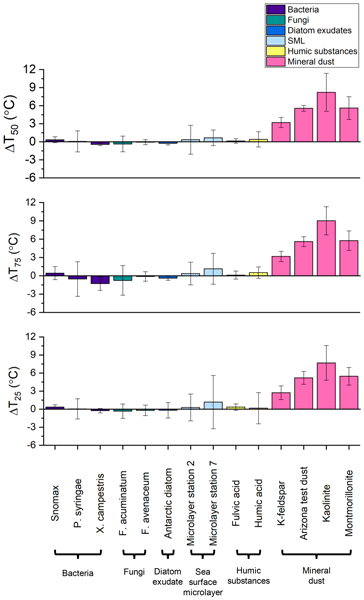
Soleil E. Worthy, Anand Kumar, Yu Xi, Jingwei Yun, Jessie Chen, Cuishan Xu, Victoria E. Irish, Pierre Amato, and Allan K. Bertram
Atmos. Chem. Phys., 21, 14631–14648, https://doi.org/10.5194/acp-21-14631-2021, https://doi.org/10.5194/acp-21-14631-2021, 2021
Short summary
Short summary
We studied the effect of (NH4)2SO4 on the immersion freezing of non-mineral dust ice-nucleating substances (INSs) and mineral dusts. (NH4)2SO4 had no effect on the median freezing temperature of 9 of the 10 tested non-mineral dust INSs, slightly decreased that of the other, and increased that of all the mineral dusts. The difference in the response of mineral dust and non-mineral dust INSs to (NH4)2SO4 suggests that they nucleate ice and/or interact with (NH4)2SO4 via different mechanisms.
Ramon Campos Braga, Daniel Rosenfeld, Ovid O. Krüger, Barbara Ervens, Bruna A. Holanda, Manfred Wendisch, Trismono Krisna, Ulrich Pöschl, Meinrat O. Andreae, Christiane Voigt, and Mira L. Pöhlker
Atmos. Chem. Phys., 21, 14079–14088, https://doi.org/10.5194/acp-21-14079-2021, https://doi.org/10.5194/acp-21-14079-2021, 2021
Short summary
Short summary
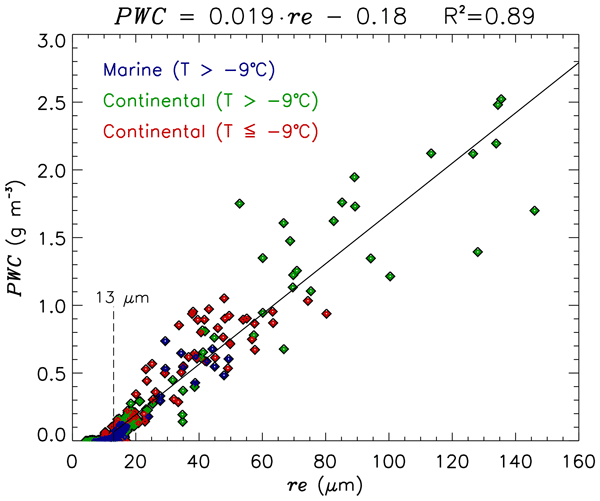
Quantifying the precipitation within clouds is crucial for our understanding of the Earth's hydrological cycle. Using in situ measurements of cloud and rain properties over the Amazon Basin and Atlantic Ocean, we show here a linear relationship between the effective radius (re) and precipitation water content near the tops of convective clouds for different pollution states and temperature levels. Our results emphasize the role of re to determine both initiation and amount of precipitation.
Cited articles
Aber, J. D., Magill, A., Mcnulty, S. G., Boone, R. D., Nadelhoffer, K. J., Downs, M., and Hallett, R.: Forest biogeochemistry and primary production altered by nitrogen saturation, Water Air. Soil Pollut., 85, 1665–1670, https://doi.org/10.1007/BF00477219, 1995.
Almaraz, M., Bai, E., Wang, C., Trousdell, J., Conley, S., Faloona, I., and Houlton, B. Z.: Agriculture is a major source of NOx pollution in California, Sci. Adv., 4, eaao3477, https://doi.org/10.1126/sciadv.aao3477, 2018.
Amato, P., Parazols, M., Sancelme, M., Laj, P., Mailhot, G., and Delort, A.-M.: Microorganisms isolated from the water phase of tropospheric clouds at the Puy de Dôme: major groups and growth abilities at low temperatures, FEMS Microbiol. Ecol., 59, 242–254, https://doi.org/10.1111/j.1574-6941.2006.00199.x, 2007.
Amato, P., Joly, M., Besaury, L., Oudart, A., Taib, N., Moné, A. I., Deguillaume, L., Delort, A.-M., and Debroas, D.: Active microorganisms thrive among extremely diverse communities in cloud water, PLOS ONE, 12, e0182869, https://doi.org/10.1371/journal.pone.0182869, 2017.
Amato, P., Besaury, L., Joly, M., Penaud, B., Deguillaume, L., and Delort, A.-M.: Metatranscriptomic exploration of microbial functioning in clouds, Sci. Rep., 9, 4383, https://doi.org/10.1038/s41598-019-41032-4, 2019.
Apprill, A., Mcnally, S., Parsons, R., and Weber, L.: Minor revision to V4 region SSU rRNA 806R gene primer greatly increases detection of SAR11 bacterioplankton, Aquat. Microb. Ecol., 75, 129–137, https://doi.org/10.3354/ame01753, 2015.
Atkinson, R., Winer, A. M., and Pitts, J. N.: Estimation of night-time N2O5 concentrations from ambient NO2 and NO3 radical concentrations and the role of N2O5 in night-time chemistry, Atmos. Environ., 20, 331–339, https://doi.org/10.1016/0004-6981(86)90035-1, 1986.
Bach, H.-J., Tomanova, J., Schloter, M., and Munch, J. C.: Enumeration of total bacteria and bacteria with genes for proteolytic activity in pure cultures and in environmental samples by quantitative PCR mediated amplification, J. Microbiol. Meth., 49, 235–245, https://doi.org/10.1016/S0167-7012(01)00370-0, 2002.
Bahulikar, R. A., Chaluvadi, S. R., Torres-Jerez, I., Mosali, J., Bennetzen, J. L., and Udvardi, M.: Nitrogen Fertilization Reduces Nitrogen Fixation Activity of Diverse Diazotrophs in Switchgrass Roots, Phytobiomes J., 5, 80–87, https://doi.org/10.1094/PBIOMES-09-19-0050-FI, 2021.
Baldrian, P., Kolařík, M., Štursová, M., Kopecký, J., Valášková, V., Větrovský, T., Žifčáková, L., Šnajdr, J., Rídl, J., Vlček, Č., and Voříšková, J.: Active and total microbial communities in forest soil are largely different and highly stratified during decomposition, ISME J., 6, 248–258, https://doi.org/10.1038/ismej.2011.95, 2012.
Baray, J.-L., Deguillaume, L., Colomb, A., Sellegri, K., Freney, E., Rose, C., Van Baelen, J., Pichon, J.-M., Picard, D., Fréville, P., Bouvier, L., Ribeiro, M., Amato, P., Banson, S., Bianco, A., Borbon, A., Bourcier, L., Bras, Y., Brigante, M., Cacault, P., Chauvigné, A., Charbouillot, T., Chaumerliac, N., Delort, A.-M., Delmotte, M., Dupuy, R., Farah, A., Febvre, G., Flossmann, A., Gourbeyre, C., Hervier, C., Hervo, M., Huret, N., Joly, M., Kazan, V., Lopez, M., Mailhot, G., Marinoni, A., Masson, O., Montoux, N., Parazols, M., Peyrin, F., Pointin, Y., Ramonet, M., Rocco, M., Sancelme, M., Sauvage, S., Schmidt, M., Tison, E., Vaïtilingom, M., Villani, P., Wang, M., Yver-Kwok, C., and Laj, P.: Cézeaux-Aulnat-Opme-Puy De Dôme: a multi-site for the long-term survey of the tropospheric composition and climate change, Atmos. Meas. Tech., 13, 3413–3445, https://doi.org/10.5194/amt-13-3413-2020, 2020.
Bari, A., Ferraro, V., Wilson, L. R., Luttinger, D., and Husain, L.: Measurements of gaseous HONO, HNO3, SO2, HCl, NH3, particulate sulfate and PM2.5 in New York, NY, Atmos. Environ., 37, 2825–2835, https://doi.org/10.1016/S1352-2310(03)00199-7, 2003.
Barnes, N. M. and Wu, H.: Mechanisms regulating the airborne survival of Klebsiella pneumoniae under different relative humidity and temperature levels, Indoor Air, 32, e12991, https://doi.org/10.1111/ina.12991, 2022.
Berks, B. C., Ferguson, S. J., Moir, J. W. B., and Richardson, D. J.: Enzymes and associated electron transport systems that catalyse the respiratory reduction of nitrogen oxides and oxyanions, Biochim. Biophys. Acta BBA – Bioenerg., 1232, 97–173, https://doi.org/10.1016/0005-2728(95)00092-5, 1995.
Bernhard, A.: The nitrogen cycle: processes, players, and human impact, Nat. Educ. Knowl., 3, 25, https://www.nature.com/scitable/knowledge/library/the-nitrogen-cycle-processes-players-and-human-15644632/ (last access: April 2026), 2010.
Blasco, F., Iobbi, C., Ratouchniak, J., Bonnefoy, V., and Chippaux, M.: Nitrate reductases of Escherichia coli: Sequence of the second nitrate reductase and comparison with that encoded by the narGHJI operon, Mol. Gen. Genet. MGG, 222, 104–111, https://doi.org/10.1007/BF00283030, 1990.
Bouwman, L., Goldewijk, K. K., Van Der Hoek, K. W., Beusen, A. H. W., Van Vuuren, D. P., Willems, J., Rufino, M. C., and Stehfest, E.: Exploring global changes in nitrogen and phosphorus cycles in agriculture induced by livestock production over the 1900–2050 period, P. Natl. Acad. Sci. USA, 110, 20882–20887, https://doi.org/10.1073/pnas.1012878108, 2013.
Braker, G. and Tiedje, J. M.: Nitric Oxide Reductase (norB) Genes from Pure Cultures and Environmental Samples, Appl. Environ. Microbiol., 69, 3476–3483, https://doi.org/10.1128/AEM.69.6.3476-3483.2003, 2003.
Braker, G., Zhou, J., Wu, L., Devol, A. H., and Tiedje, J. M.: Nitrite Reductase Genes (nirK andnirS) as Functional Markers To Investigate Diversity of Denitrifying Bacteria in Pacific Northwest Marine Sediment Communities, Appl. Environ. Microbiol., 66, 2096–2104, https://doi.org/10.1128/AEM.66.5.2096-2104.2000, 2000.
Bulgarelli, D., Rott, M., Schlaeppi, K., Ver Loren van Themaat, E., Ahmadinejad, N., Assenza, F., Rauf, P., Huettel, B., Reinhardt, R., Schmelzer, E., Peplies, J., Gloeckner, F. O., Amann, R., Eickhorst, T., and Schulze-Lefert, P.: Revealing structure and assembly cues for Arabidopsis root-inhabiting bacterial microbiota, Nature, 488, 91–95, https://doi.org/10.1038/nature11336, 2012.
Burrows, S. M., Butler, T., Jöckel, P., Tost, H., Kerkweg, A., Pöschl, U., and Lawrence, M. G.: Bacteria in the global atmosphere – Part 2: Modeling of emissions and transport between different ecosystems, Atmos. Chem. Phys., 9, 9281–9297, https://doi.org/10.5194/acp-9-9281-2009, 2009.
Calbó, J., González, J.-A., Jahani, B., Sola, Y., and Morales, J. R. de: How important is the transition zone between clouds and aerosol?, AIP Conf. Proc., 2988, 070005, https://doi.org/10.1063/5.0182769, 2024.
Cantera, J. J. L. and Stein, L. Y.: Molecular diversity of nitrite reductase genes (nirK) in nitrifying bacteria, Environ. Microbiol., 9, 765–776, https://doi.org/10.1111/j.1462-2920.2006.01198.x, 2007.
Cape, J. N., Hargreaves, K. J., Storeton-West, R., Fowler, D., Colville, R. N., Choularton, T. W., and Gallagher, M. W.: Nitrite in orographic cloud as an indicator of nitrous acid in rural air, Atmos. Environ., Part Gen. Top., 26, 2301–2307, https://doi.org/10.1016/0960-1686(92)90361-N, 1992.
Cape, J. N., Cornell, S. E., Jickells, T. D., and Nemitz, E.: Organic nitrogen in the atmosphere – Where does it come from? A review of sources and methods, Atmos. Res., 102, 30–48, https://doi.org/10.1016/j.atmosres.2011.07.009, 2011.
Chen, F., Xia, Q., and Ju, L.-K.: Competition between oxygen and nitrate respirations in continuous culture of Pseudomonas aeruginosa performing aerobic denitrification, Biotechnol. Bioeng., 93, 1069–1078, https://doi.org/10.1002/bit.20812, 2006.
Chen, Q. and Ni, J.: Ammonium removal by Agrobacterium sp. LAD9 capable of heterotrophic nitrification–aerobic denitrification, J. Biosci. Bioeng., 113, 619–623, https://doi.org/10.1016/j.jbiosc.2011.12.012, 2012.
Cowling, E. B., Erisman, J. W., Smeulders, S. M., Holman, S. C., and Nicholson, B. M.: Optimizing air quality management in Europe and North America: Justification for integrated management of both oxidized and reduced forms of nitrogen, Environ. Pollut., 102, 599–608, https://doi.org/10.1016/S0269-7491(98)80088-2, 1998.
Cox, C. S. and Goldberg, L. J.: Aerosol Survival of Pasteurella tularensis and the Influence of Relative Humidity, Appl. Microbiol., 23, 1–3, https://doi.org/10.1128/am.23.1.1-3.1972, 1972.
Coyle, C. L., Zumft, W. G., Kroneck, P. M. H., Körner, H., and Jakob, W.: Nitrous oxide reductase from denitrifying, Eur. J. Biochem., 153, 459–467, https://doi.org/10.1111/j.1432-1033.1985.tb09324.x, 1985.
Cruz, C. N. and Pandis, S. N.: Deliquescence and Hygroscopic Growth of Mixed Inorganic-Organic Atmospheric Aerosol, Environ. Sci. Technol., 34, 4313–4319, https://doi.org/10.1021/es9907109, 2000.
Decho, A. W. and Lopez, G. R.: Exopolymer microenvironments of microbial flora: Multiple and interactive effects on trophic relationships, Limnol. Oceanogr., 38, 1633–1645, https://doi.org/10.4319/lo.1993.38.8.1633, 1993.
Deguillaume, L., Charbouillot, T., Joly, M., Vaïtilingom, M., Parazols, M., Marinoni, A., Amato, P., Delort, A.-M., Vinatier, V., Flossmann, A., Chaumerliac, N., Pichon, J. M., Houdier, S., Laj, P., Sellegri, K., Colomb, A., Brigante, M., and Mailhot, G.: Classification of clouds sampled at the puy de Dôme (France) based on 10 yr of monitoring of their physicochemical properties, Atmos. Chem. Phys., 14, 1485–1506, https://doi.org/10.5194/acp-14-1485-2014, 2014.
Deng, D., Yang, Z., Yang, Y., Wan, W., Liu, W., and Xiong, X.: Metagenomic insights into nitrogen-cycling microbial communities and their relationships with nitrogen removal potential in the Yangtze River, Water Res., 265, 122229, https://doi.org/10.1016/j.watres.2024.122229, 2024.
Diaz, R. J. and Rosenberg, R.: Spreading Dead Zones and Consequences for Marine Ecosystems, Science, 321, 926–929, https://doi.org/10.1126/science.1156401, 2008.
Duce, R. A., LaRoche, J., Altieri, K., Arrigo, K. R., Baker, A. R., Capone, D. G., Cornell, S., Dentener, F., Galloway, J., Ganeshram, R. S., Geider, R. J., Jickells, T., Kuypers, M. M., Langlois, R., Liss, P. S., Liu, S. M., Middelburg, J. J., Moore, C. M., Nickovic, S., Oschlies, A., Pedersen, T., Prospero, J., Schlitzer, R., Seitzinger, S., Sorensen, L. L., Uematsu, M., Ulloa, O., Voss, M., Ward, B., and Zamora, L.: Impacts of Atmospheric Anthropogenic Nitrogen on the Open Ocean, Science, 320, 893–897, https://doi.org/10.1126/science.1150369, 2008.
Dworkin, M., Falkow, S., Rosenberg, E., Schleifer, K.-H., and Stackebrandt, E. (Eds.): The Prokaryotes, Springer New York, New York, NY, https://doi.org/10.1007/0-387-30742-7, 2006.
Ervens, B. and Amato, P.: The global impact of bacterial processes on carbon mass, Atmos. Chem. Phys., 20, 1777–1794, https://doi.org/10.5194/acp-20-1777-2020, 2020.
Ervens, B., Amato, P., Aregahegn, K., Joly, M., Khaled, A., Labed-Veydert, T., Mathonat, F., Nuñez López, L., Péguilhan, R., and Zhang, M.: Ideas and perspectives: Microorganisms in the air through the lenses of atmospheric chemistry and microphysics, Biogeosciences, 22, 243–256, https://doi.org/10.5194/bg-22-243-2025, 2025.
Escudié, F., Auer, L., Bernard, M., Mariadassou, M., Cauquil, L., Vidal, K., Maman, S., Hernandez-Raquet, G., Combes, S., and Pascal, G.: FROGS: Find, Rapidly, OTUs with Galaxy Solution, Bioinformatics, 34, 1287–1294, https://doi.org/10.1093/bioinformatics/btx791, 2018.
Espey, M. G., Miranda, K. M., Feelisch, M., Fukuto, J., Grisham, M. B., Vitek, M. P., and Wink, D. A.: Mechanisms of Cell Death Governed by the Balance between Nitrosative and Oxidative Stress, Ann. N. Y. Acad. Sci., 899, 209–221, https://doi.org/10.1111/j.1749-6632.2000.tb06188.x, 2000.
Fang, J., Liao, S., Zhang, S., Li, L., Tan, S., Li, W., Wang, A., and Ye, J.: Characteristics of a novel heterotrophic nitrification-aerobic denitrification yeast, Barnettozyma californica K1, Bioresour. Technol., 339, 125665, https://doi.org/10.1016/j.biortech.2021.125665, 2021.
Fani, R., Gallo, R., and Liò, P.: Molecular Evolution of Nitrogen Fixation: The Evolutionary History of the nifD, nifK, nifE, and nifN Genes, J. Mol. Evol., 51, 1–11, https://doi.org/10.1007/s002390010061, 2000.
Foster, R. A., Tienken, D., Littmann, S., Whitehouse, M. J., Kuypers, M. M. M., and White, A. E.: The rate and fate of N2 and C fixation by marine diatom-diazotroph symbioses, ISME J., 16, 477–487, https://doi.org/10.1038/s41396-021-01086-7, 2022.
Fowler, D., Coyle, M., Skiba, U., Sutton, M. A., Cape, J. N., Reis, S., Sheppard, L. J., Jenkins, A., Grizzetti, B., Galloway, J. N., Vitousek, P., Leach, A., Bouwman, A. F., Butterbach-Bahl, K., Dentener, F., Stevenson, D., Amann, M., and Voss, M.: The global nitrogen cycle in the twenty-first century, Philos. Trans. R. Soc. B Biol. Sci., https://doi.org/10.1098/rstb.2013.0164, 2013.
Fröhlich-Nowoisky, J., Kampf, C. J., Weber, B., Huffman, J. A., Pöhlker, C., Andreae, M. O., Lang-Yona, N., Burrows, S. M., Gunthe, S. S., Elbert, W., Su, H., Hoor, P., Thines, E., Hoffmann, T., Després, V. R., and Pöschl, U.: Bioaerosols in the Earth system: Climate, health, and ecosystem interactions, Atmos. Res., 182, 346–376, https://doi.org/10.1016/j.atmosres.2016.07.018, 2016.
Galimand, M., Gamper, M., Zimmermann, A., and Haas, D.: Positive FNR-like control of anaerobic arginine degradation and nitrate respiration in Pseudomonas aeruginosa, J. Bacteriol., 173, 1598–1606, https://doi.org/10.1128/jb.173.5.1598-1606.1991, 1991.
Galloway, J. N., Cowling, E. B., Seitzinger, S. P., and Socolow, R. H.: Reactive Nitrogen: Too Much of a Good Thing?, Ambio, 31, 60–63, 2002.
Gregory, L. G., Karakas-Sen, A., Richardson, D. J., and Spiro, S.: Detection of genes for membrane-bound nitrate reductase in nitrate-respiring bacteria and in community DNA, FEMS Microbiol. Lett., 183, 275–279, https://doi.org/10.1111/j.1574-6968.2000.tb08971.x, 2000.
Hammer, O., Harper, D. A. T., and Ryan, P. D.: PAST: Paleontological Statistics Software Package for Education and Data Analysis, https://paleo.carleton.ca/2001_1/past/past.pdf (last access: January 2026), 2001.
Hao, Z.-L., Ali, A., Ren, Y., Su, J.-F., and Wang, Z.: A mechanistic review on aerobic denitrification for nitrogen removal in water treatment, Sci. Total Environ., 847, 157452, https://doi.org/10.1016/j.scitotenv.2022.157452, 2022.
Hardy, R. W. F., Holsten, R. D., Jackson, E. K., and Burns, R. C.: The Acetylene-Ethylene Assay for N2 Fixation: Laboratory and Field Evaluation 1, Plant Physiol., 43, 1185–1207, https://doi.org/10.1104/pp.43.8.1185, 1968.
Hargreaves, K. J., Fowler, D., Storeton-West, R. L., and Duyzer, J. H.: The exchange of nitric oxide, nitrogen dioxide and ozone between pasture and the atmosphere, Environ. Pollut., 75, 53–59, https://doi.org/10.1016/0269-7491(92)90056-G, 1992.
Heiss, B., Frunzke, K., and Zumft, W. G.: Formation of the N-N bond from nitric oxide by a membrane-bound cytochrome bc complex of nitrate-respiring (denitrifying) Pseudomonas stutzeri, J. Bacteriol., 171, 3288–3297, https://doi.org/10.1128/jb.171.6.3288-3297.1989, 1989.
Herridge, D. F., Peoples, M. B., and Boddey, R. M.: Global inputs of biological nitrogen fixation in agricultural systems, Plant Soil, 311, 1–18, https://doi.org/10.1007/s11104-008-9668-3, 2008.
Hill, K. A., Shepson, P. B., Galbavy, E. S., Anastasio, C., Kourtev, P. S., Konopka, A., and Stirm, B. H.: Processing of atmospheric nitrogen by clouds above a forest environment, J. Geophys. Res. Atmospheres, 112, https://doi.org/10.1029/2006JD008002, 2007.
Hollocher, T. C., Tate, M. E., and Nicholas, D. J.: Oxidation of ammonia by Nitrosomonas europaea, in: Definite 18O-tracer evidence that hydroxylamine formation involves a monooxygenase, J. Biol. Chem., 256, 10834–10836, https://doi.org/10.1016/S0021-9258(19)68518-2, 1981.
Hommes, N. G., Sayavedra-Soto, L. A., and Arp, D. J.: Transcript Analysis of Multiple Copies ofamo (Encoding Ammonia Monooxygenase) and hao(Encoding Hydroxylamine Oxidoreductase) in Nitrosomonas europaea, J. Bacteriol., 183, 1096–1100, https://doi.org/10.1128/jb.183.3.1096-1100.2001, 2001.
Howarth, R. W.: Coastal nitrogen pollution: A review of sources and trends globally and regionally, Harmful Algae, 8, 14–20, https://doi.org/10.1016/j.hal.2008.08.015, 2008.
Imhoff, J. F., Rahn, T., Künzel, S., and Neulinger, S. C.: Phylogeny of Anoxygenic Photosynthesis Based on Sequences of Photosynthetic Reaction Center Proteins and a Key Enzyme in Bacteriochlorophyll Biosynthesis, the Chlorophyllide Reductase, Microorganisms, 7, 576, https://doi.org/10.3390/microorganisms7110576, 2019.
Jaber, S., Joly, M., Brissy, M., Leremboure, M., Khaled, A., Ervens, B., and Delort, A.-M.: Biotic and abiotic transformation of amino acids in cloud water: experimental studies and atmospheric implications, Biogeosciences, 18, 1067–1080, https://doi.org/10.5194/bg-18-1067-2021, 2021.
Jean, M., Holland-Moritz, H., Melvin, A. M., Johnstone, J. F., and Mack, M. C.: Experimental assessment of tree canopy and leaf litter controls on the microbiome and nitrogen fixation rates of two boreal mosses, New Phytol., 227, 1335–1349, https://doi.org/10.1111/nph.16611, 2020.
Ji, B., Wang, H., and Yang, K.: Tolerance of an aerobic denitrifier (Pseudomonas stutzeri) to high O2 concentrations, Biotechnol. Lett., 36, 719–722, https://doi.org/10.1007/s10529-013-1417-x, 2014.
Ji, B., Yang, K., Zhu, L., Jiang, Y., Wang, H., Zhou, J., and Zhang, H.: Aerobic denitrification: A review of important advances of the last 30 years, Biotechnol. Bioprocess Eng., 20, 643–651, https://doi.org/10.1007/s12257-015-0009-0, 2015.
Joerger, R. D., Jacobson, M. R., Premakumar, R., Wolfinger, E. D., and Bishop, P. E.: Nucleotide sequence and mutational analysis of the structural genes (anfHDGK) for the second alternative nitrogenase from Azotobacter vinelandii, J. Bacteriol., 171, 1075–1086, https://doi.org/10.1128/jb.171.2.1075-1086.1989, 1989.
Joerger, R. D., Loveless, T. M., Pau, R. N., Mitchenall, L. A., Simon, B. H., and Bishop, P. E.: Nucleotide sequences and mutational analysis of the structural genes for nitrogenase 2 of Azotobacter vinelandii, J. Bacteriol., 172, 3400–3408, https://doi.org/10.1128/jb.172.6.3400-3408.1990, 1990.
Kartal, B., Maalcke, W. J., de Almeida, N. M., Cirpus, I., Gloerich, J., Geerts, W., Op den Camp, H. J. M., Harhangi, H. R., Janssen-Megens, E. M., Francoijs, K.-J., Stunnenberg, H. G., Keltjens, J. T., Jetten, M. S. M., and Strous, M.: Molecular mechanism of anaerobic ammonium oxidation, Nature, 479, 127–130, https://doi.org/10.1038/nature10453, 2011.
Kim, J. and Rees, D. C.: Nitrogenase and biological nitrogen fixation, Biochemistry, 33, 389–397, https://doi.org/10.1021/bi00168a001, 1994.
Klein, A. M., Bohannan, B. J. M., Jaffe, D. A., Levin, D. A., and Green, J. L.: Molecular Evidence for Metabolically Active Bacteria in the Atmosphere, Front. Microbiol., 7, https://doi.org/10.3389/fmicb.2016.00772, 2016.
Koirala, A. and Brözel, V. S.: Phylogeny of Nitrogenase Structural and Assembly Components Reveals New Insights into the Origin and Distribution of Nitrogen Fixation across Bacteria and Archaea, Microorganisms, 9, 1662, https://doi.org/10.3390/microorganisms9081662, 2021.
Kong, Q.-X., Wang, X.-W., Jin, M., Shen, Z.-Q., and Li, J.-W.: Development and application of a novel and effective screening method for aerobic denitrifying bacteria, FEMS Microbiol. Lett., 260, 150–155, https://doi.org/10.1111/j.1574-6968.2006.00306.x, 2006.
Krey, V.: Global energy-climate scenarios and models: a review, Wiley Interdiscip. Rev. Energy Environ., 3, 363–383, 2014.
Kumar, M. and Lin, J.-G.: Co-existence of anammox and denitrification for simultaneous nitrogen and carbon removal – Strategies and issues, J. Hazard. Mater., 178, 1–9, https://doi.org/10.1016/j.jhazmat.2010.01.077, 2010.
Lal, R.: Restoring Soil Quality to Mitigate Soil Degradation, Sustainability, 7, 5875–5895, https://doi.org/10.3390/su7055875, 2015.
Leck, C. and Bigg, E. K.: Source and evolution of the marine aerosol – A new perspective, Geophys. Res. Lett., 32, https://doi.org/10.1029/2005GL023651, 2005.
Lelieveld, J. and Crutzen, P. J.: Influences of cloud photochemical processes on tropospheric ozone, Nature, 343, 227–233, https://doi.org/10.1038/343227a0, 1990.
Lide, D. R.: CRC Handbook of Chemistry and Physics, 85th edn., CRC Press, 2900 pp., ISBN 13: 9780849304859, 2004.
Ma, B., Zhang, H., Ma, M., Huang, T., Guo, H., Yang, W., Huang, Y., Liu, X., and Li, H.: Nitrogen removal by two strains of aerobic denitrification actinomycetes: Denitrification capacity, carbon source metabolic ability, and raw water treatment, Bioresour. Technol., 344, 126176, https://doi.org/10.1016/j.biortech.2021.126176, 2022.
Machida, T., Nakazawa, T., Fujii, Y., Aoki, S., and Watanabe, O.: Increase in the atmospheric nitrous oxide concentration during the last 250 years, Geophys. Res. Lett., 22, 2921–2924, https://doi.org/10.1029/95GL02822, 1995.
Maes, M., Galecki, P., Chang, Y. S., and Berk, M.: A review on the oxidative and nitrosative stress (O&NS) pathways in major depression and their possible contribution to the (neuro)degenerative processes in that illness, Prog. Neuropsychopharmacol. Biol. Psychiatry, 35, 676–692, https://doi.org/10.1016/j.pnpbp.2010.05.004, 2011.
Maron, P.-A., Sarr, A., Kaisermann, A., Lévêque, J., Mathieu, O., Guigue, J., Karimi, B., Bernard, L., Dequiedt, S., Terrat, S., Chabbi, A., and Ranjard, L.: High Microbial Diversity Promotes Soil Ecosystem Functioning, Appl. Environ. Microbiol., 84, e02738-17, https://doi.org/10.1128/AEM.02738-17, 2018.
Mathonat, F., Mazzei, F., Prévot, M., Vernocchi, V., Gatta, E., Joly, M., Theveniot, M., Lehours, A.-C., Enault, F., Ervens, B., and Amato, P.: Phototrophy improves the aerial fitness in a photoheterotrophic Methylobacterium isolated from clouds, Authorea, https://doi.org/10.22541/au.174342623.31590139/v1, 2025.
Matson, P., Lohse, K. A., and Hall, S. J.: The Globalization of Nitrogen Deposition: Consequences for Terrestrial Ecosystems, Ambio, 31, 113–119, 2002.
McCarthy, J. J., Taylor, W. R., and Taft, J. L.: Nitrogenous nutrition of the plankton in the Chesapeake Bay. 1. Nutrient availability and phytoplankton preferences, Limnol. Oceanogr., 22, 996–1011, https://doi.org/10.4319/lo.1977.22.6.0996, 1977.
McTavish, H., Fuchs, J. A., and Hooper, A. B.: Sequence of the gene coding for ammonia monooxygenase in Nitrosomonas europaea, J. Bacteriol., 175, 2436–2444, https://doi.org/10.1128/jb.175.8.2436-2444.1993, 1993.
Merrick, M. J. and Edwards, R. A.: Nitrogen control in bacteria, Microbiol. Rev., 59, 604–622, https://doi.org/10.1128/mr.59.4.604-622.1995, 1995.
Müller, C., Elliott, J., Pugh, T. A. M., Ruane, A. C., Ciais, P., Balkovic, J., Deryng, D., Folberth, C., Izaurralde, R. C., Jones, C. D., Khabarov, N., Lawrence, P., Liu, W., Reddy, A. D., Schmid, E., and Wang, X.: Global patterns of crop yield stability under additional nutrient and water inputs, PLOS ONE, 13, e0198748, https://doi.org/10.1371/journal.pone.0198748, 2018.
Myhre, G., Myhre, C. E. L., Samset, B. H., and Storelvmo, T.: Aerosols and their relation to global climate and climate sensitivity, Nat. Educ. Knowl., 4, 7, https://www.nature.com/scitable/knowledge/library/aerosols-and-their-relation-to-global-climate-102215345/ (last access: April 2026), 2013.
Nair, A. A. and Yu, F.: Quantification of Atmospheric Ammonia Concentrations: A Review of Its Measurement and Modeling, Atmosphere, 11, 1092, https://doi.org/10.3390/atmos11101092, 2020.
Neff, J. C., Holland, E. A., Dentener, F. J., McDowell, W. H., and Russell, K. M.: The origin, composition and rates of organic nitrogen deposition: A missing piece of the nitrogen cycle?, Biogeochemistry, 57, 99–136, https://doi.org/10.1023/A:1015791622742, 2002.
Nie, S., Zhang, Z., Mo, S., Li, J., He, S., Kashif, M., Liang, Z., Shen, P., Yan, B., and Jiang, C.: Desulfobacterales stimulates nitrate reduction in the mangrove ecosystem of a subtropical gulf, Sci. Total Environ., 769, 144562, https://doi.org/10.1016/j.scitotenv.2020.144562, 2021.
Norton, J. M., Alzerreca, J. J., Suwa, Y., and Klotz, M. G.: Diversity of ammonia monooxygenase operon in autotrophic ammonia-oxidizing bacteria, Arch. Microbiol., 177, 139–149, https://doi.org/10.1007/s00203-001-0369-z, 2002.
Nuñez López, L., Amato, P., and Ervens, B.: Bacteria in clouds biodegrade atmospheric formic and acetic acids, Atmos. Chem. Phys., 24, 5181–5198, https://doi.org/10.5194/acp-24-5181-2024, 2024.
Pandis, S. N. and Seinfeld, J. H.: Sensitivity analysis of a chemical mechanism for aqueous-phase atmospheric chemistry, J. Geophys. Res.-Atmos., 94, 1105–1126, https://doi.org/10.1029/JD094iD01p01105, 1989.
Parada, A. E., Needham, D. M., and Fuhrman, J. A.: Every base matters: Assessing small subunit rRNA primers for marine microbiomes with mock communities, time series and global field samples, Environ. Microbiol., 18, 1403–1414, https://doi.org/10.1111/1462-2920.13023, 2016.
Paul, E. A. and Clark, F. E.: Soil microbiology and biochemistry, Academic Press, San Diego, 340 pp., ISBN 13: 978-0-12-546807-7, 1996.
Péguilhan, R., Besaury, L., Rossi, F., Enault, F., Baray, J.-L., Deguillaume, L., and Amato, P.: Rainfalls sprinkle cloud bacterial diversity while scavenging biomass, FEMS Microbiol. Ecol., 97, fiab144, https://doi.org/10.1093/femsec/fiab144, 2021.
Péguilhan, R., Rossi, F., Joly, M., Nasr, E., Batut, B., Enault, F., Ervens, B., and Amato, P.: Clouds influence the functioning of airborne microorganisms, Biogeosciences, 22, 1257–1275, https://doi.org/10.5194/bg-22-1257-2025, 2025.
Pester, M., Maixner, F., Berry, D., Rattei, T., Koch, H., Lücker, S., Nowka, B., Richter, A., Spieck, E., Lebedeva, E., Loy, A., Wagner, M., and Daims, H.: NxrB encoding the beta subunit of nitrite oxidoreductase as functional and phylogenetic marker for nitrite-oxidizing Nitrospira, Environ. Microbiol., 16, 3055–3071, https://doi.org/10.1111/1462-2920.12300, 2014.
Philippot, L. and Højberg, O.: Dissimilatory nitrate reductases in bacteria, Biochim. Biophys. Acta BBA – Gene Struct. Expr., 1446, 1–23, https://doi.org/10.1016/S0167-4781(99)00072-X, 1999.
Pilegaard, K.: Processes regulating nitric oxide emissions from soils, Philos. Trans. R. Soc. B Biol. Sci., 368, 20130126, https://doi.org/10.1098/rstb.2013.0126, 2013.
Poly, F., Monrozier, L. J., and Bally, R.: Improvement in the RFLP procedure for studying the diversity of nifH genes in communities of nitrogen fixers in soil, Res. Microbiol., 152, 95–103, https://doi.org/10.1016/s0923-2508(00)01172-4, 2001.
Pouzet, G., Peghaire, E., Aguès, M., Baray, J.-L., Conen, F., and Amato, P.: Atmospheric Processing and Variability of Biological Ice Nucleating Particles in Precipitation at Opme, France, Atmosphere, 8, 229, https://doi.org/10.3390/atmos8110229, 2017.
Renard, P., Canet, I., Sancelme, M., Wirgot, N., Deguillaume, L., and Delort, A.-M.: Screening of cloud microorganisms isolated at the Puy de Dôme (France) station for the production of biosurfactants, Atmos. Chem. Phys., 16, 12347–12358, https://doi.org/10.5194/acp-16-12347-2016, 2016.
Renard, P., Bianco, A., Baray, J.-L., Bridoux, M., Delort, A.-M., and Deguillaume, L.: Classification of Clouds Sampled at the Puy de Dôme Station (France) Based on Chemical Measurements and Air Mass History Matrices, Atmosphere, 11, 732, https://doi.org/10.3390/atmos11070732, 2020.
Renard, P., Brissy, M., Rossi, F., Leremboure, M., Jaber, S., Baray, J.-L., Bianco, A., Delort, A.-M., and Deguillaume, L.: Free amino acid quantification in cloud water at the Puy de Dôme station (France), Atmos. Chem. Phys., 22, 2467–2486, https://doi.org/10.5194/acp-22-2467-2022, 2022.
Robertson, L. A. and Kuenen, J. G.: Aerobic denitrification – old wine in new bottles?, Antonie Van Leeuwenhoek, 50, 525–544, https://doi.org/10.1007/BF02386224, 1984.
Rossi, F., Péguilhan, R., Turgeon, N., Veillette, M., Baray, J.-L., Deguillaume, L., Amato, P., and Duchaine, C.: Quantification of antibiotic resistance genes (ARGs) in clouds at a mountain site (puy de Dôme, central France), Sci. Total Environ., 865, 161264, https://doi.org/10.1016/j.scitotenv.2022.161264, 2023.
Rotthauwe, J. H., Witzel, K. P., and Liesack, W.: The ammonia monooxygenase structural gene amoA as a functional marker: molecular fine-scale analysis of natural ammonia-oxidizing populations., Appl. Environ. Microbiol., 63, 4704–4712, 1997.
Ruiz de Morales, J., Calbó, J., González, J.-A., and Sola, Y.: A method to assess the cloud-aerosol transition zone from ceilometer measurements, Atmos. Res., 310, 107623, https://doi.org/10.1016/j.atmosres.2024.107623, 2024.
Rustad, T. R., Minch, K. J., Brabant, W., Winkler, J. K., Reiss, D. J., Baliga, N. S., and Sherman, D. R.: Global analysis of mRNA stability in Mycobacterium tuberculosis, Nucleic Acids Res., 41, 509–517, https://doi.org/10.1093/nar/gks1019, 2013.
Šantl-Temkiv, T., Amato, P., Gosewinkel, U., Thyrhaug, R., Charton, A., Chicot, B., Finster, K., Bratbak, G., and Löndahl, J.: High-Flow-Rate Impinger for the Study of Concentration, Viability, Metabolic Activity, and Ice-Nucleation Activity of Airborne Bacteria, Environ. Sci. Technol., 51, 11224–11234, https://doi.org/10.1021/acs.est.7b01480, 2017.
Šantl-Temkiv, T., Gosewinkel, U., Starnawski, P., Lever, M., and Finster, K.: Aeolian dispersal of bacteria in southwest Greenland: their sources, abundance, diversity and physiological states, FEMS Microbiol. Ecol., 94, fiy031, https://doi.org/10.1093/femsec/fiy031, 2018.
Scala, D. J. and Kerkhof, L. J.: Diversity of Nitrous Oxide Reductase (nosZ) Genes in Continental Shelf Sediments, Appl. Environ. Microbiol., 65, 1681–1687, https://doi.org/10.1128/AEM.65.4.1681-1687.1999, 1999.
Schostag, M. D., Albers, C. N., Jacobsen, C. S., and Priemé, A.: Low Turnover of Soil Bacterial rRNA at Low Temperatures, Front. Microbiol., 11, https://doi.org/10.3389/fmicb.2020.00962, 2020.
Sohaskey, C. D. and Wayne, L. G.: Role of narK2X and narGHJI inHypoxic Upregulation of Nitrate Reduction byMycobacteriumtuberculosis, J. Bacteriol., 185, 7247–7256, https://doi.org/10.1128/jb.185.24.7247-7256.2003, 2003.
Song, W., Liu, J., Qin, W., Huang, J., Yu, X., Xu, M., Stahl, D., Jiao, N., Zhou, J., and Tu, Q.: Functional Traits Resolve Mechanisms Governing the Assembly and Distribution of Nitrogen-Cycling Microbial Communities in the Global Ocean, mBio, 13, e03832-21, https://doi.org/10.1128/mbio.03832-21, 2022.
Sorai, M., Yoshida, N., and Ishikawa, M.: Biogeochemical simulation of nitrous oxide cycle based on the major nitrogen processes, J. Geophys. Res.-Biogeo., 112, https://doi.org/10.1029/2005JG000109, 2007.
Stolz, J. F. and Basu, P.: Evolution of Nitrate Reductase: Molecular and Structural Variations on a Common Function, ChemBioChem, 3, 198–206, 2002.
Sutton, M. A., Reis, S., Riddick, S. N., Dragosits, U., Nemitz, E., Theobald, M. R., Tang, Y. S., Braban, C. F., Vieno, M., Dore, A. J., Mitchell, R. F., Wanless, S., Daunt, F., Fowler, D., Blackall, T. D., Milford, C., Flechard, C. R., Loubet, B., Massad, R., Cellier, P., Personne, E., Coheur, P. F., Clarisse, L., Van Damme, M., Ngadi, Y., Clerbaux, C., Skjøth, C. A., Geels, C., Hertel, O., Wichink Kruit, R. J., Pinder, R. W., Bash, J. O., Walker, J. T., Simpson, D., Horváth, L., Misselbrook, T. H., Bleeker, A., Dentener, F., and de Vries, W.: Towards a climate-dependent paradigm of ammonia emission and deposition, Philos. Trans. R. Soc. B Biol. Sci., 368, 20130166, https://doi.org/10.1098/rstb.2013.0166, 2013.
Suzek, B. E., Wang, Y., Huang, H., McGarvey, P. B., Wu, C. H., and the UniProt Consortium: UniRef clusters: a comprehensive and scalable alternative for improving sequence similarity searches, Bioinformatics, 31, 926–932, https://doi.org/10.1093/bioinformatics/btu739, 2015.
Suzuki, M., ARAI, H., ISHII, M., and IGARASHI, Y.: Gene Structure and Expression Profile of Cytochrome bc Nitric Oxide Reductase from Hydrogenobacter thermophilus TK-6, Biosci. Biotechnol. Biochem., 70, 1666–1671, https://doi.org/10.1271/bbb.60018, 2006.
Syakila, A. and Kroeze, C.: The global nitrous oxide budget revisited, Greenh. Gas Meas. Manag., 1, 17–26, https://doi.org/10.3763/ghgmm.2010.0007, 2011.
Trüper, H. G. and Pfennig, N.: Characterization and Identification of the Anoxygenic Phototrophic Bacteria, in: The Prokaryotes: A Handbook on Habitats, Isolation, and Identification of Bacteria, edited by: Starr, M. P., Stolp, H., Trüper, H. G., Balows, A., and Schlegel, H. G., Springer, Berlin, Heidelberg, 299–312, https://doi.org/10.1007/978-3-662-13187-9_18, 1981.
Tu, Q., He, Z., Wu, L., Xue, K., Xie, G., Chain, P., Reich, P. B., Hobbie, S. E., and Zhou, J.: Metagenomic reconstruction of nitrogen cycling pathways in a CO2-enriched grassland ecosystem, Soil Biol. Biochem., 106, 99–108, https://doi.org/10.1016/j.soilbio.2016.12.017, 2017.
Tu, Q., Lin, L., Cheng, L., Deng, Y., and He, Z.: NCycDB: a curated integrative database for fast and accurate metagenomic profiling of nitrogen cycling genes, Bioinformatics, 35, 1040–1048, https://doi.org/10.1093/bioinformatics/bty741, 2019.
Vaïtilingom, M., Amato, P., Sancelme, M., Laj, P., Leriche, M., and Delort, A.-M.: Contribution of Microbial Activity to Carbon Chemistry in Clouds, Appl. Environ. Microbiol., 76, 23–29, https://doi.org/10.1128/AEM.01127-09, 2010.
Vaïtilingom, M., Attard, E., Gaiani, N., Sancelme, M., Deguillaume, L., Flossmann, A. I., Amato, P., and Delort, A.-M.: Long-term features of cloud microbiology at the puy de Dôme (France), Atmos. Environ., 56, 88–100, https://doi.org/10.1016/j.atmosenv.2012.03.072, 2012.
Vaïtilingom, M., Deguillaume, L., Vinatier, V., Sancelme, M., Amato, P., Chaumerliac, N., and Delort, A.-M.: Potential impact of microbial activity on the oxidant capacity and organic carbon budget in clouds, P. Natl. Acad. Sci. USA, 110, 559–564, https://doi.org/10.1073/pnas.1205743110, 2013.
Vergne, A., Darbot, V., Bardot, C., Enault, F., Le Jeune, A.-H., Carrias, J.-F., Corbara, B., Céréghino, R., Leroy, C., Jeanthon, C., Giraud, E., Mary, I., and Lehours, A.-C.: Assemblages of anoxygenic phototrophic bacteria in tank bromeliads exhibit a host-specific signature, J. Ecol., 109, 2550–2565, https://doi.org/10.1111/1365-2745.13657, 2021.
Vernocchi, V., Abd El, E., Brunoldi, M., Danelli, S. G., Gatta, E., Isolabella, T., Mazzei, F., Parodi, F., Prati, P., and Massabò, D.: Airborne bacteria viability and air quality: a protocol to quantitatively investigate the possible correlation by an atmospheric simulation chamber, Atmos. Meas. Tech., 16, 5479–5493, https://doi.org/10.5194/amt-16-5479-2023, 2023.
Vinatier, V., Wirgot, N., Joly, M., Sancelme, M., Abrantes, M., Deguillaume, L., and Delort, A.-M.: Siderophores in Cloud Waters and Potential Impact on Atmospheric Chemistry: Production by Microorganisms Isolated at the Puy de Dôme Station, Environ. Sci. Technol., 50, 9315–9323, https://doi.org/10.1021/acs.est.6b02335, 2016.
Voss, M., Baker, A., Bange, H. W., Conley, D., Cornell, S., Deutsch, B., Engel, A., Ganeshram, R., Garnier, J., Heiskanen, A.-S., Jickells, T., Lancelot, C., McQuatters-Gollop, A., Middelburg, J., Schiedek, D., Slomp, C. P., and Conley, D. P.: Nitrogen processes in coastal and marine ecosystems, in: The European Nitrogen Assessment, edited by: Sutton, M. A., Howard, C. M., Erisman, J. W., Billen, G., Bleeker, A., Grennfelt, P., Van Grinsven, H., and Grizzetti, B., Cambridge University Press, 147–176, https://doi.org/10.1017/CBO9780511976988.011, 2011.
Voss, M., Bange, H. W., Dippner, J. W., Middelburg, J. J., Montoya, J. P., and Ward, B.: The marine nitrogen cycle: recent discoveries, uncertainties and the potential relevance of climate change, Philos. Trans. R. Soc. B Biol. Sci., 368, 20130121, https://doi.org/10.1098/rstb.2013.0121, 2013.
Walker, M. C. and van der Donk, W. A.: The many roles of glutamate in metabolism, J. Ind. Microbiol. Biotechnol., 43, 419–430, https://doi.org/10.1007/s10295-015-1665-y, 2016.
Wang, B., Zheng, X., Zhang, H., Yu, X., Lian, Y., Yang, X., Yu, H., Hu, R., He, Z., Xiao, F., and Yan, Q.: Metagenomic insights into the effects of submerged plants on functional potential of microbial communities in wetland sediments, Mar. Life Sci. Technol., 3, 405–415, https://doi.org/10.1007/s42995-021-00100-3, 2021.
Whelan, J. A., Russell, N. B., and Whelan, M. A.: A method for the absolute quantification of cDNA using real-time PCR, J. Immunol. Methods, 278, 261–269, https://doi.org/10.1016/S0022-1759(03)00223-0, 2003.
Whitman, W. B., Coleman, D. C., and Wiebe, W. J.: Prokaryotes: The unseen majority, P. Natl. Acad. Sci. USA, 95, 6578–6583, https://doi.org/10.1073/pnas.95.12.6578, 1998.
Wilson, L. P. and Bouwer, E. J.: Biodegradation of aromatic compounds under mixed oxygen/denitrifying conditions: a review, J. Ind. Microbiol. Biotechnol., 18, 116–130, https://doi.org/10.1038/sj.jim.2900288, 1997.
Wright, D. N., Bailey, G. D., and Goldberg, L. J.: Effect of Temperature on Survival of Airborne Mycoplasma pneumoniae, J. Bacteriol., 99, 491–495, 1969.
Xiang, S.-R., Doyle, A., Holden, P. A., and Schimel, J. P.: Drying and rewetting effects on C and N mineralization and microbial activity in surface and subsurface California grassland soils, Soil Biol. Biochem., 40, 2281–2289, https://doi.org/10.1016/j.soilbio.2008.05.004, 2008.
Yang, J., Feng, L., Pi, S., Cui, D., Ma, F., Zhao, H., and Li, A.: A critical review of aerobic denitrification: Insights into the intracellular electron transfer, Sci. Total Environ., 731, 139080, https://doi.org/10.1016/j.scitotenv.2020.139080, 2020.
Zeng, J., Liao, S., Qiu, M., Chen, M., Ye, J., Zeng, J., and Wang, A.: Effects of carbon sources on the removal of ammonium, nitrite and nitrate nitrogen by the red yeast Sporidiobolus pararoseus Y1, Bioresour. Technol., 312, 123593, https://doi.org/10.1016/j.biortech.2020.123593, 2020.
Zhang, J., Wu, P., Hao, B., and Yu, Z.: Heterotrophic nitrification and aerobic denitrification by the bacterium Pseudomonas stutzeri YZN-001, Bioresour. Technol., 102, 9866–9869, https://doi.org/10.1016/j.biortech.2011.07.118, 2011.
Zhang, Q. and Anastasio, C.: Chemistry of fog waters in California's Central Valley – Part 3: concentrations and speciation of organic and inorganic nitrogen, Atmos. Environ., 35, 5629–5643, https://doi.org/10.1016/S1352-2310(01)00337-5, 2001.
Zumft, W. G.: Cell biology and molecular basis of denitrification, Microbiol. Mol. Biol. Rev., 61, 533–616, https://doi.org/10.1128/mmbr.61.4.533-616.1997, 1997.
Zumft, W. G. and Kroneck, P. M. H.: Respiratory Transformation of Nitrous Oxide (N2O) to Dinitrogen by Bacteria and Archaea, in: Advances in Microbial Physiology, vol. 52, edited by: Poole, R. K., Academic Press, 107–227, https://doi.org/10.1016/S0065-2911(06)52003-X, 2006.
Short summary
The atmosphere plays key roles in Earth’s biogeochemical cycles. Airborne microbes were demonstrated previously to participate in the processing of organic carbon in clouds. Using a combinaison of complementary methods, we examined here, for the first time, their potential contribution to the pool of nitrogen compounds. Airborne microorganisms interact with abundant forms of nitrogen in the air and cloud and we provide global estimates.
The atmosphere plays key roles in Earth’s biogeochemical cycles. Airborne microbes were...


Altmetrics
Final-revised paper
Preprint