
Articles | Volume 23, issue 8
https://doi.org/10.5194/bg-23-2927-2026
© Author(s) 2026. This work is distributed under
the Creative Commons Attribution 4.0 License.
the Creative Commons Attribution 4.0 License.
https://doi.org/10.5194/bg-23-2927-2026
© Author(s) 2026. This work is distributed under
the Creative Commons Attribution 4.0 License.
the Creative Commons Attribution 4.0 License.
Research article
| 
30 Apr 2026
Research article |
| 30 Apr 2026
| 30 Apr 2026
Conifer leaf wax acts as a source of secondary fatty alcohols in atmospheric aerosols
Yuhao Cui
Graduate School of Environmental Science, Hokkaido University, Sapporo, 060-0810, Japan
Institute of Low Temperature Science, Hokkaido University, Sapporo, 060-0819, Japan
Eri Tachibana
Institute of Low Temperature Science, Hokkaido University, Sapporo, 060-0819, Japan

Institute of Low Temperature Science, Hokkaido University, Sapporo, 060-0819, Japan
Related authors
Yuhao Cui, Eri Tachibana, Kimitaka Kawamura, and Yuzo Miyazaki
Biogeosciences, 20, 4969–4980, https://doi.org/10.5194/bg-20-4969-2023, https://doi.org/10.5194/bg-20-4969-2023, 2023
Short summary
Short summary
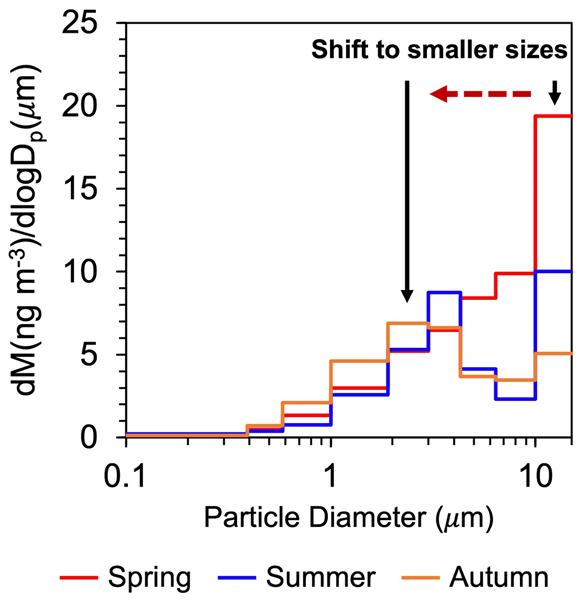
Fatty alcohols (FAs) are major components of surface lipids in plant leaves and serve as surface-active aerosols. Our study on the aerosol size distributions in a forest suggests that secondary FAs (SFAs) originated from plant waxes and that leaf senescence status is likely an important factor controlling the size distribution of SFAs. This study provides new insights into the sources of primary biological aerosol particles (PBAPs) and their effects on the aerosol ice nucleation activity.
Riku Miyase, Yuzo Miyazaki, Tomohisa Irino, and Youhei Yamashita
Atmos. Chem. Phys., 26, 2141–2159, https://doi.org/10.5194/acp-26-2141-2026, https://doi.org/10.5194/acp-26-2141-2026, 2026
Short summary
Short summary
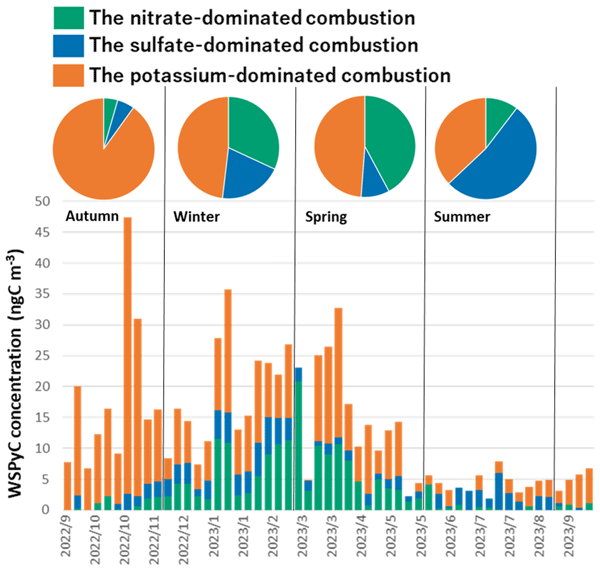
Water-soluble pyrogenic carbon (WSPyC) in the ocean is the ultimate sink for WSPyC, but its budget has not yet been fully quantified. This study observed the variations in the concentration of WSPyC in atmospheric aerosols in Sapporo, Hokkaido, over the course of a year, and examined its sources. The results suggest that WSPyC can be formed through the oxidation of soot during atmospheric transport, highlighting the need to reassess the global deposition flux of WSPyC.
Yuzo Miyazaki, Yunhan Wang, Eri Tachibana, Koji Suzuki, Youhei Yamashita, and Jun Nishioka
Atmos. Chem. Phys., 25, 18325–18340, https://doi.org/10.5194/acp-25-18325-2025, https://doi.org/10.5194/acp-25-18325-2025, 2025
Short summary
Short summary
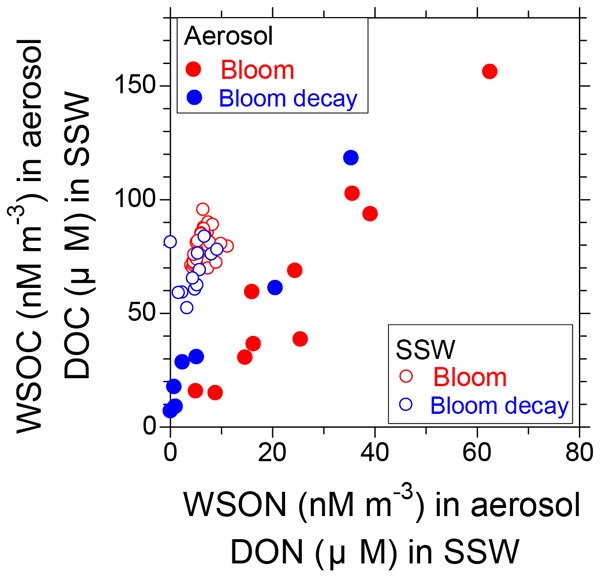
It is essential to understand how biologically productive oceanic regions during spring phytoplankton blooms after sea ice melting contribute to the sea-to-air emission flux of atmospheric organic aerosols (OAs) in the subarctic oceans. Our shipboard measurements highlight the preferential formation of N-containing secondary water-soluble OAs associated with the predominant diatoms including ice algae during the bloom after sea ice melting/retreat in the subarctic ocean.
Yuhao Cui, Eri Tachibana, Kimitaka Kawamura, and Yuzo Miyazaki
Biogeosciences, 20, 4969–4980, https://doi.org/10.5194/bg-20-4969-2023, https://doi.org/10.5194/bg-20-4969-2023, 2023
Short summary
Short summary
Fatty alcohols (FAs) are major components of surface lipids in plant leaves and serve as surface-active aerosols. Our study on the aerosol size distributions in a forest suggests that secondary FAs (SFAs) originated from plant waxes and that leaf senescence status is likely an important factor controlling the size distribution of SFAs. This study provides new insights into the sources of primary biological aerosol particles (PBAPs) and their effects on the aerosol ice nucleation activity.
Jinyoung Jung, Yuzo Miyazaki, Jin Hur, Yun Kyung Lee, Mi Hae Jeon, Youngju Lee, Kyoung-Ho Cho, Hyun Young Chung, Kitae Kim, Jung-Ok Choi, Catherine Lalande, Joo-Hong Kim, Taejin Choi, Young Jun Yoon, Eun Jin Yang, and Sung-Ho Kang
Atmos. Chem. Phys., 23, 4663–4684, https://doi.org/10.5194/acp-23-4663-2023, https://doi.org/10.5194/acp-23-4663-2023, 2023
Short summary
Short summary
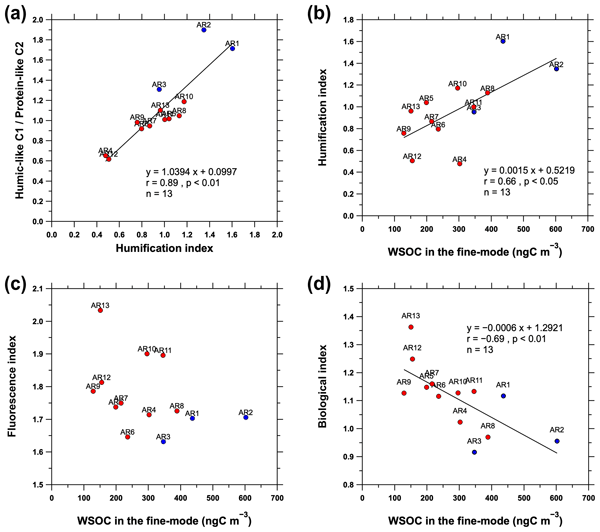
This study examined the summertime fluorescence properties of water-soluble organic carbon (WSOC) in aerosols over the western Arctic Ocean. We found that the WSOC in fine-mode aerosols in coastal areas showed a higher polycondensation degree and aromaticity than in sea-ice-covered areas. The fluorescence properties of atmospheric WSOC in the summertime marine Arctic boundary can improve our understanding of the WSOC chemical and biological linkages at the ocean–sea-ice–atmosphere interface.
Tsukasa Dobashi, Yuzo Miyazaki, Eri Tachibana, Kazutaka Takahashi, Sachiko Horii, Fuminori Hashihama, Saori Yasui-Tamura, Yoko Iwamoto, Shu-Kuan Wong, and Koji Hamasaki
Biogeosciences, 20, 439–449, https://doi.org/10.5194/bg-20-439-2023, https://doi.org/10.5194/bg-20-439-2023, 2023
Short summary
Short summary
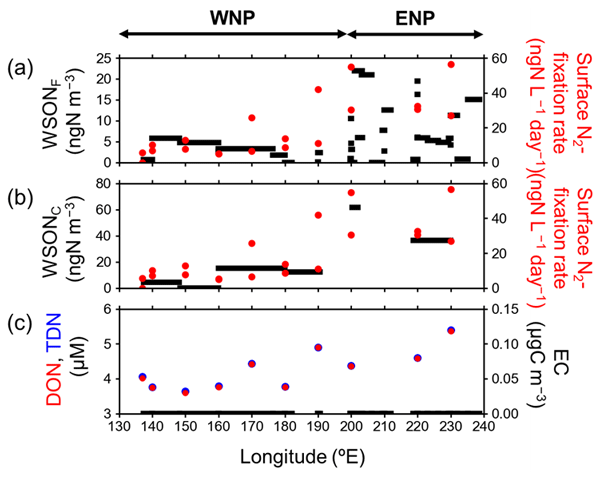
Water-soluble organic nitrogen (WSON) in marine aerosols is important for biogeochemical cycling of bioelements. Our shipboard measurements suggested that reactive nitrogen produced and exuded by nitrogen-fixing microorganisms in surface seawater likely contributed to the formation of WSON aerosols in the subtropical North Pacific. This study provides new implications for the role of marine microbial activity in the formation of WSON aerosols in the ocean surface.
Yange Deng, Hiroaki Fujinari, Hikari Yai, Kojiro Shimada, Yuzo Miyazaki, Eri Tachibana, Dhananjay K. Deshmukh, Kimitaka Kawamura, Tomoki Nakayama, Shiori Tatsuta, Mingfu Cai, Hanbing Xu, Fei Li, Haobo Tan, Sho Ohata, Yutaka Kondo, Akinori Takami, Shiro Hatakeyama, and Michihiro Mochida
Atmos. Chem. Phys., 22, 5515–5533, https://doi.org/10.5194/acp-22-5515-2022, https://doi.org/10.5194/acp-22-5515-2022, 2022
Short summary
Short summary
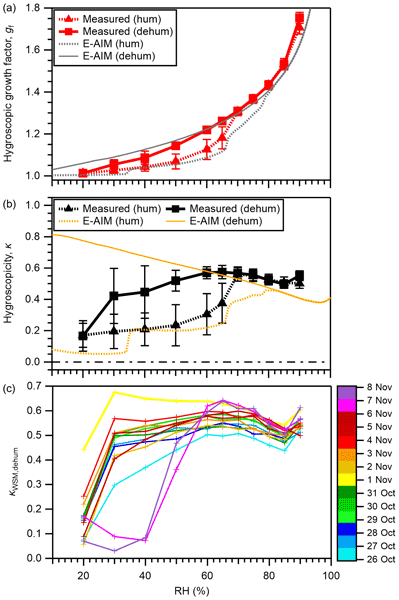
Offline analyses of the hygroscopicity and composition of atmospheric aerosols are complementary to online analyses in view of the applicability to broader sizes, specific compound groups, and investigations at remote sites. This offline study characterized the composition of water-soluble matter in aerosols and their humidity-dependent hygroscopicity on Okinawa, a receptor site of East Asian outflow. Further, comparison with online analyses showed the appropriateness of the offline method.
Sharmine Akter Simu, Yuzo Miyazaki, Eri Tachibana, Henning Finkenzeller, Jérôme Brioude, Aurélie Colomb, Olivier Magand, Bert Verreyken, Stephanie Evan, Rainer Volkamer, and Trissevgeni Stavrakou
Atmos. Chem. Phys., 21, 17017–17029, https://doi.org/10.5194/acp-21-17017-2021, https://doi.org/10.5194/acp-21-17017-2021, 2021
Short summary
Short summary
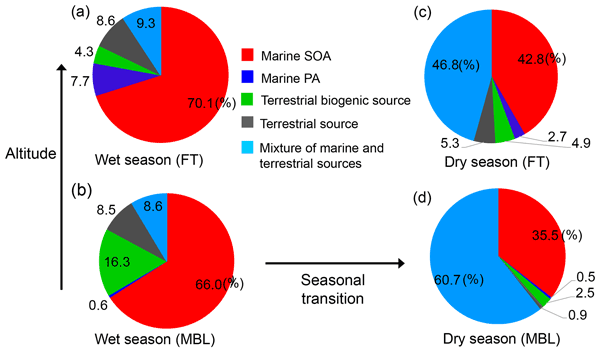
The tropical Indian Ocean (IO) is expected to be a significant source of water-soluble organic carbon (WSOC), which is relevant to cloud formation. Our study showed that marine secondary organic formation dominantly contributed to the aerosol WSOC mass at the high-altitude observatory in the southwest IO in the wet season in both marine boundary layer and free troposphere (FT). This suggests that the effect of marine secondary sources is important up to FT, a process missing in climate models.
Cited articles
Angst, G., Cajthaml, T., Angst, Š., Mueller, K. E., Kögel-Knabner, I., Beggel, S., Kriegs, S., and Mueller, C. W.: Performance of base hydrolysis methods in extracting bound lipids from plant material, soils, and sediments, Org. Geochem., 113, 97–104, https://doi.org/10.1016/j.orggeochem.2017.08.004, 2017.
Busta, L., Hegebarth, D., Kroc, E., and Jetter, R.: Changes in cuticular wax coverage and composition on developing Arabidopsis leaves are influenced by wax biosynthesis gene expression levels and trichome density, Planta, 245, 297–311, https://doi.org/10.1007/s00425-016-2603-6, 2017.
Cape, J. N. and Percy, K. E.: Environmental influences on the development of spruce needle cuticles, New Phytol., 125, 787–799, https://doi.org/10.1111/j.1469-8137.1993.tb03928.x, 1993.
Chen, J., Kawamura, K., Hu, W., Liu, C.-Q., Zhang, Q., and Fu, P.: Terrestrial lipid biomarkers in marine aerosols over the western North Pacific during 1990–1993 and 2006–2009, Sci. Total Environ., 797, 149115, https://doi.org/10.1016/j.scitotenv.2021.149115, 2021.
Cui, Y., Tachibana, E., Kawamura, K., and Miyazaki, Y.: Origin of secondary fatty alcohols in atmospheric aerosols in a cool–temperate forest based on their mass size distributions, Biogeosciences, 20, 4969–4980, https://doi.org/10.5194/bg-20-4969-2023, 2023.
Després, V., Huffman, J. A., Burrows, S. M., Hoose, C., Safatov, A., Buryak, G., Fröhlich-Nowoisky, J., Elbert, W., Andreae, M., Pöschl, U., and Jaenicke, R.: Primary biological aerosol particles in the atmosphere: a review, Tellus B, 64, 15598, https://doi.org/10.3402/tellusb.v64i0.15598, 2012.
Dommisse, A., Wirtz, J., Koch, K., Barthlott, W., and Kolter, T.: Synthesis of (S)-Nonacosan-10-ol, the Major Component of Tubular Plant Wax Crystals, Eur. J. Org. Chem., 2007, 3508–3511, https://doi.org/10.1002/ejoc.200700262, 2007.
Fu, P., Kawamura, K., Chen, J., and Barrie, L. A.: Isoprene, monoterpene, and sesquiterpene oxidation products in the high Arctic aerosols during late winter to early summer, Environ. Sci. Technol., 43, 4022–4028, https://doi.org/10.1021/es803669a, 2009.
Gagosian, R. B., Peltzer, E. T., and Merrill, J. T.: Long-range transport of terrestrially derived lipids in aerosols from the south Pacific, Nature, 325, 800–803, https://doi.org/10.1038/325800a0, 1987.
Guo, L.C., Zhang, Y., Lin, H., Zeng, W., Liu, T., Xiao, J., Rutherford, S., You, J., and Ma, W.: The washout effects of rainfall on atmospheric particulate pollution in two Chinese cities, Environ. Pollut., 215, 195–202, https://doi.org/10.1016/j.envpol.2016.05.003, 2016.
Hader, J. D., Wright, T. P., and Petters, M. D.: Contribution of pollen to atmospheric ice nuclei concentrations, Atmos. Chem. Phys., 14, 5433–5449, https://doi.org/10.5194/acp-14-5433-2014, 2014.
Hiura, T.: Stochasticity of species assemblage of canopy trees and understorey plants in a temperate secondary forest created by major disturbances, Ecol. Res., 16, 887–893, https://doi.org/10.1046/j.1440-1703.2001.00449.x, 2001.
Hiura, T.: Estimation of aboveground biomass and net biomass increment in a cool temperate forest on a landscape scale, Forest Ecosystems and Environments: Scaling Up from Shoot Module to Watershed, 31–37, Online ISBN: 978-4-431-29361-3, Print ISBN: 978-4-431-26074-5, https://doi.org/10.1007/4-431-29361-2_3, 2005.
Huth, M. A., Huth, A., and Koch, K.: Self-assembly of Eucalyptus gunnii wax tubules and pure β-diketone on HOPG and glass, Beilstein J. Nanotechnol., 12, 939–949, https://doi.org/10.3762/bjnano.12.70, 2021.
Jenks, M., Gaston, C., Goodwin, M., Keith, J., Teusink, R., and Wood, K.: Seasonal variation in cuticular waxes on Hosta genotypes differing in leaf surface glaucousness, HortScience, 37, 673–677, 2002.
Koch, K., Dommisse, A., and Barthlott, W.: Chemistry and crystal growth of plant wax tubules of lotus (Nelumbo n ucifera) and nasturtium (Tropaeolum m ajus) leaves on technical substrates, Cryst. Growth Des., 6, 2571–2578, 2006.
Koch, K., Dommisse, A., Niemietz, A., Barthlott, W., and Wandelt, K.: Nanostructure of epicuticular plant waxes: Self-assembly of wax tubules, Surf. Sci., 603, 1961–1968, https://doi.org/10.1016/j.susc.2009.03.019, 2009.
Koivisto, E., Ladommatos, N., and Gold, M.: Systematic study of the effect of the hydroxyl functional group in alcohol molecules on compression ignition and exhaust gas emissions, Fuel, 153, 650–663, https://doi.org/10.1016/j.fuel.2015.03.042, 2015.
Kolattukudy, P., Espelie, K., and Rowe, J.: Natural Products of Woody Plants, edited by: Rowe, J. W., Springer Science & Business Media, ISBN 3642740758, 9783642740756, 1989.
Kolattukudy, P. E.: Chemistry and Biochemistry of Natural Waxes, Elsevier Scientific Publishing Company, ISBN (Hardback) 0-444-41470-3, 1976.
Kreyling, J., Wiesenberg, G. L. B., Thiel, D., Wohlfart, C., Huber, G., Walter, J., Jentsch, A., Konnert, M., and Beierkuhnlein, C.: Cold hardiness of Pinus nigra Arnold as influenced by geographic origin, warming, and extreme summer drought, Environ. Exp. Bot., 78, 99–108, https://doi.org/10.1016/j.envexpbot.2011.12.026, 2012.
Laila, R., Robin, A. H. K., Yang, K., Park, J.-I., Suh, M. C., Kim, J., and Nou, I.-S.: Developmental and Genotypic Variation in Leaf Wax Content and Composition, and in Expression of Wax Biosynthetic Genes in Brassica oleracea var. capitata, Front. Plant Sci., 7, https://doi.org/10.3389/fpls.2016.01972, 2017.
Liu, Z., Hikosaka, K., Li, F., and Jin, G.: Variations in leaf economics spectrum traits for an evergreen coniferous species: Tree size dominates over environment factors, Funct. Ecol., 34, 458–467, https://doi.org/10.1111/1365-2435.13498, 2020.
Lukas, M., Schwidetzky, R., Kunert, A. T., Pöschl, U., Fröhlich-Nowoisky, J., Bonn, M., and Meister, K.: Electrostatic Interactions Control the Functionality of Bacterial Ice Nucleators, J. Am. Chem. Soc., 142, 6842–6846, https://doi.org/10.1021/jacs.9b13069, 2020.
Matas, A. J., Sanz, M. J., and Heredia, A.: Studies on the structure of the plant wax nonacosan-10-ol, the main component of epicuticular wax conifers, Int. J. Biol. Macromol., 33, 31–35, https://doi.org/10.1016/S0141-8130(03)00061-8, 2003.
Mehndiratta, L., Lyp, A. E., Slade, J. H., and Grassian, V. H.: Immersion ice nucleation of atmospherically relevant lipid particles, Environ. Sci.: Atmos., 4, 1239–1254, https://doi.org/10.1039/D4EA00066H, 2024.
Miyazaki, Y., Gowda, D., Tachibana, E., Takahashi, Y., and Hiura, T.: Identification of secondary fatty alcohols in atmospheric aerosols in temperate forests, Biogeosciences, 16, 2181–2188, https://doi.org/10.5194/bg-16-2181-2019, 2019.
Mohammadian, M. A., Watling, J. R., and Hill, R. S.: The impact of epicuticular wax on gas-exchange and photoinhibition in Leucadendron lanigerum (Proteaceae), Acta Oecol., 31, 93–101, https://doi.org/10.1016/j.actao.2006.10.005, 2007.
Nakai, Y., Kitamura, K., Suzuki, S., and Abe, S.: Year-long carbon dioxide exchange above a broadleaf deciduous forest in Sapporo, Northern Japan, Tellus B, 55, 305–312, 2003.
Nikolić, B., Todosijević, M., Đorđević, I., Stanković, J., Mitić, Z. S., Tešević, V., and Marin, P. D.: Nonacosan-10-ol and n-Alkanes in Leaves of Pinus pinaster, Nat. Prod. Commun., 15, 1934578X20926073, 2020.
O'Sullivan, D., Murray, B. J., Ross, J. F., Whale, T. F., Price, H. C., Atkinson, J. D., Umo, N. S., and Webb, M. E.: The relevance of nanoscale biological fragments for ice nucleation in clouds, Sci. Rep., 5, 8082, https://doi.org/10.1038/srep08082, 2015.
Pan, Y., Birdsey, R. A., Fang, J., Houghton, R., Kauppi, P. E., Kurz, W. A., Phillips, O. L., Shvidenko, A., Lewis, S. L., Canadell, J. G., Ciais, P., Jackson, R. B., Pacala, S. W., McGuire, A. D., Piao, S., Rautiainen, A., Sitch, S., and Hayes, D.: A Large and Persistent Carbon Sink in the World's Forests, Science, 333, 988–993, https://doi.org/10.1126/science.1201609, 2011.
Post-Beittenmiller, D.: Biochemistry and molecular biology of wax production in plants, Annu. Rev. Plant Biol., 47, 405–430, https://doi.org/10.1146/annurev.arplant.47.1.405, 1996.
Qiu, Y., Odendahl, N., Hudait, A., Mason, R., Bertram, A. K., Paesani, F., DeMott, P. J., and Molinero, V.: Ice nucleation efficiency of hydroxylated organic surfaces is controlled by their structural fluctuations and mismatch to ice, J. Am. Chem. Soc., 139, 3052–3064, 2017.
Rathnayake, C. M., Metwali, N., Jayarathne, T., Kettler, J., Huang, Y., Thorne, P. S., O'Shaughnessy, P. T., and Stone, E. A.: Influence of rain on the abundance of bioaerosols in fine and coarse particles, Atmos. Chem. Phys., 17, 2459–2475, https://doi.org/10.5194/acp-17-2459-2017, 2017.
Shepherd, T. and Wynne Griffiths, D.: The effects of stress on plant cuticular waxes, New Phytol., 171, 469–499, https://doi.org/10.1111/j.1469-8137.2006.01826.x, 2006.
Simoneit, B. R. T., Kobayashi, M., Mochida, M., Kawamura, K., Lee, M., Lim, H.-J., Turpin, B. J., and Komazaki, Y.: Composition and major sources of organic compounds of aerosol particulate matter sampled during the ACE-Asia campaign, J. Geophys. Res.-Atmos., 109, https://doi.org/10.1029/2004JD004598, 2004.
Takahashi, Y., Saigusa, N., Hirata, R., Ide, R., Fujinuma, Y., Okano, T., and Arase, T.: Characteristics of temporal variations in ecosystem CO2 exchange in a temperate deciduous needle-leaf forest in the foothills of a high mountain, J. Agric. Meteorol., 71, 302–317, https://doi.org/10.2480/agrmet.D-14-00009, 2015.
Tegen, I. and Schepanski, K.: Climate Feedback on Aerosol Emission and Atmospheric Concentrations, Current Climate Change Reports, 4, 1–10, https://doi.org/10.1007/s40641-018-0086-1, 2018.
Tobo, Y., Prenni, A. J., DeMott, P. J., Huffman, J. A., McCluskey, C. S., Tian, G., Pöhlker, C., Pöschl, U., and Kreidenweis, S. M.: Biological aerosol particles as a key determinant of ice nuclei populations in a forest ecosystem, J. Geophys. Res.-Atmos., 118, 10100–110110, https://doi.org/10.1002/jgrd.50801, 2013.
Tomaszewski, D.: The wax layer and its morphological variability in four European Salix species, Flora – Morphology, Distribution, Functional Ecology of Plants, 199, 320–326, https://doi.org/10.1078/0367-2530-00159, 2004.
Vazquez de Vasquez, M., Carter-Fenk, K., Beasley, E., Simpson, J., Allen, H., and McCaslin, L.: Ice nucleation insights: interfacial electric fields and fatty alcohol and acid hydration, AGU Fall Meeting Abstracts, A035–0009, https://ui.adsabs.harvard.edu/abs/2020AGUFMA035.0009V/abstract (last access: 17 October 2024), 2020.
Wang, J., Xu, Y., Zhou, L., Shi, M., Axia, E., Jia, Y., Chen, Z., Li, J., and Wang, G.: Disentangling temperature effects on leaf wax n-alkane traits and carbon isotopic composition from phylogeny and precipitation, Org. Geochem., 126, 13–22, https://doi.org/10.1016/j.orggeochem.2018.10.008, 2018.
Yu, L. E., Shulman, M. L., Kopperud, R., and Hildemann, L. M.: Characterization of organic compounds collected during southeastern aerosol and visibility study: water-soluble organic species, Environ. Sci. Technol., 39, 707–715, 2005.
Yuan, Z., Shi, X., Jiao, F., and Han, F.: N and P resorption as functions of the needle age class in two conifer trees, J. Plant Ecol., 11, 780–788, https://doi.org/10.1093/jpe/rtx055, 2018.
Zhang, Z., Mistry, D., and Jetter, R.: Micromorphological and chemical characterization of Drimys winteri leaf surfaces: The secondary alcohols forming epicuticular wax crystals are accompanied by alkanediol, alkanetriol and ketol derivatives, Plant Cell Physiol., 65, 1245–1260, 2024.
Short summary
We investigated the specific plant species that act as a source of secondary fatty alcohols (SFAs) in atmospheric aerosols and their emission processes. Our study at a cool-temperate forest site suggested that SFAs in aerosols originated from conifer leaf wax and their atmospheric emission amount is primarily controlled by conifer abundance and the phenology of leaves. Our findings provide insight into estimating the global atmospheric emission flux of primary biological aerosol particles.
We investigated the specific plant species that act as a source of secondary fatty alcohols...


Altmetrics
Final-revised paper
Preprint