Articles | Volume 23, issue 9
https://doi.org/10.5194/bg-23-3073-2026
© Author(s) 2026. This work is distributed under
the Creative Commons Attribution 4.0 License.
https://doi.org/10.5194/bg-23-3073-2026
© Author(s) 2026. This work is distributed under
the Creative Commons Attribution 4.0 License.
Unexpected quasi-independence of coloured dissolved organic matter absorption from chlorophyll-a concentration in the Southern Ocean

Juan Li
CORRESPONDING AUTHOR
Remote Sensing and Satellite Research Group, School of Earth and Planetary Sciences, Curtin University, Bentley, WA 6102, Australia
ARC Australian Centre for Excellence in Antarctic Science (ACEAS), University of Tasmania, Hobart, TAS 7001, Australia
now at: International Research Laboratory Takuvik, CNRS – Université Laval – Sorbonne Université, avenue de la Médecine, Département de Biologie, Université Laval, Québec, QC G1V0A6, Canada
David Antoine
Remote Sensing and Satellite Research Group, School of Earth and Planetary Sciences, Curtin University, Bentley, WA 6102, Australia
ARC Australian Centre for Excellence in Antarctic Science (ACEAS), University of Tasmania, Hobart, TAS 7001, Australia
Yannick Huot
Centre d'Applications et de Recherches en Télédétection, Département de géomatique appliquée, Université de Sherbrooke, Sherbrooke, Québec, QC J1K 2R1, Canada
Related authors
No articles found.
David Antoine, Chandanlal Parida, and Camille Grimaldi
Biogeosciences, 23, 2641–2660, https://doi.org/10.5194/bg-23-2641-2026, https://doi.org/10.5194/bg-23-2641-2026, 2026
Short summary
Short summary
A dataset of phytoplankton cell counts, pigments, particulate organic carbon and optical properties enables comparison of three methods to estimate phytoplankton carbon (Cphyto) in oligotrophic waters, where uncertainties in phytoplankton productivity are still large. Two methods based on chlorophyll concentration and particulate backscattering, are scalable to global scale while cell counts reduce bias from non-algal material. This comparison clarifies uncertainties in optical Cphyto estimates.
Flavien Petit, Julia Uitz, Louison Dufour, Collin Roesler, Frédéric Partensky, Laurence Garczarek, Priscillia Gourvil, Céline Dimier, Melek Golbol, Vincenzo Vellucci, David Antoine, Christophe Penkerc'h, Vincent Taillandier, and Hervé Claustre
EGUsphere, https://doi.org/10.5194/egusphere-2025-6418, https://doi.org/10.5194/egusphere-2025-6418, 2026
Short summary
Short summary
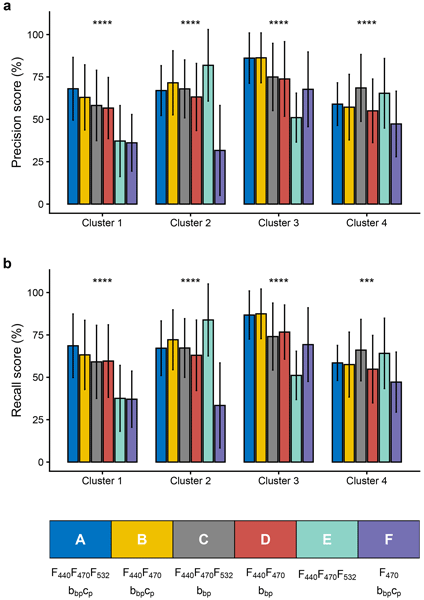
We studied whether ocean sensors can detect changes in microscopic algae communities that influence marine ecosystems and carbon uptake. We combined laboratory experiments and ocean observations to test sensors that measure how algae emit light at different colors when illuminated. We found that combining these light measurements with other optical signals improves the identification of broad community types. This approach could help future ocean floats better track ecosystem change globally.
Rainer Kiko, Marc Picheral, David Antoine, Marcel Babin, Léo Berline, Tristan Biard, Emmanuel Boss, Peter Brandt, Francois Carlotti, Svenja Christiansen, Laurent Coppola, Leandro de la Cruz, Emilie Diamond-Riquier, Xavier Durrieu de Madron, Amanda Elineau, Gabriel Gorsky, Lionel Guidi, Helena Hauss, Jean-Olivier Irisson, Lee Karp-Boss, Johannes Karstensen, Dong-gyun Kim, Rachel M. Lekanoff, Fabien Lombard, Rubens M. Lopes, Claudie Marec, Andrew M. P. McDonnell, Daniela Niemeyer, Margaux Noyon, Stephanie H. O'Daly, Mark D. Ohman, Jessica L. Pretty, Andreas Rogge, Sarah Searson, Masashi Shibata, Yuji Tanaka, Toste Tanhua, Jan Taucher, Emilia Trudnowska, Jessica S. Turner, Anya Waite, and Lars Stemmann
Earth Syst. Sci. Data, 14, 4315–4337, https://doi.org/10.5194/essd-14-4315-2022, https://doi.org/10.5194/essd-14-4315-2022, 2022
Short summary
Short summary
The term
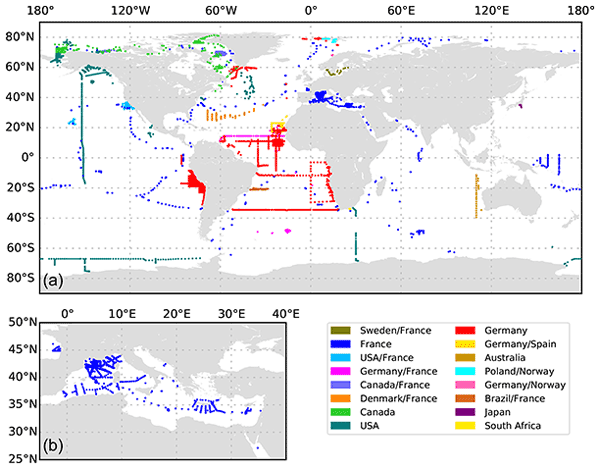
marine particlescomprises detrital aggregates; fecal pellets; bacterioplankton, phytoplankton and zooplankton; and even fish. Here, we present a global dataset that contains 8805 vertical particle size distribution profiles obtained with Underwater Vision Profiler 5 (UVP5) camera systems. These data are valuable to the scientific community, as they can be used to constrain important biogeochemical processes in the ocean, such as the flux of carbon to the deep sea.
Liliane Merlivat, Michael Hemming, Jacqueline Boutin, David Antoine, Vincenzo Vellucci, Melek Golbol, Gareth A. Lee, and Laurence Beaumont
Biogeosciences, 19, 3911–3920, https://doi.org/10.5194/bg-19-3911-2022, https://doi.org/10.5194/bg-19-3911-2022, 2022
Short summary
Short summary
We use in situ high-temporal-resolution measurements of dissolved inorganic carbon and atmospheric parameters at the air–sea interface to analyse phytoplankton bloom initiation identified as the net rate of biological carbon uptake in the Mediterranean Sea. The shift from wind-driven to buoyancy-driven mixing creates conditions for blooms to begin. Active mixing at the air–sea interface leads to the onset of the surface phytoplankton bloom due to the relaxation of wind speed following storms.
Michael P. Hemming, Jan Kaiser, Jacqueline Boutin, Liliane Merlivat, Karen J. Heywood, Dorothee C. E. Bakker, Gareth A. Lee, Marcos Cobas García, David Antoine, and Kiminori Shitashima
Ocean Sci., 18, 1245–1262, https://doi.org/10.5194/os-18-1245-2022, https://doi.org/10.5194/os-18-1245-2022, 2022
Short summary
Short summary
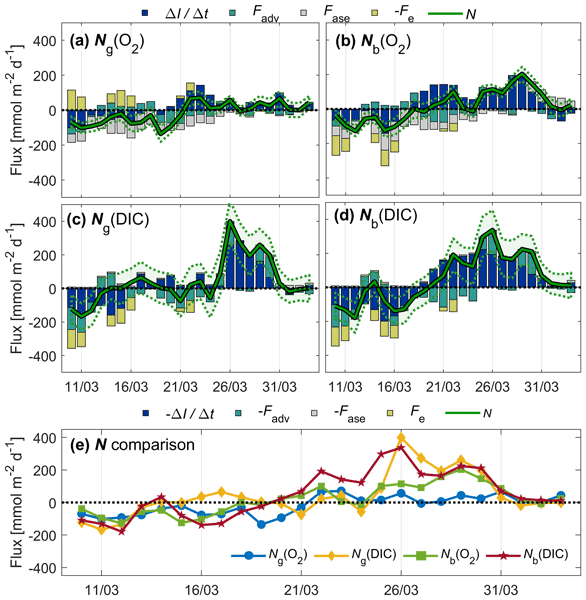
An underwater glider mission was carried out in spring 2016 near a mooring in the northwestern Mediterranean Sea. The glider deployment served as a test of a prototype ion-sensitive field-effect transistor pH sensor. Mean net community production rates were estimated from glider and buoy measurements of dissolved oxygen and inorganic carbon concentrations before and during the spring bloom. Incorporating advection is important for accurate mass budgets. Unexpected metabolic quotients were found.
Paula Maria Salgado-Hernanz, Aurore Regaudie-de-Gioux, David Antoine, and Gotzon Basterretxea
Biogeosciences, 19, 47–69, https://doi.org/10.5194/bg-19-47-2022, https://doi.org/10.5194/bg-19-47-2022, 2022
Short summary
Short summary
For the first time, this study presents the characteristics of primary production in coastal regions of the Mediterranean Sea based on satellite-borne observations for the period 2002–2016. The study concludes that there are significant spatial and temporal variations among different regions. Quantifying primary production is of special importance in the marine food web and in the sequestration of carbon dioxide from the atmosphere to the deep waters.
Cited articles
Antoine, D., Chami, M., Claustre, H., Gentili, B., Louis, F., Ras, J., Roussier, E., Scott, A. J., Tailliez, D., Hooker, S. B., Guevel, P., Desté, J.-F., Dempsey, C., and Adams, D.: BOUSSOLE: A Joint CNRS-INSU, ESA, CNES, and NASA Ocean Color Calibration and Validation Activity, NASA Technical memorandum TM-2006-214147, Goddard Space Flight Center, Greenbelt, MD 20771, available from the NASA Center for Aerospace Information, 7115 Standard Drive, Hanover, MD 21076, 2006.
Antoine, D., Thomalla, S., Berliner, D., Little, H., Moutier, W., Olivier-Morgan, A., Robinson, C., Ryan-Keogh, T., and Schuback, N.: Phytoplankton pigment concentrations of seawater sampled during the Antarctic Circumnavigation Expedition (ACE) during the Austral Summer of 2016/2017, Zenodo [data set], https://doi.org/10.5281/zenodo.3816726, 2020.
Antoine, D., Thomalla, S., Berliner, D., Little, H., Moutier, W., Olivier-Morgan, A., Robinson, C., Ryan-Keogh, T., and Schuback, N.: Particulate light absorption coefficients (350–750 nm) measured using the filter pad method during the Antarctic Circumnavigation Expedition (ACE) during the austral summer of 2016/2017, Zenodo [data set], https://doi.org/10.5281/zenodo.3993096, 2021.
Argo data management: Argo user's manual, Ifremer, https://doi.org/10.13155/29825, 2025.
Aurin, D., Mannino, A., and Lary, D. J.: Remote Sensing of CDOM, CDOM Spectral Slope, and Dissolved Organic Carbon in the Global Ocean, Applied Sciences, 8, 2687, https://doi.org/10.3390/app8122687, 2018.
Bonelli, A. G., Vantrepotte, V., Jorge, D. S. F., Demaria, J., Jamet, C., Dessailly, D., Mangin, A., Fanton d'Andon, O., Kwiatkowska, E., and Loisel, H.: Colored dissolved organic matter absorption at global scale from ocean color radiometry observation: Spatio-temporal variability and contribution to the absorption budget, Remote Sens. Environ., 265, 112637, https://doi.org/10.1016/j.rse.2021.112637, 2021.
Boyd, P. W., Arrigo, K. R., Ardyna, M., Halfter, S., Huckstadt, L., Kuhn, A. M., Lannuzel, D., Neukermans, G., Novaglio, C., Shadwick, E. H., Swart, S., and Thomalla, S. J.: The role of biota in the Southern Ocean carbon cycle, Nat. Rev. Earth Environ., 5, 390–408, https://doi.org/10.1038/s43017-024-00531-3, 2024.
Bricaud, A., Morel, A., and Prieur, L.: Absorption by dissolved organic matter of the sea (yellow substance) in the UV and visible domains1, Limnol. Oceanogr., 26, 43–53, https://doi.org/10.4319/lo.1981.26.1.0043, 1981.
Bricaud, A., Morel, A., Babin, M., Allali, K., and Claustre, H.: Variations of light absorption by suspended particles with chlorophyll a concentration in oceanic (case 1) waters: Analysis and implications for bio-optical models, J. Geophys. Res.-Ocean., 103, 31033–31044, https://doi.org/10.1029/98JC02712, 1998.
Bricaud, A., Babin, M., Claustre, H., Ras, J., and Tièche, F.: Light absorption properties and absorption budget of Southeast Pacific waters, J. Geophys. Res., 115, C08009, https://doi.org/10.1029/2009JC005517, 2010.
Campbell, J. W. and Aarup, T.: Photosynthetically available radiation at high latitudes, Limnol. Oceanogr., 34, 1490–1499, https://doi.org/10.4319/lo.1989.34.8.1490, 1989.
Chen, S., Smith Jr., W. O., and Yu, X.: Revisiting the Ocean Color Algorithms for Particulate Organic Carbon and Chlorophyll-a Concentrations in the Ross Sea, J. Geophys. Res.-Ocean., 126, e2021JC017749, https://doi.org/10.1029/2021JC017749, 2021.
Claustre, H., Sciandra, A., and Vaulot, D.: Introduction to the special section bio-optical and biogeochemical conditions in the South East Pacific in late 2004: the BIOSOPE program, Biogeosciences, 5, 679–691, https://doi.org/10.5194/bg-5-679-2008, 2008.
Claustre, H., Johnson, K. S., and Takeshita, Y.: Observing the Global Ocean with Biogeochemical-Argo, Annu. Rev. Mar. Sci., 12, 23–48, https://doi.org/10.1146/annurev-marine-010419-010956, 2020.
Dall'Olmo, G., Westberry, T. K., Behrenfeld, M. J., Boss, E., and Slade, W. H.: Significant contribution of large particles to optical backscattering in the open ocean, Biogeosciences, 6, 947–967, https://doi.org/10.5194/bg-6-947-2009, 2009.
de Boyer Montégut, C., Madec, G., Fischer, A. S., Lazar, A., and Iudicone, D.: Mixed layer depth over the global ocean: An examination of profile data and a profile-based climatology, J. Geophys. Res.-Ocean., 109, https://doi.org/10.1029/2004JC002378, 2004.
Dierssen, H. M. and Smith, R. C.: Bio-optical properties and remote sensing ocean color algorithms for Antarctic Peninsula waters, J. Geophys. Res., 105, 26301–26312, https://doi.org/10.1029/1999JC000296, 2000.
D'Sa, E. J. and Kim, H.: Surface Gradients in Dissolved Organic Matter Absorption and Fluorescence Properties along the New Zealand Sector of the Southern Ocean, Front. Mar. Sci., 4, https://doi.org/10.3389/fmars.2017.00021, 2017.
Fichot, C. G., Tzortziou, M., and Mannino, A.: Remote sensing of dissolved organic carbon (DOC) stocks, fluxes and transformations along the land-ocean aquatic continuum: advances, challenges, and opportunities, Earth-Sci. Rev., 242, 104446, https://doi.org/10.1016/j.earscirev.2023.104446, 2023.
Gordon, H. R.: Dependence of the diffuse reflectance of natural waters on the sun angle: Diffuse reflectance dependence on sun angle, Limnol. Oceanogr., 34, 1484–1489, https://doi.org/10.4319/lo.1989.34.8.1484, 1989.
Gregg, W. W. and Carder, K. L.: A simple spectral solar irradiance model for cloudless maritime atmospheres, Limnol. Oceanogr., 35, 1657–1675, https://doi.org/10.4319/lo.1990.35.8.1657, 1990.
Gruber, N., Gloor, M., Mikaloff Fletcher, S. E., Doney, S. C., Dutkiewicz, S., Follows, M. J., Gerber, M., Jacobson, A. R., Joos, F., Lindsay, K., Menemenlis, D., Mouchet, A., Müller, S. A., Sarmiento, J. L., and Takahashi, T.: Oceanic sources, sinks, and transport of atmospheric CO2, Global Biogeochem. Cy., 23, 1–21, https://doi.org/10.1029/2008GB003349, 2009.
Gruber, N., Landschützer, P., and Lovenduski, N. S.: The Variable Southern Ocean Carbon Sink, Annu. Rev. Mar. Sci., 11, 159–186, https://doi.org/10.1146/annurev-marine-121916-063407, 2019.
Haëntjens, N., Boss, E., and Talley, L. D.: Revisiting Ocean Color algorithms for chlorophyll a and particulate organic carbon in the Southern Ocean using biogeochemical floats, J. Geophys. Res.-Ocean., 122, 6583–6593, https://doi.org/10.1002/2017JC012844, 2017.
Hauck, J., Gregor, L., Nissen, C., Patara, L., Hague, M., Mongwe, P., Bushinsky, S., Doney, S. C., Gruber, N., Le Quéré, C., Manizza, M., Mazloff, M., Monteiro, P. M. S., and Terhaar, J.: The Southern Ocean Carbon Cycle 1985–2018: Mean, Seasonal Cycle, Trends, and Storage, Global Biogeochem. Cy., 37, e2023GB007848, https://doi.org/10.1029/2023GB007848, 2023.
Haumann, F. A., Robinson, C., Thomas, J., Hutchings, J., Pina Estany, C., Tarasenko, A., Gerber, F., and Leonard, K.: Physical and biogeochemical oceanography data from underway measurements with an AquaLine Ferrybox during the Antarctic Circumnavigation Expedition (ACE), Zenodo [data set], https://doi.org/10.5281/zenodo.3660852, 2020.
Hillenbrand, C.-D. and Cortese, G.: Polar stratification: A critical view from the Southern Ocean, Palaeogeogr. Palaeocl., 242, 240–252, https://doi.org/10.1016/j.palaeo.2006.06.001, 2006.
Hooker, S. B. and Zibordi, G.: Advanced Methods for Characterizing the Immersion Factor of Irradiance Sensors, J. Atmos. Ocean. Tech., 22, 757–770, https://doi.org/10.1175/JTECH1736.1, 2005.
Hu, C., Lee, Z., and Franz, B.: Chlorophyll aalgorithms for oligotrophic oceans: A novel approach based on three-band reflectance difference, J. Geophys. Res.-Ocean., 117, https://doi.org/10.1029/2011JC007395, 2012.
IOC, SCOR and IAPSO: The international thermodynamic equation of seawater – 2010: Calculation and use of thermodynamic properties, Intergovernmental Oceanographic Commission, Manuals and Guides No. 56, UNESCO (English), 196 pp., 2010.
Jamet, C., Loisel, H., and Dessailly, D.: Retrieval of the spectral diffuse attenuation coefficient Kd(λ) in open and coastal ocean waters using a neural network inversion, J. Geophys. Res.-Ocean., 117, https://doi.org/10.1029/2012JC008076, 2012.
Johnson, R., Strutton, P. G., Wright, S. W., McMinn, A., and Meiners, K. M.: Three improved satellite chlorophyll algorithms for the Southern Ocean, J. Geophys. Res.-Ocean., 118, 3694–3703, https://doi.org/10.1002/jgrc.20270, 2013.
Lee, Z., Carder, K. L., and Arnone, R. A.: Deriving inherent optical properties from water color: a multiband quasi-analytical algorithm for optically deep waters, Appl. Opt., 41, 5755, https://doi.org/10.1364/AO.41.005755, 2002.
Lee, Z., Wei, J., Voss, K., Lewis, M., Bricaud, A., and Huot, Y.: Hyperspectral absorption coefficient of “pure” seawater in the range of 350–550 nm inverted from remote sensing reflectance, Appl. Opt., 54, 546, https://doi.org/10.1364/AO.54.000546, 2015.
Li, J., Antoine, D., and Huot, Y.: Bio-optical variability of particulate matter in the Southern Ocean, Frontiers in Marine Science, https://doi.org/10.3389/fmars.2024.1466037, 2024.
Mannino, A., Novak, M. G., Hooker, S. B., Hyde, K., and Aurin, D.: Algorithm development and validation of CDOM properties for estuarine and continental shelf waters along the northeastern U.S. coast, Remote Sens. Environ., 152, 576–602, https://doi.org/10.1016/j.rse.2014.06.027, 2014.
Maritorena, S., Siegel, D. A., and Peterson, A. R.: Optimization of a semianalytical ocean color model for global-scale applications, Appl. Opt., 41, 2705, https://doi.org/10.1364/AO.41.002705, 2002.
Matsuoka, A., Hooker, S. B., Bricaud, A., Gentili, B., and Babin, M.: Estimating absorption coefficients of colored dissolved organic matter (CDOM) using a semi-analytical algorithm for southern Beaufort Sea waters: application to deriving concentrations of dissolved organic carbon from space, Biogeosciences, 10, 917–927, https://doi.org/10.5194/bg-10-917-2013, 2013.
McKee, D., Cunningham, A., Wright, D., and Hay, L.: Potential impacts of nonalgal materials on water-leaving Sun induced chlorophyll fluorescence signals in coastal waters, Appl. Opt., 46, 7720–7729, https://doi.org/10.1364/AO.46.007720, 2007.
Mobley, C. D., Stramski, D., Paul Bissett, W., and Boss, E.: Optical modeling of ocean waters: Is the case 1 – case 2 classification still useful?, Oceanography, 17, 60, https://doi.org/10.5670/oceanog.2004.48, 2004.
Moore, T. S., Campbell, J. W., and Dowell, M. D.: A class-based approach to characterizing and mapping the uncertainty of the MODIS ocean chlorophyll product, Remote Sens. Environ., 113, 2424–2430, https://doi.org/10.1016/j.rse.2009.07.016, 2009.
Morel, A.: Optical modeling of the upper ocean in relation to its biogenous matter content (case I waters), J. Geophys. Res., 93, 10749, https://doi.org/10.1029/JC093iC09p10749, 1988.
Morel, A.: Are the empirical relationships describing the bio-optical properties of case 1 waters consistent and internally compatible?, J. Geophys. Res., 114, 2008JC004803, https://doi.org/10.1029/2008JC004803, 2009.
Morel, A. and Gentili, B.: Radiation transport within oceanic (case 1) water, J. Geophys. Res.-Ocean., 109, https://doi.org/10.1029/2003JC002259, 2004.
Morel, A. and Gentili, B.: A simple band ratio technique to quantify the colored dissolved and detrital organic material from ocean color remotely sensed data, Remote Sen. Environ., 113, 998–1011, https://doi.org/10.1016/j.rse.2009.01.008, 2009.
Morel, A. and Maritorena, S.: Bio-optical properties of oceanic waters: A reappraisal, J. Geophys. Res., 106, 7163–7180, https://doi.org/10.1029/2000JC000319, 2001.
Morel, A. and Prieur, L.: Analysis of variations in ocean color1: Ocean color analysis, Limnol. Oceanogr., 22, 709–722, https://doi.org/10.4319/lo.1977.22.4.0709, 1977.
Morel, A., Antoine, D., and Gentili, B.: Bidirectional reflectance of oceanic waters: accounting for Raman emission and varying particle scattering phase function, Appl. Opt., 41, 6289, https://doi.org/10.1364/AO.41.006289, 2002.
Morel, A., Huot, Y., Gentili, B., Werdell, P. J., Hooker, S. B., and Franz, B. A.: Examining the consistency of products derived from various ocean color sensors in open ocean (Case 1) waters in the perspective of a multi-sensor approach, Remote Sens. Environ., 111, 69–88, https://doi.org/10.1016/j.rse.2007.03.012, 2007a.
Morel, A., Claustre, H., Antoine, D., and Gentili, B.: Natural variability of bio-optical properties in Case 1 waters: attenuation and reflectance within the visible and near-UV spectral domains, as observed in South Pacific and Mediterranean waters, Biogeosciences, 4, 913–925, https://doi.org/10.5194/bg-4-913-2007, 2007b.
Morel, A., Gentili, B., Claustre, H., Babin, M., Bricaud, A., Ras, J., and Tièche, F.: Optical properties of the “clearest” natural waters, Limnol. Oceanogr., 52, 217–229, https://doi.org/10.4319/lo.2007.52.1.0217, 2007c.
Nelson, N. B. and Siegel, D. A.: Chromophoric DOM in the open ocean, Biogeochemistry of Marine Dissolved Organic Matter, 547–578, https://doi.org/10.1016/B978-012323841-2/50013-0, 2002.
Nelson, N. B. and Siegel, D. A.: The Global Distribution and Dynamics of Chromophoric Dissolved Organic Matter, Annu. Rev. Mar. Sci., 5, 447–476, https://doi.org/10.1146/annurev-marine-120710-100751, 2013.
Nelson, N. B., Siegel, D. A., and Michaels, A. F.: Seasonal dynamics of colored dissolved material in the Sargasso Sea, Deep-Sea Res. Pt. I, 45, 931–957, 1998.
Nelson, N. B., Siegel, D. A., Carlson, Craig. A., Swan, C., Smethie, W. M., and Khatiwala, S.: Hydrography of chromophoric dissolved organic matter in the North Atlantic, Deep-Sea Res. Pt. I, 54, 710–731, https://doi.org/10.1016/j.dsr.2007.02.006, 2007.
NOAA National Geophysical Data Center (NOAA): ETOPO1 1 Arc-Minute Global Relief Model, NOAA National Centers for Environmental Information, 2009.
Norman, L., Thomas, D. N., Stedmon, C. A., Granskog, M. A., Papadimitriou, S., Krapp, R. H., Meiners, K. M., Lannuzel, D., van der Merwe, P., and Dieckmann, G. S.: The characteristics of dissolved organic matter (DOM) and chromophoric dissolved organic matter (CDOM) in Antarctic sea ice, Deep-Sea Res. Pt. II, 58, 1075–1091, https://doi.org/10.1016/j.dsr2.2010.10.030, 2011.
Olbers, D. and Visbeck, M.: A Model of the Zonally Averaged Stratification and Overturning in the Southern Ocean, J. Phys. Oceanogr., 35, 1190–1205, https://doi.org/10.1175/JPO2750.1, 2005.
Organelli, E., Bricaud, A., Antoine, D., and Matsuoka, A.: Seasonal dynamics of light absorption by chromophoric dissolved organic matter (CDOM) in the NW Mediterranean Sea (BOUSSOLE site), Deep-Sea Res. Pt. I, 91, 72–85, https://doi.org/10.1016/j.dsr.2014.05.003, 2014.
Organelli, E., Claustre, H., Bricaud, A., Schmechtig, C., Poteau, A., Xing, X., Prieur, L., D'Ortenzio, F., Dall'Olmo, G., and Vellucci, V.: A Novel Near-Real-Time Quality-Control Procedure for Radiometric Profiles Measured by Bio-Argo Floats: Protocols and Performances, J. Atmos. Ocean. Tech., 33, 937–951, https://doi.org/10.1175/JTECH-D-15-0193.1, 2016.
Ortega-Retuerta, E., Reche, I., Pulido-Villena, E., Agustí, S., and Duarte, C. M.: Distribution and photoreactivity of chromophoric dissolved organic matter in the Antarctic Peninsula (Southern Ocean), Mar. Chem., 118, 129–139, https://doi.org/10.1016/j.marchem.2009.11.008, 2010a.
Ortega-Retuerta, E., Siegel, D. A., Nelson, N. B., Duarte, C., and Reche, I.: Observations of chromophoric dissolved and detrital organic matter distribution using remote sensing in the Southern Ocean: Validation, dynamics and regulation, J. Marine Syst., 82, 295–303, https://doi.org/10.1016/j.jmarsys.2010.06.004, 2010b.
Park, Y.-H., Park, T., Kim, T.-W., Lee, S.-H., Hong, C.-S., Lee, J.-H., Rio, M.-H., Pujol, M.-I., Ballarotta, M., Durand, I., and Provost, C.: Observations of the Antarctic Circumpolar Current Over the Udintsev Fracture Zone, the Narrowest Choke Point in the Southern Ocean, J. Geophys. Res.-Ocean., 124, 4511–4528, https://doi.org/10.1029/2019JC015024, 2019.
Ras, J., Claustre, H., and Uitz, J.: Spatial variability of phytoplankton pigment distributions in the Subtropical South Pacific Ocean: comparison between in situ and predicted data, Biogeosciences, 5, 353–369, https://doi.org/10.5194/bg-5-353-2008, 2008.
Reynolds, R. A., Stramski, D., and Mitchell, B. G.: A chlorophyll-dependent semianalytical reflectance model derived from field measurements of absorption and backscattering coefficients within the Southern Ocean, J. Geophys. Res.-Ocean., 106, 7125–7138, https://doi.org/10.1029/1999JC000311, 2001.
Reynolds, R. A., Stramski, D., and Neukermans, G.: Optical backscattering by particles in Arctic seawater and relationships to particle mass concentration, size distribution, and bulk composition: Particle backscattering in Arctic seawater, Limnol. Oceanogr., 61, 1869–1890, https://doi.org/10.1002/lno.10341, 2016.
Robinson, C. M., Huot, Y., Schuback, N., Ryan-Keogh, T. J., Thomalla, S. J., and Antoine, D.: High latitude Southern Ocean phytoplankton have distinctive bio-optical properties, Opt. Express, 29, 21084–21112, https://doi.org/10.1364/OE.426737, 2021.
Roesler, C., Uitz, J., Claustre, H., Boss, E., Xing, X., Organelli, E., Briggs, N., Bricaud, A., Schmechtig, C., Poteau, A., D'Ortenzio, F., Ras, J., Drapeau, S., Haëntjens, N., and Barbieux, M.: Recommendations for obtaining unbiased chlorophyll estimates from in situ chlorophyll fluorometers: A global analysis of WET Labs ECO sensors, Limnol. Oceanogr.-Meth., 15, 572–585, https://doi.org/10.1002/lom3.10185, 2017.
Salyuk, P. A., Glukhovets, D. I., Latushkin, A. A., Kalinina, O. Yu., Shtraikhert, E. A., Sapozhnikov, P. V., Mosharov, S. A., Stepochkin, I. E., Lipinskaya, N. A., Gorbov, M. I., and Klimenko, S. K.: Extreme underestimation of satellite-derived chlorophyll-a concentration in the northwestern Weddell Sea during a phytoplankton bloom and its reasons, J. Marine Syst., 252, 104159, https://doi.org/10.1016/j.jmarsys.2025.104159, 2025.
Sarmiento, J. L., Johnson, K. S., Arteaga, L. A., Bushinsky, S. M., Cullen, H. M., Gray, A. R., Hotinski, R. M., Maurer, T. L., Mazloff, M. R., Riser, S. C., Russell, J. L., Schofield, O. M., and Talley, L. D.: The Southern Ocean carbon and climate observations and modeling (SOCCOM) project: A review, Prog. Oceanogr., 219, 103130, https://doi.org/10.1016/j.pocean.2023.103130, 2023.
Sauzède, R., Schmechtig, C., Renosh, P. R., Uitz, J., and Claustre, H.: Global Look-Up Table of Physiological Ratios for the Real-Time Adjustment of Chlorophyll-a Fluorescence within the OneArgo Framework, SEANOE, https://doi.org/10.17882/105732, 2025.
Schallenberg, C., Strzepek, R. F., Bestley, S., Wojtasiewicz, B., and Trull, T. W.: Iron Limitation Drives the Globally Extreme Fluorescence/Chlorophyll Ratios of the Southern Ocean, Geophys. Res. Lett., 49, e2021GL097616, https://doi.org/10.1029/2021GL097616, 2022.
Schmechtig, C., Wong, A., Maurer, T. L., Bittig, H., and Thierry, V.: Argo quality control manual for biogeochemical data, Bio-Argo group, https://doi.org/10.13155/40879, 2023.
Siegel, D. A., Maritorena, S., Nelson, N. B., Hansell, D. A., and Lorenzi-Kayser, M.: Global distribution and dynamics of colored dissolved and detrital organic materials, J. Geophys. Res.-Ocean., 107, 21-1–21-14, https://doi.org/10.1029/2001JC000965, 2002.
Siegel, D. A., Maritorena, S., Nelson, N. B., Behrenfeld, M. J., and McClain, C. R.: Colored dissolved organic matter and its influence on the satellite-based characterization of the ocean biosphere, Geophys. Res. Lett., 32, L20605, https://doi.org/10.1029/2005GL024310, 2005.
Strzepek, R. F., Boyd, P. W., and Sunda, W. G.: Photosynthetic adaptation to low iron, light, and temperature in Southern Ocean phytoplankton, P. Natl. Acad. Sci. USA, 116, 4388–4393, https://doi.org/10.1073/pnas.1810886116, 2019.
Wei, J., Lee, Z., Ondrusek, M., Mannino, A., Tzortziou, M., and Armstrong, R.: Spectral slopes of the absorption coefficient of colored dissolved and detrital material inverted from UV-visible remote sensing reflectance, J. Geophys. Res.-Ocean., 121, 1953–1969, https://doi.org/10.1002/2015JC011415, 2016.
Werdell, P. J. and Bailey, S. W.: An improved in-situ bio-optical data set for ocean color algorithm development and satellite data product validation, Remote Sens. Environ., 98, 122–140, https://doi.org/10.1016/j.rse.2005.07.001, 2005.
Wright, S. W., van den Enden, R. L., Pearce, I., Davidson, A. T., Scott, F. J., and Westwood, K. J.: Phytoplankton community structure and stocks in the Southern Ocean (30–80° E) determined by CHEMTAX analysis of HPLC pigment signatures, Deep-Sea Res. Pt. II, 57, 758–778, https://doi.org/10.1016/j.dsr2.2009.06.015, 2010.
Xing, X., Briggs, N., Boss, E., and Claustre, H.: Improved correction for non-photochemical quenching of in situ chlorophyll fluorescence based on a synchronous irradiance profile, Opt. Express, 26, 24734–24751, https://doi.org/10.1364/OE.26.024734, 2018.
Yamamoto, K., DeVries, T., Siegel, D. A., and Nelson, N. B.: Quantifying Biogeochemical Controls of Open Ocean CDOM From a Global Mechanistic Model, J. Geophys. Res.-Ocean., 129, e2023JC020691, https://doi.org/10.1029/2023JC020691, 2024.
Zhang, X. and Hu, L.: Estimating scattering of pure water from density fluctuation of the refractive index, Opt. Express, 17, 1671–1678, https://doi.org/10.1364/OE.17.001671, 2009.
Zhang, X., Hu, L., and He, M.-X.: Scattering by pure seawater: Effect of salinity, Opt. Express, 17, 5698–5710, https://doi.org/10.1364/OE.17.005698, 2009.
Short summary
Evidence is growing that bio-optical relationships in the Southern Ocean differ from what they are elsewhere. Uncertainties about these properties are far from been resolved. However, our study adds a new piece to this puzzle by examining the bio-optical properties of the absorption coefficient of colored dissolved organic matter, which is the least documented property in oceanic waters. As for the methodology, this is the first time that Biogeochemical-Argo float data are used to quantify it.
Evidence is growing that bio-optical relationships in the Southern Ocean differ from what they...
Altmetrics
Final-revised paper
Preprint