
the Creative Commons Attribution 4.0 License.
the Creative Commons Attribution 4.0 License.
 | 26 May 2026
Factors controlling dissolved 137Cs activities in Matsukawa-ura lagoon, a semi-closed estuary, after the Fukushima accident
Hyoe Takata
Sho Watanabe
Shinya Namura
Toshihiro Wada
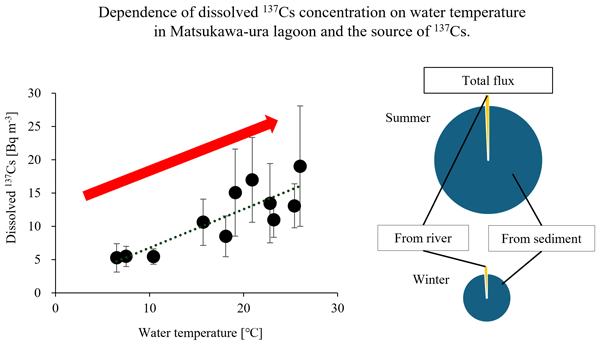
The spatial and seasonal dynamics of 137Cs were investigated from 2021 to 2023 in Matsukawa-ura lagoon, a semi-closed estuarine area approximately 40 km north of the Fukushima Daiichi Nuclear Power Plant (FDNPP), Japan. The weighted mean dissolved 137Cs concentrations in the lagoon ranged from 5.3 to 19 Bq m−3, which were 2.4–8.6 times higher than those in the surrounding coastal seawater and inflowing river waters. Furthermore, dissolved 137Cs concentrations in the lagoon were higher in summer than in winter and showed a strong positive correlation with water temperature. Simplified box-model estimation indicates that continuous terrestrial input 137Cs are unlikely to contribute to the spatiotemporal variability of dissolved 137Cs concentrations in the lagoon. Instead 137Cs deposited in bottom sediments during the early stages of the FDNPP accident is gradually released as pore waters are exposed to seawater entering the lagoon, thereby sustaining elevated dissolved 137Cs concentrations. These results indicate that warmer summer conditions enhance the dissolution of 137Cs from bottom sediments and highlight the importance of sediment–pore water processes in controlling 137Cs dynamics in the coastal environments of Fukushima Prefecture.
- Article
(4283 KB) - Full-text XML
-
Supplement
(1587 KB) - BibTeX
- EndNote


The Fukushima Dai-ichi Nuclear Power Plant (FDNPP) accident on 11 March 2011 released important amounts of radioactive Cs (134Cs and 137Cs) into the surrounding areas and the North Pacific. It is estimated that a total of 15–20 PBq of 137Cs was released into the atmosphere between 12 March and 30 April 2011, with 10 %–40 % (2–6 PBq) estimated to have been deposited in eastern Japan (Aoyama et al., 2016). Currently, the dissolved 137Cs activity concentration in seawater more than 30 km offshore Fukushima has returned to pre-accident levels (Kusakabe and Takata, 2020), whereas that in coastal waters of Fukushima Prefecture remains above pre-accident levels (Suzuki et al., 2022). Potential sources of dissolved 137Cs in Fukushima coastal waters include direct inflow from the FDNPP, leaching from seabed sediments, and inflow from rivers. The completion of impermeable seaside wall in 2016 may have recently limited direct inflow from the FDNPP (Machida et al., 2019). Otosaka et al. (2020) estimated the dissolved 137Cs concentrations in pore waters within bottom sediments to be 10–40 times higher than that in the overlying water (seawater approximately 60 cm above the seafloor), suggesting that the leaching of radioactive Cs from sediments to pore water is a 137Cs source in coastal areas.
Extensive studies of the riverine transport of 137Cs from land to estuaries revealed that most of the 137Cs transported from land to ocean is in the particulate phase (e.g., Nagao et al., 2013; Yamashiki et al., 2014; Niida et al., 2022). Although the proportion of dissolved 137Cs supplied by rivers is extremely small, dissolved 137Cs concentrations in the marine environment tend to be higher at near-shore sites (e.g., river mouths) than in offshore waters (Takata et al., 2020a). Accordingly, the supply from rivers to the marine environment is considered to increase dissolved 137Cs concentrations. This supply is mainly regulated by water temperature and the competition between particulate-bound 137Cs and ions in seawater, as described below.
Recent studies in rivers suggested that the distribution coefficient between particulate-bound 137Cs and dissolved 137Cs decreases with increasing water temperature, making it easier for 137Cs to be released from suspended particles in rivers during the warmer summer season (Igarashi et al., 2022; Tsuji et al., 2023). Furthermore, Machida et al. (2019) estimated the 137Cs export from the harbor of the FDNPP and reported higher levels in summer than in winter, indicating that the dissolved 137Cs concentrations in the harbor may be related to water temperature.
Experiments reproducing the interaction between dissolved and particulate 137Cs due to the flow of particulate-bound 137Cs from rivers into the sea show that the distribution coefficient (Kd) between particulate-bound 137Cs and dissolved 137Cs decreases along a salinity gradient (Li et al., 1984; Turner, 1996). These results suggest that 137Cs+ can be desorbed from the particles due to competition with ions such as K+ and NH (Takata et al., 2020b, 2021).
The relationships between water temperature and dissolved 137Cs concentrations in river water and between salinity and dissolved 137Cs concentrations in seawater are often discussed (Takata et al., 2022; Tsuji et al., 2023), but those in estuarine areas have not been sufficiently addressed. One of the reasons for this is that the dissolved 137Cs transported from land and leached from sediments is immediately diluted and dispersed into large amounts of seawater, making quantitative assessments challenging.
This study focuses on Matsukawa-ura lagoon (Soma City, Fukushima Prefecture) and its inflowing rivers to discuss the supply of 137Cs to the lagoon and the spatial and seasonal dynamics of 137Cs within the lagoon. Matsukawa-ura lagoon is a semi-closed estuarine area approximately 40 km north of the FDNPP, providing an ideal area for estimating the flux of 137Cs transported from rivers and desorbed from sediments. Additionally, the lagoon is only connected to the Pacific Ocean through a 100 m-wide mouth at its northmost point, facilitating the quantification of the mass balance of 137Cs within the lagoon. Kambayashi et al. (2021) investigated the distribution of 137Cs in Matsukawa-ura lagoon and the rivers flowing into the lagoon from 2014–2016 and calculated mass balance of 137Cs, suggested that 137Cs supplied from bottom sediments in the lagoon contribute greatly to the distribution of 137Cs in the lagoon, with the flux supplied from bottom sediments being highest in summer. The aim of this study was to investigate the distribution of 137Cs inputs, in turn allowing us to evaluate the contribution of 137Cs supplied by rivers to estuarine areas, the relationships with salinity and water temperature, and the contribution and seasonality of 137Cs dissolved from bottom sediments. Our results improve our understanding of radioactive contamination in aquatic habitats.
2.1 Study area and sampling stations
Matsukawa-ura lagoon is a semi-closed estuarine area with an area of 6.48 km2 with fluctuating salinity and water temperature conditions (Wada et al., 2011; Noda et al., 2021). The lagoon has a shallow topography (mean 1.24 m depth) muddy sand bottom (Wada et al., 2011). Additionally, during the spring tide, about half the volume of seawater in the lagoon can be exchanged with Pacific Ocean water through the channel during a single tidal cycle because the maximum tidal amplitude is close to the mean depth of the lagoon (Kohata et al., 2003). The mean water temperature in the lagoon during 1991–2021 was 15.1 °C, with a maximum daily temperature of 28.5 °C and a minimum daily temperature of 4.5 °C (Fukushima Prefecture Webpage, 2024). Four rivers flow into Matsukawa-ura lagoon: Koizumi River (catchment area 17.8 km2), Uda River (100.6 km2), Ume River (10.7 km2), and Nikkeshi River (22.6 km2). According to the fourth aerial survey conducted by the Ministry of Education, Culture, Sports, Science and Technology, MEXT (November 2011), the mean inventory of 137Cs deposited in the Koizumi, Uda, Ume, and Nikkeshi catchments were 70, 205, 70, and 93 kBq m−2 respectively, with relatively higher concentrations observed in the forested areas of the upstream Uda catchment. The mean concentration of 137Cs across the entire Matsukawa-ura catchment was 163 kBq m−2 (Fig. 1a). Due to the impermeable bedrock in the midstream to upstream areas of the lagoon's watershed, it is considered that precipitation hardly infiltrates the underground, instead directly flowing into the rivers and delivering 52.1 % of the total precipitation runoff to the lagoon through the rivers (Kamo et al., 2014). Additionally, Arita et al. (2014) estimated the total accumulation of 137Cs in surface sediments (0–20 cm depth) within the lagoon to be 220 GBq as of November 2013.
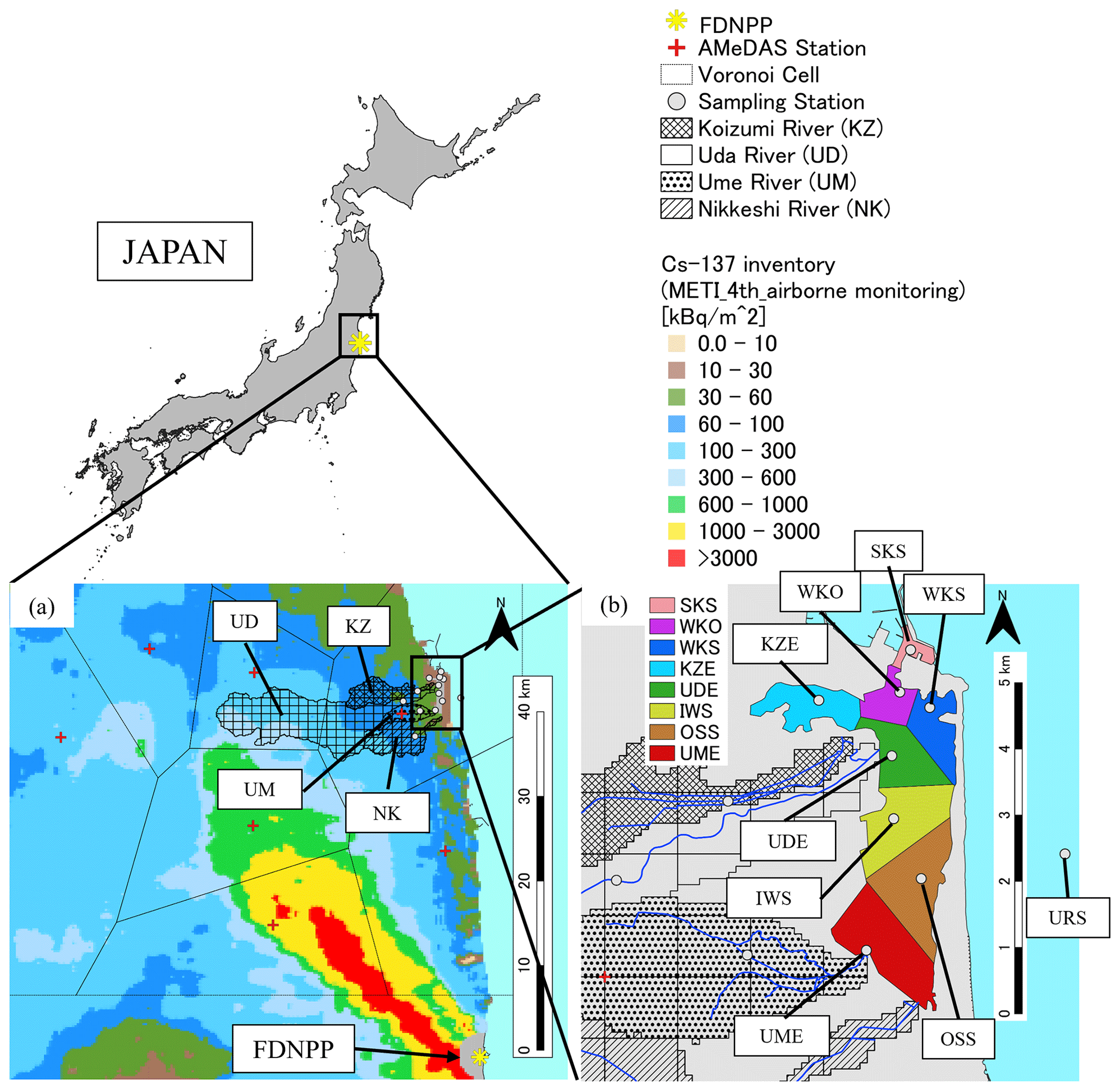
Figure 1Spatial distribution of the 137Cs inventory in the study catchment (a) and sampling stations of Matsukawa-ura lagoon (b). The spatial distribution of the 137Cs inventory is based on the fourth airborne survey by Ministry of Education, Culture, Sports, Science and Technology (2011). The Voronoi cells were created based on the coordinates of Japan Meteorological Agency weather stations (a) and sampling stations (b).
In this study, we conducted 11 samplings from June 2021 to February 2023 at 13 sites including downstream sites in the four rivers, sites at the mouths of three rivers (Koizumi, Uda, and Ume Rivers), five sites within the lagoon (from the southeast to near the lagoon mouth in the north), and a site 800 m offshore along the outer coast of the lagoon (Fig. 1b). Detailed sampling locations and dates are provided in Table S1 in the Supplement. Table S1 presents estimated flow rates for each river on each sampling date, calculated based on the Voronoi diagram determined by the locations of Japan Meteorological Agency observation stations and assuming that 52.1 % of precipitation in the 30 d prior to each sampling date flows into the rivers and 3.9 % flow into the lagoon as submarine groundwater discharge, SGD (Kamo et al., 2014).
2.2 Sample processing and analysis
At each sampling site, 30–40 L of river water or surface seawater were collected using 10 L polyethylene buckets. The collected water samples were transferred to 20 L polyethylene containers and brought to the laboratory. A portion of each sample was used to measure water temperature and electrical conductivity, from which salinity was calculated. On each sampling day, the water temperature in the lagoon was measured by using a chlorophyll turbidity sensor (ACLW2-CAD, JFE Advantech Co., Ltd, Hyogo, Japan) at the station WKO, where locate at mouth of the lagoon, at 10:00 JST. Additionally, we measured the water depth at the station WKO from 29 December 2021. Water samples were filtered using a 0.45 µm membrane filter (047-MFPES045, AS ONE Corporation, Osaka, Japan), and approximately 20 L of the filtrate were stored for dissolved 137Cs analysis. Additionally, 1–2 L of each sample were filtered through pre-weighed 0.4 µm polycarbonate filters (16040004, ADVANTEC, Tokyo, Japan) to measure the suspended particle concentration (SPc; g m−3). The filters used for filtering 30–40 L of water were air-dried for about one week at 30 °C, then placed in 100 mL polyethylene containers for measurement of particle-bound 137Cs concentration in suspended particles (137Cssp; Bq kg−1-dry), using a non-destructive gamma-ray spectrometer with a coaxial high-purity Ge detector (HPGe) (GEM40, SEIKO EG&G, Tokyo, Japan). The results were then divided by SPc to calculate particulate 137Cs concentration (137Cspar; Bq m−3). The detection limits for 137Cssp ranged from 4.5 to 1590 Bq kg−1-dry for measurement times of 80 000 to 300 000 s, respectively. The counting efficiencies of these HPGe semiconductor detectors were calibrated using volume standard sources (MX033U8PP, The Japan Radioisotope Association, Tokyo, Japan).
To analyze dissolved 137Cs concentration (137Csdis; Bq m−3), we followed the method reported by Aoyama et al. (2013), summarized here. The filtrate stored for 137Csdis analysis was adjusted to a pH of approximately 1.6 with 15 M HNO3. Then, 0.39 g of CsCl was added as a carrier and stirred for 2 h. Subsequently, Cs was coprecipitated with 6 g of ammonium phosphomolybdate (AMP, KANSO TECHNOS Co., LTD, Osaka, Japan). The 137Cs concentration present as an impurity in the AMP was 0.05 MBq g−1-AMP. The Cs-AMP precipitate was left overnight to settle, then filtered using a paper filter with a pore size of 1 µm. After air-drying the filter for about one week at 30 °C, the precipitation was enclosed in a 10 mL Teflon container, and its weight yield was determined gravimetrically. Yields exceeded 90 % for all samples. The Cs-AMP compounds enclosed in the Teflon containers were measured using a non-destructive gamma-ray spectrometer with a well-type high-purity Ge detector (GWL-90-15, SEIKO EG&G, Tokyo, Japan), and the result was reported as 137Csdis. The detection limit for 137Csdis was less than 2 Bq m−3 for all samples. The activity concentration of 137Cs was decay-corrected to the sampling date.
Radiocerium partitioning between the dissolved and particulate phases was evaluated using the apparent distribution coefficient (Kd; L kg−1), (IAEA, 2004). The Kd of 137Cs is represented as follows:
2.3 Estimation of flux of dissolved 137Cs in the lagoon
We used simplified box-model estimate to evaluate the magnitudes of the internal and external sources responsible for the non-conservative mixing behavior of dissolved 137Cs observed in the lagoon. 137Cs budget in Matsukawa-ura lagoon is summarized in Fig. 2.
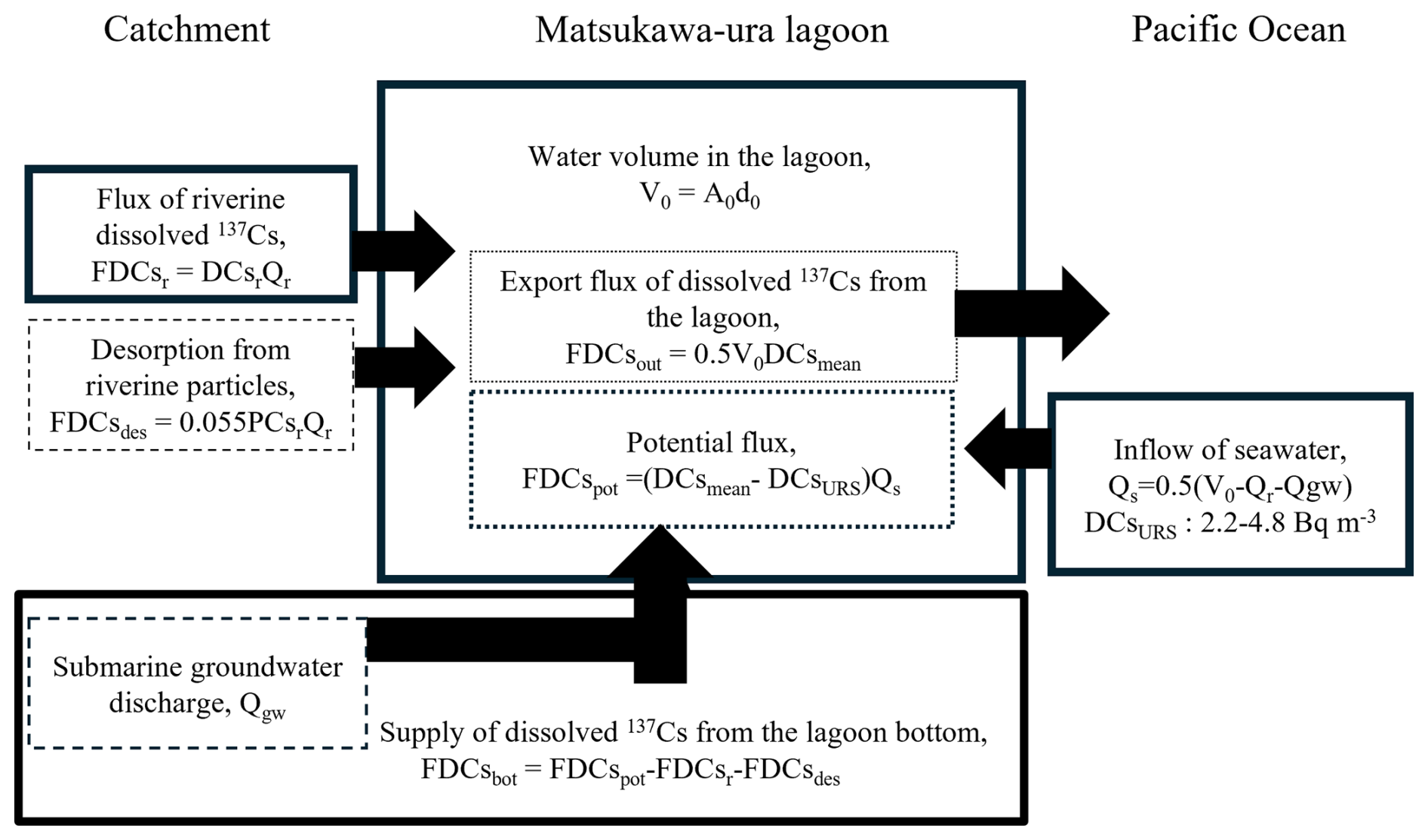
Figure 2Schematic illustration of the box-model for water and dissolved 137Cs in Matsukawa-ura lagoon. Half of the lagoon water volume was assumed to be exchanged with coastal seawater during each tidal cycle under spring tide conditions (Kohata et al., 2003), and 5.5 % of riverine particulate 137Cs was assumed to be converted to dissolved 137Cs through desorption after entering the lagoon (Takata et al., 2021).
The water volume in Matsukawa-ura lagoon was calculated by multiplying the area of the lagoon (6.48 km2) by the mean water depth (1.24 m). The water volume in the lagoon was calculated using Eq. (2)
where V0 is the water volume in the lagoon (Mm3), A0 is the area of the lagoon (km2), d0 is the mean depth of the lagoon (m). The maximum inflowing seawater from coastal area into the lagoon during a single tidal cycle was estimated using Eq. (3) since about half of the lagoon water volume can be exchanged with coastal seawater during a single tidal cycle under spring tide conditions (Kohata et al., 2003).
where Qr is the volume of the river water discharge (m3 12 h−1), Qgw is the volume of the SGD (m3 12 h−1). The values of Qr and Qgw on sampling dates are summarized in Table S1.
A Voronoi partition was constructed based on the sampling stations within the lagoon to estimate a representative dissolved 137Cs concentration for the lagoon. The area ratio of each Voronoi cell to the total lagoon area was used as a weighting factor when averaging the 137Csdis to obtain a weighted mean 137Csdis. The weighted mean 137Csdis (Bq m−3) was estimated using Eq. (4)
where DCsmean is the weighted mean 137Csdis (Bq m−3), A is the area of the lagoon, DCsSKS-UME (Bq m−3) are 137Csdis at each sampling station, ASKS-UME are areas of each Voronoi cell. The potential fluxes of 137Csdis supplied to the lagoon were calculated by multiplying the difference in 137Csdis between DCsmean and coastal seawater (station URS) by the volume of seawater flowing into the lagoon. The potential fluxes of dissolved 137Cs in the lagoon were calculated using Eq. (5).
where FDCspot is the potential fluxes of dissolved 137Cs (Bq 12 h−1), DCsURS is the 137Csdis at station URS (Bq m−3).
The fluxes of riverine dissolved 137Cs flowing into the lagoon were calculated by multiplying the volume of river water discharge by the 137Csdis in each river. Furthermore, 5.5 % of riverine particulate 137Cs was assumed to be converted to dissolved 137Cs through the desorption process after flowing into the lagoon (Takata et al., 2021). The fluxes of riverine dissolved 137Cs flowing into the lagoon and dissolved 137Cs through the desorption process were calculated using Eqs. (6), (7) and (8).
where FDCsr is the flux of riverine dissolved 137Cs (Bq 12 h−1), DCsr is the riverine 137Csdis (Bq m−3), FPCsr is the flux of riverine particulate 137Cs (Bq 12 h−1), PCsr is the riverine 137Cspar (Bq m−3), FDCsdes is the dissolved 137Cs flux produced by desorption from riverine particulate 137Cs through the desorption process (Bq 12 h−1). Additionally, fluxes of dissolved 137Cs supplying from the lagoon bottom were calculated using Eq. (9). In this study, dissolved 137Cs in groundwater was not measured, so the flux of dissolved 137Cs from groundwater to the lagoon was not calculated.
where FDCsbot is the flux of dissolved 137Cs supplying from the lagoon bottom (Bq 12 h−1).
Using this assumption of a 50 % water exchange per tidal cycle, the flux of dissolved 137Cs exported from the lagoon to the Pacific Ocean was estimated using Eq. (10).
where FDCsout is the flux of the dissolved 137Cs from the lagoon to the Pacific Ocean (Bq 12 h−1).
Each flux was normalized to a time interval of 12 h to allow for the semidiurnal tidal periodicity in the lagoon. Although the tidal prism does not fully represent the entire exchange of estuarine water with oceanic seawater entering from outside the lagoon, it is used here based on the simplified assumption that pure seawater flows in from the open ocean to help understand the monthly variation in the influx of dissolved 137Cs and the key factors maintaining relatively high 137Cs concentrations in the lagoon.
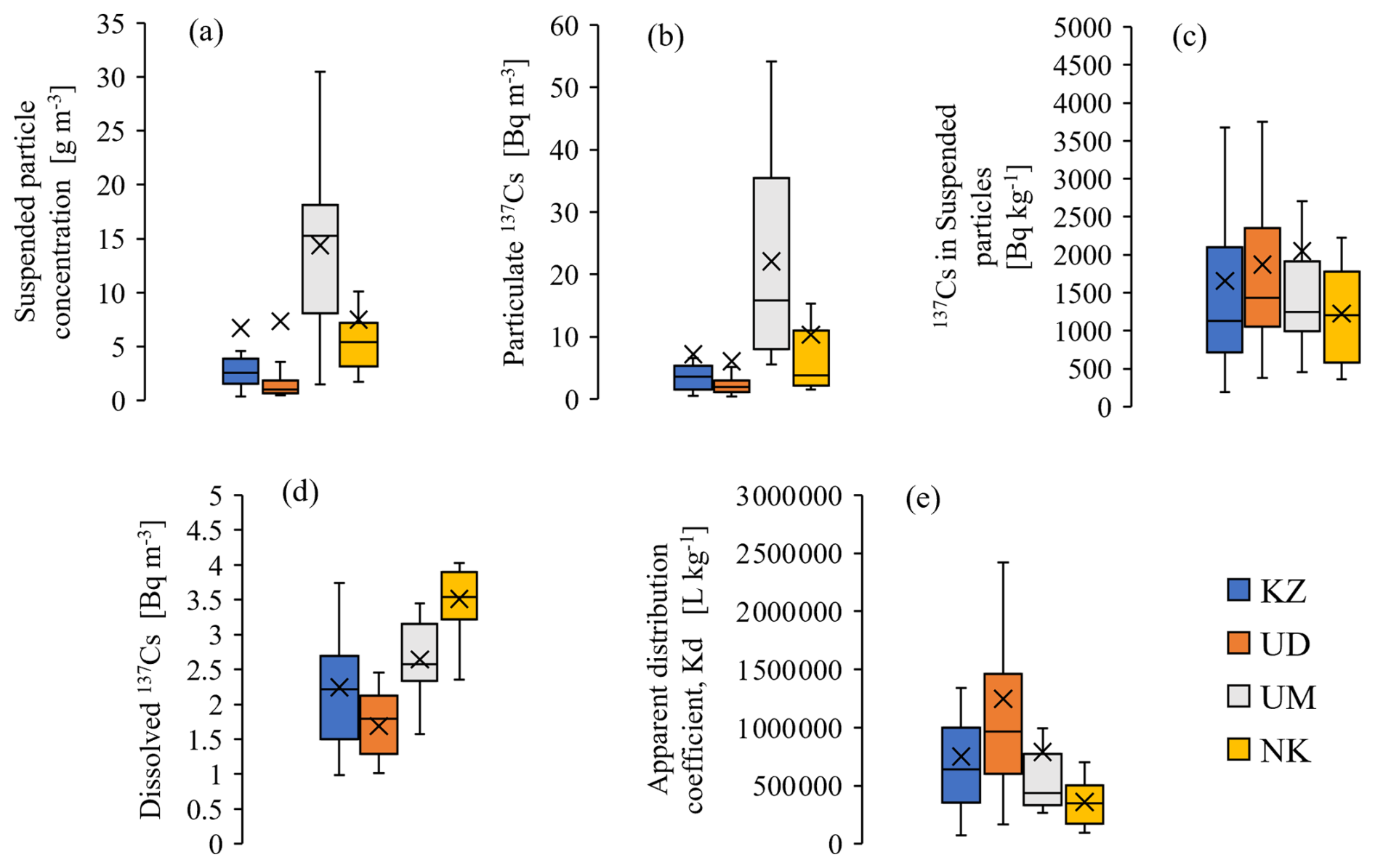
Figure 3Water conditions in the four inflowing rivers: (a) suspended particle concentration, (b) particulate 137Cs concentration, (c) 137Cs concentration in suspended particles, (d) dissolved 137Cs concentration, and (e) the distribution coefficient (Kd). Box plots represent the median and interquartile values, and the whiskers show the minimum and maximum values. Cross marks represent the arithmetic means of the results.
3.1 137Cs concentrations in river waters
Suspended particle concentrations (SPc; g m−3), particulate 137Cs concentrations (137Cspar; Bq m−3), 137Cs concentrations in suspended particles (137Cssp; Bq kg−1-dry), dissolved 137Cs concentrations (137Csdis; Bq m−3), and apparent distribution coefficients (Kd; L kg−1) in the rivers flowing into the lagoon from 2021 to 2023 are shown in Fig. 3. All riverine 137Cs measurements, related parameters, and time series of 137Cspar and 137Cdis are summarized in Table S2 and Fig. S1 in the Supplement.
The mean SPc were 6.7, 7.3, 14.4, and 7.5 g m−3 in Koizumi, Uda, Ume, and Nikkeshi Rivers, with respective median values of 2.5, 1.0, 15, and 5.4 g m−3 (Fig. 3a). The mean values were markedly higher than the median values because samples collected during a heavy rainfall event in August 2022 increased the mean. SPc in the Ume River was relatively high compared to those in the other three rivers; this was likely due to the reduced forest floor coverage in the Ume catchment (Table S1), which is known to enhance soil erosion (Nishikiori et al., 2015). Similarly, the median 137Cspar values in the Koizumi, Uda, Ume, and Nikkeshi Rivers were 3.0, 2.0, 16, and 3.7 Bq m−3, respectively (Fig. 3b). Because increased SPc is associated with increased 137Cspar (Ueda et al., 2013), and both tend to increase during high-flow conditions (Nagao et al., 2013; Niida et al., 2022), the higher 137Cspar in the Ume River can be attributed to its higher SPc in the river water. The mean 137Cssp in the Koizumi, Uda, Ume, and Nikkeshi Rivers were 1656, 1871, 2048, and 1224 Bq kg−1, respectively (Fig. 3c). Although the mean inventory of deposited 137Cs in the Uda catchment was two to three times higher than those in the other catchments, the mean 137Cssp in the Uda River was less than twice those in the other rivers. The mean 137Csdis in the Koizumi, Uda, Ume, and Nikkeshi Rivers were 2.2, 1.7, 2.6, and 3.5 Bq m−3, respectively (Fig. 3d). The Uda River showed the lowest 137Csdis among the four rivers, similar to the distribution reported previously (Takata et al., 2022). Previous studies reported that 137Csdis in river water is higher in summer and lower in winter (Igarashi et al., 2022), such a seasonal trend was not observed in this study (Fig. S1).
In catchments with high 137Cs inventories, both 137Cssp and the 137Csdis in the rivers tended to be high. However, this relationship is influenced by multiple factors including topography, vegetation, rainfall patterns, and soil properties; therefore, the relationship between the 137Cs concentration in soils and those in riverine particles or dissolved is not necessarily proportional. In downstream areas of catchments such as the Uda River, where soil 137Cs concentrations are high in upstream areas and low in downstream areas, high 137Cssp and 137Csdis transported from the upstream area through the river may be diluted by downstream river waters containing less 137Cs (Yamashiki et al., 2014).
Kd values ranged from 7.2×10⁴ to 3.7×10⁶ L kg−1 (Fig. 3e), similar to those of rivers elsewhere in Fukushima Prefecture between 2011 and 2014, which ranged from 7.7×10⁴ to 1.4×10⁶ L kg−1 (Taniguchi et al., 2019).
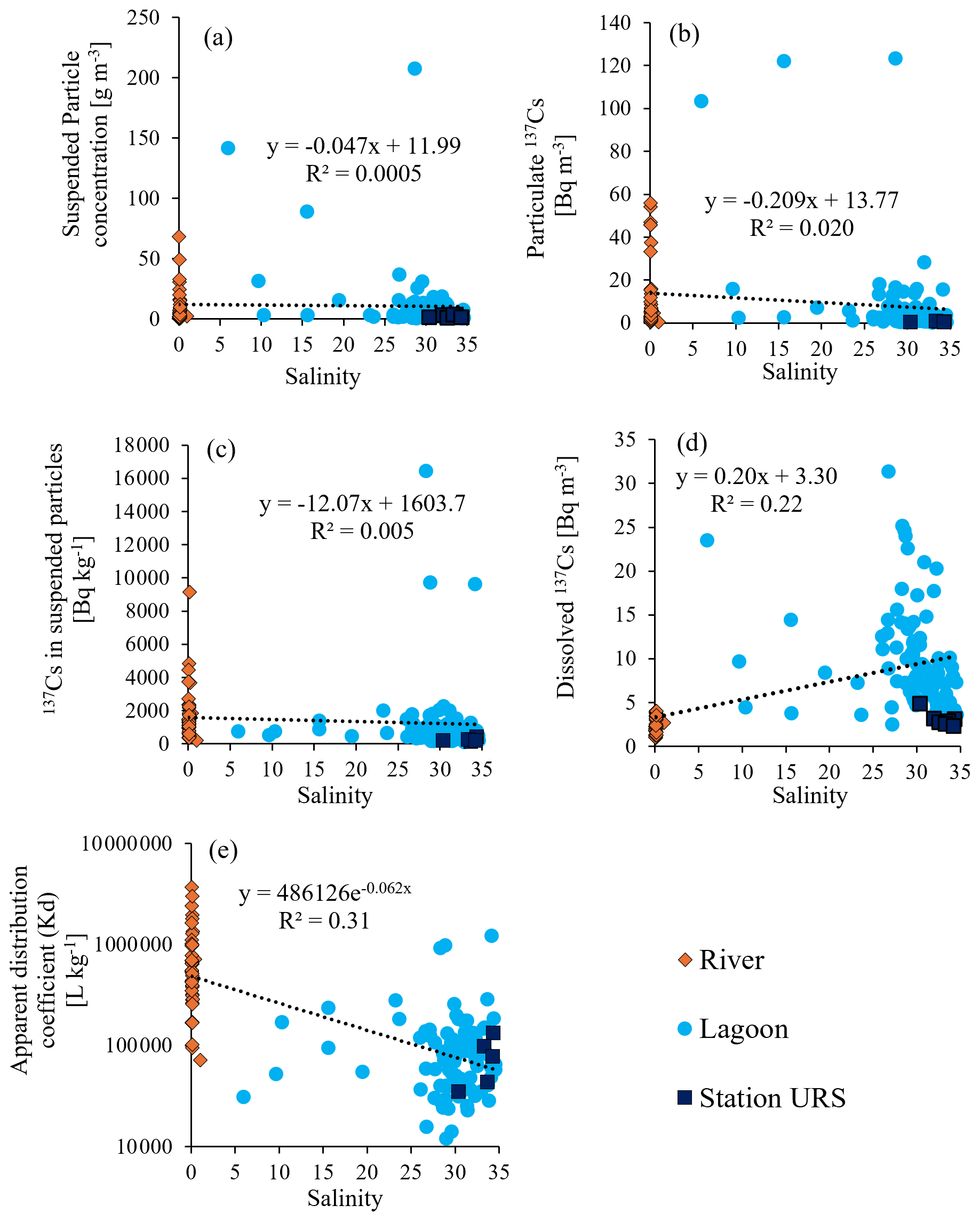
Figure 4Suspended particle concentration (a), particulate 137Cs concentration (b), 137Cs concentration in suspended particles (c), dissolved 137Cs concentration (d), and apparent distribution coefficient (Kd) (e) plotted against salinity in Matsukawa-ura lagoon.
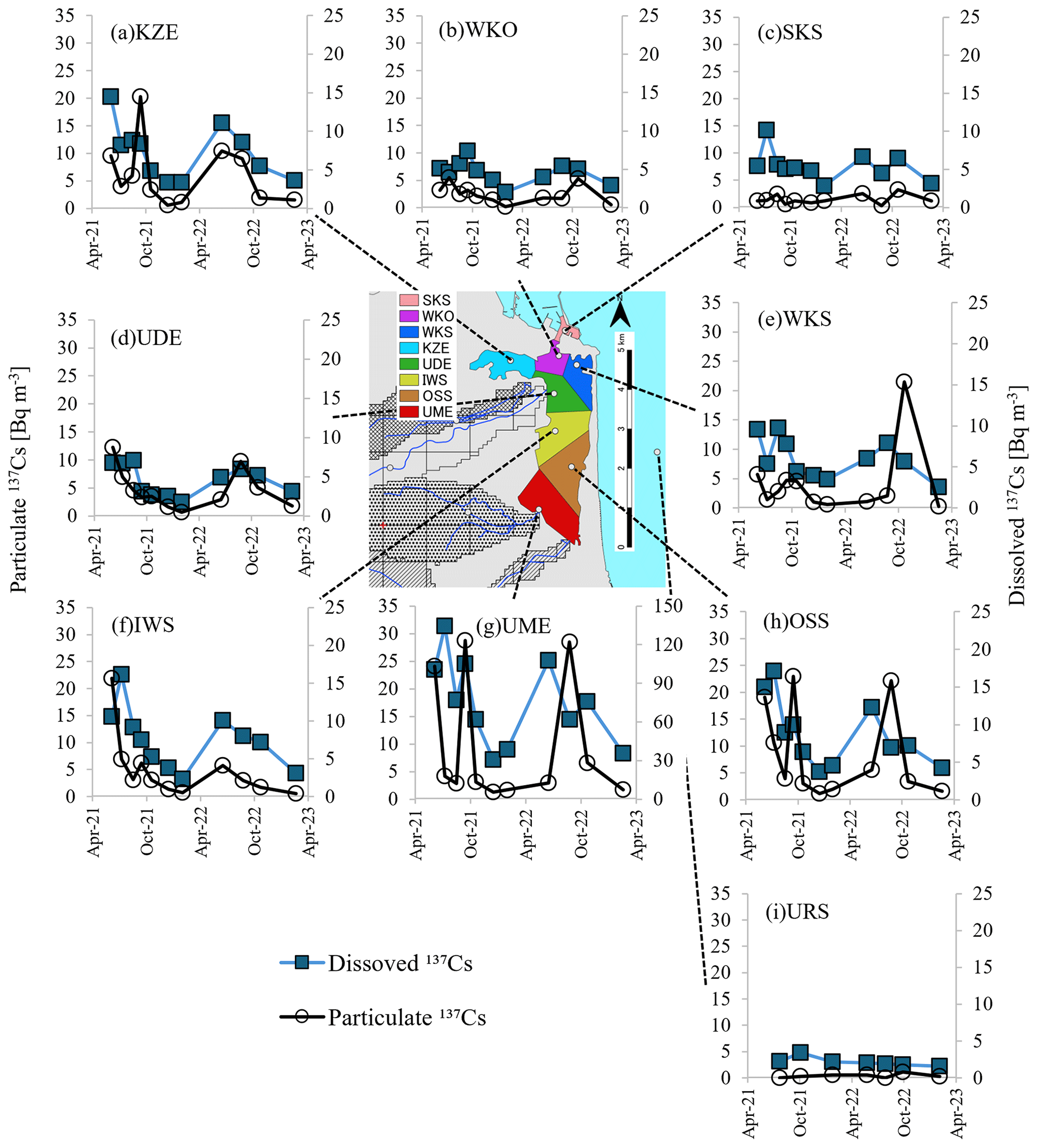
Figure 5Time series of dissolved 137Cs and particulate 137Cs concentration in Matsukawa-ura lagoon. 137Cs concentrations were decay-corrected to the sampling date.
3.2 137Cs Concentrations in Matsukawa-ura lagoon
3.2.1 Changes in parameters due to salinity
The relationships among SPc, 137Cspar, 137Cssp, 137Csdis, Kd, and salinity in rivers, Matsukawa-ura lagoon, and the nearshore area (Station URS) are shown in Fig. 4. In addition, time series of 137Cspar and 137Cdis at each sampling station in the lagoon and the nearshore area are shown in Fig. 5. The mean salinity in the lagoon during the study period was 29.1. All 137Cs concentrations and related parameters in the lagoon and coastal seawater (station URS) are summarized in Tables S3 and S4.
The mean and median SPc in the lagoon were 10.8 and 3.2 g m−3, respectively (range 0.3–208 g m−3). The mean and median 137Cspar were 8.1 and 2.3 Bq m−3, respectively (range 0.1–123 Bq m−3). The mean and median 137Cssp were 1111 and 631 Bq kg−1, respectively (range 100–16 434 Bq kg−1). The mean and median 137Csdis in the lagoon were 9.9 and 8.2 Bq m−3, respectively (range 2.5–31.3 Bq m−3). The Kd values tended to decrease with increasing salinity (Fig. 4e). A previous study reported that SPc, 137Cspar and 137Cssp tend to decrease with increasing salinity (Takata et al., 2022), possibly due to the dilution, coagulation, and settling of suspended particles along the salinity gradient as well as dilution by seawater with low 137Cs concentrations, although no clear relationships were observed in this study (Fig. 4a, b, c).
In contrast to 137Cspar and 137Cssp, 137Csdis were higher in the lagoon than in the four inflowing rivers. 137Csdis also tended to increase with increasing salinity (Fig. 4d), reaching a maximum at salinities of 25–30, and then decreasing at salinities above 30. This trend implies that the 137Csdis in the lagoon temporarily increases due to desorption of particulate 137Cs from the rivers (Takata et al., 2020a) and the supply of dissolved 137Cs from pore water in bottom sediments (Kambayashi et al., 2021; Takata et al., 2022) while it is also diluted by the large amount of coastal seawater that flows into the lagoon. However, the large variation of 137Csdis at salinities of 25–30 (2.5–31.3 Bq m−3) may be due to seasonality and differences between sampling sites. 137Csdis tended to decrease to the north and in proximity to the mouth of the lagoon, being highest at station UME, OSS and IWS on the south side of the lagoon (Figs. 1b, 5f–h, respectively). The spatial pattern suggested increasing mixing with coastal seawater containing low 137Csdis near the lagoon mouth, such as at stations WKS, WKO and SKS (Figs. 1b, 5b, c and e, respectively). It has been reported that some of the radiocesium adsorbed to suspended particles flowing into the ocean is desorbed from the suspended particles due to competition with ionic species such as K+ and NH and converted to dissolved 137Cs, resulting in a decrease in Kd (Takata et al., 2020a, 2021). Similar trends were observed in this study. 137Csdis at each station in the lagoon tended to be higher in summer and lower in winter, which contrasts with the trend observed in the rivers (Figs. 5 and S1). The next section discusses the seasonal variation of 137Csdis in the lagoon and its relationship with water temperature.
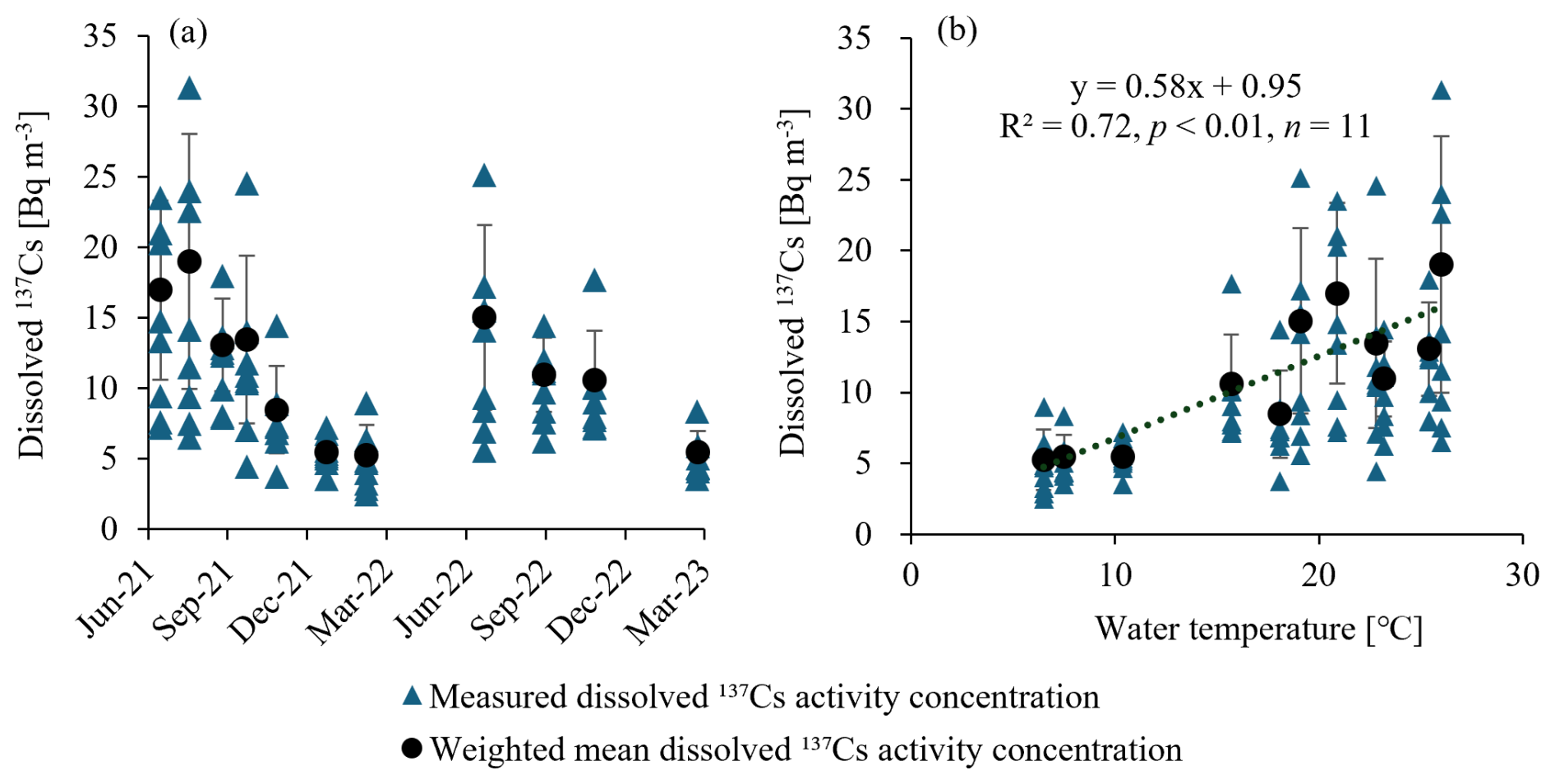
Figure 6Time series of dissolved 137Cs concentrations (a) and dissolved 137Cs concentrations versus water temperature (b) in Matsukawa-ura lagoon from June 2021 to February 2023. Black bars represent the standard deviation of the dissolved 137Cs concentrations on each sampling date.
3.2.2 Seasonal variation of dissolved 137Cs in the lagoon
The time series of 137Csdis in the lagoon are shown in Fig. 6a and the relationship between 137Csdis and water temperature in Fig. 6b.
The weighted mean 137Csdis in the lagoon on each sampling date ranged from 5.3–19.0 Bq m−3, which is 2.4–8.6 times higher than that in coastal seawater. The corresponding values in coastal seawater ranged from 2.2–4.8 Bq m−3, collected at station URS during the same period. The 137Csdis in the lagoon tended to be higher in summer and lower in winter (Fig. 6a) and showed a significant correlation with water temperature (Fig. 6b). The water depth of Matsukawa-ura lagoon is very shallow, and it has been indicated that about half of the water is exchanged during a single tidal cycle under spring tide conditions (Kohata et al., 2003). For simplicity in clarifying the seasonality of 137Csdis in the lagoon, we used the mean 137Csdis among several sampling representative sampling stations which could represent the 137Csdis levels in the area of the lagoon. For example, in February 2022 and 2023, 137Csdis ranged from 2.5–9.0 and from 3.5–8.3 Bq m−3, respectively, with weighted means of 5.3 and 5.5 Bq m−3. In contrast, the weighted mean 137Csdis values in June 2022 and 2023 were 17.0 and 15.0 Bq m−3, respectively, which are approximately three times higher than the winter values. These results suggest that seasonal variations are more influential than spatial variability in concentrations within the lagoon.
Previous studies revealed that water temperature influences the adsorption and desorption of 137Cs between solutions and particles with high affinity, such as clay minerals having “frayed-edge-sites” (FeS). Tertre et al. (2005) evaluated the effect of temperature on Cs+ behavior at low ionic strength under neutral conditions and reported that Kd decreases by a factor of 3 between 25 and 150 °C. Furthermore, Igarashi et al. (2022) reported a relationship between the Kd value of radiocesium and water temperature in the midstream catchment of the Abukuma River, which flows through Fukushima Prefecture; they suggested that Kd decreases as water temperature increases. In addition, Nagao et al. (2020) reported that 0.1 % of 137Cs was desorbed from sand samples in ultrapure water; 3.7 % in a 25 % seawater solution; 7.1 % in a 50 % seawater solution; and 10 %–12 % in 100 % seawater, in artificial seawater, and in a 470 mM NaCl + 8 mM KCl solution. These results indicate that the desorption of 137Cs is likely to be largely completed at a salinity equivalent to that of a 50 % seawater solution. In Matsukawa-ura lagoon (average salinity is 29.1), where the study was conducted, the desorption of 137Cs by ion exchange in seawater was largely complete, implying that the effect of water temperature is likely more important than that of salinity in the adsorption and desorption process of 137Cs in seawater.
In the following section, we apply a simplified box-model estimate approach to analyze the sources of dissolved 137Cs in the lagoon and compare the contributions of river inputs against the supply from lagoon bottom.
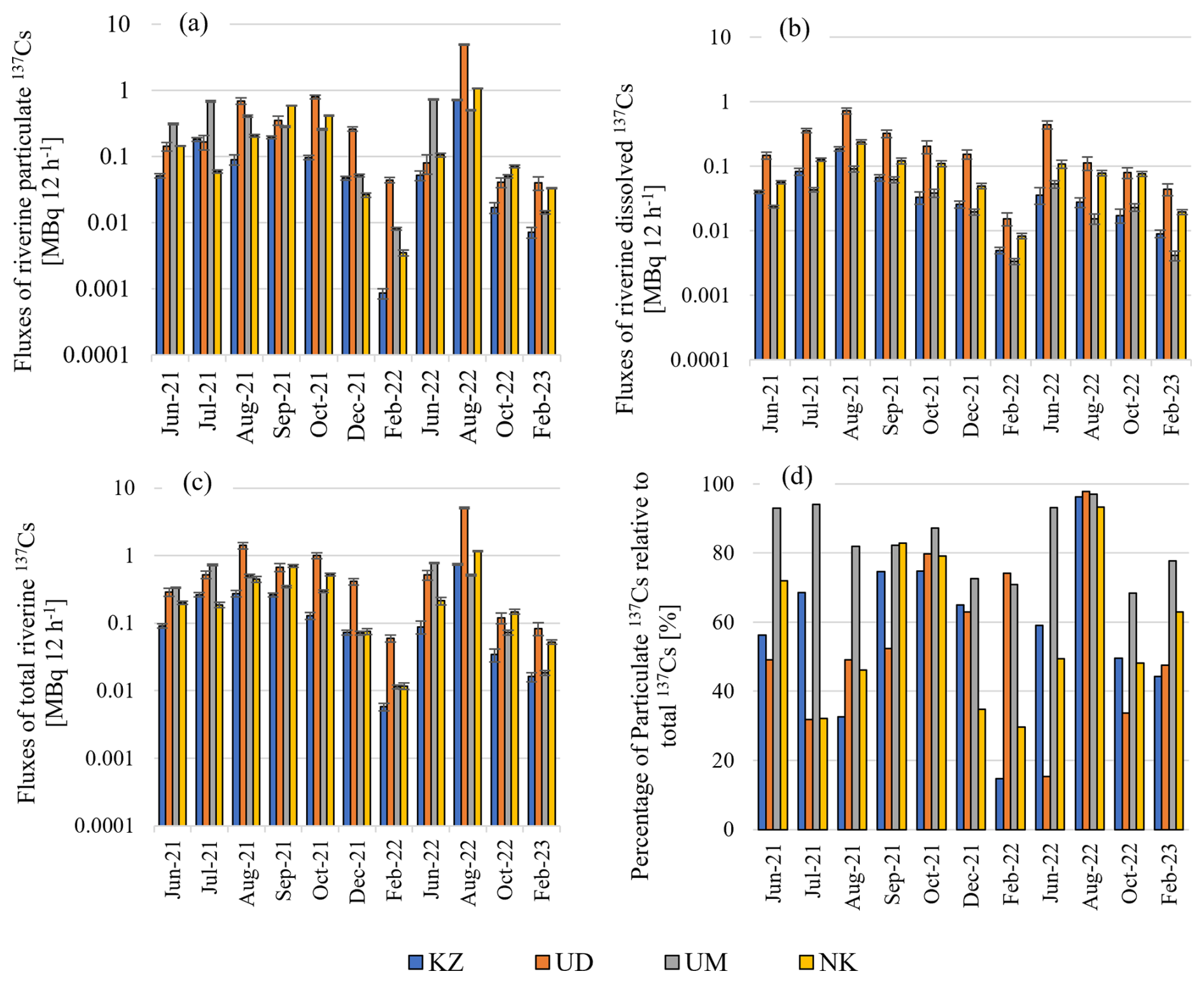
Figure 7Fluxes of riverine particulate 137Cs (a), dissolved 137Cs (b) and total 137Cs (c) in each river. Proportion of particulate 137Cs flux in the total 137Cs flux (d). Black bars represent the measurement error of 137Cs.
3.2.3 Simplified box-model and seasonal variations in dissolved 137Cs flux
The fluxes of 137Cs from each river into the lagoon are shown in Fig. 7. The mean fluxes of particulate 137Cs from each river to the lagoon during the sampling campaign were 0.13, 0.69, 0.30 and 0.25 MBq 12 h−1 for Koizumi, Uda, Ume and Nikkeshi Rivers, respectively. The mean fluxes of dissolved 137Cs from each river were 0.048, 0.24, 0.034 and 0.090 MBq 12 h−1 for Koizumi, Uda, Ume and Nikkeshi Rivers, respectively. The total flux (Particulate and dissolved 137Cs) from Uda Rivers, which had lower 137Cspar and 137Csdis than the other three rivers (Fig. 3b, d), was nevertheless the largest among the four rivers (Fig. 7c). This is because the water discharge of the Uda River is several times higher than that of the other three rivers (Table S1). The mean proportion of particulate 137Cs in the total flux was about 50 %–60 % in all except the Ume River. However, during high-flow conditions in August 2022, particulate 137Cs accounted for more than 90 % of the total flux in all rivers (Fig. 7d), as reported in previous studies (Nagao et al., 2013; Yamashiki et al., 2014; Niida et al., 2022). The total 137Cs flux from the four rivers ranged from 0.06 to 7.24 MBq 12 h−1, while the total dissolved 137Cs flux ranged from 0.03 to 1.23 MBq 12 h−1. In addition, assuming that 5.5 % of riverine particulate 137Cs is desorbed to dissolved 137Cs through the desorption process after entering the lagoon (Takata et al., 2021), it was estimated that 0.003 to 0.40 MBq 12 h−1 was supplied to the dissolved phase by desorption from particulate 137Cs.
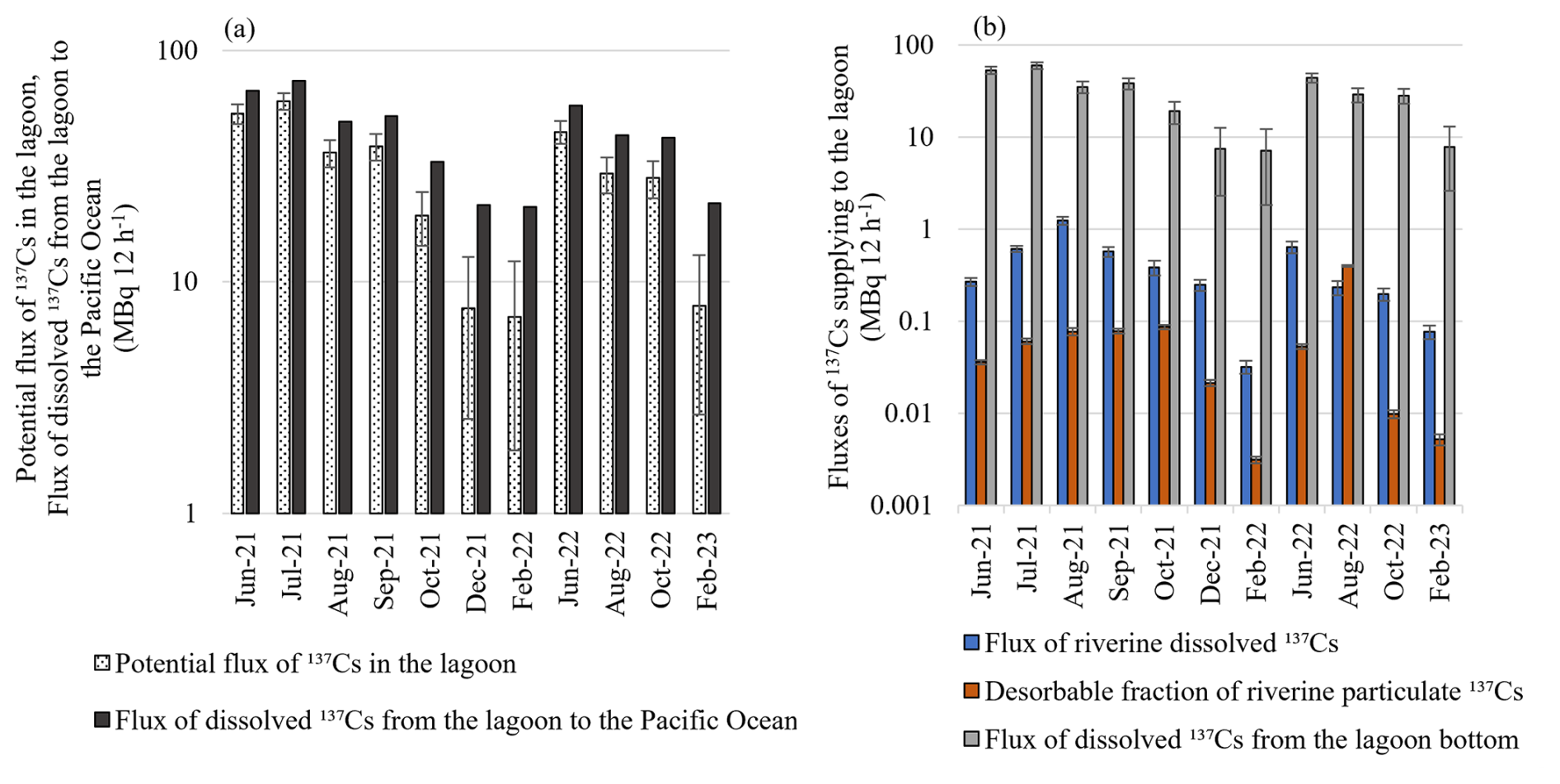
Figure 8Potential fluxes of dissolves 137Cs supplied to Matsukawa-ura lagoon and fluxes of dissolved 137Cs from the lagoon to the Pacific Ocean (a). Fluxes of dissolved 137Cs supplied to the lagoon from the rivers, desorbed from riverine particles and the lagoon bottom in the lagoon (b). Black bars represent the measurement error of 137Cs.
Because the lagoon exhibits strong spatial heterogeneity in dissolved 137Cs concentrations, a strict mass balance for the entire lagoon cannot be established with the present dataset. Therefore, the following calculation is intended as a simplified, first-order estimate to evaluate the relative magnitude of the major source rather than a strict mass balance. The potential fluxes of dissolved 137Cs supplied to the lagoon and the flux of dissolved 137Cs exported from the lagoon to the Pacific Ocean are shown in Fig. 8a. Fluxes of dissolved 137Cs supplied to the lagoon from the rivers, desorbed from riverine particles and supplied from the lagoon bottom are shown in Fig. 8b. Details of the calculation results are shown in Table S5. The mean water depth at the station WKO, located at the mouth of the lagoon, was 1.9 m, with a maximum of 2.2 m and a minimum of 1.7 m, and the difference between the maximum and minimum values was about 50 cm (Fig. S2). Therefore, the exchange volume in the lagoon was assumed to be constant throughout the year, making it possible to compare seasonal variations. The weighted mean 137Csdis in the lagoon during the study period was 5.3–19.0 Bq m−3, whereas the 137Csdis in the nearshore seawater outside the lagoon (station URS) during the same period was 2.2–4.8 Bq m−3. This result indicates that processes within the lagoon increased 137Csdis by up to 0.5–16.8 Bq m−3 after seawater entered the lagoon. Accordingly, the maximum estimated input of dissolve 137Cs to the lagoon was 1.9–65.4 MBq 12 h−1 (Fig. 8a). The fluxes of dissolved and desorbed 137Cs from the rivers were 0.03–1.23 and 0.003–0.40 MBq 12 h−1, respectively, whereas the dissolved 137Cs flux supplied from lagoon bottom was 1.8–64.7 MBq 12 h−1, which is much greater than the riverine input. The 137Csdis in groundwater collected in the lagoon catchment in 2015–2016 were below 9.7 Bq m−3 (Kambayashi et al., 2021), suggesting that the supply of dissolved 137Cs via pure groundwater should be low. Therefore, the supply of dissolved 137Cs from bottom sediments is likely much greater than that from rivers. These results imply that continuous 137Cs input from the terrestrial areas is unlikely to contribute to the spatiotemporal variability of dissolved 137Cs concentrations. Kambayashi et al. (2021) measured the 137Cs concentration in pore water in sediments of Matsukawa-ura lagoon in 2016 and estimated the flux from the sediments to be 139–293 MBq d−1, suggesting that the supply of dissolved 137Cs from bottom sediments may account for 93 %–95 % of the supply of 137Csdis to Matsukawa-ura lagoon. However, our estimates show that the supply of dissolved 137Cs from lagoon bottom may account for more than 96 %. Thus, as more time passes since the accident and riverine inputs of 137Cs decrease due to decontamination in the catchments, the relative contribution from bottom sediments is expected to increase.
The supply of dissolved 137Cs from bottom sediments was higher in summer and lower in winter (Fig. 8b), consistent with the seasonal variation in 137Csdis in the lagoon. This seasonal pattern may be attributed to a decrease in the distribution coefficient between particulate and dissolved 137Cs with increasing water temperature (Tertre et al., 2005), as discussed in Sect. 3.2.2. In addition, Tsuji et al. (2022) investigated the effects of water temperature, dissolved oxygen, and NH on the desorption of 137Cs from lake sediments at Yokokawa Dam, Fukushima Prefecture, and reported that higher water temperatures stimulate bacterial decomposition of organic matter, while elevated concentrations in pore water under anaerobic conditions enhance the desorption of 137Cs from mineral particles. Because 137Cs bound to clay minerals is more readily exchanged with than with K+ (Wauters et al., 1996), not only the temperature-dependent decrease in the distribution coefficient but also the production of under warm and anaerobic summer conditions may promote the desorption of 137Cs from bottom sediments in coastal environments, thereby supplying 137Cs to the overlying seawater by tidal pumping.
In this study, the fluxes of dissolved 137Cs supplied to the lagoon from rivers and bottom sediments were estimated to be 14.3–65.4 MBq 12 h−1 from June to October and 1.9–13.1 MBq 12 h−1 from December to February. Niida et al. (2022) estimated the fluxes of 137Cs exported to the Pacific Ocean during 27–29 July 2020, when the total rainfall was approximately 80 mm, were 107, 120 and 109 MBq in the Niida, Ukedo and Takase River catchment. These rivers and their catchments are located closer to FDNPP than Matsukawa-ura and have a much higher 137Cs inventories (853, 2359, and 701 kBq m−2). These fluxes are comparable to the estimated daily flux of dissolved 137Cs exported from Matsukawa-ura into the Pacific Ocean during summer. In contrast, based on the results of a survey conducted by Naulier et al. (2017) in October 2014, the fluxes of dissolved 137Cs exporting to the Pacific Ocean from Mano, Niida, and Ota River, which are located in northern Fukushima Prefecture, were calculated to be 10.7, 15.1, and 9.3 MBq 12 h−1, respectively. These comparisons indicate that the impact of dissolved 137Cs export from Matsukawa-ura lagoon to coastal waters is relatively large in summer. Based on our results, we conclude that 137Cs in bottom sediments, deposited during the early stages of FDNPP accident, gradually dissolves when pore waters are exposed to seawater entering the lagoon, and that warmer seawater temperatures during the summer may further accelerate the dissolution process. This mechanism likely plays an important role in the spatiotemporal redistribution of 137Cs in the coastal waters of Fukushima Prefecture.
We investigated the spatial and seasonal dynamics of 137Cs in Matsukawa-ura lagoon, a semi-enclosed estuarine system located approximately 40 km north of the Fukushima Daiichi Nuclear Power Plant, Japan. Dissolved 137Cs concentrations in the lagoon were higher than those in river water flowing into the lagoon and in adjacent coastal seawater, indicating the influence of desorption from suspended sediments associated with increasing salinity. In addition, dissolved 137Cs concentrations in the lagoon were higher in summer and lower in winter, demonstrating a clear influence of water temperature.
Quantification of source contributions using a simplified box-model estimate approach revealed that the supply of dissolved 137Cs from bottom sediments was much greater than that from rivers and suspended sediments. These results indicate that continuous terrestrial inputs of 137Cs are unlikely to control the spatiotemporal variability of dissolved 137Cs concentrations in the lagoon. Instead, we conclude that 137Cs deposited in bottom sediments during the early stage of the Fukushima Daiichi Nuclear Power Plant accident is gradually released as pore waters are exposed to seawater entering the lagoon. Moreover, higher summer seawater temperatures likely accelerate the release of 137Cs from bottom sediments.
The daily flux of dissolved 137Cs exported from Matsukawa-ura lagoon to the Pacific Ocean during summer is comparable to the flux exported from major rivers in Fukushima Prefecture under high-flow conditions. This finding indicates that, to better understand the causes of elevated dissolved 137Cs concentrations in coastal waters of Fukushima Prefecture, it is essential to strengthen monitoring of bottom sediments and pore waters, particularly in estuaries and coastal areas, in order to clarify the dynamics and impacts of 137Cs released from sediments. Future studies should further investigate the relationships between 137Cs concentrations in bottom sediments and pore waters in estuarine and coastal environments, with particular attention to seasonal variations in water temperature as well as water quality.
No custom code was developed for this study. Spatial analyses, including Voronoi partitioning and area calculations, were performed using QGIS (version 3.40). QGIS is open-source software and is available at https://qgis.org (last access: 2 April 2025).
The data supporting the findings of this study are available within the article and its Supplement.
The supplement related to this article is available online at https://doi.org/10.5194/bg-23-3591-2026-supplement.
The manuscript was written through contributions of all authors. All authors have given approval to the final version of the manuscript.
The contact author has declared that none of the authors has any competing interests.
Publisher's note: Copernicus Publications remains neutral with regard to jurisdictional claims made in the text, published maps, institutional affiliations, or any other geographical representation in this paper. The authors bear the ultimate responsibility for providing appropriate place names. Views expressed in the text are those of the authors and do not necessarily reflect the views of the publisher.
We are grateful to researchers of the Fukushima Prefectural Research Institute of Fisheries Resources for their cooperation during sampling.
This research is an achievement of “Stabilizing resources through effective release of seedlings using ICT infrastructure” (grant nos. JPFR23060109, JPFR24060109, JPFR25060109) among advanced technology development projects in the field of agriculture, forestry and fisheries (Fukushima Institute for Research, Education and Innovation (F-REI)).
This paper was edited by Tina Treude and reviewed by two anonymous referees.
Aoyama, M., Uematsu, M., Tsumune, D., and Hamajima, Y.: Surface pathway of radioactive plume of TEPCO Fukushima NPP1 released 134Cs and 137Cs, Biogeosciences, 10, 3067–3078, https://doi.org/10.5194/bg-10-3067-2013, 2013.
Aoyama, M., Kajino, M., Tanaka, T. Y., Sekiyama, T. T., Tsumune, D., Tsubono, T., Hamajima, Y., Inomata, Y., and Gamo, T.: 134Cs and 137Cs in the North Pacific Ocean derived from the TEPCO Fukushima Dai-ichi Nuclear Power Plant accident, Japan in March 2011. Part Two: estimation of 134Cs and 137Csinventories in the North Pacific Ocean, J. Oceanogr., 72, 67–76, https://doi.org/10.1007/s10872-015-0332-2, 2016.
Arita, K., Yabe, T., and Hayashi, S.: Actual situation of concentration and inventory of radioactive cesium in Matsukawa-ura Lagoon sediment, Fukushima Prefecture, J. Jpn. Soc. Civ. Eng. Ser. G (Environ. Res.), 70, III_225–III_231, https://doi.org/10.2208/jscejer.70.III_225, 2014 (in Japanese with English abstract).
Fukushima Prefecture Webpage: https://www.pref.fukushima.lg.jp/uploaded/attachment/738356.pdf, last access: 30 June 2024.
IAEA: Sediment Distribution Coefficients and Concentration Factors for Biota in the Marine Environment, Technical Reports Series No. 422, International Atomic Energy Agency, Vienna, Austria, https://www-pub.iaea.org/MTCD/Publications/PDF/TRS422_web.pdf (last access: 30 June 2024), 2004.
Igarashi, Y., Nanba, K., Wada, T., Wakiyama, Y., Onda, Y., Moritaka, S., and Konoplev, A.: Factors controlling the dissolved 137Cs seasonal fluctuations in the Abukuma river under the influence of the Fukushima nuclear power plant accident, J. Geophys. Res.-Biogeo., 127, e2021JG006591, https://doi.org/10.1029/2021JG006591, 2022.
Ministry of Education, Culture, Sports, Science and Technology: Results of the Fourth Airborne Monitoring Survey by MEXT, HYPERLINK https://radioactivity.nsr.go.jp/en/contents/4000/3179/24/1270_1216.pdf (last access: 30 June 2024), 2011.
Kambayashi, S., Zhang, J., and Narita, H.: Significance of Fukushima-derived radiocaesium flux via river-estuary-ocean system, Sci. Total Environ., 793, 148456, https://doi.org/10.1016/j.scitotenv.2021.148456, 2021.
Kamo, T., Suzuki, M., Wada, T., Iwasaki, T., Watanabe, T., Nishi, R., and Tsurunari, Y.: Estimation of freshwater discharge and field observation on aquatic environment around the entrance of Matsukawaura inlet, J. Jpn. Soc. Civ. Eng. Ser. B3 Ocean. Eng., 70, I_1020–I_1025, https://doi.org/10.2208/jscejoe.70.I_1020, 2014. (in Japanese with English abstract)
Kohata, K., Hiwatari, T., and Hagiwara, T.: Natural water-purification system observed in a shallow coastal lagoon: Matsukawa-ura, Japan. Mar. Pollut. Bull., 47, 148–154, https://doi.org/10.1016/S0025-326X(03)00055-9, 2003.
Kusakabe, M. and Takata, H.: Temporal trends of 137Cs concentration in seawaters and bottom sediments in coastal waters around Japan: implications for the Kd concept in the dynamic marine environment, J. Radioanal. Nucl. Chem., 323, 567–580, https://doi.org/10.1007/s10967-019-06958-z, 2020.
Li, Y.-H., Burkhardt, L., and Teraoka, H.: Desorption and coagulation of trace elements during estuarine mixing. Geochim. Cosmochim. Ac., 48, 1879–1884, https://doi.org/10.1016/0016-7037(84)90371-5, 1984.
Machida, M., Yamada, S., Iwata, A., Otosaka, S., Kobayashi, T., Watanabe, M., Funasaka, H., and Morita, T.: Seven-year temporal variation of Cesium-137 discharge inventory from the port of Fukushima Dai-ichi Nuclear Power Plant, Trans. At. Energy Soc. Japan., 18, 226–236, https://doi.org/10.3327/taesj.J18.030, 2019 (in Japanese with English abstract).
Nagao, S., Kanamori, M., Ochiai, S., Tomihara, S., Fukushi, K., and Yamamoto, M.: Export of 134Cs and 137Cs in the Fukushima river systems at heavy rains by Typhoon Roke in September 2011, Biogeosciences, 10, 6215–6223, https://doi.org/10.5194/bg-10-6215-2013, 2013.
Nagao, S., Terasaki, S., Ochiai, S., Fukushi, K., Tomihara, S., Charette, M. A., and Buesseler, K. O.: Desorption Behavior of Fukushima-derived Radiocesium in Sand Collected from Yotsukura Beach in Fukushima Prefecture, Anal. Sci., 36, 569–573, https://doi.org/10.2116/analsci.19SBP08, 2020.
Naulier, M., Eyrolle-Boyer, F., Boyer P., Metivier, J. M., and Onda, Y.: Particulate organic matter in rivers of Fukushima: An unexpected carrier phase for radiocesiums, Sci. Total Environ., 579, 1560–1571, https://doi.org/10.1016/j.scitotenv.2016.11.165, 2017.
Niida, T., Wakiyama, Y., Takata, H., Taniguchi, K., Kurosawa, H., Fujita, K., and Konoplev, A.: A comparative study of riverine 137Cs dynamics during highflow events at three contaminated river catchments in Fukushima, Sci. Total Environ., 821, 153408, https://doi.org/10.1016/j.scitotenv.2022.153408, 2022.
Nishikiori, T., Ito, S., Tsuji, H., Yasutaka, T., and Hayashi, S.: Influence of Forest Floor Covering on Radiocesium Wash-off Associated with Forest Soil Erosion, J. Jpn. For. Soc., 97, 63–69, https://doi.org/10.4005/jjfs.97.63, 2015 (in Japanese with English abstract).
Noda, T., Wada, T., Mitamura, H., Kume, M., Komaki, T., Fujita, T., Sato, T., Narita, K., Yamada, M., Matsumoto, A., Hori, T., Takagi, J., Kutzer, A., Arai, N., and Yamashita, Y.: Migration, residency and habitat utilisation by wild and cultured Japanese eels (Anguilla japonica) in a shallow brackish lagoon and inflowing rivers using acoustic telemetry, J. Fish Biol., 98, 507–525, https://doi.org/10.1111/jfb.14595, 2021.
Otosaka, S., Kambayashi, S., Fukuda, M., Tsuruta, T., Misonou, T., Suzuki, T., and Aono, T.: Behavior of radiocesium in sediments in Fukushima coastal waters: verification of desorption potential through pore water, Environ. Sci. Technol., 54, 13778–13785, https://doi.org/10.1021/acs.est.0c05450, 2020.
Suzuki, S., Amano, Y., Enomoto, M., Matsumoto, A., Morioka, Y., Sakuma, K., Tsuruta, T., Kaeriyama, H., Miura, H., Tsumune, D., Kamiyama, K., Wada, T., and Takata, H.: Temporal variability of 137Cs concentrations in coastal sediments off Fukushima, Sci. Total Environ., 831, 154670, https://doi.org/10.1016/j.scitotenv.2022.154670, 2022.
Takata, H., Aono, T., Aoyama, M., Inoue, M., Kaeriyama, H., Suzuki, S., Tsuruta, T., Wada, T., and Wakiyama, Y.: Suspended particle–water interactions increase dissolved 137Cs activities in the nearshore seawater during typhoon Hagibis, Environ. Sci. Technol., 54, 10678–10687, https://doi.org/10.1021/acs.est.0c03254, 2020a.
Takata, H., Inatomi, N., and Kudo, N.: The contribution of 137Cs export flux from the Tone River Japan to the marine environment, Sci. Total Environ., 701, 134550, https://doi.org/10.1016/j.scitotenv.2019.134550, 2020b.
Takata, H., Wakiyama, Y., Niida, T., Igarashi, Y., Konoplev, A., and Inatomi, N.: Importance of desorption process from Abukuma River's suspended particles in increasing dissolved 137Cs in coastal water during river-flood caused by typhoons, Chemosphere, 281, 130751, https://doi.org/10.1016/j.chemosphere.2021.130751, 2021.
Takata, H., Wada, T., Aono, T., Inoue, M., Kanasashi, T., Suzuki, S., and Amano, Y.: Factors controlling dissolved 137Cs activities in coastal waters on the eastern and western sides of Honshu, Japan, Sci. Total Environ., 806, 151216, https://doi.org/10.1016/j.scitotenv.2021.151216, 2022.
Taniguchi, K., Onda, Y., Smith, H. G., Blake, W., Yoshimura, K., Yamashiki, Y., Kuramoto, T., and Saito, K.: Transport and redistribution of radiocaesium in Fukushima fallout through rivers, Environ. Sci. Technol., 53, 12339–12347, https://doi.org/10.1021/acs.est.9b02890, 2019.
Tertre, E., Berger, G., Castet, S., Loubet, M., and Giffaut, E.: Experimental sorption of Ni, Cs+ and Ln onto a montmorillonite up to 150 °C, Geochim. Cosmochim. Ac., 69, 4937–4948, https://doi.org/10.1016/j.gca.2005.04.024, 2005.
Tsuji, H., Funaki, H., Watanabe, M., and Hayashi, S.: Effects of temperature and oxygen on 137Cs desorption from bottom sediment of a dam lake, Appl. Geochem., 140, 105303, https://doi.org/10.1016/j.apgeochem.2022.105303, 2022.
Tsuji, H., Nishikiori, T., Ito, S., Ozaki, H., Watanabe, M., Sakai, M., Ishii, Y., and Hayashi, S.: Influential factors of long-term and seasonal 137Cs change in agricultural and forested rivers: Temperature, water quality and an intense Typhoon Event, Environ. Pollut., 338, 122617, https://doi.org/10.1016/j.envpol.2023.122617, 2023.
Turner, A.: Trace-metal partitioning in estuaries: importance of salinity and particle concentration, Mar. Chem., 54, 27–39. https://doi.org/10.1016/0304-4203(96)00025-4, 1996.
Ueda, S., Hasegawa, H., Kakiuchi, H., Akata, N., and Ohtsuka, Y.: Fluvial discharges of radiocaesium from watersheds contaminated by the Fukushima Dai-ichi Nuclear Power Plant accident, Japan, J. Environ. Radioact., 118, 96–104, https://doi.org/10.1016/j.jenvrad.2012.11.009, 2013.
Wada, T., Kamiyama, K., Shimamura, S., Matsumoto, I., Mizuno, T., and Nemoto, Y.: Habitat utilization, feeding, and growth of wild spotted halibut Verasper variegatus in a shallow brackish lagoon: Matsukawa-ura, northeastern Japan, Fish. Sci., 77, 785–793, https://doi.org/10.1007/s12562-011-0385-0, 2011.
Wauters, A., Madruga, J. M., Vidal, M., and Cremers, A.: Solid phase speciation of radiocaesium in bottom sediments, Sci. Total Environ., 187, 121–130, https://doi.org/10.1016/0048-9697(96)05133-9, 1996.
Yamashiki, Y., Onda, Y., Smith, H. G., Blake, W. H., Wakahara, T., Igarashi, Y., Matsuura, Y., and Yoshimura, K.: Initial flux of sediment-associated radiocesium to the ocean from the largest river impacted by Fukushima Daiichi Nuclear Power Plant, Sci. Rep., 4, 3714, https://doi.org/10.1038/srep03714, 2014.