
Articles | Volume 23, issue 11
https://doi.org/10.5194/bg-23-3675-2026
© Author(s) 2026. This work is distributed under
the Creative Commons Attribution 4.0 License.
the Creative Commons Attribution 4.0 License.
https://doi.org/10.5194/bg-23-3675-2026
© Author(s) 2026. This work is distributed under
the Creative Commons Attribution 4.0 License.
the Creative Commons Attribution 4.0 License.
Research article
| 
03 Jun 2026
Research article |
| 03 Jun 2026
| 03 Jun 2026
Sedimentary insights into organic matter alteration in Arctic Alaska's saline permafrost

Permafrost Research Section, Alfred Wegener Institute Helmholtz Centre for Polar and Marine Research, 14473 Potsdam, Germany
Institute of Geosciences, University of Potsdam, 14467 Potsdam, Germany
Institute of Geography, Technische Universität Dresden, 01069 Dresden, Germany
Michael Zech
Institute of Geography, Technische Universität Dresden, 01069 Dresden, Germany
Maren Jenrich
Permafrost Research Section, Alfred Wegener Institute Helmholtz Centre for Polar and Marine Research, 14473 Potsdam, Germany
Guido Grosse
Permafrost Research Section, Alfred Wegener Institute Helmholtz Centre for Polar and Marine Research, 14473 Potsdam, Germany
Institute of Geosciences, University of Potsdam, 14467 Potsdam, Germany
Benjamin M. Jones
Institute of Northern Engineering, University of Alaska Fairbanks, Fairbanks, Alaska 99775, USA
Claire Treat
Department of Agroecology, Aarhus University, 8000 Aarhus, Denmark
Lutz Schirrmeister
Permafrost Research Section, Alfred Wegener Institute Helmholtz Centre for Polar and Marine Research, 14473 Potsdam, Germany
Susanne Liebner
Institute of Biochemistry and Biology, University of Potsdam, 14467 Potsdam, Germany
GFZ Helmholtz Centre for Geosciences, Section Geomicrobiology, 14473 Potsdam, Germany
Jens Strauss
Permafrost Research Section, Alfred Wegener Institute Helmholtz Centre for Polar and Marine Research, 14473 Potsdam, Germany
Related authors
No articles found.
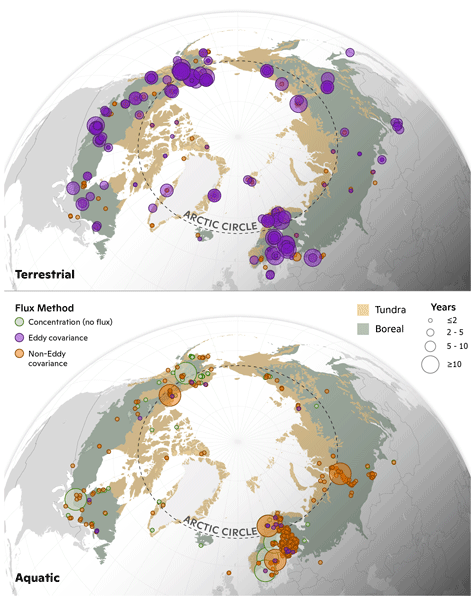
Anna-Maria Virkkala, Isabel Wargowsky, Judith Vogt, McKenzie A. Kuhn, Simran Madaan, Tiffany Windholz, Kyle A. Arndt, Gerard Rocher-Ros, Mathias Göckede, David Olefeldt, Edward A. G. Schuur, David Bastviken, Richard O'Keefe, Brendan M. Rogers, Jennifer D. Watts, Kelcy Kent, Kristoffer Aalstad, Kelly Aho, Joonatan Ala-Könni, Haley Alcock, Inge Althuizen, Christopher D. Arp, Jun Asanuma, Mika Aurela, Sivakiruthika Balathandayuthabani, Katrin Attermeyer, Alan Barr, Maialen Barret, Ochirbat Batkhishig, Christina Biasi, Mats P. Björkman, Andrew Black, Elena Blanc-Betes, Pascal Bodmer, Julia Boike, Abdullah Bolek, Frédéric Bouchard, Ingeborg Bussmann, Lea Cabrol, Eleonora Canfora, Sean Carey, Karel Castro-Morales, Namyi Chae, Andreas Christen, Torben R. Christensen, Casper T. Christiansen, Housen Chu, Graham Clark, Francois Clayer, Patrick Crill, Christopher Cunada, Scott J. Davidson, Joshua F. Dean, Sigrid Dengel, Matteo Detto, Catherine Dieleman, Florent Domine, Egor Dyukarev, Colin Edgar, Bo Elberling, Craig A. Emmerton, Eugenie Euskirchen, Grant Falvo, Thomas Friborg, Michelle Garneau, Mariasilvia Giamberini, Mikhail V. Glagolev, Miquel A. Gonzalez-Meler, Gustaf Granath, Jón Guðmundsson, Konsta Happonen, Yoshinobu Harazono, Lorna Harris, Josh Hashemi, Nicholas Hasson, Janna Heerah, Liam Heffernan, Manuel Helbig, Warren Helgason, Michal Heliasz, Greg Henry, Geert Hensgens, Tetsuya Hiyama, Beth Holmes, Macall Hock, David Holl, Jutta Holst, Thomas Holst, Gabriel Hould-Gosselin, Elyn Humphreys, Jacqueline Hung, Jussi Huotari, Hiroki Ikawa, Danil V. Ilyasov, Mamoru Ishikawa, Go Iwahana, Hiroki Iwata, Marcin Antoni Jackowicz-Korczynski, Joachim Jansen, Järvi Järveoja, Vincent E. J. Jassey, Rasmus Jensen, Katharina Jentzsch, Robert G. Jespersen, Carl-Fredrik Johannesson, Cheristy P. Jones, Anders Jonsson, Ji Young Jung, Sari Juutinen, Evan Kane, Jan Karlsson, Sergey Karsanaev, Kuno Kasak, Julia Kelly, Kasha Kempton, Marcus Klaus, George W. Kling, Natascha Kljun, Jacqueline Knutson, Hideki Kobayashi, John Kochendorfer, Kukka-Maaria Kohonen, Pasi Kolari, Mika Korkiakoski, Aino Korrensalo, Pirkko Kortelainen, Egle Koster, Kajar Koster, Ayumi Kotani, Praveena Krishnan, Juliya Kurbatova, Lars Kutzbach, Min Jung Kwon, Ethan D. Kyzivat, Jessica Lagroix, Theodore Langhorst, Elena Lapshina, Tuula Larmola, Klaus S. Larsen, Isabelle Laurion, Justin Ledman, Hanna Lee, A. Joshua Leffler, Lance Lesack, Anders Lindroth, David Lipson, Annalea Lohila, Efrén López-Blanco, Vincent L. St. Louis, Erik Lundin, Miska Luoto, Takashi Machimura, Marta Magnani, Avni Malhotra, Marja Maljanen, Ivan Mammarella, Elisa Männistö, Luca Belelli Marchesini, Phil Marsh, Pertti J. Martikainen, Maija E. Marushchak, Mikhail Mastepanov, Alex Mavrovic, Trofim Maximov, Christina Minions, Daniel F. Nadeau, Marco Montemayor, Tomoaki Morishita, Patrick Murphy, Erin Nicholls, Mats B. Nilsson, Anastasia Niyazova, Jenni Nordén, Koffi Dodji Noumonvi, Hannu Nykänen, Walter Oechel, Anne Ojala, Tomohiro Okadera, Sujan Pal, Alexey V. Panov, Tim Papakyriakou, Dario Papale, Sang-Jong Park, Frans-Jan W. Parmentier, Gilberto Pastorello, Mike Peacock, Matthias Peichl, Roman Petrov, Kyra St. Pierre, Norbert Pirk, Jessica Plein, Vilmantas Preskienis, Anatoly Prokushkin, Jukka Pumpanen, Hilary A. Rains, Niklas Rakos, Aleksi Räsänen, Helena Rautakoski, Riikka Rinnan, Janne Rinne, Adrian Rocha, Nigel Roulet, Alexandre Roy, Anna Rutgersson, Aleksandr F. Sabrekov, Torsten Sachs, Erik Sahlée, Alejandro Salazar, Henrique Oliveira Sawakuchi, Christopher Schulze, Roger Seco, Armando Sepulveda-Jauregui, Svetlana Serikova, Abbey Serrone, Hanna M. Silvennoinen, Sofie Sjogersten, June Skeeter, Jo Snöälv, Sebastian Sobek, Oliver Sonnentag, Emily H. Stanley, Maria Strack, Lena Strom, Patrick Sullivan, Ryan Sullivan, Anna Sytiuk, Torbern Tagesson, Pierre Taillardat, Julie Talbot, Suzanne E. Tank, Mario Tenuta, Irina Terenteva, Frederic Thalasso, Antoine Thiboult, Halldor Thorgeirsson, Fenix Garcia Tigreros, Margaret Torn, Amy Townsend-Small, Claire Treat, Alain Tremblay, Carlo Trotta, Eeva-Stiina Tuittila, Merritt Turetsky, Masahito Ueyama, Muhammad Umair, Aki Vähä, Lona van Delden, Maarten van Hardenbroek, Andrej Varlagin, Ruth K. Varner, Tarmo Virtanen, Elena Veretennikova, Timo Vesala, Carolina Voigt, Jorien E. Vonk, Robert Wagner, Katey Walter Anthony, Qinxue Wang, Masataka Watanabe, Hailey Webb, Jeffrey M. Welker, Andreas Westergaard-Nielsen, Sebastian Westermann, Jeffrey R. White, Christian Wille, Scott N. Williamson, Scott Zolkos, Donatella Zona, and Susan M. Natali
Earth Syst. Sci. Data, 18, 6357–6409, https://doi.org/10.5194/essd-18-6357-2026, https://doi.org/10.5194/essd-18-6357-2026, 2026
Short summary
Short summary
This dataset includes monthly measurements of carbon dioxide and methane exchange between land, water, and the atmosphere from over 1000 sites in Arctic and boreal regions. It combines measurements from a variety of ecosystems, including wetlands, forests, tundra, lakes, and rivers, gathered by over 260 researchers from 1984–2024. This dataset can be used to improve and reduce uncertainty in carbon budgets in order to strengthen our understanding of climate feedbacks in a warming world.
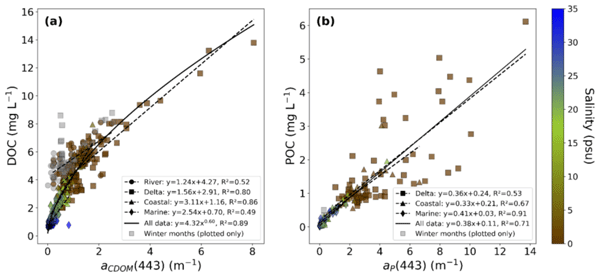
Annabeth McCall, Martin Hieronymi, P. Paul Overduin, Lisa Bröder, Julie Lattaud, Rüdiger Röttgers, Irina Overeem, Anne Morgenstern, Guido Grosse, and Bennet Juhls
Biogeosciences, 23, 5921–5942, https://doi.org/10.5194/bg-23-5921-2026, https://doi.org/10.5194/bg-23-5921-2026, 2026
Short summary
Short summary
This study examines how carbon and sediments move from the Mackenzie River, through its delta, and into the Beaufort Sea. We use data from 2009–2024 and show that major changes in carbon concentrations unfold in low-salinity mixing zones. As the optical properties of the water also shift, satellite estimates of carbon will require more tailored methods. These findings will improve our understanding of Arctic carbon fluxes and influences on the greater Arctic Ocean carbon budget.
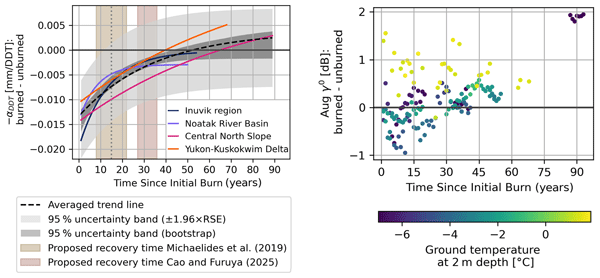
Barbara Widhalm, Annett Bartsch, and Benjamin Jones
The Cryosphere, 20, 4619–4654, https://doi.org/10.5194/tc-20-4619-2026, https://doi.org/10.5194/tc-20-4619-2026, 2026
Short summary
Short summary
This study examines the impacts of wildfires on permafrost thaw in the Arctic spanning up to ~90 years post-fire and explores the potential of using radar satellite observations to enhance our understanding of environmental change. By assessing diverse high-latitude permafrost landscapes, we show that ground deformation anomalies after fires display similar patterns across regions, while radar backscatter varies depending on predominant ground temperatures.
Carl Stadie, Ingmar Nitze, Begüm Demir, Martin Stefan Brandt, and Guido Grosse
EGUsphere, https://doi.org/10.5194/egusphere-2026-4074, https://doi.org/10.5194/egusphere-2026-4074, 2026
This preprint is open for discussion and under review for Earth Observation (EO).
Short summary
Short summary
Driftwood piles up along Arctic coasts, storing carbon and shaping habitats, but mapping it automatically is difficult. We compared three artificial intelligence models on aerial photos and satellite images, repeating each test many times to capture natural training variation. Image resolution mattered far more than which model was used, and testing only once, as is common, gave misleading results. Our approach offers a more reliable way to choose mapping tools for similar Arctic features.
Jaya Sree Mugunthan, Claude R. Duguay, Justin Murfitt, Elena Zakharova, and Benjamin M. Jones
EGUsphere, https://doi.org/10.5194/egusphere-2026-4309, https://doi.org/10.5194/egusphere-2026-4309, 2026
This preprint is open for discussion and under review for The Cryosphere (TC).
Short summary
Short summary
This paper explores how the new Surface Water and Ocean Topography (SWOT) satellite can improve monitoring of lake ice and seasonal changes in cold regions. Although SWOT observes water surfaces worldwide, how its measurements respond to frozen lakes is not yet well understood. We show that these observations can reveal important ice features, freeze–melt transitions, and changes in snow and ice conditions. The results provide new opportunities for monitoring frozen freshwater environments.
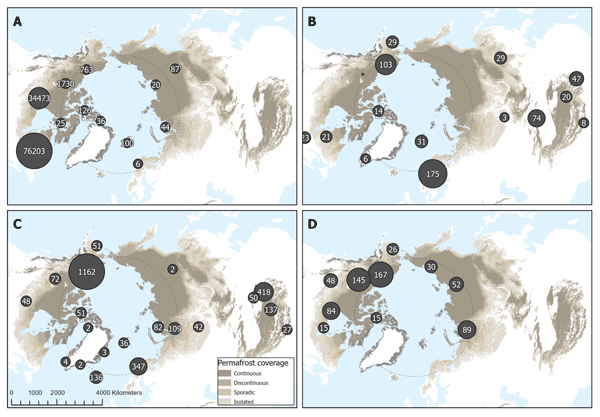
Christine L. Olson, Kevin Schaefer, Alyssa Azaroff, Hélène Angot, Sasiri Bandara, Thomas A. Douglas, Bo Elberling, Maria Florencia Fahnestock, Xinbin Feng, Charlotte Haugk, Gustaf Hugelius, Erfan Jahangir, Sofi Jonsson, Shichang Kang, Adam Kirkwood, Jennifer Korosi, Igor Lehnherr, Artem Lim, Rinat Manasypov, Dmitriy Moskovchenko, Mina Nasr, Daniel Obrist, David Olefeldt, Connor Olson, Oleg Pokrovsky, Laura Sereni, Sarah Shakil, M. Isabel Smith, Jens Søndergaard, Jeroen Sonke, Kasia Staniszewska, Jens Strauss, Kyra St. Pierre, Lauren Thompson, Andrey Yurtaev, Yanxu Zhang, and Scott Zolkos
Earth Syst. Sci. Data, 18, 4509–4522, https://doi.org/10.5194/essd-18-4509-2026, https://doi.org/10.5194/essd-18-4509-2026, 2026
Short summary
Short summary
Permafrost regions store large amounts of mercury, a toxic pollutant that can be released as the ground warms. We combined thousands of measurements from soils, plants, water, and lake sediments into one open database to better understand where mercury is stored and how it moves. The results show clear differences among environments and reveal major data gaps, helping improve future research, monitoring, and decision-making.
George Tanski, Michael Fritz, Jorien E. Vonk, Jens Strauss, Léo Chassiot, Vladislav Carnero-Bravo, Jade Falardeau, Kostantin Klein, Parick Lajeunesse, Hugues Lantuit, Niek J. Speetjens, Anne de Vernal, Dustin Whalen, and Anna M. Irrgang
EGUsphere, https://doi.org/10.5194/egusphere-2026-2314, https://doi.org/10.5194/egusphere-2026-2314, 2026
Short summary
Short summary
As the Arctic warms, permafrost coasts erode rapidly, flushing carbon from frozen ground into the sea. We studied a lagoon in the western Canadian Arctic, collecting sediments and analyzing organic carbon content, stable isotopes, and grain size, alongside satellite imagery. Carbon content fell by over 50 % from land to open ocean, while erosion rates quintupled since the 1950s. Arctic lagoons bury, degrade, and export terrestrial carbon, acting as coastal reactors whose role will grow.
Lutz Schirrmeister, Nikita Demidov, Vasily Demidov, Paul Overduin, Walter Schirrmeister, Diana Soloveva, Sergey Verkulich, and Sebastian Wetterich
EGUsphere, https://doi.org/10.5194/egusphere-2026-1377, https://doi.org/10.5194/egusphere-2026-1377, 2026
This preprint is open for discussion and under review for The Cryosphere (TC).
Short summary
Short summary
Based on permafrost core and exposure data, three main stages of landscape dynamics could be identified for the study region in the coastal areas of Isfjord and Grønfjord, and the Grøndalen and Hollendardalen valleys. Our research indicates spatial and temporal changes in landscape dynamics and permafrost conditions driven by deglaciation, climate, and sea-level changes. The present study provides insights into the response of permafrost to Late Glacial and Holocene environmental changes.
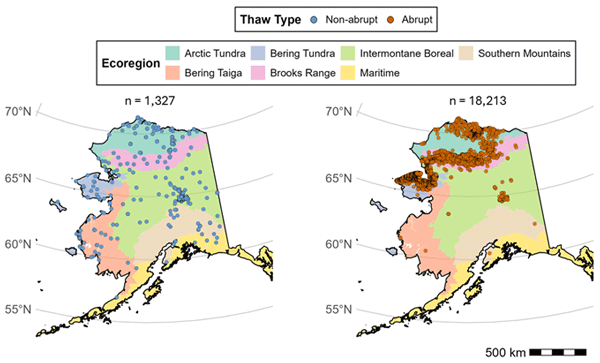
Hailey Webb, Ethan Pierce, Benjamin W. Abbott, William B. Bowden, Yaping Chen, Yating Chen, Thomas A. Douglas, Joel F. Eklof, Eugénie S. Euskirchen, Moritz Langer, Isla H. Myers-Smith, Irina Overeem, Jens Strauss, Katey Walter Anthony, Kang Wang, Matthew A. Whitley, and Merritt R. Turetsky
Earth Syst. Sci. Data, 18, 3147–3164, https://doi.org/10.5194/essd-18-3147-2026, https://doi.org/10.5194/essd-18-3147-2026, 2026
Short summary
Short summary
We created a database of 19,540 thawing permafrost sites across Alaska, including both abrupt and non-abrupt thaw features and explored relationships with elevation, slope, and incoming solar radiation. We use the database to show that existing ground ice maps are too coarse to predict abrupt thaw risk. This database can enhance predictions of future thaw and guide planning and adaptation strategies.
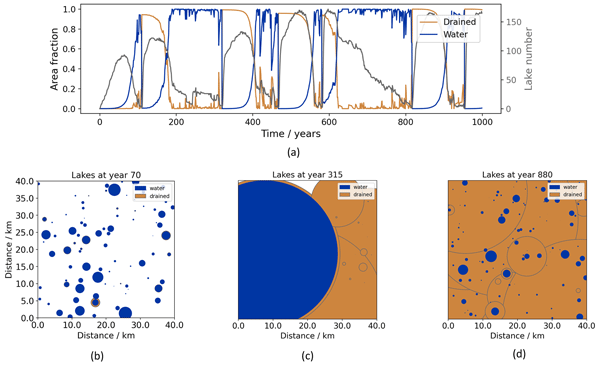
Constanze Reinken, Victor Brovkin, Philipp de Vrese, Ingmar Nitze, Helena Bergstedt, and Guido Grosse
The Cryosphere, 20, 1967–1995, https://doi.org/10.5194/tc-20-1967-2026, https://doi.org/10.5194/tc-20-1967-2026, 2026
Short summary
Short summary
Thermokarst lakes are dynamic features of ice-rich permafrost landscapes, altering energy, water and carbon cycles, but have so far mostly been modeled on site-level scale. A deterministic modelling approach would be challenging on larger scales due to the lack of extensive high-resolution data of sub-surface conditions. We therefore develop a conceptual stochastic model of thermokarst lake dynamics that treats the involved processes as probabilistic.
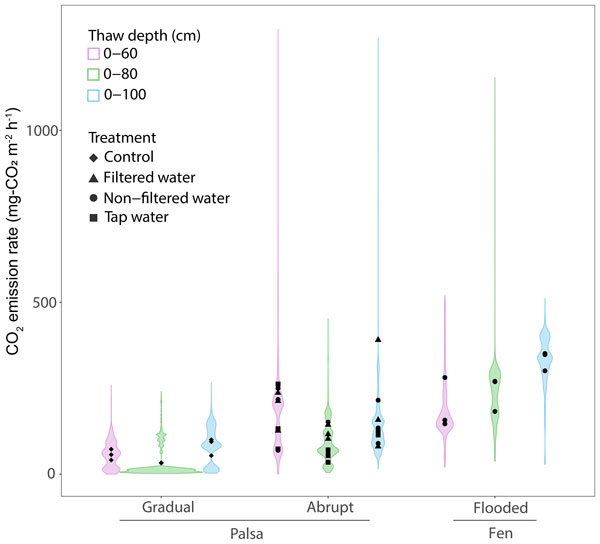
Mélissa Laurent, Mackenzie R. Baysinger, Jörg Schaller, Matthias Lück, Mathias Hoffmann, Torben Windirsch, Ruth H. Ellerbrock, Jens Strauss, and Claire C. Treat
Biogeosciences, 22, 7881–7899, https://doi.org/10.5194/bg-22-7881-2025, https://doi.org/10.5194/bg-22-7881-2025, 2025
Short summary
Short summary
Palsas are peat permafrost mounds underlain by ice-rich permafrost. Due to climate change, they could disappear by the end of the century. When palsas thaw, changes occur in hydrological conditions affecting the carbon (C) cycle. In our study, we simulated permafrost thaw under different water treatments using 1-meter soil columns from a palsa. We measured CH4 and CO2 emissions for 3-month incubation. Our results show that following thaw, flooding the cores leads to increased CO2 emissions.
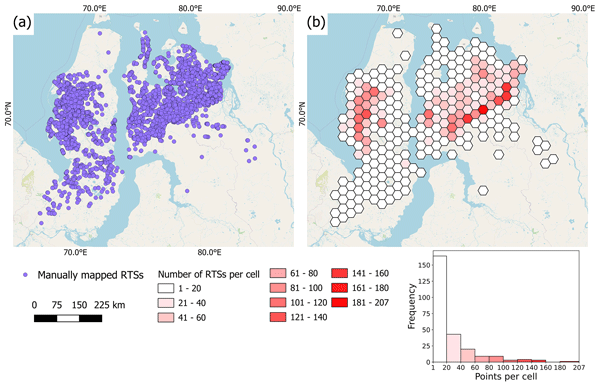
Nina Nesterova, Ilia Tarasevich, Marina Leibman, Artem Khomutov, Alexander Kizyakov, Ingmar Nitze, and Guido Grosse
Earth Syst. Sci. Data, 17, 5707–5727, https://doi.org/10.5194/essd-17-5707-2025, https://doi.org/10.5194/essd-17-5707-2025, 2025
Short summary
Short summary
We created the first detailed map of retrogressive thaw slump (RTS) landforms across a large area of the West Siberian Arctic. RTSs are key features of abrupt permafrost thaw accelerated by climate change. Using satellite images and field data, we identified and classified over 6000 RTSs. This dataset helps scientists better understand how warming is changing Arctic landscapes and provides a trusted reference for training artificial intelligence to detect these landforms in the future.
Lutz Schirrmeister, Margret C. Fuchs, Thomas Opel, Andrei Andreev, Frank Kienast, Andrea Schneider, Larisa Nazarova, Larisa Frolova, Svetlana Kuzmina, Tatiana Kuznetsova, Vladimir Tumskoy, Heidrun Matthes, Gerrit Lohmann, Guido Grosse, Viktor Kunitsky, Hanno Meyer, Heike H. Zimmermann, Ulrike Herzschuh, Thomas Böhmer, Stuart Umbo, Sevi Modestou, Sebastian F. M. Breitenbach, Anfisa Pismeniuk, Georg Schwamborn, Stephanie Kusch, and Sebastian Wetterich
Clim. Past, 21, 1143–1184, https://doi.org/10.5194/cp-21-1143-2025, https://doi.org/10.5194/cp-21-1143-2025, 2025
Short summary
Short summary
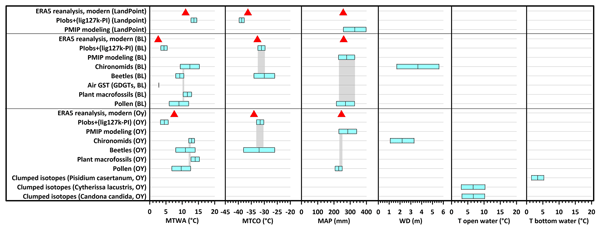
Geochronological, cryolithological, paleoecological, and modeling data reconstruct the Last Interglacial (LIG) climate around the New Siberian Islands and reveal significantly warmer conditions compared to today. The critical challenges in predicting future ecosystem responses lie in the fact that the land–ocean distribution during the LIG was markedly different from today, affecting the degree of continentality, which played a major role in modulating climate and ecosystem dynamics.
Frieda P. Giest, Maren Jenrich, Guido Grosse, Benjamin M. Jones, Kai Mangelsdorf, Torben Windirsch, and Jens Strauss
Biogeosciences, 22, 2871–2887, https://doi.org/10.5194/bg-22-2871-2025, https://doi.org/10.5194/bg-22-2871-2025, 2025
Short summary
Short summary
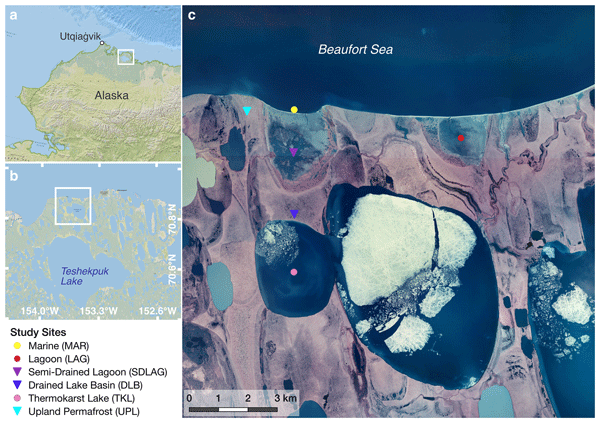
Climate warming causes permafrost to thaw, releasing greenhouse gases and affecting ecosystems. We studied sediments from Arctic coastal landscapes, including land, lakes, lagoons, and the ocean, finding that organic carbon storage and quality vary with landscape features and saltwater influence. Freshwater and land areas store more carbon, while saltwater reduces its quality. These findings improve predictions of Arctic responses to climate change and their impact on global carbon cycling.
Katharina Jentzsch, Lona van Delden, Matthias Fuchs, and Claire C. Treat
Earth Syst. Sci. Data, 17, 2331–2372, https://doi.org/10.5194/essd-17-2331-2025, https://doi.org/10.5194/essd-17-2331-2025, 2025
Short summary
Short summary
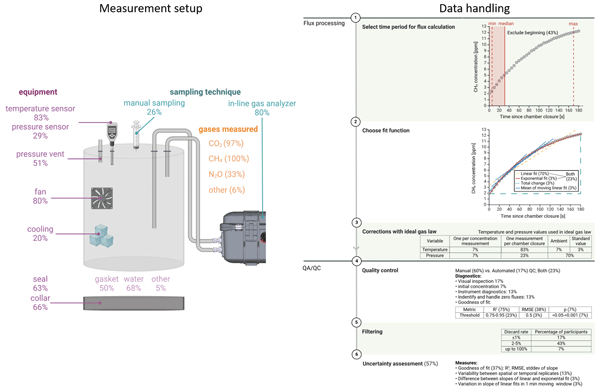
Methane is a greenhouse gas that contributes to global warming, but we do not fully understand how much is released from natural sources like wetlands. To measure methane over large areas, many measurements are needed, often from small chambers that are placed on the ground. However, different researchers use different measurement setups, making it hard to combine data. We surveyed 36 researchers about their methods, summarized the responses, and identified ways to make the data more comparable.
Amelie Stieg, Boris K. Biskaborn, Ulrike Herzschuh, Andreas Marent, Jens Strauss, Dorothee Wilhelms-Dick, Luidmila A. Pestryakova, and Hanno Meyer
Biogeosciences, 22, 2327–2350, https://doi.org/10.5194/bg-22-2327-2025, https://doi.org/10.5194/bg-22-2327-2025, 2025
Short summary
Short summary
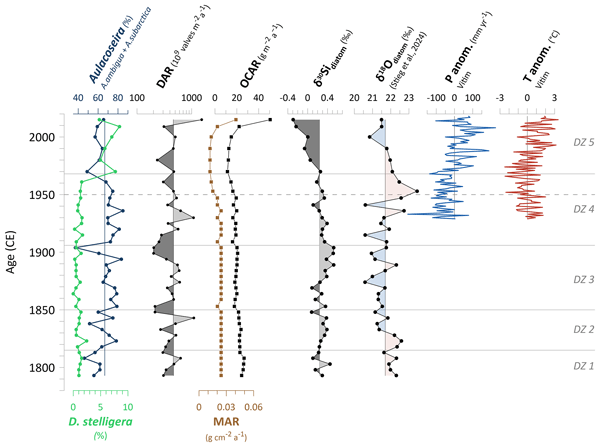
Globally, lake ecosystems have undergone significant shifts since the 1950s due to human activities. This study presents a unique ~220-year sediment record from a remote Siberian boreal lake, providing a multiproxy perspective on climate warming and anthropogenic air pollution. Analyses of diatom assemblages, diatom silicon isotopes, and carbon and nitrogen sediment proxies reveal complex biogeochemical interactions, highlighting anthropogenic influences even on remote water resources.
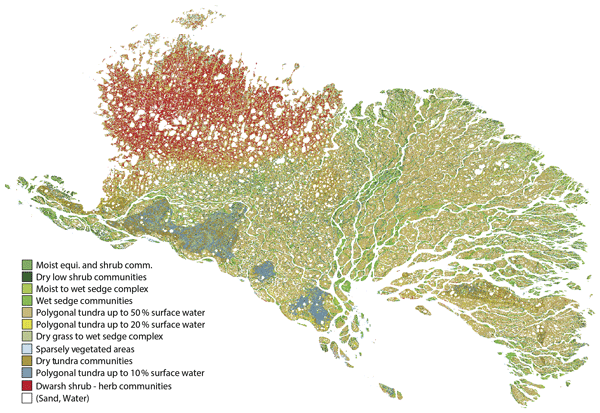
Simeon Lisovski, Alexandra Runge, Iuliia Shevtsova, Nele Landgraf, Anne Morgenstern, Ronald Reagan Okoth, Matthias Fuchs, Nikolay Lashchinskiy, Carl Stadie, Alison Beamish, Ulrike Herzschuh, Guido Grosse, and Birgit Heim
Earth Syst. Sci. Data, 17, 1707–1730, https://doi.org/10.5194/essd-17-1707-2025, https://doi.org/10.5194/essd-17-1707-2025, 2025
Short summary
Short summary
The Lena Delta is the largest river delta in the Arctic and represents a biodiversity hotspot. Here, we describe multiple field datasets and a detailed habitat classification map for the Lena Delta. We present context and methods of these openly available datasets and show how they can improve our understanding of the rapidly changing Arctic tundra system.
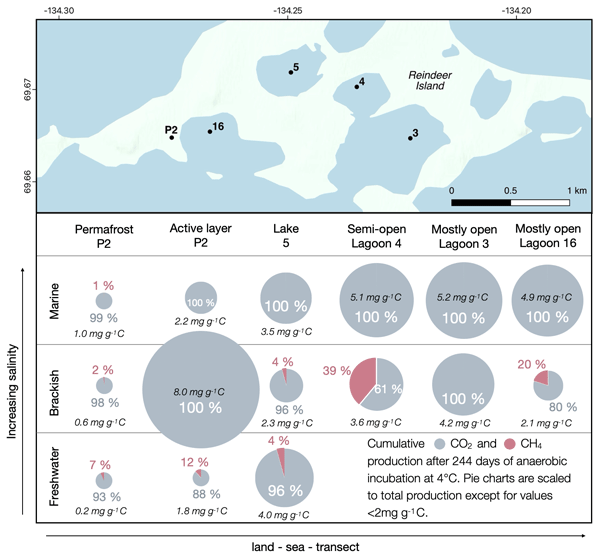
Maren Jenrich, Juliane Wolter, Susanne Liebner, Christian Knoblauch, Guido Grosse, Fiona Giebeler, Dustin Whalen, and Jens Strauss
Biogeosciences, 22, 2069–2086, https://doi.org/10.5194/bg-22-2069-2025, https://doi.org/10.5194/bg-22-2069-2025, 2025
Short summary
Short summary
Climate warming in the Arctic is causing the erosion of permafrost coasts and the transformation of permafrost lakes into lagoons. To understand how this affects greenhouse gas (GHG) emissions, we studied carbon dioxide (CO₂) and methane (CH₄) production in lagoons with varying sea connections. Younger lagoons produce more CH₄, while CO₂ increases under more marine conditions. Flooding of permafrost lowlands due to rising sea levels may lead to higher GHG emissions from Arctic coasts in future.
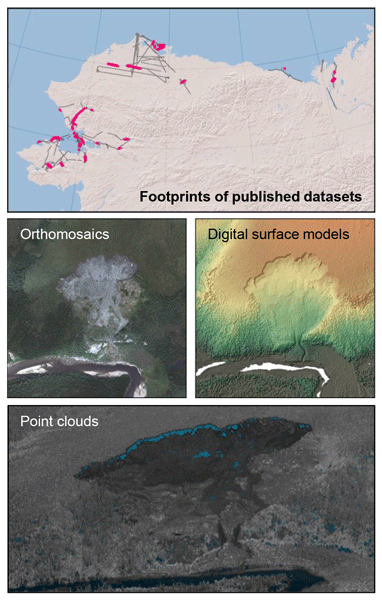
Tabea Rettelbach, Ingmar Nitze, Inge Grünberg, Jennika Hammar, Simon Schäffler, Daniel Hein, Matthias Gessner, Tilman Bucher, Jörg Brauchle, Jörg Hartmann, Torsten Sachs, Julia Boike, and Guido Grosse
Earth Syst. Sci. Data, 16, 5767–5798, https://doi.org/10.5194/essd-16-5767-2024, https://doi.org/10.5194/essd-16-5767-2024, 2024
Short summary
Short summary
Permafrost landscapes in the Arctic are rapidly changing due to climate warming. Here, we publish aerial images and elevation models with very high spatial detail that help study these landscapes in northwestern Canada and Alaska. The images were collected using the Modular Aerial Camera System (MACS). This dataset has significant implications for understanding permafrost landscape dynamics in response to climate change. It is publicly available for further research.
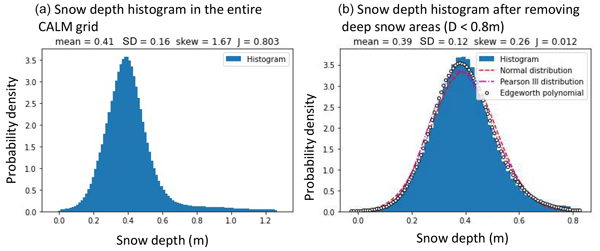
Noriaki Ohara, Andrew D. Parsekian, Benjamin M. Jones, Rodrigo C. Rangel, Kenneth M. Hinkel, and Rui A. P. Perdigão
The Cryosphere, 18, 5139–5152, https://doi.org/10.5194/tc-18-5139-2024, https://doi.org/10.5194/tc-18-5139-2024, 2024
Short summary
Short summary
Snow distribution characterization is essential for accurate snow water estimation for water resource prediction from existing in situ observations and remote-sensing data at a finite spatial resolution. Four different observed snow distribution datasets were analyzed for Gaussianity. We found that non-Gaussianity of snow distribution is a signature of the wind redistribution effect. Generally, seasonal snowpack can be approximated well by a Gaussian distribution for a fully snow-covered area.
Lydia Stolpmann, Ingmar Nitze, Ingeborg Bussmann, Benjamin M. Jones, Josefine Lenz, Hanno Meyer, Juliane Wolter, and Guido Grosse
EGUsphere, https://doi.org/10.5194/egusphere-2024-2822, https://doi.org/10.5194/egusphere-2024-2822, 2024
Preprint archived
Short summary
Short summary
We combine hydrochemical and lake change data to show consequences of permafrost thaw induced lake changes on hydrochemistry, which are relevant for the global carbon cycle. We found higher methane concentrations in lakes that do not freeze to the ground and show that lagoons have lower methane concentrations than lakes. Our detailed lake sampling approach show higher concentrations in Dissolved Organic Carbon in areas of higher erosion rates, that might increase under the climate warming.
Nina Nesterova, Marina Leibman, Alexander Kizyakov, Hugues Lantuit, Ilya Tarasevich, Ingmar Nitze, Alexandra Veremeeva, and Guido Grosse
The Cryosphere, 18, 4787–4810, https://doi.org/10.5194/tc-18-4787-2024, https://doi.org/10.5194/tc-18-4787-2024, 2024
Short summary
Short summary
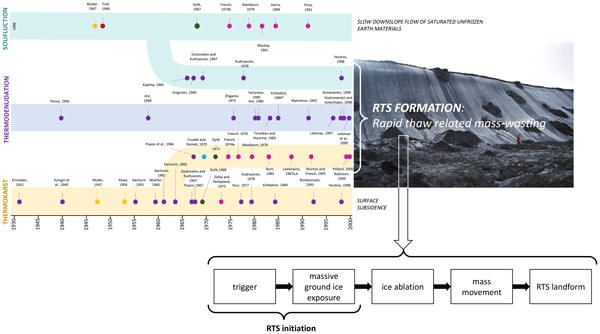
Retrogressive thaw slumps (RTSs) are widespread in the Arctic permafrost landforms. RTSs present a big interest for researchers because of their expansion due to climate change. There are currently different scientific schools and terminology used in the literature on this topic. We have critically reviewed existing concepts and terminology and provided clarifications to present a useful base for experts in the field and ease the introduction to the topic for scientists who are new to it.
Katharina Jentzsch, Elisa Männistö, Maija E. Marushchak, Aino Korrensalo, Lona van Delden, Eeva-Stiina Tuittila, Christian Knoblauch, and Claire C. Treat
Biogeosciences, 21, 3761–3788, https://doi.org/10.5194/bg-21-3761-2024, https://doi.org/10.5194/bg-21-3761-2024, 2024
Short summary
Short summary
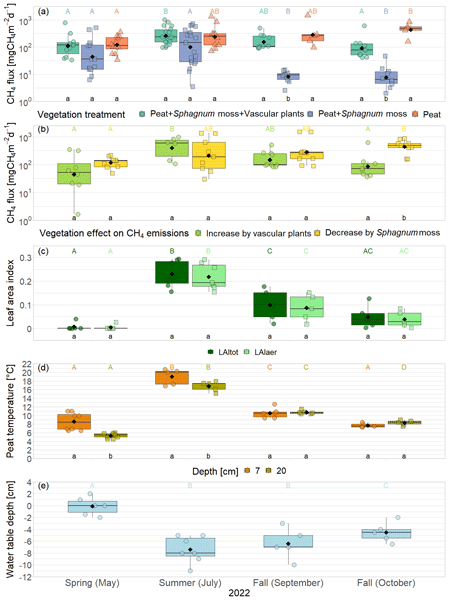
During cold seasons, methane release from northern wetlands is important but often underestimated. We studied a boreal bog to understand methane emissions in spring and fall. At cold temperatures, methane release decreases due to lower production rates, but efficient methane transport through plant structures, decaying plants, and the release of methane stored in the pore water keep emissions ongoing. Understanding these seasonal processes can improve models for methane release in cold climates.
Soraya Kaiser, Julia Boike, Guido Grosse, and Moritz Langer
Earth Syst. Sci. Data, 16, 3719–3753, https://doi.org/10.5194/essd-16-3719-2024, https://doi.org/10.5194/essd-16-3719-2024, 2024
Short summary
Short summary
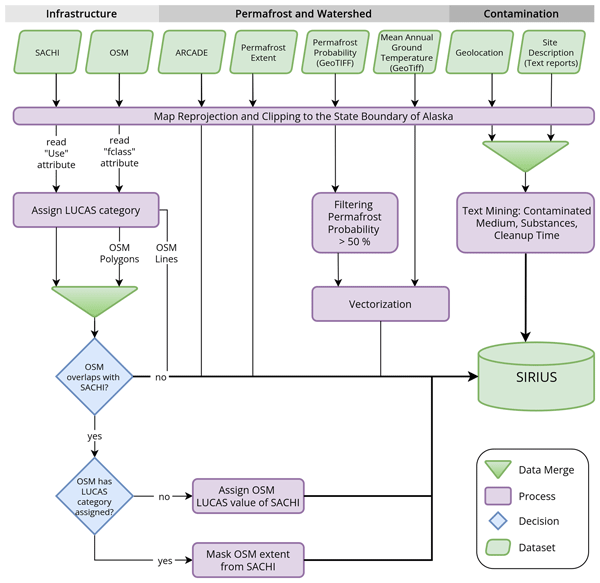
Arctic warming, leading to permafrost degradation, poses primary threats to infrastructure and secondary ecological hazards from possible infrastructure failure. Our study created a comprehensive Alaska inventory combining various data sources with which we improved infrastructure classification and data on contaminated sites. This resource is presented as a GeoPackage allowing planning of infrastructure damage and possible implications for Arctic communities facing permafrost challenges.
Amelie Stieg, Boris K. Biskaborn, Ulrike Herzschuh, Jens Strauss, Luidmila Pestryakova, and Hanno Meyer
Clim. Past, 20, 909–933, https://doi.org/10.5194/cp-20-909-2024, https://doi.org/10.5194/cp-20-909-2024, 2024
Short summary
Short summary
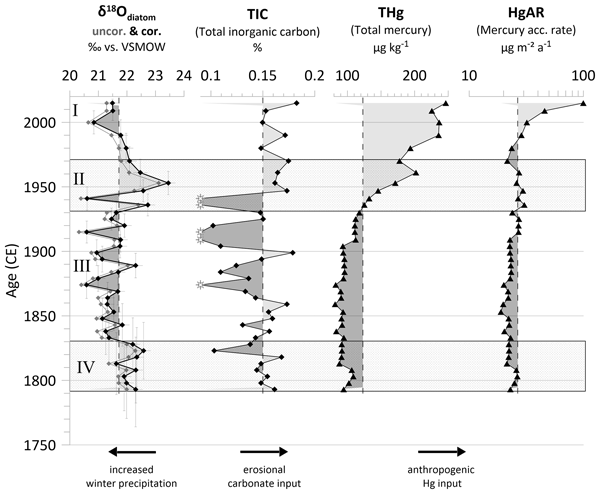
Siberia is impacted by recent climate warming and experiences extreme hydroclimate events. We present a 220-year-long sub-decadal stable oxygen isotope record of diatoms from Lake Khamra. Our analysis identifies winter precipitation as the key process impacting the isotope variability. Two possible hydroclimatic anomalies were found to coincide with significant changes in lake internal conditions and increased wildfire activity in the region.
Mélissa Laurent, Matthias Fuchs, Tanja Herbst, Alexandra Runge, Susanne Liebner, and Claire C. Treat
Biogeosciences, 20, 2049–2064, https://doi.org/10.5194/bg-20-2049-2023, https://doi.org/10.5194/bg-20-2049-2023, 2023
Short summary
Short summary
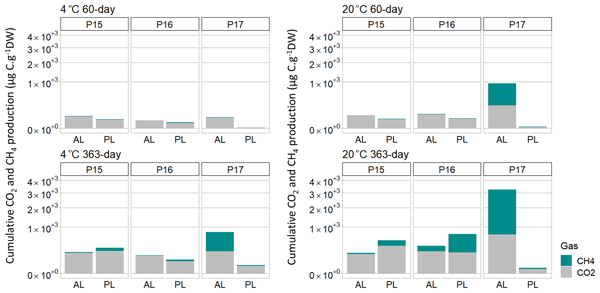
In this study we investigated the effect of different parameters (temperature, landscape position) on the production of greenhouse gases during a 1-year permafrost thaw experiment. For very similar carbon and nitrogen contents, our results show a strong heterogeneity in CH4 production, as well as in microbial abundance. According to our study, these differences are mainly due to the landscape position and the hydrological conditions established as a result of the topography.
Boris K. Biskaborn, Amy Forster, Gregor Pfalz, Lyudmila A. Pestryakova, Kathleen Stoof-Leichsenring, Jens Strauss, Tim Kröger, and Ulrike Herzschuh
Biogeosciences, 20, 1691–1712, https://doi.org/10.5194/bg-20-1691-2023, https://doi.org/10.5194/bg-20-1691-2023, 2023
Short summary
Short summary
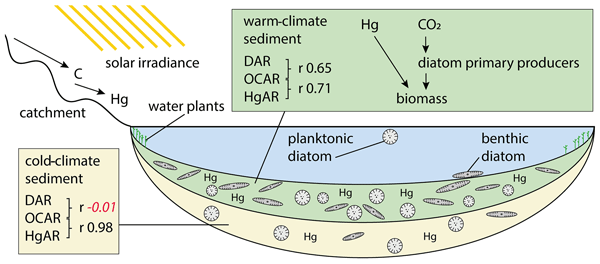
Lake sediment from the Russian Arctic was studied for microalgae and organic matter chemistry dated back to the last glacial 28 000 years. Species and chemistry responded to environmental changes such as the Younger Dryas cold event and the Holocene thermal maximum. Organic carbon accumulation correlated with rates of microalgae deposition only during warm episodes but not during the cold glacial.
Olga Ogneva, Gesine Mollenhauer, Bennet Juhls, Tina Sanders, Juri Palmtag, Matthias Fuchs, Hendrik Grotheer, Paul J. Mann, and Jens Strauss
Biogeosciences, 20, 1423–1441, https://doi.org/10.5194/bg-20-1423-2023, https://doi.org/10.5194/bg-20-1423-2023, 2023
Short summary
Short summary
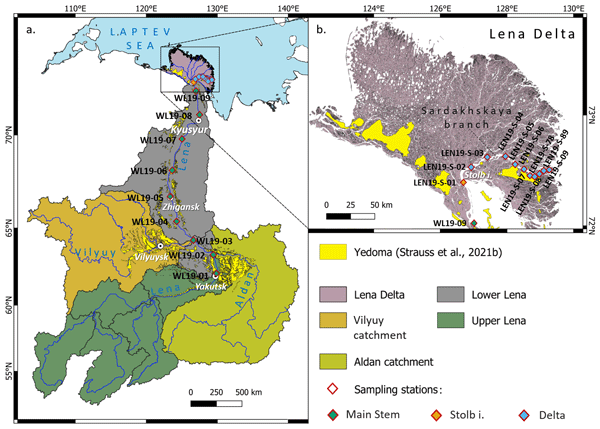
Arctic warming accelerates permafrost thaw and release of terrestrial organic matter (OM) via rivers to the Arctic Ocean. We compared particulate organic carbon (POC), total suspended matter, and C isotopes (δ13C and Δ14C of POC) in the Lena delta and Lena River along a ~1600 km transect. We show that the Lena delta, as an interface between the Lena River and the Arctic Ocean, plays a crucial role in determining the qualitative and quantitative composition of OM discharged into the Arctic Ocean.
Peter Stimmler, Mathias Goeckede, Bo Elberling, Susan Natali, Peter Kuhry, Nia Perron, Fabrice Lacroix, Gustaf Hugelius, Oliver Sonnentag, Jens Strauss, Christina Minions, Michael Sommer, and Jörg Schaller
Earth Syst. Sci. Data, 15, 1059–1075, https://doi.org/10.5194/essd-15-1059-2023, https://doi.org/10.5194/essd-15-1059-2023, 2023
Short summary
Short summary
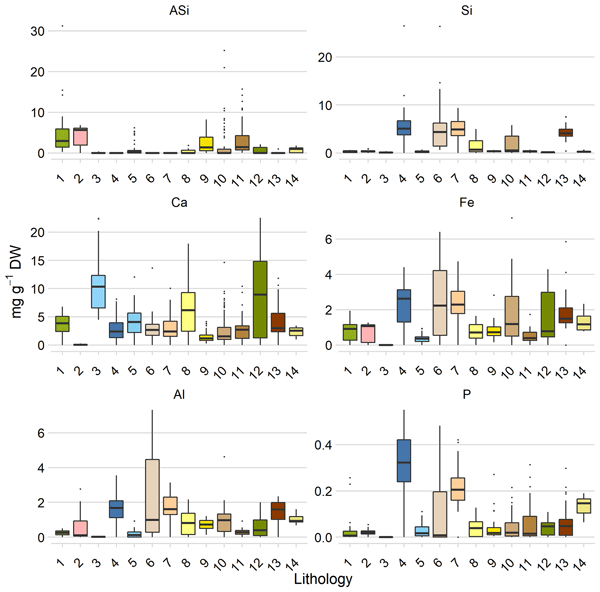
Arctic soils store large amounts of carbon and nutrients. The availability of nutrients, such as silicon, calcium, iron, aluminum, phosphorus, and amorphous silica, is crucial to understand future carbon fluxes in the Arctic. Here, we provide, for the first time, a unique dataset of the availability of the abovementioned nutrients for the different soil layers, including the currently frozen permafrost layer. We relate these data to several geographical and geological parameters.
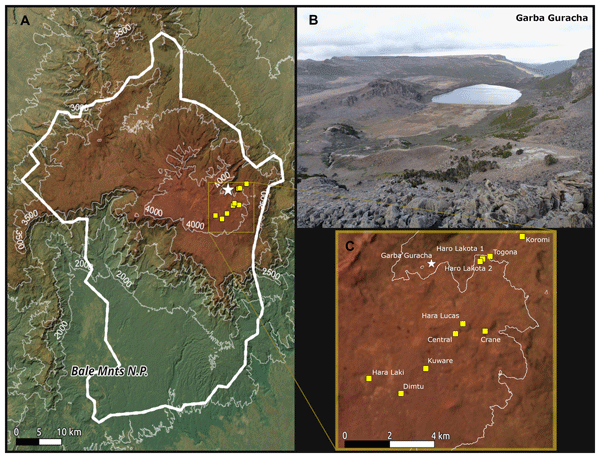
Lucas Bittner, Cindy De Jonge, Graciela Gil-Romera, Henry F. Lamb, James M. Russell, and Michael Zech
Biogeosciences, 19, 5357–5374, https://doi.org/10.5194/bg-19-5357-2022, https://doi.org/10.5194/bg-19-5357-2022, 2022
Short summary
Short summary
With regard to global warming, an understanding of past temperature changes is becoming increasingly important. Branched glycerol dialkyl glycerol tetraethers (brGDGTs) are membrane lipids used globally to reconstruct lake water temperatures. In the Bale Mountains lakes, we find a unique composition of brGDGT isomers. We present a modified local calibration and a new high-altitude temperature reconstruction from the Horn of Africa spanning the last 12.5 kyr.
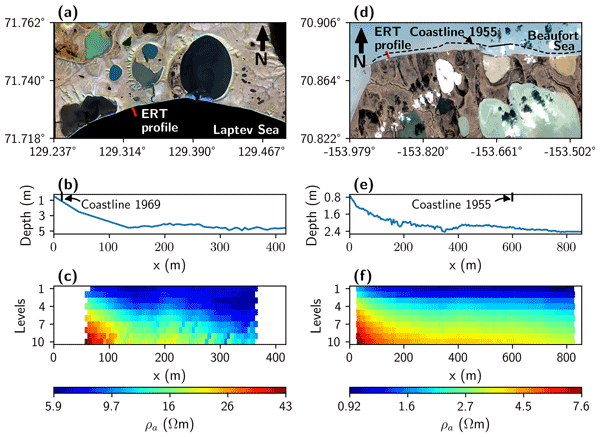
Mauricio Arboleda-Zapata, Michael Angelopoulos, Pier Paul Overduin, Guido Grosse, Benjamin M. Jones, and Jens Tronicke
The Cryosphere, 16, 4423–4445, https://doi.org/10.5194/tc-16-4423-2022, https://doi.org/10.5194/tc-16-4423-2022, 2022
Short summary
Short summary
We demonstrate how we can reliably estimate the thawed–frozen permafrost interface with its associated uncertainties in subsea permafrost environments using 2D electrical resistivity tomography (ERT) data. In addition, we show how further analyses considering 1D inversion and sensitivity assessments can help quantify and better understand 2D ERT inversion results. Our results illustrate the capabilities of the ERT method to get insights into the development of the subsea permafrost.
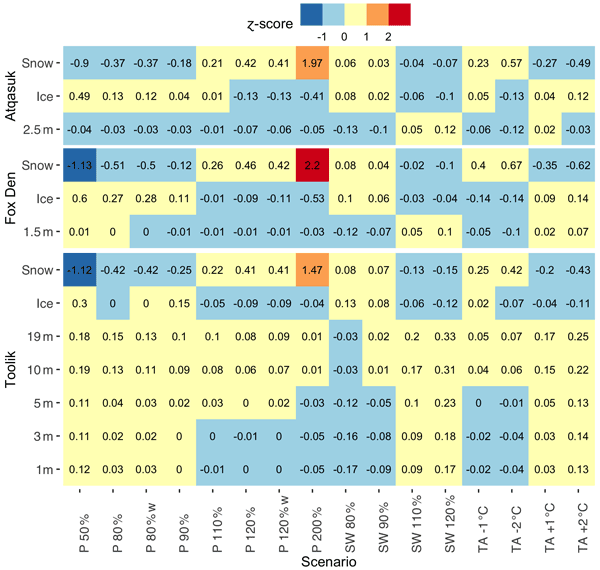
Jason A. Clark, Elchin E. Jafarov, Ken D. Tape, Benjamin M. Jones, and Victor Stepanenko
Geosci. Model Dev., 15, 7421–7448, https://doi.org/10.5194/gmd-15-7421-2022, https://doi.org/10.5194/gmd-15-7421-2022, 2022
Short summary
Short summary
Lakes in the Arctic are important reservoirs of heat. Under climate warming scenarios, we expect Arctic lakes to warm the surrounding frozen ground. We simulate water temperatures in three Arctic lakes in northern Alaska over several years. Our results show that snow depth and lake ice strongly affect water temperatures during the frozen season and that more heat storage by lakes would enhance thawing of frozen ground.
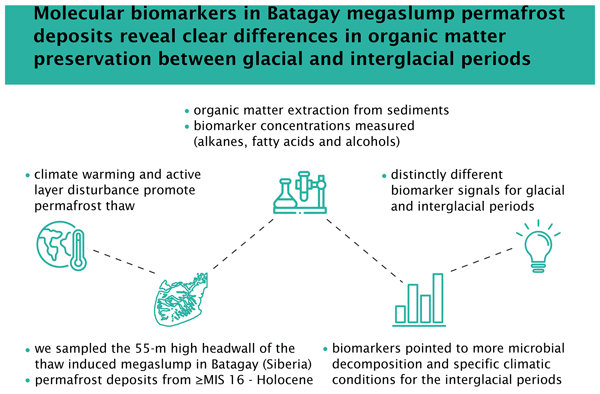
Loeka L. Jongejans, Kai Mangelsdorf, Cornelia Karger, Thomas Opel, Sebastian Wetterich, Jérémy Courtin, Hanno Meyer, Alexander I. Kizyakov, Guido Grosse, Andrei G. Shepelev, Igor I. Syromyatnikov, Alexander N. Fedorov, and Jens Strauss
The Cryosphere, 16, 3601–3617, https://doi.org/10.5194/tc-16-3601-2022, https://doi.org/10.5194/tc-16-3601-2022, 2022
Short summary
Short summary
Large parts of Arctic Siberia are underlain by permafrost. Climate warming leads to permafrost thaw. At the Batagay megaslump, permafrost sediments up to ~ 650 kyr old are exposed. We took sediment samples and analysed the organic matter (e.g. plant remains). We found distinct differences in the biomarker distributions between the glacial and interglacial deposits with generally stronger microbial activity during interglacial periods. Further permafrost thaw enhances greenhouse gas emissions.
Jan Nitzbon, Damir Gadylyaev, Steffen Schlüter, John Maximilian Köhne, Guido Grosse, and Julia Boike
The Cryosphere, 16, 3507–3515, https://doi.org/10.5194/tc-16-3507-2022, https://doi.org/10.5194/tc-16-3507-2022, 2022
Short summary
Short summary
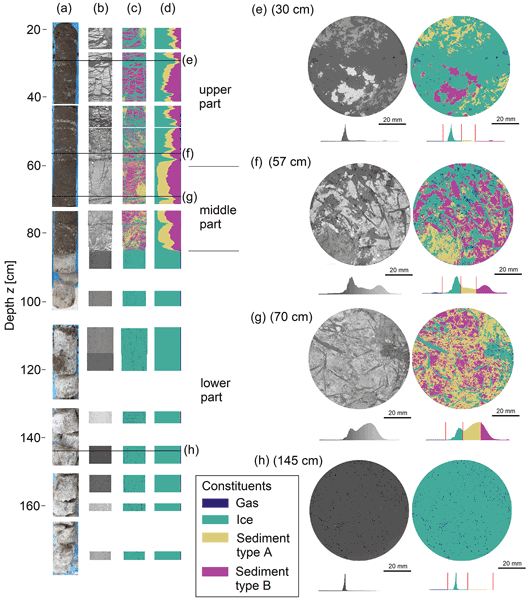
The microstructure of permafrost soils contains clues to its formation and its preconditioning to future change. We used X-ray computed tomography (CT) to measure the composition of a permafrost drill core from Siberia. By combining CT with laboratory measurements, we determined the the proportions of pore ice, excess ice, minerals, organic matter, and gas contained in the core at an unprecedented resolution. Our work demonstrates the potential of CT to study permafrost properties and processes.
Cordula Nina Gutekunst, Susanne Liebner, Anna-Kathrina Jenner, Klaus-Holger Knorr, Viktoria Unger, Franziska Koebsch, Erwin Don Racasa, Sizhong Yang, Michael Ernst Böttcher, Manon Janssen, Jens Kallmeyer, Denise Otto, Iris Schmiedinger, Lucas Winski, and Gerald Jurasinski
Biogeosciences, 19, 3625–3648, https://doi.org/10.5194/bg-19-3625-2022, https://doi.org/10.5194/bg-19-3625-2022, 2022
Short summary
Short summary
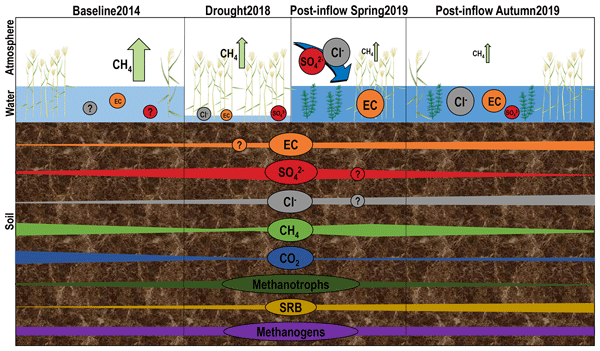
Methane emissions decreased after a seawater inflow and a preceding drought in freshwater rewetted coastal peatland. However, our microbial and greenhouse gas measurements did not indicate that methane consumers increased. Rather, methane producers co-existed in high numbers with their usual competitors, the sulfate-cycling bacteria. We studied the peat soil and aimed to cover the soil–atmosphere continuum to better understand the sources of methane production and consumption.
M. R. Udawalpola, C. Witharana, A. Hasan, A. Liljedahl, M. Ward Jones, and B. Jones
Int. Arch. Photogramm. Remote Sens. Spatial Inf. Sci., XLVI-M-2-2022, 203–208, https://doi.org/10.5194/isprs-archives-XLVI-M-2-2022-203-2022, https://doi.org/10.5194/isprs-archives-XLVI-M-2-2022-203-2022, 2022
Marcel Lerch, Julia Unkelbach, Florian Schneider, Michael Zech, and Michael Klinge
E&G Quaternary Sci. J., 71, 91–110, https://doi.org/10.5194/egqsj-71-91-2022, https://doi.org/10.5194/egqsj-71-91-2022, 2022
Short summary
Short summary
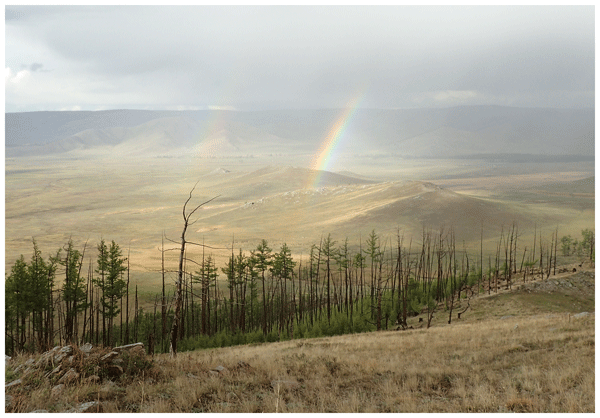
Charcoals and leaf waxes from vegetation accumulate in the soil and provide information about past vegetation because they are mostly resistant against physical and biological degradation. Analyzing and comparing ratios of both element types helped us to improve the evidence for vegetation reconstruction. We found that the accumulation processes and preservation of these elements depend on different environmental conditions at forest- and steppe-dominated sites in the Mongolian forest–steppe.
Matthias Fuchs, Juri Palmtag, Bennet Juhls, Pier Paul Overduin, Guido Grosse, Ahmed Abdelwahab, Michael Bedington, Tina Sanders, Olga Ogneva, Irina V. Fedorova, Nikita S. Zimov, Paul J. Mann, and Jens Strauss
Earth Syst. Sci. Data, 14, 2279–2301, https://doi.org/10.5194/essd-14-2279-2022, https://doi.org/10.5194/essd-14-2279-2022, 2022
Short summary
Short summary
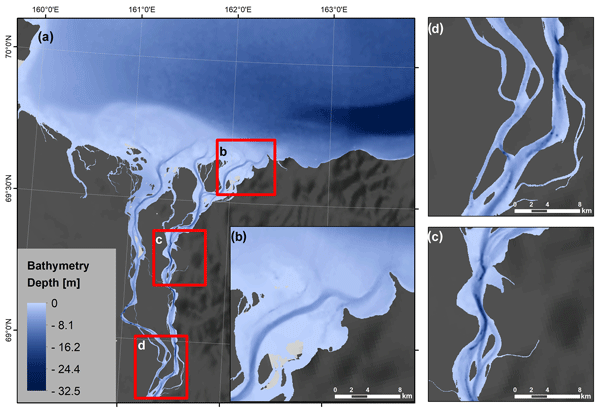
We created digital, high-resolution bathymetry data sets for the Lena Delta and Kolyma Gulf regions in northeastern Siberia. Based on nautical charts, we digitized depth points and isobath lines, which serve as an input for a 50 m bathymetry model. The benefit of this data set is the accurate mapping of near-shore areas as well as the offshore continuation of the main deep river channels. This will improve the estimation of river outflow and the nutrient flux output into the coastal zone.

Charlotte Haugk, Loeka L. Jongejans, Kai Mangelsdorf, Matthias Fuchs, Olga Ogneva, Juri Palmtag, Gesine Mollenhauer, Paul J. Mann, P. Paul Overduin, Guido Grosse, Tina Sanders, Robyn E. Tuerena, Lutz Schirrmeister, Sebastian Wetterich, Alexander Kizyakov, Cornelia Karger, and Jens Strauss
Biogeosciences, 19, 2079–2094, https://doi.org/10.5194/bg-19-2079-2022, https://doi.org/10.5194/bg-19-2079-2022, 2022
Short summary
Short summary
Buried animal and plant remains (carbon) from the last ice age were freeze-locked in permafrost. At an extremely fast eroding permafrost cliff in the Lena Delta (Siberia), we found this formerly frozen carbon well preserved. Our results show that ongoing degradation releases substantial amounts of this carbon, making it available for future carbon emissions. This mobilisation at the studied cliff and also similarly eroding sites bear the potential to affect rivers and oceans negatively.
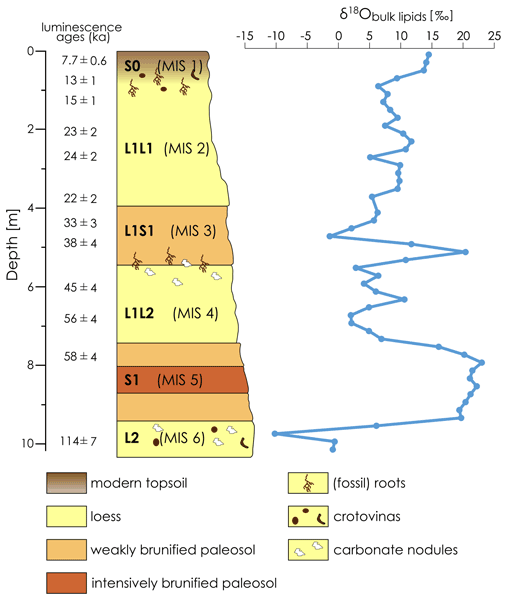
Jakob Labahn, Lucas Bittner, Philip Hirschmann, Christopher-Bastian Roettig, Diana Burghardt, Bruno Glaser, Slobodan B. Marković, and Michael Zech
E&G Quaternary Sci. J., 71, 83–90, https://doi.org/10.5194/egqsj-71-83-2022, https://doi.org/10.5194/egqsj-71-83-2022, 2022
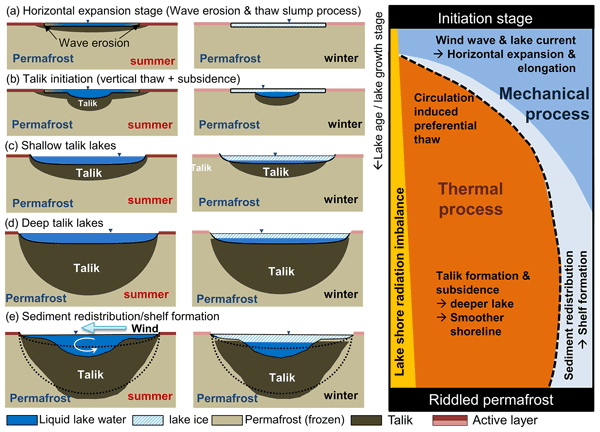
Noriaki Ohara, Benjamin M. Jones, Andrew D. Parsekian, Kenneth M. Hinkel, Katsu Yamatani, Mikhail Kanevskiy, Rodrigo C. Rangel, Amy L. Breen, and Helena Bergstedt
The Cryosphere, 16, 1247–1264, https://doi.org/10.5194/tc-16-1247-2022, https://doi.org/10.5194/tc-16-1247-2022, 2022
Short summary
Short summary
New variational principle suggests that a semi-ellipsoid talik shape (3D Stefan equation) is optimum for incoming energy. However, the lake bathymetry tends to be less ellipsoidal due to the ice-rich layers near the surface. Wind wave erosion is likely responsible for the elongation of lakes, while thaw subsidence slows the wave effect and stabilizes the thermokarst lakes. The derived 3D Stefan equation was compared to the field-observed talik thickness data using geophysical methods.
Marcel Lerch, Tobias Bromm, Clemens Geitner, Jean Nicolas Haas, Dieter Schäfer, Bruno Glaser, and Michael Zech
Biogeosciences, 19, 1135–1150, https://doi.org/10.5194/bg-19-1135-2022, https://doi.org/10.5194/bg-19-1135-2022, 2022
Short summary
Short summary
Faecal biomarker analyses present a useful tool in geoarcheological research. For a better understanding of the lives of our ancestors in alpine regions, we investigated modern livestock faeces and Holocene soils at the prehistorical encampment site of Ullafelsen in the Fotsch Valley, Stubai Alps, Austria. Initial results show a high input of livestock faeces and a negligible input of human faeces for this archeological site. Future studies will focus on mire archives in the Fotsch Valley.
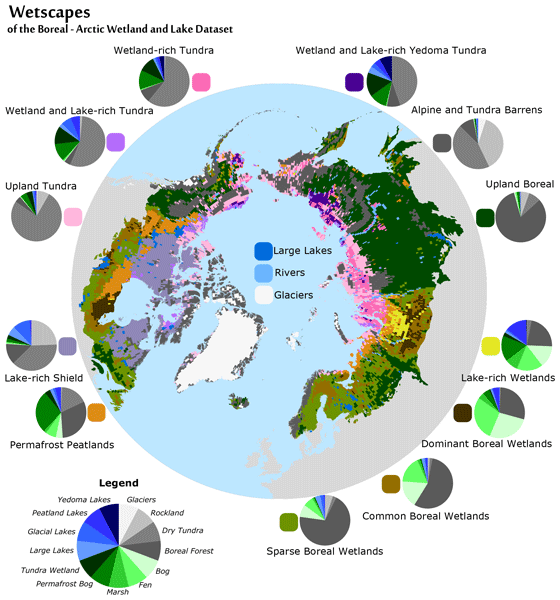
David Olefeldt, Mikael Hovemyr, McKenzie A. Kuhn, David Bastviken, Theodore J. Bohn, John Connolly, Patrick Crill, Eugénie S. Euskirchen, Sarah A. Finkelstein, Hélène Genet, Guido Grosse, Lorna I. Harris, Liam Heffernan, Manuel Helbig, Gustaf Hugelius, Ryan Hutchins, Sari Juutinen, Mark J. Lara, Avni Malhotra, Kristen Manies, A. David McGuire, Susan M. Natali, Jonathan A. O'Donnell, Frans-Jan W. Parmentier, Aleksi Räsänen, Christina Schädel, Oliver Sonnentag, Maria Strack, Suzanne E. Tank, Claire Treat, Ruth K. Varner, Tarmo Virtanen, Rebecca K. Warren, and Jennifer D. Watts
Earth Syst. Sci. Data, 13, 5127–5149, https://doi.org/10.5194/essd-13-5127-2021, https://doi.org/10.5194/essd-13-5127-2021, 2021
Short summary
Short summary
Wetlands, lakes, and rivers are important sources of the greenhouse gas methane to the atmosphere. To understand current and future methane emissions from northern regions, we need maps that show the extent and distribution of specific types of wetlands, lakes, and rivers. The Boreal–Arctic Wetland and Lake Dataset (BAWLD) provides maps of five wetland types, seven lake types, and three river types for northern regions and will improve our ability to predict future methane emissions.
Claude-Michel Nzotungicimpaye, Kirsten Zickfeld, Andrew H. MacDougall, Joe R. Melton, Claire C. Treat, Michael Eby, and Lance F. W. Lesack
Geosci. Model Dev., 14, 6215–6240, https://doi.org/10.5194/gmd-14-6215-2021, https://doi.org/10.5194/gmd-14-6215-2021, 2021
Short summary
Short summary
In this paper, we describe a new wetland methane model (WETMETH) developed for use in Earth system models. WETMETH consists of simple formulations to represent methane production and oxidation in wetlands. We also present an evaluation of the model performance as embedded in the University of Victoria Earth System Climate Model (UVic ESCM). WETMETH is capable of reproducing mean annual methane emissions consistent with present-day estimates from the regional to the global scale.
Cited articles
Alewell, C., Giesler, R., Klaminder, J., Leifeld, J., and Rollog, M.: Stable carbon isotopes as indicators for environmental change in palsa peats, Biogeosciences, 8, 1769–1778, https://doi.org/10.5194/bg-8-1769-2011, 2011.
Andersson, R. A. and Meyers, P. A.: Effect of climate change on delivery and degradation of lipid biomarkers in a Holocene peat sequence in the Eastern European Russian Arctic, Org. Geochem., 53, 63–72, https://doi.org/10.1016/j.orggeochem.2012.05.002, 2012.
Andersson, R. A., Meyers, P., Hornibrook, E., Kuhry, P., and Mörth, C.-M.: Elemental and isotopic carbon and nitrogen records of organic matter accumulation in a Holocene permafrost peat sequence in the East European Russian Arctic, J. Quaternary Sci., 27, 545–552, https://doi.org/10.1002/jqs.2541, 2012.
Andresen, C. G. and Lougheed, V. L.: Disappearing Arctic tundra ponds: Fine-scale analysis of surface hydrology in drained thaw lake basins over a 65 year period (1948–2013), J. Geophys. Res.-Biogeo., 120, 466–479, https://doi.org/10.1002/2014JG002778, 2015.
Arp, C. D., Jones, B. M., Schmutz, J. A., Urban, F. E., and Jorgenson, M. T.: Two mechanisms of aquatic and terrestrial habitat change along an Alaskan Arctic coastline, Polar Biol., 33, 1629–1640, https://doi.org/10.1007/s00300-010-0800-5, 2010.
Arp, C. D., Jones, B. M., Urban, F. E., and Grosse, G.: Hydrogeomorphic processes of thermokarst lakes with grounded-ice and floating-ice regimes on the Arctic coastal plain, Alaska, Hydrol. Process., 25, 2422–2438, https://doi.org/10.1002/hyp.8019, 2011.
Arp, C. D., Jones, B. M., Lu, Z., and Whitman, M. S.: Shifting balance of thermokarst lake ice regimes across the Arctic Coastal Plain of northern Alaska, Geophys. Res. Lett., 39, https://doi.org/10.1029/2012GL052518, 2012.
Athy, L. F.: Density, Porosity, and Compaction of Sedimentary Rocks1, AAPG Bull., 14, 1–24, https://doi.org/10.1306/3D93289E-16B1-11D7-8645000102C1865D, 1930.
Baas, M., Pancost, R., van Geel, B., and Sinninghe Damsté, J. S.: A comparative study of lipids in Sphagnum species, Org. Geochem., 31, 535–541, https://doi.org/10.1016/S0146-6380(00)00037-1, 2000.
Biskaborn, B. K., Smith, S. L., Noetzli, J., Matthes, H., Vieira, G., Streletskiy, D. A., Schoeneich, P., Romanovsky, V. E., Lewkowicz, A. G., Abramov, A., Allard, M., Boike, J., Cable, W. L., Christiansen, H. H., Delaloye, R., Diekmann, B., Drozdov, D., Etzelmüller, B., Grosse, G., Guglielmin, M., Ingeman-Nielsen, T., Isaksen, K., Ishikawa, M., Johansson, M., Johannsson, H., Joo, A., Kaverin, D., Kholodov, A., Konstantinov, P., Kröger, T., Lambiel, C., Lanckman, J.-P., Luo, D., Malkova, G., Meiklejohn, I., Moskalenko, N., Oliva, M., Phillips, M., Ramos, M., Sannel, A. B. K., Sergeev, D., Seybold, C., Skryabin, P., Vasiliev, A., Wu, Q., Yoshikawa, K., Zheleznyak, M., and Lantuit, H.: Permafrost is warming at a global scale, Nat. Commun., 10, 264, https://doi.org/10.1038/s41467-018-08240-4, 2019.
Black, R. F.: Gubik Formation of Quaternary age in northern Alaska: U.S. Geological Survey Professional Paper 302, 59–91, https://doi.org/10.3133/pp302C, 1964.
Blott, S. J. and Pye, K.: GRADISTAT: a grain size distribution and statistics package for the analysis of unconsolidated sediments, Earth Surf. Proc. Land., 26, 1237–1248, https://doi.org/10.1002/esp.261, 2001.
Bockheim, J. G., Everett, L. R., Hinkel, K. M., Nelson, F. E., and Brown, J.: Soil Organic Carbon Storage and Distribution in Arctic Tundra, Barrow, Alaska, Soil Sci. Soc. Am. J., 63, 934–940, https://doi.org/10.2136/sssaj1999.634934x, 1999.
Bockheim, J. G., Hinkel, K. M., Eisner, W. R., and Dai, X. Y.: Carbon Pools and Accumulation Rates in an Age-Series of Soils in Drained Thaw-Lake Basins, Arctic Alaska, Soil Sci. Soc. Am. J., 68, 697–704, https://doi.org/10.2136/sssaj2004.6970, 2004.
Bray, E. E. and Evans, E. D.: Hydrocarbons in Non-Reservoir-Rock Source Beds, AAPG Bull., 49, 248–257, 1965.
Brigham-Grette, J. and Hopkins, D. M.: Emergent Marine Record and Paleoclimate of the Last Interglaciation along the Northwest Alaskan Coast, Quaternary Res., 43, 159–173, https://doi.org/10.1006/qres.1995.1017, 1995.
Brittingham, A., Hren, M. T., and Hartman, G.: Microbial alteration of the hydrogen and carbon isotopic composition of n-alkanes in sediments, Org. Geochem., 107, 1–8, https://doi.org/10.1016/j.orggeochem.2017.01.010, 2017.
Brouchkov, A.: Nature and distribution of frozen saline sediments on the Russian Arctic coast, Permafrost Periglac., 13, 83–90, https://doi.org/10.1002/ppp.411, 2002.
Brouchkov, A.: Frozen saline soils of the Arctic coast: their distribution and engineering properties, Proceedings of the Eighth International Conference on Permafrost, 95–100, ISBN 90 5809 582 7, 2003.
Brown, J., Jorgenson, M. T., Smith, O. P., and Lee, W.: Long-term rates of coastal erosion and carbon input, Elson Lagoon, Barrow, Alaska, Proceedings of the 8th International Conference on Permafrost, 101–106, ISBN 90 5809 582 7, 2003.
Cahyadi, A., Fatchurohman, H., and Riyanto, I. A.: Groundwater quality analysis in dry seasons in Panggang Cay, Kepulauan Seribu, Jakarta, Indonesia, IOP C. Ser. Earth Env., 212, 012001, https://doi.org/10.1088/1755-1315/212/1/012001, 2018.
Carter, L. D.: A Pleistocene Sand Sea on the Alaskan Arctic Coastal Plain, Science, 211, 381–383, https://doi.org/10.1126/science.211.4480.381, 1981.
Chen, Y., Lara, M. J., Jones, B. M., Frost, G. V., and Hu, F. S.: Thermokarst acceleration in Arctic tundra driven by climate change and fire disturbance, One Earth, 4, 1718–1729, https://doi.org/10.1016/j.oneear.2021.11.011, 2021.
Chylek, P., Folland, C., Klett, J. D., Wang, M., Hengartner, N., Lesins, G., and Dubey, M. K.: Annual Mean Arctic Amplification 1970–2020: Observed and Simulated by CMIP6 Climate Models, Geophys. Res. Lett., 49, e2022GL099371, https://doi.org/10.1029/2022GL099371, 2022.
Copernicus: Copernicus Sentinel-2 (processed by ESA), MSI Level-2A BOA Reflectance Product. Collection 0, European Space Agency, https://doi.org/10.5270/S2_-6eb6imz, 2023.
Coplen, T. B., Brand, W. A., Gehre, M., Gröning, M., Meijer, H. A. J., Toman, B., and Verkouteren, R. M.: New Guidelines for δ13C Measurements, Anal. Chem., 78, 2439–2441, https://doi.org/10.1021/ac052027c, 2006.
Creel, R., Guimond, J., Jones, B. M., Nielsen, D. M., Bristol, E., Tweedie, C. E., and Overduin, P. P.: Permafrost thaw subsidence, sea-level rise, and erosion are transforming Alaska's Arctic coastal zone, P. Natl. Acad. Sci. USA, 121, e2409411121, https://doi.org/10.1073/pnas.2409411121, 2024.
DGGS: DGGS Elevation Portal, https://elevation.alaska.gov/ (last access: 27 February 2025), 2018.
Diefendorf, A. F., Freeman, K. H., Wing, S. L., and Graham, H. V.: Production of n-alkyl lipids in living plants and implications for the geologic past, Geochim. Cosmochim. Ac., 75, 7472–7485, https://doi.org/10.1016/j.gca.2011.09.028, 2011.
Dimova, N. T., Paytan, A., Kessler, J. D., Sparrow, K. J., Garcia-Tigreros Kodovska, F., Lecher, A. L., Murray, J., and Tulaczyk, S. M.: Current Magnitude and Mechanisms of Groundwater Discharge in the Arctic: Case Study from Alaska, Environ. Sci. Technol., 49, 12036–12043, https://doi.org/10.1021/acs.est.5b02215, 2015.
Eglinton, G., Hamilton, R. J., Raphael, R. A., and Gonzalez, A. G.: Hydrocarbon Constituents of the Wax Coatings of Plant Leaves: A Taxonomic Survey, Nature, 193, 739–742, https://doi.org/10.1038/193739a0, 1962.
Eisner, W. R., Bockheim, J. G., Hinkel, K. M., Brown, T. A., Nelson, F. E., Peterson, K. M., and Jones, B. M.: Paleoenvironmental analyses of an organic deposit from an erosional landscape remnant, Arctic Coastal Plain of Alaska, Palaeogeogr. Palaeocl., 217, 187–204, https://doi.org/10.1016/j.palaeo.2004.11.025, 2005.
Farquharson, L. M., Romanovsky, V. E., Kholodov, A., and Nicolsky, D.: Sub-aerial talik formation observed across the discontinuous permafrost zone of Alaska, Nat. Geosci., https://doi.org/10.1038/s41561-022-00952-z, 2022.
Ficken, K. J., Li, B., Swain, D. L., and Eglinton, G.: An n-alkane proxy for the sedimentary input of submerged/floating freshwater aquatic macrophytes, Org. Geochem., 31, 745–749, https://doi.org/10.1016/S0146-6380(00)00081-4, 2000.
Fuchs, M., Lenz, J., Jock, S., Nitze, I., Jones, B. M., Strauss, J., Günther, F., and Grosse, G.: Organic Carbon and Nitrogen Stocks Along a Thermokarst Lake Sequence in Arctic Alaska, J. Geophys. Res.-Biogeo., 124, 1230–1247, https://doi.org/10.1029/2018JG004591, 2019.
Gibbs, A. E. and Richmond, B. M.: National assessment of shoreline change – Summary statistics for updated vector shorelines and associated shoreline change data for the north coast of Alaska, U. S.-Canadian border to Icy Cape, U. S. Geological Survey, Virginia, US, https://doi.org/10.3133/ofr20171107, 2017.
Giest, F. P., Jenrich, M., Grosse, G., Jones, B. M., Mangelsdorf, K., Windirsch, T., and Strauss, J.: Organic carbon, mercury, and sediment characteristics along a land–shore transect in Arctic Alaska, Biogeosciences, 22, 2871–2887, https://doi.org/10.5194/bg-22-2871-2025, 2025.
Goñi, M. A., Yunker, M. B., Macdonald, R. W., and Eglinton, T. I.: Distribution and sources of organic biomarkers in arctic sediments from the Mackenzie River and Beaufort Shelf, Mar. Chem., 71, 23–51, https://doi.org/10.1016/S0304-4203(00)00037-2, 2000.
Grosse, G., Harden, J., Turetsky, M., McGuire, A. D., Camill, P., Tarnocai, C., Frolking, S., Schuur, E. A. G., Jorgenson, T., Marchenko, S., Romanovsky, V., Wickland, K. P., French, N., Waldrop, M., Bourgeau-Chavez, L., and Striegl, R. G.: Vulnerability of high-latitude soil organic carbon in North America to disturbance, J. Geophys. Res., 116, G00K06, https://doi.org/10.1029/2010JG001507, 2011.
Guimond, J. A., Mohammed, A. A., Walvoord, M. A., Bense, V. F., and Kurylyk, B. L.: Saltwater Intrusion Intensifies Coastal Permafrost Thaw, Geophys. Res. Lett., 48, e2021GL094776, https://doi.org/10.1029/2021GL094776, 2021.
Guimond, J. A., Mohammed, A. A., Walvoord, M. A., Bense, V. F., and Kurylyk, B. L.: Sea-level rise and warming mediate coastal groundwater discharge in the Arctic, Environ. Res. Lett., 17, 045027, https://doi.org/10.1088/1748-9326/ac6085, 2022.
Harris, C. M., McClelland, J. W., Connelly, T. L., Crump, B. C., and Dunton, K. H.: Salinity and Temperature Regimes in Eastern Alaskan Beaufort Sea Lagoons in Relation to Source Water Contributions, Estuar. Coast., 40, 50–62, https://doi.org/10.1007/s12237-016-0123-z, 2017.
Haugk, C., Jongejans, L. L., Mangelsdorf, K., Fuchs, M., Ogneva, O., Palmtag, J., Mollenhauer, G., Mann, P. J., Overduin, P. P., Grosse, G., Sanders, T., Tuerena, R. E., Schirrmeister, L., Wetterich, S., Kizyakov, A., Karger, C., and Strauss, J.: Organic matter characteristics of a rapidly eroding permafrost cliff in NE Siberia (Lena Delta, Laptev Sea region), Biogeosciences, 19, 2079–2094, https://doi.org/10.5194/bg-19-2079-2022, 2022.
Hinkel, K. M., Eisner, W. R., Bockheim, J. G., Nelson, F. E., Peterson, K. M., and Dai, X.: Spatial Extent, Age, and Carbon Stocks in Drained Thaw Lake Basins on the Barrow Peninsula, Alaska, Arct. Antarct. Alp. Res., 35, 291–300, https://doi.org/10.1657/1523-0430(2003)035[0291:SEAACS]2.0.CO;2, 2003.
Hinkel, K. M., Frohn, R. C., Nelson, F. E., Eisner, W. R., and Beck, R. A.: Morphometric and spatial analysis of thaw lakes and drained thaw lake basins in the western Arctic Coastal Plain, Alaska, Permafrost Periglac., 16, 327–341, https://doi.org/10.1002/ppp.532, 2005.
Irrgang, A. M., Bendixen, M., Farquharson, L. M., Baranskaya, A. V., Erikson, L. H., Gibbs, A. E., Ogorodov, S. A., Overduin, P. P., Lantuit, H., Grigoriev, M. N., and Jones, B. M.: Drivers, dynamics and impacts of changing Arctic coasts, Nat. Rev. Earth Environ., 3, 39–54, https://doi.org/10.1038/s43017-021-00232-1, 2022.
Jenrich, M., Angelopoulos, M., Grosse, G., Overduin, P. P., Schirrmeister, L., Nitze, I., Biskaborn, B. K., Liebner, S., Grigoriev, M., Murray, A., Jongejans, L. L., and Strauss, J.: Thermokarst lagoons: A core-based assessment of depositional characteristics and an estimate of carbon pools on the Bykovsky Peninsula, Front. Earth Sci., 9, https://doi.org/10.3389/feart.2021.637899, 2021.
Jenrich, M., Angelopoulos, M., Liebner, S., Treat, C., Knoblauch, C., Yang, S., Grosse, G., Giebeler, F., Jongejans, L. L., Grigoriev, M., and Strauss, J.: Greenhouse Gas Production and Microbial Response During the Transition From Terrestrial Permafrost to a Marine Environment, Permafrost Periglac., 36, 63–82, https://doi.org/10.1002/ppp.2251, 2024.
Jenrich, M., Wolter, J., Liebner, S., Knoblauch, C., Grosse, G., Giebeler, F., Whalen, D., and Strauss, J.: Rising Arctic seas and thawing permafrost: uncovering the carbon cycle impact in a thermokarst lagoon system in the outer Mackenzie Delta, Canada, Biogeosciences, 22, 2069–2086, https://doi.org/10.5194/bg-22-2069-2025, 2025a.
Jenrich, M., Prodinger, M., Nitze, I., Grosse, G., and Strauss, J.: Thermokarst Lagoons: Distribution, Classification and Dynamics in Permafrost-to-Marine Transitions, Permafrost Periglac., https://doi.org/10.1002/ppp.70001, 2025b.
Jones, B. M., Arp, C. D., Grosse, G., Nitze, I., Lara, M. J., Whitman, M. S., Farquharson, L. M., Kanevskiy, M., Parsekian, A. D., Breen, A. L., Ohara, N., Rangel, R. C., and Hinkel, K. M.: Identifying historical and future potential lake drainage events on the western Arctic coastal plain of Alaska, Permafrost Periglac., 31, 110–127, https://doi.org/10.1002/ppp.2038, 2020.
Jones, B. M., Grosse, G., Farquharson, L. M., Roy-Léveillée, P., Veremeeva, A., Kanevskiy, M. Z., Gaglioti, B. V., Breen, A. L., Parsekian, A. D., Ulrich, M., and Hinkel, K. M.: Lake and drained lake basin systems in lowland permafrost regions, Nat. Rev. Earth Environ., 3, 85–98, https://doi.org/10.1038/s43017-021-00238-9, 2022.
Jones, B. M., Kanevskiy, M. Z., Parsekian, A. D., Bergstedt, H., Ward Jones, M. K., Rangel, R. C., Hinkel, K. M., and Shur, Y.: Rapid Saline Permafrost Thaw Below a Shallow Thermokarst Lake in Arctic Alaska, Geophys. Res. Lett., 50, e2023GL105552, https://doi.org/10.1029/2023GL105552, 2023.
Jones, M. C. and Yu, Z.: Rapid deglacial and early Holocene expansion of peatlands in Alaska, P. Natl. Acad. Sci. USA, 107, 7347–7352, https://doi.org/10.1073/pnas.0911387107, 2010.
Jones, M. C., Grosse, G., Jones, B. M., and Walter Anthony, K. M.: Peat accumulation in drained thermokarst lake basins in continuous, ice-rich permafrost, northern Seward Peninsula, Alaska, J. Geophys. Res., 117, https://doi.org/10.1029/2011JG001766, 2012.
Jong, D., Bröder, L., Tesi, T., Tanski, G., Oudenhuijsen, M., Fritz, M., Lantuit, H., Haghipour, N., Eglinton, T., and Vonk, J.: Selective Sorting and Degradation of Permafrost Organic Matter in the Nearshore Zone of Herschel Island (Yukon, Canada), J. Geophys. Res.-Biogeo., 129, e2023JG007479, https://doi.org/10.1029/2023JG007479, 2024.
Jongejans, L. L., Mangelsdorf, K., Schirrmeister, L., Grigoriev, M. N., Maksimov, G. M., Biskaborn, B. K., Grosse, G., and Strauss, J.: n-Alkane Characteristics of Thawed Permafrost Deposits Below a Thermokarst Lake on Bykovsky Peninsula, Northeastern Siberia, Front. Environ. Sci., 8, 118, https://doi.org/10.3389/fenvs.2020.00118, 2020.
Jongejans, L. L., Liebner, S., Knoblauch, C., Mangelsdorf, K., Ulrich, M., Grosse, G., Tanski, G., Fedorov, A. N., Konstantinov, P. Ya., Windirsch, T., Wiedmann, J., and Strauss, J.: Greenhouse gas production and lipid biomarker distribution in Yedoma and Alas thermokarst lake sediments in Eastern Siberia, Glob. Change Biol., 27, 2822–2839, https://doi.org/10.1111/gcb.15566, 2021.
Kaufman, D. S., Ager, T. A., Anderson, N. J., Anderson, P. M., Andrews, J. T., Bartlein, P. J., Brubaker, L. B., Coats, L. L., Cwynar, L. C., Duvall, M. L., Dyke, A. S., Edwards, M. E., Eisner, W. R., Gajewski, K., Geirsdóttir, A., Hu, F. S., Jennings, A. E., Kaplan, M. R., Kerwin, M. W., Lozhkin, A. V., MacDonald, G. M., Miller, G. H., Mock, C. J., Oswald, W. W., Otto-Bliesner, B. L., Porinchu, D. F., Rühland, K., Smol, J. P., Steig, E. J., and Wolfe, B. B.: Holocene thermal maximum in the western Arctic (0–180° W), Quaternary Sci. Rev., 23, 529–560, https://doi.org/10.1016/j.quascirev.2003.09.007, 2004.
Killops, S. D. and Killops, V. J.: Introduction to organic geochemistry, 2nd edn., Blackwell Pub, Malden, MA, 393 pp., https://doi.org/10.1002/9781118697214, 2005.
Lantz, T. C., Zhang, Y., and Kokelj, S. V.: Impacts of ecological succession and climate warming on permafrost aggradation in drained lake basins of the Tuktoyaktuk Coastlands, Northwest Territories, Canada, Permafrost Periglac., 33, 176–192, https://doi.org/10.1002/ppp.2143, 2022.
Lara, M. J., McGuire, A. D., Euskirchen, E. S., Tweedie, C. E., Hinkel, K. M., Skurikhin, A. N., Romanovsky, V. E., Grosse, G., Bolton, W. R., and Genet, H.: Polygonal tundra geomorphological change in response to warming alters future CO2 and CH4 flux on the Barrow Peninsula, Glob. Change Biol., 21, 1634–1651, https://doi.org/10.1111/gcb.12757, 2015.
Lara, M. J., McGuire, A. D., Euskirchen, E. S., Genet, H., Yi, S., Rutter, R., Iversen, C., Sloan, V., and Wullschleger, S. D.: Local-scale Arctic tundra heterogeneity affects regional-scale carbon dynamics, Nat. Commun., 11, 4925, https://doi.org/10.1038/s41467-020-18768-z, 2020.
Lara, M. J., Michaelides, R., Anderson, D., Chen, W., Hall, E. C., Ludden, C., Schore, A. I. G., Mishra, U., and Scott, S. N.: A 20 m spatial resolution peatland extent map of Alaska, Sci. Data, 12, 226, https://doi.org/10.1038/s41597-025-04502-1, 2025.
Lenz, J., Jones, B. M., Wetterich, S., Tjallingii, R., Fritz, M., Arp, C. D., Rudaya, N., and Grosse, G.: Impacts of shore expansion and catchment characteristics on lacustrine thermokarst records in permafrost lowlands, Alaska Arctic Coastal Plain, Arktos, 2, 25, https://doi.org/10.1007/s41063-016-0025-0, 2016.
Li, M., Li, Z., Dong, S., Chen, L., Su, X., Lu, C., Zhou, A., and Wang, N.: Salinity impacts on n-alkanes in lake sediments of the Badain Jaran Desert, Northwestern China: Implications for paleoclimate reconstruction, Palaeogeogr. Palaeocl., 656, 112571, https://doi.org/10.1016/j.palaeo.2024.112571, 2024.
Ling, F. and Zhang, T.: Modeling study of talik freeze-up and permafrost response under drained thaw lakes on the Alaskan Arctic Coastal Plain, J. Geophys. Res.-Atmos., 109, https://doi.org/10.1029/2003JD003886, 2004.
Lisiecki, L. E. and Herbert, T. D.: Automated composite depth scale construction and estimates of sediment core extension, Paleoceanography, 22, https://doi.org/10.1029/2006PA001401, 2007.
Liu, Z., Kimball, J. S., Ballantyne, A., Watts, J. D., Natali, S. M., Rogers, B. M., Yi, Y., Klene, A. E., Moghaddam, M., Du, J., and Zona, D.: Widespread deepening of the active layer in northern permafrost regions from 2003 to 2020, Environ. Res. Lett., 19, 014020, https://doi.org/10.1088/1748-9326/ad0f73, 2024.
Lougheed, V. L., Tweedie, C. E., Andresen, C. G., Armendariz, A. M., Escarzaga, S. M., and Tarin, G.: Patterns and Drivers of Carbon Dioxide Concentrations in Aquatic Ecosystems of the Arctic Coastal Tundra, Global Biogeochem. Cy., 34, e2020GB006552, https://doi.org/10.1029/2020GB006552, 2020.
Maffei, M.: Chemotaxonomic significance of leaf wax alkanes in the gramineae, Biochem. Syst. Ecol., 24, 53–64, https://doi.org/10.1016/0305-1978(95)00102-6, 1996.
Martens, J., Mueller, C. W., Joshi, P., Rosinger, C., Maisch, M., Kappler, A., Bonkowski, M., Schwamborn, G., Schirrmeister, L., and Rethemeyer, J.: Stabilization of mineral-associated organic carbon in Pleistocene permafrost, Nat. Commun., 14, 2120, https://doi.org/10.1038/s41467-023-37766-5, 2023.
Marzi, R., Torkelson, B. E., and Olson, R. K.: A revised carbon preference index, Org. Geochem., 20, 1303–1306, https://doi.org/10.1016/0146-6380(93)90016-5, 1993.
McGuire, A. D., Koven, C., Lawrence, D. M., Clein, J. S., Xia, J., Beer, C., Burke, E., Chen, G., Chen, X., Delire, C., Jafarov, E., MacDougall, A. H., Marchenko, S., Nicolsky, D., Peng, S., Rinke, A., Saito, K., Zhang, W., Alkama, R., Bohn, T. J., Ciais, P., Decharme, B., Ekici, A., Gouttevin, I., Hajima, T., Hayes, D. J., Ji, D., Krinner, G., Lettenmaier, D. P., Luo, Y., Miller, P. A., Moore, J. C., Romanovsky, V., Schädel, C., Schaefer, K., Schuur, E. A. G., Smith, B., Sueyoshi, T., and Zhuang, Q.: Variability in the sensitivity among model simulations of permafrost and carbon dynamics in the permafrost region between 1960 and 2009, Global Biogeochem. Cy., 30, 1015–1037, https://doi.org/10.1002/2016GB005405, 2016.
Meyer, H., Schirrmeister, L., Andreev, A., Wagner, D., Hubberten, H.-W., Yoshikawa, K., Bobrov, A., Wetterich, S., Opel, T., Kandiano, E., and Brown, J.: Lateglacial and Holocene isotopic and environmental history of northern coastal Alaska – Results from a buried ice-wedge system at Barrow, Quaternary Sci. Rev., 29, 3720–3735, https://doi.org/10.1016/j.quascirev.2010.08.005, 2010.
Meyers, P. A.: Preservation of elemental and isotopic source identification of sedimentary organic matter, Chem. Geol., 114, 289–302, https://doi.org/10.1016/0009-2541(94)90059-0, 1994.
Mollenhauer, G., Grotheer, H., Gentz, T., Bonk, E., and Hefter, J.: Standard operation procedures and performance of the MICADAS radiocarbon laboratory at Alfred Wegener Institute (AWI), Germany, Nucl. Instrum. Meth. B, 496, 45–51, https://doi.org/10.1016/j.nimb.2021.03.016, 2021.
Mu, M., Mu, C., Liu, H., Lei, P., Ge, Y., Zhou, Z., Peng, X., and Ma, T.: Thermokarst lake drainage halves the temperature sensitivity of CH4 release on the Qinghai-Tibet Plateau, Nat. Commun., 16, 1992, https://doi.org/10.1038/s41467-025-57356-x, 2025.
Nielsen, D. M., Pieper, P., Barkhordarian, A., Overduin, P., Ilyina, T., Brovkin, V., Baehr, J., and Dobrynin, M.: Increase in Arctic coastal erosion and its sensitivity to warming in the twenty-first century, Nat. Clim. Change, 12, 263–270, https://doi.org/10.1038/s41558-022-01281-0, 2022.
Nitzbon, J., Schneider von Deimling, T., Aliyeva, M., Chadburn, S. E., Grosse, G., Laboor, S., Lee, H., Lohmann, G., Steinert, N. J., Stuenzi, S. M., Werner, M., Westermann, S., and Langer, M.: No respite from permafrost-thaw impacts in the absence of a global tipping point, Nat. Clim. Change, 14, 573–585, https://doi.org/10.1038/s41558-024-02011-4, 2024.
Nitze, I., Grosse, G., Jones, B. M., Arp, C. D., Ulrich, M., Fedorov, A., and Veremeeva, A.: Landsat-Based Trend Analysis of Lake Dynamics across Northern Permafrost Regions, Remote Sens.-Basel, 9, 640, https://doi.org/10.3390/rs9070640, 2017.
Nyland, K. E., Shiklomanov, N. I., Streletskiy, D. A., Nelson, F. E., Klene, A. E., and Kholodov, A. L.: Long-term Circumpolar Active Layer Monitoring (CALM) program observations in Northern Alaskan tundra, Polar Geography, 44, 167–185, https://doi.org/10.1080/1088937X.2021.1988000, 2021.
Obu, J., Westermann, S., Kääb, A., and Bartsch, A.: Ground Temperature Map, 2000–2016, Northern Hemisphere Permafrost, https://doi.org/10.1594/PANGAEA.888600, 2018.
Obu, J., Westermann, S., Bartsch, A., Berdnikov, N., Christiansen, H. H., Dashtseren, A., Delaloye, R., Elberling, B., Etzelmüller, B., Kholodov, A., Khomutov, A., Kääb, A., Leibman, M. O., Lewkowicz, A. G., Panda, S. K., Romanovsky, V., Way, R. G., Westergaard-Nielsen, A., Wu, T., Yamkhin, J., and Zou, D.: Northern Hemisphere permafrost map based on TTOP modelling for 2000–2016 at 1 km2 scale, Earth-Sci. Rev., 193, 299–316, https://doi.org/10.1016/j.earscirev.2019.04.023, 2019.
Osterkamp, T. E.: Occurrence and potential importance of saline permafrost in Alaska, Workshop on Saline Permafrost, 1989.
Osterkamp, T. E. and Harrison, W. D.: Temperature measurements in subsea permafrost off the coast of Alaska, 4th Canadian Permafrost Conf., 1982.
Osterkamp, T. E. and Harrison, W. D.: Subsea permafrost: Probing, thermal regime and data analysis, U. S. Dep. of Commer., NOAA, Environ. Res. Lab., Boulder, Colorado, US, 1985.
Otto, A. and Simpson, M. J.: Degradation and Preservation of Vascular Plant-derived Biomarkers in Grassland and Forest Soils from Western Canada, Biogeochemistry, 74, 377–409, https://doi.org/10.1007/s10533-004-5834-8, 2005.
Overduin, P. P., Westermann, S., Yoshikawa, K., Haberlau, T., Romanovsky, V., and Wetterich, S.: Geoelectric observations of the degradation of nearshore submarine permafrost at Barrow (Alaskan Beaufort Sea), J. Geophys. Res.-Earth, 117, https://doi.org/10.1029/2011JF002088, 2012.
Parazoo, N. C., Koven, C. D., Lawrence, D. M., Romanovsky, V., and Miller, C. E.: Detecting the permafrost carbon feedback: talik formation and increased cold-season respiration as precursors to sink-to-source transitions, The Cryosphere, 12, 123–144, https://doi.org/10.5194/tc-12-123-2018, 2018.
Ping, C.-L., Michaelson, G. J., Guo, L., Jorgenson, M. T., Kanevskiy, M., Shur, Y., Dou, F., and Liang, J.: Soil carbon and material fluxes across the eroding Alaska Beaufort Sea coastline, J. Geophys. Res.-Biogeo., 116, https://doi.org/10.1029/2010JG001588, 2011.
Poynter, J. and Eglinton, G.: Molecular composition of three sediments from hole 717c: the Bengal fan, edited by: Cochran, J. R., Stow, D. A. V., et al., Ocean Drilling Program, https://doi.org/10.2973/odp.proc.sr.116.1990, 1990.
Radke, M., Willsch, H., and Welte, D. H.: Preparative hydrocarbon group type determination by automated medium pressure liquid chromatography, Anal. Chem., 52, 406–411, https://doi.org/10.1021/ac50053a009, 1980.
Rantanen, M., Karpechko, A. Y., Lipponen, A., Nordling, K., Hyvärinen, O., Ruosteenoja, K., Vihma, T., and Laaksonen, A.: The Arctic has warmed nearly four times faster than the globe since 1979, Commun. Earth Environ., 3, 1–10, https://doi.org/10.1038/s43247-022-00498-3, 2022.
Rawlins, M. A.: Increasing freshwater and dissolved organic carbon flows to Northwest Alaska's Elson lagoon, Environ. Res. Lett., 16, 105014, https://doi.org/10.1088/1748-9326/ac2288, 2021.
Reimer, P. J., Austin, W. E. N., Bard, E., Bayliss, A., Blackwell, P. G., Ramsey, C. B., Butzin, M., Cheng, H., Edwards, R. L., Friedrich, M., Grootes, P. M., Guilderson, T. P., Hajdas, I., Heaton, T. J., Hogg, A. G., Hughen, K. A., Kromer, B., Manning, S. W., Muscheler, R., Palmer, J. G., Pearson, C., van der Plicht, J., Reimer, R. W., Richards, D. A., Scott, E. M., Southon, J. R., Turney, C. S. M., Wacker, L., Adolphi, F., Büntgen, U., Capano, M., Fahrni, S. M., Fogtmann-Schulz, A., Friedrich, R., Köhler, P., Kudsk, S., Miyake, F., Olsen, J., Reinig, F., Sakamoto, M., Sookdeo, A., and Talamo, S.: The IntCal20 Northern Hemisphere Radiocarbon Age Calibration Curve (0–55 cal kBP), Radiocarbon, 62, 725–757, https://doi.org/10.1017/RDC.2020.41, 2020.
Schäfer, I. K., Lanny, V., Franke, J., Eglinton, T. I., Zech, M., Vysloužilová, B., and Zech, R.: Leaf waxes in litter and topsoils along a European transect, SOIL, 2, 551–564, https://doi.org/10.5194/soil-2-551-2016, 2016.
Schirrmeister, L., Grigoriev, M. N., Strauss, J., Grosse, G., Overduin, P. P., Kholodov, A., Guenther, F., and Hubberten, H.-W.: Sediment characteristics of a thermokarst lagoon in the northeastern Siberian Arctic (Ivashkina Lagoon, Bykovsky Peninsula), Arktos, 4, 1–16, https://doi.org/10.1007/s41063-018-0049-8, 2018.
Schuur, E. A. G., Abbott, B. W., Commane, R., Ernakovich, J., Euskirchen, E., Hugelius, G., Grosse, G., Jones, M., Koven, C., Leshyk, V., Lawrence, D., Loranty, M. M., Mauritz, M., Olefeldt, D., Natali, S., Rodenhizer, H., Salmon, V., Schädel, C., Strauss, J., Treat, C., and Turetsky, M.: Permafrost and Climate Change: Carbon Cycle Feedbacks From the Warming Arctic, Annu. Rev. Env. Resour., 47, 343–371, https://doi.org/10.1146/annurev-environ-012220-011847, 2022.
Schwamborn, G., Schirrmeister, L., Mohammadi, A., Meyer, H., Kartoziia, A., Maggioni, F., and Strauss, J.: Fluvial and permafrost history of the lower Lena River, north-eastern Siberia, over late Quaternary time, Sedimentology, 70, 235–258, https://doi.org/10.1111/sed.13037, 2023.
Schwark, L., Zink, K., and Lechterbeck, J.: Reconstruction of postglacial to early Holocene vegetation history in terrestrial Central Europe via cuticular lipid biomarkers and pollen records from lake sediments, Geology, 30, 463–466, https://doi.org/10.1130/0091-7613(2002)030<0463:ROPTEH>2.0.CO;2, 2002.
Seemann, F., Jenrich, M., Lindemann, J., Eulenburg, A., Weiner, M., Mollenhauer, G., Meyer, H., Overduin, P. P., Grosse, G., Jones, B., and Strauss, J.: Sediment and pore water investigations in thermokarst terrain near Utqiagvik, Alaska, PANGAEA [data set], https://doi.org/10.1594/PANGAEA.983965, 2025a.
Seemann, F., Jenrich, M., Lindemann, J., Weiner, M., Hefter, J., Meyer, H., Grosse, G., Jones, B., and Strauss, J.: n-Alkane biomarker, carbon, nitrogen and d13C data from the Barrow Peninsula (northern Alaska) before and after a one-year long incubation experiment, PANGAEA [data set], https://doi.org/10.1594/PANGAEA.983966, 2025b.
Shur, Y., Hinkel, K. M., and Nelson, F. E.: The transient layer: implications for geocryology and climate-change science, Permafrost Periglac., 16, 5–17, https://doi.org/10.1002/ppp.518, 2005.
Smith, S. L., O'Neill, H. B., Isaksen, K., Noetzli, J., and Romanovsky, V. E.: The changing thermal state of permafrost, Nat. Rev. Earth Environ., 3, 10–23, https://doi.org/10.1038/s43017-021-00240-1, 2022.
Strauss, J., Schirrmeister, L., Mangelsdorf, K., Eichhorn, L., Wetterich, S., and Herzschuh, U.: Organic-matter quality of deep permafrost carbon – a study from Arctic Siberia, Biogeosciences, 12, 2227–2245, https://doi.org/10.5194/bg-12-2227-2015, 2015.
Strauss, J., Biasi, C., Sanders, T., Abbott, B. W., von Deimling, T. S., Voigt, C., Winkel, M., Marushchak, M. E., Kou, D., Fuchs, M., Horn, M. A., Jongejans, L. L., Liebner, S., Nitzbon, J., Schirrmeister, L., Walter Anthony, K., Yang, Y., Zubrzycki, S., Laboor, S., Treat, C., and Grosse, G.: A globally relevant stock of soil nitrogen in the Yedoma permafrost domain, Nat. Commun., 13, 6074, https://doi.org/10.1038/s41467-022-33794-9, 2022.
Strauss, J., Fuchs, M., Hugelius, G., Miesner, F., Nitze, I., Opfergelt, S., Schuur, E., Treat, C., Turetsky, M., Yang, Y., and Grosse, G.: Organic matter storage and vulnerability in the permafrost domain, in: Encyclopedia of Quaternary Science, Elsevier, 399–410, https://doi.org/10.1016/B978-0-323-99931-1.00164-1, 2025.
Struck, J., Roettig, C. B., Faust, D., and Zech, R.: Leaf waxes from aeolianite–paleosol sequences on Fuerteventura and their potential for paleoenvironmental and climate reconstructions in the arid subtropics, E&G Quaternary Sci. J., 66, 109–114, https://doi.org/10.5194/egqsj-66-109-2018, 2018.
Stuiver, M. and Reimer, P. J.: Extended 14C Data Base and Revised CALIB 3.0 14C Age Calibration Program, Radiocarbon, 35, 215–230, https://doi.org/10.1017/S0033822200013904, 1993.
Thomas, C. L., Jansen, B., van Loon, E. E., and Wiesenberg, G. L. B.: Transformation of n-alkanes from plant to soil: a review, SOIL, 7, 785–809, https://doi.org/10.5194/soil-7-785-2021, 2021.
Tipple, B. J. and Pagani, M.: A 35 Myr North American leaf-wax compound-specific carbon and hydrogen isotope record: Implications for C4 grasslands and hydrologic cycle dynamics, Earth Planet. Sc. Lett., 299, 250–262, https://doi.org/10.1016/j.epsl.2010.09.006, 2010.
Ulyantsev, A. S., Romankevich, E. A., Bratskaya, S. Yu., Prokuda, N. A., Sukhoverkhov, S. V., Semiletov, I. P., and Sergienko, V. I.: Characteristic of quaternary sedimentation on a shelf of the Laptev Sea according to the molecular composition of n-alkanes, Dokl. Earth Sci., 473, 449–453, https://doi.org/10.1134/S1028334X17040158, 2017.
van Everdingen, R. O. (Ed.): Multi-language Glossary of Permafrost and Related Ground-ice Terms in Chinese, English, French, German, Icelandic, Italian, Norwegian, Polish, Romanian, Spanish, and Swedish, Arctic Inst. of North America University of Calgary, Calgary, Alberta, Canada, 2005.
Vonk, J. E., Fritz, M., Speetjens, N. J., Babin, M., Bartsch, A., Basso, L. S., Bröder, L., Göckede, M., Gustafsson, Ö., Hugelius, G., Irrgang, A. M., Juhls, B., Kuhn, M. A., Lantuit, H., Manizza, M., Martens, J., O'Regan, M., Suslova, A., Tank, S. E., Terhaar, J., and Zolkos, S.: The land–ocean Arctic carbon cycle, Nat. Rev. Earth Environ., 6, 86–105, https://doi.org/10.1038/s43017-024-00627-w, 2025.
Walter Anthony, K. M., Zimov, S. A., Grosse, G., Jones, M. C., Anthony, P. M., Chapin III, F. S., Finlay, J. C., Mack, M. C., Davydov, S., Frenzel, P., and Frolking, S.: A shift of thermokarst lakes from carbon sources to sinks during the Holocene epoch, Nature, 511, 452–456, https://doi.org/10.1038/nature13560, 2014.
Webb, E. E., Liljedahl, A. K., Cordeiro, J. A., Loranty, M. M., Witharana, C., and Lichstein, J. W.: Permafrost thaw drives surface water decline across lake-rich regions of the Arctic, Nat. Clim. Change, 12, 841–846, https://doi.org/10.1038/s41558-022-01455-w, 2022.
Webb, H., Fuchs, M., Abbott, B. W., Douglas, T. A., Elder, C. D., Ernakovich, J. G., Euskirchen, E. S., Göckede, M., Grosse, G., Hugelius, G., Jones, M. C., Koven, C., Kropp, H., Lathrop, E., Li, W., Loranty, M. M., Natali, S. M., Olefeldt, D., Schädel, C., Schuur, E. A. G., Sonnentag, O., Strauss, J., Virkkala, A.-M., and Turetsky, M. R.: A Review of Abrupt Permafrost Thaw: Definitions, Usage, and a Proposed Conceptual Framework, Curr. Clim. Change Rep., 11, 7, https://doi.org/10.1007/s40641-025-00204-3, 2025.
Weber, J. and Schwark, L.: Epicuticular wax lipid composition of endemic European Betula species in a simulated ontogenetic/diagenetic continuum and its application to chemotaxonomy and paleobotany, Sci. Total Environ., 730, 138324, https://doi.org/10.1016/j.scitotenv.2020.138324, 2020.
Wolter, J., Lantuit, H., Herzschuh, U., Stettner, S., and Fritz, M.: Tundra vegetation stability versus lake-basin variability on the Yukon Coastal Plain (NW Canada) during the past three centuries, The Holocene, 27, 1846–1858, https://doi.org/10.1177/0959683617708441, 2017.
Wolter, J., Jones, B. M., Fuchs, M., Breen, A., Bussmann, I., Koch, B., Lenz, J., Myers-Smith, I. H., Sachs, T., Strauss, J., Nitze, I., and Grosse, G.: Post-drainage vegetation, microtopography and organic matter in Arctic drained lake basins, Environ. Res. Lett., 19, 045001, https://doi.org/10.1088/1748-9326/ad2eeb, 2024.
Wu, J., Mollenhauer, G., Stein, R., Köhler, P., Hefter, J., Fahl, K., Grotheer, H., Wei, B., and Nam, S.-I.: Deglacial release of petrogenic and permafrost carbon from the Canadian Arctic impacting the carbon cycle, Nat. Commun., 13, 7172, https://doi.org/10.1038/s41467-022-34725-4, 2022.
Yang, S., Anthony, S. E., Jenrich, M., in 't Zandt, M. H., Strauss, J., Overduin, P. P., Grosse, G., Angelopoulos, M., Biskaborn, B. K., Grigoriev, M. N., Wagner, D., Knoblauch, C., Jaeschke, A., Rethemeyer, J., Kallmeyer, J., and Liebner, S.: Microbial methane cycling in sediments of Arctic thermokarst lagoons, Glob. Change Biol., 29, 2714–2731, https://doi.org/10.1111/gcb.16649, 2023.
Zech, M., Andreev, A., Zech, R., Müller, S., Hambach, U., Frechen, M., and Zech, W.: Quaternary vegetation changes derived from a loess-like permafrost palaeosol sequence in northeast Siberia using alkane biomarker and pollen analyses, Boreas, 39, 540–550, https://doi.org/10.1111/j.1502-3885.2009.00132.x, 2010.
Zech, M., Lerch, M., Bliedtner, M., Bromm, T., Seemann, F., Szidat, S., Salazar, G., Zech, R., Glaser, B., Haas, J. N., Schäfer, D., and Geitner, C.: Revisiting the subalpine Mesolithic site Ullafelsen in the Fotsch Valley, Stubai Alps, Austria – new insights into pedogenesis and landscape evolution from leaf-wax-derived n-alkanes, black carbon and radiocarbon dating, E&G Quaternary Sci. J., 70, 171–186, https://doi.org/10.5194/egqsj-70-171-2021, 2021.
Zimmermann, M., Erikson, L. H., Gibbs, A. E., Prescott, M. M., Escarzaga, S. M., Tweedie, C. E., Kasper, J. L., and Duvoy, P. X.: Nearshore bathymetric changes along the Alaska Beaufort Sea coast and possible physical drivers, Cont. Shelf Res., 242, 104745, https://doi.org/10.1016/j.csr.2022.104745, 2022.
Short summary
Arctic coastal landscapes, like those in northernmost Alaska, are often characterized by saline permafrost which is prone to thawing. We studied six sediment cores to understand how thawing and salinity affect organic matter breakdown and landscape change. Our results show that salinity accelerates organic matter degradation when permafrost thaws. This highlights the overlooked risk of salinity in shaping Arctic landscapes and carbon mineralization as the climate continues to warm.
Arctic coastal landscapes, like those in northernmost Alaska, are often characterized by saline...


Altmetrics
Final-revised paper
Preprint