
Articles | Volume 23, issue 13
https://doi.org/10.5194/bg-23-4515-2026
© Author(s) 2026. This work is distributed under
the Creative Commons Attribution 4.0 License.
the Creative Commons Attribution 4.0 License.
https://doi.org/10.5194/bg-23-4515-2026
© Author(s) 2026. This work is distributed under
the Creative Commons Attribution 4.0 License.
the Creative Commons Attribution 4.0 License.
Research article
| 
06 Jul 2026
Research article |
| 06 Jul 2026
| 06 Jul 2026
Ocean acidification alters phytoplankton diversity and community structure in the coastal water of the East China Sea
Yuming Rao
State Key Laboratory of Marine Environmental Science, College of the Environment and Ecology, Xiamen University, Xiamen, China
Na Wang
State Key Laboratory of Marine Environmental Science, College of Ocean and Earth Science, Xiamen University, Xiamen, China
He Li
Co-Innovation Center of Jiangsu Marine Bio-industry Technology, Jiangsu Ocean University, Lianyungang 222005, China
Jiazhen Sun
State Key Laboratory of Marine Environmental Science, College of Ocean and Earth Science, Xiamen University, Xiamen, China
Xiaowen Jiang
State Key Laboratory of Marine Environmental Science, College of Ocean and Earth Science, Xiamen University, Xiamen, China
Di Zhang
State Key Laboratory of Marine Environmental Science, College of Ocean and Earth Science, Xiamen University, Xiamen, China
Liming Qu
State Key Laboratory of Marine Environmental Science, College of Ocean and Earth Science, Xiamen University, Xiamen, China
Qianqian Fu
State Key Laboratory of Marine Environmental Science, College of Ocean and Earth Science, Xiamen University, Xiamen, China
Xuyang Wang
State Key Laboratory of Marine Environmental Science, College of Ocean and Earth Science, Xiamen University, Xiamen, China
Cong Zhou
State Key Laboratory of Marine Environmental Science, College of Ocean and Earth Science, Xiamen University, Xiamen, China
Zichao Deng
State Key Laboratory of Marine Environmental Science, College of Ocean and Earth Science, Xiamen University, Xiamen, China
Yang Tian
State Key Laboratory of Marine Environmental Science, College of Ocean and Earth Science, Xiamen University, Xiamen, China
Xiangqi Yi
State Key Laboratory of Marine Environmental Science, College of Ocean and Earth Science, Xiamen University, Xiamen, China
Ruiping Huang
State Key Laboratory of Marine Environmental Science, College of Ocean and Earth Science, Xiamen University, Xiamen, China
Guang Gao
State Key Laboratory of Marine Environmental Science, College of Ocean and Earth Science, Xiamen University, Xiamen, China
Xin Lin
State Key Laboratory of Marine Environmental Science, College of Ocean and Earth Science, Xiamen University, Xiamen, China

State Key Laboratory of Marine Environmental Science, College of the Environment and Ecology, Xiamen University, Xiamen, China
Co-Innovation Center of Jiangsu Marine Bio-industry Technology, Jiangsu Ocean University, Lianyungang 222005, China
Related authors
No articles found.
Xinjie Ma, Xiangming Shi, Yingxu Wu, Xiangqi Yi, Biqi Zheng, and Di Qi
EGUsphere, https://doi.org/10.5194/egusphere-2026-3442, https://doi.org/10.5194/egusphere-2026-3442, 2026
Short summary
Short summary
We studied a coastal maricultural bay to reveal the role of sediment CaCO3 dissolution in benthic DIC effluxes and acidification mitigation. In combination of the applications of radioisotopes and stable carbon isotope, we addressed the mechanism that benthic disturbance lowered CaCO3 dissolution. Our study challenges the idea that organic degradation dominates sediment DIC production and presents the processes regulating the sediment CaCO3 dissolution.

Yu Shang, Jingmin Qiu, Yuxi Weng, Xin Wang, Di Zhang, Yuwei Zhou, Juntian Xu, and Futian Li
Biogeosciences, 22, 1203–1214, https://doi.org/10.5194/bg-22-1203-2025, https://doi.org/10.5194/bg-22-1203-2025, 2025
Short summary
Short summary
Research on the influences of dynamic pH on the marine ecosystem is still in its infancy. We manipulated the culturing pH to simulate pH fluctuation and found lower pH could increase eicosapentaenoic acid and docosahexaenoic acid production with unaltered growth and photosynthesis in two marine diatoms. It is important to consider pH variation for more accurate predictions regarding the consequences of acidification in coastal waters.
Guang Gao, Tifeng Wang, Jiazhen Sun, Xin Zhao, Lifang Wang, Xianghui Guo, and Kunshan Gao
Biogeosciences, 19, 2795–2804, https://doi.org/10.5194/bg-19-2795-2022, https://doi.org/10.5194/bg-19-2795-2022, 2022
Short summary
Short summary
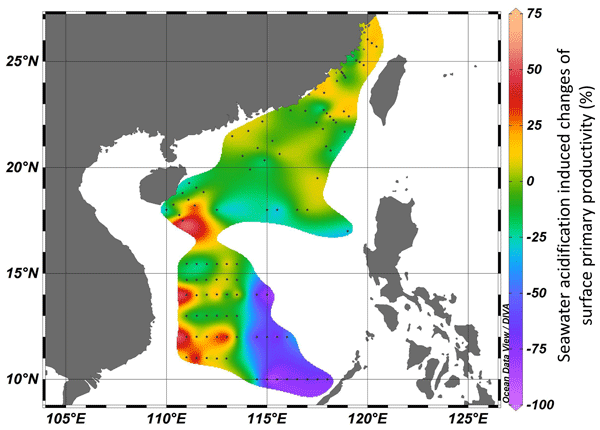
After conducting large-scale deck-incubation experiments, we found that seawater acidification (SA) increased primary production (PP) in coastal waters but reduced it in pelagic zones, which is mainly regulated by local pH, light intensity, salinity, and community structure. In future oceans, SA combined with decreased upward transports of nutrients may synergistically reduce PP in pelagic zones.
Cited articles
Arístegui, J., Gasol, J. M., Duarte, C. M., and Herndld, G. J.: Microbial oceanography of the dark ocean's pelagic realm, Limnol. Oceanogr., 54, 1501–1529, https://doi.org/10.4319/lo.2009.54.5.1501, 2009.
Bach, L. T., Taucher, J., Boxhammer, T., Ludwig, A., The Kristineberg, K. C., Achterberg, E. P., Algueró-Muñiz, M., Anderson, L. G., Bellworthy, J., Büdenbender, J., Czerny, J., Ericson, Y., Esposito, M., Fischer, M., Haunost, M., Hellemann, D., Horn, H. G., Hornick, T., Meyer, J., Sswat, M., Zark, M., and Riebesell, U.: Influence of Ocean Acidification on a Natural Winter-to-Summer Plankton Succession: First Insights from a Long-Term Mesocosm Study Draw Attention to Periods of Low Nutrient Concentrations, PLOS ONE, 11, e0159068, https://doi.org/10.1371/journal.pone.0159068, 2016.
Bach, L. T., Hernández-Hernández, N., Taucher, J., Spisla, C., Sforna, C., Riebesell, U., and Arístegui, J.: Effects of Elevated CO2 on a Natural Diatom Community in the Subtropical NE Atlantic, Front. Mar. Sci., 6, https://doi.org/10.3389/fmars.2019.00075, 2019.
Bénard, R., Levasseur, M., Scarratt, M., Blais, M.-A., Mucci, A., Ferreyra, G., Starr, M., Gosselin, M., Tremblay, J.-É., and Lizotte, M.: Experimental assessment of the sensitivity of an estuarine phytoplankton fall bloom to acidification and warming, Biogeosciences, 15, 4883–4904, https://doi.org/10.5194/bg-15-4883-2018, 2018.
Boyd, P. W., Dillingham, P. W., McGraw, C. M., Armstrong, E. A., Cornwall, C. E., Feng, Y. Y., Hurd, C. L., Gault-Ringold, M., Roleda, M. Y., Timmins-Schiffman, E., and Nunn, B. L.: Physiological responses of a Southern Ocean diatom to complex future ocean conditions, Nat. Clim. Change., 6, 207–213, https://doi.org/10.1038/nclimate2811, 2016.
Bunse, C. and Pinhassi, J.: Marine Bacterioplankton Seasonal Succession Dynamics, Trends Microbiol., 25, 494–505, https://doi.org/10.1016/j.tim.2016.12.013, 2017.
Cai, W.-J., Hu, X., Huang, W.-J., Murrell, M. C., Lehrter, J. C., Lohrenz, S. E., Chou, W.-C., Zhai, W., Hollibaugh, J. T., and Wang, Y.: Acidification of subsurface coastal waters enhanced by eutrophication, Nat. Geosci., 4, 766–770, 2011.
Calbet, A. and Landry, M. R.: Phytoplankton growth, microzooplankton grazing, and carbon cycling in marine systems, Limnol. Oceanogr., 49, 51–57, https://doi.org/10.4319/lo.2004.49.1.0051, 2004.
Canadell, J. G., Monteiro, P. M., Costa, M. H., Cotrim da Cunha, L., Cox, P. M., Eliseev, A. V., Henson, S., Ishii, M., Jaccard, S., and Koven, C.: Intergovernmental Panel on Climate Change (IPCC). Global carbon and other biogeochemical cycles and feedbacks, in: Climate change 2021: The physical science basis. Contribution of working group I to the sixth assessment report of the intergovernmental panel on climate change, Cambridge University Press, 673–816, https://doi.org/10.1017/9781009157896.007, 2023.
Carreto, J. I., Carignan, M. O., Montoya, N. G., Cozzolino, E., and Akselman, R.: Mycosporine-like amino acids and xanthophyll-cycle pigments favour a massive spring bloom development of the dinoflagellate Prorocentrum minimum in Grande Bay (Argentina), an ozone hole affected area, J. Marine Syst., 178, 15–28, https://doi.org/10.1016/j.jmarsys.2017.10.004, 2018.
Chauhan, N., Dedman, C. J., Baldreki, C., Dowle, A. A., Larson, T. R., and Rickaby, R. E. M.: Contrasting species-specific stress response to environmental pH determines the fate of coccolithophores in future oceans, Mar. Pollut. Bull., 209, 117136, https://doi.org/10.1016/j.marpolbul.2024.117136, 2024.
Cloern, J. E.: Phytoplankton bloom dynamics in coastal ecosystems: A review with some general lessons from sustained investigation of San Francisco Bay, California, Rev. Geophys., 34, 127–168, https://doi.org/10.1029/96RG00986, 1996.
Courboulès, J., Vidussi, F., Soulié, T., Mas, S., Pecqueur, D., and Mostajir, B.: Effects of experimental warming on small phytoplankton, bacteria and viruses in autumn in the Mediterranean coastal Thau Lagoon, Aquat. Ecol., 55, 647–666, https://doi.org/10.1007/s10452-021-09852-7, 2021.
Dai, M., Wang, L., Guo, X., Zhai, W., Li, Q., He, B., and Kao, S.-J.: Nitrification and inorganic nitrogen distribution in a large perturbed river/estuarine system: the Pearl River Estuary, China, Biogeosciences, 5, 1227–1244, https://doi.org/10.5194/bg-5-1227-2008, 2008.
Engel, A., Zondervan, I., Aerts, K., Beaufort, L., Benthien, A., Chou, L., Delille, B., Gattuso, J.-P., Harlay, J., and Heemann, C.: Testing the direct effect of CO2 concentration on a bloom of the coccolithophorid Emiliania huxleyi in mesocosm experiments, Limnol. Oceanogr., 50, 493–507, 2005.
Feng, Y., Xiong, Y., Hall-Spencer, J. M., Liu, K., Beardall, J., Gao, K., Ge, J., Xu, J., and Gao, G.: Shift in algal blooms from micro- to macroalgae around China with increasing eutrophication and climate change, Glob. Change Biol., 30, e17018, https://doi.org/10.1111/gcb.17018, 2024.
Finkel, Z. V., Beardall, J., Flynn, K. J., Quigg, A., Rees, T. A. V., and Raven, J. A.: Phytoplankton in a changing world: cell size and elemental stoichiometry, J. Plankton. Res., 32, 119–137, https://doi.org/10.1093/plankt/fbp098, 2009.
Fu, M., Wang, Z., Li, Y., Li, R., Sun, P., Wei, X., Lin, X., and Guo, J.: Phytoplankton biomass size structure and its regulation in the Southern Yellow Sea (China): Seasonal variability, Cont. Shelf. Res., 29, 2178–2194, https://doi.org/10.1016/j.csr.2009.08.010, 2009.
Gao, K.: Approaches and involved principles to control pH/pCO2 stability in algal cultures, J. Appl. Phycol, 33, 3497–3505, 2021.
Gao, K. and Campbell, D. A.: Photophysiological responses of marine diatoms to elevated CO2 and decreased pH: a review, Funct. Plant Biol., 41, 449–459, https://doi.org/10.1071/FP13247, 2014.
Gao, K., Xu, J., Gao, G., Li, Y., Hutchins, D. A., Huang, B., Wang, L., Zheng, Y., Jin, P., and Cai, X.: Rising CO2 and increased light exposure synergistically reduce marine primary productivity, Nat. Clim. Change, 2, 519–523, 2012.
Gao, K., Gao, G., Wang, Y., and Dupont, S.: Impacts of ocean acidification under multiple stressors on typical organisms and ecological processes, Mar. Life Sci. Tech., 2, 279–291, 2020.
Gao, K., Zhao, W., and Beardall, J.: Future Responses of Marine Primary Producers to Environmental Changes, in: Blue Planet, Red and Green Photosynthesis, edited by: Maberly, S. C. and Gontero, B., 273–304, https://doi.org/10.1002/9781119986782.ch9, 2022.
Gattuso, J.-P., Magnan, A., Billé, R., Cheung, W. W., Howes, E. L., Joos, F., Allemand, D., Bopp, L., Cooley, S. R., and Eakin, C. M.: Contrasting futures for ocean and society from different anthropogenic CO2 emissions scenarios, Science, 349, aac4722, https://doi.org/10.1126/science.aac4722, 2015.
Gazeau, F., Sallon, A., Pitta, P., Tsiola, A., Maugendre, L., Giani, M., Celussi, M., Pedrotti, M. L., Marro, S., and Guieu, C.: Limited impact of ocean acidification on phytoplankton community structure and carbon export in an oligotrophic environment: Results from two short-term mesocosm studies in the Mediterranean Sea, Estuar. Coast. Shelf. S., 186, 72–88, https://doi.org/10.1016/j.ecss.2016.11.016, 2017.
Giordano, M., Norici, A., and Hell, R.: Sulfur and phytoplankton: acquisition, metabolism and impact on the environment, New. Phytol., 166, 371–382, 2005.
Glibert, P. M. and Legrand, C.: The Diverse Nutrient Strategies of Harmful Algae: Focus on Osmotrophy, in: Ecology of Harmful Algae, edited by: Granéli, E. and Turner, J. T., Springer Berlin Heidelberg, Berlin, Heidelberg, 163–175, https://doi.org/10.1007/978-3-540-32210-8_13, 2006.
Gu, H., Luo, Z., Zeng, N., Lan, B., and Lan, D.: First record of Pentapharsodinium (Peridiniales, Dinophyceae) in the China Sea, with description of Pentapharsodinium dalei var. aciculiferum, Phycol. Res., 61, 256–267, https://doi.org/10.1111/pre.12024, 2013.
Hanifah, A. H., Teng, S. T., Law, I. K., Abdullah, N., Chiba, S. U. A., Lum, W. M., Tillmann, U., Lim, P. T., and Leaw, C. P.: Six marine thecate Heterocapsa (Dinophyceae) from Malaysia, including the description of three novel species and their cytotoxicity potential, Harmful Algae, 120, 102338, https://doi.org/10.1016/j.hal.2022.102338, 2022.
Hasle, G. R. and Syvertsen, E. E.: Chapter 2 – Marine Diatoms, in: Identifying Marine Phytoplankton, edited by: Tomas, C. R., Academic Press, San Diego, 5–385, https://doi.org/10.1016/B978-012693018-4/50004-5, 1997.
Henson, S. A., Cael, B. B., Allen, S. R., and Dutkiewicz, S.: Future phytoplankton diversity in a changing climate, Nat. Commun., 12, 5372, https://doi.org/10.1038/s41467-021-25699-w, 2021.
Huang, R., Sun, J., Yang, Y., Jiang, X., Wang, Z., Song, X., Wang, T., Zhang, D., Li, H., and Yi, X.: Elevated pCO2 Impedes Succession of Phytoplankton Community From Diatoms to Dinoflagellates Along With Increased Abundance of Viruses and Bacteria, Front. Mar. Sci, 8, 642208, https://doi.org/10.3389/fmars.2021.642208, 2021.
Jeong, H. J., Yoo, Y. D., Kim, J. S., Seong, K. A., Kang, N. S., and Kim, T. H.: Growth, feeding and ecological roles of the mixotrophic and heterotrophic dinoflagellates in marine planktonic food webs, Ocean. Sci. J., 45, 65–91, https://doi.org/10.1007/s12601-010-0007-2, 2010.
Karl, D. M., Christian, J. R., Dore, J. E., Hebel, D. V., Letelier, R. M., Tupas, L. M., and Winn, C. D.: Seasonal and interannual variability in primary production and particle flux at Station ALOHA, Deep-Sea. Res. Pt. II, 43, 539–568, https://doi.org/10.1016/0967-0645(96)00002-1, 1996.
Intergovernmental Oceanographic Commission: Protocols for the Joint Global Ocean Flux Study (JGOFS) Core Measurements, Paris, France, UNESCO-IOC, 170 pp., Intergovernmental Oceanographic Commission Manuals and Guides: 29, JGOFS Report; 19, https://doi.org/10.25607/OBP-1409, 1994.
Li, F., Beardall, J., and Gao, K.: Diatom performance in a future ocean: interactions between nitrogen limitation, temperature, and CO2-induced seawater acidification, ICES J. Mar. Sci., 75, 1451–1464, https://doi.org/10.1093/icesjms/fsx239, 2018.
Li, Q., Wang, F., Wang, Z. A., Yuan, D., Dai, M., Chen, J., Dai, J., and Hoering, K. A.: Automated Spectrophotometric Analyzer for Rapid Single-Point Titration of Seawater Total Alkalinity, Environ. Sci. Technol., 47, 11139–11146, https://doi.org/10.1021/es402421a, 2013.
Lin, X., Huang, R., Li, Y., Li, F., Wu, Y., Hutchins, D. A., Dai, M., and Gao, K.: Interactive network configuration maintains bacterioplankton community structure under elevated CO2 in a eutrophic coastal mesocosm experiment, Biogeosciences, 15, 551–565, https://doi.org/10.5194/bg-15-551-2018, 2018.
Liu, N., Tong, S., Yi, X., Li, Y., Li, Z., Miao, H., Wang, T., Li, F., Yan, D., Huang, R., Wu, Y., Hutchins, D. A., Beardall, J., Dai, M., and Gao, K.: Carbon assimilation and losses during an ocean acidification mesocosm experiment, with special reference to algal blooms, Mar. Environ. Res., 129, 229–235, https://doi.org/10.1016/j.marenvres.2017.05.003, 2017.
Ma, J., Li, P., Chen, Z., Lin, K., Chen, N., Jiang, Y., Chen, J., Huang, B., and Yuan, D.: Development of an Integrated Syringe-Pump-Based Environmental-Water Analyzer (iSEA) and Application of It for Fully Automated Real-Time Determination of Ammonium in Fresh Water, Anal. Chem., 90, 6431–6435, https://doi.org/10.1021/acs.analchem.8b01490, 2018.
Malerba, M. E., Palacios, M. M., Palacios Delgado, Y. M., Beardall, J., and Marshall, D. J.: Cell size, photosynthesis and the package effect: an artificial selection approach, New. Phytol., 219, 449–461, https://doi.org/10.1111/nph.15163, 2018.
McCann, K. S.: The diversity–stability debate, Nature, 405, 228–233, https://doi.org/10.1038/35012234, 2000.
Meakin, N. G. and Wyman, M.: Rapid shifts in picoeukaryote community structure in response to ocean acidification, ISME J., 5, 1397–1405, https://doi.org/10.1038/ismej.2011.18, 2011.
Meunier, C. L., Algueró-Muñiz, M., Horn, H. G., Lange, J. A. F., and Boersma, M.: Direct and indirect effects of near-future CO2 levels on zooplankton dynamics, Mar. Freshwater. Res., 68, 373–380, https://doi.org/10.1071/MF15296, 2017.
Meyer, J., Löscher, C. R., Neulinger, S. C., Reichel, A. F., Loginova, A., Borchard, C., Schmitz, R. A., Hauss, H., Kiko, R., and Riebesell, U.: Changing nutrient stoichiometry affects phytoplankton production, DOP accumulation and dinitrogen fixation – a mesocosm experiment in the eastern tropical North Atlantic, Biogeosciences, 13, 781–794, https://doi.org/10.5194/bg-13-781-2016, 2016.
Nishibe, Y., Takahashi, K., Shiozaki, T., Kakehi, S., Saito, H., and Furuya, K.: Size-fractionated primary production in the Kuroshio Extension and adjacent regions in spring, J. Oceanogr., 71, 27–40, https://doi.org/10.1007/s10872-014-0258-0, 2015.
Paerl, H. W. and Paul, V. J.: Climate change: Links to global expansion of harmful cyanobacteria, Water. Res., 46, 1349–1363, https://doi.org/10.1016/j.watres.2011.08.002, 2012.
Paul, A. J. and Bach, L. T.: Universal response pattern of phytoplankton growth rates to increasing CO2, New. Phytol., 228, 1710–1716, https://doi.org/10.1111/nph.16806, 2020.
Ptacnik, R., Solimini, A. G., Andersen, T., Tamminen, T., Brettum, P., Lepistö, L., Willén, E., and Rekolainen, S.: Diversity predicts stability and resource use efficiency in natural phytoplankton communities, P. Natl. Acad. Sci. USA, 105, 5134–5138, https://doi.org/10.1073/pnas.0708328105, 2008.
Raven, J. A. and Beardall, J.: Energizing the plasmalemma of marine photosynthetic organisms: the role of primary active transport, J. Mar. Biol. Assoc. UK, 100, 333–346, 2020.
Reinfelder, J. R.: Carbon concentrating mechanisms in eukaryotic marine phytoplankton, Annu. Rev. Mar. Sci, 3, 291–315, 2011.
Riebesell, U., Bach, L. T., Bellerby, R. G., Monsalve, J. R. B., Boxhammer, T., Czerny, J., Larsen, A., Ludwig, A., and Schulz, K. G.: Competitive fitness of a predominant pelagic calcifier impaired by ocean acidification, Nat. Geosci., 10, 19–23, 2017.
Ritchie, R. J.: Consistent sets of spectrophotometric chlorophyll equations for acetone, methanol and ethanol solvents, Photosynth. Res., 89, 27–41, 2006.
Rogelj, J., Shindell, D., Jiang, K., Fifita, S., Forster, P., Ginzburg, V.,, Handa, C., Kheshgi, H., Kobayashi, S., Kriegler, E., Mundaca,, and L., S., R., and Vilariño, M. V.: Mitigation Pathways Compatible with 1.5 °C in the Context of Sustainable Development, in: Global Warming of 1.5 °C: IPCC Special Report on Impacts of Global Warming of 1.5 °C above Pre-industrial Levels in Context of Strengthening Response to Climate Change, Sustainable Development, and Efforts to Eradicate Poverty, edited by: Intergovernmental Panel on Climate Change, Cambridge University Press, Cambridge, 93–174, https://doi.org/10.1017/9781009157940.004, 2022.
Rokitta, S. D., John, U., and Rost, B.: Ocean acidification affects redox-balance and ion-homeostasis in the life-cycle stages of Emiliania huxleyi, Plos One, 7, e52212, https://doi.org/10.1371/journal.pone.0052212, 2012.
Schulz, K. G., Bellerby, R. G. J., Brussaard, C. P. D., Büdenbender, J., Czerny, J., Engel, A., Fischer, M., Koch-Klavsen, S., Krug, S. A., Lischka, S., Ludwig, A., Meyerhöfer, M., Nondal, G., Silyakova, A., Stuhr, A., and Riebesell, U.: Temporal biomass dynamics of an Arctic plankton bloom in response to increasing levels of atmospheric carbon dioxide, Biogeosciences, 10, 161–180, https://doi.org/10.5194/bg-10-161-2013, 2013.
State Oceanic Administration: Technical specification for red tide monitoring (In Chinese), HY/T 069-2005, https://std.samr.gov.cn/hb/search/stdHBDetailed?id=8B1827F1ACF7BB19E05397BE0A0AB44A (last access: 29 June 2026), 2005.
Steidinger, K. A. and Jangen, K.: Chapter 3 – Dinoflagellates, in: Identifying Marine Phytoplankton, edited by: Tomas, C. R., Academic Press, San Diego, 387–584, https://doi.org/10.1016/B978-012693018-4/50005-7, 1997.
Stukel, M. R., Irving, J. P., Kelly, T. B., Ohman, M. D., Fender, C. K., and Yingling, N.: Carbon sequestration by multiple biological pump pathways in a coastal upwelling biome, Nat. Commun., 14, 2024, https://doi.org/10.1038/s41467-023-37771-8, 2023.
Tanaka, T., Alliouane, S., Bellerby, R. G. B., Czerny, J., de Kluijver, A., Riebesell, U., Schulz, K. G., Silyakova, A., and Gattuso, J.-P.: Effect of increased pCO2 on the planktonic metabolic balance during a mesocosm experiment in an Arctic fjord, Biogeosciences, 10, 315–325, https://doi.org/10.5194/bg-10-315-2013, 2013.
Taylor, A. R., Brownlee, C., and Wheeler, G.: Coccolithophore cell biology: chalking up progress, Annu. Rev. Mar. Sci, 9, 283–310, 2017.
Thingstad, T. F. and Rassoulzadegan, F.: Nutrient limitations, microbial food webs and `biological C-pumps': suggested interactions in a P-limited Mediterranean, Mar. Ecol. Prog. Ser., 117, 299–306, 1995.
Thingstad, T. F. and Rassoulzadegan, F.: Conceptual models for the biogeochemical role of the photic zone microbial food web, with particular reference to the Mediterranean Sea, Prog. Oceanogr., 44, 271–286, https://doi.org/10.1016/S0079-6611(99)00029-4, 1999.
Vázquez, V., León, P., Gordillo, F. J. L., Jiménez, C., Concepción, I., Mackenzie, K., Bresnan, E., and Segovia, M.: High-CO2 Levels Rather than Acidification Restrict Emiliania huxleyi Growth and Performance, Microb. Ecol., 86, 127–143, https://doi.org/10.1007/s00248-022-02035-3, 2023.
Wang, N. and Gao, K.: Ocean acidification and food availability impacts on the metabolism and grazing in a cosmopolitan herbivorous protist Oxyrrhis marina, Front. Mar. Sci, 11, https://doi.org/10.3389/fmars.2024.1371296, 2024.
Wu, Y., Jeans, J., Suggett, D. J., Finkel, Z. V., and Campbell, D. A.: Large centric diatoms allocate more cellular nitrogen to photosynthesis to counter slower RUBISCO turnover rates, Front. Mar. Sci, 1, 2014, https://doi.org/10.3389/fmars.2014.00068, 2014.
Wu, Y., Campbell, D. A., and Gao, K.: Short-term elevated CO2 exposure stimulated photochemical performance of a coastal marine diatom, Mar. Environ. Res., 125, 42–48, https://doi.org/10.1016/j.marenvres.2016.12.001, 2017.
Yang, S. and Liu, X.: Characteristics of phytoplankton assemblages in the southern Yellow Sea, China, Mar. Pollut. Bull., 135, 562–568, 2018.
Yuan, Z., Liu, D., Masqué, P., Zhao, M., Song, X., and Keesing, J. K.: Phytoplankton Responses to Climate-Induced Warming and Interdecadal Oscillation in North-Western Australia, Paleoceanogr. Paleocl., 35, e2019PA003712, https://doi.org/10.1029/2019PA003712, 2020.
Zhong, Y., Liu, X., Xiao, W., Laws, E. A., Chen, J., Wang, L., Liu, S., Zhang, F., and Huang, B.: Phytoplankton community patterns in the Taiwan Strait match the characteristics of their realized niches, Prog. Oceanogr., 186, 102366, https://doi.org/10.1016/j.pocean.2020.102366, 2020.
Short summary
In a mesocosm experiment conducted in the highly eutrophic coastal water of southern East China Sea, we found that the impacts of ocean acidification (OA) on phytoplankton diversity and primary production depend on status of eutrophication or nutrient availability, with OA likely to reduce the biodiversity and primary production in the phytoplankton community after the nutrients depletion. In future oceans, OA and nutrients depletion may synergistically reduce the biodiversity in coastal waters.
In a mesocosm experiment conducted in the highly eutrophic coastal water of southern East China...


Altmetrics
Final-revised paper
Preprint