
Articles | Volume 23, issue 13
https://doi.org/10.5194/bg-23-4583-2026
© Author(s) 2026. This work is distributed under
the Creative Commons Attribution 4.0 License.
the Creative Commons Attribution 4.0 License.
https://doi.org/10.5194/bg-23-4583-2026
© Author(s) 2026. This work is distributed under
the Creative Commons Attribution 4.0 License.
the Creative Commons Attribution 4.0 License.
Research article
| Highlight paper
| 
06 Jul 2026
Research article | Highlight paper |
| 06 Jul 2026
| 06 Jul 2026
Livestock grazing, plant community and abiotic factors shape blue carbon stocks in Nordic coastal marshes
Anaïs Richard
CORRESPONDING AUTHOR

Department of Ecology, Environment and Plant Sciences, Stockholm University, 106 91 Stockholm, Sweden
Department of Biology, University of Southern Denmark, Campusvej 55, 5230 Odense M, Denmark
Carmen Leiva-Dueñas
Department of Ecoscience, Aarhus University, C. F. Møllers Allé 3, building 1131, 8000 Aarhus, Denmark
Christoffer Boström
Åbo Akademi University, Environmental and Marine Biology, Henrikinkatu 2, 20500 Turku, Finland
Beke K. Eichert
Universität Hamburg, Institute of Plant Science and Microbiology, Ohnhorststr. 18, 22609 Hamburg, Germany
Annie Garnell
Department of Ecology, Environment and Plant Sciences, Stockholm University, 106 91 Stockholm, Sweden
Nadja H. Nijm
Department of Ecology, Environment and Plant Sciences, Stockholm University, 106 91 Stockholm, Sweden
Line Holm Andersen
Department of Ecology, Environment and Plant Sciences, Stockholm University, 106 91 Stockholm, Sweden
Kai Jensen
Universität Hamburg, Institute of Plant Science and Microbiology, Ohnhorststr. 18, 22609 Hamburg, Germany
Heli Jutila
Österbottens vatten och miljö rf, Strengbergsgatan 1, 68600, Jakobstad, Finland
Dorte Krause-Jensen
Department of Ecoscience, Aarhus University, C. F. Møllers Allé 3, building 1131, 8000 Aarhus, Denmark
Nathalie Labourdette
Univ. Bordeaux, CNRS, Bordeaux INP, EPOC, UMR 5805, 33600 Pessac, France
Marianna Lanari
Department of Biology, University of Southern Denmark, Campusvej 55, 5230 Odense M, Denmark
Institute of Oceanography, Federal University of Rio Grande, Av. Itália km 08, 96203900, Rio Grande, Brazil
Ella L. Logemann
Universität Hamburg, Institute of Plant Science and Microbiology, Ohnhorststr. 18, 22609 Hamburg, Germany
Katrin Moeller
Universität Hamburg, Institute of Plant Science and Microbiology, Ohnhorststr. 18, 22609 Hamburg, Germany
Mikael von Numers
Åbo Akademi University, Environmental and Marine Biology, Henrikinkatu 2, 20500 Turku, Finland
Gry Frederiksberg
Department of Biology, University of Southern Denmark, Campusvej 55, 5230 Odense M, Denmark
SDU Climate Cluster, University of Southern Denmark, Fioniavej 34, Odense M, 5230, Denmark
Sofia A. Wikström
Baltic Sea Centre, Stockholm University, 106 91 Stockholm, Sweden
Cintia Organo Quintana
Department of Biology, University of Southern Denmark, Campusvej 55, 5230 Odense M, Denmark
SDU Climate Cluster, University of Southern Denmark, Fioniavej 34, Odense M, 5230, Denmark
Gary Thomas Banta
Department of Biology, University of Southern Denmark, Campusvej 55, 5230 Odense M, Denmark
Johan S. Eklöf
Department of Ecology, Environment and Plant Sciences, Stockholm University, 106 91 Stockholm, Sweden
Related authors
No articles found.
Gry Overvad Frederiksberg, Marianna Lanari, Anaïs Richard, Pere Masque, Erik Kristensen, and Cintia Organo Quintana
EGUsphere, https://doi.org/10.5194/egusphere-2026-4778, https://doi.org/10.5194/egusphere-2026-4778, 2026
This preprint is open for discussion and under review for Biogeosciences (BG).
Short summary
Short summary
The potential climate benefits of carbon capture and storage by seagrasses may be counteracted by emissions of strong greenhouse gases such a methane and nitrous oxide. We measured greenhouse gas rates from sediments of a sandy eelgrass meadow and an unvegetated area and compared them to carbon storage and burial. Greenhouse gas rates were controlled by porewater chemistry and vegetation parameters and even low rates, as observed here, offset the limited carbon burial within the site.

Julika Zinke, Joakim P. Hansen, Martijn Hermans, Alexis Fonseca, Sofia A. Wikström, Linda Kumblad, Emil Rydin, Marc Geibel, Matthew E. Salter, and Christoph Humborg
Biogeosciences, 23, 1653–1680, https://doi.org/10.5194/bg-23-1653-2026, https://doi.org/10.5194/bg-23-1653-2026, 2026
Short summary
Short summary
This study presents one of the few studies to simultaneously measure all three major greenhouse gases across multiple shallow coastal bays in the Baltic Sea. Our findings reveal that these bays are highly variable and significant sources of greenhouse gases, with fluxes strongly influenced by bay characteristics and seasonal variation. By linking concentrations to environmental drivers, our work provides novel insights into overlooked but important components of coastal greenhouse gas budgets.
Jeffrey Beem-Miller, William J. Riley, Peter B. Reich, Michael W. I. Schmidt, Yuxuan Bai, Raimundo Bermudez Villanueva, Zach Brown, Abad Chabbi, Susan E. Crow, Wenxu Dong, Serita D. Frey, Paul J. Hanson, Kai Jensen, Melissa A. Knorr, Emma Lathrop, Avni Malhotra, Patrick Megonigal, Adrienne Nicotra, Andrew Nottingham, Genevieve L. Noyce, Roy L. Rich, Heidi Rodenhizer, Agustín Sarquis, Andreas Schindlbacher, Edward A. G. Schuur, Zheng Shi, Artur Stefanski, Viktoria Unger, Tana E. Wood, Yuanhe Yang, Zhijie Yang, Jizhong Zhou, Biao Zhu, and Margaret S. Torn
Earth Syst. Sci. Data Discuss., https://doi.org/10.5194/essd-2026-23, https://doi.org/10.5194/essd-2026-23, 2026
Revised manuscript accepted for ESSD
Short summary
Short summary
The Soil Warming to Depth Data Integration Effort (SWEDDIE) synthesizes data from deep soil warming experiments around the world (n = 23), offering new insight into warming responses of both surface and subsoils. We demonstrate that variation in soil warming with depth is driven largely by warming methodology, while soil moisture changes due to warming differ by ecosystem. This work serves a foundation for future syntheses with SWEDDIE.
Theodor Kindeberg, Karl Michael Attard, Jana Hüller, Julia Müller, Cintia Organo Quintana, and Eduardo Infantes
Biogeosciences, 21, 1685–1705, https://doi.org/10.5194/bg-21-1685-2024, https://doi.org/10.5194/bg-21-1685-2024, 2024
Short summary
Short summary
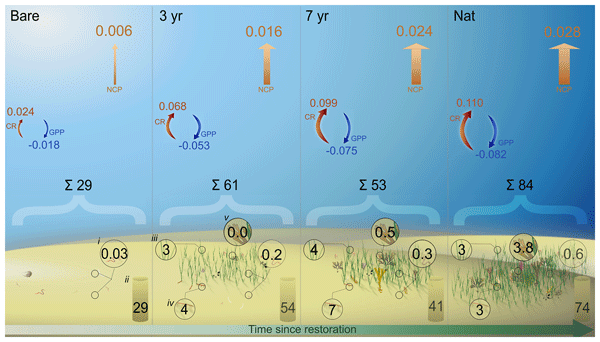
Seagrass meadows are hotspots for biodiversity and productivity, and planting seagrass is proposed as a tool for mitigating biodiversity loss and climate change. We assessed seagrass planted in different years and found that benthic oxygen and carbon fluxes increased as the seabed developed from bare sediments to a mature seagrass meadow. This increase was partly linked to the diversity of colonizing algae which increased the light-use efficiency of the seagrass meadow community.
Sébastien Petton, Fabrice Pernet, Valérian Le Roy, Matthias Huber, Sophie Martin, Éric Macé, Yann Bozec, Stéphane Loisel, Peggy Rimmelin-Maury, Émilie Grossteffan, Michel Repecaud, Loïc Quemener, Michael Retho, Soazig Manac'h, Mathias Papin, Philippe Pineau, Thomas Lacoue-Labarthe, Jonathan Deborde, Louis Costes, Pierre Polsenaere, Loïc Rigouin, Jérémy Benhamou, Laure Gouriou, Joséphine Lequeux, Nathalie Labourdette, Nicolas Savoye, Grégory Messiaen, Elodie Foucault, Vincent Ouisse, Marion Richard, Franck Lagarde, Florian Voron, Valentin Kempf, Sébastien Mas, Léa Giannecchini, Francesca Vidussi, Behzad Mostajir, Yann Leredde, Samir Alliouane, Jean-Pierre Gattuso, and Frédéric Gazeau
Earth Syst. Sci. Data, 16, 1667–1688, https://doi.org/10.5194/essd-16-1667-2024, https://doi.org/10.5194/essd-16-1667-2024, 2024
Short summary
Short summary
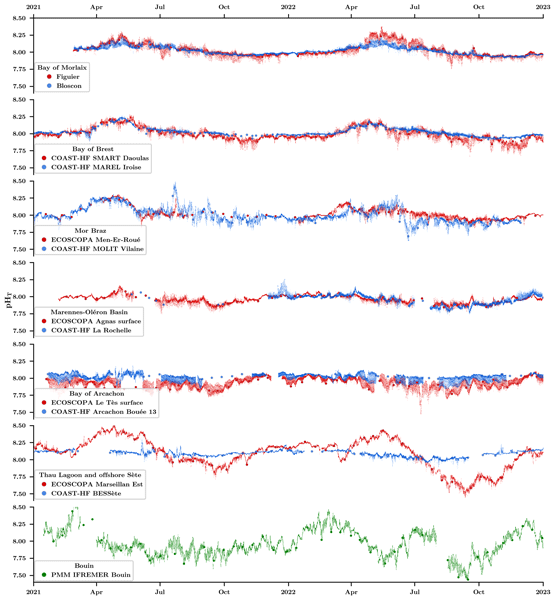
Our research highlights the concerning impact of rising carbon dioxide levels on coastal areas. To better understand these changes, we've established an observation network in France. By deploying pH sensors and other monitoring equipment at key coastal sites, we're gaining valuable insights into how various factors, such as freshwater inputs, tides, temperature, and biological processes, influence ocean pH.
Hao Tang, Stefanie Nolte, Kai Jensen, Roy Rich, Julian Mittmann-Goetsch, and Peter Mueller
Biogeosciences, 20, 1925–1935, https://doi.org/10.5194/bg-20-1925-2023, https://doi.org/10.5194/bg-20-1925-2023, 2023
Short summary
Short summary
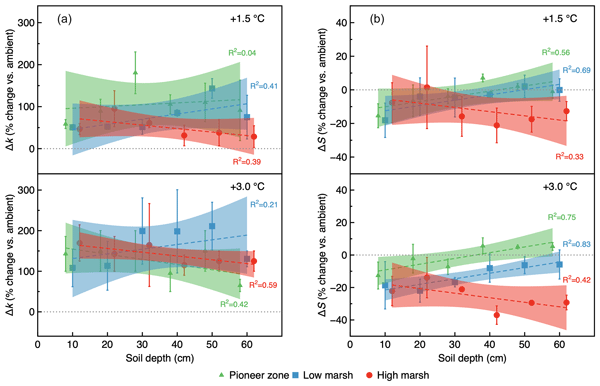
In order to gain the first mechanistic insight into warming effects and litter breakdown dynamics across whole-soil profiles, we used a unique field warming experiment and standardized plant litter to investigate the degree to which rising soil temperatures can accelerate belowground litter breakdown in coastal wetland ecosystems. We found warming strongly increases the initial rate of labile litter decomposition but has less consistent effects on the stabilization of this material.
Suman Halder, Susanne K. M. Arens, Kai Jensen, Tais W. Dahl, and Philipp Porada
Geosci. Model Dev., 15, 2325–2343, https://doi.org/10.5194/gmd-15-2325-2022, https://doi.org/10.5194/gmd-15-2325-2022, 2022
Short summary
Short summary
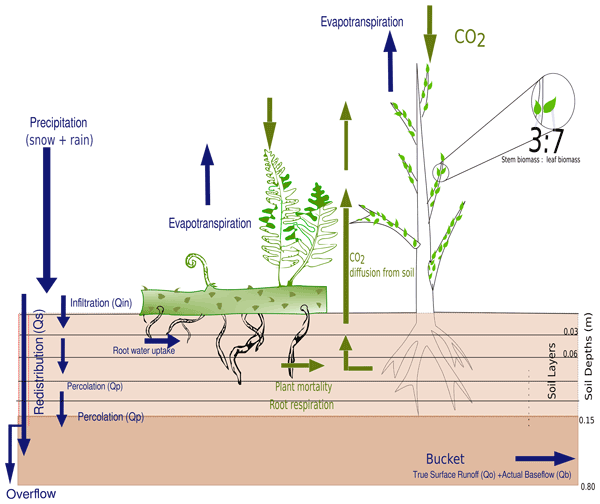
A dynamic vegetation model, designed to estimate potential impacts of early vascular vegetation, namely, lycopsids, on the biogeochemical cycle at a local scale. Lycopsid Model (LYCOm) estimates the productivity and physiological properties of lycopsids across a broad climatic range along with natural selection, which is then utilized to adjudge their weathering potential. It lays the foundation for estimation of their impacts during their long evolutionary history starting from the Ordovician.
Hao Tang, Susanne Liebner, Svenja Reents, Stefanie Nolte, Kai Jensen, Fabian Horn, and Peter Mueller
Biogeosciences, 18, 6133–6146, https://doi.org/10.5194/bg-18-6133-2021, https://doi.org/10.5194/bg-18-6133-2021, 2021
Short summary
Short summary
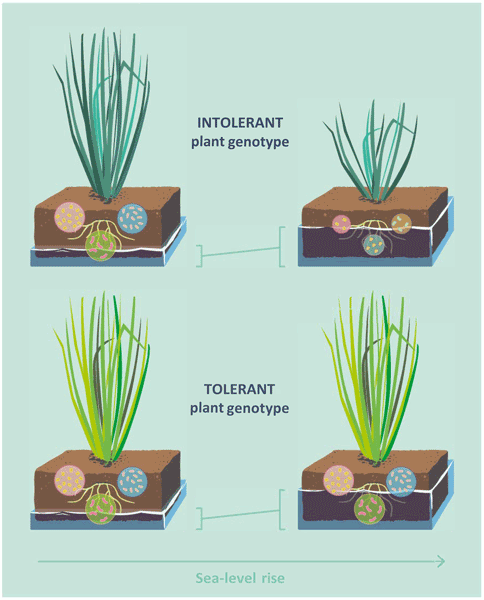
We examined if sea-level rise and plant genotype interact to affect soil microbial functioning in a mesocosm experiment using two genotypes of a dominant salt-marsh grass characterized by differences in flooding sensitivity. Larger variability in microbial community structure, enzyme activity, and litter breakdown in soils with the more sensitive genotype supports our hypothesis that effects of climate change on soil microbial functioning can be controlled by plant intraspecific adaptations.
Cited articles
Adams, J. B. and Bate, G. C.: Growth and photosynthetic performance of Phragmites australis in estuarine waters: a field and experimental evaluation, Aquat. Bot., 64, 359–367, https://doi.org/10.1016/S0304-3770(99)00063-7, 1999.
Allen, J.: Morphodynamics of Holocene salt marshes: a review sketch from the Atlantic and Southern North Sea coasts of Europe, Quat. Sci. Rev., 19, 1155–1231, https://doi.org/10.1016/S0277-3791(99)00034-7, 2000.
Anderson, M. J.: A new method for non-parametric multivariate analysis of variance: non-parametric MANOVA for ecology, Austral Ecol., 26, 32–46, https://doi.org/10.1111/j.1442-9993.2001.01070.pp.x, 2001.
Anderson, M. J.: Distance-Based Tests for Homogeneity of Multivariate Dispersions, Biometrics, 62, 245–253, https://doi.org/10.1111/j.1541-0420.2005.00440.x, 2006.
Bakker, J. P., Bos, D., and De Vries, Y.: To graze or not to graze: that is the question, Challenges to the Wadden Sea Area, Proceedings International Wadden Sea Symposium, edited by: Wolff, W., Essink, L., and van Leeuwe, M. A., 67–88, https://www.researchgate.net/publication/258994720 (last access: 3 July 2026), 2003.
Bartoń, K.: MuMIn, Multi-Model Inference, CRAN [code], https://doi.org/10.32614/CRAN.package.MuMIn, 2025.
Bates, D., Mächler, M., Bolker, B., and Walker, S.: Fitting Linear Mixed-Effects Models Using lme4, J. Stat. Softw., 67, https://doi.org/10.18637/jss.v067.i01, 2015.
Berg, M., Joyce, C., and Burnside, N.: Differential responses of abandoned wet grassland plant communities to reinstated cutting management, Hydrobiologia, 692, 83–97, https://doi.org/10.1007/s10750-011-0826-x, 2012.
Burdige, D. J.: Preservation of Organic Matter in Marine Sediments: Controls, Mechanisms, and an Imbalance in Sediment Organic Carbon Budgets?, Chem. Rev., 107, 467–485, https://doi.org/10.1021/cr050347q, 2007.
Burnside, N. G., Joyce, C. B., Puurmann, E., and Scott, D. M.: Use of vegetation classification and plant indicators to assess grazing abandonment in Estonian coastal wetlands, J. Veg. Sci., 18, 645–654, https://doi.org/10.1111/j.1654-1103.2007.tb02578.x, 2007.
Cahoon, D. R., McKee, K. L., and Morris, J. T.: How Plants Influence Resilience of Salt Marsh and Mangrove Wetlands to Sea-Level Rise, Estuar. Coast., 44, 883–898, https://doi.org/10.1007/s12237-020-00834-w, 2021.
Calvin, K., Dasgupta, D., Krinner, G. et al.: IPCC, 2023, Climate Change 2023, Synthesis Report, Contribution of Working Groups I, II and III to the Sixth Assessment Report of the Intergovernmental Panel on Climate Change [Core Writing Team, edited by: Lee, H. and Romero, J., IPCC, Geneva, Switzerland, Intergovernmental Panel on Climate Change (IPCC), https://doi.org/10.59327/IPCC/AR6-9789291691647, 2023.
Campbell, A. D., Fatoyinbo, L., Goldberg, L., and Lagomasino, D.: Global hotspots of salt marsh change and carbon emissions, Nature, 612, 701–706, https://doi.org/10.1038/s41586-022-05355-z, 2022.
Canal-Vergés, P., Frederiksen, L., Egemose, S., Ebbensgaard, T., Laustsen, K., and Flindt, M. R.: Impacts of Sea Level Rise on Danish Coastal Wetlands – a GIS-based Analysis, Environ. Manage., 75, 1039–1054, https://doi.org/10.1007/s00267-024-02096-9, 2025.
Colmer, T. D.: Long-distance transport of gases in plants: a perspective on internal aeration and radial oxygen loss from roots, Plant Cell Environ., 26, 17–36, https://doi.org/10.1046/j.1365-3040.2003.00846.x, 2003.
Cowardin, L., Carter, V., Golet, F. C., and LaRoe, E. T.: Classification of wetlands and deepwater habitats of the United States, John Wiley & Sons, Inc., Washington, DC, https://doi.org/10.1002/047147844x.sw2162, 1979.
Craft, C. B., Seneca, E. D., and Broome, S. W.: Loss on Ignition and Kjeldahl Digestion for Estimating Organic Carbon and Total Nitrogen in Estuarine Marsh Soils: Calibration with Dry Combustion, Estuaries, 14, 175, https://doi.org/10.2307/1351691, 1991.
Danielssen, D.: Oceanographic variability in the Skagerrak and Northern Kattegat, May–June, 1990, ICES J. Mar. Sci., 54, 753–773, https://doi.org/10.1006/jmsc.1996.0210, 1997.
Davidson, K. E., Fowler, M. S., Skov, M. W., Doerr, S. H., Beaumont, N., and Griffin, J. N.: Livestock grazing alters multiple ecosystem properties and services in salt marshes: a meta-analysis, J. Appl. Ecol., 54, 1395–1405, https://doi.org/10.1111/1365-2664.12892, 2017.
De Deyn, G. B., Cornelissen, J. H. C., and Bardgett, R. D.: Plant functional traits and soil carbon sequestration in contrasting biomes, Ecol. Lett., 11, 516–531, https://doi.org/10.1111/j.1461-0248.2008.01164.x, 2008.
Deegan, L. A., Johnson, D. S., Warren, R. S., Peterson, B. J., Fleeger, J. W., Fagherazzi, S., and Wollheim, W. M.: Coastal eutrophication as a driver of salt marsh loss, Nature, 490, 388–392, https://doi.org/10.1038/nature11533, 2012.
Dijkema, K. S.: Salt and Brackish Marshes Around the Baltic Sea and Adjacent Parts of the North Sea: Their Vegetation and Management, Biol. Conserv., 51, 191–209, https://doi.org/10.1016/0006-3207(90)90151-E, 1990.
Duarte, C. M., Losada, I. J., Hendriks, I. E., Mazarrasa, I., and Marbà, N.: The role of coastal plant communities for climate change mitigation and adaptation, Nat. Clim. Change, 3, 961–968, https://doi.org/10.1038/nclimate1970, 2013.
Duarte De Paula Costa, M. and Macreadie, P. I.: The Evolution of Blue Carbon Science, Wetlands, 42, 109, https://doi.org/10.1007/s13157-022-01628-5, 2022.
Dufrêne, M. and Legendre, P.: Species Assemblages and Indicator Species: The Need for a Flexible Asymmetrical Approach, Ecol. Monogr., 7, 345–366, https://doi.org/10.1890/0012-9615(1997)067[0345:SAAIST]2.0.CO;2, 1997.
Elschot, K., Bakker, J., Temmerman, S., Van De Koppel, J., and Bouma, T.: Ecosystem engineering by large grazers enhances carbon stocks in a tidal salt marsh, Mar. Ecol. Prog. Ser., 537, 9–21, https://doi.org/10.3354/meps11447, 2015.
Engloner, A. I.: Structure, growth dynamics and biomass of reed (Phragmites australis) – A review, Flora-Morphol. Distrib. Funct. Ecol. Plants, 204, 331–346, https://doi.org/10.1016/j.flora.2008.05.001, 2009.
European Commission: Interpretation manual for the Annex I of european union habitats, https://eunis.eea.europa.eu/references/2435 (last access: 3 July 2026), 2013.
European Environment Agency: EUNIS habitat classification, https://www.eea.europa.eu/data-and-maps/data/eunis-habitat-classification-1 (last access: 3 July 2026), 2022.
Ford, H., Garbutt, A., Duggan-Edwards, M., Pagès, J. F., Harvey, R., Ladd, C., and Skov, M. W.: Large-scale predictions of salt-marsh carbon stock based on simple observations of plant community and soil type, Biogeosciences, 16, 425–436, https://doi.org/10.5194/bg-16-425-2019, 2019.
Freeman, C., Ostle, N., and Kang, H.: An enzymic “latch” on a global carbon store, Nature, 409, 149–149, https://doi.org/10.1038/35051650, 2001.
Friess, D. A., Yando, E. S., Alemu I, J. B., Wong, L.-W., Soto, S. D., and Bhatia, N.: Ecosystem services and disservices of mangrove forests and salt marshes, in: Oceanography and Marine Biology, edited by: Hawkins, S. J., Allcock, A. L., Bates, A. E., Evans, A. J., Firth, L. B., McQuaid, C. D., Russell, B. D., Smith, I. P., Swearer, S. E., and Todd, P. A., CRC Press, 107–141, https://doi.org/10.1201/9780429351495-3, 2020.
Gotelli, N. J., Chao, A., and Colwell, R. K.: Measuring and Estimating Species Richness, Taxonomic and Phylogenetic Diversity, and Related Biotic (Dis)similarity Indices From Sampling Data, in: Encyclopedia of Biodiversity, Elsevier, 314–339, https://doi.org/10.1016/B978-0-12-822562-2.00104-3, 2024.
Grace, J. B. and Jutila, H.: The Relationship between Species Density and Community Biomass in Grazed and Ungrazed Coastal Meadows, Oikos, 85, 398, https://doi.org/10.2307/3546689, 1999.
Graversen, A. E. L., Banta, G. T., Masque, P., and Krause-Jensen, D.: Carbon sequestration is not inhibited by livestock grazing in Danish salt marshes, Limnol. Oceanogr., 67, https://doi.org/10.1002/lno.12011, 2022.
Gu, J., Van Ardenne, L. B., and Chmura, G. L.: Invasive Phragmites Increases Blue Carbon Stock and Soil Volume in a St. Lawrence Estuary Marsh, J. Geophys. Res. Biogeosciences, 125, e2019JG005473, https://doi.org/10.1029/2019JG005473, 2020.
Heiri, O., Lotter, A. F., and Lemcke, G.: Loss on ignition as a method for estimating organic and carbonate content in sediments: reproducibility and comparability of results, J. Paleolimnol., 25, 101–110, https://doi.org/10.1023/A:1008119611481, 2001.
Hiraishi, T., Krug, T., Tanabe, K., Srivastava, N., Baasansuren, J., Fukuda, M., and Troxler, T. G.: Supplement to the 2006 IPCC Guidelines for National Greenhouse Gas Inventories, Wetlands, IPCC, Intergovernmental Panel on Climate Change, Geneva, Switzerland, https://www.ipcc.ch/publication/2013-supplement-to-the-2006-ipcc-guidelines-for-national-greenhouse-gas-inventories-wetlands/ (last access: 3 July 2026), 2014.
Howard, J., Hoyt, S., Isensee, K., Telszewski, M., and Pidgeon, E. (Eds.): Coastal blue carbon: Methods for assessing carbon stocks and emissions factors in mangroves, tidal salt marshes, and seagrasses., Conservation International, Intergovernmental Oceanographic Commission of UNESCO, International Union for Conservation of Nature, https://www.unep.org/resources/publication/coastal-blue-carbon-methods-assessing-carbon-stocks-and-emissions-factors (last access: 3 July 2026), 2014.
Hughes, A. R., Schenck, F. R., Bloomberg, J., Hanley, T. C., Feng, D., Gouhier, T. C., Beighley, R. E., and Kimbro, D. L.: Biogeographic gradients in ecosystem processes of the invasive ecosystem engineer Phragmites australis, Biol. Invasions, 18, 2577–2595, https://doi.org/10.1007/s10530-016-1143-0, 2016.
Hulisz, P., Piernik, A., Mantilla-Contreras, J., and Elvisto, T.: Main Driving Factors for Seacoast Vegetation in the Southern and Eastern Baltic, Wetlands, 36, 909–919, https://doi.org/10.1007/s13157-016-0803-2, 2016.
Janssen, J. A. M., Rodwell, J. S., García Criado, M., Gubbay, S., Haynes, T., Nieto, A., Sanders, N., Landucci, F., Loidi, J., Ssymank, A., Tahvanainen, T., Valderrabano, M., Acosta, A., Aronsson, M., Arts, G., Attorre, F., Bijlsma, R.-J., Bioret, F., Biţă-Nicolae, C., Biurrun, I., Calix, M., Capelo, J., Čarni, A., Chytrý, M., Dengler, J., Dimopoulos, P., Essl, F., Gardfjell, H., Gigante, D., Giusso del Galdo, G., Hájek, M., Jansen, F., Jansen, J., Kapfer, J., Kontula, T., Mickolajczak, A., Molina, J. A., Molnar, Z., Paternoster, D., Pierik, A., Poulin, B., Renaux, B., Schaminée, J. H. J., Sumberova, K., Toivonen, H., Tonteri, T., Tsiripidis, I., Tzonev, R., and Valachovič, M.: European red list of habitats, Part 2, Terrestrial and freshwater habitats., Publications Office, LU, https://doi.org/10.2779/091372, 2016.
Jutila, H.: Effect of grazing on the vegetation of shore meadows along the Bothnian Sea, Finland, Plant Ecol., 140, 77–88, https://doi.org/10.1023/A:1009744117329, 1999.
Kelleway, J. J., Saintilan, N., Macreadie, P. I., and Ralph, P. J.: Sedimentary Factors are Key Predictors of Carbon Storage in SE Australian Saltmarshes, Ecosystems, 19, 865–880, https://doi.org/10.1007/s10021-016-9972-3, 2016.
Kirwan, M. L. and Megonigal, J. P.: Tidal wetland stability in the face of human impacts and sea-level rise, Nature, 504, 53–60, https://doi.org/10.1038/nature12856, 2013.
Krause-Jensen, D., Gundersen, H., Björk, M., Gullström, M., Dahl, M., Asplund, M. E., Boström, C., Holmer, M., Banta, G. T., Graversen, A. E. L., Pedersen, M. F., Bekkby, T., Frigstad, H., Skjellum, S. F., Thormar, J., Gyldenkærne, S., Howard, J., Pidgeon, E., Ragnarsdóttir, S. B., Mols-Mortensen, A., and Hancke, K.: Nordic Blue Carbon Ecosystems: Status and Outlook, Front. Mar. Sci., 9, 847544, https://doi.org/10.3389/fmars.2022.847544, 2022.
Kristensen, E. and Holmer, M.: Decomposition of plant materials in marine sediment exposed to different electron acceptors (O2, NO
Lefcheck, J. S.: piecewiseSEM, Piecewise structural equation modelling in r for ecology, evolution, and systematics, Methods Ecol. Evol., 7, 573–579, https://doi.org/10.1111/2041-210X.12512, 2016.
Lehmann, A., Krauss, W., and Hinrichsen, H.-H.: Effects of remote and local atmospheric forcing on circulation and upwelling in the Baltic Sea, Tellus Dyn. Meteorol. Oceanogr., 54, 299, https://doi.org/10.3402/tellusa.v54i3.12138, 2002.
Leiva-Dueñas, C., Graversen, A. E. L., Banta, G. T., Hansen, J. N., Schrøter, M. L. K., Masqué, P., Holmer, M., and Krause-Jensen, D.: Region-specific drivers cause low organic carbon stocks and sequestration rates in the saltmarsh soils of southern Scandinavia, Limnol. Oceanogr., 69, 290–308, https://doi.org/10.1002/lno.12480, 2024.
Leiva-Dueñas, C., Banta, G. T., Boström, C., Eller, F., Eklöf, J., Andersen, L. H., Jensen, K., Lanari, M., Logemann, E., Masque, P., Ostertag, T., Reisdorff, C., Richard, A., Vehmaa, A., Alm, J., Von Numers, M., and Krause-Jensen, D.: Low Climate Benefit of Nordic Coastal Marshes: Site Conditions Outweigh Grazing Effects and Shape Trade-Offs Between Carbon Storage and Its Stability, Glob. Change Biol., 32, https://doi.org/10.1111/gcb.70889, 2026.
Logemann, E. L., Goesele, C., Jensen, K., and Mueller, P.: Soil Organic Carbon Stocks of German Salt Marshes, A Comparative Study Along Low- and High-Energy Coastlines, J. Geophys. Res. Biogeosciences, 130, e2025JG008797, https://doi.org/10.1029/2025JG008797, 2025.
López-Mársico, L., Altesor, A., Oyarzabal, M., Baldassini, P., and Paruelo, J. M.: Grazing increases below-ground biomass and net primary production in a temperate grassland, Plant Soil, 392, 155–162, https://doi.org/10.1007/s11104-015-2452-2, 2015.
Lüdecke, D., Ben-Shachar, M. S., Patil, I., Waggoner, P., and Makowski, D.: performance, An R Package for Assessment, Comparison and Testing of Statistical Models, https://doi.org/10.31234/osf.io/vtq8f, 23 March 2021.
Macreadie, P. I., Ollivier, Q. R., Kelleway, J. J., Serrano, O., Carnell, P. E., Ewers Lewis, C. J., Atwood, T. B., Sanderman, J., Baldock, J., Connolly, R. M., Duarte, C. M., Lavery, P. S., Steven, A., and Lovelock, C. E.: Carbon sequestration by Australian tidal marshes, Sci. Rep., 7, 44071, https://doi.org/10.1038/srep44071, 2017.
Macreadie, P. I., Costa, M. D. P., Atwood, T. B., Friess, D. A., Kelleway, J. J., Kennedy, H., Lovelock, C. E., Serrano, O., and Duarte, C. M.: Blue carbon as a natural climate solution, Nat. Rev. Earth Environ., 2, 826–839, https://doi.org/10.1038/s43017-021-00224-1, 2021.
Magurran, A. E.: Measuring Biological Diversity, Blackwell Publishing, Oxford, 256 pp., ISBN 0-632-05633-9, 2004.
Martinetto, P., Alberti, J., Becherucci, M. E., Cebrian, J., Iribarne, O., Marbà, N., Montemayor, D., Sparks, E., and Ward, R.: The blue carbon of southern southwest Atlantic salt marshes and their biotic and abiotic drivers, Nat. Commun., 14, 8500, https://doi.org/10.1038/s41467-023-44196-w, 2023.
Mcleod, E., Chmura, G. L., Bouillon, S., Salm, R., Björk, M., Duarte, C. M., Lovelock, C. E., Schlesinger, W. H., and Silliman, B. R.: A blueprint for blue carbon: toward an improved understanding of the role of vegetated coastal habitats in sequestering CO2, Front. Ecol. Environ., 9, 552–560, https://doi.org/10.1890/110004, 2011.
Mueller, P., Do, H., Jensen, K., and Nolte, S.: Origin of organic carbon in the topsoil of Wadden Sea salt marshes, Mar. Ecol. Prog. Ser., 624, 39–50, https://doi.org/10.3354/meps13009, 2019.
Neiske, F., Seedtke, M., Eschenbach, A., Wilson, M., Jensen, K., and Becker, J. N.: Soil organic carbon stocks and stabilization mechanisms in tidal marshes along estuarine gradients, Geoderma, 456, 117274, https://doi.org/10.1016/j.geoderma.2025.117274, 2025.
Nellemann, C., Corcoran, E., Duarte, C. M., Valdés, L., De Young, C., Fonseca, L., and Grimsditch, G.: Blue carbon: the role of healthy oceans in binding carbonn: a rapid response assessment., edited by: United Nations Environment Programme, UNEP, Earthprint, Nairobi, 80 pp., https://portals.iucn.org/library/node/9442 (last access: 3 July 2026), 2009.
Nichols, G.: Sedimentology and stratigraphy, 2nd edn., Wiley-Blackwell, Chichester, 419 pp., ISBN 978-1-4051-3592-4, 2010.
Ouyang, X. and Lee, S. Y.: Updated estimates of carbon accumulation rates in coastal marsh sediments, Biogeosciences, 11, 5057–5071, https://doi.org/10.5194/bg-11-5057-2014, 2014.
Packer, J. G., Meyerson, L. A., Skálová, H., Pyšek, P., and Kueffer, C.: Biological Flora of the British Isles: Phragmites australis, J. Ecol., 105, 1123–1162, https://doi.org/10.1111/1365-2745.12797, 2017.
Park, M. G. and Blossey, B.: Importance of plant traits and herbivory for invasiveness of Phragmites australis (Poaceae), Am. J. Bot., 95, 1557–1568, https://doi.org/10.3732/ajb.0800023, 2008.
Pätsch, R., Schaminée, J. H. J., Janssen, J. A. M., Hennekens, S. M., Bruchmann, I., Jutila, H., Meisert, A., and Bergmeier, E.: Between land and sea – a classification of saline and brackish grasslands of the Baltic Sea coast, Phytocoenologia, 49, 319–348, https://doi.org/10.1127/phyto/2019/0339, 2019.
Pennings, S. C. and Callaway, R. M.: Salt Marsh Plant Zonation: The Relative Importance of Competition and Physical Factors, Ecology, 73, 681–690, https://doi.org/10.2307/1940774, 1992.
Richard, A., Leiva-Dueñas, C., Boström, C., Eichert, B. K., Garnell, A., Nijm, N. H., Andersen, L. H., Jensen, K., Jutila, H., Krause-Jensen, D., Labourdette, N., Lanari, M., Ella Lu Logemann, Möller, K., von Numers, M., Frederiksberg, G. O., Wikström, S. A., Quintana, C. O., Banta, G. T., and Eklöf, J.: Data for Livestock grazing, plant community and abiotic factors shape blue carbon stocks in Nordic coastal marshes, Zenodo [data set], https://doi.org/10.5281/zenodo.18599372, 2026.
Silvestri, S., Defina, A., and Marani, M.: Tidal regime, salinity and salt marsh plant zonation, Estuar. Coast. Shelf Sci., 62, 119–130, https://doi.org/10.1016/j.ecss.2004.08.010, 2005.
Skopp, J., Jawson, M. D., and Doran, J. W.: Steady-State Aerobic Microbial Activity as a Function of Soil Water Content, Soil Sci. Soc. Am. J., 54, 1619–1625, https://doi.org/10.2136/sssaj1990.03615995005400060018x, 1990.
Smeaton, C., Barlow, N. L. M., and Austin, W. E. N.: Coring and compaction: Best practice in blue carbon stock and burial estimations, Geoderma, 364, 114180, https://doi.org/10.1016/j.geoderma.2020.114180, 2020.
Smeaton, C., Ladd, C. J. T., Miller, L. C., McMahon, L., Garrett, E., Barlow, N. L. M., Gehrels, W. R., Skov, M. W., and Austin, W. E. N.: Organic carbon stocks of Great British saltmarshes, Front. Mar. Sci., 10, 1229486, https://doi.org/10.3389/fmars.2023.1229486, 2023.
Spivak, A. C., Sanderman, J., Bowen, J. L., Canuel, E. A., and Hopkinson, C. S.: Global-change controls on soil-carbon accumulation and loss in coastal vegetated ecosystems, Nat. Geosci., 12, 685–692, https://doi.org/10.1038/s41561-019-0435-2, 2019.
Suchrow, S., Stock, M., and Jensen, K.: Patterns of Plant Species Richness Along Environmental Gradients in German North Sea Salt Marshes, Estuar. Coast., 38, 296–309, https://doi.org/10.1007/s12237-014-9810-9, 2015.
Tyler, G.: Hydrology and Salinity of Baltic Sea-Shore Meadows: Studies in the Ecology of Baltic Sea-Shore Meadows III, Oikos, 22, 1, https://doi.org/10.2307/3543356, 1971.
Uddin, M. N. and Robinson, R. W.: Changes associated with Phragmites australis invasion in plant community and soil properties: A study on three invaded communities in a wetland, Victoria, Australia, Limnologica, 66, 24–30, https://doi.org/10.1016/j.limno.2017.07.006, 2017.
Valiela, I., Lloret, J., Bowyer, T., Miner, S., Remsen, D., Elmstrom, E., Cogswell, C., and Robert Thieler, E.: Transient coastal landscapes: Rising sea level threatens salt marshes, Sci. Total Environ., 640–641, 1148–1156, https://doi.org/10.1016/j.scitotenv.2018.05.235, 2018.
Vehmaa, A., Lanari, M., Jutila, H., Mussaari, M., Pätsch, R., Telenius, A., Banta, G., Eklöf, J., Jensen, K., Krause-Jensen, D., Quintana, C. O., Von Numers, M., and Boström, C.: Harmonization of Nordic coastal marsh habitat classification benefits conservation and management, Ocean Coast. Manag., 252, 107104, https://doi.org/10.1016/j.ocecoaman.2024.107104, 2024.
Veldhuis, E. R., Schrama, M., Staal, M., and Elzenga, J. T. M.: Plant Stress-Tolerance Traits Predict Salt Marsh Vegetation Patterning, Front. Mar. Sci., 5, 501, https://doi.org/10.3389/fmars.2018.00501, 2019.
Vestøl, O., Ågren, J., Steffen, H., Kierulf, H., and Tarasov, L.: NKG2016LU: a new land uplift model for Fennoscandia and the Baltic Region, J. Geod., 93, 1759–1779, https://doi.org/10.1007/s00190-019-01280-8, 2019.
Wang, F., Sanders, C. J., Santos, I. R., Tang, J., Schuerch, M., Kirwan, M. L., Kopp, R. E., Zhu, K., Li, X., Yuan, J., Liu, W., and Li, Z.: Global blue carbon accumulation in tidal wetlands increases with climate change, Natl. Sci. Rev., 8, https://doi.org/10.1093/nsr/nwaa296, 2021.
Wanner, A., Suchrow, S., Kiehl, K., Meyer, W., Pohlmann, N., Stock, M., and Jensen, K.: Scale matters: Impact of management regime on plant species richness and vegetation type diversity in Wadden Sea salt marshes, Agric. Ecosyst. Environ., 182, 69–79, https://doi.org/10.1016/j.agee.2013.08.014, 2014.
Ward, R. D.: Carbon sequestration and storage in Norwegian Arctic coastal wetlands: Impacts of climate change, Sci. Total Environ., 748, 141343, https://doi.org/10.1016/j.scitotenv.2020.141343, 2020.
Ward, R. D., Burnside, N. G., Joyce, C. B., and Sepp, K.: Importance of Microtopography in Determining Plant Community Distribution in Baltic Coastal Wetlands, J. Coast. Res., 321, 1062–1070, https://doi.org/10.2112/JCOASTRES-D-15-00065.1, 2016.
Yan, N., Marschner, P., Cao, W., Zuo, C., and Qin, W.: Influence of salinity and water content on soil microorganisms, Int. Soil Water Conserv. Res., 3, 316–323, https://doi.org/10.1016/j.iswcr.2015.11.003, 2015.
Yang, L., Lou, Y., and Tang, Z.: The Response of the Functional Traits of Phragmites australis and Bolboschoenus planiculmis to Water and Saline–Alkaline Stresses, Plants, 14, 2112, https://doi.org/10.3390/plants14142112, 2025.
Yapp, G., Walkerb, J., and Thackway, R.: Linking vegetation type and condition to ecosystem goods and services, Ecol. Complex., 7, 292–301, https://doi.org/10.1016/j.ecocom.2010.04.008, 2010.
Zhong, C., Li, T., Bi, R., Sanganyado, E., Huang, J., Jiang, S., Zhang, Z., and Du, H.: A systematic overview, trends and global perspectives on blue carbon: A bibliometric study (2003–2021), Ecol. Indic., 148, 110063, https://doi.org/10.1016/j.ecolind.2023.110063, 2023.
Zuur, A. F., Ieno, E. N., Walker, N., Saveliev, A. A., and Smith, G. M.: Mixed effects models and extensions in ecology with R, Springer New York, New York, https://doi.org/10.1007/978-0-387-87458-6, 2009.
Editorial statement
Coastal marshes play an important role in climate regulation and ecosystem services. This study provides the first large-scale assessment of carbon storage in Nordic coastal marshes, a region currently underrepresented in global blue carbon datasets. It shows how grazing management and environmental conditions jointly influence carbon storage and vegetation structure.
Coastal marshes play an important role in climate regulation and ecosystem services. This study...
Short summary
Coastal marshes store high amounts of carbon but remain understudied in Nordic region. We measured organic carbon stored in plants and soil across grazed and ungrazed marshes along environmental gradients. Livestock grazing limited reed dominance, reduced aboveground carbon and altered roots allocation. Soil carbon was mainly controlled by soil properties rather than grazing at large scale. Our results show how grazing and environmental conditions jointly shape carbon storage in coastal marshes.
Coastal marshes store high amounts of carbon but remain understudied in Nordic region. We...


Altmetrics
Final-revised paper
Preprint