Articles | Volume 23, issue 14
https://doi.org/10.5194/bg-23-5239-2026
© Author(s) 2026. This work is distributed under
the Creative Commons Attribution 4.0 License.
https://doi.org/10.5194/bg-23-5239-2026
© Author(s) 2026. This work is distributed under
the Creative Commons Attribution 4.0 License.
Bacterial community composition changes independently of soil edaphic parameters following localized permafrost disturbance

Patrick Neuberger
Department of Biological Sciences, University of Alberta, Edmonton, T6G 2E9, Canada
Alireza Saidi-Mehrabad
Department of Biological Sciences, University of Alberta, Edmonton, T6G 2E9, Canada
Duane Froese
Department of Earth and Atmospheric Sciences, Edmonton, T6G 2E3, Canada
Department of Biological Sciences, University of Alberta, Edmonton, T6G 2E9, Canada
Related authors
No articles found.
Gabrielle K. F. Hatten, Steven V. Kokelj, Sophie Opfergelt, Duane G. Froese, Alejandro Alvarez, Joseph M. Young, and Suzanne E. Tank
EGUsphere, https://doi.org/10.5194/egusphere-2026-1844, https://doi.org/10.5194/egusphere-2026-1844, 2026
Short summary
Short summary
Sorption of organic matter (OM) to recently thawed permafrost sediments can critically alter OM fate. Using 32 sediment samples from a suite of diverse permafrost landscapes, we show that organo-mineral interactions “sort” dissolved OM, enriching the aquatic matrix in labile compounds and increasing biodegradation via shifts in OM composition and nutrient release. Sorption potential varied across and within regions and was tied to sediment characteristics, dictated by landscape history.
Olivia Meier-Legault, Nicholas Brown, Larry Adjun, Michel Allard, Alejandro Alvarez, Maude Auclair, Alex Bevington, Samuel Bilodeau, William Cable, Olivia Carpino, Ariane Castagner, Lin Chen, Alexandre Chiasson, Ryan Connon, Stephanie Coulombe, Jeffrey Crompton, Derek Cronmiller, Gautier Davesne, Mason Dominico, Marc-André Ducharme, Timothy Ensom, Louise Farquharson, Vanessa Foord, Daniel Fortier, Philippe Fortier, Duane Froese, Samuel Gagnon, Francis Gauthier, Marten Geertsema, Etienne Godin, Galina Jonat, Steven V. Kokelj, Michelle Landry, Antoni Lewkowicz, Panya Lipovsky, Emmanual L’Hérault, Hannah Macdonell, Lancelot Massé, Dmitry Nicolsky, Moya Painter, Leesee Papatsie, Victor Pozsgay, William Quinton, Vladimir Romanovsky, Ashley C.A. Rudy, Denis Sarrazin, Emilie Stewart-Jones, Donald Walker, Thomas Wright, Joseph Young, and Stephan Gruber
Earth Syst. Sci. Data Discuss., https://doi.org/10.5194/essd-2026-96, https://doi.org/10.5194/essd-2026-96, 2026
Revised manuscript under review for ESSD
Short summary
Short summary
Ground temperature data is vital for permafrost and climate research yet data is often fragmented. We created a standardized collection of ground temperatures from over 900 sites across Canada. From 42 published and unpublished sources, we manually verified, cleaned and standardized data with a new software tool. This dataset supports permafrost research on a nationwide scale and can help improve models by acting as a reliable benchmark.
Mahya Roustaei, Joel Pumple, Jordan Harvey, and Duane Froese
The Cryosphere, 19, 4259–4275, https://doi.org/10.5194/tc-19-4259-2025, https://doi.org/10.5194/tc-19-4259-2025, 2025
Short summary
Short summary
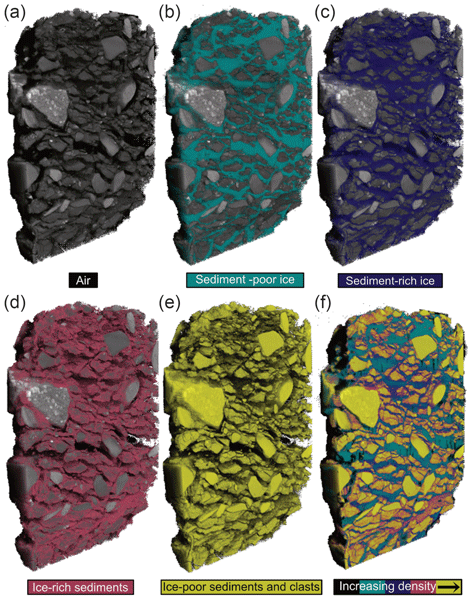
This study investigated the application of CT (computed tomography) scanning to tackle the limitations of traditional destructive methods in characterizing permafrost cores. Five different permafrost cores were scanned at resolutions of 65 and 25 μm with new calibration method. The identification of different materials from CT images showed air (gas), ice (excess and pore), and sediments using an Otsu segmentation method. The results were validated by a destructive (cuboid) and a non-destructive method.
Benjamin J. Stoker, Helen E. Dulfer, Chris R. Stokes, Victoria H. Brown, Christopher D. Clark, Colm Ó Cofaigh, David J. A. Evans, Duane Froese, Sophie L. Norris, and Martin Margold
The Cryosphere, 19, 869–910, https://doi.org/10.5194/tc-19-869-2025, https://doi.org/10.5194/tc-19-869-2025, 2025
Short summary
Short summary
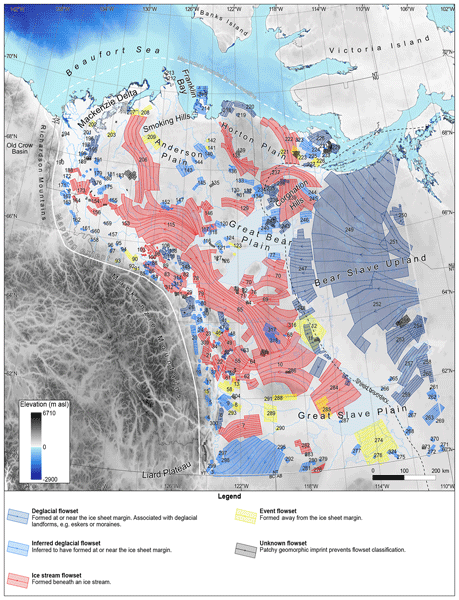
The retreat of the northwestern Laurentide Ice Sheet allows us to investigate how the ice drainage network evolves over millennial timescales and understand the influence of climate forcing, glacial lakes and the underlying geology on the rate of deglaciation. We reconstruct the changes in ice flow at 500-year intervals and identify rapid reorganisations of the drainage network, including variations in ice streaming that we link to climatically driven changes in the ice sheet surface slope.
Sophie L. Norris, Martin Margold, David J. A. Evans, Nigel Atkinson, and Duane G. Froese
The Cryosphere, 18, 1533–1559, https://doi.org/10.5194/tc-18-1533-2024, https://doi.org/10.5194/tc-18-1533-2024, 2024
Short summary
Short summary
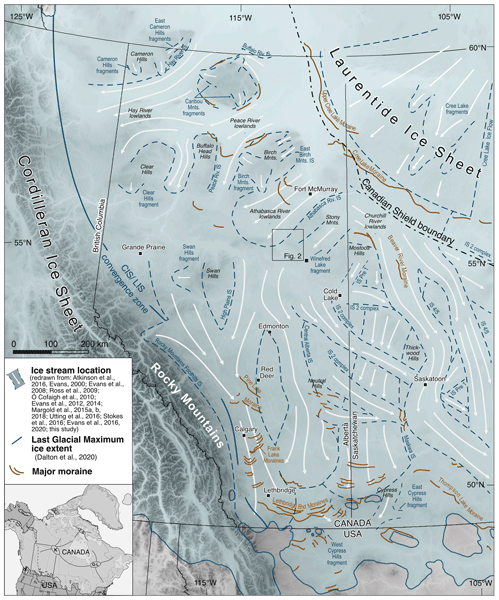
Associated with climate change between the Last Glacial Maximum and the current interglacial period, we reconstruct the behaviour of the southwestern Laurentide Ice Sheet, which covered the Canadian Prairies, using detailed landform mapping. Our reconstruction depicts three shifts in the ice sheet’s dynamics. We suggest these changes resulted from ice sheet thinning triggered by abrupt climatic change. However, we show that regional lithology and topography also play an important role.
Joel Pumple, Alistair Monteath, Jordan Harvey, Mahya Roustaei, Alejandro Alvarez, Casey Buchanan, and Duane Froese
The Cryosphere, 18, 489–503, https://doi.org/10.5194/tc-18-489-2024, https://doi.org/10.5194/tc-18-489-2024, 2024
Short summary
Short summary
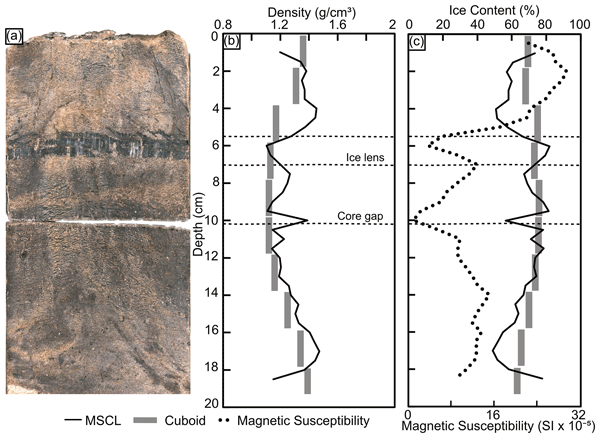
Ice content is a critical variable in the context of thawing permafrost, and permafrost cores provide a means to measure the characteristics of frozen ground; however, these measurements are typically destructive and time intensive. Multi-sensor core logging (MSCL) provides a fast, non-destructive method to image permafrost cores, measure bulk density, and estimate ice content. The use of MSCL will improve existing digital permafrost archives by adding high-quality and reproducible data.
Benjamin J. Stoker, Martin Margold, John C. Gosse, Alan J. Hidy, Alistair J. Monteath, Joseph M. Young, Niall Gandy, Lauren J. Gregoire, Sophie L. Norris, and Duane Froese
The Cryosphere, 16, 4865–4886, https://doi.org/10.5194/tc-16-4865-2022, https://doi.org/10.5194/tc-16-4865-2022, 2022
Short summary
Short summary
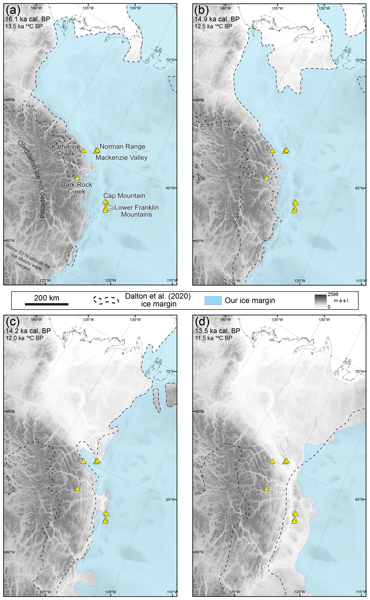
The Laurentide Ice Sheet was the largest ice sheet to grow and disappear in the Northern Hemisphere during the last glaciation. In northwestern Canada, it covered the Mackenzie Valley, blocking the migration of fauna and early humans between North America and Beringia and altering the drainage systems. We reconstruct the timing of ice sheet retreat in this region and the implications for the migration of early humans into North America, the drainage of glacial lakes, and past sea level rise.
Cited articles
Boulos, L., Prevost, M., Barbeau, B., Coallier, J., and Desjardins, R.: LIVE/DEAD BacLight: application of a new rapid staining method for direct enumeration of viable and total bacteria in drinking water, J. Microbiol. Meth., 37, 77–86, https://doi.org/10.1016/s0167-7012(99)00048-2, 1999.
Burn, C., Bartsch, A., Chakraborty, E., Das, S., Frauenfelder, R., Gärtner-Roer, I., Gisnås, K., Herring, T., Jones, B., Kokelj, S., Langer, M., Lathrop, E., Murton, J., Nielsen, D., Niu, F., Olson, C., O'Neill, H., Opfergelt, S., Overduin, P., Schaefer, K., Schuur, E., Skierszkan, E., Smith, S., Stuenzi, S., Tank, S., van der Sluijs, J., Vieira, G., Westermann, S., Wolfe, S. and Yarmak, E.: Developments in permafrost science and engineering in response to climate warming in circumpolar and high mountain regions, 2019–2024, Permafrost. Periglac., 36, 167–188, https://doi.org/10.1002/ppp.2261, 2025.
Calmels, F., Gagnon, O., and Allard, M.: A portable earth-drill system for permafrost studies, Permafrost. Periglac., 16, 311–315, https://doi.org/10.1002/ppp.529, 2005.
Caporaso, J. G., Lauber, C. L., Walters, W. A., Berg-Lyons, D., Huntley, J., Fierer, N., Owens, S. M., Betley, J., Fraser, L., Bauer, M., Gormley, N., Gilbert, J. A., Smith, G., and Knight, R.: Ultra-high-throughput microbial community analysis on the Illumina HiSeq and MiSeq platforms, ISME J., 6, 1621–1624, https://doi.org/10.1038/ismej.2012.8, 2012.
Chang, T., Yi, Y., Jiang, H., Li, R., Lu, P., Liu, L., Wang, L., Wang, L., Zhao, L., Zwieback, S., and Zhao, J.: Unraveling the non-linear relationship between seasonal deformation and permafrost active layer thickness, npj Climate and Atmospheric Science, 7, 308, https://doi.org/10.1038/s41612-024-00866-0, 2024.
Chen, Y. L., Deng, Y., Ding, J. Z., Hu, H. W., Xu, T. L., Li, F., Yang, G. B., and Yang, Y. H.: Distinct microbial communities in the active and permafrost layers on the Tibetan Plateau, Mol. Ecol., 26, 6608–6620, https://doi.org/10.1111/mec.14396, 2017.
Chen, Y., Romps, D. M., Seeley, J. T., Veraverbeke, S., Riley, W. J., Mekonnen, Z. A., and Randerson, J. T.: Future increases in Arctic lightning and fire risk for permafrost carbon, Nat. Clim. Change, 11, 404–410, https://doi.org/10.1038/s41558-021-01011-y, 2021.
Coolen, M. J. and Orsi, W. D.: The transcriptional response of microbial communities in thawing Alaskan permafrost soils, Front. Microbiol., 6, 197, https://doi.org/10.3389/fmicb.2015.00197, 2015.
Coolen, M. J., van de Giessen, J., Zhu, E. Y., and Wuchter, C.: Bioavailability of soil organic matter and microbial community dynamics upon permafrost thaw, Environ. Microbiol., 13, 2299–2314, https://doi.org/10.1111/j.1462-2920.2011.02489.x, 2011.
De Cáceres, M., Sol, D., Lapiedra, O., and Legendre, P.: A framework for estimating niche metrics using the resemblance between qualitative resources, Oikos, 120, 1341–1350, https://doi.org/10.1111/j.1600-0706.2011.19679.x, 2011.
Dixon, P.: VEGAN, a package of R functions for community ecology, J. Veg. Sci., 14, 927–930, https://doi.org/10.1658/1100-9233(2003)014[0927:Vaporf]2.0.Co;2, 2003.
Doherty, S., Thurston, A., and Barbato, R.: Active layer and permafrost microbial community coalescence increases soil activity and diversity in mixed communities compared to permafrost alone, Front. Microbiol., 16, 1579156, https://doi.org/10.3389/fmicb.2025.1579156, 2025.
Edgar, R. C.: Search and clustering orders of magnitude faster than BLAST, Bioinformatics, 26, 2460–2461, https://doi.org/10.1093/bioinformatics/btq461, 2010.
Edgar, R. C.: SINTAX: a simple non-Bayesian taxonomy classifier for 16S and ITS sequences, biorxiv, 074161, https://doi.org/10.1101/074161, 2016.
Edgar, R. C. and Flyvbjerg, H.: Error filtering, pair assembly and error correction for next-generation sequencing reads, Bioinformatics, 31, 3476–3482, https://doi.org/10.1093/bioinformatics/btv401, 2015.
Elias, S. A.: Conservation issues: Tundra ecosystems, in: Reference Module in Earth Systems and Environmental Sciences, Elsevier, https://doi.org/10.1016/b978-0-12-409548-9.09183-1, 2014.
Emerson, J. B., Roux, S., Brum, J. R., Bolduc, B., Woodcroft, B. J., Jang, H. B., Singleton, C. M., Solden, L. M., Naas, A. E., Boyd, J. A., Hodgkins, S. B., Wilson, R. M., Trubl, G., Li, C., Frolking, S., Pope, P. B., Wrighton, K. C., Crill, P. M., Chanton, J. P., Saleska, S. R., Tyson, G. W., Rich, V. I., and Sullivan, M. B.: Host-linked soil viral ecology along a permafrost thaw gradient, Nat. Microbiol., 3, 870–880, https://doi.org/10.1038/s41564-018-0190-y, 2018.
Forbes, B. C., Ebersole, J. J., and Strandberg, B.: Anthropogenic disturbance and patch dynamics in circumpolar arctic ecosystems, Conserv. Biol., 15, 954–969, 2001.
Galili, T.: dendextend: an R package for visualizing, adjusting and comparing trees of hierarchical clustering, Bioinformatics, 31, 3718–3720, https://doi.org/10.1093/bioinformatics/btv428, 2015.
Hansen, A. A., Herbert, R. A., Mikkelsen, K., Jensen, L. L., Kristoffersen, T., Tiedje, J. M., Lomstein, B. A., and Finster, K. W.: Viability, diversity and composition of the bacterial community in a high Arctic permafrost soil from Spitsbergen, Northern Norway, Environ. Microbiol., 9, 2870–2884, https://doi.org/10.1111/j.1462-2920.2007.01403.x, 2007.
Hayden, H. L., Mele, P. M., Bougoure, D. S., Allan, C. Y., Norng, S., Piceno, Y. M., Brodie, E. L., DeSantis, T. Z., Andersen, G. L., and Williams, A. L.: Changes in the microbial community structure of bacteria, archaea and fungi in response to elevated CO2 and warming in an A ustralian native grassland soil, Environ. Microbiol., 14, 3081–3096, https://doi.org/10.1111/j.1462-2920.2012.02855.x, 2012.
Hultman, J., Waldrop, M. P., Mackelprang, R., David, M. M., McFarland, J., Blazewicz, S. J., Harden, J., Turetsky, M. R., McGuire, A. D., Shah, M. B., VerBerkmoes, N. C., Lee, L. H., Mavrommatis, K., and Jansson, J. K.: Multi-omics of permafrost, active layer and thermokarst bog soil microbiomes, Nature, 521, 208–212, https://doi.org/10.1038/nature14238, 2015.
IPCC: Climate Change 2022: Impacts, Adaptation and Vulnerability. Contribution of Working Group II to the Sixth Assessment Report of the Intergovernmental Panel on Climate Change, Cambridge University Press, Cambridge, UK and New York, NY, USA, https://doi.org/10.1017/9781009325844, 2023.
Janssen, P. H., Yates, P. S., Grinton, B. E., Taylor, P. M., and Sait, M.: Improved culturability of soil bacteria and isolation in pure culture of novel members of the divisions Acidobacteria, Actinobacteria, Proteobacteria, and Verrucomicrobia, Appl. Environ. Microb., 68, 2391–2396, https://doi.org/10.1128/AEM.68.5.2391-2396.2002, 2002.
Jansson, J. K. and Taş, N.: The microbial ecology of permafrost, Nat. Rev. Microbiol., 12, 414–425, https://doi.org/10.1038/nrmicro3262, 2014.
Johnson, S. S., Hebsgaard, M. B., Christensen, T. R., Mastepanov, M., Nielsen, R., Munch, K., Brand, T., Gilbert, M. T., Zuber, M. T., Bunce, M., Ronn, R., Gilichinsky, D., Froese, D., and Willerslev, E.: Ancient bacteria show evidence of DNA repair, P. Natl. Acad. Sci. USA, 104, 14401–14405, https://doi.org/10.1073/pnas.0706787104, 2007.
Keuper, F., van Bodegom, P. M., Dorrepaal, E., Weedon, J. T., van Hal, J., van Logtestijn, R. S. P., and Aerts, R.: A frozen feast: thawing permafrost increases plant-available nitrogen in subarctic peatlands, Glob. Change Biol., 18, 1998–2007, https://doi.org/10.1111/j.1365-2486.2012.02663.x, 2012.
Kokelj, S. V. and Jorgenson, M. T.: Advances in thermokarst research, Permafrost. Periglac., 24, 108–119, https://doi.org/10.1002/ppp.1779, 2013.
La Ferla, R., Azzaro, M., Michaud, L., Caruso, G., Lo Giudice, A., Paranhos, R., Cabral, A. S., Conte, A., Cosenza, A., Maimone, G., Papale, M., Rappazzo, A. C., and Guglielmin, M.: Prokaryotic abundance and activity in permafrost of the northern Victoria Land and upper Victoria Valley (Antarctica), Microb. Ecol., 74, 402–415, https://doi.org/10.1007/s00248-017-0955-5, 2017.
Lantz, T. C., Kokelj, S. V., Gergel, S. E., and Henryz, G. H. R.: Relative impacts of disturbance and temperature: persistent changes in microenvironment and vegetation in retrogressive thaw slumps, Glob. Change Biol., 15, 1664–1675, https://doi.org/10.1111/j.1365-2486.2009.01917.x, 2009.
Lim, C. H. and Jackson, M. L.: Dissolution for total elemental analysis, methods of soil analysis: Part 2, Chemical and Microbiological Properties, 9, 1–12, 1982.
Lin, Z. J., Luo, J., and Niu, F. J.: Development of a thermokarst lake and its thermal effects on permafrost over nearly 10 yr in the Beiluhe Basin, Qinghai-Tibet Plateau, Geosphere, 12, 632–643, https://doi.org/10.1130/Ges01194.1, 2016.
Mackelprang, R., Burkert, A., Haw, M., Mahendrarajah, T., Conaway, C. H., Douglas, T. A., and Waldrop, M. P.: Microbial survival strategies in ancient permafrost: insights from metagenomics, ISME J., 11, 2305–2318, https://doi.org/10.1038/ismej.2017.93, 2017.
Mackelprang, R., Waldrop, M. P., DeAngelis, K. M., David, M. M., Chavarria, K. L., Blazewicz, S. J., Rubin, E. M., and Jansson, J. K.: Metagenomic analysis of a permafrost microbial community reveals a rapid response to thaw, Nature, 480, 368–371, https://doi.org/10.1038/nature10576, 2011.
Malard, L. A. and Pearce, D. A.: Microbial diversity and biogeography in Arctic soils, Environ. Microbiol. Rep., 10, 611–625, https://doi.org/10.1111/1758-2229.12680, 2018.
Mandal, S., Van Treuren, W., White, R. A., Eggesbo, M., Knight, R., and Peddada, S. D.: Analysis of composition of microbiomes: a novel method for studying microbial composition, Microb. Ecol. Health D., 26, 27663, https://doi.org/10.3402/mehd.v26.27663, 2015.
Maynard, D. G., Kalra Y. P., and Crumbaugh J. A.: Soil Sampling and Methods of Analysis: Nitrate and Exchangeable Ammonium Nitrogen, Lewis Publishers and CRC Press, https://doi.org/10.1201/9781420005271 2007.
McCalley, C. K., Woodcroft, B. J., Hodgkins, S. B., Wehr, R. A., Kim, E. H., Mondav, R., Crill, P. M., Chanton, J. P., Rich, V. I., Tyson, G. W., and Saleska, S. R.: Methane dynamics regulated by microbial community response to permafrost thaw, Nature, 514, 478–481, https://doi.org/10.1038/nature13798, 2014.
Metje, M. and Frenzel, P.: Methanogenesis and methanogenic pathways in a peat from subarctic permafrost, Environ. Microbiol., 9, 954–964, https://doi.org/10.1111/j.1462-2920.2006.01217.x, 2007.
Mondav, R., Woodcroft, B. J., Kim, E. H., McCalley, C. K., Hodgkins, S. B., Crill, P. M., Chanton, J. P., Hurst, G. B., VerBerkmoes, N. C., Saleska, S. R., Rich, V. I., and Tyson, G. W.: Discovery of a novel methanogen prevalent in thawing permafrost, Nat. Commun., 5, 3212, https://doi.org/10.1038/ncomms4212, 2014.
Mondav, R., McCalley, C. K., Hodgkins, S. B., Frolking, S., Saleska, S. R., Rich, V. I., Chanton, J. P., and Crill, P. M.: Microbial network, phylogenetic diversity and community membership in the active layer across a permafrost thaw gradient, Environ. Microbiol., 19, 3201–3218, https://doi.org/10.1111/1462-2920.13809, 2017.
Monteux, S., Weedon, J. T., Blume-Werry, G., Gavazov, K., Jassey, V. E. J., Johansson, M., Keuper, F., Olid, C., and Dorrepaal, E.: Long-term in situ permafrost thaw effects on bacterial communities and potential aerobic respiration, ISME J., 12, 2129–2141, https://doi.org/10.1038/s41396-018-0176-z, 2018.
Monteux, S., Mariën, J., and Krab, E. J.: Dispersal of bacteria and stimulation of permafrost decomposition by Collembola, Biogeosciences, 19, 4089–4105, https://doi.org/10.5194/bg-19-4089-2022, 2022.
Muyzer, G., de Waal, E. C., and Uitterlinden, A. G.: Profiling of complex microbial populations by denaturing gradient gel electrophoresis analysis of polymerase chain reaction-amplified genes coding for 16S rRNA, Appl. Environ. Microb., 59, 695–700, https://doi.org/10.1128/aem.59.3.695-700.1993, 1993.
Nazir, A., Farooq, B., Farooq, M., Anjum, S., Farooq, U., Shameem, N., Egamberdieva, D., and Fazeli-Nasab, B.: Chapter 2 – soil microbial diversity and functions, Microbiome drivers of ecosystem function, Annual Reviews: Academic Press, 17–29, https://doi.org/10.1016/B978-0-443-19121-3.00011-9, 2024.
Oelbermann, M., English, M., and Schiff, S. L.: Evaluating carbon dynamics and microbial activity in arctic soils under warmer temperatures, Can. J. Soil Sci., 88, 31–44, https://doi.org/10.4141/Cjss07060, 2008.
Palmer, K., Biasi, C., and Horn, M. A.: Contrasting denitrifier communities relate to contrasting N2O emission patterns from acidic peat soils in arctic tundra, ISME J., 6, 1058–1077, https://doi.org/10.1038/ismej.2011.172, 2012.
Reyes, F. R. and Lougheed, V. L.: Rapid nutrient release from permafrost thaw in arctic aquatic ecosystems, Arct. Antarct. Alp. Res., 47, 35–48, https://doi.org/10.1657/Aaar0013-099, 2015.
Richter-Menge, J. and Overland, J. E. (Eds.): Arctic Report Card 2010, National Oceanic and Atmospheric Administration (NOAA), Silver Spring, MD, USA, https://arctic.noaa.gov/report-card/report-card-archive/ (last access: 28 July 2026), 2010.
Rousk, J., Frey, S. D., and Baath, E.: Temperature adaptation of bacterial communities in experimentally warmed forest soils, Glob. Change Biol., 18, 3252–3258, https://doi.org/10.1111/j.1365-2486.2012.02764.x, 2012.
Saidi-Mehrabad, A., Neuberger, P., Cavaco, M., Froese, D., and Lanoil, B.: Optimization of subsampling, decontamination, and DNA extraction of difficult peat and silt permafrost samples, Sci. Rep.-UK, 10, 14295, https://doi.org/10.1038/s41598-020-71234-0, 2020a.
Saidi-Mehrabad, A., Neuberger, P., Hajihosseini, M., Froese, D., and Lanoil, B. D.: Permafrost microbial community structure changes across the pleistocene-holocene boundary, Frontiers in Environmental Science, 8, 548929, 133, https://doi.org/10.3389/fenvs.2020.00133, 2020b.
Scheel, M., Zervas, A., Jacobsen, C. S., Christensen, T. R.: Microbial community changes in 26,500-year-old thawing permafrost, Front. Microbiol., 13, 787146, https://doi.org/10.3389/fmicb.2022.787146, 2022.
Schloss, P. D., Westcott, S. L., Ryabin, T., Hall, J. R., Hartmann, M., Hollister, E. B., Lesniewski, R. A., Oakley, B. B., Parks, D. H., Robinson, C. J., Sahl, J. W., Stres, B., Thallinger, G. G., Van Horn, D. J., and Weber, C. F.: Introducing mothur: open-source, platform-independent, community-supported software for describing and comparing microbial communities, Appl. Environ. Microb., 75, 7537–7541, https://doi.org/10.1128/AEM.01541-09, 2009.
Schostag, M., Stibal, M., Jacobsen, C. S., Baelum, J., Taş, N., Elberling, B., Jansson, J. K., Semenchuk, P., and Prieme, A.: Distinct summer and winter bacterial communities in the active layer of Svalbard permafrost revealed by DNA- and RNA-based analyses, Front. Microbiol., 6, 399, https://doi.org/10.3389/fmicb.2015.00399, 2015.
Schuur, E. A., McGuire, A. D., Schadel, C., Grosse, G., Harden, J. W., Hayes, D. J., Hugelius, G., Koven, C. D., Kuhry, P., Lawrence, D. M., Natali, S. M., Olefeldt, D., Romanovsky, V. E., Schaefer, K., Turetsky, M. R., Treat, C. C., and Vonk, J. E.: Climate change and the permafrost carbon feedback, Nature, 520, 171–179, https://doi.org/10.1038/nature14338, 2015.
Schuur, E. A. G., Bracho, R., Celis, G., Belshe, E. F., Ebert, C., Ledman, J., Mauritz, M., Pegoraro, E. F., Plaza, C., Rodenhizer, H., Romanovsky, V., Schädel, C., Schirokauer, D., Taylor, M., Vogel, J. G., and Webb, E. E.: Tundra underlain by thawing permafrost persistently emits carbon to the atmosphere over 15 years of measurements, J. Geophys. Res.-Biogeo., 126, e2020JG006044, https://doi.org/10.1029/2020JG006044, 2021.
Singleton, C. M., McCalley, C. K., Woodcroft, B. J., Boyd, J. A., Evans, P. N., Hodgkins, S. B., Chanton, J. P., Frolking, S., Crill, P. M., Saleska, S. R., Rich, V. I., and Tyson, G. W.: Methanotrophy across a natural permafrost thaw environment, ISME J., 12, 2544–2558, https://doi.org/10.1038/s41396-018-0065-5, 2018.
Skoog, D. A., Holler, F. J., Crouch, S. R.: Principles of Instrumental Analysis, Chap. 10: Atomic Emission Spectrometry, Thomson Brooks/Cole, Belmont, ISBN 978-0495125709, 2007.
Sparks, D. L., Page, A. L., Helmke, P. A., and Loeppert, R. H.: Methods of Soil Analysis, Part 3: Chemical Methods, John Wiley and Sons, ISBN 978-0-891-18825-4, 2020.
Taş, N., Prestat, E., McFarland, J. W., Wickland, K. P., Knight, R., Berhe, A. A., Jorgenson, T., Waldrop, M. P., and Jansson, J. K.: Impact of fire on active layer and permafrost microbial communities and metagenomes in an upland Alaskan boreal forest, ISME J., 8, 1904–1919, https://doi.org/10.1038/ismej.2014.36, 2014.
Taş, N., Prestat, E., Wang, S., Wu, Y., Ulrich, C., Kneafsey, T., Tringe, S. G., Torn, M. S., Hubbard, S. S., and Jansson, J. K.: Landscape topography structures the soil microbiome in arctic polygonal tundra, Nat. Commun., 9, 777, https://doi.org/10.1038/s41467-018-03089-z, 2018.
Tripathi, B. M., Kim, M., Kim, Y., Byun, E., Yang, J. W., Ahn, J., and Lee, Y. K.: Variations in bacterial and archaeal communities along depth profiles of Alaskan soil cores, Sci. Rep., 8, 504, https://doi.org/10.1038/s41598-017-18777-x, 2018.
Turetsky, M. R., Abbott, B. W., Jones, M. C., Anthony, K. W., Olefeldt, D., Schuur, E. A. G., Grosse, G., Kuhry, P., Hugelius, G., Koven, C., Lawrence, D. M., Gibson, C., Sannel, A. B. K., and McGuire, A. D.: Carbon release through abrupt permafrost thaw, Nat. Geosci., 13, 138–143, https://doi.org/10.1038/s41561-019-0526-0, 2020.
Van Huissteden, J. and Dolman, A.: Soil carbon in the Arctic and the permafrost carbon feedback, Curr. Opin. Env. Sust., 4, 545–551, https://doi.org/10.1016/j.cosust.2012.09.008, 2012.
Woodcroft, B. J., Singleton, C. M., Boyd, J. A., Evans, P. N., Emerson, J. B., Zayed, A. A. F., Hoelzle, R. D., Lamberton, T. O., McCalley, C. K., Hodgkins, S. B., Wilson, R. M., Purvine, S. O., Nicora, C. D., Li, C., Frolking, S., Chanton, J. P., Crill, P. M., Saleska, S. R., Rich, V. I., and Tyson, G. W.: Genome-centric view of carbon processing in thawing permafrost, Nature, 560, 49–54, https://doi.org/10.1038/s41586-018-0338-1, 2018.
Wu, X. D., Zhao, L., Liu, G. M., Xu, H. Y., Zhang, X. L., and Ding, Y. J.: Effects of permafrost thaw-subsidence on soil bacterial communities in the southern Qinghai-Tibetan Plateau, Appl. Soil Ecol., 128, 81–88, https://doi.org/10.1016/j.apsoil.2018.04.007, 2018.
Short summary
Permafrost is at increased risk of thaw due to climate change and anthropogenic disturbances. As permafrost thaws, the microbiomes within these systems may become more active and change in composition, releasing greenhouse gases such as CO2 and CH4. In this study, we determined that permafrost thaw caused by road construction caused permafrost microbiomes to become more similar to surface soils, which has implications for greenhouse gas modelling.
Permafrost is at increased risk of thaw due to climate change and anthropogenic disturbances. As...
Altmetrics
Final-revised paper
Preprint