
Articles | Volume 23, issue 15
https://doi.org/10.5194/bg-23-5497-2026
© Author(s) 2026. This work is distributed under
the Creative Commons Attribution 4.0 License.
the Creative Commons Attribution 4.0 License.
https://doi.org/10.5194/bg-23-5497-2026
© Author(s) 2026. This work is distributed under
the Creative Commons Attribution 4.0 License.
the Creative Commons Attribution 4.0 License.
Research article
| 
10 Aug 2026
Research article |
| 10 Aug 2026
| 10 Aug 2026
Spatially contrasting CO2 dynamics driven by green manure intercropping in subtropical tea plantations
Shuo Liu
Zhejiang Carbon Neutral Innovation Institute & Zhejiang International Cooperation Base for Science and Technology on Carbon Emission Reduction and Monitoring, Zhejiang University of Technology, Hangzhou 310014, China
Shaoxing Research Institute, Zhejiang University of Technology, Shaoxing 312077, China
Zeping Jin
Zhejiang Carbon Neutral Innovation Institute & Zhejiang International Cooperation Base for Science and Technology on Carbon Emission Reduction and Monitoring, Zhejiang University of Technology, Hangzhou 310014, China
College of Environment, Zhejiang University of Technology, Hangzhou 310014, China
Ziyi Chen
Zhejiang Carbon Neutral Innovation Institute & Zhejiang International Cooperation Base for Science and Technology on Carbon Emission Reduction and Monitoring, Zhejiang University of Technology, Hangzhou 310014, China
College of Environment, Zhejiang University of Technology, Hangzhou 310014, China
Haolin Li
Zhejiang Carbon Neutral Innovation Institute & Zhejiang International Cooperation Base for Science and Technology on Carbon Emission Reduction and Monitoring, Zhejiang University of Technology, Hangzhou 310014, China
College of Environment, Zhejiang University of Technology, Hangzhou 310014, China
Zihan Fan
College of Environment, Zhejiang University of Technology, Hangzhou 310014, China
Shaohui Li
College of Environment, Zhejiang University of Technology, Hangzhou 310014, China
Haiwang Fu
Zhejiang Carbon Neutral Innovation Institute & Zhejiang International Cooperation Base for Science and Technology on Carbon Emission Reduction and Monitoring, Zhejiang University of Technology, Hangzhou 310014, China
Shaoxing Research Institute, Zhejiang University of Technology, Shaoxing 312077, China
Wei He
Zhejiang Carbon Neutral Innovation Institute & Zhejiang International Cooperation Base for Science and Technology on Carbon Emission Reduction and Monitoring, Zhejiang University of Technology, Hangzhou 310014, China
Kunpeng Zang
Zhejiang Carbon Neutral Innovation Institute & Zhejiang International Cooperation Base for Science and Technology on Carbon Emission Reduction and Monitoring, Zhejiang University of Technology, Hangzhou 310014, China
Shuangxi Fang
CORRESPONDING AUTHOR

Zhejiang Carbon Neutral Innovation Institute & Zhejiang International Cooperation Base for Science and Technology on Carbon Emission Reduction and Monitoring, Zhejiang University of Technology, Hangzhou 310014, China
State Key Laboratory of Green Chemical Synthesis and Conversion, Zhejiang University of Technology, Hangzhou 310014, China
Peng Yan
Key Laboratory of Tea Quality and Safety Control, Ministry of Agriculture, Tea Research Institute, Chinese Academy of Agricultural Sciences, Hangzhou 310008, China
Related authors
Ziyan Wu, Shaohui Li, Zihan Fan, Fuhao Li, Cunxin Hu, Kunpeng Zang, Shuangxi Fang, and Shuo Liu
EGUsphere, https://doi.org/10.5194/egusphere-2026-5269, https://doi.org/10.5194/egusphere-2026-5269, 2026
This preprint is open for discussion and under review for Biogeosciences (BG).
Short summary
Short summary
Urban lawns are expanding, but their greenhouse gas (GHG) dynamics remain unclear. We measured CO₂, CH₄, and N₂O fluxes from broad‑leaved (BF) and coniferous (CF) forest lawns. CF lawns emitted 2.3-fold more CO₂; both were net CH₄ sinks. CO₂ showed an atypical "daytime low, nighttime high" pattern. BF lawns respond mainly to temperature-nitrogen, while CF lawns are governed by moisture-microbes-carbon. Mowing effects were seasonal. These findings inform low‑carbon green space management.
Jiaxin Li, Kunpeng Zang, Yi Lin, Yuanyuan Chen, Shuo Liu, Shanshan Qiu, Kai Jiang, Xuemei Qing, Haoyu Xiong, Haixiang Hong, Shuangxi Fang, Honghui Xu, and Yujun Jiang
Atmos. Meas. Tech., 16, 4757–4768, https://doi.org/10.5194/amt-16-4757-2023, https://doi.org/10.5194/amt-16-4757-2023, 2023
Short summary
Short summary
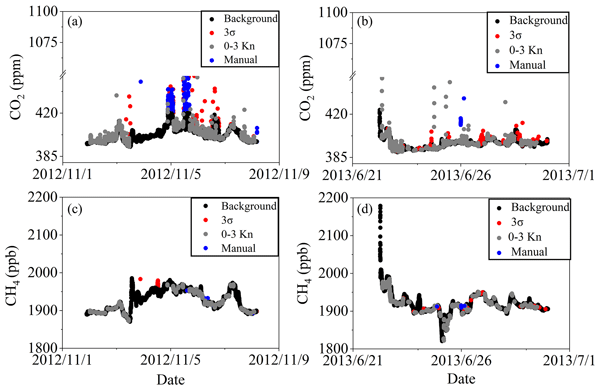
Based on observed data of CO2 and CH4 and meteorological parameters over the Yellow Sea in November 2012 and June 2013, a data process and quality control method was optimized and established to filter the data influenced by multiple factors. Spatial and seasonal variations in CO2 and CH4 mixing ratios were mainly controlled by the East Asian Monsoon, while the influence of air–sea exchange was slight.
Ziyan Wu, Shaohui Li, Zihan Fan, Fuhao Li, Cunxin Hu, Kunpeng Zang, Shuangxi Fang, and Shuo Liu
EGUsphere, https://doi.org/10.5194/egusphere-2026-5269, https://doi.org/10.5194/egusphere-2026-5269, 2026
This preprint is open for discussion and under review for Biogeosciences (BG).
Short summary
Short summary
Urban lawns are expanding, but their greenhouse gas (GHG) dynamics remain unclear. We measured CO₂, CH₄, and N₂O fluxes from broad‑leaved (BF) and coniferous (CF) forest lawns. CF lawns emitted 2.3-fold more CO₂; both were net CH₄ sinks. CO₂ showed an atypical "daytime low, nighttime high" pattern. BF lawns respond mainly to temperature-nitrogen, while CF lawns are governed by moisture-microbes-carbon. Mowing effects were seasonal. These findings inform low‑carbon green space management.
Chengcheng Huang, Wei He, Brendan Byrne, Ngoc Tu Nguyen, Jingfeng Xiao, Hua Yang, Philippe Ciais, Songhan Wang, Xing Li, Han Ma, Peipei Xu, Mengyao Zhao, Hui Chen, and Weimin Ju
Earth Syst. Sci. Data, 18, 7367–7390, https://doi.org/10.5194/essd-18-7367-2026, https://doi.org/10.5194/essd-18-7367-2026, 2026
Short summary
Short summary
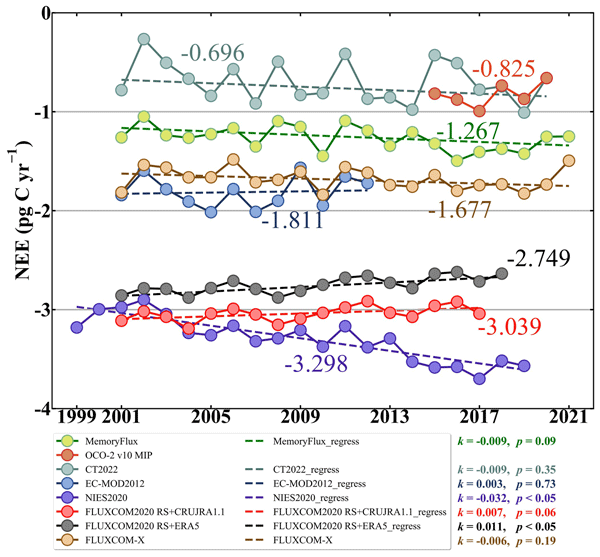
We created MemoryFlux, a new dataset that showed how ecosystems across North America absorbed and released carbon from 2001 to 2021. Using a deep-learning approach trained on historical climate and environmental conditions, we improved estimates of land carbon exchange and captured carbon anomalies associated with major droughts and floods. MemoryFlux provides a more reliable view of carbon cycling and improves our understanding of how ecosystems respond to a changing climate.
Mengrong Lu, Huilin Chen, Xun Zhang, Xuguang Chi, Chong Wei, Shuangxi Fang, Fenjuan Wang, Eleftherios Ioannidis, Friedemann Reum, Xinlu Wang, Prajal Pradhan, Wouter Peters, Klaus Hubacek, and Sander Houweling
EGUsphere, https://doi.org/10.5194/egusphere-2026-3879, https://doi.org/10.5194/egusphere-2026-3879, 2026
Short summary
Short summary
Effective methane mitigation requires accurate knowledge of the spatial and temporal distribution of sources and sinks. Using high-resolution atmospheric modeling and ground-based observations, we estimated methane emissions in East Asia, focusing on the Yangtze River Delta. Emissions are lower than most inventories suggest, but show a clear seasonal cycle, with summer peaks driven by rice cultivation and natural sources. This seasonality is critical for emission tracking and mitigation design.
You Yi, William J. Randel, Laura L. Pan, Yi Liu, Shuangxi Fang, Zhaonan Cai, Teresa Campos, and Benjamin Gaubert
EGUsphere, https://doi.org/10.5194/egusphere-2026-2644, https://doi.org/10.5194/egusphere-2026-2644, 2026
Short summary
Short summary
Methane is a potent greenhouse gas, but how it reaches the upper atmosphere is not well known. Using satellite data, we show that the Asian summer monsoon plays a key role in transporting methane from the lower atmosphere to the upper atmosphere, where it affects both Earth's radiation and the amount of water vapor. Our findings reveal that a regional weather system can influence the global distribution of methane, helping scientists better predict future climate change.
Shuang Fu, Xuemei Qing, Kunpeng Zang, Yi Lin, Shuo Liu, Yuanyuan Chen, Bingjiang Chen, Wei Gao, Martin Steinbacher, and Shuangxi Fang
Atmos. Chem. Phys., 26, 5477–5496, https://doi.org/10.5194/acp-26-5477-2026, https://doi.org/10.5194/acp-26-5477-2026, 2026
Short summary
Short summary
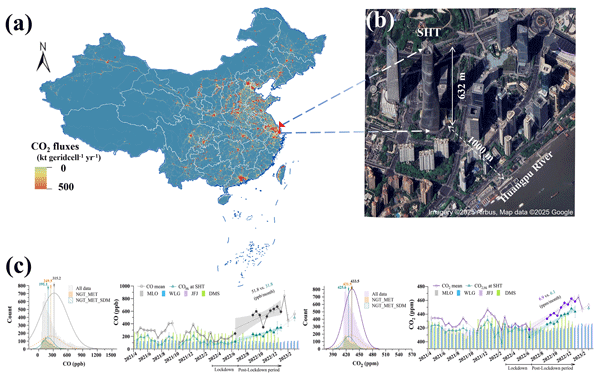
Urban carbon dynamics are critical for climate action, yet remote background monitoring often misses key details. This study utilized the unique vantage point of the 632-m Shanghai Tower to investigate carbon dioxide and carbon monoxide dynamics directly above the urban core. Our research confirms such elevated observations can effectively track metropolitan-scale footprint, revealing fossil fuels as the dominant source (85%) of excess carbon dioxide and supporting targeted reduction measures.
Wensi Ma, Qiaoli Wu, Wei He, and Jie Jiang
Int. Arch. Photogramm. Remote Sens. Spatial Inf. Sci., XLVIII-4-W14-2025, 227–235, https://doi.org/10.5194/isprs-archives-XLVIII-4-W14-2025-227-2025, https://doi.org/10.5194/isprs-archives-XLVIII-4-W14-2025-227-2025, 2025
Jingjing Wu, Qiaoli Wu, Wei He, and Jie Jiang
Int. Arch. Photogramm. Remote Sens. Spatial Inf. Sci., XLVIII-4-W14-2025, 319–325, https://doi.org/10.5194/isprs-archives-XLVIII-4-W14-2025-319-2025, https://doi.org/10.5194/isprs-archives-XLVIII-4-W14-2025-319-2025, 2025
Xingyu Wang, Fei Jiang, Hengmao Wang, Zhengqi Zhang, Mousong Wu, Jun Wang, Wei He, Weimin Ju, and Jing M. Chen
Atmos. Chem. Phys., 25, 867–880, https://doi.org/10.5194/acp-25-867-2025, https://doi.org/10.5194/acp-25-867-2025, 2025
Short summary
Short summary
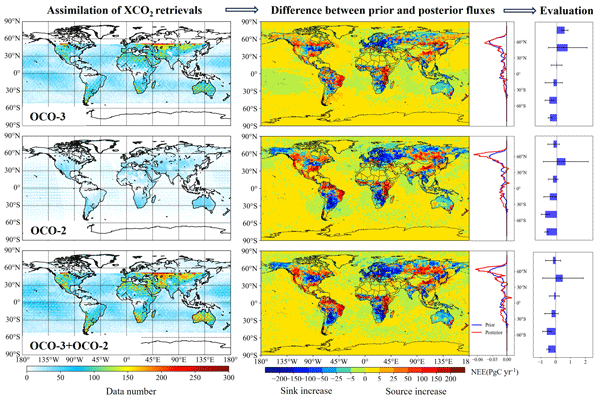
The role of OCO-3 XCO2 retrievals in estimating global terrestrial carbon fluxes is unclear. We investigate this by assimilating OCO-3 XCO2 retrievals alone and in combination with OCO-2 XCO2. The assimilation of OCO-3 XCO2 alone underestimates global land sinks, mainly at high latitudes, due to the lack of observations beyond 52° S and 52° N, large variations in the number of data, and varying observation times, while the joint assimilation of OCO-2 and OCO-3 XCO2 has the best performance.
Jiaxin Li, Kunpeng Zang, Yi Lin, Yuanyuan Chen, Shuo Liu, Shanshan Qiu, Kai Jiang, Xuemei Qing, Haoyu Xiong, Haixiang Hong, Shuangxi Fang, Honghui Xu, and Yujun Jiang
Atmos. Meas. Tech., 16, 4757–4768, https://doi.org/10.5194/amt-16-4757-2023, https://doi.org/10.5194/amt-16-4757-2023, 2023
Short summary
Short summary
Based on observed data of CO2 and CH4 and meteorological parameters over the Yellow Sea in November 2012 and June 2013, a data process and quality control method was optimized and established to filter the data influenced by multiple factors. Spatial and seasonal variations in CO2 and CH4 mixing ratios were mainly controlled by the East Asian Monsoon, while the influence of air–sea exchange was slight.
Cited articles
Allison, S. D., Wallenstein, M. D., and Bradford, M. A.: Soil-carbon response to warming dependent on microbial physiology, Nat. Geosci., 3, 336–340, https://doi.org/10.1038/ngeo846, 2010.
Chappell, A., Baldock, J., and Sanderman, J.: The global significance of omitting soil erosion from soil organic carbon cycling schemes, Nat. Clim. Change, 6, 187–191, https://doi.org/10.1038/nclimate2829, 2015.
Chen, D., Li, Y., Wang, C., Liu, X., Wang, Y., Shen, J., Qin, J., and Wu, J.: Dynamics and underlying mechanisms of N2O and NO emissions in response to a transient land-use conversion of Masson pine forest to tea field, Sci. Total Environ., 693, 133549, https://doi.org/10.1016/j.scitotenv.2019.07.355, 2019.
Chen, D., Wang, C., Li, Y., Liu, X., Qin, J., and Wu, J.: Effects of land-use conversion from Masson pine forests to tea plantations on net ecosystem carbon and greenhouse gas budgets, Agr. Ecosyst. Environ., 320, 107578, https://doi.org/10.1016/j.agee.2021.107578, 2021.
Cui, J., Xu, Y., Wang, M., Liu, A., Sun, L., Feng, X., Yang, Q., Wang, S., Liu, H., Lv, Y., and Liu, K.: Nonlinear threshold responses and spatial heterogeneity of soil organic carbon under contrasting pedoclimatic regimes, Front. Plant Sci., 16, 1703663, https://doi.org/10.3389/fpls.2025.1703663, 2025.
Dai, Z., Yu, M., Chen, H., Zhao, H., Huang, Y., Su, W., Xia, F., Chang, S., Brookes, P., Dahlgren, R., and Xu, J.: Elevated temperature shifts soil N cycling from microbial immobilization to enhanced mineralization, nitrification and denitrification across global terrestrial ecosystems, Glob. Change Biol., 26, 5267–5276, https://doi.org/10.1111/gcb.15211, 2020.
Dove, N., Torn, M. S., Hart, S. C., and Tas, N.: Metabolic capabilities mute positive response to direct and indirect impacts of warming throughout the soil profile, Nat. Commun., 12, 2089, https://doi.org/10.1038/s41467-021-22408-5, 2021.
FAO: Statistical databases, https://www.fao.org/faostat/en/#data/, last access: 11 June 2025.
Forte, A., Fagnano, M., and Fierro, A.: Potential role of compost and green manure amendment to mitigate soil GHGs emissions in Mediterranean drip irrigated maize production systems, J. Environ. Manage., 192, 68–78, https://doi.org/10.1016/j.jenvman.2017.01.037, 2017.
Gao, D., Bai, E., Wang, S., Zong, S., Liu, Z., Fan, X., Zhao, C., and Hagedorn, F.: Three-dimensional mapping of carbon, nitrogen, and phosphorus in soil microbial biomass and their stoichiometry at the global scale, Glob. Change Biol., 28, 6728–6740, https://doi.org/10.1111/gcb.16374, 2022.
Gong, Y., Li, P., Sakagami, N., and Komatsuzaki, M.: No-tillage with rye cover crop can reduce net global warming potential and yield-scaled global warming potential in the long-term organic soybean field, Soil Tillage Res., 205, 104747, https://doi.org/10.1016/j.still.2020.104747, 2021.
Gui, D., Zhang, Y., Lv, J., Guo, J., and Sha, Z.: Effects of intercropping on soil greenhouse gas emissions - A global meta-analysis, Sci. Total Environ., 918, 170632, https://doi.org/10.1016/j.scitotenv.2024.170632, 2024.
Han, W., Xu, J., Wei, K., Shi, Y., and Ma, L.: Estimation of N2O emission from tea garden soils, their adjacent vegetable garden and forest soils in eastern China, Environ. Earth Sci., 70, 2495–2500, https://doi.org/10.1007/s12665-013-2292-4, 2013.
Han, Z., Lin, H., Xu, P., Li, Z., Wang, J., and Zou, J.: Impact of organic fertilizer substitution and biochar amendment on net greenhouse gas budget in a tea plantation, Agr. Ecosyst. Environ., 326, 107779, https://doi.org/10.1016/j.agee.2021.107779, 2022.
Hirono, Y. and Nonaka, K.: Nitrous oxide emissions from green tea fields in Japan: contribution of emissions from soil between rows and soil under the canopy of tea plants, Soil Sci. Plant Nutr., 58, 384–392, https://doi.org/10.1080/00380768.2012.686434, 2012.
Huang, X., Zheng, Y., Li, P., Cui, J., Sui, P., Chen, Y., and Gao, W.: Organic management increases beneficial microorganisms and promotes the stability of microecological networks in tea plantation soil, Front. Microbiol., 14, 1237842, https://doi.org/10.3389/fmicb.2023.1237842, 2023.
IPCC: Climate Change 2022: Impacts, Adaptation, and Vulnerability, Contribution of Working Group II to the Sixth Assessment Report of the Intergovernmental Panel on Climate Change, Cambridge University Press, Cambridge, https://doi.org/10.1017/9781009325844, 2022.
Ji, C., Li, S., Geng, Y., Yuan, Y., Zhi, J., Yu, K., Han, Z., Wu, S., Liu, S., and Zou, J.: Decreased N2O and NO emissions associated with stimulated denitrification following biochar amendment in subtropical tea plantations, Geoderma, 365, 114223, https://doi.org/10.1016/j.geoderma.2020.114223, 2020.
Kim, S. Y., Lee, C. H., Gutierrez, J., and Kim, P. J.: Contribution of winter cover crop amendments on global warming potential in rice paddy soil during cultivation, Plant Soil, 366, 273–286, https://doi.org/10.1007/s11104-012-1403-4, 2013.
Lang, R., Blagodatsky, S., Xu, J., and Cadisc, G.: Seasonal differences in soil respiration and methane uptake in rubber plantation and rainforest, Agr. Ecosyst. Environ., 240, 314–328, https://doi.org/10.1016/j.agee.2017.02.032, 2017.
Lee, L. H., Kim, S. U., Han, H. R., Hur, D., Owens, V. N., Kumar, S., and Hong, C. O.: Mitigation of global warming potential and greenhouse gas intensity in arable soil with green manure as source of nitrogen, Environ. Pollut., 288, 117724, https://doi.org/10.1016/j.envpol.2021.117724, 2021.
Li, B., Gasser, T., Ciais, P., Piao, S., Tao, S., Balkanski, Y., Hauglustaine, D., Boisier, J. P., Chen, Z., Huang, M., Li, L., Li, Y., Liu, H., Liu, J., Peng, S., Shen, Z., Sun, Z., Wang, R., Wang, T.,Yin, G., Yin, Y., Zeng, H., Zeng, Z., and Zhou, F.: The contribution of China's emissions to global climate forcing, Nature, 531, 357–361, https://doi.org/10.1038/nature17165, 2016.
Li, P., Jia, L., Chen, Q., Zhang, H., Deng, J., Lu, J., Xu, L., Li, H., Hu, F., and Jiao, J.: Adaptive evaluation for agricultural sustainability of different fertilizer management options for a green manure-maize rotation system: Impacts on crop yield, soil biochemical properties and organic carbon fractions, Sci. Total Environ., 908, 168170, https://doi.org/10.1016/j.scitotenv.2023.168170, 2024.
Lim, S. S. and Choi, W. J.: Changes in microbial biomass, CH4 and CO2 emissions, and soil carbon content by fly ash co-applied with organic inputs with contrasting substrate quality under changing water regimes, Soil Biol. Biochem., 68, 494–502, https://doi.org/10.1016/j.soilbio.2013.10.027, 2014.
Ling, J., Dungait, J. A. J., Delgado, B. M., Cui, Z., Zhou, R., Zhang, W., Gao, Q., Chen, Y., Yue, S., Kuzyakov, Y., Zhang, F., Chen, X., and Tian, J.: Soil organic carbon thresholds control fertilizer effects on carbon accrual in croplands worldwide, Nat. Commun., 16, 3009–3009, https://doi.org/10.1038/s41467-025-57981-6, 2025.
Liu, S.: CO2 Fluxes Driven by Green Manure Intercropping, Zenodo [data set], https://doi.org/10.5281/zenodo.20739676, 2026.
Liu, S., Lin, F., Wu, S., Ji, C., Sun, Y., Jin, Y., Li, S., Li, Z., and Zou, J.: A meta-analysis of fertilizer-induced soil NO and combined NO + N2O emissions. Glob. Change Biol., 23, 2520–2532, https://doi.org/10.1111/gcb.13485, 2016.
Liu, C., Bol, R., Ju, X., Ju, X., Tian, J., and Wu, D.: Trade-offs on carbon and nitrogen availability lead to only a minor effect of elevated CO2 on potential denitrification in soil, Soil Biol. Biochem., 176, 108888, https://doi.org/10.1016/j.soilbio.2022.108888, 2023.
Liu, Z., Liu, W., Liu, H., Gao, T., Zhao, H., Li, G., Han, H., Li, Z., Lal, R., and Ning, T.: Capture of soil respiration for higher photosynthesis with lower CO2 emission, J. Clean Prod., 246, 119029, https://doi.org/10.1016/j.jclepro.2019.119029, 2020.
Mo, F., Yang, D., Wang, X., Crowther, T. W., Vinay, N., Luo, Z., Yu, K., Sun, S., Zhang, F., Xiong, Y., and Liao, Y.: Nutrient limitation of soil organic carbon stocks under straw return, Soil Biol. Biochem., 192, 109360, https://doi.org/10.1016/j.soilbio.2024.109360, 2024.
Muhammad, I., Sainju, U. M., Zhao, F., Khan, A., Ghimire, R., Fu, X., and Wang, J.: Regulation of soil CO2 and N2O emissions by cover crops: A meta-analysis, Soil Till. Res., 192, 103–112, https://doi.org/10.1016/j.still.2019.04.020, 2019.
Ni, K., Liao, W., Yi, X., Niu, S., Ma, L., Shi, Y., Zhang, Q., Liu, M., and Ruan, J.: Fertilization status and reduction potential in tea gardens of China, J. Plant Nutr. Fert., 25, 421–432, 2019.
Pang, J., Li, H., Tang, X., and Geng, J.: Carbon dynamics and environmental controls of a hilly tea plantation in Southeast China, Ecol. Evol., 9, 9723–9735, https://doi.org/10.1002/ece3.5504, 2019.
Qian, H., Zhu, X., Huang, S., Linquist, B., Kuzyakov, Y., Wassmann, R., Minamikawa, K., Martinez, E. M., Yan, X., Zhou, F., Sander, B. O., Zhang, W., Shang, Z., Zou, J., Zheng, X., Li, G., Liu, Z., Wang, S., Ding, Y., van Groenigen, K. J., and Jiang, Y.: Greenhouse gas emissions and mitigation in rice agriculture, Nat. Rev. Earth Environ., 4, 716–732, https://doi.org/10.1038/s43017-023-00482-1, 2023.
Schnecker, J., Baldaszti, L., Gündler, P., Pleitner, M., Sandén, T., Simon, E., Spiegel, F., Spiegel, H., Urbina Malo, C., Zechmeister-Boltenstern, S., and Richter, A.: Seasonal dynamics of soil microbial growth, respiration, biomass, and carbon use efficiency in temperate soils, Geoderma 440, 116693, https://doi.org/10.1016/j.geoderma.2023.116693, 2023.
Song, J., Song, J., Xu, W., Gao, G., Bai, J., Zhang, Z., Yu, Q., Hao, J., Yang, G., Ren, G., Feng, Y., and Wang, X.: Straw return with fertilizer improves soil CO2 emissions by mitigating microbial nitrogen limitation during the winter wheat season, Catena, 241, 108050, https://doi.org/10.1016/j.catena.2024.108050, 2024.
Song, L., Liao, W., Wang, Y., Su, Y., Zhang, Y., Luo, Y., and Sun, L.: Effects of Interplanting Green Manure on Soil Physico-chemical Characters in Tea Plantation, Soils, 48, 675–679, 2016.
Struck, I. J. A., Taube, F., Hoffmann, M., Kluß, C., Herrmann, A., Loges, R., and Reinsch, T.: Full greenhouse gas balance of silage maize cultivation following grassland: Are no-tillage practices favorable under highly productive soil conditions?, Soil Till. Res., 200, 104615, https://doi.org/10.1016/j.still.2020.104615, 2020.
Tang, J., Baldocchi, D. D., and Xu, L.: Tree photosynthesis modulates soil respiration on a diurnal time scale, Glob. Change Biol., 11, 1298–1304, https://doi.org/10.1111/j.1365-2486.2005.00978.x, 2005.
Wang, B., Wang, S., Li, G., Fu, L., Chen, H., Yin, M., and Chen, J.: Reducing nitrogen fertilizer usage coupled with organic substitution improves soil quality and boosts tea yield and quality in tea plantations, J. Sci. Food Agr., 105, 1228–1238, https://doi.org/10.1002/jsfa.13913, 2024.
Wang, G., Zhao, M., Zhao, B., Liu, X., and Wang, Y.: Reshaping Agriculture Eco-efficiency in China: From Greenhouse Gas Perspective, Ecol. Indic., 172, 113268, https://doi.org/10.1016/j.ecolind.2025.113268, 2025.
Wang, J., Smith, P., Hergoualc'h, K., and Zou, J.: Direct N2O emissions from global tea plantations and mitigation potential by climate-smart practices, Resour. Conserv. Recycl., 185, 106501, https://doi.org/10.1016/j.resconrec.2022.106501, 2022.
Wanyama, I., Pelster, D. E., Butterbach-Bahl, K., Verchot, L. V., Martius, C., and Rufino, M. C.: Soil carbon dioxide and methane fluxes from forests and other land use types in an African tropical montane region, Biogeochemistry, 143, 171–190, https://doi.org/10.1007/s10533-019-00555-8, 2019.
Widanagamage, N., Santos, E., Rice, C. W., and Patrignani, A.: Study of soil heterotrophic respiration as a function of soil moisture under different land covers, Soil Biol. Biochem., 200, 109593, https://doi.org/10.1016/j.soilbio.2024.109593, 2025.
WMO: Greenhouse Gas Bulletin-No. 20: The state of greenhouse gases in the atmosphere based on global observations through 2023, WMO Greenhouse Gas Bulletin, Switzerland, 2024.
Wu, Y., Li, Y., Wang, H., Wang, Z., Fu, X., Shen, J., Wang, Y., Liu, X., Meng, L., and Wu, J.: Response of N2O emissions to biochar amendment on a tea field soil in subtropical central China: A three-year field experiment, Agr. Ecosyst. Environ., 318, 107473, https://doi.org/10.1016/j.agee.2021.107473, 2021.
Xin, W., Zhang, J., Yu, Y., Tian, Y., Li, H., Chen, X., Li, W., Liu, Y., Lu, T., He, B., Xiong, Y., Yang, Z., Xu, T., and Tang, W.: Root microbiota of tea plants regulate nitrogen homeostasis and theanine synthesis to influence tea quality, Curr. Biol., 34, 868–880, https://doi.org/10.1016/j.cub.2024.01.044, 2024.
Xu, B. and Lin, B.: Factors affecting CO2 emissions in China's agriculture sector: Evidence from geographically weighted regression model, Energy Policy, 104, 404–414. https://doi.org/10.1016/j.enpol.2017.02.011, 2017.
Xu, X., Zhao, Q., Guo, J., Li, C., Li, J., Niu, K., Jin, S., Fu, C., Gaffney, P. P. J., Xu, Y., Sun, M., Xue, Y., Chang, D., Zhang, Y., Si, W., Fan, S., and Zhang, L.: Inequality in agricultural greenhouse gas emissions intensity has risen in rural China from 1993 to 2020, Nat. Food, 5, 916–928, https://doi.org/10.1038/s43016-024-01071-1, 2024.
Yan, P., Wu, L., Wang, D., Fu, J., Shen, C., Li, X., Zhang, L., Zhang, L., Fan, L., and Han W.: Soil acidification in Chinese tea plantations, Sci. Total Environ., 715, 136963, https://doi.org/10.1016/j.scitotenv.2020.136963, 2020.
Yan, W., Zhong, Y., Yang, J., and Torn, M. S.: Response of soil greenhouse gas fluxes to warming: A global meta-analysis of field studies, Geoderma, 419, 115865, https://doi.org/10.1016/j.geoderma.2022.115865, 2022.
Yao, Z., Wei, Y., Liu, C., Zheng, X., and Xie, B.: Organically fertilized tea plantation stimulates N2O emissions and lowers NO fluxes in subtropical China, Biogeosciences, 12, 5915–5928, https://doi.org/10.5194/bg-12-5915-2015, 2015.
Zhang, Q., Lei, H., Yang, D., Xiong, L., Liu, P., and Fang, B.: Decadal variation in CO2 fluxes and its budget in a wheat and maize rotation cropland over the North China Plain, Biogeosciences, 17, 2245–2262, https://doi.org/10.5194/bg-17-2245-2020, 2020.
Zhang, S., Huang, F., Guo, S., Luo, Y., Zhang, L., Zhang, L., Li, Z., Ge, S., Wang, H., Fu, J., Li, X., and Yan, P.: Mitigation of soil organic carbon mineralization in tea plantations through replacement of pruning litter additions with pruning litter derived biochar and organic fertilizer, Ind. Crops Prod., 225, 120518, https://doi.org/10.1016/j.indcrop.2025.120518, 2025.
Zhang, W., Lu, J., Bai, J., Khan, A., Liu, S., Zhao, L., Wang, W., Zhu, S., Li, X., Tian, X., Li, S., and Xiong, Y.: Introduction of soybean into maize field reduces N2O emission intensity via optimizing nitrogen source utilization, J. Clean Prod., 442, 141052, https://doi.org/10.1016/j.jclepro.2024.141052, 2024.
Zhu, Z., Ge, T., Luo, Y., Liu, S., Xu, X., Tong, C., and Shibistova, O., Guggenberger, G., Wu, J.: Microbial stoichiometric flexibility regulates rice straw mineralization and its priming effect in paddy soil, Soil Biol. Biochem., 121, 67–76, https://doi.org/10.1016/j.soilbio.2018.03.003, 2018.
Zhou, G., Li, G., Liang, H., Liu, R., Ma, Z., Gao, S., Chang, D., Liu, J., Chadwick, D. R., Jones, D. L., and Cao, W.: Green Manure Coupled With Straw Returning Increases Soil Organic Carbon via Decreased Priming Effect and Enhanced Microbial Carbon Pump, Glob. Change Biol., 31, e70232, https://doi.org/10.1111/gcb.70232, 2025.
Zou, J., Huang, Y., Qin, Y., Shen, Q., Pan, G., Lu, Y., and Liu, Q.: Changes in fertilizer-induced direct N2O emissions from paddy fields during rice-growing season in China between 1950s and 1990s, Glob. Change Biol., 15, 229–242, https://doi.org/10.1111/j.1365-2486.2008.01775.x, 2009.
Short summary
We studied how planting green manure between tea rows affects carbon dioxide release from tea fields. Mixing legume and grass species improved soil health, reduced emissions from tea rows, and stabilized carbon over time. Although inter-row areas released more carbon, overall emissions declined with continued intercropping. This shows that green manure can make tea farming more climate-friendly and sustainable.
We studied how planting green manure between tea rows affects carbon dioxide release from tea...


Altmetrics
Final-revised paper
Preprint