
Articles | Volume 23, issue 16
https://doi.org/10.5194/bg-23-5625-2026
© Author(s) 2026. This work is distributed under
the Creative Commons Attribution 4.0 License.
the Creative Commons Attribution 4.0 License.
https://doi.org/10.5194/bg-23-5625-2026
© Author(s) 2026. This work is distributed under
the Creative Commons Attribution 4.0 License.
the Creative Commons Attribution 4.0 License.
Research article
| 
17 Aug 2026
Research article |
| 17 Aug 2026
| 17 Aug 2026
The impact of NaOH, CaO, and [Ca2+] + [HCO3−] additions on PIC and POC formation in Los Angeles Harbor Waters
Department of Earth Sciences, University of Southern California, Los Angeles, 90089, United States
Devan L. Roper
Department of Earth Sciences, University of Southern California, Los Angeles, 90089, United States
Ria Agrawal
Rosenstiel School of Marine, Atmospheric & Earth Science, University of Miami, Miami, 33149, United States
Esther J. Lim
Department of Earth Sciences, University of Southern California, Los Angeles, 90089, United States
Nick E. Rollins
Department of Earth Sciences, University of Southern California, Los Angeles, 90089, United States
William M. Berelson
Department of Earth Sciences, University of Southern California, Los Angeles, 90089, United States
Related authors
No articles found.
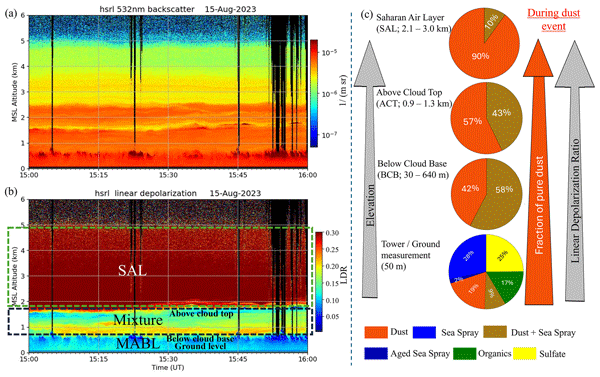
Sujan Shrestha, Robert E. Holz, Willem J. Marais, Zachary Buckholtz, Ilya Razenkov, Edwin Eloranta, Jeffrey S. Reid, Hope E. Elliott, Nurun Nahar Lata, Zezhen Cheng, Swarup China, Edmund Blades, Albert D. Ortiz, Rebecca Chewitt-Lucas, Alyson Allen, Devon Blades, Ria Agrawal, Elizabeth A. Reid, Jesus Ruiz-Plancarte, Anthony Bucholtz, Ryan Yamaguchi, Qing Wang, Thomas Eck, Elena Lind, Mira L. Pöhlker, Andrew P. Ault, and Cassandra J. Gaston
Atmos. Chem. Phys., 26, 983–999, https://doi.org/10.5194/acp-26-983-2026, https://doi.org/10.5194/acp-26-983-2026, 2026
Short summary
Short summary
Coordinated observations from MAGPIE 2023 show that Saharan dust in the marine atmospheric boundary layer becomes internally mixed with sea spray. This mixing increases particle sphericity and hygroscopicity, likely leading to suppressed lidar linear depolarization ratios despite high dust concentrations. The findings have key implications for interpreting lidar-derived dust retrievals, estimating surface dust from satellite products, and improving dust representation in models.
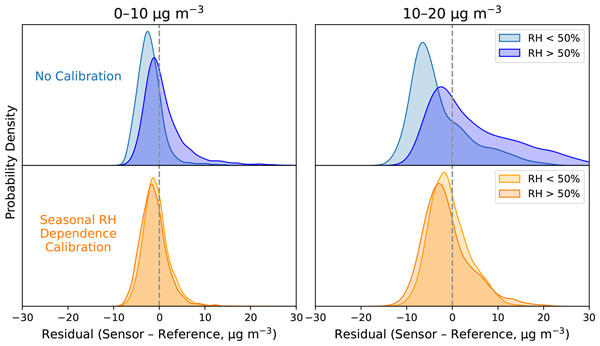
Milan Y. Patel, Pietro F. Vannucci, Jinsol Kim, William M. Berelson, and Ronald C. Cohen
Atmos. Meas. Tech., 17, 1051–1060, https://doi.org/10.5194/amt-17-1051-2024, https://doi.org/10.5194/amt-17-1051-2024, 2024
Short summary
Short summary
Low-cost particulate matter (PM) sensors are becoming increasingly common in community monitoring and atmospheric research, but these sensors require proper calibration to provide accurate reporting. Here, we propose a hygroscopic growth calibration scheme that evolves in time to account for seasonal changes in hygroscopic growth. In San Francisco and Los Angeles, CA, applying a seasonal hygroscopic growth calibration can account for sensor biases driven by the seasonal cycles in PM composition.
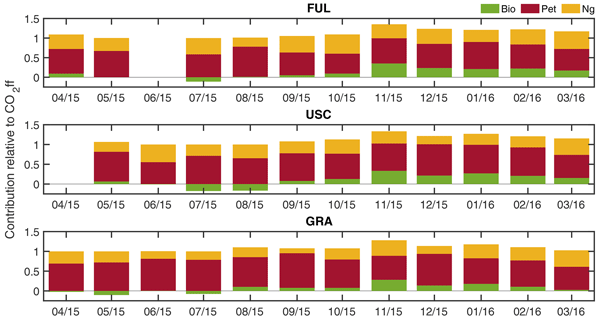
Jinsol Kim, John B. Miller, Charles E. Miller, Scott J. Lehman, Sylvia E. Michel, Vineet Yadav, Nick E. Rollins, and William M. Berelson
Atmos. Chem. Phys., 23, 14425–14436, https://doi.org/10.5194/acp-23-14425-2023, https://doi.org/10.5194/acp-23-14425-2023, 2023
Short summary
Short summary
In this study, we present the partitioning of CO2 signals from biogenic, petroleum and natural gas sources by combining CO, 13CO2 and 14CO2 measurements. Using measurements from flask air samples at three sites in the greater Los Angeles region, we find larger and positive contributions of biogenic signals in winter and smaller and negative contributions in summer. The largest contribution of natural gas combustion generally occurs in summer.
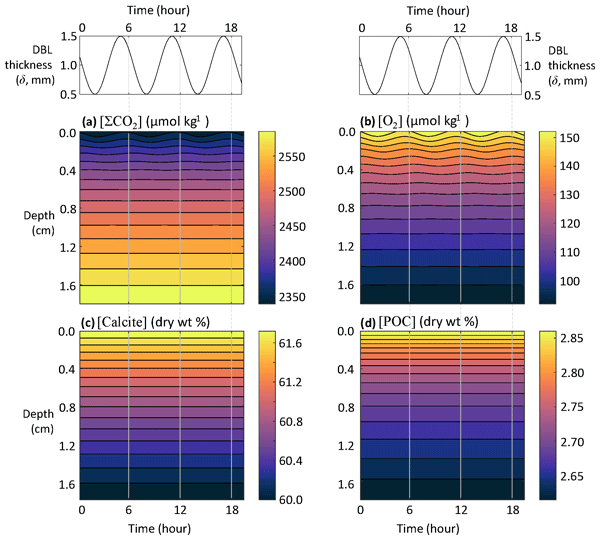
Olivier Sulpis, Matthew P. Humphreys, Monica M. Wilhelmus, Dustin Carroll, William M. Berelson, Dimitris Menemenlis, Jack J. Middelburg, and Jess F. Adkins
Geosci. Model Dev., 15, 2105–2131, https://doi.org/10.5194/gmd-15-2105-2022, https://doi.org/10.5194/gmd-15-2105-2022, 2022
Short summary
Short summary
A quarter of the surface of the Earth is covered by marine sediments rich in calcium carbonates, and their dissolution acts as a giant antacid tablet protecting the ocean against human-made acidification caused by massive CO2 emissions. Here, we present a new model of sediment chemistry that incorporates the latest experimental findings on calcium carbonate dissolution kinetics. This model can be used to predict how marine sediments evolve through time in response to environmental perturbations.
Cited articles
Anderson, L. A.: On the hydrogen and oxygen content of marine phytoplankton, Deep-Sea Res. Pt. I, 42, 1675–1680, https://doi.org/10.1016/0967-0637(95)00072-E, 1995.
Archer, D. E.: An atlas of the distribution of calcium carbonate in sediments of the deep sea, Global Biogeochem. Cy., 10, 159–174, https://doi.org/10.1029/95GB03016, 1996.
Bach, L. T.: The additionality problem of ocean alkalinity enhancement, Biogeosciences, 21, 261–277, https://doi.org/10.5194/bg-21-261-2024, 2024.
Bach, L. T., Riebesell, U., and Schulz, K. G.: Distinguishing between the effects of ocean acidification and ocean carbonation in the coccolithophore Emiliania huxleyi, Limnol. Oceanogr., 56, 2040–2050, https://doi.org/10.4319/lo.2011.56.6.2040, 2011.
Bach, L. T., Gill, S. J., Rickaby, R. E. M., Gore, S., and Renforth, P.: CO2 Removal With Enhanced Weathering and Ocean Alkalinity Enhancement: Potential Risks and Co-benefits for Marine Pelagic Ecosystems, Frontiers in Climate, 1, https://doi.org/10.3389/fclim.2019.00007, 2019.
Bach, L. T., Ferderer, A. J., LaRoche, J., and Schulz, K. G.: Technical note: Ocean Alkalinity Enhancement Pelagic Impact Intercomparison Project (OAEPIIP), Biogeosciences, 21, 3665–3676, https://doi.org/10.5194/bg-21-3665-2024, 2024.
Barker, S., Archer, D., Booth, L., Elderfield, H., Henderiks, J., and Rickaby, R. E. M.: Globally increased pelagic carbonate production during the Mid-Brunhes dissolution interval and the CO2 paradox of MIS 11, Quat. Sci. Rev., 25, 3278–3293, https://doi.org/10.1016/j.quascirev.2006.07.018, 2006.
Berelson, W. M., Balch, W. M., Najjar, R., Feely, R. A., Sabine, C., and Lee, K.: Relating estimates of CaCO3 production, export, and dissolution in the water column to measurements of CaCO3 rain into sediment traps and dissolution on the sea floor:A revised global carbonate budget, Global Biogeochem. Cy., 21, 1–15, https://doi.org/10.1029/2006GB002803, 2007.
Berner, R. A.: The role of magnesium in the crystal growth of calcite and aragonite from sea water, Geochim. Cosmochim. Ac., 39, 489–504, https://doi.org/10.1016/0016-7037(75)90102-7, 1975.
Berner, R. A. and Berner, E. K.: Silicate Weathering and Climate, in: Tectonic Uplift and Climate Change, Springer US, Boston, MA, 353–365, https://doi.org/10.1007/978-1-4615-5935-1_15, 1997.
Berner, R. A., Lasaga, A. C., and Garrels, R. M.: The carbonate-silicate geochemical cycle and its effect on atmospheric carbon dioxide over the past 100 million years, Am. J. Sci., 283, 641–683, https://doi.org/10.2475/ajs.283.7.641, 1983.
Bhaumik, A., Faucher, G., Henning, M., Meunier, C. L., and Boersma, M.: Prey dynamics as a buffer: enhancing copepod resilience to ocean alkalinity enhancement, Environ. Res. Lett., 20, https://doi.org/10.1088/1748-9326/adaa8c, 2025.
Bialonski, S., Caron, D. A., Schloen, J., Feudel, U., Kantz, H., and Moorthi, S. D.: Phytoplankton dynamics in the Southern California Bight indicate a complex mixture of transport and biology, J. Plankton Res., 38, 1077–1091, https://doi.org/10.1093/plankt/fbv122, 2016.
Boyd, P. and Newton, P.: Evidence of the potential influence of planktonic community structure on the interannual variability of particulate organic carbon flux, Deep-Sea Res. Pt. I, 42, 619–639, https://doi.org/10.1016/0967-0637(95)00017-Z, 1995.
Cai, W.-J. and Jiao, N.: Wastewater alkalinity addition as a novel approach for ocean negative carbon emissions, The Innovation, 3, 100272, https://doi.org/10.1016/j.xinn.2022.100272, 2022.
Camatti, E., Valsecchi, S., Caserini, S., Barbaccia, E., Santinelli, C., Basso, D., and Azzellino, A.: Short-term impact assessment of ocean liming: A copepod exposure test, Mar. Pollut. Bull., 198, 115833, https://doi.org/10.1016/j.marpolbul.2023.115833, 2024.
Caron, D. A., Connell, P. E., Schaffner, R. A., Schnetzer, A., Fuhrman, J. A., Countway, P. D., and Kim, D. Y.: Planktonic food web structure at a coastal time-series site: I. Partitioning of microbial abundances and carbon biomass, Deep-Sea Res. Pt. I, 121, 14–29, https://doi.org/10.1016/j.dsr.2016.12.013, 2017.
Carter, C. M., Ross, A. H., Schiel, D. R., Howard-Williams, C., and Hayden, B.: In situ microcosm experiments on the influence of nitrate and light on phytoplankton community composition, J. Exp. Mar. Biol. Ecol., 326, 1–13, https://doi.org/10.1016/j.jembe.2005.05.006, 2005.
Caserini, S., Pagano, D., Campo, F., Abbà, A., De Marco, S., Righi, D., Renforth, P., and Grosso, M.: Potential of Maritime Transport for Ocean Liming and Atmospheric CO2 Removal, Frontiers in Climate, 3, 1–18, https://doi.org/10.3389/fclim.2021.575900, 2021.
Chen, T., Neville, A., and Yuan, M.: Calcium carbonate scale formation – assessing the initial stages of precipitation and deposition, J. Pet. Sci. Eng., 46, 185–194, https://doi.org/10.1016/j.petrol.2004.12.004, 2005.
Chou, H.-T.: On the dilution of liquid waste in ship's wake, J. Mar. Sci. Technol., 149–154, https://doi.org/10.1126/science.155.3770.1621, 1996.
Chrachri, A., Hopkinson, B. M., Flynn, K., Brownlee, C., and Wheeler, G. L.: Dynamic changes in carbonate chemistry in the microenvironment around single marine phytoplankton cells, Nat. Commun., 9, 74, https://doi.org/10.1038/s41467-017-02426-y, 2018.
Connell, P. E., Campbell, V., Gellene, A. G., Hu, S. K., and Caron, D. A.: Planktonic food web structure at a coastal time-series site: II. Spatiotemporal variability of microbial trophic activities, Deep-Sea Res. Pt. I, 121, 210–223, https://doi.org/10.1016/j.dsr.2017.01.007, 2017.
Daehler, C. C. and Strong, D. R.: Can You Bottle Nature? The Roles of Microcosms in Ecological Research, Ecology, 77, 663–664, https://doi.org/10.2307/2265487, 1996.
de Castro, I., Ribeiro, S. C., Louvado, A., Gomes, N. C. M., Cachão, M., Brito de Azevedo, E., and Barcelos e Ramos, J.: Ocean liming effect on a North Atlantic microbial community: changes in composition and rates, Front. Mar. Sci., 12, https://doi.org/10.3389/fmars.2025.1602158, 2025.
de Coninck, H., Revi, A., Babiker, M., Bertoldi, P., Buckeridge, M., Cartwright, A., Dong, W., Ford, J., Fuss, S., Hourcade, J.-C., Ley, D., Mechler, R., Newman, P., Revokatova, A., Schultz, K., Steg, L., and Sugiyama, T.: Strengthening and Implementing the Global Response In: Global Warming of 1.5 °C. An IPCC Special Report on the impacts of global warming of 1.5 °C above pre-industrial levels and related global greenhouse gas emission pathways, in the context of strengthening the global response to the threat of climate change, sustainable development, and efforts to eradicate poverty, in: Global Warming of 1.5°C, edited by: Masson-Delmotte, V., Zhai, P., Portner, H.-O., Roberts, D., Skea, J., Shukla, P. R., Pirani, A., Moufouma-Okia, W., Pean, C., Pidcock, R., Connors, S., Matthews, J. B. R., Chen, Y., Zhou, X., Gomis, M. I., Lonny, E., Maycock, T., Tignor, M., and Waterfield, T., Cambridge University Press, Cambridge, UK and New York, NY, USA, 313–444, https://doi.org/10.1017/9781009157940.006, 2018.
Dickson, A. G.: Thermodynamics of the dissociation of boric acid in synthetic seawater from 273.15 to 318.15 K, Deep Sea Research Part A. Oceanographic Research Papers, 37, 755–766, https://doi.org/10.1016/0198-0149(90)90004-F, 1990.
Dickson, A. G. and Millero, F. J.: A comparison of the equilibrium constants for the dissociation of carbonic acid in seawater media, Deep Sea Research Part A. Oceanographic Research Papers, 34, 1733–1743, https://doi.org/10.1016/0198-0149(87)90021-5, 1987.
Dickson, A. G., Sabine, C. L., and Christian, J. R. (Eds.): Guide to best practices for ocean CO2 measurements, PICES Special Publication 3, 191 pp., ISBN 1-897176-07-4, 2007.
Dittmar, T., Lennartz, S. T., Buck-Wiese, H., Hansell, D. A., Santinelli, C., Vanni, C., Blasius, B., and Hehemann, J.-H.: Enigmatic persistence of dissolved organic matter in the ocean, Nat. Rev. Earth Environ., 2, 570–583, https://doi.org/10.1038/s43017-021-00183-7, 2021.
Dong, S., Berelson, W. M., Forin, P., Gutierrez, M., Carroll, D., Menemenlis, D., Kyi, A. Y., and Adkins, J. F.: Potential of CO2 sequestration through accelerated weathering of limestone on ships, Sci. Adv., 11, https://doi.org/10.1126/sciadv.adr7250, 2025.
Dunne, J. P., Sarmiento, J. L., and Gnanadesikan, A.: A synthesis of global particle export from the surface ocean and cycling through the ocean interior and on the seafloor, Global Biogeochem. Cy., 21, https://doi.org/10.1029/2006GB002907, 2007.
Eisaman, M. D., Geilert, S., Renforth, P., Bastianini, L., Campbell, J., Dale, A. W., Foteinis, S., Grasse, P., Hawrot, O., Löscher, C. R., Rau, G. H., and Rønning, J.: Assessing the technical aspects of ocean-alkalinity-enhancement approaches, in: Guide to Best Practices in Ocean Alkalinity Enhancement Research, edited by: Oschlies, A., Stevenson, A., Bach, L. T., Fennel, K., Rickaby, R. E. M., Satterfield, T., Webb, R., and Gattuso, J.-P., Copernicus Publications, State Planet, 2-oae2023, 3, https://doi.org/10.5194/sp-2-oae2023-3-2023, 2023.
Falkowski, P., Scholes, R. J., Boyle, E., Canadell, J., Canfield, D., Elser, J., Gruber, N., Hibbard, K., Högberg, P., Linder, S., Mackenzie, F. T., Moore III, B., Pedersen, T., Rosenthal, Y., Seitzinger, S., Smetacek, V., and Steffen, W.: The Global Carbon Cycle: A Test of Our Knowledge of Earth as a System, Science, 290, 291–296, https://doi.org/10.1126/science.290.5490.291, 2000.
Faucher, G., Haunost, M., Paul, A. J., Tietz, A. U. C., and Riebesell, U.: Growth response of Emiliania huxleyi to ocean alkalinity enhancement, Biogeosciences, 22, 405–415, https://doi.org/10.5194/bg-22-405-2025, 2025.
Ferderer, A., Chase, Z., Kennedy, F., Schulz, K. G., and Bach, L. T.: Assessing the influence of ocean alkalinity enhancement on a coastal phytoplankton community, Biogeosciences, 19, 5375–5399, https://doi.org/10.5194/bg-19-5375-2022, 2022.
Flynn, K. J., Blackford, J. C., Baird, M. E., Raven, J. A., Clark, D. R., Beardall, J., Brownlee, C., Fabian, H., and Wheeler, G. L.: Changes in pH at the exterior surface of plankton with ocean acidification, Nat. Clim. Chang., 2, 510–513, https://doi.org/10.1038/nclimate1489, 2012.
Fraser, L. H. and Keddy, P.: The role of experimental microcosms in ecological research, Trends Ecol. Evol., 12, 478–481, https://doi.org/10.1016/S0169-5347(97)01220-2, 1997.
Gately, J. A., Kim, S. M., Jin, B., Brzezinski, M. A., and Iglesias-Rodriguez, M. D.: Coccolithophores and diatoms resilient to ocean alkalinity enhancement: A glimpse of hope?, Sci. Adv., 9, https://doi.org/10.1126/sciadv.adg6066, 2023.
Giesy, J. P.: Microcosms in ecological research: selected papers from a symposium held at Augusta, Georgia, 8–10 November 1978, Technical Information Center, U.S. Dept. of Energy, http://hdl.handle.net/2027/uc1.31822010562999 (last access: 20 May 2026), 1980.
Guo, J. A., Strzepek, R. F., Yuan, Z., Swadling, K. M., Townsend, A. T., Achterberg, E. P., Browning, T. J., and Bach, L. T.: Effects of ocean alkalinity enhancement on plankton in the Equatorial Pacific, Commun. Earth Environ., 6, https://doi.org/10.1038/s43247-025-02248-7, 2025.
Hansen, P.: Effect of high pH on the growth and survival of marine phytoplankton: implications for species succession, Aquat. Microb. Ecol., 28, 279–288, https://doi.org/10.3354/ame028279, 2002.
Hartmann, J., Suitner, N., Lim, C., Schneider, J., Marín-Samper, L., Arístegui, J., Renforth, P., Taucher, J., and Riebesell, U.: Stability of alkalinity in ocean alkalinity enhancement (OAE) approaches – consequences for durability of CO2 storage, Biogeosciences, 20, 781–802, https://doi.org/10.5194/bg-20-781-2023, 2023.
Hashim, M. S., Marx, L., Klein, F., Dean, C. L., Burdige, E., Hayden, M., McCorkle, D. C., and Subhas, A. V.: Mineral formation during shipboard ocean alkalinity enhancement experiments in the North Atlantic, Biogeosciences, 22, 7149–7165, https://doi.org/10.5194/bg-22-7149-2025, 2025.
Hinga, K.: Effects of pH on coastal marine phytoplankton, Mar. Ecol. Prog. Ser., 238, 281–300, https://doi.org/10.3354/meps238281, 2002.
Holland, H. D.: The chemistry of the atmosphere and oceans, Wiley, New York, ISBN 9780471035091, 1978.
Iglesias-Rodríguez, M. D., Rickaby, R. E. M., Singh, A., and Gately, J. A.: Laboratory experiments in ocean alkalinity enhancement research, in: Guide to Best Practices in Ocean Alkalinity Enhancement Research, edited by: Oschlies, A., Stevenson, A., Bach, L. T., Fennel, K., Rickaby, R. E. M., Satterfield, T., Webb, R., and Gattuso, J.-P., Copernicus Publications, State Planet, 2-oae2023, 5, https://doi.org/10.5194/sp-2-oae2023-5-2023, 2023.
Ives, A. R., Foufopoulos, J., Klopfer, E. D., Klug, J. L., and Palmer, T. M.: Bottle or Big‐Scale Studies: How do we do Ecology?, Ecology, 77, 681–685, https://doi.org/10.2307/2265491, 1996.
Kheshgi, H. S.: Sequestering atmospheric carbon dioxide by increasing ocean alkalinity, Energy, 20, 915–922, https://doi.org/10.1016/0360-5442(95)00035-F, 1995.
Kousoulas, K., Ferderer, A., Eriksen, R., and Bach, L. T.: Winners and losers under hydroxide-based ocean alkalinity enhancement in a Tasmanian plankton community, J. Phycol., https://doi.org/10.1111/jpy.70052, 2025.
de la Broise, D. and Palenik, B.: Immersed in situ microcosms: A tool for the assessment of pollution impact on phytoplankton, J. Exp. Mar. Biol. Ecol., 341, 274–281, https://doi.org/10.1016/J.JEMBE.2006.10.045, 2007.
Lawton, J. H., Naeem, S., Woodfin, R. M., Brown, V. K., Gange, A., Godfray, H. J. C., Heads, P. A., Lawler, S., Magda, D., Thomas, C. D., Thompson, L. J., and Young, S.: The Ecotron: a controlled environmental facility for the investigation of population and ecosystem processes, Philos. Trans. R. Soc. Lond. B Biol. Sci., 341, 181–194, https://doi.org/10.1098/rstb.1993.0102, 1993.
Lee, K., Kim, T.-W., Byrne, R. H., Millero, F. J., Feely, R. A., and Liu, Y.-M.: The universal ratio of boron to chlorinity for the North Pacific and North Atlantic oceans, Geochim. Cosmochim. Ac., 74, 1801–1811, https://doi.org/10.1016/j.gca.2009.12.027, 2010.
Lunstrum, A. and Berelson, W.: CaCO3 dissolution in carbonate-poor shelf sands increases with ocean acidification and porewater residence time, Geochim. Cosmochim. Ac., 329, 168–184, https://doi.org/10.1016/j.gca.2022.04.031, 2022.
Lunstrum, A., Hartmann, J., Moras, C., and Keller, D.: A framework for understanding efficiency losses of Ocean Alkalinity Enhancement, CDRXIV [preprint], https://doi.org/10.70212/cdrxiv.2026517.v1, 2026.
Lyons, M. J. and Birosik, S.: Water Quality in the Dominguez Channel and Los Angeles/Long Beach Harbor Watershed Management Area, Technical Report, Los Angeles Regional Water Quality Control Board, https://www.waterboards.ca.gov/water_issues/programs/swamp/docs/reports/r4_swamp_report_dominguez_channel.pdf (last access: 5 March 2026), 2007.
Marion, G. M., Millero, F. J., and Feistel, R.: Precipitation of solid phase calcium carbonates and their effect on application of seawater SA–T–P models, Ocean Sci., 5, 285–291, https://doi.org/10.5194/os-5-285-2009, 2009.
Marx, L., Rheuban, J. E., McCorkle, D. C., Murray, C. S., Guo, Y., Wang, Z. A., Michel, A. P. M., Chen, K., Kim, H. H., and Subhas, A. V.: The Ecological Activity Index tool for mapping potential ecosystem exposure to ocean alkalinity enhancement, Communications Sustainability, 1, 117, https://doi.org/10.1038/s44458-026-00123-w, 2026.
Moras, C. A., Bach, L. T., Cyronak, T., Joannes-Boyau, R., and Schulz, K. G.: Ocean alkalinity enhancement – avoiding runaway CaCO3 precipitation during quick and hydrated lime dissolution, Biogeosciences, 19, 3537–3557, https://doi.org/10.5194/bg-19-3537-2022, 2022.
Moras, C. A., Cyronak, T., Bach, L. T., Joannes-Boyau, R., and Schulz, K. G.: Effects of grain size and seawater salinity on magnesium hydroxide dissolution and secondary calcium carbonate precipitation kinetics: implications for ocean alkalinity enhancement, Biogeosciences, 21, 3463–3475, https://doi.org/10.5194/bg-21-3463-2024, 2024.
Morse, J. W. and He, S.: Influences of T, S and PCO2 on the pseudo-homogeneous precipitation of CaCO3 from seawater: implications for whiting formation, Mar. Chem., 41, 291–297, https://doi.org/10.1016/0304-4203(93)90261-L, 1993.
Morse, J. W., Arvidson, R. S., and Lüttge, A.: Calcium Carbonate Formation and Dissolution, Chem. Rev., 107, 342–381, https://doi.org/10.1021/cr050358j, 2007.
Mucci, A. and Morse, J. W.: The incorporation of Mg2+ and Sr2+ into calcite overgrowths: influences of growth rate and solution composition, Geochim. Cosmochim. Ac., 47, 217–233, https://doi.org/10.1016/0016-7037(83)90135-7, 1983.
National Academies of Sciences, Engineering, and Medicine: A Research Strategy for Ocean-based Carbon Dioxide Removal and Sequestration, National Academies Press, Washington, DC, 322 pp., https://doi.org/10.17226/26278, 2022.
Naviaux, J. D., Subhas, A. V., Dong, S., Rollins, N. E., Liu, X., Byrne, R. H., Berelson, W. M., and Adkins, J. F.: Calcite dissolution rates in seawater: Lab vs. in-situ measurements and inhibition by organic matter, Mar. Chem., 215, 103684, https://doi.org/10.1016/j.marchem.2019.103684, 2019.
Nguyen Dang, D., Gascoin, S., Zanibellato, A., G. Da Silva, C., Lemoine, M., Riffault, B., Sabot, R., Jeannin, M., Chateigner, D., and Gil, O.: Role of Brucite Dissolution in Calcium Carbonate Precipitation from Artificial and Natural Seawaters, Cryst. Growth Des., 17, 1502–1513, https://doi.org/10.1021/acs.cgd.6b01305, 2017.
Oberlander, J. L., Burke, M. E., London, C. A., and MacIntyre, H. L.: Assessing the impacts of simulated ocean alkalinity enhancement on viability and growth of nearshore species of phytoplankton, Biogeosciences, 22, 499–512, https://doi.org/10.5194/bg-22-499-2025, 2025.
Parsons, T. R.: The Future of Controlled Ecosystem Enclosure Experiments, in: Marine mesocosms: Biological and Chemical Research in Experimental Ecosystems, edited by: Grice, G. D. and Reeve, M. R., Springer-Verlag, New York, 411–418, https://doi.org/10.1007/978-1-4612-5645-8_30, 1982.
Paul, A. J., Haunost, M., Goldenberg, S. U., Hartmann, J., Sánchez, N., Schneider, J., Suitner, N., and Riebesell, U.: Ocean alkalinity enhancement in an open-ocean ecosystem: biogeochemical responses and carbon storage durability, Biogeosciences, 22, 2749–2766, https://doi.org/10.5194/bg-22-2749-2025, 2025.
Pedersen, F. and Hansen, P.: Effects of high pH on a natural marine planktonic community, Mar. Ecol. Prog. Ser., 260, 19–31, https://doi.org/10.3354/meps260019, 2003.
Penman, D. E., Caves Rugenstein, J. K., Ibarra, D. E., and Winnick, M. J.: Silicate weathering as a feedback and forcing in Earth's climate and carbon cycle, Earth. Sci. Rev., 209, 103298, https://doi.org/10.1016/j.earscirev.2020.103298, 2020.
Perez, F. F. and Fraga, F.: Association constant of fluoride and hydrogen ions in seawater, Mar. Chem., 21, 161–168, https://doi.org/10.1016/0304-4203(87)90036-3, 1987.
Pierrot, D., Epitalon, J. M., Orr, J. C., Lewis, E., and Wallace, D. W. R.: MS Excel program developed for CO2 system calculations – version 3.0, GitHub [code], https://github.com/dpierrot/co2sys_xl (last access: 18 September 2023), 2021.
Pukelsheim, F.: The Three Sigma Rule, Am. Stat., 48, 88–91, https://doi.org/10.1080/00031305.1994.10476030, 1994.
Rau, G. H. and Caldeira, K.: Enhanced carbonate dissolution: A means of sequestering waste CO2 as ocean bicarbonate, Energy Convers. Manag., 40, 1803–1813, https://doi.org/10.1016/S0196-8904(99)00071-0, 1999.
Renforth, P.: Perspective: The European Union is not prepared for geochemical carbon dioxide removal, 37–72, https://dialnet.unirioja.es/servlet/articulo?codigo=10837150 (last access: 10 August 2026), 2025.
Renforth, P. and Henderson, G.: Assessing ocean alkalinity for carbon sequestration, Rev. Geophys., 55, 636–674, https://doi.org/10.1002/2016RG000533, 2017.
Ridgwell, A. and Zeebe, R.: The role of the global carbonate cycle in the regulation and evolution of the Earth system, Earth Planet. Sci. Lett., 234, 299–315, https://doi.org/10.1016/j.epsl.2005.03.006, 2005.
Riebesell, U., Wolf-Gladrow, D. A., and Smetacek, V.: Carbon dioxide limitation of marine phytoplankton growth rates, Nature, 361, 249–251, https://doi.org/10.1038/361249a0, 1993.
Riebesell, U., Zondervan, I., Rost, B., Tortell, P. D., Zeebe, R. E., and Morel, F. M. M.: Reduced calcification of marine plankton in response to increased atmospheric CO2, Nature, 407, 364–367, https://doi.org/10.1038/35030078, 2000.
Riebesell, U., Körtzinger, A., and Oschlies, A.: Sensitivities of marine carbon fluxes to ocean change, P. Natl. Acad. Sci. USA, 106, 20602–20609, https://doi.org/10.1073/pnas.0813291106, 2009.
Riebesell, U., Lee, K., Nejstgaard, J. C., and Fisheries, I.: Pelagic mesocosms, Guide to Best Practices for Ocean Acidification Research and Data Reporting, 1–260, https://www.researchgate.net/publication/294685313_Pelagic_mesocosms (last access: 12 August 2026), 2010.
Ringham, M. C., Hirtle, N., Shaw, C., Lu, X., Herndon, J., Carter, B. R., and Eisaman, M. D.: An assessment of ocean alkalinity enhancement using aqueous hydroxides: kinetics, efficiency, and precipitation thresholds, Biogeosciences, 21, 3551–3570, https://doi.org/10.5194/bg-21-3551-2024, 2024.
Santinelli, C., Valsecchi, S., Retelletti Brogi, S., Bachi, G., Checcucci, G., Guerrazzi, M., Camatti, E., Caserini, S., Azzellino, A., and Basso, D.: Ocean liming effects on dissolved organic matter dynamics, Biogeosciences, 21, 5131–5141, https://doi.org/10.5194/bg-21-5131-2024, 2024.
Savoie, A. M., Ringham, M., Torres Sanchez, C., Carter, B. R., Dougherty, S., Feely, R. A., Hegeman, D., Herndon, J., Khangaonkar, T., Loretz, J., Minck, T., Pelman, T., Premathilake, L., Subban, C., Vance, J., and Ward, N. D.: Novel field trial for ocean alkalinity enhancement using electrochemically derived aqueous alkalinity, Frontiers in Environmental Engineering, 4, https://doi.org/10.3389/fenve.2025.1641277, 2025.
Sett, S., Bach, L. T., Schulz, K. G., Koch-Klavsen, S., Lebrato, M., and Riebesell, U.: Temperature Modulates Coccolithophorid Sensitivity of Growth, Photosynthesis and Calcification to Increasing Seawater pCO2, PLoS One, 9, e88308, https://doi.org/10.1371/journal.pone.0088308, 2014.
Soong, J. L., Fuchslueger, L., Marañon‐Jimenez, S., Torn, M. S., Janssens, I. A., Penuelas, J., and Richter, A.: Microbial carbon limitation: The need for integrating microorganisms into our understanding of ecosystem carbon cycling, Glob. Chang. Biol., 26, 1953–1961, https://doi.org/10.1111/gcb.14962, 2020.
Stachowski-Haberkorn, S., Becker, B., Marie, D., Haberkorn, H., Coroller, L., and de la Broise, D.: Impact of Roundup on the marine microbial community, as shown by an in situ microcosm experiment, Aquat. Toxicol., 89, 232–241, https://doi.org/10.1016/j.aquatox.2008.07.004, 2008.
Subhas, A. V., Rollins, N. E., Berelson, W. M., Dong, S., Erez, J., and Adkins, J. F.: A novel determination of calcite dissolution kinetics in seawater, Geochim. Cosmochim. Ac., 170, 51–68, https://doi.org/10.1016/j.gca.2015.08.011, 2015.
Subhas, A. V., Marx, L., Reynolds, S., Flohr, A., Mawji, E. W., Brown, P. J., and Cael, B. B.: Microbial ecosystem responses to alkalinity enhancement in the North Atlantic Subtropical Gyre, Frontiers in Climate, 4, https://doi.org/10.3389/fclim.2022.784997, 2022.
Suitner, N., Faucher, G., Lim, C., Schneider, J., Moras, C. A., Riebesell, U., and Hartmann, J.: Ocean alkalinity enhancement approaches and the predictability of runaway precipitation processes: results of an experimental study to determine critical alkalinity ranges for safe and sustainable application scenarios, Biogeosciences, 21, 4587–4604, https://doi.org/10.5194/bg-21-4587-2024, 2024.
Suitner, N., Hartmann, J., Varliero, S., Faucher, G., Suessle, P., and Moras, C. A.: Surface area and Ω-aragonite oversaturation as controls of the runaway precipitation process in ocean alkalinity enhancement, Biogeosciences, 23, 3965–3980, https://doi.org/10.5194/bg-23-3965-2026, 2026.
Sulpis, O., Boudreau, B. P., Mucci, A., Jenkins, C., Trossman, D. S., Arbic, B. K., and Key, R. M.: Current CaCO3 dissolution at the seafloor caused by anthropogenic CO2, P. Natl. Acad. Sci. USA, 115, 11700–11705, https://doi.org/10.1073/pnas.1804250115, 2018.
Traboni, C., Nocera, A. C., Romano, F., Courboulès, J., Chantzaras, C., Magiopoulos, I., Varliero, S., Basso, D., and Pitta, P.: Plankton do not care: Minimal effects of ocean liming on plankton growth and grazing in the Eastern Mediterranean, Limnol. Oceanogr., 70, https://doi.org/10.1002/lno.70136, 2025.
United Nations Framework Convention on Climate Change (UNFCC): NDC Synthesis Report, https://unfccc.int/ndc-synthesis-report-2022 (last access: 10 August 2026), 2022.
U.S. EPA: Standard Operating Procedure for In Vitro Determination of Chlorophyll a in Freshwater Phytoplankton by Fluorescence LG405, https://nepis.epa.gov/Exe/ZyNET.exe/P101AFBI.TXT?ZyActionD=ZyDocument&Client=EPA&Index=2011+Thru+2015&Docs=&Query=&Time=&EndTime=&SearchMethod=1&TocRestrict=n&Toc=&TocEntry=&QField=&QFieldYear=&QFieldMonth=&QFieldDay=&IntQFieldOp=0&ExtQFieldOp=0&XmlQuery=&File=D%3A%5Czyfiles%5CIndex%20Data%5C11thru15%5CTxt%5C00000046%5CP101AFBI.txt&User=ANONYMOUS&Password=anonymous&SortMethod=h%7C-&MaximumDocuments=1&FuzzyDegree=0&ImageQuality=r75g8/r75g8/x150y150g16/i425&Display=hpfr&DefSeekPage=x&SearchBack=ZyActionL&Back=ZyActionS&BackDesc=Results%20page&MaximumPages=1&ZyEntry=1&SeekPage=x&ZyPURL (last access: 12 August 2026), 2021.
Varliero, S., Buono, A., Caserini, S., Raos, G., and Macchi, P.: Chemical Aspect of Ocean Liming for CO2 Removal: Dissolution Kinetics of Calcium Hydroxide in Seawater, ACS Engineering Au, 4, 422–431, https://doi.org/10.1021/acsengineeringau.4c00008, 2024.
Walker, J. C. G., Hays, P. B., and Kasting, J. F.: A negative feedback mechanism for the long‐term stabilization of Earth's surface temperature, J. Geophys. Res.-Oceans, 86, 9776–9782, https://doi.org/10.1029/JC086iC10p09776, 1981.
Wani, R. P., Roper, D. L., Agrawal, R., Lim, E. J., Rollins, N. E., and Berelson, W. M.: Dataset for “The Impact of NaOH, CaO, and Ca2+ + HCO_3∧- Addition on PIC and POC Formation in Los Angeles Harbor Waters”, Zenodo [data set], https://doi.org/10.5281/zenodo.20059856, 2026.
Wolf, S. E., Leiterer, J., Kappl, M., Emmerling, F., and Tremel, W.: Early Homogenous Amorphous Precursor Stages of Calcium Carbonate and Subsequent Crystal Growth in Levitated Droplets, J. Am. Chem. Soc., 130, 12342–12347, https://doi.org/10.1021/ja800984y, 2008.
Wolf-Gladrow, D. and Riebesell, U.: Diffusion and reactions in the vicinity of plankton: A refined model for inorganic carbon transport, Mar. Chem., 59, 17–34, https://doi.org/10.1016/S0304-4203(97)00069-8, 1997.
Zachos, J. C., Röhl, U., Schellenberg, S. A., Sluijs, A., Hodell, D. A., Kelly, D. C., Thomas, E., Nicolo, M., Raffi, I., Lourens, L. J., McCarren, H., and Kroon, D.: Rapid Acidification of the Ocean During the Paleocene-Eocene Thermal Maximum, Science, 308, 1611–1615, https://doi.org/10.1126/science.1109004, 2005.
Zondervan, I., Zeebe, R. E., Rost, B., and Riebesell, U.: Decreasing marine biogenic calcification: A negative feedback on rising atmospheric pCO 2, Global Biogeochem. Cy., 15, 507–516, https://doi.org/10.1029/2000GB001321, 2001.
Short summary
Ocean Alkalinity Enhancement is a climate change mitigation strategy that can reduce the amount of CO2 in our atmosphere. In this study we add three different sources of alkalinity to natural seawater to assess how these chemicals might change carbon partitioning within seawater. The alkalinity we added had little impact on the marine carbon system except that a 4-day exposure to ~1000 µmol kg–1 alkalinity from calcium oxide addition can negatively impact the production of organic matter.
Ocean Alkalinity Enhancement is a climate change mitigation strategy that can reduce the amount...


Altmetrics
Final-revised paper
Preprint