
Articles | Volume 23, issue 16
https://doi.org/10.5194/bg-23-5715-2026
© Author(s) 2026. This work is distributed under
the Creative Commons Attribution 4.0 License.
the Creative Commons Attribution 4.0 License.
https://doi.org/10.5194/bg-23-5715-2026
© Author(s) 2026. This work is distributed under
the Creative Commons Attribution 4.0 License.
the Creative Commons Attribution 4.0 License.
Research article
| 
20 Aug 2026
Research article |
| 20 Aug 2026
| 20 Aug 2026
Limited blue carbon potential of intertidal seagrass meadows in the Wadden Sea – a case study in a tidal basin

Institute of Coastal Systems – Analysis and Modeling, Helmholtz-Zentrum Hereon, Geesthacht, Germany
Corinna Schrum
Institute of Coastal Systems – Analysis and Modeling, Helmholtz-Zentrum Hereon, Geesthacht, Germany
Center for Earth System Sustainability, Institute of Oceanography, Universität Hamburg, Hamburg, Germany
Wenyan Zhang
Institute of Coastal Systems – Analysis and Modeling, Helmholtz-Zentrum Hereon, Geesthacht, Germany
Related authors
No articles found.
Yuxin Lin, Zhiqiang Liu, Feng Zhou, Qicheng Meng, and Wenyan Zhang
Ocean Sci., 22, 2287–2305, https://doi.org/10.5194/os-22-2287-2026, https://doi.org/10.5194/os-22-2287-2026, 2026
Short summary
Short summary
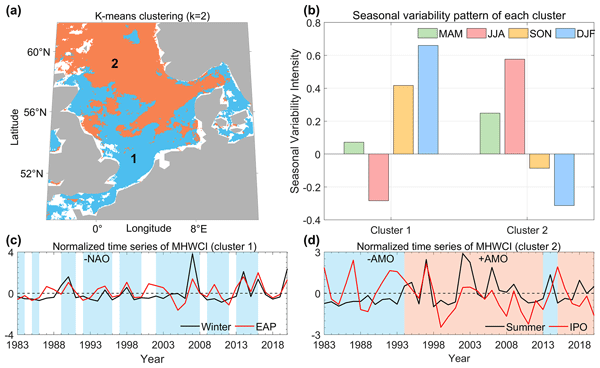
Marine heatwaves, periods of unusually warm sea temperatures, are increasing worldwide. Using observed sea surface temperature data and statistical clustering, this study shows that the North Sea contains two regions with different seasonal responses to climate patterns. Winter heatwaves in the south are driven by regional circulation, while summer events in the north reflect Atlantic and Pacific influences. These insights can help improve regional forecasting.
Vijith Vijayakumaran, Rebecca Millington, Jorn Bruggeman, Josefine Hahn, Helen Powley, Gennadi Lessin, Anja Lindenthal, Corinna Schrum, and Ute Daewel
EGUsphere, https://doi.org/10.5194/egusphere-2026-3078, https://doi.org/10.5194/egusphere-2026-3078, 2026
This preprint is open for discussion and under review for Geoscientific Model Development (GMD).
Short summary
Short summary
We present ECOSMO End-to-End v2.0, a set of fish and macrobenthos functional-group modules that can be two-way coupled to lower-trophic-level marine ecosystem models. Using a one-dimensional setup, we tested these plug-and-play modules coupled to three models used in the Copernicus Marine Service framework. Simulations show that macrobenthos increase bottom-layer nutrients and are essential for realistic fish production, while fish and macrobenthos strengthen top-down control on plankton.
David J. Amptmeijer, Ulrike Hanz, Corinna Schrum, and Johannes Bieser
Biogeosciences, 23, 4057–4081, https://doi.org/10.5194/bg-23-4057-2026, https://doi.org/10.5194/bg-23-4057-2026, 2026
Short summary
Short summary
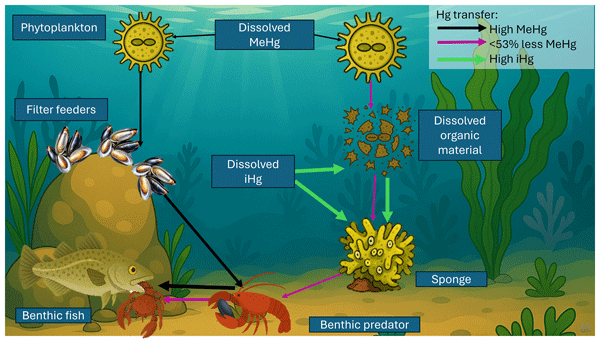
Sponges have unusually low methylmercury (MeHg) and high inorganic mercury (iHg) bioaccumulation compared to other macrobenthos. This pattern has been attributed to MeHg demethylation by symbiotic bacteria. Our model demonstrates an alternative explanation that dissolved organic matter (DOM) consumption by sponges can increase iHg and decrease MeHg levels. Low MeHg in sponges at the food web base may further limit MeHg bioaccumulation in higher trophic levels.
Lucas Porz, Jan Kossack, David Pogorzelski, and Wenyan Zhang
EGUsphere, https://doi.org/10.5194/egusphere-2026-3315, https://doi.org/10.5194/egusphere-2026-3315, 2026
Short summary
Short summary
As a major part of coastal “Blue Carbon” ecosystems, the seabed stores carbon originating from atmospheric CO2, especially where natural depressions trap sediment, such as in the Baltic Sea. Here, the amount of carbon stored in the surface of the seafloor is estimated to 1.3 billion tonnes. Computer simulations show that ocean currents transport a large amount of carbon-rich particles across maritime boundaries. These findings may be useful in making Blue Carbon accounting more robust.
Alberto Elizalde, Naveed Akhtar, Beate Geyer, and Corinna Schrum
Wind Energ. Sci., 11, 1077–1095, https://doi.org/10.5194/wes-11-1077-2026, https://doi.org/10.5194/wes-11-1077-2026, 2026
Short summary
Short summary
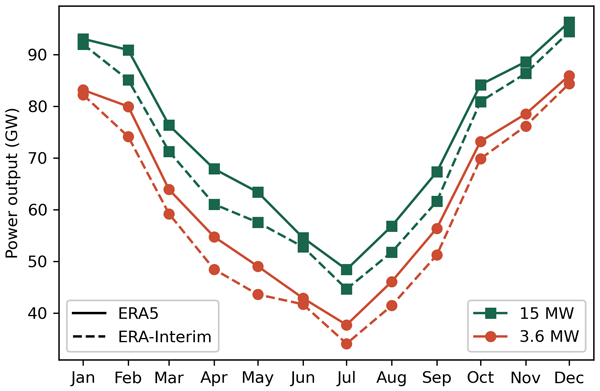
As green energy demand rises, offshore wind farms in the North Sea are expanding. This study examines the uncertainties in power output predictions, considering turbine arrangements and different atmospheric situations. Using an advanced climate model, we found that power output can vary by up to 10 % due to these reasons. The findings are vital for accurate economic and environmental planning. This research will contribute to a better understanding of the potential of offshore wind energy.
David J. Amptmeijer, Elena Mikheeva, Ute Daewel, Johannes Bieser, and Corinna Schrum
Biogeosciences, 22, 7929–7960, https://doi.org/10.5194/bg-22-7929-2025, https://doi.org/10.5194/bg-22-7929-2025, 2025
Short summary
Short summary
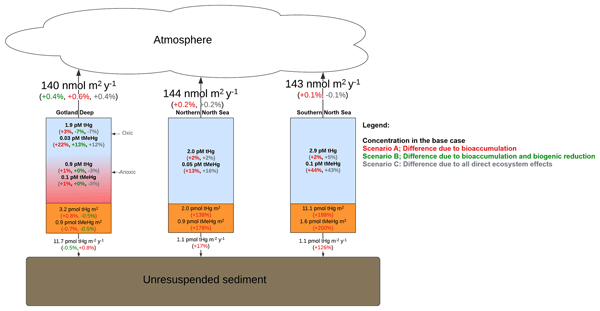
We integrate bioaccumulation and biotic Hg transformations into a coupled ecosystem–mercury model to assess their effect on marine Hg cycling. Bioaccumulation increases methylmercury levels, especially in productive coastal waters, and alters Hg exchange between the Baltic and North Seas. These results highlight strong ecosystem feedbacks on marine Hg dynamics.
David J. Amptmeijer, Andrea Padilla, Sofia Modesti, Corinna Schrum, and Johannes Bieser
Biogeosciences, 22, 7483–7503, https://doi.org/10.5194/bg-22-7483-2025, https://doi.org/10.5194/bg-22-7483-2025, 2025
Short summary
Short summary
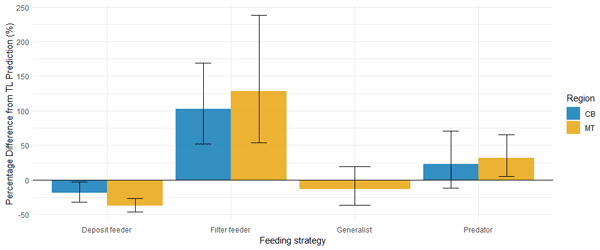
This paper combines a literature review with a 1D Hg speciation and bioaccumulation model to assess how feeding strategy affects inorganic and methylmercury at the base of marine food webs. We find filter feeders have higher MeHg, while suspension feeders have very low MeHg, highlighting feeding strategy as a key driver of MeHg variability.
Feifei Liu, Ute Daewel, Jan Kossack, Kubilay Timur Demir, Helmuth Thomas, and Corinna Schrum
Biogeosciences, 22, 3699–3719, https://doi.org/10.5194/bg-22-3699-2025, https://doi.org/10.5194/bg-22-3699-2025, 2025
Short summary
Short summary
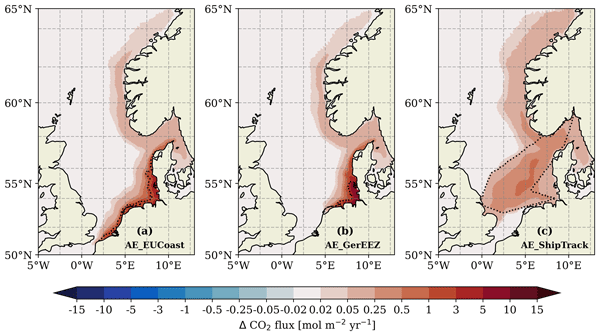
Ocean alkalinity enhancement (OAE) boosts oceanic CO₂ absorption, offering a climate solution. Using a regional model, we examined OAE in the North Sea, revealing that shallow coastal areas achieve higher CO₂ uptake than offshore where alkalinity is more susceptible to deep-ocean loss. Long-term carbon storage is limited, and pH shifts vary by location. Our findings guide OAE deployment to optimize carbon removal while minimizing ecological effects, supporting global climate mitigation efforts.
Kubilay Timur Demir, Moritz Mathis, Jan Kossack, Feifei Liu, Ute Daewel, Christoph Stegert, Helmuth Thomas, and Corinna Schrum
Biogeosciences, 22, 2569–2599, https://doi.org/10.5194/bg-22-2569-2025, https://doi.org/10.5194/bg-22-2569-2025, 2025
Short summary
Short summary
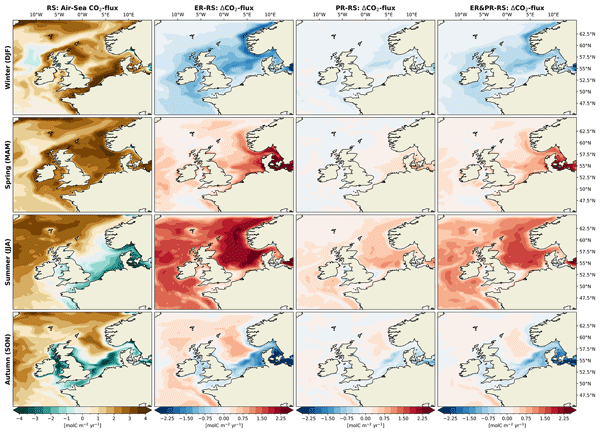
This study examines how variations in the ratios of carbon, nitrogen, and phosphorus in organic matter affect carbon cycling in the northwest European shelf seas. Traditional models with fixed ratios tend to underestimate biological carbon uptake. By integrating variable ratios into a regional model, we find that carbon dioxide uptake increases by 9 %–31 %. These results highlight the need to include variable ratios for accurate assessments of regional and global carbon cycles.
Hoa Nguyen, Ute Daewel, Neil Banas, and Corinna Schrum
Geosci. Model Dev., 18, 2961–2982, https://doi.org/10.5194/gmd-18-2961-2025, https://doi.org/10.5194/gmd-18-2961-2025, 2025
Short summary
Short summary
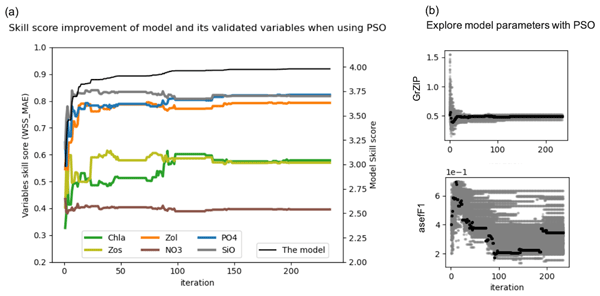
Parameterization is key in modeling to reproduce observations well but is often done manually. This study presents a particle-swarm-optimizer-based toolbox for marine ecosystem models, compatible with the Framework for Aquatic Biogeochemical Models, thus enhancing its reusability. Applied to the Sylt ecosystem, the toolbox effectively (1) identified multiple parameter sets that matched observations well, providing different insights into ecosystem dynamics, and (2) optimized model complexity.
Jakub Miluch, Wenyan Zhang, Jan Harff, Andreas Groh, Peter Arlinghaus, and Celine Denker
Earth Syst. Dynam., 16, 585–605, https://doi.org/10.5194/esd-16-585-2025, https://doi.org/10.5194/esd-16-585-2025, 2025
Short summary
Short summary
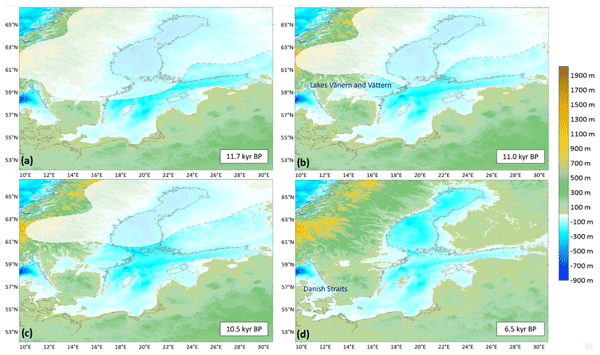
We present a high-resolution paleogeographic reconstruction of the Baltic Sea for the Holocene period by combining eustatic sea-level change, glacio-isostatic movement, and sediment dynamics. In the northeastern part, morphological change is dominated by regression caused by post-glacial rebound that outpaces the eustatic sea level rise, whereas a transgression, together with active sediment erosion/deposition, constantly shapes the coastal morphology in the southeastern part.
Jialing Yao, Zhi Chen, Jianzhong Ge, and Wenyan Zhang
Biogeosciences, 21, 5435–5455, https://doi.org/10.5194/bg-21-5435-2024, https://doi.org/10.5194/bg-21-5435-2024, 2024
Short summary
Short summary
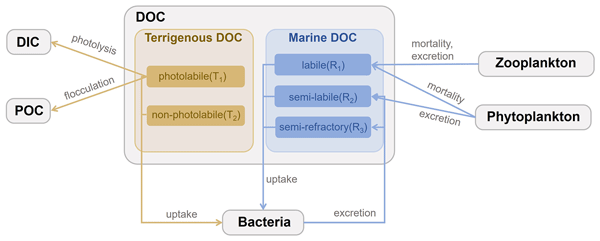
The transformation of dissolved organic carbon (DOC) in estuaries is vital for coastal carbon cycling. We studied source-to-sink pathways of DOC in the Changjiang Estuary using a physics–biogeochemistry model. Results showed a transition of DOC from a sink to a source in the plume area during summer, with a transition from terrestrial-dominant to marine-dominant DOC. Terrigenous and marine DOC exports account for about 31 % and 69 %, respectively.
Lucas Porz, Wenyan Zhang, Nils Christiansen, Jan Kossack, Ute Daewel, and Corinna Schrum
Biogeosciences, 21, 2547–2570, https://doi.org/10.5194/bg-21-2547-2024, https://doi.org/10.5194/bg-21-2547-2024, 2024
Short summary
Short summary
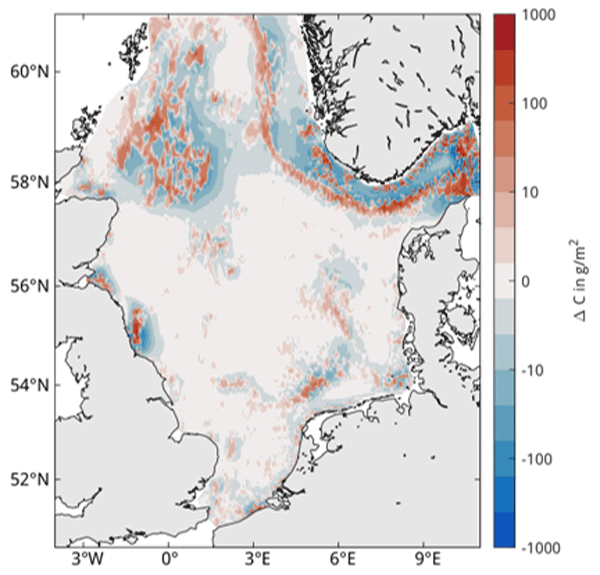
Seafloor sediments store a large amount of carbon, helping to naturally regulate Earth's climate. If disturbed, some sediment particles can turn into CO2, but this effect is not well understood. Using computer simulations, we found that bottom-contacting fishing gears release about 1 million tons of CO2 per year in the North Sea, one of the most heavily fished regions globally. We show how protecting certain areas could reduce these emissions while also benefitting seafloor-living animals.
Peter Arlinghaus, Corinna Schrum, Ingrid Kröncke, and Wenyan Zhang
Earth Surf. Dynam., 12, 537–558, https://doi.org/10.5194/esurf-12-537-2024, https://doi.org/10.5194/esurf-12-537-2024, 2024
Short summary
Short summary
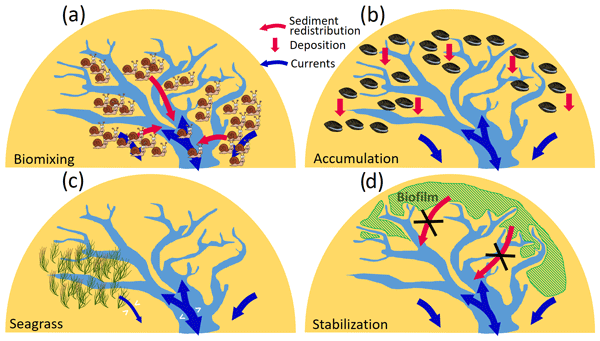
Benthos is recognized to strongly influence sediment stability, deposition, and erosion. This is well studied on small scales, but large-scale impact on morphological change is largely unknown. We quantify the large-scale impact of benthos by modeling the evolution of a tidal basin. Results indicate a profound impact of benthos by redistributing sediments on large scales. As confirmed by measurements, including benthos significantly improves model results compared to an abiotic scenario.
Philipp Heinrich, Stefan Hagemann, Ralf Weisse, Corinna Schrum, Ute Daewel, and Lidia Gaslikova
Nat. Hazards Earth Syst. Sci., 23, 1967–1985, https://doi.org/10.5194/nhess-23-1967-2023, https://doi.org/10.5194/nhess-23-1967-2023, 2023
Short summary
Short summary
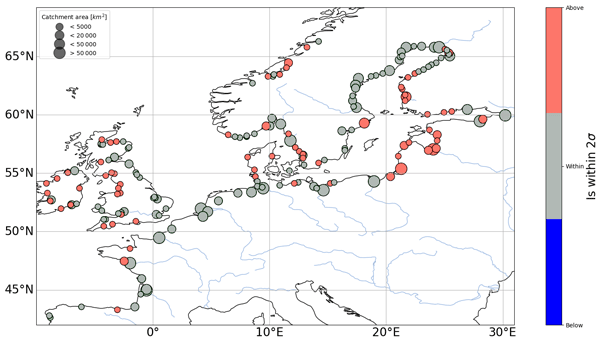
High seawater levels co-occurring with high river discharges have the potential to cause destructive flooding. For the past decades, the number of such compound events was larger than expected by pure chance for most of the west-facing coasts in Europe. Additionally rivers with smaller catchments showed higher numbers. In most cases, such events were associated with a large-scale weather pattern characterized by westerly winds and strong rainfall.

Johannes Bieser, David J. Amptmeijer, Ute Daewel, Joachim Kuss, Anne L. Soerensen, and Corinna Schrum
Geosci. Model Dev., 16, 2649–2688, https://doi.org/10.5194/gmd-16-2649-2023, https://doi.org/10.5194/gmd-16-2649-2023, 2023
Short summary
Short summary
MERCY is a 3D model to study mercury (Hg) cycling in the ocean. Hg is a highly harmful pollutant regulated by the UN Minamata Convention on Mercury due to widespread human emissions. These emissions eventually reach the oceans, where Hg transforms into the even more toxic and bioaccumulative pollutant methylmercury. MERCY predicts the fate of Hg in the ocean and its buildup in the food chain. It is the first model to consider Hg accumulation in fish, a major source of Hg exposure for humans.
H. E. Markus Meier, Madline Kniebusch, Christian Dieterich, Matthias Gröger, Eduardo Zorita, Ragnar Elmgren, Kai Myrberg, Markus P. Ahola, Alena Bartosova, Erik Bonsdorff, Florian Börgel, Rene Capell, Ida Carlén, Thomas Carlund, Jacob Carstensen, Ole B. Christensen, Volker Dierschke, Claudia Frauen, Morten Frederiksen, Elie Gaget, Anders Galatius, Jari J. Haapala, Antti Halkka, Gustaf Hugelius, Birgit Hünicke, Jaak Jaagus, Mart Jüssi, Jukka Käyhkö, Nina Kirchner, Erik Kjellström, Karol Kulinski, Andreas Lehmann, Göran Lindström, Wilhelm May, Paul A. Miller, Volker Mohrholz, Bärbel Müller-Karulis, Diego Pavón-Jordán, Markus Quante, Marcus Reckermann, Anna Rutgersson, Oleg P. Savchuk, Martin Stendel, Laura Tuomi, Markku Viitasalo, Ralf Weisse, and Wenyan Zhang
Earth Syst. Dynam., 13, 457–593, https://doi.org/10.5194/esd-13-457-2022, https://doi.org/10.5194/esd-13-457-2022, 2022
Short summary
Short summary
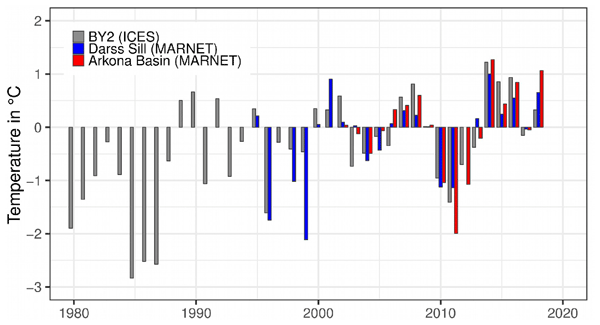
Based on the Baltic Earth Assessment Reports of this thematic issue in Earth System Dynamics and recent peer-reviewed literature, current knowledge about the effects of global warming on past and future changes in the climate of the Baltic Sea region is summarised and assessed. The study is an update of the Second Assessment of Climate Change (BACC II) published in 2015 and focuses on the atmosphere, land, cryosphere, ocean, sediments, and the terrestrial and marine biosphere.
Cited articles
Abe, M., Hashimoto, N., Kurashima, A., and Maegawa, M.: Estimation of light requirement for the growth of Zostera marina in central Japan, Fisheries Sci., 69, 890–895, https://doi.org/10.1046/j.1444-2906.2003.00704.x, 2003.
Alongi, D. M.: Seagrass Meadows, in: Blue Carbon: Coastal Sequestration for Climate Change Mitigation, Springer International Publishing, Cham, 37–51, https://doi.org/10.1007/978-3-319-91698-9_4, 2018.
Arias Ortiz, A.: Carbon sequestration rates in coastal Blue Carbon ecosystems: a perspective on climate change mitigation, PhD Thesis, Universitat Autònoma de Barcelona, Barcelona, https://portalrecerca.uab.cat/en/studentTheses/carbon-sequestration-rates-in-coastal-blue-carbon-ecosystems-a-pe/ (last access: 18 August 2026), 2019.
Arias-Ortiz, A., Lafratta, A., Colarusso, P., Fourqurean, J., Fu, C., Kennedy, H., Krause, J., Lavery, P., Leiva-Dueñas, C., Marba, N., Mateo, M., Mazarrasa, I., Poursanidis, D., Salinas, C., Serrano, O., Stankovic, M., Piñeiro, N., Werner, A., Wesselmann, M., Duarte, C. M., Garcia-Orellana, J., and Masque, P.: Seagrass sediment organic carbon burial rates are globally significant, Research Square, https://doi.org/10.21203/rs.3.rs-8462059/v1, 2026.
Azevedo, A., Lillebø, A. I., Lencart e Silva, J., and Dias, J. M.: Intertidal seagrass models: Insights towards the development and implementation of a desiccation module, Ecol. Modell., 354, 20–25, https://doi.org/10.1016/j.ecolmodel.2017.03.004, 2017.
Bach, H. K.: A dynamic model describing the seasonal variations in growth and the distribution of eelgrass (Zostera marina L.) I. Model theory, Ecol. Modell., 65, 31–50, https://doi.org/10.1016/0304-3800(93)90125-C, 1993.
Berković, B., Cabaço, S., Barrio, J. M., Santos, R., Serrão, E. A., and Alberto, F.: Extending the life history of a clonal aquatic plant: Dispersal potential of sexual and asexual propagules of Zostera noltii, Aquat. Bot., 113, 123–129, https://doi.org/10.1016/j.aquabot.2013.10.007, 2014.
Bundesamt für Seeschifffahrt und Hydrographie (BSH): Sedimentologische Parameter Modellgitterpunkte (Projekt AufMod), European data [data set], http://data.europa.eu/88u/dataset/2f6d8474-2915-4a64-af74-af3e922c4693, last access: 20 July 2023.
Cai, X.: Impact of submerged aquatic vegetation on water quality in Cache Slough Complex, Sacramento-San Joaquin Delta: A numerical modeling study, MS thesis, The College of William and Mary, Williamsburg, https://doi.org/10.25773/v5-8snw-1660, 2018.
Chang, Y.-E., Liao, C.-H., Hsieh, H.-H., Gradngay Abedneko, V., Hung, C.-C., and Lee, T.-M.: Lateral carbon export of macroalgae and seagrass from diverse habitats contributes particulate organic carbon in the deep sea of the Northern South China Sea, Mar. Pollut. Bull., 206, 116672, https://doi.org/10.1016/j.marpolbul.2024.116672, 2024.
CNES: FES2014 Product, AVISO [data set], https://www.aviso.altimetry.fr/en/data/products/auxiliary-products/global-tide-fes/description-fes2014.html, last access: 6 July 2023.
Daewel, U. and Schrum, C.: Simulating long-term dynamics of the coupled North Sea and Baltic Sea ecosystem with ECOSMO II: Model description and validation, J. Marine Syst., 119–120, 30–49, https://doi.org/10.1016/j.jmarsys.2013.03.008, 2013.
Dahl, M., Deyanova, D., Gütschow, S., Asplund, M. E., Lyimo, L. D., Karamfilov, V., Santos, R., Björk, M., and Gullström, M.: Sediment Properties as Important Predictors of Carbon Storage in Zostera marina Meadows: A Comparison of Four European Areas, PLoS One, 11, e0167493, https://doi.org/10.1371/journal.pone.0167493, 2016.
Dahl, M., Gullström, M., Bernabeu, I., Serrano, O., Leiva‐Dueñas, C., Linderholm, H. W., Asplund, M. E., Björk, M., Ou, T., Svensson, J. R., Andrén, E., Andrén, T., Bergman, S., Braun, S., Eklöf, A., Ežerinskis, Z., Garbaras, A., Hällberg, P., Löfgren, E., Kylander, M. E., Masqué, P., Šapolaitė, J., Smittenberg, R., and Mateo, M. A.: A 2,000‐Year Record of Eelgrass (Zostera marina L.) Colonization Shows Substantial Gains in Blue Carbon Storage and Nutrient Retention, Global Biogeochem. Cy., 38, https://doi.org/10.1029/2023GB008039, 2024.
Danmarks Meteorologiske Institut: Water level and water temperature observations, https://www.dmi.dk/friedata/observationer/ (last access: 16 February 2024), 2024.
Datahuis Wadden: WMR – TMAP: Zoutmoeras, Datahuis Wadden [data set], https://datahuiswadden.openearth.nl/geonetwork/srv/api/records/D9N_OpZ7QmO-e35iM2HeQQ?language=all (last access: 20 November 2025), 2023.
de Beer, D., Wenzhöfer, F., Ferdelman, T. G., Boehme, S. E., Huettel, M., van Beusekom, J. E. E., Böttcher, M. E., Musat, N., and Dubilier, N.: Transport and mineralization rates in North Sea sandy intertidal sediments, Sylt-Rømø Basin, Wadden Sea, Limnol. Oceanogr., 50, 113–127, https://doi.org/10.4319/lo.2005.50.1.0113, 2005.
de la Vega, C., Horn, S., Baird, D., Hines, D., Borrett, S., Jensen, L. F., Schwemmer, P., Asmus, R., Siebert, U., and Asmus, H.: Seasonal dynamics and functioning of the Sylt-Rømø Bight, northern Wadden Sea, Estuar. Coast. Shelf S., 203, 100–118, https://doi.org/10.1016/j.ecss.2018.01.021, 2018.
Dennison, W. C. and Alberte, R. S.: Photosynthetic responses of Zostera marina L. (Eelgrass) to in situ manipulations of light intensity, Oecologia, 55, 137–144, https://doi.org/10.1007/BF00384478, 1982.
do Amaral Camara Lima, M., Ward, R. D., and Joyce, C. B.: Carbon sequestration and geochronology in Southern England's seagrass meadows, Carbon Footprints, 2, https://doi.org/10.20517/cf.2023.08, 2023.
Dolch, T., Buschbaum, C., and Reise, K.: Persisting intertidal seagrass beds in the northern Wadden Sea since the 1930s, J. Sea Res., 82, 134–141, https://doi.org/10.1016/j.seares.2012.04.007, 2013.
Dolch, T., Folmer, E. O., Frederiksen, M. S., Herlyn, M., van Katwijk, M. M., Kolbe, K., KrauseJensen, D., Schmedes, P., and Westerbeek, E. P.: Seagrass, in: Wadden Sea Quality Status Report 2017, edited by: Kloepper, S., Baptist, M. J., Bostelmann, A., Busch, J. A., Buschbaum, C., Gutow, L., Janssen, G., Jensen, K., Jørgensen, H. P., Jong, F., Lüerßen, G., Schwarzer, K., Strempel, R., and Thieltges, D., Wilhelmshaven, Germany, Zenodo, https://doi.org/10.5281/zenodo.15209122, 2017.
Duarte, C. M. and Cebrián, J.: The fate of marine autotrophic production, Limnol. Oceanogr., 41, 1758–1766, https://doi.org/10.4319/lo.1996.41.8.1758, 1996.
Duarte, C. M. and Krause-Jensen, D.: Export from Seagrass Meadows Contributes to Marine Carbon Sequestration, Front. Mar. Sci., 4, https://doi.org/10.3389/fmars.2017.00013, 2017.
Duarte, C. M., Middelburg, J. J., and Caraco, N.: Major role of marine vegetation on the oceanic carbon cycle, Biogeosciences, 2, 1–8, https://doi.org/10.5194/bg-2-1-2005, 2005.
Duarte, C. M., Marbà, N., Gacia, E., Fourqurean, J. W., Beggins, J., Barrón, C., and Apostolaki, E. T.: Seagrass community metabolism: Assessing the carbon sink capacity of seagrass meadows, Global Biogeochem. Cy., 24, https://doi.org/10.1029/2010GB003793, 2010.
Duarte, C. M., Losada, I. J., Hendriks, I. E., Mazarrasa, I., and Marbà, N.: The role of coastal plant communities for climate change mitigation and adaptation, Nat. Clim. Change, 3, 961–968, https://doi.org/10.1038/nclimate1970, 2013.
Fofonova, V., Androsov, A., Sander, L., Kuznetsov, I., Amorim, F., Hass, H. C., and Wiltshire, K. H.: Non-linear aspects of the tidal dynamics in the Sylt-Rømø Bight, south-eastern North Sea, Ocean Sci., 15, 1761–1782, https://doi.org/10.5194/os-15-1761-2019, 2019.
Fonseca, M. S., Fisher, J. S., Zieman, J. C., and Thayer, G. W.: Influence of the seagrass, Zostera marina L., on current flow, Estuar. Coast. Shelf S., 15, 351–364, https://doi.org/10.1016/0272-7714(82)90046-4, 1982.
Greiner, J., Wilkinson, G., McGlathery, K., and Emery, K.: Sources of sediment carbon sequestered in restored seagrass meadows, Mar. Ecol. Prog. Ser., 551, 95–105, https://doi.org/10.3354/meps11722, 2016.
Harwell, M. C. and Orth, R. J.: Long-distance dispersal potential in a marine macrophyte, Ecology, 83, 3319–3330, https://doi.org/10.1890/0012-9658(2002)083[3319:LDDPIA]2.0.CO;2, 2002.
Hyndes, G. A., Berdan, E. L., Duarte, C., Dugan, J. E., Emery, K. A., Hambäck, P. A., Henderson, C. J., Hubbard, D. M., Lastra, M., Mateo, M. A., Olds, A., and Schlacher, T. A.: The role of inputs of marine wrack and carrion in sandy‐beach ecosystems: a global review, Biol. Rev., 97, 2127–2161, https://doi.org/10.1111/brv.12886, 2022.
Jacobs, R. P. W. M., Den Hartog, C., Braster, B. F., and Carriere, F. C.: Grazing of the seagrass Zostera noltii by birds at Terschelling (Dutch Wadden Sea), Aquat. Bot., 10, 241–259, https://doi.org/10.1016/0304-3770(81)90026-7, 1981.
Johannessen, S. C.: How can blue carbon burial in seagrass meadows increase long-term, net sequestration of carbon? A critical review, Environ. Res. Lett., 17, 093004, https://doi.org/10.1088/1748-9326/ac8ab4, 2022.
Kappenberg, J., Fanger, H.-U., and Müller, A.: Currents and suspended particulate matter in tidal channels of the Sylt-Rømø basin, Senck. Marit., 29, 93–100, https://doi.org/10.1007/BF03043947, 1998.
Kennedy, H., Beggins, J., Duarte, C. M., Fourqurean, J. W., Holmer, M., Marbà, N., and Middelburg, J. J.: Seagrass sediments as a global carbon sink: Isotopic constraints, Global Biogeochem. Cy., 24, https://doi.org/10.1029/2010GB003848, 2010.
Kennedy, H., Pagès, J. F., Lagomasino, D., Arias‐Ortiz, A., Colarusso, P., Fourqurean, J. W., Githaiga, M. N., Howard, J. L., Krause‐Jensen, D., Kuwae, T., Lavery, P. S., Macreadie, P. I., Marbà, N., Masqué, P., Mazarrasa, I., Miyajima, T., Serrano, O., and Duarte, C. M.: Species Traits and Geomorphic Setting as Drivers of Global Soil Carbon Stocks in Seagrass Meadows, Global Biogeochem. Cy., 36, https://doi.org/10.1029/2022GB007481, 2022.
Kloepper, S., Baptist, M. J., Bostelmann, A., Busch, J. A., Buschbaum, C., Gutow, L., Janssen, G., Jensen, K., Jørgensen, H. P., Jong, F., Lüerßen, G., Schwarzer, K., Strempel, R., and Thieltges, D. (Eds.): Wadden Sea Quality Status Report 2017, Wilhelmshaven, Germany, https://qsr.waddensea-worldheritage.org/ (last access: 18 August 2026), 2017.
Kohlmeier, D.: Light acclimation in intertidal seagrass: spatial and diurnal variations and the role of suspended sediments, PhD Thesis, Universität Bremen, Bremen, https://nbn-resolving.de/urn:nbn:de:gbv:46-00105569-12 (last access: 18 August 2026), 2016.
Kombiadou, K., Ganthy, F., Verney, R., Plus, M., and Sottolichio, A.: Modelling the effects of Zostera noltei meadows on sediment dynamics: application to the Arcachon lagoon, Ocean Dynam., 64, 1499–1516, https://doi.org/10.1007/s10236-014-0754-1, 2014.
Konyssova, G., Sidorenko, V., Androsov, A., Sander, L., Danilov, S., Rubinetti, S., Burchard, H., Winter, C., and Wiltshire, K. H.: Changes in tidal dynamics in response to sea level rise in the Sylt-Rømø Bight (Wadden Sea), Ocean Dynam., 75, 43, https://doi.org/10.1007/s10236-025-01688-1, 2025.
Koplin, J., Peter, C., Bischof, K., Böttcher, M. E., Kuhn, A., Logemann, E., Dolch, T., Henkel, S., McCarthy, D., Mueller, P., Morys, C., Pineda-Metz, S. E. A., Reents, S., Reusch, T. B. H., Röschel, L., Rupprecht, F., Stevenson, A., Wiltshire, K. H., Zimmer, M., and Pogoda, B.: Blue Carbon potential in Germany: Status and future development, Estuar. Coast. Shelf S., 323, 109354, https://doi.org/10.1016/j.ecss.2025.109354, 2025.
Krumhansl, K. A., Lee, K. C., Ma, Y., Wu, Y., Baker, T. H. A., Wong, M. C., Azetsu-Scott, K., and Gentleman, W. C.: Pathways of blue carbon export from kelp and seagrass beds along the Atlantic coast of Nova Scotia, Sci. Adv., 11, https://doi.org/10.1126/sciadv.adw1952, 2015.
Laugier, T., Rigollet, V., and Casabianca, M.-L.: Seasonal dynamics in mixed eelgrass beds, Zostera marina L. and Z. noltii Hornem., in a Mediterranean coastal lagoon (Thau lagoon, France), Aquat. Bot., 63, 51–69, https://doi.org/10.1016/S0304-3770(98)00105-3, 1999.
Lavery, P. S., Mateo, M.-Á., Serrano, O., and Rozaimi, M.: Variability in the Carbon Storage of Seagrass Habitats and Its Implications for Global Estimates of Blue Carbon Ecosystem Service, PLoS One, 8, e73748, https://doi.org/10.1371/journal.pone.0073748, 2013.
Lettmann, K. A., Wolff, J.-O., and Badewien, T. H.: Modeling the impact of wind and waves on suspended particulate matter fluxes in the East Frisian Wadden Sea (southern North Sea), Ocean Dynam., 59, 239–262, https://doi.org/10.1007/s10236-009-0194-5, 2009.
Leuschner, C. and Rees, U.: CO2 gas exchange of two intertidal seagrass species, Zostera marina L. and Zostera noltii Hornem., during emersion, Aquat. Bot., 45, 53–62, https://doi.org/10.1016/0304-3770(93)90052-X, 1993.
LKN.SH Nationalparkverwaltung: Seegras-Vorkommen: Makrophyten-Monitoring im Schleswig-Holsteinisches Wattenmeer ab 1994 (UIG), LKN.SH Nationalparkverwaltung [data set], https://umweltportal.schleswig-holstein.de/trefferanzeige?docuuid=00100e9d-7838-4563-9dd7-2570b0d932cb (last access: 4 December 2025), 2024.
Lo Iacono, C., Mateo, M. A., Gràcia, E., Guasch, L., Carbonell, R., Serrano, L., Serrano, O., and Dañobeitia, J.: Very high-resolution seismo-acoustic imaging of seagrass meadows (Mediterranean Sea): Implications for carbon sink estimates, Geophys. Res. Lett., 35, L18601, https://doi.org/10.1029/2008GL034773, 2008.
Lovelock, C. E. and Duarte, C. M.: Dimensions of Blue Carbon and emerging perspectives, Biol. Lett., 15, 20180781, https://doi.org/10.1098/rsbl.2018.0781, 2019.
Macreadie, P. I., Costa, M. D. P., Atwood, T. B., Friess, D. A., Kelleway, J. J., Kennedy, H., Lovelock, C. E., Serrano, O., and Duarte, C. M.: Blue carbon as a natural climate solution, Nat. Rev. Earth Environ., 2, 826–839, https://doi.org/10.1038/s43017-021-00224-1, 2021.
Marsh, J. A., Dennison, W. C., and Alberte, R. S.: Effects of temperature on photosynthesis and respiration in eelgrass (Zostera marina L.), J. Exp. Mar. Biol. Ecol., 101, 257–267, https://doi.org/10.1016/0022-0981(86)90267-4, 1986.
Martins, M., de los Santos, C. B., Masqué, P., Carrasco, A. R., Veiga-Pires, C., and Santos, R.: Carbon and Nitrogen Stocks and Burial Rates in Intertidal Vegetated Habitats of a Mesotidal Coastal Lagoon, Ecosystems, 25, 372–386, https://doi.org/10.1007/s10021-021-00660-6, 2022.
Massa, S. I., Arnaud-Haond, S., Pearson, G. A., and Serrão, E. A.: Temperature tolerance and survival of intertidal populations of the seagrass Zostera noltii (Hornemann) in Southern Europe (Ria Formosa, Portugal), Hydrobiologia, 619, 195–201, https://doi.org/10.1007/s10750-008-9609-4, 2009.
Mateo, M. A.: Beach-Cast Cymodocea nodosa Along the Shore of a Semienclosed Bay: Sampling and Elements to Assess Its Ecological Implications, J. Coast. Res., 262, 283–291, https://doi.org/10.2112/08-1100.1, 2010.
Mazarrasa, I., Marbà, N., Lovelock, C. E., Serrano, O., Lavery, P. S., Fourqurean, J. W., Kennedy, H., Mateo, M. A., Krause-Jensen, D., Steven, A. D. L., and Duarte, C. M.: Seagrass meadows as a globally significant carbonate reservoir, Biogeosciences, 12, 4993–5003, https://doi.org/10.5194/bg-12-4993-2015, 2015.
Mcleod, E., Chmura, G. L., Bouillon, S., Salm, R., Björk, M., Duarte, C. M., Lovelock, C. E., Schlesinger, W. H., and Silliman, B. R.: A blueprint for blue carbon: toward an improved understanding of the role of vegetated coastal habitats in sequestering CO2, Front. Ecol. Environ., 9, 552–560, https://doi.org/10.1890/110004, 2011.
McRoy, C. P.: Seagrass productivity: Carbon uptake experiments in eelgrass, Zostera marina, Aquaculture, 4, 131–137, https://doi.org/10.1016/0044-8486(74)90028-3, 1974.
Mengis, N., Kalhori, A., Simon, S., Harpprecht, C., Baetcke, L., Prats‐Salvado, E., Schmidt‐Hattenberger, C., Stevenson, A., Dold, C., El Zohbi, J., Borchers, M., Thrän, D., Korte, K., Gawel, E., Dolch, T., Heß, D., Yeates, C., Thoni, T., Markus, T., Schill, E., Xiao, M., Köhnke, F., Oschlies, A., Förster, J., Görl, K., Dornheim, M., Brinkmann, T., Beck, S., Bruhn, D., Li, Z., Steuri, B., Herbst, M., Sachs, T., Monnerie, N., Pregger, T., Jacob, D., and Dittmeyer, R.: Net‐Zero CO2 Germany – A Retrospect From the Year 2050, Earth's Future, 10, https://doi.org/10.1029/2021EF002324, 2022.
Mohr, V.: VeroM96/PythonScripts_SR_SeagrassCarbon: Plotting scripts for first version of Manuscript, Zenodo [data set] and [code], https://doi.org/10.5281/zenodo.18435872, 2026a.
Mohr, V.: VeroM96/SGINT: SGINT for SCHISM v5.13, Zenodo [code], https://doi.org/10.5281/zenodo.18435883, 2026b.
Mohr, V., Zhang, W., Dolch, T., and Schrum, C.: The Importance of Seasonality in Seagrass Properties for Coastal Hydro‐Morphodynamics – A Case Study in a Wadden Sea Basin, J. Geophys. Res.-Earth, 130, https://doi.org/10.1029/2025JF008331, 2025.
Mueller, P., Ladiges, N., Jack, A., Schmiedl, G., Kutzbach, L., Jensen, K., and Nolte, S.: Assessing the long‐term carbon‐sequestration potential of the semi‐natural salt marshes in the European Wadden Sea, Ecosphere, 10, https://doi.org/10.1002/ecs2.2556, 2019.
Olesen, B. and Sand-Jensen, K.: Seasonal acclimatization of eelgrass Zostera marina growth to light, Mar. Ecol. Prog. Ser., 94, 91–99, https://doi.org/10.3354/meps094091, 1993.
Oppelt, N., Uhl, F., and Martius, J.: Erstellung von GIS-Karten zur Kohlenstoffspeicherung an der deutschen Nordseeküste – Methodische Projektdokumentation, 1–13, https://oa.tib.eu/renate/bitstreams/fb09f334-62db-43f9-94d1-4b3a41bc7456/download (last access: 13 March 2025), 2024.
Oreska, M. P. J., Wilkinson, G. M., McGlathery, K. J., Bost, M., and McKee, B. A.: Non‐seagrass carbon contributions to seagrass sediment blue carbon, Limnol. Oceanogr., 63, https://doi.org/10.1002/lno.10718, 2018.
Pan, Y. and Holmer, M.: Seagrass and macroalgae on shores: unraveling the decomposition of beach wrack on Danish coasts, Estuar. Coast. Shelf S., 324, 109473, https://doi.org/10.1016/j.ecss.2025.109473, 2025.
Pejrup, M., Larsen, M., and Edelvang, K.: A fine-grained sediment budget for the Sylt-Rømø tidal basin, Helgoländer Meeresun., 51, 253–268, https://doi.org/10.1007/BF02908714, 1997.
Peralta, G., Pérez-Lloréns, J. L., Hernández, I., Brun, F., Vergara, J. J., Bartual, A., Gálvez, J. A., and García, C. M.: Morphological and physiological differences between two morphotypes of Zostera noltii Hornem. from the south-western Iberian Peninsula, Helgoland Mar. Res., 54, 80–86, https://doi.org/10.1007/s101520050005, 2000.
Peralta, G., Pérez-Lloréns, J. L., Hernández, I., and Vergara, J. J.: Effects of light availability on growth, architecture and nutrient content of the seagrass Zostera noltii Hornem, J. Exp. Mar. Biol. Ecol., 269, 9–26, https://doi.org/10.1016/S0022-0981(01)00393-8, 2002.
Pérez, M.: Fanerógamas marinas en sistemas estuáricos: Producción, factores limitantes y algunos aspectos del ciclo de nutrientes, PhD Thesis, University of Barcelona, Barcelona, 244 pp., https://doi.org/10.23818/ACTAS.06.32, 1989.
Pérez-Lloréns, J. L. and Niell, F. X.: Seasonal dynamics of biomass and nutrient content in the intertidal seagrass Zostera noltii Hornem. from Palmones River estuary, Spain, Aquat. Bot., 46, 49–66, https://doi.org/10.1016/0304-3770(93)90064-4, 1993.
Philippart, C. J. M.: Seasonal variation in growth and biomass of an intertidal Zostera noltii stand in the Dutch Wadden Sea, Neth. J. Sea Res., 33, 205–218, https://doi.org/10.1016/0077-7579(95)90007-1, 1995.
Piñeiro-Juncal, N., Mateo, M. Á., Leiva-Dueñas, C., Serrano, E., Inostroza, K., Soler, M., Apostolaki, E. T., Lavery, P., Duarte, C. M., Lafratta, A., and Serrano, O.: Soil organic carbon depth profiles and centennial and millennial decay rates in tidal marsh, mangrove and seagrass blue carbon ecosystems, Commun. Earth Environ., 6, 504, https://doi.org/10.1038/s43247-025-02390-2, 2025.
Pinto, L., Fortunato, A. B., Zhang, Y., Oliveira, A., and Sancho, F. E. P.: Development and validation of a three-dimensional morphodynamic modelling system for non-cohesive sediments, Ocean Model.-Oxf., 57–58, 1–14, https://doi.org/10.1016/j.ocemod.2012.08.005, 2012.
Plus, M., Deslous-Paoli, J.-M., Auby, I., and Dagault, F.: Factors influencing primary production of seagrass beds (Zostera noltii Hornem.) in the Thau lagoon (French Mediterranean coast), J. Exp. Mar. Biol. Ecol., 259, 63–84, https://doi.org/10.1016/S0022-0981(01)00223-4, 2001.
Plus, M., Chapelle, A., Ménesguen, A., Deslous-Paoli, J.-M., and Auby, I.: Modelling seasonal dynamics of biomasses and nitrogen contents in a seagrass meadow (Zostera noltii Hornem.): application to the Thau lagoon (French Mediterranean coast), Ecol. Modell., 161, 213–238, https://doi.org/10.1016/S0304-3800(02)00350-2, 2003.
Postlethwaite, V. R., McGowan, A. E., Kohfeld, K. E., Robinson, C. L. K., and Pellatt, M. G.: Low blue carbon storage in eelgrass (Zostera marina) meadows on the Pacific Coast of Canada, PLoS One, 13, e0198348, https://doi.org/10.1371/journal.pone.0198348, 2018.
Potouroglou, M.: Assessing the role of intertidal seagrasses as coastal carbon sinks in Scotland, PhD Thesis, Edinburgh Napier University, Edinburgh, https://napier-repository.worktribe.com/output/975386 (last access: 18 August 2026), 2017.
Prentice, C., Poppe, K. L., Lutz, M., Murray, E., Stephens, T. A., Spooner, A., Hessing‐Lewis, M., Sanders‐Smith, R., Rybczyk, J. M., Apple, J., Short, F. T., Gaeckle, J., Helms, A., Mattson, C., Raymond, W. W., and Klinger, T.: A Synthesis of Blue Carbon Stocks, Sources, and Accumulation Rates in Eelgrass (Zostera marina) Meadows in the Northeast Pacific, Global Biogeochem. Cy., 34, https://doi.org/10.1029/2019GB006345, 2020.
Rasmussen, E.: Systematics and ecology of the Isefjord marine fauna (Denmark), Ophelia, 11, 1–507, https://doi.org/10.1080/00785326.1973.10430115, 1973.
Reise, K.: Coastal change in a tidal backbarrier basin of the northern Wadden Sea: Are tidal flats fading away?, Senck. Marit., 29, 121–127, https://doi.org/10.1007/BF03043950, 1998.
Ricart, A. M., York, P. H., Rasheed, M. A., Pérez, M., Romero, J., Bryant, C. V, and Macreadie, P. I.: Variability of sedimentary organic carbon in patchy seagrass landscapes, Mar. Pollut. Bull., 100, 476–482, https://doi.org/10.1016/j.marpolbul.2015.09.032, 2015.
Ricart, A. M., York, P. H., Bryant, C. V., Rasheed, M. A., Ierodiaconou, D., and Macreadie, P. I.: High variability of Blue Carbon storage in seagrass meadows at the estuary scale, Sci. Rep., 10, 5865, https://doi.org/10.1038/s41598-020-62639-y, 2020.
Röhr, M. E., Boström, C., Canal-Vergés, P., and Holmer, M.: Blue carbon stocks in Baltic Sea eelgrass (Zostera marina) meadows, Biogeosciences, 13, 6139–6153, https://doi.org/10.5194/bg-13-6139-2016, 2016.
Röhr, M. E., Holmer, M., Baum, J. K., Björk, M., Boyer, K., Chin, D., Chalifour, L., Cimon, S., Cusson, M., Dahl, M., Deyanova, D., Duffy, J. E., Eklöf, J. S., Geyer, J. K., Griffin, J. N., Gullström, M., Hereu, C. M., Hori, M., Hovel, K. A., Hughes, A. R., Jorgensen, P., Kiriakopolos, S., Moksnes, P., Nakaoka, M., O'Connor, M. I., Peterson, B., Reiss, K., Reynolds, P. L., Rossi, F., Ruesink, J., Santos, R., Stachowicz, J. J., Tomas, F., Lee, K., Unsworth, R. K. F., and Boström, C.: Blue Carbon Storage Capacity of Temperate Eelgrass (Zostera marina) Meadows, Global Biogeochem. Cy., 32, 1457–1475, https://doi.org/10.1029/2018GB005941, 2018.
Schaefer, R., Colarusso, P., Simpson, J. C., Novak, A., and Nepf, H.: Proximity to inlet channel drives spatial variation in sediment organic carbon across a lagoonal seagrass meadow, Sci. Total Environ., 177022, https://doi.org/10.1016/j.scitotenv.2024.177022, 2024.
Schaefer, R., Colarusso, P., Simpson, J. C., Novak, A., and Nepf, H.: Continual migration of patches within a Massachusetts seagrass meadow limits carbon accretion and storage, Commun. Earth Environ., 6, 129, https://doi.org/10.1038/s43247-025-02049-y, 2025.
Schanz, A. and Asmus, H.: Impact of hydrodynamics on development and morphology of intertidal seagrasses in the Wadden Sea, Mar. Ecol. Prog. Ser., 261, 123–134, https://doi.org/10.3354/meps261123, 2003.
SCHISM Development: SCHISM: Semi-implicit Cross-scale Hydroscience Integrated System Model (Version 5.13.0), GitHub [code], https://github.com/schism-dev/schism/ (last access: 7 March 2025), 2025.
Serrano, O., Lavery, P. S., Duarte, C. M., Kendrick, G. A., Calafat, A., York, P. H., Steven, A., and Macreadie, P. I.: Can mud (silt and clay) concentration be used to predict soil organic carbon content within seagrass ecosystems?, Biogeosciences, 13, 4915–4926, https://doi.org/10.5194/bg-13-4915-2016, 2016.
Sevdari, K. and Marmullaku, D.: Shapefile of European countries, Technical University of Denmark [data set], https://doi.org/10.11583/DTU.23686383, 2023.
Sievers, J., Rubel, M., and Milbradt, P.: EasyGSH-DB: Themengebiet – Sedimentologie, Bundesanstalt für Wasserbau [data set], https://doi.org/10.48437/02.2020.K2.7000.0005, 2020.
Suykerbuyk, W., Govers, L. L., van Oven, W. G., Giesen, K., Giesen, W. B. J. T., de Jong, D. J., Bouma, T. J., and van Katwijk, M. M.: Living in the intertidal: desiccation and shading reduce seagrass growth, but high salinity or population of origin have no additional effect, PeerJ, 6, e5234, https://doi.org/10.7717/peerj.5234, 2018.
Trevathan-Tackett, S. M., Jeffries, T. C., Macreadie, P. I., Manojlovic, B., and Ralph, P.: Long-term decomposition captures key steps in microbial breakdown of seagrass litter, Sci. Total Environ., 705, 135806, https://doi.org/10.1016/j.scitotenv.2019.135806, 2020.
Umlauf, L. and Burchard, H.: Second-order turbulence closure models for geophysical boundary layers. A review of recent work, Cont. Shelf Res., 25, 795–827, https://doi.org/10.1016/j.csr.2004.08.004, 2005.
Vennell, R., Scheel, M., Weppe, S., Knight, B., and Smeaton, M.: Fast lagrangian particle tracking in unstructured ocean model grids, Ocean Dynam., 71, 423–437, https://doi.org/10.1007/s10236-020-01436-7, 2021.
Verhagen, J. H. G. and Nienhuis, P. H.: A Simulation Model of Production, Seasonal Changes in Biomass and Distribution of Eelgrass (Zostera marina) in Lake Grevelingen, Mar. Ecol. Prog. Ser., 10, 187–195, https://doi.org/10.3354/meps010187, 1983.
Vermaat, J. E. and Verhagen, F. C. A.: Seasonal variation in the intertidal seagrass Zostera noltii Hornem.: coupling demographic and physiological patterns, Aquat. Bot., 52, 259–281, https://doi.org/10.1016/0304-3770(95)00510-2, 1996.
Vermaat, J. E., Hootsmans, M. J. M., and Nienhuis, P. H.: Seasonal dynamics and leaf growth of Zostera noltii Hornem., A perennial intertidal seagrass, Aquat. Bot., 28, 287–299, https://doi.org/10.1016/0304-3770(87)90006-4, 1987.
Voinov, A. A. and Akhremenkov, A. A.: Simulation modeling system for aquatic bodies, Ecol. Modell., 52, 181–205, https://doi.org/10.1016/0304-3800(90)90015-9, 1990.
Ward, E. A., Reynolds, S. E., Leng, M. J., Lacey, J. H., Cerasuolo, M., Paxton, B., Ragazzola, F., and Preston, J.: Mixed provenance of organic carbon in Northeast Atlantic temperate intertidal seagrass sediments, Sci. Rep., 15, 27892, https://doi.org/10.1038/s41598-025-12223-z, 2025.
Wasserstraßen- und Schifffahrtsverwaltung des Bundes: Wasserstand (Ganglinie) Mess-Station Helgoland Binnenhafen, http://www.kuestendaten.de, last access: 18 January 2024.
Weatherall, E. J., Jackson, E. L., Hendry, R. A., and Campbell, M. L.: Quantifying the dispersal potential of seagrass vegetative fragments: A comparison of multiple subtropical species, Estuar. Coast. Shelf S., 169, 207–215, https://doi.org/10.1016/j.ecss.2015.11.026, 2016.
Zeiler, M. ;, Milbradt, P. ;, Plüß, A. ;, and Valerius, J.: Modelling Large Scale Sediment Transport in the German Bight (North Sea), Die Küste, 369–392, 2014.
Zhang, Y. J., Ye, F., Stanev, E. V, and Grashorn, S.: Seamless cross-scale modeling with SCHISM, Ocean Model.-Oxf., 102, 64–81, https://doi.org/10.1016/j.ocemod.2016.05.002, 2016.
Zhang, Y. J., Gerdts, N., Ateljevich, E., and Nam, K.: Simulating vegetation effects on flows in 3D using an unstructured grid model: model development and validation, Ocean Dynam., 70, 213–230, https://doi.org/10.1007/s10236-019-01333-8, 2020.
Zharova, N., Sfriso, A., Voinov, A., and Pavoni, B.: A simulation model for the annual fluctuation of Zostera marina biomass in the Venice lagoon, Aquat. Bot., 70, 135–150, https://doi.org/10.1016/S0304-3770(01)00151-6, 2001.
Zimmermann, R. C., Smith, R. D., and Alberte, R. S.: Is growth of eelgrass nitrogen limited? A numerical simulation of the effects of light and nitrogen on the growth dynamics of Zostera marina, Mar. Ecol. Prog. Ser., 41, 167–176, 1987.
Zou, Y.-F., Chen, K.-Y., and Lin, H.-J.: Significance of belowground production to the long-term carbon sequestration of intertidal seagrass beds, Sci. Total Environ., 800, 149579, https://doi.org/10.1016/j.scitotenv.2021.149579, 2021.
Short summary
Intertidal seagrass meadows are often considered important blue carbon ecosystems, but their role in highly dynamic environments is uncertain. Using a coupled hydrodynamic–ecosystem model, we quantify carbon uptake, burial, and export in a Wadden Sea tidal basin. We show that sequestration rates are low, depend on meadow persistence, and that a substantial fraction of seagrass carbon is redistributed within the basin and to salt marshes.
Intertidal seagrass meadows are often considered important blue carbon ecosystems, but their...


Altmetrics
Final-revised paper
Preprint