
Articles | Volume 23, issue 2
https://doi.org/10.5194/bg-23-585-2026
© Author(s) 2026. This work is distributed under
the Creative Commons Attribution 4.0 License.
the Creative Commons Attribution 4.0 License.
https://doi.org/10.5194/bg-23-585-2026
© Author(s) 2026. This work is distributed under
the Creative Commons Attribution 4.0 License.
the Creative Commons Attribution 4.0 License.
Research article
| Highlight paper
| 
22 Jan 2026
Research article | Highlight paper |
| 22 Jan 2026
| 22 Jan 2026
Culturing experiments reveal mechanisms of daily trace element incorporation into Tridacna shells
Iris Arndt
CORRESPONDING AUTHOR

Institute of Geosciences, Goethe University Frankfurt, 60438 Frankfurt am Main, Germany
Frankfurt Isotope and Element Research Center (FIERCE), Goethe University Frankfurt, 60438 Frankfurt am Main, Germany
Jonathan Erez
Fredy & Nadine Herrmann Institute of Earth Sciences, Hebrew University of Jerusalem, Jerusalem, 9190401, Israel
David Evans
Frankfurt Isotope and Element Research Center (FIERCE), Goethe University Frankfurt, 60438 Frankfurt am Main, Germany
School of Ocean and Earth Science, University of Southampton, Southampton, SO14 3ZH, United Kingdom
Tobias Erhardt
Institute of Geosciences, Goethe University Frankfurt, 60438 Frankfurt am Main, Germany
Frankfurt Isotope and Element Research Center (FIERCE), Goethe University Frankfurt, 60438 Frankfurt am Main, Germany
Adam Levi
Fredy & Nadine Herrmann Institute of Earth Sciences, Hebrew University of Jerusalem, Jerusalem, 9190401, Israel
Wolfgang Müller
Institute of Geosciences, Goethe University Frankfurt, 60438 Frankfurt am Main, Germany
Frankfurt Isotope and Element Research Center (FIERCE), Goethe University Frankfurt, 60438 Frankfurt am Main, Germany
Related authors
No articles found.

François Burgay, Haley Derrod, Tobias Erhardt, Federico Scoto, Delia Segato, Niccolò Maffezzoli, Federico Dallo, Daniele Zannoni, Azzurra Spagnesi, Helle-Astrid Kjær, Hubertus Fischer, Cristiano Varin, Carlo Barbante, and Andrea Spolaor
Clim. Past, 22, 1675–1689, https://doi.org/10.5194/cp-22-1675-2026, https://doi.org/10.5194/cp-22-1675-2026, 2026
Short summary
Short summary
Ice-core measurements from Greenland suggest that atmospheric iron deposition played a smaller role than previously thought in regulating marine productivity in the iron-limited North Pacific. Despite a strong increase in total iron deposition, the fraction of iron more likely to be available to phytoplankton rose only modestly, pointing to sea-ice extent and sedimentary iron remobilization as potentially more important factors during the last glacial transition.
Geunwoo Lee, Tobias Erhardt, Piers Larkman, Chantal Zeppenfeld, Sarah Jackson, Jochen Schmitt, Barbara Delmonte, Giovanni Baccolo, Catherine Ritz, Frank Wilhelms, Dorthe Dahl-Jensen, Kevin Michael Nikolaus, Pascal Bohleber, and Hubertus Fischer
EGUsphere, https://doi.org/10.5194/egusphere-2026-4574, https://doi.org/10.5194/egusphere-2026-4574, 2026
Short summary
Short summary
Deep ice cores preserve records of past climate, but chemical reactions inside the ice can blur these signals over time. To find out how, we studied millions of dust particles in a deep Antarctic ice core. We found that, over long timescales, dust dissolves and reforms into new minerals within tiny pockets of liquid, trapping chemical elements. Warm temperatures speed up this process. Accounting for it helps scientists interpret ancient climate records from deep ice more reliably.
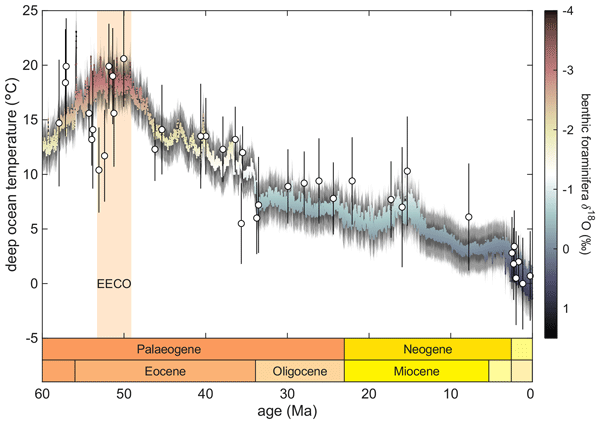
Daniel J. Lunt, Nicky M. Wright, Bram Vaes, Ulrich Salzmann, James W. B. Rae, Thomas Hickler, David K. Hutchinson, Julia Brugger, Jiang Zhu, Sebastian Steinig, A. Nele Meckler, Gordon N. Inglis, David Evans, Agatha M. de Boer, Bette L. Otto-Bliesner, Natalie Burls, Yurui Zhang, Appy Sluijs, Tammo Reichgelt, Igor Niezgodzki, Katrin Meissner, Jean-Baptiste Ladant, Fanni D. Kelemen, Matthew Huber, David R. Greenwood, Mattias Green, Flavia Boscolo-Galazzo, Manuel Tobias Blau, and Michiel Baatsen
Geosci. Model Dev., 19, 6143–6166, https://doi.org/10.5194/gmd-19-6143-2026, https://doi.org/10.5194/gmd-19-6143-2026, 2026
Short summary
Short summary
The early Eocene, about 50 million years ago, was a super-warm period of Earth's history, with high concentrations of carbon dioxide in the atmosphere. Here, we provide a framework and experimental design for climate modellers to carry out a coordinated project, simulating this period. This is the second phase of this project, and here we provide updated maps of the Earth's mountains and ocean floor, and vegetation, to enable more accurate modelling.
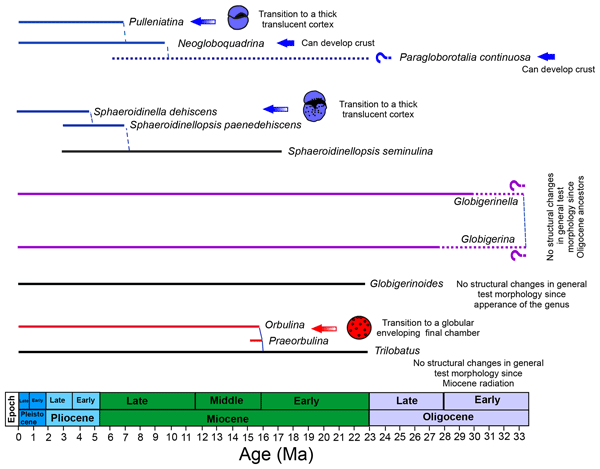
Flavia Boscolo-Galazzo, David Evans, Elaine M. Mawbey, William R. Gray, Paul N. Pearson, and Bridget S. Wade
Biogeosciences, 22, 1095–1113, https://doi.org/10.5194/bg-22-1095-2025, https://doi.org/10.5194/bg-22-1095-2025, 2025
Short summary
Short summary
Here we compare the Mg / Ca and oxygen isotope signatures for 57 recent to fossil species of planktonic foraminifera for the last 15 Myr. We find the occurrence of lineage-specific offsets in Mg / Ca conservative between ancestor-descendent species. Taking into account species kinship significantly improves temperature reconstructions, and we suggest that the occurrence of Mg / Ca offsets in modern species results from their evolution when ocean properties were different from today's.
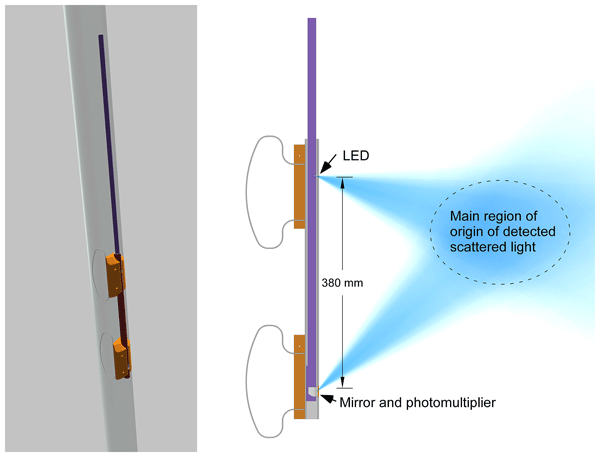
Jakob Schwander, Thomas F. Stocker, Remo Walther, Samuel Marending, Tobias Erhardt, Chantal Zeppenfeld, and Jürg Jost
The Cryosphere, 18, 5613–5617, https://doi.org/10.5194/tc-18-5613-2024, https://doi.org/10.5194/tc-18-5613-2024, 2024
Short summary
Short summary
The RADIX (Rapid Access Drilling and Ice eXtraction) optical dust logger is part of the exploratory 20 mm drilling system at the University of Bern and is inserted into the hole after drilling. Temperature and attitude sensors were successfully tested but not the dust sensor, as no RADIX hole reached the required bubble-free ice. In 2023, we tested the logger with an adapter for the deep borehole of the East Greenland Ice-core Project and obtained a good Late Glacial–Early Holocene dust record.
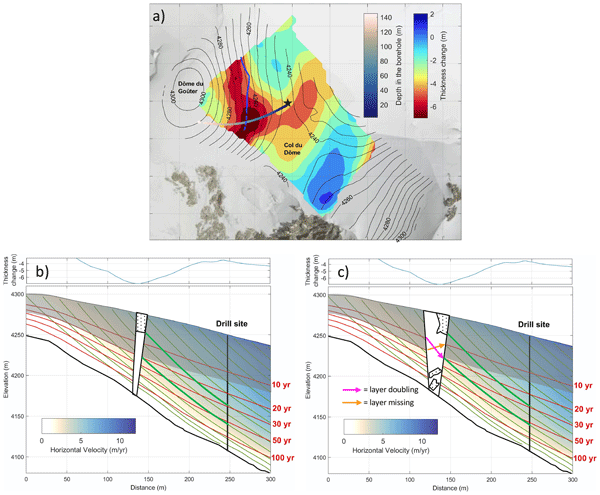
Susanne Preunkert, Pascal Bohleber, Michel Legrand, Adrien Gilbert, Tobias Erhardt, Roland Purtschert, Lars Zipf, Astrid Waldner, Joseph R. McConnell, and Hubertus Fischer
The Cryosphere, 18, 2177–2194, https://doi.org/10.5194/tc-18-2177-2024, https://doi.org/10.5194/tc-18-2177-2024, 2024
Short summary
Short summary
Ice cores from high-elevation Alpine glaciers are an important tool to reconstruct the past atmosphere. However, since crevasses are common at these glacier sites, rigorous investigations of glaciological conditions upstream of drill sites are needed before interpreting such ice cores. On the basis of three ice cores extracted at Col du Dôme (4250 m a.s.l; French Alps), an overall picture of a dynamic crevasse formation is drawn, which disturbs the depth–age relation of two of the three cores.
Madeleine L. Vickers, Morgan T. Jones, Jack Longman, David Evans, Clemens V. Ullmann, Ella Wulfsberg Stokke, Martin Vickers, Joost Frieling, Dustin T. Harper, Vincent J. Clementi, and IODP Expedition 396 Scientists
Clim. Past, 20, 1–23, https://doi.org/10.5194/cp-20-1-2024, https://doi.org/10.5194/cp-20-1-2024, 2024
Short summary
Short summary
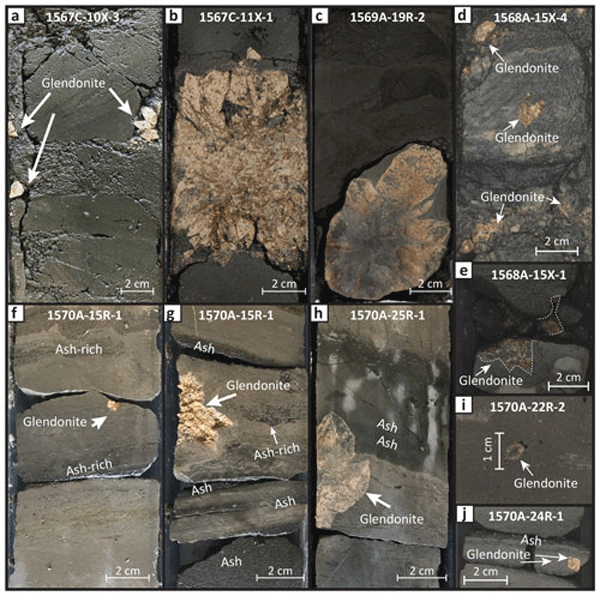
The discovery of cold-water glendonite pseudomorphs in sediments deposited during the hottest part of the Cenozoic poses an apparent climate paradox. This study examines their occurrence, association with volcanic sediments, and speculates on the timing and extent of cooling, fitting this with current understanding of global climate during this period. We propose that volcanic activity was key to both physical and chemical conditions that enabled the formation of glendonites in these sediments.
Chiara I. Paleari, Florian Mekhaldi, Tobias Erhardt, Minjie Zheng, Marcus Christl, Florian Adolphi, Maria Hörhold, and Raimund Muscheler
Clim. Past, 19, 2409–2422, https://doi.org/10.5194/cp-19-2409-2023, https://doi.org/10.5194/cp-19-2409-2023, 2023
Short summary
Short summary
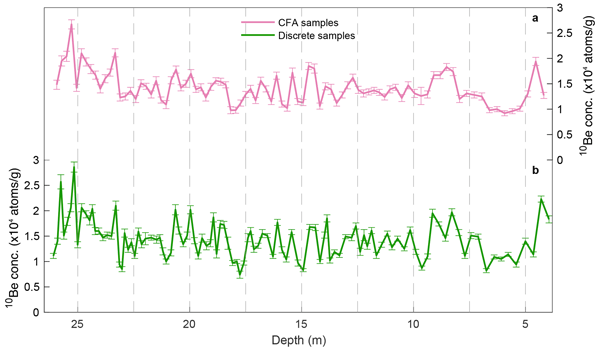
In this study, we test the use of excess meltwater from continuous flow analysis from a firn core from Greenland for the measurement of 10Be for solar activity reconstructions. We show that the quality of results is similar to the measurements on clean firn, which opens the possibility to obtain continuous 10Be records without requiring large amounts of clean ice. Furthermore, we investigate the possibility of identifying solar storm signals in 10Be records from Greenland and Antarctica.
Tobias Erhardt, Camilla Marie Jensen, Florian Adolphi, Helle Astrid Kjær, Remi Dallmayr, Birthe Twarloh, Melanie Behrens, Motohiro Hirabayashi, Kaori Fukuda, Jun Ogata, François Burgay, Federico Scoto, Ilaria Crotti, Azzurra Spagnesi, Niccoló Maffezzoli, Delia Segato, Chiara Paleari, Florian Mekhaldi, Raimund Muscheler, Sophie Darfeuil, and Hubertus Fischer
Earth Syst. Sci. Data, 15, 5079–5091, https://doi.org/10.5194/essd-15-5079-2023, https://doi.org/10.5194/essd-15-5079-2023, 2023
Short summary
Short summary
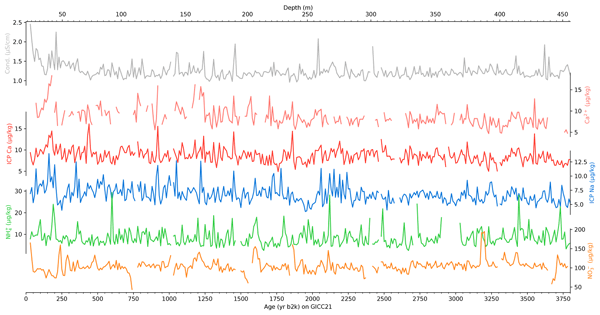
The presented paper provides a 3.8 kyr long dataset of aerosol concentrations from the East Greenland Ice coring Project (EGRIP) ice core. The data consists of 1 mm depth-resolution profiles of calcium, sodium, ammonium, nitrate, and electrolytic conductivity as well as decadal averages of these profiles. Alongside the data a detailed description of the measurement setup as well as a discussion of the uncertainties are given.
Giulia Sinnl, Mai Winstrup, Tobias Erhardt, Eliza Cook, Camilla Marie Jensen, Anders Svensson, Bo Møllesøe Vinther, Raimund Muscheler, and Sune Olander Rasmussen
Clim. Past, 18, 1125–1150, https://doi.org/10.5194/cp-18-1125-2022, https://doi.org/10.5194/cp-18-1125-2022, 2022
Short summary
Short summary
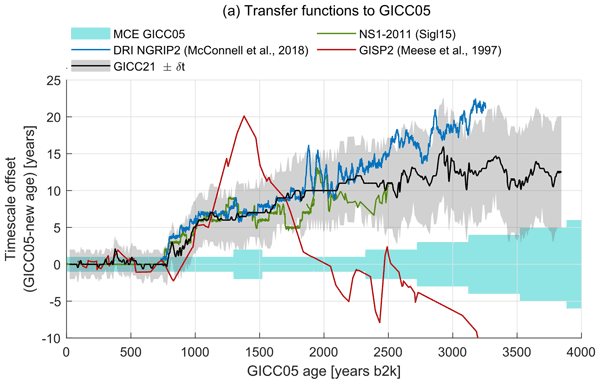
A new Greenland ice-core timescale, covering the last 3800 years, was produced using the machine learning algorithm StratiCounter. We synchronized the ice cores using volcanic eruptions and wildfires. We compared the new timescale to the tree-ring timescale, finding good alignment both between the common signatures of volcanic eruptions and of solar activity. Our Greenlandic timescales is safe to use for the Late Holocene, provided one uses our uncertainty estimate.
Tobias Erhardt, Matthias Bigler, Urs Federer, Gideon Gfeller, Daiana Leuenberger, Olivia Stowasser, Regine Röthlisberger, Simon Schüpbach, Urs Ruth, Birthe Twarloh, Anna Wegner, Kumiko Goto-Azuma, Takayuki Kuramoto, Helle A. Kjær, Paul T. Vallelonga, Marie-Louise Siggaard-Andersen, Margareta E. Hansson, Ailsa K. Benton, Louise G. Fleet, Rob Mulvaney, Elizabeth R. Thomas, Nerilie Abram, Thomas F. Stocker, and Hubertus Fischer
Earth Syst. Sci. Data, 14, 1215–1231, https://doi.org/10.5194/essd-14-1215-2022, https://doi.org/10.5194/essd-14-1215-2022, 2022
Short summary
Short summary
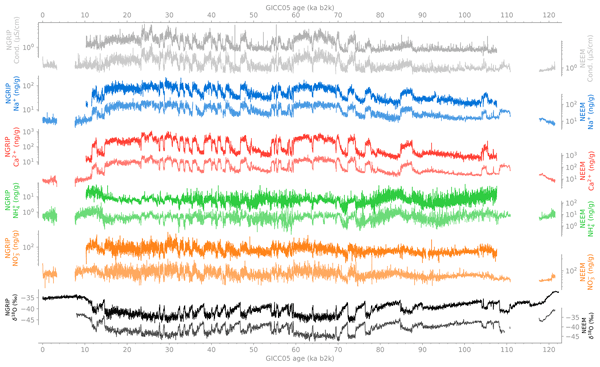
The datasets presented alongside this manuscript contain high-resolution concentration measurements of chemical impurities in deep ice cores, NGRIP and NEEM, from the Greenland ice sheet. The impurities originate from the deposition of aerosols to the surface of the ice sheet and are influenced by source, transport and deposition processes. Together, these records contain detailed, multi-parameter records of past climate variability over the last glacial period.
Nicolas Stoll, Maria Hörhold, Tobias Erhardt, Jan Eichler, Camilla Jensen, and Ilka Weikusat
The Cryosphere, 16, 667–688, https://doi.org/10.5194/tc-16-667-2022, https://doi.org/10.5194/tc-16-667-2022, 2022
Short summary
Short summary
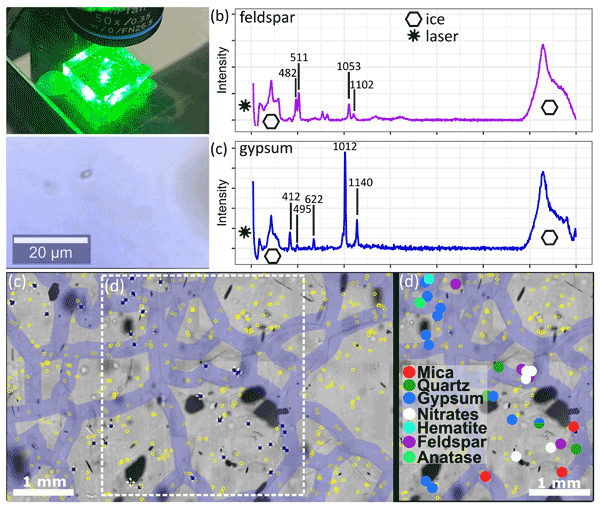
We mapped and analysed solid inclusion in the upper 1340 m of the EGRIP ice core with Raman spectroscopy and microstructure mapping, based on bulk dust content derived via continuous flow analysis. We observe a large variety in mineralogy throughout the core and samples. The main minerals are sulfates, especially gypsum, and terrestrial dust minerals, such as quartz, mica, and feldspar. A change in mineralogy occurs around 900 m depth indicating a climate-related imprint.
Nicolas Stoll, Jan Eichler, Maria Hörhold, Tobias Erhardt, Camilla Jensen, and Ilka Weikusat
The Cryosphere, 15, 5717–5737, https://doi.org/10.5194/tc-15-5717-2021, https://doi.org/10.5194/tc-15-5717-2021, 2021
Short summary
Short summary
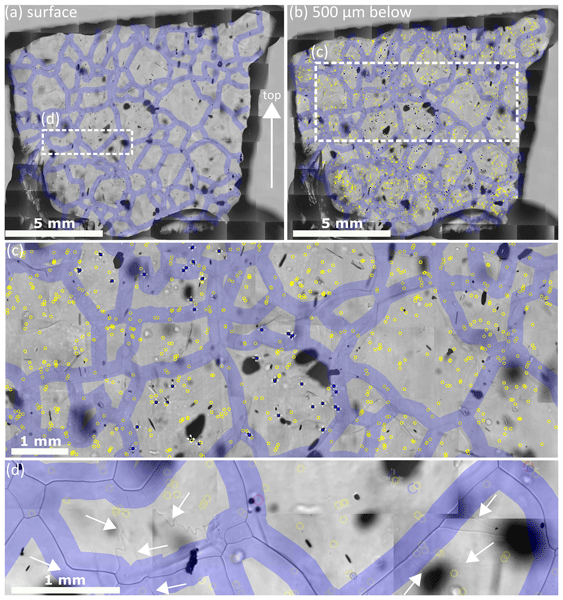
We did a systematic analysis of the location of inclusions in the EGRIP ice core, the first ice core from an ice stream. We combine this with crystal orientation and grain size data, enabling the first overview about the microstructure of this unique ice core. Micro-inclusions show a strong spatial variability and patterns (clusters or horizontal layers); roughly one-third is located at grain boundaries. More holistic approaches are needed to understand deformation processes in the ice better.
Cited articles
Addadi, L., Joester, D., Nudelman, F., and Weiner, S.: Mollusk Shell Formation: A Source of New Concepts for Understanding Biomineralization Processes, Chemistry – A European Journal, 12, 980–987, https://doi.org/10.1002/chem.200500980, 2006.
Agbaje, O. B. A., Wirth, R., Morales, L. F. G., Shirai, K., Kosnik, M., Watanabe, T., and Jacob, D. E.: Architecture of crossed-lamellar bivalve shells: the southern giant clam (Tridacna derasa, Röding, 1798), R. Soc. Open Sci., 4, https://doi.org/10.1098/rsos.170622, 2017.
Aharon, P. and Chappell, J.: Oxygen isotopes, sea level changes and the temperature history of a coral reef environment in New Guinea over the last 105 years, Palaeogeogr. Palaeocl., 56, 337–379, https://doi.org/10.1016/0031-0182(86)90101-X, 1986.
AlKhatib, M. and Eisenhauer, A.: Calcium and strontium isotope fractionation during precipitation from aqueous solutions as a function of temperature and reaction rate; II. Aragonite, Geochim. Cosmochim. Ac., 209, 320–342, https://doi.org/10.1016/j.gca.2017.04.012, 2017.
Arias-Ruiz, C., Elliot, M., Bézos, A., Pedoja, K., Husson, L., Cahyarini, S. Y., Cariou, E., Michel, E., La, C., and Manssouri, F.: Geochemical fingerprints of climate variation and the extreme La Niña 2010–11 as recorded in a Tridacna squamosa shell from Sulawesi, Indonesia, Palaeogeogr. Palaeocl., 487, 216–228, https://doi.org/10.1016/j.palaeo.2017.08.037, 2017.
Arndt, I. and Coenen, D.: Daydacna, Zenodo [code], https://doi.org/10.5281/ZENODO.8334594, 2023.
Arndt, I., Coenen, D., Evans, D., Renema, W., and Müller, W.: Quantifying Sub-Seasonal Growth Rate Changes in Fossil Giant Clams Using Wavelet Transformation of Daily
Arndt, I., Bernecker, M., Erhardt, T., Evans, D., Fiebig, J., Fursman, M., Kniest, J., Renema, W., Schlidt, V., Staudigel, P., Voigt, S., and Müller, W.: 20,000 days in the life of a giant clam reveal late Miocene tropical climate variability, Palaeogeogr. Palaeocl., 661, 112711, https://doi.org/10.1016/j.palaeo.2024.112711, 2025a.
Arndt, I., Erez, J., Evans, D., Erhardt, T., Levi, A., and Müller, W.: Supplementary Material to “Culturing experiments reveal mechanisms of daily trace element incorporation into Tridacna shells”, Zenodo [data set], https://doi.org/10.5281/zenodo.16161449, 2025b.
Ayling, B. F., Chappell, J., Gagan, M. K., and McCulloch, M. T.: ENSO variability during MIS 11 (424–374 ka) from Tridacna gigas at Huon Peninsula, Papua New Guinea, EPSL, 431, 236–246, https://doi.org/10.1016/j.epsl.2015.09.037, 2015.
Bonham, K.: Growth Rate of Giant Clam Tridacna gigas at Bikini Atoll as Revealed by Radioautography, Science, 149, 300–302, https://doi.org/10.1126/science.149.3681.300, 1965.
Boo, M. V., Hiong, K. C., Choo, C. Y. L., Cao-Pham, A. H., Wong, W. P., Chew, S. F., and Ip, Y. K.: The inner mantle of the giant clam, Tridacna squamosa, expresses a basolateral
Boo, M. V., Hiong, K. C., Wong, W. P., Chew, S. F., and Ip, Y. K.: Shell formation in the giant clam, Tridacna squamosa, may involve an apical
Boo, M. V., Chew, S. F., and Ip, Y. K.: Basolateral
Boo, M. V., Pang, C. Z., Chew, S. F., and Ip, Y. K.: Molecular characterization, immunofluorescent localization, and expression levels of two bicarbonate anion transporters in the whitish mantle of the giant clam, Tridacna squamosa, and the implications for light-enhanced shell formation, Comparative Biochemistry and Physiology Part A, 268, 111200, https://doi.org/10.1016/j.cbpa.2022.111200, 2022.
Brazier, J.-M., Blanchard, M., Méheut, M., Schmitt, A.-D., Schott, J., and Mavromatis, V.: Experimental and theoretical investigations of stable Sr isotope fractionation during its incorporation in aragonite, Geochim. Cosmochim. Ac., 358, 134–147, https://doi.org/10.1016/j.gca.2023.08.013, 2023.
Brazier, J.-M., Harrison, A. L., Rollion-Bard, C., and Mavromatis, V.: Controls of temperature and mineral growth rate on lithium and sodium incorporation in abiotic aragonite, Chem. Geol., 654, 122057, https://doi.org/10.1016/j.chemgeo.2024.122057, 2024.
Brosset, C., Liu, C., Yang, H., Yan, H., and Schöne, B. R.: Integrating high-resolution
Cao-Pham, A. H., Hiong, K. C., Boo, M. V., Choo, C. Y. L., Pang, C. Z., Wong, W. P., Neo, M. L., Chew, S. F., and Ip, Y. K.: Molecular characterization, cellular localization, and light-enhanced expression of Beta-Na+/H+ Exchanger-like in the whitish inner mantle of the giant clam, Tridacna squamosa, denote its role in light-enhanced shell formation, Gene, 695, 101–112, https://doi.org/10.1016/j.gene.2019.02.009, 2019.
Caswell, T. A., Droettboom, M., Lee, A., Andrade, E. S. de, Hoffmann, T., Klymak, J., Hunter, J., Firing, E., Stansby, D., Varoquaux, N., Nielsen, J. H., Root, B., May, R., Elson, P., Seppänen, J. K., Dale, D., Lee, J.-J., McDougall, D., Straw, A., Hobson, P., hannah, Gohlke, C., Vincent, A. F., Yu, T. S., Ma, E., Silvester, S., Moad, C., Kniazev, N., Ernest, E., and Ivanov, P.: matplotlib/matplotlib: REL: v3.5.2, Zenodo [code], https://doi.org/10.5281/zenodo.6513224, 2022.
Chan, J. W. J., Boo, M. V., Wong, W. P., Chew, S. F., and Ip, Y. K.: Illumination enhances the protein abundance of sarcoplasmic reticulum Ca2+-ATPases-like transporter in the ctenidium and whitish inner mantle of the giant clam, Tridacna squamosa, to augment exogenous Ca2+ uptake and shell formation, respectively, Comparative Biochemistry and Physiology Part A, 251, 110811, https://doi.org/10.1016/j.cbpa.2020.110811, 2021.
Chew, S. F., Koh, C. Z. Y., Hiong, K. C., Choo, C. Y. L., Wong, W. P., Neo, M. L., and Ip, Y. K.: Light-enhanced expression of Carbonic Anhydrase 4-like supports shell formation in the fluted giant clam Tridacna squamosa, Gene, 683, 101–112, https://doi.org/10.1016/j.gene.2018.10.023, 2019.
Coenen, D., Evans, D., Jurikova, H., Dumont, M., Rae, J., and Müller, W.: Determining the sources of (sub)permil-level inaccuracy during laser ablation-MC-ICPMS boron isotope measurements of carbonates, J. Anal. At. Spectrom., 39, 2409–2420, https://doi.org/10.1039/D4JA00154K, 2024.
de Winter, N. J., Killam, D., Fröhlich, L., de Nooijer, L., Boer, W., Schöne, B. R., Thébault, J., and Reichart, G.-J.: Ultradian rhythms in shell composition of photosymbiotic and non-photosymbiotic mollusks, Biogeosciences, 20, 3027–3052, https://doi.org/10.5194/bg-20-3027-2023, 2023.
Duprey, N., Lazareth, C. E., Dupouy, C., Butscher, J., Farman, R., Maes, C., and Cabioch, G.: Calibration of seawater temperature and δ18Oseawater signals in Tridacna maxima's δ18Oshell record based on in situ data, Coral Reefs, 34, 437–450, https://doi.org/10.1007/s00338-014-1245-z, 2015.
Elderfield, H., Bertram, C. J., and Erez, J.: A biomineralization model for the incorporation of trace elements into foraminiferal calcium carbonate, Earth and Planetary Science Letters, 142, 409423, https://doi.org/10.1016/0012-821X(96)00105-7, 1996.
Elliot, M., Welsh, K., Chilcott, C., McCulloch, M., Chappell, J., and Ayling, B.: Profiles of trace elements and stable isotopes derived from giant long-lived Tridacna gigas bivalves: Potential applications in paleoclimate studies, Palaeogeogr. Palaeocl., 280, 132–142, https://doi.org/10.1016/j.palaeo.2009.06.007, 2009.
Erhardt, T., Ashley Norris, C., Rittberger, R., Shelley, M., Kutzschbach, M., Marko, L., Schmidt, A., and Müller, W.: Rationale, design and initial performance of a dual-wavelength (157 & 193 nm) cryo-LA-ICP-MS/MS system, J. Anal. At. Spectrom., 40, 2857–2869, https://doi.org/10.1039/D5JA00090D, 2025.
Evans, D. and Müller, W.: Automated Extraction of a Five-Year LA-ICP-MS Trace Element Data Set of Ten Common Glass and Carbonate Reference Materials: Long-Term Data Quality, Optimisation and Laser Cell Homogeneity, Geostandards and Geoanalytical Research, 42, 159–188, https://doi.org/10.1111/ggr.12204, 2018.
Evans, D., Erez, J., Oron, S., and Müller, W.:
Evans, D., Brierley, C., Raymo, M. E., Erez, J., and Müller, W.: Planktic foraminifera shell chemistry response to seawater chemistry: Pliocene–Pleistocene seawater
Evans, D., Müller, W., and Erez, J.: Assessing foraminifera biomineralisation models through trace element data of cultures under variable seawater chemistry, Geochimica et Cosmochimica Acta, 236, 198217, https://doi.org/10.1016/j.gca.2018.02.048, 2018.
Evans, D., Gray, W. R., Rae, J. W. B., Greenop, R., Webb, P. B., Penkman, K., Kröger, R., and Allison, N.: Trace and major element incorporation into amorphous calcium carbonate (ACC) precipitated from seawater, Geochim. Cosmochim. Ac., 290, 293–311, https://doi.org/10.1016/j.gca.2020.08.034, 2020.
Fehrenbacher, J. S., Russell, A. D., Davis, C. V., Gagnon, A. C., Spero, H. J., Cliff, J. B., Zhu, Z., and Martin, P.: Link between light-triggered Mg-banding and chamber formation in the planktic foraminifera Neogloboquadrina dutertrei, Nat. Commun., 8, 15441, https://doi.org/10.1038/ncomms15441, 2017.
Fousiya, A. A., Malik, J. N., Paul, D., Chakraborty, S., and Achyuthan, H.: Microstructure and growth rate variability in a giant clam (Tridacna maxima) from the Lakshadweep Archipelago, India: implications for their use as biological monitors to trace extreme weather events, Coral Reefs, 43, 319–332, https://doi.org/10.1007/s00338-023-02455-8, 2024.
Fursman, M., Warter, V., Janse, M., Renema, W., Spötl, C., Arndt, I., Evans, D., and Müller, W.: Ten years of Tridacna sclerochemistry at up to daily resolution from a controlled aquarium environment – Records of habitat change, induced seasonality and growth variability, Palaeogeogr. Palaeocl., 675, 113022, https://doi.org/10.1016/j.palaeo.2025.113022, 2025.
Gaetani, G. A. and Cohen, A. L.: Element partitioning during precipitation of aragonite from seawater: A framework for understanding paleoproxies, Geochim. Cosmochim. Ac., 70, 4617–4634, https://doi.org/10.1016/j.gca.2006.07.008, 2006.
Gannon, M. E., Pérez-Huerta, A., Aharon, P., and Street, S. C.: A biomineralization study of the Indo-Pacific giant clam Tridacna gigas, Coral Reefs, 36, 503–517, https://doi.org/10.1007/s00338-016-1538-5, 2017.
Giri, S. J., Swart, P. K., and Devlin, Q. B.: The effect of changing seawater Ca and Mg concentrations upon the distribution coefficients of Mg and Sr in the skeletons of the scleractinian coral Pocillopora damicornis, Geochim. Cosmochim. Ac., 222, 535–549, https://doi.org/10.1016/j.gca.2017.11.011, 2018.
Griffiths, N., Müller, W., Johnson, K. G., and Aguilera, O. A.: Evaluation of the effect of diagenetic cements on element
Harris, C. R., Millman, K. J., van der Walt, S. J., Gommers, R., Virtanen, P., Cournapeau, D., Wieser, E., Taylor, J., Berg, S., Smith, N. J., Kern, R., Picus, M., Hoyer, S., van Kerkwijk, M. H., Brett, M., Haldane, A., del Río, J. F., Wiebe, M., Peterson, P., Gérard-Marchant, P., Sheppard, K., Reddy, T., Weckesser, W., Abbasi, H., Gohlke, C., and Oliphant, T. E.: Array programming with NumPy, Nature, 585, 357–362, https://doi.org/10.1038/s41586-020-2649-2, 2020.
Harzhauser, M., Mandic, O., Piller, W. E., Reuter, M., and Kroh, A.: Tracing Back the Origin of the Indo-Pacific Mollusc Fauna: Basal Tridacninae from the Oligocene and Miocene of the Sultanate of Oman, Palaeontology, 51, 199–213, https://doi.org/10.1111/j.1475-4983.2007.00742.x, 2008.
Hauzer, H., Evans, D., Müller, W., Rosenthal, Y., and Erez, J.: Calibration of Na partitioning in the calcitic foraminifer Operculina ammonoides under variable Ca concentration: Toward reconstructing past seawater composition, Earth Planet. Sc. Lett., 497, 80–91, https://doi.org/10.1016/j.epsl.2018.06.004, 2018.
Hauzer, H., Evans, D., Müller, W., Rosenthal, Y., and Erez, J.: Salinity Effect on Trace Element Incorporation in Cultured Shells of the Large Benthic Foraminifer Operculina ammonoides, Paleoceanogr. Paleocl., 36, e2021PA004218, https://doi.org/10.1029/2021PA004218, 2021.
Hiong, K. C., Cao-Pham, A. H., Choo, C. Y. L., Boo, M. V., Wong, W. P., Chew, S. F., and Ip, Y. K.: Light-dependent expression of a Na+/H+ exchanger 3-like transporter in the ctenidium of the giant clam, Tridacna squamosa, can be related to increased H+ excretion during light-enhanced calcification, Physiol. Rep., 5, e13209, https://doi.org/10.14814/phy2.13209, 2017.
Hori, M., Sano, Y., Ishida, A., Takahata, N., Shirai, K., and Watanabe, T.: Middle Holocene daily light cycle reconstructed from the strontium/calcium ratios of a fossil giant clam shell, Sci. Rep., 5, 8734, https://doi.org/10.1038/srep08734, 2015.
Ip, Y. K. and Chew, S. F.: Light-Dependent Phenomena and Related Molecular Mechanisms in Giant Clam-Dinoflagellate Associations: A Review, Front. Mar. Sci., 8, https://doi.org/10.3389/fmars.2021.627722, 2021.
Ip, Y. K., Loong, A. M., Hiong, K. C., Wong, W. P., Chew, S. F., Reddy, K., Sivaloganathan, B., and Ballantyne, J. S.: Light Induces an Increase in the pH of and a Decrease in the Ammonia Concentration in the Extrapallial Fluid of the Giant Clam Tridacna squamosa, Physiological and Biochemical Zoology, 79, 656–664, https://doi.org/10.1086/501061, 2006.
Ip, Y. K., Ching, B., Hiong, K. C., Choo, C. Y. L., Boo, M. V., Wong, W. P., and Chew, S. F.: Light induces changes in activities of
Ip, Y. K., Hiong, K. C., Goh, E. J. K., Boo, M. V., Choo, C. Y. L., Ching, B., Wong, W. P., and Chew, S. F.: The Whitish Inner Mantle of the Giant Clam, Tridacna squamosa, Expresses an Apical Plasma Membrane Ca2+-ATPase (PMCA) Which Displays Light-Dependent Gene and Protein Expressions, Front. Physiol., 8, https://doi.org/10.3389/fphys.2017.00781, 2017.
Jantzen, C., Wild, C., El-Zibdah, M., Roa-Quiaoit, H. A., Haacke, C., and Richter, C.: Photosynthetic performance of giant clams, Tridacna maxima and T. squamosa, Red Sea, Mar. Biol., 155, 211–221, https://doi.org/10.1007/s00227-008-1019-7, 2008.
Jochum, K. P., Stoll, B., Herwig, K., Willbold, M., Hofmann, A. W., Amini, M., Aarburg, S., Abouchami, W., Hellebrand, E., Mocek, B., Raczek, I., Stracke, A., Alard, O., Bouman, C., Becker, S., Dücking, M., Brätz, H., Klemd, R., de Bruin, D., Canil, D., Cornell, D., de Hoog, C.-J., Dalpé, C., Danyushevsky, L., Eisenhauer, A., Gao, Y., Snow, J. E., Groschopf, N., Günther, D., Latkoczy, C., Guillong, M., Hauri, E. H., Höfer, H. E., Lahaye, Y., Horz, K., Jacob, D. E., Kasemann, S. A., Kent, A. J. R., Ludwig, T., Zack, T., Mason, P. R. D., Meixner, A., Rosner, M., Misawa, K., Nash, B. P., Pfänder, J., Premo, W. R., Sun, W. D., Tiepolo, M., Vannucci, R., Vennemann, T., Wayne, D., and Woodhead, J. D.: MPI-DING reference glasses for in situ microanalysis: New reference values for element concentrations and isotope ratios, Geochem. Geophys. Geosyst., 7, https://doi.org/10.1029/2005GC001060, 2006.
Jochum, K. P., Weis, U., Stoll, B., Kuzmin, D., Yang, Q., Raczek, I., Jacob, D. E., Stracke, A., Birbaum, K., Frick, D. A., Günther, D., and Enzweiler, J.: Determination of Reference Values for NIST SRM 610–617 Glasses Following ISO Guidelines, Geostandards and Geoanalytical Research, 35, 397–429, https://doi.org/10.1111/j.1751-908X.2011.00120.x, 2011.
Jochum, K. P., Scholz, D., Stoll, B., Weis, U., Wilson, S. A., Yang, Q., Schwalb, A., Börner, N., Jacob, D. E., and Andreae, M. O.: Accurate trace element analysis of speleothems and biogenic calcium carbonates by LA-ICP-MS, Chem. Geol., 318–319, 31–44, https://doi.org/10.1016/j.chemgeo.2012.05.009, 2012.
Killam, D., Al-Najjar, T., and Clapham, M.: Giant clam growth in the Gulf of Aqaba is accelerated compared to fossil populations, P. Roy. Soc. B, 288, 20210991, https://doi.org/10.1098/rspb.2021.0991, 2021.
Killam, D., Thompson, D., Morgan, K., and Russell, M.: Giant clams as open-source, scalable reef environmental biomonitors, PLOS ONE, 18, e0278752, https://doi.org/10.1371/journal.pone.0278752, 2023.
Klumpp, D. and Griffiths, C.: Contributions of phototrophic and heterotrophic nutrition to the metabolic and growth requirements of four species of giant clam (Tridacnidae), Mar. Ecol. Prog. Ser., 115, 103–115, https://doi.org/10.3354/meps115103, 1994.
Klumpp, D. W., Bayne, B. L., and Hawkins, A. J. S.: Nutrition of the giant clam Tridacna gigas (L.) I. Contribution of filter feeding and photosynthates to respiration and growth, Journal of Experimental Marine Biology and Ecology, 155, 105–122, https://doi.org/10.1016/0022-0981(92)90030-E, 1992.
Knight, A. W., Harvey, J. A., Shohel, M., Lu, P., Cummings, D., and Ilgen, A. G.: The combined effects of Mg2+ and Sr2+ incorporation during CaCO3 precipitation and crystal growth, Geochim. Cosmochim. Ac., 345, 16–33, https://doi.org/10.1016/j.gca.2023.01.021, 2023.
Kobayashi, I. and Samata, T.: Bivalve shell structure and organic matrix, Materials Science and Engineering: C, 26, 692–698, https://doi.org/10.1016/j.msec.2005.09.101, 2006.
Kunzmann, A.: Physiological performance of giant clams (Tridacna spec.) in a recirculation system, in: ICRS Conference Proceedings, 11th International Coral Reef Symposium, Ft. Lauderdale, Florida, 316–320, 2008.
Levi, A., Müller, W., and Erez, J.: Intrashell Variability of Trace Elements in Benthic Foraminifera Grown Under High CO2 Levels, Front. Earth Sci., 7, 247, https://doi.org/10.3389/feart.2019.00247, 2019.
Liu, C., Zhao, L., Zhao, N., Yang, W., Hao, J., Qu, X., Liu, S., Dodson, J., and Yan, H.: Novel methods of resolving daily growth patterns in giant clam (Tridacna spp.) shells, Ecological Indicators, 134, 108480, https://doi.org/10.1016/j.ecolind.2021.108480, 2022.
Liu, C., Yan, H., Zhao, L., Zhao, N., Luo, F., Wen, H., Yang, H., Yang, W., Hao, J., Liang, C., Tanaka, K., Murakami-Sugihara, N., Shirai, K., Takahata, N., Dodson, J., and Schöne, B. R.: Potential environment effect on ultrahigh resolution
Longerich, H. P., Jackson, S. E., and Günther, D.: Inter-laboratory note. Laser ablation inductively coupled plasma mass spectrometric transient signal data acquisition and analyte concentration calculation, J. Anal. At. Spectrom., 11, 899–904, https://doi.org/10.1039/JA9961100899, 1996.
Ma, X., Yan, H., Fei, H., Liu, C., Shi, G., Huang, E., Wang, Y., Qu, X., Lian, E., and Dang, H.: A high-resolution δ18O record of modern Tridacna gigas bivalve and its paleoenvironmental implications, Palaeogeogr. Palaeocl., 554, https://doi.org/10.1016/j.palaeo.2020.109800, 2020.
Mavromatis, V., Brazier, J.-M., and Goetschl, K. E.: Controls of temperature and mineral growth rate on Mg incorporation in aragonite, Geochim. Cosmochim. Ac., 317, 53–64, https://doi.org/10.1016/j.gca.2021.10.015, 2022.
Mills, K., John, E. H., Muir, D. D., Santodomingo, N., Johnson, K. G., Hussein, M. A. S., and Sosdian, S.: Growth responses of mixotrophic giant clams on nearshore turbid coral reefs, Coral Reefs, 42, 592–608, https://doi.org/10.1007/s00338-023-02366-8, 2023.
Mills, K., Muir, D. D., Oldroyd, A., John, E. H., Santodomingo, N., Johnson, K. G., Hussein, M. A. S., and Sosdian, S.: Microstructure and crystallographic texture data in modern giant clam shells (Tridacna squamosa and Hippopus hippopus), Data in Brief, 52, 109947, https://doi.org/10.1016/j.dib.2023.109947, 2024.
Müller, W., Shelley, M., Miller, P., and Broude, S.: Initial performance metrics of a new custom-designed ArF excimer LA-ICPMS system coupled to a two-volume laser-ablation cell, J. Anal. At. Spectrom., 24, 209–214, https://doi.org/10.1039/B805995K, 2009.
Neo, M. L.: A Field Guide to Giant Clams of the Indo-Pacific, WORLD SCIENTIFIC, 216 pp., https://doi.org/10.1142/13349, 2023.
Norris, C. A., Danyushevsky, L., Olin, P., and West, N. R.: Elimination of aliasing in LA-ICP-MS by alignment of laser and mass spectrometer, J. Anal. At. Spectrom., 36, 733–739, https://doi.org/10.1039/D0JA00488J, 2021.
Paton, C., Hellstrom, J., Paul, B., Woodhead, J., and Hergt, J.: Iolite: Freeware for the visualisation and processing of mass spectrometric data, J. Anal. At. Spectrom., 26, 2508–2518, https://doi.org/10.1039/C1JA10172B, 2011.
Pätzold, J., Heinrichs, J. P., Wolschendorf, K., and Wefer, G.: Correlation of stable oxygen isotope temperature record with light attenuation profiles in reef-dwelling Tridacna shells, Coral Reefs, 10, 65–69, https://doi.org/10.1007/BF00571825, 1991.
Ram, S. and Erez, J.: The Distribution Coefficients of Major and Minor Elements in Coral Skeletons Under Variable Calcium Seawater Concentrations, Front. Earth Sci., 9, 336, https://doi.org/10.3389/feart.2021.657176, 2021.
Ram, S. and Erez, J.: Corals feel the water chemistry: trace elements in coral skeletons reflect accurately their seawater chemistry, biological and geochemical implications, Geochimica et Cosmochimica Acta, 400, 142157, https://doi.org/10.1016/j.gca.2025.05.003, 2025.
Reback, J., jbrockmendel, McKinney, W., Bossche, J. V. den, Roeschke, M., Augspurger, T., Hawkins, S., Cloud, P., gfyoung, Sinhrks, Hoefler, P., Klein, A., Petersen, T., Tratner, J., She, C., Ayd, W., Naveh, S., Darbyshire, J. H. M., Shadrach, R., Garcia, M., Schendel, J., Hayden, A., Saxton, D., Gorelli, M. E., Li, F., Wörtwein, T., Zeitlin, M., Jancauskas, V., McMaster, A., and Li, T.: pandas-dev/pandas: Pandas 1.4.3, Zenodo [code], https://doi.org/10.5281/zenodo.6702671, 2022.
Rosewater, J.: The Family Tridacnidae in the Indo-Pacific, Indo-Pacific Mollusca, 1, 153, 347–396, 1965.
Rossbach, S., Saderne, V., Anton, A., and Duarte, C. M.: Light-dependent calcification in Red Sea giant clam Tridacna maxima, Biogeosciences, 16, 2635–2650, https://doi.org/10.5194/bg-16-2635-2019, 2019.
Rossbach, S., Overmans, S., Kaidarova, A., Kosel, J., Agustí, S., and Duarte, C. M.: Giant clams in shallow reefs: UV-resistance mechanisms of Tridacninae in the Red Sea, Coral Reefs, 39, 1345–1360, https://doi.org/10.1007/s00338-020-01968-w, 2020.
Sano, Y., Kobayashi, S., Shirai, K., Takahata, N., Matsumoto, K., Watanabe, T., Sowa, K., and Iwai, K.: Past daily light cycle recorded in the strontium/calcium ratios of giant clam shells, Nat. Commun., 3, 761, https://doi.org/10.1038/ncomms1763, 2012.
Savitzky, A. and Golay, M. J. E.: Smoothing and Differentiation of Data by Simplified Least Squares Procedures, Anal. Chem., 36, 1627–1639, https://doi.org/10.1021/ac60214a047, 1964.
Schleinkofer, N., Raddatz, J., Evans, D., Gerdes, A., Flögel, S., Voigt, S., Büscher, J. V., and Wisshak, M.: Compositional variability of
Schöne, B. R., Zhang, Z., Jacob, D., Gillikin, D. P., Tütken, T., Garbe-Schönberg, D., Mcconnaughey, T., and Soldati, A.: Effect of organic matrices on the determination of the trace element chemistry (Mg, Sr,
Schwartzmann, C., Durrieu, G., Sow, M., Ciret, P., Lazareth, C. E., and Massabuau, J.-C.: In situ giant clam growth rate behavior in relation to temperature: A one-year coupled study of high-frequency noninvasive valvometry and sclerochronology, Limnol. Oceanogr., 56, 1940–1951, https://doi.org/10.4319/lo.2011.56.5.1940, 2011.
Shirai, K., Schöne, B. R., Miyaji, T., Radarmacher, P., Krause, R. A., and Tanabe, K.: Assessment of the mechanism of elemental incorporation into bivalve shells (Arctica islandica) based on elemental distribution at the microstructural scale, Geochim. Cosmochim. Ac., 126, 307–320, https://doi.org/10.1016/j.gca.2013.10.050, 2014.
Silverman, J., Lazar, B., and Erez, J.: Community metabolism of a coral reef exposed to naturally varying dissolved inorganic nutrient loads, Biogeochemistry, 84, 67–82, https://doi.org/10.1007/s10533-007-9075-5, 2007.
Steiner, Z., Benaltabet, T., and Torfstein, A.: Dynamics of marine inorganic carbon and silica: A field study of the mechanisms controlling seawater major element concentrations, Limnol. Oceanogr., 70, 650–666, https://doi.org/10.1002/lno.12781, 2025.
Stephenson, A. E., DeYoreo, J. J., Wu, L., Wu, K. J., Hoyer, J., and Dove, P. M.: Peptides Enhance Magnesium Signature in Calcite: Insights into Origins of Vital Effects, Science, 322, 724–727, https://doi.org/10.1126/science.1159417, 2008.
Van Wynsberge, S., Andréfouët, S., Gaertner-Mazouni, N., Wabnitz, C. C. C., Menoud, M., Le Moullac, G., Levy, P., Gilbert, A., and Remoissenet, G.: Growth, Survival and Reproduction of the Giant Clam Tridacna maxima (Röding 1798, Bivalvia) in Two Contrasting Lagoons in French Polynesia, PLoS One, 12, e0170565, https://doi.org/10.1371/journal.pone.0170565, 2017.
Veeh, H. H. and Chappell, J.: Astronomical Theory of Climatic Change: Support from New Guinea, Science, 167, 862–865, https://doi.org/10.1126/science.167.3919.862, 1970.
Wang, D., Wallace, A. F., De Yoreo, J. J., and Dove, P. M.: Carboxylated molecules regulate magnesium content of amorphous calcium carbonates during calcification, P. Natl. Acad. Sci. USA, 106, 21511–21516, https://doi.org/10.1073/pnas.0906741106, 2009.
Warter, V. and Müller, W.: Daily growth and tidal rhythms in Miocene and modern giant clams revealed via ultra-high resolution LA-ICPMS analysis – A novel methodological approach towards improved sclerochemistry, Palaeogeogr. Palaeocl., 465, 362–375, https://doi.org/10.1016/j.palaeo.2016.03.019, 2017.
Warter, V., Müller, W., Wesselingh, F. P., Todd, J. A., and Renema, W.: Late Miocene seasonal to subdecadal climate variability in the Indo-West Pacific (East Kalimantan, Indonesia) preserved in giant clams, PALAIOS, 30, 66–82, https://doi.org/10.2110/palo.2013.061, 2015.
Warter, V., Erez, J., and Müller, W.: Environmental and physiological controls on daily trace element incorporation in Tridacna crocea from combined laboratory culturing and ultra-high resolution LA-ICP-MS analysis, Palaeogeogr. Palaeocl., 496, 32–47, https://doi.org/10.1016/j.palaeo.2017.12.038, 2018.
Watanabe, T. and Oba, T.: Daily reconstruction of water temperature from oxygen isotopic ratios of a modern Tridacna shell using a freezing microtome sampling technique, J. Geophys. Res.-Oceans, 104, 20667–20674, https://doi.org/10.1029/1999JC900097, 1999.
Watanabe, T., Suzuki, A., Kawahata, H., Kan, H., and Ogawa, S.: A 60-year isotopic record from a mid-Holocene fossil giant clam (Tridacna gigas) in the Ryukyu Islands: physiological and paleoclimatic implications, Palaeogeogr. Palaeocl., 212, 343–354, https://doi.org/10.1016/j.palaeo.2004.07.001, 2004.
Weiss, I. M., Tuross, N., Addadi, L., and Weiner, S.: Mollusc larval shell formation: amorphous calcium carbonate is a precursor phase for aragonite, J. Exp. Zool., 293, 478–491, https://doi.org/10.1002/jez.90004, 2002.
Welsh, K., Elliot, M., Tudhope, A., Ayling, B., and Chappell, J.: Giant bivalves (Tridacna gigas) as recorders of ENSO variability, EPSL, 307, 266–270, https://doi.org/10.1016/j.epsl.2011.05.032, 2011.
Yan, H.: Daily growth bands of giant clam shell: A potential paleoweather recorder, Solid Earth Sciences, 5, 249–253, https://doi.org/10.1016/j.sesci.2020.10.001, 2020.
Yan, H., Liu, C., An, Z., Yang, W., Yang, Y., Huang, P., Qiu, S., Zhou, P., Zhao, N., Fei, H., Ma, X., Shi, G., Dodson, J., Hao, J., Yu, K., Wei, G., Yang, Y., Jin, Z., and Zhou, W.: Extreme weather events recorded by daily to hourly resolution biogeochemical proxies of marine giant clam shells, P. Natl. Acad. Sci. USA, 117, 7038–7043, https://doi.org/10.1073/pnas.1916784117, 2020.
Yan, H., Zhao, N., Zhou, P., Liu, C., Fei, H., Li, M., Liu, F., Yang, Y., Yang, W., and Dodson, J.: The first detection of the Madden-Julian Oscillation signal in daily to hourly resolution proxy records derived from a natural archive of Giant Clam Shell (Tridacna spp.), Earth Planet. Sc. Lett., 555, 116703, https://doi.org/10.1016/j.epsl.2020.116703, 2021.
Zhao, N., Yan, H., Yang, Y., Liu, C., Ma, X., Wang, G., Zhou, P., Wen, H., Qu, X., and Dodson, J.: A 23.7-year long daily growth rate record of a modern giant clam shell from South China Sea and its potential in high-resolution paleoclimate reconstruction, Palaeogeogr. Palaeocl., 583, 110682, https://doi.org/10.1016/j.palaeo.2021.110682, 2021.
Zhao, N., Yan, H., Luo, F., Yang, Y., Liu, S., Zhou, P., Liu, C., and Dodson, J.: Daily growth rate variation in Tridacna shells as a record of tropical cyclones in the South China Sea: Palaeoecological implications, Palaeogeogr. Palaeocl., 615, 111444, https://doi.org/10.1016/j.palaeo.2023.111444, 2023.
Editorial statement
This study provides detailed experimental insight into the biomineralization of tridacnid shells, which play an important role in tropical reef ecosystems. By growing calcifying organisms under tightly controlled aquarium conditions, the work reveals key mechanisms governing carbonate skeleton formation that are otherwise difficult to observe. These findings are relevant not only for understanding the biology of photosynthetic calcifiers, but also for paleoclimate and paleoenvironmental reconstructions that rely on biogenic carbonates as archives of past ocean conditions.
This study provides detailed experimental insight into the biomineralization of tridacnid...
Short summary
This study explores daily geochemical variations in giant clam (Tridacna) shells from controlled, isotopically-labelled day-night growth experiments. Results show five times higher daytime calcification rates. Light availability and metabolic activity significantly influence elemental incorporation mechanisms. The findings enhance our understanding of clam geochemistry and growth dynamics, offering valuable insights for studies on past environmental changes.
This study explores daily geochemical variations in giant clam (Tridacna) shells from...


Altmetrics
Final-revised paper
Preprint