
Articles | Volume 23, issue 17
https://doi.org/10.5194/bg-23-6119-2026
© Author(s) 2026. This work is distributed under
the Creative Commons Attribution 4.0 License.
the Creative Commons Attribution 4.0 License.
https://doi.org/10.5194/bg-23-6119-2026
© Author(s) 2026. This work is distributed under
the Creative Commons Attribution 4.0 License.
the Creative Commons Attribution 4.0 License.
Research article
| 
07 Sep 2026
Research article |
| 07 Sep 2026
| 07 Sep 2026
Introducing relative pollen productivity estimates for Iberian taxa: methodological insights and implications for landscape modelling in the Western Mediterranean

Pyrenean Institute of Ecology-CSIC, Zaragoza, Spain
Department of Geography and Regional Planning, University of Zaragoza, Zaragoza, Spain
Vojtěch Abraham
Department of Botany, Charles University in Prague, Prague, Czech Republic
Czech Academy of Sciences, Institute of Botany, Department of Paleoecology, Brno, Czech Republic
Miguel Sevilla-Callejo
Pyrenean Institute of Ecology-CSIC, Zaragoza, Spain
Xavier Font
Faculty of Biology, University of Barcelona, Barcelona, Spain
Héctor Romanos
Pyrenean Institute of Ecology-CSIC, Zaragoza, Spain
deceased, 2023
Eduardo García-Prieto
Pyrenean Institute of Ecology-CSIC, Zaragoza, Spain
Josu Aranbarri
Department of Geography, Prehistory and Archaeology, University of the Basque Country, Vitoria-Gasteiz, Spain
Maria Leunda
Institute of Plant Sciences and Oeschger Center for Climate Change Research, University of Bern, Bern, Switzerland
Michelle Farrell
Centre for Agroecology, Water and Resilience, Coventry University, Coventry, United Kingdom
Fátima Franco-Múgica
Faculty of Sciences, Autonomous University of Madrid, Madrid, Spain
Michela Mariani
School of Geography, University of Nottingham, Nottingham, United Kingdom
Florence Mazier
Department of Environmental Geography, Université Toulouse II – Jean Jaurès, UTM UMR Laboratoire GÉODE, France
Helios Sainz-Ollero
Faculty of Sciences, Autonomous University of Madrid, Madrid, Spain
Penélope González-Sampériz
CORRESPONDING AUTHOR
Pyrenean Institute of Ecology-CSIC, Zaragoza, Spain
Graciela Gil-Romera
CORRESPONDING AUTHOR
Pyrenean Institute of Ecology-CSIC, Zaragoza, Spain
Related authors
No articles found.
Irene Julián-Posada, Graciela Gil-Romera, Ana Moreno, Bérangère Leys, Blas Valero-Garcés, and Penélope González-Sampériz
EGUsphere, https://doi.org/10.5194/egusphere-2026-2563, https://doi.org/10.5194/egusphere-2026-2563, 2026
Short summary
Short summary
The subalpine belt of the Pyrenees, once forested, is now a mosaic of forest patches and open landscapes with pastures. We reconstruct the palaeoenvironmental history using sedimentary ancient DNA, pollen and charcoal. We show that Neoglacial cooling initially opened the forest, and pastoralism through fire and grazing maintained it. These landscapes result not from climate or humans alone, but from their long-term synergy, implying that conservation must emulate traditional herding practices.
Emma Rehn, Haidee Cadd, Scott Mooney, Tim J. Cohen, Henry Munack, Alexandru T. Codilean, Matthew Adeleye, Kristen K. Beck, Mark Constantine IV, Chris Gouramanis, Johanna M. Hanson, Penelope J. Jones, A. Peter Kershaw, Lydia Mackenzie, Maame Maisie, Michela Mariani, Kia Matley, David McWethy, Keely Mills, Patrick Moss, Nicholas R. Patton, Cassandra Rowe, Janelle Stevenson, John Tibby, and Janet Wilmshurst
Earth Syst. Sci. Data, 17, 2681–2692, https://doi.org/10.5194/essd-17-2681-2025, https://doi.org/10.5194/essd-17-2681-2025, 2025
Short summary
Short summary
This paper presents SahulCHAR, a new collection of palaeofire (ancient fire) records from Australia, New Guinea, and New Zealand. SahulCHAR version 1 contains 687 records of sedimentary charcoal or black carbon, including digitized data, records from existing databases, and original author-submitted data. SahulCHAR is a much-needed update to past charcoal compilations that will also provide greater representation of records from this region in future global syntheses to understand past fire.
Mengmeng Liu, Yicheng Shen, Penelope González-Sampériz, Graciela Gil-Romera, Cajo J. F. ter Braak, Iain Colin Prentice, and Sandy P. Harrison
Clim. Past, 19, 803–834, https://doi.org/10.5194/cp-19-803-2023, https://doi.org/10.5194/cp-19-803-2023, 2023
Short summary
Short summary
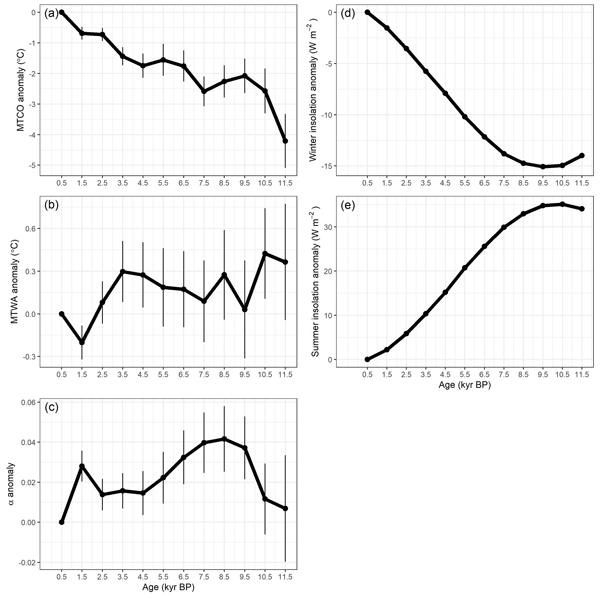
We reconstructed the Holocene climates in the Iberian Peninsula using a large pollen data set and found that the west–east moisture gradient was much flatter than today. We also found that the winter was much colder, which can be expected from the low winter insolation during the Holocene. However, summer temperature did not follow the trend of summer insolation, instead, it was strongly correlated with moisture.
Lucas Bittner, Cindy De Jonge, Graciela Gil-Romera, Henry F. Lamb, James M. Russell, and Michael Zech
Biogeosciences, 19, 5357–5374, https://doi.org/10.5194/bg-19-5357-2022, https://doi.org/10.5194/bg-19-5357-2022, 2022
Short summary
Short summary
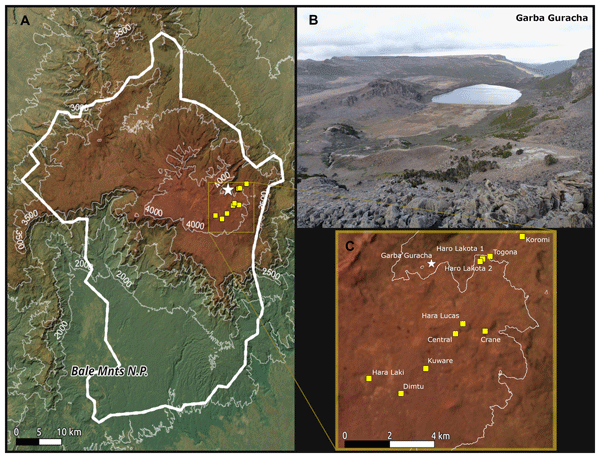
With regard to global warming, an understanding of past temperature changes is becoming increasingly important. Branched glycerol dialkyl glycerol tetraethers (brGDGTs) are membrane lipids used globally to reconstruct lake water temperatures. In the Bale Mountains lakes, we find a unique composition of brGDGT isomers. We present a modified local calibration and a new high-altitude temperature reconstruction from the Horn of Africa spanning the last 12.5 kyr.
Yicheng Shen, Luke Sweeney, Mengmeng Liu, Jose Antonio Lopez Saez, Sebastián Pérez-Díaz, Reyes Luelmo-Lautenschlaeger, Graciela Gil-Romera, Dana Hoefer, Gonzalo Jiménez-Moreno, Heike Schneider, I. Colin Prentice, and Sandy P. Harrison
Clim. Past, 18, 1189–1201, https://doi.org/10.5194/cp-18-1189-2022, https://doi.org/10.5194/cp-18-1189-2022, 2022
Short summary
Short summary
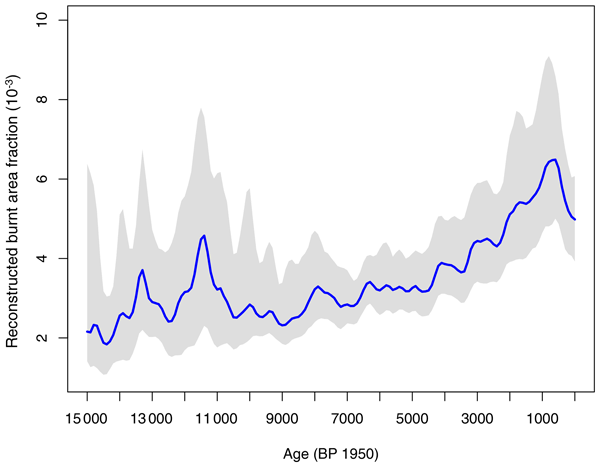
We present a method to reconstruct burnt area using a relationship between pollen and charcoal abundances and the calibration of charcoal abundance using modern observations of burnt area. We use this method to reconstruct changes in burnt area over the past 12 000 years from sites in Iberia. We show that regional changes in burnt area reflect known changes in climate, with a high burnt area during warming intervals and low burnt area when the climate was cooler and/or wetter than today.
Esther Githumbi, Ralph Fyfe, Marie-Jose Gaillard, Anna-Kari Trondman, Florence Mazier, Anne-Birgitte Nielsen, Anneli Poska, Shinya Sugita, Jessie Woodbridge, Julien Azuara, Angelica Feurdean, Roxana Grindean, Vincent Lebreton, Laurent Marquer, Nathalie Nebout-Combourieu, Miglė Stančikaitė, Ioan Tanţău, Spassimir Tonkov, Lyudmila Shumilovskikh, and LandClimII data contributors
Earth Syst. Sci. Data, 14, 1581–1619, https://doi.org/10.5194/essd-14-1581-2022, https://doi.org/10.5194/essd-14-1581-2022, 2022
Short summary
Short summary
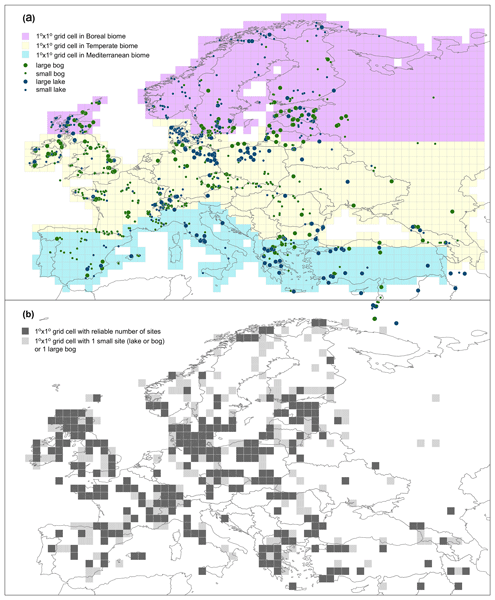
Reconstruction of past land cover is necessary for the study of past climate–land cover interactions and the evaluation of climate models and land-use scenarios. We used 1128 available pollen records from across Europe covering the last 11 700 years in the REVEALS model to calculate percentage cover and associated standard errors for 31 taxa, 12 plant functional types and 3 land-cover types. REVEALS results are reliant on the quality of the input datasets.
Sandy P. Harrison, Roberto Villegas-Diaz, Esmeralda Cruz-Silva, Daniel Gallagher, David Kesner, Paul Lincoln, Yicheng Shen, Luke Sweeney, Daniele Colombaroli, Adam Ali, Chéïma Barhoumi, Yves Bergeron, Tatiana Blyakharchuk, Přemysl Bobek, Richard Bradshaw, Jennifer L. Clear, Sambor Czerwiński, Anne-Laure Daniau, John Dodson, Kevin J. Edwards, Mary E. Edwards, Angelica Feurdean, David Foster, Konrad Gajewski, Mariusz Gałka, Michelle Garneau, Thomas Giesecke, Graciela Gil Romera, Martin P. Girardin, Dana Hoefer, Kangyou Huang, Jun Inoue, Eva Jamrichová, Nauris Jasiunas, Wenying Jiang, Gonzalo Jiménez-Moreno, Monika Karpińska-Kołaczek, Piotr Kołaczek, Niina Kuosmanen, Mariusz Lamentowicz, Martin Lavoie, Fang Li, Jianyong Li, Olga Lisitsyna, José Antonio López-Sáez, Reyes Luelmo-Lautenschlaeger, Gabriel Magnan, Eniko Katalin Magyari, Alekss Maksims, Katarzyna Marcisz, Elena Marinova, Jenn Marlon, Scott Mensing, Joanna Miroslaw-Grabowska, Wyatt Oswald, Sebastián Pérez-Díaz, Ramón Pérez-Obiol, Sanna Piilo, Anneli Poska, Xiaoguang Qin, Cécile C. Remy, Pierre J. H. Richard, Sakari Salonen, Naoko Sasaki, Hieke Schneider, William Shotyk, Migle Stancikaite, Dace Šteinberga, Normunds Stivrins, Hikaru Takahara, Zhihai Tan, Liva Trasune, Charles E. Umbanhowar, Minna Väliranta, Jüri Vassiljev, Xiayun Xiao, Qinghai Xu, Xin Xu, Edyta Zawisza, Yan Zhao, Zheng Zhou, and Jordan Paillard
Earth Syst. Sci. Data, 14, 1109–1124, https://doi.org/10.5194/essd-14-1109-2022, https://doi.org/10.5194/essd-14-1109-2022, 2022
Short summary
Short summary
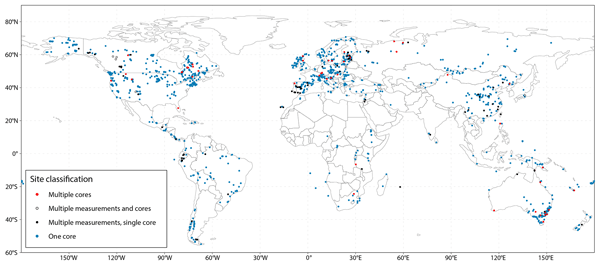
We provide a new global data set of charcoal preserved in sediments that can be used to examine how fire regimes have changed during past millennia and to investigate what caused these changes. The individual records have been standardised, and new age models have been constructed to allow better comparison across sites. The data set contains 1681 records from 1477 sites worldwide.
Cited articles
Abraham, V. and Kozáková, R.: Relative pollen productivity estimates in the modern agricultural landscape of Central Bohemia (Czech Republic), Rev. Palaeobot. Palynol., 179, 1–12, https://doi.org/10.1016/j.revpalbo.2012.04.004, 2012.
Abraham, V., Oušková, V., and Kuneš, P.: Present-Day Vegetation Helps Quantifying Past Land Cover in Selected Regions of the Czech Republic, PLoS ONE, 9, e100117, https://doi.org/10.1371/journal.pone.0100117, 2014
Abrantes, F., Voelker, A., Sierro, F. J., Naughton, F., Rodrigues, T., Cacho, I., Ariztegui, D., Brayshaw, D., Sicre, M.-A., and Batista, L.: Paleoclimate Variability in the Mediterranean Region, in: The Climate of the Mediterranean Region, Elsevier, 1–86, https://doi.org/10.1016/B978-0-12-416042-2.00001-X, 2012.
Andersen, M.: Mechanistic Models for the Seed Shadows of Wind-Dispersed Plants, Am. Nat., 137, 476–497, https://doi.org/10.1086/285178, 1991.
Andersen, S. T.: The Relative Pollen Productivity and Pollen Representation of North European Trees, and Correction Factors for Tree Pollen Spectra. Determined by Surface Pollen Analyses from Forests, Dan. Geol. Unders. II Række, 96, 1–99, https://doi.org/10.34194/raekke2.v96.6887, 1970.
Aranbarri, J., González-Sampériz, P., Valero-Garcés, B., Moreno, A., Gil-Romera, G., Sevilla-Callejo, M., García-Prieto, E., Di Rita, F., Mata, M. P., Morellón, M., Magri, D., Rodríguez-Lázaro, J., and Carrión, J. S.: Rapid climatic changes and resilient vegetation during the Lateglacial and Holocene in a continental region of south-western Europe, Glob. Planet. Change, 114, 50–65, https://doi.org/10.1016/j.gloplacha.2014.01.003, 2014.
Aranbarri, J., Alcolea, M., Badal, E., Vila, S., Allué, E., Iriarte-Chiapusso, M. J., Sebastián, M., Magri, D., and González-Sampériz, P.: Holocene history of Aleppo pine (Pinus halepensis Mill.) woodlands in the Ebro Basin (NE Spain): Climate-biased or human-induced?, Rev. Palaeobot. Palynol., 279, 104240, https://doi.org/10.1016/j.revpalbo.2020.104240, 2020.
Baker, A. G., Zimny, M., Keczyński, A., Bhagwat, S. A., Willis, K. J., and Latałowa, M.: Pollen productivity estimates from old-growth forest strongly differ from those obtained in cultural landscapes: Evidence from the Białowieża National Park, Poland, Holocene, 26, 80–92, https://doi.org/10.1177/0959683615596822, 2016.
Bradshaw, R. and Mitchell, F. J. G.: The palaeoecological approach to reconstructing former grazing–vegetation interactions, For. Ecol. Manag., 120, 3–12, https://doi.org/10.1016/S0378-1127(98)00538-6, 1999.
Broström, A., Sugita, S., and Gaillard, M.-J.: Pollen productivity estimates for the reconstruction of past vegetation cover in the cultural landscape of southern Sweden, Holocene, 14, 368–381, https://doi.org/10.1191/0959683604hl713rp, 2004.
Broström, A., Sugita, S., Gaillard, M.-J., and Pilesjö, P.: Estimating the spatial scale of pollen dispersal in the cultural landscape of southern Sweden, Holocene, 15, 252–262, https://doi.org/10.1191/0959683605hl790rp, 2005.
Broström, A., Nielsen, A. B., Gaillard, M.-J., Hjelle, K., Mazier, F., Binney, H., Bunting, J., Fyfe, R., Meltsov, V., Poska, A., Räsänen, S., Soepboer, W., von Stedingk, H., Suutari, H., and Sugita, S.: Pollen productivity estimates of key European plant taxa for quantitative reconstruction of past vegetation: a review, Veg. Hist. Archaeobotany, 17, 461–478, https://doi.org/10.1007/s00334-008-0148-8, 2008.
Bunting, M. J., Armitage, R., Binney, H. A., and Waller, M.: Estimates of`relative pollen productivity' and`relevant source area of pollen' for major tree taxa in two Norfolk (UK) woodlands, Holocene, 15, 459–465, https://doi.org/10.1191/0959683605hl821rr, 2005.
Calcote, R.: Pollen Source Area and Pollen Productivity: Evidence from Forest Hollows, J. Ecol., 83, 591, https://doi.org/10.2307/2261627, 1995.
Cañellas-Boltà, N., Rull, V., Vigo, J., and Mercadé, A.: Modern pollen – vegetation relationships along an altitudinal transect in the central Pyrenees (southwestern Europe), Holocene, 19, 1185–1200, https://doi.org/10.1177/0959683609345082, 2009.
Carrión, J. S., Munuera, M., Ochando, J., et al.: Paleoflora y Paleovegetación Ibérica III: Holoceno, edited by: Fundación Séneca, Ministerio de Ciencia e Innovación, 1095 pp., ISBN 978-84-09-44691-9, 2022.
Carrión, J. S., Yll, E. I., Willis, K. J., and Sánchez, P.: Holocene forest history of the eastern plateaux in the Segura Mountains (Murcia, southeastern Spain), Rev. Palaeobot. Palynol., 132, 219–236, https://doi.org/10.1016/j.revpalbo.2004.07.002, 2004.
Carrión, J. S., Fernández, S., González-Sampériz, P., Gil-Romera, G., Badal, E., Carrión-Marco, Y., López-Merino, L., López-Sáez, J. A., Fierro, E., and Burjachs, F.: Expected trends and surprises in the Lateglacial and Holocene vegetation history of the Iberian Peninsula and Balearic Islands, Rev. Palaeobot. Palynol., 162, 458–475, https://doi.org/10.1016/j.revpalbo.2009.12.007, 2010a.
Carrión, Y., Ntinou, M., and Badal, E.: Olea europaea L. in the North Mediterranean Basin during the Pleniglacial and the Early–Middle Holocene, Quat. Sci. Rev., 29, 952–968, https://doi.org/10.1016/j.quascirev.2009.12.015, 2010b.
Carroll, R. J. and Ruppert, D.: Transformation and Weighting in Regression, Chapman and Hall, New York, https://doi.org/10.1201/9780203735268, 1988.
Castroviejo, S. (Coord.): Flora ibérica. Plantas vasculares de la Península Ibérica e Islas Baleares, vols. 1–8, 10–15, 17–18 y 21. Madrid: Real Jardín Botánico, CSIC, 1986–2012.
Chaput, M. A. and Gajewski, K.: Relative pollen productivity estimates and changes in Holocene vegetation cover in the deciduous forest of southeastern Quebec, Canada, Botany, 96, 299–317, https://doi.org/10.1139/cjb-2017-0193, 2018.
Chazarra, A., Flórez-García, E., Peraza-Sánchez, B., Tohá-Rebull, T., Lorenzo-Mariño, B., Criado-Pinto, E., Moreno-García, J. V., Romero-Fresneda, R., and Botey-Fullat, R.: Mapas climáticos de España (1981–2010) y ETo (1996–2016), Agencia Estatal de Meteorología, https://doi.org/10.31978/014-18-004-2, 2018.
Cheddadi, R., Lamb, H. F., Guiot, J., and Van Der Kaars, S.: Holocene climatic change in Morocco: a quantitative reconstruction from pollen data, Clim. Dynam., 14, 883–890, https://doi.org/10.1007/s003820050262, 1998.
Commerford, J. L., McLauchlan, K. K., and Sugita, S.: Calibrating vegetation cover and grassland pollen assemblages in the Flint Hills of Kansas, USA, Am. J. Plant Sci., 4, 1–10, https://doi.org/10.4236/ajps.2013.47A1001, 2013.
Connor, S. E., Vannière, B., Colombaroli, D., Anderson, R. S., Carrión, J. S., Ejarque, A., Gil Romera, G., González-Sampériz, P., Hoefer, D., Morales-Molino, C., Revelles, J., Schneider, H., Van Der Knaap, W. O., Van Leeuwen, J. F., and Woodbridge, J.: Humans take control of fire-driven diversity changes in Mediterranean Iberia's vegetation during the mid–late Holocene, Holocene, 29, 886–901, https://doi.org/10.1177/0959683619826652, 2019.
Costa, M., Morla, C., and Sainz-Ollero, H.: Los bosques ibéricos. Una interpretación geobotánica., Planeta, 598 pp., ISBN 978-84-08-05820-5, 1998.
Cowling, R. M., Rundel, P. W., Lamont, B. B., Kalin Arroyo, M., and Arianoutsou, M.: Plant diversity in mediterranean-climate regions, Trends Ecol. Evol., 11, 362–366, https://doi.org/10.1016/0169-5347(96)10044-6, 1996.
Davis, M. B.: On the theory of pollen analysis, Am. J. Sci., 261, 897–912, 1963.
Dawson, A., Paciorek, C. J., McLachlan, J. S., Goring, S., Williams, J. W., and Jackson, S. T.: Quantifying pollen-vegetation relationships to reconstruct ancient forests using 19th-century forest composition and pollen data, Quat. Sci. Rev., 137, 156–175, https://doi.org/10.1016/j.quascirev.2016.01.012, 2016.
Duffin, K. I. and Bunting, M. J.: Relative pollen productivity and fall speed estimates for southern African savanna taxa, Veg. Hist. Archaeobotany, 17, 507–525, https://doi.org/10.1007/s00334-007-0101-2, 2008.
Ellenberg, H.: Vegetation ecology of Central Europe, 4. edn., Cambridge Univ. Press, Cambridge, 731 pp., ISBN 9780521236423, 1988.
Ellis, E. C.: Land Use and Ecological Change: A 12,000-Year History, Annu. Rev. Environ. Resour., 46, 1–33, https://doi.org/10.1146/annurev-environ-012220-010822, 2021.
Ergin, E., Marquer, L., Mazier, F., Bisson, U., and Dalfes, H. N.: Relative Pollen Productivity Estimates for Mediterranean Plant Taxa: A New Study Region in Turkey, Land, 13, 591, https://doi.org/10.3390/land13050591, 2024.
European Environment Agency: CORINE Land Cover 2018 (vector), Europe, 6-yearly – version 2020_20u1, May 2020 (20.01), EEA [data set], https://doi.org/10.2909/71C95A07-E296-44FC-B22B-415F42ACFDF0, 2019.
Ezquerra, F. J., Cañas, I., Oria-de-Rueda, J. A., and Rubiales, J. M.: Late-Holocene fossil evidence and the interpretation of the vegetation in NW Iberia: management issues in the light of palaeoecological findings, Veg. Hist. Archaeobotany, 28, 35–50, https://doi.org/10.1007/s00334-018-0684-9, 2019.
Fang, Y., Ma, C., and Bunting, M. J.: Novel methods of estimating relative pollen productivity: A key parameter for reconstruction of past land cover from pollen records, Prog. Phys. Geogr. Earth Environ., 43, 731–753, https://doi.org/10.1177/0309133319861808, 2019.
Fernández, S., Fuentes, N., Carrión, J. S., González-Sampériz, P., Montoya, E., Gil, G., Vega-Toscano, G., and Riquelme, J. A.: Holocene and Upper Pleistocene pollen sequence of Carihuela Cave, southern Spain, Geobios, 40, 75–90, https://doi.org/10.1016/j.geobios.2006.01.004, 2007.
Fernández-Rodríguez, S., Skjøth, C. A., Tormo-Molina, R., Brandao, R., Caeiro, E., Silva-Palacios, I., Gonzalo-Garijo, Á., and Smith, M.: Identification of potential sources of airborne Olea pollen in the Southwest Iberian Peninsula, Int. J. Biometeorol., 58, 337–348, https://doi.org/10.1007/s00484-012-0629-4, 2014.
Folashade, D., Ooi, H., Callaway, R., Microsoft Corporation, and Weston, S.: foreach: Provides Foreach Looping Construct, CRAN [code], https://doi.org/10.32614/CRAN.package.foreach, 2009.
Folashade, D., Microsoft Corporation, Weston, S., and Tenenbaum, D.: doParallel: Foreach Parallel Adaptor for the “parallel” Package, CRAN [code], https://doi.org/10.32614/CRAN.package.doParallel, 2011.
Font, X., Balcells, L., and Mora, B.: The Plot-Based Databases of the Iberian Vegetation, in: The Vegetation of the Iberian Peninsula, vol. 13, edited by: Loidi, J., Springer International Publishing, Cham, 565–579, https://doi.org/10.1007/978-3-319-54867-8_13, 2017.
Fyfe, R. M., Woodbridge, J., and Roberts, N.: From forest to farmland: pollen–inferred land cover change across Europe using the pseudobiomization approach, Glob. Change Biol., 21, 1197–1212, https://doi.org/10.1111/gcb.12776, 2015.
Garreta, V., Guiot, J., Mortier, F., Chadœuf, J., and Hély, C.: Pollen-based climate reconstruction: Calibration of the vegetation–pollen processes, Ecol. Model., 235–236, 81–94, https://doi.org/10.1016/j.ecolmodel.2012.03.031, 2012.
Gavilán, R. G., Vilches, B., Gutiérrez-Girón, A., Blanquer, J. M., and Escudero, A.: Sclerophyllous Versus Deciduous Forests in the Iberian Peninsula: A Standard Case of Mediterranean Climatic Vegetation Distribution, in: Geographical Changes in Vegetation and Plant Functional Types, edited by: Greller, A. M., Fujiwara, K., and Pedrotti, F., Springer International Publishing, Cham, 101–116, https://doi.org/10.1007/978-3-319-68738-4_5, 2018.
Gil-Romera, G., González-Sampériz, P., Lasheras-Álvarez, L., Sevilla-Callejo, M., Moreno, A., Valero-Garcés, B., López-Merino, L., Carrión, J. S., Pérez Sanz, A., Aranbarri, J., and García-Prieto Fronce, E.: Biomass-modulated fire dynamics during the Last Glacial–Interglacial Transition at the Central Pyrenees (Spain), Palaeogeogr. Palaeocl., 402, 113–124, https://doi.org/10.1016/j.palaeo.2014.03.015, 2014.
Githumbi, E., Fyfe, R., Gaillard, M.-J., Trondman, A.-K., Mazier, F., Nielsen, A.-B., Poska, A., Sugita, S., Woodbridge, J., Azuara, J., Feurdean, A., Grindean, R., Lebreton, V., Marquer, L., Nebout-Combourieu, N., Stančikaitė, M., Tanţău, I., Tonkov, S., Shumilovskikh, L., and LandClimII data contributors: European pollen-based REVEALS land-cover reconstructions for the Holocene: methodology, mapping and potentials, Earth Syst. Sci. Data, 14, 1581–1619, https://doi.org/10.5194/essd-14-1581-2022, 2022.
Gomes, S. D., Fletcher, W. J., Rodrigues, T., Stone, A., Abrantes, F., and Naughton, F.: Time-transgressive Holocene maximum of temperate and Mediterranean forest development across the Iberian Peninsula reflects orbital forcing, Palaeogeogr. Palaeocl., 550, 109739, https://doi.org/10.1016/j.palaeo.2020.109739, 2020.
González-Sampériz, P., Valero-Garcés, B. L., Moreno, A., Jalut, G., García-Ruiz, J. M., Martí-Bono, C., Delgado-Huertas, A., Navas, A., Otto, T., and Dedoubat, J. J.: Climate variability in the Spanish Pyrenees during the last 30,000 yr revealed by the El Portalet sequence, Quat. Res., 66, 38–52, https://doi.org/10.1016/j.yqres.2006.02.004, 2006.
González-Sampériz, P., Leroy, S. A. G., Carrión, J. S., Fernández, S., García-Antón, M., Gil-García, M. J., Uzquiano, P., Valero-Garcés, B., and Figueiral, I.: Steppes, savannahs, forests and phytodiversity reservoirs during the Pleistocene in the Iberian Peninsula, Rev. Palaeobot. Palynol., 162, 427–457, https://doi.org/10.1016/j.revpalbo.2010.03.009, 2010.
González-Sampériz, P., Gil-Romera, G., García-Prieto, E., Aranbarri, J., Moreno, A., Morellón, M., Sevilla-Callejo, M., Leunda, M., Santos, L., Franco-Múgica, F., Andrade, A., Carrión, J. S., and Valero-Garcés, B. L.: Strong continentality and effective moisture drove unforeseen vegetation dynamics since the last interglacial at inland Mediterranean areas: The Villarquemado sequence in NE Iberia, Quat. Sci. Rev., 242, 106425, https://doi.org/10.1016/j.quascirev.2020.106425, 2020.
Gregory, P. H.: The microbiology of the atmosphere, 2nd edn., Leonard Hill, Aylesbury, London, ISBN 978-0249441109, 1961
Grindean, R., Nielsen, A. B., Tanţău, I., and Feurdean, A.: Relative pollen productivity estimates in the forest steppe landscape of southeastern Romania, Rev. Palaeobot. Palynol., 264, 54–63, https://doi.org/10.1016/j.revpalbo.2019.02.007, 2019.
Han, Y., Liu, H., Hao, Q., Liu, X., Guo, W., and Shangguan, H.: More reliable pollen productivity estimates and relative source area of pollen in a forest-steppe ecotone with improved vegetation survey, Holocene, 27, 1567–1577, https://doi.org/10.1177/0959683617702234, 2017.
He, F., Li, Y., Wu, J., and Xu, Y.: A comparison of relative pollen productivity from forest steppe, typical steppe and desert steppe in Inner Mongolia, Chin. Sci. Bull., 61, 3388–3400, https://doi.org/10.1360/N972016-00482, 2016.
Hellman, S., Gaillard, M.-J., Broström, A., and Sugita, S.: The REVEALS model, a new tool to estimate past regional plant abundance from pollen data in large lakes: validation in southern Sweden, J. Quat. Sci., 23, 21–42, https://doi.org/10.1002/jqs.1126, 2008.
Hjelle, K. L.: Herb pollen representation in surface moss samples from mown meadows and pastures in western Norway, Veg. Hist. Archaeobotany, 7, 79–96, https://doi.org/10.1007/BF01373926, 1998.
Hjelle, K. L. and Sugita, S.: Estimating pollen productivity and relevant source area of pollen using lake sediments in Norway: How does lake size variation affect the estimates?, Holocene, 22, 313–324, https://doi.org/10.1177/0959683611423690, 2012.
Huntley, B.: European vegetation history: Palaeovegetation maps from pollen data – 13 000 yr BP to present, J. Quat. Sci., 5, 103–122, https://doi.org/10.1002/jqs.3390050203, 1990.
IPCC: Climate Change 2022 – Impacts, Adaptation and Vulnerability: Working Group II Contribution to the Sixth Assessment Report of the Intergovernmental Panel on Climate Change, 1st edn., Cambridge University Press, https://doi.org/10.1017/9781009325844, 2023.
Jackson, S. T. and Lyford, M. E.: Pollen dispersal models in Quaternary plant ecology: Assumptions, parameters, and prescriptions, Bot. Rev., 65, 39–75, https://doi.org/10.1007/BF02856557, 1999.
Jiang, F., Xu, Q., Zhang, S., Li, F., Zhang, K., Wang, M., Shen, W., Sun, Y., and Zhou, Z.: Relative pollen productivities of the major plant taxa of subtropical evergreen–deciduous mixed woodland in China, J. Quat. Sci., 35, 526–538, https://doi.org/10.1002/jqs.3197, 2020.
Jungkeit-Milla, K., Abraham, V., González-Sampériz, P., and Gil-Romera, G.: Novel relative pollen productivity estimates for the Western Mediterranean – Code and dataset, Zenodo [code and data set], https://doi.org/10.5281/zenodo.17927544, 2025.
Katul, G. G., Porporato, A., Nathan, R., Siqueira, M., Soons, M. B., Poggi, D., Horn, H. S., and Levin, S. A.: Mechanistic Analytical Models for Long–Distance Seed Dispersal by Wind, Am. Nat., 166, 368–381, https://doi.org/10.1086/432589, 2005.
Knight, C. A., Battles, J. J., Bunting, M. J., Champagne, M., Wanket, J. A., and Wahl, D. B.: Methods for robust estimates of tree biomass from pollen accumulation rates: Quantifying paleoecological reconstruction uncertainty, Front. Ecol. Evol., 10, 956143, https://doi.org/10.3389/fevo.2022.956143, 2022.
Kuneš, P., Abraham, V., Werchan, B., Plesková, Z., Fajmon, K., Jamrichová, E., and Roleček, J.: Relative pollen productivity estimates for vegetation reconstruction in central-eastern Europe inferred at local and regional scales, Holocene, 29, 1708–1719, https://doi.org/10.1177/0959683619862026, 2019.
Kuparinen, A.: Mechanistic models for wind dispersal, Trends Plant Sci., 11, 296–301, https://doi.org/10.1016/j.tplants.2006.04.006, 2006.
Kuparinen, A., Markkanen, T., Riikonen, H., and Vesala, T.: Modeling air-mediated dispersal of spores, pollen and seeds in forested areas, Ecol. Model., 208, 177–188, https://doi.org/10.1016/j.ecolmodel.2007.05.023, 2007.
Langgut, D., Cheddadi, R., Carrión, J. S., Cavanagh, M., Colombaroli, D., Eastwood, W. J., Greenberg, R., Litt, T., Mercuri, A. M., Miebach, A., Roberts, C. N., Woldring, H., and Woodbridge, J.: The origin and spread of olive cultivation in the Mediterranean Basin: The fossil pollen evidence, Holocene, 29, 902–922, https://doi.org/10.1177/0959683619826654, 2019.
Leunda, M., González-Sampériz, P., Gil-Romera, G., Aranbarri, J., Moreno, A., Oliva-Urcia, B., Sevilla-Callejo, M., and Valero-Garcés, B.: The Late-Glacial and Holocene Marboré Lake sequence (2612 m a.s.l., Central Pyrenees, Spain): Testing high altitude sites sensitivity to millennial scale vegetation and climate variability, Glob. Planet. Change, 157, 214–231, https://doi.org/10.1016/j.gloplacha.2017.08.008, 2017.
Leunda, M., Gil-Romera, G., Daniau, A.-L., Benito, B. M., and González-Sampériz, P.: Holocene fire and vegetation dynamics in the Central Pyrenees (Spain), CATENA, 188, 104411, https://doi.org/10.1016/j.catena.2019.104411, 2020.
Li, F., Gaillard, M.-J., Xie, S., Huang, K., Cui, Q., Fyfe, R., Marquer, L., and Sugita, S.: Evaluation of relative pollen productivities in temperate China for reliable pollen-based quantitative reconstructions of Holocene plant cover, Front. Plant Sci., 14, 1240485, https://doi.org/10.3389/fpls.2023.1240485, 2023.
Li, Y., Bunting, M. J., Xu, Q., Jiang, S., Ding, W., and Hun, L.: Pollen-vegetation-climate relationships in some desert and desert-steppe communities in northern China, Holocene, 21, 997–1010, https://doi.org/10.1177/0959683611400202, 2011.
Liu, M., Shen, Y., González-Sampériz, P., Gil-Romera, G., ter Braak, C. J. F., Prentice, I. C., and Harrison, S. P.: Holocene climates of the Iberian Peninsula: pollen-based reconstructions of changes in the west–east gradient of temperature and moisture, Clim. Past, 19, 803–834, https://doi.org/10.5194/cp-19-803-2023, 2023.
Liu, Y., Ogle, K., Lichstein, J. W., and Jackson, S. T.: Estimation of pollen productivity and dispersal: How pollen assemblages in small lakes represent vegetation, Ecol. Monogr., https://doi.org/10.1002/ecm.1513, 2022.
López-Orozco, R., García-Mozo, H., Oteros, J., and Galán, C.: Long-term trends and influence of climate and land-use changes on pollen profiles of a Mediterranean oak forest, Sci. Total Environ., 897, 165400, https://doi.org/10.1016/j.scitotenv.2023.165400, 2023.
Maestre, F. T., Benito, B. M., Berdugo, M., Concostrina-Zubiri, L., Delgado-Baquerizo, M., Eldridge, D. J., Guirado, E., Gross, N., Kéfi, S., Le Bagousse-Pinguet, Y., Ochoa-Hueso, R., and Soliveres, S.: Biogeography of global drylands, New Phytol., 231, 540–558, https://doi.org/10.1111/nph.17395, 2021.
Magri, D., Di Rita, F., Aranbarri, J., Fletcher, W., and González-Sampériz, P.: Quaternary disappearance of tree taxa from Southern Europe: Timing and trends, Quat. Sci. Rev., 163, 23–55, https://doi.org/10.1016/j.quascirev.2017.02.014, 2017.
Mariani, M., Connor, S. E., Theuerkauf, M., Kuneš, P., and Fletcher, M.-S.: Testing quantitative pollen dispersal models in animal-pollinated vegetation mosaics: An example from temperate Tasmania, Australia, Quat. Sci. Rev., 154, 214–225, https://doi.org/10.1016/j.quascirev.2016.10.020, 2016.
Mariani, M., Connor, S. E., Fletcher, M., Theuerkauf, M., Kuneš, P., Jacobsen, G., Saunders, K. M., and Zawadzki, A.: How old is the Tasmanian cultural landscape? A test of landscape openness using quantitative land–cover reconstructions, J. Biogeogr., 44, 2410–2420, https://doi.org/10.1111/jbi.13040, 2017.
Mariani, M., Connor, S. E., Theuerkauf, M., Herbert, A., Kuneš, P., Bowman, D., Fletcher, M., Head, L., Kershaw, A. P., Haberle, S. G., Stevenson, J., Adeleye, M., Cadd, H., Hopf, F., and Briles, C.: Disruption of cultural burning promotes shrub encroachment and unprecedented wildfires, Front. Ecol. Environ., 20, 292–300, https://doi.org/10.1002/fee.2395, 2022.
Marquer, L., Mazier, F., Sugita, S., Galop, D., Houet, T., Faure, E., Gaillard, M.-J., Haunold, S., de Munnik, N., Simonneau, A., De Vleeschouwer, F., and Le Roux, G.: Pollen-based reconstruction of Holocene land-cover in mountain regions: Evaluation of the Landscape Reconstruction Algorithm in the Vicdessos valley, northern Pyrenees, France, Quat. Sci. Rev., 228, 106049, https://doi.org/10.1016/j.quascirev.2019.106049, 2020.
Martín-Puertas, C., Valero-Garcés, B. L., Pilar Mata, M., González-Sampériz, P., Bao, R., Moreno, A., and Stefanova, V.: Arid and humid phases in southern Spain during the last 4000 years: the Zoñar Lake record, Córdoba, Holocene, 18, 907–921, https://doi.org/10.1177/0959683608093533, 2008.
Matthias, I., Nielsen, A. B., and Giesecke, T.: Evaluating the effect of flowering age and forest structure on pollen productivity estimates, Veg. Hist. Archaeobotany, 21, 471–484, https://doi.org/10.1007/s00334-012-0373-z, 2012.
Mazier, F., Broström, A., Gaillard, M.-J., Sugita, S., Vittoz, P., and Buttler, A.: Pollen productivity estimates and relevant source area of pollen for selected plant taxa in a pasture woodland landscape of the Jura Mountains (Switzerland), Veg. Hist. Archaeobotany, 17, 479–495, https://doi.org/10.1007/s00334-008-0143-0, 2008.
Médail, F. and Quézel, P.: Biodiversity Hotspots in the Mediterranean Basin: Setting Global Conservation Priorities, Conserv. Biol., 13, 1510–1513, https://doi.org/10.1046/j.1523-1739.1999.98467.x, 1999.
Ministerio para la Transición Ecológica y el Reto Demográfico (MITECO): Mapa Forestal de España (MFE) de máxima actualidad, MITECO, Madrid, Spain [data set], https://www.miteco.gob.es/es/biodiversidad/servicios/banco-datos-naturaleza/informacion-disponible/cartografia_informacion_disp.html (last access: 28 August 2026), 2024.
Moreno, A., González-Sampériz, P., Morellón, M., Valero-Garcés, B. L., and Fletcher, W. J.: Northern Iberian abrupt climate change dynamics during the last glacial cycle: A view from lacustrine sediments, Quat. Sci. Rev., 36, 139–153, https://doi.org/10.1016/j.quascirev.2010.06.031, 2012.
Morrison, K. D., Hammer, E., Boles, O., Madella, M., Whitehouse, N., Gaillard, M.-J., Bates, J., Vander Linden, M., Merlo, S., Yao, A., Popova, L., Hill, A. C., Antolin, F., Bauer, A., Biagetti, S., Bishop, R. R., Buckland, P., Cruz, P., Dreslerová, D., Dusseldorp, G., Ellis, E., Filipovic, D., Foster, T., Hannaford, M. J., Harrison, S. P., Hazarika, M., Herold, H., Hilpert, J., Kaplan, J. O., Kay, A., Klein Goldewijk, K., Kolář, J., Kyazike, E., Laabs, J., Lancelotti, C., Lane, P., Lawrence, D., Lewis, K., Lombardo, U., Lucarini, G., Arroyo-Kalin, M., Marchant, R., Mayle, F., McClatchie, M., McLeester, M., Mooney, S., Moskal-del Hoyo, M., Navarrete, V., Ndiema, E., Góes Neves, E., Nowak, M., Out, W. A., Petrie, C., Phelps, L. N., Pinke, Z., Rostain, S., Russell, T., Sluyter, A., Styring, A. K., Tamanaha, E., Thomas, E., Veerasamy, S., Welton, L., and Zanon, M.: Mapping past human land use using archaeological data: A new classification for global land use synthesis and data harmonization, PLOS ONE, 16, e0246662, https://doi.org/10.1371/journal.pone.0246662, 2021.
Múgica, F. F., Antón, M. G., Ruiz, J. M., Juaristi, C. M., and Ollerol, H. S.: Holocene history of Pinnus forests in the Spanish Northern Meseta, Holocene, 11, 343–358, https://doi.org/10.1191/095968301669474913, 2001.
Mullen, K., Ardia, D., Gil, D., Windover, D., and Cline, J.: DEoptim : An R Package for Global Optimization by Differential Evolution, J. Stat. Softw., 40, https://doi.org/10.18637/jss.v040.i06, 2011.
Mutke, S., Gordo, J., Chambel, M. R., Prada, M. A., Álvarez, D., Iglesias, S., and Gil, L.: Phenotypic plasticity is stronger than adaptative differentiation among Mediterranean stone pine provenances, For. Syst., 19, 354–366, https://doi.org/10.5424/fs/2010193-9097, 2010.
Nielsen, A. B.: Modelling pollen sedimentation in Danish lakes at c. ad 1800: an attempt to validate the POLLSCAPE model, J. Biogeogr., 31, 1693–1709, https://doi.org/10.1111/j.1365-2699.2004.01080.x, 2004.
Niemeyer, B., Klemm, J., Pestryakova, L. A., and Herzschuh, U.: Relative pollen productivity estimates for common taxa of the northern Siberian Arctic, Rev. Palaeobot. Palynol., 221, 71–82, https://doi.org/10.1016/j.revpalbo.2015.06.008, 2015.
Nikulina, A., MacDonald, K., Zapolska, A., Serge, M. A., Roche, D. M., Mazier, F., Davoli, M., Svenning, J.-C., van Wees, D., Pearce, E. A., Fyfe, R., Roebroeks, W., and Scherjon, F.: Hunter-gatherer impact on European interglacial vegetation: A modelling approach, Quat. Sci. Rev., 324, 108439, https://doi.org/10.1016/j.quascirev.2023.108439, 2024.
Ninyerola, M., i Fernández, X. P., and Roure, J. M.: Atlas climático digital de la Península Ibérica: metodología y aplicaciones en bioclimatología y geobotánica, ISBN 84-932860-8-7, 2005.
Paciorek, C. J. and McLachlan, J. S.: Mapping Ancient Forests: Bayesian Inference for Spatio-Temporal Trends in Forest Composition Using the Fossil Pollen Proxy Record, J. Am. Stat. Assoc., 104, 608–622, https://doi.org/10.1198/jasa.2009.0026, 2009.
Parsons, R. W. and Prentice, I. C.: Statistical approaches to R-values and the pollen – vegetation relationship, Rev. Palaeobot. Palynol., 32, 127–152, https://doi.org/10.1016/0034-6667(81)90001-4, 1981.
Pearce, E. A., Mazier, F., Davison, C. W., Baines, O., Czyżewski, S., Fyfe, R., Bińka, K., Boreham, S., De Beaulieu, J.-L., Gao, C., Granoszewski, W., Hrynowiecka, A., Malkiewicz, M., Mighall, T., Noryśkiewicz, B., Pidek, I. A., Strahl, J., Winter, H., and Svenning, J.-C.: Beyond the closed-forest paradigm: Cross-scale vegetation structure in temperate Europe before the late-Quaternary megafauna extinctions, Earth Hist. Biodivers., 3, 100022, https://doi.org/10.1016/j.hisbio.2025.100022, 2025a.
Pearce, E. A., Davison, C. W., Mazier, F., Normand, S., Fyfe, R., Serge, M., Scussolini, P., and Svenning, J.: Drivers of Vegetation Structure Differ Between Proposed Natural Reference Conditions for Temperate Europe, Glob. Ecol. Biogeogr., 34, https://doi.org/10.1111/geb.70020, 2025b.
Pérez-Obiol, R., Jalut, G., Julià, R., Pèlachs, A., Iriarte, M. J., Otto, T., and Hernández-Beloqui, B.: Mid-Holocene vegetation and climatic history of the Iberian Peninsula, Holocene, 21, 75–93, https://doi.org/10.1177/0959683610384161, 2011.
Peterken, G. F.: Natural woodland: ecology and conservation in northern temperate regions, Reprinted., Cambridge Univ. Press, New York, 522 pp., ISBN 978-0-521-36792-9, 2001.
Pirzamanbein, B., Lindström, J., Poska, A., Sugita, S., Trondman, A.-K., Fyfe, R., Mazier, F., Nielsen, A. B., Kaplan, J. O., Bjune, A. E., Birks, H. J. B., Giesecke, T., Kangur, M., Latałowa, M., Marquer, L., Smith, B., and Gaillard, M.-J.: Creating spatially continuous maps of past land cover from point estimates: A new statistical approach applied to pollen data, Ecol. Complex., 20, 127–141, https://doi.org/10.1016/j.ecocom.2014.09.005, 2014.
Pirzamanbein, B., Poska, A., and Lindström, J.: Bayesian Reconstruction of Past Land Cover From Pollen Data: Model Robustness and Sensitivity to Auxiliary Variables, Earth Space Sci., 7, e2018EA00057, https://doi.org/10.1029/2018EA000547, 2020.
Poska, A., Meltsov, V., Sugita, S., and Vassiljev, J.: Relative pollen productivity estimates of major anemophilous taxa and relevant source area of pollen in a cultural landscape of the hemi-boreal forest zone (Estonia), Rev. Palaeobot. Palynol., 167, 30–39, https://doi.org/10.1016/j.revpalbo.2011.07.001, 2011.
Prentice, I. C. and Parsons, R. W.: Maximum Likelihood Linear Calibration of Pollen Spectra in Terms of Forest Composition, Biometrics, 39, 1051–1057, https://doi.org/10.2307/2531338, 1983.
Prentice, I. C. and Webb, T.: Pollen percentages, tree abundances and the Fagerlind effect, J. Quat. Sci., 1, 35–43, https://doi.org/10.1002/jqs.3390010105, 2009.
Räsänen, S., Suutari, H., and Nielsen, A. B.: A step further towards quantitative reconstruction of past vegetation in Fennoscandian boreal forests: Pollen productivity estimates for six dominant taxa, Rev. Palaeobot. Palynol., 146, 208–220, https://doi.org/10.1016/j.revpalbo.2007.04.004, 2007.
R Core Team: R: A Language and Environment for Statistical Computing, R Foundation for Statistical Computing, https://www.r-project.org/ (last access: 28 August 2026), 2025.
Reille, M.: Pollen et spores d’europe et d’afrique du nord, Laboratoire de Botanique historique et Palynologie, Marseille, ISBN 2-9507175-0-0, 1992.
Reille, M.: Pollen et spores d’europe et d’afrique du nord, supplement 1, Laboratoire de Botanique historique et Palynologie, Marseille, ISBN 2-9507175-1-9, 1995.
Roberts, N., Fyfe, R. M., Woodbridge, J., Gaillard, M.-J., Davis, B. A. S., Kaplan, J. O., Marquer, L., Mazier, F., Nielsen, A. B., Sugita, S., Trondman, A.-K., and Leydet, M.: Europe's lost forests: a pollen-based synthesis for the last 11,000 years, Sci. Rep., 8, 716, https://doi.org/10.1038/s41598-017-18646-7, 2018.
Rubiales, J. M., García-Amorena, I., Hernández, L., Génova, M., Martínez, F., Manzaneque, F. G., and Morla, C.: Late Quaternary dynamics of pinewoods in the Iberian Mountains, Rev. Palaeobot. Palynol., 162, 476–491, https://doi.org/10.1016/j.revpalbo.2009.11.008, 2010.
Serge, M., Mazier, F., Fyfe, R., et al.: Testing the Effect of Relative Pollen Productivity on the REVEALS Model: A Validated Reconstruction of Europe-Wide Holocene Vegetation, Land, 12, 986, https://doi.org/10.3390/land12050986, 2023.
Soepboer, W., Sugita, S., Lotter, A. F., van Leeuwen, J. F. N., and van der Knaap, W. O.: Pollen productivity estimates for quantitative reconstruction of vegetation cover on the Swiss Plateau, Holocene, 17, 65–77, https://doi.org/10.1177/0959683607073279, 2007.
Sugita, S.: Pollen representation of vegetation in Quaternary sediments: theory and method in patchy vegetation, J. Ecol., 82, 881–897, https://doi.org/10.2307/2261452, 1994.
Sugita, S.: Theory of Quantitative Reconstruction of Vegetation I: Pollen from Large Sites REVEALS Regional Vegetation Composition, Holocene, 17, 229–241, https://doi.org/10.1177/0959683607075837, 2007a.
Sugita, S.: Theory of Quantitative Reconstruction of Vegetation II: All You Need Is LOVE, Holocene, 17, 243–257, https://doi.org/10.1177/0959683607075838, 2007b.
Sugita, S., Gaillard, M.-J., and Broström, A.: Landscape openness and pollen records: a simulation approach, Holocene, 9, 409–421, https://doi.org/10.1191/095968399666429937, 1999.
Sugita, S., Parshall, T., Calcote, R., and Walker, K.: Testing the Landscape Reconstruction Algorithm for spatially explicit reconstruction of vegetation in northern Michigan and Wisconsin, Quat. Res., 74, 289–300, https://doi.org/10.1016/j.yqres.2010.07.008, 2010.
Svenning, J.-C.: A review of natural vegetation openness in north-western Europe, Biol. Conserv., 104, 133–148, https://doi.org/10.1016/S0006-3207(01)00162-8, 2002.
Tabares, X., Ratzmann, G., Kruse, S., Theuerkauf, M., Mapani, B., and Herzschuh, U.: Relative pollen productivity estimates of savanna taxa from southern Africa and their application to reconstruct shrub encroachment during the last century, Holocene, 31, 1100–1111, https://doi.org/10.1177/09596836211003193, 2021.
Theuerkauf, M.: Pollen productivity estimates, in: Encyclopedia of Quaternary Science, Elsevier, 387–401, https://doi.org/10.1016/B978-0-323-99931-1.00236-1, 2025.
Theuerkauf, M. and Couwenberg, J.: The extended downscaling approach: A new R-tool for pollen-based reconstruction of vegetation patterns, Holocene, 27, 1252–1258, https://doi.org/10.1177/0959683616683256, 2017.
Theuerkauf, M. and Couwenberg, J.: Comment on : Pollen-based reconstruction of Holocene land-cover in mountain regions: Evaluation of the landscape reconstruction algorithm in the Vicdessos valley, northern Pyrenees, France, Quat. Sci. Rev., 244, 106463, https://doi.org/10.1016/j.quascirev.2020.106463, 2020.
Theuerkauf, M. and Couwenberg, J.: Pollen productivity estimates strongly depend on assumed pollen dispersal II: Extending the ERV model, Holocene, 32, 1233–1250, https://doi.org/10.1177/09596836211041729, 2022.
Theuerkauf, M., Kuparinen, A., and Joosten, H.: Pollen productivity estimates strongly depend on assumed pollen dispersal, Holocene, 23, 14–24, https://doi.org/10.1177/0959683612450194, 2013.
Theuerkauf, M., Bos, J. A. A., Jahns, S., Janke, W., Kuparinen, A., Stebich, M., and Joosten, H.: Corylus expansion and persistent openness in the early Holocene vegetation of northern central Europe, Quat. Sci. Rev., 90, 183–198, https://doi.org/10.1016/j.quascirev.2014.03.002, 2014.
Theuerkauf, M., Dräger, N., Kienel, U., Kuparinen, A., and Brauer, A.: Effects of changes in land management practices on pollen productivity of open vegetation during the last century derived from varved lake sediments, Holocene, 25, 733–744, https://doi.org/10.1177/0959683614567881, 2015.
Theuerkauf, M., Couwenberg, J., Kuparinen, A., and Liebscher, V.: A matter of dispersal: REVEALSinR introduces state-of-the-art dispersal models to quantitative vegetation reconstruction, Veg. Hist. Archaeobotany, 25, 541–553, https://doi.org/10.1007/s00334-016-0572-0, 2016.
Trachsel, M., Dawson, A., Paciorek, C. J., Williams, J. W., McLachlan, J. S., Cogbill, C. V., Foster, D. R., Goring, S. J., Jackson, S. T., Oswald, W. W., and Shuman, B. N.: Comparison of settlement-era vegetation reconstructions for STEPPS and REVEALS pollen–vegetation models in the northeastern United States, Quat. Res., 95, 23–42, https://doi.org/10.1017/qua.2019.81, 2020.
Trondman, A.-K., Gaillard, M.-J., Mazier, F., Sugita, S., Fyfe, R., Nielsen, A. B., Twiddle, C., Barratt, P., Birks, H. j. B., Bjune, A. E., Björkman, L., Broström, A., Caseldine, C., David, R., Dodson, J., Dörfler, W., Fischer, E., van Geel, B., Giesecke, T., Hultberg, T., Kalnina, L., Kangur, M., van der Knaap, P., Koff, T., Kuneš, P., Lagerås, P., Latałowa, M., Lechterbeck, J., Leroyer, C., Leydet, M., Lindbladh, M., Marquer, L., Mitchell, F. j. G., Odgaard, B. V., Peglar, S. M., Persson, T., Poska, A., Rösch, M., Seppä, H., Veski, S., and Wick, L.: Pollen-based quantitative reconstructions of Holocene regional vegetation cover (plant functional types and land-cover types) in Europe suitable for climate modelling, Glob. Change Biol., 21, https://doi.org/10.1111/gcb.12737, 2014.
Trondman, A.-K., Gaillard, M.-J., Mazier, F., Sugita, S., Fyfe, R., Nielsen, A. B., Twiddle, C., Barratt, P., Birks, H. J. B., Bjune, A. E., Björkman, L., Broström, A., Caseldine, C., David, R., Dodson, J., Dörfler, W., Fischer, E., van Geel, B., Giesecke, T., Hultberg, T., Kalnina, L., Kangur, M., van der Knaap, P., Koff, T., Kuneš, P., Lagerås, P., Latałowa, M., Lechterbeck, J., Leroyer, C., Leydet, M., Lindbladh, M., Marquer, L., Mitchell, F. J. G., Odgaard, B. V., Peglar, S. M., Persson, T., Poska, A., Rösch, M., Seppä, H., Veski, S., and Wick, L.: Pollen-based quantitative reconstructions of Holocene regional vegetation cover (plant-functional types and land-cover types) in Europe suitable for climate modelling, Glob. Change Biol., 21, 676–697, https://doi.org/10.1111/gcb.12737, 2015.
Twiddle, C. L., Jones, R. T., Caseldine, C. J., and Sugita, S.: Pollen productivity estimates for a pine woodland in eastern Scotland: The influence of sampling design and vegetation patterning, Rev. Palaeobot. Palynol., 174, 67–78, https://doi.org/10.1016/j.revpalbo.2011.12.006, 2012.
Veeken, A., Santos, M. J., McGowan, S., Davies, A. L., and Schrodt, F.: Pollen–based reconstruction reveals the impact of the onset of agriculture on plant functional trait composition, Ecol. Lett., 25, 1937–1951, https://doi.org/10.1111/ele.14063, 2022.
Vera, F. W. M.: Grazing ecology and forest history, CABI Pub, Wallingford, Oxon; New York, NY, 506 pp., ISBN 978-0-85199-442-0, 2000.
Von Post, L.: Skogsträdpollen i sydsvenska torvmosselagerföljder, Forhandlinger ved de Skandinaviske Naturforskeres, 16, 433–465, 1918.
Von Stedingk, H., Fyfe, R. M., and Allard, A.: Pollen productivity estimates from the forest–tundra ecotone in west-central Sweden: implications for vegetation reconstruction at the limits of the boreal forest, Holocene, 18, 323–332, https://doi.org/10.1177/0959683607086769, 2008.
Wan, Q., Zhang, X., Huang, K., Zheng, H., Zhang, Y., Yang, X., and Zheng, Z.: Validation of relative pollen productivities for major tropical plant taxa: An empirical test using the REVEALS model in Hainan, China, Quat. Int., 641, 106–114, https://doi.org/10.1016/j.quaint.2022.04.006, 2022.
Wieczorek, M. and Herzschuh, U.: Compilation of relative pollen productivity (RPP) estimates and taxonomically harmonised RPP datasets for single continents and Northern Hemisphere extratropics, Earth Syst. Sci. Data, 12, 3515–3528, https://doi.org/10.5194/essd-12-3515-2020, 2020.
Woodbridge, J., Roberts, C. N., Palmisano, A., Bevan, A., Shennan, S., Fyfe, R., Eastwood, W. J., Izdebski, A., Çakırlar, C., Woldring, H., Broothaerts, N., Kaniewski, D., Finné, M., and Labuhn, I.: Pollen-inferred regional vegetation patterns and demographic change in Southern Anatolia through the Holocene, Holocene, 29, 728–741, https://doi.org/10.1177/0959683619826635, 2019.
Xiang, Y., Gubian, S., Suomela, B., and Hoeng, J.: Generalized Simulated Annealing for Global Optimization: The GenSA Package, R J., 5, 13, https://doi.org/10.32614/RJ-2013-002, 2013.
Xu, Q., Cao, X., Tian, F., Zhang, S., Li, Y., Li, M., Li, J., Liu, Y., and Liang, J.: Relative pollen productivities of typical steppe species in northern China and their potential in past vegetation reconstruction, Sci. China Earth Sci., 57, 1254–1266, https://doi.org/10.1007/s11430-013-4738-7, 2014.
Zanon, M., Davis, B. A. S., Marquer, L., Brewer, S., and Kaplan, J. O.: European Forest Cover During the Past 12,000 Years: A Palynological Reconstruction Based on Modern Analogs and Remote Sensing, Front. Plant Sci., 9, 253, https://doi.org/10.3389/fpls.2018.00253, 2018.
Short summary
Past land-cover reconstructions are essential for understanding long-term landscape changes. In this study, we present the first relative pollen productivity estimates (RPPs) for 21 plant taxa in Spain, a key parameter for reconstructing past vegetation dynamics. Our results provide a new RPP dataset for the Western Mediterranean, enabling more accurate pollen-based palaeoecological reconstructions in future studies.
Past land-cover reconstructions are essential for understanding long-term landscape changes. In...


Altmetrics
Final-revised paper
Preprint