
Articles | Volume 23, issue 18
https://doi.org/10.5194/bg-23-6741-2026
© Author(s) 2026. This work is distributed under
the Creative Commons Attribution 4.0 License.
the Creative Commons Attribution 4.0 License.
https://doi.org/10.5194/bg-23-6741-2026
© Author(s) 2026. This work is distributed under
the Creative Commons Attribution 4.0 License.
the Creative Commons Attribution 4.0 License.
Research article
| 
24 Sep 2026
Research article |
| 24 Sep 2026
| 24 Sep 2026
Balancing nitrogen use efficiency, losses and soil nitrogen depletion to evaluate national scale agri-environmental performance over 40 years

Department of Environmental Systems Science, ETH Zurich, Zurich, Switzerland
Eawag, Swiss Federal Institute of Aquatic Science and Technology, Dübendorf, Switzerland
Lenny H. E. Winkel
Department of Environmental Systems Science, ETH Zurich, Zurich, Switzerland
Eawag, Swiss Federal Institute of Aquatic Science and Technology, Dübendorf, Switzerland
Chloé Wüst-Galley
Climate and Agriculture Group, Agroscope, Zurich, Switzerland
Daniel Bretscher
Climate and Agriculture Group, Agroscope, Zurich, Switzerland
Magdalena Necpalova
School of Agriculture and Food Science, University College Dublin, Belfield Dublin, Ireland
Andrea Stenke
Department of Environmental Systems Science, ETH Zurich, Zurich, Switzerland
Eawag, Swiss Federal Institute of Aquatic Science and Technology, Dübendorf, Switzerland
Johan Six
Department of Environmental Systems Science, ETH Zurich, Zurich, Switzerland
Related authors
Jize Jiang, Lenny H. E. Winkel, Andrea Stenke, Magdalena Necpalova, Moritz Laub, Iris Feigenwinter, Nina Buchmann, and Johan Six
EGUsphere, https://doi.org/10.5194/egusphere-2026-4445, https://doi.org/10.5194/egusphere-2026-4445, 2026
Short summary
Short summary
We studied how fertiliser management and a warming climate affect nitrous oxide emissions from agricultural soils in Switzerland over the past fourty years. Using computer simulations and nationwide data, we found that lower fertiliser use reduced emissions, but rising temperatures cancelled part of these mitigations. The results show a trade-off between mitigation actions and environmental-driven feedback, highlighting future efforts must also account for the effects of a changing climate.
Jize Jiang, David S. Stevenson, Aimable Uwizeye, Giuseppe Tempio, Alessandra Falcucci, Flavia Casu, and Mark A. Sutton
Geosci. Model Dev., 18, 5051–5099, https://doi.org/10.5194/gmd-18-5051-2025, https://doi.org/10.5194/gmd-18-5051-2025, 2025
Short summary
Short summary
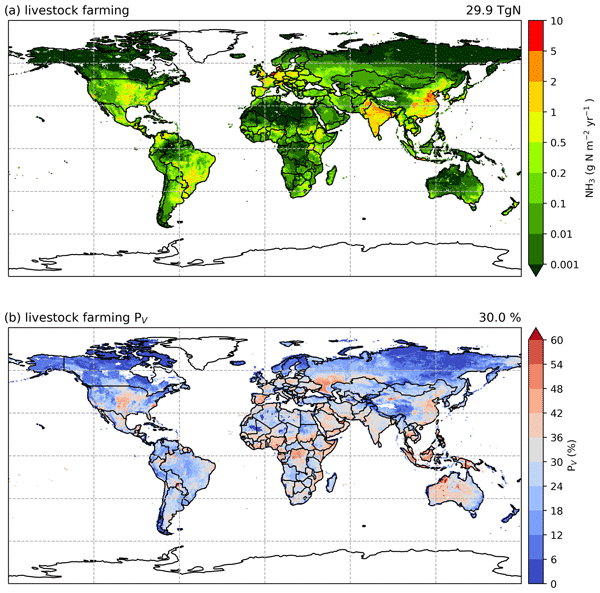
A special model called AMmonia–CLIMate (AMCLIM) has been developed to understand and calculate NH3 emissions from livestock farming. It is estimated that about 30 % of excreted N from livestock is lost due to NH3 emissions from housing, manure management and land application of manure. High NH3 volatilization often occurs in hot regions, while poor management practices also result in significant N losses through NH3 emissions.
Jize Jiang, David S. Stevenson, and Mark A. Sutton
Geosci. Model Dev., 17, 8181–8222, https://doi.org/10.5194/gmd-17-8181-2024, https://doi.org/10.5194/gmd-17-8181-2024, 2024
Short summary
Short summary
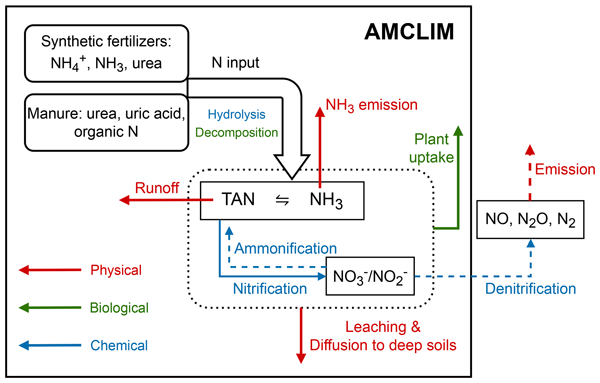
A special model called AMmonia–CLIMate (AMCLIM) has been developed to understand and calculate NH3 emissions from fertilizer use and also taking into account how the environment influences these NH3 emissions. It is estimated that about 17 % of applied N in fertilizers was lost due to NH3 emissions. Hot and dry conditions and regions with high-pH soils can expect higher NH3 emissions.
Marijn Van de Broek and Johan Six
Geosci. Model Dev., 19, 8651–8672, https://doi.org/10.5194/gmd-19-8651-2026, https://doi.org/10.5194/gmd-19-8651-2026, 2026
Short summary
Short summary
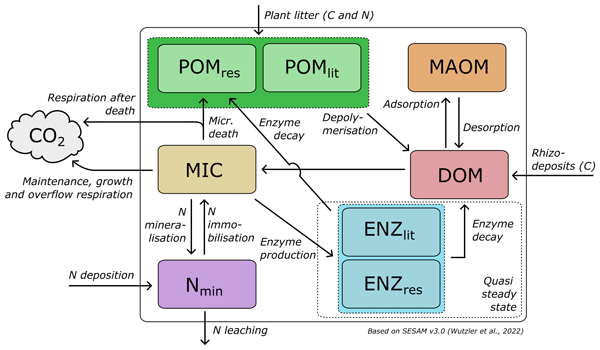
Soil organic matter models are characterised by equifinality, the phenomenon whereby multiple parameter sets yield similar results. This study shows that the number of identifiable parameters that can be optimised together is limited, even under data-rich conditions. As a result, overparameterised models show a large variability when simulating future changes. Optimising only identifiable model parameters is therefore necessary to avoid this hidden uncertainty in soil organic matter models.
Jize Jiang, Lenny H. E. Winkel, Andrea Stenke, Magdalena Necpalova, Moritz Laub, Iris Feigenwinter, Nina Buchmann, and Johan Six
EGUsphere, https://doi.org/10.5194/egusphere-2026-4445, https://doi.org/10.5194/egusphere-2026-4445, 2026
Short summary
Short summary
We studied how fertiliser management and a warming climate affect nitrous oxide emissions from agricultural soils in Switzerland over the past fourty years. Using computer simulations and nationwide data, we found that lower fertiliser use reduced emissions, but rising temperatures cancelled part of these mitigations. The results show a trade-off between mitigation actions and environmental-driven feedback, highlighting future efforts must also account for the effects of a changing climate.
Laura Summerauer, Fernando Bamba, Bendicto Akoraebirungi, Ahurra Wobusobozi, Marijn Bauters, Travis William Drake, Negar Haghipour, Clovis Kabaseke, Daniel Muhindo, Landry Cizungu Ntaboba, Leonardo Ramirez-Lopez, Johan Six, Daniel Wasner, and Sebastian Doetterl
Biogeosciences, 23, 3907–3938, https://doi.org/10.5194/bg-23-3907-2026, https://doi.org/10.5194/bg-23-3907-2026, 2026
Short summary
Short summary
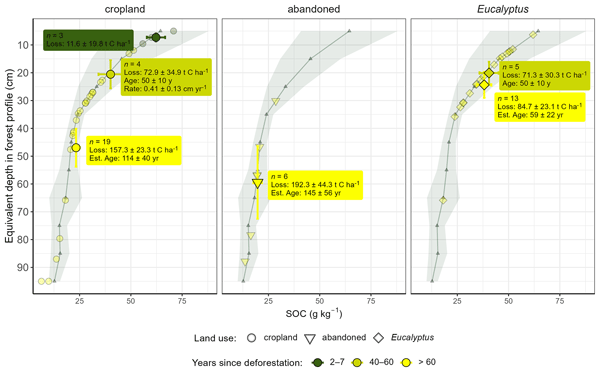
Deforestation for croplands on tropical hillslopes causes severe soil degradation and loss of fertile topsoil. We found that this leads to a steep decline in soil fertility, including organic carbon, nitrogen, and phosphorus. This makes the land unproductive, often leading farmers to abandon it. Replanting with Eucalyptus trees doesn't restore fertility. This degradation leads to cropland lifespans of only 145±56 years and poses a serious threat to future food production.
Mosisa Tujuba Wakjira, Renske Hijbeek, Joost van Heerwaarden, John Koestel, Sara Bonetti, Johan Six, and Katrien Descheemaeker
EGUsphere, https://doi.org/10.5194/egusphere-2026-2816, https://doi.org/10.5194/egusphere-2026-2816, 2026
Short summary
Short summary
Nowadays, minimizing agricultural soil tillage is widely promoted but often leads to lower crop yields. This study combines experimental evidence globally to identify soil-related causes of these yield declines. Results show that minimized tillage, especially without leaving crop residues on the field, can cause soil compaction, limiting root growth and the movement of air and water needed by crops. This suggests that conservation agriculture should only be applied where suitable.
Eric Rahn, Mirjam Pulleman, Gabriel Y. K. Moinet, Rémi Cardinael, Dick Brus, Stefan Hauser, Johan Six, José Francisco Valle Pilia, Estephania Nieto, and Isabela Otero
EGUsphere, https://doi.org/10.5194/egusphere-2026-1479, https://doi.org/10.5194/egusphere-2026-1479, 2026
This preprint is open for discussion and under review for SOIL (SOIL).
Short summary
Short summary
To improve understanding of how coffee farming affects soil carbon storage, we reviewed 80 studies and found large differences in methods and reporting. Based on this evidence, we propose clear guidance for future research, including better study design, deeper soil sampling, careful measurement of soil density, and transparent reporting. Stronger and more consistent methods are needed so that research can produce reliable evidence to guide climate policy and sustainable coffee management.
Marijn Van de Broek, Fiona Stewart-Smith, Moritz Laub, Marc Corbeels, Monicah Wanjiku Mucheru-Muna, Daniel Mugendi, Wycliffe Waswa, Bernard Vanlauwe, and Johan Six
SOIL, 12, 187–204, https://doi.org/10.5194/soil-12-187-2026, https://doi.org/10.5194/soil-12-187-2026, 2026
Short summary
Short summary
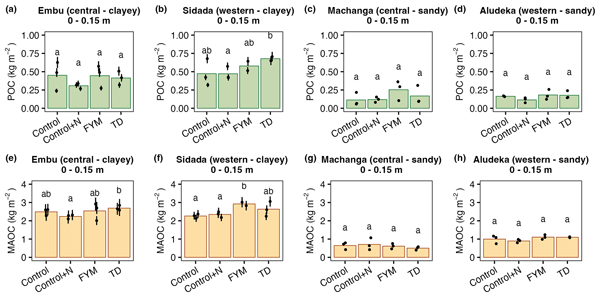
To improve soil health and increase crop yields, organic matter is commenly added to arable soils. Studying the effect of different organic resources on soil organic carbon sequestration in four long-term field trials in Kenya, we found that only a small portion (< 7 %) of added organic carbon was stabilised, which was only observed in the top 15 cm of the soil. These results underline the challenges associated with increasing the organic carbon content of tropical arable soils.
Nathan Carlier, Matti Barthel, Antoine de Clippele, Lissie Willemijn de Groot, Travis William Drake, Jordon Dennis Hemingway, Yi Hou, José Nlandu Wabakanghanzi, Joseph Zambo Mandea, Pengzhi Zhao, Johan Six, and Kristof Van Oost
EGUsphere, https://doi.org/10.5194/egusphere-2026-247, https://doi.org/10.5194/egusphere-2026-247, 2026
Short summary
Short summary
The Congo River Basin, a region of global significance, is undergoing a strong increase in population, which will in turn increase soil erosion, impacting soil fertility and the carbon cycle. We examined river sediment (eroded soil) transport, whereby we provided information on the main contributors of sediment to the Congo River. We also highlighted the role of a swampy region which removes large amounts of sediment from the water, acting as a regulator sediment transport to the Congo River.
Jize Jiang, David S. Stevenson, Aimable Uwizeye, Giuseppe Tempio, Alessandra Falcucci, Flavia Casu, and Mark A. Sutton
Geosci. Model Dev., 18, 5051–5099, https://doi.org/10.5194/gmd-18-5051-2025, https://doi.org/10.5194/gmd-18-5051-2025, 2025
Short summary
Short summary
A special model called AMmonia–CLIMate (AMCLIM) has been developed to understand and calculate NH3 emissions from livestock farming. It is estimated that about 30 % of excreted N from livestock is lost due to NH3 emissions from housing, manure management and land application of manure. High NH3 volatilization often occurs in hot regions, while poor management practices also result in significant N losses through NH3 emissions.
Antoine de Clippele, Astrid C. H. Jaeger, Simon Baumgartner, Marijn Bauters, Pascal Boeckx, Clement Botefa, Glenn Bush, Jessica Carilli, Travis W. Drake, Christian Ekamba, Gode Lompoko, Nivens Bey Mukwiele, Kristof Van Oost, Roland A. Werner, Joseph Zambo, Johan Six, and Matti Barthel
Biogeosciences, 22, 3011–3027, https://doi.org/10.5194/bg-22-3011-2025, https://doi.org/10.5194/bg-22-3011-2025, 2025
Short summary
Short summary
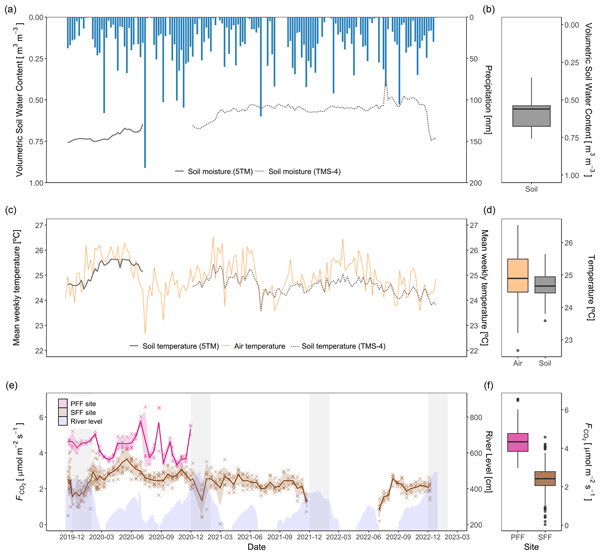
Tropical forest soils as a large terrestrial source of carbon dioxide (CO2) contribute to the global greenhouse gas budget. Despite this, carbon flux data from forested wetlands are scarce in tropical Africa. The study presents 3 years of semi-continuous measurements of surface CO2 fluxes within the Congo Basin. Although no seasonal patterns were evident, our results show a positive effect of soil temperature and moisture, while a quadratic relationship was observed with the water table.
Claude Raoul Müller, Johan Six, Daniel Mugendi Njiru, Bernard Vanlauwe, and Marijn Van de Broek
Biogeosciences, 22, 2733–2747, https://doi.org/10.5194/bg-22-2733-2025, https://doi.org/10.5194/bg-22-2733-2025, 2025
Short summary
Short summary
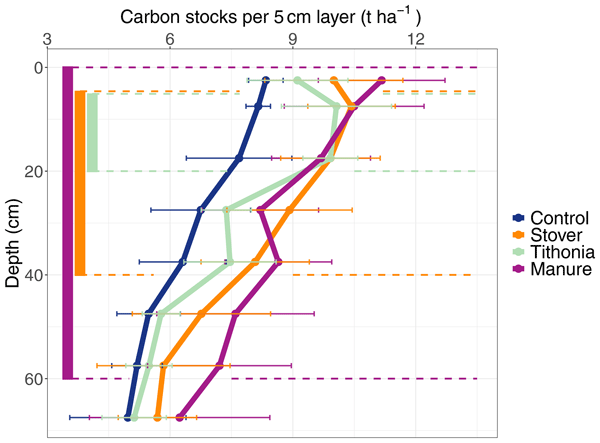
We studied how different organic and inorganic nutrient inputs affect soil organic carbon (SOC) down to 70 cm in Kenya. After 19 years, all organic treatments increased SOC stocks compared with the control, but mineral nitrogen had no significant effect. Manure was the organic treatment that significantly increased SOC at the deepest soil depths, as its effect could be observed down to 60 cm. Manure was the best strategy to limit SOC loss in croplands and maintain soil quality after deforestation.
Roxanne Daelman, Marijn Bauters, Matti Barthel, Emmanuel Bulonza, Lodewijk Lefevre, José Mbifo, Johan Six, Klaus Butterbach-Bahl, Benjamin Wolf, Ralf Kiese, and Pascal Boeckx
Biogeosciences, 22, 1529–1542, https://doi.org/10.5194/bg-22-1529-2025, https://doi.org/10.5194/bg-22-1529-2025, 2025
Short summary
Short summary
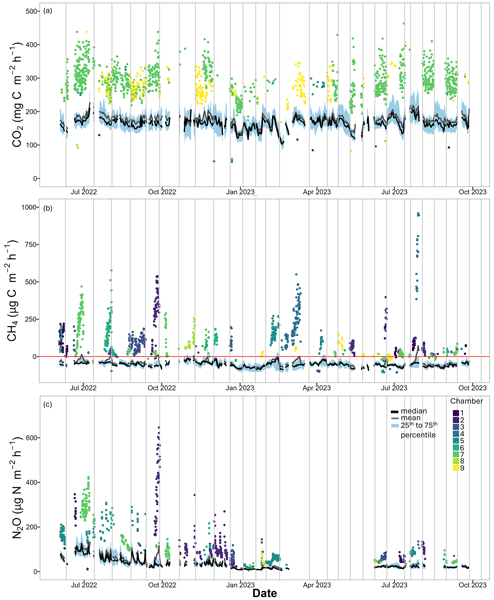
The increase in atmospheric concentrations of several greenhouse gases (GHGs) since 1750 is attributed to human activity. However, natural ecosystems, such as tropical forests, also contribute to GHG budgets. The Congo Basin hosts the second largest tropical forest and is understudied. In this study, measurements of soil GHG exchange were carried out during 16 months in a tropical forest in the Congo Basin. Overall, the soil acted as a major source of CO2 and N2O and a minor sink of CH4.
Marijn Van de Broek, Gerard Govers, Marion Schrumpf, and Johan Six
Biogeosciences, 22, 1427–1446, https://doi.org/10.5194/bg-22-1427-2025, https://doi.org/10.5194/bg-22-1427-2025, 2025
Short summary
Short summary
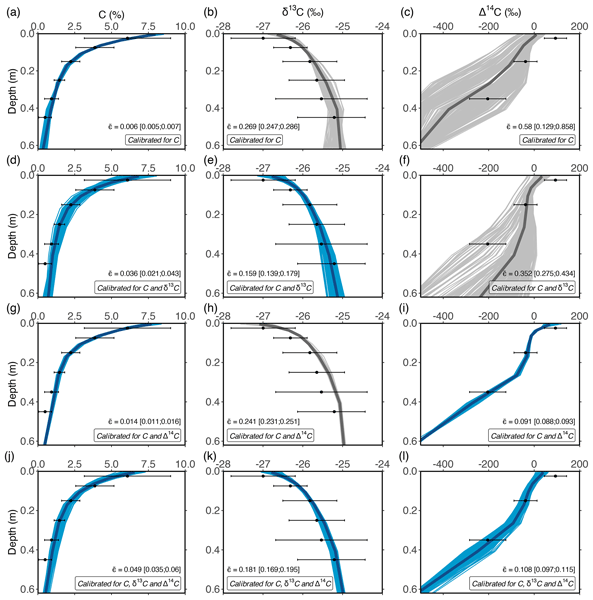
Soil organic carbon models are used to predict how soils affect the concentration of CO2 in the atmosphere. We show that equifinality – the phenomenon that different parameter values lead to correct overall model outputs, albeit with a different model behaviour – is an important source of model uncertainty. Our results imply that adding more complexity to soil organic carbon models is unlikely to lead to better predictions as long as more data to constrain model parameters are not available.
Mosisa Tujuba Wakjira, Nadav Peleg, Johan Six, and Peter Molnar
Hydrol. Earth Syst. Sci., 29, 863–886, https://doi.org/10.5194/hess-29-863-2025, https://doi.org/10.5194/hess-29-863-2025, 2025
Short summary
Short summary
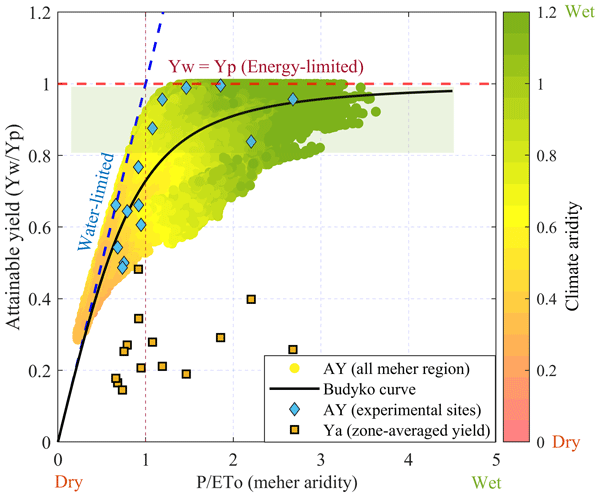
In this study, we implement a climate, water, and crop interaction model to evaluate current conditions and project future changes in rainwater availability and its yield potential, with the goal of informing adaptation policies and strategies in Ethiopia. Although climate change is likely to increase rainfall in Ethiopia, our findings suggest that water-scarce croplands in Ethiopia are expected to face reduced crop yields during the main growing season due to increases in temperature.
Jize Jiang, David S. Stevenson, and Mark A. Sutton
Geosci. Model Dev., 17, 8181–8222, https://doi.org/10.5194/gmd-17-8181-2024, https://doi.org/10.5194/gmd-17-8181-2024, 2024
Short summary
Short summary
A special model called AMmonia–CLIMate (AMCLIM) has been developed to understand and calculate NH3 emissions from fertilizer use and also taking into account how the environment influences these NH3 emissions. It is estimated that about 17 % of applied N in fertilizers was lost due to NH3 emissions. Hot and dry conditions and regions with high-pH soils can expect higher NH3 emissions.
Sandro Vattioni, Rahel Weber, Aryeh Feinberg, Andrea Stenke, John A. Dykema, Beiping Luo, Georgios A. Kelesidis, Christian A. Bruun, Timofei Sukhodolov, Frank N. Keutsch, Thomas Peter, and Gabriel Chiodo
Geosci. Model Dev., 17, 7767–7793, https://doi.org/10.5194/gmd-17-7767-2024, https://doi.org/10.5194/gmd-17-7767-2024, 2024
Short summary
Short summary
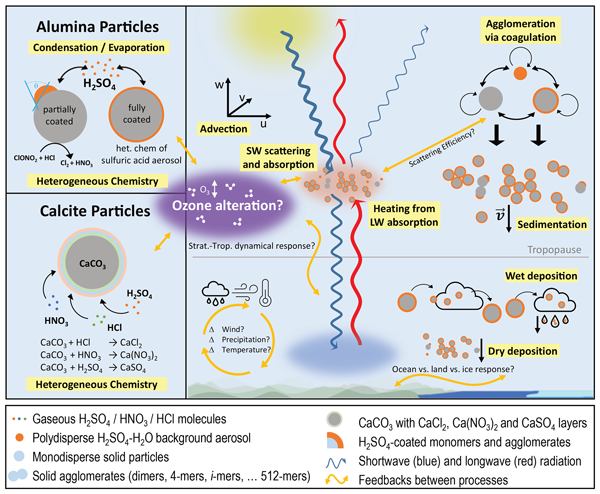
We quantified impacts and efficiency of stratospheric solar climate intervention via solid particle injection. Microphysical interactions of solid particles with the sulfur cycle were interactively coupled to the heterogeneous chemistry scheme and the radiative transfer code of an aerosol–chemistry–climate model. Compared to injection of SO2 we only find a stronger cooling efficiency for solid particles when normalizing to the aerosol load but not when normalizing to the injection rate.
Vira Leng, Rémi Cardinael, Florent Tivet, Vang Seng, Phearum Mark, Pascal Lienhard, Titouan Filloux, Johan Six, Lyda Hok, Stéphane Boulakia, Clever Briedis, João Carlos de Moraes Sá, and Laurent Thuriès
SOIL, 10, 699–725, https://doi.org/10.5194/soil-10-699-2024, https://doi.org/10.5194/soil-10-699-2024, 2024
Short summary
Short summary
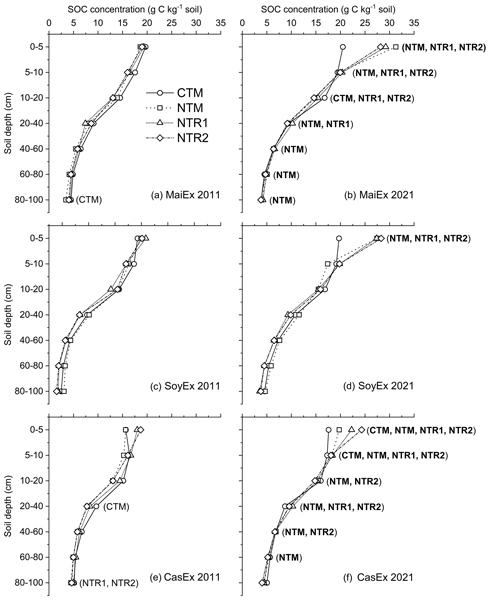
We assessed the long-term impacts of no-till cropping systems on soil organic carbon and nitrogen dynamics down to 1 m depth under the annual upland crop productions (cassava, maize, and soybean) in the tropical climate of Cambodia. We showed that no-till systems combined with rotations and cover crops could store large amounts of carbon in the top and subsoil in both the mineral organic matter and particulate organic matter fractions. We also question nitrogen management in these systems.
Moritz Laub, Magdalena Necpalova, Marijn Van de Broek, Marc Corbeels, Samuel Mathu Ndungu, Monicah Wanjiku Mucheru-Muna, Daniel Mugendi, Rebecca Yegon, Wycliffe Waswa, Bernard Vanlauwe, and Johan Six
Biogeosciences, 21, 3691–3716, https://doi.org/10.5194/bg-21-3691-2024, https://doi.org/10.5194/bg-21-3691-2024, 2024
Short summary
Short summary
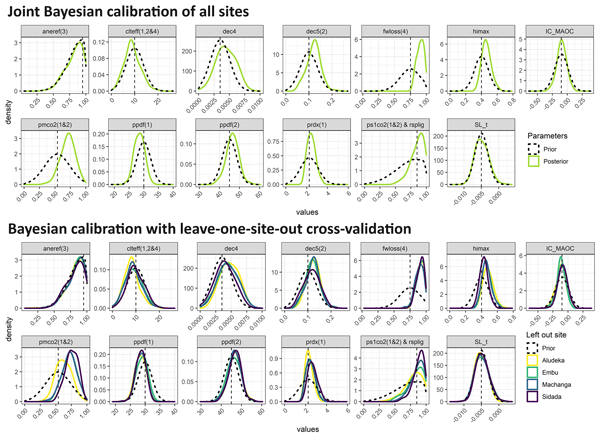
We used the DayCent model to assess the potential impact of integrated soil fertility management (ISFM) on maize production, soil fertility, and greenhouse gas emission in Kenya. After adjustments, DayCent represented measured mean yields and soil carbon stock changes well and N2O emissions acceptably. Our results showed that soil fertility losses could be reduced but not completely eliminated with ISFM and that, while N2O emissions increased with ISFM, emissions per kilogram yield decreased.
Claude Raoul Müller, Johan Six, Liesa Brosens, Philipp Baumann, Jean Paolo Gomes Minella, Gerard Govers, and Marijn Van de Broek
SOIL, 10, 349–365, https://doi.org/10.5194/soil-10-349-2024, https://doi.org/10.5194/soil-10-349-2024, 2024
Short summary
Short summary
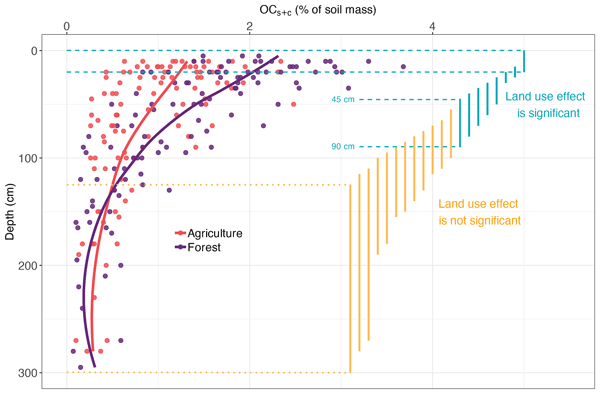
Subsoils in the tropics are not as extensively studied as those in temperate regions. In this study, the conversion of forest to agriculture in a subtropical region affected the concentration of stabilized organic carbon (OC) down to 90 cm depth, while no significant differences between 90 cm and 300 cm were detected. Our results suggest that subsoils below 90 cm are unlikely to accumulate additional stabilized OC through reforestation over decadal periods due to declining OC input with depth.
Sandro Vattioni, Andrea Stenke, Beiping Luo, Gabriel Chiodo, Timofei Sukhodolov, Elia Wunderlin, and Thomas Peter
Geosci. Model Dev., 17, 4181–4197, https://doi.org/10.5194/gmd-17-4181-2024, https://doi.org/10.5194/gmd-17-4181-2024, 2024
Short summary
Short summary
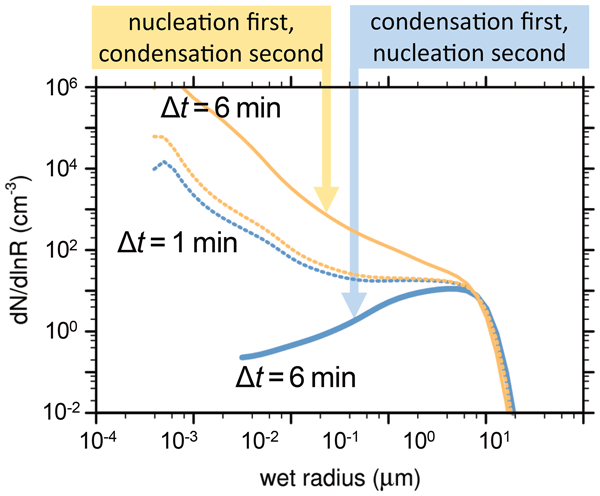
We investigate the sensitivity of aerosol size distributions in the presence of strong SO2 injections for climate interventions or after volcanic eruptions to the call sequence and frequency of the routines for nucleation and condensation in sectional aerosol models with operator splitting. Using the aerosol–chemistry–climate model SOCOL-AERv2, we show that the radiative and chemical outputs are sensitive to these settings at high H2SO4 supersaturations and how to obtain reliable results.
Johan Six, Sebastian Doetterl, Moritz Laub, Claude R. Müller, and Marijn Van de Broek
SOIL, 10, 275–279, https://doi.org/10.5194/soil-10-275-2024, https://doi.org/10.5194/soil-10-275-2024, 2024
Short summary
Short summary
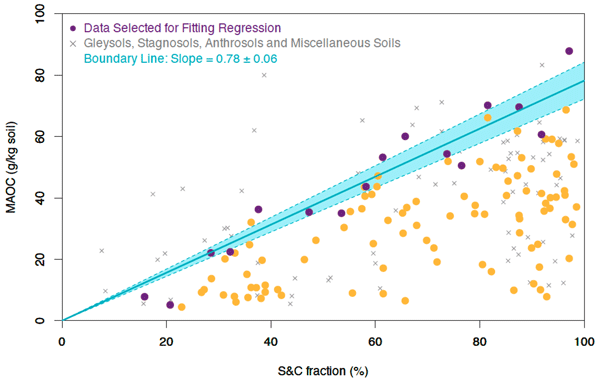
Soil C saturation has been tested in several recent studies and led to a debate about its existence. We argue that, to test C saturation, one should pay attention to six fundamental principles: the right measures, the right units, the right dispersive energy and application, the right soil type, the right clay type, and the right saturation level. Once we take care of those six rights across studies, we find support for a maximum of C stabilized by minerals and thus soil C saturation.
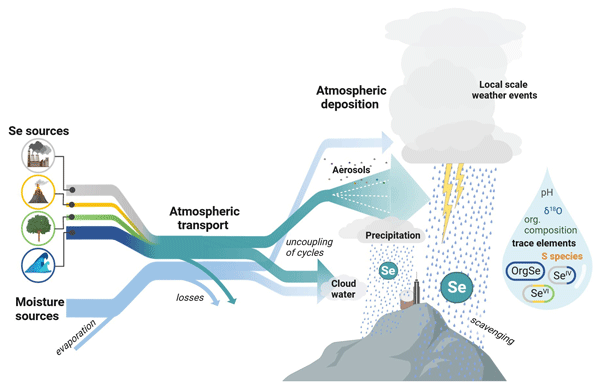
Esther S. Breuninger, Julie Tolu, Iris Thurnherr, Franziska Aemisegger, Aryeh Feinberg, Sylvain Bouchet, Jeroen E. Sonke, Véronique Pont, Heini Wernli, and Lenny H. E. Winkel
Atmos. Chem. Phys., 24, 2491–2510, https://doi.org/10.5194/acp-24-2491-2024, https://doi.org/10.5194/acp-24-2491-2024, 2024
Short summary
Short summary
Atmospheric deposition is an important source of selenium (Se) and other health-relevant trace elements in surface environments. We found that the variability in elemental concentrations in atmospheric deposition reflects not only changes in emission sources but also weather conditions during atmospheric removal. Depending on the sources and if Se is derived more locally or from further away, the Se forms can be different, affecting the bioavailability of Se atmospherically supplied to soils.
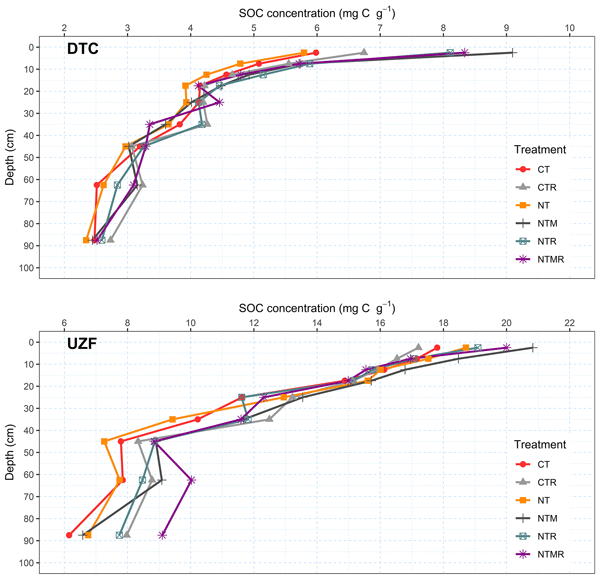
Armwell Shumba, Regis Chikowo, Christian Thierfelder, Marc Corbeels, Johan Six, and Rémi Cardinael
SOIL, 10, 151–165, https://doi.org/10.5194/soil-10-151-2024, https://doi.org/10.5194/soil-10-151-2024, 2024
Short summary
Short summary
Conservation agriculture (CA), combining reduced or no tillage, permanent soil cover, and improved rotations, is often promoted as a climate-smart practice. However, our knowledge of the impact of CA on top- and subsoil soil organic carbon (SOC) stocks in the low-input cropping systems of sub-Saharan Africa is rather limited. Using two long-term experimental sites with different soil types, we found that mulch could increase top SOC stocks, but no tillage alone had a slightly negative impact.
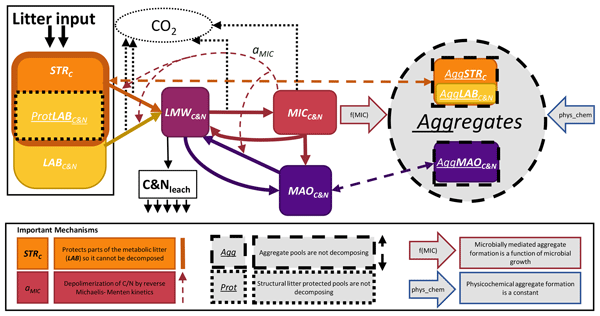
Moritz Laub, Sergey Blagodatsky, Marijn Van de Broek, Samuel Schlichenmaier, Benjapon Kunlanit, Johan Six, Patma Vityakon, and Georg Cadisch
Geosci. Model Dev., 17, 931–956, https://doi.org/10.5194/gmd-17-931-2024, https://doi.org/10.5194/gmd-17-931-2024, 2024
Short summary
Short summary
To manage soil organic matter (SOM) sustainably, we need a better understanding of the role that soil microbes play in aggregate protection. Here, we propose the SAMM model, which connects soil aggregate formation to microbial growth. We tested it against data from a tropical long-term experiment and show that SAMM effectively represents the microbial growth, SOM, and aggregate dynamics and that it can be used to explore the importance of aggregate formation in SOM stabilization.
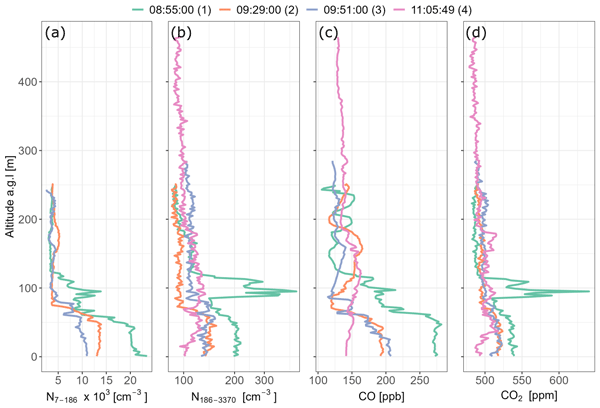
Roman Pohorsky, Andrea Baccarini, Julie Tolu, Lenny H. E. Winkel, and Julia Schmale
Atmos. Meas. Tech., 17, 731–754, https://doi.org/10.5194/amt-17-731-2024, https://doi.org/10.5194/amt-17-731-2024, 2024
Short summary
Short summary
This manuscript presents a new tethered-balloon-based platform for in situ vertical measurements of aerosols and trace gases in the lower atmosphere of polar and alpine regions. The system can host various instrumental setups to target different research questions and features new instruments, in particular a miniaturized scanning electrical mobility spectrometer, deployed for the first time in a tethered balloon.
Yaowei Li, Corey Pedersen, John Dykema, Jean-Paul Vernier, Sandro Vattioni, Amit Kumar Pandit, Andrea Stenke, Elizabeth Asher, Troy Thornberry, Michael A. Todt, Thao Paul Bui, Jonathan Dean-Day, and Frank N. Keutsch
Atmos. Chem. Phys., 23, 15351–15364, https://doi.org/10.5194/acp-23-15351-2023, https://doi.org/10.5194/acp-23-15351-2023, 2023
Short summary
Short summary
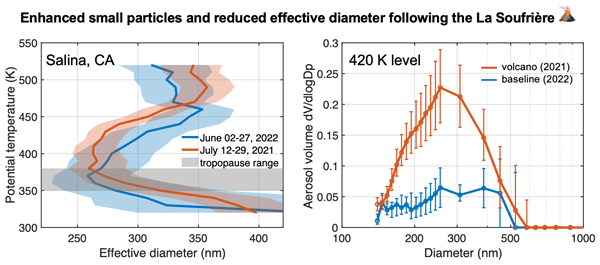
In 2021, the eruption of La Soufrière released sulfur dioxide into the stratosphere, resulting in a spread of volcanic aerosol over the Northern Hemisphere. We conducted extensive aircraft and balloon-borne measurements after that, revealing enhanced particle concentration and altered size distribution due to the eruption. The eruption's impact on ozone depletion was minimal, contributing ~0.6 %, and its global radiative forcing effect was modest, mainly affecting tropical and midlatitude areas.
Gabriel Chiodo, Marina Friedel, Svenja Seeber, Daniela Domeisen, Andrea Stenke, Timofei Sukhodolov, and Franziska Zilker
Atmos. Chem. Phys., 23, 10451–10472, https://doi.org/10.5194/acp-23-10451-2023, https://doi.org/10.5194/acp-23-10451-2023, 2023
Short summary
Short summary
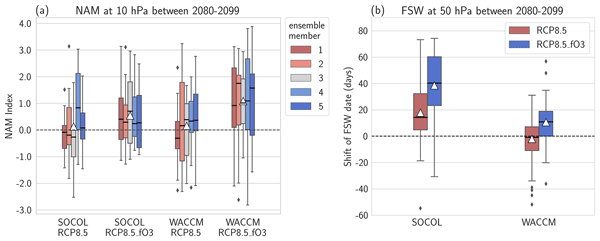
Stratospheric ozone protects the biosphere from harmful UV radiation. Anthropogenic activity has led to a reduction in the ozone layer in the recent past, but thanks to the implementation of the Montreal Protocol, the ozone layer is projected to recover. In this study, we show that projected future changes in Arctic ozone abundances during springtime will influence stratospheric climate and thereby actively modulate large-scale circulation changes in the Northern Hemisphere.
Marina Friedel, Gabriel Chiodo, Timofei Sukhodolov, James Keeble, Thomas Peter, Svenja Seeber, Andrea Stenke, Hideharu Akiyoshi, Eugene Rozanov, David Plummer, Patrick Jöckel, Guang Zeng, Olaf Morgenstern, and Béatrice Josse
Atmos. Chem. Phys., 23, 10235–10254, https://doi.org/10.5194/acp-23-10235-2023, https://doi.org/10.5194/acp-23-10235-2023, 2023
Short summary
Short summary
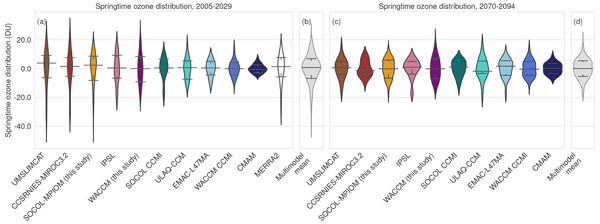
Previously, it has been suggested that springtime Arctic ozone depletion might worsen in the coming decades due to climate change, which might counteract the effect of reduced ozone-depleting substances. Here, we show with different chemistry–climate models that springtime Arctic ozone depletion will likely decrease in the future. Further, we explain why models show a large spread in the projected development of Arctic ozone depletion and use the model spread to constrain future projections.

Moritz Laub, Marc Corbeels, Antoine Couëdel, Samuel Mathu Ndungu, Monicah Wanjiku Mucheru-Muna, Daniel Mugendi, Magdalena Necpalova, Wycliffe Waswa, Marijn Van de Broek, Bernard Vanlauwe, and Johan Six
SOIL, 9, 301–323, https://doi.org/10.5194/soil-9-301-2023, https://doi.org/10.5194/soil-9-301-2023, 2023
Short summary
Short summary
In sub-Saharan Africa, long-term low-input maize cropping threatens soil fertility. We studied how different quality organic inputs combined with mineral N fertilizer could counteract this. Farmyard manure was the best input to counteract soil carbon loss; mineral N fertilizer had no effect on carbon. Yet, the rates needed to offset soil carbon losses are unrealistic for farmers (>10 t of dry matter per hectare and year). Additional agronomic measures may be needed.
Kristof Van Oost and Johan Six
Biogeosciences, 20, 635–646, https://doi.org/10.5194/bg-20-635-2023, https://doi.org/10.5194/bg-20-635-2023, 2023
Short summary
Short summary
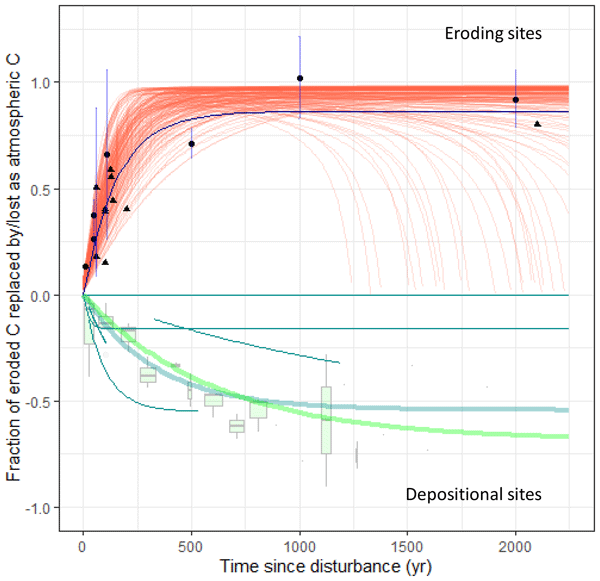
The direction and magnitude of the net erosion-induced land–atmosphere C exchange have been the topic of a big scientific debate for more than a decade now. Many have assumed that erosion leads to a loss of soil carbon to the atmosphere, whereas others have shown that erosion ultimately leads to a carbon sink. Here, we show that the soil carbon erosion source–sink paradox is reconciled when the broad range of temporal and spatial scales at which the underlying processes operate are considered.
Charlotte Decock, Juhwan Lee, Matti Barthel, Elizabeth Verhoeven, Franz Conen, and Johan Six
Biogeosciences Discuss., https://doi.org/10.5194/bg-2022-221, https://doi.org/10.5194/bg-2022-221, 2022
Preprint withdrawn
Short summary
Short summary
One of the least well understood processes in the nitrogen (N) cycle is the loss of nitrogen gas (N2), referred to as total denitrification. This is mainly due to the difficulty of quantifying total denitrification in situ. In this study, we developed and tested a novel modeling approach to estimate total denitrification over the depth profile, based on concentrations and isotope values of N2O. Our method will help close N budgets and identify management strategies that reduce N pollution.
Marina Friedel, Gabriel Chiodo, Andrea Stenke, Daniela I. V. Domeisen, and Thomas Peter
Atmos. Chem. Phys., 22, 13997–14017, https://doi.org/10.5194/acp-22-13997-2022, https://doi.org/10.5194/acp-22-13997-2022, 2022
Short summary
Short summary
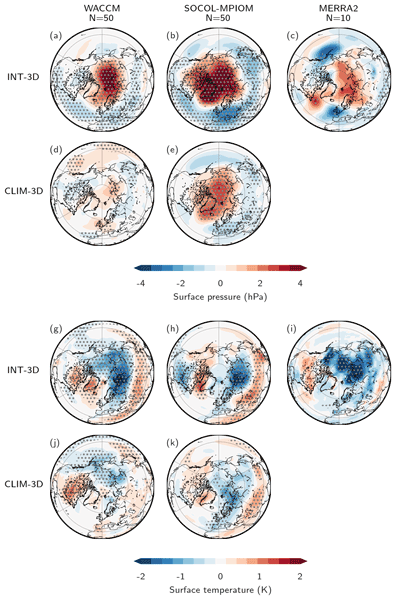
In spring, winds the Arctic stratosphere change direction – an event called final stratospheric warming (FSW). Here, we examine whether the interannual variability in Arctic stratospheric ozone impacts the timing of the FSW. We find that Arctic ozone shifts the FSW to earlier and later dates in years with high and low ozone via the absorption of UV light. The modulation of the FSW by ozone has consequences for surface climate in ozone-rich years, which may result in better seasonal predictions.
Tegawende Léa Jeanne Ilboudo, Lucien NGuessan Diby, Delwendé Innocent Kiba, Tor Gunnar Vågen, Leigh Ann Winowiecki, Hassan Bismarck Nacro, Johan Six, and Emmanuel Frossard
EGUsphere, https://doi.org/10.5194/egusphere-2022-209, https://doi.org/10.5194/egusphere-2022-209, 2022
Preprint withdrawn
Short summary
Short summary
Our results showed that at landscape level SOC stock variability was mainly explained by clay content. We found significant linear positive relationships between VC and SOC stocks for the land uses annual croplands, perennial croplands, grasslands and bushlands without soil depth restrictions until 110 cm. We concluded that in the forest-savanna transition zone, soil properties and topography determine land use, which in turn affects the stocks of SOC and TN and to some extent the VC stocks.
Philipp Baumann, Juhwan Lee, Emmanuel Frossard, Laurie Paule Schönholzer, Lucien Diby, Valérie Kouamé Hgaza, Delwende Innocent Kiba, Andrew Sila, Keith Sheperd, and Johan Six
SOIL, 7, 717–731, https://doi.org/10.5194/soil-7-717-2021, https://doi.org/10.5194/soil-7-717-2021, 2021
Short summary
Short summary
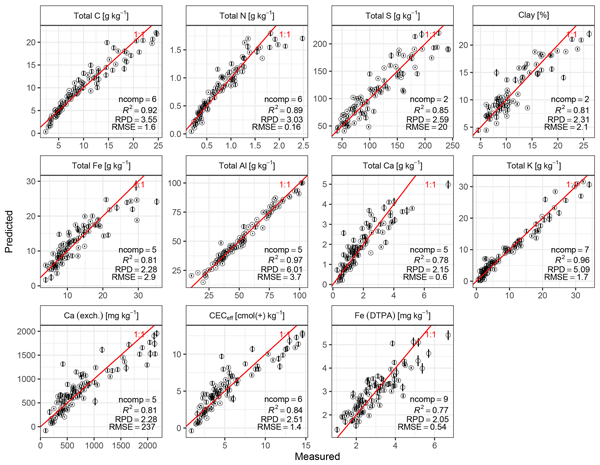
This work delivers openly accessible and validated calibrations for diagnosing 26 soil properties based on mid-infrared spectroscopy. These were developed for four regions in Burkina Faso and Côte d'Ivoire, including 80 fields of smallholder farmers. The models can help to site-specifically and cost-efficiently monitor soil quality and fertility constraints to ameliorate soils and yields of yam or other staple crops in the four regions between the humid forest and the northern Guinean savanna.
Laura Summerauer, Philipp Baumann, Leonardo Ramirez-Lopez, Matti Barthel, Marijn Bauters, Benjamin Bukombe, Mario Reichenbach, Pascal Boeckx, Elizabeth Kearsley, Kristof Van Oost, Bernard Vanlauwe, Dieudonné Chiragaga, Aimé Bisimwa Heri-Kazi, Pieter Moonen, Andrew Sila, Keith Shepherd, Basile Bazirake Mujinya, Eric Van Ranst, Geert Baert, Sebastian Doetterl, and Johan Six
SOIL, 7, 693–715, https://doi.org/10.5194/soil-7-693-2021, https://doi.org/10.5194/soil-7-693-2021, 2021
Short summary
Short summary
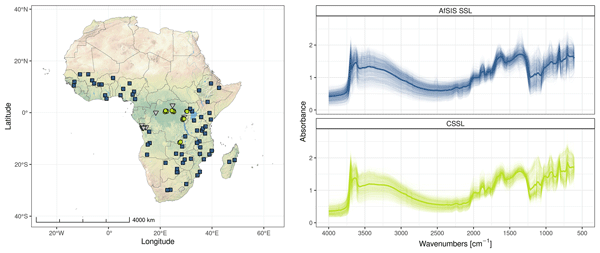
We present a soil mid-infrared library with over 1800 samples from central Africa in order to facilitate soil analyses of this highly understudied yet critical area. Together with an existing continental library, we demonstrate a regional analysis and geographical extrapolation to predict total carbon and nitrogen. Our results show accurate predictions and highlight the value that the data contribute to existing libraries. Our library is openly available for public use and for expansion.
Cited articles
Anderson, N., Strader, R., and Davidson, C.: Airborne reduced nitrogen: ammonia emissions from agriculture and other sources, Environ. Int., 29, 277–286, https://doi.org/10.1016/S0160-4120(02)00186-1, 2003.
BFS: Arealstatistik: Variablenliste, Swiss Federal Statistical Office, https://www.bfs.admin.ch/bfs/en/home/services/geostat/swiss-federal-statistics-geodata/land-use-cover-suitability/swiss-land-use-statistics.assetdetail.32376296.html (last access: 3 February 2023), 2024.
Covatti, G., Li, K.-Y., Podgorski, J., Winkel, L. H. E., and Berg, M.: Nitrate contamination in groundwater across Switzerland: Spatial prediction and data-driven assessment of anthropogenic and environmental drivers, Sci. Total Environ., 973, 179121, https://doi.org/10.1016/j.scitotenv.2025.179121, 2025.
Decrem, M., Spiess, E., Richner, W., and Herzog, F.: Impact of Swiss agricultural policies on nitrate leaching from arable land, Agron. Sustain. Dev., 27, 243–253, https://doi.org/10.1051/agro:2007012, 2007.
Del Grosso, S. J., Parton, W. J., Mosier, A. R., Hartman, M. D., Brenner, J., Ojima, D. S., and Schimel, D. S.: Simulated inter-action of carbon dynamics and nitrogen trace gas fluxes using the DayCent model, in: Modeling carbon and nitrogen dynamics for soil management, edited by: Shaffer, M. J., Ma, L., and Hansen, S., CRC Press, Boca Raton, 303–332, 2001.
Del Grosso, S. J., Parton, W. J., Mosier, A. R., Holland, E. A., Pendall, E., Schimel, D. S., and Ojima, D. S.: Modeling soil CO2 emissions from ecosystems, Biogeochemistry, 73, 71–91, https://doi.org/10.1007/s10533-004-0898-z, 2005.
De Vries, F. T. and Bardgett, R. D.: Plant community controls on short-term ecosystem nitrogen retention, New Phytol., 210, 861–874, https://doi.org/10.1111/nph.13832, 2016.
Dodds, W. and Smith, V.: Nitrogen, phosphorus, and eutrophication in streams, Inland Waters, 6, 155–164, https://doi.org/10.5268/IW-6.2.909, 2016.
Dos Reis Martins, M., Necpalova, M., Ammann, C., Buchmann, N., Calanca, P., Flechard, C. R., Hartman, M. D., Krauss, M., Le Roy, P., Mäder, P., Maier, R., Morvan, T., Nicolardot, B., Skinner, C., Six, J., and Keel, S. G.: Modeling N2O emissions of complex cropland management in Western Europe using DayCent: Performance and scope for improvement, Eur. J. Agron., 141, 126613, https://doi.org/10.1016/j.eja.2022.126613, 2022.
Dos Reis Martins, M., Ammann, C., Boos, C., Calanca, P., Kiese, R., Wolf, B., and Keel, S. G.: Reducing N fertilization in the framework of the European Farm to Fork strategy under global change: Impacts on yields, N2O emissions and N leaching of temperate grasslands in the Alpine region, Agricultural Systems, 219, 104036, https://doi.org/10.1016/j.agsy.2024.104036, 2024.
Duan, J., Liu, H., Zhang, X., Ren, C., Wang, C., Cheng, L., Xu, J., and Gu, B.: Agricultural management practices in China enhance nitrogen sustainability and benefit human health, Nat. Food, 5, 378–389, https://doi.org/10.1038/s43016-024-00953-8, 2024.
Emmel, C., Winkler, A., Hörtnagl, L., Revill, A., Ammann, C., D'Odorico, P., Buchmann, N., and Eugster, W.: Integrated management of a Swiss cropland is not sufficient to preserve its soil carbon pool in the long term, Biogeosciences, 15, 5377–5393, https://doi.org/10.5194/bg-15-5377-2018, 2018.
Erisman, J. W., Sutton, M. A., Galloway, J., Klimont, Z., and Winiwarter, W.: How a century of ammonia synthesis changed the world, Nat. Geosci., 1, 636–639, https://doi.org/10.1038/ngeo325, 2008.
EU Nitrogen Expert Panel: Nitrogen Use Efficiency (NUE) – Guidance Document for Assessing NUE at Farm Level, Wageningen University, https://go.nature.com/3TtCxIV (last access: 22 August 2024), 2016.
Falconnier, G. N., Cardinael, R., Corbeels, M., Baudron, F., Chivenge, P., Couëdel, A., Ripoche, A., Affholder, F., Naudin, K., Benaillon, E., Rusinamhodzi, L., Leroux, L., Vanlauwe, B., and Giller, K. E.: The input reduction principle of agroecology is wrong when it comes to mineral fertilizer use in sub-Saharan Africa, Outlook Agric., 52, 311–326, https://doi.org/10.1177/00307270231199795, 2023.
Feigenwinter, I., Hörtnagl, L., Zeeman, M. J., Eugster, W., Fuchs, K., Merbold, L., and Buchmann, N.: Large inter-annual variation in carbon sink strength of a permanent grassland over 16 years: Impacts of management practices and climate, Agr. Forest Meteorol., 340, 109613, https://doi.org/10.1016/j.agrformet.2023.109613, 2023a.
Feigenwinter, I., Hörtnagl, L., and Buchmann, N.: N2O and CH4 fluxes from intensively managed grassland: The importance of biological and environmental drivers vs. management, Sci. Total Environ., 903, 166389, https://doi.org/10.1016/j.scitotenv.2023.166389, 2023b.
Fowler, D., Coyle, M., Skiba, U., Sutton, M. A., Cape, J. N., Reis, S., Sheppard, L. J., Jenkins, A., Grizzetti, B., Galloway, J. N., Vitousek, P., Leach, A., Bouwman, A. F., Butterbach-Bahl, K., Dentener, F., Stevenson, D., Amann, M., and Voss, M.: The global nitrogen cycle in the twenty-first century, Philos. T. R. Soc. B, 368, 20130164, https://doi.org/10.1098/rstb.2013.0164, 2013.
Gächterr, R., Steingruber, S. M., Reinhardt, M., and Wehrli, B.: Nutrient transfer from soil to surface waters: Differences between nitrate and phosphate, Aquat. Sci., 66, 117–122, https://doi.org/10.1007/s00027-003-0661-x, 2004.
Galloway, J. N., Aber, J. D., Erisman, J. W., Seitzinger, S. P., Howarth, R. W., Cowling, E. B., and Cosby, B. J.: The Nitrogen Cascade, BioScience, 53, 341, https://doi.org/10.1641/0006-3568(2003)053[0341:TNC]2.0.CO;2, 2003.
Galloway, J. N., Leach, A. M., Bleeker, A., and Erisman, J. W.: A chronology of human understanding of the nitrogen cycle, Philos. T. R. Soc. B, 368, 20130120, https://doi.org/10.1098/rstb.2013.0120, 2013.
Gurung, R. B., Ogle, S. M., Breidt, F. J., Williams, S. A., and Parton, W. J.: Bayesian calibration of the DayCent ecosystem model to simulate soil organic carbon dynamics and reduce model uncertainty, Geoderma, 376, 114529, https://doi.org/10.1016/j.geoderma.2020.114529, 2020.
Gurung, R. B., Ogle, S. M., Breidt, F. J., Parton, W. J., Del Grosso, S. J., Zhang, Y., Hartman, M. D., Williams, S. A., and Venterea, R. T.: Modeling nitrous oxide mitigation potential of enhanced efficiency nitrogen fertilizers from agricultural systems, Sci. Total Environ., 801, 149342, https://doi.org/10.1016/j.scitotenv.2021.149342, 2021.
Hashimoto, S., Ito, A., and Nishina, K.: Harmonized global soil carbon and respiration datasets with derived turnover time and temperature sensitivity, Sci. Data, 12, 2005, https://doi.org/10.1038/s41597-025-06254-4, 2025.
Herzog, F., Richner, W., and Walter, T.: Moderat positive Wirkung der Ökomassnahmen, Agrarforschung Schweiz, 12, 454–459, 2005.
Herzog, F., Prasuhn, V., Spiess, E., and Richner, W.: Environmental cross-compliance mitigates nitrogen and phosphorus pollution from Swiss agriculture, Environ. Sci. Policy, 11, 655–668, https://doi.org/10.1016/j.envsci.2008.06.003, 2008.
Hörtnagl, L., Feigenwinter, I., Wang, Y., and Buchmann, N.: Ecosystem fluxes measured by the eddy covariance method (CO2, H2O, H, N2O, CH4), meteorological data and detailed management information for the intensively managed grassland site Chamau in Switzerland, collected between 2005 and 2024, ETH Zurich, https://doi.org/10.3929/ethz-b-000747025, 2025.
Hüppi, R., Felber, R., Neftel, A., Six, J., and Leifeld, J.: Effect of biochar and liming on soil nitrous oxide emissions from a temperate maize cropping system, SOIL, 1, 707–717, https://doi.org/10.5194/soil-1-707-2015, 2015.
Jiang, J.: Modelling of nitrogen budgets of Swiss agricultural lands, ETH Zurich [data set], https://doi.org/10.3929/ethz-c-000788419, 2025.
Joris, H. A. W., Vitti, A. C., Ferraz-Almeida, R., Otto, R., and Cantarella, H.: Long-term N fertilization reduces uptake of N from fertilizer and increases the uptake of N from soil, Sci. Rep., 10, 18834, https://doi.org/10.1038/s41598-020-75971-0, 2020.
Kraaijvanger, R. G. and Veldkamp, T.: Evaluating Resource Use Efficiency and Stock Balances of Nitrogen and Phosphorus Fertilizer Inputs: The Effect of Soil Supply Capacity in Tigray (Ethiopia), in: Just Enough Nitrogen, edited by: Sutton, M. A., Mason, K. E., Bleeker, A., Hicks, W. K., Masso, C., Raghuram, N., Reis, S., and Bekunda, M., Springer, Cham, 203–219, https://doi.org/10.1007/978-3-030-58065-0, 2020.
Krauss, M., Ruser, R., Müller, T., Hansen, S., Mäder, P., and Gattinger, A.: Impact of reduced tillage on greenhouse gas emissions and soil carbon stocks in an organic grass-clover ley – winter wheat cropping sequence, Agr. Ecosyst. Environ., 239, 324–333, https://doi.org/10.1016/j.agee.2017.01.029, 2017.
Krupa, S. V.: Effects of atmospheric ammonia (NH3) on terrestrial vegetation: a review, Environ. Pollut., 124, 179–221, https://doi.org/10.1016/S0269-7491(02)00434-7, 2003.
Kupper, T., Häni, C., Bretscher, D., and Zaucker, F.: Ammoniakemissionen der schweizerischen Landwirtschaft 1990 bis 2020, Hochschule für Agrar-, Forst- und Lebensmittelwissenschaften, Zollikofen, Switzerland, 2022.
Lassaletta, L., Billen, G., Grizzetti, B., Anglade, J., and Garnier, J.: 50 year trends in nitrogen use efficiency of world cropping systems: the relationship between yield and nitrogen input to cropland, Environ. Res. Lett., 9, 105011, https://doi.org/10.1088/1748-9326/9/10/105011, 2014.
Laub, M., Necpalova, M., Van de Broek, M., Corbeels, M., Ndungu, S. M., Mucheru-Muna, M. W., Mugendi, D., Yegon, R., Waswa, W., Vanlauwe, B., and Six, J.: Modeling integrated soil fertility management for maize production in Kenya using a Bayesian calibration of the DayCent model, Biogeosciences, 21, 3691–3716, https://doi.org/10.5194/bg-21-3691-2024, 2024.
Lee, J., Necpálová, M., and Six, J.: Biophysical potential of organic cropping practices as a sustainable alternative in Switzerland, Agr. Syst., 181, 102822, https://doi.org/10.1016/j.agsy.2020.102822, 2020a.
Lee, J., Necpálová, M., Calitri, F., and Six, J.: Simulation of a regional soil nitrogen balance in Swiss croplands, Nutr. Cycl. Agroecosys., 118, 9–22, https://doi.org/10.1007/s10705-020-10078-6, 2020b.
Leimer, S., Oelmann, Y., Eisenhauer, N., Milcu, A., Roscher, C., Scheu, S., Weigelt, A., Wirth, C., and Wilcke, W.: Mechanisms behind plant diversity effects on inorganic and organic N leaching from temperate grassland, Biogeochemistry, 131, 339–353, https://doi.org/10.1007/s10533-016-0283-8, 2016.
Liu, J., Olhnuud, A., Li, Z., Li, H., Fornara, D., Zhang, W., and Liu, Y.: Cover crop mixtures enhance multiple ecosystem functions: A global meta-analysis, J. Appl. Ecol., 62, 1914–1928, https://doi.org/10.1111/1365-2664.70089, 2025.
Mayer, J., Gunst, L., Mäder, P., Samson, M.-F., Carcea, M., Narducci, V., Thomsen, I. K., and Dubois, D.: Productivity, quality and sustainability of winter wheat under long-term conventional and organic management in Switzerland, Eur. J. Agron., 65, 27–39, https://doi.org/10.1016/j.eja.2015.01.002, 2015.
McClelland, S. C., Bossio, D., Gordon, D. R., Lehmann, J., Hayek, M. N., Ogle, S. M., Sanderman, J., Wood, S. A., Yang, Y., and Woolf, D.: Managing for climate and production goals on crop-lands, Nat. Clim. Change, 15, 642–649, https://doi.org/10.1038/s41558-025-02337-7, 2025.
MeteoSwiss: MeteoSwiss spatial climate analyses: documentation of datasets for users, Swiss Federal Office of Meteorology and Climatology, https://opendatadocs.meteoswiss.ch/c-climate-data (last access: 12 January 2024), 2025.
Misselbrook, T. H., Shepherd, M. A., and Pain, B. F.: Sewage sludge applications to grassland: influence of sludge type, time and method of application on nitrate leaching and herbage yield, J. Agr. Sci., 126, 343–352, https://doi.org/10.1017/S0021859600074906, 1996.
Moldanová, J., Grennfelt, P., Jonsson, Å., Simpson, D., Spranger, T., Aas, W., Munthe, J., and Rabl, A.: Nitrogen as a threat to European air quality, in: The European Nitrogen Assessment, edited by: Sutton, M. A., Howard, C. M., Erisman, J. W., Billen, G., Bleeker, A., Grennfelt, P., Van Grinsven, H., and Grizzetti, B., Cambridge University Press, 405–433, https://doi.org/10.1017/CBO9780511976988.021, 2011.
Müller, B., Meyer, J. S., and Gächter, R.: Denitrification and Nitrogen Burial in Swiss Lakes, Environ. Sci. Technol., 56, 2794–2802, https://doi.org/10.1021/acs.est.1c07602, 2022.
Mulvaney, R. L., Khan, S. A., and Ellsworth, T. R.: Synthetic Nitrogen Fertilizers Deplete Soil Nitrogen: A Global Dilemma for Sustainable Cereal Production, J. Env. Quality, 38, 2295–2314, https://doi.org/10.2134/jeq2008.0527, 2009.
Necpalova, M., Lee, J., Skinner, C., Büchi, L., Wittwer, R., Gattinger, A., Van Der Heijden, M., Mäder, P., Charles, R., Berner, A., Mayer, J., and Six, J.: Potentials to mitigate greenhouse gas emissions from Swiss agriculture, Agr. Ecosyst. Environ., 265, 84–102, https://doi.org/10.1016/j.agee.2018.05.013, 2018.
Oberson, A., Jarosch, K. A., Frossard, E., Hammelehle, A., Fliessbach, A., Mäder, P., and Mayer, J.: Higher than expected: Nitrogen flows, budgets, and use efficiencies over 35 years of organic and conventional cropping, Agr. Ecosyst. Environ., 362, 108802, https://doi.org/10.1016/j.agee.2023.108802, 2024.
Oenema, O., Kros, H., and De Vries, W.: Approaches and uncertainties in nutrient budgets: implications for nutrient management and environmental policies, Eur. J. Agron., 20, 3–16, https://doi.org/10.1016/S1161-0301(03)00067-4, 2003.
Porwollik, V., Rolinski, S., Heinke, J., von Bloh, W., Schaphoff, S., and Müller, C.: The role of cover crops for cropland soil carbon, nitrogen leaching, and agricultural yields – a global simulation study with LPJmL (V. 5.0-tillage-cc), Biogeosciences, 19, 957–977, https://doi.org/10.5194/bg-19-957-2022, 2022.
Prasuhn, V. and Sieber, U.: Changes in diffuse phosphorus and nitrogen inputs into surface waters in the Rhine watershed in Switzerland, Aquat. Sci., 67, 363–371, https://doi.org/10.1007/s00027-005-0774-5, 2005.
Quemada, M., Lassaletta, L., Jensen, L. S., Godinot, O., Brentrup, F., Buckley, C., Foray, S., Hvid, S. K., Oenema, J., Richards, K. G., and Oenema, O.: Exploring nitrogen indicators of farm performance among farm types across several European case studies, Agr. Syst., 177, 102689, https://doi.org/10.1016/j.agsy.2019.102689, 2020.
Rupp, H., Tauchnitz, N., and Meissner, R.: The influence of increasing mineral fertilizer application on nitrogen leaching of arable land and grassland – results of a long-term lysimeter study, Front. Soil Sci., 4, 1345073, https://doi.org/10.3389/fsoil.2024.1345073, 2024.
Saxton, K. E. and Rawls, W. J.: Soil Water Characteristic Estimates by Texture and Organic Matter for Hydrologic Solutions, Soil Sci. Soc. Am. J., 70, 1569–1578, https://doi.org/10.2136/sssaj2005.0117, 2006.
Saxton, K. E., Rawls, W. J., Romberger, J. S., and Papendick, R. I.: Estimating Generalized Soil-water Characteristics from Texture, Soil Sci. Soc. Am. J., 50, 1031–1036, https://doi.org/10.2136/sssaj1986.03615995005000040039x, 1986.
Schlingmann, M., Tobler, U., Berauer, B., Garcia-Franco, N., Wilfahrt, P., Wiesmeier, M., Jentsch, A., Wolf, B., Kiese, R., and Dannenmann, M.: Intensive slurry management and climate change promote nitrogen mining from organic matter-rich montane grassland soils, Plant Soil, 456, 81–98, https://doi.org/10.1007/s11104-020-04697-9, 2020.
Schulzweida, U.: CDO user guide (2.3.0), Max Planck Institute for Meteorology, 2023.
Shepherd, M. A., Hatch, D. J., Jarvis, S. C., and Bhogal, A.: Nitrate leaching from reseeded pasture, Soil Use Manage., 17, 97–105, https://doi.org/10.1111/j.1475-2743.2001.tb00014.x, 2001.
Sinaj, S., Charles, R., Baux, A., Dupuis, B., Hiltbrunner, J., Levy, L., Pellet, D., Blanchet, G., and Jeangros, B.: 8/ Düngung von Ackerkulturen: Grundlagen für die Düngung landwirtschaftlicher Kulturen in der Schweiz (GRUD), Agrarforsch. Schweiz+, 8, 1–46, 2017.
Spiess, E.: Nitrogen, phosphorus and potassium balances and cycles of Swiss agriculture from 1975 to 2008, Nutr. Cycl. Agroecosys., 91, 351–365, https://doi.org/10.1007/s10705-011-9466-9, 2011.
Stocker, B. D., Roth, R., Joos, F., Spahni, R., Steinacher, M., Zaehle, S., Bouwman, L., Xu-Ri, and Prentice, I. C.: Multiple greenhouse-gas feedbacks from the land biosphere under future climate change scenarios, Nat. Clim. Change, 3, 666–672, https://doi.org/10.1038/nclimate1864, 2013.
Stumpf, F., Behrens, T., Schmidt, K., and Keller, A.: Exploiting Soil and Remote Sensing Data Archives for 3D Mapping of Multiple Soil Properties at the Swiss National Scale, Remote Sens., 16, 2712, https://doi.org/10.3390/rs16152712, 2024.
Sutton, M. A., Oenema, O., Erisman, J. W., Leip, A., Van Grinsven, H., and Winiwarter, W.: Too much of a good thing, Nature, 472, 159–161, https://doi.org/10.1038/472159a, 2011.
Sutton, M. A., Reis, S., Riddick, S. N., Dragosits, U., Nemitz, E., Theobald, M. R., Tang, Y. S., Braban, C. F., Vieno, M., Dore, A. J., Mitchell, R. F., Wanless, S., Daunt, F., Fowler, D., Blackall, T. D., Milford, C., Flechard, C. R., Loubet, B., Massad, R., Cellier, P., Personne, E., Coheur, P. F., Clarisse, L., Van Damme, M., Ngadi, Y., Clerbaux, C., Skjøth, C. A., Geels, C., Hertel, O., Wichink Kruit, R. J., Pinder, R. W., Bash, J. O., Walker, J. T., Simpson, D., Horváth, L., Misselbrook, T. H., Bleeker, A., Dentener, F., and De Vries, W.: Towards a climate-dependent paradigm of ammonia emission and deposition, Philos. T. R. Soc. B, 368, 20130166, https://doi.org/10.1098/rstb.2013.0166, 2013.
Sutton, M. A., Van Dijk, N., Levy, P. E., Jones, M. R., Leith, I. D., Sheppard, L. J., Leeson, S., Sim Tang, Y., Stephens, A., Braban, C. F., Dragosits, U., Howard, C. M., Vieno, M., Fowler, D., Corbett, P., Naikoo, M. I., Munzi, S., Ellis, C. J., Chatterjee, S., Steadman, C. E., Móring, A., and Wolseley, P. A.: Alkaline air: changing perspectives on nitrogen and air pollution in an ammonia-rich world, Philos. T. R. Soc. A., 378, 20190315, https://doi.org/10.1098/rsta.2019.0315, 2020.
Vinten, A. J. A., Vivian, B. J., Wright, F., and Howard, R. S.: A comparative study of nitrate leaching from soils of differing textures under similar climatic and cropping conditions, J. Hydrol, 159, 197–213, https://doi.org/10.1016/0022-1694(94)90256-9, 1994.
Vitousek, P. M. and Howarth, R. W.: Nitrogen limitation on land and in the sea: How can it occur?, Biogeochemistry, 13, https://doi.org/10.1007/BF00002772, 1991.
Weber, D., Schwieder, M., Ritter, L., Koch, T., Psomas, A., Huber, N., Ginzler, C., and Boch, S.: Grassland-use intensity maps for Switzerland based on satellite time series: Challenges and opportunities for ecological applications, Remote Sens. Ecol. Conserv., 10, 312–327, https://doi.org/10.1002/rse2.372, 2024.
Wollmann, I., Klaudy, N., Suter, D., Zimmermann, R., Shavit, N., and Hirte, J.: The development of carbon stocks in topsoil and subsoil at national soil monitoring sites over 30 years, Agroscope Science, 216, https://doi.org/10.34776/AS216E, 2025.
Wüst-Galley, C., Keel, S. G., and Leifeld, J.: A model-based carbon inventory for Switzerland's mineral agricultural soils using RothC, Agroscope Science, 105, https://doi.org/10.34776/AS105E, 2020.
Zhang, X., Davidson, E. A., Mauzerall, D. L., Searchinger, T. D., Dumas, P., and Shen, Y.: Managing nitrogen for sustainable development, Nature, 528, 51–59, https://doi.org/10.1038/nature15743, 2015.
Zhang, X., Zou, T., Lassaletta, L., Mueller, N. D., Tubiello, F. N., Lisk, M. D., Lu, C., Conant, R. T., Dorich, C. D., Gerber, J., Tian, H., Bruulsema, T., Maaz, T. M., Nishina, K., Bodirsky, B. L., Popp, A., Bouwman, L., Beusen, A., Chang, J., Havlík, P., Leclère, D., Canadell, J. G., Jackson, R. B., Heffer, P., Wanner, N., Zhang, W., and Davidson, E. A.: Quantification of global and national nitrogen budgets for crop production, Nat. Food, 2, 529–540, https://doi.org/10.1038/s43016-021-00318-5, 2021.
Zhu, G., Shi, H., Zhong, L., He, G., Wang, B., Shan, J., Han, P., Liu, T., Wang, S., Liu, C., Zhang, N., Jiang, L., Yu, L., Zhan, C., Tang, Z., Wen, T., Ma, B., Su, X., Zhang, S., Zhang, J., Di, H., Hou, L., Krichels, A. H., Trimmer, M., Jetten, M. S. M., Peng, Y., Löffler, F. E., Tian, H., and Zhu, Y.-G.: Nitrous oxide sources, mechanisms and mitigation, Nat. Rev. Earth. Environ., https://doi.org/10.1038/s43017-025-00707-5, 2025.
Short summary
We studied nitrogen use in Swiss agriculture for four decades using detailed data and modelling. We found that nitrogen use efficiency improved, while nitrogen losses decreased. Yet, modelling results suggested that cropland soils may lose nitrogen. The results show that policies implementation benefited productivity and reduced pollution. On the other hand, soil nitrogen balance should also be monitored, underscoring the need for integrated nitrogen management.
We studied nitrogen use in Swiss agriculture for four decades using detailed data and modelling....


Altmetrics
Final-revised paper
Preprint