Articles | Volume 23, issue 18
https://doi.org/10.5194/bg-23-6763-2026
© Author(s) 2026. This work is distributed under
the Creative Commons Attribution 4.0 License.
https://doi.org/10.5194/bg-23-6763-2026
© Author(s) 2026. This work is distributed under
the Creative Commons Attribution 4.0 License.
Tree-microbe-soil interactions affecting soil organic carbon fractions in Mediterranean forest soils

Plant & Environmental Sciences Department, Weizmann Institute of Science, Rehovot 7610001, Israel
Assaf Yaakobi
Plant & Environmental Sciences Department, Weizmann Institute of Science, Rehovot 7610001, Israel
David Yalin
The Israel Agricultural Research Organization (Volcani Institute), Rishon LeZion 7505101, Israel
Dagan Sade
Ecosystem Microbiome Research Unit, Life Science Core Facilities, Weizmann Institute of Science, Rehovot 7610001, Israel
Efrat Dener
Albert Katz International School for Desert Studies, Jacob Blaustein Institutes for Desert Research, Ben Gurion University of the Negev, Sede Boqer Campus, Midreshet Ben-Gurion 8499000, Israel
Mitrani Department of Desert Ecology, Swiss Institute for Dryland Environmental and Energy Research, The Jacob Blaustein Institutes for Desert Research, Ben-Gurion University of the Negev, Sede Boqer Campus, Midreshet Ben-Gurion 8499000, Israel
Yaara Oppenheimer-Shaanan
Plant & Environmental Sciences Department, Weizmann Institute of Science, Rehovot 7610001, Israel
Department of Life Sciences, Achva Academic College, Arugot 79804, Israel
Tamir Klein
Plant & Environmental Sciences Department, Weizmann Institute of Science, Rehovot 7610001, Israel
Related authors
No articles found.
Ben-El Levy, Yedidya Ben-Eliyahu, Yaniv-Brian Grunstein, Itay Halevy, and Tamir Klein
Biogeosciences, 22, 5069–5079, https://doi.org/10.5194/bg-22-5069-2025, https://doi.org/10.5194/bg-22-5069-2025, 2025
Short summary
Short summary
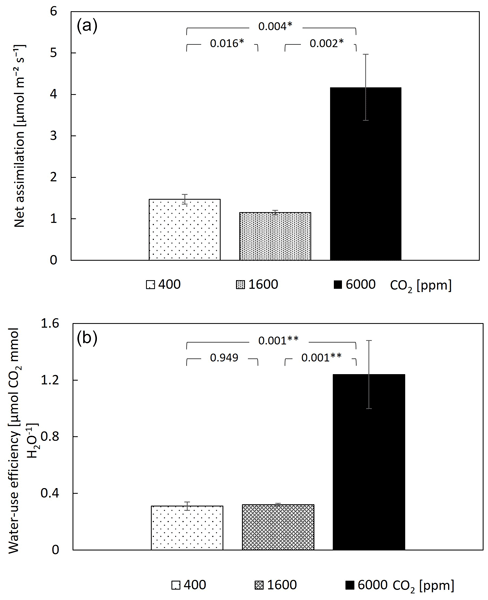
As atmospheric CO2 increases globally, plants increase the rate of photosynthesis. Still, leaf–gas exchange can be downregulated by the plant. Here we tested the limits of these plant responses in a fruit tree species under very high CO2 levels relevant to the future Earth and to contemporary Mars. Plant water use decreased at 1600 ppm CO2 and remained low at 6000 ppm. Photosynthesis significantly increased at 6000 ppm. In summary, ultra-high CO2 may partly compensate for limited water availability.
Daniel Nadal-Sala, Rüdiger Grote, David Kraus, Uri Hochberg, Tamir Klein, Yael Wagner, Fedor Tatarinov, Dan Yakir, and Nadine K. Ruehr
Biogeosciences, 21, 2973–2994, https://doi.org/10.5194/bg-21-2973-2024, https://doi.org/10.5194/bg-21-2973-2024, 2024
Short summary
Short summary
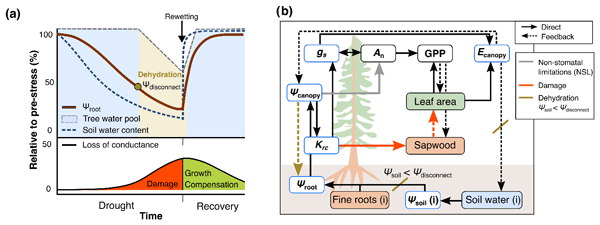
A hydraulic model approach is presented that can be added to any physiologically based ecosystem model. Simulated plant water potential triggers stomatal closure, photosynthesis decline, root–soil resistance increases, and sapwood and foliage senescence. The model has been evaluated at an extremely dry site stocked with Aleppo pine and was able to represent gas exchange, soil water content, and plant water potential. The model also responded realistically regarding leaf senescence.
Cited articles
Amelung, W., Bossio, D., de Vries, W., Kögel-Knabner, I., Lehmann, J., Amundson, R., Bol, R., Collins, C., Lal, R., and Leifeld, J.: Towards a global-scale soil climate mitigation strategy, Nat. Commun., 11, 5427, https://doi.org/10.1038/s41467-020-18887-7, 2020.
Ardley, J. K., Parker, M. A., De Meyer, S. E., Trengove, R. D., O'Hara, G. W., Reeve, W. G., Yates, R. J., Dilworth, M. J., Willems, A., and Howieson, J. G.: Microvirga lupini sp. nov., Microvirga lotononidis sp. nov. and Microvirga zambiensis sp. nov. are alphaproteobacterial root-nodule bacteria that specifically nodulate and fix nitrogen with geographically and taxonomically separate legume hosts, Int. J. Syst. Evol. Micr., 62, 2579–2588, https://doi.org/10.1099/ijs.0.035097-0, 2012.
Arora, V. K., Boer, G. J., Friedlingstein, P., Eby, M., Jones, C. D., Christian, J. R., Bonan, G., Bopp, L., Brovkin, V., and Cadule, P.: Carbon–concentration and carbon–climate feedbacks in CMIP5 Earth system models, J. Climate, 26, 5289–5314, https://doi.org/10.1175/JCLI-D-12-00494.1, 2013.
Averill, C. and Waring, B.: Nitrogen limitation of decomposition and decay: how can it occur?, Glob. Change Biol., 24, 1417–1427, https://doi.org/10.1111/gcb.13980, 2018.
Avital, S., Rog, I., Livne‐Luzon, S., Cahanovitc, R., and Klein, T.: Asymmetric belowground carbon transfer in a diverse tree community, Mol. Ecol., 31, 3481–3495, https://doi.org/10.1111/mec.16477, 2022.
Baldrian, P.: Forest microbiome: diversity, complexity and dynamics, FEMS Microbiol. Rev., 41, 109–130, https://doi.org/10.1093/femsre/fuw040, 2017.
Barnett, D. J., Arts, I. C., and Penders, J.: microViz: an R package for microbiome data visualization and statistics, J. Open Source Softw., 6, 3201, https://doi.org/10.21105/joss.03201, 2021.
Callahan, B. J., McMurdie, P. J., Rosen, M. J., Han, A. W., Johnson, A. J. A., and Holmes, S. P.: DADA2: High-resolution sample inference from Illumina amplicon data, Nat. Methods, 13, 581–583, https://doi.org/10.1038/nmeth.3869, 2016.
Castellano, M. J., Mueller, K. E., Olk, D. C., Sawyer, J. E., and Six, J.: Integrating plant litter quality, soil organic matter stabilization, and the carbon saturation concept, Glob. Change Biol., 21, 3200–3209, https://doi.org/10.1111/gcb.12982, 2015.
Córdova, S. C., Olk, D. C., Dietzel, R. N., Mueller, K. E., Archontouilis, S. V., and Castellano, M. J.: Plant litter quality affects the accumulation rate, composition, and stability of mineral-associated soil organic matter, Soil Biol. Biochem., 125, 115–124, https://doi.org/10.1016/j.soilbio.2018.07.010, 2018.
Cotrufo, M. F. and Lavallee, J. M.: Soil organic matter formation, persistence, and functioning: A synthesis of current understanding to inform its conservation and regeneration, Adv. Agron., 172, 1–66, https://doi.org/10.1016/bs.agron.2021.11.002, 2022.
Cotrufo, M. F., Ranalli, M. G., Haddix, M. L., Six, J., and Lugato, E.: Soil carbon storage informed by particulate and mineral-associated organic matter, Nat. Geosci., 12, 989–994, https://doi.org/10.1038/s41561-019-0484-6, 2019.
Crowther, T. W., Van den Hoogen, J., Wan, J., Mayes, M. A., Keiser, A., Mo, L., Averill, C., and Maynard, D. S.: The global soil community and its influence on biogeochemistry, Science, 365, eaav0550, https://doi.org/10.1126/science.aav0550, 2019.
Díaz-Martínez, P., Maestre, F. T., Moreno-Jiménez, E., Delgado-Baquerizo, M., Eldridge, D. J., Saiz, H., Gross, N., Le Bagousse-Pinguet, Y., Gozalo, B., and Ochoa, V.: Vulnerability of mineral-associated soil organic carbon to climate across global drylands, Nat. Clim. Change, 14, 976–982, https://doi.org/10.1038/s41558-024-02087-y, 2024.
Díaz-Pinés, E., Rubio, A., Van Miegroet, H., Montes, F., and Benito, M.: Does tree species composition control soil organic carbon pools in Mediterranean mountain forests?, Forest Ecol. Manage., 262, 1895–1904, https://doi.org/10.1016/j.foreco.2011.02.004, 2011.
Doetterl, S., Stevens, A., Six, J., Merckx, R., Van Oost, K., Casanova Pinto, M., Casanova-Katny, A., Muñoz, C., Boudin, M., and Zagal Venegas, E.: Soil carbon storage controlled by interactions between geochemistry and climate, Nat. Geosci., 8, 780–783, https://doi.org/10.1038/ngeo2516, 2015.
Dror, D. and Klein, T.: The effect of elevated CO2 on aboveground and belowground carbon allocation and eco-physiology of four species of angiosperm and gymnosperm forest trees, Tree Physiol., 42, 831–847, https://doi.org/10.1093/treephys/tpab136, 2022.
Fierer, N. and Jackson, R. B.: The diversity and biogeography of soil bacterial communities, P. Natl. Acad. Sci. USA, 103, 626–631, https://doi.org/10.1073/pnas.0507535103, 2006.
Fuks, G., Elgart, M., Amir, A., Zeisel, A., Turnbaugh, P. J., Soen, Y., and Shental, N.: Combining 16S rRNA gene variable regions enables high-resolution microbial community profiling, Microbiome, 6, 17, https://doi.org/10.1186/s40168-017-0396-x, 2018.
Georgiou, K., Jackson, R. B., Vindušková, O., Abramoff, R. Z., Ahlström, A., Feng, W., Harden, J. W., Pellegrini, A. F., Polley, H. W., and Soong, J. L.: Global stocks and capacity of mineral-associated soil organic carbon, Nat. Commun., 13, 3797, https://doi.org/10.1038/s41467-022-31540-9, 2022.
Georgiou, K., Angers, D., Champiny, R. E., Cotrufo, M. F., Craig, M. E., Doetterl, S., Grandy, A. S., Lavallee, J. M., Lin, Y., and Lugato, E.: Soil carbon saturation: what do we really know?, Glob. Change Biol., 31, e70197, https://doi.org/10.1111/gcb.70197, 2025.
Gill, R. A. and Jackson, R. B.: Global patterns of root turnover for terrestrial ecosystems, New Phytologist, 147, 13–31, https://doi.org/10.1046/j.1469-8137.2000.00681.x, 2000.
Gregorich, E. G., Janzen, H., Ellert, B. H., Helgason, B. L., Qian, B., Zebarth, B. J., Angers, D. A., Beyaert, R. P., Drury, C. F., and Duguid, S. D.: Litter decay controlled by temperature, not soil properties, affecting future soil carbon, Glob. Change Biol., 23, 1725–1734, https://doi.org/10.1111/gcb.13502, 2017.
Griscom, B. W., Adams, J., Ellis, P. W., Houghton, R. A., Lomax, G., Miteva, D. A., Schlesinger, W. H., Shoch, D., Siikamäki, J. V., and Smith, P.: Natural climate solutions, P. Natl. Acad. Sci. USA, 114, 11645–11650, https://doi.org/10.1073/pnas.1710465114, 2017.
Hansen, P. M., Even, R., King, A. E., Lavallee, J., Schipanski, M., and Cotrufo, M. F.: Distinct, direct and climate‐mediated environmental controls on global particulate and mineral‐associated organic carbon storage, Glob. Change Biol., 30, e17080, https://doi.org/10.1111/gcb.17080, 2024.
Hayatsu, M., Katsuyama, C., and Tago, K.: Overview of recent researches on nitrifying microorganisms in soil, Soil Sci. Plant Nutr., 67, 619–632, https://doi.org/10.1080/00380768.2021.1981119, 2021.
Hong, S., Yin, G., Piao, S., Dybzinski, R., Cong, N., Li, X., Wang, K., Peñuelas, J., Zeng, H., and Chen, A.: Divergent responses of soil organic carbon to afforestation, Nature Sustainability, 3, 694–700, https://doi.org/10.1038/s41893-020-0557-y, 2020.
Hungate, B. A., Mau, R. L., Schwartz, E., Caporaso, J. G., Dijkstra, P., Van Gestel, N., Koch, B. J., Liu, C. M., McHugh, T. A., and Marks, J. C.: Quantitative microbial ecology through stable isotope probing, Appl. Environ. Microbiol., 81, 7570–7581, https://doi.org/10.1128/AEM.02280-15, 2015.
Itkin, D., Ronen, A., Needelman, B., Crouvi, O., and Eshel, G.: Israel Soil Taxonomy GIS (online version 2, January 2025), https://experience.arcgis.com/experience/a3e2530b0f474f43bb5c7b14e7d27010/?locale=he (last access: 16 September 2026), 2025.
Jackson, R. B., Canadell, J., Ehleringer, J. R., Mooney, H. A., Sala, O. E., and Schulze, E. D.: A global analysis of root distributions for terrestrial biomes, Oecologia, 108, 389–411, https://doi.org/10.1007/BF00333714, 1996.
Jakoby, G., Rog, I., Megidish, S., and Klein, T.: Enhanced root exudation of mature broadleaf and conifer trees in a Mediterranean forest during the dry season, Tree Physiol., 40, 1595–1605, https://doi.org/10.1093/treephys/tpaa092, 2020.
Jorgensen, T. D., Pornprasertmanit, S., Schoemann, A. M., and Rosseel, Y.: semTools: Useful tools for structural equation modeling, R package [code], https://CRAN.R-project.org/package=semTools (last access: 18 September 2026), 2012.
Knafo, M., Rezenman, S., Idan, T., Elgart, M., Dagan, S., Zavaro, V., Reich, Z., Kapon, R., Sade, D., and Shental, N.: CoSMIC: A hybrid approach for large-scale, high-resolution microbial profiling of novel niches, PLOS One, 21, e0340349, https://doi.org/10.1371/journal.pone.0340349, 2026.
Lal, R., Monger, C., Nave, L., and Smith, P.: The role of soil in regulation of climate, Philos. T. R. Soc. B, 376, 20210084, https://doi.org/10.1098/rstb.2021.0084, 2021.
Lavallee, J., Conant, R., Paul, E., and Cotrufo, M.: Incorporation of shoot versus root-derived 13C and 15N into mineral-associated organic matter fractions: results of a soil slurry incubation with dual-labelled plant material, Biogeochemistry, 137, 379–393, https://doi.org/10.1007/s10533-018-0428-z, 2018.
Lin, H. and Peddada, S. D.: Analysis of compositions of microbiomes with bias correction, Nat. Commun., 11, 3514, https://doi.org/10.1038/s41467-020-17041-7, 2020.
Lindahl, B. D. and Tunlid, A.: Ectomycorrhizal fungi–potential organic matter decomposers, yet not saprotrophs, New Phytologist, 205, 1443–1447, https://doi.org/10.1111/nph.13201, 2015.
Lucas-Borja, M. E., Candel, D., Jindo, K., Moreno, J., Andrés, M., and Bastida, F.: Soil microbial community structure and activity in monospecific and mixed forest stands, under Mediterranean humid conditions, Plant Soil, 354, 359–370, https://doi.org/10.1007/s11104-011-1072-8, 2012.
Ma, Y., Wang, J., Liu, Y., Wang, X., Zhang, B., Zhang, W., Chen, T., Liu, G., Xue, L., and Cui, X.: Nocardioides: “specialists” for hard-to-degrade pollutants in the environment, Molecules, 28, 7433, https://doi.org/10.3390/molecules28217433, 2023.
Martin, M.: Cutadapt removes adapter sequences from high-throughput sequencing reads, EMBnet.journal, 17, 10–12, https://doi.org/10.14806/ej.17.1.200, 2011.
McMurdie, P. J. and Holmes, S.: phyloseq: an R package for reproducible interactive analysis and graphics of microbiome census data, PloS One, 8, e61217, https://doi.org/10.1371/journal.pone.0061217, 2013.
Nissan, A., Alcolombri, U., Peleg, N., Galili, N., Jimenez-Martinez, J., Molnar, P., and Holzner, M.: Global warming accelerates soil heterotrophic respiration, Nat. Commun., 14, 3452, https://doi.org/10.1038/s41467-023-38981-w, 2023.
Obersteiner, S. and Klein, T.: Closing in on the last frontier: C allocation in the rhizosphere, Glob. Change Biol., 28, 6835–6837, https://doi.org/10.1111/gcb.16432, 2022.
Obersteiner, S., Oppenheimer-Shaanan, Y., Yalin, D., Sade, D., Zavaro, V., Reich, Z., and Klein, T.: Pine root exudate terpenoids associate with Mycobacterium sp. under summer drought in a mixed Mediterranean forest, Environmental Microbiome, https://doi.org/10.1186/s40793-026-00921-8, 2026.
Olsen, S. R., Cole, C. V., Watanabe, F. S., and Dean, L. A.: Estimation of available phosphorus in soils by extraction with sodium bicarbonate, U.S. Department of Agriculture Circular 939, Washington, D.C., 1–19, https://archive.org/details/estimationofavai939olse/page/n1/mode/2up (last access: 26 September 2026), 1954.
Oppenheimer-Shaanan, Y., Jakoby, G., Starr, M. L., Karliner, R., Eilon, G., Itkin, M., Malitsky, S., and Klein, T.: A dynamic rhizosphere interplay between tree roots and soil bacteria under drought stress, Elife, 11, e79679, https://doi.org/10.7554/eLife.79679, 2022.
Peoples, M. B., Giller, K. E., Jensen, E. S., and Herridge, D. F.: Quantifying country-to-global scale nitrogen fixation for grain legumes: I. Reliance on nitrogen fixation of soybean, groundnut and pulses, Plant Soil, 469, 1–14, https://doi.org/10.1007/s11104-021-05167-6, 2021.
Poeplau, C., Don, A., Six, J., Kaiser, M., Benbi, D., Chenu, C., Cotrufo, M. F., Derrien, D., Gioacchini, P., and Grand, S.: Isolating organic carbon fractions with varying turnover rates in temperate agricultural soils–A comprehensive method comparison, Soil Biol. Biochem., 125, 10–26, https://doi.org/10.1016/j.soilbio.2018.06.025, 2018.
Rasmussen, C., Heckman, K., Wieder, W. R., Keiluweit, M., Lawrence, C. R., Berhe, A. A., Blankinship, J. C., Crow, S. E., Druhan, J. L., and Hicks Pries, C. E.: Beyond clay: towards an improved set of variables for predicting soil organic matter content, Biogeochemistry, 137, 297–306, https://doi.org/10.1007/s10533-018-0424-3, 2018.
Rezenman, S., Knafo, M., Tsigalnitski, I., Barad, S., Jona, G., Levi, D., Dym, O., Reich, Z., and Kapon, R.: gUMI-BEAR, a modular, unsupervised population barcoding method to track variants and evolution at high resolution, Plos One, 18, e0286696, https://doi.org/10.1371/journal.pone.0286696, 2023.
Rog, I., Jakoby, G., and Klein, T.: Carbon allocation dynamics in conifers and broadleaved tree species revealed by pulse labeling and mass balance, Forest Ecol. Manage., 493, 119258, https://doi.org/10.1016/j.foreco.2021.119258, 2021a.
Rog, I., Tague, C., Jakoby, G., Megidish, S., Yaakobi, A., Wagner, Y., and Klein, T.: Interspecific soil water partitioning as a driver of increased productivity in a diverse mixed Mediterranean forest, J. Geophys. Res.-Biogeo., 126, e2021JG006382, https://doi.org/10.1029/2021JG006382, 2021b.
Rog, I., Lewin-Epstein, O., Livne-Luzon, S., Hadany, L., and Klein, T.: Prosperity of the commons: Generalist mycorrhizal species dominate a mixed forest and may promote forest diversity by mediating resource sharing among trees, bioRxiv [preprint], https://doi.org/10.1101/2022.08.01.502298, 2022.
Rog, I., Hilman, B., Fox, H., Yalin, D., Qubaja, R., and Klein, T.: Increased belowground tree carbon allocation in a mature mixed forest in a dry versus a wet year, Glob. Change Biol., 30, e17172, https://doi.org/10.1111/gcb.17172, 2024.
Rosseel, Y.: lavaan: An R package for structural equation modeling, J. Stat. Softw., 48, 1–36, https://doi.org/10.18637/jss.v048.i02, 2012.
Rowley, M. C., Grand, S., and Verrecchia, É. P.: Calcium-mediated stabilisation of soil organic carbon, Biogeochemistry, 137, 27–49, https://doi.org/10.1007/s10533-017-0410-1, 2018.
Schmidt, M. W., Torn, M. S., Abiven, S., Dittmar, T., Guggenberger, G., Janssens, I. A., Kleber, M., Kögel-Knabner, I., Lehmann, J., and Manning, D. A.: Persistence of soil organic matter as an ecosystem property, Nature, 478, 49–56, https://doi.org/10.1038/nature10386, 2011.
Six, J., Doetterl, S., Laub, M., Müller, C. R., and Van de Broek, M.: The six rights of how and when to test for soil C saturation, SOIL, 10, 275–279, https://doi.org/10.5194/soil-10-275-2024, 2024.
Sokol, N. W., Whalen, E. D., Jilling, A., Kallenbach, C., Pett‐Ridge, J., and Georgiou, K.: Global distribution, formation and fate of mineral‐associated soil organic matter under a changing climate: A trait‐based perspective, Funct. Ecol., 36, 1411–1429, https://doi.org/10.1111/1365-2435.14040, 2022.
Spohn, M., Bagchi, S., Biederman, L. A., Borer, E. T., Bråthen, K. A., Bugalho, M. N., Caldeira, M. C., Catford, J. A., Collins, S. L., and Eisenhauer, N.: The positive effect of plant diversity on soil carbon depends on climate, Nat. Commun., 14, 6624, https://doi.org/10.1038/s41467-023-42340-0, 2023.
Stell, E., Warner, D., Jian, J., Bond‐Lamberty, B., and Vargas, R.: Spatial biases of information influence global estimates of soil respiration: How can we improve global predictions?, Glob. Change Biol., 27, 3923–3938, https://doi.org/10.1111/gcb.15666, 2021.
Urbanová, M., Šnajdr, J., and Baldrian, P.: Composition of fungal and bacterial communities in forest litter and soil is largely determined by dominant trees, Soil Biol. Biochem., 84, 53–64, https://doi.org/10.1016/j.soilbio.2015.02.011, 2015.
Vitousek, P. M. and Howarth, R. W.: Nitrogen limitation on land and in the sea: how can it occur?, Biogeochemistry, 13, 87–115, https://doi.org/10.1007/BF00002772, 1991.
Whalen, E. D., Grandy, A. S., Sokol, N. W., Keiluweit, M., Ernakovich, J., Smith, R. G., and Frey, S. D.: Clarifying the evidence for microbial‐and plant‐derived soil organic matter, and the path toward a more quantitative understanding, Glob. Change Biol., 28, 7167–7185, https://doi.org/10.1111/gcb.16413, 2022.
Wolińska, A., Kuźniar, A., Zielenkiewicz, U., Banach, A., Izak, D., Stępniewska, Z., and Błaszczyk, M.: Metagenomic analysis of some potential nitrogen-fixing bacteria in arable soils at different formation processes, Microb. Ecol., 73, 162–176, https://doi.org/10.1007/s00248-016-0837-2, 2017.
Wu, J., Zhang, H., Pan, Y., Cheng, X., Zhang, K., and Liu, G.: Particulate organic carbon is more sensitive to nitrogen addition than mineral-associated organic carbon: A meta-analysis, Soil Till. Res., 232, 105770, https://doi.org/10.1016/j.still.2023.105770, 2023.
Ye, C., Chen, D., Hall, S. J., Pan, S., Yan, X., Bai, T., Guo, H., Zhang, Y., Bai, Y., and Hu, S.: Reconciling multiple impacts of nitrogen enrichment on soil carbon: plant, microbial and geochemical controls, Ecol. Lett., 21, 1162–1173, https://doi.org/10.1111/ele.13083, 2018.
Yuste, J. C., Peñuelas, J., Estiarte, M., GARCIA‐MAS, J., Mattana, S., Ogaya, R., Pujol, M., and Sardans, J.: Drought‐resistant fungi control soil organic matter decomposition and its response to temperature, Glob. Change Biol., 17, 1475–1486, https://doi.org/10.1111/j.1365-2486.2010.02300.x, 2011.
Yuste, J. C., Fernandez-Gonzalez, A., Fernandez-Lopez, M., Ogaya, R., Penuelas, J., Sardans, J., and Lloret, F.: Strong functional stability of soil microbial communities under semiarid Mediterranean conditions and subjected to long-term shifts in baseline precipitation, Soil Biol. Biochem., 69, 223–233, https://doi.org/10.1016/j.soilbio.2013.10.045, 2014.
Short summary
We studied how tree species and local soil conditions shape carbon storage in Mediterranean forest soils. By comparing mixed and single-species stands and sampling beneath trees and in nearby open gaps, we found that soils under canopies held much more carbon. Mixed stands stored extra carbon mainly in faster-cycling forms, while longer-lasting carbon was limited mostly by soil texture. This shows that forest structure can influence carbon storage in a warming, drier climate.
We studied how tree species and local soil conditions shape carbon storage in Mediterranean...
Altmetrics
Final-revised paper
Preprint