
Articles | Volume 23, issue 19
https://doi.org/10.5194/bg-23-6879-2026
© Author(s) 2026. This work is distributed under
the Creative Commons Attribution 4.0 License.
the Creative Commons Attribution 4.0 License.
https://doi.org/10.5194/bg-23-6879-2026
© Author(s) 2026. This work is distributed under
the Creative Commons Attribution 4.0 License.
the Creative Commons Attribution 4.0 License.
Research article
| 
06 Oct 2026
Research article |
| 06 Oct 2026
| 06 Oct 2026
Solving calibration and reanalysis challenges of ocean biogeochemical dynamics with neural schemes: a 1D vertical model case-study

IMT Atlantique, UMR Lab-STICC, Brest, France
Laboratoire des sciences de l'Environnement MARin, UBO/CNRS/IRD/Ifremer, Plouzané, France
Laurent Memery
Laboratoire des sciences de l'Environnement MARin, UBO/CNRS/IRD/Ifremer, Plouzané, France
Ronan Fablet
IMT Atlantique, UMR Lab-STICC, Brest, France
ODYSSEY Team, INRIA, Brest/Rennes, France
Related authors
No articles found.
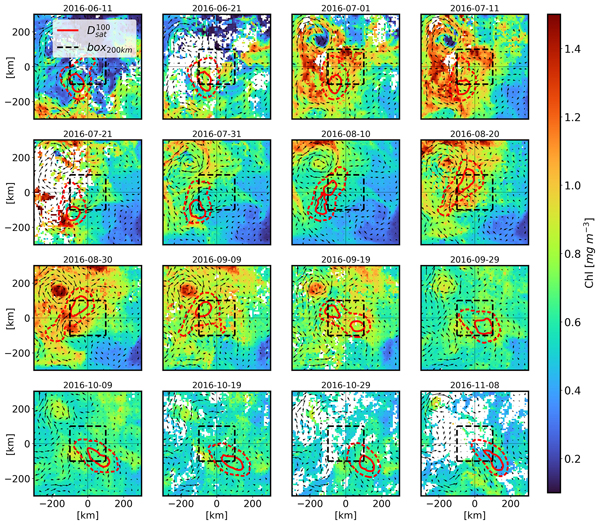
Théo Picard, Chelsey A. Baker, Jonathan Gula, Ronan Fablet, Laurent Mémery, and Richard Lampitt
Biogeosciences, 22, 4309–4331, https://doi.org/10.5194/bg-22-4309-2025, https://doi.org/10.5194/bg-22-4309-2025, 2025
Short summary
Short summary
Ocean sediment traps measure the sequestrated sinking organic carbon. While sinking, the particles are affected by local currents, which presents a challenge with regard to linking the deep flux with the surface. We present a machine learning tool that predicts the source location of the sinking particles based on satellite data. The predictions demonstrate a stronger correlation between surface and deep carbon fluxes, allowing a more comprehensive understanding of the deep carbon sequestration drivers.
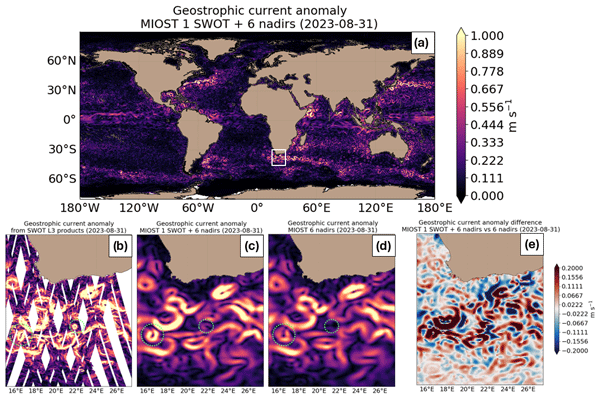
Maxime Ballarotta, Clément Ubelmann, Valentin Bellemin-Laponnaz, Florian Le Guillou, Guillaume Meda, Cécile Anadon, Alice Laloue, Antoine Delepoulle, Yannice Faugère, Marie-Isabelle Pujol, Ronan Fablet, and Gérald Dibarboure
Ocean Sci., 21, 63–80, https://doi.org/10.5194/os-21-63-2025, https://doi.org/10.5194/os-21-63-2025, 2025
Short summary
Short summary
The Surface Water and Ocean Topography (SWOT) mission provides unprecedented swath altimetry data. This study examines SWOT's impact on mapping systems, showing a moderate effect with the current nadir altimetry constellation and a stronger impact with a reduced one. Integrating SWOT with dynamic mapping techniques improves the resolution of satellite-derived products, offering promising solutions for studying and monitoring sea-level variability at finer scales.
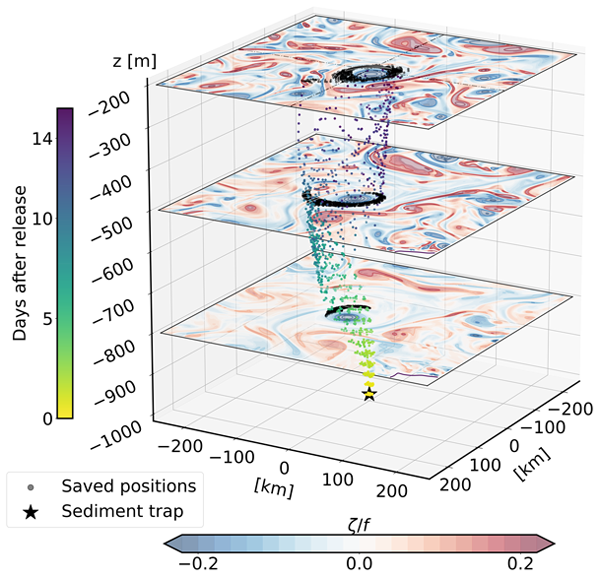
Théo Picard, Jonathan Gula, Ronan Fablet, Jeremy Collin, and Laurent Mémery
Ocean Sci., 20, 1149–1165, https://doi.org/10.5194/os-20-1149-2024, https://doi.org/10.5194/os-20-1149-2024, 2024
Short summary
Short summary
The biological carbon pump plays a key role in the climate system. Plankton absorb and transform CO2 into organic carbon, forming particles that sink to the ocean floor. Sediment traps catch these particles and measure the carbon stored in the abyss. However, the particles' surface origin is unknown as ocean currents alter their paths. Here, we train an AI model to predict the origin of these particles. This new tool enables a better link between deep-ocean observations and satellite images.
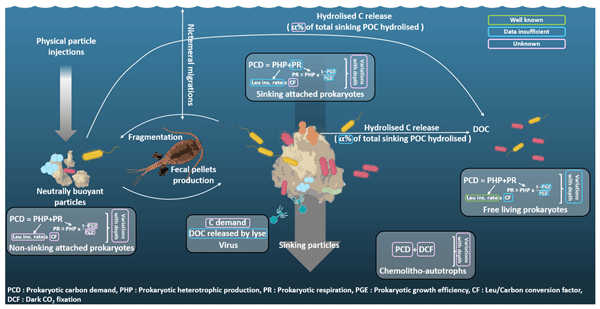
Chloé Baumas, Robin Fuchs, Marc Garel, Jean-Christophe Poggiale, Laurent Memery, Frédéric A. C. Le Moigne, and Christian Tamburini
Biogeosciences, 20, 4165–4182, https://doi.org/10.5194/bg-20-4165-2023, https://doi.org/10.5194/bg-20-4165-2023, 2023
Short summary
Short summary
Through the sink of particles in the ocean, carbon (C) is exported and sequestered when reaching 1000 m. Attempts to quantify C exported vs. C consumed by heterotrophs have increased. Yet most of the conducted estimations have led to C demands several times higher than C export. The choice of parameters greatly impacts the results. As theses parameters are overlooked, non-accurate values are often used. In this study we show that C budgets can be well balanced when using appropriate values.
Maxime Beauchamp, Quentin Febvre, Hugo Georgenthum, and Ronan Fablet
Geosci. Model Dev., 16, 2119–2147, https://doi.org/10.5194/gmd-16-2119-2023, https://doi.org/10.5194/gmd-16-2119-2023, 2023
Short summary
Short summary
4DVarNet is a learning-based method based on traditional data assimilation (DA). This new class of algorithms can be used to provide efficient reconstructions of a dynamical system based on single observations. We provide a 4DVarNet application to sea surface height reconstructions based on nadir and future Surface Water and Ocean and Topography data. It outperforms other methods, from optimal interpolation to sophisticated DA algorithms. This work is part of on-going AI Chair Oceanix projects.
Etienne Pauthenet, Loïc Bachelot, Kevin Balem, Guillaume Maze, Anne-Marie Tréguier, Fabien Roquet, Ronan Fablet, and Pierre Tandeo
Ocean Sci., 18, 1221–1244, https://doi.org/10.5194/os-18-1221-2022, https://doi.org/10.5194/os-18-1221-2022, 2022
Short summary
Short summary
Temperature and salinity profiles are essential for studying the ocean’s stratification, but there are not enough of these data. Satellites are able to measure daily maps of the surface ocean. We train a machine to learn the link between the satellite data and the profiles in the Gulf Stream region. We can then use this link to predict profiles at the high resolution of the satellite maps. Our prediction is fast to compute and allows us to get profiles at any locations only from surface data.
Cited articles
Amadio, C., Teruzzi, A., Pietropolli, G., Manzoni, L., Coidessa, G., and Cossarini, G.: Combining neural networks and data assimilation to enhance the spatial impact of Argo floats in the Copernicus Mediterranean biogeochemical model, Ocean Sci., 20, 689–710, https://doi.org/10.5194/os-20-689-2024, 2024. a
Archambault, T., Filoche, A., Charantonis, A., Béréziat, D., and Thiria, S.: Learning sea surface height interpolation from multi-variate simulated satellite observations, J. Adv. Model. Earth Sy., 16, e2023MS004047, https://doi.org/10.1029/2023MS004047, 2024. a
Aumont, O., Ethé, C., Tagliabue, A., Bopp, L., and Gehlen, M.: PISCES-v2: an ocean biogeochemical model for carbon and ecosystem studies, Geosci. Model Dev., 8, 2465–2513, https://doi.org/10.5194/gmd-8-2465-2015, 2015. a, b
Baker, C. A., Martin, A. P., Yool, A., and Popova, E.: Biological carbon pump sequestration efficiency in the North Atlantic: A leaky or a long-term sink?, Global Biogeochem. Cy., 36, e2021GB007286, https://doi.org/10.1029/2021GB007286, 2022. a
Ballarotta, M., Ubelmann, C., Pujol, M.-I., Taburet, G., Fournier, F., Legeais, J.-F., Faugère, Y., Delepoulle, A., Chelton, D., Dibarboure, G., Blackford, J. C., and Gilbert, F. J.: On the resolutions of ocean altimetry maps, Ocean Sci., 15, 1091–1109, https://doi.org/10.5194/os-15-1091-2019, 2019. a, b, c, d, e
Bannister, R. N.: A review of operational methods of variational and ensemble-variational data assimilation, Q. J. Roy. Meteorol. Soc., 143, 607–633, https://doi.org/10.1002/qj.2982, 2017. a
Baretta, J., Ebenhöh, W., and Ruardij, P.: The European regional seas ecosystem model, a complex marine ecosystem model, Neth. J. Sea Res., 33, 233–246, https://doi.org/10.1016/0077-7579(95)90047-0, 1995. a
Beck, M. W., Lehrter, J. C., Lowe, L. L., and Jarvis, B. M.: Parameter sensitivity and identifiability for a biogeochemical model of hypoxia in the northern Gulf of Mexico, Ecol. Model., 363, 17–30, https://doi.org/10.1016/j.ecolmodel.2017.08.020, 2017. a
Berline, L., Brankart, J., Brasseur, P., Ourmières, Y., and Verron, J.: Improving the physics of a coupled physical–biogeochemical model of the North Atlantic through data assimilation: Impact on the ecosystem, J. Mar. Syst., 64, 153–172, https://doi.org/10.1016/j.jmarsys.2006.03.007, 2007. a, b
Bi, K., Xie, L., Zhang, H., Chen, X., Gu, X., and Tian, Q.: Accurate medium-range global weather forecasting with 3D neural networks, Nature, 619, 533–538, https://doi.org/10.1038/s41586-023-06185-3, 2023. a
Bisson, K., Siegel, D., DeVries, T., Cael, B., and Buesseler, K.: How data set characteristics influence ocean carbon export models, Global Biogeochem. Cy., 32, 1312–1328, https://doi.org/10.1029/2018GB005934, 2018. a
Blackford, J. and Gilbert, F.: pH variability and CO2 induced acidification in the North Sea, J. Mar. Syst., 64, 229–241, https://doi.org/10.1016/j.jmarsys.2006.03.016, 2007. a
Bock, N., Cornec, M., Claustre, H., and Duhamel, S.: Biogeographical classification of the global ocean from BGC-Argo floats, Global Biogeochem. Cy., 36, e2021GB007233, https://doi.org/10.1029/2021GB007233, 2022. a, b
Bolton, T. and Zanna, L.: Applications of deep learning to ocean data inference and subgrid parameterization, J. Adv. Model. Earth Sy., 11, 376–399, https://doi.org/10.1029/2018MS001472, 2019. a, b
Bonavita, M. and Laloyaux, P.: Machine Learning for Model Error Inference and Correction, J. Adv. Model. Earth Sy., 12, https://doi.org/10.1029/2020MS002232, 2020. a
Boucher, O., Servonnat, J., Albright, A. L., Aumont, O., Balkanski, Y., Bastrikov, V., Bekki, S., Bonnet, R., Bony, S., Bopp, L., Braconnot, P., Brockmann, P., Cadule, P., Caubel, A., Cheruy, F., Codron, F., Cozic, A., Cugnet, D., D'Andrea, F., Davini, P., De Lavergne, C., Denvil, S., Deshayes, J., Devilliers, M., Ducharne, A., Dufresne, J., Dupont, E., Éthé, C., Fairhead, L., Falletti, L., Flavoni, S., Foujols, M., Gardoll, S., Gastineau, G., Ghattas, J., Grandpeix, J., Guenet, B., Guez, L., E., Guilyardi, E., Guimberteau, M., Hauglustaine, D., Hourdin, F., Idelkadi, A., Joussaume, S., Kageyama, M., Khodri, M., Krinner, G., Lebas, N., Levavasseur, G., Lévy, C., Li, L., Lott, F., Lurton, T., Luyssaert, S., Madec, G., Madeleine, J., Maignan, F., Marchand, M., Marti, O., Mellul, L., Meurdesoif, Y., Mignot, J., Musat, I., Ottlé, C., Peylin, P., Planton, Y., Polcher, J., Rio, C., Rochetin, N., Rousset, C., Sepulchre, P., Sima, A., Swingedouw, D., Thiéblemont, R., Traore, A. K., Vancoppenolle, M., Vial, J., Vialard, J., Viovy, N., and Vuichard, N.: Presentation and evaluation of the IPSL-CM6A-LR climate model, J. Adv. Model. Earth Sy., 12, e2019MS002010, https://doi.org/10.1029/2019MS002010, 2020. a
Boyd, P. W., Claustre, H., Levy, M., Siegel, D. A., and Weber, T.: Multi-faceted particle pumps drive carbon sequestration in the ocean, Nature, 568, 327–335, https://doi.org/10.1038/s41586-019-1098-2, 2019. a
Brajard, J., Carrassi, A., Bocquet, M., and Bertino, L.: Combining data assimilation and machine learning to infer unresolved scale parametrization, Philos. T. R. Soc. A, 379, 20200086, https://doi.org/10.1098/rsta.2020.0086, 2021. a, b
Brasseur, P., Gruber, N., Barciela, R., Brander, K., Doron, M., Elmoussaoui, A., Hobday, A. J., Huret, M., Kremeur, A., Lehodey, P., Matear, R., Moulin, C., Murtugudde, R., Senina, I., and Svendsen, E.: Integrating biogeochemistry and ecology into ocean data assimilation systems, Oceanography, 22, 206–215, https://doi.org/10.5670/oceanog.2009.80, 2009. a
Buchanan, P. J., Reddy, P. J., Matear, R. J., Chamberlain, M. A., Rohr, T., Squire, D., and Shadwick, E. H.: Optimisation of the World Ocean Model of Biogeochemistry and Trophic-dynamics (WOMBAT) using surrogate machine learning methods, EGUsphere [preprint], https://doi.org/10.5194/egusphere-2024-4026, 2025. a, b
Buongiorno Nardelli, B.: A deep learning network to retrieve ocean hydrographic profiles from combined satellite and in situ measurements, Remote Sens., 12, 3151, https://doi.org/10.3390/rs12193151, 2020. a
Chen, L., Zhong, X., Zhang, F., Cheng, Y., Xu, Y., Qi, Y., and Li, H.: FuXi: a cascade machine learning forecasting system for 15-day global weather forecast, npj Clim. Atmos. Sci., 6, 190, https://doi.org/10.1038/s41612-023-00512-1, 2023. a
Chen, X. and Lin, X.: Big Data Deep Learning: Challenges and Perspectives, IEEE Access, 2, 514–525, https://doi.org/10.1109/ACCESS.2014.2325029, 2014. a
Chevillon, E., Bosse, A., Zakardjian, B., Accardo, A., Guidi, L., Bhairy, N., Fuda, J., Picheral, M., Luneau, C., Dasi, P., and Memery, L.: Meso-to submesoscale variability of particulate carbon export captured by a glider-camera system in the Northeast Atlantic during the APERO campaign, J. Geophys. Res.-Ocean., 131, e2025JC023403, https://doi.org/10.1029/2025JC023403, 2026. a
Christiansen, B.: Deep-Sea Zooplankton Sampling, Chap. 6, 103–125, John Wiley & Sons, Ltd, ISBN 9781118332535, https://doi.org/10.1002/9781118332535.ch6, 2016. a
Claustre, H., Johnson, K. S., and Takeshita, Y.: Observing the global ocean with biogeochemical-Argo, Annu. Rev. Mar. Sci., 12, 23–48, https://doi.org/10.1146/annurev-marine-010419-010956, 2020. a, b, c
Clements, D., Yang, S., Weber, T., McDonnell, A., Kiko, R., Stemmann, L., and Bianchi, D.: Constraining the particle size distribution of large marine particles in the global ocean with in situ optical observations and supervised learning, Global Biogeochem. Cy., 36, e2021GB007276, https://doi.org/10.1029/2021GB007276, 2022. a
Cossarini, G., Mariotti, L., Feudale, L., Mignot, A., Salon, S., Taillandier, V., Teruzzi, A., and d'Ortenzio, F.: Towards operational 3D-Var assimilation of chlorophyll Biogeochemical-Argo float data into a biogeochemical model of the Mediterranean Sea, Ocean Model., 133, 112–128, https://doi.org/10.1016/j.ocemod.2018.11.005, 2019. a, b
Couvreux, F., Hourdin, F., Williamson, D., Roehrig, R., Volodina, V., Villefranque, N., Rio, C., Audouin, O., Salter, J., Bazile, E., Brient, F., Favot, F., Honnert, R., Lefebvre, M., Madeleine, J., Rodier, Q., and Xu, W.: Process-based climate model development harnessing machine learning: I. A calibration tool for parameterization improvement, J. Adv. Model. Earth Sy., 13, e2020MS002217, https://doi.org/10.1029/2020MS002217, 2021. a
Dall'Olmo, G., Westberry, T. K., Behrenfeld, M. J., Boss, E., and Slade, W. H.: Significant contribution of large particles to optical backscattering in the open ocean, Biogeosciences, 6, 947–967, https://doi.org/10.5194/bg-6-947-2009, 2009. a
Dheeshjith, S., Subel, A., Adcroft, A., Busecke, J., Fernandez-Granda, C., Gupta, S., and Zanna, L.: Samudra: An ai global ocean emulator for climate, Geophys. Res. Lett., 52, e2024GL114318, https://doi.org/10.1029/2024GL114318, 2025. a
Doney, S. C., Lindsay, K., Caldeira, K., Campin, J.-M., Drange, H., Dutay, J.-C., Follows, M., Gao, Y., Gnanadesikan, A., Gruber, N., Ishida, A., Joos, F., Madec, G., Maier Reimer, E., Marshall, J. C., Matear, R. J., Monfray, P., Mouchet, A., Najjar, R., Orr, J. C., Plattner, G.-K., Sarmiento, J., Schlitzer, R., Slater, R., Totterdell, I. J., Weirig, M. -F, Yamanaka, Y., and Yool, A.: Evaluating global ocean carbon models: The importance of realistic physics, Global Biogeochem. Cy., 18, https://doi.org/10.1029/2003GB002150, 2004. a, b
Dowd, M., Jones, E., and Parslow, J.: A statistical overview and perspectives on data assimilation for marine biogeochemical models, Environmetrics, 25, 203–213, https://doi.org/10.1002/env.2264, 2014. a, b
Drillet, Y., Lellouche, J. M., Levier, B., Drevillon, M., Le Galloudec, O., Reffray, G., Regnier, C., Greiner, E., and Clavier, M.: Forecasting the mixed-layer depth in the Northeast Atlantic: an ensemble approach, with uncertainties based on data from operational ocean forecasting systems, Ocean Sci., 10, 1013–1029, https://doi.org/10.5194/os-10-1013-2014, 2014. a, b
Ducournau, A. and Fablet, R.: Deep learning for ocean remote sensing: An application of convolutional neural networks for super-resolution on satellite-derived SST data, in: 2016 9th IAPR Workshop on Pattern Recogniton in Remote Sensing (PRRS), 1–6, IEEE, https://doi.org/10.1109/PRRS.2016.7867019, 2016. a
El Aouni, A., Gaudel, Q., Regnier, C., Van Gennip, S., Le Galloudec, O., Drevillon, M., Drillet, Y., and Lellouche, J.-M.: GLONET: Mercator's End-to-End Neural Global Ocean Forecasting System, J. Geophys. Res.-Mach. Learn. Comput., 2, e2025JH000686, https://doi.org/10.1029/2025JH000686, 2025. a
Escudier, R., Clementi, E., Cipollone, A., Pistoia, J., Drudi, M., Grandi, A., Lyubartsev, V., Lecci, R., Aydogdu, A., Delrosso, D., Omar, M., Masina, S., Coppini, G., and Pinardi, N.: A high resolution reanalysis for the Mediterranean Sea, Front. Earth Sci., 9, 702285, https://doi.org/10.3389/feart.2021.702285, 2021. a
Everett, J. D., Baird, M. E., Buchanan, P., Bulman, C., Davies, C., Downie, R., Griffiths, C., Heneghan, R., Kloser, R. J., Laiolo, L., Lara Lopez, A., Lozano Montes, H., Matear, R. J., McEnnulty, F., Robson, B., Rochester, W., Skerratt, J., Smith, J. A., Strzelecki, J., Suthers, I. M., Swadling, K. M., Van Ruth, P., and Richardson, A. J.: Modeling what we sample and sampling what we model: challenges for zooplankton model assessment, Front. Mar. Sci., 4, 77, https://doi.org/10.3389/fmars.2017.00077, 2017. a
Fablet, R., Amar, M. M., Febvre, Q., Beauchamp, M., and Chapron, B.: End-to-end physics-informed representation learning for satellite ocean remote sensing data: applications to satellite altimetry and sea surface currents, ISPRS Ann. Photogramm. Remote Sens. Spatial Inf. Sci., V-3-2021, 295–302, https://doi.org/10.5194/isprs-annals-V-3-2021-295-2021, 2021a. a
Fablet, R., Chapron, B., Drumetz, L., Mémin, E., Pannekoucke, O., and Rousseau, F.: Learning variational data assimilation models and solvers, J. Adv. Model. Earth Sy., 13, e2021MS002572, https://doi.org/10.1029/2021MS002572, 2021b. a, b
Farchi, A., Bocquet, M., Laloyaux, P., Bonavita, M., and Malartic, Q.: A Comparison of Combined Data Assimilation and Machine Learning Methods for Offline and Online Model Error Correction, J. Comput. Sci., 55, 101468, https://doi.org/10.1016/j.jocs.2021.101468, 2021a. a
Farchi, A., Laloyaux, P., Bonavita, M., and Bocquet, M.: Using machine learning to correct model error in data assimilation and forecast applications, Q. J. Roy. Meteorol. Soc., 147, 3067–3084, https://doi.org/10.1002/qj.4116, 2021b. a, b, c
Faugeras, B., Levy, M., Mémery, L., Verron, J., Blum, J., and Charpentier, I.: Can biogeochemical fluxes be recovered from nitrate and chlorophyll data? A case study assimilating data in the Northwestern Mediterranean Sea at the JGOFS-DYFAMED station, J. Mar. Syst., 40–41, 99–125, https://doi.org/10.1016/S0924-7963(03)00015-0, 2003. a, b
Febvre, Q., Sommer, J., Ubelmann, C., and Fablet, R.: Training neural mapping schemes for satellite altimetry with simulation data, J. Adv. Model. Earth Sy., 16, https://doi.org/10.1029/2023MS003959, 2024. a, b, c
Fennel, K., Abbott, M. R., Spitz, Y. H., Richman, J. G., and Nelson, D. M.: Modeling controls of phytoplankton production in the southwest Pacific sector of the Southern Ocean, Deep-Sea Res. Pt. II, 50, 769–798, https://doi.org/10.1016/S0967-0645(02)00594-5, 2003. a
Fennel, K., Mattern, J. P., Doney, S. C., Bopp, L., Moore, A. M., Wang, B., and Yu, L.: Ocean biogeochemical modelling, Nature Reviews Methods Primers, 2, 76, https://doi.org/10.1038/s43586-022-00154-2, 2022. a
Ford, D.: Assimilating synthetic Biogeochemical-Argo and ocean colour observations into a global ocean model to inform observing system design, Biogeosciences, 18, 509–534, https://doi.org/10.5194/bg-18-509-2021, 2021. a
Fossette, S., Putman, N. F., Lohmann, K. J., Marsh, R., and Hays, G. C.: A biologist’s guide to assessing ocean currents: a review, Mar. Ecol. Prog. Ser., 457, 285–301, https://doi.org/10.3354/meps09581, 2012. a
Fransner, F., Counillon, F., Bethke, I., Tjiputra, J., Samuelsen, A., Nummelin, A., and Olsen, A.: Ocean biogeochemical predictions–initialization and limits of predictability, Front. Mar. Sci., 7, 386, https://doi.org/10.3389/fmars.2020.00386, 2020. a
Frerix, T., Kochkov, D., Smith, J. A., Cremers, D., Brenner, M. P., and Hoyer, S.: Variational data assimilation with a learned inverse observation operator, in: Proceedings of the International Conference on Machine Learning, 3449–3458, PMLR, https://doi.org/10.48550/arXiv.2102.11192, 2021. a
Friedlingstein, P., Jones, M. W., O'Sullivan, M., Andrew, R. M., Bakker, D. C. E., Hauck, J., Le Quéré, C., Peters, G. P., Peters, W., Pongratz, J., Sitch, S., Canadell, J. G., Ciais, P., Jackson, R. B., Alin, S. R., Anthoni, P., Bates, N. R., Becker, M., Bellouin, N., Bopp, L., Chau, T. T. T., Chevallier, F., Chini, L. P., Cronin, M., Currie, K. I., Decharme, B., Djeutchouang, L. M., Dou, X., Evans, W., Feely, R. A., Feng, L., Gasser, T., Gilfillan, D., Gkritzalis, T., Grassi, G., Gregor, L., Gruber, N., Gürses, Ö., Harris, I., Houghton, R. A., Hurtt, G. C., Iida, Y., Ilyina, T., Luijkx, I. T., Jain, A., Jones, S. D., Kato, E., Kennedy, D., Klein Goldewijk, K., Knauer, J., Korsbakken, J. I., Körtzinger, A., Landschützer, P., Lauvset, S. K., Lefèvre, N., Lienert, S., Liu, J., Marland, G., McGuire, P. C., Melton, J. R., Munro, D. R., Nabel, J. E. M. S., Nakaoka, S.-I., Niwa, Y., Ono, T., Pierrot, D., Poulter, B., Rehder, G., Resplandy, L., Robertson, E., Rödenbeck, C., Rosan, T. M., Schwinger, J., Schwingshackl, C., Séférian, R., Sutton, A. J., Sweeney, C., Tanhua, T., Tans, P. P., Tian, H., Tilbrook, B., Tubiello, F., van der Werf, G. R., Vuichard, N., Wada, C., Wanninkhof, R., Watson, A. J., Willis, D., Wiltshire, A. J., Yuan, W., Yue, C., Yue, X., Zaehle, S., and Zeng, J.: Global Carbon Budget 2021, Earth Syst. Sci. Data, 14, 1917–2005, https://doi.org/10.5194/essd-14-1917-2022, 2022. a
Friedrichs, M. A. M., Dusenberry, J. A., Anderson, L. A., Armstrong, R. A., Chai, F., Christian, J. R., Doney, S. C., Dunne, J., Fujii, M., Hood, R., McGillicuddy Jr., D. J., Moore, J. K., Schartau, M., Spitz, Y. H., and Wiggert, J. D.: Assessment of skill and portability in regional marine biogeochemical models: Role of multiple planktonic groups, J. Geophys. Res.-Ocean., 112, https://doi.org/10.1029/2006JC003852, 2007. a, b
Garcia, H.E., Bouchard, C., Cross, S. L., Paver, C. R., Boyer, T. P., Reagan, J. R., Locarnini, R. A., Mishonov, A. V., Baranova, O. K., Seidov, D., Wang, Z., and Dukhovskoy, D.: World Ocean Atlas 2023, Vol. 4, Dissolved Inorganic Nutrients (Phosphate, Nitrate, and Silicate), Tech. Rep. 89, NOAA National Centers for Environmental Information, Silver Spring, MD, https://doi.org/10.25923/39qw-7j08, 2024. a, b
Gehlen, M., Barciela, R., Bertino, L., Brasseur, P., Butenschön, M., Chai, F., Crise, A., Drillet, Y., Ford, D., Lavoie, D., Lehodey, P., Perruche, C., Samuelsen, A., and Simon, E.: Building the capacity for forecasting marine biogeochemistry and ecosystems: recent advances and future developments, J. Oper. Oceanogr., 8, s168–s187, https://doi.org/10.1080/1755876X.2015.1022350, 2015. a
Gottwald, G. A. and Reich, S.: Supervised learning from noisy observations: Combining machine-learning techniques with data assimilation, Physica D, 423, 132911, https://doi.org/10.1016/j.physd.2021.132911, 2021. a, b, c
Götz, T. I., Göb, S., Sawant, S., Erick, X. F., Wittenberg, T., Schmidkonz, C., Tomé, A. M., Lang., E. W., and Ramming, A.: Number of necessary training examples for neural networks with different number of trainable parameters, J. Pathol. Inform., 13, 100114, https://doi.org/10.1016/j.jpi.2022.100114, 2022. a
Gould, J., Sloyan, B., and Visbeck, M.: In situ ocean observations: A brief history, present status, and future directions, Int. Geophys., 103, 59–81, https://doi.org/10.1016/B978-0-12-391851-2.00003-9, 2013. a, b, c
Gow-Smith, E. and Séférian, R.: Coupling of NEMO to a neural network emulator of PISCES, EGU General Assembly 2026, Vienna, Austria, 3–8 May 2026, EGU26-12174, https://doi.org/10.5194/egusphere-egu26-12174, 2026. a
Gregg, W., Bontempi, P., Aiken, J., Kwiatkowska, E., Maritorena, S., Melin, F., Murakami, H., Pinnock, S., and Pottier, C.: IOCCG Report Number 6, Ocean Color Data Merging, https://publications.jrc.ec.europa.eu/repository/handle/JRC37219 (last access: 24 September 2026), 2007. a
Groom, S., Sathyendranath, S., Ban, Y., Bernard, S., Brewin, R., Brotas, V., Brockmann, C., Chauhan, P., Choi, J.-k., Chuprin, A., Ciavatta, S., Cipollini, P., Donlon, C., Franz, B., He, X., Hirata, T., Jackson, T., Kampel, M., Krasemann, H., Lavender, S., Pardo-Martinez, S., Mélin, F., Platt, T., Santoleri, R., Skalala, J., Schaeffer, B., Smith, M., Steinmetz, F., Valente, A., and Wang, M.: Satellite ocean colour: current status and future perspective, Front. Mar. Sci., 6, 485, https://doi.org/10.3389/fmars.2019.00485, 2019. a, b
Guiavarc'h, C., Roberts-Jones, J., Harris, C., Lea, D. J., Ryan, A., and Ascione, I.: Assessment of Ocean Analysis and Forecast from an Atmosphere–Ocean Coupled Data Assimilation Operational System, Ocean Sci., 15, 1307–1326, https://doi.org/10.5194/os-15-1307-2019, 2019. a
Guo, X., Chen, J., Shen, Y., Li, H., and Zhu, Y.: Evolution of the fluorometric method for the measurement of ammonium/ammonia in natural waters: A review, TrAC Trend. Anal. Chem., 171, 117519, https://doi.org/10.1016/j.trac.2024.117519, 2024. a
Gupta, A. and Lermusiaux, P. F. J.: Bayesian learning of coupled biogeochemical–physical models, Prog. Oceanogr., 216, https://doi.org/10.1016/j.pocean.2023.103050, 2023. a, b
Hensman, P. and Masko, D.: The Impact of Imbalanced Training Data for Convolutional Neural Networks, Bachelor thesis, KTH Royal Institute of Technology, School of Computer Science and Communication (CSC), https://www.kth.se/social/files/588617ebf2765401cfcc478c/PHensman%20DMasko_dkand15.pdf (last access: 24 September 2026), 2015. a
Higgs, I., Bannister, R., Skákala, J., Carrassi, A., and Ciavatta, S.: Hybrid machine learning data assimilation for marine biogeochemistry, arXiv preprint arXiv:2504.05218, https://doi.org/10.48550/arXiv.2504.05218, 2025. a
Huot, Y., Babin, M., Bruyant, F., Grob, C., Twardowski, M. S., and Claustre, H.: Relationship between photosynthetic parameters and different proxies of phytoplankton biomass in the subtropical ocean, Biogeosciences, 4, 853–868, https://doi.org/10.5194/bg-4-853-2007, 2007. a
Institut Pierre Simon Laplace (IPSL): Dossier Technique IPSL: Demande d’allocation de temps de calcul pour 2018/2019, Technical report, Institut Pierre Simon Laplace, https://cmc.ipsl.fr/wp-content/uploads/2018/06/DossierTechnique_2018_v3.pdf (last access: 24 September 2026), 2018. a
Johnson, K. S., Coletti, L. J., Jannasch, H. W., Sakamoto, C. M., Swift, D. D., and Riser, S. C.: Long-term nitrate measurements in the ocean using the In Situ Ultraviolet Spectrophotometer: sensor integration into the Apex profiling float, J. Atmos. Ocean. Technol., 30, 1854–1866, https://doi.org/10.1175/JTECH-D-12-00221.1, 2013. a
Johnson, L., Siegel, D. A., Thompson, A. F., Fields, E., Erickson, Z. K., Cetinic, I., Lee, C. M., D'Asaro, E. A., Nelson, N. B., Omand, M. M., Sten, M., Traylor, S., Nicholson, D. P., Graff, J. R., Steinberg, D. K., Sosik, H. M., Buesseler, K. O., Brzezinski, M. A., Ramos, I. S., Carvalho, F., and Henson, S. A.: Assessment of oceanographic conditions during the North Atlantic EXport processes in the ocean from RemoTe sensing (EXPORTS) field campaign, Prog. Oceanogr., 220, 103170, https://doi.org/10.1016/j.pocean.2023.103170, 2024. a
Kane, A., Moulin, C., Thiria, S., Bopp, L., Berrada, M., Tagliabue, A., Crépon, M., Aumont, O., and Badran, F.: Improving the parameters of a global ocean biogeochemical model via variational assimilation of in situ data at five time series stations, J. Geophys. Res.-Ocean., 116, https://doi.org/10.1029/2009JC006005, 2011. a, b, c, d
Kaufman, D. E., Friedrichs, M. A. M., Hemmings, J. C. P., and Smith Jr., W. O.: Assimilating bio-optical glider data during a phytoplankton bloom in the southern Ross Sea, Biogeosciences, 15, 73–90, https://doi.org/10.5194/bg-15-73-2018, 2018. a, b
Kriest, I., Khatiwala, S., and Oschlies, A.: Towards an assessment of simple global marine biogeochemical models of different complexity, Prog. Oceanogr., 86, 337–360, https://doi.org/10.1016/j.pocean.2010.05.002, 2010. a
Kriest, I., Getzlaff, J., Landolfi, A., Sauerland, V., Schartau, M., and Oschlies, A.: Exploring the role of different data types and timescales in the quality of marine biogeochemical model calibration, Biogeosciences, 20, 2645–2669, https://doi.org/10.5194/bg-20-2645-2023, 2023. a
Krug, L. A., Platt, T., Sathyendranath, S., and Barbosa, A. B.: Ocean surface partitioning strategies using ocean colour remote Sensing: A review, Prog. Oceanogr., 155, 41–53, https://doi.org/10.1016/j.pocean.2017.05.013, 2017. a
Lai, D. and Lu, B.: Understanding Autoregressive Model for Time Series as a Deterministic Dynamic System, Predictive Analytics and Futurism, 15, 7–10, https://www.soa.org/globalassets/assets/library/ (last access: 15 December 2025), 2017. a
Lampitt, R. S., Noji, T., and Von Bodungen, B.: What happens to zooplankton faecal pellets? Implications for material flux, Mar. Biol., 104, 15–23, https://doi.org/10.1007/BF01313152, 1990. a
Laws, E. A.: Evaluation of in situ phytoplankton growth rates: a synthesis of data from varied approaches, Annu. Rev. Mar. Sci., 5, 247–268, https://doi.org/10.1146/annurev-marine-121211-172258, 2013. a
Le Corre, M., Gula, J., and Tréguier, A.-M.: Barotropic vorticity balance of the North Atlantic subpolar gyre in an eddy-resolving model, Ocean Sci., 16, 451–468, https://doi.org/10.5194/os-16-451-2020, 2020. a
Le Moigne, F. A. C.: Pathways of organic carbon downward transport by the oceanic biological carbon pump, Front. Mar. Sci., 6, 634, https://doi.org/10.3389/fmars.2019.00634, 2019. a
Lellouche, J.-M., Greiner, E., Bourdallé-Badie, R., Garric, G., Melet, A., Drévillon, M., Bricaud, C., Hamon, M., Le Galloudec, O., Regnier, C., Candela, T., Testut, C.-E., Gasparin, F., Ruggiero, G., Benkiran, M., Drillet, Y., and Le Traon, P.-Y.: The Copernicus global 1/12 oceanic and sea ice GLORYS12 reanalysis, Front. Earth Sci., 9, 698876, https://doi.org/10.3389/feart.2021.698876, 2021. a, b, c
Lévy, M., Bopp, L., Karleskind, P., Resplandy, L., Éthé, C., and Pinsard, F.: Physical pathways for carbon transfers between the surface mixed layer and the ocean interior, Global Biogeochem. Cy., 27, 1001–1012, https://doi.org/10.1002/gbc.20092, 2013. a
Littaye, J., Fablet, R., and Memery, L.: Crepes_veges data: Solving calibration and reanalysis challenges of ocean BGC dynamics with neural schemes: a 1D NNPZD case-study (Version 0), Zenodo [data set], https://doi.org/10.5281/zenodo.17830207, 2025a. a
Liu, L., Cheng, J., Quan, Q., Wu, F.-X., Wang, Y.-P., and Wang, J.: A survey on U-shaped networks in medical image segmentations, Neurocomputing, 409, 244–258, https://doi.org/10.1016/j.neucom.2020.05.070, 2020. a
Liu, X.-D., Osher, S., and Chan, T.: Weighted essentially non-oscillatory schemes, J. Comput. Phys., 115, 200–212, https://doi.org/10.1006/jcph.1994.1187, 1994. a
Losa, S. N., Kivman, G. A., and Ryabchenko, V. A.: Weak constraint parameter estimation for a simple ocean ecosystem model: what can we learn about the model and data?, J. Mar. Syst., 45, 1–20, https://doi.org/10.1016/j.jmarsys.2003.08.005, 2004. a, b
Luo, G., Dunlap, L., Park, D. H., Holynski, A., and Darrell, T.: Diffusion Hyperfeatures: Searching Through Time and Space for Semantic Correspondence, in: Advances in Neural Information Processing Systems 36 (NeurIPS 2023), 47500–47510, Curran Associates, Inc., https://doi.org/10.52202/075280-2057, 2023. a
Lévy, M.: The modulation of biological production by oceanic mesoscale turbulence, Transport and Mixing in Geophysical Flows, Creators of Modern Physics, 219–261, https://doi.org/10.1007/978-3-540-75215-8_9, 2008. a
Mamnun, N., Völker, C., Vrekoussis, M., and Nerger, L.: Uncertainties in ocean biogeochemical simulations: Application of ensemble data assimilation to a one-dimensional model, Front. Mar. Sci., 9, 984236, https://doi.org/10.3389/fmars.2022.984236, 2022. a
Martinez, E., Brini, A., Gorgues, T., Drumetz, L., Roussillon, J., Tandeo, P., Maze, G., and Fablet, R.: Neural network approaches to reconstruct phytoplankton time-series in the global ocean, Remote Sens., 12, 4156, https://doi.org/10.3390/rs12244156, 2020. a, b
McClain, C. R.: A Decade of Satellite Ocean Color Observations, Annu. Rev. Mar. Sci., 1, 19–42, https://doi.org/10.1146/annurev.marine.010908.163650, 2009. a
McGillicuddy Jr., D. J., Robinson, A. R., Siegel, D. A., Jannasch, H. W., Johnson, R., Dickey, T. D., McNeil, J., Michaels, A. F., and Knap, A. H.: Influence of mesoscale eddies on new production in the Sargasso Sea, Nature, 394, 263–266, https://doi.org/10.1038/28367, 1998. a
Mukherjee, S., Tamayo, P., Rogers, S., Rifkin, R., Engle, A., Campbell, C., Golub, T. R., and Mesirov, J. P.: Estimating dataset size requirements for classifying DNA microarray data, J. Comput. Biol., 10, 119–142, https://doi.org/10.1089/106652703321825928, 2003. a
Naidu, G., Zuva, T., and Sibanda, E. M.: A Review of Evaluation Metrics in Machine Learning Algorithms, in: Artificial Intelligence Application in Networks and Systems, edited by: Silhavy, R. and Silhavy, P., Vol. 724, Lecture Notes in Networks and Systems, 15–25, Springer Nature, Cham, Switzerland, https://doi.org/10.1007/978-3-031-35314-7_2, 2023. a
Wrong order: Spitz, Y. H., Newberger, P. A., and Allen, J. S.: Analysis and comparison of three ecosystem models, J. Geophys. Res.-Ocean., 108, https://doi.org/10.1029/2001JC001181, 2003. a, b
Nowicki, M., DeVries, T., and Siegel, D. A.: Quantifying the carbon export and sequestration pathways of the ocean's biological carbon pump, Global Biogeochem. Cy., 36, e2021GB007083, https://doi.org/10.1029/2021GB007083, 2022. a, b
Organelli, E., Dall’Olmo, G., Brewin, R. J. W., Tarran, G. A., Boss, E., and Bricaud, A.: The open-ocean missing backscattering is in the structural complexity of particles, Nat. Commun., 9, 5439, https://doi.org/10.1038/s41467-018-07814-6, 2018. a
Ortega, P., Guilyardi, E., Swingedouw, D., Mignot, J., and Nguyen, S.: Reconstructing extreme AMOC events through nudging of the ocean surface: a perfect model approach, Clim. Dynam., 49, 3425–3441, https://doi.org/10.1007/s00382-017-3521-4, 2017. a
Ouala, S., Fablet, R., Herzet, C., Chapron, B., Pascual, A., Collard, F., and Gaultier, L.: Neural network based kalman filters for the spatio-temporal interpolation of satellite-derived sea surface temperature, Remote Sens., 10, 1864, https://doi.org/10.3390/rs10121864, 2018. a
Park, J.-Y., Stock, C. A., Yang, X., Dunne, J. P., Rosati, A., John, J., and Zhang, S.: Modeling global ocean biogeochemistry with physical data assimilation: A pragmatic solution to the equatorial instability, J. Adv. Model. Earth Sy., 10, 891–906, https://doi.org/10.1002/2017MS001223, 2018. a, b
Pasquier, B., Holzer, M., Chamberlain, M. A., Matear, R. J., Bindoff, N. L., and Primeau, F. W.: Optimal parameters for the ocean's nutrient, carbon, and oxygen cycles compensate for circulation biases but replumb the biological pump, Biogeosciences, 20, 2985–3009, https://doi.org/10.5194/bg-20-2985-2023, 2023. a, b, c, d
Phillips, H. E. and Joyce, T. M.: Bermuda’s tale of two time series: Hydrostation S and BATS, J. Phys. Oceanogr., 37, 554–571, https://doi.org/10.1175/JPO2997.1, 2007. a
Picard, T., Gula, J., Vic, C., and Mémery, L.: Seasonal tracer subduction in the subpolar North Atlantic driven by submesoscale fronts, J. Geophys. Res.-Ocean., 129, https://doi.org/10.1029/2023JC020782, 2024. a
Picheral, M., Guidi, L., Stemmann, L., Karl, D. M., Iddaoud, G., and Gorsky, G.: The Underwater Vision Profiler 5: An advanced instrument for high spatial resolution studies of particle size spectra and zooplankton, Limnol. Oceanogr.-Method., 8, 462–473, https://doi.org/10.4319/lom.2010.8.462, 2010. a, b
Pidcock, R., Srokosz, M., Allen, J., Hartman, M., Painter, S., Mowlem, M., Hydes, D., and Martin, A.: A novel integration of an ultraviolet nitrate sensor on board a towed vehicle for mapping open-ocean submesoscale nitrate variability, J. Atmos. Ocean. Technol., 27, 1410–1416, https://doi.org/10.1175/2010JTECHO780.1, 2010. a
Rahpoe, N. and Bernardello, R.: A Deep Learn Emulator for Ocean Biogeochemical Modelling, EGU General Assembly 2025, Vienna, Austria, 27 Apr–2 May 2025, EGU25-4191, https://doi.org/10.5194/egusphere-egu25-4191, 2025. a
Reygondeau, G., Longhurst, A., Martinez, E., Beaugrand, G., Antoine, D., and Maury, O.: Dynamic biogeochemical provinces in the global ocean, Global Biogeochem. Cy., 27, 1046–1058, https://doi.org/10.1002/gbc.20089, 2013. a
Reygondeau, G., Guidi, L., Beaugrand, G., Henson, S. A., Koubbi, P., MacKenzie, B. R., Sutton, T. T., Fioroni, M., and Maury, O.: Global biogeochemical provinces of the mesopelagic zone, J. Biogeogr., 45, 500–514, https://doi.org/10.1111/jbi.13149, 2018. a
Roemmich, D., Alford, M. H., Claustre, H., Johnson, K., King, B., Moum, J., Oke, P., Owens, W. B., Pouliquen, S., Purkey, S., Scanderbeg, M., Suga, T., Wijffels, S., Zilberman, N., Bakker, D., Baringer, M., Belbeoch, M., Bittig, H. C., Boss, E., Calil, P., Carse, F., Carval, T., Chai, F., Conchubhair, D. Ó., d’Ortenzio, F., Dall’Olmo, G., Desbruyeres, D., Fennel, K., Fer, I., Ferrari, R., Forget, G., Freeland, H., Fujiki, T., Gehlen, M., Greenan, B., Hallberg, R., Hibiya, T., Hosoda, S., Jayne, S., Jochum, M., Johnson, G. C., Kang, K., Kolodziejczyk, N., Körtzinger, A., Traon, P. -Y. L., Lenn, Y. -D., Maze, G., Mork, K. A., Morris, T., Nagai, T., Nash, J., Garabato, A. N., Olsen, A., Pattabhi, R. R., Prakash, S., Riser, S., Schmechtig, C., Schmid, C., Shroyer, E., Sterl, A., Sutton, P., Talley, L., Tanhua, T., Thierry, V., Thomalla, S., Toole, J., Troisi, A., Trull, T. W., Turton, J., Velez-Belchi, P. J., Walczowski, W., Wang, H., Wanninkhof, R., Waterhouse, A. F., Waterman, S., Watson, A., Wilson, C., Wong, A. P. S., Xu, J., and Yasuda, I.: On the future of Argo: A global, full-depth, multi-disciplinary array, Front. Mar. Sci., 6, 439, https://doi.org/10.3389/fmars.2019.00439, 2019. a
Ronneberger, O., Fischer, P., and Brox, T.: U-net: Convolutional networks for biomedical image segmentation, in: Medical image computing and computer-assisted intervention–MICCAI 2015: 18th international conference, Munich, Germany, October 5–9, 2015, Proceedings, Part III, 18, 234–241, Springer, https://doi.org/10.1007/978-3-319-24574-4_28, 2015. a
Roussillon, J., Fablet, R., Gorgues, T., Drumetz, L., Littaye, J., and Martinez, E.: A Multi-Mode Convolutional Neural Network to reconstruct satellite-derived chlorophyll-a time series in the global ocean from physical drivers, Front. Mar. Sci., 10, 1077623, https://doi.org/10.3389/fmars.2023.1077623, 2023. a, b, c, d, e
Sarr, J. M. A.: Étude de l’augmentation de données pour la robustesse des réseaux de neurones profonds, Ph.D. thesis, thèse de doctorat dirigée par Cambier, Christophe et Bah, Alassane Informatique Sorbonne université 2023, https://doi.org/10.70675/37ed465dzd027z..., 2023. a
Shchepetkin, A. F. and McWilliams, J. C.: The regional oceanic modeling system (ROMS): a split-explicit, free-surface, topography-following-coordinate oceanic model, Ocean Model., 9, 347–404, https://doi.org/10.1016/j.ocemod.2004.08.002, 2005. a
Singh, T., Counillon, F., Tjiputra, J., and Wang, Y.: A novel ensemble-based parameter estimation for improving ocean biogeochemistry in an Earth system model, J. Adv. Model. Earth Sy., 17, e2024MS004237, https://doi.org/10.1029/2024MS004237, 2025. a, b
Skákala, J., Awty-Carroll, K., Menon, P. P., Wang, K., and Lessin, G.: Future digital twins: emulating a highly complex marine biogeochemical model with machine learning to predict hypoxia, Front. Mar. Sci., 10, 1058 837, https://doi.org/10.3389/fmars.2023.1058837, 2023. a
Smetacek, V., von Bröckel, K., Zeitzschel, B., and Zenk, W.: Sedimentation of particulate matter during a phytoplankton spring bloom in relation to the hydrographical regime, Mar. Biol., 47, 211–226, https://doi.org/10.1007/BF00541000, 1978. a
Smith, P. A. H., Sørensen, K. A., Buongiorno Nardelli, B., Chauhan, A., Christensen, A., St. John, M., Rodrigues, F., and Mariani, P.: Reconstruction of subsurface ocean state variables using Convolutional Neural Networks with combined satellite and in situ data, Front. Mar. Sci., 10, 1218514, https://doi.org/10.3389/fmars.2023.1218514, 2023. a
Song, H., Edwards, C. A., Moore, A. M., and Fiechter, J.: Data assimilation in a coupled physical-biogeochemical model of the California Current System using an incremental lognormal 4-dimensional variational approach: part 2 – Joint physical and biological data assimilation twin experiments, Ocean Model., 106, 146–158, https://doi.org/10.1016/j.ocemod.2016.09.003, 2016. a
Steinberg, D. K., Carlson, C. A., Bates, N. R., Johnson, R. J., Michaels, A. F., and Knap, A. H.: Overview of the US JGOFS Bermuda Atlantic Time-series Study (BATS): a decade-scale look at ocean biology and biogeochemistry, Deep-Sea Res. Pt. II, 48, 1405–1447, https://doi.org/10.1016/S0967-0645(00)00148-X, 2001. a
Storto, A., Alvera-Azcárate, A., Balmaseda, M. A., Barth, A., Chevallier, M., Counillon, F., Domingues, C. M., Drevillon, M., Drillet, Y., Forget, G., Garric, G., Haines, K., Hernandez, F., Iovino, D., Jackson, L. C., Lellouche, J. -M, Masina, S., Mayer, M., Oke, P. R., Penny, S. G., Peterson, K. A., Yang, C., and Zuo, H.: Ocean reanalyses: recent advances and unsolved challenges, Front. Mar. Sci., 6, 418, https://doi.org/10.3389/fmars.2019.00418, 2019. a
Taburet, G., Sanchez-Roman, A., Ballarotta, M., Pujol, M.-I., Legeais, J.-F., Fournier, F., Faugere, Y., and Dibarboure, G.: DUACS DT2018: 25 years of reprocessed sea level altimetry products, Ocean Sci., 15, 1207–1224, https://doi.org/10.5194/os-15-1207-2019, 2019. a
Tan, M., Langenkämper, D., and Nattkemper, T. W.: The impact of data augmentations on deep learning-based marine object classification in benthic image transects, Sensors, 22, 5383, https://doi.org/10.3390/s22145383, 2022. a
Trémolet, Y.: Model-error estimation in 4D-Var, Quarterly Journal of the Royal Meteorological Society: A journal of the atmospheric sciences, Appl. Meteorol. Phys. Oceanogr., 133, 1267–1280, https://doi.org/10.1002/qj.94, 2007. a
Wang, B., Fennel, K., Yu, L., and Gordon, C.: Assessing the value of biogeochemical Argo profiles versus ocean color observations for biogeochemical model optimization in the Gulf of Mexico, Biogeosciences, 17, 4059–4074, https://doi.org/10.5194/bg-17-4059-2020, 2020. a
Wang, Y., Zhang, Y., and Wang, G.: Impact of physical and attention mechanisms on U-Net for SST forecasting, Intelligent Marine Technology and Systems, 2, 11, https://doi.org/10.1007/s44295-024-00025-4, 2024. a
Ward, B. A., Schartau, M., Oschlies, A., Martin, A. P., Follows, M. J., and Anderson, T. R.: When is a biogeochemical model too complex? Objective model reduction and selection for North Atlantic time-series sites, Prog. Oceanogr., 116, 49–65, https://doi.org/10.1016/j.pocean.2013.06.002, 2013. a, b, c
Weiss, G. M. and Provost, F.: Learning when training data are costly: The effect of class distribution on tree induction, J. Artif. Intell. Res., 19, 315–354, https://doi.org/10.1613/jair.1199, 2003. a
Wiebe, P. H. and Benfield, M. C.: From the Hensen net toward four-dimensional biological oceanography, Prog. Oceanogr., 56, 7–136, https://doi.org/10.1016/S0079-6611(02)00140-4, 2003. a
Williams, A. J., I.: CTD (Conductivity, Temperature, Depth) Profiler, in: Encyclopedia of Ocean Sciences: Measurement Techniques, Sensors and Platforms, edited by: Thorpe, S. A., 25–34, Elsevier, Boston, MA, USA, chapter by: A. J. Williams, III, ISBN: 978-0-08-096487-4, 2009. a
Williams, R. G. and Follows, M. J.: Ocean Dynamics and the Carbon Cycle: Principles and Mechanisms, Cambridge Observing Handbooks for Research Scientists, Cambridge University Press, Cambridge, ISBN 9780521843690, https://doi.org/10.1017/CBO9780511977817, 2011. a
Williams, R. G., Roussenov, V., and Follows, M. J.: Nutrient streams and their induction into the mixed layer, Global Biogeochem. Cy., 20, https://doi.org/10.1029/2005GB002586, 2006. a
Yang, Y., Sun, X., Dong, J., Lam, K.-M., and Zhu, X. X.: Attention-convnet network for ocean front prediction via remote sensing sst images, IEEE Trans. Geosci. Remote Sens., https://doi.org/10.1109/TGRS.2024.3496660, 2024. a
Yao, X. and Schlitzer, R.: Assimilating water column and satellite data for marine export production estimation, Geosci. Model Dev., 6, 1575–1590, https://doi.org/10.5194/gmd-6-1575-2013, 2013. a
Yool, A., Popova, E. E., and Anderson, T. R.: MEDUSA-2.0: an intermediate complexity biogeochemical model of the marine carbon cycle for climate change and ocean acidification studies, Geosci. Model Dev., 6, 1767–1811, https://doi.org/10.5194/gmd-6-1767-2013, 2013. a
Zeng, L. and Li, D.: Development of in situ sensors for chlorophyll concentration measurement, J. Sensors, 2015, 903509, https://doi.org/10.1155/2015/903509, 2015. a, b
Zhang, Z. and Yin, J.: Spatial-temporal offshore current field forecasting using residual-learning based purely CNN methodology with attention mechanism, Appl. Artif. Intell., 38, 2323827, https://doi.org/10.1080/08839514.2024.2323827, 2024. a
Zhao, Q., Basher, Z., and Costello, M. J.: Mapping near surface global marine ecosystems through cluster analysis of environmental data, Ecol. Res., 35, 327–342, https://doi.org/10.1111/1440-1703.12060, 2020. a
Zinchenko, V. and Greenberg, D. S.: Combined Optimization of Dynamics and Assimilation with End-to-End Learning on Sparse Observations, arXiv preprint, arXiv:2409.07137, https://doi.org/10.48550/arXiv.2409.07137, 2024. a
Short summary
A realistic representation of ocean carbon exchanges through a biogeochemical (BGC) model depends heavily on its parameterisation. However, this calibration is often hindered by an inaccurate representation of small-scale ocean physical dynamics, which are common in physical reanalysis. Here, a novel learning-based method enables a robust estimation of BGC states and parameters, and correction of physical forcing, despite physical forcing uncertainties and sparse observations.
A realistic representation of ocean carbon exchanges through a biogeochemical (BGC) model...


Altmetrics
Final-revised paper
Preprint